10 Best Automated Customer Service Tools in 2026
Discover the best automated customer service tools of 2026, covering AI-first platforms, helpdesks with built-in automation, and conversational chat solutions designed to reduce ticket volume and free agents for complex issues. This guide evaluates each tool on AI reasoning, integrations, and setup complexity to help B2B support teams make a confident, informed decision.
 Grant CooperFounder14 min read
Support teams today are being asked to do more with less. Ticket volumes climb, customer expectations rise, and headcount stays flat. The right automated customer service tool can resolve common issues before they ever reach an agent, freeing your team to focus on the complex, high-stakes conversations that genuinely need a human touch.
This list covers tools across the full automation spectrum: AI-first agent platforms, established helpdesks with built-in AI layers, and conversational tools that blend automation with live chat. Whether you're exploring automated customer support for the first time or evaluating more advanced AI customer service capabilities, this guide is built to help B2B teams make a confident decision.
Selection criteria include AI reasoning depth, integration breadth, setup complexity, scalability, and overall value for B2B SaaS teams. Here are the top automated customer service tools worth evaluating in 2026.
1. Halo AI
Best for: B2B SaaS teams wanting an AI-first agent that learns continuously and integrates deeply with their entire stack.
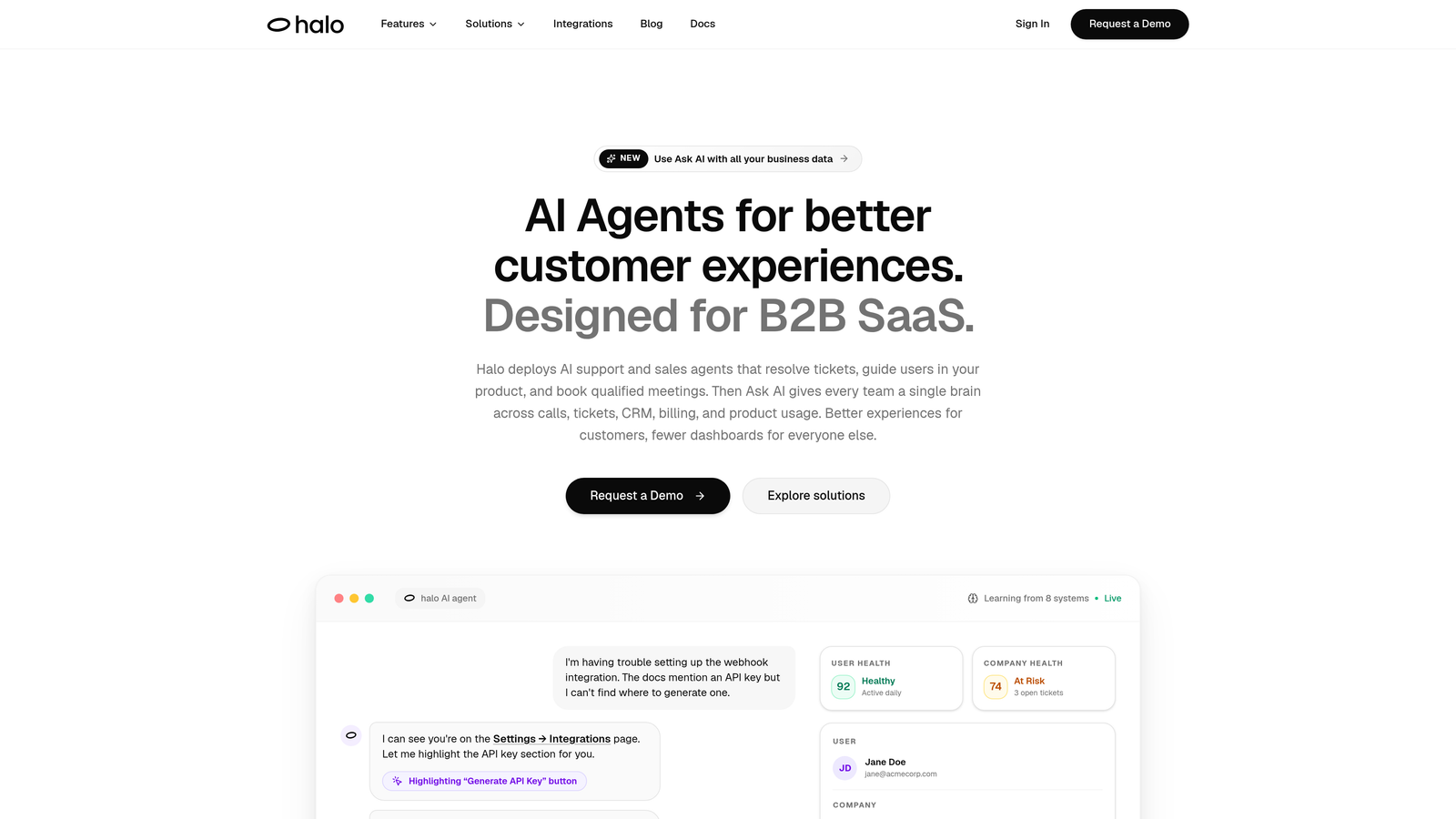
Halo AI is an AI-first customer support platform that deploys intelligent agents to resolve tickets, guide users through your product, and create bug reports automatically.
Where This Tool Shines
What separates Halo from most tools on this list is that it was built as an AI-native platform, not a chatbot bolted onto an existing helpdesk. Its page-aware context engine means the AI actually sees what your user sees, allowing it to provide precise, visual UI guidance rather than generic FAQ answers. That's a meaningful difference when your customers are stuck mid-workflow.
The continuous learning architecture is another standout. Every interaction makes the AI smarter, so resolution quality improves over time without requiring manual retraining. Halo also goes beyond support by surfacing business intelligence: customer health signals, revenue anomalies, and expansion opportunities pulled from your connected tools.
Key Features
Page-Aware Chat Widget: Sees the user's current page context and delivers visual UI guidance tailored to exactly where they are in your product.
Continuous Learning AI: Improves resolution quality with every interaction, building a smarter agent over time without manual updates.
Auto Bug Ticket Creation and Live Agent Handoff: Detects issues, creates bug tickets automatically, and escalates to a human agent when the situation requires it.
Smart Inbox with Business Intelligence: Surfaces customer health signals, anomaly detection, and revenue intelligence alongside standard support metrics.
Deep Integrations: Connects natively with Linear, Slack, HubSpot, Intercom, Stripe, Zoom, PandaDoc, and Fathom, so your AI agent can take real actions across your stack.
Best For
B2B SaaS companies that want an AI agent capable of true autonomous resolution, not just deflection. Particularly strong for product-led growth teams where the AI's page-aware context and continuous learning directly reduce churn-causing friction.
Pricing
Contact for pricing. Halo is designed specifically for B2B SaaS teams and offers custom plans based on team size and usage.
2. Zendesk AI
Best for: Large enterprise support teams already running on Zendesk's helpdesk infrastructure.
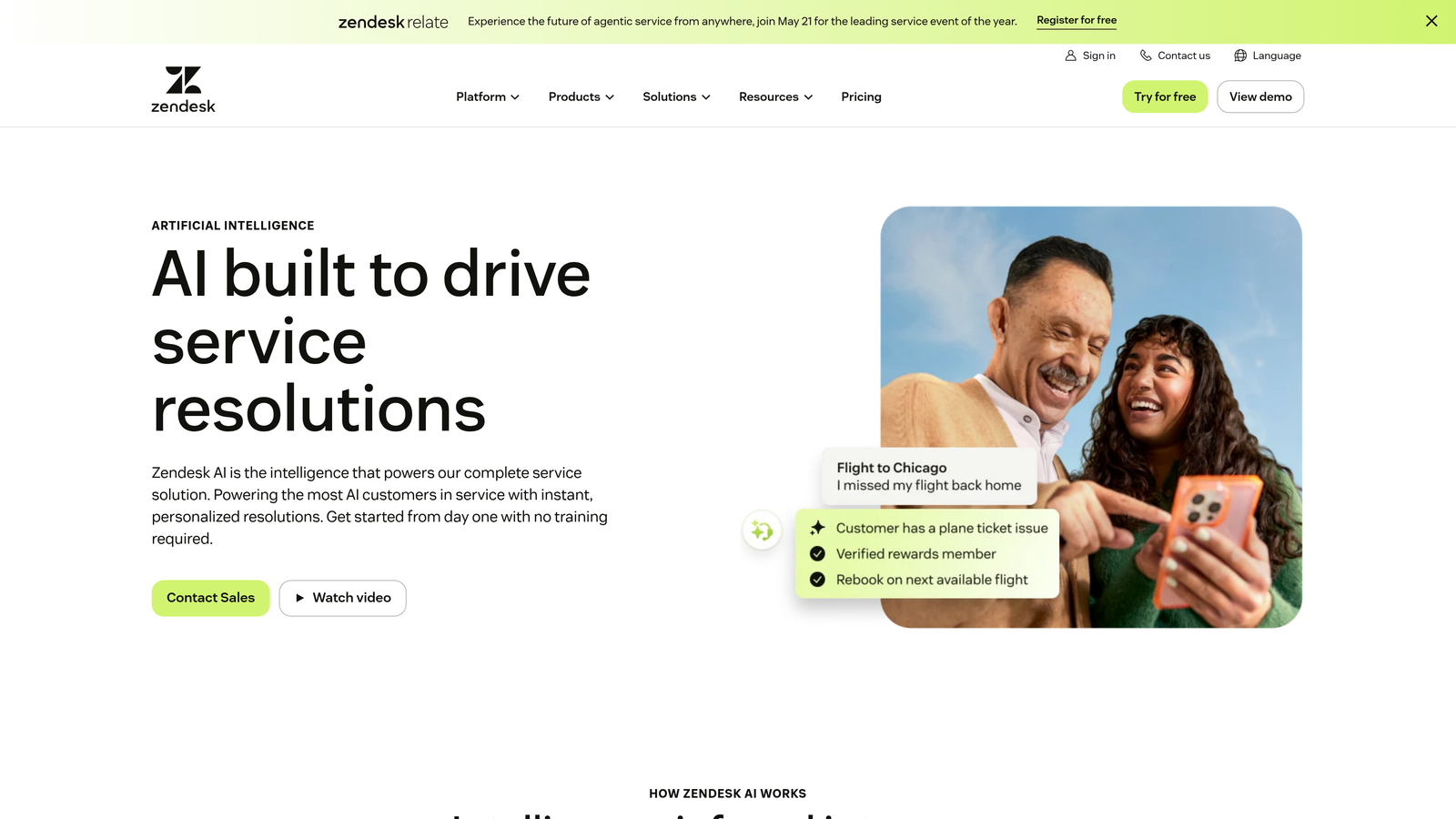
Zendesk AI is an automation layer built directly into Zendesk's enterprise helpdesk, adding AI agents, intelligent triage, and agent assist to one of the most widely deployed support platforms in the world.
Where This Tool Shines
If your team is already inside Zendesk, the AI layer is a natural extension rather than a new system to adopt. Intelligent triage automatically detects intent, sentiment, and language, routing tickets before an agent ever reads them. For large operations handling thousands of tickets per day, that routing efficiency compounds quickly.
The agent assist features are solid for teams where human agents still handle a significant volume. Suggested replies, macro recommendations, and ticket summarization reduce handle time without requiring full automation.
Key Features
AI Agents: Resolve common requests autonomously using your existing knowledge base content.
Intelligent Triage: Automatically detects intent, sentiment, and language for accurate ticket routing.
Agent Assist: Provides suggested replies, macro recommendations, and real-time guidance to human agents.
Deep Analytics: Full ticket lifecycle reporting with AI-specific resolution and deflection metrics.
Marketplace Integrations: Access to an extensive ecosystem of third-party apps and connectors.
Best For
Enterprise teams with established Zendesk workflows who want to layer AI on top of existing infrastructure without migrating platforms. Less ideal for teams looking for an AI-first architecture built from the ground up.
Pricing
Suite plans start at $55 per agent per month. AI add-on pricing varies by feature set and usage tier.
3. Intercom Fin
Best for: Teams using Intercom's messaging platform who want a conversational AI agent with natural language resolution.
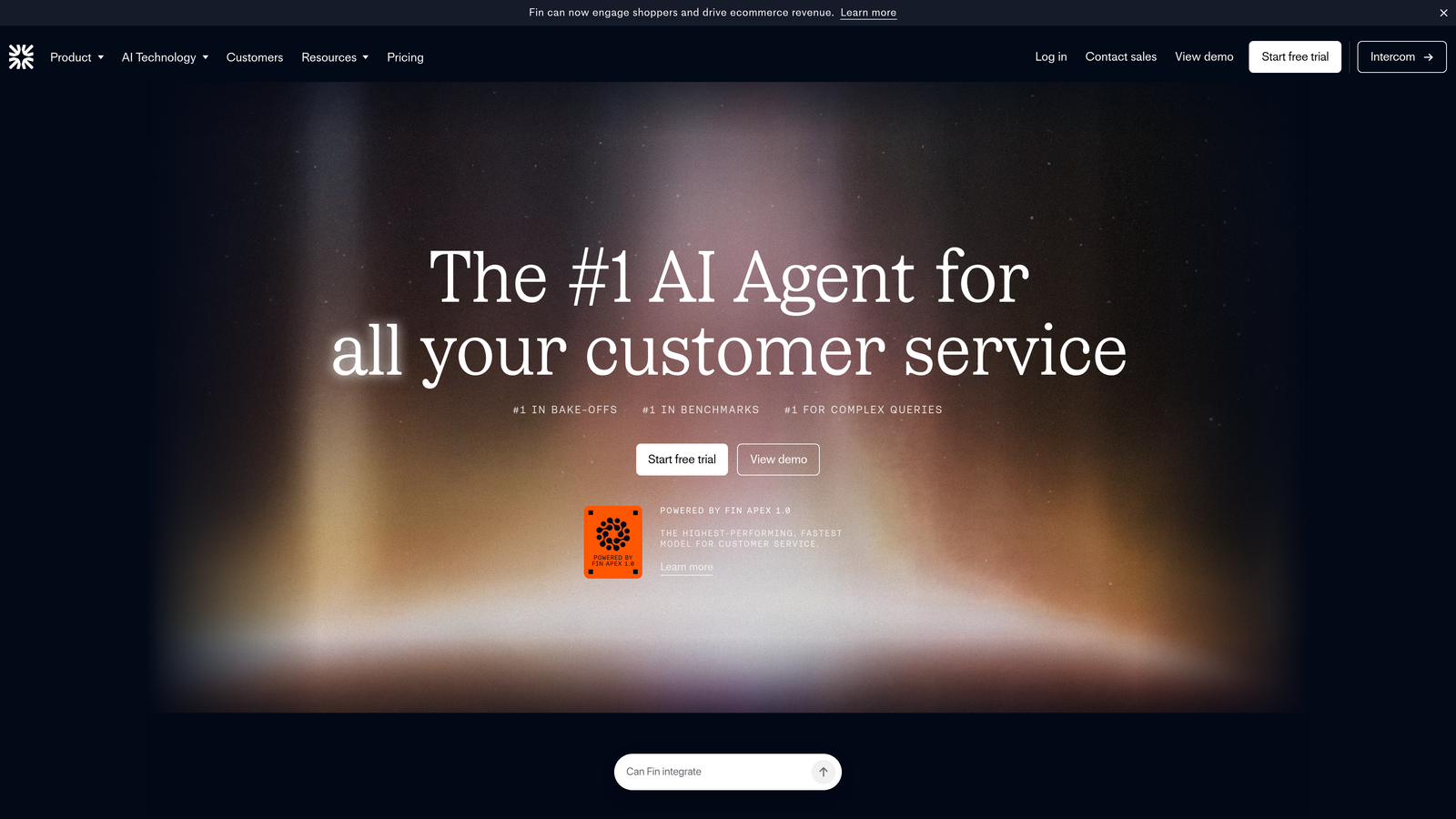
Intercom Fin is a conversational AI agent built into Intercom's platform that answers customer questions using your existing help center content in a natural, human-like way.
Where This Tool Shines
Fin's strength is in the quality of its conversational responses. Rather than returning a list of help articles, it synthesizes answers in plain language, which tends to produce higher customer satisfaction scores and lower follow-up rates. The handoff experience is also notably smooth: when Fin can't resolve something, the conversation passes to a human agent in the same thread without any jarring context switch.
For teams already paying for Intercom's messenger infrastructure, Fin is a logical next step rather than a separate procurement decision.
Key Features
Conversational AI Resolution: Answers questions using your help content in natural language, not just article links.
Seamless Human Handoff: Transitions to a live agent within the same conversation thread without disruption.
Multi-Channel Support: Covers in-app messenger, email, and SMS from a single platform.
Custom AI Workflows: Build conversation routing logic and automated flows without code.
Resolution Reporting: Built-in analytics on AI resolution rates and customer satisfaction scores.
Best For
Companies already using Intercom as their primary customer messaging tool who want to add AI resolution without switching platforms. Per-resolution pricing makes it easy to start small and scale.
Pricing
Fin uses per-resolution pricing. Intercom base plans start at $39 per seat per month.
4. Freshdesk Freddy AI
Best for: Mid-market support teams wanting omnichannel automation within a cost-effective helpdesk.
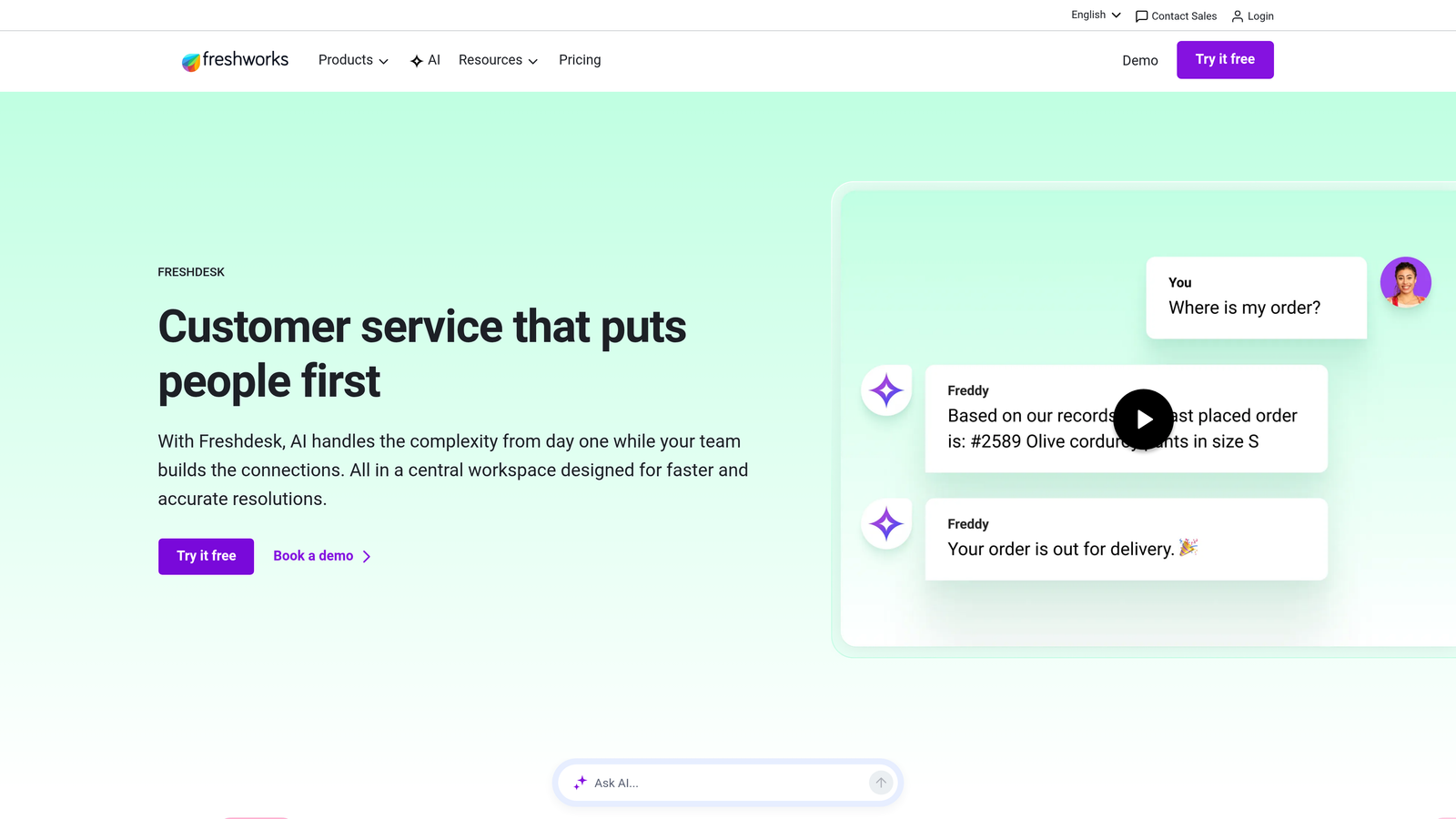
Freshdesk's Freddy AI is an AI-powered automation suite spanning self-service bots, agent assist, and analytics, all within Freshworks' helpdesk platform.
Where This Tool Shines
Freddy AI covers a broad range of automation needs without requiring a large budget, which makes it particularly attractive for growing mid-market teams. The omnichannel ticketing system consolidates email, chat, phone, and social interactions into a single view, and Freddy's automation layer applies across all of them.
For teams already using other Freshworks products like their CRM or ITSM tools, the ecosystem integration adds real value by connecting customer data across the full lifecycle.
Key Features
Freddy AI Agent: Handles automated self-service resolution for common queries before tickets are created.
Agent Assist: Delivers reply suggestions, canned responses, and ticket summarization to speed up agent workflows.
Omnichannel Ticketing: Unified inbox across email, chat, phone, and social media channels.
Workflow Automations: Scenario-based triggers for routing, escalation, and status updates.
Freshworks Ecosystem: Connects with Freshworks CRM and ITSM products for a broader customer view.
Best For
Mid-market teams that need solid omnichannel coverage and AI automation without enterprise-level pricing. A good fit for teams not yet on a major platform like Zendesk or Salesforce.
Pricing
Free tier available. Pro plans start at $49 per agent per month.
5. Ada
Best for: Enterprise teams needing multilingual, omnichannel AI automation at significant scale.
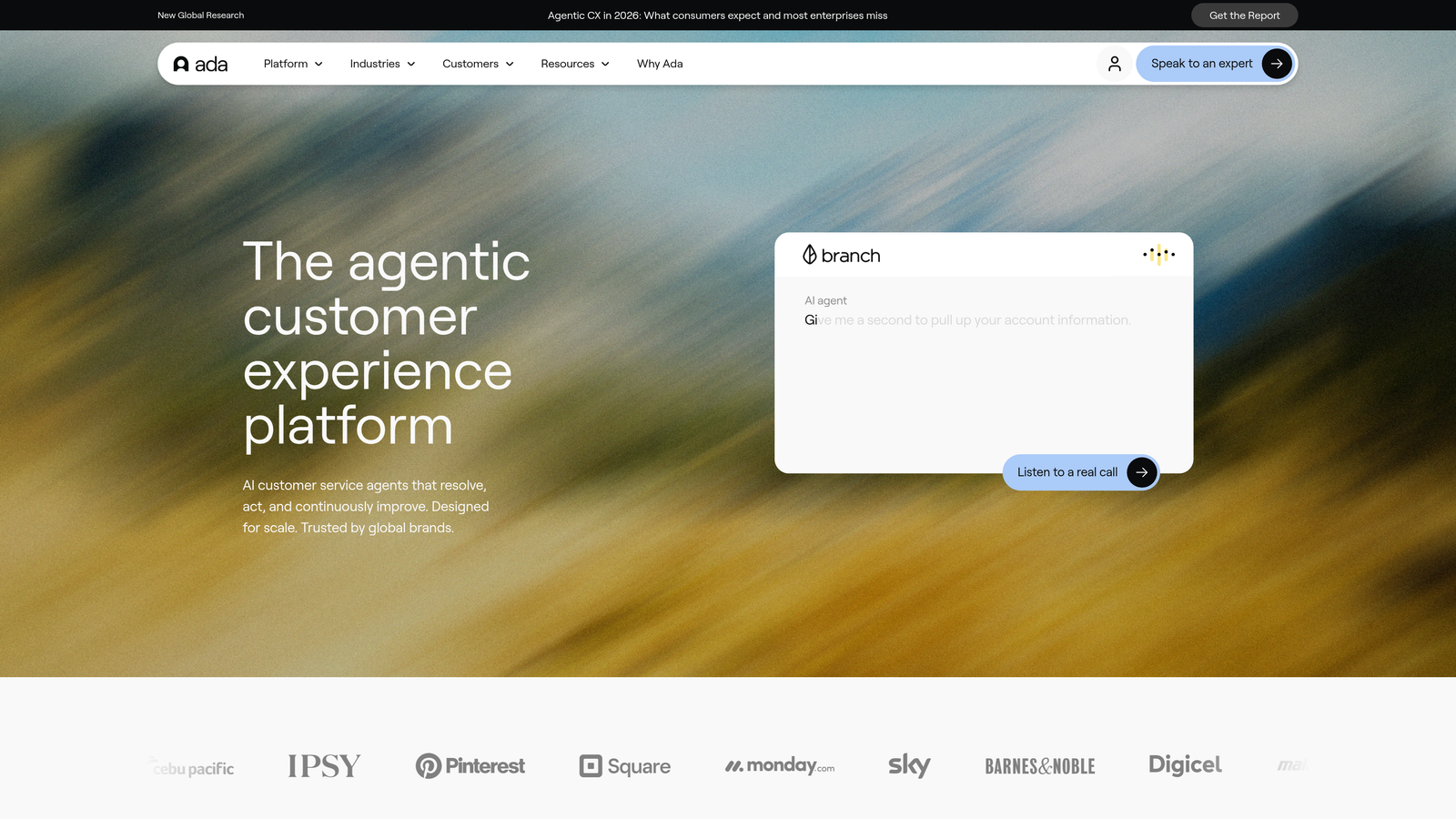
Ada is an enterprise-grade AI agent platform purpose-built for automated customer service, with strong multilingual capabilities and broad channel coverage.
Where This Tool Shines
Ada's AI agent is designed to reason across multiple knowledge sources, not just a single knowledge base, which allows it to handle more complex queries than simpler chatbot tools. Its no-code builder makes it accessible to non-technical teams, while the underlying AI handles the heavy reasoning work.
For global enterprises, Ada's support for more than 50 languages is a genuine differentiator. Most platforms offer multilingual support in theory; Ada has built it as a core capability rather than an afterthought.
Key Features
Multi-Source AI Reasoning: Resolves complex queries by reasoning across multiple knowledge sources simultaneously.
No-Code Builder: Lets non-technical teams build, manage, and update automated experiences without engineering support.
Multilingual Support: Handles conversations across 50+ languages natively.
Omnichannel Deployment: Covers web, mobile, social, SMS, and voice channels from a single platform.
CRM and Helpdesk Integrations: Connects with Salesforce, Zendesk, and other major enterprise systems.
Best For
Large enterprises with global customer bases and complex, multi-source knowledge requirements. Particularly strong for teams that need proven multilingual AI performance across many channels simultaneously.
Pricing
Custom enterprise pricing. Contact Ada directly for a quote based on volume and requirements.
6. Tidio
Best for: Small to mid-size businesses wanting affordable AI automation with fast setup.
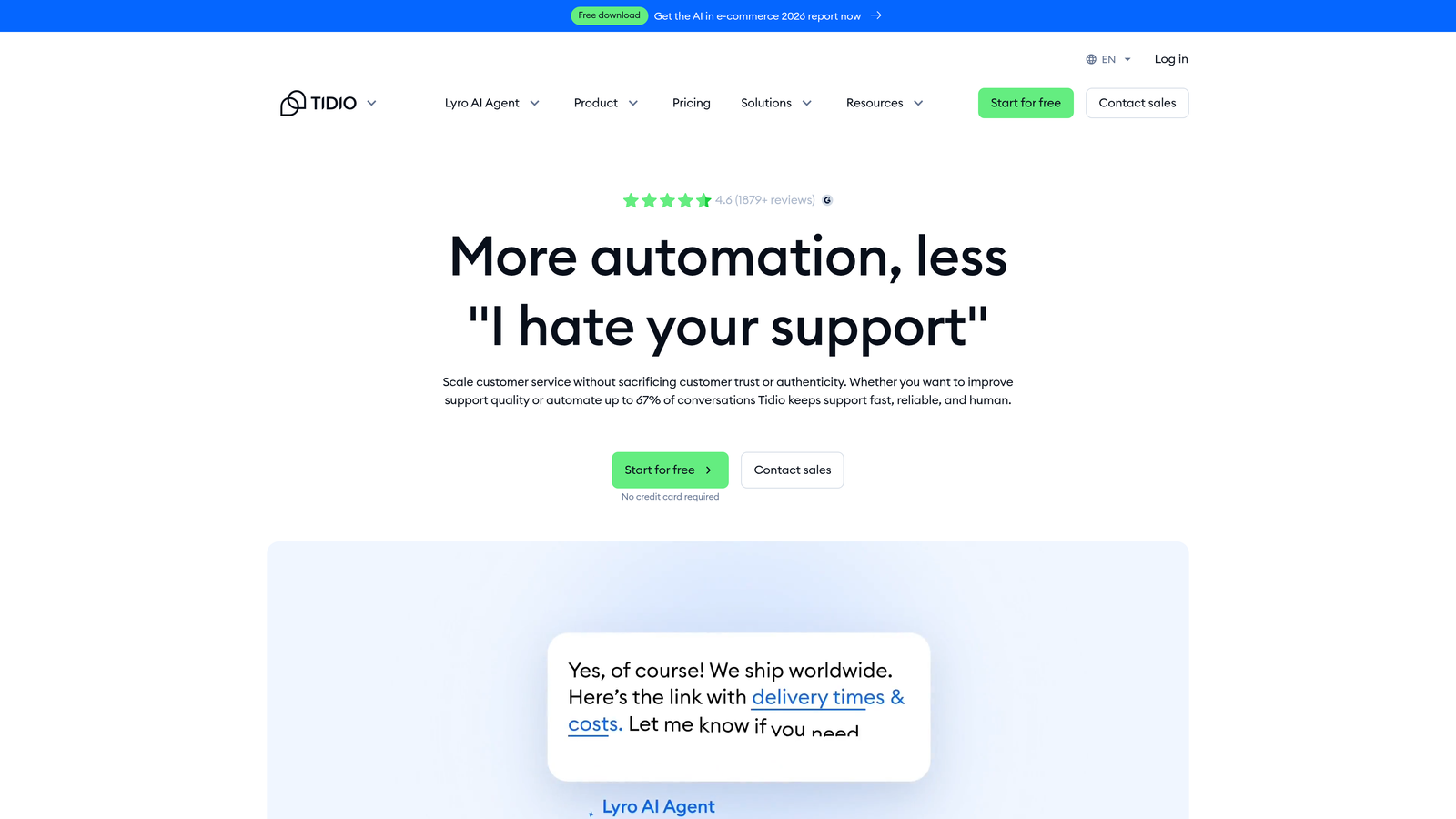
Tidio is a live chat and chatbot platform with Lyro AI, designed for quick deployment and accessible pricing for smaller teams.
Where This Tool Shines
Tidio's biggest advantage is its low barrier to entry. The visual drag-and-drop builder makes it possible to have a working chatbot live within hours, not weeks. Lyro AI learns from your FAQ and support content, so you don't need to manually script every conversation path.
For e-commerce businesses in particular, Tidio's integrations with Shopify, WooCommerce, and BigCommerce make it easy to connect the AI to order data, product information, and customer purchase history.
Key Features
Lyro AI Chatbot: Learns from your existing FAQ and support content to handle common customer questions automatically.
Visual Chatbot Builder: Drag-and-drop interface for building conversation flows without writing code.
Combined Live Chat and AI: Manages both automated and human conversations from a single interface.
E-Commerce Integrations: Native connections to Shopify, WooCommerce, and BigCommerce.
Visitor Tracking and Analytics: Real-time visitor tracking with conversation performance reporting.
Best For
Small to mid-size businesses, particularly in e-commerce, that need fast deployment, affordable pricing, and a simple interface. Less suited for complex B2B SaaS environments requiring deep product context or multi-system integrations.
Pricing
Free plan available. Paid plans start at $29 per month.
7. HubSpot Service Hub
Best for: Teams already in the HubSpot ecosystem who want support automation connected to full CRM data.
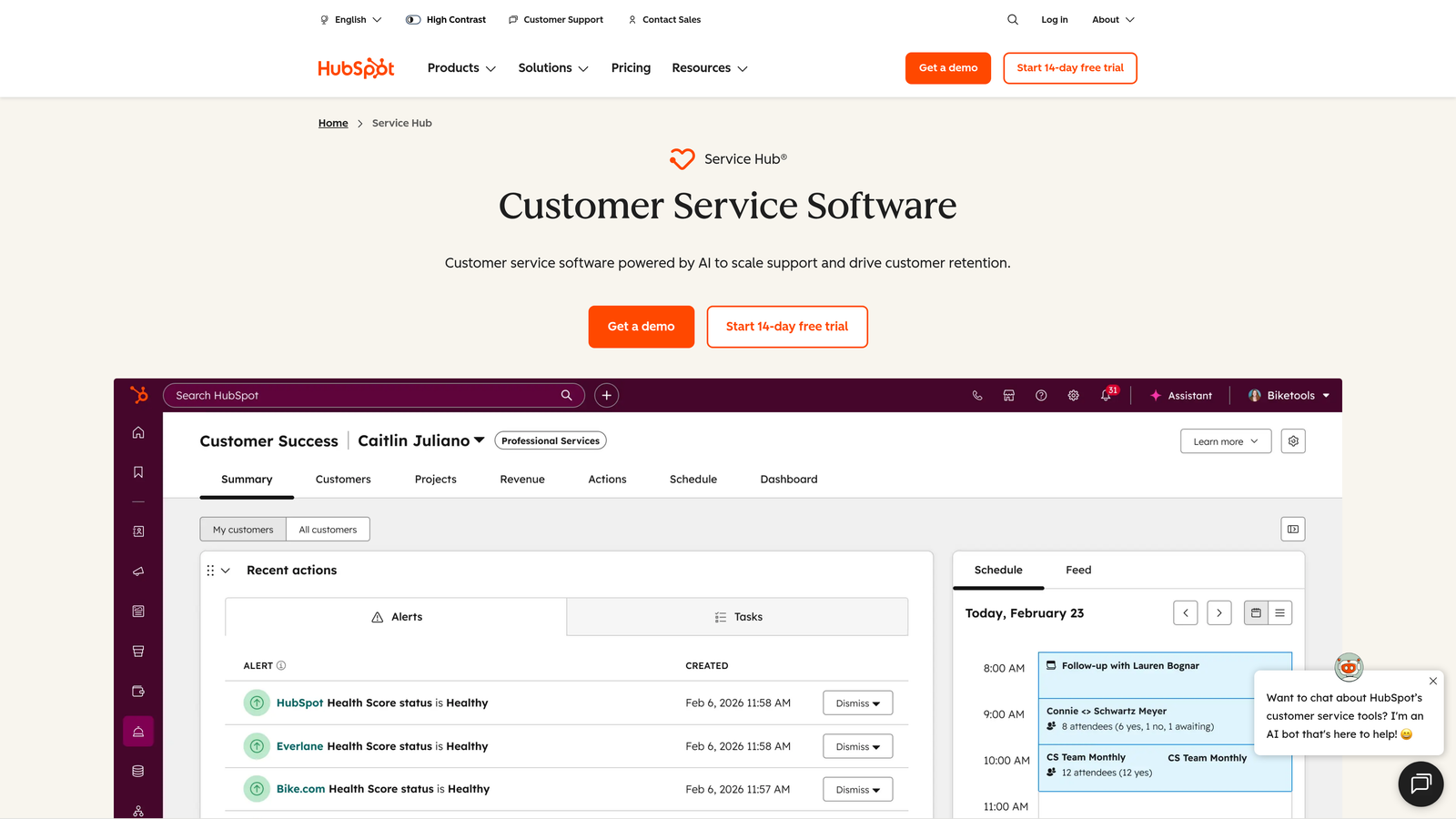
HubSpot Service Hub is a customer service platform within HubSpot's CRM suite, combining AI chatbots, ticket automation, and knowledge base tools with complete customer lifecycle visibility.
Where This Tool Shines
The core advantage of Service Hub is context. Because it's built on HubSpot's CRM, the AI chatbot has access to full contact and company records, deal history, and lifecycle stage data. That context allows for more personalized, relevant automated responses than a standalone chatbot could provide.
For teams that use HubSpot for marketing and sales, Service Hub closes the loop by connecting every support interaction to the broader customer relationship, making it easier to spot expansion opportunities or churn signals.
Key Features
CRM-Connected AI Chatbots: Bots with access to full HubSpot contact and company data for personalized automated responses.
Automated Ticket Routing and SLA Management: Routes tickets by type, priority, or team with automatic SLA tracking.
Knowledge Base Builder: Creates and maintains a self-service knowledge base with AI-suggested article content.
Customer Feedback and Health Scoring: Collects CSAT and NPS data and connects it to contact records.
Unified Customer View: Single timeline across marketing, sales, and service interactions for every contact.
Best For
Companies already using HubSpot for CRM, marketing, or sales who want to extend automation into customer support without adding a separate platform. The CRM-native context is the primary reason to choose this over a standalone helpdesk.
Pricing
Free tools available. Professional plan starts at $100 per month.
8. Drift (Salesloft)
Best for: Revenue-focused teams that want to blend automated support with buyer engagement and account intelligence.
Drift is a conversational AI platform, now part of Salesloft, that combines automated customer engagement with revenue intelligence and account-based selling workflows.
Where This Tool Shines
Drift occupies a unique position on this list: it sits at the intersection of support and revenue. Its intelligent routing can direct a conversation to the right support team or the right account executive depending on the nature of the query, which is valuable for companies where support interactions often surface expansion opportunities.
For teams using Salesloft's broader revenue orchestration platform, Drift integrates tightly into existing sales workflows, making it easier to act on signals that emerge from customer conversations.
Key Features
AI Chatbots for Engagement: Handles real-time customer questions and routes conversations intelligently based on query type.
Cross-Team Routing: Connects support queries to the appropriate team, including sales, when revenue context is relevant.
Account-Based Targeting: Personalizes conversation flows based on company, account tier, or lifecycle stage.
Revenue Signal Detection: Identifies expansion opportunities and escalation signals from support conversations.
Salesloft Platform Integration: Connects directly into Salesloft's revenue orchestration and engagement tools.
Best For
B2B companies where support and sales are closely connected, particularly those already using Salesloft. Less ideal for teams looking for a pure support automation solution without the revenue intelligence layer.
Pricing
Custom pricing. Contact Salesloft directly for plan details.
9. Forethought
Best for: Teams wanting to add AI triage and resolution on top of an existing helpdesk without migrating platforms.
Forethought is an AI platform focused on intelligent ticket triage, automated resolution, and agent assist, designed to layer on top of Zendesk, Salesforce, and other major helpdesk systems.
Where This Tool Shines
Forethought's approach is additive rather than replacement. If your team is deeply embedded in Zendesk or Salesforce Service Cloud and switching platforms isn't realistic, Forethought adds a meaningful AI layer without disrupting existing workflows. SupportGPT, its generative AI engine, handles ticket resolution using your knowledge content and historical ticket data.
The intelligent triage capability is particularly strong for high-volume teams. Automatic categorization and priority routing reduce the manual work of sorting and assigning tickets, which can be a significant time drain at scale.
Key Features
SupportGPT: Generative AI engine that resolves tickets using knowledge base content and historical ticket patterns.
Solve AI: Handles common queries in the self-service layer before they become tickets.
Intelligent Triage: Automatically categorizes and prioritizes incoming tickets for accurate routing.
Agent Assist: Surfaces relevant knowledge and suggested responses to agents in real time.
Helpdesk Integration: Works on top of Zendesk, Salesforce Service Cloud, and other major platforms without requiring migration.
Best For
Support teams committed to their existing helpdesk infrastructure who want to significantly improve AI resolution and triage without a platform change. Strong fit for high-volume operations on Zendesk or Salesforce.
Pricing
Custom pricing based on ticket volume. Contact Forethought for a quote.
10. Help Scout
Best for: Small teams that prioritize simplicity, fast onboarding, and a clean support experience over advanced AI capabilities.
Help Scout is a human-centric helpdesk with lightweight AI features including reply drafting, conversation summarization, and smart workflows built for teams that value clarity over complexity.
Where This Tool Shines
Help Scout is the antidote to feature bloat. Its interface is clean, onboarding is fast, and the AI features enhance agent productivity without trying to replace the human element entirely. For teams where the majority of tickets require nuanced human judgment, that philosophy is a genuine advantage.
The Beacon widget makes it easy to embed contextual help directly into your product, and the knowledge base integration means customers can often self-serve before starting a conversation. The AI-suggested articles feature helps surface the right content at the right moment.
Key Features
AI Reply Drafts and Summarization: Generates draft replies and conversation summaries to reduce agent effort on routine tickets.
Beacon Widget: Embeds contextual help and live chat directly into your product or website.
Knowledge Base with AI Suggestions: Surfaces relevant articles to customers before they submit a ticket.
Workflow Automations: Handles tagging, assignment, and escalation automatically based on ticket conditions.
Clean, Fast Interface: Minimal UI designed for quick adoption with a short learning curve for new agents.
Best For
Small support teams, early-stage startups, or companies where human-led support is a deliberate brand choice. Not the right fit for teams that need deep AI autonomy or complex multi-system integrations.
Pricing
Plans start at $25 per user per month.
Which Tool Is Right for Your Team?
The right choice depends heavily on where you are in your support maturity and what's already in your stack. Here's a quick orientation to help you narrow it down.
Best AI-first agent platform: Halo AI is the strongest choice for B2B SaaS teams that want an agent capable of true autonomous resolution, page-aware product guidance, and continuous learning. It's built for teams where the AI needs to understand product context deeply, not just answer FAQs.
Best for enterprise Zendesk users: Zendesk AI is the natural path for large operations already running on Zendesk. If your workflows, integrations, and reporting are all built around Zendesk, layering in AI is far easier than switching platforms.
Best for adding AI to an existing helpdesk: Forethought is purpose-built for this scenario. If you're on Zendesk or Salesforce and want meaningful AI improvements without migration risk, it's the most practical option.
Best budget option: Tidio offers the lowest barrier to entry for smaller teams, with a free tier and affordable paid plans that include functional AI automation. Help Scout is the better pick if simplicity and agent experience matter more than automation depth.
Best for HubSpot users: HubSpot Service Hub connects support directly to your CRM data, making it the obvious choice if your team already lives in the HubSpot ecosystem.
Best for multilingual enterprise scale: Ada's 50+ language support and multi-source AI reasoning make it the strongest option for global enterprises with complex, high-volume needs.
Whichever direction you go, the most important question to ask is whether the tool can actually resolve your customers' specific, product-related queries, or whether it will deflect them with generic answers and frustrate users in the process. That distinction separates a genuine AI agent from a chatbot with better branding.
Your support team shouldn't scale linearly with your customer base. Let AI agents handle routine tickets, guide users through your product, and surface business intelligence while your team focuses on complex issues that need a human touch. See Halo in action and discover how continuous learning transforms every interaction into smarter, faster support.
If you're still comparing options, our guides on chatbot software comparison and AI helpdesk software can help you go deeper on specific categories before making a final decision.