9 Best Automated Support Tools to Scale Your Customer Service in 2026
Discover the best automated support tools for 2026 that go beyond basic chatbots to intelligently resolve tickets, route complex issues, and continuously learn from interactions. This comprehensive evaluation covers top platforms for B2B teams based on AI capabilities, integration depth, and real-world performance—helping you scale customer service without proportionally expanding headcount while maintaining quality support experiences.
 Grant CooperFounder12 min read
Your support queue is growing faster than your team. Customers expect instant responses, but hiring more agents isn't always feasible—or smart. Automated support tools have evolved from simple chatbots into intelligent systems that resolve tickets, route complex issues, and learn from every interaction.
The right tool doesn't just deflect tickets; it genuinely solves problems while freeing your team for high-value conversations. We evaluated dozens of platforms across AI capabilities, integration depth, ease of setup, and real-world performance.
Here are the top automated support tools for B2B teams in 2026, starting with solutions built from the ground up for intelligent automation.
1. Halo AI
Best for: B2B teams needing AI agents that learn continuously and integrate across their entire tech stack
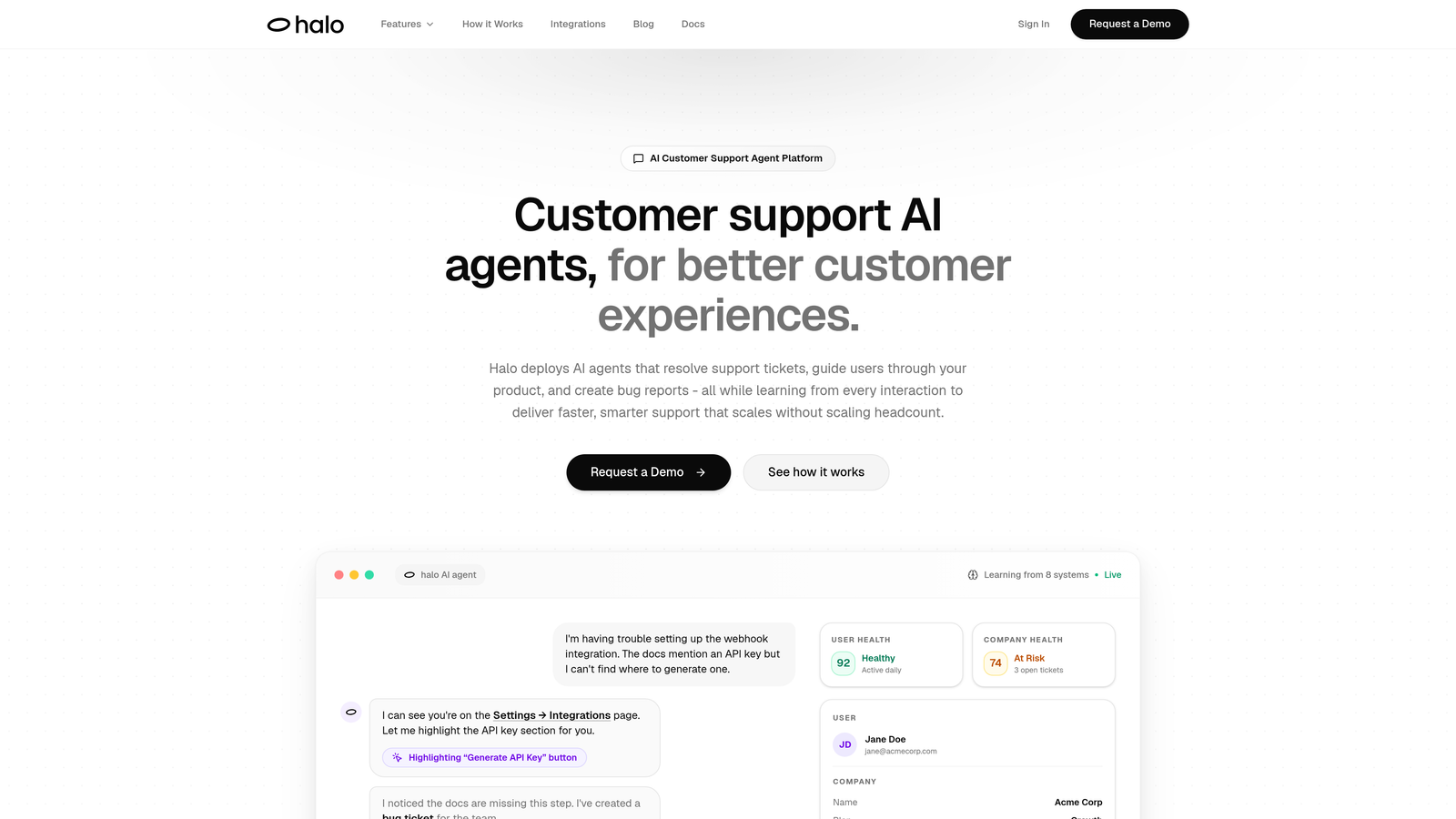
Halo AI is an AI-first customer support platform built around intelligent agents that resolve tickets, guide users through your product, and create actionable bug reports.
Where This Tool Shines
Unlike traditional helpdesks that bolted AI onto existing infrastructure, Halo was architected from day one for autonomous support. The platform's page-aware context means it sees exactly what your users see, enabling visual guidance through complex workflows rather than generic text responses.
The continuous learning architecture sets Halo apart. Every resolved ticket, every escalation, every user interaction feeds back into the system's intelligence. Your AI agents literally get smarter with each conversation, adapting to your product's unique terminology and your customers' common pain points.
Key Features
Page-Aware Chat Widget: Provides visual UI guidance by understanding exactly which screen users are viewing, enabling contextual help that references specific buttons and fields.
Auto Bug Ticket Creation: Automatically generates detailed bug reports in Linear when issues are detected, complete with reproduction steps and user context.
Smart Inbox with Business Intelligence: Surfaces customer health signals, revenue intelligence, and anomaly detection beyond basic ticket metrics.
Live Agent Handoff: Seamlessly escalates complex issues to human agents with full conversation context and recommended solutions.
Deep Integration Ecosystem: Connects to your entire business stack including Slack, HubSpot, Intercom, Stripe, Zoom, PandaDoc, and Fathom for comprehensive automation.
Best For
B2B companies and product teams currently using helpdesk systems like Zendesk, Freshdesk, or Intercom who need more intelligent automation. Particularly valuable for SaaS teams where product complexity requires context-aware guidance rather than simple FAQ deflection.
Pricing
Contact for pricing. Enterprise-focused with custom implementation based on team size and integration requirements.
2. Intercom
Best for: Product-led companies wanting unified messaging across support, marketing, and engagement
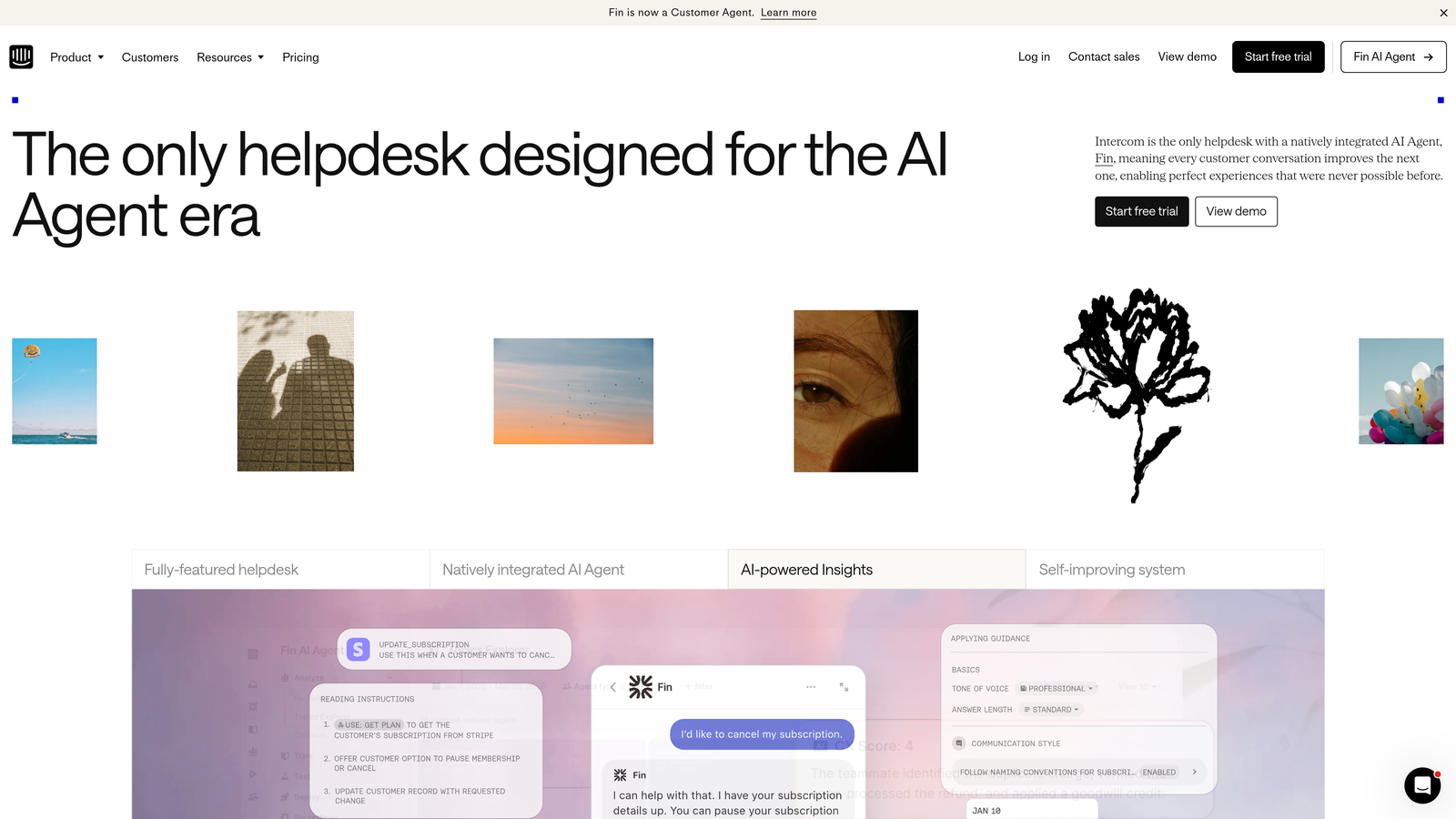
Intercom combines customer messaging, engagement automation, and AI-powered support in a platform built for product-centric teams.
Where This Tool Shines
Intercom's Fin AI agent represents one of the more mature AI implementations among traditional helpdesk platforms. It handles natural language queries effectively and can pull from your knowledge base, past conversations, and product documentation to construct relevant responses.
The platform excels at blending support with product engagement. You're not just resolving tickets—you're running onboarding tours, sending targeted messages based on user behavior, and capturing leads. For teams where support and product marketing overlap significantly, this unified approach eliminates tool sprawl.
Key Features
Fin AI Agent: Resolves common queries automatically with natural language processing and charges per successful resolution rather than flat monthly fees.
Product Tours: Creates interactive onboarding experiences and feature announcements without engineering resources.
Unified Inbox: Manages conversations across email, chat, SMS, and social media in a single interface.
Custom Bots with Visual Builder: Designs conversation flows without coding using a drag-and-drop interface.
Resolution Reports: Tracks AI performance metrics including resolution rate, customer satisfaction by automation type, and escalation patterns.
Best For
SaaS companies with product-led growth models where support, onboarding, and user engagement are tightly interconnected. Works particularly well for teams already using Intercom for messaging who want to add automation capabilities.
Pricing
Starts at $39/seat/month for core platform. Fin AI charged separately based on resolution volume, typically adding significant cost at scale.
3. Zendesk
Best for: Enterprise teams needing mature automation with extensive third-party integrations and compliance requirements
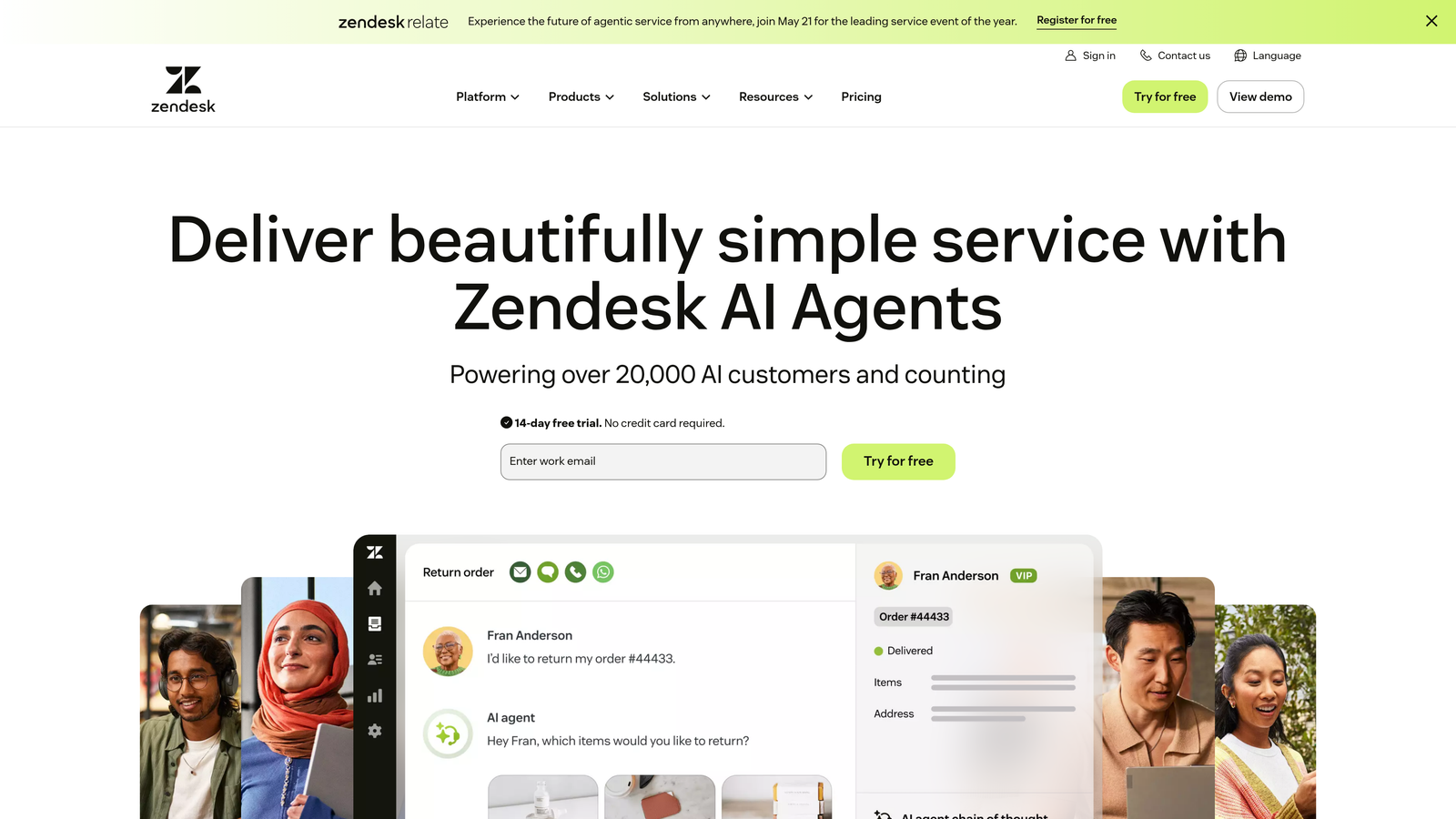
Zendesk offers enterprise-grade helpdesk infrastructure with sophisticated automation capabilities and a massive integration marketplace.
Where This Tool Shines
Zendesk's automation engine handles complex, multi-step workflows that many newer platforms can't match. You can build intricate trigger sequences based on ticket properties, customer segments, time conditions, and external data sources. For large organizations with established processes, this depth matters.
The marketplace ecosystem is unmatched—over 1,500 integrations covering everything from obscure enterprise software to modern SaaS tools. If your team uses specialized systems, Zendesk probably connects to them. The platform's maturity also means robust security certifications and compliance frameworks that enterprise buyers require.
Key Features
Advanced Automation Rules: Creates complex conditional logic for ticket routing, prioritization, and auto-responses based on multiple criteria.
AI-Powered Classification: Automatically categorizes and tags incoming tickets using machine learning trained on your historical data.
Marketplace Integrations: Accesses 1,500+ pre-built connectors for CRMs, analytics tools, communication platforms, and specialized business software.
Omnichannel Management: Handles support across email, chat, phone, social media, and messaging apps from unified agent workspace.
Enterprise Security: Meets SOC 2, HIPAA, GDPR, and other compliance requirements with granular permission controls and audit logs.
Best For
Large enterprises with complex support operations, strict compliance needs, and established helpdesk processes. Best suited for teams with dedicated Zendesk administrators who can leverage the platform's full depth.
Pricing
Starts at $55/agent/month for Suite Team. Enterprise plans with advanced automation features typically exceed $100/agent/month.
4. Freshdesk
Best for: Growing support teams balancing automation power with ease of use and budget constraints
Freshdesk delivers robust helpdesk automation in an accessible package that doesn't require extensive training or implementation resources.
Where This Tool Shines
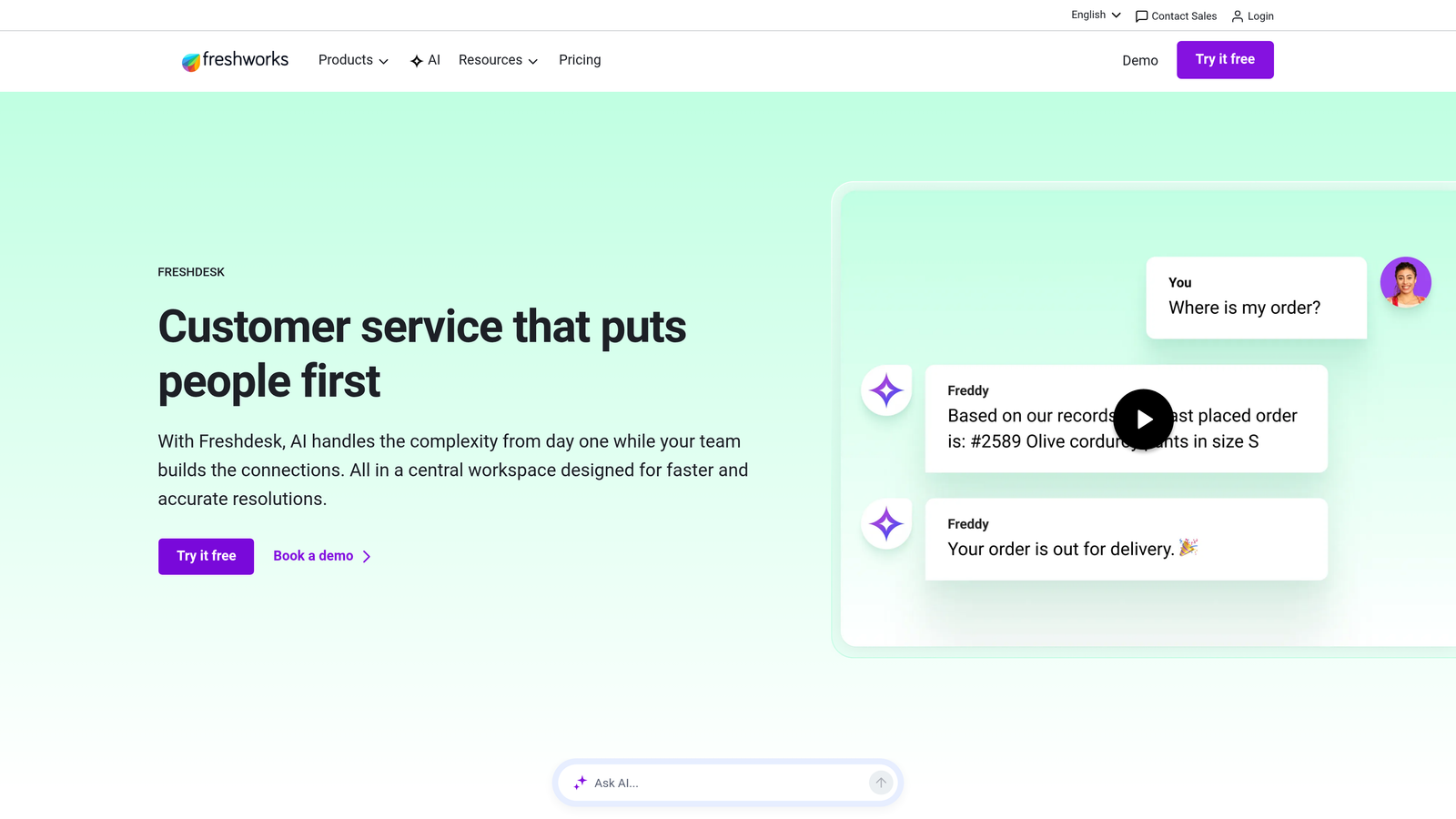
Freshdesk hits a sweet spot between capability and usability. The Freddy AI assistant provides intelligent ticket suggestions and auto-classification without the complexity of enterprise platforms. Teams can deploy meaningful automation within days rather than months.
The scenario automation feature lets you build sophisticated workflows using a visual interface. Think of it as automation for people who don't want to become automation experts. You can handle conditional routing, escalations, and multi-step processes without diving into complex rule builders or scripting languages.
Key Features
Freddy AI: Suggests responses to agents, auto-classifies tickets by topic and urgency, and identifies trending issues across your queue.
Scenario Automation: Builds complex workflows with visual interface including conditional logic, time-based triggers, and multi-step sequences.
Canned Responses and Templates: Creates reusable response libraries with variable insertion for personalization at scale.
Self-Service Portal: Provides knowledge base, community forums, and ticket submission forms that deflect common queries before they reach agents.
SLA Management: Automatically tracks response and resolution time commitments with escalation rules when deadlines approach.
Best For
Mid-sized B2B companies and growing startups that need serious automation capabilities without enterprise complexity or pricing. Ideal for teams transitioning from basic tools like email or spreadsheets into proper helpdesk infrastructure.
Pricing
Free tier available for basic needs. Paid plans start at $15/agent/month, with automation features available across most tiers.
5. HubSpot Service Hub
Best for: Teams already using HubSpot CRM who need context-rich support automation natively integrated with customer data
HubSpot Service Hub extends HubSpot's CRM platform into customer service with automation that leverages your complete customer history.
Where This Tool Shines
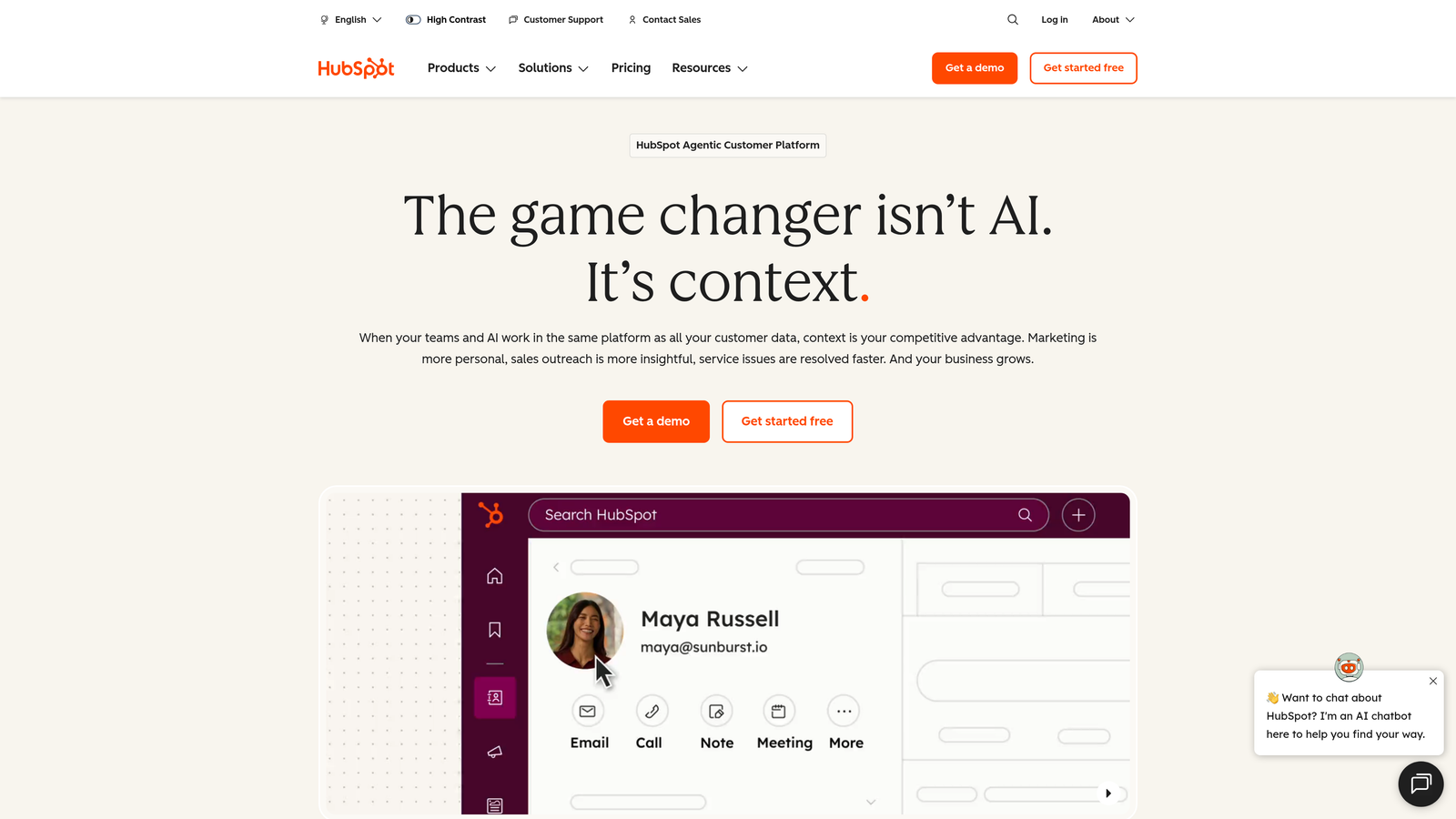
The native CRM integration is the compelling story here. When a support ticket arrives, agents see the customer's entire journey: which marketing emails they opened, what sales conversations happened, their contract value, renewal date, and product usage patterns. This context enables smarter automation decisions.
Automated ticket pipelines can route based on customer lifetime value, account health scores, or product tier—not just ticket content. You can trigger workflows when high-value customers submit tickets, automatically escalate issues from accounts showing churn signals, or route questions based on which products customers actually use.
Key Features
Native CRM Integration: Accesses complete customer timeline including sales interactions, marketing engagement, and support history without switching tools.
Conversation Intelligence: Routes conversations based on customer properties, deal stage, lifecycle position, and custom segmentation criteria.
Customer Portal: Provides self-service knowledge base where customers can track their tickets, browse documentation, and submit requests.
Automated Ticket Pipelines: Creates custom workflows that move tickets through stages automatically based on status changes, time elapsed, or agent actions.
Feedback and NPS Surveys: Triggers automated satisfaction surveys post-resolution and tracks customer sentiment trends over time.
Best For
B2B companies already invested in HubSpot's ecosystem for sales and marketing. The value proposition diminishes significantly if you're not using HubSpot CRM, as the platform's strength lies in unified customer data.
Pricing
Free tools available with basic features. Starter tier at $20/month/seat includes automation. Professional and Enterprise tiers add advanced workflows and custom reporting.
6. Gorgias
Best for: E-commerce businesses needing automated order management and Shopify-specific support workflows
Gorgias specializes in e-commerce support automation with deep integrations into Shopify, BigCommerce, and other commerce platforms.
Where This Tool Shines
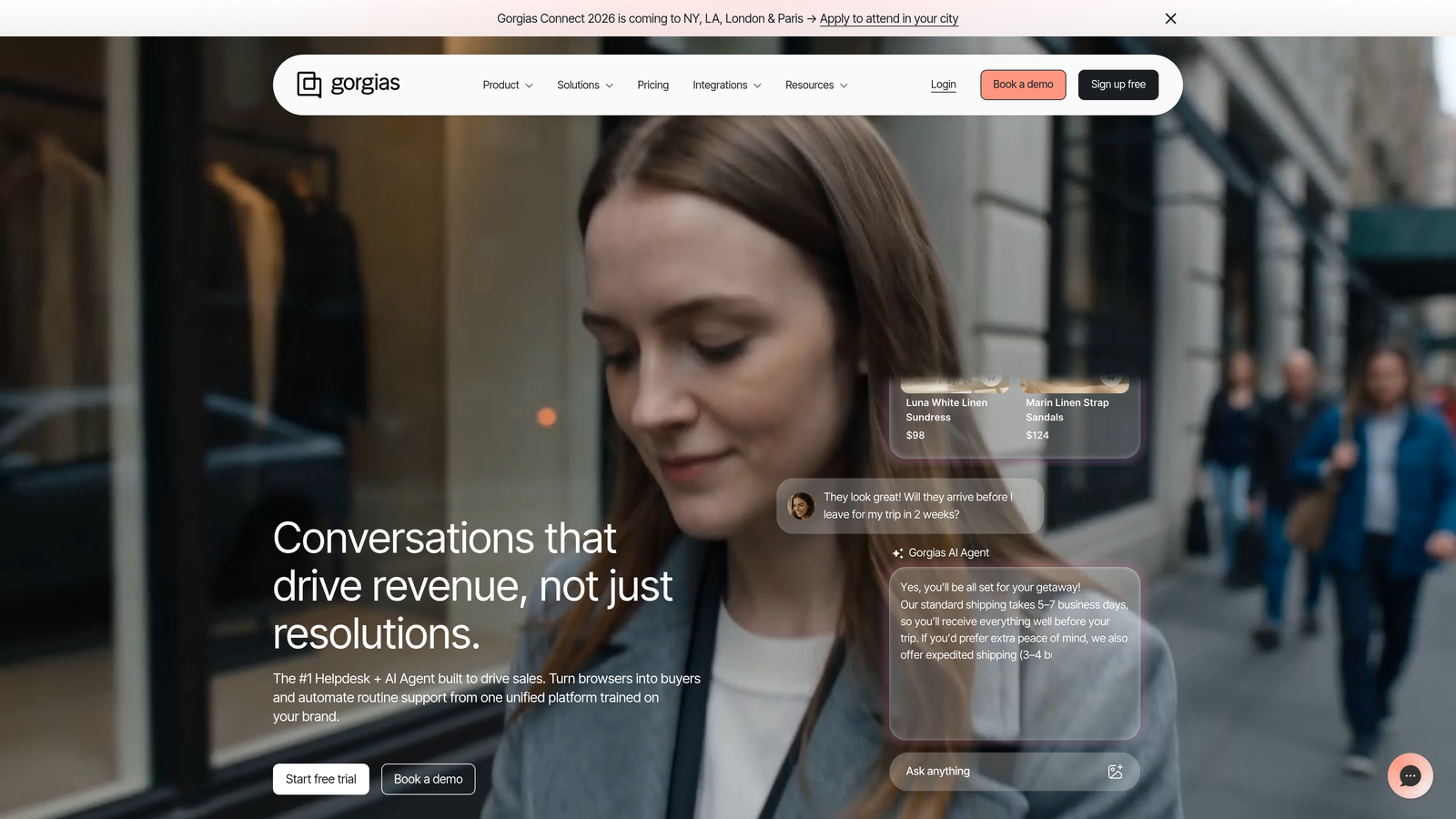
Gorgias understands that e-commerce support revolves around orders. The platform pulls order data directly into tickets, enabling agents to process refunds, cancel orders, update shipping addresses, or send tracking information without leaving the conversation. These one-click actions eliminate the context-switching that slows down traditional helpdesks.
The macros system uses live order variables, so automated responses include actual tracking numbers, order totals, and delivery dates specific to each customer. This personalization happens automatically, making automated responses feel genuinely helpful rather than generic.
Key Features
One-Click Order Actions: Processes refunds, cancellations, exchanges, and shipping updates directly from the ticket interface without accessing admin panels.
Macros with Order Variables: Creates templated responses that automatically populate with customer-specific order details, tracking numbers, and delivery dates.
Revenue Attribution: Tracks which support interactions led to purchases, measuring support's direct impact on sales rather than just cost center metrics.
Social and SMS Integration: Manages Instagram DMs, Facebook messages, and SMS conversations alongside traditional support channels.
Self-Service Order Portal: Lets customers track shipments, request returns, and modify orders without contacting support.
Best For
E-commerce brands on Shopify or BigCommerce where the majority of support queries relate to orders, shipping, and returns. Less suitable for SaaS or service businesses without physical products.
Pricing
Starts at $10/month for 50 tickets. Scales based on ticket volume with typical growing stores paying $300-900/month.
7. Help Scout
Best for: Teams prioritizing human-feeling automation that maintains brand voice and personal connection
Help Scout emphasizes natural, brand-aligned automated responses that don't feel robotic or impersonal.
Where This Tool Shines
Help Scout's AI Drafts feature learns your team's writing style and generates responses that actually sound like your brand. Instead of generic chatbot language, the AI mimics your tone, uses your preferred terminology, and maintains the personality that makes your support memorable.
The Beacon widget provides embedded help without interrupting user workflows. It surfaces relevant knowledge base articles based on which page customers are viewing, offers contextual suggestions, and only escalates to live support when self-service doesn't resolve the issue. This progressive approach feels helpful rather than gatekeeping.
Key Features
AI Drafts: Generates response suggestions that match your team's established tone and brand voice rather than generic automation language.
Beacon Widget: Embeds contextual help into your product with page-specific article suggestions and smooth escalation to live chat.
Docs Knowledge Base: Creates searchable documentation with AI-powered article suggestions that learn which content resolves which query types.
Saved Replies and Workflows: Builds reusable response templates and automated sequences without complex rule builders.
Customer Satisfaction Ratings: Collects feedback on individual conversations to measure which automated responses actually satisfy customers.
Best For
B2B companies where brand voice and personal connection matter significantly to customer relationships. Particularly valuable for teams transitioning from email-based support who want automation without losing the human element.
Pricing
Starts at $22/user/month for standard features. AI capabilities included across all paid tiers.
8. Tidio
Best for: Small businesses and startups deploying automation quickly without technical expertise or large budgets
Tidio makes chatbot automation accessible through visual builders, pre-built templates, and straightforward pricing.
Where This Tool Shines
Tidio's visual chatbot builder lets non-technical team members create functional automation in hours rather than weeks. The drag-and-drop interface uses conversation blocks that connect logically, making it easy to visualize customer journeys and build appropriate responses.
The Lyro AI handles conversational automation without requiring you to map every possible question. It understands intent, pulls from your knowledge base, and handles variations of common queries automatically. For small teams without dedicated support staff, this approachability matters more than enterprise-grade features they'll never use.
Key Features
Visual Chatbot Builder: Creates conversation flows using drag-and-drop blocks without coding or complex configuration.
Lyro AI: Provides conversational automation that understands natural language queries and learns from your content.
Pre-Built Templates: Offers ready-made chatbot scenarios for common use cases like lead capture, FAQ deflection, and appointment booking.
Live Chat with Visitor Tracking: Shows which pages visitors are viewing and their browsing history for contextual conversations.
Shopify and WordPress Integration: Connects quickly to popular platforms with one-click installation and minimal setup.
Best For
Small businesses, solopreneurs, and early-stage startups needing basic automation without significant investment or technical resources. Works well for teams just starting to automate who need quick wins rather than sophisticated workflows.
Pricing
Free tier available with basic chatbot features. Paid plans start at $29/month for increased conversation volume and advanced automation.
9. Ada
Best for: Enterprise organizations requiring multilingual automation and high-volume resolution at scale
Ada specializes in conversational AI for large organizations handling support across multiple languages and regions.
Where This Tool Shines
Ada's multilingual capabilities stand out in the enterprise space. The platform supports 50+ languages out of the box, not through basic translation but with true conversational understanding in each language. For global companies, this eliminates the need to build separate automation for each market.
The no-code conversation builder empowers non-technical teams to create sophisticated automation without engineering resources. You can build complex decision trees, integrate with backend systems for account lookups, and trigger actions in external platforms—all through visual configuration rather than API calls and custom code.
Key Features
50+ Language Support: Handles conversations in dozens of languages with native understanding rather than simple translation layers.
No-Code Builder: Creates complex conversation flows, conditional logic, and system integrations without developer involvement.
Automated Resolution Measurement: Tracks which conversations truly resolve customer issues versus which ones deflect without solving problems.
Enterprise Security: Meets compliance requirements for regulated industries with SOC 2, HIPAA, and GDPR certifications.
API Integrations: Connects to backend systems for real-time account lookups, transaction processing, and automated actions in external platforms.
Best For
Large enterprises with global operations, particularly those in regulated industries requiring compliance certifications. Best suited for organizations handling tens of thousands of support interactions monthly across multiple languages.
Pricing
Enterprise pricing model with custom quotes based on conversation volume, language requirements, and integration complexity. Annual contracts typically required.
Making the Right Choice
The automated support landscape has evolved beyond simple chatbots that frustrate customers with canned responses. Today's platforms use genuine AI to understand context, learn from interactions, and solve problems rather than just deflect tickets.
Halo AI leads for teams needing continuous learning and deep integrations across their tech stack. The page-aware context and business intelligence capabilities go beyond traditional support metrics to surface actionable insights. Intercom excels when support overlaps significantly with product engagement and onboarding. Zendesk remains the enterprise standard for organizations with complex workflows and strict compliance requirements.
Your selection criteria should prioritize integration depth over feature lists. The best automation connects to your actual business systems—your CRM, product analytics, engineering tools, and communication platforms. Isolated automation that can't access customer context or trigger actions in other systems will always feel limited.
Consider whether you need a platform built around AI or a traditional helpdesk adding AI features. This architectural distinction matters more than marketing claims. AI-native platforms like Halo typically offer deeper learning capabilities because the entire system was designed for autonomous operation rather than retrofitted with automation.
Budget considerations extend beyond monthly per-seat costs. Some platforms charge separately for AI resolutions, making costs unpredictable as volume scales. Others bundle automation into base pricing. Factor in implementation time and required technical resources—enterprise platforms often need dedicated administrators, while accessible tools like Tidio or Freshdesk deploy quickly with minimal setup.
For e-commerce teams, Gorgias delivers unmatched order management automation. SaaS companies benefit from platforms that integrate with product usage data and engineering workflows. Service businesses might prioritize scheduling automation and appointment management.
Your support team shouldn't scale linearly with your customer base. Let AI agents handle routine tickets, guide users through your product, and surface business intelligence while your team focuses on complex issues that need a human touch. See Halo in action and discover how continuous learning transforms every interaction into smarter, faster support.