9 Best Automated Ticketing Systems for B2B Support Teams in 2026
This guide reviews the 9 best automated ticketing systems for B2B support teams in 2026, evaluating each on automation depth, integration ecosystem, deployment ease, and scalability. Whether you run a lean SaaS support team or a complex multi-product operation, it cuts through the noise to help you choose the right tool with confidence.
 Matt PattoliFounder13 min read
Support teams are drowning in repetitive tickets while customers wait longer than ever. The right automated ticketing system changes that equation entirely, routing, resolving, and escalating issues without constant human intervention. But not all ticketing automation is created equal. Some tools bolt AI onto legacy helpdesk infrastructure; others are built AI-first from the ground up.
This list covers the best automated ticketing systems available in 2026, evaluated on automation depth, integration ecosystem, ease of deployment, and how well they scale without scaling headcount. Whether you're running a lean support team at a fast-growing SaaS company or managing a complex multi-product operation, there's a fit here.
We'll cover what each tool does best, who it's built for, and what you'll actually pay, so you can make a confident decision without wading through endless feature comparison tables.
1. Halo AI
Best for: B2B SaaS teams that want AI agents resolving tickets end-to-end, not just routing them.
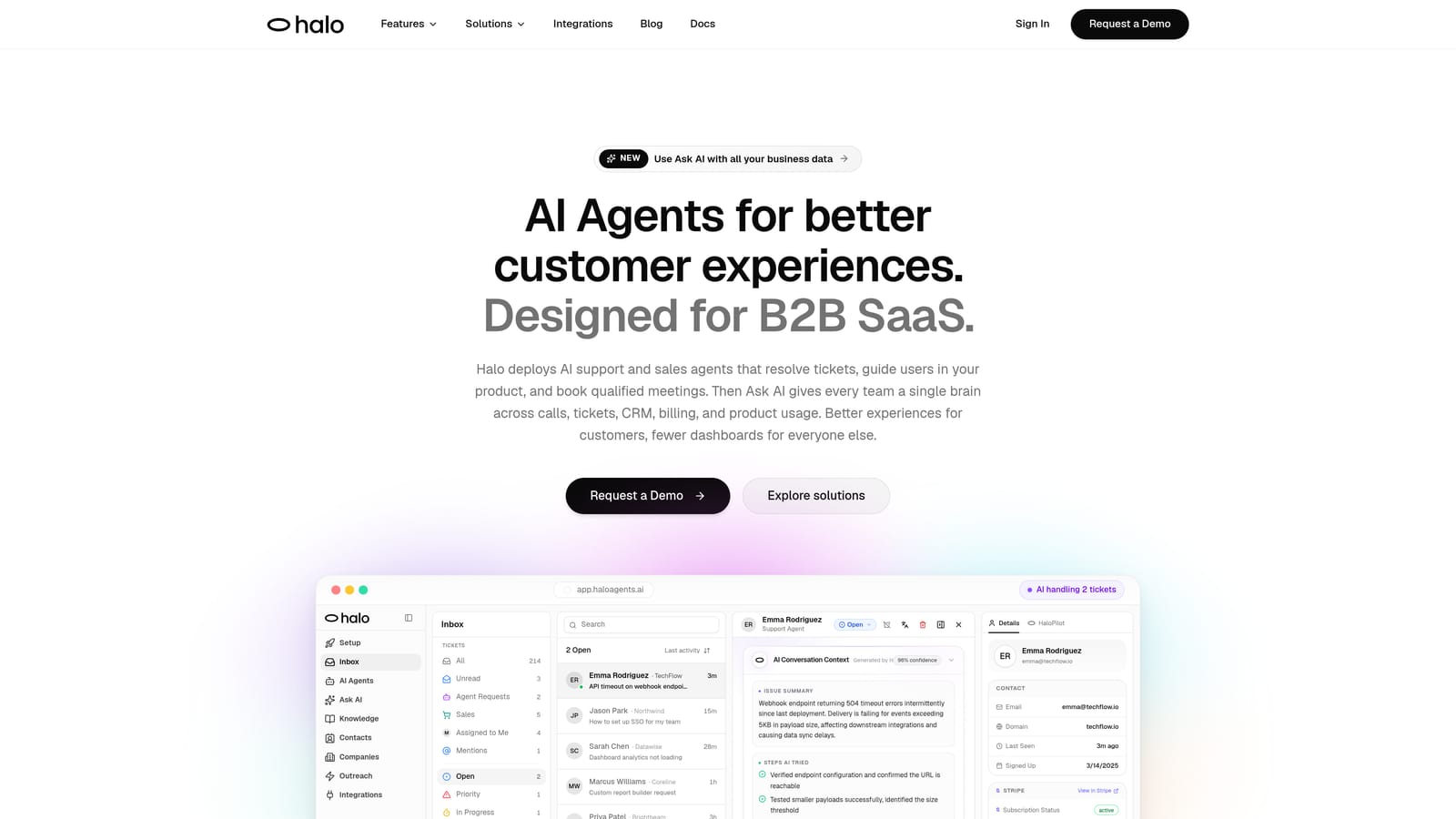
Halo AI is an AI-native customer support platform that resolves tickets autonomously, guides users through your product with page-aware context, auto-creates bug reports, and surfaces business intelligence from every support interaction.
Where This Tool Shines
Halo is built differently from the ground up. Rather than layering AI features onto a traditional helpdesk, its entire architecture is designed around autonomous resolution. The AI agents don't just suggest replies; they handle tickets end-to-end, learning from every interaction to get measurably better over time.
One genuinely distinctive capability is the page-aware chat widget. The AI sees exactly what a user sees within your product, enabling contextual, in-product guidance that feels far more intelligent than a generic chatbot. Pair that with automatic bug ticket creation and a smart inbox that surfaces customer health signals and revenue anomalies, and you have a support platform that functions more like a business intelligence layer than a ticket queue.
Key Features
Autonomous AI Agents: Resolve tickets end-to-end without human intervention, with continuous learning from every resolved interaction.
Page-Aware Chat Widget: The AI sees what users see in-product, enabling contextual guidance that's specific to where a user is in your product.
Auto Bug Ticket Creation: Detects and logs product issues automatically, removing the manual step of creating engineering tickets from support reports.
Smart Inbox with Business Intelligence: Surfaces customer health signals, revenue anomalies, and product feedback trends directly from support data.
Live Agent Handoff: Escalates to human agents with full context preserved, so customers never have to repeat themselves.
Deep Integrations: Connects natively with Linear, Slack, HubSpot, Intercom, Stripe, Zoom, PandaDoc, and Fathom.
Best For
Product-led SaaS companies and B2B teams that want support to scale without scaling headcount. Particularly well-suited for teams already using tools like Linear, HubSpot, or Stripe who want their support layer to connect intelligently across the entire business stack.
Pricing
Custom pricing, contact for a demo at haloagents.ai. This is standard for AI-native platforms at this stage, and the demo gives you a clear picture of fit before any commitment.
2. Zendesk
Best for: Mid-market and enterprise teams that need mature automation, deep SLA management, and a vast app ecosystem.
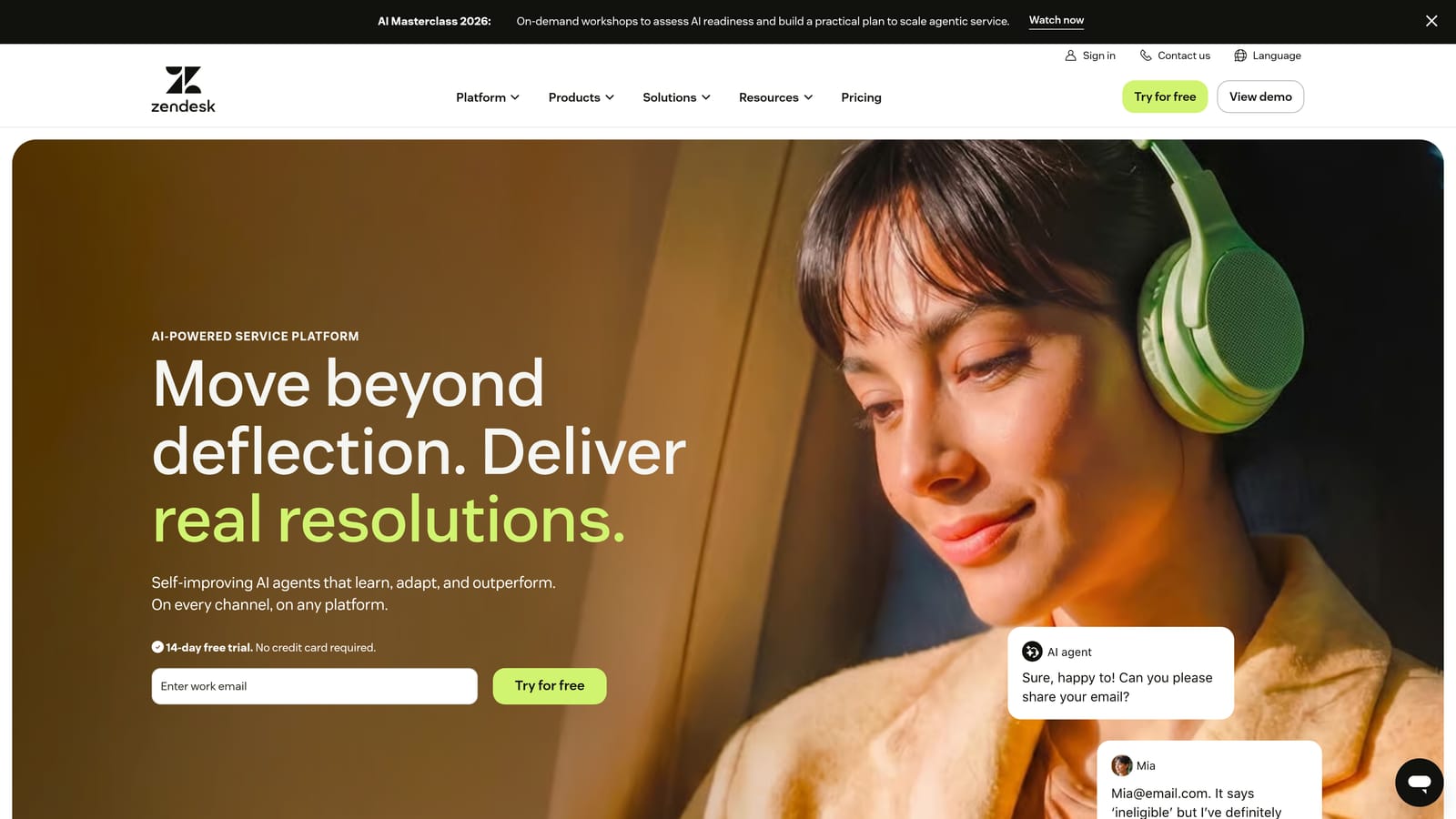
Zendesk is the market-leading helpdesk platform with decades of iteration, robust automation rules, and one of the largest integration marketplaces in the industry.
Where This Tool Shines
Zendesk's strength is breadth. Triggers, macros, and automation rules give support operations teams granular control over how tickets move through the system. Zendesk AI, built on an OpenAI partnership, adds intelligent triage, suggested replies, and ticket summarization on top of that foundation.
The 1,000-plus app marketplace means Zendesk connects to almost anything. For enterprise teams with complex workflows, compliance requirements, and multiple support channels, that ecosystem depth is genuinely hard to match. The tradeoff is complexity: Zendesk can take time to configure properly, and costs can escalate at scale.
Key Features
AI-Powered Triage and Routing: Intelligently categorizes and routes incoming tickets based on content, intent, and priority.
Trigger and Macro Automation: Rule-based automation for consistent ticket handling across large teams.
1,000+ App Marketplace: Integrations covering CRM, billing, analytics, communication, and more.
Robust SLA Management: Tracks response and resolution times with built-in escalation when targets are at risk.
Zendesk AI: Suggested replies, ticket summarization, and conversation intelligence for agents.
Best For
Mid-market and enterprise support teams with established processes that need a proven, highly configurable platform. Also a strong choice for teams that rely on a wide range of third-party tools and need guaranteed integrations.
Pricing
Suite Team starts at approximately $55/agent/month. Verify current pricing at zendesk.com/pricing as tiers and features evolve regularly.
3. Freshdesk
Best for: Growing teams that need solid omnichannel automation at a price point well below enterprise alternatives.
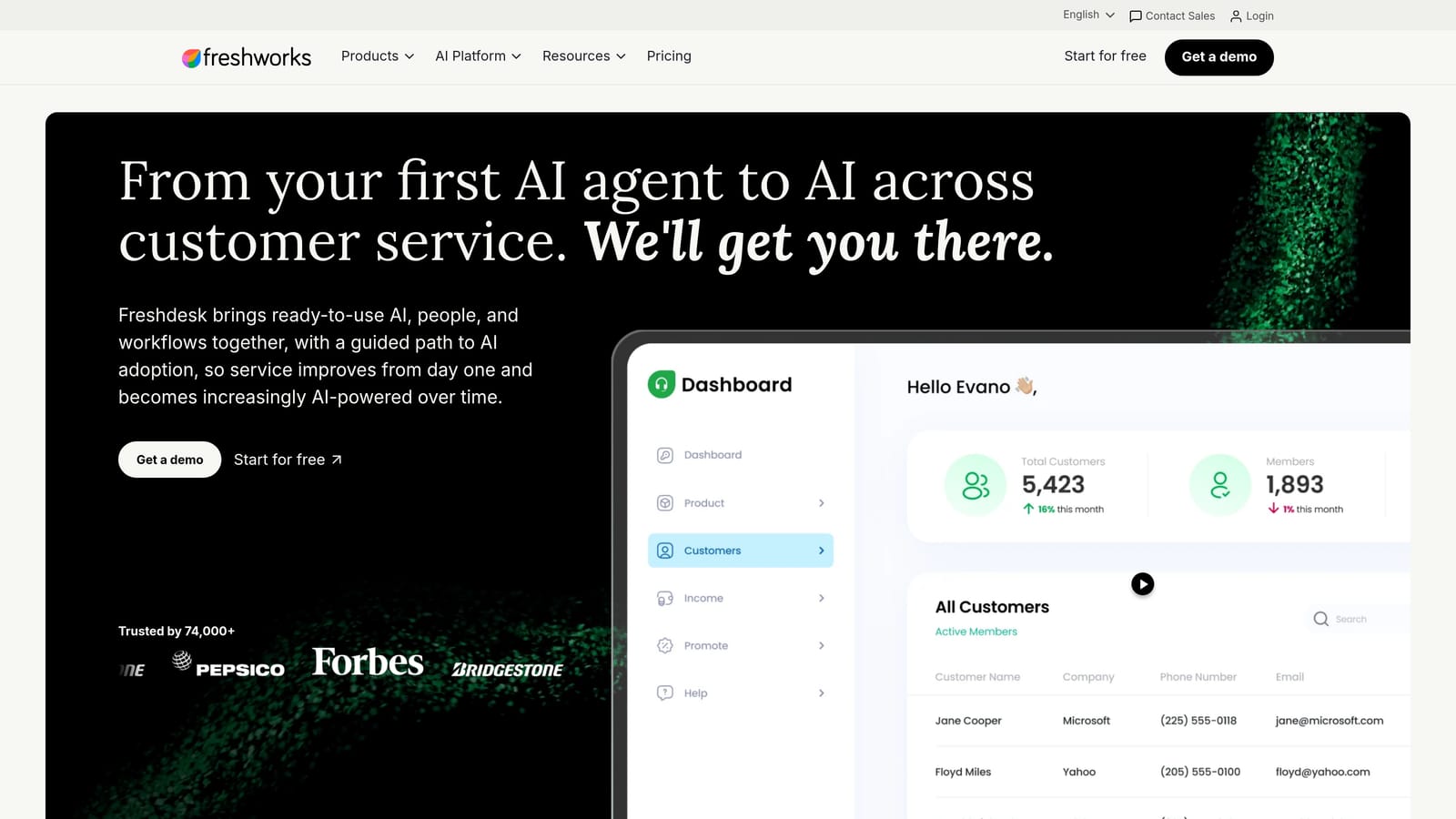
Freshdesk is an affordable omnichannel helpdesk with Freddy AI handling intelligent triage, suggested responses, and resolution assistance across email, chat, phone, and social.
Where This Tool Shines
Freshdesk hits a sweet spot between capability and cost. Freddy AI covers the automation basics well: auto-triage, response suggestions, and Freddy Copilot for agent productivity. For teams that don't need the full weight of an enterprise platform, Freshdesk delivers a lot of value per dollar.
The omnichannel inbox is genuinely unified, pulling email, chat, phone, and social into one view without requiring separate product purchases for each channel. The free tier also makes it accessible for very small teams testing automation for the first time.
Key Features
Freddy AI: Auto-triage, response suggestions, and resolution assist powered by Freshworks' AI layer.
Omnichannel Inbox: Email, chat, phone, and social support managed from a single unified interface.
Automation Rules: Ticket assignment, escalation, and SLA-based automation without heavy configuration.
Freddy Copilot: Agent productivity assistant for drafting, summarizing, and improving replies.
Free Tier: Available for small teams with basic ticketing needs.
Best For
Growing SMBs and mid-market teams watching budget, particularly those that need omnichannel coverage without paying enterprise prices. A strong alternative to Zendesk for teams that don't need the full depth of its ecosystem.
Pricing
Free tier available; paid plans from approximately $15/agent/month. Verify current tiers at freshdesk.com/pricing.
4. Intercom
Best for: In-product conversational support where autonomous AI resolution before human handoff is the primary goal.
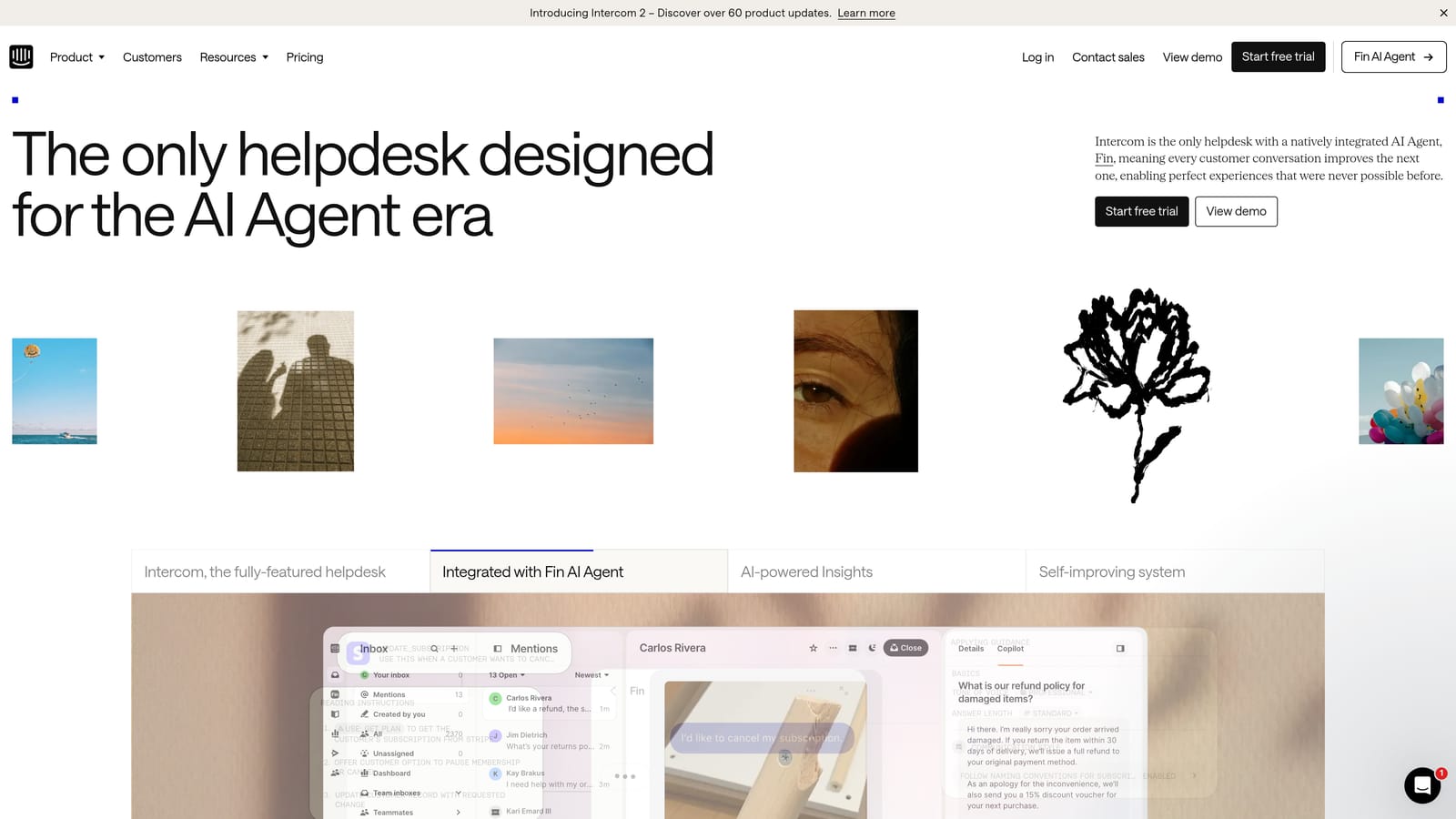
Intercom is a conversational support platform with Fin AI Agent handling a significant share of customer queries autonomously before seamless escalation to human agents.
Where This Tool Shines
Fin AI Agent is Intercom's standout feature. It's designed to resolve customer queries conversationally and autonomously, pulling from your knowledge base and product content to handle common questions before a human ever gets involved. For SaaS products with high volumes of repetitive in-app questions, this can meaningfully reduce agent workload.
Intercom's proactive messaging capabilities also set it apart. You can trigger targeted messages based on user behavior, product events, or lifecycle stage, turning support from reactive to proactive. The resolution-based pricing model on some tiers aligns cost directly with outcomes, which is a refreshing change from per-seat models.
Key Features
Fin AI Agent: Autonomous conversational resolution that handles queries end-to-end before human handoff.
Proactive Support Triggers: In-product messaging based on user behavior and product events.
Shared Inbox with AI Assist: AI-assisted reply drafting for human agents handling escalated conversations.
Resolution-Based Pricing: Some tiers charge based on resolved conversations rather than seats.
Product Analytics Integration: Connects support data with product usage context.
Best For
SaaS companies where in-product support and proactive messaging are central to the customer experience. Particularly effective for teams that want AI to handle the first line of resolution before routing complex issues to humans.
Pricing
Varies by plan and usage. Check current pricing at intercom.com/pricing as the model has evolved to include resolution-based components.
5. HubSpot Service Hub
Best for: Revenue-focused teams where support, sales, and marketing need to share a single view of the customer.
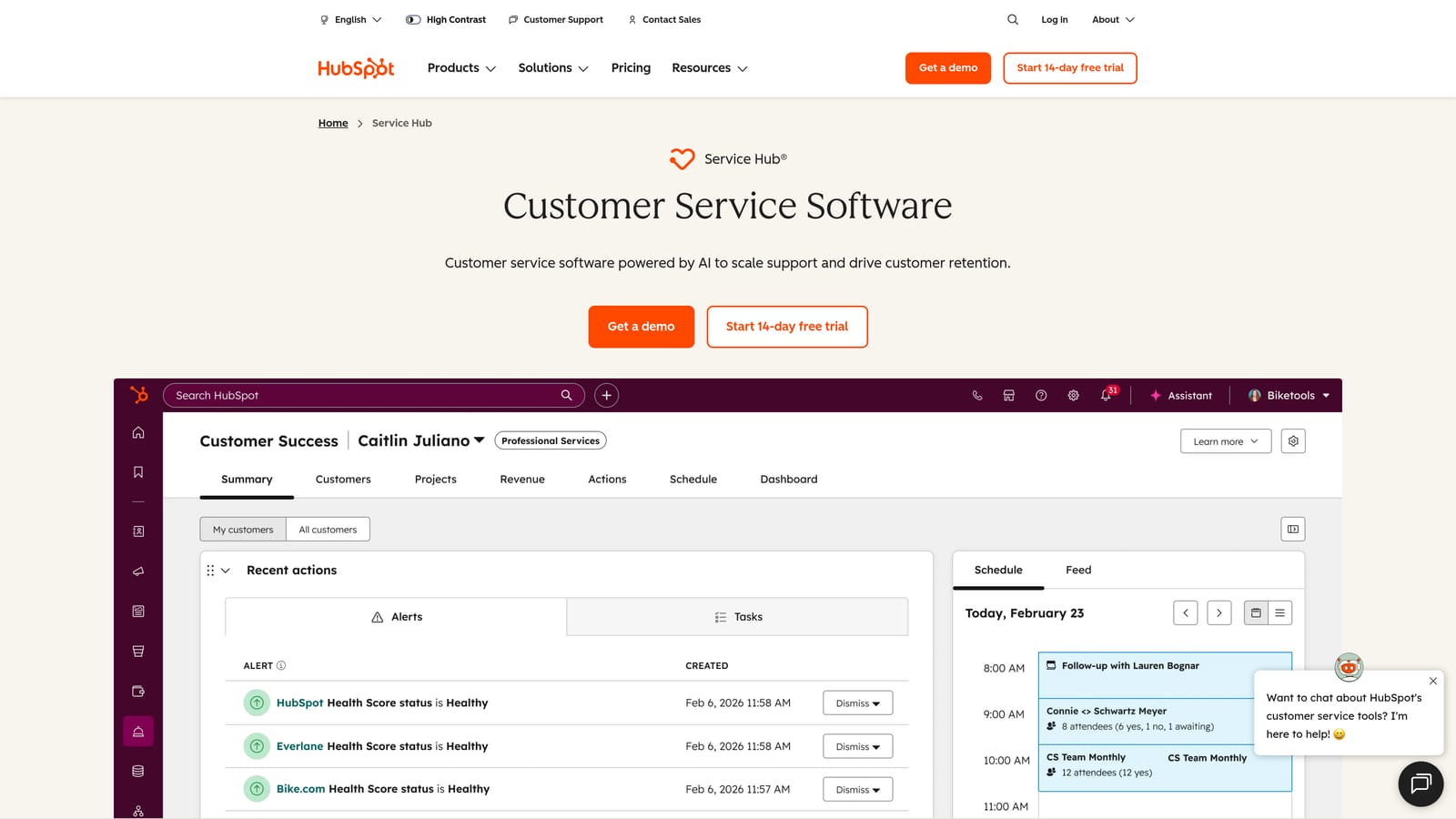
HubSpot Service Hub is support ticketing natively embedded in HubSpot CRM, making every ticket directly tied to contact, company, and deal records.
Where This Tool Shines
The CRM integration is what makes Service Hub genuinely different. When a support ticket comes in, your agents see the full customer relationship: deal stage, purchase history, previous conversations, and marketing touchpoints. That context changes how support conversations go, and it means support data can feed directly back into sales and marketing workflows.
For teams already on HubSpot, adding Service Hub is a natural extension rather than a new tool to learn. The AI features, including conversation intelligence and content suggestions, are improving steadily as HubSpot continues to invest in its AI layer across the platform.
Key Features
CRM-Native Ticketing: Every ticket tied directly to contact, company, and deal records in HubSpot CRM.
AI Conversation Intelligence: Analyzes support conversations and suggests relevant content for resolution.
Automated Routing and Escalation: Rule-based ticket assignment with SLA tracking.
Customer Portal: Self-service portal for customers to submit and track their own tickets.
CSAT and NPS Reporting: Built-in satisfaction tracking without requiring third-party survey tools.
Best For
Teams already in the HubSpot ecosystem where unified customer data across support, sales, and marketing is a priority. Also a strong fit for companies where support interactions should directly inform revenue conversations.
Pricing
Free tools available; paid tiers from approximately $15/seat/month. Verify current pricing at hubspot.com/pricing.
6. Jira Service Management
Best for: IT and DevOps teams that need ITSM-grade incident, change, and problem management natively connected to engineering workflows.
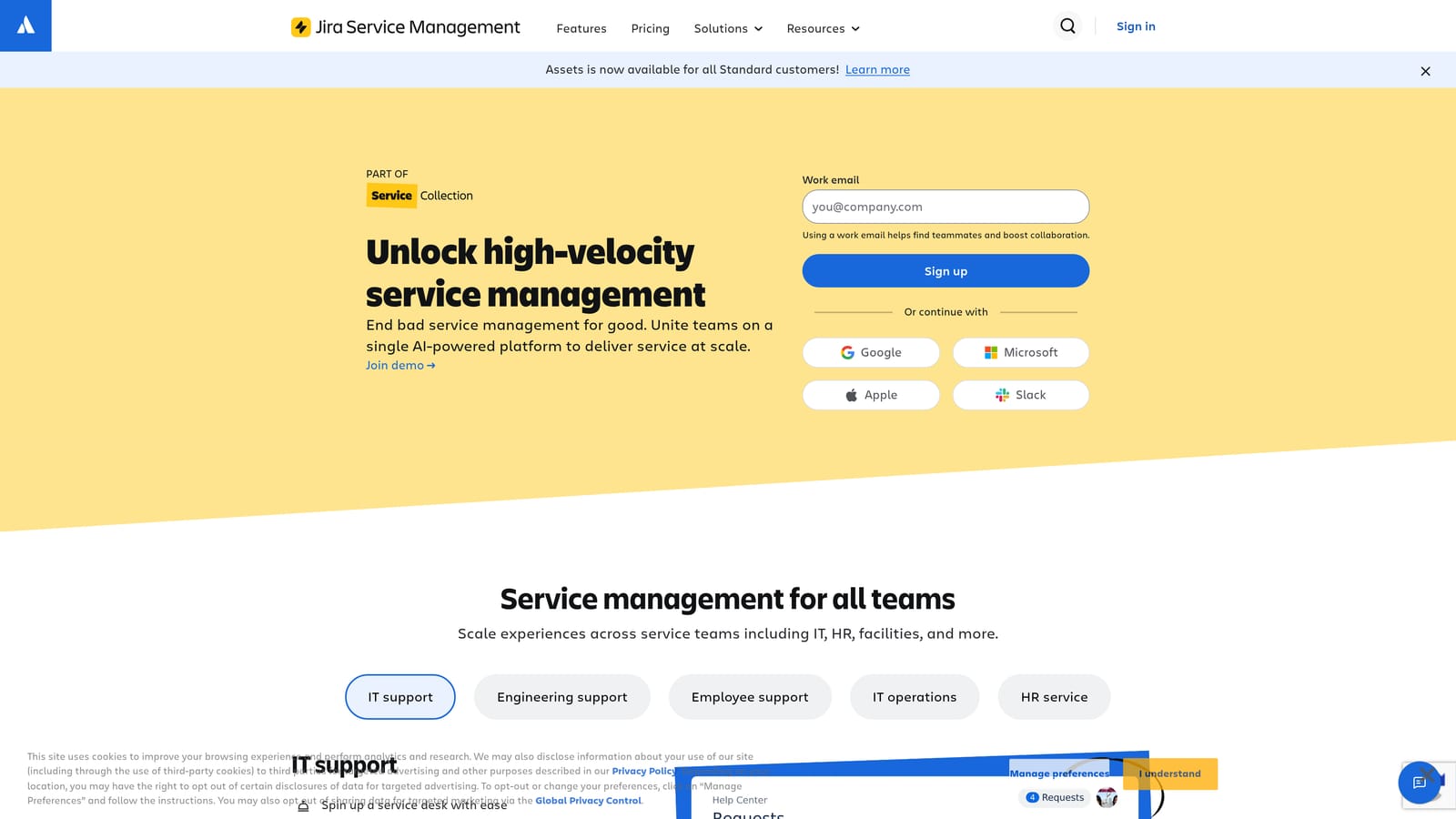
Jira Service Management is Atlassian's ITSM platform built for technical teams, with native integration into Jira Software and Confluence for engineering-aligned operations.
Where This Tool Shines
If your support team works closely with engineering, Jira Service Management removes a lot of friction. Incidents, change requests, and service requests live in the same ecosystem as your engineering team's Jira boards, making escalation and cross-team collaboration straightforward rather than a copy-paste exercise across tools.
The virtual service agent handles automated first-response and self-service resolution for common IT requests, while intelligent triage and AI-assisted categorization help route more complex issues to the right team. It's purpose-built for internal IT and DevOps use cases, which means it's less suited for customer-facing support teams but excellent for its intended audience.
Key Features
ITSM Workflows: Incident, change, problem, and service request management in a single platform.
Virtual Service Agent: Automated first-response and self-service resolution for common requests.
Native Jira and Confluence Integration: Direct connection to engineering workflows and knowledge base.
Intelligent Triage: AI-assisted categorization and routing for incoming requests.
Free Tier: Available for teams up to 3 agents.
Best For
Internal IT teams, DevOps organizations, and companies where support escalation to engineering is a frequent workflow. Less suited for customer-facing support teams that don't need ITSM-specific capabilities.
Pricing
Free for up to 3 agents; Standard from approximately $17.65/agent/month. Verify current pricing at atlassian.com.
7. ServiceNow
Best for: Large enterprises that need a unified ITSM, ITOM, and customer service management platform with enterprise-grade compliance and governance.
ServiceNow is an enterprise-grade platform combining ITSM, IT operations management, and customer service management with AI-powered virtual agents and predictive intelligence at organizational scale.
Where This Tool Shines
ServiceNow operates at a different scale than most tools on this list. Now Intelligence, its AI and machine learning layer, runs across workflows for predictive routing, anomaly detection, and virtual agent resolution. For organizations managing thousands of tickets daily across multiple departments, that level of intelligence embedded into workflows can have a significant operational impact.
The platform's configurability is both its strength and its challenge. You can build virtually any workflow imaginable, but that flexibility requires meaningful implementation investment. ServiceNow is not a plug-and-play solution; it's a platform that rewards organizations with dedicated IT and operations teams to configure and maintain it.
Key Features
Now Intelligence: AI and machine learning across workflows, including predictive routing and anomaly detection.
Virtual Agent: Automated self-service resolution for common requests without human involvement.
Unified ITSM, ITOM, and CSM: All operational and customer service management in a single platform.
Highly Configurable Workflows: Build custom automation for virtually any enterprise process.
Enterprise Compliance Controls: Governance, audit trails, and compliance frameworks built in.
Best For
Large enterprises with dedicated IT and operations teams, particularly those that need to unify internal IT operations and customer service management under a single governance framework.
Pricing
Enterprise pricing with custom quotes only. Contact ServiceNow directly at servicenow.com for a tailored quote.
8. Help Scout
Best for: Teams that want thoughtful, light automation without losing the personal, human feel of customer support.
Help Scout is a clean shared inbox platform with AI Assist for drafting and summarizing, designed intentionally for teams that value relationship-driven support over heavy automation.
Where This Tool Shines
Help Scout's philosophy is deliberately different. There are no ticket numbers visible to customers; conversations feel like email exchanges rather than support queues. That design choice shapes everything about how the tool works, and for teams where the quality of the customer relationship matters as much as resolution speed, it's a meaningful differentiator.
AI Assist handles the productivity side: drafting replies, summarizing long threads, and adjusting tone without taking over the conversation. The Beacon widget brings in-app help into the product without the complexity of a full conversational AI setup. This is intentionally lighter automation, and that's the point.
Key Features
Human-Feeling Shared Inbox: No ticket numbers visible to customers; conversations look and feel like email.
AI Assist: Reply drafting, thread summarization, and tone adjustment for agents.
Beacon Widget: In-app help widget for self-service and proactive support without heavy configuration.
Saved Replies and Workflow Automation: Template-based replies and rule-based routing for common scenarios.
Built-In Knowledge Base (Docs): Native documentation tool integrated directly into the support workflow.
Best For
SMBs and mid-market teams where customer relationship quality is a competitive differentiator. Particularly well-suited for companies where support is a brand touchpoint and heavy automation would feel out of character.
Pricing
From approximately $22/user/month. Verify current pricing at helpscout.com/pricing.
9. Zoho Desk
Best for: Budget-conscious teams in the Zoho ecosystem that need AI-powered sentiment analysis and visual workflow automation.
Zoho Desk is a feature-rich, budget-friendly helpdesk with Zia AI for sentiment analysis and anomaly detection, plus Blueprint for visual drag-and-drop workflow automation.
Where This Tool Shines
Zoho Desk packs a surprising amount of capability into its price point. Zia AI goes beyond basic triage: it analyzes sentiment in real time, flags anomalies in ticket volume, auto-tags tickets for routing, and suggests responses based on historical patterns. For teams that want AI-driven insights without an enterprise price tag, Zia delivers real value.
Blueprint is another standout. The visual workflow builder lets support operations teams design multi-step automation processes with a drag-and-drop interface, making it accessible without requiring technical configuration skills. For teams already using Zoho CRM, the native integration makes Zoho Desk an obvious choice to keep customer data unified.
Key Features
Zia AI: Sentiment analysis, auto-tagging, anomaly detection, and response suggestions in real time.
Blueprint Workflow Automation: Visual drag-and-drop builder for designing multi-step automation processes.
Zoho CRM Integration: Native, tight integration for teams already in the Zoho ecosystem.
Free Tier: Available for up to 3 agents for teams just getting started.
Best For
SMBs and growing teams that want strong AI features and visual workflow automation at a competitive price. The best fit for teams already using Zoho CRM or other Zoho products who want a unified business stack.
Pricing
Free tier available; paid plans from approximately $14/agent/month. Verify current pricing at zoho.com/desk/pricing.
Which Tool Is Right for Your Team?
The right automated ticketing system depends less on feature lists and more on what your team actually needs to accomplish. Here's a quick-reference guide to cut through the noise.
AI-native autonomous resolution: Halo AI is the strongest choice for B2B SaaS teams that want tickets resolved end-to-end without constant human involvement. Its page-aware context, continuous learning, and business intelligence layer make it more than a helpdesk.
Enterprise scale with compliance requirements: Zendesk handles mid-market and enterprise complexity with a mature ecosystem. ServiceNow is the choice when you need unified ITSM, ITOM, and CSM under a single governance framework at large organizational scale.
Budget-conscious SMB teams: Freshdesk and Zoho Desk both deliver solid AI features and omnichannel support at accessible price points. Zoho Desk edges ahead for teams already in the Zoho ecosystem; Freshdesk wins on simplicity and onboarding speed.
In-product conversational support: Intercom's Fin AI Agent is purpose-built for this use case. If your primary goal is autonomous resolution of in-app queries before human handoff, Intercom is the strongest specialist option.
CRM-unified support: HubSpot Service Hub is the natural choice for teams where support data needs to feed directly into sales and marketing workflows. If you're already on HubSpot, it's a straightforward extension.
IT and DevOps ticketing: Jira Service Management is purpose-built for internal IT operations and engineering-aligned incident management. Nothing else on this list matches its native Jira integration depth.
Human-touch with light automation: Help Scout is the right call for teams where customer relationship quality is a brand differentiator and heavy automation would feel out of place.
Your support team shouldn't scale linearly with your customer base. Let AI agents handle routine tickets, guide users through your product, and surface business intelligence while your team focuses on complex issues that need a human touch. See Halo in action and discover how continuous learning transforms every interaction into smarter, faster support.