10 Best Chatbots for Customer Service in 2026
The best chatbot for customer service in 2026 goes far beyond simple deflection—today's top platforms autonomously resolve tickets end-to-end, integrate deeply with B2B tech stacks, and continuously learn from interactions. This guide evaluates 10 leading solutions across AI capabilities, deployment ease, scalability, and pricing to help support teams find the right fit.
 Grant CooperFounder14 min read
Customer service chatbots have come a long way from the clunky decision trees that sent users in circles before dumping them on a human. Today's leading platforms resolve tickets autonomously, learn from every interaction, and plug into your entire tech stack to deliver answers with real context behind them.
The shift from deflection to genuine resolution is the defining trend of 2026. The best tools aren't just keeping customers away from agents; they're actually solving problems end-to-end. That distinction matters enormously when you're evaluating options for a B2B support operation.
To build this list, we evaluated tools across six criteria: AI capabilities and autonomous resolution quality, integration depth with common B2B tech stacks, ease of deployment, scalability for growing teams, pricing transparency, and real-world suitability for customer support operations. Whether you're running a lean startup or a global enterprise, there's a solution here built for your situation.
Here are the top chatbots for customer service worth considering in 2026.
1. Halo AI
Best for: B2B SaaS teams that need AI-first autonomous support with deep system integrations.
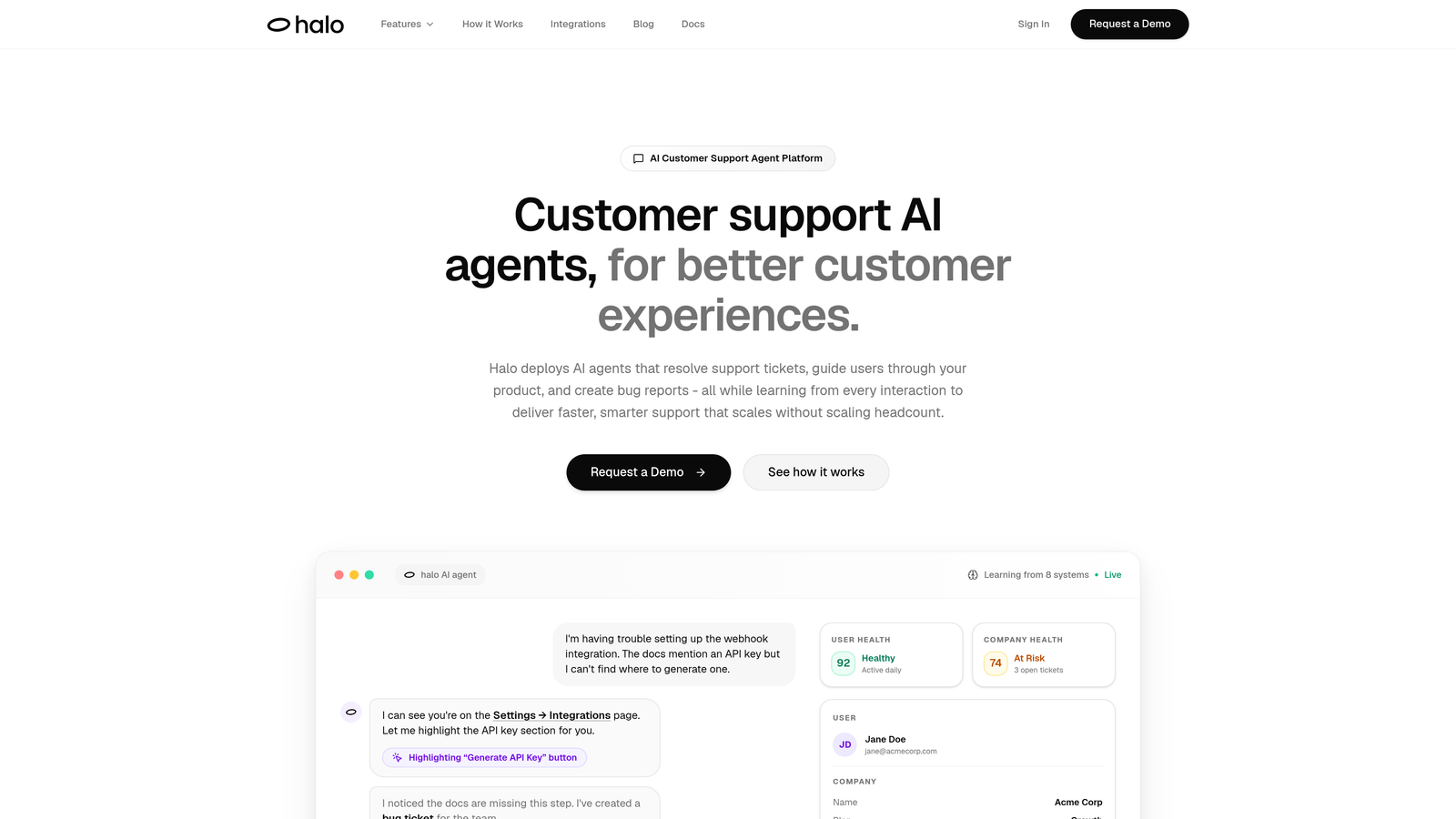
Halo AI is an AI-native customer support platform that deploys autonomous agents to resolve tickets, guide users with page-aware context, and surface business intelligence across your entire stack.
Where This Tool Shines
What separates Halo from most tools on this list is its architecture. It wasn't built by bolting AI onto an existing helpdesk. It was designed from the ground up around autonomous resolution, which means the intelligence runs deeper than a surface-level layer on top of legacy workflows.
The page-aware chat widget is a standout feature: Halo's agents actually see what your users see on screen, enabling visual UI guidance rather than generic text responses. Combine that with continuous learning from every resolved interaction, and the platform gets meaningfully smarter over time rather than staying static.
Key Features
Page-Aware Chat Widget: Understands the user's current page context to deliver precise, visual UI guidance rather than one-size-fits-all answers.
Autonomous Ticket Resolution: AI agents resolve support tickets end-to-end with continuous learning from every interaction, improving accuracy over time.
Smart Inbox with Business Intelligence: Goes beyond support metrics to surface customer health signals, revenue intelligence, and anomaly detection directly in the inbox.
Auto Bug Ticket Creation and Live Agent Handoff: Automatically creates bug reports for engineering (via Linear) and escalates complex issues to human agents with full context preserved.
Deep Integrations: Connects natively with Linear, Slack, HubSpot, Intercom, Stripe, Zoom, PandaDoc, and Fathom, giving agents real context from across your business stack.
Best For
Halo is the right fit for B2B SaaS companies and product teams that want an AI-first architecture rather than a patched-on AI feature. It's particularly strong for teams already using tools like HubSpot, Linear, or Intercom who want their support intelligence connected to the broader business.
Pricing
Contact for pricing; a demo is available directly on the Halo AI website to see the platform in action before committing.
2. Intercom Fin
Best for: Teams already on Intercom who want a native AI agent without switching platforms.
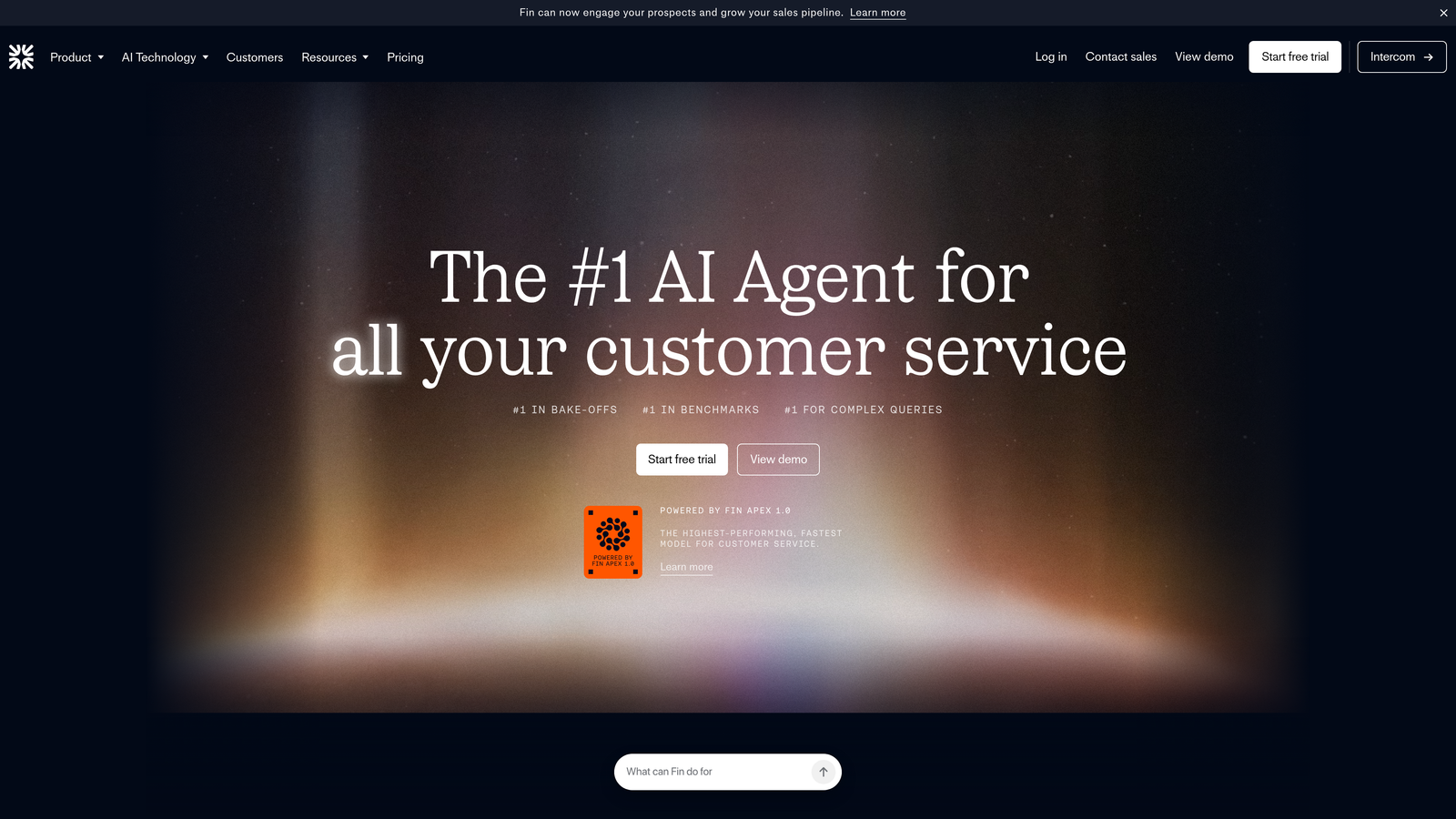
Intercom Fin is Intercom's purpose-built AI agent designed to resolve support questions using your help center content and conversation history.
Where This Tool Shines
Fin's biggest advantage is how seamlessly it lives inside the Intercom ecosystem. If your team already runs on Intercom Messenger and inbox workflows, deploying Fin requires minimal setup. It draws on your existing help center content and past conversations, which means it can start delivering useful responses quickly without a lengthy training period.
The per-resolution pricing model is also worth noting. Rather than paying a flat platform fee regardless of usage, you pay for outcomes. That structure aligns incentives well, though it can get expensive at high resolution volumes.
Key Features
Help Center Training: AI agent trained on your existing help center articles, past conversations, and custom data sources for contextual answers.
Native Intercom Integration: Works directly within Intercom Messenger and inbox workflows without additional configuration.
Tone and Persona Customization: Lets you configure Fin's voice and personality to match your brand guidelines.
Multilingual Support: Handles conversations across many languages, useful for global support operations.
Per-Resolution Pricing: Pay only when Fin successfully resolves a customer query, not for idle availability.
Best For
Existing Intercom customers looking to automate a portion of their support volume without migrating platforms. Less ideal if you're not already in the Intercom ecosystem, as the value is tightly tied to that infrastructure.
Pricing
Starts at $0.99 per resolution; verify current pricing on the Intercom website as tiers may have been updated.
3. Zendesk AI Agents
Best for: Enterprises running Zendesk Suite who want AI automation without changing their core helpdesk.
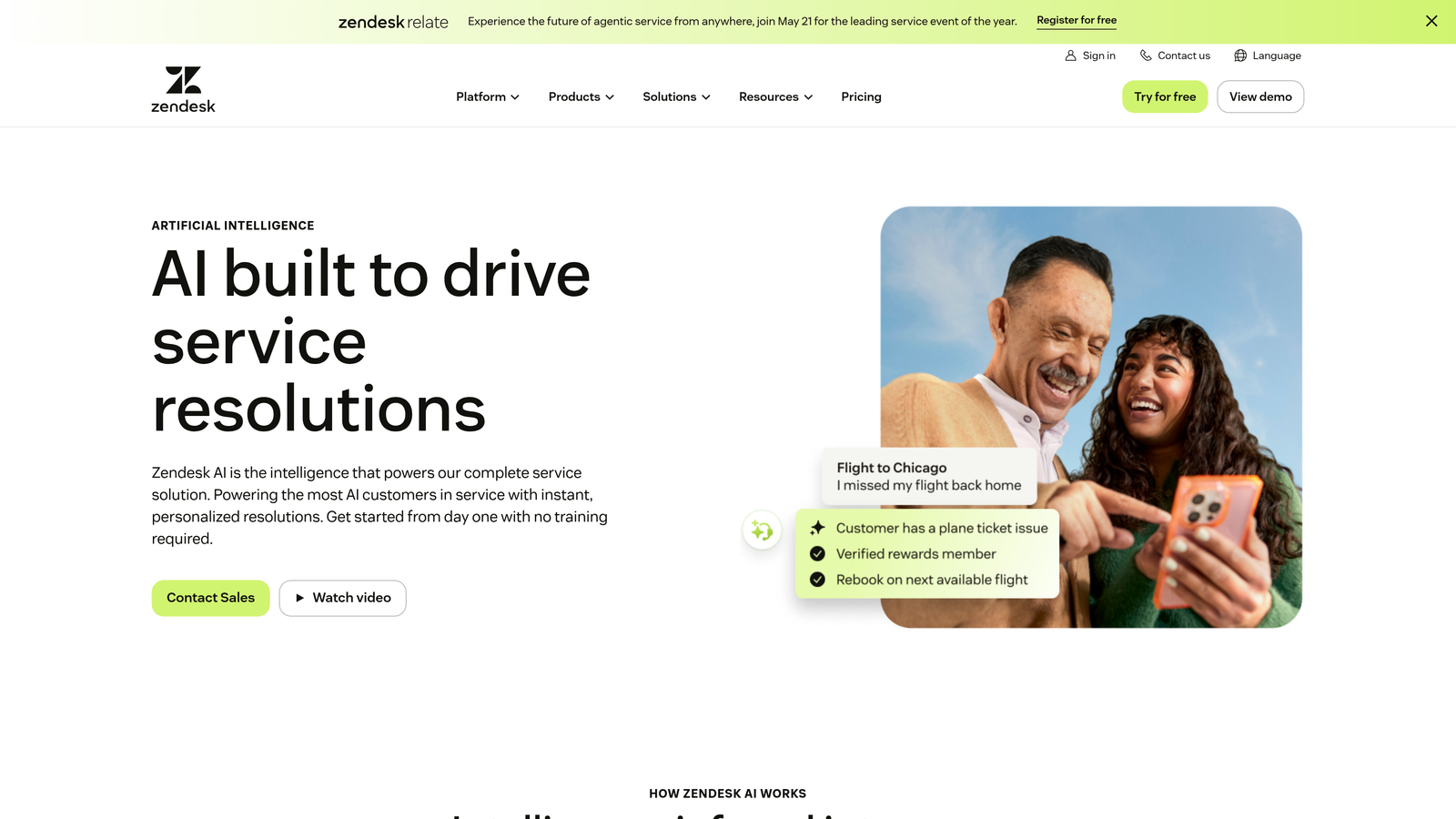
Zendesk AI Agents are AI-powered bots built into the Zendesk Suite that automate ticket resolution, detect customer intent, and route complex issues to human agents within existing workflows.
Where This Tool Shines
Zendesk's AI agents benefit from being trained on an enormous volume of customer interaction data, which gives them strong out-of-the-box intent detection across common support categories. For teams already invested in Zendesk's ticketing and knowledge base infrastructure, the integration is essentially frictionless.
The omnichannel reach is another practical strength. Zendesk AI Agents operate consistently across email, chat, social, and messaging channels, making it easier to maintain a unified support experience without managing separate bots per channel.
Key Features
Pre-Trained Intent Detection: Leverages training on large volumes of customer interactions to understand query intent without extensive custom configuration.
Zendesk Suite Integration: Connects directly with Zendesk's ticketing system, knowledge base, and agent workspace for seamless escalation.
Automated Workflows with Escalation: Triggers human handoff based on intent, sentiment, or query complexity.
Omnichannel Support: Consistent AI resolution across email, chat, social media, and messaging apps.
AI Analytics and Reporting: Detailed performance reporting on resolution rates, deflection, and agent assist metrics.
Best For
Mid-market and enterprise teams already on Zendesk Suite who want to layer AI automation onto their existing workflows without a platform migration. Not the best fit for teams looking for an AI-first architecture built outside the Zendesk ecosystem.
Pricing
Included in Zendesk Suite plans with AI add-on pricing that varies by tier; check the Zendesk website for current plan details.
4. Ada
Best for: Global enterprise support operations with high volume and multilingual requirements.
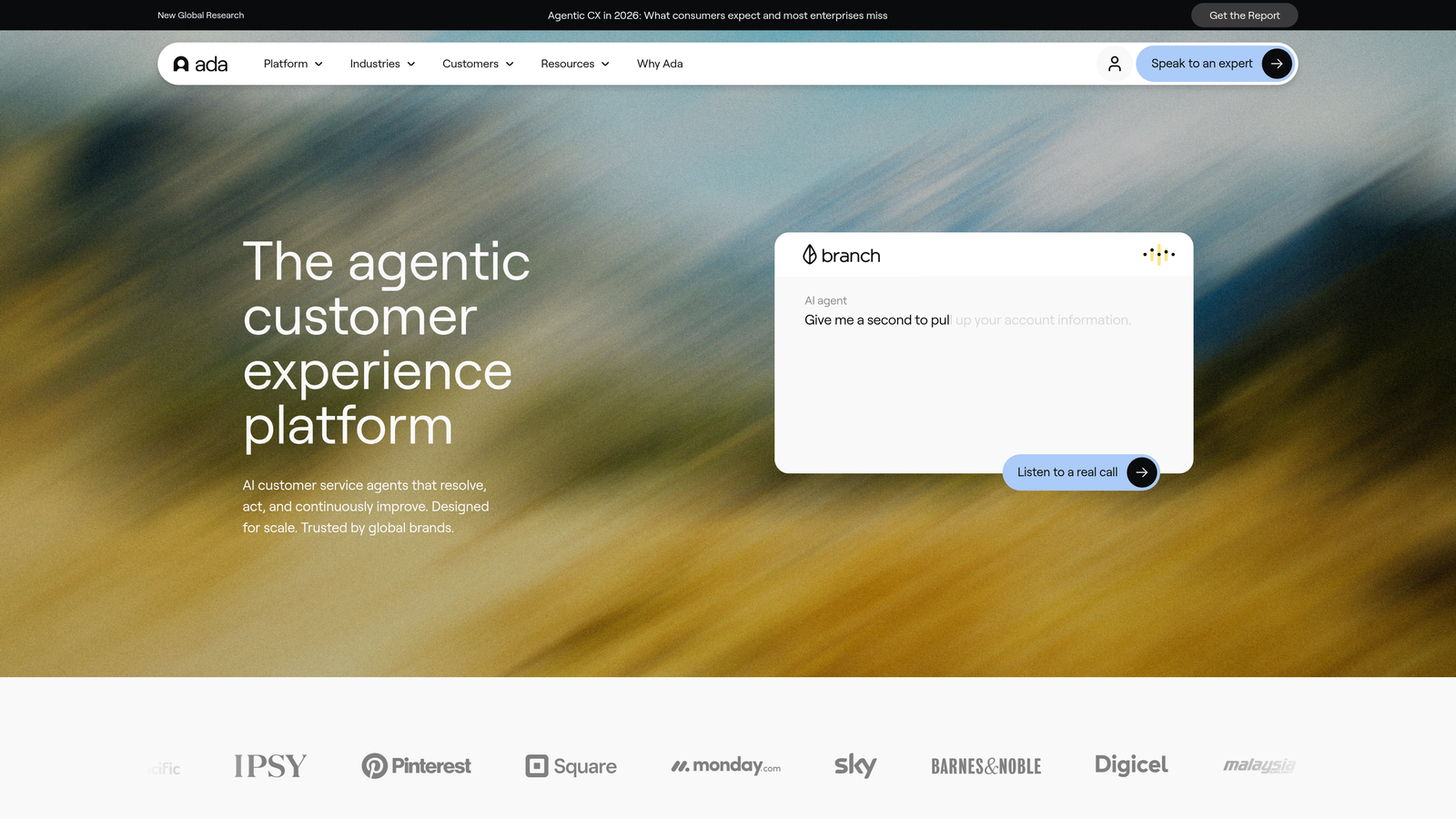
Ada is an enterprise-grade AI customer service platform with a no-code builder, a reasoning engine for complex queries, and strong multilingual capabilities across 50+ languages.
Where This Tool Shines
Ada is built for scale. Its AI reasoning engine goes beyond simple FAQ matching to handle multi-step queries that require logic and context, which is a meaningful differentiator for enterprises dealing with complex support scenarios. The no-code builder also makes it accessible to operations teams without needing engineering involvement for every workflow change.
The multilingual handling is notably sophisticated. Rather than basic translation, Ada handles nuanced language differences, making it a strong choice for companies running support across multiple regions with distinct communication norms.
Key Features
AI Reasoning Engine: Handles complex, multi-step queries that go beyond simple keyword matching or FAQ retrieval.
No-Code Agent Builder: Non-technical teams can build and modify AI workflows without engineering support.
50+ Language Support: Nuanced multilingual handling for global support operations across diverse regions.
Omnichannel Deployment: Web, mobile, social, and SMS coverage from a single platform.
AI Coaching and Quality Insights: Built-in tooling to identify gaps and improve agent performance continuously.
Best For
Large enterprises with global support operations, high ticket volumes, and multilingual requirements. Ada's enterprise pricing and configuration depth make it less accessible for smaller teams or companies without dedicated operations resources.
Pricing
Custom enterprise pricing; contact Ada directly for a quote tailored to your volume and requirements.
5. Tidio
Best for: Small businesses and e-commerce stores that need affordable chatbot and live chat in one tool.
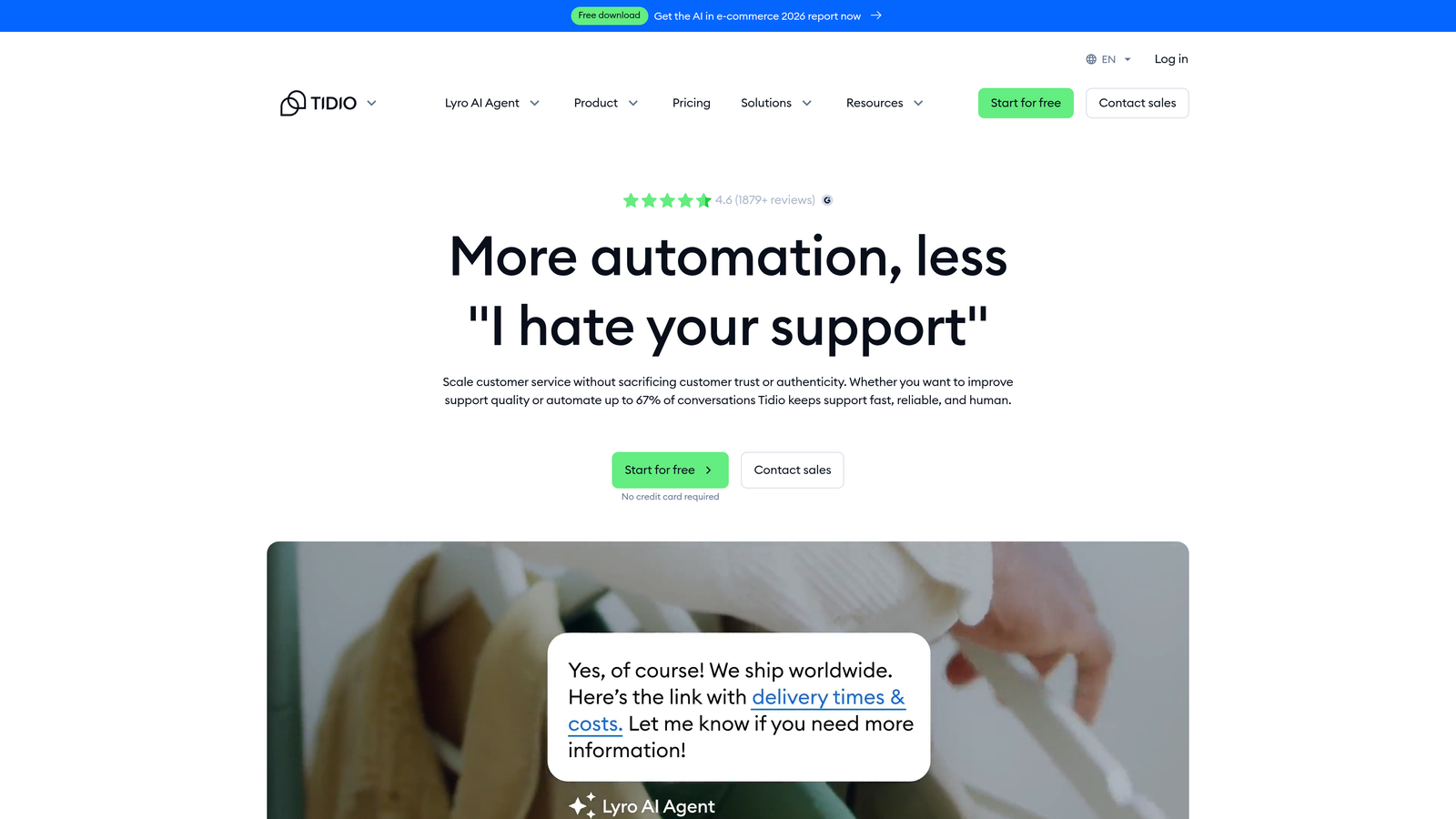
Tidio is a lightweight chatbot and live chat platform featuring Lyro AI for conversational support, with native integrations for Shopify, WooCommerce, and WordPress.
Where This Tool Shines
Tidio punches well above its price point for small business use cases. The combination of AI chatbot and live chat in a single widget keeps the tech stack simple, and the Shopify and WooCommerce integrations mean e-commerce teams can get up and running quickly without custom development work.
Lyro AI learns from your existing FAQ and support content, which means setup doesn't require building a knowledge base from scratch. For resource-constrained teams, that speed-to-value matters.
Key Features
Lyro AI Chatbot: Learns from your FAQ and support documentation to handle common customer questions conversationally.
Combined Live Chat and Chatbot: Single widget handles both AI-automated and human-assisted conversations without switching platforms.
Native E-Commerce Integrations: Direct integrations with Shopify, WooCommerce, and WordPress for store-specific context.
Visual Flow Builder: Drag-and-drop chatbot builder accessible to non-technical users.
Visitor Tracking and Pre-Chat Surveys: Captures context before conversations start to improve routing and response quality.
Best For
Small businesses, e-commerce stores, and solopreneurs who need a cost-effective chatbot solution with live chat fallback. Not designed for complex B2B enterprise workflows or deep CRM integrations.
Pricing
Free plan available; paid plans start around $29/month, making it one of the more accessible options on this list.
6. Freshdesk Freddy AI
Best for: Teams on the Freshworks ecosystem looking for built-in AI without a separate tool purchase.
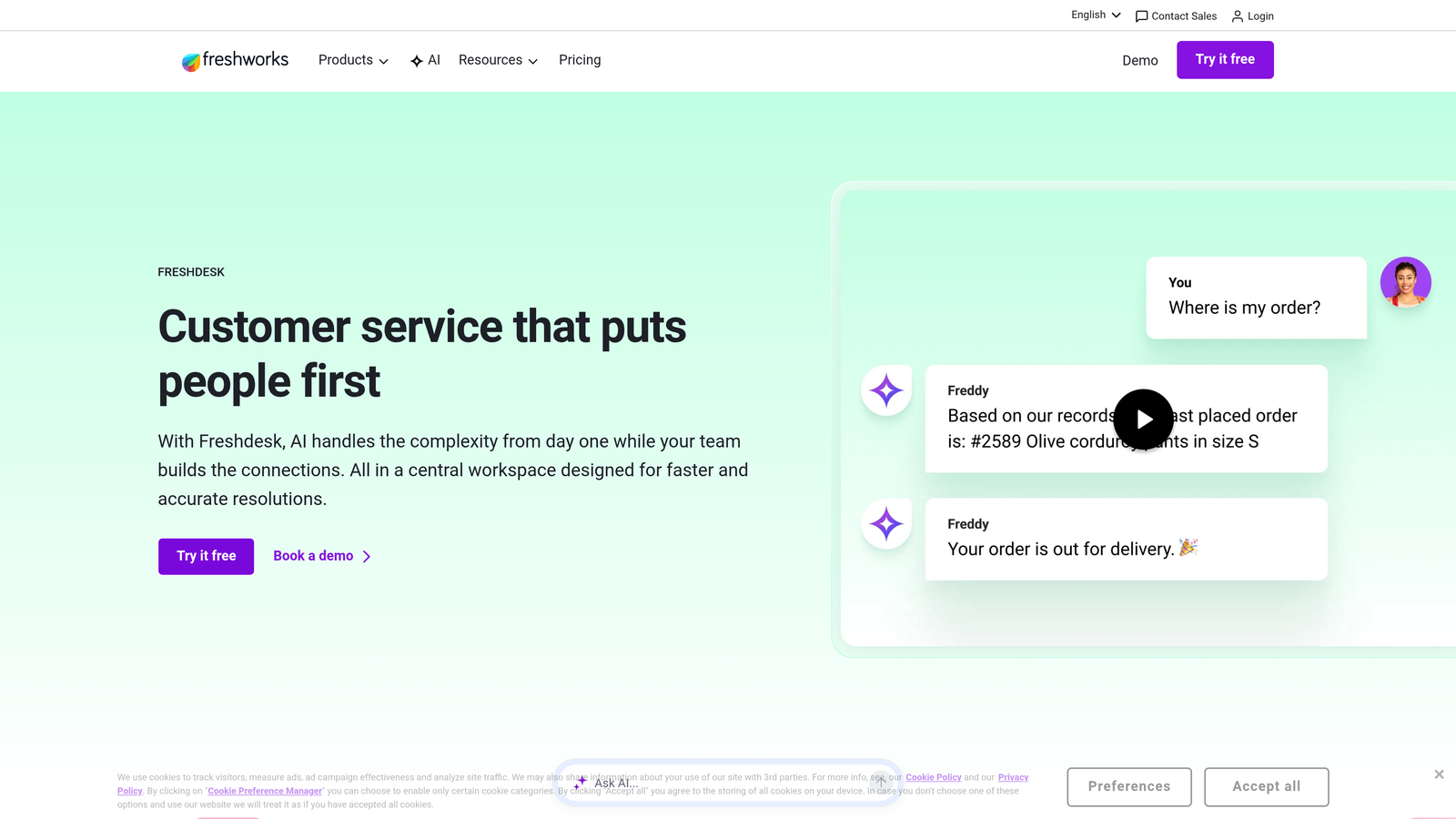
Freshdesk Freddy AI is an AI agent within the Freshworks platform that automates ticket responses, assists human agents with suggestions, and handles routine queries natively inside Freshdesk.
Where This Tool Shines
Freddy AI's strength is its tight integration with Freshdesk's ticketing infrastructure. Auto-resolution, agent assist suggestions, and next-best-action recommendations all work within the same interface your team already uses, which reduces the friction of adopting AI tooling.
For teams that want AI capabilities without the complexity of a separate platform, Freddy delivers solid value at a competitive price point, particularly on the Growth plan where AI features become available at a relatively low per-agent cost.
Key Features
AI Auto-Resolution: Automatically resolves common support queries without agent involvement using knowledge base content.
Agent Assist: Suggests responses and next-best-action recommendations to human agents handling escalated tickets.
Unified Freshdesk Integration: Works natively within Freshdesk's ticketing system and knowledge base without additional configuration.
Omnichannel Coverage: Supports email, chat, phone, and social channels from a single platform.
Competitive Pricing: AI features accessible at lower price points compared to many enterprise alternatives.
Best For
Growing teams already using Freshdesk who want to add AI automation without switching platforms or significantly increasing their tooling budget. Less suitable for teams outside the Freshworks ecosystem.
Pricing
Freshdesk free tier available; AI features included in the Growth plan starting around $15 per agent per month.
7. Drift (by Salesloft)
Best for: B2B teams that want conversational AI spanning both customer support and sales engagement.
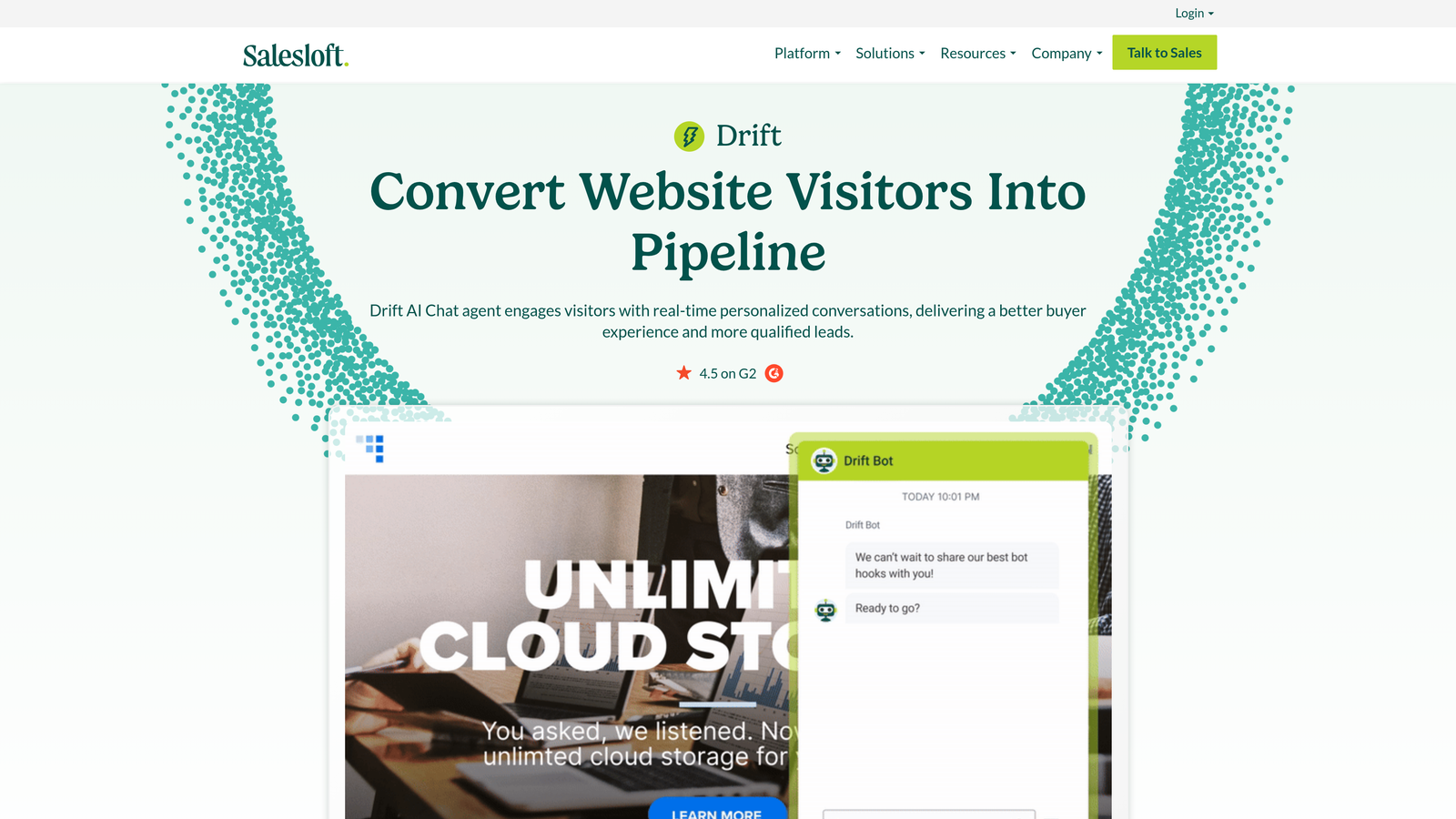
Drift, now part of Salesloft, is a conversational AI platform that blends customer support chat with sales engagement for B2B teams managing the full buyer and customer journey.
Where This Tool Shines
Drift's differentiation is its dual-purpose design. Most tools on this list focus exclusively on support. Drift handles support conversations and sales conversations within the same platform, with playbooks that route each type of query to the right destination. For B2B companies where support and sales teams share the same customer base, that unified experience can reduce tool sprawl.
Account-based targeting adds another layer of personalization, allowing chat experiences to adapt based on the visitor's company, industry, or stage in the buying cycle.
Key Features
Dual Support and Sales AI: Handles both customer support queries and sales engagement within a single conversational platform.
Account-Based Targeting: Personalizes chat experiences based on company data, industry, or buyer stage.
Meeting Scheduling and Lead Routing: Built-in calendar booking and intelligent routing within chat flows.
CRM Integrations: Native connections to Salesforce, HubSpot, and other major CRM platforms.
Support vs. Sales Playbooks: Separate workflow logic for routing support issues versus sales conversations.
Best For
B2B companies where support and revenue teams are closely aligned and want a single conversational platform. Less focused on deep support automation compared to dedicated customer service AI platforms.
Pricing
Custom pricing; contact Salesloft directly for a quote based on your team size and use case.
8. Kommunicate
Best for: Teams that want flexibility to bring their own LLM or build custom GPT-powered bots with minimal code.
Kommunicate is a flexible AI chatbot platform that supports custom LLM integration or built-in GPT-powered bots, with strong human handoff capabilities and multi-platform deployment.
Where This Tool Shines
Kommunicate's bring-your-own-LLM approach gives technical teams more control over the AI model powering their chatbot than most platforms allow. If your organization has specific requirements around model choice, data residency, or fine-tuning, that flexibility is genuinely valuable.
The handoff experience is also well-executed. When a bot escalates to a human agent, the full conversation context transfers cleanly, avoiding the frustrating experience where customers have to repeat themselves after being passed to a live agent.
Key Features
Bring-Your-Own-LLM: Connect your preferred large language model or use Kommunicate's built-in GPT-powered bots depending on your requirements.
Codeless Bot Builder: Drag-and-drop conversation design for teams without dedicated engineering resources.
Seamless Human Handoff: Full context transfer from bot to human agent, preserving conversation history at the point of escalation.
Multi-Platform Deployment: Web, mobile, WhatsApp, and additional channels from a single setup.
Helpdesk Integrations: Native connections to Zendesk, Freshdesk, and other popular helpdesk platforms.
Best For
Technical teams and organizations with specific LLM requirements or custom bot needs. Also works well for teams that need multi-channel deployment across WhatsApp and mobile alongside web chat.
Pricing
Free trial available; paid plans start around $100/month, positioning it as a mid-tier option in terms of cost.
9. HubSpot Service Hub Chatbot
Best for: HubSpot-centric teams that want support automation tightly connected to CRM and marketing data.
HubSpot Service Hub includes a native chatbot builder that leverages CRM data to deliver contextual support conversations, tightly integrated with marketing, sales, and service records.
Where This Tool Shines
The core advantage here is CRM context. Because HubSpot's chatbot has direct access to contact and company records, it can personalize conversations based on deal stage, past purchases, open tickets, or marketing activity. That level of context is hard to replicate when your chatbot and CRM are separate tools that only sync periodically.
For teams already running HubSpot across marketing, sales, and service, the chatbot becomes a natural extension of workflows they already have in place rather than a new tool to manage independently.
Key Features
CRM-Powered Context: Direct access to HubSpot contact and company data for personalized, context-aware support conversations.
Automated Ticket Creation and Routing: Automatically generates and routes tickets within Service Hub based on chat interactions.
Shared Inbox: Unified inbox across chat, email, and forms for consistent agent experience.
Knowledge Base Integration: Self-service deflection using HubSpot's native knowledge base for common queries.
Free Tier Availability: Core chatbot functionality accessible on HubSpot's free plan, lowering the barrier to entry.
Best For
Teams already using HubSpot across multiple functions who want support automation that feeds into and draws from their existing CRM data. The value drops significantly for teams not already in the HubSpot ecosystem.
Pricing
Free tools available; Service Hub Starter begins at $20 per seat per month with expanded features at higher tiers.
10. Botpress
Best for: Developer teams and agencies building highly customized chatbots with full control over conversation logic.
Botpress is an open-source chatbot platform with a visual flow builder and native LLM integration, designed for teams that need deep customization beyond what off-the-shelf platforms allow.
Where This Tool Shines
Botpress gives developers a level of control that most SaaS chatbot platforms deliberately abstract away. The open-source core means you can inspect, modify, and extend the platform itself, not just configure it within predefined limits. For agencies building bespoke chatbot solutions for clients, or for internal teams with unique workflow requirements, that flexibility is a genuine advantage.
The native LLM integration is well-implemented, allowing natural language understanding without building a custom NLU layer from scratch. The active developer community also means practical answers to implementation questions are usually accessible.
Key Features
Open-Source Core: Full access to source code with a cloud-hosted option for teams that want managed infrastructure without self-hosting.
Visual Flow Builder with Code Extensibility: Design conversation flows visually, then extend with custom code where needed.
Native LLM Integration: Built-in support for GPT and other LLMs for natural language understanding without custom NLU configuration.
Multi-Channel Deployment: Web, Facebook Messenger, Telegram, Slack, and additional channels from a single codebase.
Developer Community and Documentation: Active open-source community with extensive documentation for implementation support.
Best For
Developer teams, agencies, and technically sophisticated organizations that need maximum customization. Not the right fit for non-technical teams looking for a quick, no-code deployment with minimal configuration overhead.
Pricing
Free community plan available; cloud plan uses usage-based pricing, making costs scale with actual deployment volume rather than a flat monthly fee.
Which Tool Is Right for Your Team?
The honest answer is that the best chatbot for customer service depends almost entirely on your existing tech stack, team size, and whether you need AI bolted onto a helpdesk or built into the foundation of your support operation.
Here's a quick-reference breakdown by use case:
AI-first architecture for B2B SaaS: Halo AI stands out for teams that want autonomous resolution, page-aware context, and business intelligence that goes beyond support metrics. It's built for the entire customer relationship, not just ticket deflection.
Enterprise scale with global reach: Ada is the strongest option for large organizations with multilingual requirements and complex query handling needs across multiple regions.
Ecosystem-locked teams: If you're committed to Zendesk, Freshdesk, Intercom, or HubSpot, the native AI options within those platforms (Zendesk AI Agents, Freddy AI, Intercom Fin, and HubSpot's chatbot) deliver solid value without requiring a platform migration.
Small businesses and e-commerce: Tidio offers the best combination of affordability and functionality for lean teams that need live chat and AI in one lightweight package.
Developer teams and custom builds: Botpress and Kommunicate both serve technical teams well, with Botpress offering more open-source control and Kommunicate providing stronger out-of-the-box human handoff.
The broader shift to watch is the move from deflection toward genuine resolution. The tools winning in 2026 aren't just keeping customers away from agents; they're solving problems end-to-end and feeding intelligence back into the business.
Your support team shouldn't scale linearly with your customer base. Let AI agents handle routine tickets, guide users through your product, and surface business intelligence while your team focuses on complex issues that need a human touch. See Halo in action and discover how continuous learning transforms every interaction into smarter, faster support.