9 Best Customer Service Automation Tools to Scale Support in 2026
Customer service automation tools help scaling teams handle growing support queues by automating routine inquiries, intelligently routing complex issues, and learning from interactions to improve over time. This guide evaluates the nine best customer service automation platforms for 2026 based on AI capabilities, integration options, implementation ease, and scalability—helping you choose the right solution to deliver instant support without expanding headcount.
 Matt PattoliFounder12 min read
Your support queue grows faster than your headcount. Customers expect instant responses at 2 AM on a Sunday, and your team is drowning in repetitive tickets about password resets and shipping updates. Customer service automation tools solve this by handling routine inquiries, routing complex issues to the right agents, and learning from every interaction to get smarter over time. But with dozens of platforms claiming to revolutionize your support operations, choosing the right one matters. We evaluated the leading automation tools based on AI capabilities, integration depth, ease of implementation, and real scalability for growing teams. Here are the nine platforms worth your attention in 2026.
1. Halo AI
Best for: B2B teams seeking autonomous AI agents that resolve tickets and provide business intelligence
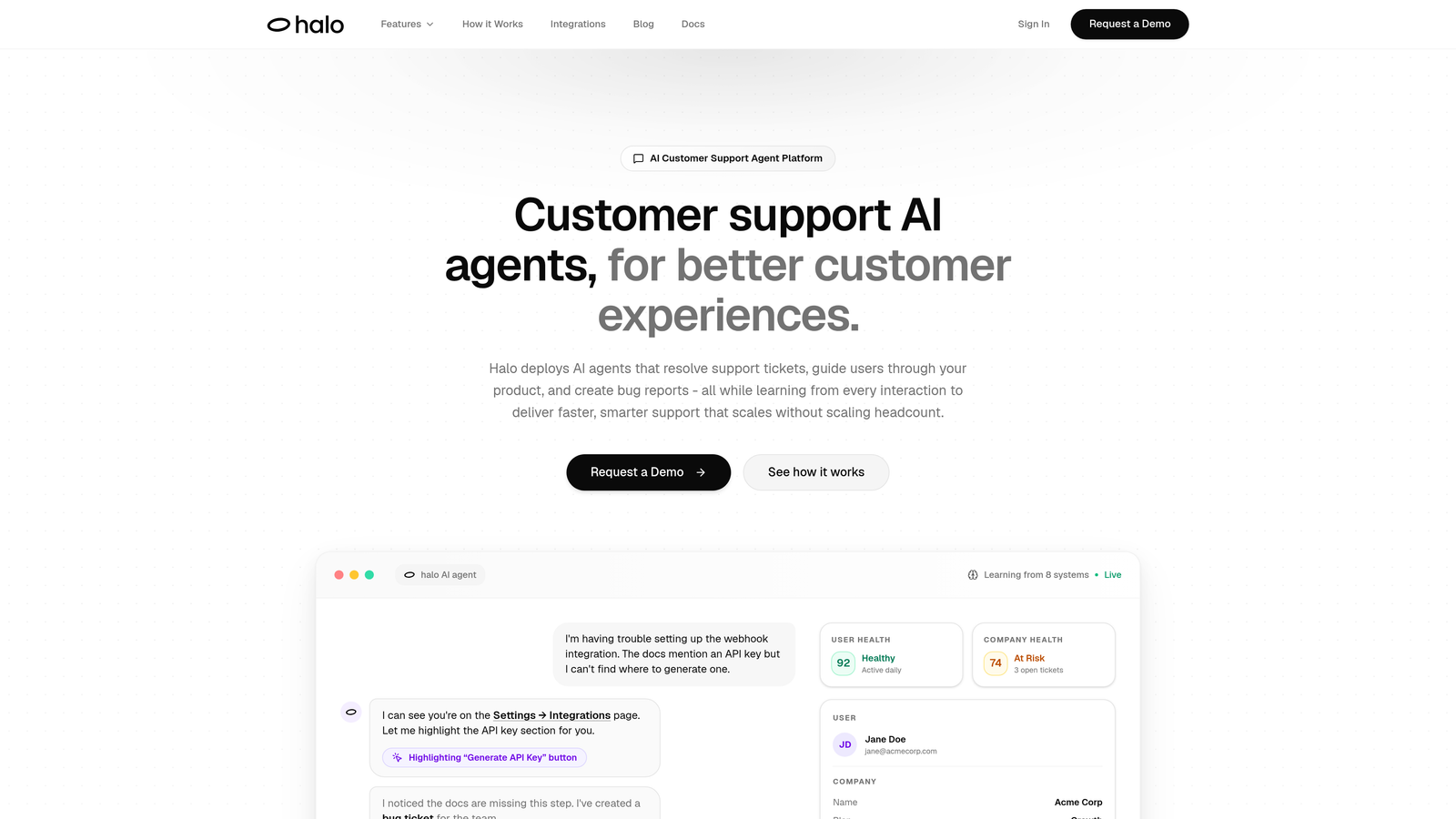
Halo AI is an AI-native customer support platform built from the ground up for autonomous operation, not bolted onto legacy helpdesk infrastructure.
Where This Tool Shines
Unlike platforms that add AI features to existing ticketing systems, Halo was designed with AI-first architecture. Its agents don't just suggest responses—they resolve tickets autonomously while understanding the visual context of what users see in your product.
The platform's continuous learning approach means every interaction makes the system smarter. It connects across your entire business stack, surfacing customer health signals and revenue intelligence that go far beyond traditional support metrics.
Key Features
Autonomous AI Agents: Resolve support tickets without human intervention while escalating complex issues intelligently.
Page-Aware Chat Widget: Provides visual UI guidance based on exactly what the user sees on their screen.
Auto Bug Ticket Creation: Automatically creates bug reports in Linear when issues are detected during support interactions.
Business Intelligence Analytics: Delivers customer health signals, revenue intelligence, and anomaly detection beyond support metrics.
Deep Integrations: Connects to Linear, Slack, HubSpot, Intercom, Stripe, Zoom, PandaDoc, and Fathom for unified operations.
Best For
B2B companies and product teams running modern tech stacks who need support automation that scales without scaling headcount. Particularly valuable for teams using Zendesk, Freshdesk, or Intercom who want more intelligent, autonomous resolution capabilities.
Pricing
Contact for custom pricing based on your team size and integration requirements.
2. Zendesk AI
Best for: Enterprise teams needing proven omnichannel support with extensive customization options
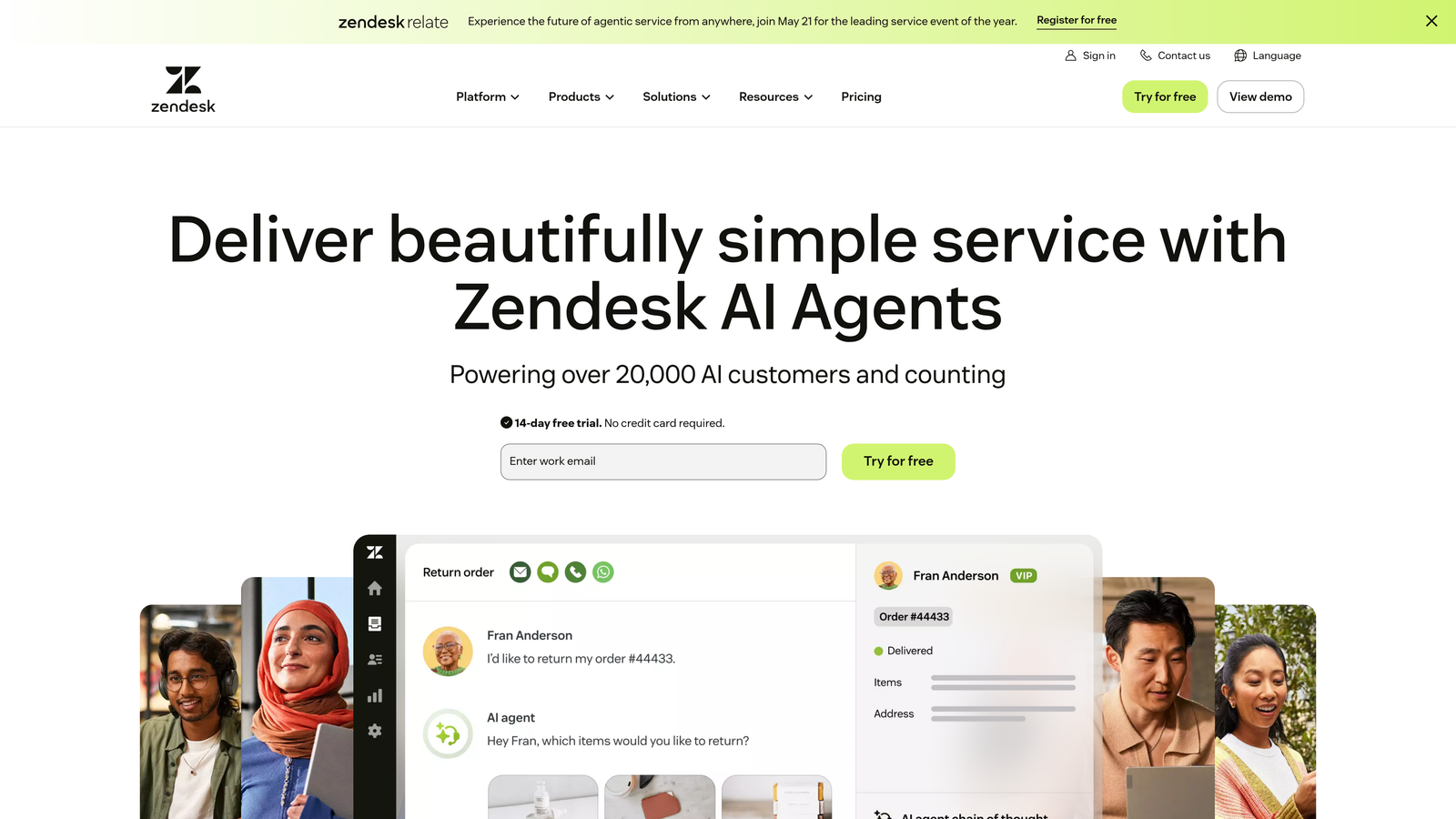
Zendesk AI is an enterprise-grade helpdesk platform that has layered AI-powered automation onto its established ticketing infrastructure.
Where This Tool Shines
Zendesk's strength lies in its maturity and breadth. If you need to manage support across email, chat, phone, social media, and messaging apps from a single platform, Zendesk handles it. The marketplace offers thousands of integrations, and the automation workflows can be customized to almost any business process.
The AI features focus on intelligent routing, prioritization, and agent assistance rather than autonomous resolution. This works well for teams that want AI to enhance human agents rather than replace their involvement.
Key Features
AI-Powered Ticket Routing: Automatically assigns tickets to the right team based on content, urgency, and agent expertise.
Omnichannel Support: Unified inbox for email, chat, phone, social media, and messaging platforms.
Extensive Marketplace: Over 1,200 apps and integrations available through the Zendesk marketplace.
Advanced Analytics: Customizable dashboards and reporting on team performance, SLA compliance, and customer satisfaction.
Workflow Automation: Build custom automation rules for ticket handling, escalation, and follow-up processes.
Best For
Large enterprises with complex support operations spanning multiple channels and departments. Teams that need extensive customization options and have the resources to configure and maintain sophisticated workflows.
Pricing
Suite Team starts at $55 per agent per month, with higher tiers for advanced features and larger teams.
3. Intercom Fin
Best for: Product-led companies wanting conversational AI integrated into their messaging platform
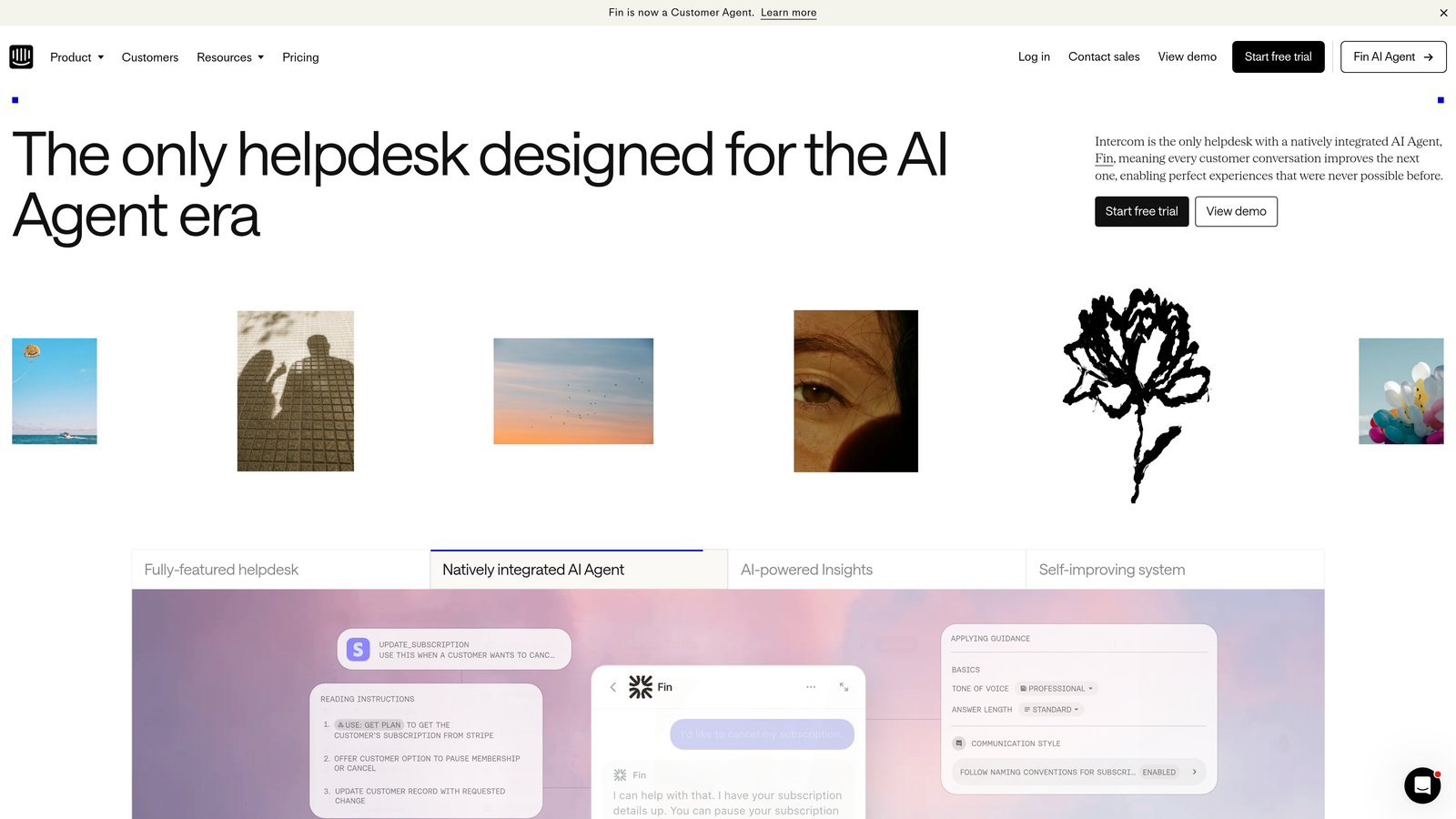
Intercom Fin is a conversational AI agent built directly into Intercom's messaging platform, designed to resolve inquiries while maintaining natural conversations.
Where This Tool Shines
Fin excels at conversational resolution because it's native to Intercom's messaging infrastructure. The AI trains on your help center content and can answer complex questions in natural language without feeling robotic. When it can't resolve something, the handoff to human agents is seamless—the conversation simply continues with context intact.
The in-product messaging capabilities let you proactively guide users through onboarding or new features, turning support into a growth channel rather than just a cost center.
Key Features
AI Agent Training: Fin learns from your help center, knowledge base, and past conversations to answer customer questions.
Natural Language Understanding: Handles complex, multi-part queries with conversational responses that feel human.
Seamless Human Handoff: Transfers conversations to agents with full context when AI reaches its limits.
In-Product Messaging: Proactive messages and product tours triggered by user behavior or milestones.
Custom Bot Workflows: Build automated conversation flows for specific use cases or customer segments.
Best For
SaaS companies already using Intercom for customer communication, or product-led teams that want support integrated into their in-app experience. Works best when you have substantial help center content for Fin to learn from.
Pricing
Fin AI costs $0.99 per resolution. The base Intercom platform starts at $39 per seat per month, with additional costs for advanced features.
4. Freshdesk Freddy AI
Best for: Growing teams seeking affordable AI assistance with solid helpdesk fundamentals
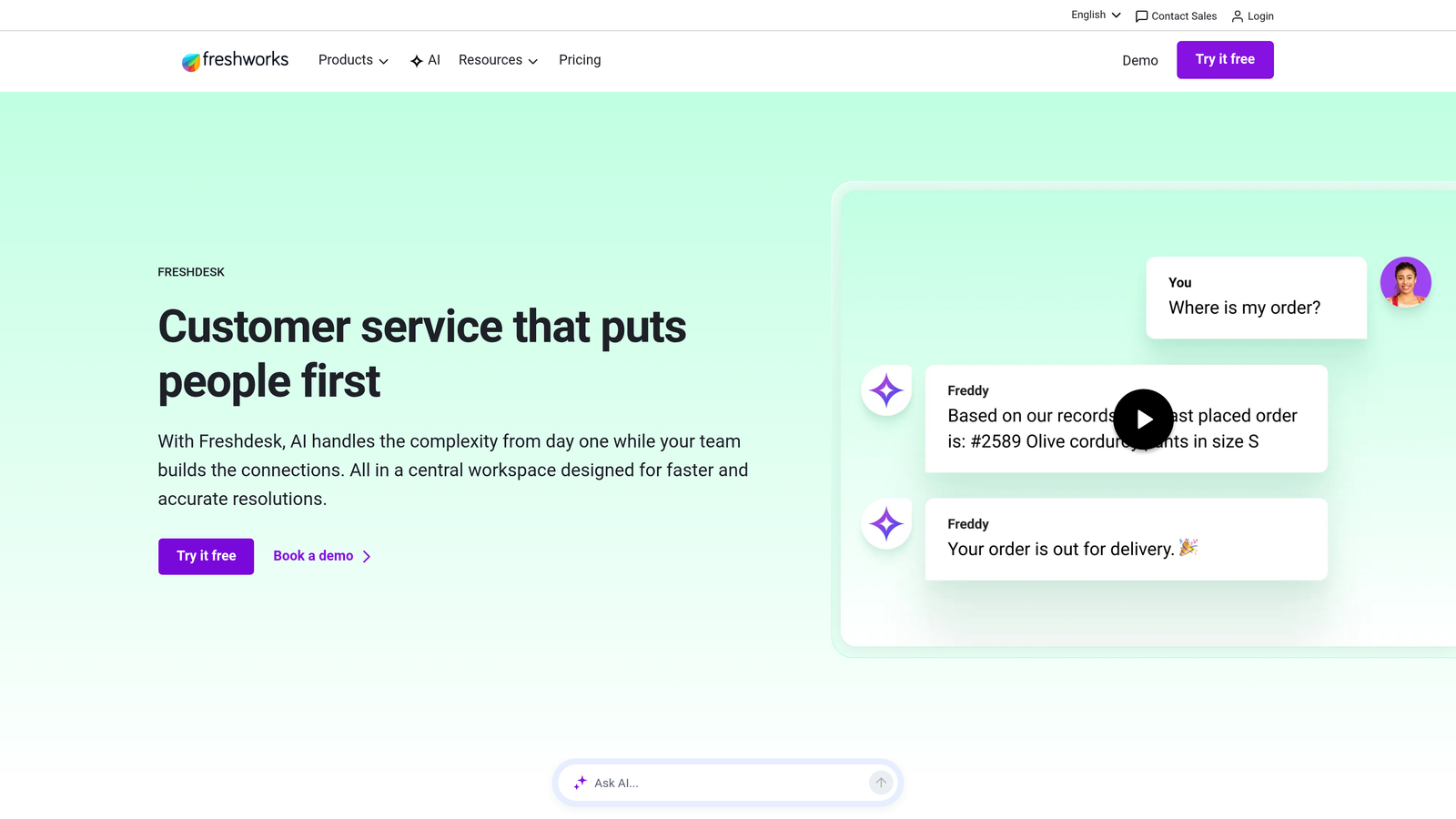
Freshdesk Freddy AI integrates an AI assistant into Freshdesk's helpdesk platform, handling ticket classification, response suggestions, and predictive support.
Where This Tool Shines
Freshdesk hits a sweet spot between affordability and capability. Freddy AI auto-triages incoming tickets, suggests responses to agents, and can detect sentiment to flag frustrated customers. The platform covers essential helpdesk features—multi-channel ticketing, team collaboration, SLA management—without overwhelming smaller teams.
The free tier makes it accessible for startups, while the paid plans remain competitive as you scale. It's not the most advanced AI on the market, but it handles the fundamentals well at a price point that works for mid-market teams.
Key Features
Freddy AI Auto-Triage: Automatically categorizes and routes tickets based on content and priority.
Suggested Responses: AI recommends replies to agents based on ticket content and historical resolutions.
Multi-Channel Ticketing: Manage support across email, chat, phone, and social media from one interface.
Team Collaboration: Internal notes, ticket assignments, and shared ownership for complex issues.
SLA Management: Set and track service level agreements with automated escalations for violations.
Best For
Small to mid-sized teams that need reliable helpdesk functionality with AI assistance but don't require cutting-edge autonomous resolution. Companies transitioning from basic email support to a proper ticketing system.
Pricing
Free tier available for up to 10 agents. Pro plan starts at $49 per agent per month for advanced features and Freddy AI capabilities.
5. Ada
Best for: Global companies needing multilingual AI automation with high ticket deflection rates
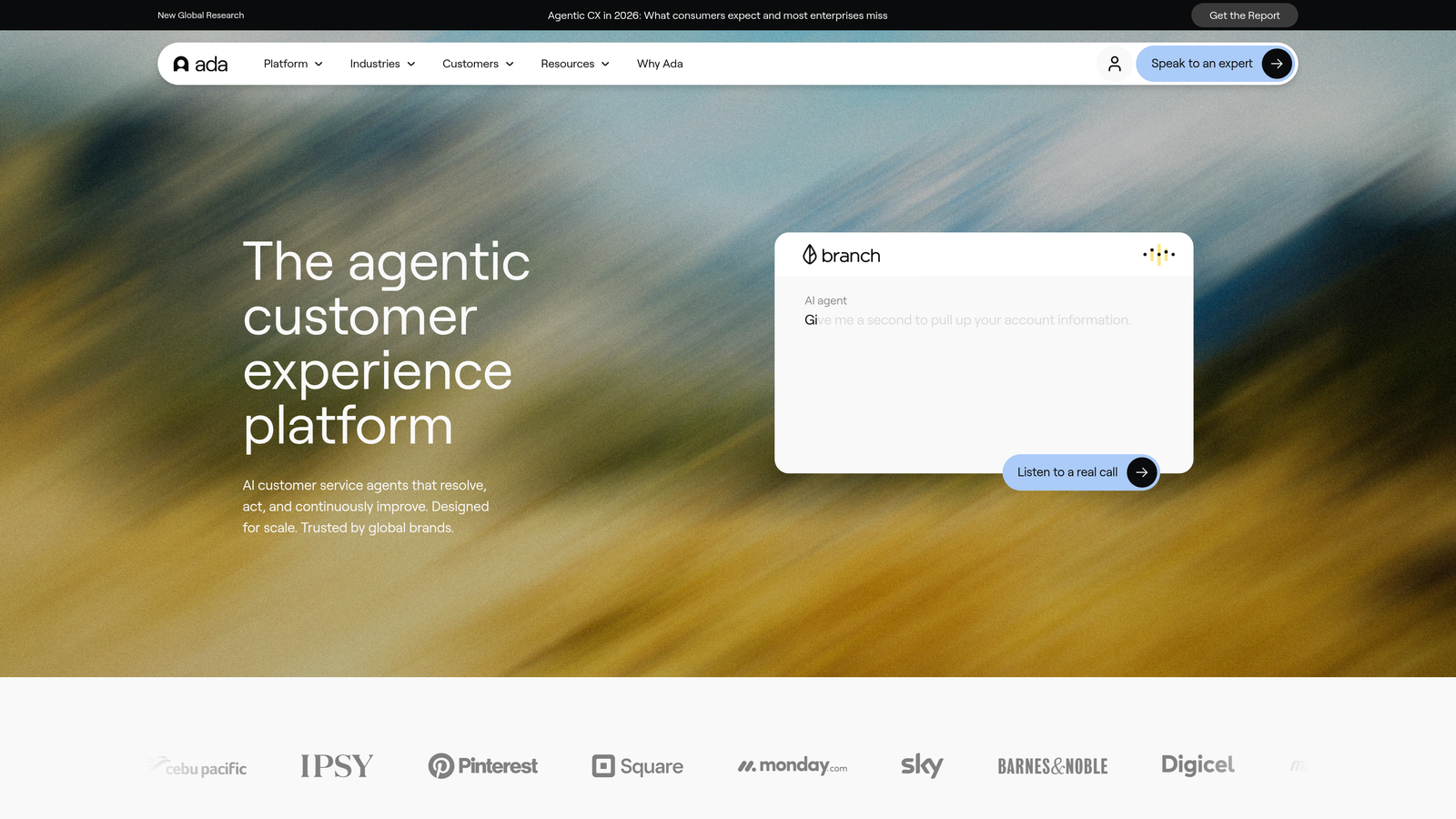
Ada is a no-code AI automation platform specializing in multilingual support and high-volume ticket deflection for customer service teams.
Where This Tool Shines
Ada's standout feature is its out-of-the-box support for over 50 languages without requiring separate training for each. The no-code conversation builder lets non-technical team members design automation flows, making it accessible to customer success teams without engineering support.
The platform focuses heavily on containment metrics—how many inquiries get resolved without human intervention. For companies dealing with high volumes of routine questions across multiple markets, Ada's multilingual capabilities and deflection rates deliver significant cost savings.
Key Features
No-Code Conversation Builder: Design and deploy automation flows without writing code or involving developers.
50+ Language Support: Multilingual conversations work natively without separate training or configuration per language.
Generative AI Responses: Pulls answers from your knowledge base and generates contextual responses in natural language.
Proactive Messaging: Trigger automated conversations based on user behavior, time on page, or specific events.
Containment Analytics: Detailed reporting on resolution rates, deflection metrics, and automation performance.
Best For
Enterprise companies operating in multiple countries or languages, especially those with high support volumes where ticket deflection directly impacts operational costs. Teams that need to empower non-technical staff to manage automation.
Pricing
Custom pricing based on conversation volume, languages, and feature requirements. Contact Ada for a quote tailored to your needs.
6. Kustomer
Best for: Teams wanting CRM-centric support with unified customer timelines and context-aware automation
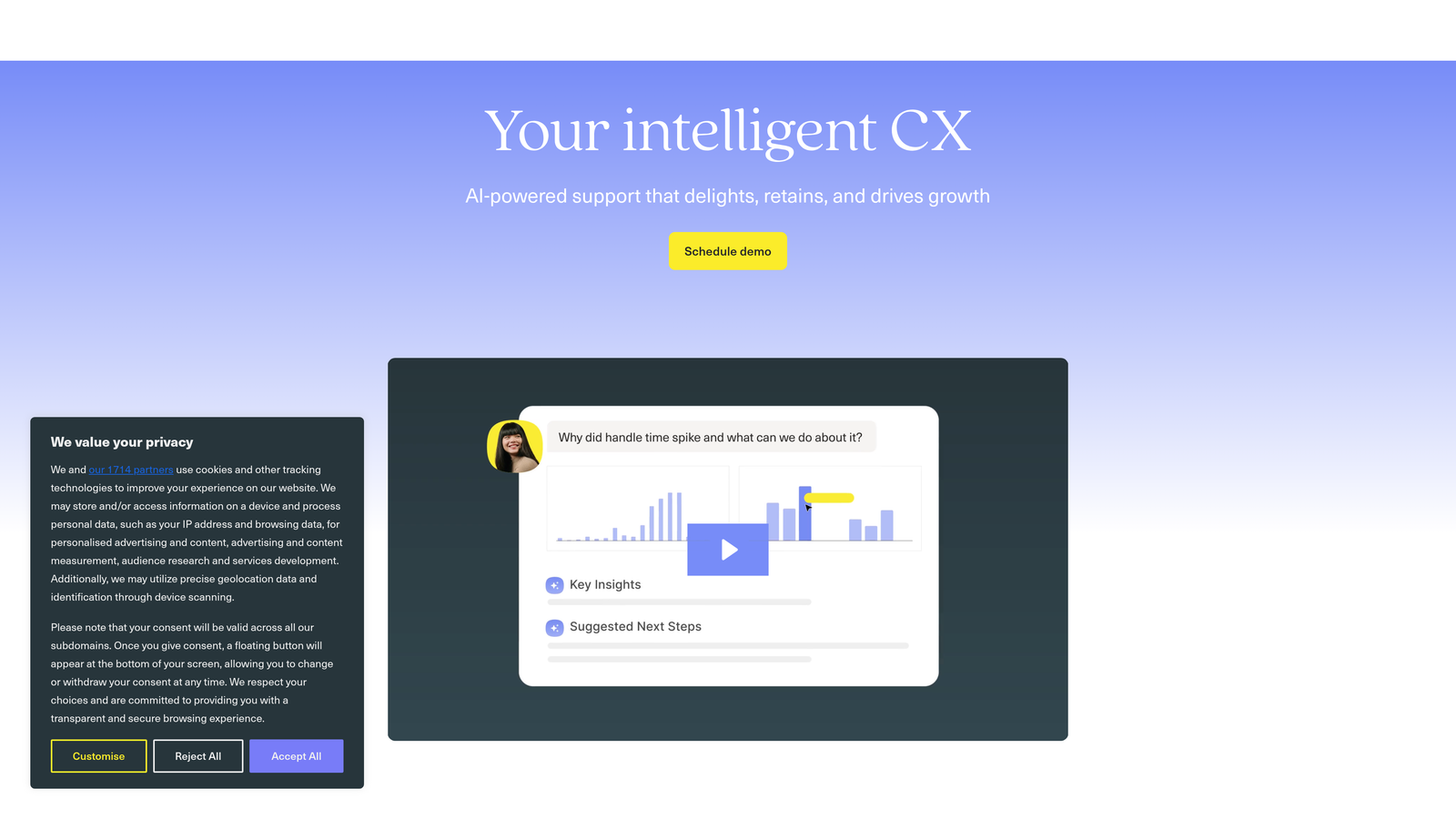
Kustomer is a customer service platform that unifies customer data into a single timeline, enabling context-aware automation across all touchpoints.
Where This Tool Shines
Kustomer approaches support from a CRM perspective rather than traditional ticketing. Every customer interaction—support conversations, purchases, product usage, website visits—appears in a unified timeline. This context lets agents and AI see the full customer journey before responding.
The automation leverages this rich data to make smarter routing decisions and provide more personalized responses. AI-powered sentiment detection flags frustrated customers before situations escalate, and business process automation can trigger actions across your entire tech stack based on support interactions.
Key Features
Unified Customer Timeline: Single view of all customer interactions across channels, purchases, and product usage.
AI Sentiment Detection: Automatically identifies frustrated or at-risk customers for priority handling.
Business Process Automation: Trigger workflows across your tech stack based on support events and customer data.
Deep CRM Integrations: Native connections to Salesforce, HubSpot, and other CRM platforms for bi-directional data sync.
Real-Time Dashboards: Live reporting on team performance, customer health, and operational metrics.
Best For
Companies that view support as part of the broader customer relationship rather than isolated ticket resolution. Teams with complex customer journeys that require context from multiple systems to provide effective support.
Pricing
Starts at $89 per user per month, with enterprise pricing available for larger teams and advanced features.
7. Help Scout
Best for: Teams prioritizing human-first support with thoughtful automation that enhances personal service
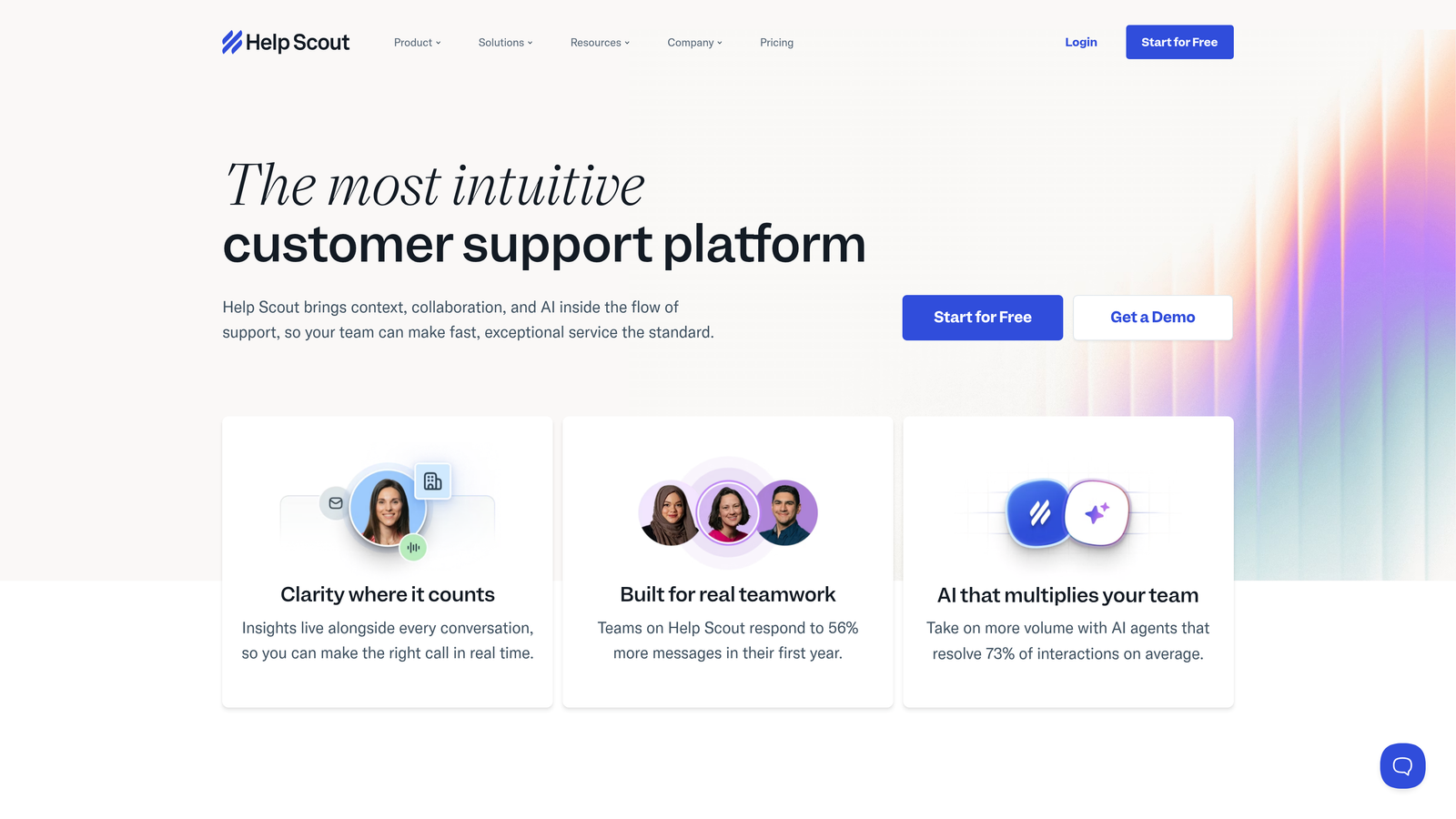
Help Scout is a helpdesk platform designed around human-first support principles, with automation features that enhance rather than replace personal customer interactions.
Where This Tool Shines
Help Scout's philosophy centers on making support feel personal even as you scale. The AI-assisted drafts and summaries help agents respond faster without sounding robotic. Workflows automate routing and tagging, but the interface keeps conversations feeling like email rather than ticket numbers.
The Beacon chat widget combines live chat with self-service, letting customers search your knowledge base before starting a conversation. Collision detection prevents multiple agents from responding to the same customer, maintaining that one-to-one feel even with larger teams.
Key Features
AI-Assisted Drafts: Suggests response drafts and summarizes long conversation threads to speed up agent replies.
Workflow Automation: Automatically route tickets, assign tags, and trigger actions based on conversation content.
Beacon Chat Widget: Embedded chat with integrated knowledge base search for self-service before contacting support.
Docs Knowledge Base: Create and maintain help articles with analytics on search terms and article effectiveness.
Collision Detection: Alerts agents when someone else is already viewing or responding to a conversation.
Best For
Small to medium-sized teams that want to maintain a personal touch as they grow. Companies with strong brand voices that need automation to enhance rather than standardize their customer interactions.
Pricing
Starts at $22 per user per month for the Standard plan, with higher tiers available for additional features and team collaboration tools.
8. Tidio
Best for: E-commerce stores needing visual chatbot builders with strong Shopify integration
Tidio is a live chat and chatbot platform built specifically for e-commerce, featuring visual bot builders and native Shopify integration.
Where This Tool Shines
Tidio makes chatbot creation accessible through its visual flow builder—no coding required. You can design conversation paths by dragging and dropping elements, making it easy to automate common e-commerce scenarios like order tracking, product recommendations, and abandoned cart recovery.
Lyro AI handles conversational responses when customers ask questions outside your predefined flows. The platform integrates tightly with Shopify, WooCommerce, and BigCommerce, pulling order data directly into conversations. Live chat with visitor tracking lets you see what products customers are viewing before they even ask a question.
Key Features
Visual Chatbot Builder: Drag-and-drop interface for creating conversation flows without coding.
Lyro AI: Conversational AI that handles customer questions outside predefined bot flows using natural language.
E-Commerce Integrations: Native connections to Shopify, WooCommerce, and BigCommerce for order data access.
Live Chat with Visitor Tracking: See what pages customers are viewing and proactively start conversations.
Email Marketing Automation: Capture leads through chat and trigger automated email sequences.
Best For
Small to medium-sized e-commerce stores that need quick-to-implement chat automation. Shopify merchants looking for an affordable way to add conversational support without technical complexity.
Pricing
Free tier available with basic features. Paid plans start at $29 per month for additional conversations and advanced automation capabilities.
9. Gorgias
Best for: E-commerce brands needing helpdesk built around order data and revenue attribution
Gorgias is a helpdesk platform designed exclusively for e-commerce, with deep Shopify integration and order-aware automation capabilities.
Where This Tool Shines
Gorgias treats e-commerce support as fundamentally different from general customer service. Every ticket displays the customer's order history, lifetime value, and current cart in the sidebar. Macros can include dynamic variables like order numbers, tracking links, and product details, making responses faster and more accurate.
The revenue attribution reporting shows which support interactions led to sales, turning support from a cost center into a measurable revenue channel. Social media and SMS support are built in, recognizing that e-commerce customers reach out across multiple platforms.
Key Features
Native E-Commerce Integrations: Deep connections to Shopify, Magento, and BigCommerce with order data in every conversation.
Order Data Sidebar: Customer purchase history, lifetime value, and current cart visible without leaving the ticket.
Dynamic Macros: Automated responses that pull in order numbers, tracking links, and product-specific information.
Revenue Attribution: Track which support conversations directly led to purchases and measure support team revenue impact.
Social and SMS Support: Manage Instagram, Facebook, SMS, and traditional channels from one interface.
Best For
E-commerce brands running on Shopify, Magento, or BigCommerce that need support tools built around order management. Teams that want to measure support's impact on revenue, not just resolution times.
Pricing
Starts at $10 per month for up to 50 tickets, with tiered pricing based on monthly ticket volume and additional features.
Making the Right Choice
Choosing the right customer service automation tool depends on your tech stack, team philosophy, and what you actually need AI to accomplish. If you're a B2B company seeking autonomous resolution with business intelligence beyond support metrics, Halo AI's AI-native architecture delivers capabilities that legacy platforms can't match. Zendesk remains the enterprise standard when you need omnichannel breadth and extensive customization, while Intercom Fin excels for product-led teams already invested in the Intercom ecosystem.
For growing teams watching budgets, Freshdesk offers solid fundamentals with AI assistance at accessible pricing. Global companies operating across multiple languages should evaluate Ada's multilingual capabilities and deflection rates. If you view support through a CRM lens rather than ticketing, Kustomer's unified timeline approach makes sense. Help Scout fits teams that prioritize maintaining personal relationships as they scale.
E-commerce operations have specialized needs that general helpdesks don't address well. Tidio works for smaller stores needing quick chatbot implementation, while Gorgias serves brands that need order data integrated into every support interaction with revenue attribution.
The automation landscape has evolved beyond simple chatbots. The platforms worth your attention in 2026 either resolve tickets autonomously, provide deep business intelligence, or integrate so tightly with your operations that support becomes a strategic function rather than a reactive cost center.
Your support team shouldn't scale linearly with your customer base. Let AI agents handle routine tickets, guide users through your product, and surface business intelligence while your team focuses on complex issues that need a human touch. See Halo in action and discover how continuous learning transforms every interaction into smarter, faster support.