10 Best Customer Service Automation Tools in 2026
This comprehensive guide evaluates the best customer service automation tools available in 2026, helping B2B and SaaS teams navigate a crowded market by comparing platforms on AI capability, integration ease, and scalability—so you can reduce ticket volume, improve response times, and free your team to focus on complex, high-value customer interactions.
 Grant CooperFounder14 min read
Customer service teams are under more pressure than ever. Ticket volumes keep climbing, customer expectations keep rising, and the math of scaling headcount to match demand simply doesn't work anymore. The right automation tools change that equation entirely, handling routine inquiries, routing complex issues intelligently, and giving your team the space to focus on work that genuinely requires a human.
The challenge is that not all customer service automation tools are built the same. Some bolt AI onto legacy helpdesk infrastructure. Others are purpose-built AI-first platforms that learn and improve with every interaction. Some specialize in chatbots, others in ticket routing, workflow automation, or analytics.
This list covers the best customer service automation tools available in 2026, evaluated on AI capability, ease of integration, scalability, and real-world utility for B2B and SaaS teams. Whether you're replacing an aging helpdesk or layering automation onto an existing stack, there's a solution here.
1. Halo AI
Best for: B2B SaaS teams that need an AI-first support platform with deep product and business intelligence integration.
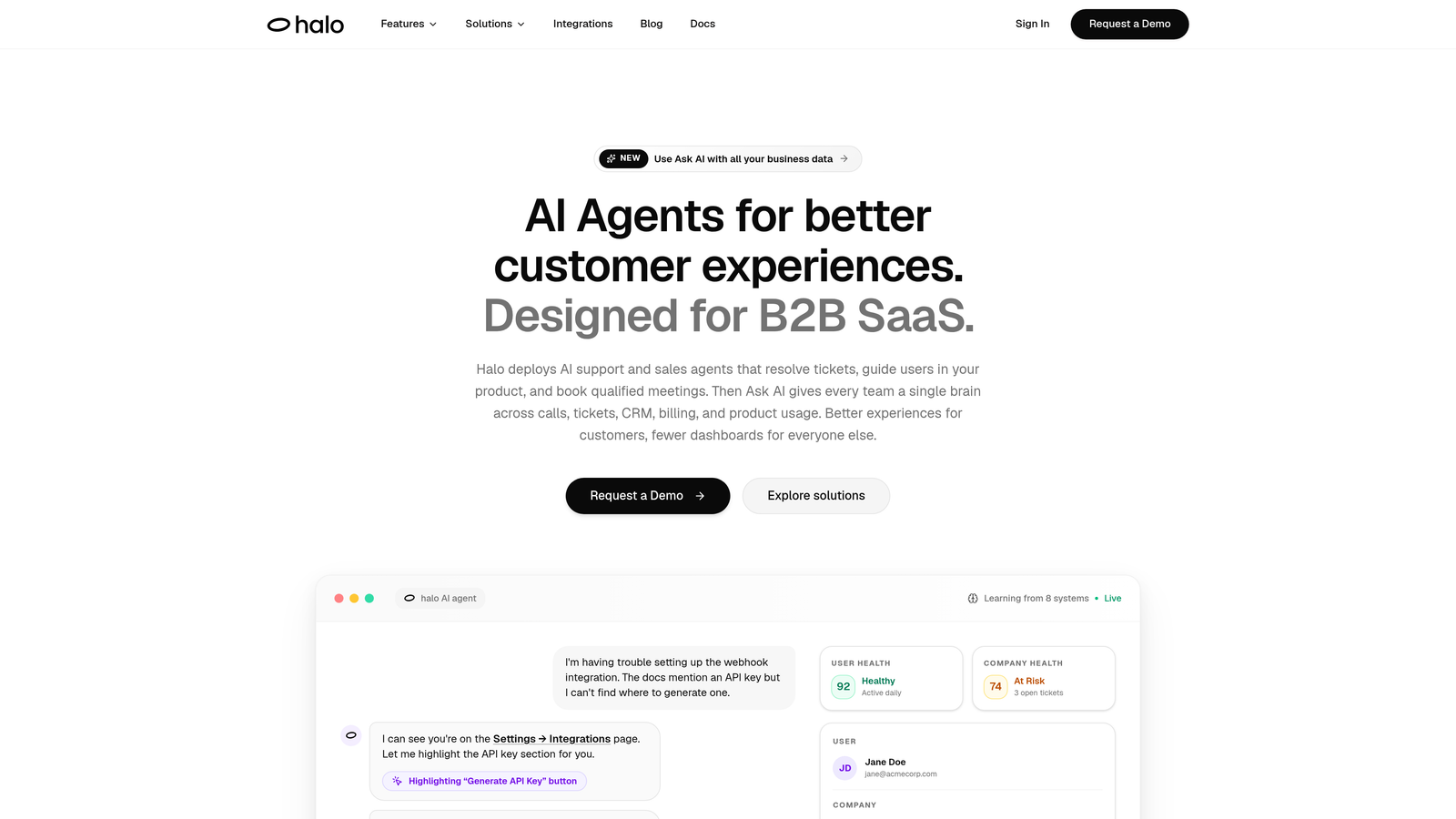
Halo AI is an AI-native customer support platform that deploys autonomous agents to resolve tickets, guide users through your product with page-aware context, and surface business intelligence — all while continuously learning from every interaction.
Where This Tool Shines
What separates Halo from most tools on this list is its architecture. It wasn't built as a helpdesk with AI layered on top. It was designed from the ground up as an AI-first platform, which means every component, from ticket resolution to bug reporting to analytics, is built around autonomous intelligence rather than rule-based automation.
The page-aware chat widget is a genuinely differentiated capability. Instead of a generic chatbot that responds to typed questions, Halo's widget understands what page a user is on and what they're looking at, enabling contextual visual guidance that feels closer to a knowledgeable colleague than a support bot. Pair that with continuous learning from every resolved ticket, and the system gets meaningfully smarter over time.
Key Features
Autonomous AI Agents: Resolve support tickets end-to-end without human involvement for routine issues, freeing your team for complex escalations.
Page-Aware Chat Widget: Understands the user's current context within your product and delivers relevant, visual guidance in real time.
Smart Inbox with Business Intelligence: Surfaces churn signals, revenue anomalies, and product health data directly from support conversations — turning your inbox into a strategic intelligence layer.
Auto Bug Ticket Creation: Automatically logs issues directly to Linear or connected project management tools, closing the loop between support and engineering without manual handoffs.
Live Agent Handoff: Seamlessly escalates complex issues to human agents with full conversation context preserved, so customers never have to repeat themselves.
Deep Integrations: Connects to Linear, Slack, HubSpot, Intercom, Stripe, Zoom, PandaDoc, and Fathom for a unified operational picture.
Best For
Halo is an excellent fit for B2B SaaS companies and product teams that want more from their support platform than ticket deflection. If you need your support layer to feed intelligence back into product, engineering, and revenue teams, Halo's architecture is purpose-built for that workflow.
Pricing
Contact for pricing at haloagents.ai. A demo is available to explore fit before committing.
2. Zendesk
Best for: Mid-market and enterprise teams that need a proven, feature-rich helpdesk with broad omnichannel coverage.
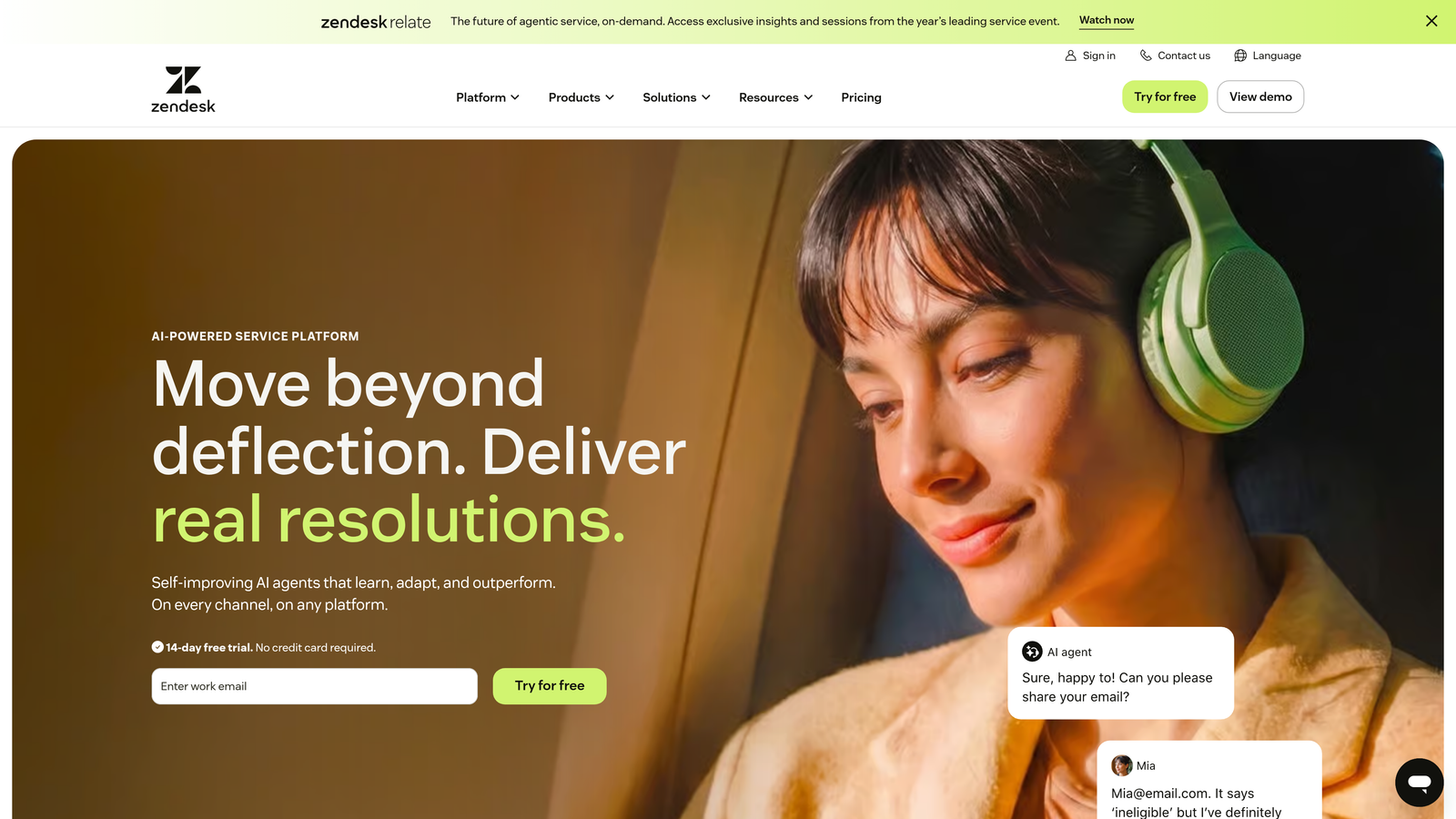
Zendesk is one of the most widely deployed helpdesk platforms in the world, with AI-powered automation for ticket triage, suggested replies, and workflow orchestration across email, chat, voice, and social channels.
Where This Tool Shines
Zendesk's strength is its maturity. The platform has been refined over many years, and the result is a deeply configurable system that can handle complex enterprise support workflows. Its app marketplace, with over 1,500 integrations, means it connects to virtually any tool in your stack.
Zendesk AI handles intelligent ticket triage and surfaces suggested replies for agents, which meaningfully reduces the cognitive load on support teams during high-volume periods. For teams that need a battle-tested platform with extensive customization options, it remains a top contender.
Key Features
Zendesk AI: Provides intelligent ticket triage, automated categorization, and agent reply suggestions to accelerate resolution times.
Workflow Automation: Triggers, macros, and automations handle routine routing and follow-up tasks without manual intervention.
1,500+ App Marketplace: Connects to a vast ecosystem of third-party tools across CRM, billing, analytics, and productivity.
Omnichannel Support: Unified inbox spanning email, live chat, voice, social media, and messaging apps.
Advanced Reporting: Customizable dashboards and analytics for tracking team performance and customer satisfaction trends.
Best For
Zendesk works well for established mid-market and enterprise teams that need a comprehensive, proven helpdesk. It can feel heavyweight for smaller teams or those looking for a leaner, AI-native setup.
Pricing
Suite Team starts at approximately $55 per agent per month. Verify current pricing at zendesk.com, as tiers and features change regularly.
3. Intercom
Best for: SaaS companies that want to unify support, marketing, and sales messaging within a single in-product communications platform.
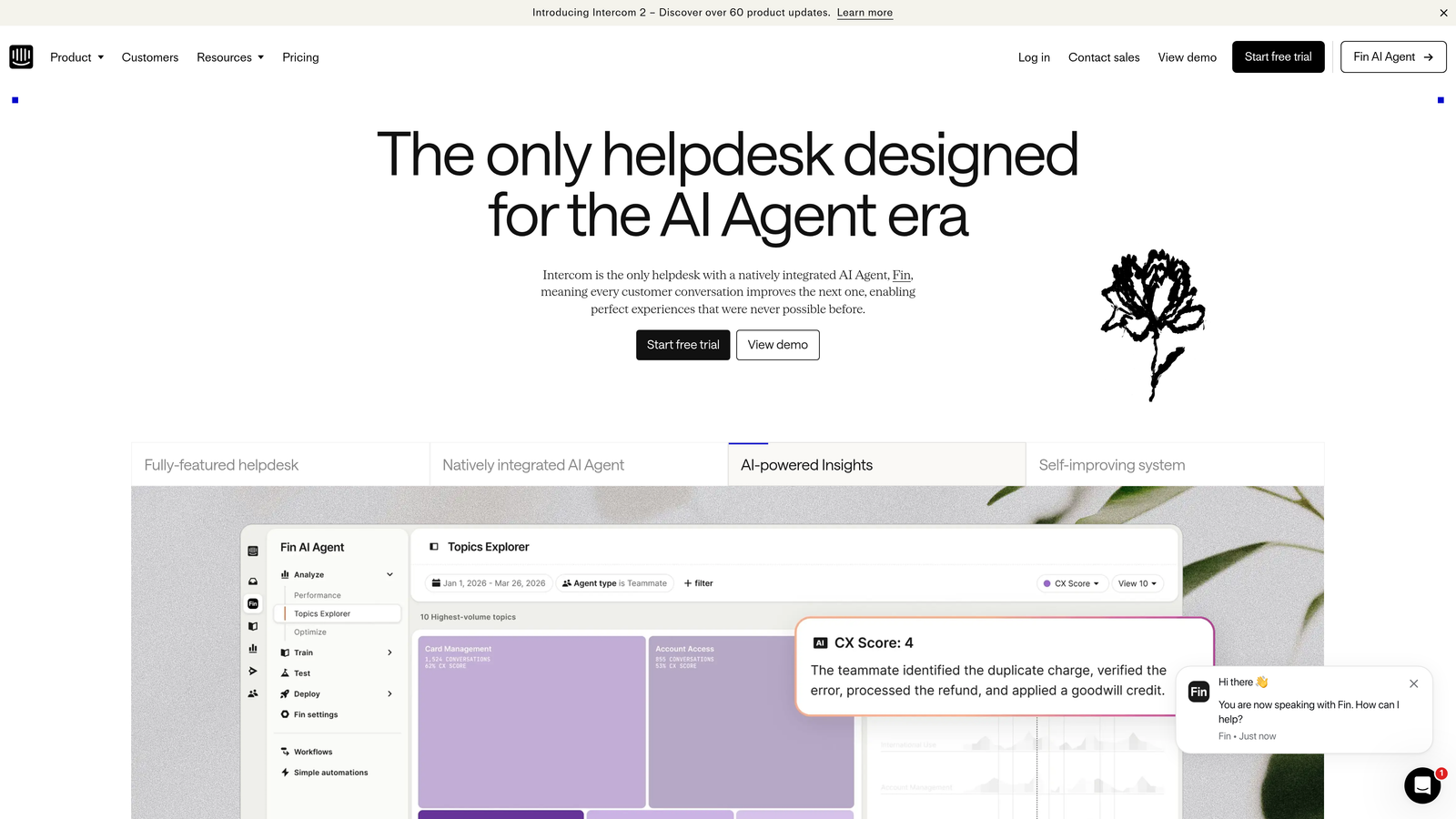
Intercom is a customer communications platform featuring Fin, its GPT-4-powered AI agent, designed to resolve common support queries autonomously while keeping teams connected across in-product, email, and messaging channels.
Where This Tool Shines
Intercom's in-product messaging experience is genuinely strong, particularly for SaaS companies where the support interaction happens inside the product itself. Fin draws from your knowledge base to answer questions autonomously, and it handles a meaningful portion of common queries without human involvement.
The platform's ability to span support, marketing, and sales messaging in one place is a real advantage for teams that want to reduce tool sprawl. If your team is already using Intercom for customer engagement, adding Fin to handle support volume is a natural extension.
Key Features
Fin AI Agent: Resolves common queries autonomously using your knowledge base, with per-resolution pricing that scales with actual usage.
In-Product Messaging: Tightly integrated with the customer lifecycle, enabling contextual conversations at the right moment in the user journey.
AI-Assisted Replies: Shared inbox with suggested responses to help agents respond faster and more consistently.
Conversation Routing: Automated assignment and routing rules to direct conversations to the right team or agent.
Unified Messaging Platform: Spans support, marketing, and sales outreach in a single interface.
Best For
Intercom is a strong choice for SaaS companies that want tight in-product support integration and don't mind paying a premium for a polished, unified communications experience. Note that pricing has increased notably in recent years, so budget accordingly.
Pricing
Starts at approximately $39 per seat per month; Fin AI is charged per resolution. Verify current pricing at intercom.com.
4. Freshdesk
Best for: Growing SMB and mid-market teams that need capable omnichannel automation at an accessible price point.
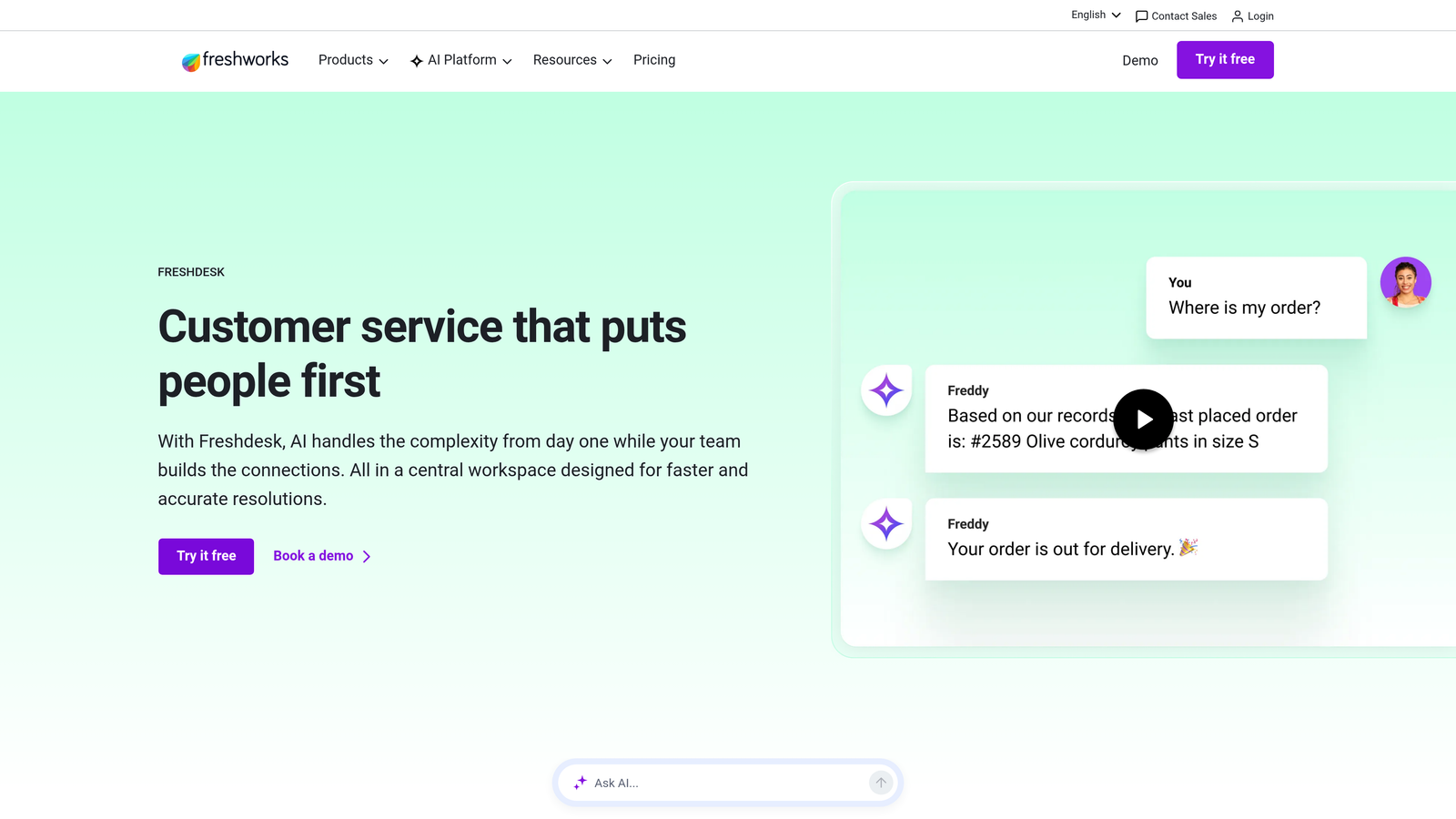
Freshdesk is a cloud-based helpdesk platform powered by Freddy AI, offering omnichannel support automation with a pricing structure that makes it accessible for teams that aren't ready for enterprise-tier spend.
Where This Tool Shines
Freshdesk hits a practical sweet spot for growing teams. Freddy AI handles ticket classification, auto-assignment, and suggested responses without requiring extensive configuration, which means teams can get meaningful automation running relatively quickly.
The Freddy Copilot feature adds agent assist capabilities, including conversation summarization and reply drafting, that reduce the time agents spend on administrative work during each ticket. For teams comparing Freshdesk to Zendesk at similar feature tiers, Freshdesk typically comes in at a lower price point.
Key Features
Freddy AI: Powers ticket classification, auto-assignment, and suggested responses across the inbox automatically.
Omnichannel Inbox: Consolidates email, chat, phone, and social media conversations in one place.
Scenario Automations: Multi-step automations triggered by ticket conditions to handle repetitive workflows without manual effort.
AI-Powered Knowledge Base: Self-service portal with intelligent article suggestions to deflect tickets before they're created.
Freddy Copilot: Agent assist tool for summarization, reply drafting, and in-conversation guidance.
Best For
Freshdesk is well suited for SMB and mid-market teams that need solid omnichannel coverage and AI-assisted automation without the cost and complexity of enterprise platforms. The free tier makes it easy to evaluate before committing.
Pricing
Free tier available; Growth plan starts at approximately $15 per agent per month. Verify current pricing at freshdesk.com.
5. Salesforce Service Cloud
Best for: Large enterprises already on the Salesforce platform that need support automation deeply connected to full CRM data.
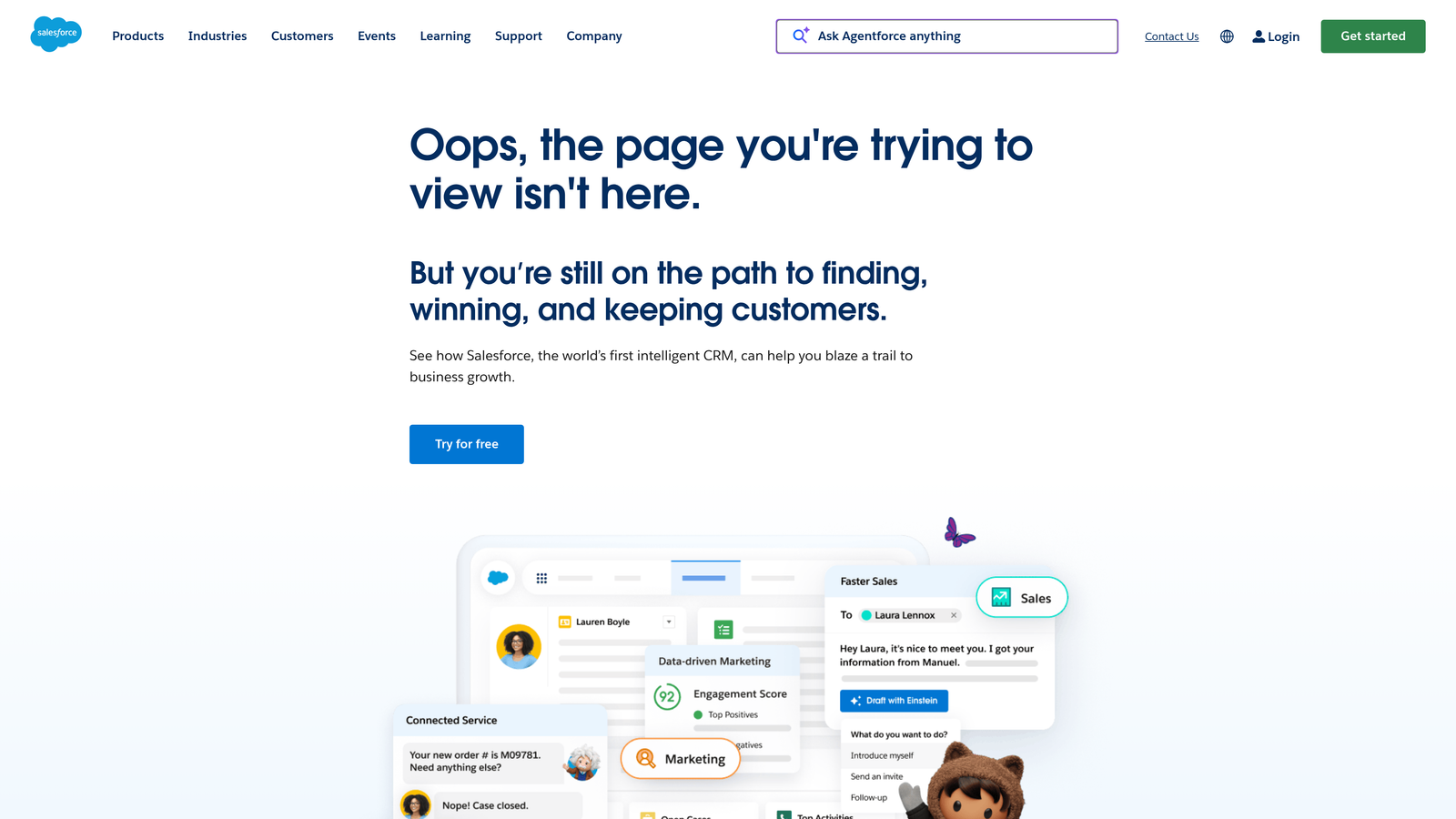
Salesforce Service Cloud is an enterprise-grade customer service platform with Einstein AI embedded across case management, routing, and self-service, all connected to the full Salesforce CRM data model.
Where This Tool Shines
If your organization runs on Salesforce, Service Cloud's native connection to the full CRM data model is a significant advantage. Support agents can see the complete customer picture, including purchase history, open opportunities, and account health, without switching tools or reconciling data from multiple systems.
Einstein AI handles case classification, intelligent routing, and next-best-action recommendations with access to that rich data context. For enterprises where support interactions directly influence revenue outcomes, that depth of integration is difficult to replicate with a standalone helpdesk.
Key Features
Einstein AI: Handles case classification, routing recommendations, and next-best-action suggestions powered by Salesforce CRM data.
Native CRM Integration: Full access to Salesforce account, contact, and opportunity data within every support case.
Omni-Channel Routing: Intelligent case distribution across voice, chat, email, and messaging based on agent capacity and skill.
Einstein Bots: Self-service automation for common queries, with escalation to live agents when needed.
Service Cloud Dashboards: Advanced analytics tied directly to CRM data for a complete operational picture.
Best For
Service Cloud is the right choice for enterprises already invested in the Salesforce ecosystem. Implementation is complex and cost is high, so it's less practical for teams without existing Salesforce infrastructure.
Pricing
Starter at approximately $25 per user per month; enterprise tiers are significantly higher. Verify current pricing at salesforce.com.
6. HubSpot Service Hub
Best for: Teams already using HubSpot CRM that want support automation natively connected to their existing customer data.
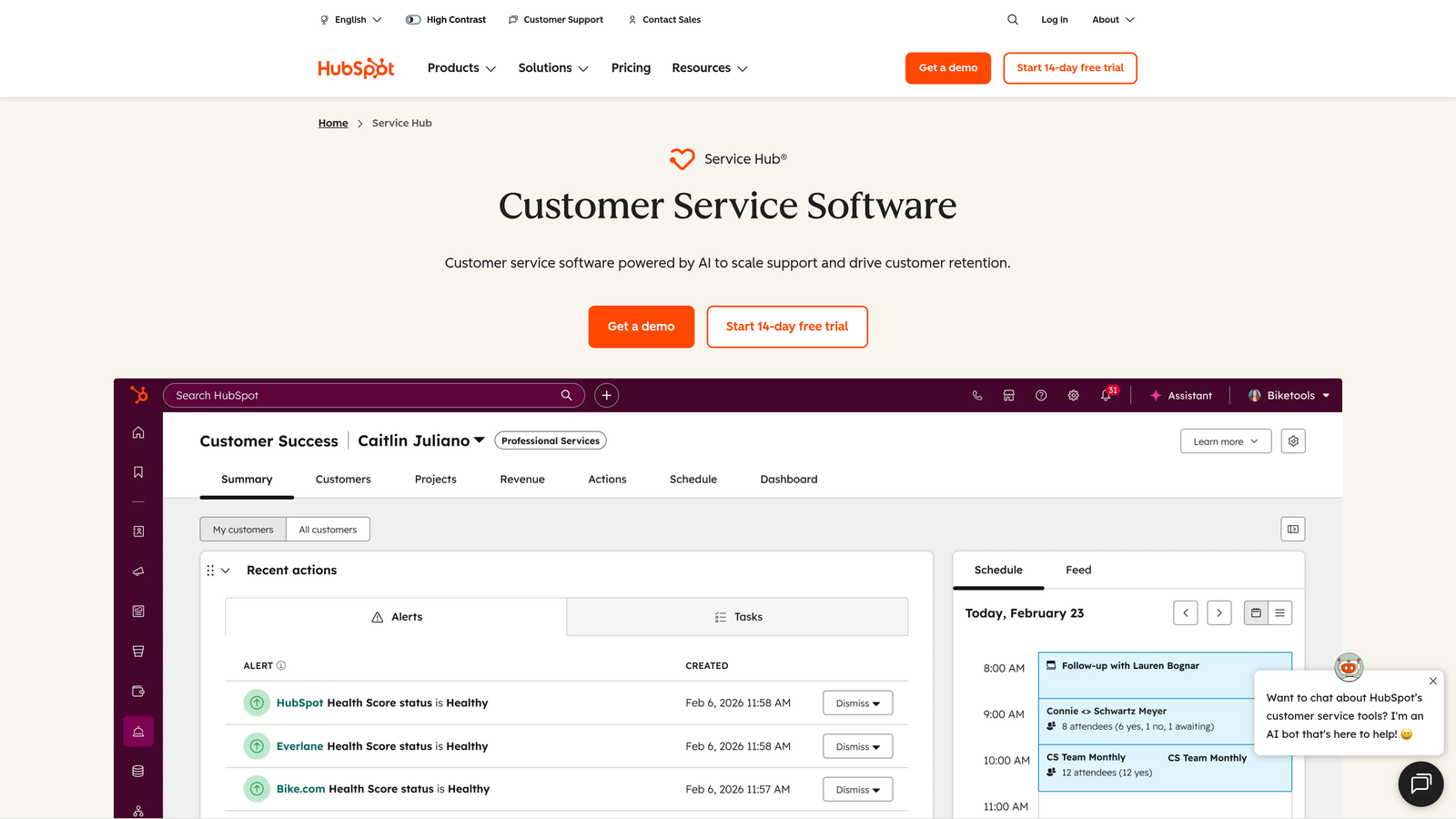
HubSpot Service Hub connects ticket management, knowledge base, and AI-assisted support directly to HubSpot CRM, making it a natural fit for teams that have already built their customer data in the HubSpot ecosystem.
Where This Tool Shines
The core value proposition here is ecosystem cohesion. When your marketing, sales, and support data all live in HubSpot, support agents can see the full customer relationship when working a ticket, and support data flows back into CRM records automatically. That eliminates a common pain point where support teams are working blind to customer context.
AI-assisted ticket management and reply suggestions help agents move faster, and the customer portal gives customers a self-service option for tracking their own tickets without contacting your team.
Key Features
AI-Assisted Ticket Management: Intelligent reply suggestions and ticket categorization to reduce agent response time.
CRM-Connected Inbox: Every ticket is linked to the HubSpot CRM contact record for full customer context.
Knowledge Base: AI-powered article recommendations help customers find answers before submitting a ticket.
Customer Portal: Self-service interface for customers to submit and track their own support tickets.
Feedback and Health Scoring: Integrated surveys and customer health data connected to CRM records for proactive account management.
Best For
HubSpot Service Hub is the obvious choice for teams already running on HubSpot. For teams not in the HubSpot ecosystem, the platform's value diminishes significantly compared to purpose-built alternatives.
Pricing
Free tier available; Starter at approximately $15 per seat per month. Verify current pricing at hubspot.com.
7. Tidio
Best for: Small businesses and e-commerce teams that need fast, affordable AI chatbot deployment with minimal setup.
Tidio is a live chat and AI chatbot platform featuring Lyro, an AI agent that handles customer queries using your knowledge base with minimal configuration required.
Where This Tool Shines
Tidio's primary advantage is speed to value. The platform is designed to get you from signup to live AI chatbot in hours, not weeks. Lyro learns from your existing knowledge base content and can start handling common queries almost immediately, which is a meaningful differentiator for small teams without dedicated implementation resources.
The no-code chatbot builder with a visual flow editor gives non-technical users the ability to build and adjust conversation flows without engineering involvement. For Shopify and WooCommerce stores, native integrations make it easy to surface order information and automate common e-commerce queries.
Key Features
Lyro AI Chatbot: Autonomous query resolution drawing from your knowledge base, with minimal setup required.
No-Code Flow Builder: Visual editor for building and customizing chatbot conversation flows without engineering support.
E-Commerce Integrations: Native Shopify and WooCommerce connections for order-related automation.
Live Chat with AI Handoff: Smooth transition from AI-handled conversations to live agent support when needed.
Multi-Channel Support: Email and Messenger channel support alongside the core live chat widget.
Best For
Tidio is well suited for small businesses, e-commerce brands, and teams that prioritize fast deployment over deep customization. It's less suited for complex B2B support workflows or teams that need enterprise-grade compliance and reporting.
Pricing
Free tier available; paid plans starting from approximately $29 per month. Verify current pricing at tidio.com.
8. Drift (Salesloft)
Best for: B2B companies with account-based go-to-market motions where support and revenue conversations overlap.
Drift, now part of Salesloft, is a conversational AI platform that blends customer support automation with revenue-generating conversations, making it particularly effective for B2B teams where support interactions carry direct sales implications.
Where This Tool Shines
Drift's differentiator is its account-based intelligence. When a target account visits your site or initiates a support conversation, Drift recognizes it and adjusts the conversation flow accordingly, routing high-value accounts to the right team member rather than a generic support queue. That kind of revenue-aware routing is difficult to replicate with a traditional helpdesk.
The integration with Salesforce, HubSpot, and Salesloft means conversation data flows directly into your revenue systems, giving sales and account management teams visibility into support interactions that might signal expansion or churn risk.
Key Features
Revenue-Aware AI Chatbots: Qualify leads and route support conversations simultaneously based on account data.
Account-Based Routing: Recognizes target accounts and adjusts conversation flows and routing in real time.
Meeting Scheduling: Embedded calendar booking within chat conversations to accelerate sales and success follow-ups.
Revenue Stack Integrations: Deep connections to Salesforce, HubSpot, and Salesloft for full customer lifecycle context.
Conversation Intelligence: Analytics and reporting on conversation outcomes tied to pipeline and revenue data.
Best For
Drift is a strong fit for B2B companies with account-based sales motions where support and revenue teams need to collaborate on the same customer conversations. Less relevant for high-volume transactional support environments.
Pricing
Enterprise pricing; contact Drift or Salesloft for a quote. Verify current pricing at drift.com.
9. Ada
Best for: Large enterprises that need multilingual, omnichannel AI agents with enterprise-grade compliance and no ongoing engineering dependency.
Ada is an enterprise-grade no-code AI agent platform that enables large organizations to build and deploy multilingual, omnichannel AI support agents without requiring continuous engineering involvement.
Where This Tool Shines
Ada's no-code builder is genuinely powerful at the enterprise level. Most no-code tools trade customization depth for ease of use, but Ada manages to offer meaningful configurability without requiring engineering resources for ongoing maintenance. That makes it practical for large support operations that need to iterate quickly on agent behavior without queuing engineering tickets.
The multilingual capabilities are a particular strength for global organizations. Ada supports dozens of languages out of the box, which reduces the operational complexity of maintaining separate agent configurations for different regional markets.
Key Features
No-Code AI Agent Builder: Enterprise-grade customization without ongoing engineering dependency for configuration or updates.
Multilingual Support: Handles conversations across dozens of languages for global support operations.
Omnichannel Deployment: Deploy AI agents across web, mobile app, SMS, social media, and voice channels from a single platform.
Enterprise Compliance: SOC 2 Type II certified and GDPR-ready for organizations with strict data governance requirements.
Automated Resolution with Escalation: Handles routine queries autonomously with seamless handoff to live agents for complex issues.
Best For
Ada is purpose-built for large enterprises with global support operations, strict compliance requirements, and a need for customization without engineering bottlenecks. It's overbuilt for most SMB and mid-market use cases.
Pricing
Enterprise pricing; contact Ada for a quote. Verify current pricing at ada.cx.
10. Gorgias
Best for: E-commerce brands on Shopify, Magento, or BigCommerce that need order-aware support automation with revenue tracking.
Gorgias is a helpdesk built specifically for e-commerce, with deep platform integrations that allow teams to automate order-related support and track the revenue impact of every support conversation.
Where This Tool Shines
Gorgias does one thing exceptionally well: e-commerce support. The Shopify integration is particularly deep, allowing agents to view and edit orders, process refunds, and check shipping status directly inside the support ticket without switching tabs. For high-volume D2C brands, that kind of workflow efficiency adds up quickly.
The revenue statistics feature is genuinely useful for e-commerce teams that want to demonstrate the business impact of support. Tracking revenue influenced per ticket and per agent gives support leaders data to make the case for investment in their team.
Key Features
Deep Shopify Integration: View and edit orders, process returns, and check shipping status directly within support tickets.
Macro Automation: Pre-built response templates for common e-commerce queries like order status, returns, and shipping updates.
Revenue Statistics: Tracks revenue influenced per support ticket and per agent to quantify support team impact.
Omnichannel Inbox: Consolidates email, live chat, social DMs, and SMS in a single interface.
AI Auto-Responder: Handles routine order inquiries automatically without agent involvement.
Best For
Gorgias is the clear choice for e-commerce brands that run on Shopify, Magento, or BigCommerce. It's not designed for B2B SaaS support workflows and will feel limited outside of the e-commerce context.
Pricing
Starter at approximately $10 per month, usage-based pricing that scales with ticket volume. Verify current pricing at gorgias.com.
Which Tool Is Right for Your Team?
The honest answer is that the best customer service automation tool depends almost entirely on your context. There's no universal winner, but there are clear fits by use case.
B2B SaaS teams that want an AI-first platform with business intelligence, page-aware context, and deep product integrations should look closely at Halo AI. It's purpose-built for the way modern SaaS support teams actually work, not retrofitted from a legacy helpdesk.
Enterprise teams on Salesforce will find Service Cloud the natural home for support automation, given the depth of CRM integration. Teams already running HubSpot will find Service Hub similarly compelling for the same reason.
Growing SMB and mid-market teams looking for capable automation without enterprise pricing should evaluate Freshdesk and Zendesk side by side. Freshdesk typically wins on price at comparable tiers; Zendesk wins on ecosystem depth and maturity.
E-commerce brands on Shopify or BigCommerce should start with Gorgias. Nothing else on this list matches its order-aware automation and revenue tracking for D2C support workflows.
B2B teams with account-based revenue motions where support and sales overlap will find Drift's approach uniquely suited to their needs.
Your support team shouldn't scale linearly with your customer base. Let AI agents handle routine tickets, guide users through your product, and surface business intelligence while your team focuses on complex issues that need a human touch. See Halo in action and discover how continuous learning transforms every interaction into smarter, faster support.