11 Best Customer Support AI Software for Scaling Teams in 2026
Finding the best customer support AI software means looking beyond basic chatbots to intelligent agents that resolve complex tickets autonomously, learn from interactions, and scale with your team. This guide evaluates 11 leading platforms based on resolution accuracy, integration capabilities, and real-world performance to help growing support teams handle increasing ticket volumes without proportionally expanding headcount.
 Matt PattoliFounder14 min read
Your support queue is growing faster than your headcount, and customers expect instant, accurate responses around the clock. AI-powered customer support software has evolved from basic chatbots into intelligent agents that can resolve complex tickets, learn from every interaction, and seamlessly hand off to humans when needed.
But with dozens of options flooding the market, choosing the right platform for your team requires cutting through the noise. We evaluated these tools based on resolution accuracy, integration depth, learning capabilities, and real-world scalability to help you find the perfect fit for your support operations.
1. Halo AI
Best for: B2B SaaS teams wanting autonomous AI agents that learn continuously from every customer interaction
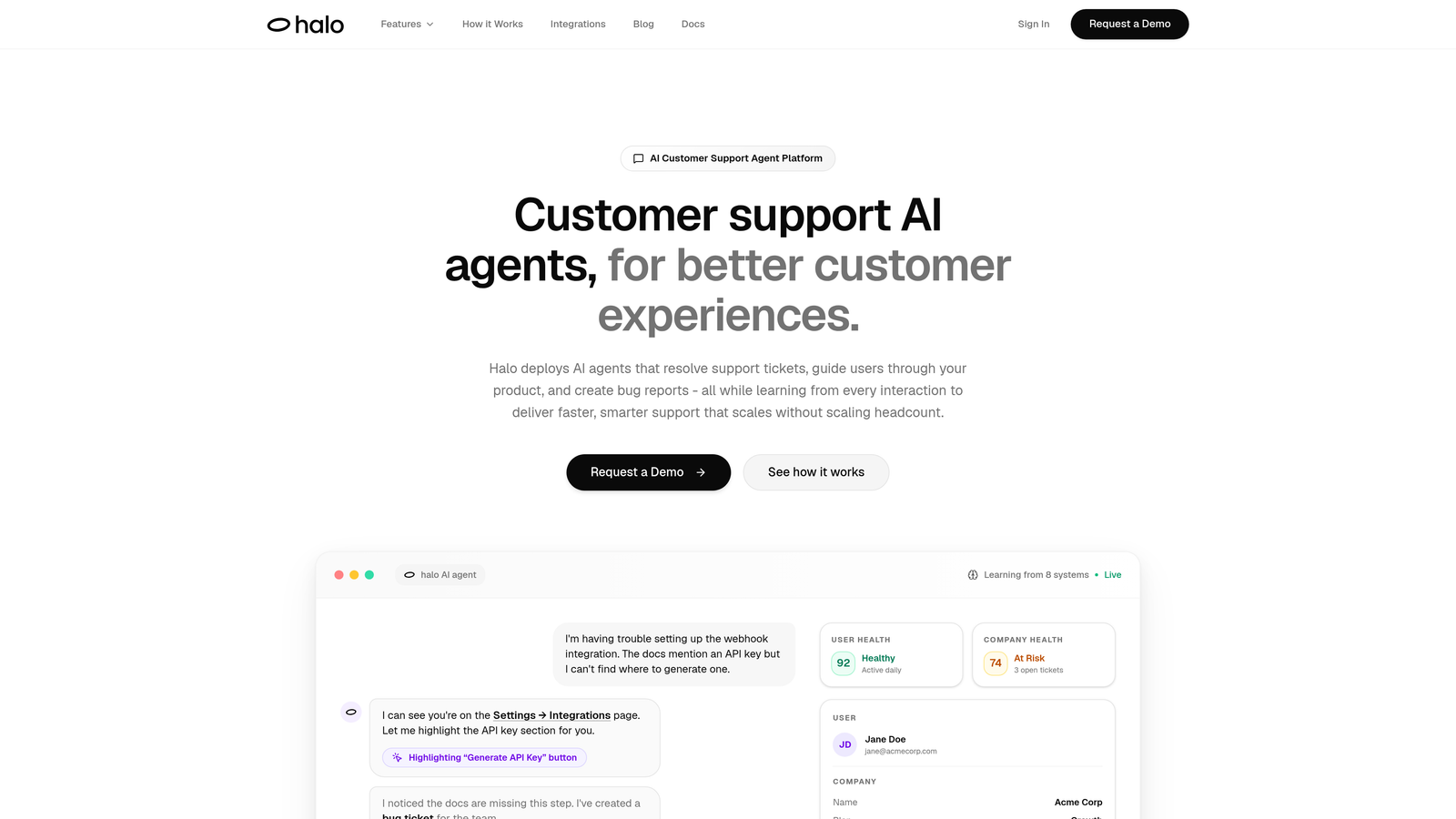
Halo AI is an AI-first customer support platform that deploys intelligent agents to autonomously resolve tickets, guide users through your product, and create bug reports while learning from every interaction.
Where This Tool Shines
Unlike traditional helpdesks with AI bolted on, Halo was built from the ground up as an AI-native platform. This architecture allows its agents to see exactly what users see on your platform through page-aware context, enabling visual guidance that goes far beyond text-based support.
The continuous learning capability sets it apart. Every resolved ticket, every escalation, every interaction feeds back into the system, making the AI progressively smarter about your specific product and customer needs. This means resolution accuracy improves over time without manual retraining.
Key Features
Autonomous AI Agents: Resolve tickets end-to-end without human intervention, handling everything from password resets to multi-step troubleshooting workflows.
Page-Aware Chat Widget: Sees what users see on your platform, providing visual UI guidance and context-specific help based on their current screen.
Smart Inbox with Business Intelligence: Goes beyond support metrics to surface customer health signals, revenue intelligence, and anomaly detection across your business.
Auto Bug Ticket Creation: Automatically creates detailed bug reports in Linear when issues are detected, complete with reproduction steps and user context.
Intelligent Escalation: Seamlessly hands off complex issues to human agents with full conversation context and recommended next steps.
Best For
B2B product teams and SaaS companies currently using helpdesk systems like Zendesk, Freshdesk, or Intercom who want to reduce support headcount scaling while improving response quality. Particularly valuable for teams with complex products requiring visual guidance and deep integration with development workflows.
Pricing
Contact for custom pricing based on ticket volume and integration requirements.
2. Intercom Fin
Best for: Teams already using Intercom who want GPT-4 powered AI without switching platforms
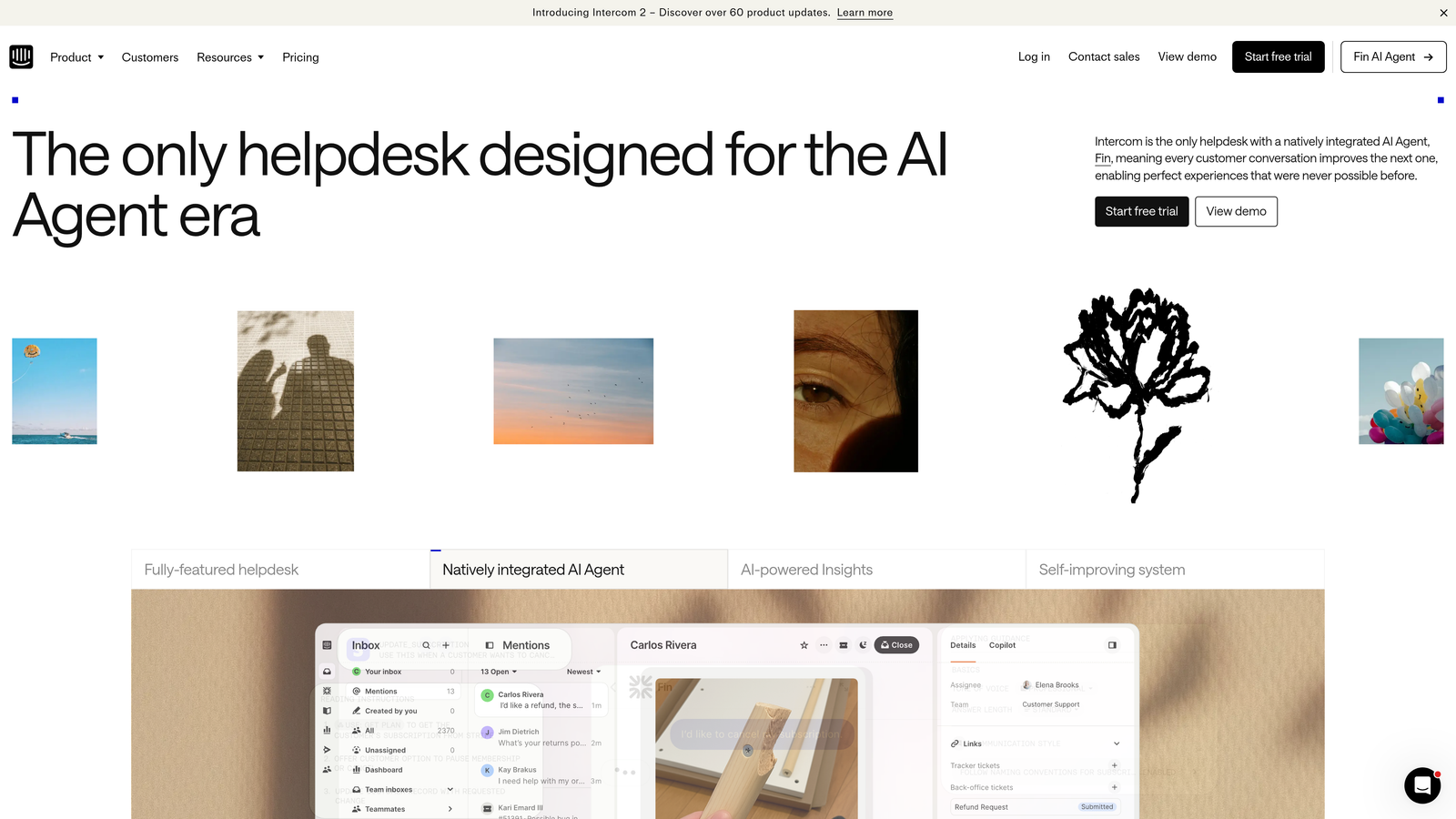
Intercom Fin is a conversational AI agent built on GPT-4 that resolves support questions by pulling from your existing help center content and knowledge base.
Where This Tool Shines
If you're already invested in the Intercom ecosystem, Fin offers the smoothest path to AI-powered support. It plugs directly into your existing messenger, knowledge base, and workflows without requiring migration or integration work.
The GPT-4 foundation gives Fin impressive natural language understanding and the ability to synthesize answers from multiple knowledge base articles. It can handle nuanced questions that require combining information from different sources, not just matching keywords to canned responses.
Key Features
GPT-4 Powered Responses: Generates contextual answers by understanding your knowledge base content, not just keyword matching.
Seamless Human Handoff: Routes complex questions to human agents with full conversation history and context when AI reaches its limits.
Multi-Language Support: Handles customer queries in over 40 languages without requiring separate knowledge bases for each language.
Custom Answer Configuration: Set specific responses for sensitive topics or complex scenarios where you want precise control over messaging.
Native Messenger Integration: Works within the Intercom messenger customers already know, maintaining consistent brand experience.
Best For
Companies already using Intercom for customer communication who want to add AI capabilities without platform switching. Works best for teams with well-maintained knowledge bases and straightforward support queries that can be resolved through documentation.
Pricing
Pay-per-resolution model starting at $0.99 per resolved conversation, making costs predictable and directly tied to value delivered.
3. Zendesk AI
Best for: Enterprise teams needing AI capabilities within a proven, compliant support infrastructure
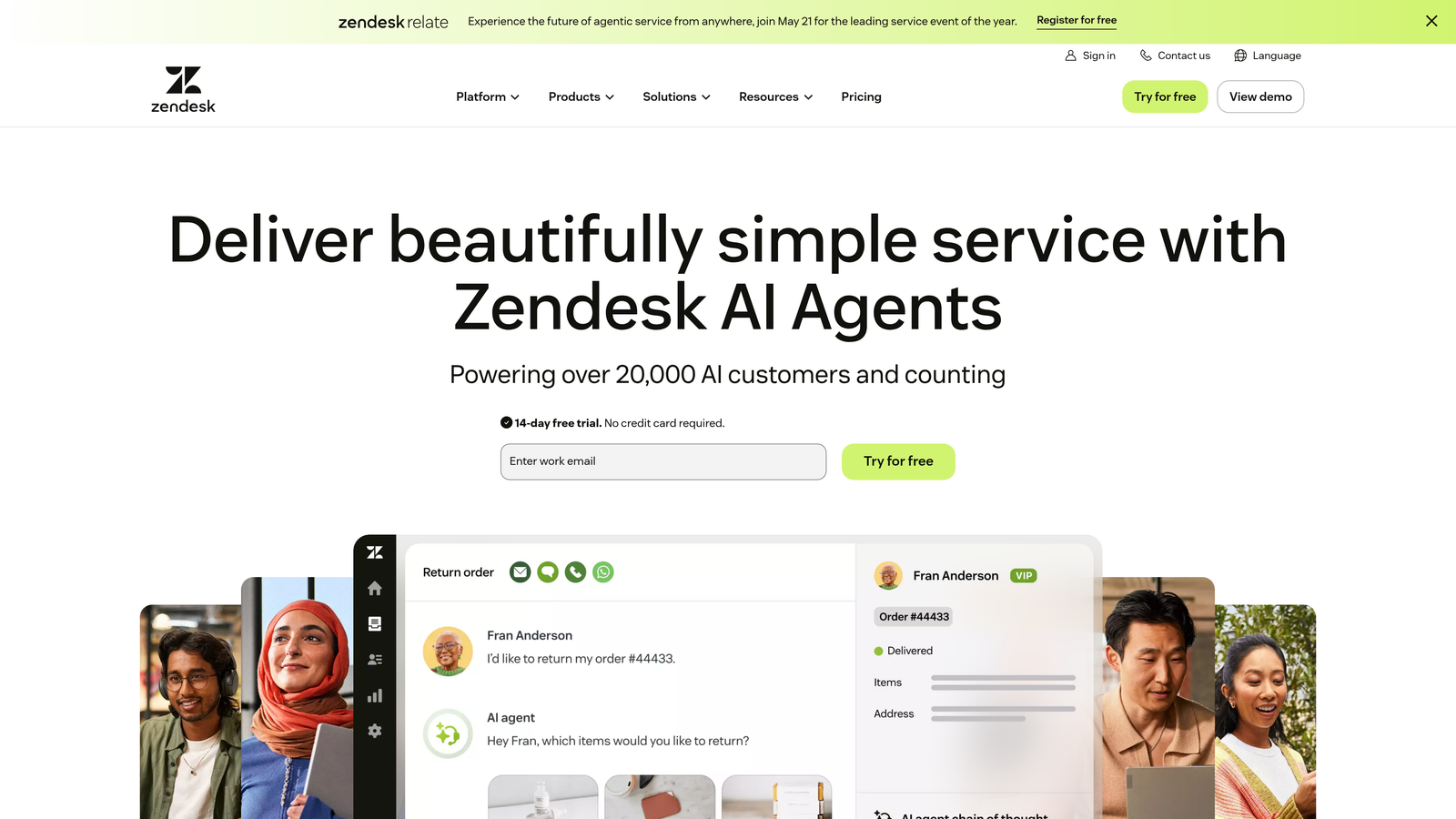
Zendesk AI brings enterprise-grade AI capabilities to the Zendesk Suite, offering intelligent triage, agent assistance, and automated responses within the platform millions of support teams already use.
Where This Tool Shines
For large enterprises with complex compliance requirements, Zendesk AI delivers advanced capabilities without sacrificing the security and governance features that regulated industries demand. It's built into a platform that already meets HIPAA, SOC 2, and GDPR requirements.
The agent assist features particularly shine in high-volume environments. Rather than replacing human agents entirely, Zendesk AI augments them with suggested responses, relevant knowledge base articles, and automated ticket categorization that speeds up resolution without removing the human touch.
Key Features
Intelligent Ticket Triage: Automatically categorizes, prioritizes, and routes tickets to the right team or agent based on content, urgency, and customer context.
Agent Assist: Suggests responses and surfaces relevant knowledge articles in real-time as agents work tickets, reducing research time.
Generative AI for Knowledge: Creates and updates knowledge base articles from resolved tickets, keeping documentation current with minimal manual effort.
Advanced Analytics: Provides deep insights into ticket trends, agent performance, and customer satisfaction patterns across your entire support operation.
Enterprise Security: Meets compliance requirements for healthcare, finance, and other regulated industries with built-in security controls.
Best For
Large enterprises with existing Zendesk deployments, particularly those in regulated industries requiring strict compliance. Best suited for teams that want to augment human agents rather than replace them with fully autonomous AI.
Pricing
Included in Zendesk Suite plans starting at $55 per agent per month, with Advanced AI features available as an additional add-on for teams needing more sophisticated capabilities.
4. Freshdesk Freddy AI
Best for: Mid-market companies wanting comprehensive AI automation at a competitive price point
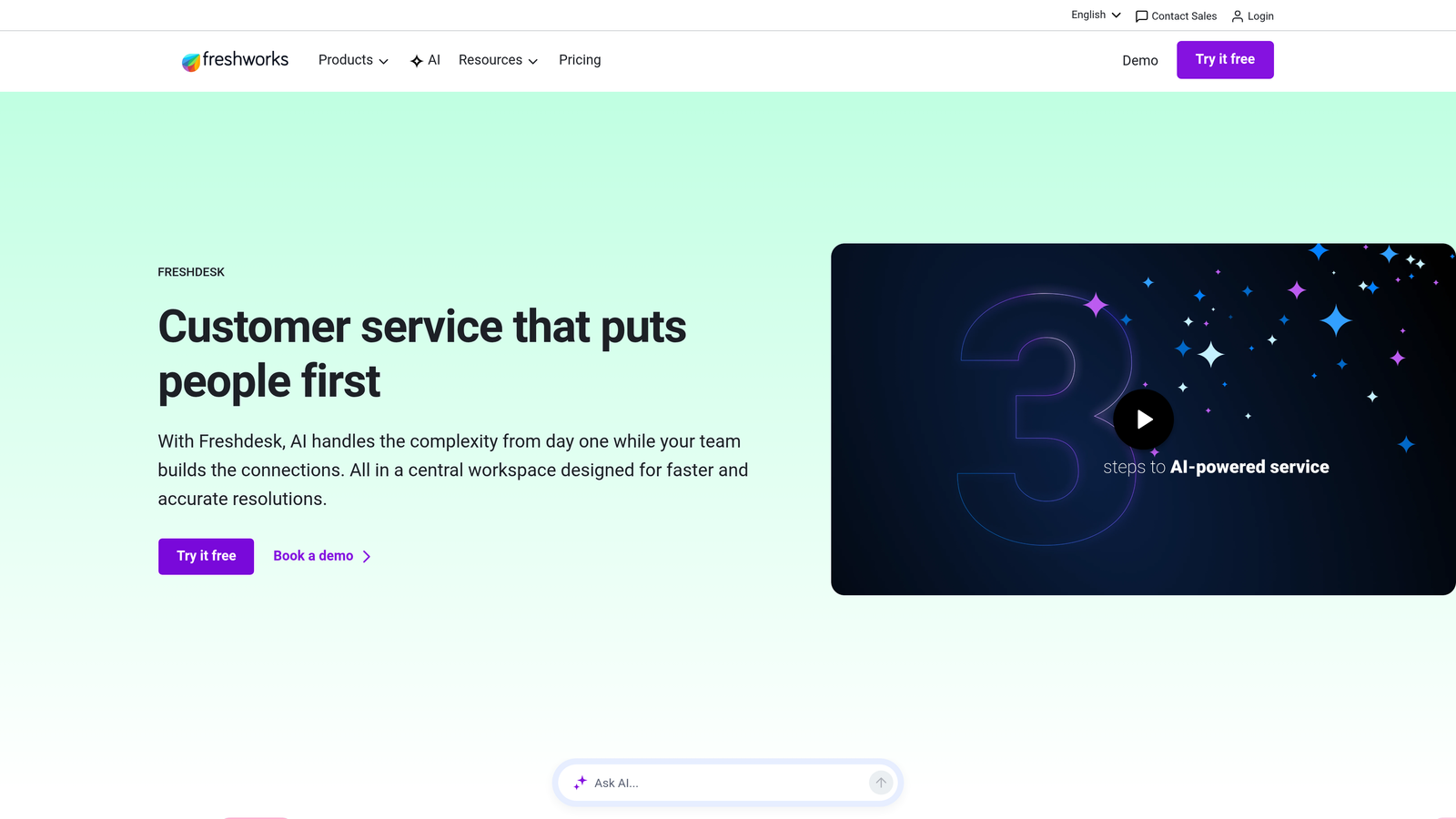
Freshdesk Freddy AI is an AI-powered automation suite within Freshdesk that combines self-service bots, agent productivity tools, and intelligent insights to streamline support operations.
Where This Tool Shines
Freddy AI delivers a surprisingly complete AI feature set at a price point that makes it accessible to mid-market companies. You get automated resolutions, sentiment analysis, and intelligent routing without the enterprise-level pricing of competitors.
The sentiment analysis capability is particularly valuable for prioritizing responses. Freddy can detect frustrated customers and automatically escalate their tickets, ensuring you address brewing problems before they become churn risks.
Key Features
Freddy Self Service: Automated bot that resolves common queries without human intervention, learning from your knowledge base and past tickets.
Agent Assist: Suggests canned responses and relevant articles as agents type, speeding up response times while maintaining quality.
Auto-Triage and Categorization: Automatically assigns categories, priorities, and routing based on ticket content and customer history.
Sentiment Analysis: Detects customer emotion in tickets and prioritizes frustrated or angry customers for faster response.
Knowledge Base Suggestions: Recommends relevant help articles to customers before they submit tickets, reducing inbound volume.
Best For
Growing companies that need robust AI features without enterprise pricing. Particularly good for teams handling moderate ticket volumes who want to improve efficiency without major platform investment.
Pricing
AI features included starting from the Pro plan at $49 per agent per month, making it one of the most cost-effective options for comprehensive AI capabilities.
5. Ada
Best for: High-volume consumer brands needing multilingual support across 50+ languages
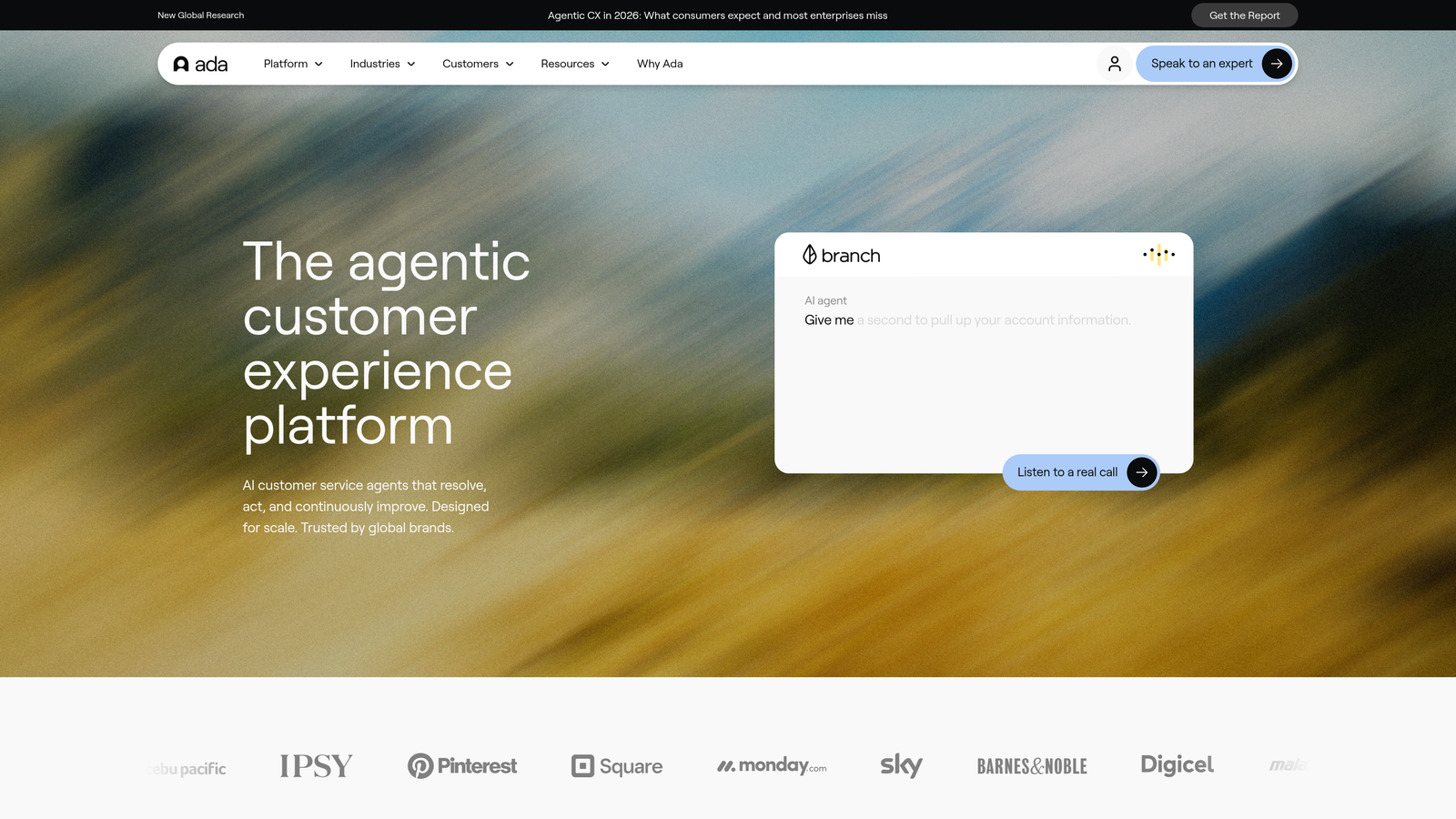
Ada is an AI-powered customer service automation platform built specifically for consumer-facing brands that handle massive support volumes across multiple channels and languages.
Where This Tool Shines
Ada's no-code automation builder lets non-technical teams create sophisticated support flows without developer involvement. Marketing and support teams can design, test, and deploy new automation workflows in hours instead of weeks.
The platform's multilingual capabilities are exceptional. With support for over 50 languages, Ada can handle global customer bases without requiring separate bots or workflows for each market. This makes international expansion significantly easier for consumer brands.
Key Features
No-Code Automation Builder: Visual interface for creating complex support workflows without writing code, enabling rapid iteration by support teams.
50+ Language Support: Handles customer queries in over 50 languages with a single bot, automatically detecting and responding in the customer's language.
Deep Personalization: Integrates with customer data platforms to personalize responses based on purchase history, account status, and behavioral data.
Proactive Campaigns: Reaches out to customers proactively with targeted messages based on behavior triggers or lifecycle stage.
Omnichannel Deployment: Consistent AI support across web, mobile, SMS, social media, and messaging platforms.
Best For
Large consumer brands and e-commerce companies handling tens of thousands of support queries monthly, especially those with international customer bases requiring multilingual support at scale.
Pricing
Custom pricing based on resolution volume and feature requirements. Generally positioned for mid-market to enterprise budgets.
6. Forethought
Best for: Teams wanting cutting-edge generative AI combined with intelligent workflow automation
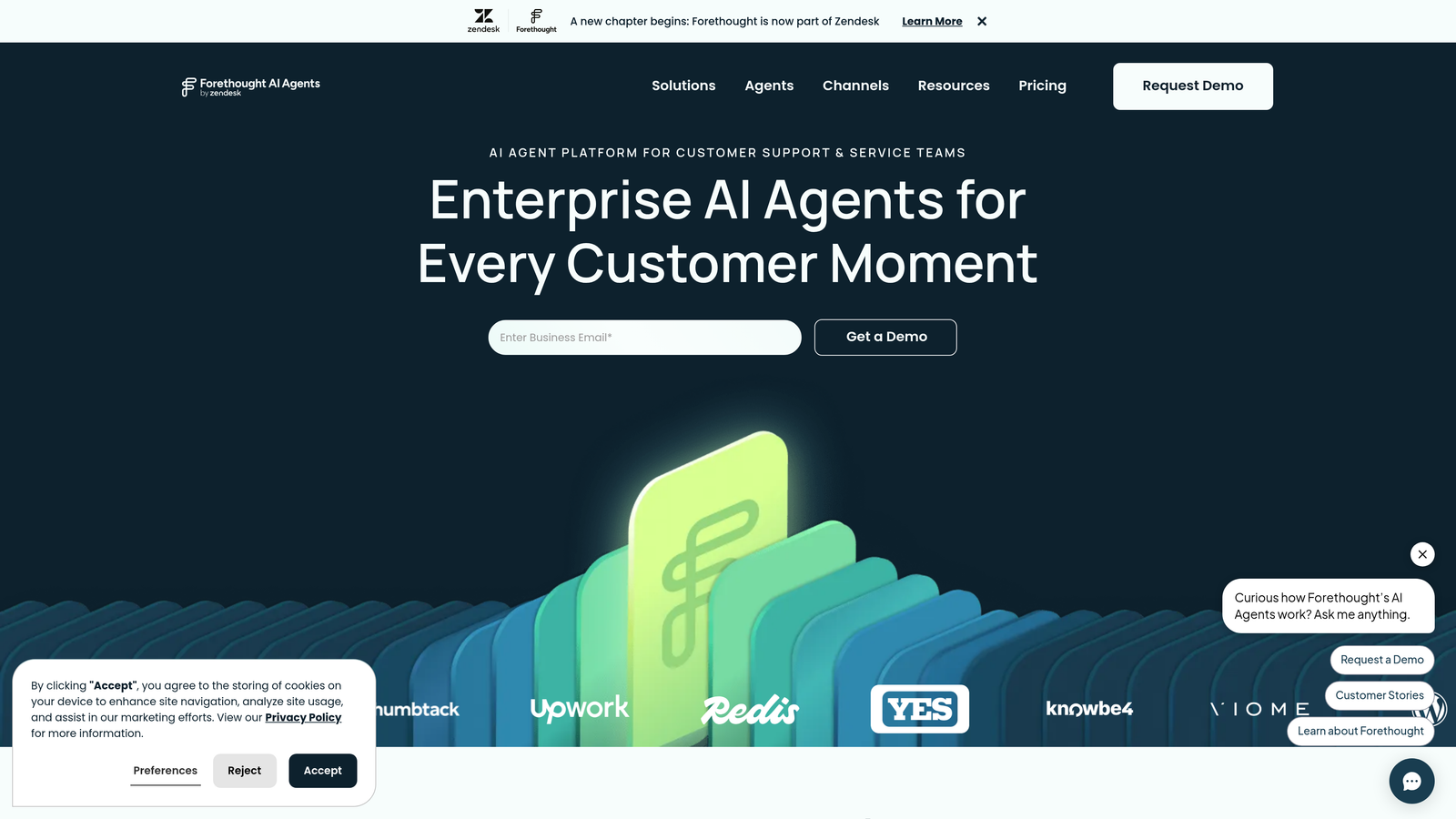
Forethought is an AI platform for customer support featuring SupportGPT for generative responses and a suite of intelligent automation tools for routing, resolution, and agent productivity.
Where This Tool Shines
Forethought's SupportGPT leverages the latest generative AI models to provide remarkably human-like responses that go beyond template matching. It can understand context, synthesize information from multiple sources, and adapt tone to match your brand voice.
The platform's modular approach lets you deploy different AI capabilities where they're needed most. You might use Solve for autonomous resolution, Triage for intelligent routing, and Assist for agent productivity without needing to implement everything at once.
Key Features
SupportGPT: Generative AI engine that creates contextual, human-like responses by understanding intent and synthesizing relevant information.
Solve: Autonomous ticket resolution system that handles end-to-end support interactions without human intervention.
Triage: Intelligent routing engine that assigns tickets to the right team based on content, urgency, and agent expertise.
Assist: Agent productivity tools that suggest responses, surface knowledge, and automate repetitive tasks during ticket handling.
Discover: Analytics platform that identifies support trends, knowledge gaps, and opportunities for automation improvement.
Best For
Tech-forward companies that want to leverage the latest generative AI capabilities and are comfortable with a more modular, customizable approach to support automation.
Pricing
Custom pricing based on ticket volume and which modules you deploy. Typically targets mid-market to enterprise customers.
7. Kustomer
Best for: Brands needing unified customer timelines with AI automation across all touchpoints
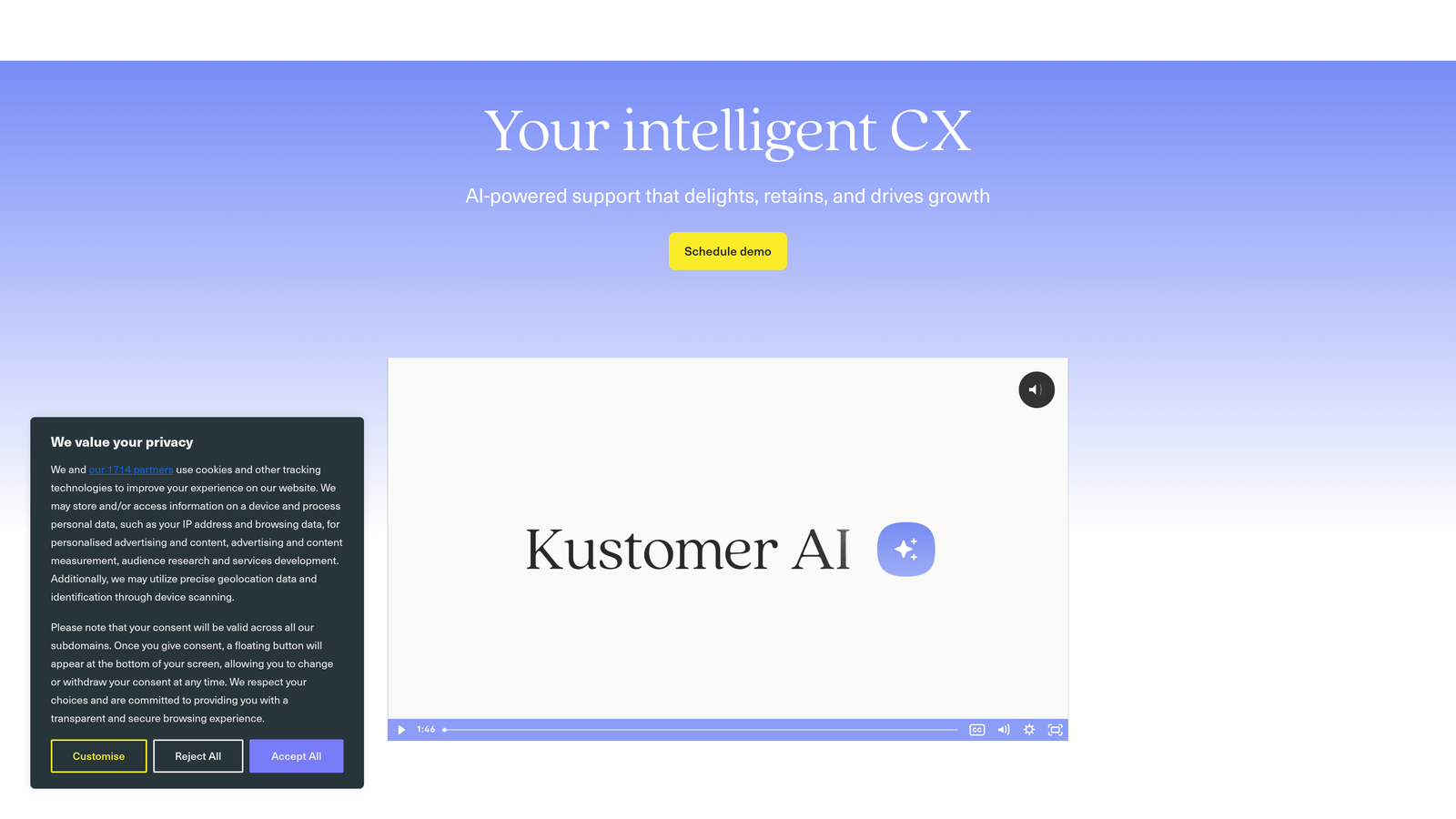
Kustomer is an AI-native customer service CRM that unifies all customer interactions into a single timeline view while applying intelligent automation to improve efficiency across omnichannel support.
Where This Tool Shines
Kustomer's unified timeline approach gives agents complete context instantly. Instead of jumping between systems to see email, chat, phone, and social interactions, everything lives in one chronological view. This context dramatically improves first-contact resolution.
The platform's AI-powered sentiment analysis goes beyond simple positive/negative scoring. It detects nuanced emotional states like confusion, urgency, or frustration, helping agents adjust their approach and prioritize responses appropriately.
Key Features
Unified Customer Timeline: Single view showing all customer interactions across channels in chronological order with full context.
AI-Powered Sentiment Analysis: Detects emotional tone in customer messages and flags high-priority situations requiring immediate attention.
Intelligent Conversation Routing: Routes conversations to the best-suited agent based on skills, workload, and customer history.
Omnichannel Support: Handles email, chat, SMS, social media, and phone in a single platform with consistent workflows.
Deep E-commerce Integrations: Connects with Shopify, Magento, and other platforms to show order history and enable actions within tickets.
Best For
E-commerce and retail brands that need to support customers across multiple channels while maintaining complete context and enabling agents to take actions like processing returns or updating orders directly from support conversations.
Pricing
Starts at $89 per user per month, positioning it as a mid-market to enterprise solution with comprehensive capabilities included.
8. Tidio
Best for: Small businesses and startups needing affordable AI chat without enterprise complexity
Tidio is an accessible live chat and AI chatbot platform designed for small businesses and growing startups that want to add AI support without significant investment or technical complexity.
Where This Tool Shines
Tidio removes the barriers that typically prevent small businesses from implementing AI support. The visual bot builder is genuinely intuitive, letting you create automated flows in minutes without technical knowledge or developer assistance.
The Lyro AI chatbot learns from your website content and FAQs to provide relevant answers automatically. For small teams, this means you can deploy AI support without spending weeks building a knowledge base or training data.
Key Features
Lyro AI Chatbot: AI-powered bot that learns from your website content to answer customer questions automatically without manual setup.
Pre-Built Templates: Ready-made conversation flows for common scenarios like lead capture, order tracking, and FAQ handling.
Live Chat with Visitor Tracking: See what pages visitors are viewing in real-time and proactively engage based on behavior.
Email and Messenger Integration: Manage customer conversations from multiple channels in a single inbox.
Visual Bot Builder: Drag-and-drop interface for creating custom chatbot flows without coding knowledge.
Best For
Small businesses, startups, and solopreneurs who need basic AI chat capabilities without the cost or complexity of enterprise platforms. Particularly good for teams just starting to automate support.
Pricing
Free tier available with basic features. Paid plans start at $29 per month, making it one of the most budget-friendly options for AI-powered support.
9. Drift
Best for: B2B companies wanting to blend customer support with revenue acceleration
Drift is a conversational AI platform that combines customer support capabilities with revenue intelligence and sales acceleration tools, designed specifically for B2B companies.
Where This Tool Shines
Drift's unique positioning bridges support and sales, making it valuable for B2B companies where support conversations often uncover expansion opportunities. The platform can detect buying signals in support chats and route high-value conversations to sales teams.
The account-based targeting capabilities let you deliver different experiences based on company size, industry, or account status. Enterprise customers might get routed directly to dedicated support, while prospects receive sales-focused messaging.
Key Features
AI-Powered Conversation Routing: Routes conversations to support, sales, or account management based on intent detection and account context.
Revenue Intelligence Integration: Identifies expansion opportunities and buying signals within support conversations for sales follow-up.
Meeting Scheduling Automation: Automatically schedules meetings with the right team member based on conversation context and availability.
Account-Based Targeting: Delivers personalized experiences based on company attributes, deal stage, or account value.
Salesforce and HubSpot Integration: Deep connections with major CRM platforms for unified customer data and workflow automation.
Best For
B2B SaaS companies and enterprise software providers where support and sales intersect, particularly those with account-based go-to-market strategies and high customer lifetime values.
Pricing
Custom enterprise pricing based on conversation volume and feature requirements. Typically positioned for mid-market to enterprise B2B companies.
10. HubSpot Service Hub AI
Best for: Teams wanting unified support within the HubSpot CRM ecosystem
HubSpot Service Hub AI brings AI-powered service tools into HubSpot's CRM platform, enabling unified customer support and success workflows that connect directly to marketing and sales data.
Where This Tool Shines
If you're already using HubSpot for marketing or sales, Service Hub AI provides the smoothest path to unified customer data. Support agents see the complete customer journey from first website visit through closed deals and ongoing support interactions.
The AI ticket summarization feature is particularly valuable for teams handling complex, multi-message threads. It distills long conversations into concise summaries, helping managers review cases quickly and new agents get up to speed on ongoing issues.
Key Features
AI Ticket Summarization: Automatically generates concise summaries of long support threads for quick review and context transfer.
Conversation Intelligence: Analyzes support conversations to identify trends, common issues, and opportunities for process improvement.
Knowledge Base with AI Search: Self-service portal with intelligent search that understands intent and surfaces relevant articles.
Customer Portal: Self-service hub where customers can view tickets, access knowledge, and manage their account.
Unified CRM View: Complete customer context across marketing, sales, and service teams in a single platform.
Best For
Companies already using HubSpot for marketing or sales who want to add support capabilities without introducing another platform. Best for teams that value unified customer data across all functions.
Pricing
Free tier available with basic features. Professional plans start at $90 per month with more advanced AI capabilities included.
11. Gorgias
Best for: E-commerce brands on Shopify needing support integrated with order management
Gorgias is an e-commerce focused helpdesk with AI automation designed specifically for Shopify and online retail brands that need support deeply integrated with order and customer data.
Where This Tool Shines
Gorgias understands e-commerce support is fundamentally different from SaaS support. The platform lets agents process refunds, update orders, and modify subscriptions directly from support tickets without switching to your commerce platform.
The revenue statistics feature shows exactly how much each customer has spent, their order history, and lifetime value right in the ticket view. This context helps agents make smart decisions about returns, discounts, and issue resolution without escalating to management.
Key Features
Deep Shopify Integration: Complete access to order data, customer history, and the ability to modify orders directly from support tickets.
Order Management in Tickets: Process refunds, update shipping addresses, modify subscriptions, and cancel orders without leaving the helpdesk.
AI-Powered Macro Suggestions: Recommends relevant response templates based on ticket content and order context.
Revenue Statistics: Shows customer lifetime value, order history, and spending patterns directly in ticket views.
Automated Order Status Responses: Automatically answers "where is my order" questions by pulling real-time tracking information.
Best For
Shopify stores and e-commerce brands where most support queries relate to orders, shipping, returns, and product questions. Particularly valuable for high-volume retail operations.
Pricing
Starts at $10 per month for 50 tickets, scaling up based on ticket volume. Pricing structure aligns with growing e-commerce operations.
Making the Right Choice
The right customer support AI software depends on your specific context, not just features on a spec sheet. Your integration ecosystem matters as much as AI capabilities.
For B2B SaaS teams wanting truly autonomous AI that learns from every interaction and integrates with your development workflow, Halo AI delivers the most sophisticated continuous learning architecture. If you're already invested in Zendesk or Intercom, their native AI options (Zendesk AI and Intercom Fin) offer the smoothest implementation path without platform migration.
High-volume consumer brands handling support in dozens of languages should look at Ada or Forethought for their multilingual capabilities and generative AI sophistication. E-commerce operations, particularly on Shopify, get the most value from Gorgias with its deep commerce integrations and order management features.
Budget-conscious startups can start with Tidio's free tier or HubSpot Service Hub's free plan and scale up as volume grows. Mid-market teams wanting comprehensive features at competitive pricing will find Freshdesk Freddy AI delivers strong value.
The distinction between augmenting human agents versus replacing them with autonomous AI matters significantly. Zendesk AI and HubSpot focus on agent assistance, while Halo AI, Ada, and Forethought emphasize autonomous resolution. Choose based on your comfort level with AI autonomy and the complexity of your support queries.
Your support team shouldn't scale linearly with your customer base. Let AI agents handle routine tickets, guide users through your product, and surface business intelligence while your team focuses on complex issues that need a human touch. See Halo in action and discover how continuous learning transforms every interaction into smarter, faster support.