9 Best Customer Support Automation Tools in 2026
Discover the best customer support automation tools in 2026 that go beyond basic ticket routing to deliver AI-powered autonomous resolutions. This guide evaluates platforms based on AI sophistication, integration capabilities, and pricing transparency—helping you choose solutions that handle complex customer issues 24/7 while reducing team burnout and scaling support without linearly increasing headcount.
 Grant CooperFounder14 min read
Support tickets don't sleep, but your team does. As customer expectations climb and support volumes grow, the old playbook of "hire more agents" hits a wall fast. The cost scales linearly, response times lag during peak hours, and burnout becomes inevitable. That's why forward-thinking teams are shifting from traditional helpdesks to AI-first automation that learns, adapts, and resolves issues autonomously.
The best customer support automation tools in 2026 don't just route tickets or send canned responses. They understand context, learn from every interaction, and handle complex resolutions without human intervention. We evaluated platforms based on AI sophistication, integration depth, autonomous resolution capabilities, and pricing transparency. Whether you need an AI agent that learns continuously or a workflow platform that connects your entire stack, this list covers the spectrum from AI-native solutions to established helpdesks adding intelligent features.
Here are the top customer support automation tools transforming how teams scale support without scaling headcount.
1. Halo AI
Best for: B2B SaaS teams wanting AI agents that learn continuously from every support interaction
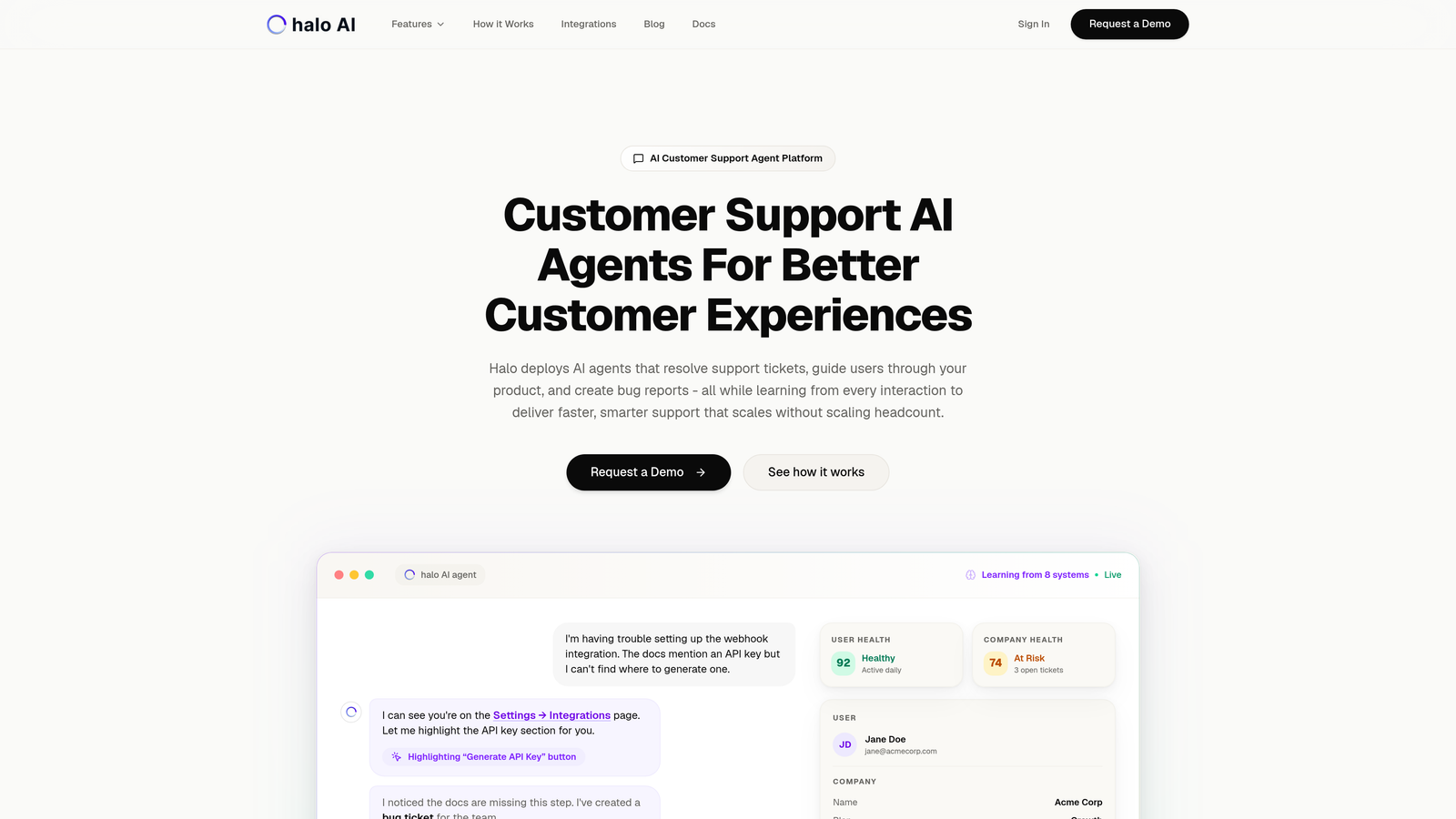
Halo AI is an AI-native customer support platform where intelligent agents don't just automate responses—they actually learn from every ticket, conversation, and resolution to get smarter over time.
Where This Tool Shines
Unlike traditional helpdesks that bolted AI features onto legacy systems, Halo was built from the ground up as an AI-first architecture. The platform's agents understand page-aware context, meaning they see exactly what your users see in your product. When a customer asks "How do I export this report?" the AI knows which page they're on, what features they have access to, and can provide visual guidance specific to their current view.
The continuous learning component separates Halo from static chatbot solutions. Every interaction—whether resolved by AI or escalated to a human—feeds back into the system's intelligence. This creates a support experience that improves automatically without constant manual training or rule updates.
Key Features
Autonomous AI Agents: Resolve tickets independently while learning from every interaction to improve future responses.
Page-Aware Chat Widget: Sees what users see in your product interface to provide context-specific visual guidance.
Auto Bug Ticket Creation: Detects product issues and automatically creates tickets in Linear, Slack, or your project management system.
Business Intelligence Layer: Surfaces customer health signals, revenue intelligence, and anomaly detection beyond basic support metrics.
Smart Inbox with Human Escalation: Routes complex issues to human agents while maintaining full context from AI interactions.
Best For
B2B SaaS companies and product teams that want support automation to become more intelligent over time, not just faster. Particularly valuable for teams already using tools like Zendesk, Freshdesk, or Intercom who want AI that connects across their entire business stack including Linear, Slack, HubSpot, Stripe, Zoom, and PandaDoc.
Pricing
Contact for pricing. Designed specifically for B2B SaaS teams looking to scale support without scaling headcount proportionally.
2. Intercom
Best for: Teams wanting unified customer messaging across chat, email, and in-app product tours
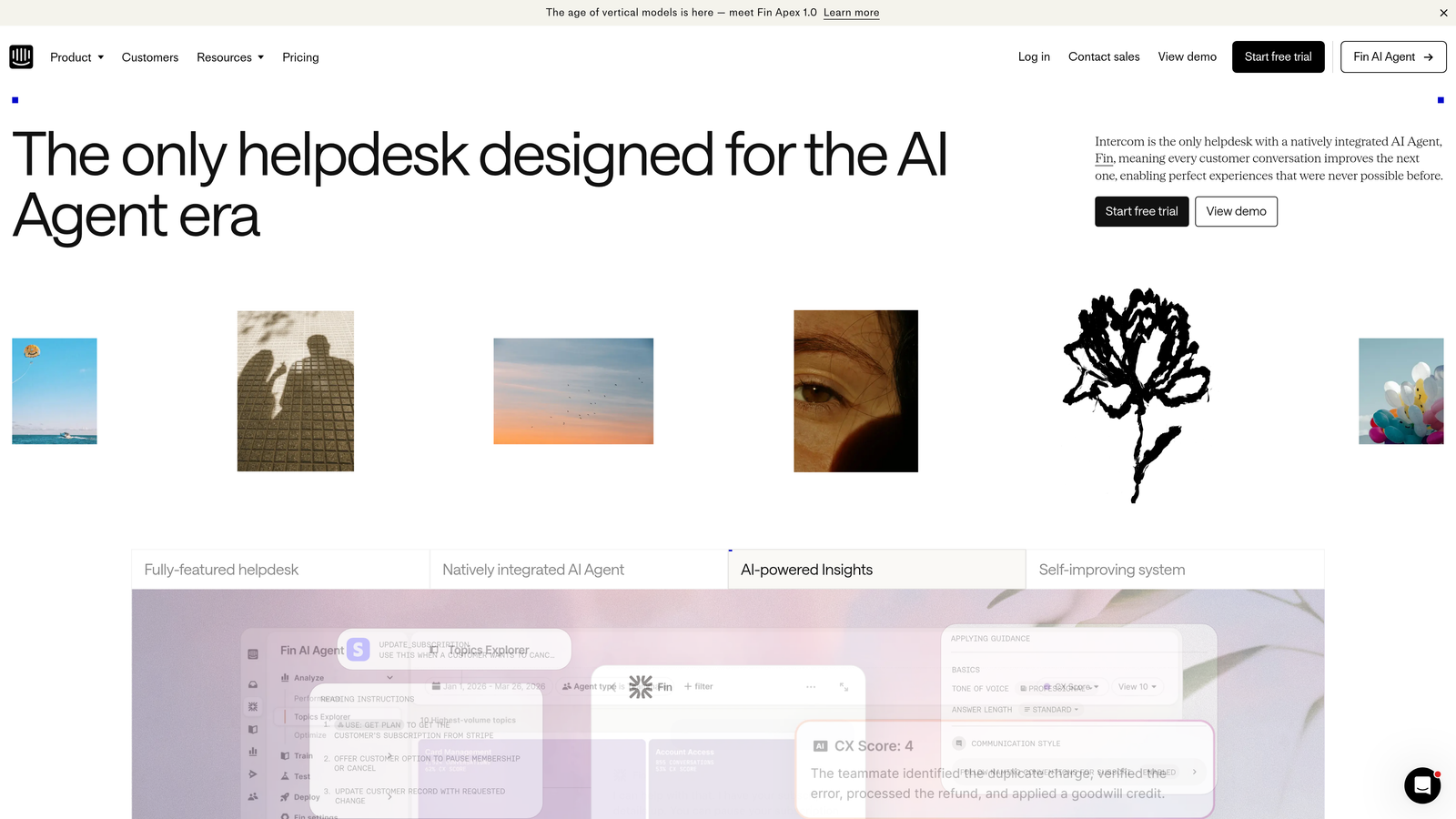
Intercom is a unified customer messaging platform that combines live chat, help center, and conversational AI through their Fin AI agent.
Where This Tool Shines
Intercom excels at blending proactive engagement with reactive support. The platform's Messenger widget isn't just for answering questions—it powers product tours, targeted messages, and in-app announcements that guide users before they even need to ask for help. This proactive approach reduces support volume by catching users at the right moment with the right information.
The Fin AI agent handles conversational ticket resolution with natural language understanding, pulling answers from your knowledge base and past conversations. When Fin can't resolve an issue, it hands off seamlessly to human agents with full context, creating a smooth escalation path that doesn't force customers to repeat themselves.
Key Features
Fin AI Agent: Conversational AI that resolves tickets by understanding intent and pulling from your knowledge base.
Unified Inbox: Manages conversations across chat, email, and social channels in a single interface.
Product Tours: In-app messaging and guided tours that educate users proactively to prevent support tickets.
Custom Bots with Visual Builder: Create conversation flows without coding using a drag-and-drop interface.
Series Campaigns: Automated message sequences triggered by user behavior or lifecycle stage.
Best For
SaaS companies that want to blend support, marketing, and product engagement in a single platform. Especially strong for teams that value proactive customer communication and in-app guidance alongside reactive support.
Pricing
Starts at $39 per seat per month for the Essential plan. Fin AI is charged separately based on resolutions, typically adding significant cost at scale. Enterprise pricing available for larger teams.
3. Zendesk
Best for: Enterprise teams needing extensive customization and a mature app marketplace ecosystem
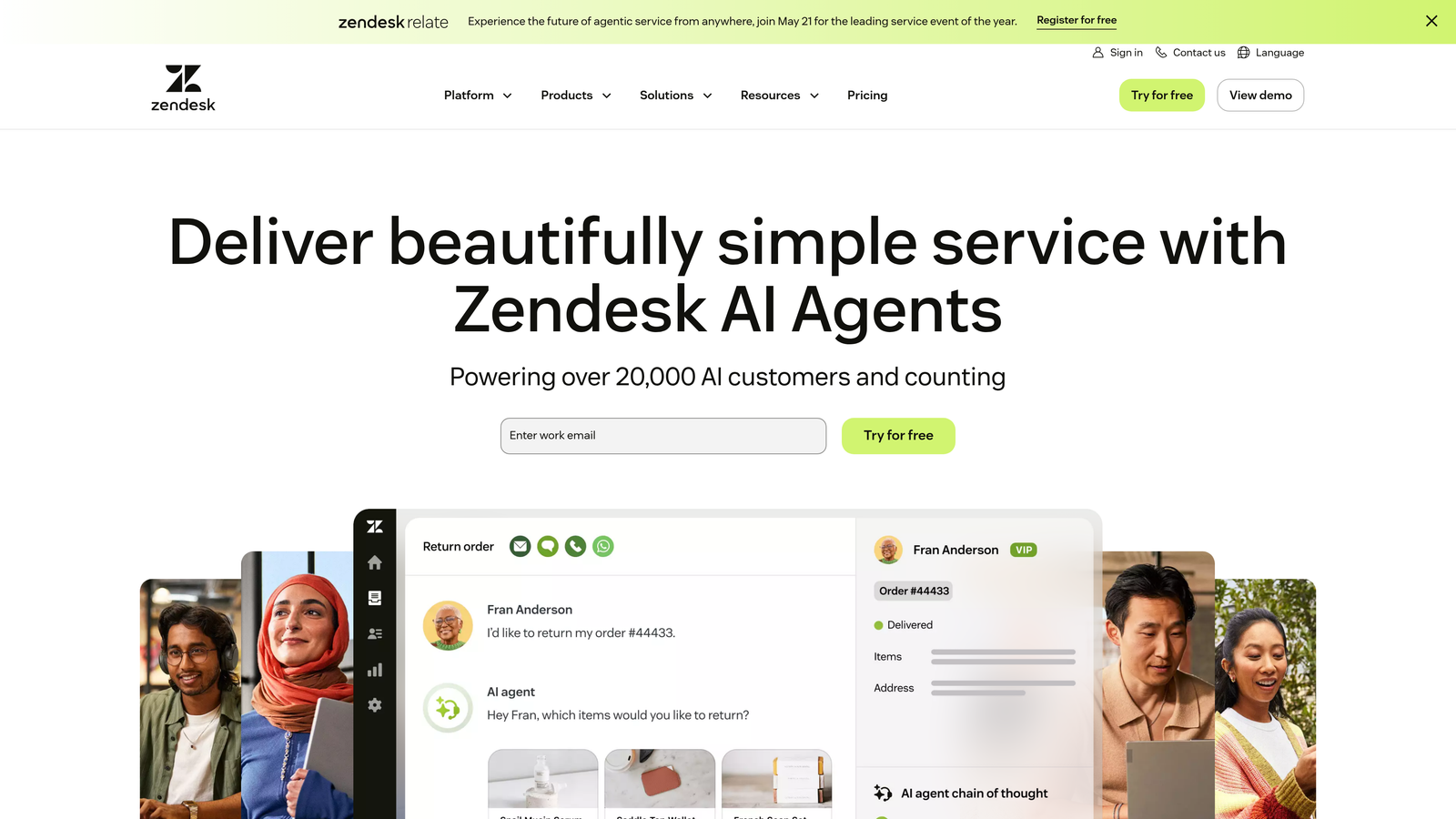
Zendesk is an enterprise-grade helpdesk platform with deep customization options, extensive integrations, and AI-powered routing and suggestions.
Where This Tool Shines
Zendesk's greatest strength is its maturity and flexibility. With over a decade in the market, it's built an ecosystem of 1,500+ marketplace apps covering nearly every integration imaginable. Need to connect your support data to a niche CRM or industry-specific tool? There's probably a Zendesk app for it. This makes it particularly valuable for enterprises with complex tech stacks and specific workflow requirements.
The platform's AI capabilities focus on routing efficiency and agent assistance rather than full autonomous resolution. Answer Bot provides automated responses for common questions, while AI-powered routing ensures tickets land with the right agent based on skill, availability, and historical performance. The advanced analytics suite offers custom reporting that enterprise teams need for compliance and optimization.
Key Features
Answer Bot: Provides automated responses to common questions by searching your knowledge base and past tickets.
AI-Powered Routing: Intelligent ticket assignment based on agent skills, workload, and historical resolution patterns.
Marketplace Ecosystem: Access to 1,500+ pre-built integrations covering CRMs, commerce platforms, and business tools.
Advanced Analytics: Custom reporting, dashboards, and compliance tracking for enterprise requirements.
Omnichannel Support: Unified ticketing across email, chat, phone, social media, and messaging apps.
Best For
Enterprise organizations with complex support operations, compliance requirements, and established workflows. Best suited for teams that need extensive customization and have the resources to configure and maintain the platform properly.
Pricing
Suite Team starts at $55 per agent per month. Suite Growth at $89 per agent per month adds more automation and reporting. Enterprise pricing varies based on customization needs and volume.
4. Freshdesk
Best for: Budget-conscious teams wanting solid automation features without enterprise-level pricing
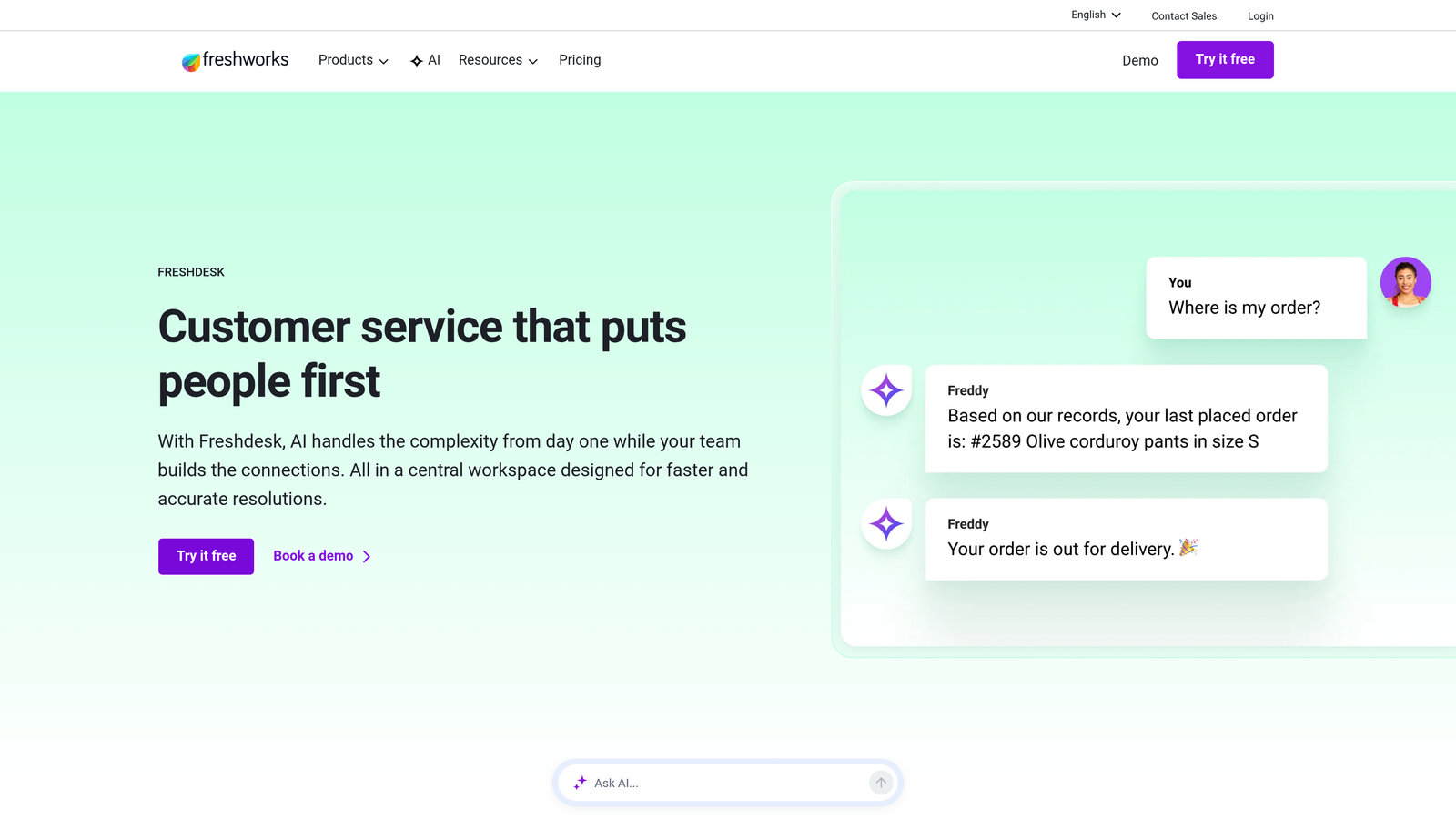
Freshdesk is a value-focused helpdesk solution featuring Freddy AI for ticket triage, canned responses, and workflow automation.
Where This Tool Shines
Freshdesk delivers impressive functionality at price points that make sense for growing teams. The platform doesn't skimp on features—Freddy AI handles ticket classification, suggests responses to agents, and automates routine workflows. What makes Freshdesk particularly attractive is the free tier that actually works for small teams, not just a trial disguised as a free plan.
The scenario automation builder lets you create complex workflows without technical expertise. You can set up rules like "If ticket contains keyword X and customer is on plan Y, automatically escalate to senior agent and notify via Slack." These automations scale with your team, handling increasing volume without proportional increases in manual work.
Key Features
Freddy AI: Classifies tickets automatically, suggests responses to agents, and predicts customer satisfaction scores.
Scenario Automations: Visual workflow builder for complex multi-step automations based on ticket properties and customer data.
Multi-Channel Support: Unified ticketing across email, chat, phone, social media, and web forms.
Collision Detection: Prevents multiple agents from working on the same ticket simultaneously.
Free Tier: Actually functional free plan for up to 10 agents, not just a limited trial.
Best For
Growing companies that need solid automation and AI features without committing to enterprise pricing. Particularly valuable for teams transitioning from basic email support to a proper helpdesk system.
Pricing
Free tier available for up to 10 agents with basic features. Growth plan at $15 per agent per month adds automation and Freddy AI. Pro plan at $49 per agent per month includes advanced reporting and custom roles.
5. HubSpot Service Hub
Best for: Teams already using HubSpot CRM who want support data natively integrated with marketing and sales
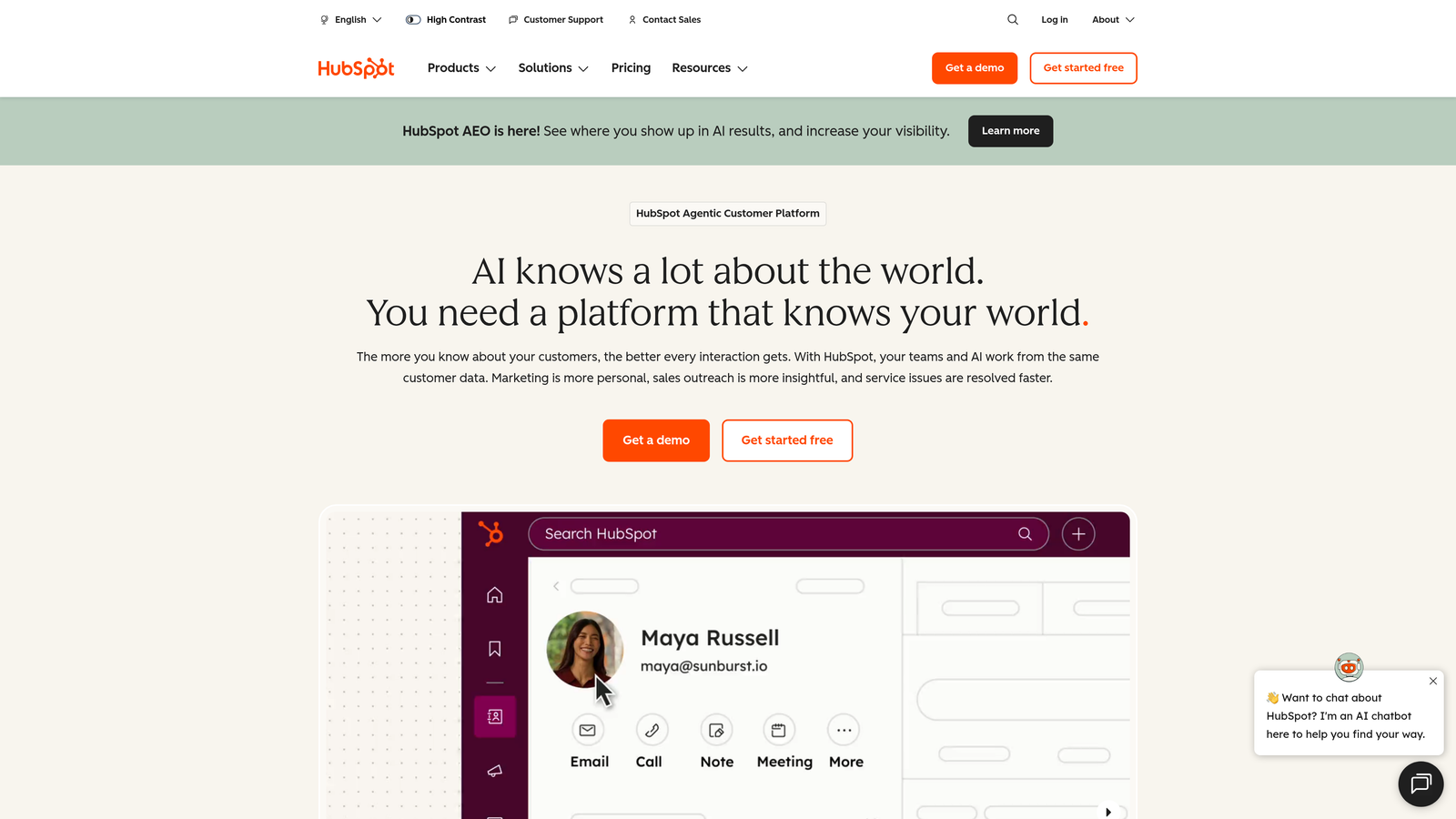
HubSpot Service Hub is customer service software that lives inside the HubSpot ecosystem, offering ticketing, knowledge base, and automation tied directly to the customer lifecycle.
Where This Tool Shines
If you're already in the HubSpot ecosystem, Service Hub eliminates data silos completely. Your support agents see the same customer timeline that sales and marketing see—every email opened, form submitted, deal closed, and previous support interaction. This context transforms support from reactive firefighting to proactive relationship management.
The conversational bots integrate with HubSpot's workflow engine, meaning you can trigger marketing sequences based on support interactions or route high-value customers differently based on their deal stage. Customer feedback surveys and NPS tracking feed directly into customer health scores, giving your entire organization a unified view of customer satisfaction.
Key Features
Native CRM Integration: Complete customer context including marketing touchpoints, sales deals, and support history in one timeline.
Conversational Bots: Chatbots with branching logic that can qualify leads, book meetings, or route support requests.
Customer Feedback Tools: NPS surveys, CSAT ratings, and custom feedback forms that feed into customer health scores.
Cross-Team Workflows: Automation that spans marketing, sales, and service based on customer behavior and lifecycle stage.
Knowledge Base: Self-service help center with SEO optimization and analytics on article effectiveness.
Best For
Companies already using HubSpot for marketing or sales who want their support data in the same ecosystem. Most valuable when you need tight integration between customer-facing teams and want to leverage support interactions for revenue intelligence.
Pricing
Free tools available with limited features. Starter plan at $20 per month per seat adds automation and reporting. Professional at $100 per month per seat includes custom surveys and advanced automation.
6. Tidio
Best for: E-commerce and SMBs wanting quick-to-deploy live chat with AI chatbot capabilities
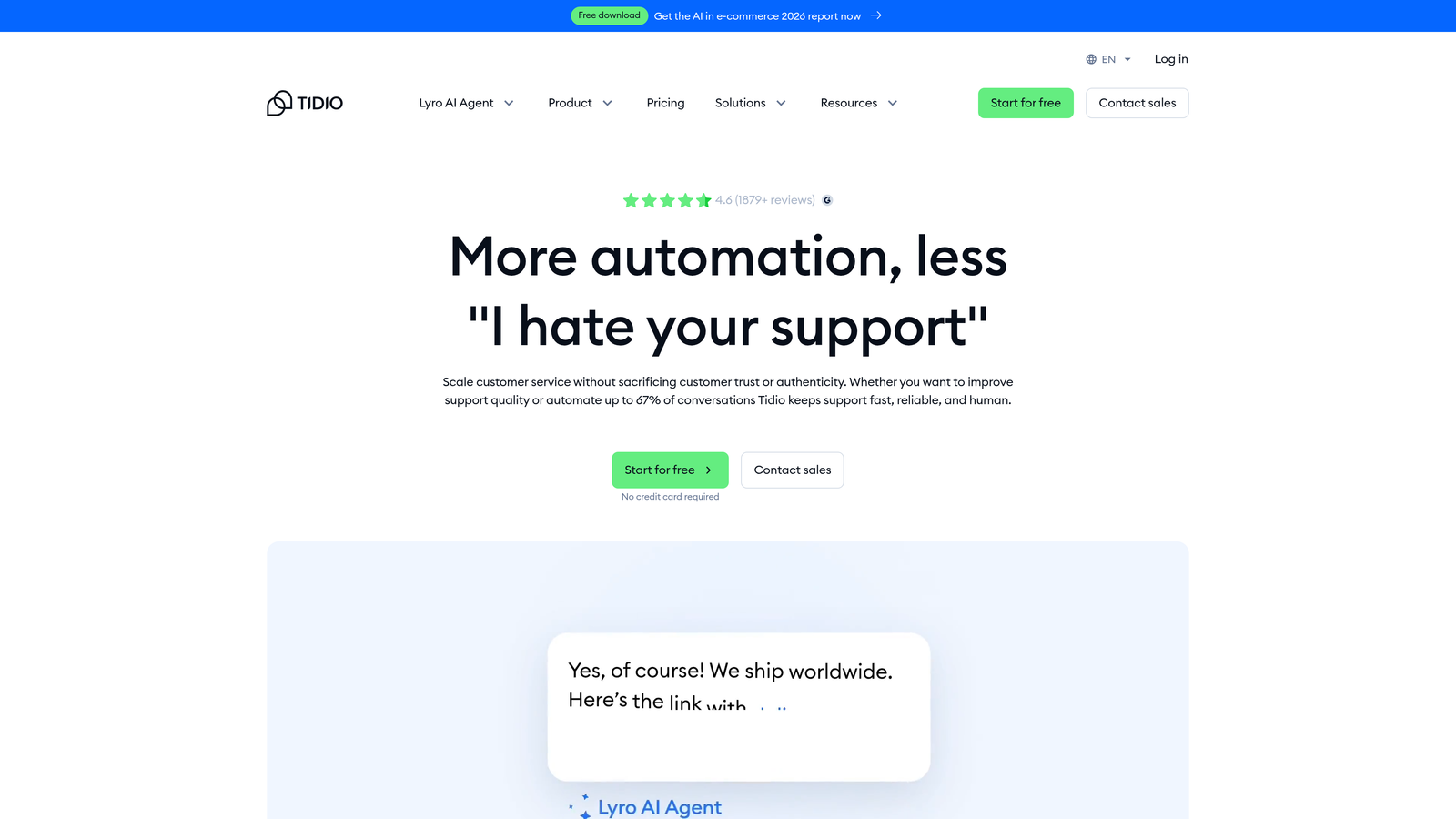
Tidio is a live chat and chatbot platform designed for e-commerce stores and small businesses, featuring the Lyro AI chatbot for instant automated responses.
Where This Tool Shines
Tidio's strength is speed of deployment. You can have live chat running on your Shopify store or WordPress site in under ten minutes with no technical expertise required. The visual chatbot builder comes with templates for common e-commerce scenarios like abandoned cart recovery, order tracking, and product recommendations.
The Lyro AI chatbot learns from your website content and FAQ documentation to answer customer questions conversationally. Unlike basic rule-based bots, Lyro understands intent and can handle variations of the same question without requiring you to program every possible phrasing. Visitor tracking shows you who's browsing your site in real-time, letting agents proactively reach out to high-value visitors.
Key Features
Lyro AI Chatbot: Conversational AI trained on your website content and documentation to answer questions naturally.
Visual Chatbot Builder: Drag-and-drop interface with pre-built templates for common e-commerce flows.
E-Commerce Integrations: Native connections to Shopify, WooCommerce, WordPress, and Wix with order data access.
Visitor Tracking: Real-time view of who's on your site, what pages they're viewing, and their browsing history.
Behavior Triggers: Automated chat invitations based on time on page, exit intent, or specific page visits.
Best For
E-commerce stores and small businesses that need live chat and basic AI automation deployed quickly without technical resources. Particularly strong for teams focused on converting browsers to buyers through proactive chat engagement.
Pricing
Free plan available with basic live chat for one operator. Lyro AI starts at $29 per month for 50 conversations. Tidio+ at $394 per month includes unlimited conversations and advanced features.
7. Help Scout
Best for: Teams prioritizing human-centric support with AI assistance rather than full automation
Help Scout is a customer support platform focused on maintaining personal connections while adding AI-powered drafts, summarization, and a clean collaborative inbox.
Where This Tool Shines
Help Scout takes a different philosophical approach than most automation platforms. Rather than pushing for maximum autonomous resolution, it focuses on making human agents more efficient and effective. The AI drafts feature suggests responses based on past conversations and knowledge base articles, but leaves the final touch to the agent. This maintains authenticity while reducing response time.
The shared inbox design encourages collaboration without chaos. Collision detection prevents two agents from responding to the same customer, while internal notes and @mentions facilitate team problem-solving. The Beacon widget embeds your knowledge base directly into your product, letting customers self-serve before creating tickets, but with a seamless escalation path when they need human help.
Key Features
AI Drafts and Summarization: Suggests response drafts based on context and summarizes long conversation threads for quick agent review.
Shared Inbox with Collision Detection: Team collaboration features that prevent duplicate responses and facilitate internal discussion.
Docs Knowledge Base: Self-service help center with Beacon widget that embeds articles directly in your product.
Customer Profiles: Automatic customer data aggregation showing conversation history and satisfaction ratings.
Satisfaction Ratings: Built-in CSAT surveys after every conversation to track team and individual performance.
Best For
Companies that view support as a relationship-building opportunity rather than a cost center to minimize. Best for teams that want AI to assist agents rather than replace them, maintaining personal touches at scale.
Pricing
Standard plan at $22 per user per month includes core features and AI drafts. Plus plan at $44 per user per month adds advanced reporting and custom fields. No free tier available.
8. Gorgias
Best for: E-commerce brands needing deep Shopify and BigCommerce integration with order-aware automation
Gorgias is an e-commerce-focused helpdesk with native integrations to Shopify and BigCommerce that enable order-related automation and revenue tracking.
Where This Tool Shines
Gorgias was built specifically for e-commerce, and that focus shows in the details. Agents see complete order information, tracking numbers, and subscription details directly in the ticket view without switching tabs. Macros can include dynamic variables that pull customer-specific information like order number or shipping status, making responses feel personalized while being automated.
The revenue tracking feature connects support interactions to sales, showing which conversations led to purchases or prevented cancellations. This transforms support from a cost center into a revenue driver with measurable ROI. The rules engine automates common e-commerce scenarios like order status inquiries, return requests, and subscription modifications without requiring complex workflow builders.
Key Features
Deep E-Commerce Integration: Native Shopify and BigCommerce connections that surface order data, inventory, and customer purchase history in tickets.
Dynamic Macros: Pre-written responses with variables that automatically insert customer-specific information like order numbers and tracking links.
Revenue Tracking: Attribution that connects support conversations to purchases, upsells, and retained subscriptions.
Rules Engine: Automated ticket handling for common e-commerce scenarios without complex workflow configuration.
Social Media Integration: Unified inbox for Instagram, Facebook, and email with e-commerce context in every channel.
Best For
E-commerce brands selling through Shopify or BigCommerce that want support automation built around order management and customer purchase behavior. Particularly valuable for high-volume stores handling repetitive order status and shipping inquiries.
Pricing
Starts at $10 per month for 50 tickets. Scales based on ticket volume: 300 tickets for $60/month, 2,000 tickets for $360/month. Pro plan at $900/month includes advanced automation and integrations.
9. Kustomer
Best for: High-volume support teams needing CRM-level customer data with omnichannel conversation management
Kustomer is a CRM-powered support platform offering omnichannel views, AI classification, and a timeline-based customer record that shows the complete customer journey.
Where This Tool Shines
Kustomer reimagines the support ticket as a customer timeline rather than isolated conversations. Instead of separate tickets for each issue, agents see a chronological view of every interaction, purchase, support request, and lifecycle event. This context prevents customers from repeating their history and helps agents identify patterns that might indicate deeper issues.
The platform's AI handles classification and sentiment analysis automatically, routing urgent or negative conversations to senior agents while batching routine inquiries for efficient processing. Custom objects let you extend the data model to track industry-specific information—subscription details for SaaS, policy information for insurance, or treatment history for healthcare. This flexibility makes Kustomer adaptable to complex use cases beyond typical helpdesk scenarios.
Key Features
Timeline View: Complete customer history showing support, purchases, and lifecycle events in chronological order rather than separate tickets.
AI Classification and Sentiment: Automatic categorization of conversations and sentiment detection that routes negative interactions to experienced agents.
Omnichannel Unified View: Single interface for chat, email, SMS, social media, and voice with context maintained across channels.
Custom Objects and Workflows: Extend the data model to track industry-specific information and build complex routing logic.
Proactive Outreach: Trigger automated messages based on customer behavior, lifecycle stage, or support patterns.
Best For
Enterprise teams handling high conversation volumes across multiple channels who need CRM-level customer data in their support platform. Best suited for organizations with complex customer journeys and specific data tracking requirements.
Pricing
Enterprise pricing model with quotes based on conversation volume and feature requirements. No self-service pricing available; contact sales for custom quotes.
Making the Right Choice
The right customer support automation tool depends on where you're placing your bets. If you're looking for AI that learns continuously and gets smarter with every interaction, Halo AI and Intercom lead with genuine intelligence rather than static rules. For enterprise teams with complex workflows and extensive integration needs, Zendesk and Kustomer offer the customization and ecosystem maturity that large organizations require.
E-commerce brands should evaluate Gorgias and Tidio first—both were built specifically for online retail with order-aware automation and revenue tracking. If you're already locked into an ecosystem, HubSpot Service Hub makes perfect sense for HubSpot users who want unified customer data across marketing, sales, and support. Budget-conscious teams will find Freshdesk delivers impressive automation features without enterprise pricing, while Help Scout serves teams that prioritize human connection over maximum automation.
The evaluation criteria that matter most: Does the AI actually learn from interactions or just follow static rules? How deeply does it integrate with your existing stack? Can it operate autonomously or just assist agents? Does it understand customer context beyond the current ticket? What's the total cost including implementation and ongoing maintenance?
Your support team shouldn't scale linearly with your customer base. Let AI agents handle routine tickets, guide users through your product, and surface business intelligence while your team focuses on complex issues that need a human touch. See Halo in action and discover how continuous learning transforms every interaction into smarter, faster support.
The tools exist today to transform support from a cost center into a strategic advantage. The question isn't whether to automate—it's which approach will compound value over time rather than just reducing immediate workload.