9 Best Customer Support Platforms for Growth in 2026
Finding the best customer support platform for growth means choosing tools that scale efficiently without breaking your budget or compromising quality. This comprehensive comparison evaluates nine platforms specifically designed for high-growth companies, analyzing their AI capabilities, scalability, integration ecosystems, and pricing models to help you select a solution that strengthens—rather than strains—as your customer base expands.
 Grant CooperFounder11 min read
Scaling a business without scaling your support team used to be a pipe dream. Today, the right customer support platform can handle ticket surges, maintain quality during hypergrowth, and actually improve as your customer base expands. But not every platform is built for growth: some buckle under volume, others nickel-and-dime you with per-agent pricing that punishes success.
This guide cuts through the noise to highlight platforms specifically designed for companies on a growth trajectory. We evaluated each tool on scalability, AI capabilities, integration depth, and total cost of ownership as you expand. Whether you're a Series A startup preparing for rapid scaling or an established company optimizing support operations, these platforms deliver the infrastructure growth demands.
1. Halo AI
Best for: Growth-stage companies seeking AI-first support that learns and improves continuously
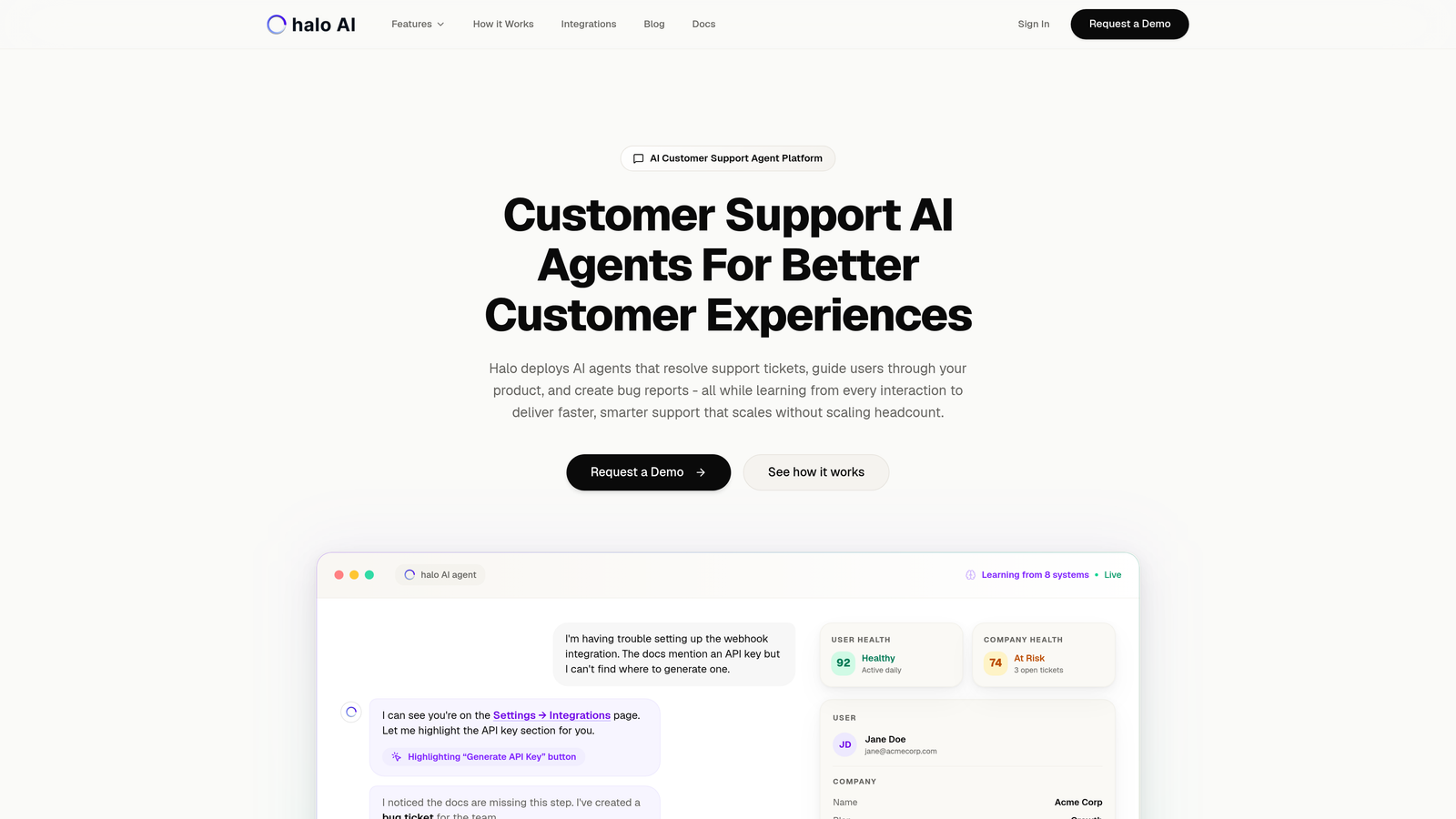
Halo AI is an AI-first customer support platform built around autonomous agents that resolve tickets, guide users through your product, and generate actionable business intelligence.
Where This Tool Shines
Unlike traditional helpdesks with AI bolted on, Halo's architecture puts autonomous agents at the center. These agents don't just answer questions—they see what users see through page-aware context, resolve issues independently, and escalate to humans only when complexity demands it.
The platform learns from every interaction, meaning your support quality improves as ticket volume grows rather than degrading. For growth-stage companies facing exponential support demand, this inverts the traditional scaling problem: more tickets make your system smarter, not more overwhelmed.
Key Features
Autonomous AI Agents: Handle ticket resolution end-to-end without human intervention for routine inquiries.
Page-Aware Chat Widget: Provides visual UI guidance by understanding exactly what users see on screen.
Smart Inbox with Business Intelligence: Surfaces customer health signals, revenue intelligence, and anomaly detection beyond basic support metrics.
Auto Bug Ticket Creation: Automatically generates detailed bug reports in Linear when issues are detected.
Live Agent Handoff: Seamlessly escalates complex issues to human agents with full context preserved.
Best For
B2B SaaS companies experiencing rapid growth who need support that scales without proportionally scaling headcount. Particularly strong for product teams using modern stacks (Linear, Slack, HubSpot, Intercom, Stripe) who want support data connected to their entire business infrastructure.
Pricing
Contact for pricing. Designed specifically for growth-stage companies with pricing models that align with expansion rather than penalizing it.
2. Intercom
Best for: Product-led growth companies combining support with proactive customer engagement
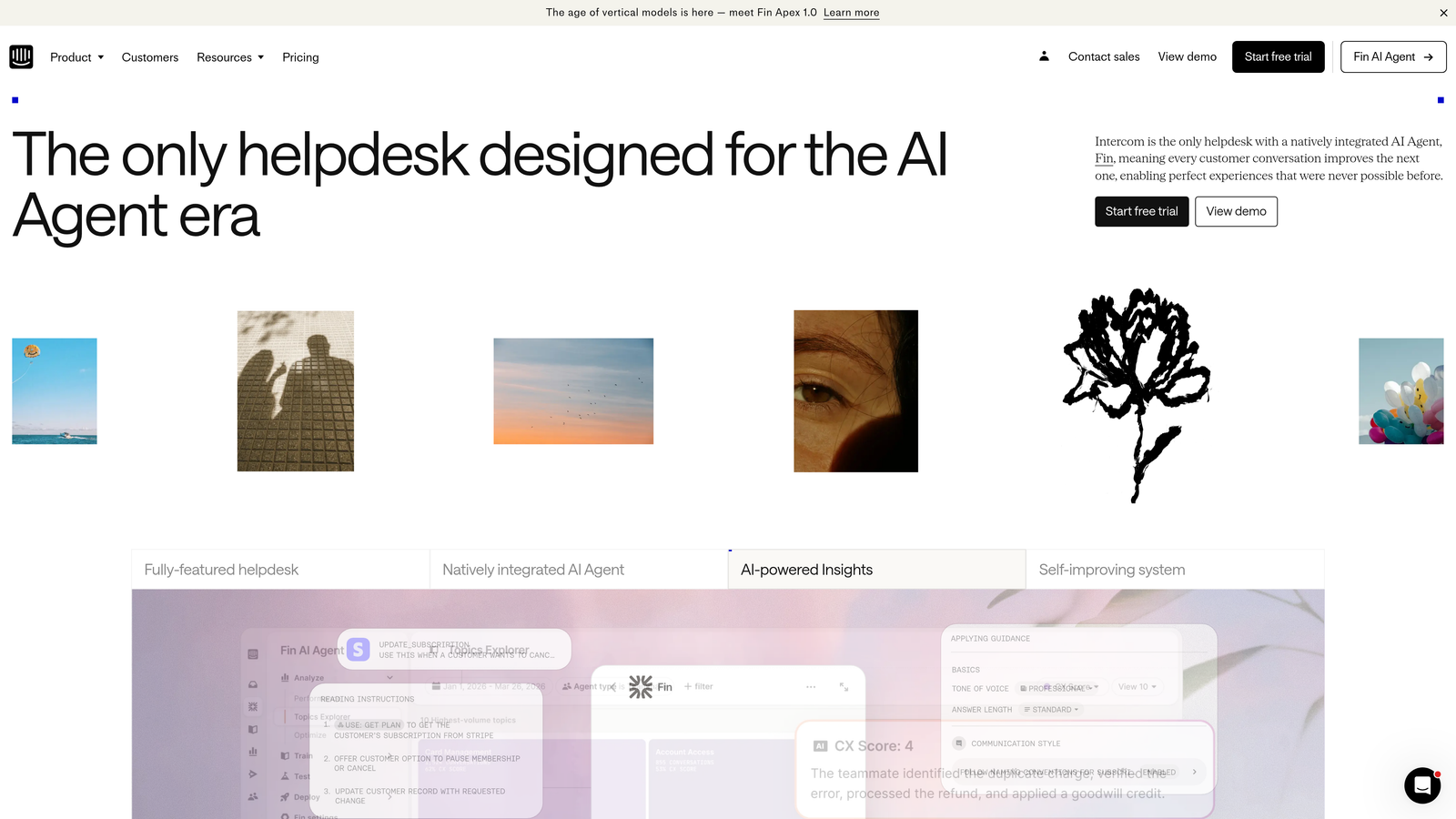
Intercom is a customer messaging platform that blends helpdesk functionality with AI chatbot capabilities and proactive messaging tools designed for product-centric teams.
Where This Tool Shines
Intercom excels when support is just one piece of a broader customer communication strategy. Their Fin AI assistant handles common questions automatically, while product tours and targeted messages guide users toward activation and expansion.
The platform's strength lies in its unified approach: support conversations, marketing messages, and product onboarding all flow through the same system. For companies where customer success and support overlap heavily, this consolidation eliminates tool fragmentation.
Key Features
Fin AI Assistant: Provides automated responses trained on your knowledge base and past conversations.
Product Tours: Create in-app onboarding flows and feature announcements without engineering resources.
Unified Inbox: Manage conversations across email, chat, and social channels in one interface.
Custom Bots: Build workflow automation with visual bot builder for common support scenarios.
Rich Customer Data Platform: Track user behavior and segment customers for targeted messaging.
Best For
SaaS companies with product-led growth models where support, marketing, and customer success teams collaborate closely. Works best when you need proactive engagement alongside reactive support.
Pricing
Essential plan starts at $29 per seat monthly. Advanced features begin at $39 per seat monthly, with enterprise pricing available for larger teams.
3. Zendesk
Best for: Enterprise-scale operations requiring proven reliability and extensive customization
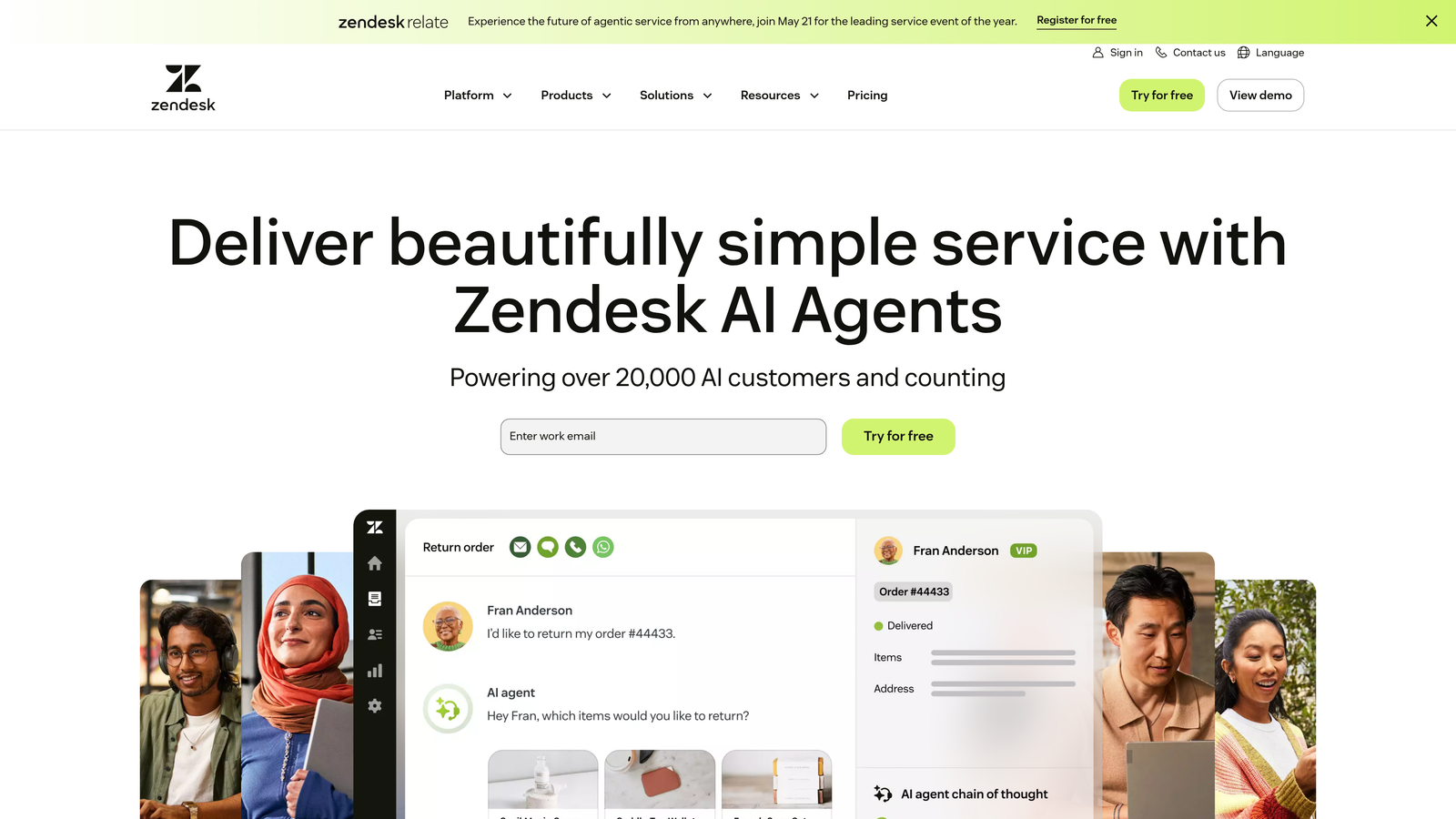
Zendesk is an enterprise-grade customer service platform with a massive app marketplace, robust reporting infrastructure, and battle-tested scalability for organizations handling millions of tickets.
Where This Tool Shines
When you need absolute certainty that your platform won't break under load, Zendesk delivers. Companies like Shopify and Uber run their support operations on Zendesk, which tells you everything about its enterprise readiness.
The 1,500-plus app marketplace means you can connect virtually any business system. Need to pull customer data from a legacy CRM? There's probably an integration. Want custom analytics dashboards? Multiple apps handle that. The ecosystem depth makes Zendesk incredibly flexible for complex organizational requirements.
Key Features
Omnichannel Ticketing: Unified system managing email, chat, phone, social media, and messaging apps.
Extensive App Marketplace: Over 1,500 integrations and extensions for virtually any business need.
Advanced Analytics: Deep reporting with custom dashboards, SLA tracking, and performance metrics.
Answer Bot: AI-powered automation suggesting articles and handling simple inquiries.
Customizable Workflows: Triggers, automations, and business rules for complex routing logic.
Best For
Established companies with complex support operations, multiple departments, and enterprise requirements. Particularly strong for organizations already at scale or planning for significant growth with diverse support channels.
Pricing
Suite Team starts at $55 per agent monthly. Suite Professional at $115 per agent monthly includes advanced features. Enterprise plans available with custom pricing.
4. Freshdesk
Best for: Budget-conscious growth teams needing AI capabilities without enterprise pricing
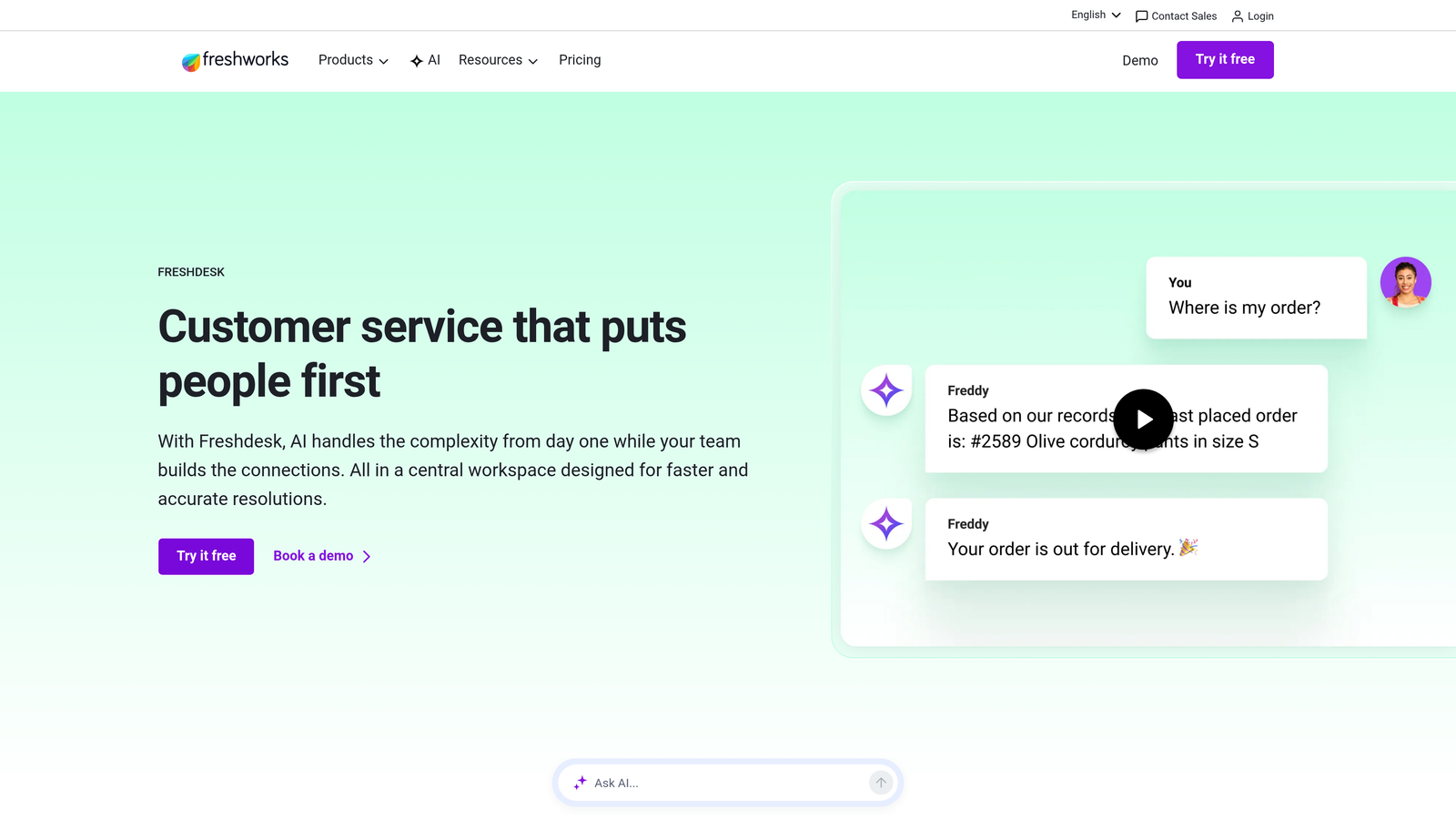
Freshdesk is a cost-effective helpdesk solution offering AI automation, generous free tier, and scalable pricing that makes advanced features accessible to smaller teams.
Where This Tool Shines
Freshdesk proves you don't need enterprise budgets for enterprise features. Their Freddy AI handles ticket categorization, agent suggestions, and basic automation at price points that make sense for early-stage companies.
The free tier supports up to 10 agents with core helpdesk functionality, making it viable for bootstrapped startups. As you grow, the pricing remains reasonable compared to competitors, with the Growth plan delivering solid automation at $15 per agent monthly.
Key Features
Freddy AI: Automated ticket routing, categorization, and suggested responses powered by machine learning.
Free Tier: Full helpdesk functionality for up to 10 agents with no time limit.
Scenario Automations: Time-based and event-triggered workflows without coding.
Team Collaboration: Internal notes, ticket assignments, and agent collision detection.
Multi-Channel Support: Email, phone, chat, social media, and messaging apps in unified interface.
Best For
Early-stage companies and bootstrapped startups that need professional support infrastructure without burning cash. Works well for teams planning to scale gradually and wanting pricing that grows proportionally.
Pricing
Free tier for up to 10 agents. Growth plan at $15 per agent monthly. Pro plan at $49 per agent monthly adds advanced automation and reporting.
5. HubSpot Service Hub
Best for: Companies using HubSpot CRM seeking unified sales, marketing, and support data
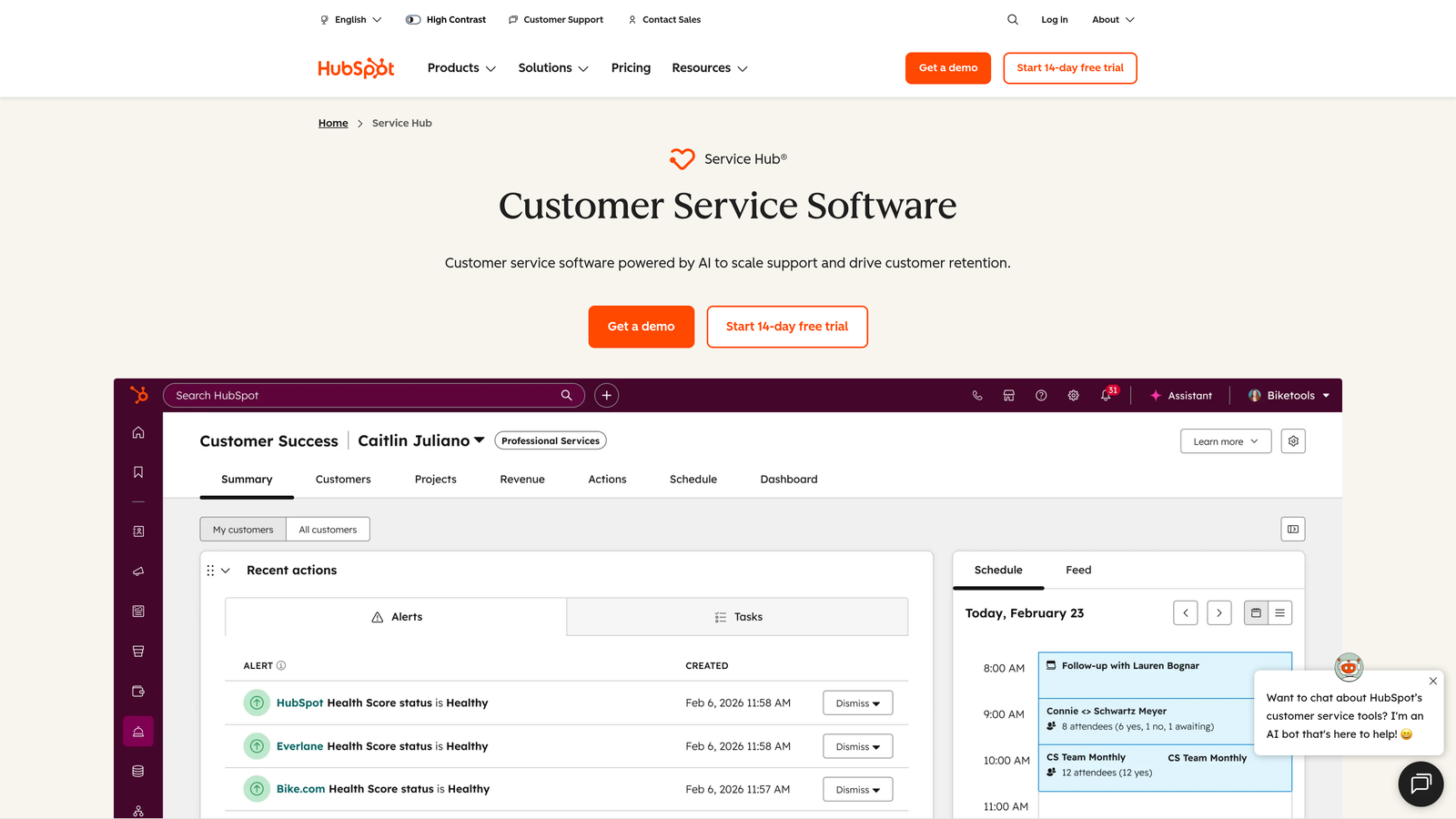
HubSpot Service Hub is customer service software natively integrated with HubSpot's CRM platform, creating alignment across your entire customer lifecycle from prospect to advocate.
Where This Tool Shines
If you're already running HubSpot for sales and marketing, Service Hub eliminates data silos completely. Support tickets automatically connect to contact records, deal history, and marketing interactions without integration middleware.
Customer health scoring becomes genuinely useful when support data flows into the same system tracking product usage and renewal likelihood. Your customer success team sees support trends alongside expansion opportunities, making proactive outreach actually informed rather than guesswork.
Key Features
Native CRM Integration: Support tickets automatically linked to full customer records and interaction history.
Customer Health Scoring: Combine support metrics with product usage and engagement data.
Knowledge Base Builder: Create self-service documentation with SEO optimization and analytics.
Customer Feedback Surveys: NPS, CSAT, and custom surveys with automated follow-up workflows.
Conversation Intelligence: Analyze support conversations for trends, sentiment, and coaching opportunities.
Best For
Companies already invested in HubSpot's ecosystem who want unified customer data across sales, marketing, and support. Particularly valuable when customer success and sales teams need shared visibility into support health.
Pricing
Free tools available with basic functionality. Starter at $20 monthly for two users. Professional at $500 monthly includes advanced automation and reporting.
6. Help Scout
Best for: Teams prioritizing personal customer relationships while scaling support operations
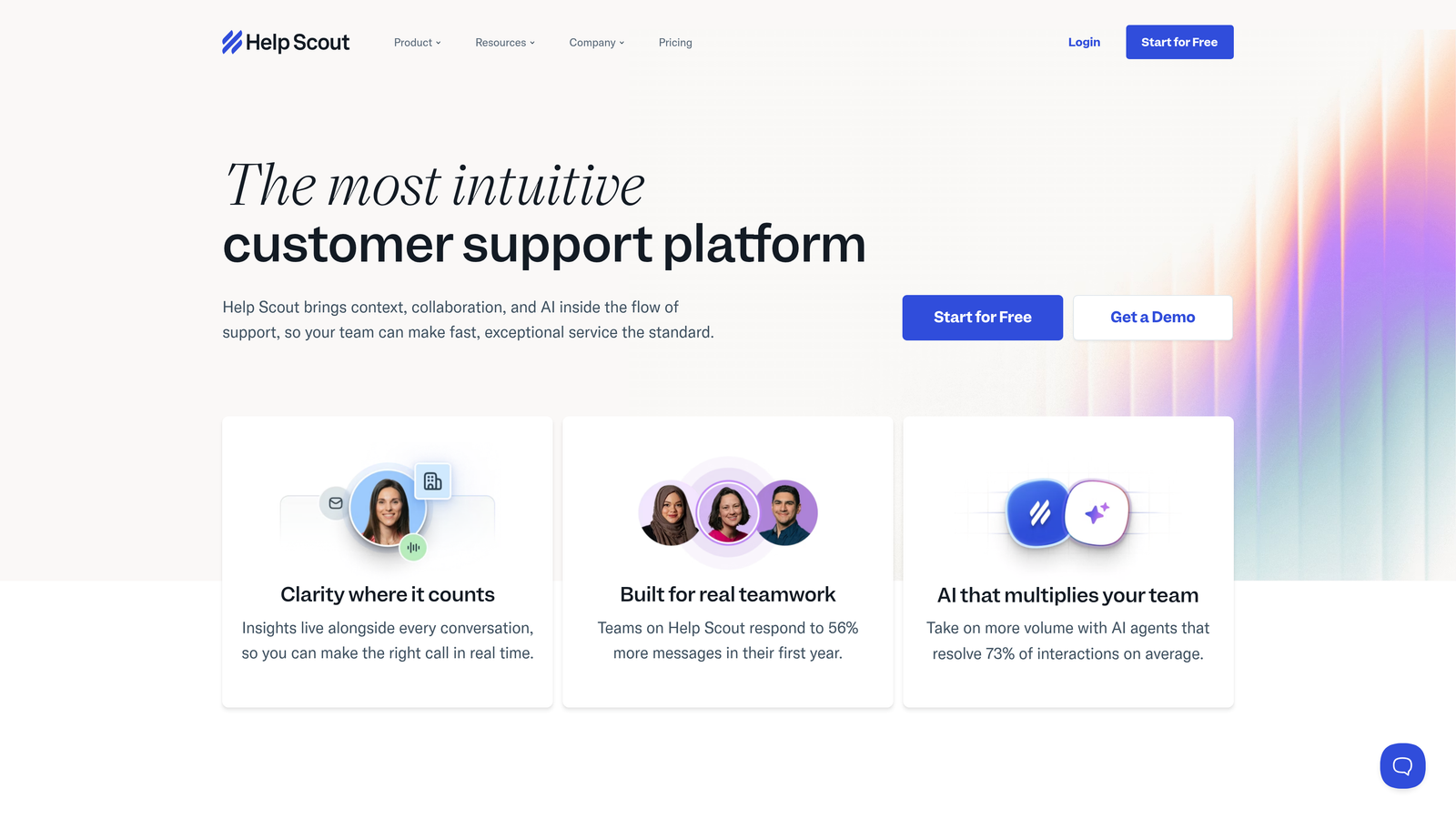
Help Scout is a human-centric helpdesk focused on maintaining the personal touch of email support while adding collaboration tools, automation, and knowledge base capabilities.
Where This Tool Shines
Help Scout deliberately avoids feeling like a ticketing system. Conversations look like regular email to customers, preserving the personal connection that often gets lost when companies implement formal helpdesk software.
The unlimited conversations model on all plans removes the anxiety of ticket volume pricing. As your customer base grows and support requests multiply, your costs remain predictable based on team size rather than escalating with every additional conversation.
Key Features
Beacon Embeddable Widget: In-app help widget combining chat, knowledge base search, and contact forms.
Docs Knowledge Base: Self-service documentation with search, categories, and usage analytics.
Saved Replies and Workflows: Templated responses and automated actions for common scenarios.
Customer Satisfaction Ratings: One-click CSAT surveys automatically sent after conversations close.
Collision Detection: Alerts when multiple agents view the same conversation to prevent duplicate responses.
Best For
Customer-centric companies where support quality and personal relationships drive retention. Works particularly well for B2B SaaS with moderate ticket volumes who want to scale without losing the human touch.
Pricing
Standard plan at $25 per user monthly includes core features and unlimited conversations. Plus plan at $50 per user monthly adds advanced automation and custom fields.
7. Gorgias
Best for: E-commerce companies needing support deeply integrated with order management
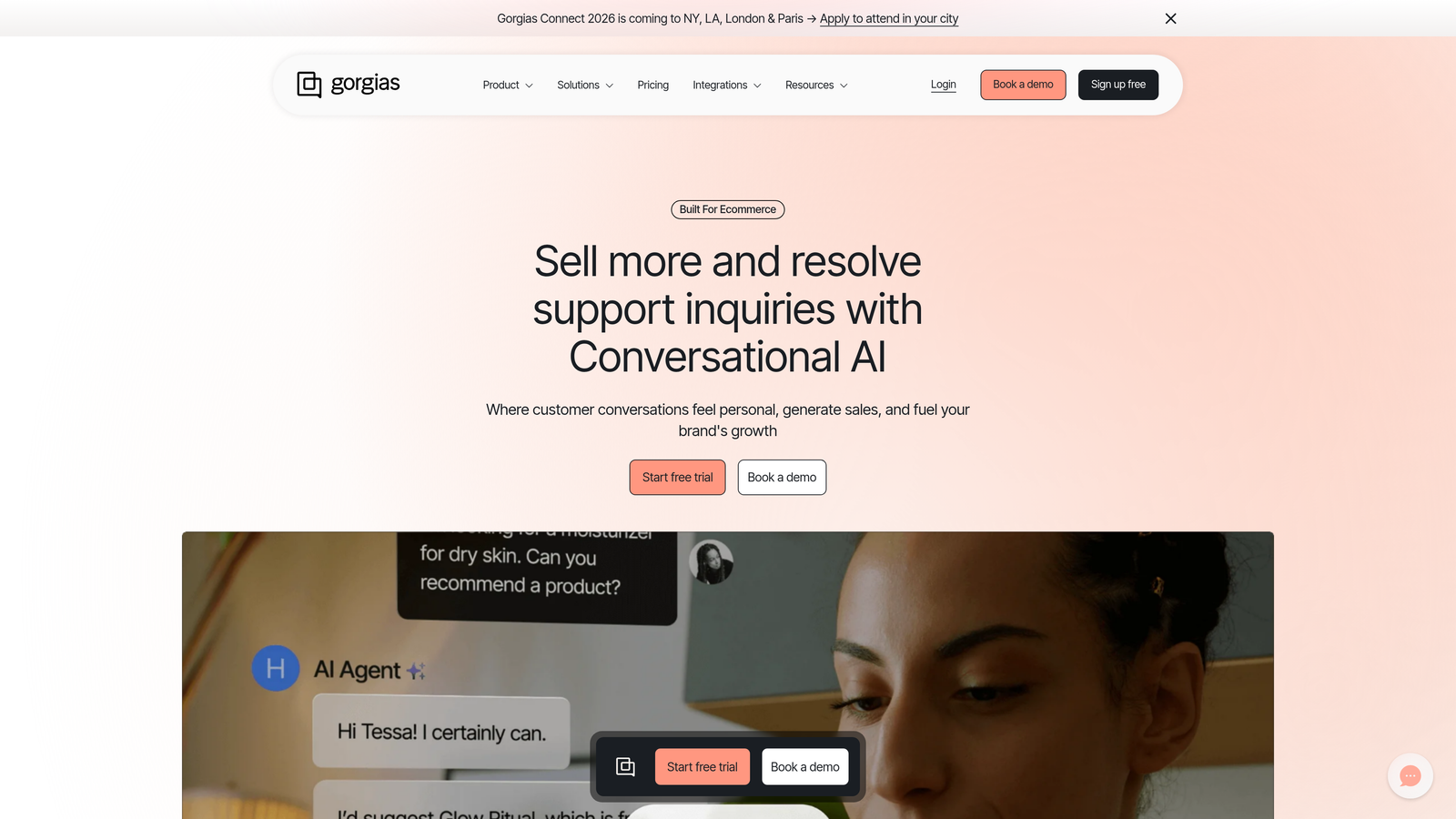
Gorgias is an e-commerce-focused helpdesk with native Shopify and BigCommerce integrations, revenue tracking per ticket, and automation rules that understand order data.
Where This Tool Shines
Gorgias treats e-commerce support as fundamentally different from generic customer service. Agents see order history, tracking information, and customer lifetime value directly in the ticket interface without switching tabs or systems.
Revenue statistics per ticket transform support from cost center to revenue driver. When you can measure how support interactions affect customer lifetime value, you make different decisions about response times, refund policies, and agent training priorities.
Key Features
Deep E-commerce Integrations: Native connections to Shopify, BigCommerce, Magento with order data in ticket view.
Revenue Statistics: Track revenue impact of support conversations and agent performance.
Automated Order Management: Macros can cancel orders, issue refunds, or update shipping without leaving the helpdesk.
Macros with Order Variables: Templated responses automatically populate with customer-specific order details.
Social Media Integration: Manage Facebook and Instagram comments and messages as support tickets.
Best For
E-commerce brands experiencing growth in order volume who need support operations tightly coupled with their commerce platform. Particularly valuable for direct-to-consumer brands managing high social media engagement.
Pricing
Starts at $10 monthly for 50 tickets. Pro plan at $360 monthly includes 2,000 tickets and advanced automation. Enterprise pricing available for higher volumes.
8. Front
Best for: Teams scaling account management with shared inbox collaboration
Front is a collaborative inbox platform that combines shared email management with the personal feel of individual email addresses, strong for teams where multiple people manage customer accounts.
Where This Tool Shines
Front solves the shared inbox problem without making customers feel like they're emailing a department. Each team member can send from shared addresses while maintaining personal email capability, creating flexibility for different customer relationship models.
Internal comments transform email threads into collaborative workspaces. Your team discusses customer issues, shares context, and coordinates responses without cluttering the actual customer-facing conversation or switching to separate chat tools.
Key Features
Shared Inbox with Individual Addresses: Team members send from shared addresses or personal emails as needed.
Internal Comments: Discuss customer issues within email threads without customers seeing the conversation.
Workflow Automation Rules: Automatically route, tag, and assign messages based on customizable criteria.
Analytics and SLA Tracking: Monitor response times, resolution rates, and team performance metrics.
Multi-Channel Support: Manage email, SMS, social media, and live chat in unified interface.
Best For
Account management teams, sales operations, and customer success groups where multiple people collaborate on customer communications. Works well for companies transitioning from shared Gmail to professional support infrastructure.
Pricing
Starter plan at $19 per seat monthly for core shared inbox features. Growth plan at $59 per seat monthly adds advanced automation and analytics.
9. Kustomer
Best for: Enterprise teams needing CRM-level customer data with omnichannel support
Kustomer is a CRM-focused customer service platform with timeline-based customer views, omnichannel conversation routing, and AI-powered automation designed for complex customer relationships.
Where This Tool Shines
Kustomer's timeline view presents customer history chronologically across all channels and touchpoints. Instead of seeing isolated tickets, agents see the complete customer journey: purchases, support conversations, chat interactions, and custom events all in context.
Custom objects and data modeling let you structure customer information around your business model. Whether you track subscriptions, devices, locations, or projects, Kustomer adapts to your data structure rather than forcing you into predefined fields.
Key Features
Timeline-Based Customer History: Chronological view of all customer interactions across channels and systems.
Omnichannel Routing: Intelligent conversation distribution across email, chat, voice, SMS, and social media.
AI-Powered IQ Chatbots: Automated responses with natural language understanding and learning capabilities.
Custom Objects: Define data models matching your business structure for flexible customer records.
Sentiment Analysis: Automatically detect customer emotion and escalate negative sentiment conversations.
Best For
Enterprise organizations with complex customer relationships spanning multiple products, services, or touchpoints. Particularly strong for companies needing customizable data structures beyond standard contact and ticket fields.
Pricing
Enterprise pricing model with quotes based on team size and requirements. Typical range of $89 to $139 per user monthly depending on features and volume.
Making the Right Choice
Your support platform choice shapes how efficiently you scale. For AI-first growth where support quality improves with volume, Halo AI delivers autonomous agents that learn continuously. If you're already in the HubSpot ecosystem, Service Hub creates unified customer data across sales and support. E-commerce brands benefit from Gorgias's deep order integration and revenue tracking.
Budget-conscious teams find strong value in Freshdesk's generous free tier and affordable paid plans. Enterprise operations requiring proven scalability lean toward Zendesk's extensive marketplace and reliability. Companies prioritizing personal relationships while scaling appreciate Help Scout's human-centric approach with unlimited conversations.
The critical question isn't which platform has the most features, but which architecture aligns with your growth model. Per-agent pricing penalizes team expansion. Per-ticket pricing creates anxiety around volume. Flat-rate or AI-first models align costs with value rather than activity.
Your support team shouldn't scale linearly with your customer base. Let AI agents handle routine tickets, guide users through your product, and surface business intelligence while your team focuses on complex issues that need a human touch. See Halo in action and discover how continuous learning transforms every interaction into smarter, faster support.