9 Best Customer Support Software for Growth in 2026
Discover the best customer support software for growth-stage B2B companies looking to scale without linearly increasing headcount. This guide evaluates nine platforms—from AI-native autonomous agents to robust helpdesk solutions—based on scalability, automation depth, and integration ecosystems, helping you find the right fit whether you're outgrowing a shared inbox or ready to layer intelligent automation onto your existing support stack.
 Matt PattoliFounder13 min read
Growing B2B companies face a painful paradox: as your customer base scales, so does support volume, but hiring headcount linearly isn't sustainable. The right customer support software doesn't just manage tickets; it actively helps you scale without proportionally scaling your team.
This list covers the best platforms built for growth-stage companies, from AI-native agents that resolve tickets autonomously to helpdesk platforms with robust automation layers. We evaluated each tool on scalability, automation depth, integration ecosystem, and the intelligence it provides beyond raw ticket management.
Whether you're outgrowing a shared inbox, evaluating your first dedicated helpdesk, or looking to layer AI on top of an existing system, this guide will help you find the right fit. For context on what modern AI support can look like, see our overview of automated customer support and AI helpdesk software.
1. Halo AI
Best for: B2B SaaS teams that want AI-native support with business intelligence built in.
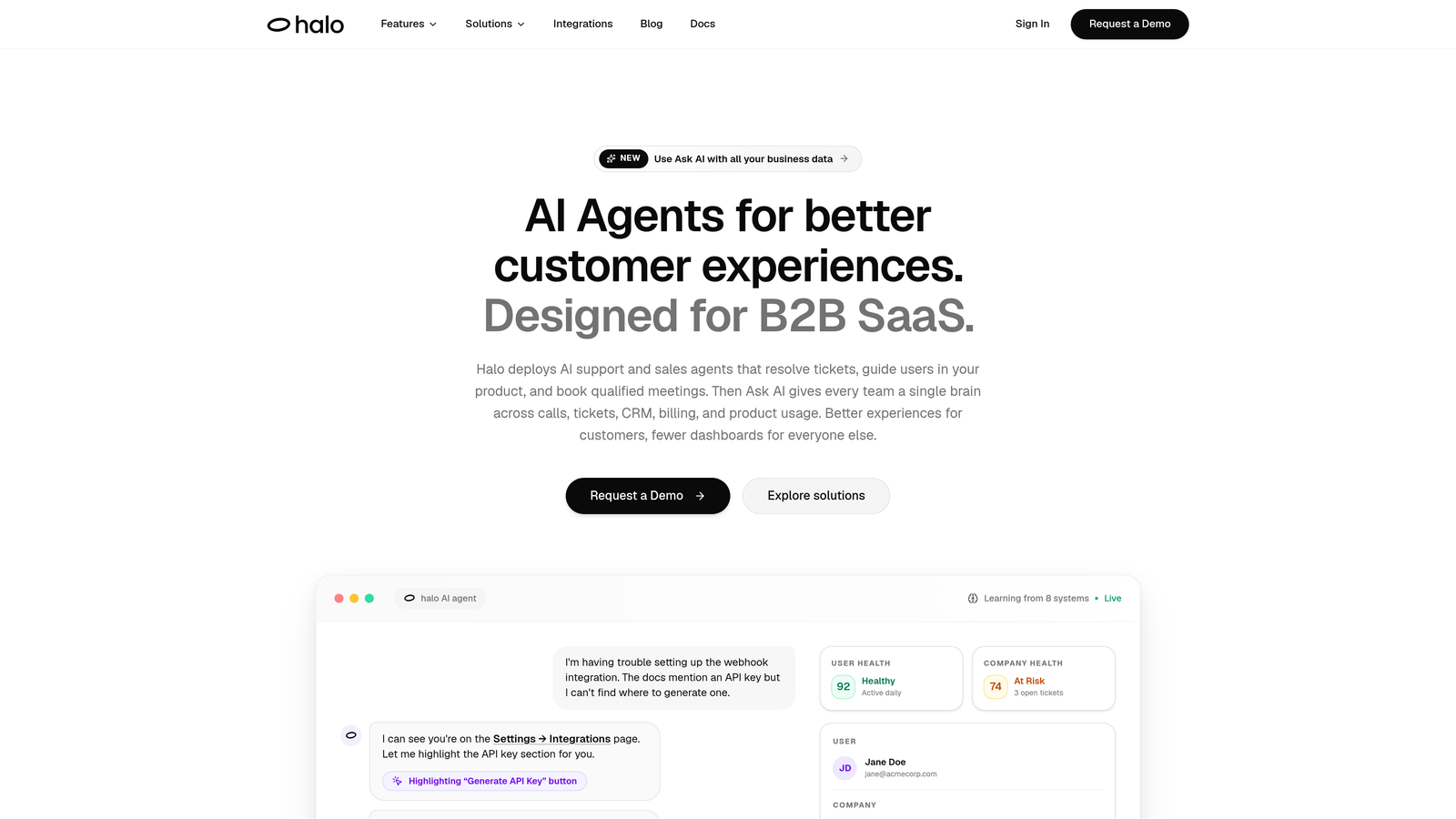
Halo AI is an AI-first customer support platform that deploys autonomous agents to resolve tickets, guide users through your product, and surface business intelligence beyond support metrics.
Where This Tool Shines
Most support tools treat AI as an add-on layer bolted onto a legacy helpdesk architecture. Halo was built AI-first from the ground up, which means the intelligence isn't a feature you toggle on — it's the foundation everything runs on. That distinction matters when you're evaluating resolution quality, contextual accuracy, and how much manual configuration you'll need to maintain over time.
The standout capability is page-aware context. Halo's chat widget can see what the user is actually looking at in your product and provide visual UI guidance specific to that moment. That's a fundamentally different support experience than a generic chatbot reading from a knowledge base.
Key Features
Page-Aware AI Agents: The AI sees what the user is looking at in your product and delivers contextual, visual guidance — not generic answers.
Smart Inbox with Business Intelligence: Surfaces customer health signals, revenue intelligence, and anomaly detection so your support data informs business decisions, not just ticket queues.
Auto Bug Ticket Creation: Automatically generates structured bug reports from support conversations and routes them to your engineering workflow.
Live Agent Handoff: Escalates seamlessly to human agents when a conversation requires nuance, sensitivity, or complexity the AI flags.
Continuous Learning: Improves from every interaction without requiring manual retraining — the system gets smarter as your support volume grows.
Deep Integrations: Connects to Linear, Slack, HubSpot, Intercom, Stripe, Zoom, PandaDoc, and Fathom — covering the full stack a growth-stage B2B team typically runs.
Best For
B2B SaaS and product-led growth companies that want support to do more than close tickets. Particularly valuable for teams that need their support data to feed into product, engineering, and revenue workflows without manual handoffs between systems.
Pricing
Check haloagents.ai for current pricing details and plan options.
2. Zendesk
Best for: Mid-market and enterprise teams needing omnichannel coverage with mature analytics.
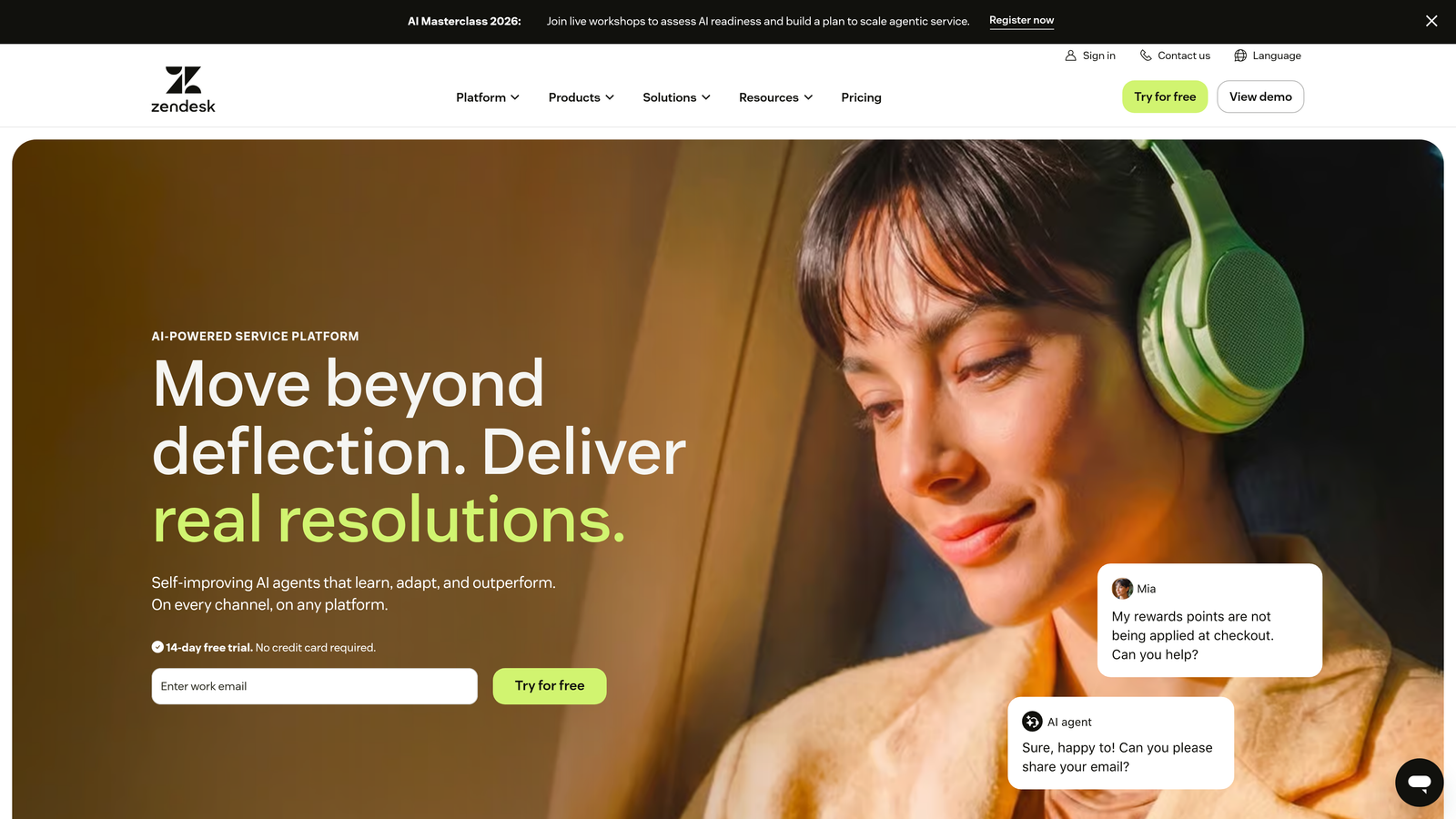
Zendesk is one of the most established helpdesk platforms in the market, offering extensive customization and a large integration marketplace.
Where This Tool Shines
Zendesk's depth is hard to argue with. The platform covers every channel — email, chat, voice, social, and messaging — in a single unified workspace, and its reporting capabilities are among the most mature in the category. If your team needs granular SLA tracking, complex workflow routing, or a marketplace of pre-built integrations, Zendesk has likely already solved for it.
The tradeoff is complexity and cost. Teams coming from lightweight tools often find Zendesk's configuration overhead significant, and pricing can climb quickly as you add agents and features. The AI suite is capable, but it's layered onto an architecture that predates the current generation of AI — something worth weighing if autonomous resolution is a core requirement.
Key Features
Omnichannel Coverage: Email, chat, voice, social, and messaging all managed from a single agent workspace.
Zendesk AI Suite: Automated resolution, agent assist, and intelligent triage built into the platform.
Workflow Customization: Highly flexible views, triggers, automations, and SLA management rules.
App Marketplace: Hundreds of integrations covering CRMs, billing systems, project management tools, and more.
Advanced Analytics: Customizable dashboards and reporting for ticket volume, team performance, and customer satisfaction.
Best For
Mid-market and enterprise support teams that need proven omnichannel infrastructure, deep customization, and a large integration ecosystem. Less ideal for early-stage teams that need fast setup or those prioritizing AI-native resolution over configurability.
Pricing
Suite Team starts around $55/agent/month. Verify current pricing and plan details at zendesk.com.
3. Intercom
Best for: Product-led growth SaaS companies blending support, onboarding, and proactive messaging.
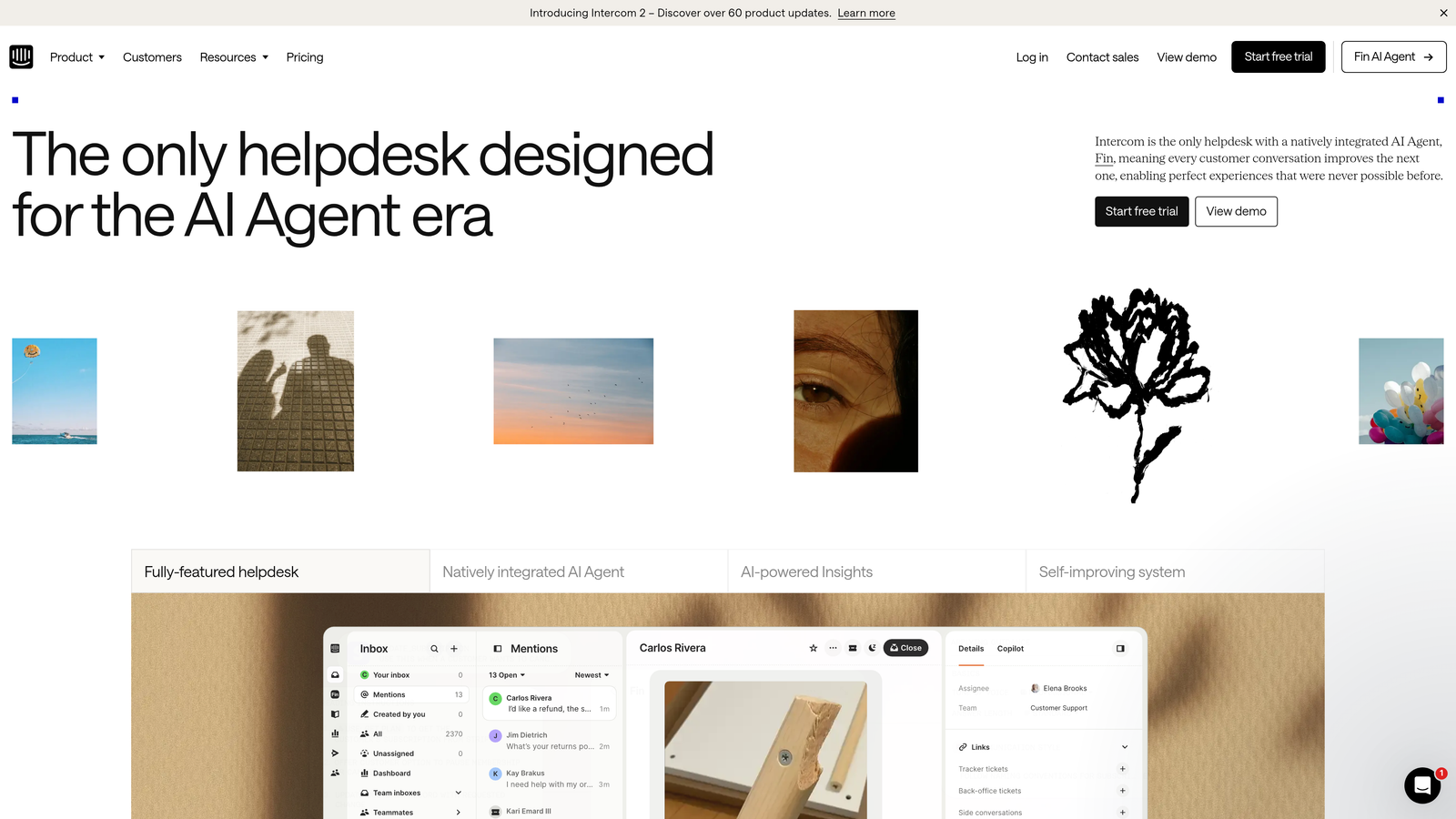
Intercom is a messenger-first platform that combines customer support, proactive outbound messaging, and product tours in a single tool.
Where This Tool Shines
Intercom's strength is the overlap between support and product engagement. You can deliver onboarding tours, trigger proactive messages based on user behavior, and handle support conversations all from the same platform. For PLG SaaS companies where the product itself drives acquisition and expansion, that unified approach reduces tool sprawl significantly.
Fin AI, Intercom's flagship AI agent, handles automated resolution for common queries with solid results. The platform's conversation-based pricing model is worth modeling carefully before committing — costs can escalate faster than expected at higher volumes.
Key Features
Fin AI Agent: Autonomous support resolution for common queries, trained on your help content.
In-App Messenger: Proactive outbound messaging triggered by user behavior alongside reactive support.
Product Tours: Built-in onboarding flows without requiring a separate tool.
Unified Inbox: Chat, email, and social channels combined in one agent workspace.
PLG Integrations: Strong connections to the product analytics and CRM tools common in PLG stacks.
Best For
SaaS companies with a product-led growth motion that want support, onboarding, and proactive messaging under one roof. Teams should model conversation volume carefully against pricing before scaling.
Pricing
Varies by plan and conversation volume. Check current rates at intercom.com.
4. Freshdesk
Best for: Growth-stage teams moving off shared inboxes who need strong automation at an accessible price.
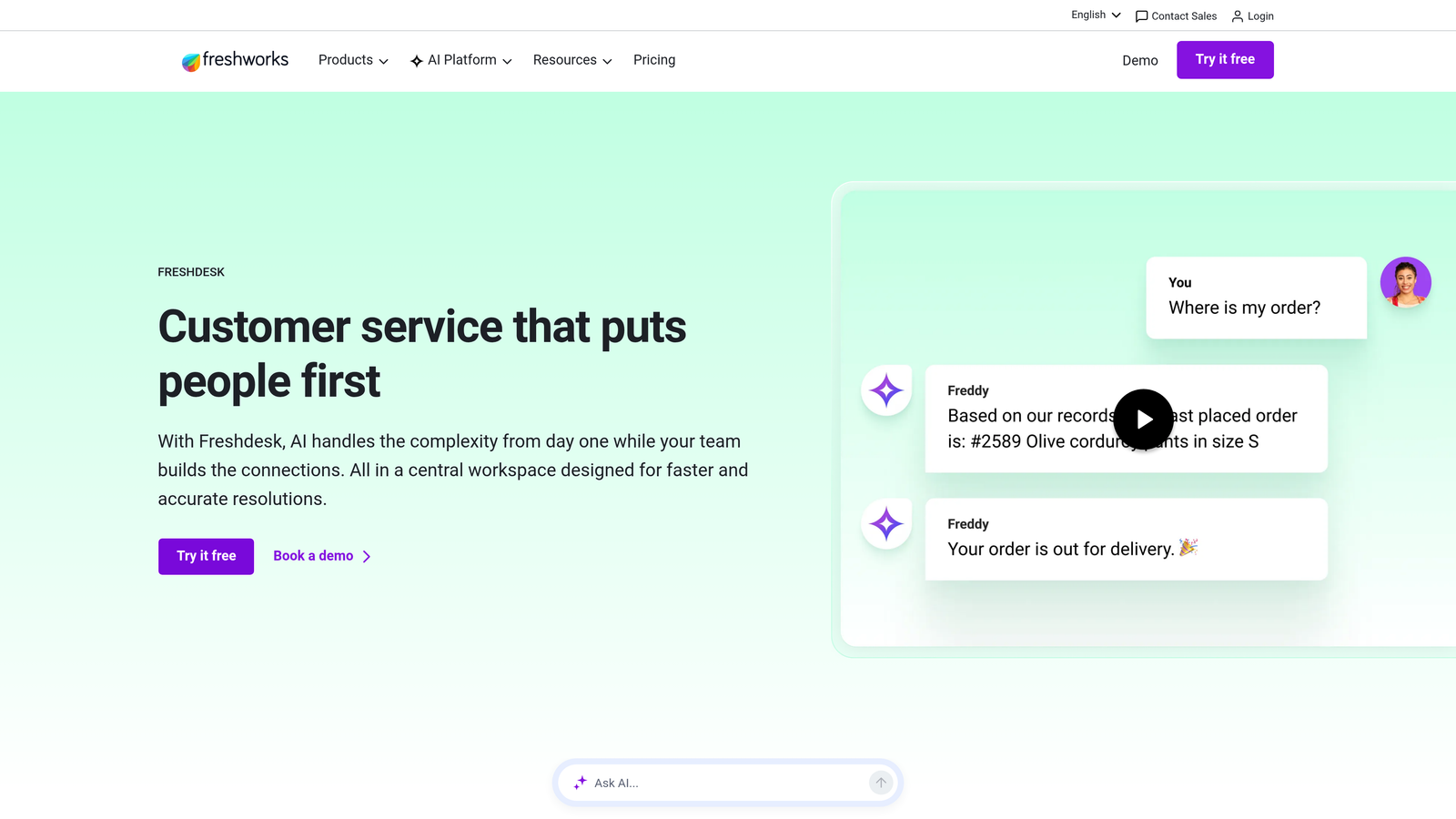
Freshdesk is a full-featured helpdesk from Freshworks with a generous free tier, solid automation rules, and an AI layer called Freddy.
Where This Tool Shines
Freshdesk hits a practical sweet spot for teams that need real helpdesk functionality without enterprise-level pricing. The free plan is genuinely usable for small teams, and the paid tiers add meaningful automation and AI capabilities without a steep jump in cost. If you're moving off a shared Gmail inbox and need structure fast, Freshdesk is one of the lowest-friction paths to get there.
Freddy AI handles ticket classification, suggested responses, and workflow automation — not as sophisticated as a purpose-built AI agent, but effective for deflecting common queries and reducing manual triage.
Key Features
Accessible Pricing: Free plan for small teams; paid tiers start at an approachable price point for growing companies.
Freddy AI: Handles ticket classification, agent suggestions, and automated responses for common queries.
Scenario Automations: Multi-step automation rules triggered by ticket conditions, reducing manual routing.
Multi-Channel Support: Email, chat, phone, and social channels in one platform.
Freshworks Ecosystem: Connects to Freshsales (CRM) and Freshservice (ITSM) if you're building out a broader Freshworks stack.
Best For
SMB and early growth-stage teams that need a structured helpdesk without enterprise pricing. Also a good fit for teams already using other Freshworks products who want a unified vendor.
Pricing
Free plan available; paid plans start around $15/agent/month. Verify current tiers at freshdesk.com.
5. Help Scout
Best for: Customer-success-focused teams that want support to feel like email, not a ticket system.
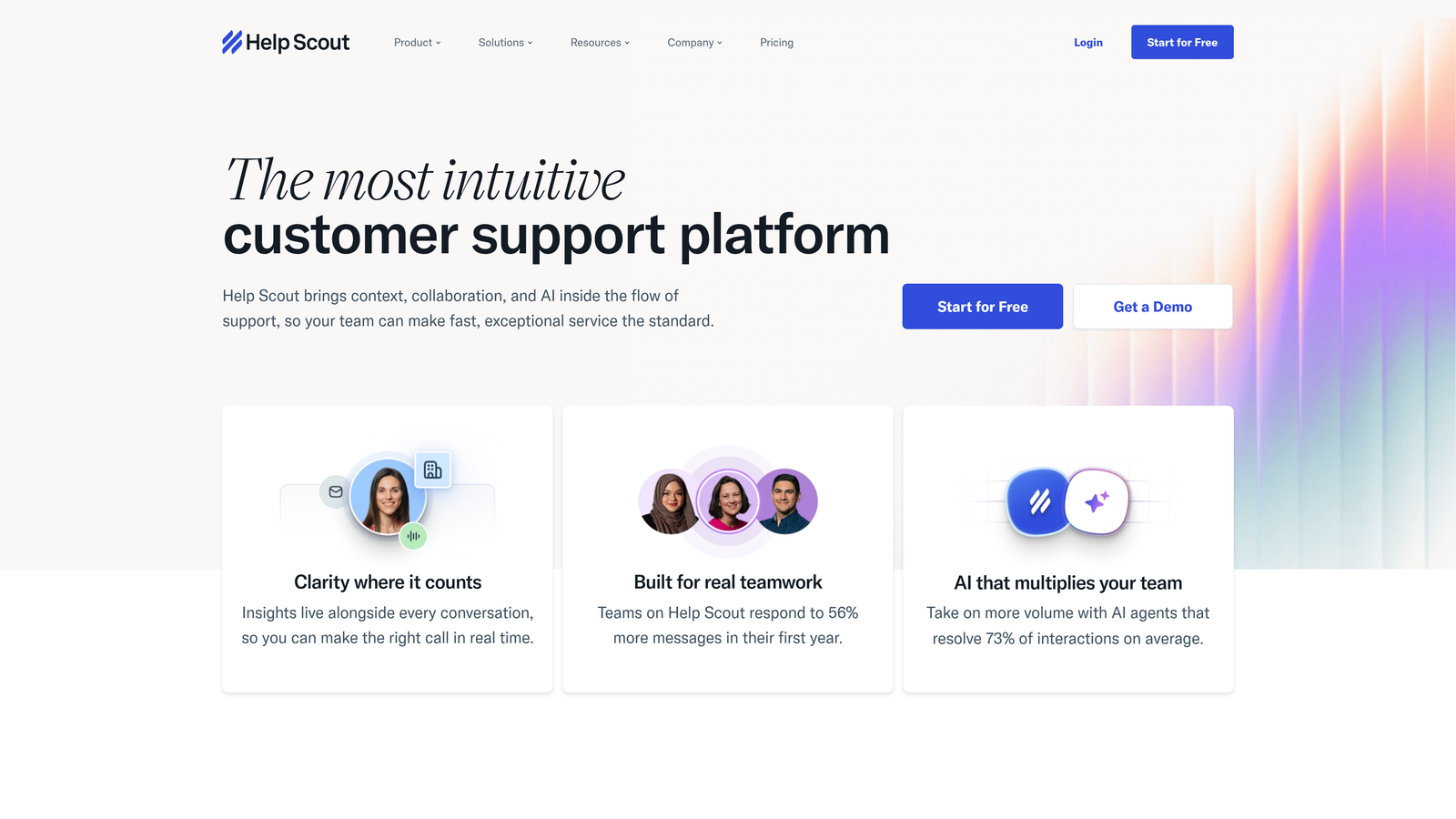
Help Scout is a shared inbox platform that bundles a knowledge base and live chat widget, designed to preserve a human, email-like support experience.
Where This Tool Shines
Help Scout made a deliberate design choice: no ticket numbers, no robotic confirmation emails, no interface that makes customers feel like a case number. That philosophy resonates strongly with customer-success-oriented teams where relationship quality matters as much as resolution speed. The platform is clean, minimal, and genuinely easy to onboard — you can get a team productive in hours, not weeks.
The bundled Docs knowledge base and Beacon chat widget mean you're not stitching together separate tools for self-service. AI Summarize and AI Assist add agent productivity features without turning the product into something it's not.
Key Features
Shared Inbox: Preserves an email-like experience for both agents and customers — no ticket numbers or robotic tone.
Docs: Built-in knowledge base for self-service content, connected directly to the inbox workflow.
Beacon: Embeddable chat and help widget that surfaces relevant Docs articles before opening a conversation.
AI Summarize and AI Assist: Agent productivity tools for summarizing threads and drafting responses faster.
Low Onboarding Friction: Clean UI with minimal setup required — practical for teams without dedicated ops resources.
Best For
Customer-success and support teams at SMB and mid-market companies where relationship tone matters. Less suited for high-volume environments that need complex routing, deep automation, or advanced AI resolution.
Pricing
Check current pricing and plan details at helpscout.com.
6. Gorgias
Best for: E-commerce brands running on Shopify, WooCommerce, or Magento.
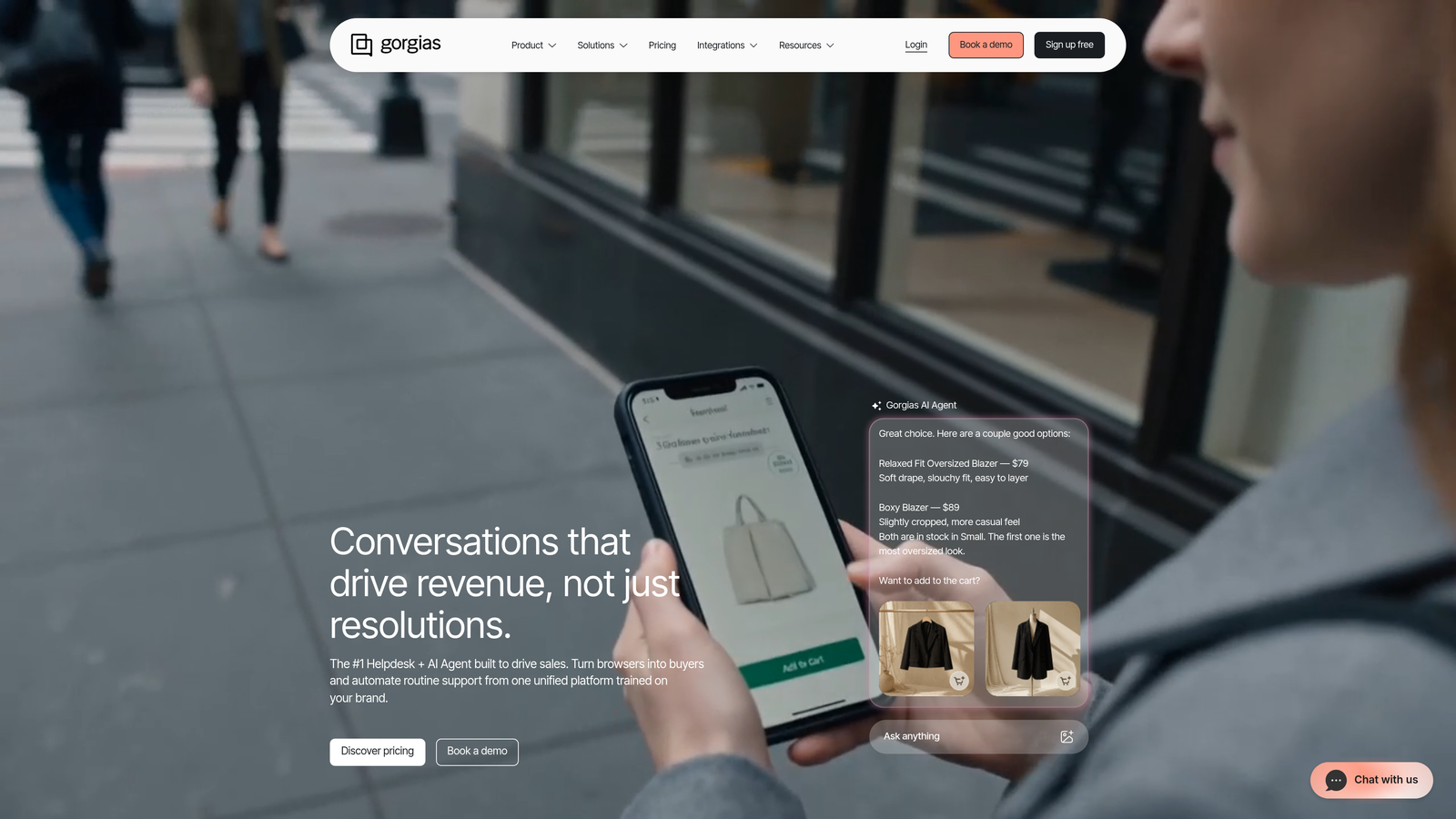
Gorgias is a customer support platform purpose-built for e-commerce, with deep order management integrations and revenue-tagged ticket tracking.
Where This Tool Shines
Gorgias solves a specific problem that general-purpose helpdesks handle awkwardly: e-commerce support agents constantly need to look up order details, process refunds, or cancel subscriptions. With Gorgias, those actions happen directly inside the ticket without switching to Shopify or your OMS. That single workflow improvement alone can meaningfully reduce handle time for high-volume e-commerce teams.
The revenue tagging feature is genuinely useful for e-commerce leadership — you can see which support conversations protect revenue (preventing cancellations) or drive it (upselling during a support interaction). That's business intelligence that most helpdesks don't surface natively.
Key Features
Native E-Commerce Integrations: Deep connections to Shopify, WooCommerce, and Magento with order data surfaced in the ticket.
Order Actions in Ticket: Process refunds, cancellations, and modifications without leaving the support interface.
Revenue Tagging: Tracks which support conversations protect or generate revenue for leadership reporting.
Automation Rules: Pre-built automations for common e-commerce queries like order status and return policies.
Volume-Based Pricing: Priced per ticket volume rather than per agent, which suits high-volume e-commerce operations.
Best For
E-commerce brands with significant Shopify or WooCommerce volume. Not particularly relevant for B2B SaaS teams, but the dominant choice in its e-commerce niche.
Pricing
Based on ticket volume rather than per agent. Check current tiers at gorgias.com.
7. Kustomer
Best for: High-volume support teams that need full customer context across every touchpoint in one view.
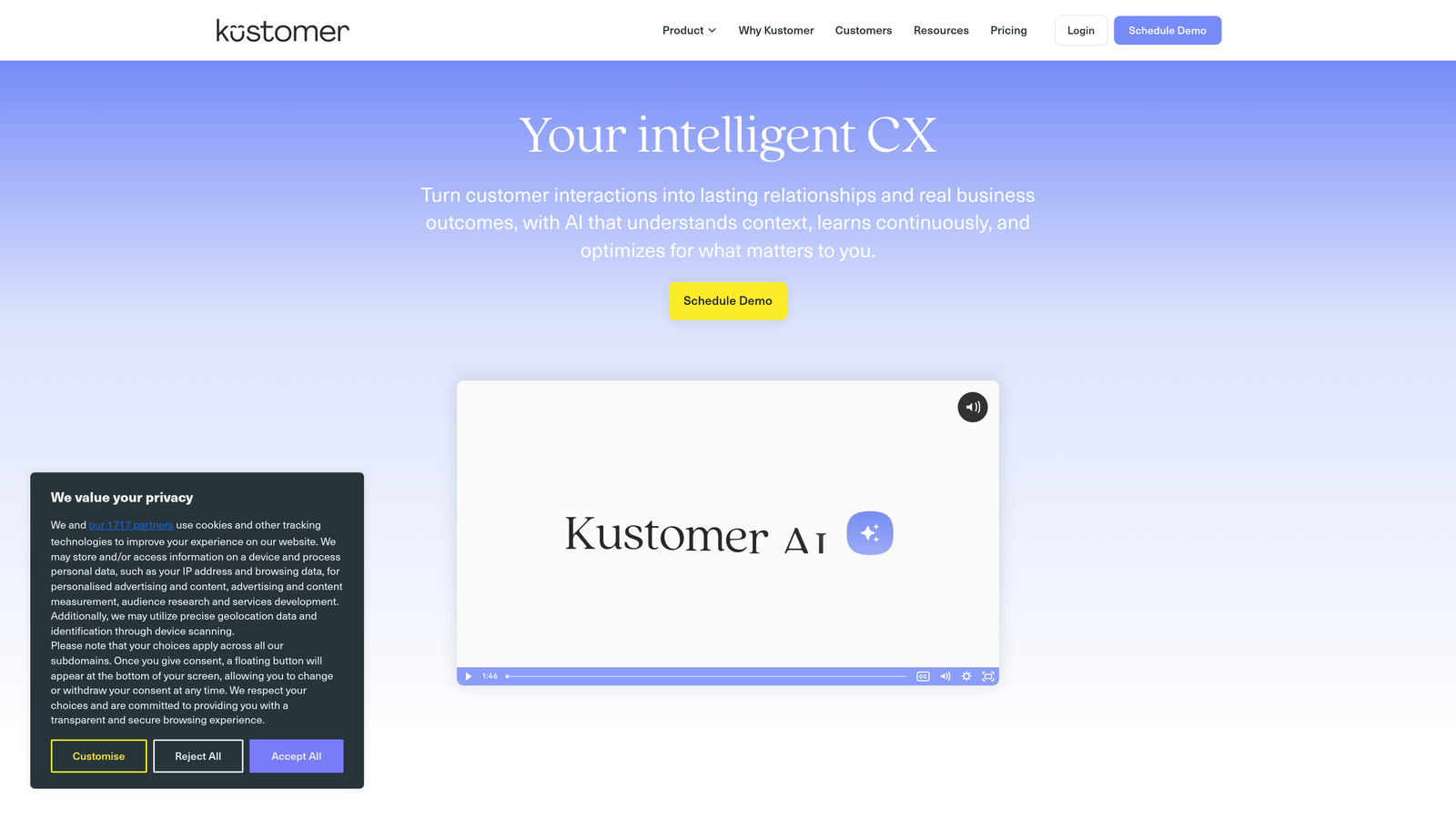
Kustomer is a CRM-centric support platform that surfaces the full customer timeline — purchases, past conversations, and activity — alongside every support interaction.
Where This Tool Shines
Kustomer's core insight is that agents shouldn't have to piece together customer context from five different tabs. The platform presents a unified timeline: every purchase, every past conversation, every relevant activity, all visible before the agent types their first response. For high-volume teams handling complex customer relationships, that context reduces handle time and improves resolution quality.
The flexible data model lets you bring in custom objects and attributes from your own systems, which makes Kustomer adaptable to businesses with non-standard data structures. The workflow automation engine is robust, though it requires meaningful configuration investment to unlock its full value.
Key Features
Full Customer Timeline: Unified view of purchases, conversations, and activity across all touchpoints in a single screen.
Omnichannel Inbox: Email, chat, SMS, social, and voice combined in one workspace.
AI Routing and Suggestions: Intelligent ticket routing and AI-suggested responses to accelerate resolution.
Flexible Data Model: Custom objects and attributes let you model your business data within the platform.
Workflow Automation: Powerful automation engine for routing, escalation, and SLA management.
Best For
High-volume B2C or B2B teams where deep customer context is essential to every interaction. Teams should factor in configuration investment and verify current ownership details at kustomer.com before committing.
Pricing
Check current pricing and plan structure at kustomer.com.
8. Front
Best for: Account-based teams where support and account management responsibilities overlap.
Front is a collaborative team inbox that combines email, SMS, and social channels with CRM-like contact records in a workspace that feels familiar to anyone who uses email.
Where This Tool Shines
Front occupies an interesting middle ground between a helpdesk and a shared email client. It's designed for teams where the lines between support, account management, and customer success are blurry — where the same person might handle a billing question and a renewal conversation in the same thread. The email-like interface means minimal retraining for teams coming from Gmail or Outlook.
The CRM-like contact and account records give agents relationship context without requiring a full CRM integration. AI Compose and AI Summarize add productivity features that fit naturally into the email workflow without changing how the tool fundamentally operates.
Key Features
Collaborative Inbox: Shared email workspace with assignment, tagging, and internal comments on threads.
CRM-Like Records: Contact and account records with conversation history accessible from every thread.
AI Compose and Summarize: Draft responses and summarize long threads faster with built-in AI assistance.
CRM Integrations: Native connections to Salesforce, HubSpot, and other major CRMs for teams that need both.
Email-Native UX: Minimal retraining required — the interface feels like a familiar email client with collaboration layers added.
Best For
Account-based B2B teams where support and account management overlap, and where maintaining an email-like tone with customers is a priority. Less suited for high-volume transactional support environments that need deep automation.
Pricing
Check current pricing and plan options at front.com.
9. Tidio
Best for: Early-stage companies launching their first live chat and AI chatbot channel.
Tidio is a lightweight live chat and AI chatbot platform with fast setup and an accessible price point designed for smaller teams getting started with chat support.
Where This Tool Shines
Tidio's primary advantage is speed and accessibility. Teams can typically go from sign-up to live chat on their website within hours, not days. For early-stage companies that need something working now without a lengthy procurement and configuration process, that matters. The free plan is genuinely functional for small teams testing the channel before committing to a paid tier.
Lyro AI, Tidio's conversational AI agent, handles automated resolution for common queries and integrates naturally with the live chat workflow. It's not the most sophisticated AI in this list, but it's well-matched to the scale and complexity of the teams Tidio is built for.
Key Features
Lyro AI: Conversational AI agent for automated support resolution integrated directly into the chat workflow.
Live Chat, Chatbot, and Email: Core support channels combined in a single lightweight tool.
Fast Setup: Typically live on your website within hours with minimal technical configuration.
Free Plan: Functional free tier for small teams evaluating the channel before scaling.
E-Commerce Integrations: Native connections to Shopify and WooCommerce for online retail teams.
Best For
Early-stage startups and small teams launching chat support for the first time. Tidio is a practical starting point, though teams with significant scale or complex support needs will likely outgrow it and should plan for migration to a more robust platform.
Pricing
Free plan available; paid plans start at accessible price points. Check current tiers at tidio.com.
Which Tool Is Right for Your Growth Stage?
The honest answer is that the best customer support software for growth depends heavily on where you are right now and where you're headed in the next 12 to 18 months.
If you're an early-stage team launching your first structured support channel, Freshdesk or Tidio give you functional tooling without a large upfront investment. Help Scout is the right call if you want to preserve a human, relationship-first tone as you scale. For e-commerce operations running on Shopify, Gorgias is the clear category leader.
For B2B SaaS teams at the growth stage — where support volume is rising, your product is getting more complex, and you need support data to inform product and revenue decisions — the calculus shifts. Zendesk and Intercom are proven platforms with deep ecosystems, but both carry configuration overhead and pricing models that can climb quickly. Front and Kustomer serve specific use cases well: account-based teams and high-volume operations that need deep customer context, respectively.
The more interesting question for growth-stage SaaS teams is whether you want AI layered onto a traditional helpdesk or an AI-native architecture built around autonomous resolution from day one. That distinction affects resolution quality, the amount of ongoing configuration your team will manage, and what your support data can actually tell you about your business.
Your support team shouldn't scale linearly with your customer base. Let AI agents handle routine tickets, guide users through your product, and surface business intelligence while your team focuses on complex issues that need a human touch. See Halo in action and discover how continuous learning transforms every interaction into smarter, faster support.
For further reading, explore our guides on the benefits of automated customer support and what to look for in AI helpdesk software as your team evaluates its next platform.