9 Best Customer Support Software for Startups in 2026
Finding the best customer support software for startups means choosing tools that scale affordably while automating routine inquiries, allowing lean teams to focus on product development rather than drowning in support tickets. This guide reviews nine platforms designed specifically for fast-moving startups that need to deliver exceptional customer experiences from day one without breaking their budget.
 Grant CooperFounder13 min read
Your startup just hit product-market fit. Support tickets are flooding in. Your three-person team is drowning in "How do I...?" questions while trying to ship features that actually matter.
Sound familiar?
The right customer support software doesn't just organize chaos—it becomes your force multiplier. For startups, that means tools that deliver value on day one, scale without breaking the bank, and ideally handle routine questions automatically so your team can focus on building.
Here are the top customer support platforms built for startups that need to move fast, stay lean, and deliver exceptional experiences from the first customer to the thousandth.
1. Halo AI
Best for: Startups wanting AI agents that autonomously resolve tickets and learn continuously
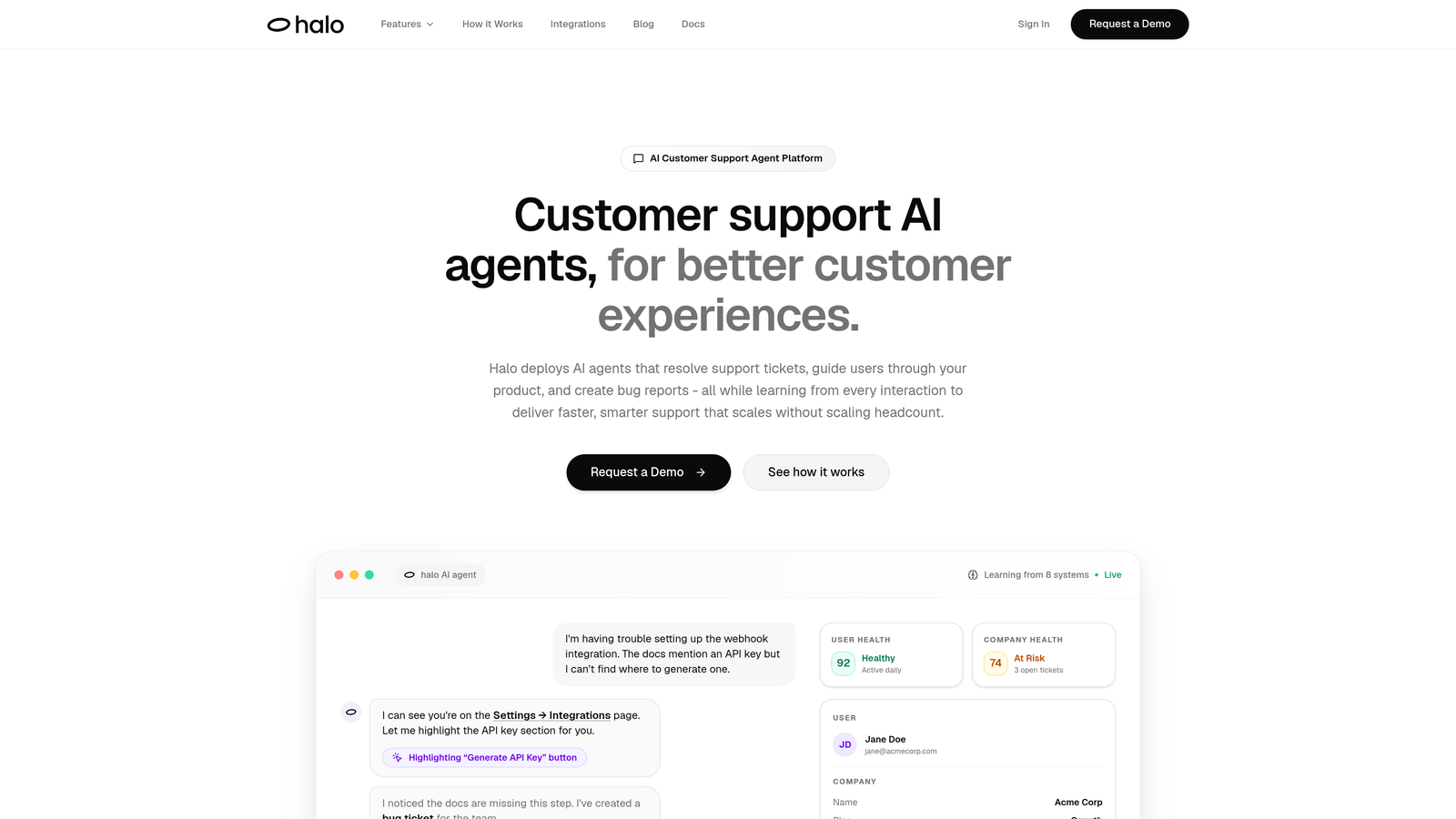
Halo AI is an AI-first customer support platform that deploys intelligent agents to resolve support tickets, guide users through your product, and create bug reports automatically.
Where This Tool Shines
Unlike traditional helpdesk tools with AI bolted on, Halo was built from the ground up around autonomous AI agents. These agents don't just suggest canned responses—they actually resolve tickets, understand the visual context of what users see on your product pages, and learn from every interaction to get smarter over time.
The page-aware chat widget is a game-changer for product-led startups. When a user asks for help, the AI sees exactly what they're looking at and can provide visual guidance through your UI. No more "click the button in the top right" confusion when there are five buttons in the top right.
Key Features
Autonomous AI Agents: Resolve support tickets without human intervention, learning from every interaction to improve continuously.
Page-Aware Chat Widget: Sees what users see on your product, enabling visual UI guidance that dramatically reduces confusion.
Smart Inbox with Business Intelligence: Goes beyond ticket management to surface customer health signals, revenue intelligence, and anomaly detection.
Auto Bug Ticket Creation: Automatically creates tickets in Linear when issues are identified, connecting support directly to your engineering workflow.
Deep Integration Ecosystem: Connects to your entire business stack including Slack, HubSpot, Intercom, Stripe, Zoom, and PandaDoc for unified context.
Best For
B2B SaaS startups with product-led growth models who want support that scales without scaling headcount. Particularly valuable if you're already using tools like Linear, Intercom, or Zendesk and want AI that actually reduces manual work rather than just organizing it.
Pricing
Contact for startup-specific pricing. The platform is designed to grow with you, with pricing that reflects early-stage budget constraints while delivering enterprise-grade AI capabilities.
2. Intercom
Best for: Startups prioritizing conversational support and proactive customer engagement
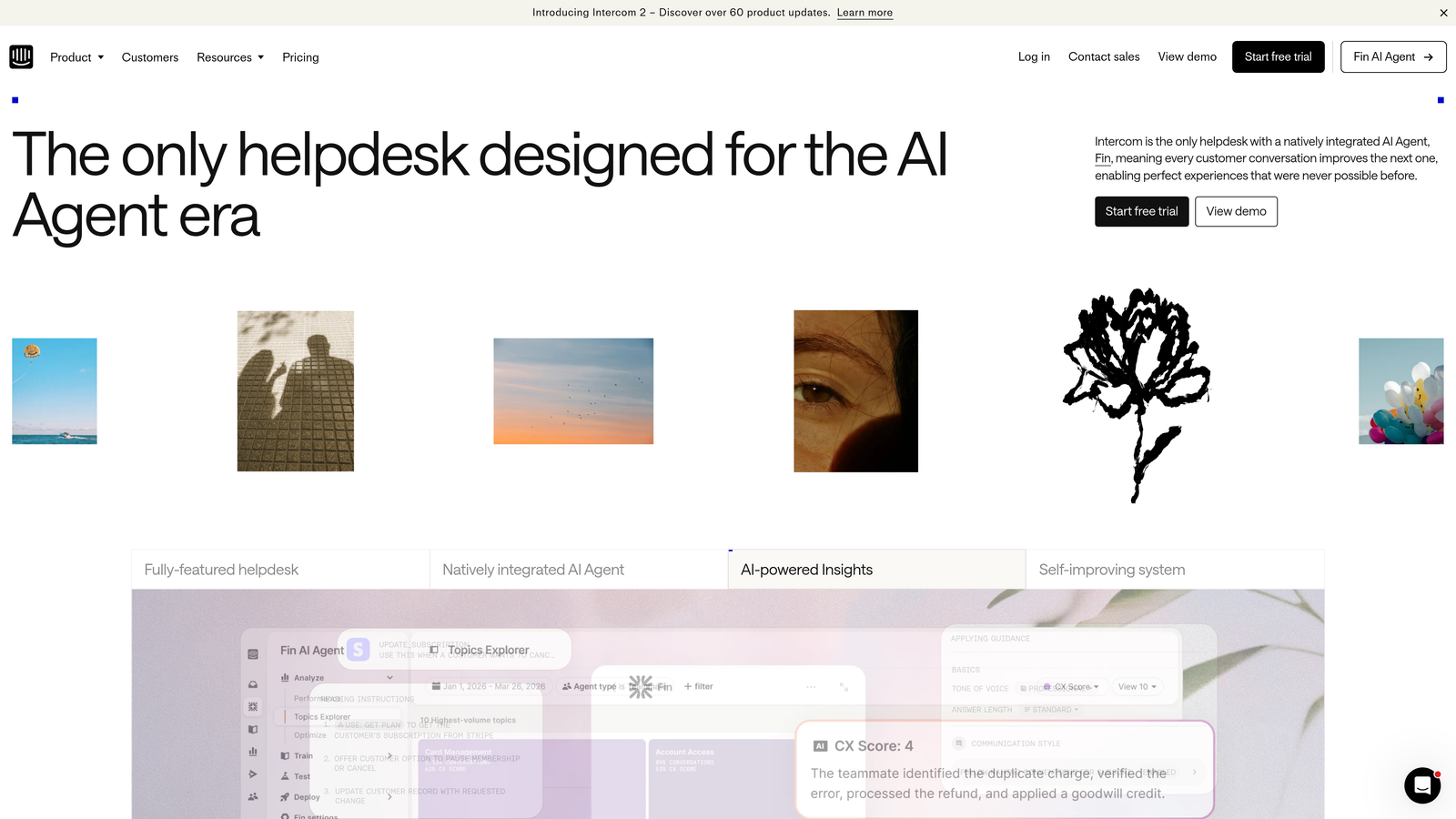
Intercom is a messenger-first platform that combines live chat, product tours, and AI automation into a unified customer communication system.
Where This Tool Shines
Intercom excels at proactive engagement. Instead of waiting for customers to reach out with problems, you can trigger targeted messages based on behavior, guide users through onboarding with product tours, and catch issues before they become support tickets.
The Fin AI agent has matured significantly, now handling routine questions with impressive accuracy. For startups building self-service products, the combination of automated answers and seamless handoff to human agents creates a support experience that feels personal at scale.
Key Features
Messenger-First Communication: Modern chat interface that customers actually want to use, embedded directly in your product.
Product Tours and Onboarding: Build guided experiences that reduce support volume by teaching users how to succeed with your product.
Fin AI Agent: Answers customer questions automatically using your knowledge base and past conversations as training data.
Resolution Bot and Workflows: Automate common support scenarios with customizable workflows that route, tag, and respond to conversations.
Startup Program: Significant discounts for qualifying early-stage companies, making enterprise-grade features accessible.
Best For
Product-led SaaS startups that want to blend marketing, sales, and support into a unified customer experience. Works exceptionally well if proactive engagement is part of your growth strategy.
Pricing
Starts at $39 per seat per month for the Essential plan. The Startup Program offers up to 95% off for companies that qualify, making it viable for early-stage teams.
3. Zendesk
Best for: Startups planning enterprise growth who need proven scalability
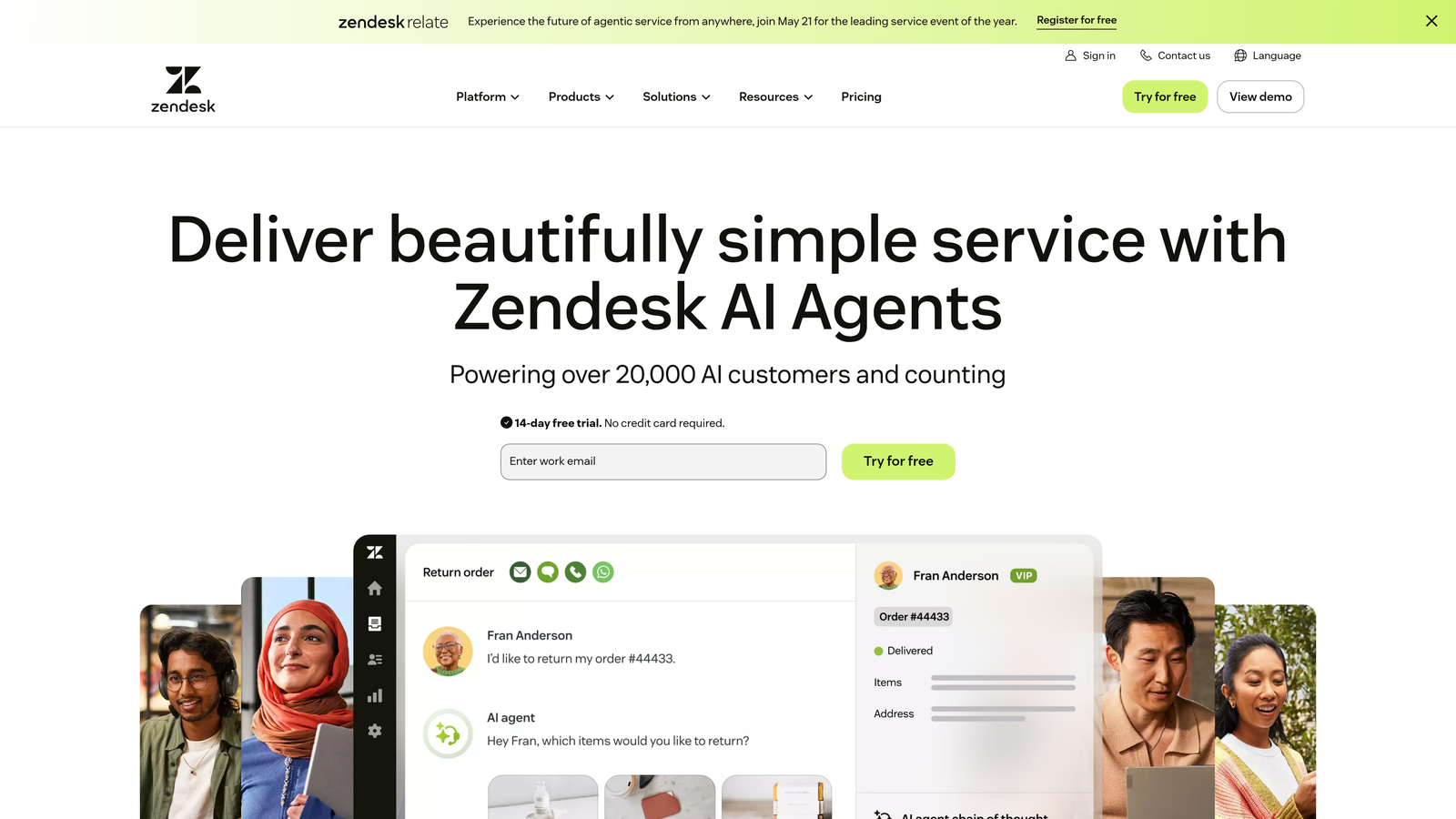
Zendesk is the industry-standard helpdesk platform with omnichannel support, extensive integrations, and enterprise-grade features available to companies at any stage.
Where This Tool Shines
Zendesk's superpower is its maturity. The platform has been battle-tested by thousands of companies scaling from startup to enterprise, which means you won't outgrow it. The app marketplace offers over 1,000 integrations, so whatever tools you adopt as you grow, Zendesk likely connects to them.
The reporting and analytics capabilities run deep. You can track everything from first response time to customer satisfaction scores across channels, giving you the data foundation needed to professionalize your support operation as you scale.
Key Features
Omnichannel Ticketing: Unified inbox for email, chat, phone, social media, and messaging apps with consistent workflows across channels.
Extensive App Marketplace: Over 1,000 pre-built integrations covering every category from CRM to project management to analytics.
Advanced Reporting: Customizable dashboards and reports that track every support metric you need as you professionalize operations.
AI-Powered Answer Bot: Suggests relevant knowledge base articles and can resolve simple tickets automatically before they reach your team.
Zendesk for Startups Program: Six months of free access to Suite Professional plus credits for implementation support.
Best For
Startups with enterprise ambitions who want to build on a platform they won't need to migrate away from. Particularly valuable if you're in a regulated industry or need advanced compliance features from day one.
Pricing
Suite Team starts at $55 per agent per month. The Zendesk for Startups program provides six months free for qualifying companies, significantly reducing initial costs while you establish product-market fit.
4. Freshdesk
Best for: Budget-conscious startups needing full helpdesk features with a generous free tier
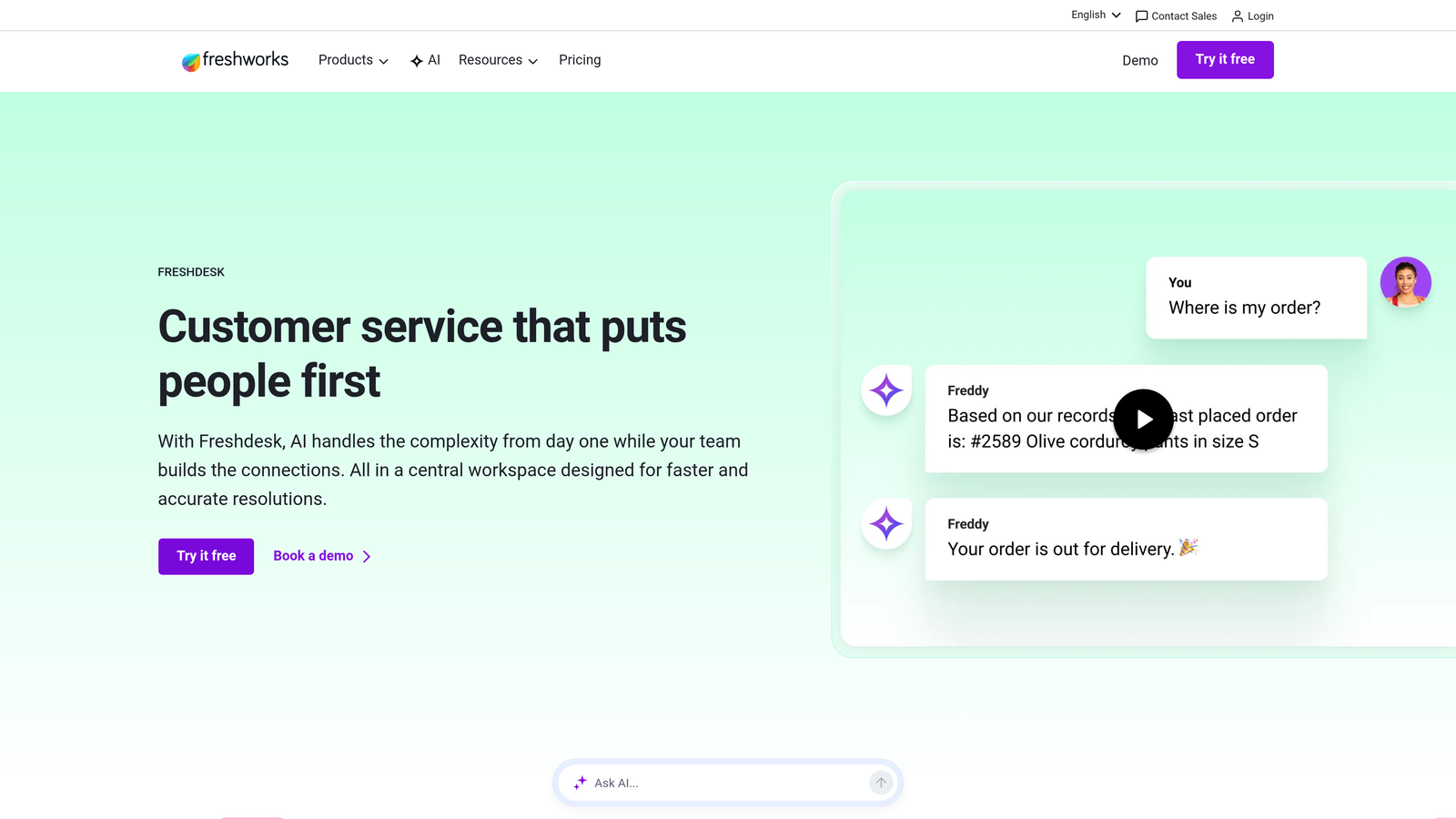
Freshdesk is an affordable helpdesk solution that offers enterprise-grade ticketing, automation, and knowledge base features at startup-friendly prices, including a free tier for up to 10 agents.
Where This Tool Shines
Freshdesk's free tier is genuinely useful, not a limited trial. You get unlimited tickets, email and social channel support, and basic automation—enough to run professional customer support for an early-stage startup without spending a dollar. This matters when every dollar of runway counts.
The interface is refreshingly intuitive. Your team can start using Freshdesk effectively within hours, not days. There's no steep learning curve eating into productivity, which is critical when you're asking engineers or product managers to handle support tickets alongside their primary responsibilities.
Key Features
Free Tier for 10 Agents: Full ticketing system, knowledge base, and basic automation without any cost, perfect for early-stage teams.
Intuitive Ticket Management: Clean interface that requires minimal training, with smart ticket assignment and prioritization built in.
Built-In Knowledge Base: Create self-service documentation that reduces ticket volume, with SEO optimization to help customers find answers via search.
Automation and SLA Management: Set up workflows that route tickets, send notifications, and ensure response time commitments are met.
Freddy AI Assistant: Suggests relevant articles to customers and helps agents respond faster with AI-powered recommendations.
Best For
Early-stage startups with limited budgets who need professional support infrastructure without monthly software costs. Also ideal for companies that want to test helpdesk software before committing to paid plans.
Pricing
Free tier supports up to 10 agents with core features. Growth plan starts at $15 per agent per month, adding advanced automation, custom roles, and SLA management as your needs expand.
5. Help Scout
Best for: Startups prioritizing human connection and simple, elegant support workflows
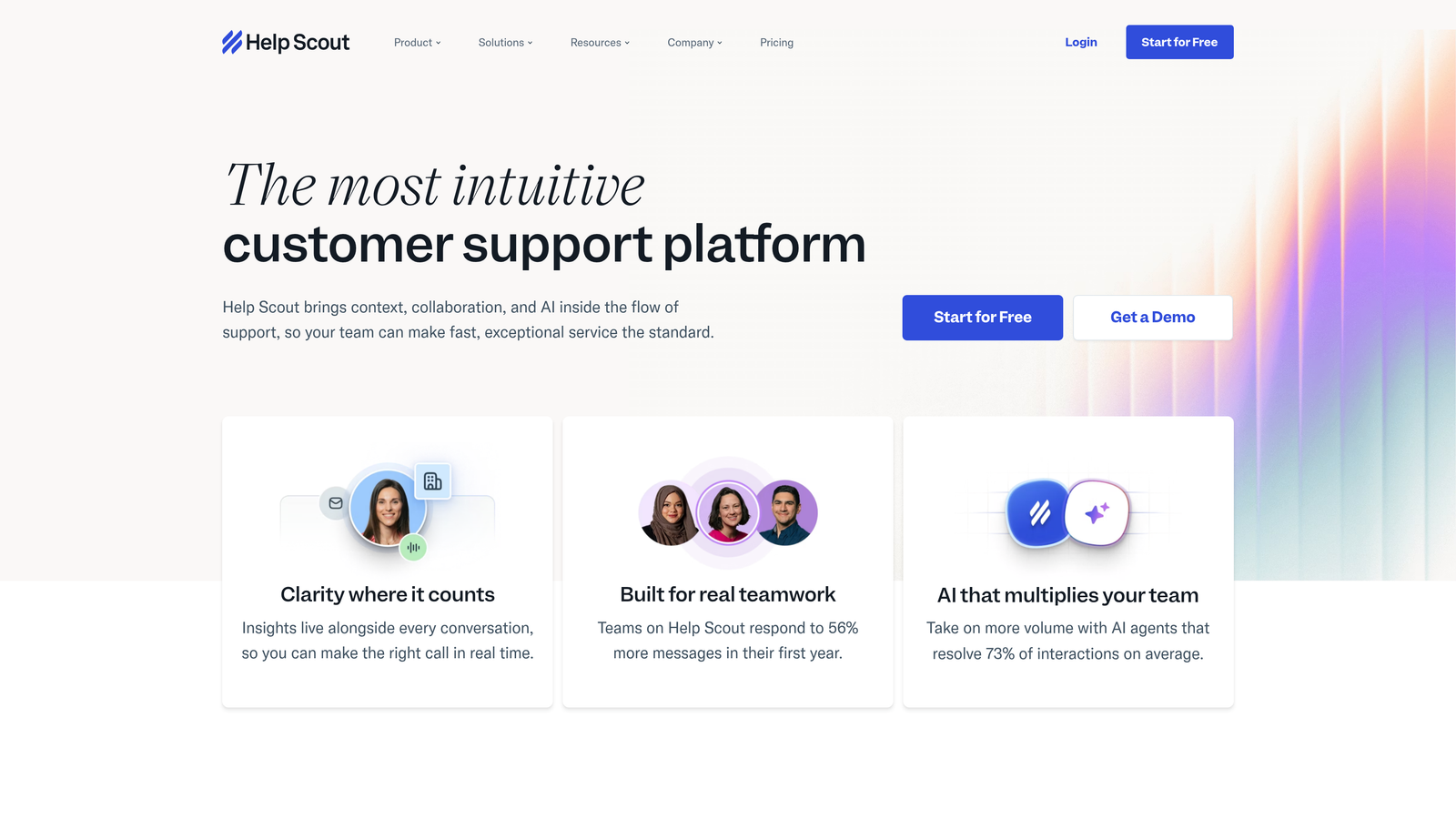
Help Scout is a customer support platform built around shared inboxes and knowledge bases, designed to keep support feeling personal even as you scale.
Where This Tool Shines
Help Scout feels like email, which means your team already knows how to use it. The shared inbox approach eliminates the learning curve of traditional ticketing systems while still providing collision detection so multiple people don't accidentally respond to the same customer.
The Beacon embedded widget is thoughtfully designed. It surfaces relevant knowledge base articles as customers type their questions, often resolving issues before a conversation even starts. When customers do need to reach out, the transition from self-service to human support is seamless.
Key Features
Shared Inbox with Collision Detection: Email-like interface that feels natural, with safeguards preventing duplicate responses from team members.
Docs Knowledge Base: Beautiful, searchable help documentation that customers can browse or search, reducing repetitive support questions.
Beacon for Embedded Help: Widget that intelligently suggests articles based on what customers are typing, catching issues before they become tickets.
Customer Profiles and History: Complete conversation history and customer context available instantly when responding to inquiries.
Simple Per-User Pricing: Straightforward pricing model without hidden fees or usage-based charges that spike unexpectedly.
Best For
Startups that want support to feel personal and human rather than automated. Particularly strong for B2B companies where relationship quality matters and customers expect thoughtful, individualized responses.
Pricing
Standard plan starts at $20 per user per month, including shared inbox, knowledge base, and reporting. Plus plan at $40 per user adds advanced features like live chat and custom fields.
6. Crisp
Best for: Startups wanting all-in-one messaging with CRM functionality at minimal cost
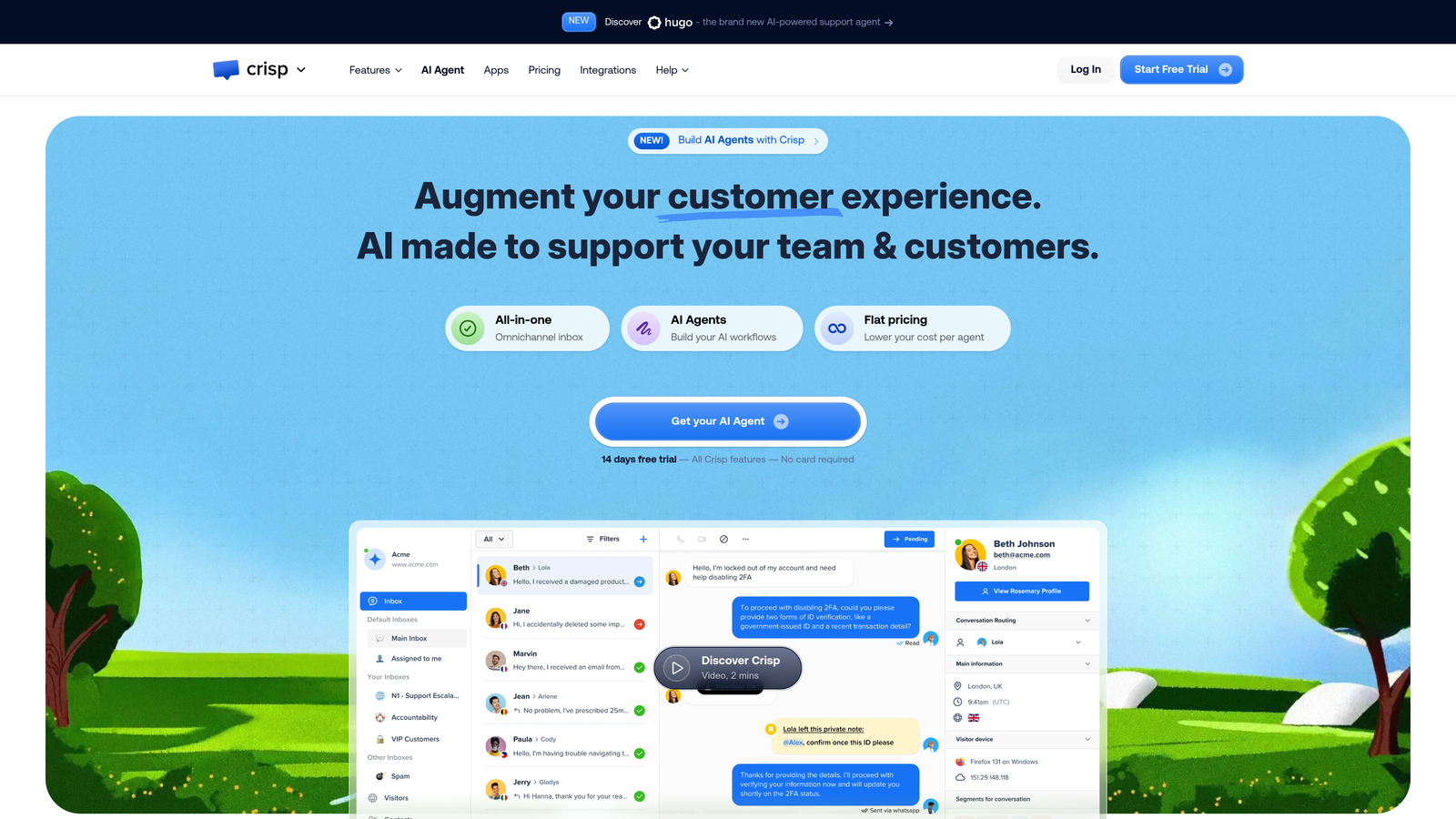
Crisp is a messaging platform that combines live chat, shared inbox, CRM, and knowledge base into a single tool with generous free tier and startup-friendly pricing.
Where This Tool Shines
Crisp bundles features that usually require multiple tools into one platform. You get live chat, a shared inbox, basic CRM functionality, and a knowledge base—all included. For lean startups trying to minimize their software stack, this consolidation is valuable both financially and operationally.
The chatbot builder uses a visual interface that non-technical team members can actually use. You can create automated conversation flows to qualify leads, answer common questions, or route conversations without writing code or hiring developers.
Key Features
Live Chat with Chatbot Builder: Visual bot creator that lets you automate conversations without technical skills, handling routine inquiries 24/7.
Shared Inbox for Team Collaboration: Centralized view of all customer conversations across channels with assignment and internal notes.
Built-In CRM Functionality: Track customer data, segment audiences, and manage relationships without needing a separate CRM tool.
Knowledge Base Included: Create self-service documentation that reduces support volume and empowers customers to find answers independently.
Generous Free Tier: Two team members can use the full platform free indefinitely, perfect for very early-stage startups.
Best For
Resource-constrained startups that need multiple tools but can only afford one. Works particularly well for companies that want to combine support and sales conversations in a single platform.
Pricing
Free for up to 2 seats with full features. Pro plan starts at $25 per month per workspace (not per user), making it one of the most affordable options for small teams.
7. Front
Best for: Startups wanting collaborative inbox that feels like email, not a ticketing system
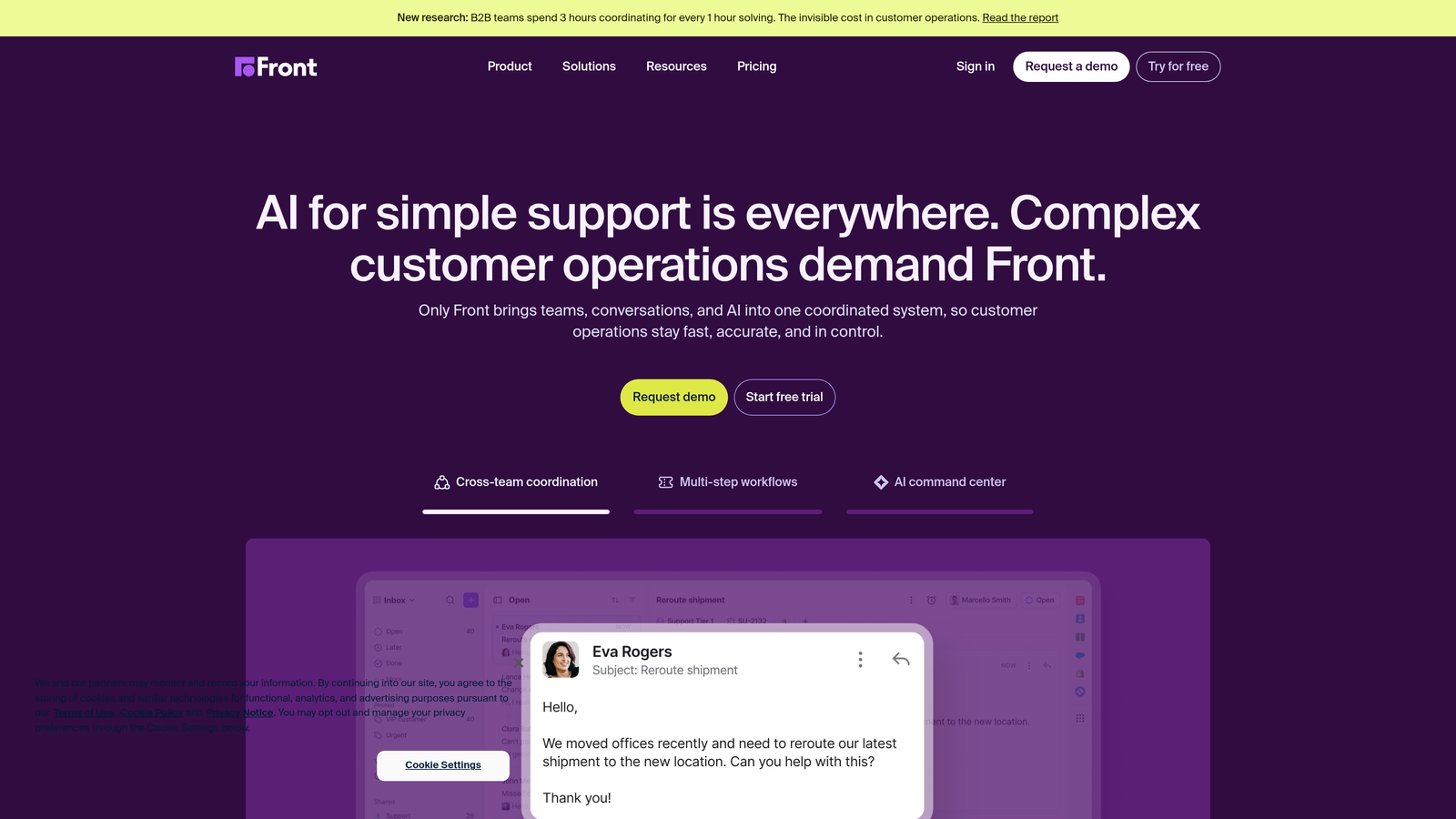
Front is a shared inbox platform that combines the familiar experience of email with helpdesk features like assignments, internal comments, and analytics.
Where This Tool Shines
Front's philosophy is that support shouldn't require learning a new system. It looks and feels like Gmail or Outlook, which means your team can be productive immediately. The power comes from collaboration features layered on top—internal comments, assignments, and workflow automation that turn individual email into team-based support.
The multi-channel support is genuinely unified. Email, SMS, social media messages, and live chat all flow into the same interface with consistent workflows. Your team doesn't need to context-switch between tools to handle different communication channels.
Key Features
Shared Inboxes That Feel Like Email: Familiar email interface with powerful collaboration features, eliminating the learning curve of traditional helpdesk software.
Internal Comments and Mentions: Discuss customer issues privately within threads, loop in team members, and collaborate without forwarding emails.
Multi-Channel Support: Handle email, SMS, social media, and live chat from a single interface with unified workflows across channels.
Analytics and SLA Tracking: Monitor response times, resolution rates, and team performance with built-in reporting dashboards.
Strong Integration Ecosystem: Connects to Salesforce, HubSpot, Asana, and hundreds of other tools through native integrations and Zapier.
Best For
Startups with teams already living in email who want to add collaboration and accountability without changing how they work. Particularly effective for companies where support, sales, and operations need to work together on customer issues.
Pricing
Starter plan at $19 per seat per month provides core shared inbox functionality. Growth plan at $59 per seat adds advanced automation, analytics, and multi-channel support for scaling teams.
8. Tidio
Best for: E-commerce startups needing chat and chatbots optimized for online stores
Tidio is a live chat and chatbot platform designed specifically for e-commerce, with pre-built templates for common online store scenarios and deep integrations with Shopify and WooCommerce.
Where This Tool Shines
Tidio understands e-commerce workflows. The pre-built chatbot templates handle scenarios like abandoned cart recovery, order tracking, and product recommendations out of the box. You're not starting from scratch—you're customizing proven conversation flows that e-commerce stores actually need.
The Lyro AI conversational agent learns from your store's data to answer customer questions about products, shipping, and returns automatically. For small e-commerce teams handling hundreds of "Where's my order?" messages, this automation is transformative.
Key Features
Visual Chatbot Builder: Drag-and-drop interface for creating automated conversation flows without coding, with e-commerce templates included.
Live Chat with Visitor Tracking: See what pages visitors are browsing in real-time and proactively offer help at crucial moments in the buying journey.
Shopify and WooCommerce Integrations: Deep platform connections that enable order lookups, customer data access, and cart recovery directly from chat.
Pre-Built E-Commerce Templates: Ready-made chatbot flows for abandoned carts, order tracking, product recommendations, and common customer service scenarios.
Lyro AI for Automated Responses: AI agent trained on your store's data that handles routine questions about products, shipping, and policies automatically.
Best For
E-commerce startups on Shopify, WooCommerce, or similar platforms who need customer support that understands online retail. Particularly valuable if you're handling high message volume with a small team.
Pricing
Free tier includes live chat for up to 50 conversations per month. Starter plan at $29 per month adds unlimited conversations, chatbots, and email integration for growing stores.
9. HubSpot Service Hub
Best for: Startups already using HubSpot CRM who want unified customer data
HubSpot Service Hub is customer service software that integrates seamlessly with HubSpot's CRM, connecting support tickets to your complete customer relationship history.
Where This Tool Shines
If you're already using HubSpot for marketing or sales, Service Hub creates a unified view of every customer interaction. Support tickets automatically link to contact records, deal history, and previous conversations. Your support team sees the complete context—what products customers bought, what emails they've received, where they are in the sales cycle.
The free tier is genuinely functional. You get ticketing, live chat, conversational bots, and a basic knowledge base without paying anything. For startups already invested in HubSpot's ecosystem, this eliminates the need for a separate support tool entirely.
Key Features
Ticketing Connected to CRM: Every support ticket automatically links to customer records with full history of interactions across marketing, sales, and service.
Knowledge Base Builder: Create self-service documentation that integrates with your website and can be surfaced contextually in chat conversations.
Customer Feedback Surveys: Built-in NPS and customer satisfaction surveys that feed data back into customer records for tracking sentiment over time.
Conversational Bots: Automated chat flows that qualify issues, route conversations, and answer common questions using your knowledge base.
Free Tier with Basic Features: Ticketing, live chat, and team email included in HubSpot's free CRM, making it accessible for very early-stage startups.
Best For
Startups already using HubSpot for marketing or sales who want to avoid integrating a separate support tool. The unified data model is particularly valuable for product-led growth companies tracking the entire customer journey.
Pricing
Free tools include ticketing, live chat, and conversational bots. Starter plan at $20 per month (for 2 users) adds automation, custom surveys, and reporting. Professional tier scales with more advanced features as you grow.
Making the Right Choice
The best customer support software for your startup depends on where you are and where you're going.
If you want AI that actually reduces workload: Halo AI and Intercom lead the pack. Halo's autonomous agents resolve tickets without human intervention and learn continuously, while Intercom's Fin AI handles routine questions with impressive accuracy. The difference is architectural—Halo was built AI-first, while Intercom added AI to an existing platform.
If budget is your primary constraint: Freshdesk and Crisp offer the most value at the lowest cost. Freshdesk's free tier supports up to 10 agents with full ticketing features, while Crisp bundles chat, CRM, and knowledge base for just $25 per month per workspace. Both let you deliver professional support without monthly software costs eating into runway.
If you're planning enterprise scale: Zendesk and Front provide the foundation to grow without migrating. Zendesk's maturity and 1,000+ integrations mean you won't outgrow it, while Front's email-like interface scales team collaboration as you add headcount. Both offer startup programs that make enterprise features accessible early.
If you're building e-commerce: Tidio is purpose-built for online stores with pre-built chatbot templates for abandoned carts, order tracking, and product recommendations. The Shopify and WooCommerce integrations run deep, enabling support experiences that feel native to your store.
Here's what matters most: your support software should scale smarter, not just bigger. The days of hiring support agents linearly with customer growth are over. The tools that win in 2026 use AI to handle routine work, surface intelligent insights, and let your team focus on complex issues that actually need human judgment.
Your support team shouldn't scale linearly with your customer base. Let AI agents handle routine tickets, guide users through your product, and surface business intelligence while your team focuses on complex issues that need a human touch. See Halo in action and discover how continuous learning transforms every interaction into smarter, faster support.