9 Best Help Desk Automation Software Tools in 2026
This guide ranks the 9 best help desk automation software tools of 2026, evaluating each on AI capability, integration depth, autonomous ticket resolution, and value for B2B SaaS teams. Whether you're replacing a legacy helpdesk or augmenting an existing stack, it covers the top options to help support teams resolve more tickets faster with less manual effort.
 Grant CooperFounder13 min read
Support teams are drowning in repetitive tickets while customers expect instant answers. The good news: help desk automation software has matured to the point where AI agents can now handle entire ticket lifecycles autonomously, not just suggest canned replies.
This list covers the top help desk automation tools available in 2026, evaluated on AI capability, integration depth, ease of deployment, and value for B2B SaaS teams. Whether you're replacing a legacy helpdesk or layering smarter automation onto an existing stack, there's a fit here for your stage and use case.
Selection criteria: autonomous ticket resolution, workflow automation, live agent handoff, integration ecosystem, and pricing transparency. Let's get into it.
1. Halo AI
Best for: B2B SaaS teams that want AI-native autonomous ticket resolution with business intelligence built in.
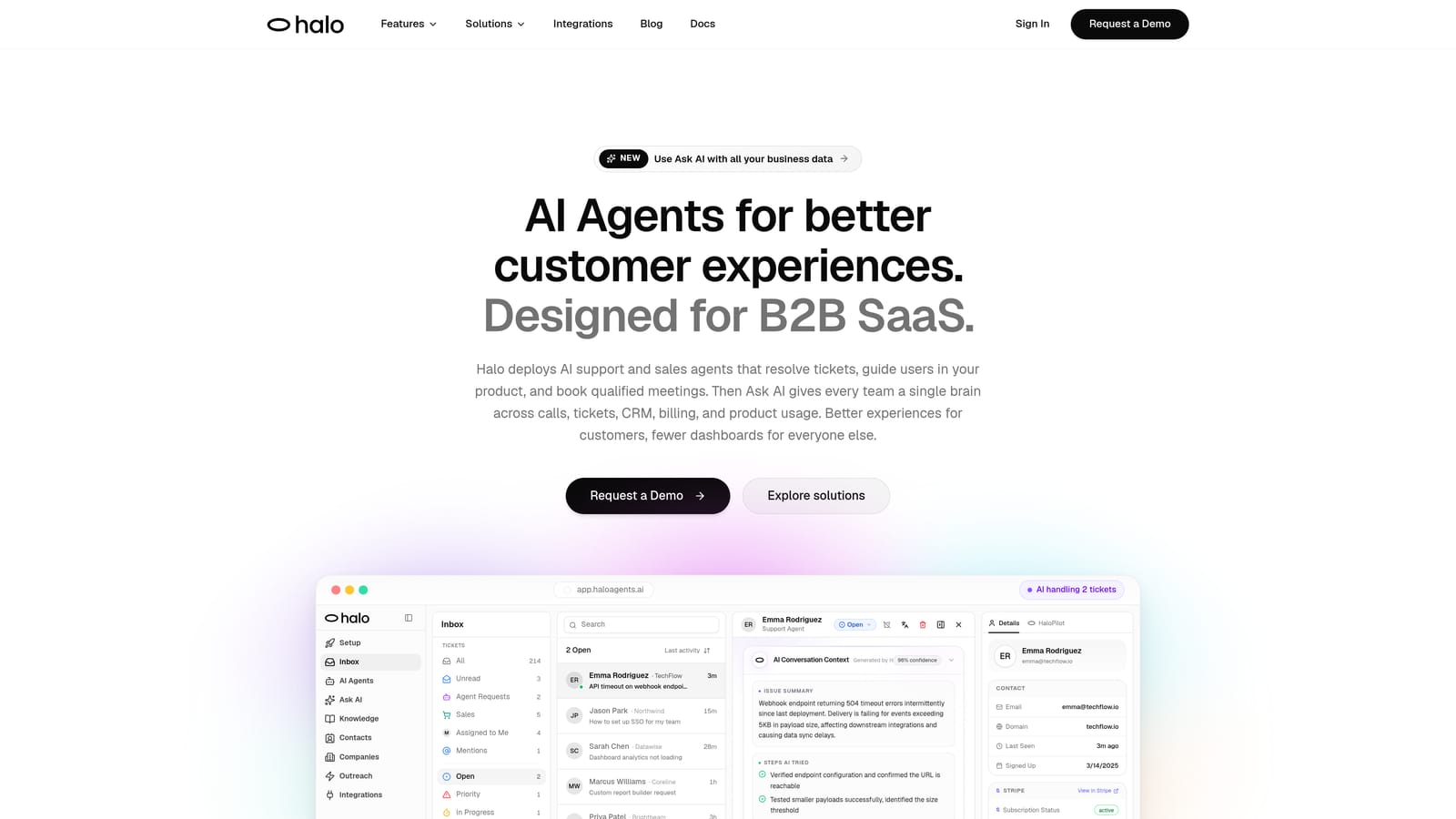
Halo AI is an AI-native customer support platform that deploys autonomous agents to resolve tickets, guide users through your product with page-aware context, and surface business intelligence across your entire support operation.
Where This Tool Shines
Most help desk tools started as ticketing systems and bolted AI on top. Halo was built the other way around: autonomous resolution is the core architecture, not a feature tier. That distinction matters when you're trying to actually deflect tickets rather than just route them faster.
The page-aware chat widget is a standout capability. It sees what the user sees on screen, enabling contextual visual guidance rather than generic knowledge base links. Combine that with continuous learning from every resolved interaction, and the system gets meaningfully smarter over time without manual retraining.
Key Features
Autonomous Ticket Resolution: AI agents handle support tickets end-to-end, including follow-up, without requiring human intervention on routine issues.
Page-Aware Chat Widget: The widget understands the user's current page context, delivering relevant guidance based on exactly where they are in your product.
Smart Inbox with Business Intelligence: Goes beyond ticket metrics to surface customer health signals, anomaly detection, and revenue intelligence directly in the inbox view.
Auto Bug Ticket Creation: Automatically creates and routes bug reports to Linear or GitHub when a support conversation surfaces a product issue.
Live Agent Handoff: Escalates to human agents with full conversation context preserved, so agents never start from scratch.
Integration Ecosystem: Connects natively with Linear, Slack, HubSpot, Intercom, Stripe, Zoom, PandaDoc, and Fathom.
Best For
B2B SaaS teams that want more than a faster ticketing system. If you're looking to resolve tickets autonomously, reduce support headcount growth, and get business intelligence signals from your customer support data, Halo is built for exactly that use case.
Pricing
Visit haloagents.ai for current pricing details. Plans are designed for scaling B2B SaaS teams.
2. Zendesk
Best for: Enterprise teams needing a mature, deeply configurable helpdesk with a large integration ecosystem.
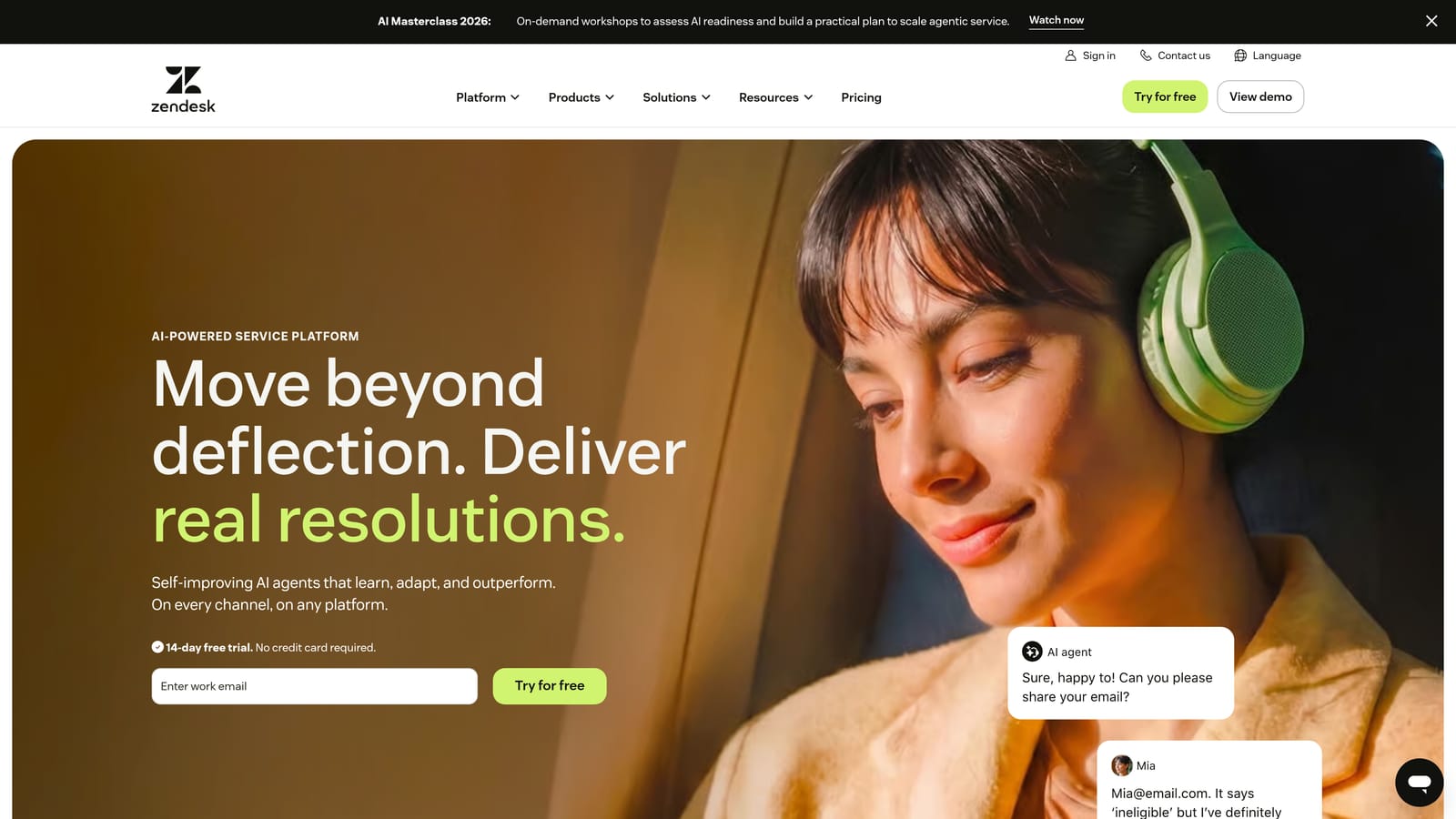
Zendesk is the market-leading enterprise helpdesk platform with a mature automation engine built on triggers, macros, and a growing AI feature set.
Where This Tool Shines
Zendesk's strength is its depth. The triggers and automations engine gives ops teams granular control over routing logic, SLA management, and escalation rules. For enterprise organizations with complex support workflows, that configurability is genuinely valuable.
The Zendesk AI layer, built in partnership with OpenAI, adds ticket summarization, intent detection, and suggested replies to Suite plans. It's a capable addition, though it layers on top of the existing ticketing infrastructure rather than replacing it with autonomous resolution.
Key Features
Triggers and Automations Engine: Granular rule-based automation for routing, escalation, SLA tracking, and ticket lifecycle management.
Zendesk AI: Ticket summarization, intent detection, and AI-suggested replies available on Suite plans.
App Marketplace: Hundreds of integrations covering CRM, analytics, e-commerce, and communication tools.
Omnichannel Support: Unified inbox for email, chat, voice, and social channels.
Advanced Reporting: Detailed analytics dashboards on Suite plans with customizable metrics and SLA tracking.
Best For
Enterprise support teams with complex routing requirements, large agent organizations, and the technical resources to configure and maintain a sophisticated helpdesk environment. Teams evaluating Zendesk against newer AI-native options may find this Zendesk alternative comparison useful.
Pricing
Suite Team starts around $55/agent/month. Verify current plans and enterprise pricing at zendesk.com.
3. Freshdesk
Best for: Growing SMB teams looking for accessible AI-assisted automation at competitive pricing.
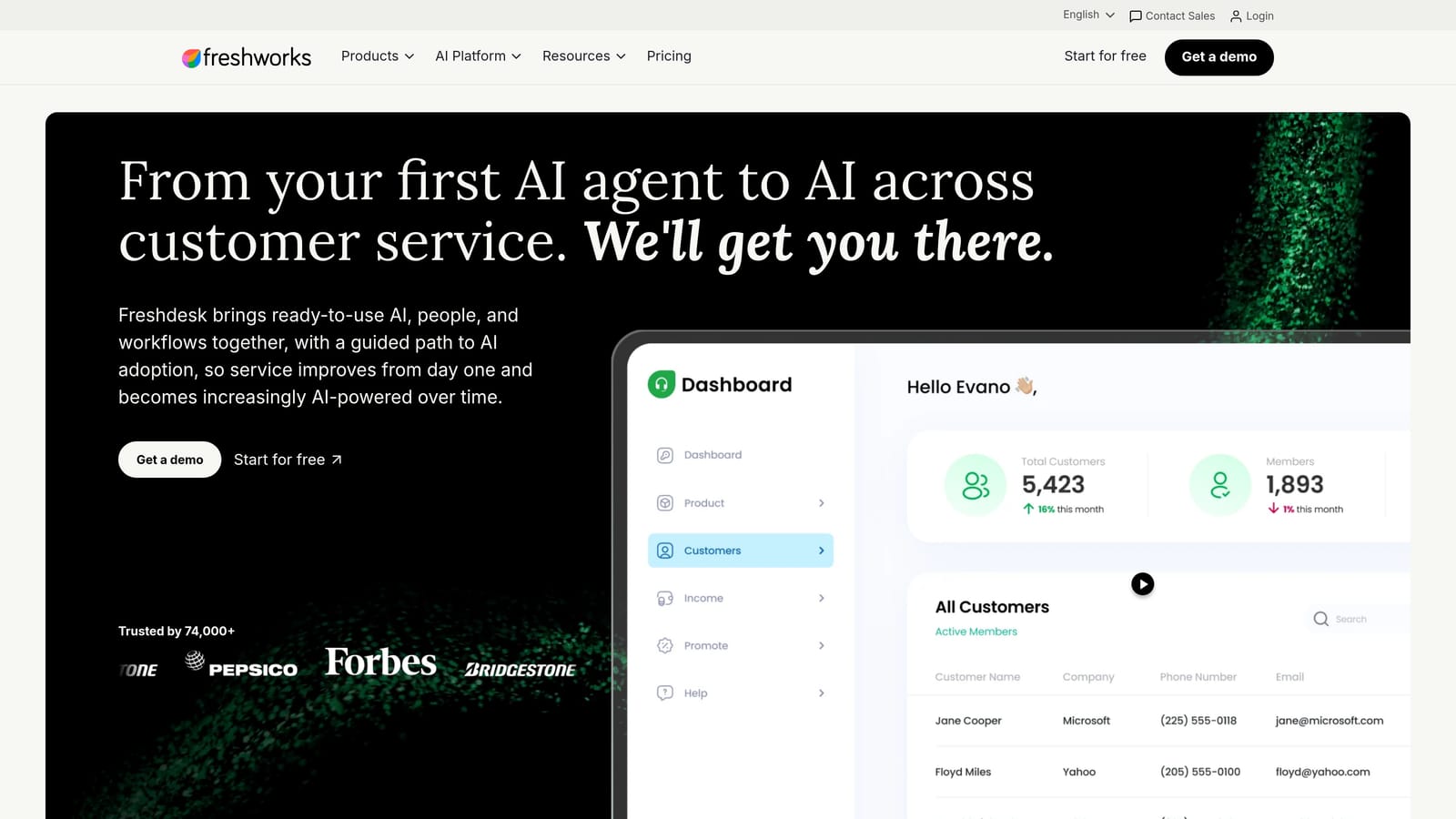
Freshdesk is a widely used helpdesk platform from Freshworks with Freddy AI built in, offering accessible automation for teams scaling beyond email-based support.
Where This Tool Shines
Freshdesk hits a sweet spot between capability and affordability. For teams that have outgrown shared email inboxes but aren't ready to invest in enterprise-tier tooling, the free tier and low-cost Growth plan make it an easy starting point.
Freddy AI handles the fundamentals well: auto-suggested responses, ticket summarization, and basic resolution for common queries. The Freddy Self Service module adds AI-powered knowledge base deflection, which can meaningfully reduce inbound volume without requiring complex configuration.
Key Features
Freddy AI: Auto-suggested responses, ticket summarization, and basic resolution for frequently asked questions.
Automated Routing: Rule-based ticket routing and prioritization based on keywords, source, and customer properties.
Omnichannel Inbox: Email, chat, phone, and social channels consolidated in one view.
Freddy Self Service: AI-powered knowledge base and chatbot for deflecting common queries before they become tickets.
Free Tier: Available for small teams, making it easy to evaluate before committing to a paid plan.
Best For
SMB teams and startups that need a solid helpdesk foundation with AI assistance at a price point that doesn't require executive sign-off. Also a reasonable upgrade path for teams currently running support entirely through email.
Pricing
Free tier available for small teams. Growth plan starts around $15/agent/month. Verify current pricing at freshdesk.com.
4. Intercom
Best for: Product-led SaaS companies that want conversational, in-app support with a capable AI agent at the front line.
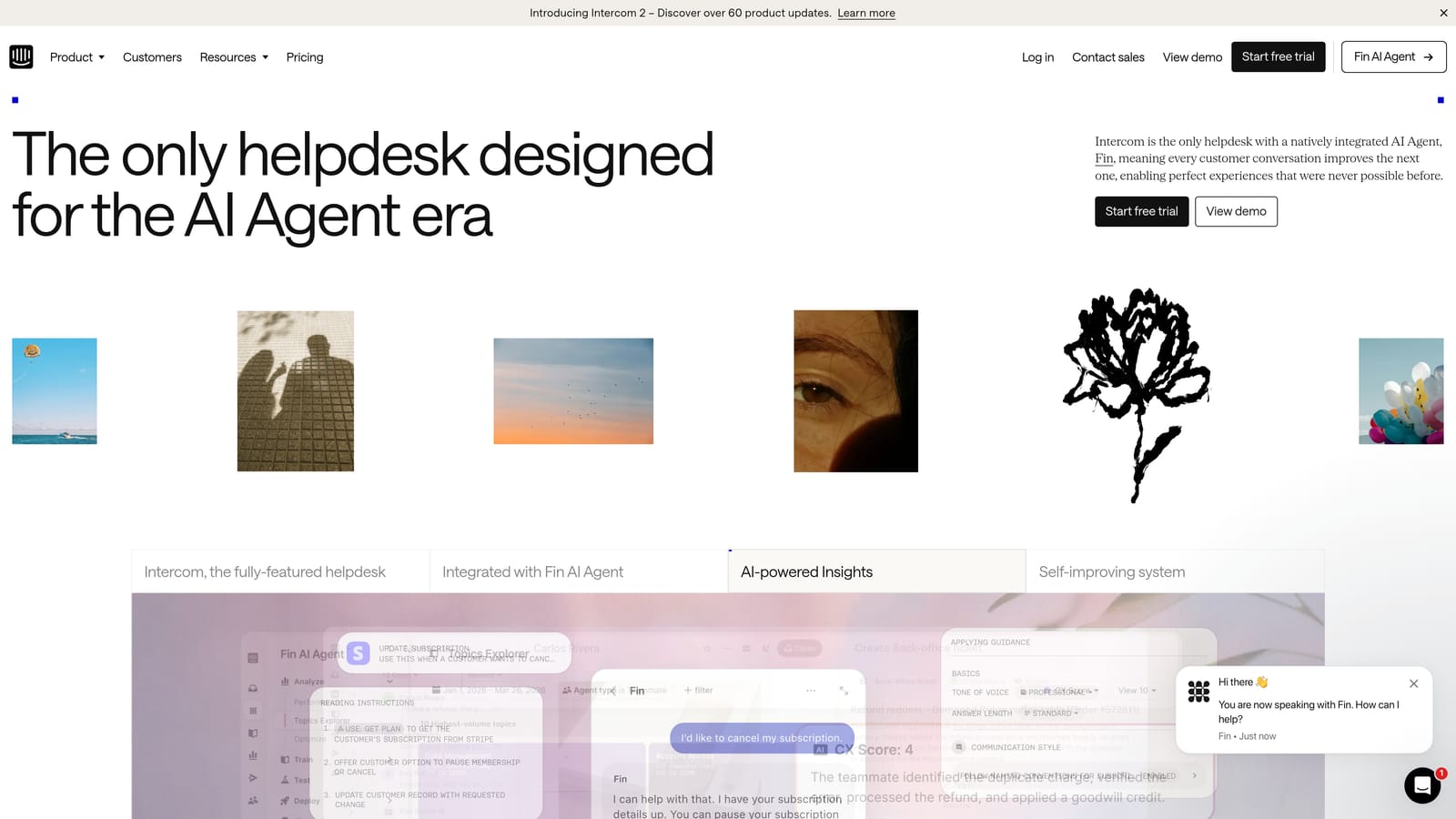
Intercom is a conversational support platform with the Fin AI agent at its core, designed for in-app messaging and personalized customer interactions.
Where This Tool Shines
Intercom's in-app messenger is one of the most polished in the market. The customer data platform integration means Fin AI and your human agents both have rich context about who they're talking to, including product usage, subscription status, and conversation history.
Fin AI, built on GPT-4 architecture, handles autonomous conversation resolution for a wide range of query types. The combination of strong product-context awareness and a capable AI agent makes Intercom particularly effective for SaaS onboarding and feature adoption support.
Key Features
Fin AI Agent: Autonomous conversation resolution powered by GPT-4 architecture, handling support queries without human intervention.
In-App Messenger: A polished, highly customizable messenger widget with strong product integration.
Customer Data Platform: Rich customer context including product usage and subscription data available in every conversation.
Workflows: Visual workflow builder for automating routing, tagging, and follow-up actions.
Proactive Messaging: Outbound messaging and onboarding flows triggered by user behavior in-product.
Best For
Product-led SaaS teams where support, onboarding, and in-app engagement overlap. Particularly strong for companies that want AI-assisted conversations woven into the product experience rather than bolted on externally.
Pricing
Usage-based pricing that can scale unpredictably as conversation volume grows. Verify current plans and pricing at intercom.com.
5. HubSpot Service Hub
Best for: Teams already in the HubSpot ecosystem where support data needs to feed directly into sales and customer success motions.
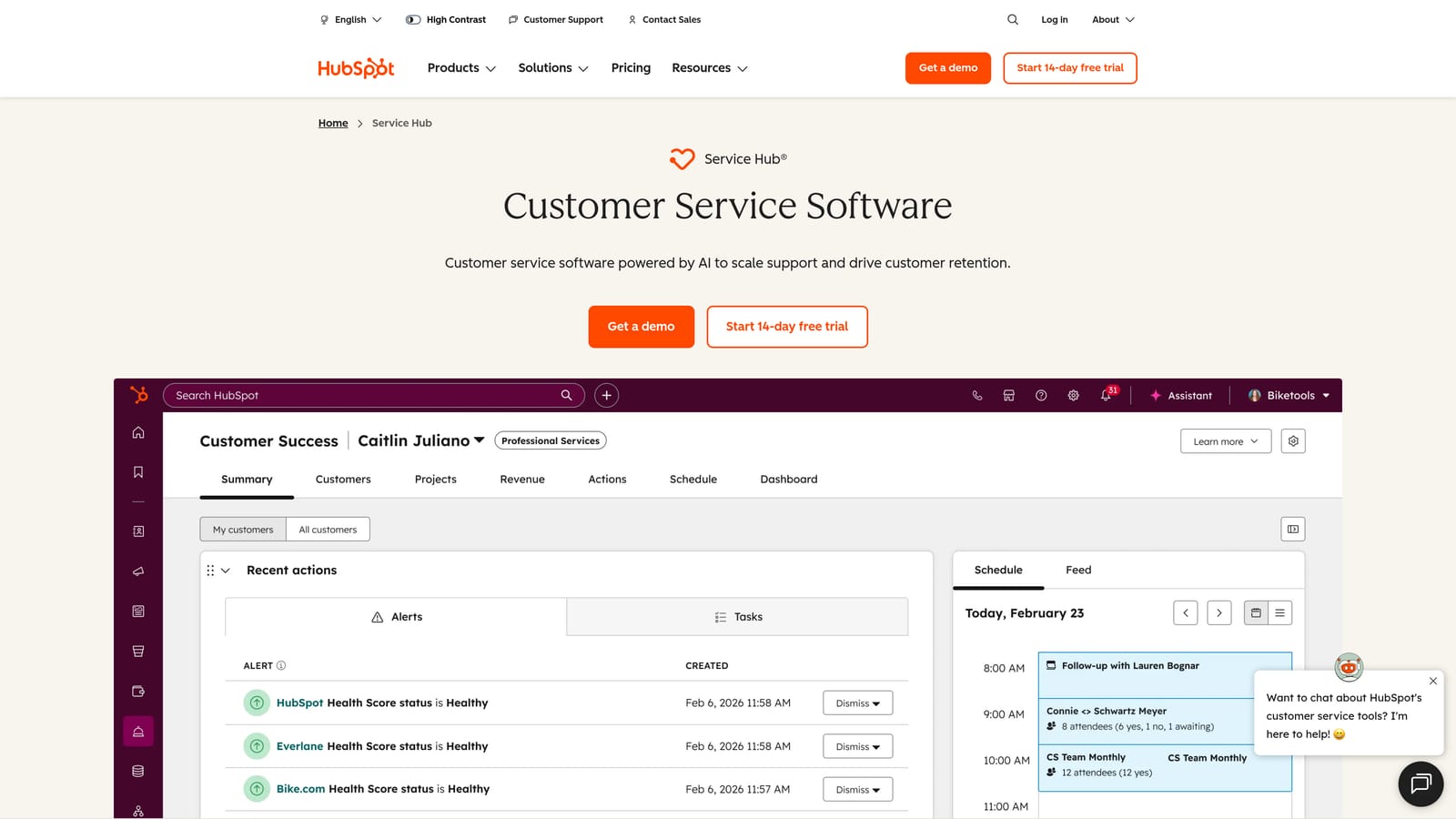
HubSpot Service Hub is HubSpot's customer service product, tightly integrated with its CRM so every support ticket carries full contact, deal, and company history.
Where This Tool Shines
The CRM-native architecture is Service Hub's defining advantage. When a support ticket comes in, agents immediately see the customer's deal stage, recent sales conversations, and full contact timeline. That context changes what "good support" looks like, especially for accounts with active renewals or expansion opportunities.
Automation via HubSpot Workflows is flexible and powerful for teams already familiar with the platform. The ability to trigger support actions based on CRM properties, and to push ticket outcomes back into deal records, creates a feedback loop that most standalone helpdesks can't replicate.
Key Features
Native CRM Integration: Full contact, deal, and company history visible on every ticket without switching tools.
HubSpot Workflows Automation: Ticket routing, follow-up, and escalation automation tied directly to CRM properties.
AI Reply Suggestions: Conversation intelligence and AI-powered reply drafts available on higher-tier plans.
Customer Portal and Knowledge Base: Self-service options for customers to track tickets and find answers independently.
Revenue-Connected Reporting: Support metrics tied directly to pipeline and revenue data in HubSpot's reporting layer.
Best For
Companies running HubSpot as their CRM who want support data to be a first-class citizen in their go-to-market stack. Less compelling as a standalone helpdesk choice if you're not already invested in the HubSpot ecosystem.
Pricing
Starter plan around $15/seat/month. Verify current pricing and tier features at hubspot.com.
6. Zoho Desk
Best for: Teams embedded in the Zoho ecosystem looking for strong AI features at competitive mid-market pricing.
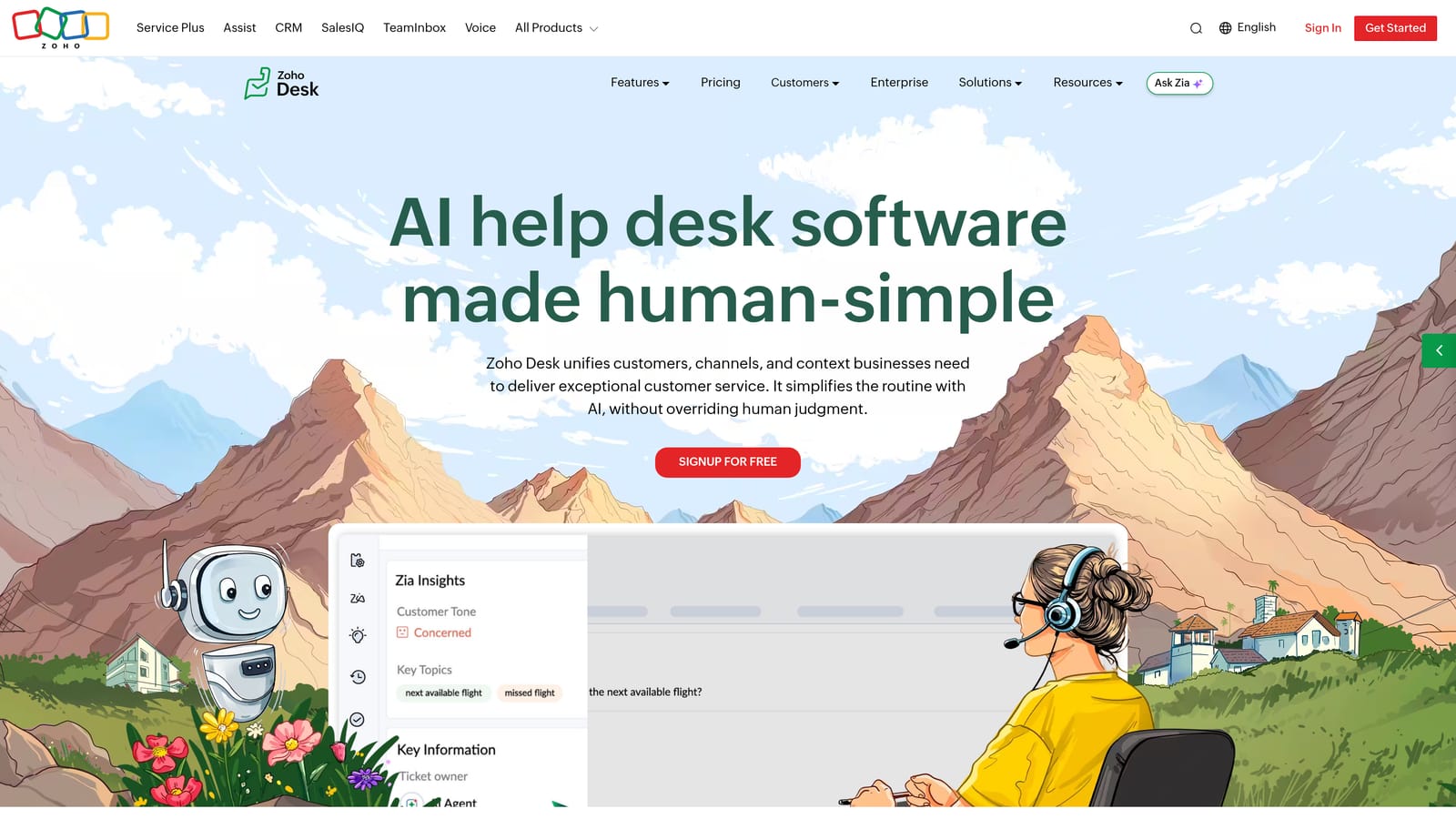
Zoho Desk is a context-aware helpdesk with Zia AI built in, offering strong value for teams that run on Zoho's broader suite of products.
Where This Tool Shines
Zia AI is more capable than it often gets credit for. Sentiment analysis on incoming tickets, anomaly detection for unusual ticket volume spikes, and response suggestions based on ticket content are all included at mid-tier pricing. For teams that would pay significantly more for similar features elsewhere, that's a real advantage.
The Blueprint workflow automation tool deserves a mention: it lets teams build structured, step-by-step ticket handling processes with conditional logic, approvals, and time-based triggers. It's particularly useful for support processes that have compliance or multi-step escalation requirements.
Key Features
Zia AI: Sentiment analysis, ticket volume anomaly detection, and response suggestions built into the core platform.
Zoho CRM Integration: Deep two-way sync with Zoho CRM and the broader Zoho One suite.
Blueprint Workflow Automation: Structured ticket handling with conditional logic, approvals, and time-based triggers.
Contextual Ticket View: CRM data pulled directly into the ticket interface for agent context.
Competitive Pricing: Strong feature set available at mid-tier pricing compared to comparable enterprise tools.
Best For
Organizations running Zoho CRM, Zoho One, or other Zoho products who want a tightly integrated support layer without paying enterprise helpdesk prices.
Pricing
Standard plan around $14/agent/month. Verify current tiers and features at zoho.com/desk.
7. Tidio
Best for: Lean teams and smaller businesses that need fast deployment and AI-powered chat without a lengthy implementation.
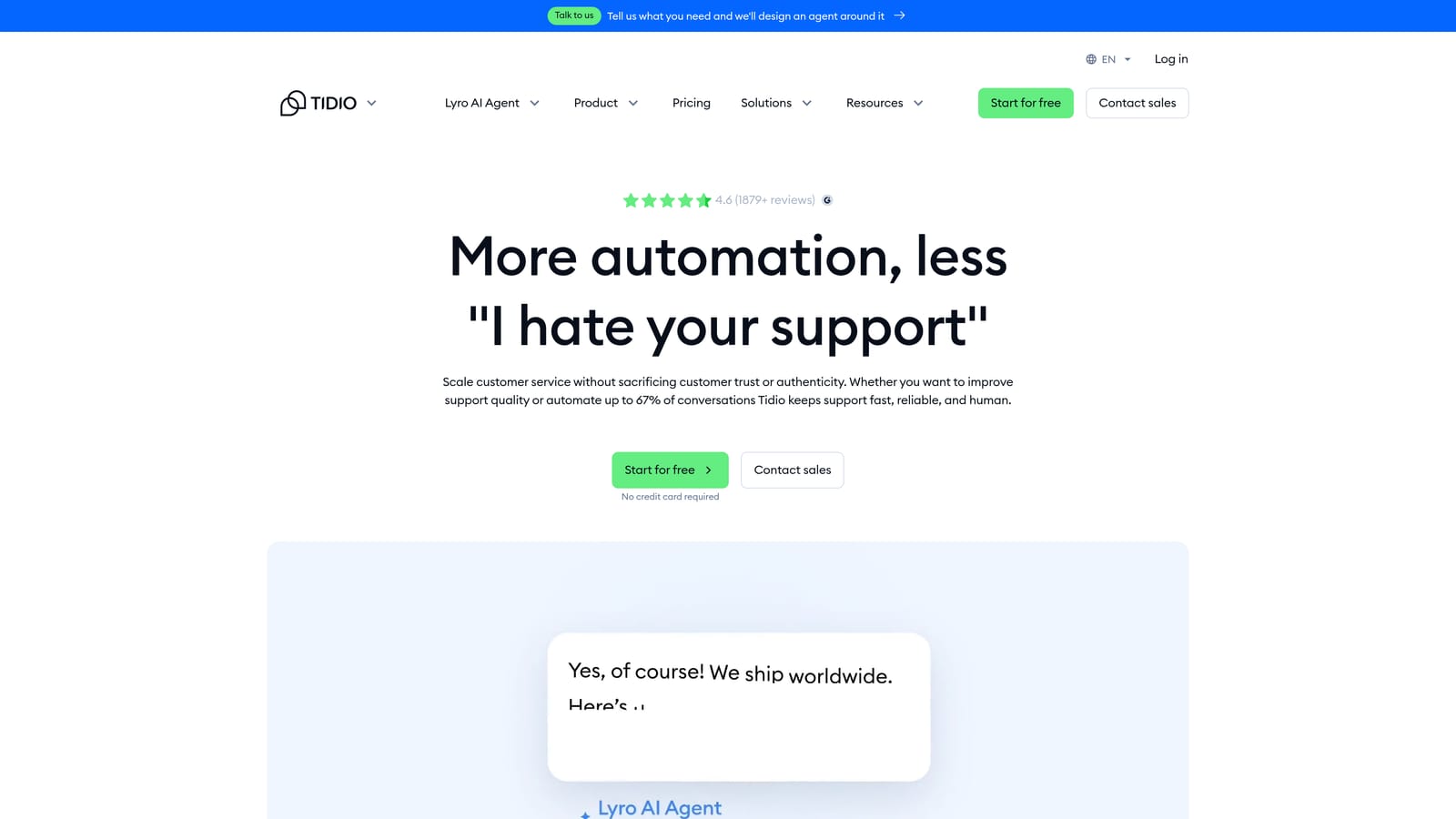
Tidio is a live chat and AI chatbot platform with Lyro AI for automated conversation handling, built for quick deployment by teams that can't afford a months-long rollout.
Where This Tool Shines
Speed to value is Tidio's headline. Most teams can get the live chat widget deployed and Lyro AI handling basic queries within a day. For small businesses or early-stage startups that need immediate automation coverage, that deployment timeline is genuinely differentiated.
The visual chatbot flow builder is accessible enough for non-technical users to build and modify conversation flows without engineering support. Combined with the free tier, it makes Tidio a low-risk entry point for teams exploring automation for the first time.
Key Features
Lyro AI Chatbot: Automated FAQ and support conversation handling with natural language understanding.
Live Chat with Handoff: Smooth escalation from Lyro AI to human agents when conversations exceed automation scope.
Visual Flow Builder: No-code chatbot conversation design for non-technical teams.
E-Commerce Integrations: Native connections to Shopify and WooCommerce for order-aware support.
Fast Deployment: Deployable in hours, with a free tier that removes the barrier to getting started.
Best For
Small businesses, e-commerce brands, and early-stage startups that need immediate chat automation without a complex implementation. Less suited for B2B SaaS teams with complex, multi-step support workflows or enterprise integration requirements.
Pricing
Free tier available. Lyro AI add-on pricing varies by usage. Verify current plans at tidio.com.
8. Help Scout
Best for: Teams that prioritize a clean agent experience and want automation to enhance human support rather than replace it.
Help Scout is a human-centered support platform that uses automation to make agents more productive, built around a clean, email-like interface that agents actually enjoy using.
Where This Tool Shines
Help Scout takes a deliberately different philosophical stance from AI-first platforms: it's designed to make human agents excellent, not to minimize their involvement. The AI Drafts feature generates suggested replies based on conversation context, letting agents respond faster without losing the personal touch.
Collision detection, which prevents two agents from simultaneously responding to the same ticket, is a small feature that solves a surprisingly common problem in shared inbox environments. The overall agent experience is consistently cited as one of the cleanest in the category.
Key Features
AI Drafts: AI-generated reply suggestions based on conversation context, editable by agents before sending.
Workflow Automation: Rule-based automation for routing, tagging, and follow-up actions.
Collision Detection: Prevents duplicate agent responses by showing when another agent is viewing or replying to a ticket.
Shared Inbox with Collaboration: Team-oriented inbox design with internal notes, assignments, and conversation history.
Beacon Widget: In-app self-service and chat widget for proactive support and knowledge base access.
Best For
Support teams where agent experience and team collaboration are top priorities. A strong fit for companies that want thoughtful, human-quality responses at scale rather than maximum automation coverage.
Pricing
Starting around $22/user/month. Verify current plans at helpscout.com.
9. Gorgias
Best for: E-commerce and DTC brands running on Shopify, Magento, or BigCommerce that need order-aware support automation.
Gorgias is a help desk built specifically for e-commerce brands, with deep commerce platform integrations and revenue-per-ticket analytics that tie support directly to business outcomes.
Where This Tool Shines
Gorgias solves a specific problem extremely well: the high volume of repetitive order status, tracking, and return questions that flood e-commerce support queues. Auto-close rules handle these automatically, and macros can pull live order data from Shopify directly into responses without agents having to look anything up.
The revenue-per-ticket metric is a genuinely useful addition for e-commerce teams trying to quantify support's business impact. It connects support interactions to purchase outcomes, giving managers data to make the case for investment in support quality.
Key Features
Deep Commerce Integrations: Native Shopify, Magento, and BigCommerce connections surface order data directly in every ticket.
Auto-Close Rules: Automatically resolve common order status and tracking queries without agent involvement.
Revenue-Per-Ticket Analytics: Tracks the revenue impact of support interactions to measure business contribution.
AI Automation: Handles repetitive e-commerce queries with AI-generated responses tied to live order context.
Dynamic Macros: Response templates that automatically populate with live order data from connected commerce platforms.
Best For
DTC and e-commerce brands where the majority of support volume is order-related. Gorgias dominates this segment. It is not designed for B2B SaaS support workflows and would be a poor fit outside the commerce context.
Pricing
Starter plan around $10/month plus per-ticket pricing as volume scales. Verify current pricing at gorgias.com.
Which Tool Is Right for Your Team
The right choice comes down to your support model, your existing stack, and how much you want automation to do versus assist.
Here's a quick use-case guide to cut through the noise:
AI-first autonomous resolution for B2B SaaS: Halo AI. Built from the ground up for autonomous ticket handling, with page-aware guidance and business intelligence that no other tool on this list provides out of the box.
Enterprise with complex rule-based workflows: Zendesk. The configurability and ecosystem depth are unmatched, especially if you have a dedicated support ops function to manage it.
Budget-conscious SMB scaling beyond email: Freshdesk. Competitive pricing, a solid free tier, and Freddy AI give you a strong foundation without overcommitting.
Conversational in-app support for PLG companies: Intercom. The Fin AI agent and customer data platform integration make it the strongest choice for product-led growth environments.
CRM-connected support feeding into sales and CS: HubSpot Service Hub. The native CRM integration creates a feedback loop between support outcomes and revenue data that standalone helpdesks can't replicate.
Zoho ecosystem teams: Zoho Desk. Zia AI and Blueprint automation at mid-market pricing, with deep Zoho CRM integration already in place.
Fast deployment for lean teams: Tidio. Deployable in hours, with a free tier and Lyro AI for immediate automation coverage.
Agent experience and human-quality responses: Help Scout. The cleanest agent interface in the category, with AI that enhances rather than replaces human judgment.
E-commerce and DTC brands: Gorgias. Order-aware automation, auto-close rules, and revenue-per-ticket analytics built specifically for commerce support.
If you're a B2B SaaS team looking for automation that goes beyond rules and macros, one that learns from every ticket and gives you business intelligence in return, See Halo in action and discover how continuous learning transforms every interaction into smarter, faster support. Your support team shouldn't scale linearly with your customer base. Let AI agents handle routine tickets, guide users through your product, and surface the signals your business actually needs.