9 Best Helpdesk Automation Tools for Enterprises in 2026
Enterprise support teams drowning in ticket volumes need the best helpdesk automation for enterprises to scale efficiently without proportional headcount growth. This comprehensive guide evaluates nine leading automation platforms based on AI capabilities, integration depth, scalability, and total cost of ownership, helping you choose the right solution whether you're modernizing legacy systems or building a support stack from scratch.
 Grant CooperFounder13 min read
Enterprise support teams face a relentless challenge: ticket volumes that grow faster than headcount budgets allow. When you're handling thousands of customer inquiries daily across multiple channels, manual processes create bottlenecks that frustrate customers and burn out agents. Helpdesk automation transforms this equation by intelligently routing tickets, resolving common issues without human intervention, and giving agents the context they need to handle complex cases quickly.
This guide covers top enterprise-grade automation platforms, evaluated on AI capabilities, integration depth, scalability, and total cost of ownership. Whether you're modernizing a legacy helpdesk or building automation into your support stack from scratch, these tools represent the strongest options available today.
1. Halo AI
Best for: Enterprises wanting AI-native support that learns continuously from every interaction
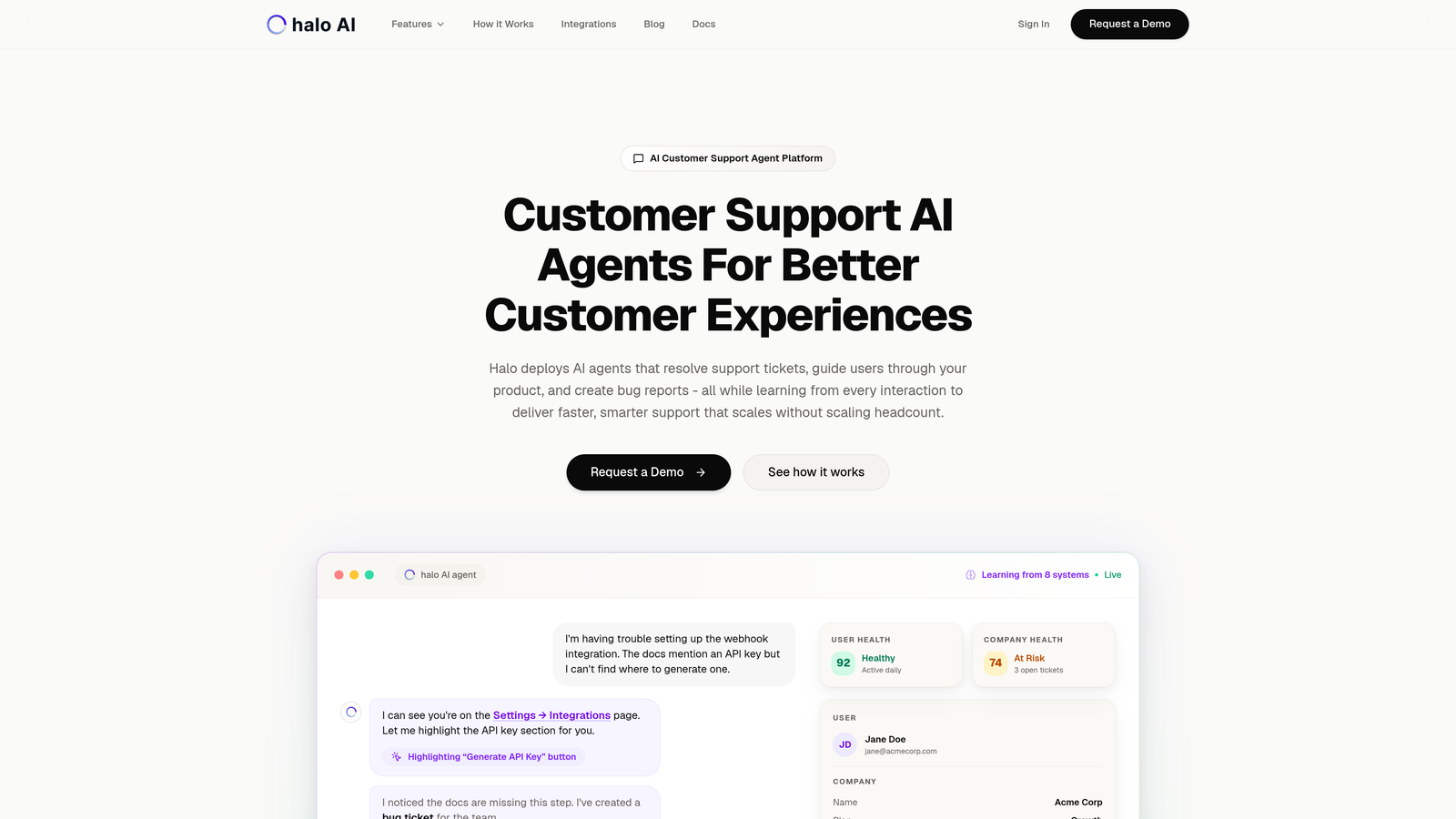
Halo AI is an AI-first customer support platform built around autonomous agents that resolve tickets, guide users through products, and extract business intelligence from support interactions.
Where This Tool Shines
Unlike traditional helpdesks with AI bolted on, Halo was architected from the ground up for intelligent automation. Its agents don't just follow scripts—they understand context from what users see on their screens, learn from every resolution, and improve over time without manual rule updates.
The platform connects to your entire business stack, pulling context from Linear, Slack, HubSpot, Intercom, Stripe, and other tools to resolve issues faster. When agents encounter bugs, Halo automatically creates detailed tickets for your dev team with reproduction steps and relevant context.
Key Features
Autonomous AI Agents: Resolve tickets end-to-end without human intervention, handling routine inquiries that typically consume 60-70% of agent time.
Page-Aware Context: Chat widget sees what users see on their screens, enabling precise guidance through complex workflows without guessing.
Business Intelligence Integration: Surfaces customer health signals, revenue intelligence, and anomaly detection beyond basic support metrics.
Auto Bug Ticket Creation: Automatically generates developer tickets with full context when product issues are detected during support interactions.
Seamless Handoff: Routes complex issues to human agents with complete conversation history and attempted resolution steps.
Best For
B2B companies with product-led growth models where in-app guidance is critical. Particularly strong for teams currently using Zendesk, Freshdesk, or Intercom who want more intelligent automation without migrating their entire stack. The continuous learning architecture makes it ideal for organizations that don't want to maintain complex automation rules manually.
Pricing
Custom enterprise pricing based on ticket volume and feature requirements. The learning-based approach typically reduces per-ticket costs over time as the AI becomes more capable.
2. Zendesk Suite Enterprise
Best for: Large organizations needing comprehensive omnichannel support with extensive integration options
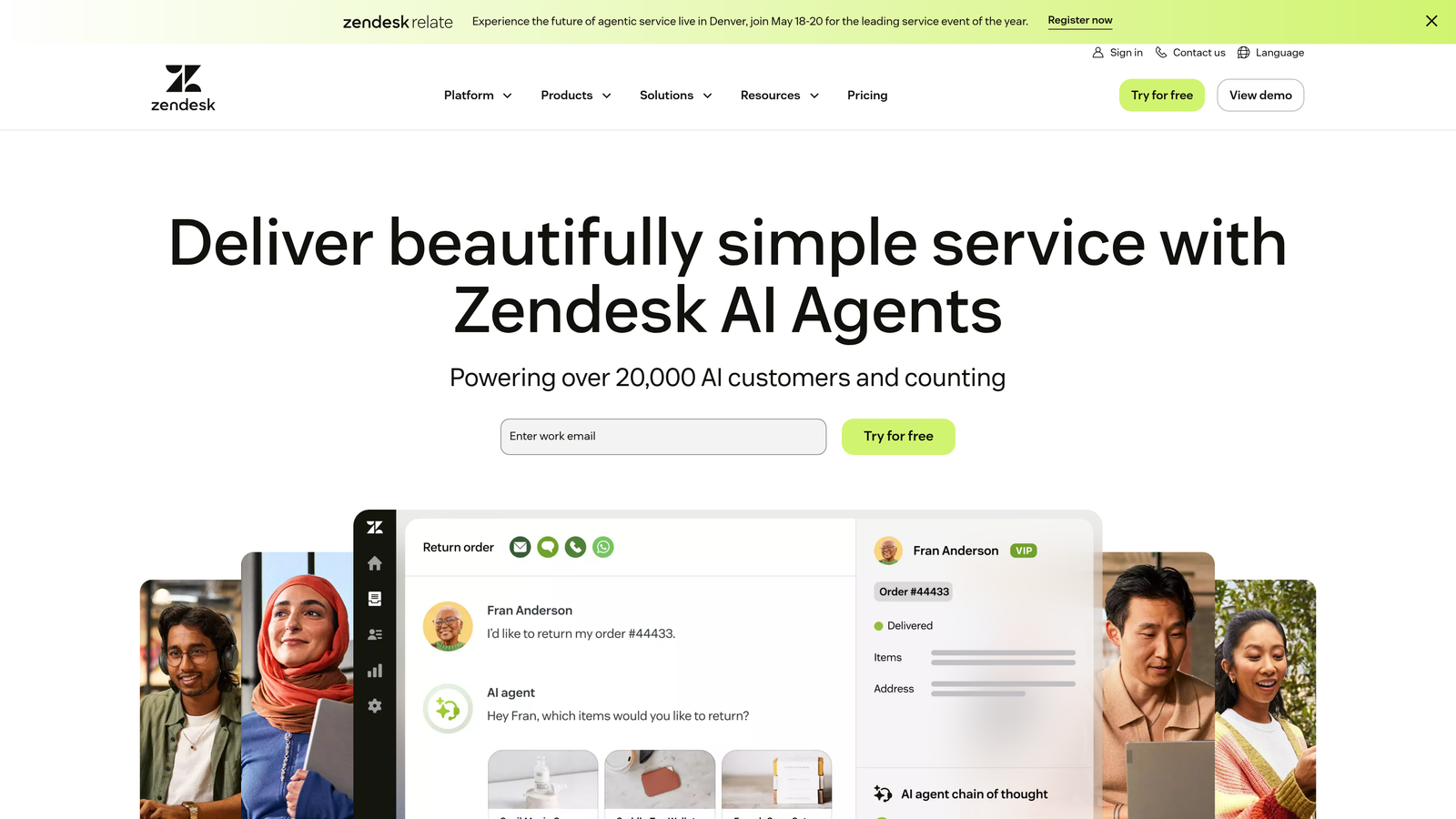
Zendesk Suite Enterprise is a mature helpdesk platform offering advanced AI capabilities, a marketplace with 1,500+ integrations, and enterprise-grade security for high-volume operations.
Where This Tool Shines
Zendesk's strength lies in its ecosystem breadth. The platform handles email, chat, phone, social media, and messaging apps through a unified agent workspace. When you need to connect disparate systems—legacy CRM, e-commerce platforms, custom internal tools—Zendesk's marketplace typically has a pre-built integration.
The advanced AI add-ons provide intelligent triage, sentiment analysis, and agent assistance. While not as autonomous as AI-native platforms, these capabilities reduce manual routing and help agents resolve issues faster with suggested responses and knowledge base articles.
Key Features
Advanced AI Add-Ons: Intelligent triage, intent detection, and agent copilot features that suggest responses and surface relevant knowledge.
Omnichannel Workspace: Unified agent view across all communication channels with conversation threading and customer context.
Marketplace Integrations: Pre-built connections to 1,500+ business tools, from Salesforce and Jira to Shopify and Slack.
Custom Reporting: Advanced analytics with customizable dashboards, SLA tracking, and performance metrics across teams.
Enterprise Security: HIPAA, SOC 2, and FedRAMP compliance options with granular access controls and audit logging.
Best For
Established enterprises with complex tech stacks requiring extensive integrations. Organizations in regulated industries benefit from the compliance certifications. The platform scales well for companies handling tens of thousands of tickets monthly across multiple channels.
Pricing
Suite Enterprise starts at $150 per agent monthly. Advanced AI capabilities require additional licensing, which can significantly increase total cost. Implementation and customization typically require professional services investment.
3. Salesforce Service Cloud
Best for: Enterprises deeply invested in Salesforce ecosystem wanting unified customer data
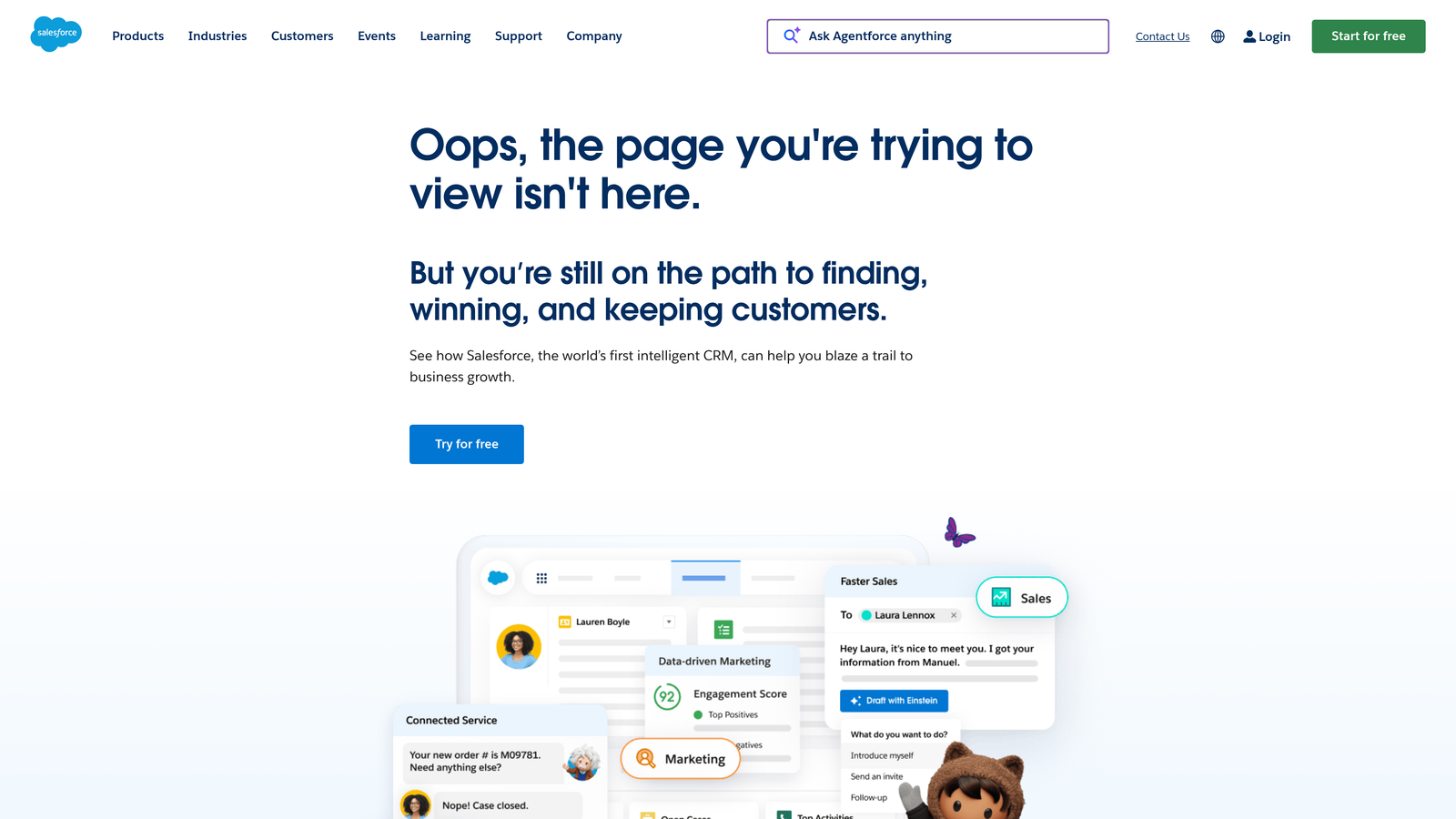
Salesforce Service Cloud is an enterprise service platform that unifies customer support with CRM, sales, and marketing data through Einstein AI capabilities.
Where This Tool Shines
Service Cloud's killer feature is the complete customer view. When an agent opens a case, they see purchase history, marketing interactions, sales conversations, and support tickets in one interface. This context dramatically improves first-contact resolution for complex issues requiring cross-departmental knowledge.
Einstein AI provides case classification, intelligent routing based on agent skills and availability, and next-best-action recommendations. Flow Builder enables no-code automation workflows that span departments—automatically escalating high-value customer issues or triggering sales follow-ups after support interactions.
Key Features
Einstein AI: Automated case classification, smart routing, and predictive recommendations for faster resolution.
Unified Customer Record: Complete view of customer interactions across sales, marketing, service, and commerce teams.
Omni-Channel Routing: Skills-based assignment that considers agent expertise, capacity, and real-time availability.
Field Service Management: Dispatch and mobile capabilities for organizations providing on-site support.
Flow Builder: Visual workflow automation connecting service processes to other business operations.
Best For
Organizations already using Salesforce CRM or planning enterprise-wide Salesforce adoption. The value proposition increases significantly when support needs to access sales data, marketing campaign history, or commerce transactions. Less compelling for companies using competing CRM platforms.
Pricing
Enterprise edition starts at $165 per user monthly. Einstein features require additional licensing. Total cost of ownership includes Salesforce CRM licensing if not already deployed, plus implementation services for complex configurations.
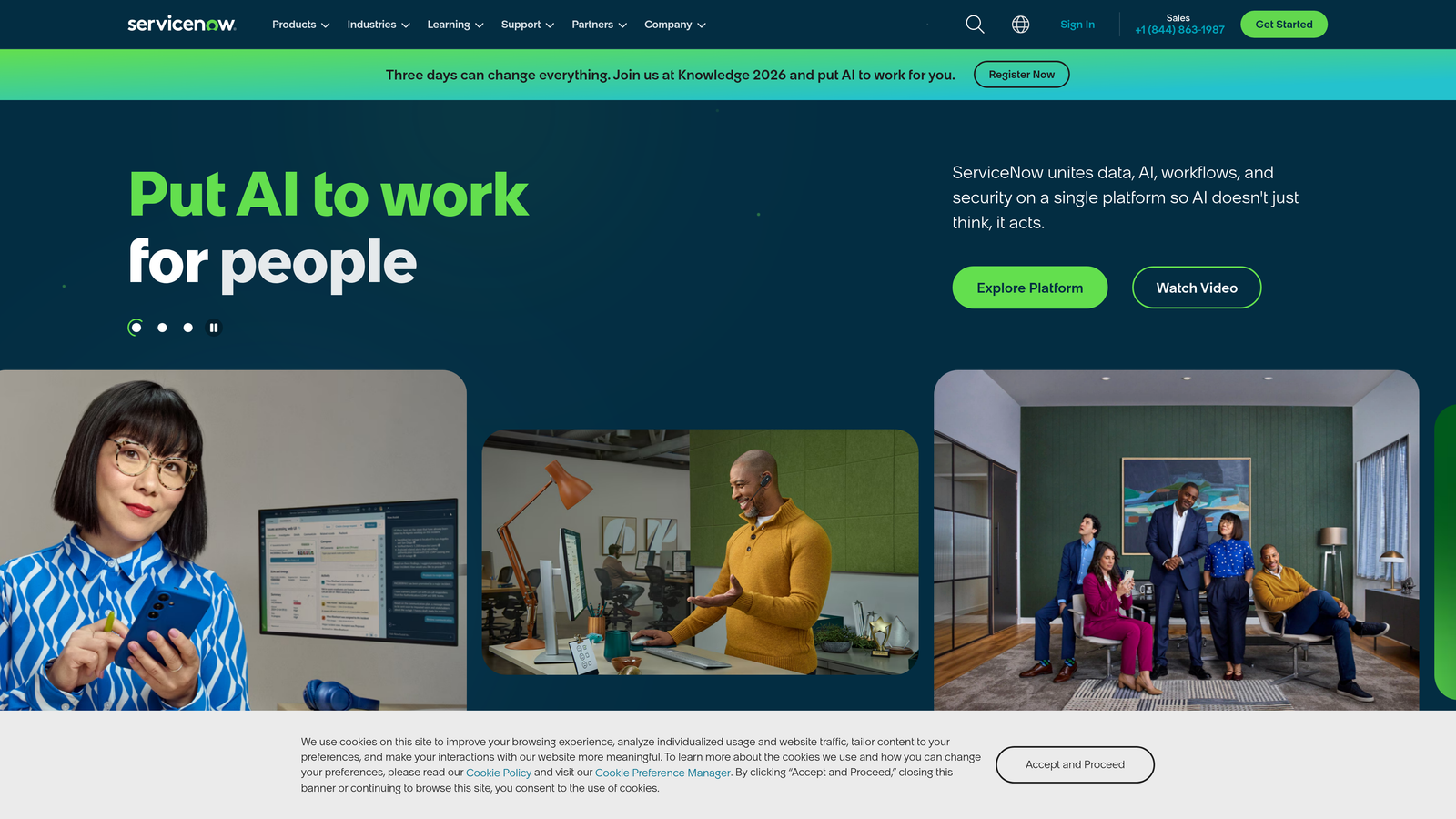
4. ServiceNow Customer Service Management
Best for: IT-centric organizations connecting customer support with back-office operations
ServiceNow Customer Service Management extends the company's IT service management platform to customer-facing support with workflow automation bridging front and back offices.
Where This Tool Shines
ServiceNow excels at connecting customer support to internal operations. When a customer issue requires backend system changes, infrastructure updates, or cross-department coordination, ServiceNow's workflow engine orchestrates the entire process. This makes it particularly powerful for B2B enterprises where customer issues often require IT, operations, or engineering involvement.
The platform's proactive case management detects potential issues before customers report them—monitoring system health, transaction failures, or service degradation and automatically opening cases with relevant technical context. This shifts support from reactive to preventive.
Key Features
Unified IT and Customer Service: Single platform connecting customer-facing support with internal IT operations and infrastructure.
Proactive Case Management: Automated issue detection and case creation based on system monitoring and anomaly detection.
Virtual Agent: Natural language chatbot handling routine inquiries and guiding users through self-service options.
Workflow Automation: Complex multi-department workflows extending beyond support into operations, finance, and IT.
Governance and Compliance: Strong audit trails, change management, and compliance capabilities for regulated industries.
Best For
Enterprises where customer support requires frequent coordination with IT operations, infrastructure teams, or engineering. Organizations already using ServiceNow for IT service management gain significant value from extending to customer service. The platform's complexity makes it less suitable for straightforward support operations.
Pricing
Custom enterprise pricing with typically higher investment than pure helpdesk platforms. Implementation requires significant ServiceNow expertise. Best ROI comes from organizations deploying ServiceNow across multiple operational areas beyond customer support.
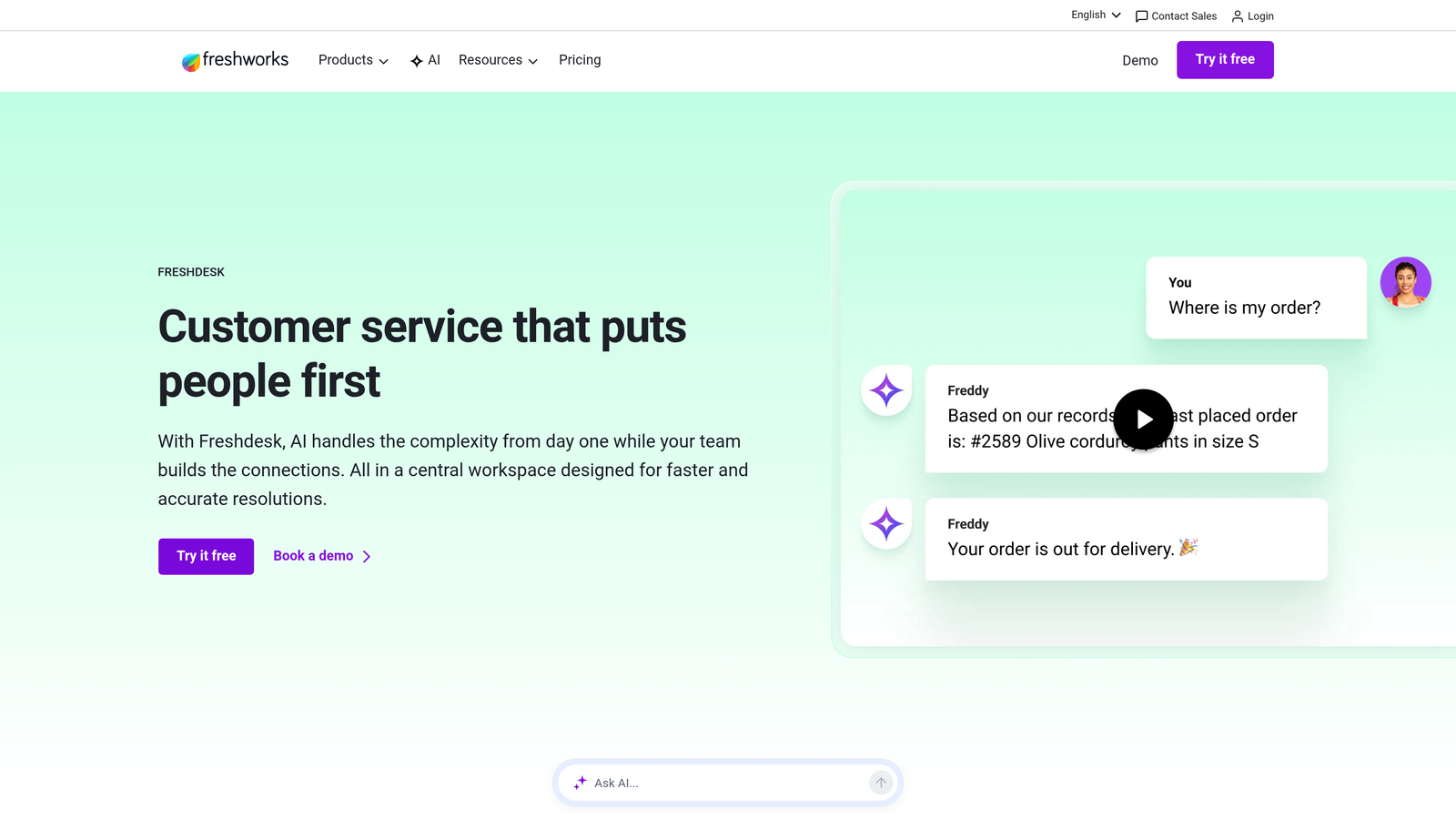
5. Freshdesk Enterprise
Best for: Growing enterprises wanting powerful automation without complexity or premium pricing
Freshdesk Enterprise is a user-friendly helpdesk platform offering Freddy AI capabilities, scenario automations, and extensive integrations at competitive enterprise price points.
Where This Tool Shines
Freshdesk balances enterprise features with intuitive design that requires minimal training. New agents become productive quickly without extensive onboarding. The scenario automation engine handles complex multi-step workflows—automatically escalating VIP customer tickets, routing based on product expertise, or triggering follow-ups after specific time periods.
Freddy AI provides auto-triage, suggested responses based on similar resolved tickets, and chatbot resolution for common inquiries. While not as autonomous as AI-native platforms, Freddy reduces manual work without requiring data science expertise to configure.
Key Features
Freddy AI: Automated ticket classification, intelligent response suggestions, and chatbot for self-service resolution.
Intuitive Interface: Clean agent workspace requiring minimal training with customizable views and quick actions.
Scenario Automations: Visual workflow builder for complex multi-step processes with conditional logic and time-based triggers.
Collaboration Tools: Team huddles, shared ticket ownership, and internal notes for complex cases requiring multiple agents.
Marketplace Integrations: 1,000+ pre-built apps connecting to CRM, e-commerce, project management, and communication tools.
Best For
Mid-market companies scaling to enterprise volumes who want powerful features without the complexity or cost of platforms like Salesforce or ServiceNow. Organizations prioritizing agent experience and quick deployment over deep customization. The pricing makes it attractive for teams with 50-200 agents.
Pricing
Enterprise plan at $79 per agent monthly. Freddy AI Copilot available as add-on for additional cost. Significantly lower total cost of ownership than major competitors while maintaining enterprise feature parity for most use cases.
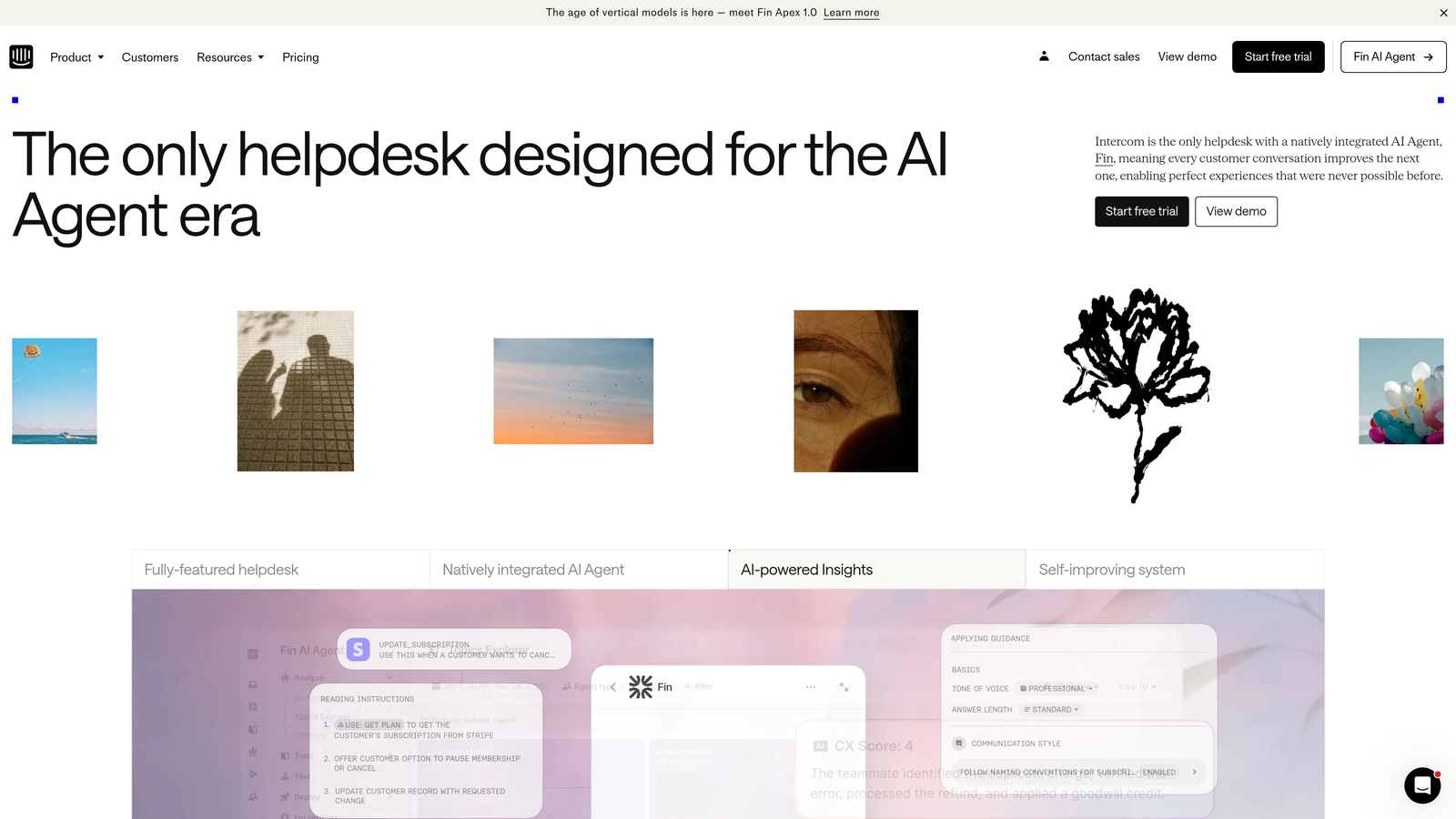
6. Intercom
Best for: Product-led companies needing in-app messaging and proactive customer engagement
Intercom is a conversational support platform featuring Fin AI agent, designed for businesses where support happens inside the product rather than through traditional ticketing.
Where This Tool Shines
Intercom's in-app messenger enables contextual support where users already are—inside your product. Rather than forcing customers to email support or open tickets, they ask questions directly in the interface. The messenger sees what page users are on, providing context that improves resolution speed.
Fin AI agent trains on your help documentation, product guides, and past conversations to resolve inquiries autonomously. Unlike rule-based chatbots, Fin understands natural language and handles variations in how customers phrase questions. Product tours and tooltips enable proactive guidance, reducing support volume by helping users discover features before they get stuck.
Key Features
Fin AI Agent: Autonomous resolution trained on your knowledge base with natural language understanding and continuous learning.
In-App Messenger: Contextual support widget embedded in your product with page-aware routing and targeting.
Product Tours: Proactive guidance through tooltips, modals, and multi-step tours reducing support inquiries.
Custom Bots: Visual bot builder for automated workflows handling qualification, routing, and information gathering.
Resolution Reports: Detailed analytics measuring AI and human agent performance with conversation intelligence.
Best For
SaaS companies with complex products where contextual in-app support improves user experience. Organizations with strong self-service content that AI can leverage for autonomous resolution. Less suitable for enterprises needing traditional omnichannel support across phone, email, and social media.
Pricing
Enterprise plans with custom pricing. Fin AI charged per resolution, creating variable costs that scale with usage. Implementation requires embedding the messenger in your product and training Fin on your content.
7. Kustomer
Best for: High-volume retail and e-commerce enterprises needing timeline-based customer views
Kustomer is a customer service CRM built specifically for high-volume environments, featuring timeline views showing complete customer journeys and automation designed for e-commerce operations.
Where This Tool Shines
Kustomer's timeline interface displays every customer interaction chronologically—purchases, support conversations, website visits, email opens—in a single view. This eliminates the tab-switching and system-hopping that slows agents down when investigating complex issues requiring historical context.
The platform's e-commerce focus shows in native integrations with Shopify, Magento, and other retail platforms. Agents see order status, shipping information, and purchase history inline, enabling them to process returns, update orders, or resolve billing issues without leaving the conversation. KIQ AI detects customer intent and automates responses for common e-commerce inquiries.
Key Features
Timeline View: Chronological display of all customer touchpoints across purchases, support, and engagement.
KIQ AI: Intent detection and automated responses for routine inquiries with continuous learning.
Business Rules Engine: Complex routing and automation logic handling high-volume scenarios with conditional workflows.
E-Commerce Integrations: Native connections to Shopify, Magento, and retail platforms with inline order management.
Sentiment Analysis: Real-time conversation intelligence identifying frustrated customers for priority handling.
Best For
E-commerce and retail enterprises handling thousands of customer conversations daily. Organizations where agents need complete purchase history and order context to resolve issues. The timeline interface particularly benefits businesses with long customer lifecycles and repeat purchases.
Pricing
Enterprise plan at $89 per user monthly. AI capabilities included in Ultimate tier at $139 per user monthly. Mid-range pricing compared to enterprise alternatives with strong value for e-commerce-focused features.
8. HubSpot Service Hub Enterprise
Best for: Organizations wanting unified customer data across marketing, sales, and service
HubSpot Service Hub Enterprise is a service platform deeply integrated with HubSpot's CRM, marketing, and sales tools, enabling unified customer experiences across all departments.
Where This Tool Shines
Service Hub's power comes from the unified HubSpot CRM. Marketing sees which customers opened support tickets before buying. Sales knows about product issues affecting deals. Service understands the marketing campaigns and sales conversations that set customer expectations. This cross-functional visibility improves coordination and prevents disconnected customer experiences.
Playbooks guide agents through consistent processes for handling specific scenarios—refund requests, technical escalations, or VIP customer issues. The customer portal enables self-service ticket management, reducing agent workload while giving customers visibility into resolution progress. Conversation intelligence with call recording provides coaching opportunities and quality assurance.
Key Features
Unified Customer Record: Single view of customer interactions across marketing campaigns, sales deals, and service tickets.
Playbooks: Guided workflows ensuring consistent agent responses for specific scenarios with best practices built in.
Customer Portal: Self-service interface where customers manage tickets, access knowledge base, and track resolution status.
Conversation Intelligence: Call recording, transcription, and analysis for coaching and quality assurance.
Feedback Collection: Custom surveys and NPS tracking tied directly to service interactions and customer records.
Best For
Companies already using HubSpot for marketing and sales who want to extend the platform to service. Organizations prioritizing unified customer data over best-of-breed helpdesk features. The value proposition depends heavily on HubSpot adoption across departments.
Pricing
Service Hub Enterprise at $150 per seat monthly with minimum seat requirements. Additional costs for Marketing Hub and Sales Hub if not already deployed. Total investment increases significantly for full HubSpot platform adoption.
9. Zoho Desk Enterprise
Best for: Budget-conscious enterprises wanting extensive features without premium pricing
Zoho Desk Enterprise is a feature-rich helpdesk offering Zia AI assistant, multi-department management, and deep integration with Zoho's 45+ business applications at price points significantly below major competitors.
Where This Tool Shines
Zoho Desk delivers enterprise features at small business pricing. Zia AI provides sentiment analysis, anomaly detection when ticket patterns change, and response suggestions based on similar resolved cases. Blueprint enforces process compliance, ensuring agents follow required steps for specific ticket types—critical for organizations with regulatory requirements or quality standards.
The platform handles multi-department operations with separate workflows, SLAs, and agent teams. Organizations using other Zoho applications gain significant value from native integrations—CRM for customer context, Projects for development tickets, Analytics for custom reporting, and 40+ other tools in the ecosystem.
Key Features
Zia AI: Sentiment analysis, anomaly detection, response suggestions, and predictive ticket assignment.
Blueprint: Process enforcement ensuring agents follow required steps with mandatory fields and approval workflows.
Multi-Department Management: Separate workflows, SLAs, and teams with department-specific customization.
Zoho Integration: Native connections to 45+ Zoho business applications from CRM to accounting.
Extensive Customization: Custom modules, fields, functions, and layouts adapting the platform to specific business processes.
Best For
Cost-conscious enterprises needing full helpdesk capabilities without premium pricing. Organizations already using Zoho applications gain additional value from ecosystem integration. The customization depth appeals to businesses with unique processes requiring platform adaptation.
Pricing
Enterprise plan at $40 per user monthly—significantly lower than competitors while maintaining feature parity. The cost advantage becomes substantial for larger teams. Implementation and customization typically require less investment than major platforms.
Making the Right Choice
The enterprise helpdesk automation landscape divides into distinct categories, each serving different organizational needs. Legacy helpdesks like Zendesk and Freshdesk have added AI capabilities to mature platforms with extensive integration ecosystems. CRM-integrated options like Salesforce Service Cloud and HubSpot Service Hub excel when unified customer data across departments drives value. ServiceNow bridges customer support with IT operations for organizations where these functions overlap significantly.
AI-native platforms like Halo represent a newer approach—built from the ground up for intelligent automation rather than retrofitting AI onto traditional helpdesks. This architectural difference matters when evaluating how much manual rule maintenance you're willing to accept versus systems that learn continuously from interactions.
Consider your integration requirements carefully. If you're deeply invested in a specific ecosystem—Salesforce, HubSpot, or Zoho—the native platform often provides better value than best-of-breed alternatives requiring custom integrations. For organizations with diverse tech stacks, platforms with extensive marketplaces like Zendesk or flexible APIs become more important.
Pricing models vary significantly. Per-agent pricing works predictably for stable team sizes but becomes expensive as you scale. Per-resolution pricing for AI features creates variable costs that decrease as automation handles more volume. Factor in implementation costs, which range from minimal for platforms like Freshdesk to substantial for ServiceNow deployments requiring specialized expertise.
Your support team shouldn't scale linearly with your customer base. Let AI agents handle routine tickets, guide users through your product, and surface business intelligence while your team focuses on complex issues that need a human touch. See Halo in action and discover how continuous learning transforms every interaction into smarter, faster support.