9 Best Helpdesk Automation Platforms to Transform Your Support in 2026
Discover the best helpdesk automation platforms that eliminate repetitive support tasks and free your team from ticket overload. This comprehensive evaluation compares the top 9 solutions for 2026 based on AI capabilities, integration options, and real-world performance—helping you choose the right platform to transform password resets, common inquiries, and routine requests into automated workflows while your agents focus on complex customer problems.
 Grant CooperFounder12 min read
Your support team is drowning in tickets. Every morning brings a fresh wave of password resets, shipping inquiries, and feature questions that feel like déjà vu. Meanwhile, your most skilled agents spend hours on repetitive tasks instead of solving the complex problems that actually need human expertise.
Helpdesk automation platforms promise to change this equation—routing tickets intelligently, resolving common issues automatically, and freeing your team to focus on work that matters. But with dozens of options claiming AI superpowers, choosing the right platform feels overwhelming.
We evaluated the leading helpdesk automation solutions based on AI capabilities, integration depth, ease of implementation, and real-world performance. Here are the top platforms worth your attention in 2026.
1. Halo AI
Best for: B2B SaaS companies seeking AI-native support that learns continuously and integrates deeply with business tools
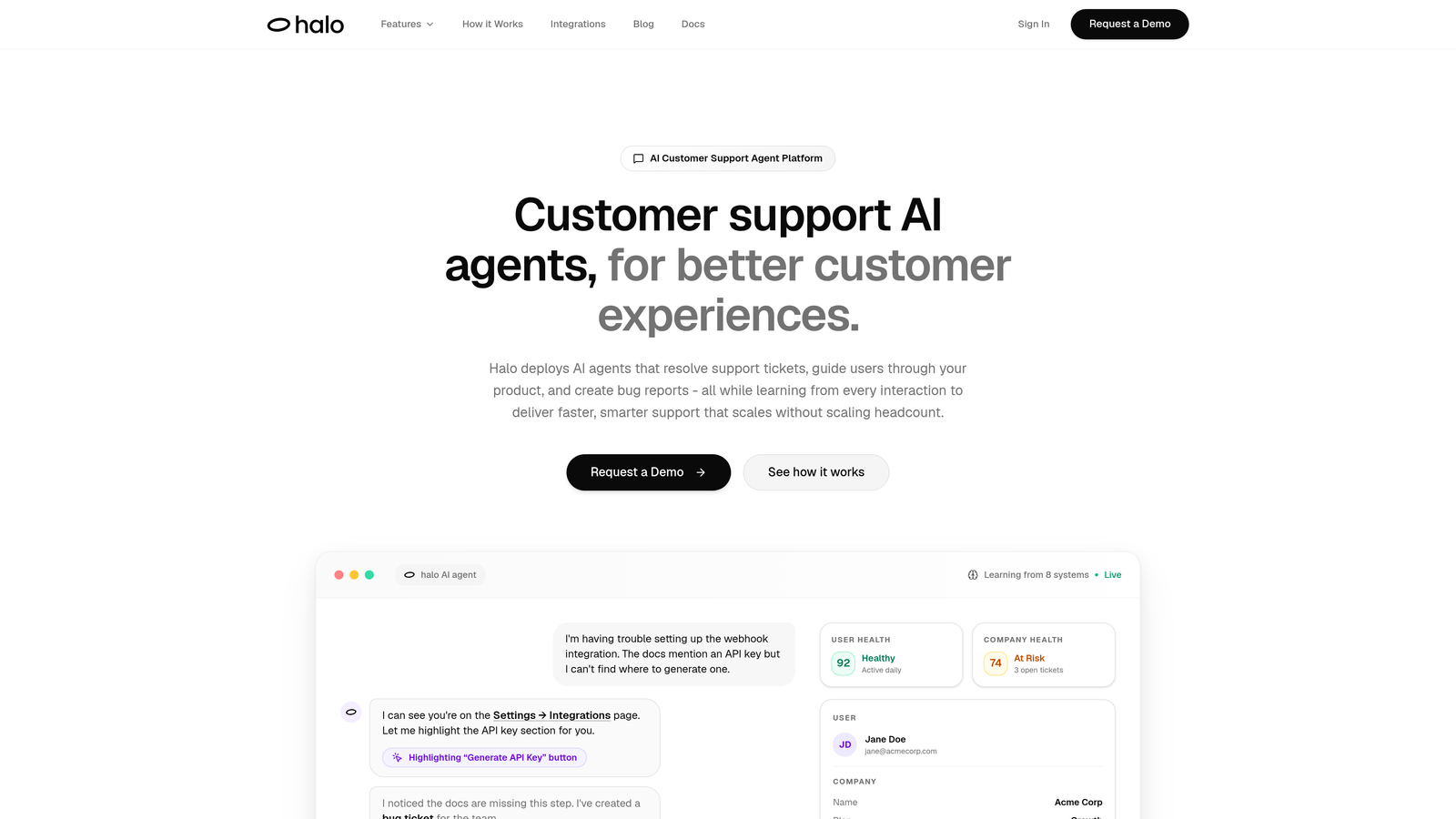
Halo AI represents a fundamentally different approach to helpdesk automation—it's built AI-first rather than bolting intelligence onto traditional ticketing systems.
Where This Tool Shines
The platform deploys autonomous AI agents that don't just suggest responses—they actually resolve tickets while learning from every interaction. This continuous learning architecture means your support gets smarter over time without manual training.
What sets Halo apart is its page-aware context. The chat widget sees what users see in your product, enabling visual UI guidance that traditional helpdesks can't match. When a customer struggles with a feature, the AI can walk them through the exact steps while viewing their screen context.
Key Features
Autonomous AI Agents: Resolve support tickets independently while escalating complex issues to human agents when needed.
Page-Aware Chat Widget: Provides visual UI guidance by understanding what users see in your application interface.
Business Intelligence Analytics: Surfaces customer health signals, revenue intelligence, and anomaly detection beyond basic support metrics.
Auto Bug Ticket Creation: Automatically creates Linear tickets when product issues are identified during support interactions.
Multi-System Integration: Connects to Linear, Slack, HubSpot, Intercom, Stripe, Zoom, PandaDoc, and Fathom for unified business context.
Best For
B2B product teams who need support that scales without scaling headcount. Particularly valuable for companies with complex products where context matters—when understanding user workflows and technical details makes the difference between generic responses and actual problem-solving.
Pricing
Contact for pricing. The platform targets mid-market to enterprise B2B companies prioritizing intelligence over simple ticket deflection.
2. Zendesk
Best for: Large enterprises requiring comprehensive multi-channel support with extensive customization options
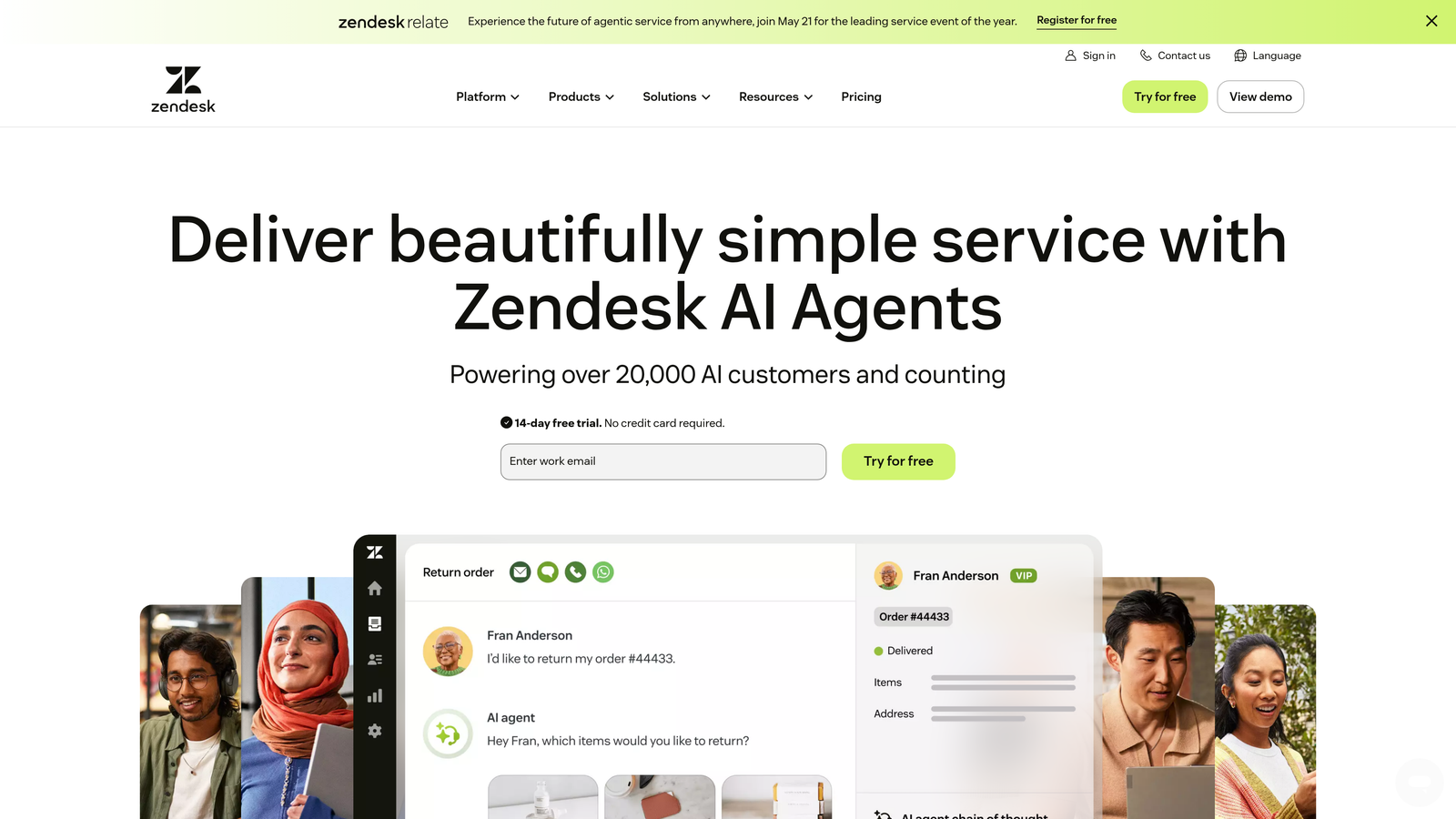
Zendesk has become synonymous with helpdesk software for good reason—it's the Swiss Army knife of customer support platforms.
Where This Tool Shines
Zendesk's strength lies in its maturity and breadth. The platform handles everything from email and chat to social media and phone support in a unified interface. This becomes invaluable when your team manages thousands of conversations across multiple channels.
The app marketplace offers over 1,200 integrations, meaning whatever tools your business uses, Zendesk likely connects to them. This extensibility makes it the go-to choice for complex enterprise environments with diverse tech stacks.
Key Features
Answer Bot: AI-powered automated responses that suggest help articles and resolve simple queries without agent intervention.
Intelligent Ticket Routing: Automatically assigns tickets to the right team based on content, priority, language, and agent expertise.
Extensive App Marketplace: Over 1,200 integrations covering CRM, e-commerce, project management, and specialized industry tools.
Multi-Channel Management: Unified interface for email, chat, phone, social media, and messaging apps.
Advanced Analytics: Comprehensive reporting on team performance, customer satisfaction, SLA compliance, and operational metrics.
Best For
Enterprise organizations with high ticket volumes across multiple channels. Companies that need deep customization and have the technical resources to configure complex workflows will extract the most value.
Pricing
Starts at $55 per agent per month for Suite Team. Enterprise plans with advanced features reach significantly higher price points, making this a premium option.
3. Freshdesk
Best for: Growing teams seeking powerful automation without enterprise complexity or pricing
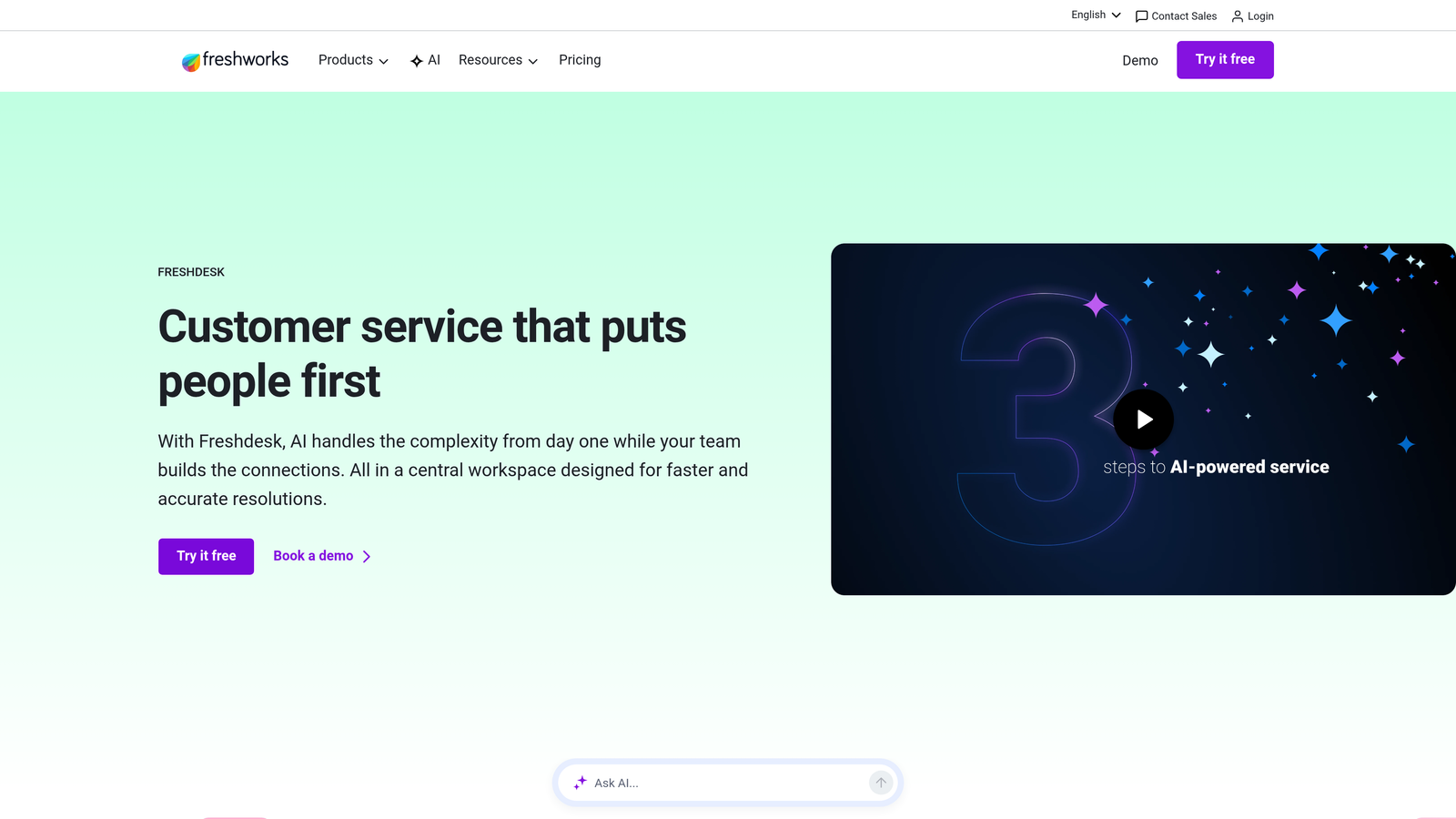
Freshdesk delivers enterprise-grade features at mid-market prices, making sophisticated automation accessible to teams that aren't Fortune 500.
Where This Tool Shines
Freddy AI, Freshdesk's intelligent assistant, punches above its weight class. It analyzes ticket content to suggest relevant knowledge base articles and even draft responses, accelerating agent workflows without requiring extensive setup.
The scenario automation builder lets you create complex workflows visually—no coding required. When a ticket meets certain conditions, Freshdesk can automatically assign it, set priorities, send notifications, and trigger actions across multiple systems.
Key Features
Freddy AI Assistant: Suggests relevant articles, drafts responses, and predicts ticket fields based on content analysis.
Scenario Automations: Visual workflow builder for creating complex multi-step automations triggered by ticket conditions.
Canned Responses: Template library with dynamic placeholders for personalizing frequent responses at scale.
SLA Management: Automated escalations and notifications to prevent missed deadlines and maintain service standards.
Team Collaboration: Internal notes, ticket ownership, and collision detection to prevent duplicate work.
Best For
Mid-sized companies that have outgrown basic helpdesks but aren't ready for enterprise complexity. The free tier makes it excellent for startups testing support workflows before committing budget.
Pricing
Free tier available for up to 10 agents with basic features. Pro plan starts at $49 per agent per month, offering strong value for the feature set.
4. Intercom
Best for: Product-led companies prioritizing proactive engagement and in-app messaging over reactive ticket management
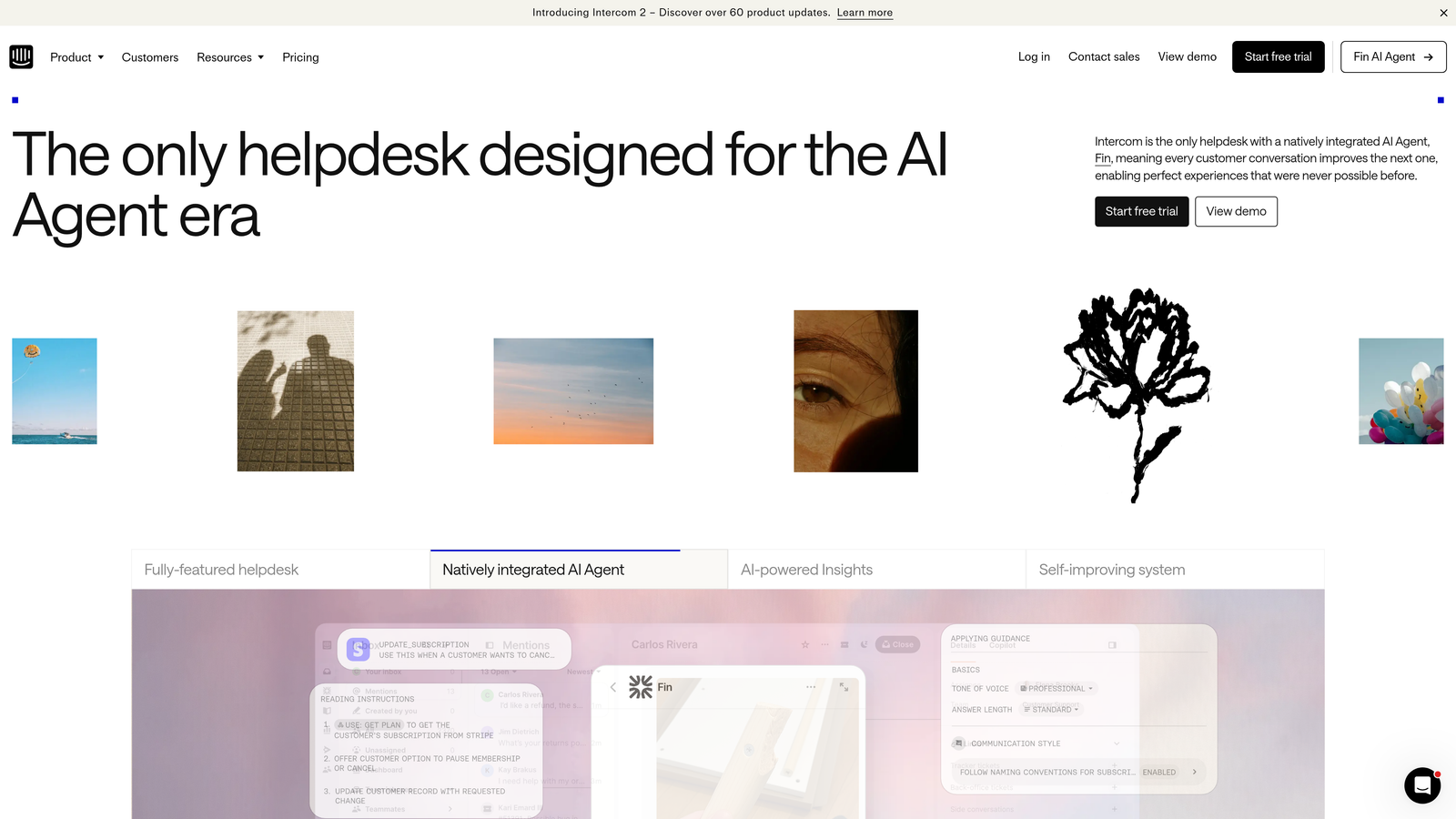
Intercom reimagines support as conversation rather than ticket resolution, with Fin AI handling autonomous interactions while keeping context.
Where This Tool Shines
Fin AI represents Intercom's bet on autonomous support. Unlike chatbots that follow rigid scripts, Fin understands natural language and resolves issues independently by pulling from your knowledge base and product data.
The platform excels at proactive messaging—reaching out to users at critical moments in their journey. You can trigger messages based on behavior, send product tours to new users, or notify customers about relevant features they haven't discovered.
Key Features
Fin AI Agent: Autonomous AI that resolves customer questions by understanding intent and accessing your knowledge base without human intervention.
Proactive Messaging: Behavior-triggered messages and product tours that engage users before they need to ask for help.
Custom Bots: Build conversational workflows that qualify leads, collect information, or guide users through processes.
In-App Messaging: Native chat widget that feels like part of your product rather than a separate support channel.
Customer Data Platform: Unified customer profiles combining support history, product usage, and company information.
Best For
SaaS companies with strong product-led growth strategies. Teams that view support as part of the user experience rather than a separate cost center will appreciate the proactive engagement capabilities.
Pricing
Starts at $39 per seat per month for basic features. Fin AI is priced per resolution, which can add significant costs but aligns pricing with value delivered.
5. HubSpot Service Hub
Best for: Companies already using HubSpot CRM who want unified customer data across marketing, sales, and support
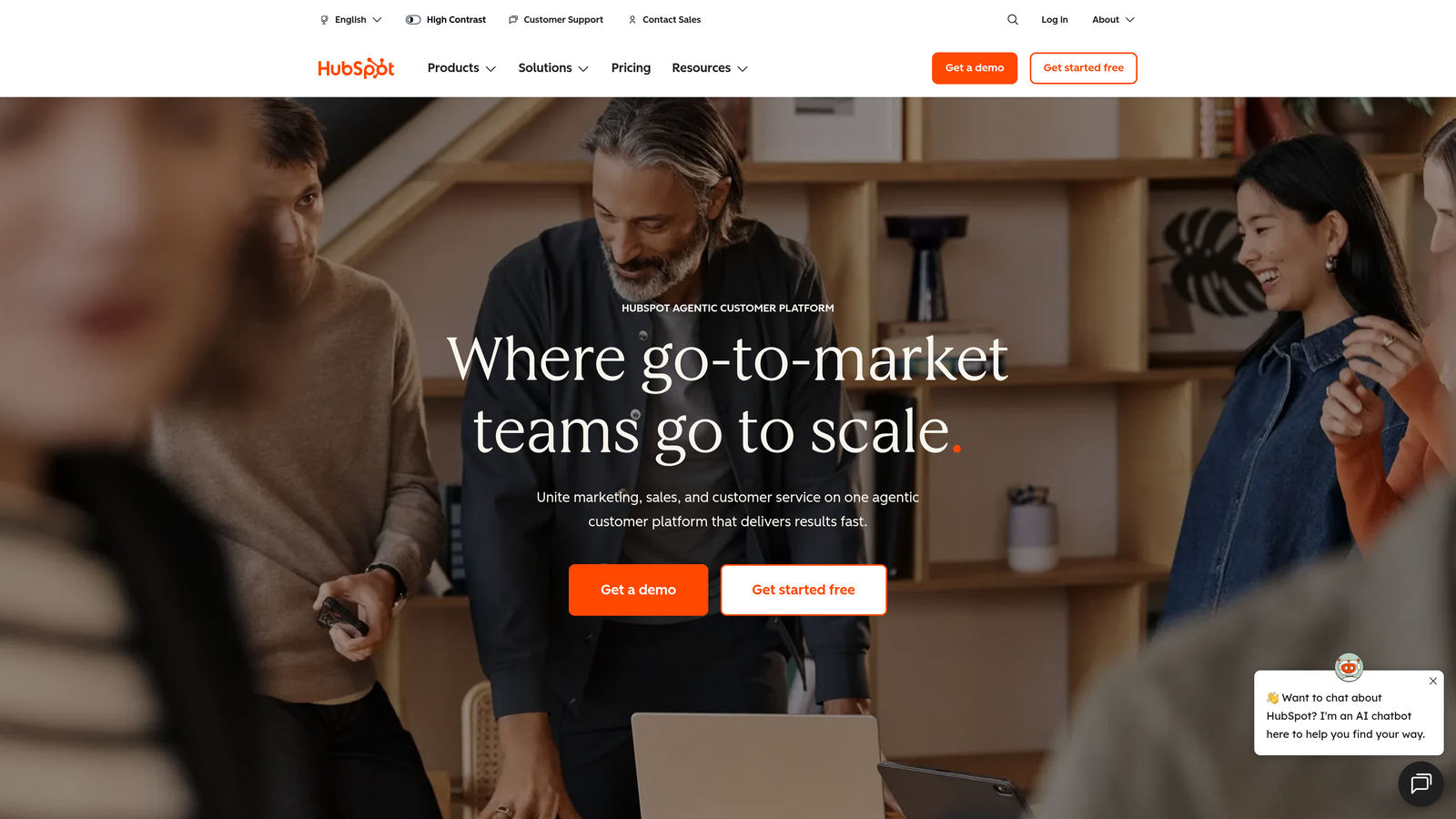
HubSpot Service Hub brings the company's famous ease-of-use to customer support while leveraging the broader HubSpot ecosystem.
Where This Tool Shines
The unified customer timeline is Service Hub's killer feature. When a support agent opens a ticket, they see the complete customer journey—every marketing email, sales conversation, previous support interaction, and product usage event in chronological order.
This context transforms support from reactive problem-solving to relationship management. Agents understand whether they're talking to a brand new trial user or a longtime customer considering expansion, adjusting their approach accordingly.
Key Features
Unified Customer Timeline: Complete interaction history across marketing, sales, and support teams in a single chronological view.
Ticket Automation: Workflow builder for routing, prioritizing, and managing tickets based on customer properties and ticket attributes.
Knowledge Base: Self-service portal with AI-powered search that learns from user behavior to surface relevant articles.
Customer Feedback: NPS, CSAT, and custom surveys that automatically trigger based on support interactions or customer journey stages.
Native CRM Integration: Seamless connection to HubSpot CRM without third-party integrations or data syncing issues.
Best For
Companies committed to the HubSpot ecosystem who value unified customer data over best-of-breed specialized tools. The platform makes most sense when you're using multiple HubSpot hubs together.
Pricing
Free tools available with basic ticketing. Professional tier starts at $90 per month for two users, with per-seat costs decreasing as you add team members.
6. Zoho Desk
Best for: Cost-conscious teams using Zoho products who need solid automation without premium pricing
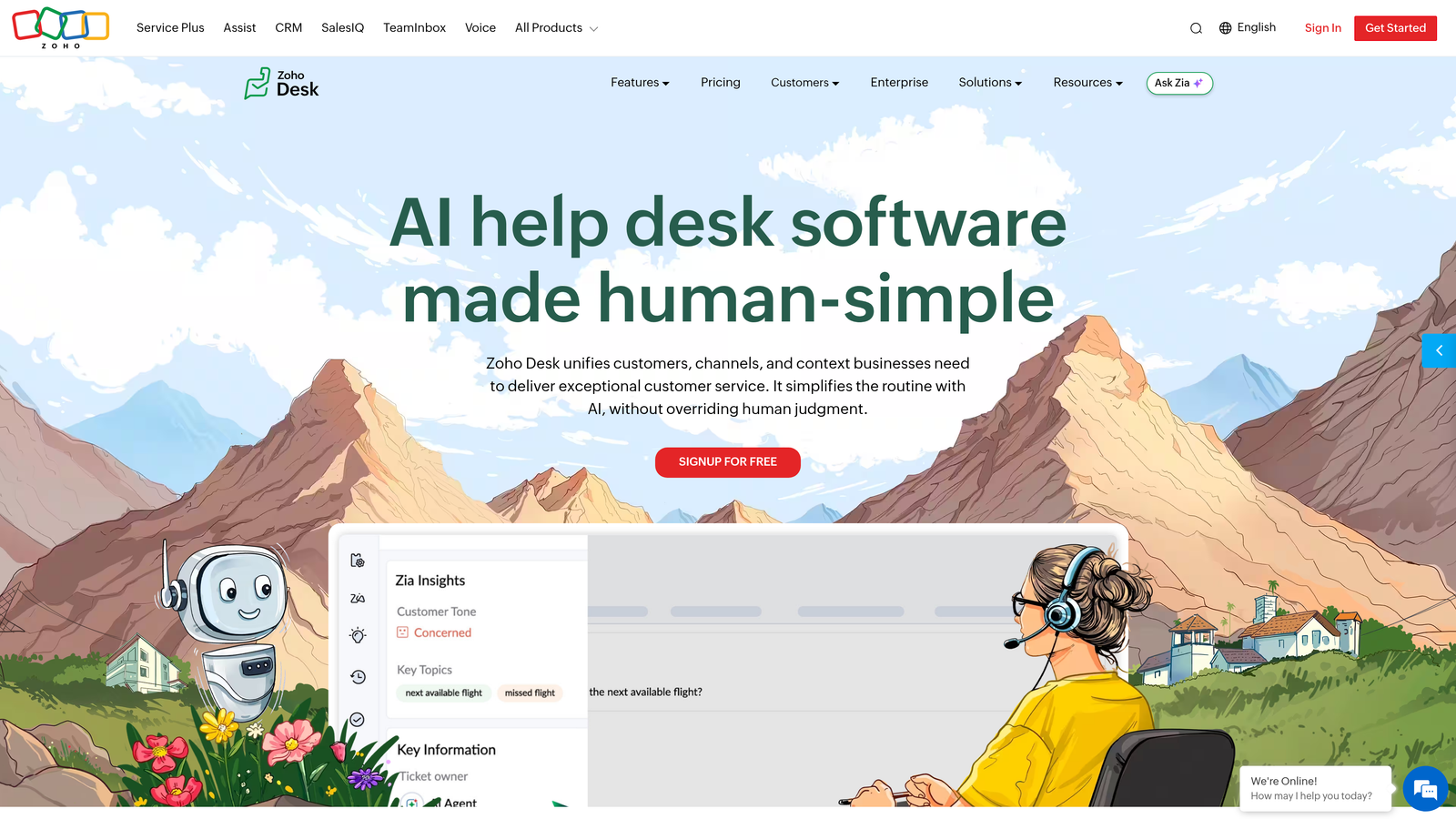
Zoho Desk delivers impressive automation capabilities at prices that make enterprise features accessible to small and mid-sized businesses.
Where This Tool Shines
Zia, Zoho's AI assistant, brings sentiment analysis to every ticket. The system flags frustrated customers automatically, allowing managers to intervene before situations escalate. This emotional intelligence layer adds context that pure keyword analysis misses.
Blueprint automation lets you design complex multi-stage workflows visually. Think of it as a flowchart for support processes—you map out every decision point, approval step, and action, then Zoho executes it automatically.
Key Features
Zia AI: Sentiment analysis identifies frustrated customers, suggests responses, and predicts ticket fields based on content.
Blueprint Workflows: Visual process builder for multi-stage support workflows with approvals, conditions, and automated actions.
Multi-Department Management: Separate departments with unique workflows, SLAs, and team structures within a single instance.
Self-Service Portal: Branded customer portal with knowledge base, community forums, and ticket submission.
Zoho Ecosystem Integration: Native connections to Zoho CRM, Projects, Analytics, and other Zoho applications.
Best For
Small to mid-sized businesses already invested in Zoho products. The deep ecosystem integration and affordable pricing make it a natural choice for Zoho users expanding into support.
Pricing
Free plan for up to three agents with basic features. Professional tier starts at $23 per agent per month, offering exceptional value for the automation capabilities included.
7. Help Scout
Best for: Teams prioritizing personal customer relationships over ticket volume metrics
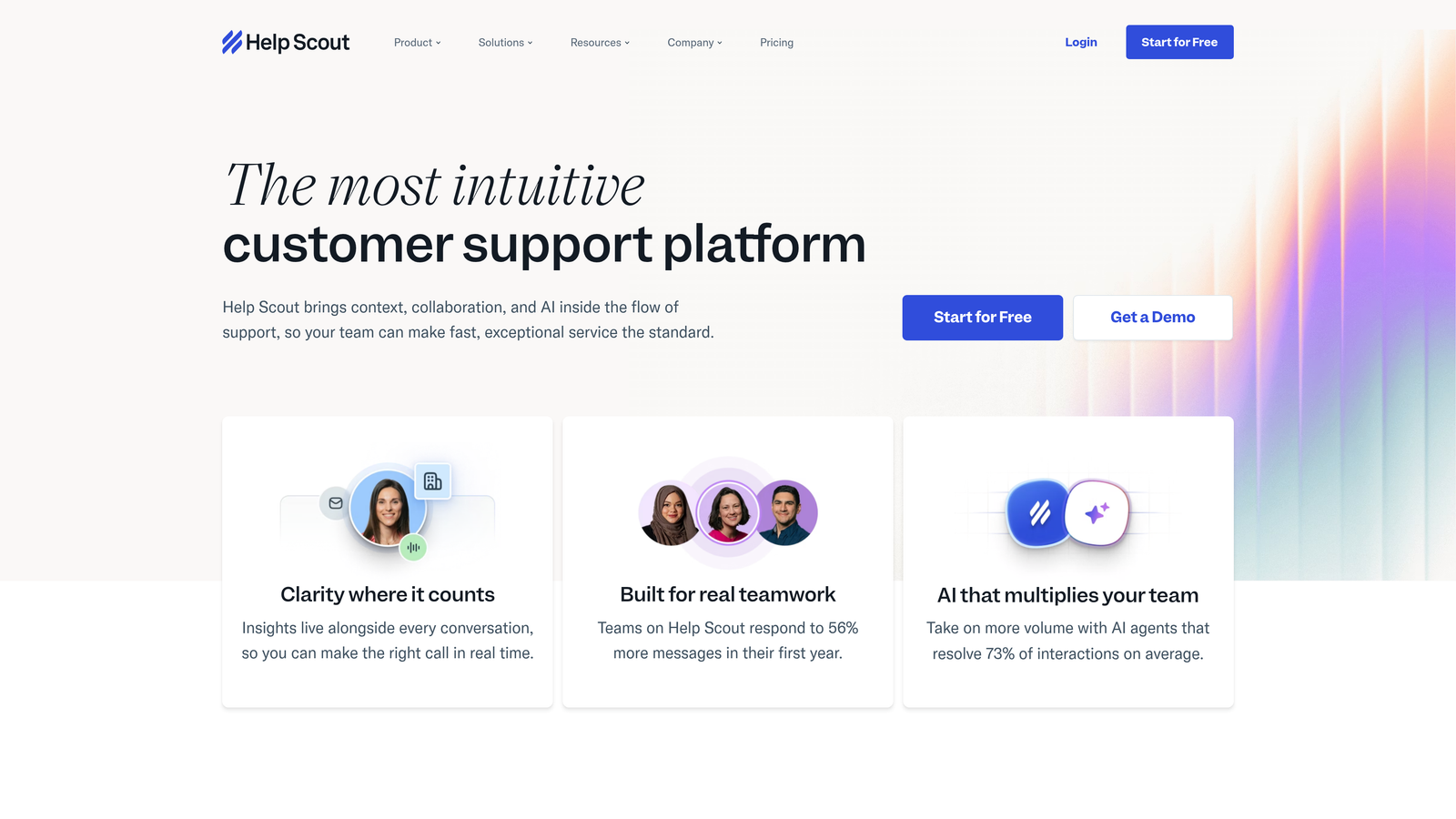
Help Scout embraces a philosophy that automation should enhance human connection rather than replace it entirely.
Where This Tool Shines
The platform's AI features focus on augmenting agent capabilities rather than replacing them. AI Summarize condenses long ticket threads into key points, while AI Assist suggests response improvements without taking over the conversation entirely.
Help Scout's shared inbox feels more like email than traditional ticketing systems, reducing the learning curve for teams transitioning from basic email support. This simplicity doesn't sacrifice power—collision detection, assignments, and workflows operate behind the scenes.
Key Features
AI Summarize: Automatically condenses long conversation threads into key points so agents can get context quickly.
AI Assist: Suggests response improvements for tone, clarity, and completeness without replacing human judgment.
Collaborative Inbox: Shared email-style interface with assignments, notes, and collision detection to prevent duplicate responses.
Docs Knowledge Base: Self-service documentation site with search, categories, and usage analytics.
Beacon Widget: Embeddable chat and help widget that surfaces relevant articles before customers contact support.
Best For
Small to mid-sized teams who view support as relationship-building rather than ticket deflection. Companies with complex products where personalized guidance matters more than automated resolution rates.
Pricing
Standard plan starts at $20 per user per month. The straightforward pricing without hidden tiers or feature gates makes budgeting simple.
8. Gorgias
Best for: E-commerce businesses needing deep shopping platform integration and order management automation
Gorgias specializes exclusively in e-commerce support, with features purpose-built for online retail operations.
Where This Tool Shines
One-click order actions transform support efficiency for e-commerce teams. Agents can process refunds, cancel orders, update shipping addresses, or resend tracking information directly from the support interface without switching to Shopify or your order management system.
The platform automatically pulls order details, customer purchase history, and lifetime value into every conversation. This context helps agents make informed decisions about returns, exchanges, and customer satisfaction gestures based on actual customer value.
Key Features
One-Click Order Actions: Process refunds, cancellations, exchanges, and shipping updates directly from support conversations.
E-Commerce Platform Integration: Deep native connections to Shopify, BigCommerce, Magento, and WooCommerce with order data sync.
Automated Responses: Pre-built macros for common e-commerce queries like shipping status, return policies, and product questions.
Revenue Statistics: Track support impact on sales with metrics showing revenue generated or saved through support interactions.
Social Commerce Support: Manage Instagram, Facebook, and SMS conversations alongside traditional support channels.
Best For
E-commerce businesses of any size, from growing Shopify stores to established multi-platform retailers. The specialized feature set delivers immediate value that general helpdesks can't match for online retail.
Pricing
Starts at $10 per month for 50 tickets, scaling based on ticket volume rather than agent count. This usage-based pricing works well for seasonal e-commerce businesses.
9. Front
Best for: Teams managing multiple communication channels who need collaborative workflows beyond traditional ticketing
Front reimagines the shared inbox concept, combining email, chat, SMS, and social media into a unified collaborative workspace.
Where This Tool Shines
Front excels at team collaboration on customer conversations. Multiple team members can discuss a complex customer issue in internal comments, draft responses together, and hand off conversations seamlessly—all without the customer seeing the behind-the-scenes collaboration.
The platform treats every communication channel equally. An email thread, SMS conversation, and chat message receive the same workflow treatment, preventing channel silos that fragment customer context across different tools.
Key Features
Multi-Channel Inbox: Unified interface combining email, chat, SMS, WhatsApp, and social media in a single collaborative workspace.
Rules-Based Automation: Trigger assignments, tags, responses, and integrations based on message content, sender, or channel.
Team Collaboration: Internal comments, @mentions, and shared drafts let teams work together on customer responses.
Analytics Dashboard: Track response times, resolution rates, SLA compliance, and individual agent performance metrics.
Integration Library: Connect to CRM systems, project management tools, and business applications to centralize customer context.
Best For
Sales and support teams managing high-value accounts where multiple team members collaborate on customer relationships. Companies using email as a primary business channel will appreciate the familiar interface.
Pricing
Starter plan begins at $19 per seat per month for basic shared inbox functionality. Growth and Scale plans add advanced automation and analytics at higher price points.
Making the Right Choice
The helpdesk automation landscape has evolved beyond simple ticket routing. Today's platforms use AI to resolve issues autonomously, surface business intelligence, and integrate deeply with your entire tech stack.
For B2B SaaS companies prioritizing continuous learning and deep integrations, Halo AI's autonomous agents and page-aware context deliver intelligence that grows smarter with every interaction. Enterprise organizations managing massive ticket volumes across multiple channels will find Zendesk's maturity and extensibility worth the premium pricing.
E-commerce businesses should seriously consider Gorgias—the specialized order management features and shopping platform integrations deliver immediate ROI that general helpdesks can't match. Teams already committed to HubSpot's ecosystem gain significant value from Service Hub's unified customer timeline, though standalone users might find better specialized options.
Budget-conscious teams have excellent options in Freshdesk and Zoho Desk, both delivering enterprise automation capabilities at mid-market prices. Help Scout appeals to companies viewing support as relationship-building rather than ticket deflection, while Intercom shines for product-led companies prioritizing proactive engagement.
Think about your ticket complexity distribution. If most inquiries are straightforward, platforms with strong AI resolution capabilities will deliver faster ROI. If your support requires deep product knowledge and context, prioritize platforms that surface comprehensive customer data and enable smooth human escalation.
Consider your integration requirements carefully. The platform that connects natively to your CRM, project management tools, and business systems will save countless hours of manual data entry and context switching. Your support team shouldn't scale linearly with your customer base.
Let AI agents handle routine tickets, guide users through your product, and surface business intelligence while your team focuses on complex issues that need a human touch. See Halo in action and discover how continuous learning transforms every interaction into smarter, faster support.