9 Best Helpdesk Automation Software for Scaling Support in 2026
Discover the best helpdesk automation software for 2026 that helps support teams handle growing ticket volumes without constantly expanding headcount. This comprehensive guide evaluates top platforms based on automation capabilities, AI features, integration options, and scalability—helping you choose solutions that actually resolve routine inquiries automatically, route complex issues intelligently, and empower your team to deliver faster responses that meet modern customer expectations.
 Matt PattoliFounder12 min read
Your support team is drowning in tickets while customers expect instant responses. The gap between what your team can handle and what customers demand keeps growing—and hiring more agents isn't always the answer.
Helpdesk automation software bridges this gap by handling routine inquiries, routing complex issues intelligently, and giving your team superpowers to resolve tickets faster. But with dozens of options claiming to transform your support operations, choosing the right platform matters.
We evaluated these tools based on automation depth, AI capabilities, integration flexibility, ease of implementation, and real-world scalability. Here are the top platforms that actually deliver on their promises.
1. Halo AI
Best for: Companies wanting autonomous AI agents that learn and improve with every interaction
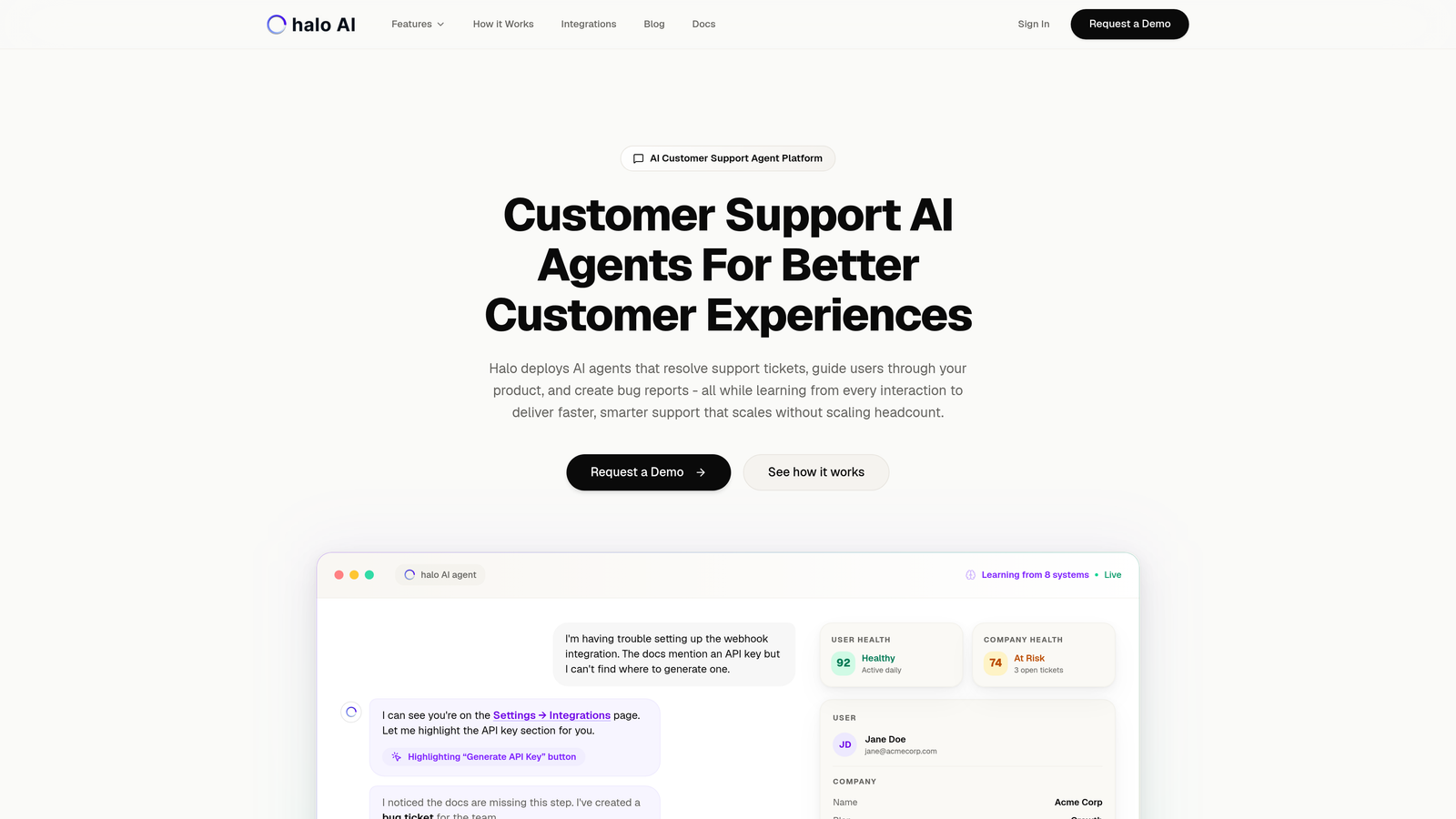
Halo AI is an AI-native customer support platform built from the ground up for autonomous ticket resolution, not just deflection.
Where This Tool Shines
Unlike traditional helpdesks with AI bolted on, Halo deploys intelligent agents that actually resolve tickets without human intervention. The platform's page-aware context means the AI sees exactly what your users see, enabling visual guidance that goes far beyond text-based responses.
What sets Halo apart is continuous learning. Every interaction—whether resolved by AI or escalated to humans—feeds back into the system, making the agents smarter over time. This isn't static automation that requires constant rule updates; it's intelligence that evolves with your product.
Key Features
Autonomous AI Agents: Resolve tickets end-to-end without human intervention, handling everything from password resets to product troubleshooting.
Page-Aware Chat Widget: Sees what users see on your product interface, enabling precise visual guidance and contextual help.
Auto Bug Ticket Creation: Automatically creates tickets in Linear when issues are detected, with full context and reproduction steps.
Smart Inbox with Business Intelligence: Surfaces customer health signals, revenue intelligence, and anomaly detection beyond basic support metrics.
Live Agent Handoff: Seamlessly escalates complex issues to human agents with full conversation context and customer history.
Best For
B2B SaaS companies and product teams that want support to scale without scaling headcount. Particularly valuable for teams using Zendesk, Freshdesk, or Intercom who need deeper automation than their current platform offers.
Pricing
Contact for pricing. The platform connects to your entire business stack including Linear, Slack, HubSpot, Intercom, Stripe, Zoom, PandaDoc, and Fathom.
2. Zendesk
Best for: Enterprise teams needing robust omnichannel automation with extensive integration options
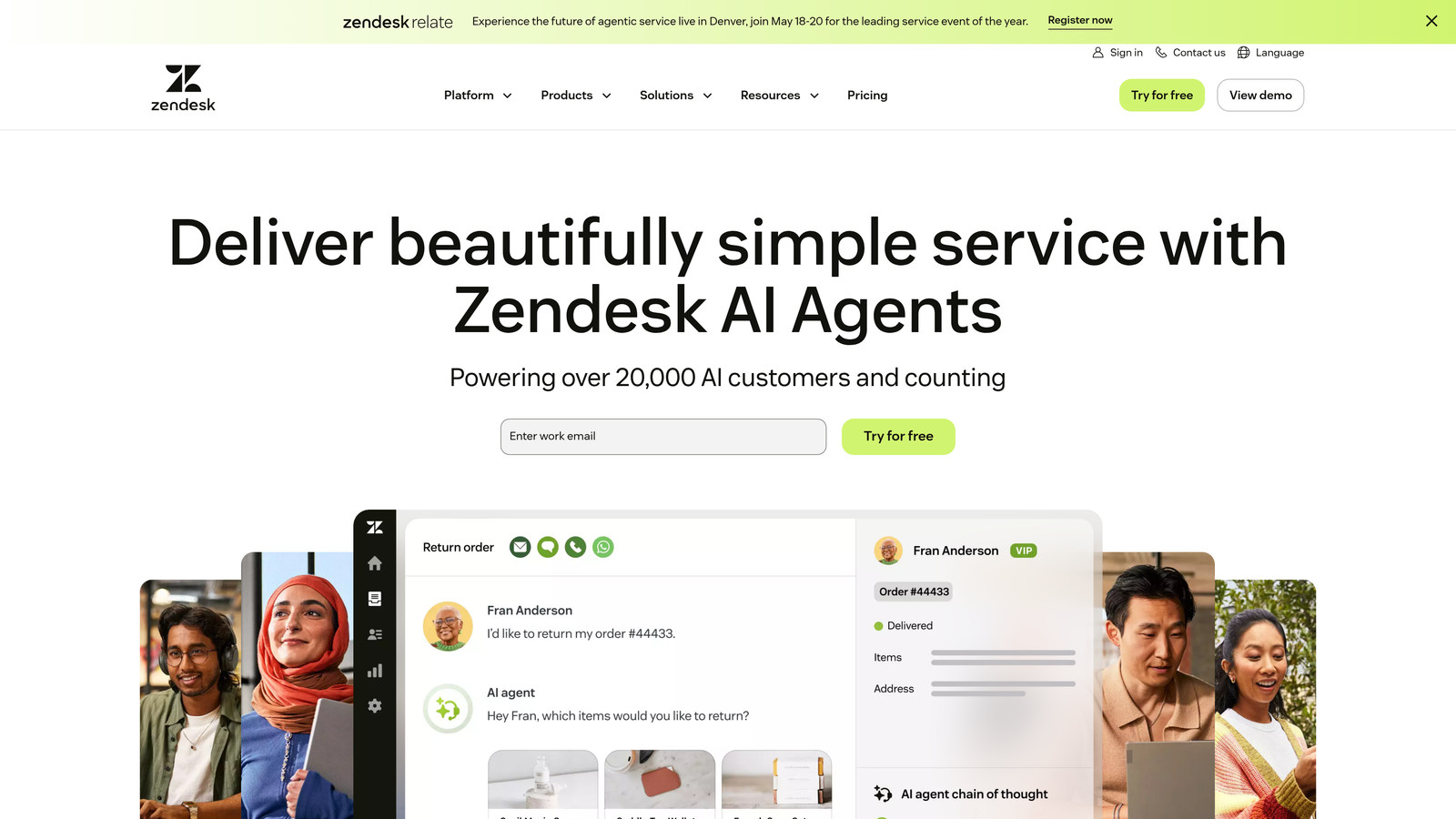
Zendesk is the enterprise-grade standard for helpdesk platforms, offering deep automation capabilities across every support channel.
Where This Tool Shines
Zendesk's strength lies in its sophisticated trigger system and Answer Bot. You can build complex automation workflows that handle ticket routing, prioritization, and even resolution based on hundreds of conditions. The platform's marketplace gives you access to over 1,500 integrations, making it possible to connect virtually any tool in your tech stack.
For large teams managing high ticket volumes across multiple channels, Zendesk's skills-based routing and workload balancing ensure the right tickets reach the right agents. The platform scales to enterprise needs without breaking.
Key Features
Answer Bot: AI-powered ticket deflection that suggests help articles and can mark tickets as solved when customers confirm their issue is resolved.
Advanced Triggers and Automations: Build multi-condition workflows that execute actions based on ticket properties, customer data, and time-based rules.
Omnichannel Routing: Unified automation across email, chat, phone, social media, and messaging apps with consistent rule application.
Extensive Marketplace: Access 1,500+ pre-built integrations and custom apps to extend functionality.
Skills-Based Routing: Automatically assign tickets to agents based on expertise, language, product knowledge, and current workload.
Best For
Enterprise organizations with complex support operations spanning multiple products, regions, and channels. Teams that need deep customization and have the resources to configure advanced automation workflows.
Pricing
Starts at $55/agent/month for Suite Team. Enterprise pricing scales with features and volume, typically requiring annual contracts.
3. Freshdesk
Best for: Mid-market companies wanting powerful automation without enterprise complexity
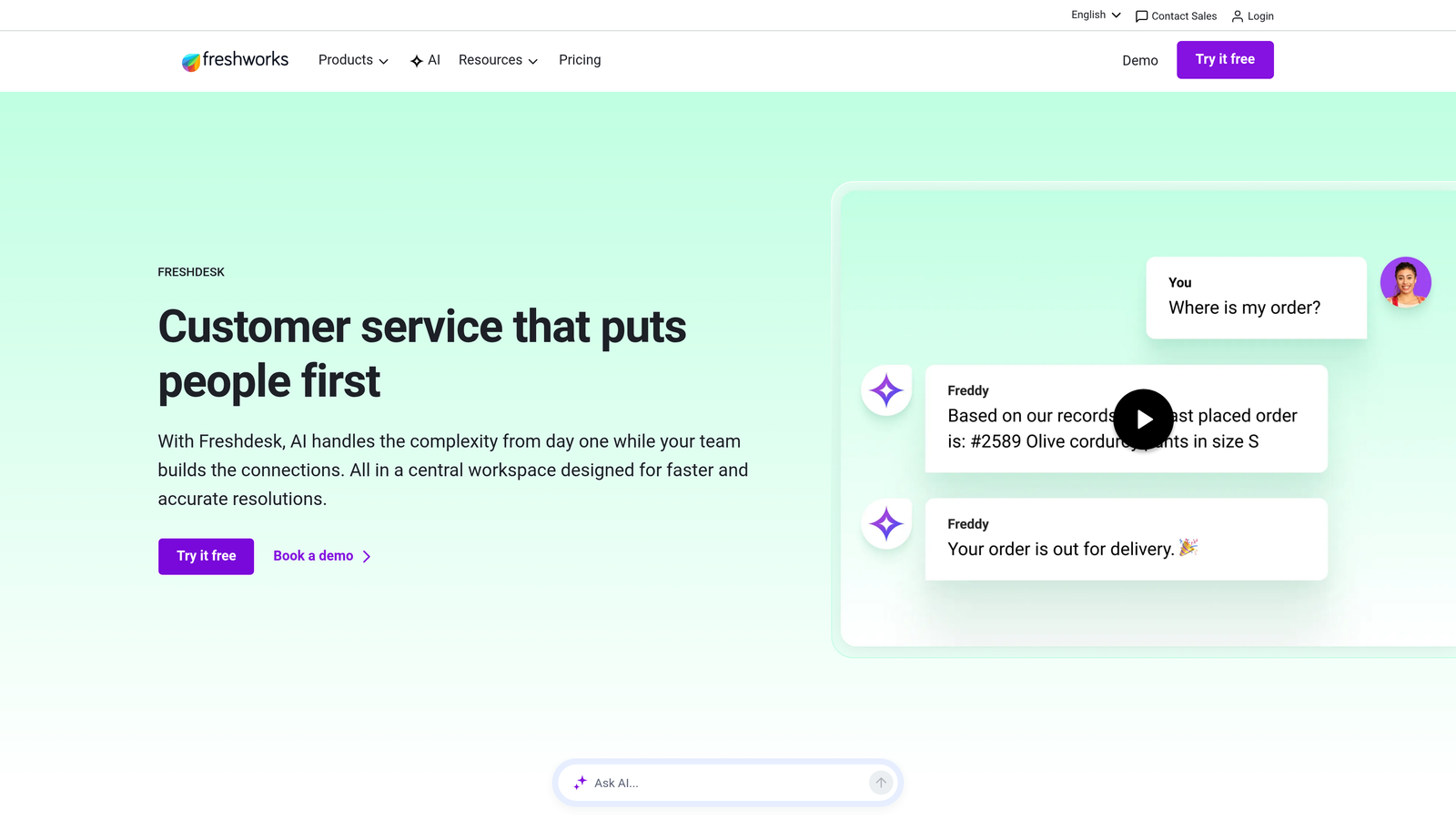
Freshdesk balances automation power with usability, offering Freddy AI capabilities and scenario automations that don't require a dedicated admin.
Where This Tool Shines
Freshdesk's scenario automations let you build multi-step workflows visually, making complex automation accessible to teams without technical expertise. Freddy AI analyzes incoming tickets to classify them, suggest responses to agents, and identify patterns that inform better automation rules.
The platform's parent-child ticketing handles complex issues that span multiple departments or require coordinated resolution. Unlike simpler tools, Freshdesk grows with you from startup to mid-market without requiring a platform migration.
Key Features
Freddy AI: Automatically classifies tickets, suggests responses to agents, and identifies trending issues for proactive automation.
Scenario Automations: Visual workflow builder for multi-step automation sequences with conditional logic and time delays.
Canned Responses with Dynamic Placeholders: Template library that auto-populates customer and ticket data for personalized bulk responses.
SLA Management and Escalation: Automated priority assignment and escalation based on customer tier, issue type, and response time thresholds.
Parent-Child Ticketing: Link related tickets for complex issues requiring coordination across teams or products.
Best For
Growing companies that have outgrown basic helpdesks but aren't ready for enterprise complexity. Teams that value ease of use alongside powerful automation capabilities.
Pricing
Free tier available for up to 10 agents. Growth plan starts at $15/agent/month with advanced automation features.
4. Intercom
Best for: Product-led companies wanting conversational automation with in-app messaging
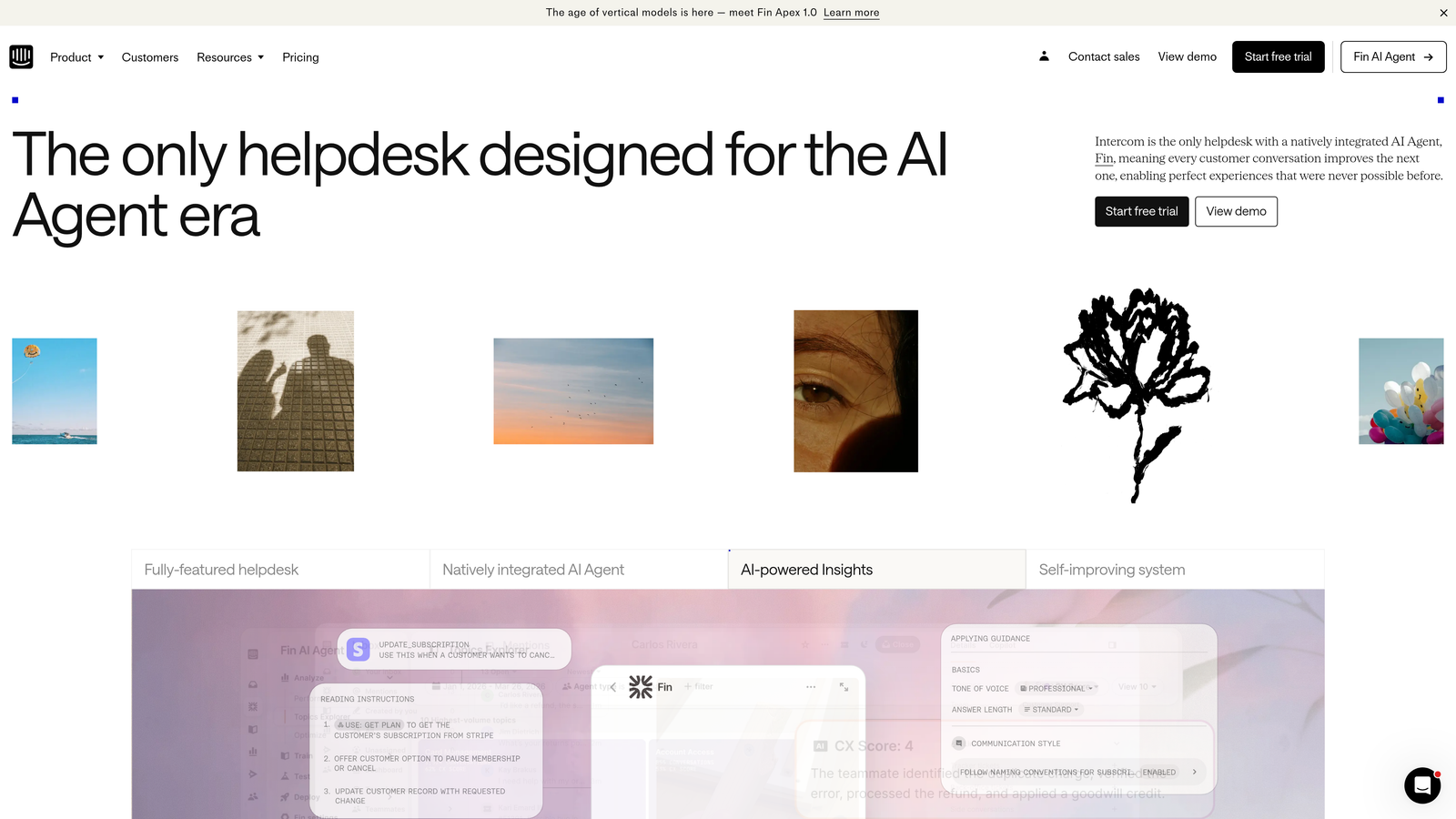
Intercom pioneered conversational support, and its Fin AI agent now handles autonomous resolution alongside custom bot workflows.
Where This Tool Shines
Intercom's visual bot builder lets you create custom automation workflows that guide users through troubleshooting, collect information before human handoff, or qualify leads before routing to sales. Fin AI goes further by autonomously resolving common questions using your help center content.
The platform's product tours and in-app messaging mean you can proactively prevent tickets by guiding users at the moment they need help. For product-led companies, this preventive approach often reduces ticket volume more effectively than reactive automation.
Key Features
Fin AI Agent: Autonomous AI that resolves customer questions using your help center, with confidence scoring to determine when to escalate.
Custom Bot Workflows: Visual builder for creating multi-step conversation flows with branching logic and data collection.
Product Tours and In-App Messaging: Proactive guidance that prevents tickets by helping users before they get stuck.
Resolution-Based Pricing: Pay for Fin AI based on successful resolutions rather than per-seat, aligning costs with value.
Series for Multi-Channel Campaigns: Automate onboarding sequences and feature announcements across email, in-app, and push notifications.
Best For
SaaS companies with product-led growth strategies that want to blend support, marketing, and product guidance in one platform. Teams that prioritize preventing tickets over just resolving them faster.
Pricing
Starts at $39/seat/month for core features. Fin AI is priced separately based on resolution volume, typically adding $0.99 per resolution.
5. HubSpot Service Hub
Best for: Teams already using HubSpot CRM who want unified customer context across support, sales, and marketing
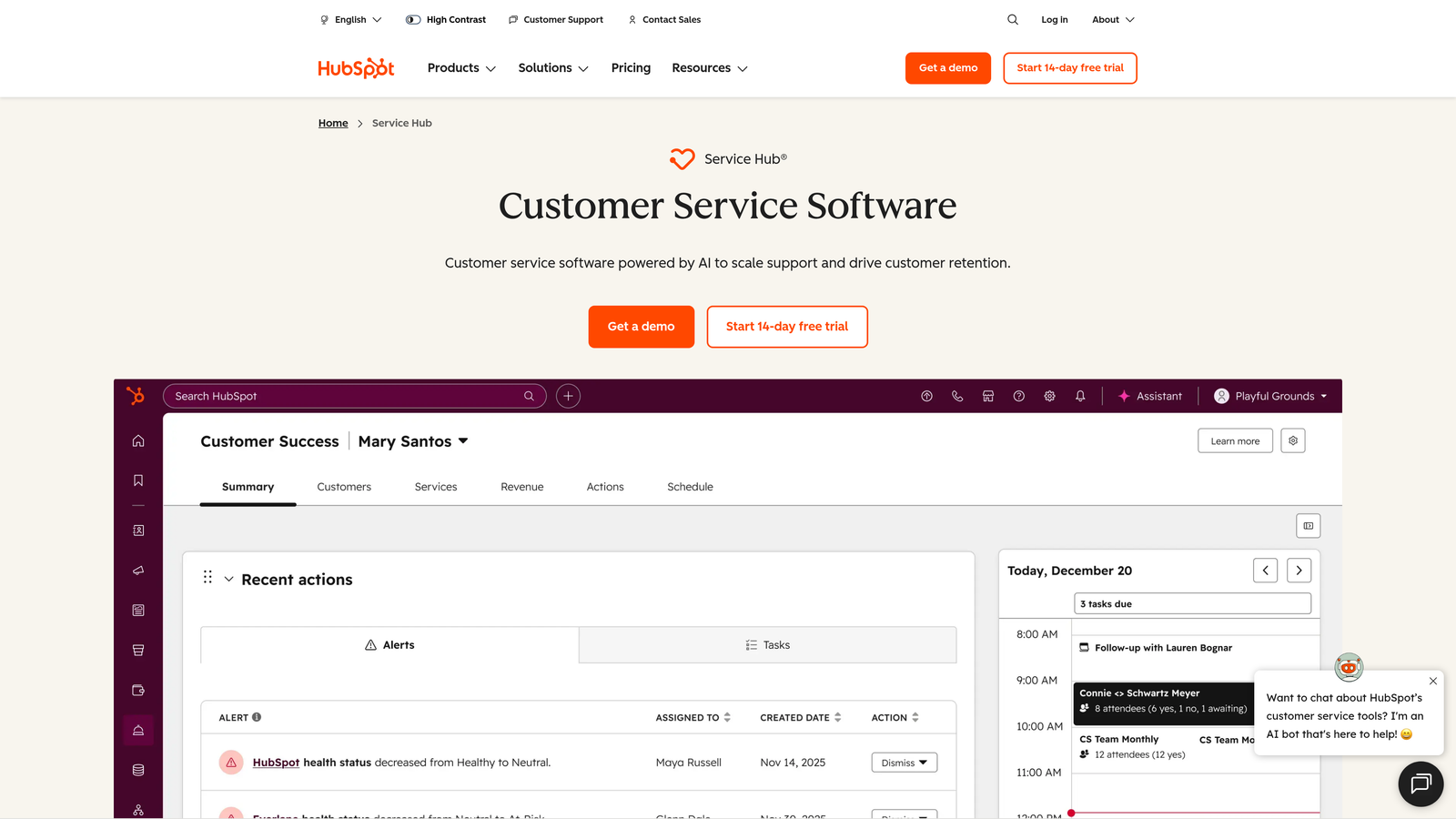
HubSpot Service Hub brings helpdesk automation into the broader HubSpot ecosystem, creating a unified view of every customer interaction.
Where This Tool Shines
The real power of Service Hub isn't just ticket automation—it's the unified customer timeline that shows every marketing email, sales call, and support interaction in one place. Your automation workflows can trigger based on customer lifecycle stage, deal value, or engagement score from other HubSpot hubs.
This context enables smarter automation. You can automatically prioritize tickets from high-value customers, route enterprise prospects to senior agents, or trigger customer success outreach when support patterns indicate risk.
Key Features
Unified Customer Timeline: See every touchpoint across marketing, sales, and service in one view, enabling context-aware automation.
Ticket Pipelines with Automation: Visual pipelines with workflow automation that triggers based on properties, activities, and lifecycle stage.
Knowledge Base with AI-Powered Search: Self-service portal with intelligent search that learns from user behavior and ticket deflection patterns.
Customer Feedback Surveys: Automated NPS, CSAT, and CES surveys with workflows triggered by response scores.
Conversation Intelligence: Analytics across all channels with automated reporting on resolution times, customer sentiment, and agent performance.
Best For
Companies already invested in HubSpot's CRM and marketing tools who want to extend that unified data model to support operations. Teams that need tight alignment between customer success, sales, and support.
Pricing
Free tools available with basic features. Professional starts at $90/month for two users, with additional seats at $45/month.
6. Help Scout
Best for: Customer-first teams wanting AI assistance that enhances human support rather than replacing it
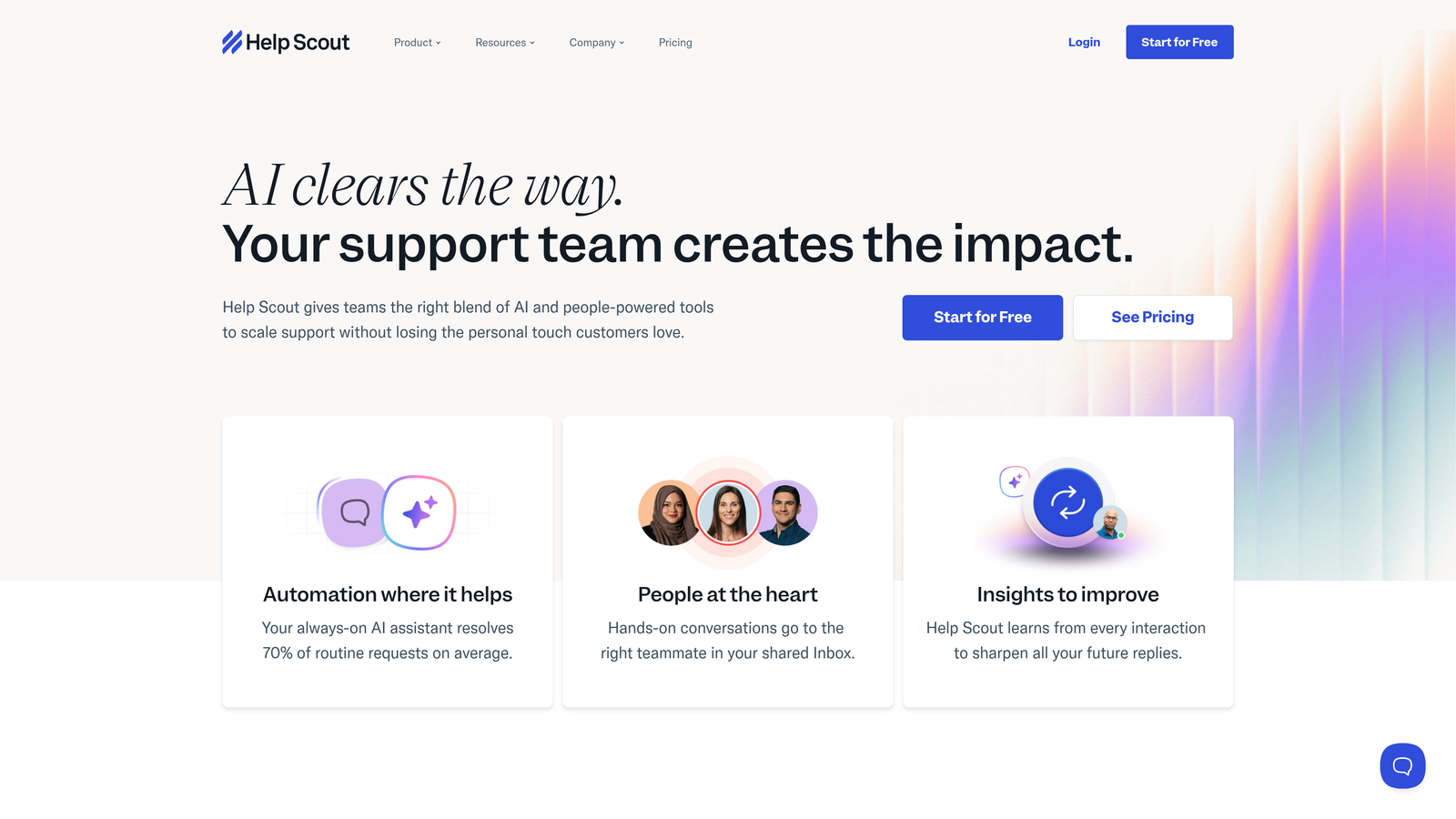
Help Scout takes a different approach to automation, focusing on tools that make human agents more effective rather than eliminating them entirely.
Where This Tool Shines
Help Scout's AI drafts analyze incoming tickets and suggest complete responses that agents can edit and send. This speeds up response times while maintaining the personal touch that customers value. The platform's collision detection prevents duplicate responses when multiple agents jump on the same ticket.
Workflows automate the busywork—tagging, assignment, status updates—while keeping humans in the loop for actual customer interactions. For teams that believe support is a competitive advantage, not a cost center, this philosophy resonates.
Key Features
AI Drafts: Suggested complete responses based on ticket content and historical resolutions, which agents can customize before sending.
Saved Replies with Variables: Template library with dynamic fields that auto-populate customer and conversation data.
Workflows for Automated Actions: Automate tagging, assignment, status changes, and notifications based on ticket properties and customer segments.
Beacon Widget: Embedded help widget that surfaces relevant articles and enables in-app messaging without leaving your product.
Collision Detection: Real-time alerts when multiple agents view the same conversation, preventing duplicate responses.
Best For
Teams that view support as a brand differentiator and want automation that enhances agent effectiveness rather than replacing human interaction. Companies prioritizing customer experience over pure efficiency metrics.
Pricing
Starts at $20/user/month with all core features included. No separate pricing tiers for automation capabilities.
7. Gorgias
Best for: E-commerce businesses needing deep Shopify and BigCommerce integration for order management automation
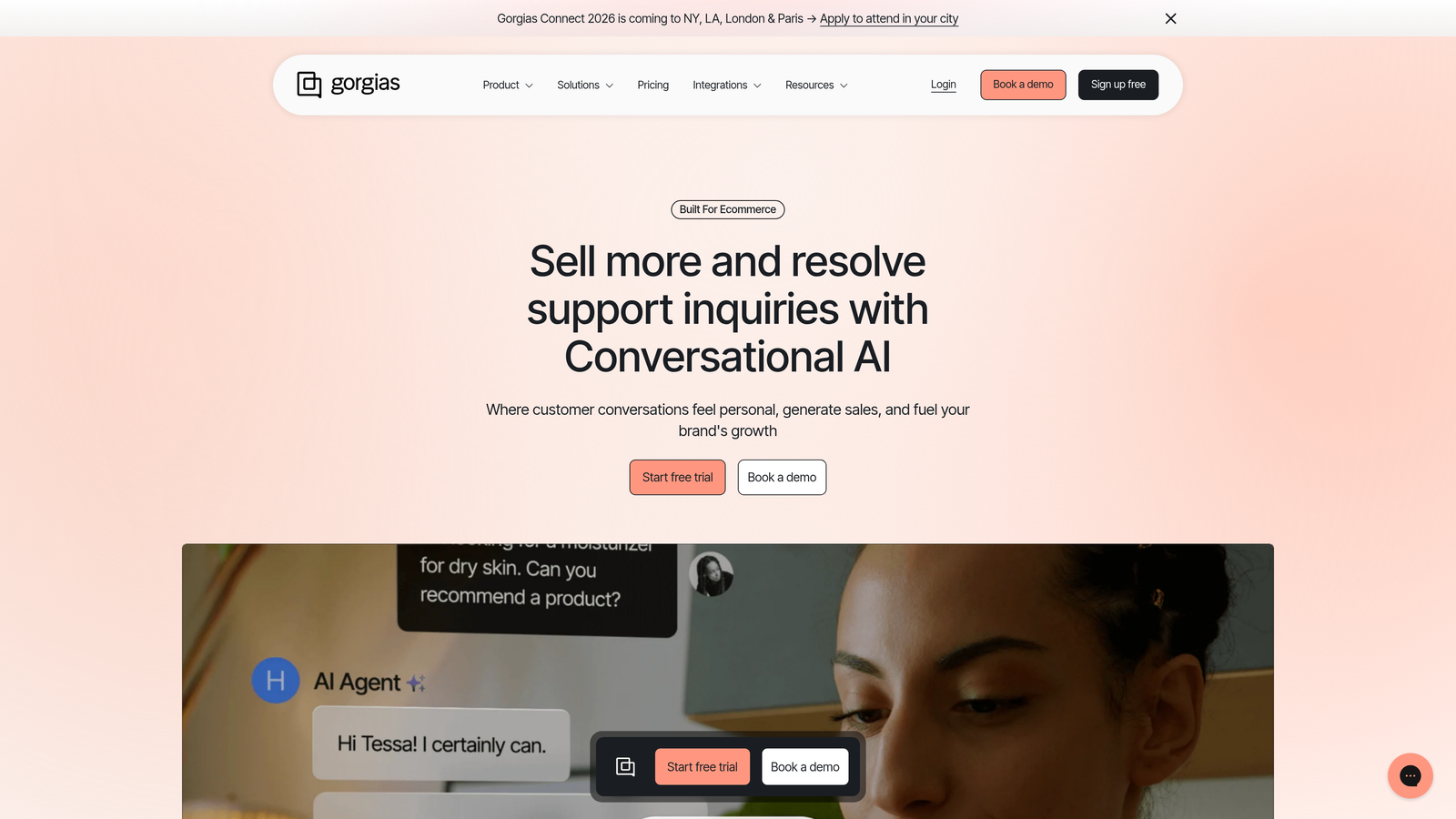
Gorgias is purpose-built for e-commerce support, with automation specifically designed around order management workflows.
Where This Tool Shines
Gorgias agents can issue refunds, cancel orders, update shipping addresses, and send tracking information with a single click—no switching to Shopify admin. Macros with dynamic order variables pull customer purchase history, cart value, and loyalty tier into automated responses.
Intent detection analyzes incoming messages to automatically respond to common e-commerce queries like "Where is my order?" or "How do I return this?" The platform also tracks revenue attribution, showing which support interactions led to additional purchases.
Key Features
One-Click Order Actions: Process refunds, cancellations, exchanges, and address updates directly from the helpdesk without accessing Shopify.
Macros with Dynamic Order Variables: Automated responses that pull real-time order data, shipping status, and customer purchase history.
Intent Detection: AI that identifies common e-commerce queries and automatically sends appropriate responses with order details.
Revenue Attribution: Track which support interactions lead to conversions, measuring support's impact on revenue.
Social Media and SMS Automation: Unified automation across Instagram, Facebook, SMS, and email with consistent rule application.
Best For
E-commerce brands on Shopify, BigCommerce, or Magento that handle high volumes of order-related inquiries. Teams that need support operations tightly integrated with their commerce platform.
Pricing
Starts at $10/month for 50 tickets. Scales based on ticket volume rather than agent count, with unlimited agents on all plans.
8. Zoho Desk
Best for: Budget-conscious SMBs wanting enterprise-level automation without enterprise pricing
Zoho Desk delivers sophisticated workflow automation and Zia AI capabilities at a fraction of enterprise platform costs.
Where This Tool Shines
Zoho's Blueprint feature lets you design detailed workflow automation with stage-based progression, approvals, and conditional paths. Zia AI analyzes sentiment in incoming tickets, suggests responses, and identifies patterns that inform better automation rules.
For companies already using Zoho CRM, Books, or other Zoho products, Desk integrates seamlessly with deep data sharing. Multi-department management lets you run separate support operations for different products or business units within one platform.
Key Features
Zia AI: Sentiment analysis, response suggestions, anomaly detection, and tag predictions to enhance both automation and agent efficiency.
Blueprint Workflow Automation: Visual workflow designer with stage-based progression, approvals, and conditional branching logic.
Multi-Department Management: Run separate support operations with distinct workflows, SLAs, and teams within one account.
Deep Zoho Ecosystem Integration: Native connections to Zoho CRM, Books, Projects, and 40+ other Zoho apps with unified data.
Time-Based and Action-Based Rules: Automate ticket updates, escalations, and assignments based on both time triggers and customer actions.
Best For
Small to medium businesses that need powerful automation on a tight budget. Companies already using Zoho products who want to extend that ecosystem to support operations.
Pricing
Free plan for up to 3 agents with basic features. Standard plan starts at $14/agent/month with full automation capabilities.
9. Front
Best for: Teams managing high-volume email support who need collaborative automation and intelligent routing
Front transforms traditional email into a collaborative helpdesk with sophisticated automation for routing, tagging, and response management.
Where This Tool Shines
Front's rules engine automatically routes incoming emails based on sender, subject line, content analysis, and custom properties. Unlike traditional shared inboxes where accountability gets lost, Front assigns individual ownership while maintaining team visibility.
The platform's AI-powered drafts and summaries help agents process high email volumes faster. SLA tracking and load balancing ensure work distributes evenly across the team, preventing burnout while maintaining response time commitments.
Key Features
Shared Inboxes with Individual Accountability: Team visibility on all conversations with clear ownership assignment and status tracking.
Rules Engine: Automated routing, tagging, assignment, and actions based on email properties, sender data, and conversation history.
AI-Powered Message Drafts and Summaries: Suggested responses and conversation summaries to speed up email processing.
SLA Tracking and Load Balancing: Automated assignment that considers agent workload and response time commitments.
Native CRM and Project Tool Integrations: Connect to Salesforce, HubSpot, Asana, and project management tools without third-party apps.
Best For
Teams whose support operations are heavily email-based and need to transform Gmail or Outlook into a proper helpdesk. Companies that value collaboration and context over traditional ticketing systems.
Pricing
Starts at $19/seat/month for core features. Growth plan at $59/seat/month adds advanced automation and AI capabilities.
Making the Right Choice
The best helpdesk automation software depends on what you're actually trying to automate—and how autonomous you want that automation to be.
If you need AI agents that truly resolve tickets without human intervention, Halo AI's autonomous approach and continuous learning stand out. For enterprise teams managing complex omnichannel operations, Zendesk's depth and integration marketplace provide the flexibility large organizations require. E-commerce businesses get the most value from Gorgias's order management automation.
Consider your primary use case: Are you drowning in routine inquiries that could be resolved autonomously? Look for platforms with strong AI resolution capabilities. Managing complex workflows across departments? Prioritize sophisticated routing and workflow builders. Need tight integration with existing tools? Evaluate marketplace depth and native integrations.
Budget matters, but so does implementation complexity. Enterprise platforms offer more power but require dedicated admin resources to configure and maintain. Mid-market solutions like Freshdesk and HubSpot balance capability with usability. Budget-conscious teams can get surprising sophistication from Zoho Desk's affordable plans.
The automation landscape has shifted from simple rule-based routing to intelligent systems that learn and improve. Your support team shouldn't scale linearly with your customer base. Let AI agents handle routine tickets, guide users through your product, and surface business intelligence while your team focuses on complex issues that need a human touch.
See Halo in action and discover how continuous learning transforms every interaction into smarter, faster support.