9 Best Support AI for B2B SaaS in 2026
Discover the best support AI for B2B SaaS in 2026, with nine platforms evaluated on AI reasoning depth, account-level context, CRM integration, and autonomous ticket resolution. This guide helps technically complex SaaS companies scale support efficiently without sacrificing the precision and escalation capabilities their sophisticated customers demand.
 Matt PattoliFounder14 min read
B2B SaaS companies face a support challenge that's genuinely different from most industries. Your customers are technically sophisticated, your product is complex, and the moment someone hits a blocker, they want a precise answer fast. Scaling a human support team to match rapid growth is expensive, slow, and often unsustainable.
AI-powered support tools have matured significantly by 2026, moving well beyond simple chatbots into intelligent agents that resolve tickets autonomously, surface business intelligence, and integrate deeply with the tools your team already relies on. But not every platform is built for the B2B SaaS context. The best ones understand product complexity, handle multi-step troubleshooting, connect to engineering workflows, and escalate gracefully when a human touch is genuinely needed.
We evaluated dozens of platforms using these criteria: depth of AI reasoning, B2B-specific features like account-level context and CRM integration, integration ecosystem, pricing transparency, and the ability to scale without proportional headcount growth. Here are the top picks for 2026.
1. Halo AI
Best for: B2B SaaS teams wanting an AI-first platform with product awareness and business intelligence built in.
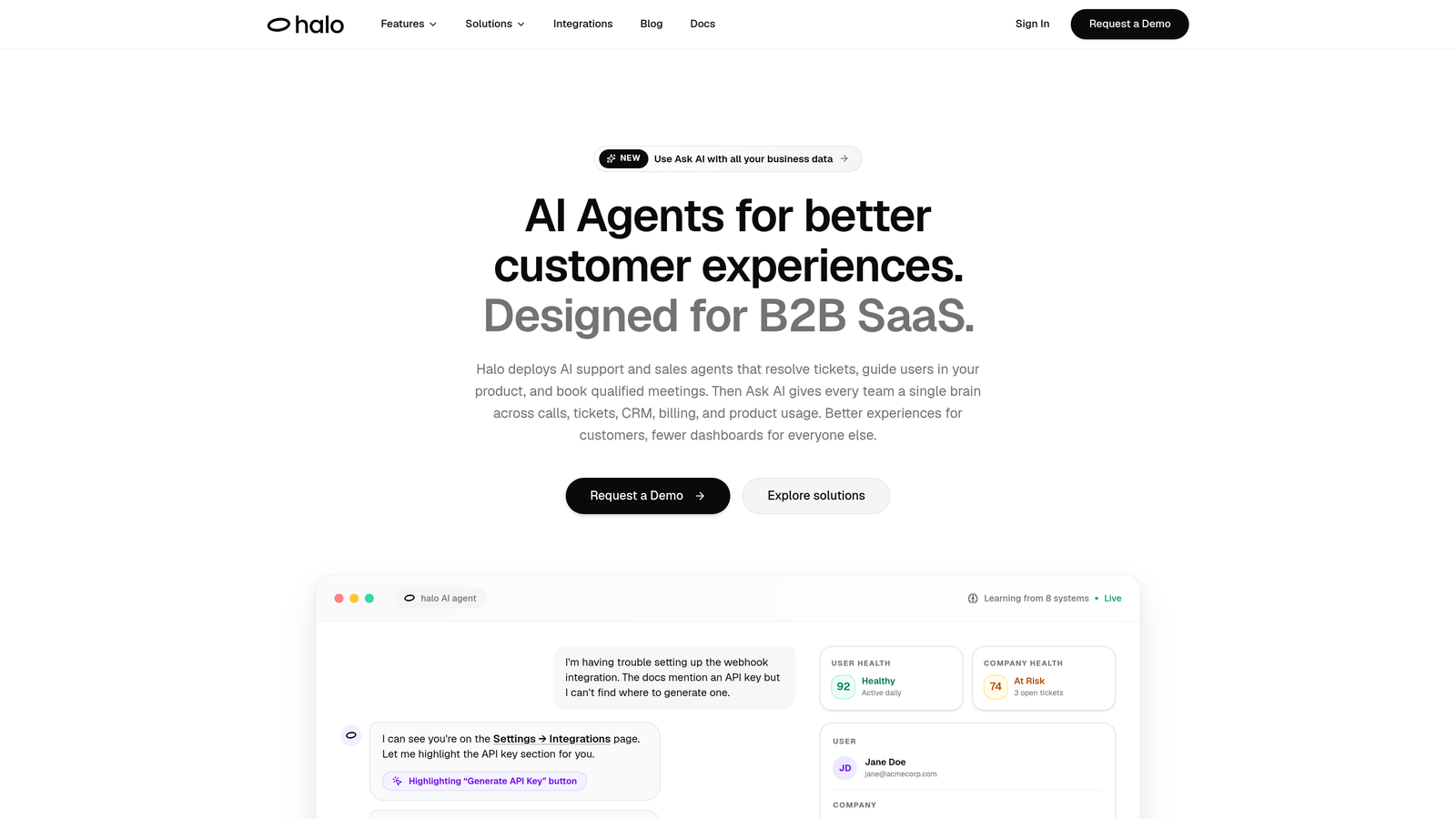
Halo AI is an AI-first customer support platform that deploys intelligent agents to resolve tickets, guide users through your product, and generate business intelligence from every interaction.
Where This Tool Shines
What sets Halo apart is the architecture. Rather than layering AI features onto a legacy helpdesk, Halo was built natively around an AI-first model. The platform's page-aware chat widget is a particularly strong differentiator: the AI agent understands what page a user is on and can provide contextual, visual UI guidance rather than generic FAQ responses. For SaaS products with complex interfaces, this is the difference between a user feeling helped and a user feeling patronized.
Beyond ticket resolution, Halo's smart inbox surfaces business intelligence from support conversations: customer health signals, revenue intelligence, and anomaly detection. Your support queue stops being just a cost center and starts generating signals that product, sales, and customer success teams can actually use. The continuous learning model means every resolved ticket makes the next one faster and more accurate.
Key Features
Page-Aware Chat Widget: Sees what the user sees and delivers visual UI guidance specific to their current product context.
Autonomous Ticket Resolution: AI agents resolve tickets independently, with continuous learning from every interaction improving accuracy over time.
Auto Bug Ticket Creation: Automatically generates bug tickets with direct Linear and Jira integration, removing manual triage from your engineering workflow.
Smart Inbox with Business Intelligence: Surfaces customer health signals, revenue intelligence, and anomaly detection from support conversation patterns.
Live Agent Handoff: Escalates complex issues to human agents with full conversation context preserved, so customers never have to repeat themselves.
Best For
Product-led SaaS companies that want AI to do more than answer tickets. Halo is particularly well-suited to teams that value the intelligence layer: connecting support data to customer health, product feedback loops, and engineering workflows. It integrates with Linear, Slack, HubSpot, Intercom, Stripe, Zoom, PandaDoc, and Fathom, making it genuinely connective tissue across your stack.
Pricing
Contact for pricing. Designed around the premise that support capacity should scale without scaling headcount, making it worth evaluating against per-seat models as your team grows.
2. Intercom Fin
Best for: Teams already embedded in the Intercom ecosystem wanting native AI resolution without switching platforms.
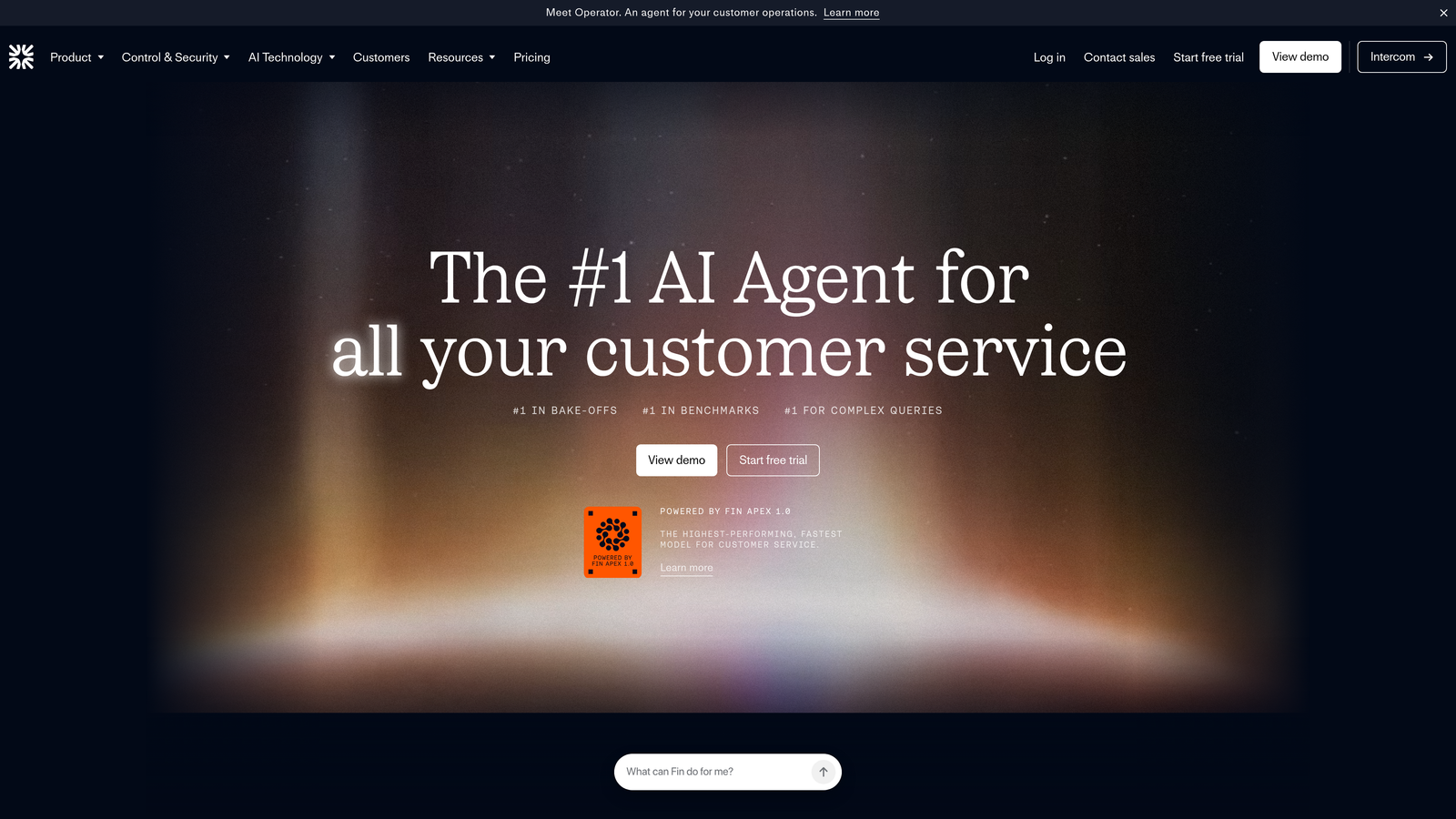
Intercom Fin is Intercom's native AI agent that resolves customer questions using your existing help center content and conversation history.
Where This Tool Shines
Fin's biggest strength is how naturally it fits into an existing Intercom setup. If your team already lives in Intercom's inbox and messenger, Fin requires minimal configuration to start resolving conversations. It draws on your help center articles, past conversations, and custom data sources to generate accurate, on-brand responses.
The built-in reporting is solid, giving you clear visibility into AI resolution rates, handoff reasons, and where the AI is falling short. For teams that want to iterate on their AI coverage without leaving their existing platform, that feedback loop is genuinely useful.
Key Features
Multi-Source Training: Trains on your help center, past conversations, and custom data sources for contextually accurate responses.
Native Messenger Integration: Deeply embedded in Intercom's messenger, inbox, and workflow tools with no separate setup required.
Brand Voice Customization: Adjustable tone and persona settings to match your company's communication style.
Resolution Analytics: Built-in dashboards tracking AI resolution rates, handoff triggers, and coverage gaps.
Multi-Language Support: Handles conversations across chat, email, and in-app channels in multiple languages.
Best For
Companies already using Intercom as their primary support and messaging platform who want to add AI resolution without migrating to a new tool. Less ideal if you're evaluating support infrastructure from scratch, since you're inheriting Intercom's pricing model along with Fin.
Pricing
Per-resolution pricing model layered on top of an active Intercom subscription. Costs can scale quickly at higher volumes, so model your resolution estimates carefully before committing.
3. Zendesk AI
Best for: Enterprise SaaS teams on the Zendesk Suite wanting AI across every support channel without changing platforms.
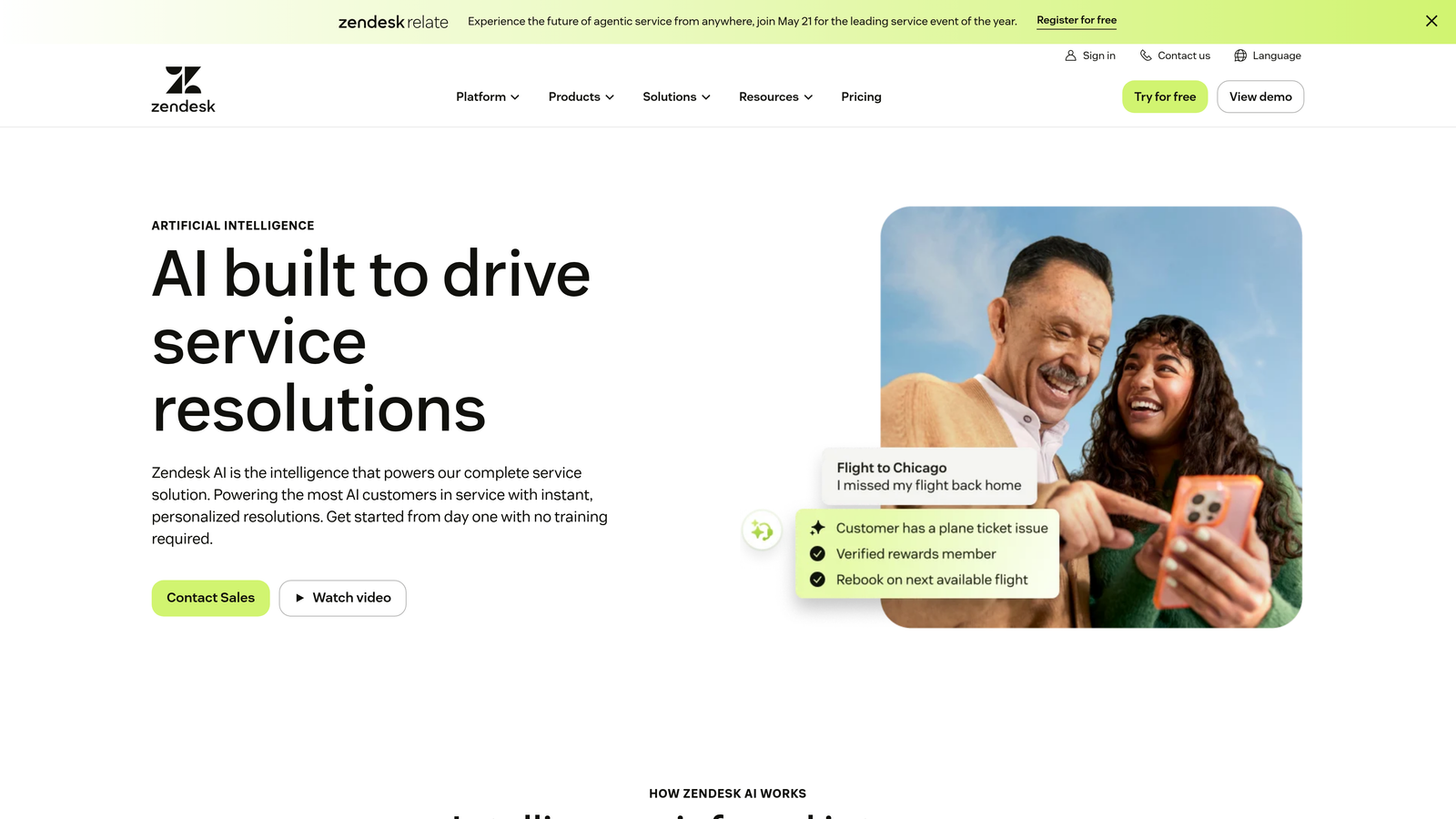
Zendesk AI is an enterprise-grade AI layer across Zendesk's support suite, offering AI agents, intelligent triage, agent copilot features, and macro suggestions.
Where This Tool Shines
Zendesk's competitive advantage here is data. The platform has processed billions of support interactions, and that training foundation means AI features often work reasonably well out of the box, even before you've customized them extensively. For enterprise teams with complex routing logic and large agent workforces, the agent copilot features are particularly valuable: surfacing relevant knowledge articles and suggesting replies in real time.
The intelligent triage layer handles auto-classification of intent, language, and sentiment at scale, which matters when you're processing thousands of tickets daily and manual prioritization becomes a bottleneck.
Key Features
AI Agents: Autonomous resolution across messaging and email channels with customizable escalation logic.
Intelligent Triage: Auto-classifies intent, language, and sentiment to route tickets accurately without manual intervention.
Agent Copilot: Surfaces suggested replies and relevant knowledge articles to human agents during live conversations.
Pre-Trained Models: Built on billions of support interactions for stronger out-of-the-box accuracy than many competitors.
AI Performance Dashboards: Dedicated analytics for tracking AI-specific metrics alongside standard support KPIs.
Best For
Enterprise SaaS teams with established Zendesk deployments, large agent teams, and high ticket volumes where the copilot and triage features deliver the most value. Teams evaluating fresh may find the platform's complexity and cost harder to justify at smaller scale.
Pricing
Core AI features are included in Suite plans; Advanced AI is available as a paid add-on. Pricing scales with seat count, making it a significant investment for larger teams.
4. Ada
Best for: Automation-first B2B SaaS teams wanting no-code AI agent deployment at scale without engineering resources.
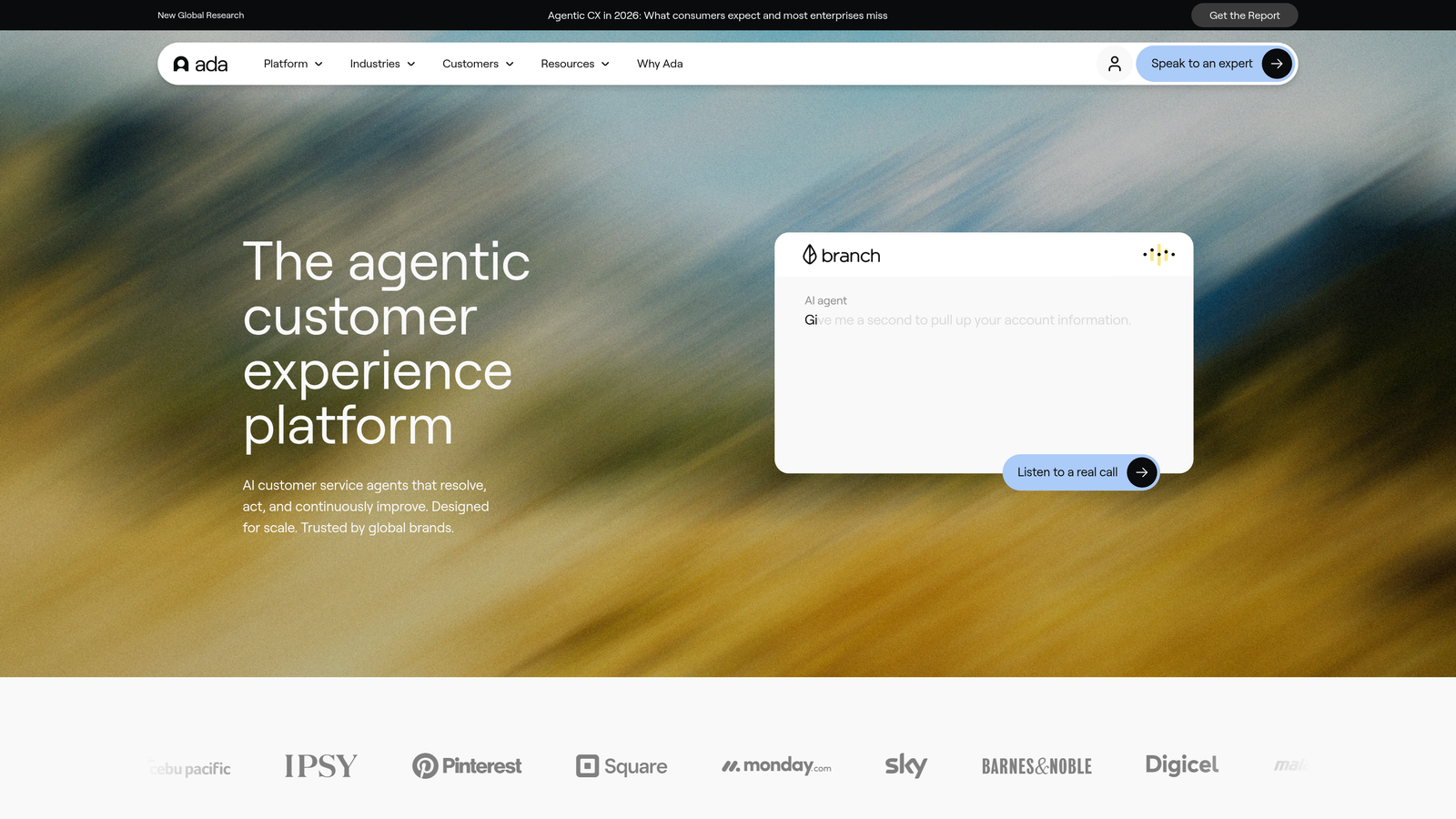
Ada is an automation-first AI agent platform purpose-built for customer service, enabling companies to deploy AI that resolves conversations across channels without requiring ongoing engineering involvement.
Where This Tool Shines
Ada's core philosophy is that non-technical teams should be able to build, manage, and iterate on AI support workflows. The no-code platform delivers on that promise reasonably well. Customer success and support operations teams can create and adjust AI behavior without filing engineering tickets, which meaningfully reduces the time from "we need to update our AI" to "the AI is updated."
The AI agent reasons across knowledge bases, APIs, and connected business systems to resolve queries, rather than just pattern-matching against static FAQ content. For global SaaS deployments, Ada's multilingual capabilities are a genuine strength.
Key Features
Reasoning AI Agent: Resolves queries by reasoning across knowledge bases, APIs, and business systems rather than static FAQ matching.
No-Code Workflow Builder: Build and manage AI resolution flows without engineering resources.
Multilingual Support: Strong language coverage for global SaaS deployments across multiple regions.
Broad Integration Library: Connects with major CRMs, helpdesks, and commerce platforms.
Resolution Analytics: Detailed containment and resolution reporting to track automation ROI.
Best For
Mid-to-large SaaS companies with high support volumes and a strong preference for keeping AI management in the hands of support operations rather than engineering. Also works well for companies with international customer bases requiring multilingual resolution.
Pricing
Custom pricing based on resolution volume. Contact Ada's sales team for a quote. Expect enterprise-level investment at scale.
5. Freshdesk Freddy AI
Best for: Mid-market SaaS teams wanting solid AI support capabilities at a more accessible price point.
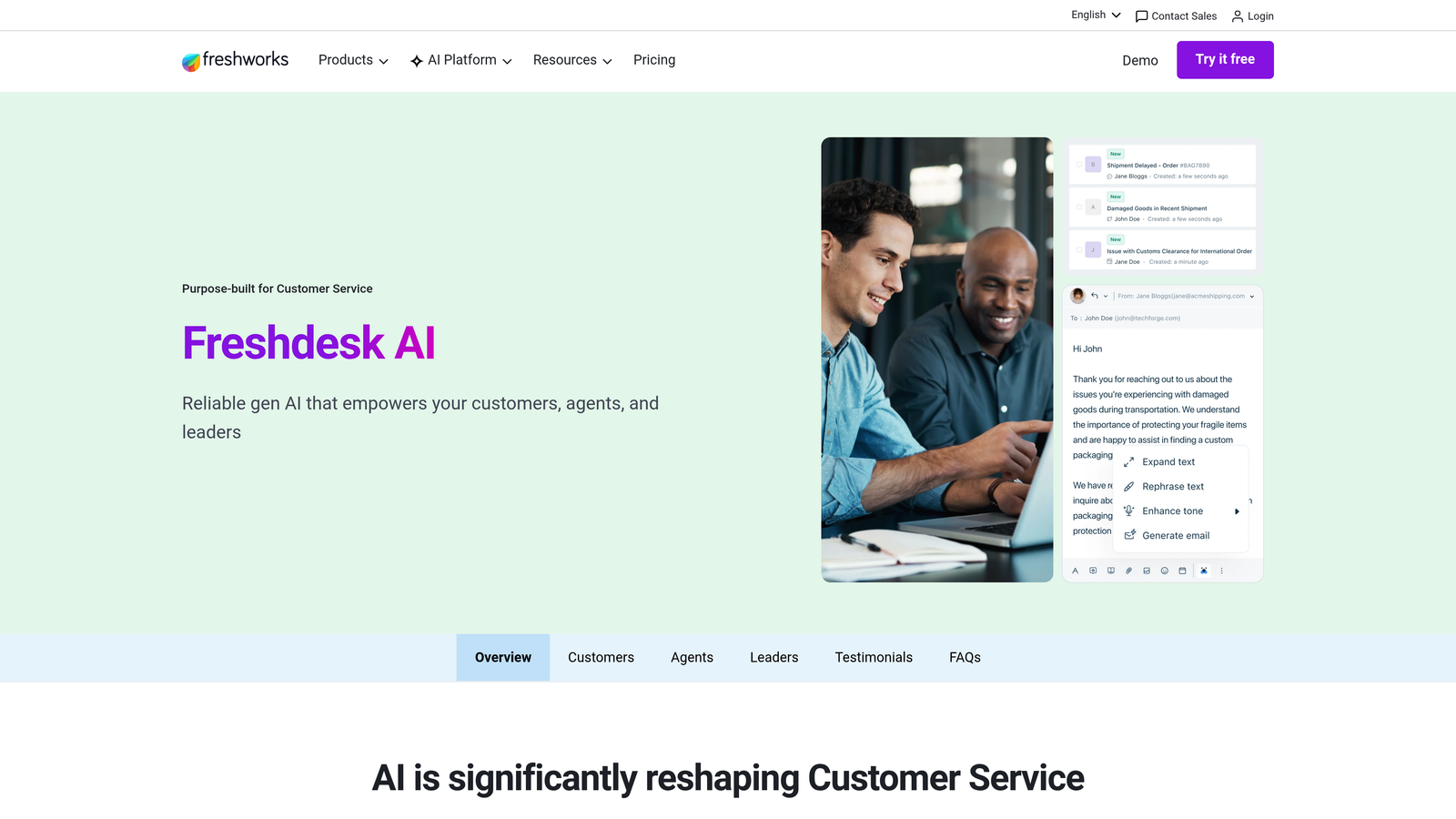
Freshdesk Freddy AI is Freshworks' AI engine embedded across Freshdesk, offering AI-powered ticket routing, suggested responses, and customer-facing AI agents with competitive pricing.
Where This Tool Shines
Freddy AI's strongest argument is value. Compared to enterprise alternatives like Zendesk AI or Ada, Freshdesk's AI features are accessible at a price point that mid-market SaaS teams can actually justify. The Freddy AI Agent handles self-service resolution across web and messaging channels, while the agent-assist features (ticket summarization, suggested next actions) reduce the cognitive load on human agents handling complex cases.
The tight integration across the Freshworks suite is useful if you're already using Freshsales for CRM, since customer context flows across products without custom integration work.
Key Features
Freddy AI Agent: Customer-facing AI for self-service resolution across web and messaging channels.
Ticket Summarization: Automatically summarizes long ticket threads so agents can get up to speed instantly.
Suggested Next Actions: AI-recommended responses and actions for human agents handling complex issues.
Auto-Triage and Smart Assignment: Routes tickets to the right team or agent based on intent and content.
Freshworks Suite Integration: Native data sharing across Freshsales, Freshservice, and other Freshworks products.
Best For
Mid-market SaaS companies looking for a capable, integrated support platform without enterprise pricing. Teams already using other Freshworks products will see the most value from the cross-suite data flow.
Pricing
AI features available on Pro and Enterprise plans, starting at $49 per agent per month. One of the more transparent pricing structures in this category.
6. Forethought
Best for: Teams wanting specialized AI models trained specifically for support workflows rather than general-purpose LLMs.
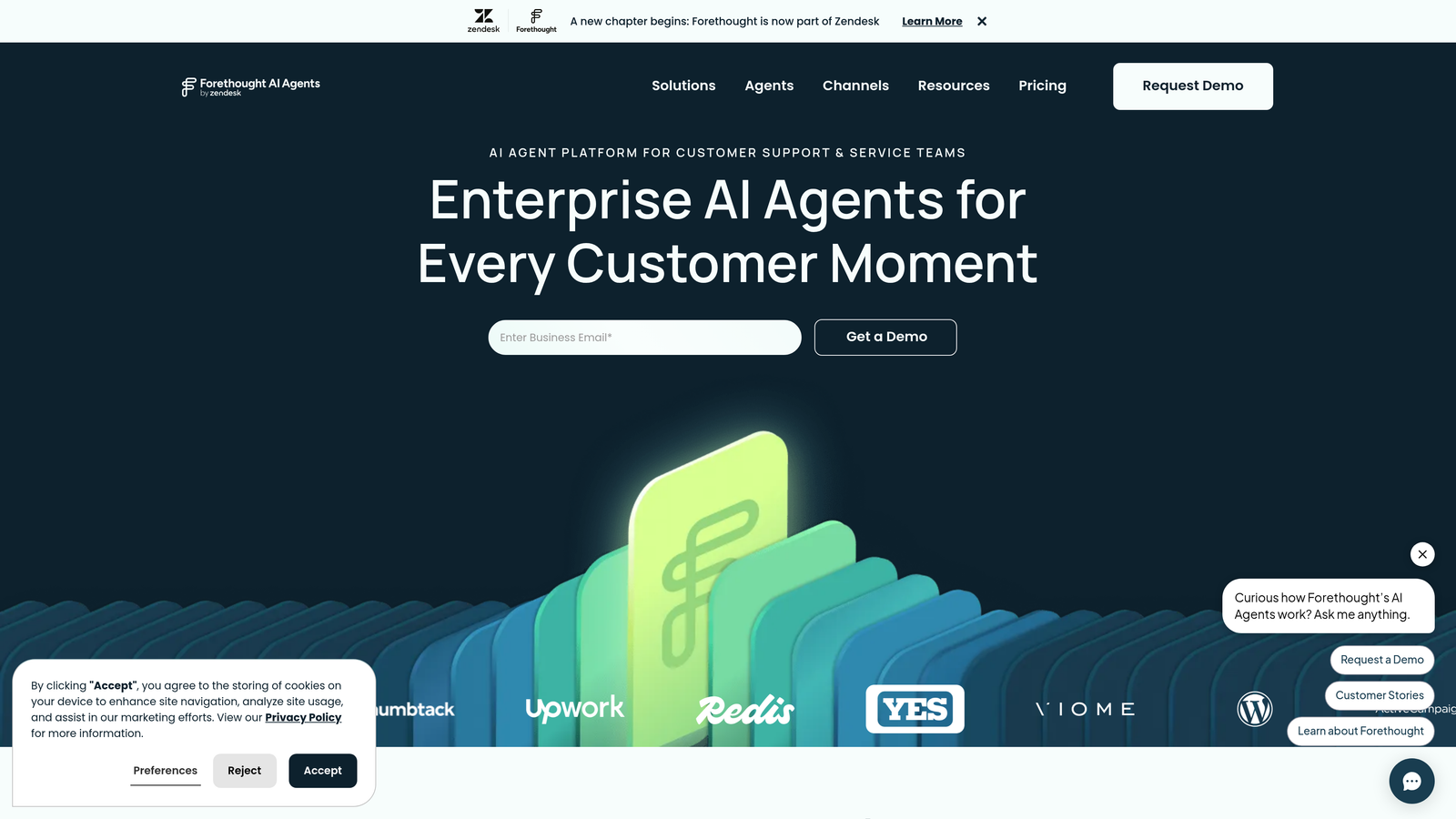
Forethought is an AI platform focused on intelligent ticket triage, automated resolution, and agent assist, powered by proprietary SupportGPT models trained specifically for customer support workflows.
Where This Tool Shines
Forethought's differentiation is specialization. Rather than applying a general-purpose language model to support use cases, the platform uses SupportGPT, a model architecture trained specifically on support interactions. The result is triage and intent prediction that tends to be highly accurate, particularly for teams with well-documented support histories.
The Discover AI module is worth highlighting: it identifies gaps in your knowledge base and automation coverage, telling you not just what the AI is handling but what it could be handling if you filled specific content gaps. That's a useful feedback loop for support operations teams trying to systematically improve automation rates.
Key Features
Solve AI: Autonomous ticket resolution via chat and email using SupportGPT models.
Triage AI: High-accuracy intent prediction and routing for incoming tickets.
Assist AI: Real-time knowledge surfacing for human agents during live conversations.
Discover AI: Identifies knowledge base gaps and automation opportunities based on unresolved ticket patterns.
Platform Integrations: Connects with Zendesk, Salesforce, Freshdesk, and other major support platforms.
Best For
SaaS companies with mature support operations, large ticket volumes, and existing helpdesk infrastructure who want to add a specialized AI layer on top. Works particularly well for teams that have already invested in a strong knowledge base and want to maximize its automation value.
Pricing
Custom pricing, typically structured on a per-ticket or per-resolution basis. Contact Forethought's sales team for volume-based quotes.
7. Tidio
Best for: Early-stage SaaS startups wanting quick AI chat automation with minimal setup investment.
Tidio is an accessible AI chat platform featuring Lyro, a conversational AI chatbot that handles common customer queries with minimal setup and a generous free tier.
Where This Tool Shines
Tidio's appeal is straightforward: you can have AI-assisted chat running in hours, not weeks. The Lyro AI chatbot trains on your support content and handles common queries conversationally, while the visual flow builder lets you create custom automation paths without writing code. For a startup with a small support team and a growing user base, that speed-to-value matters.
The AI-to-human handoff is smooth, and the live chat component means your team can jump in when Lyro reaches its limits. It's not the most powerful platform in this list, but it's the most accessible for teams that aren't ready for enterprise complexity or pricing.
Key Features
Lyro AI Chatbot: Conversational AI trained on your support content for handling common customer queries.
Visual Flow Builder: No-code builder for custom chat automation sequences and routing logic.
Live Chat with Handoff: Seamless transition from AI to human agent when conversations require escalation.
Free Tier: Functional free plan for small teams testing AI chat automation before committing to paid plans.
Platform Integrations: Connects with Shopify, WordPress, and custom setups via API.
Best For
Early-stage SaaS startups and small teams looking for a quick win with AI chat automation. If you're processing hundreds of conversations per month rather than thousands, Tidio gives you meaningful automation without overbuilding your support stack.
Pricing
Free plan available for getting started. Paid plans from $29 per month, with the Lyro AI add-on starting at $39 per month. One of the most accessible price points in the category.
8. Kustomer
Best for: B2B SaaS companies with relationship-driven, high-touch support models needing full customer timeline visibility.
Kustomer is a CRM-native customer service platform that provides AI-powered support with unified customer timeline visibility across support, product, and purchase history.
Where This Tool Shines
Kustomer's architecture is fundamentally different from most support platforms: it's built as a CRM first, with support capabilities layered on top. That means every conversation happens in the context of a complete customer timeline, combining support history, purchase data, and product usage signals in one view. For B2B SaaS companies with complex accounts and long-term relationships, that context changes how agents handle every interaction.
The flexible data model and custom objects allow you to structure customer data in ways that match your specific business complexity, which is genuinely useful for companies with multi-product relationships or enterprise accounts with multiple contacts and use cases.
Key Features
Unified Customer Timeline: Combines support, purchase, and product data into a single view for every customer interaction.
AI Classification and Routing: Automated ticket classification, routing, and suggested responses powered by AI.
Omnichannel Support: Handles email, chat, social, and SMS in a unified inbox.
Custom Objects and Data Model: Flexible data structure for modeling complex B2B relationships and multi-contact accounts.
Proactive Support Triggers: Automated outreach based on customer behavior signals before issues escalate.
Best For
B2B SaaS companies with high-touch, relationship-driven support models where account context matters as much as ticket resolution speed. Enterprise accounts with multiple stakeholders and long customer lifecycles are where Kustomer's CRM foundation delivers the most value.
Pricing
Enterprise pricing starting at $89 per user per month. Positioned at the higher end of the market, which is worth evaluating carefully against your support team size and account complexity.
9. Drift (by Salesloft)
Best for: Product-led growth SaaS teams where support conversations frequently intersect with expansion and sales opportunities.
Drift is a conversational AI platform that bridges support and sales, using AI to handle inbound queries that may be support requests, expansion opportunities, or both.
Where This Tool Shines
Drift occupies a unique position in this list: it's the only platform that explicitly treats support and revenue as connected functions. For product-led growth SaaS companies, an inbound conversation might be a support request, an upgrade inquiry, or a renewal concern. Drift's AI qualifies, routes, and resolves these conversations with that commercial context in mind, which means support interactions can surface directly into sales and customer success workflows.
The real-time visitor intelligence layer personalizes support interactions based on who the user is and what they've done in your product, creating a more relevant experience than generic chat flows.
Key Features
Conversational AI Chatbot: Qualifies, routes, and resolves inbound conversations with context-aware AI.
Conversational Playbooks: Structured conversation flows for support-to-sales handoff and expansion triggers.
CRM Integrations: Deep integration with Salesforce, HubSpot, and other major CRM platforms.
Visitor Intelligence: Real-time data on who is engaging with your chat for personalized, context-aware responses.
Revenue Analytics: Reporting that connects support interactions to pipeline and expansion revenue.
Best For
Product-led growth SaaS companies where the line between support and sales is intentionally blurred. If your support team regularly handles questions that have revenue implications, Drift's commercial orientation makes it more useful than a pure support platform.
Pricing
Custom pricing through Salesloft's sales team. As part of the broader Salesloft platform, pricing reflects its enterprise positioning.
Which Tool Is Right for Your Team?
The right choice depends less on which platform has the longest feature list and more on where your team is right now and where you're trying to go.
If you want an AI-first platform with genuine product awareness, business intelligence, and deep integration across your engineering and revenue stack, Halo AI is the strongest fit for B2B SaaS teams building for scale. It's the only platform here that treats support conversations as a source of business intelligence, not just a cost to manage.
For teams already embedded in specific ecosystems: Intercom Fin and Zendesk AI are the natural choices if switching costs are a real constraint. Freshdesk Freddy AI offers a compelling value proposition for mid-market teams watching budget carefully.
If automation coverage and containment rate are your primary metrics, Ada and Forethought are built specifically for that goal and have the enterprise track record to back it up. For startups getting started quickly, Tidio removes almost all the friction from deploying AI chat.
Kustomer fits best when your support model is inherently relationship-driven, and Drift makes sense when support and revenue are genuinely intertwined in your customer journey.
Your support team shouldn't scale linearly with your customer base. Let AI agents handle routine tickets, guide users through your product, and surface business intelligence while your team focuses on complex issues that need a human touch. See Halo in action and discover how continuous learning transforms every interaction into smarter, faster support.