9 Best Support Ticket Automation Tools in 2026
Discover the best support ticket automation tools of 2026, from AI-driven resolution platforms to intelligent triage systems that reduce ticket volume without adding headcount. This guide evaluates nine solutions across automation depth, integration flexibility, and scalability to help SaaS and enterprise support teams find the right fit.
 Matt PattoliFounder13 min read
Support teams are drowning in repetitive tickets while customers wait longer than they should. The good news: modern support ticket automation tools have matured significantly, moving well beyond simple rule-based routing into AI-driven resolution, context-aware guidance, and intelligent triage that actually learns over time.
This list covers the best tools available in 2026, evaluated on automation depth, integration flexibility, ease of deployment, and how well they scale without requiring you to scale headcount in lockstep. Whether you're running a lean SaaS support team on Intercom or managing a high-volume enterprise helpdesk on Zendesk, there's a fit here.
A quick note on methodology: tools are ranked by their core automation capability and suitability for B2B SaaS teams. Halo AI is listed first because it's the most purpose-built option for the use case this article targets — but every tool on this list earns its place.
1. Halo AI
Best for: B2B SaaS teams that want AI-first ticket resolution with deep product and business context
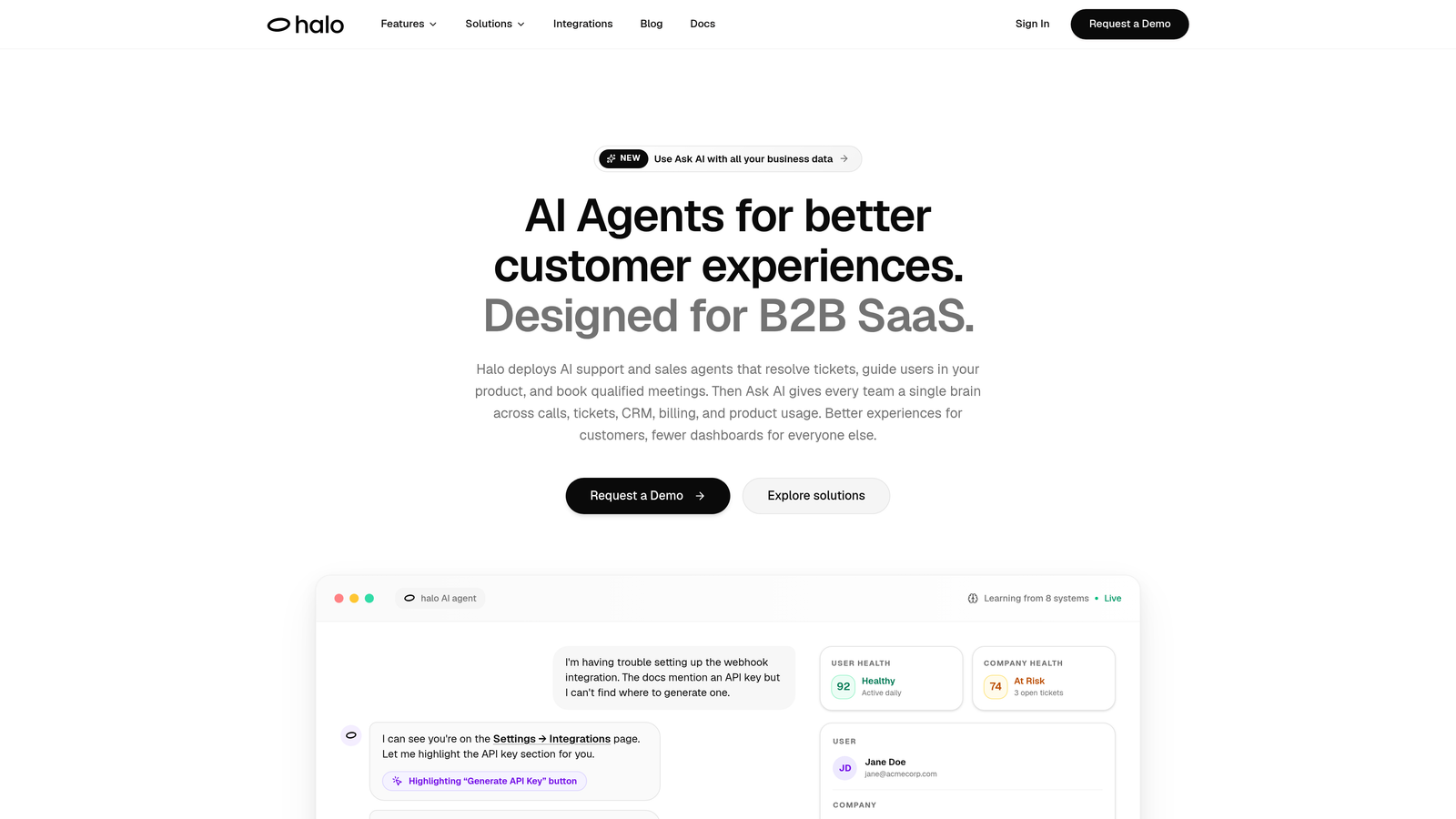
Halo AI is an AI-first customer support platform that deploys intelligent agents to resolve tickets autonomously, guide users through your product, and surface business intelligence from every support interaction.
Where This Tool Shines
Most support tools automate around the edges: routing, tagging, canned responses. Halo AI is built from the ground up to resolve tickets end-to-end, not just move them to the right queue. Its page-aware chat widget is a genuine differentiator: it sees what the user sees on screen, which means guidance is contextually relevant rather than generic.
The smart inbox adds a layer that most helpdesks don't offer at all. Beyond tracking ticket volume and response times, it surfaces customer health signals, anomaly detection, and revenue context, turning your support data into business intelligence your whole team can act on.
Key Features
Intelligent AI Agents: Resolve tickets end-to-end autonomously, with live agent handoff preserving full conversation context when escalation is needed.
Page-Aware Chat Widget: The widget understands which page a user is on and what they're looking at, enabling visual UI guidance that's genuinely contextual.
Auto Bug Ticket Creation: Automatically generates bug reports and routes them directly to Linear or your existing dev workflow, closing the loop between support and engineering.
Smart Inbox with Business Intelligence: Goes beyond standard reporting with customer health signals, anomaly detection, and revenue context layered on top of support data.
Deep Integration Stack: Connects natively with Linear, Slack, HubSpot, Intercom, Stripe, Zoom, PandaDoc, and Fathom, making it a connective layer across your entire business stack.
Best For
B2B SaaS companies that want AI resolution as the primary layer, not a bolt-on feature. Particularly strong for product-led teams where support, engineering, and customer success workflows need to stay tightly connected.
Pricing
Contact for pricing. Visit haloagents.ai for details and to book a demo.
2. Zendesk
Best for: Enterprise support teams that need a mature, battle-tested helpdesk with extensive automation and ecosystem depth
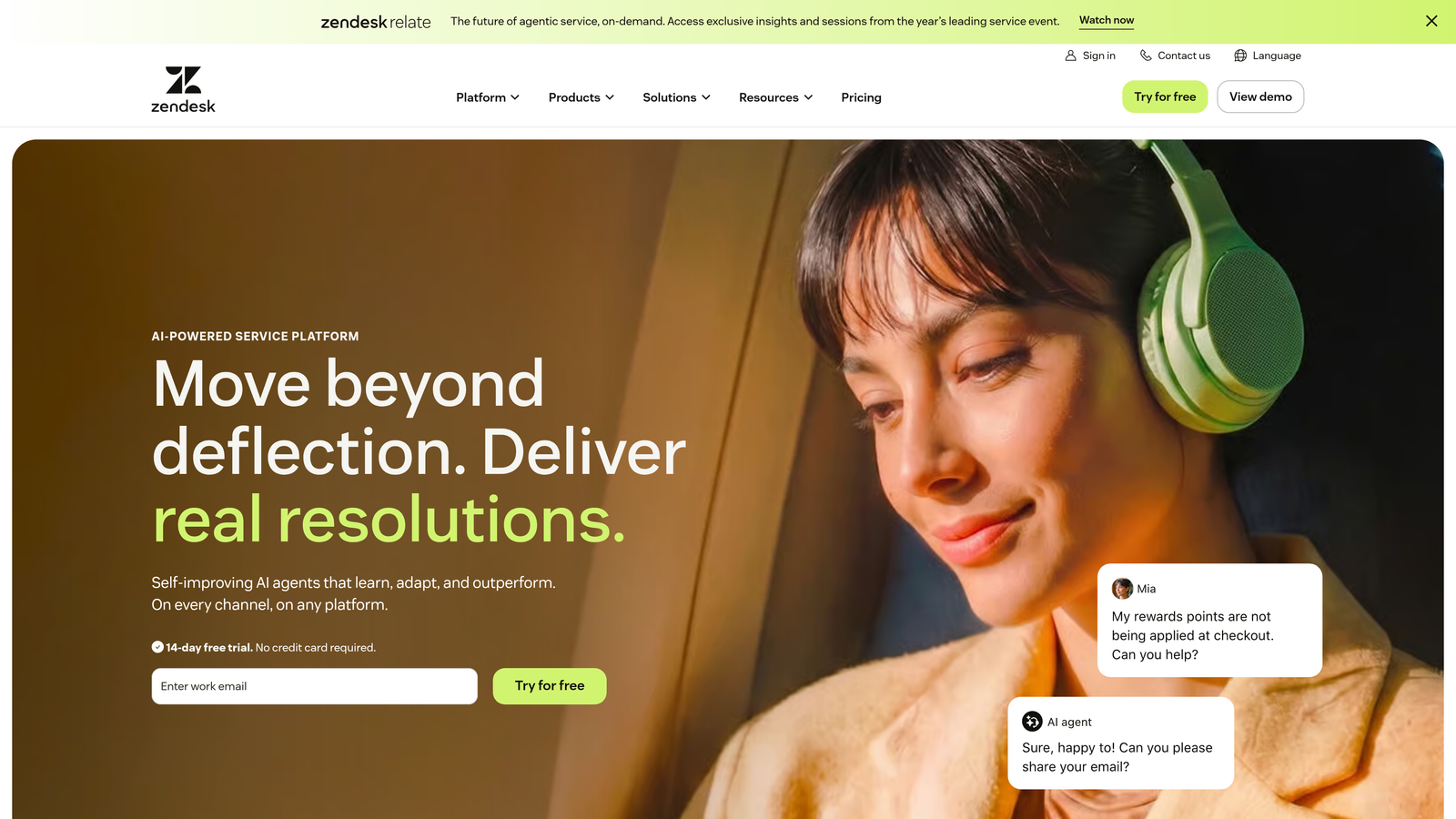
Zendesk is the industry-standard enterprise helpdesk with mature automation via Triggers, Automations, and Macros, plus an expanding AI layer for intelligent triage and response suggestions.
Where This Tool Shines
Zendesk's automation capabilities are deep and well-documented. Triggers fire on ticket events in real time, Automations handle time-based actions like SLA escalations, and Macros let agents apply templated responses and field changes in a single click. For teams with complex routing logic and strict SLA requirements, this infrastructure is hard to beat.
The AI layer has matured considerably, with intent detection and sentiment scoring now built into the core product. The app marketplace with over 1,000 integrations means you can connect Zendesk to almost any tool in your stack, though the breadth of options does come with configuration overhead.
Key Features
Triggers and Automations: Rule-based ticket routing, SLA management, and event-driven workflows with granular condition logic.
Zendesk AI: Intelligent triage with intent detection, sentiment scoring, and AI-assisted response suggestions for human agents.
Macros: One-click templated responses that apply multiple field updates simultaneously, reducing agent handle time on common issues.
App Marketplace: Over 1,000 integrations covering CRM, ecommerce, analytics, and developer tools.
Robust Reporting: Comprehensive SLA tracking, CSAT measurement, and team performance analytics built into the platform.
Best For
Mid-market and enterprise teams with established support operations, complex routing requirements, and a need for a well-supported ecosystem. Less ideal for early-stage teams where setup complexity outweighs the feature depth.
Pricing
Starts at approximately $55/agent/month (Suite Team plan); pricing scales with tier and usage. Enterprise plans are significantly higher.
3. Freshdesk
Best for: Growing teams that want AI-assisted triage and automation at a more accessible price point than enterprise alternatives
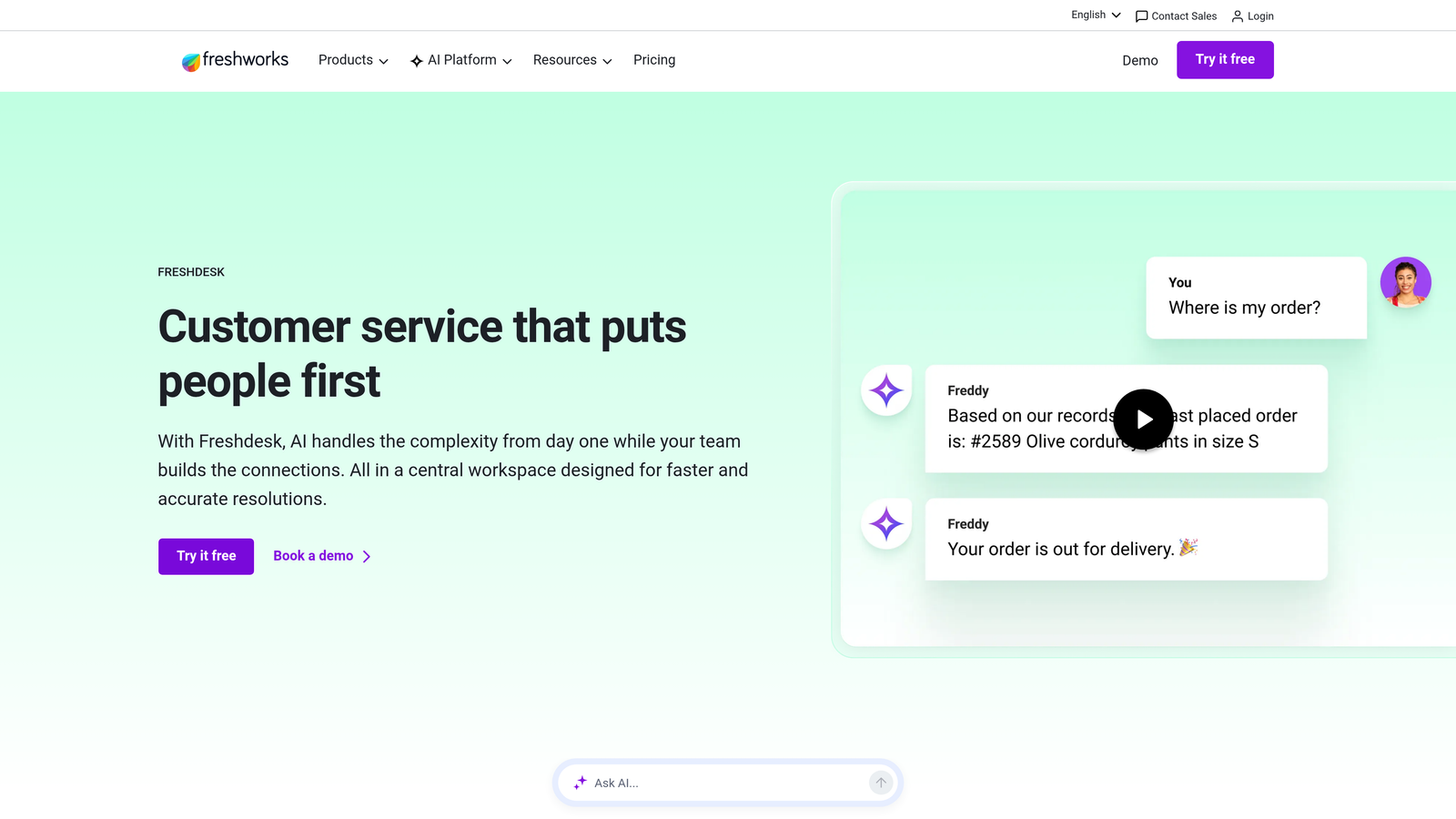
Freshdesk is a full-featured helpdesk platform with Freddy AI built in for auto-triage, suggested responses, CSAT prediction, and self-service automation.
Where This Tool Shines
Freshdesk hits a strong middle ground between feature depth and accessibility. Freddy AI handles ticket categorization and priority assignment automatically, which reduces the manual triage burden on agents from day one. Scenario Automations allow teams to build multi-step workflows without needing developer involvement.
The free tier is genuinely useful for small teams, and the pricing curve is more gradual than Zendesk's, making Freshdesk a common choice for companies scaling from startup to mid-market without wanting to re-platform along the way.
Key Features
Freddy AI: Handles ticket categorization, priority assignment, and response suggestions using historical ticket data and knowledge base content.
Freddy Self Service: AI-powered chatbot for front-line deflection, handling FAQs and common queries before they reach an agent.
Scenario Automations: Multi-step workflow automation that triggers sequences of actions from a single event, reducing repetitive manual steps.
Collision Detection: Prevents two agents from working the same ticket simultaneously, a small but practically important feature for team efficiency.
Free Tier: A functional free plan that gives small teams access to core ticketing without upfront cost.
Best For
SMB and growing mid-market teams that need solid AI-assisted automation without the enterprise price tag. Also a good fit for teams that want a Zendesk alternative with a gentler onboarding curve.
Pricing
Free plan available; paid plans start at approximately $15/agent/month. Advanced AI features require higher tiers.
4. Intercom
Best for: SaaS teams that want conversational, in-app support with AI-driven front-line resolution built into the product experience
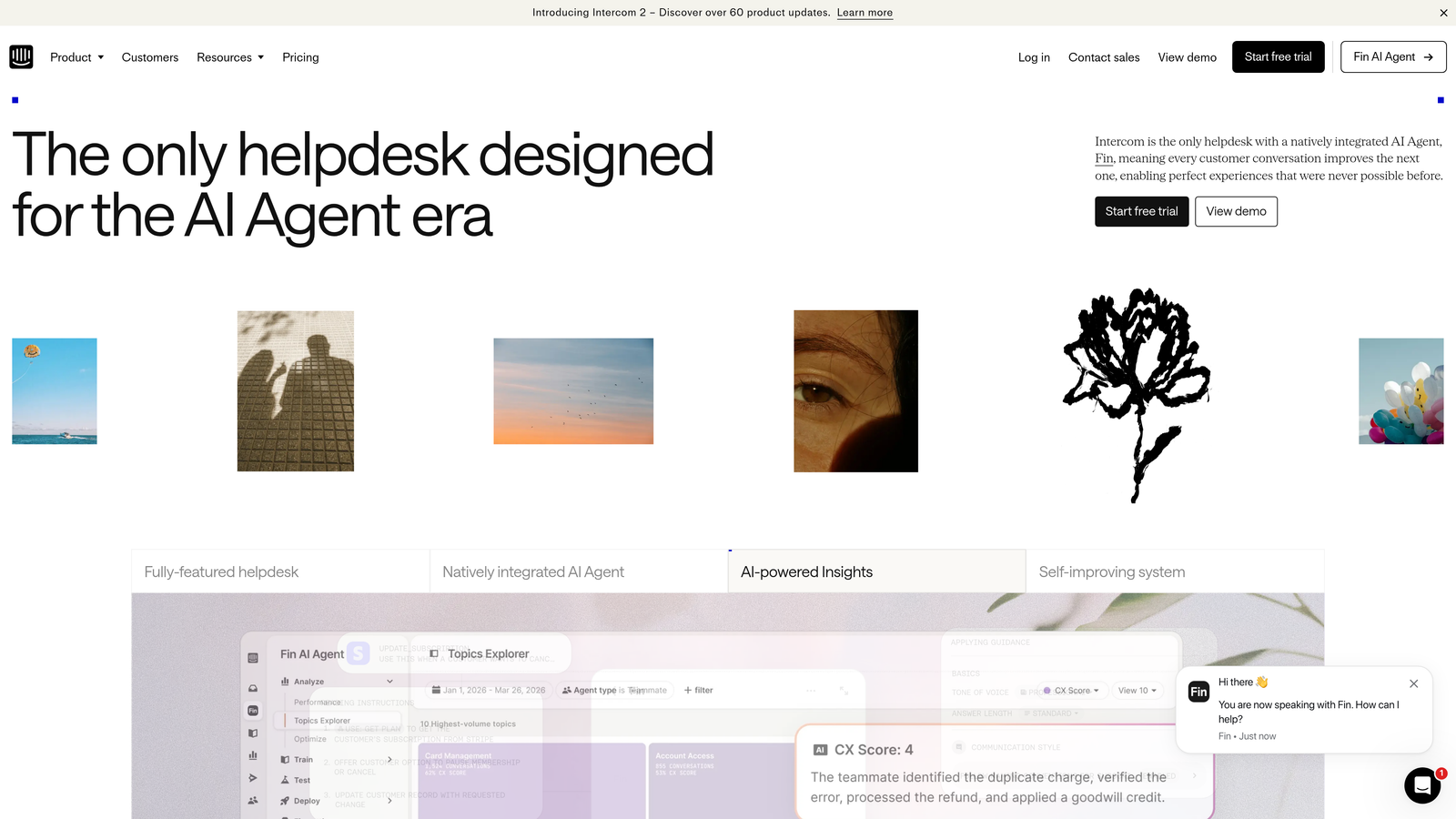
Intercom is a conversational support platform with its Fin AI agent handling front-line ticket resolution, built for SaaS teams that want in-app messaging, proactive support, and AI-driven deflection in one place.
Where This Tool Shines
Intercom's strength is context. Because the platform lives inside your product as a messenger, it has access to user behavior, session data, and in-app events that a traditional helpdesk doesn't. Fin AI leverages this context to resolve tickets more accurately than a generic chatbot operating without product awareness.
The Workflows builder is genuinely no-code and lets teams automate ticket routing, follow-ups, and escalations without engineering involvement. Proactive support triggers, which fire based on what a user is doing inside your app, are a standout feature for teams focused on reducing inbound volume before it starts.
Key Features
Fin AI Agent: Handles autonomous front-line resolution across chat and email, using your help content and product context to resolve tickets without human intervention.
In-App Messaging: Delivers support and proactive messages within your product, where users are already working.
Workflows Builder: No-code automation for ticket routing, follow-ups, and escalation logic.
Proactive Support Triggers: Fires messages and guidance based on specific user behaviors, reducing inbound ticket volume proactively.
AI-Assisted Reply Drafts: Suggests reply drafts for human agents based on conversation context and knowledge base content.
Best For
SaaS companies where the support experience is tightly integrated with the product. Teams that value proactive deflection and conversational UX over traditional ticket-queue workflows.
Pricing
Starts at approximately $39/seat/month; Fin AI resolution is charged per resolved conversation, which can affect total cost at high volume.
5. HubSpot Service Hub
Best for: Teams already on HubSpot CRM that want ticket automation tied directly to customer lifecycle and deal data
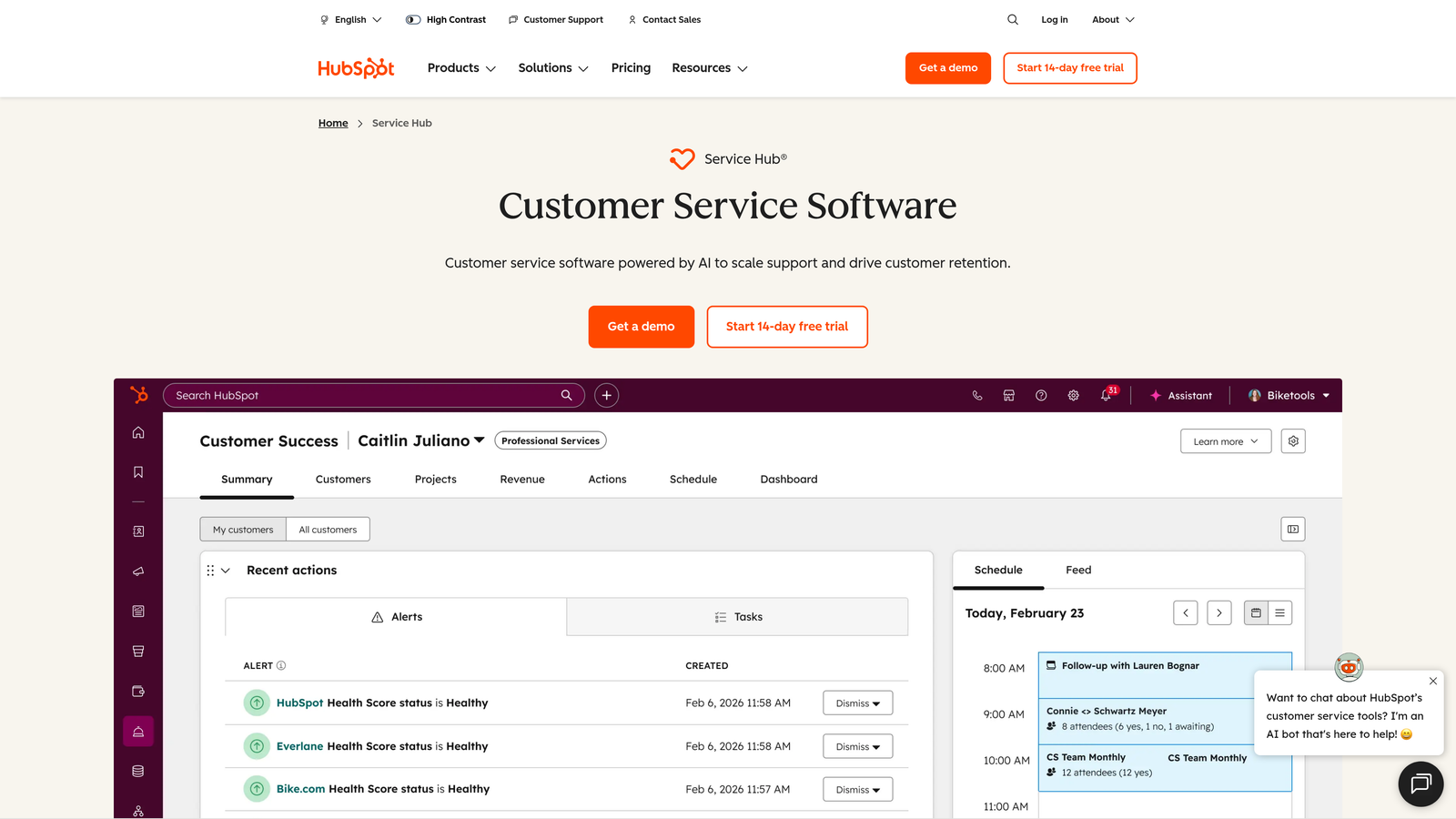
HubSpot Service Hub is a support ticketing platform natively connected to HubSpot CRM, enabling workflows that trigger on customer lifecycle stage, deal data, and contact properties, not just ticket attributes.
Where This Tool Shines
The core differentiator here is CRM-native automation. Most helpdesks treat support tickets as isolated events. Service Hub treats them as part of the customer relationship, which means you can trigger escalation workflows when a ticket comes from a high-value account, or automatically flag support issues to the account manager via a deal property update. For revenue-focused support teams, this context is genuinely valuable.
AI-assisted reply suggestions draw on your knowledge base content, and the customer portal lets contacts track their own tickets without contacting support again, reducing unnecessary follow-up volume.
Key Features
CRM-Connected Automation: Ticket workflows that trigger on deal stage, contact properties, and customer lifecycle stage, not just ticket fields.
AI Reply Suggestions: Pulls from knowledge base content to suggest contextually relevant replies for agents.
SLA Management: Automated escalation and SLA tracking with configurable rules per ticket type or customer segment.
Customer Portal: Self-service portal where customers can view, track, and update their own tickets.
Unified Customer View: Full visibility into support, sales, and marketing interactions on a single contact record.
Best For
Teams already invested in HubSpot's ecosystem. The value compounds significantly when Service Hub connects to an active HubSpot CRM, Sales Hub, and Marketing Hub setup. Less compelling as a standalone support tool.
Pricing
Free tier available; Starter from approximately $15/month. Professional tier required for advanced automation workflows.
6. Tidio
Best for: Small teams and SMBs that need AI-powered chat deflection deployed quickly without complex configuration
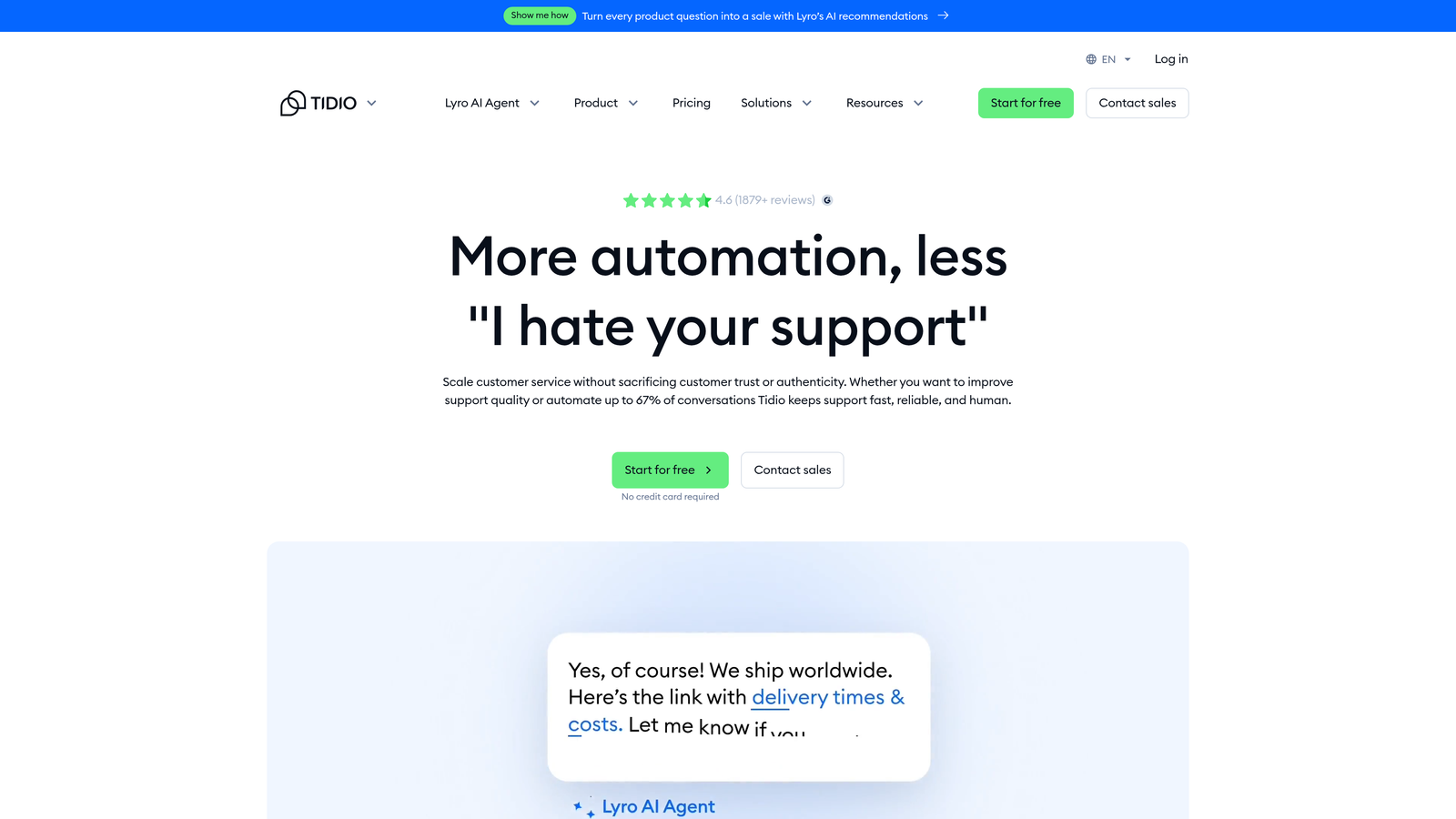
Tidio is a quick-deploy AI chat and support platform with Lyro AI for front-line deflection, designed for small teams that need automation up and running fast.
Where This Tool Shines
Tidio's primary strength is speed to value. The visual chatbot builder uses pre-built templates that teams can customize and deploy without technical resources. Lyro AI handles conversational deflection for common questions, and the live chat interface lets agents take over seamlessly when a conversation needs a human.
For e-commerce and SMB teams with straightforward support workflows, Tidio delivers solid deflection at a price point that's hard to argue with. It's not built for complex B2B workflows or deep product integrations, but it doesn't try to be.
Key Features
Lyro AI: Conversational AI for FAQ deflection and common query resolution, trained on your help content.
Visual Chatbot Builder: Drag-and-drop bot builder with pre-built templates for common support scenarios.
Live Chat with Agent Takeover: Smooth handoff from AI conversation to human agent when needed.
E-Commerce Integrations: Native connections to Shopify, WooCommerce, and BigCommerce for order-aware support.
Mobile App: Lets agents respond to conversations on mobile, useful for small teams without dedicated support staff.
Best For
Small businesses, e-commerce stores, and SMB teams that need accessible AI deflection without enterprise complexity. Not the right fit for B2B SaaS teams with complex routing or deep product integration needs.
Pricing
Free plan available; paid plans start at approximately $29/month, making it one of the most accessible options on this list.
7. Gorgias
Best for: E-commerce brands, particularly those on Shopify, that need order-aware support automation at scale
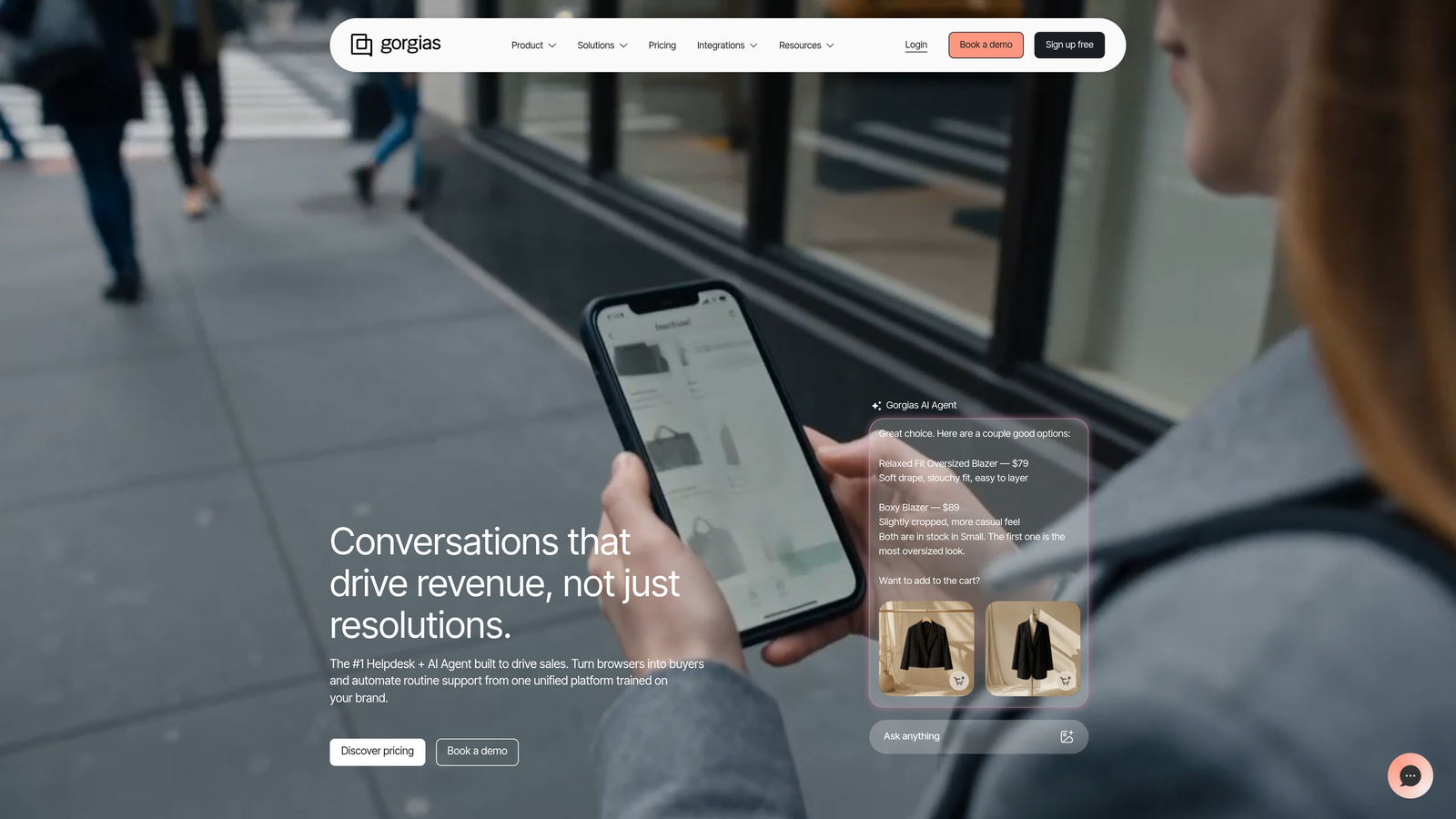
Gorgias is a purpose-built support ticket automation platform for e-commerce brands, with deep Shopify integration enabling automated responses that reference live order, shipping, and return data.
Where This Tool Shines
Gorgias solves a specific and common e-commerce pain point: the flood of "where is my order" (WISMO) and return-related tickets that consume agent time without requiring genuine human judgment. By connecting directly to Shopify order data, Gorgias can auto-respond to these queries with accurate, real-time information, closing tickets before they ever reach an agent.
The rules engine is well-designed for e-commerce logic, allowing teams to tag, route, and auto-close tickets based on order attributes, product categories, or customer tier. Revenue attribution per support interaction is a useful feature for teams that want to connect support activity to commercial outcomes.
Key Features
Order-Aware Automation: Auto-responds to WISMO and return queries using live Shopify order data, without agent involvement.
Rules Engine: Tagging, routing, and ticket closure based on order attributes and customer properties.
E-Commerce Workflow Automation: Handles refunds, cancellations, and tracking update workflows automatically.
Unified Inbox: Consolidates email, chat, social, and SMS into a single queue.
Revenue Attribution: Tracks revenue influenced by support interactions, connecting support activity to commercial outcomes.
Best For
E-commerce brands, particularly Shopify merchants with high ticket volume driven by order and shipping queries. Not suited for B2B SaaS teams, but included here for completeness given its strong fit for e-commerce support operations.
Pricing
Starts at approximately $10/month for low ticket volumes; pricing scales by ticket count, which can increase significantly at high volume.
8. Help Scout
Best for: Teams where maintaining a personal, relationship-driven support tone is as important as automation speed
Help Scout is a clean, human-centric support platform with AI Drafts and a Beacon widget for in-app help, suited to teams that value tone and relationship quality alongside efficiency.
Where This Tool Shines
Help Scout is deliberately not trying to automate everything. The philosophy is that great support often requires a human voice, and the platform is designed to help agents respond faster and more consistently without removing them from the loop. AI Drafts generate reply suggestions that agents review and edit before sending, preserving the human quality of the response.
Beacon, the in-app widget, handles self-service and proactive messaging without feeling like a chatbot. For companies where support is part of the brand experience, not just a cost center, Help Scout's approach resonates.
Key Features
AI Drafts: Generates reply suggestions based on conversation context that agents can edit and send, combining AI speed with human quality control.
Beacon Widget: In-app self-service and proactive messaging that integrates with your knowledge base without a chatbot interface.
Workflows: Automated tagging, routing, and follow-up sequences for common ticket types.
Customer Profiles: Full conversation history and customer data surfaced alongside every ticket.
Satisfaction Ratings: CSAT collection built into every conversation by default.
Best For
Startups and mid-market companies where support quality and tone are brand differentiators. Teams that want AI assistance without full AI autonomy, and value simplicity over feature depth.
Pricing
Starts at approximately $22/user/month on the Standard plan.
9. Zoho Desk
Best for: Teams already in the Zoho ecosystem that want AI-assisted support with deep native CRM and analytics integration
Zoho Desk is a context-aware helpdesk with Zia AI for sentiment analysis, anomaly detection, and response suggestions, best suited for teams already invested in the Zoho product ecosystem.
Where This Tool Shines
Zia, Zoho's AI assistant, brings a few capabilities that go beyond standard helpdesk AI. Sentiment scoring on incoming tickets helps prioritize responses based on customer frustration level, not just ticket age. Anomaly detection alerts teams when ticket volume spikes in unusual patterns, which is useful for catching product incidents early.
Blueprint, Zoho Desk's workflow automation engine, supports conditional logic and structured approval flows that work well for teams with compliance requirements or multi-step escalation processes. The native integration with Zoho CRM and Zoho Analytics is the strongest argument for teams already on the Zoho stack.
Key Features
Zia AI: Sentiment scoring, ticket tagging, and response suggestions powered by AI analysis of ticket content and history.
Blueprint: Structured workflow automation with conditional logic, approval steps, and SLA enforcement built in.
Zoho Ecosystem Integration: Native connections to Zoho CRM, Zoho Analytics, and 40+ other Zoho applications.
Multi-Channel Support: Unified inbox across email, chat, social, and phone.
Anomaly Detection: Automated alerts for unusual ticket volume patterns, helping teams identify product issues proactively.
Best For
Teams already using Zoho CRM or other Zoho products, where the native integration eliminates the need for third-party connectors. Also a strong value option for budget-conscious teams that need AI features without enterprise pricing.
Pricing
Free plan for up to 3 agents; paid plans start at approximately $14/agent/month, making it one of the more affordable options with AI capabilities included.
Which Tool Is Right for Your Team?
The right choice depends less on feature lists and more on where your team is today and where your support operation needs to go.
If you're a B2B SaaS team that wants AI resolution as the primary layer, not a bolt-on, Halo AI is the purpose-built option. The page-aware context, auto bug ticket creation, and business intelligence layer make it particularly strong for product-led companies where support, engineering, and customer success workflows intersect.
For enterprise teams with complex routing and established support operations, Zendesk remains the most mature option. Freshdesk offers comparable depth at a more accessible price point for growing teams. Intercom is the natural choice for SaaS companies that want support deeply embedded in the product experience.
Quick-reference guide by use case:
AI-first resolution for B2B SaaS: Halo AI
Enterprise helpdesk with deep ecosystem: Zendesk
Accessible AI triage for growing teams: Freshdesk
Conversational in-app support for SaaS: Intercom
CRM-connected automation on HubSpot: HubSpot Service Hub
Quick-deploy AI chat for SMBs: Tidio
Order-aware automation for e-commerce: Gorgias
Human-centric support with AI assist: Help Scout
Best value for Zoho ecosystem teams: Zoho Desk
Your support team shouldn't scale linearly with your customer base. Let AI agents handle routine tickets, guide users through your product, and surface business intelligence while your team focuses on complex issues that need a human touch. See Halo in action and discover how continuous learning transforms every interaction into smarter, faster support.