9 Best Support Tools for SaaS Products in 2026
Choosing the best support tools for SaaS products is critical for teams managing complex workflows, frequent product updates, and technical users at scale. This guide evaluates nine purpose-built solutions across AI capabilities, integration depth, and scalability to help SaaS teams—from lean startups to enterprise operations—resolve tickets faster, reduce churn, and connect support data directly to product and revenue insights.
 Grant CooperFounder14 min read
SaaS support teams face a challenge that traditional helpdesks weren't designed to solve. Your users are technical, your product ships updates constantly, and your team can't add headcount every time you release a new feature. The right support toolstack doesn't just handle tickets: it resolves them faster, surfaces product intelligence, and keeps customers from churning before they ever reach a human agent.
This list covers the best support tools purpose-built (or well-suited) for SaaS products in 2026. Each tool was evaluated on AI capabilities, integration depth, scalability, and how well it handles the realities of SaaS support: complex workflows, multi-product environments, and the need to connect support data back to product and revenue teams.
Whether you're a lean startup scaling past your first 1,000 customers or an enterprise team rethinking your helpdesk stack, there's a tool here worth a closer look.
1. Halo AI
Best for: SaaS teams that want AI-first support with product intelligence and deep integrations
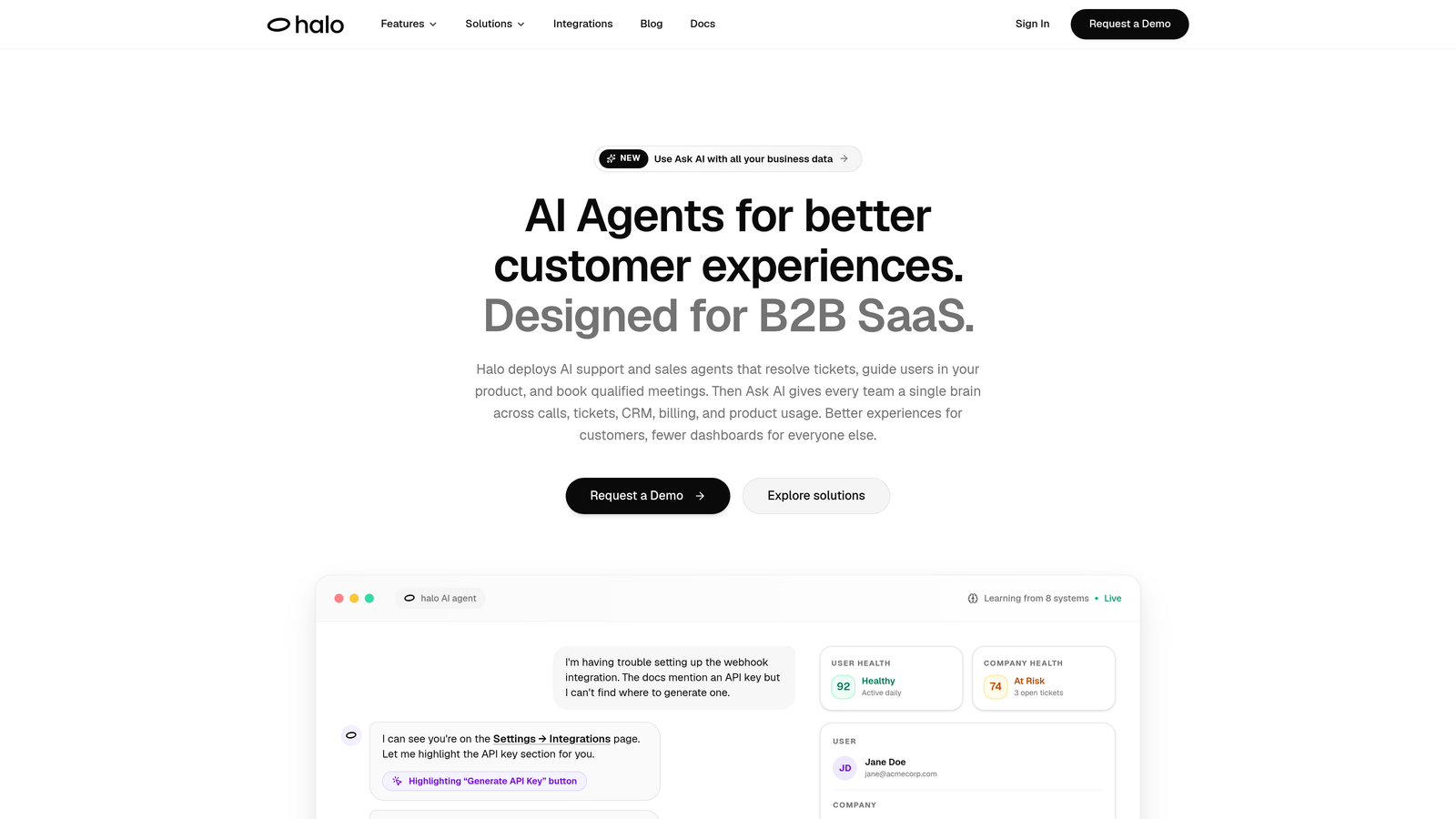
Halo AI is an AI-native customer support platform built specifically for SaaS products, not a traditional helpdesk with AI bolted on afterward.
Where This Tool Shines
What separates Halo from most support tools is its page-aware architecture. The chat widget doesn't just know who the user is: it knows where they are in your product, what they're looking at, and can provide visual UI guidance in context. This matters enormously for SaaS products where the same question means something completely different depending on which feature a user is trying to use.
Beyond ticket resolution, Halo's smart inbox surfaces business intelligence that most support tools never think to provide: customer health signals, revenue intelligence, and anomaly detection. Your support interactions become a data layer that informs product decisions and flags churn risk before it becomes a churned account.
Key Features
Page-Aware Chat Widget: Sees what users see in real time, providing contextual guidance and visual UI walkthroughs without requiring users to describe their screen.
Intelligent AI Agents: Autonomously resolve tickets with continuous learning, getting smarter from every interaction rather than requiring constant manual retraining.
Smart Inbox with Business Intelligence: Goes beyond ticket metrics to surface customer health signals, revenue intelligence, and product friction anomalies.
Auto Bug Ticket Creation: Automatically creates structured bug reports connected directly to Linear, removing the manual handoff between support and engineering.
Live Agent Handoff: Escalates complex issues to human agents with full context preserved, so customers never have to repeat themselves.
Deep Integration Stack: Connects natively to Linear, Slack, HubSpot, Intercom, Stripe, Zoom, PandaDoc, and Fathom, linking support data to your entire business stack.
Best For
SaaS product teams that want support to do more than close tickets. Halo is particularly well-suited for teams that need support data to inform product roadmaps, flag revenue risk, and integrate tightly with engineering workflows. If you're tired of support being a data silo, this is the tool built to fix that.
Pricing
Contact for pricing at haloagents.ai. Given the platform's depth and integration capabilities, pricing is tailored to team size and use case.
2. Intercom
Best for: SaaS teams wanting all-in-one customer communications with lifecycle messaging
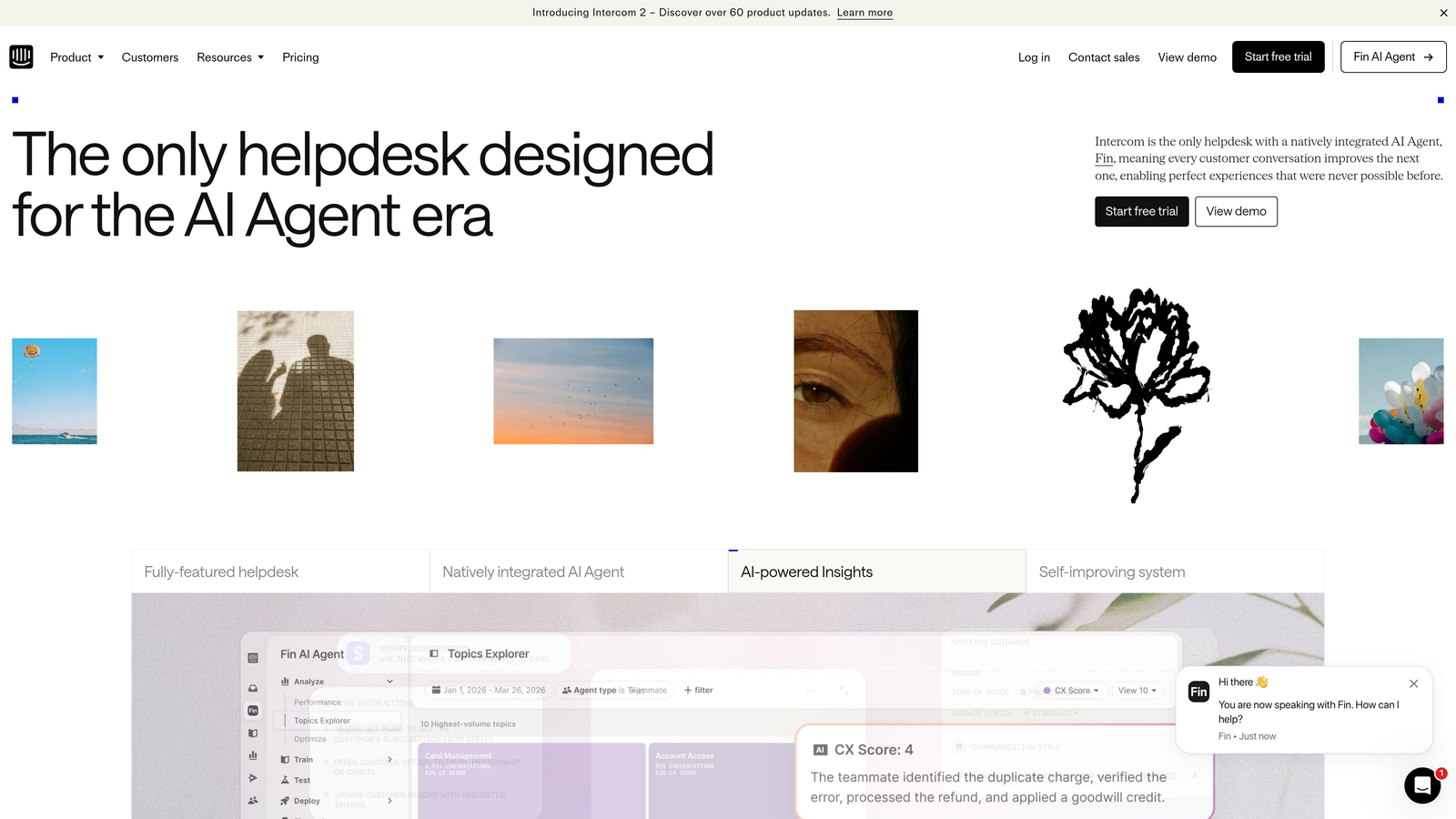
Intercom is a mature, all-in-one customer communications platform with deep SaaS heritage and a capable AI agent built for automated resolution.
Where This Tool Shines
Intercom's strength is breadth. It combines support, onboarding, and lifecycle marketing into a single platform, which means your support conversations sit alongside product tours, outbound campaigns, and customer data in one place. For SaaS teams that want to manage the full customer journey without stitching together multiple tools, that unified view is genuinely valuable.
The Fin AI agent handles a meaningful portion of routine inquiries using large language model technology, and the messenger widget integrates cleanly into web and mobile products. The platform's customer data layer gives agents lifecycle context that pure helpdesk tools often lack.
Key Features
Fin AI Agent: Powered by large language models for automated ticket resolution with source citations and confidence controls.
Messenger Widget: In-app and web chat with customizable appearance and behavior across different product surfaces.
Product Tours and Outbound Messaging: Onboarding flows and proactive messaging built into the same platform as support.
Conversation Routing: Inbox with assignment rules, round-robin routing, and team-based prioritization.
Customer Data Platform: Lifecycle context including plan, usage, and company attributes surfaced in every conversation.
Best For
Growing SaaS companies that want support and customer success communications under one roof. Worth noting: Intercom's pricing has increased substantially in recent years, which can become a significant line item as your team and customer base grow.
Pricing
Essential plan starts at $39/seat/month. Pricing scales with seat count, usage, and add-ons, so total cost can grow quickly for larger teams.
3. Zendesk
Best for: Mid-market and enterprise SaaS teams needing robust omnichannel ticketing infrastructure
Zendesk is an enterprise-grade support platform with deep ticketing infrastructure, a massive app marketplace, and AI features layered onto one of the most established helpdesks in the industry.

Where This Tool Shines
Zendesk's core strength is its maturity. The ticketing infrastructure is battle-tested across thousands of companies, and the marketplace of over 1,000 integrations means you can connect almost any tool in your stack. For teams with complex support operations, multiple channels, and strict SLA requirements, Zendesk provides the scaffolding to manage all of it.
The AI layer, including intelligent triage and agent assist features, has improved significantly and helps route tickets more accurately and reduce time-to-resolution. That said, Zendesk can feel heavyweight for early-stage SaaS teams who don't yet need enterprise-grade complexity.
Key Features
Omnichannel Ticketing: Unified inbox across email, chat, voice, and social channels with consistent routing logic.
Zendesk AI: Intelligent triage, agent assist suggestions, and automated workflows powered by machine learning.
App Marketplace: Over 1,000 integrations covering CRM, billing, project management, and developer tools.
Advanced Reporting: SLA tracking, custom dashboards, and CSAT measurement with drill-down capabilities.
Guide and Self-Service: Built-in knowledge base and customer portal for self-serve deflection.
Best For
Mid-market and enterprise SaaS companies with established support operations, multiple channels, and teams large enough to justify the platform's depth. Early-stage startups may find it more infrastructure than they need.
Pricing
Suite Team starts at $55/agent/month. Enterprise plans are available with custom pricing for larger organizations.
4. Freshdesk
Best for: Cost-conscious SaaS teams that need solid support fundamentals with built-in AI
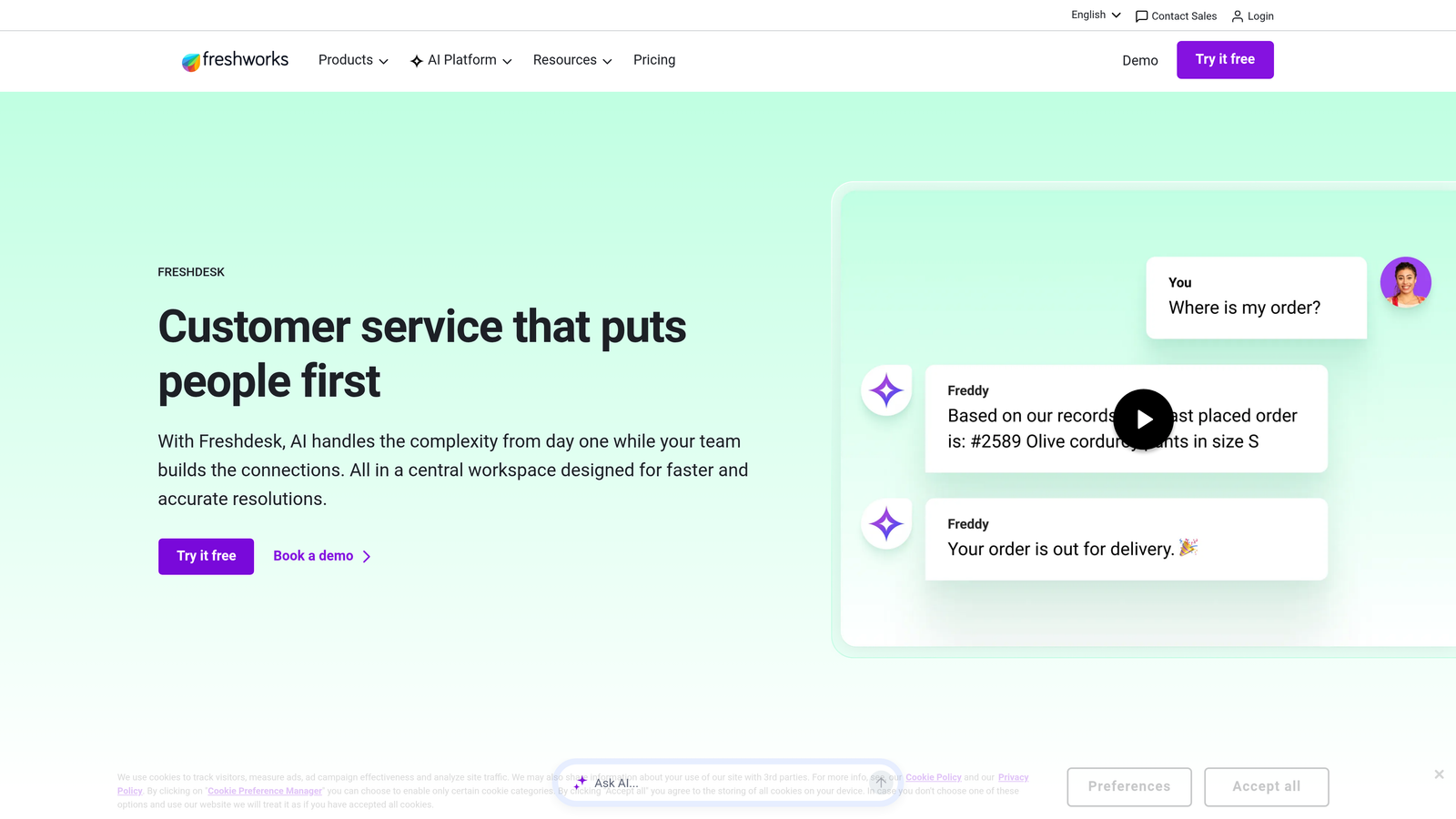
Freshdesk is a cost-accessible helpdesk platform with Freddy AI built in, offering strong support fundamentals at a price point that works for growing SaaS teams.
Where This Tool Shines
Freshdesk occupies the practical middle ground between free tools and enterprise platforms. Freddy AI handles suggested replies, ticket summarization, and workflow automation without requiring a separate AI add-on budget. The shared inbox with collision detection keeps support teams from doubling up on the same ticket, and SLA management is solid out of the box.
The free tier makes Freshdesk genuinely accessible for early-stage teams, and the paid plans scale reasonably as you grow. It may not have the AI depth of newer AI-native platforms, but for teams that primarily need reliable helpdesk fundamentals with a capable AI layer, it delivers.
Key Features
Freddy AI: Suggested replies, ticket summarization, and automation recommendations built into the core product.
Shared Inbox with Collision Detection: Prevents multiple agents from responding to the same ticket simultaneously.
SLA Management and CSAT: Configurable service level agreements with automated escalations and satisfaction tracking.
Multi-Channel Support: Email, live chat, phone, and social channels unified in one workspace.
Free Tier: A genuinely usable free plan for small teams, not just a trial.
Best For
SMB and early-stage SaaS teams looking for a capable helpdesk without Zendesk or Intercom pricing. Also a good fit for teams already in the Freshworks ecosystem using Freshsales or Freshservice.
Pricing
Free plan available for up to 10 agents. Paid plans start at $15/agent/month, making it one of the more accessible options on this list.
5. Plain
Best for: Technical SaaS products that need support deeply embedded in product data and engineering workflows
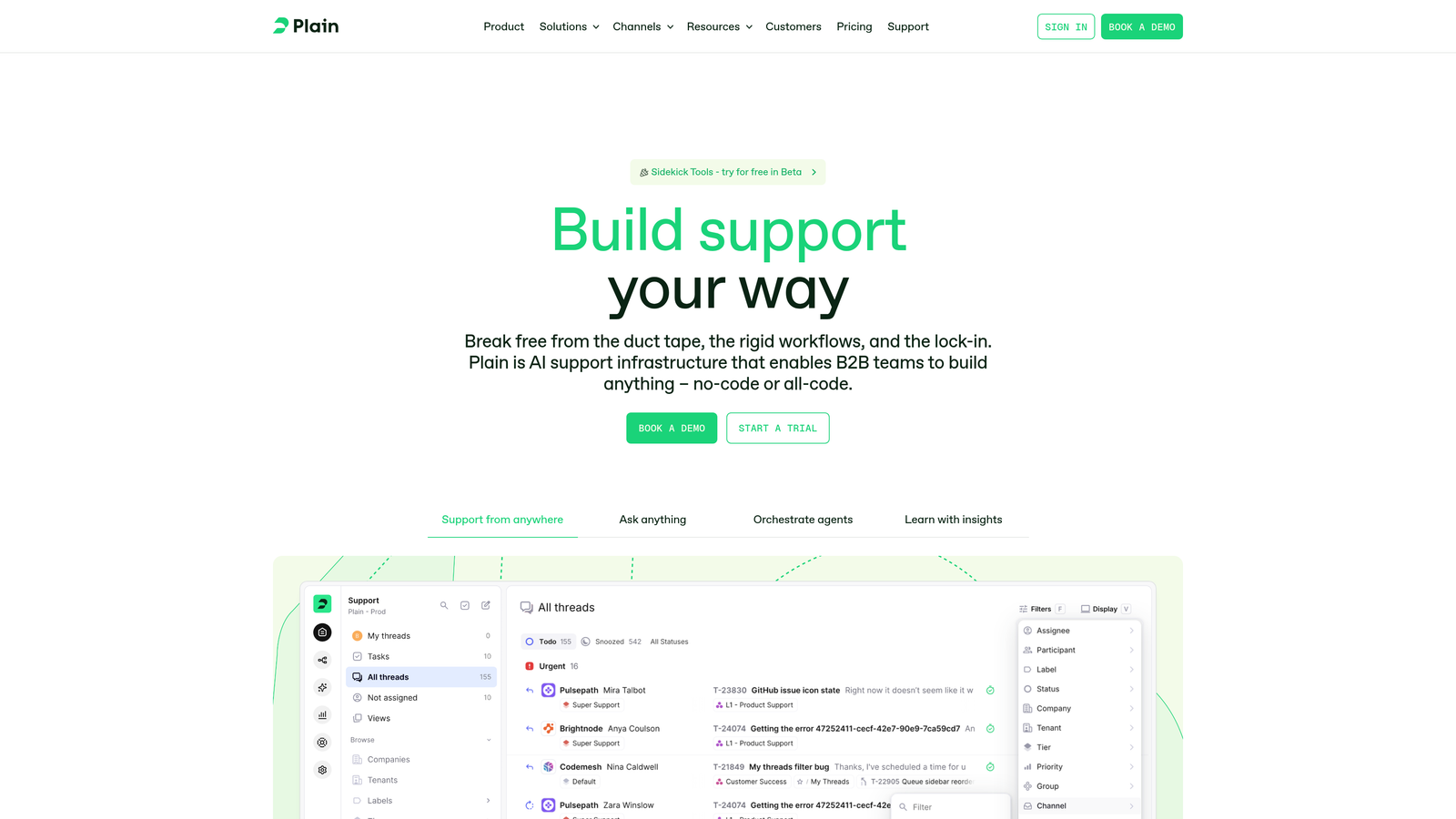
Plain is a developer-first support tool built API-first, designed for technical teams that need support to integrate at the infrastructure level rather than sit alongside it.
Where This Tool Shines
Plain's approach is fundamentally different from traditional helpdesks. Because it's API-first, you can pull customer context directly from your product into every support conversation: subscription status, usage data, error logs, whatever your product knows about that user. The result is support interactions where agents have full context without switching tabs or asking customers to explain their setup.
The Slack-native workflow is a genuine differentiator for developer-focused teams. Many engineering and developer tool companies already run internal communication through Slack, and Plain meets them there rather than requiring a context switch to a separate support interface.
Key Features
API-First Architecture: Deep integration with your product's data layer, pulling customer context programmatically into every conversation.
Slack-Native Workflows: Support operations that live inside Slack, reducing friction for technical teams already working there.
Thread-Based Conversation Model: Clean, organized conversation structure designed for technical support interactions.
Webhooks and Programmatic Enrichment: Automate customer data enrichment and trigger workflows based on support events.
Customer Context from Product Data: Surface account status, usage metrics, and product signals directly in the support view.
Best For
Developer tool companies, API-first SaaS products, and infrastructure teams where support conversations require deep technical context and engineering team involvement. Less suited for high-volume B2C support operations.
Pricing
Starts at $50/month. See plain.com for current plan details, as pricing has evolved as the product has matured.
6. Help Scout
Best for: Teams that prioritize clean, human-feeling support with built-in knowledge base and in-app help
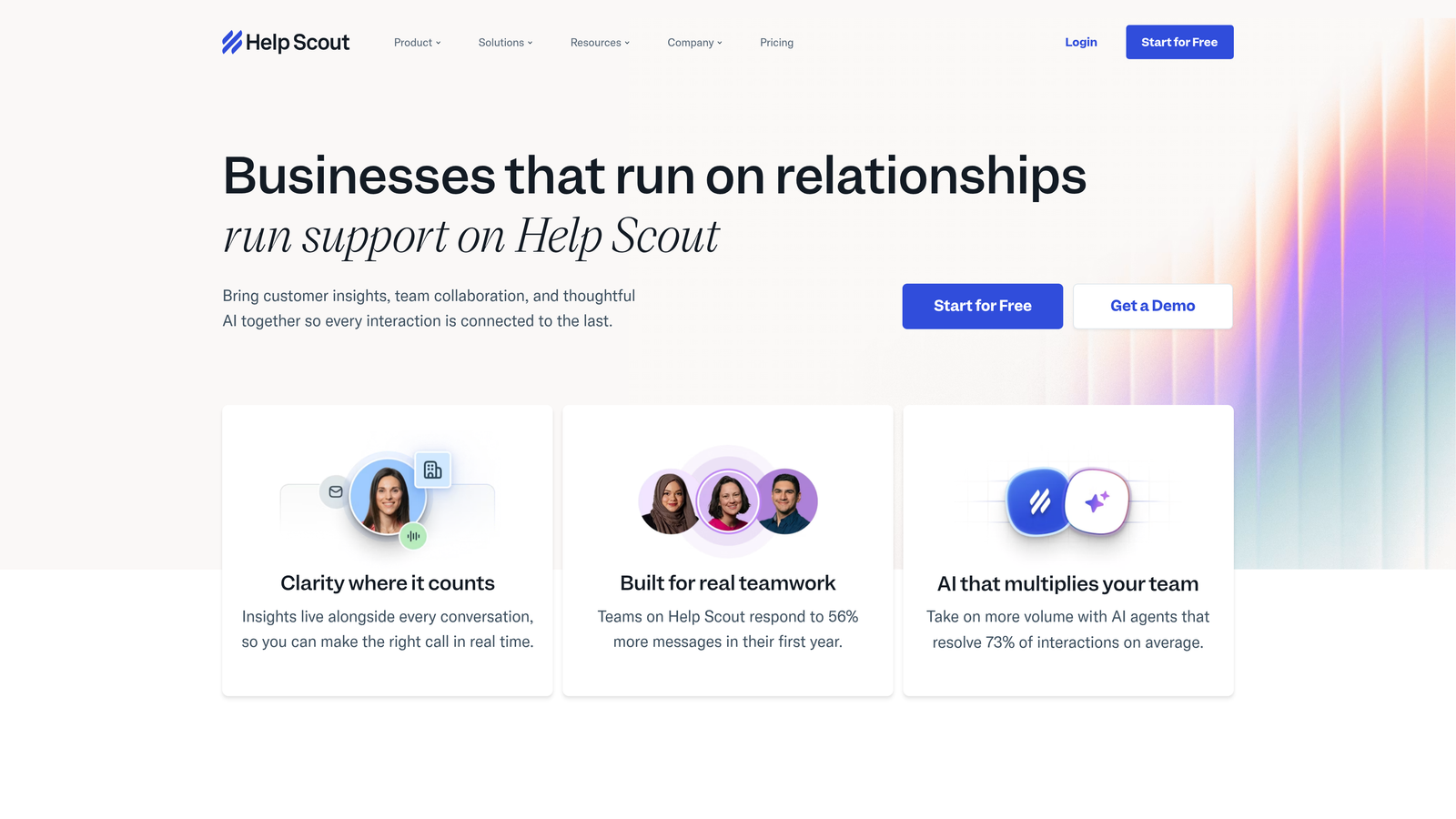
Help Scout is a clean, email-native shared inbox platform known for its simplicity, customer-centric philosophy, and transparent pricing.
Where This Tool Shines
Help Scout's signature strength is making support feel human. The email-like interface means agents work in a familiar environment, and customers receive responses that don't feel like they came from a ticket system. The Docs knowledge base is built in (not a separate product), and the Beacon widget brings contextual in-app help to your product without significant engineering overhead.
The AI features added in recent releases, including AI Drafts and AI Summarize, improve agent productivity without trying to replace the human touch that Help Scout's brand is built around. Pricing is transparent and per-user without seat minimums, which makes budgeting straightforward.
Key Features
Shared Inbox with Email-Like UX: Collision detection, internal notes, and assignment workflows in an interface that feels familiar to agents and customers alike.
Docs Knowledge Base: Built-in self-serve documentation that integrates directly with the support workflow.
Beacon Widget: In-app contextual help that surfaces relevant Docs articles and allows customers to start conversations without leaving your product.
AI Drafts and AI Summarize: Agent productivity features that speed up response drafting and conversation review.
Transparent Pricing: Per-user pricing with no minimums and no hidden usage fees.
Best For
SaaS teams that value simplicity, clean UX, and a support experience that feels genuinely human. Particularly well-suited for teams where support quality and tone matter as much as resolution speed.
Pricing
Standard plan starts at $22/user/month. No seat minimums, which makes it accessible for small teams without a large upfront commitment.
7. Loom
Best for: Support teams that need to explain complex product workflows visually without scheduling calls
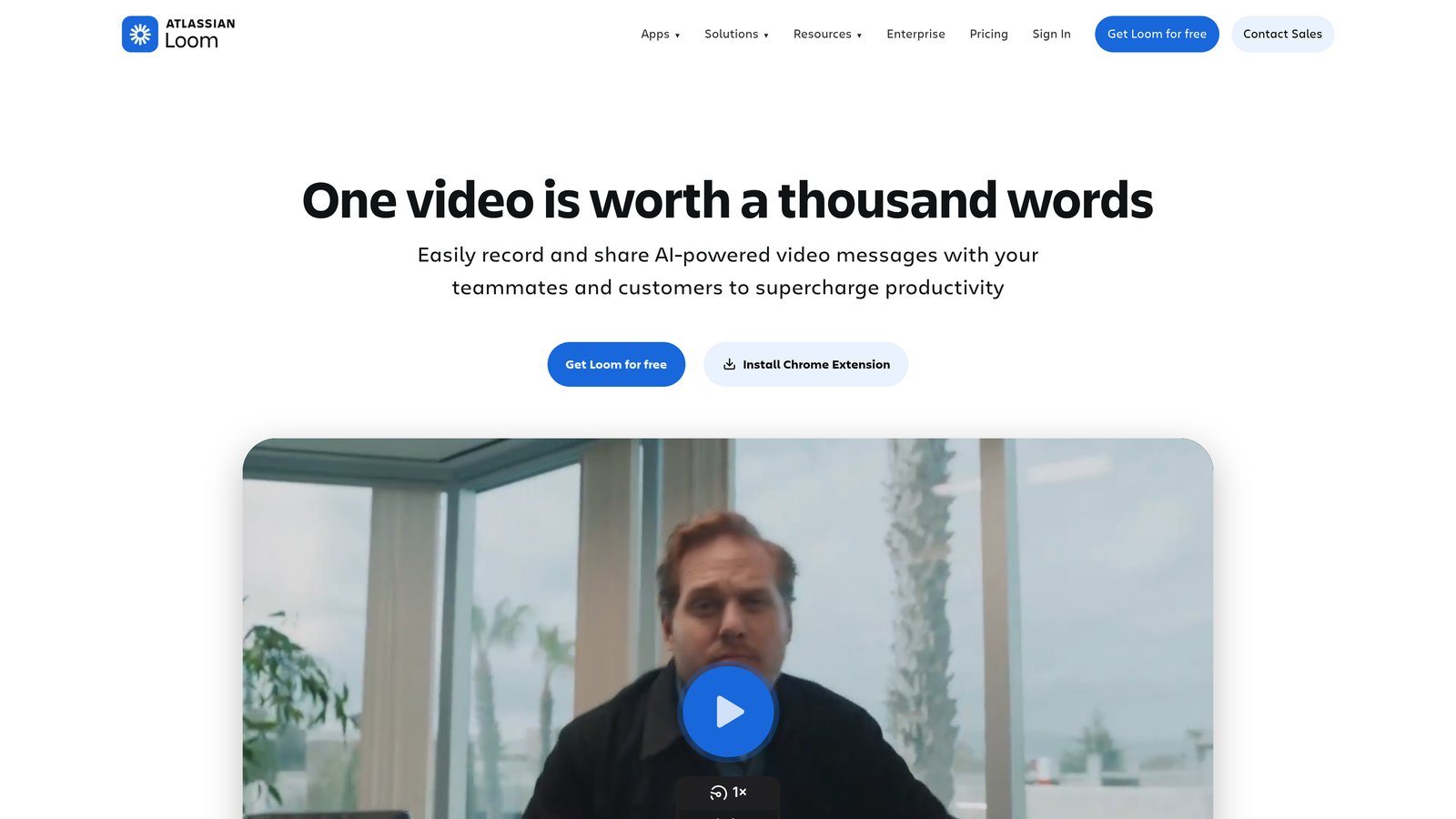
Loom is an async video messaging tool that lets support agents record quick screen walkthroughs to answer complex questions that are difficult to explain in text.
Where This Tool Shines
Some support questions are simply better answered with a 90-second video than a five-paragraph text response. Loom is built for exactly that scenario. An agent can record their screen, narrate a product walkthrough, and share a link in the time it would take to write a detailed text explanation. For SaaS products with complex workflows, multi-step configurations, or visual UI elements, this can dramatically reduce ticket back-and-forth.
Loom isn't a primary support platform: it's a complementary tool that slots into your existing workflow. The integrations with Zendesk, Intercom, and Slack mean agents can drop video links directly into existing conversations without friction.
Key Features
One-Click Recording: Screen and camera recording that starts instantly with no meeting setup or scheduling required.
Shareable Video Links: Viewer engagement analytics show whether customers actually watched the walkthrough.
In-Video Commenting: Customers can leave timestamped comments and reactions directly on the video.
Auto-Generated Transcripts: Captions and transcripts created automatically for accessibility and searchability.
Helpdesk Integrations: Connects with Zendesk, Intercom, and Slack for in-context video sharing.
Best For
Support teams handling technically complex SaaS products where visual demonstration beats written explanation. Works best as a complement to a primary helpdesk rather than a standalone support solution.
Pricing
Free starter plan available. Business plan starts at $12.50/creator/month with advanced analytics and longer recording limits.
8. Notion (as a Knowledge Base)
Best for: Modern SaaS teams building flexible internal and external knowledge bases that feed AI support tools
Notion is a flexible documentation platform that many SaaS teams use to build internal agent knowledge bases and customer-facing help content that also serves as training material for AI support tools.
Where This Tool Shines
Notion's flexibility is its defining feature. Unlike purpose-built knowledge base tools that enforce rigid structures, Notion lets you build documentation that matches how your team actually thinks. Internal runbooks, customer-facing help articles, product changelogs, and onboarding guides can all live in one connected workspace with consistent formatting and search.
For AI-augmented support teams, Notion's role is increasingly important as a knowledge source. Many AI support platforms can ingest Notion content to train their models or retrieve answers, making well-maintained Notion documentation a direct input to AI resolution quality. The AI writing and summarization features built into Notion also help teams keep documentation current without a dedicated technical writer.
Key Features
Flexible Page and Database Structure: Build documentation hierarchies that match your product's structure, not a template you're forced to fit.
Public-Facing Pages: Publish Notion pages as customer-facing help content without a separate CMS.
AI Writing and Summarization: Draft and maintain documentation faster with built-in AI assistance.
Team Wikis: Internal knowledge bases for support agent training, escalation playbooks, and product context.
Helpdesk and AI Tool Integrations: Connects with most major support platforms and AI tools for content ingestion.
Best For
Modern SaaS teams that want a single, flexible documentation layer serving both support agents and customers, particularly those using AI support tools that can ingest and retrieve from Notion content.
Pricing
Free for individuals and small teams. Team plan starts at $10/user/month, making it accessible at almost any stage.
9. Statuspage (by Atlassian)
Best for: SaaS teams that want to reduce inbound ticket volume during incidents with proactive communication
Statuspage is a proactive incident communication tool that gives SaaS teams a public-facing status page to communicate outages and maintenance, reducing inbound ticket volume when things go wrong.
Where This Tool Shines
Here's the thing about incidents: if customers can't tell whether your product is down or whether they're doing something wrong, they'll open a support ticket. Multiply that by your entire user base and you have a support queue crisis layered on top of an infrastructure crisis. Statuspage solves this by giving customers a single source of truth they can check before reaching out.
The component-level status tracking lets you communicate granular information: not just "we're having issues" but "the API is degraded while the dashboard remains operational." Subscriber notifications via email, SMS, and webhook mean customers who care most get proactive updates without having to check the page repeatedly.
Key Features
Public and Private Status Pages: Separate pages for external customer communication and internal incident tracking.
Real-Time Incident Updates: Post and update incident status with structured severity levels and resolution timelines.
Subscriber Notifications: Email, SMS, and webhook alerts for customers who opt in to incident communications.
Component-Level Tracking: Granular status per product component, API, or service rather than a single binary up/down status.
Monitoring Integrations: Connects with PagerDuty, OpsGenie, and infrastructure monitoring tools for automated incident creation.
Best For
Any SaaS product with reliability expectations and a customer base that notices downtime. Particularly valuable for teams where incidents generate large spikes in support volume, and for products with enterprise customers who have uptime SLAs.
Pricing
Free plan available for basic use. Paid plans start at $29/month with advanced subscriber management and private page capabilities.
Which Tool Is Right for Your Team?
The honest answer is that no single tool covers every need, and the best SaaS support stacks tend to combine a primary platform with a few complementary tools. Here's a quick reference for how to think about this list based on where you are.
Early-stage startups (under 500 customers): Start with Freshdesk's free tier or Help Scout for shared inbox fundamentals. Add Statuspage early: it costs almost nothing and saves enormous headcount during your first major incident. Use Notion to build your knowledge base from day one so you have clean documentation to feed into AI tools later.
Growth-stage SaaS (500 to 5,000 customers): This is where an AI-native platform like Halo AI delivers the most leverage. You're past the point where manual ticket management scales, but you're not yet large enough to justify enterprise helpdesk complexity. Halo's continuous learning, page-aware context, and business intelligence layer give you capabilities that traditional helpdesks don't offer at this stage.
Developer tools and API-first products: Plain deserves serious consideration. If your customers are technical and your support often involves pulling product data, error logs, or usage context, Plain's API-first architecture is purpose-built for that workflow in a way that general helpdesks aren't.
Enterprise and mid-market teams: Zendesk or Intercom provide the infrastructure depth and compliance capabilities that larger organizations typically require. Budget for the seat costs and plan for the configuration time.
For any team: Loom is low-cost, low-friction, and immediately useful for explaining complex product workflows. Add it to whatever primary platform you choose.
Your support team shouldn't scale linearly with your customer base. Let AI agents handle routine tickets, guide users through your product, and surface business intelligence while your team focuses on complex issues that need a human touch. See Halo in action and discover how continuous learning transforms every interaction into smarter, faster support.