9 Best AI Customer Service Software to Buy in 2026
Choosing the right platform when you buy AI customer service software means evaluating autonomous resolution capability, integration depth, and seamless human handoff—not just basic deflection features. This guide compares nine leading AI support tools for 2026, breaking down which platforms suit AI-native buyers versus teams upgrading legacy helpdesks, so you can match the right solution to your team's needs and customer expectations.
 Matt PattoliFounder12 min read
If you're actively looking to buy AI customer service software, you're already ahead of the curve. The question is no longer whether to invest in AI support, but which platform actually fits your team, your tech stack, and the way your customers expect to be helped.
The market has matured considerably. You'll find AI-native platforms built from the ground up around autonomous resolution, and you'll find legacy helpdesks that have layered AI features on top of existing infrastructure. Both have their place, but they serve very different buyers.
To cut through the noise, here are the criteria that actually matter when evaluating these tools: autonomous resolution capability (not just deflection), integration depth with your existing stack, how the system learns and improves over time, pricing transparency, and how cleanly it hands off to humans when needed. If you want to see what an AI-native approach looks like before diving in, Halo AI's customer support platform is worth exploring alongside this list.
Here are the top AI customer service platforms worth buying in 2026.
1. Halo AI
Best for: B2B SaaS teams that want an AI-native platform with deep integrations and continuous learning.
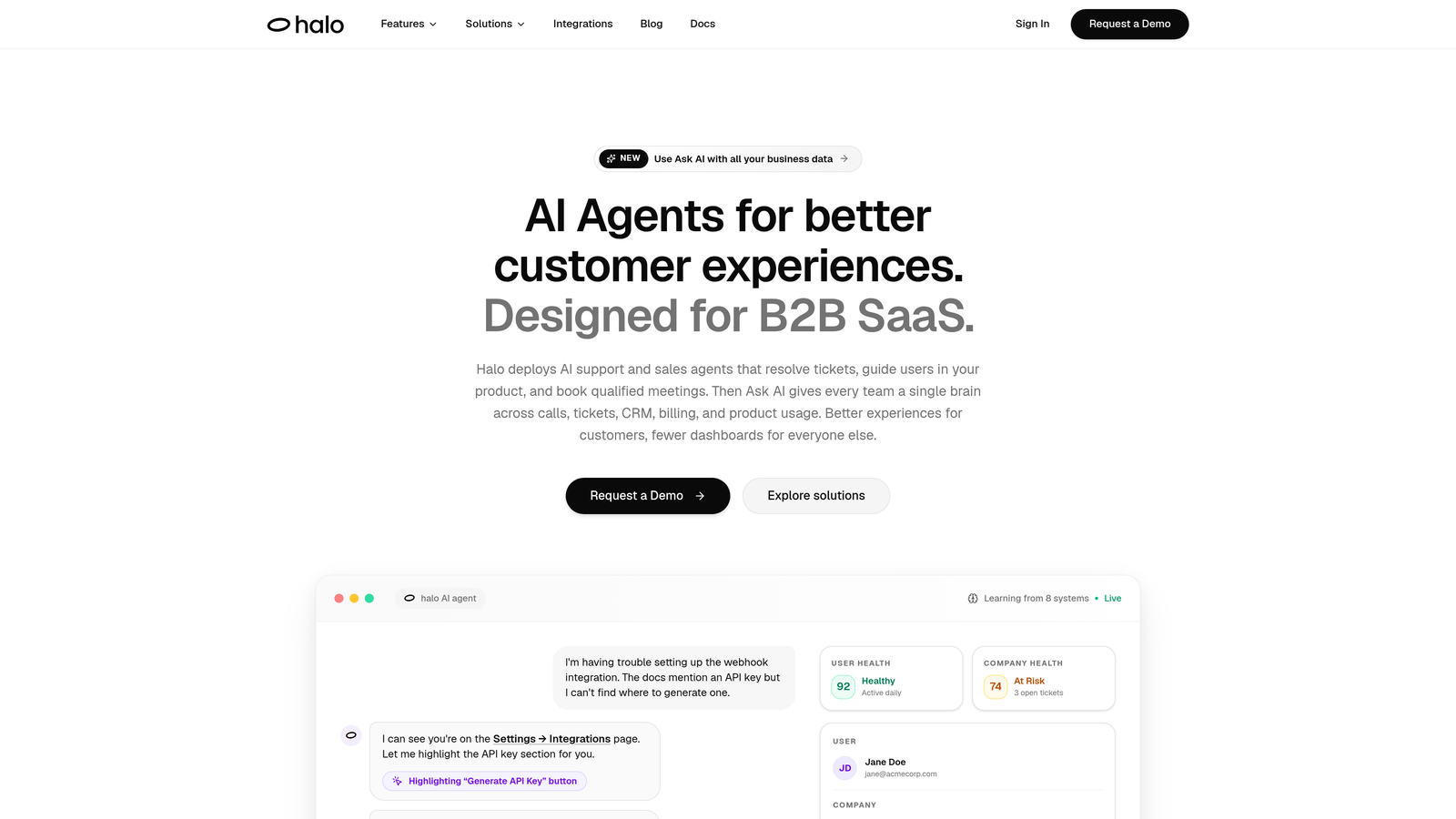
Halo AI is an AI-native customer support platform that deploys intelligent agents to resolve tickets, guide users visually through your product, and generate actionable business intelligence.
Where This Tool Shines
What separates Halo from most tools on this list is its architecture. It wasn't built as an add-on to a helpdesk; it was designed from day one around AI agents that actually resolve issues rather than just routing them. Every interaction feeds a continuous learning loop, meaning the system gets measurably smarter the longer you use it.
The page-aware chat widget is a standout capability. Rather than offering generic guidance, Halo's widget sees what the user is currently looking at and provides context-specific visual UI guidance. For SaaS products with complex interfaces, this is the difference between a user figuring something out and a user submitting a ticket.
Key Features
Page-Aware Chat Widget: Understands the user's current page context and delivers targeted visual guidance rather than generic answers.
Continuous Learning Engine: Every resolved and escalated interaction improves the AI's future responses automatically.
Smart Inbox with Business Intelligence: Surfaces customer health signals, anomaly detection, and revenue-relevant insights beyond standard support metrics.
Auto Bug Ticket Creation and Live Agent Handoff: Automatically generates bug reports and escalates complex issues to human agents with full context preserved.
Deep Integration Stack: Connects natively with Linear, Slack, HubSpot, Intercom, Stripe, Zoom, PandaDoc, and more, bridging support with your entire business stack.
Best For
B2B SaaS companies and product teams that need more than ticket deflection. Halo is particularly well-suited to teams where support data should feed product decisions, and where the cost of a bad support experience has direct revenue implications.
Pricing
Contact Halo AI for pricing details. A demo is available on request through the website.
2. Zendesk AI
Best for: Teams already running Zendesk who want to activate AI without migrating platforms.
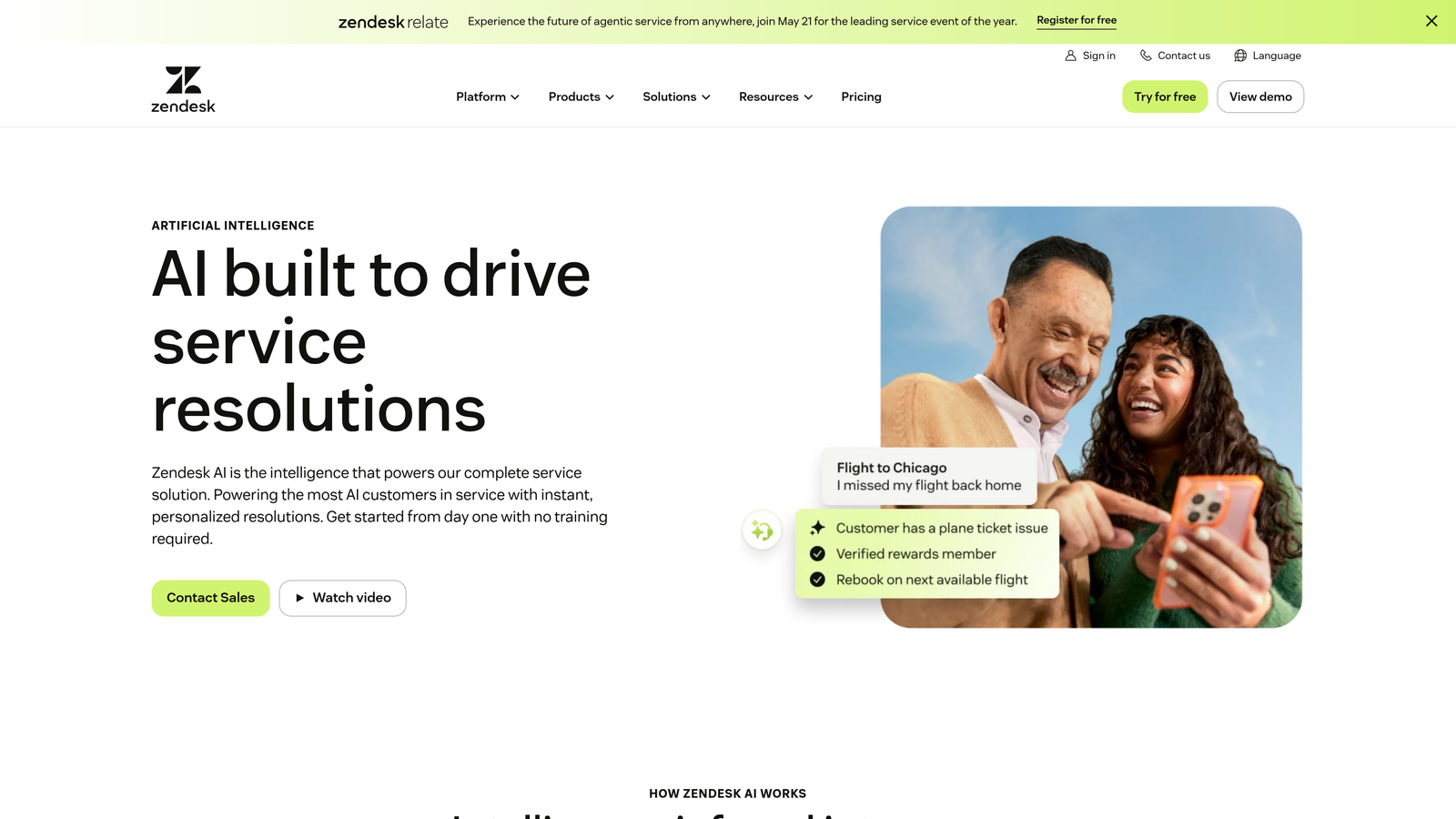
Zendesk AI is an AI-powered layer built directly into the Zendesk Suite, offering AI agents, intelligent triage, and generative AI tools for teams already embedded in the Zendesk ecosystem.
Where This Tool Shines
Zendesk AI benefits from something most competitors can't match: training on billions of real customer service interactions. That pre-trained foundation means the AI agents arrive with meaningful context about how support conversations typically unfold, reducing the cold-start problem that plagues many new deployments.
The agent copilot functionality is genuinely useful for teams that aren't ready to go fully autonomous. It surfaces relevant knowledge base articles, suggests responses, and handles the cognitive load of context-switching without removing the human from the loop entirely.
Key Features
Pre-Trained AI Agents: Built on billions of real customer service interactions for faster time to value.
Intelligent Triage: Automatically classifies and routes tickets by intent, language, and sentiment.
Agent Copilot: Suggests responses and surfaces relevant knowledge base articles in real time.
Generative AI Tools: Handles tone adjustment, conversation summarization, and macro suggestions.
Native Suite Integration: Works across Zendesk Support, Chat, Guide, and Talk without additional configuration.
Best For
Support teams that are already invested in Zendesk and want to activate AI incrementally. Less suited to teams looking for a fresh-start, AI-native architecture.
Pricing
AI add-on available on Suite plans; AI agent resolutions start at $1.00 per automated resolution with usage-based pricing.
3. Intercom Fin
Best for: Product-led growth companies that want AI resolving issues end-to-end, not just answering questions.
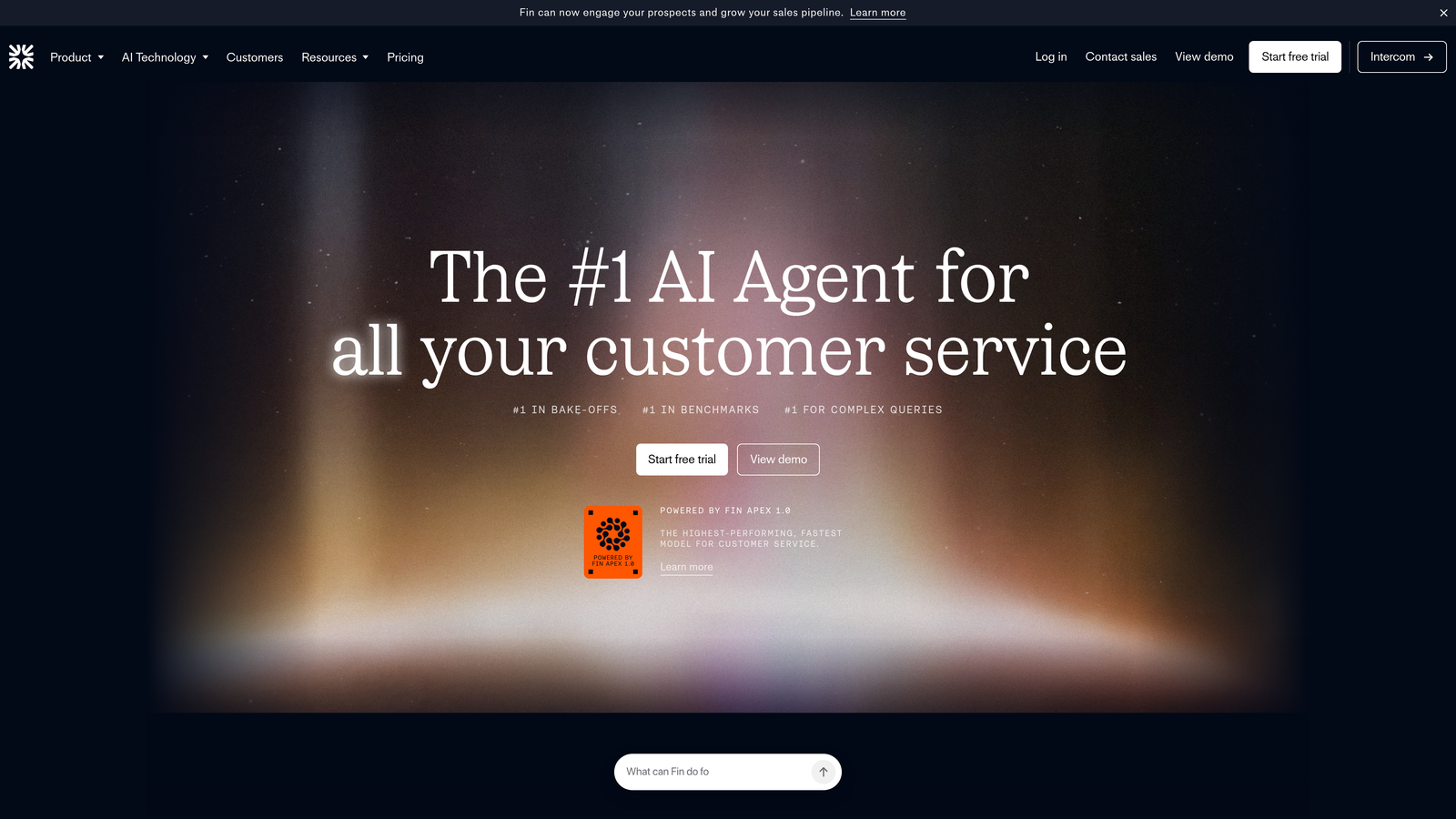
Intercom Fin is an AI customer service agent that goes beyond answering questions, capable of taking actions, resolving issues end-to-end, and operating across chat, email, and phone.
Where This Tool Shines
Fin's differentiator is action, not just answers. Where many AI agents stop at providing information, Fin can update account details, process refunds, and complete transactional tasks without handing off to a human. For product-led companies with high volumes of self-service requests, this is a meaningful capability.
The customizable AI behaviors are also worth noting. You can define guardrails, adjust tone per audience segment, and configure exactly when and how Fin escalates. This gives teams precise control without requiring engineering resources to maintain.
Key Features
End-to-End Resolution with Actions: Can update accounts, process refunds, and complete tasks, not just provide answers.
Multi-Source Learning: Learns from your help center, past conversations, and internal documentation simultaneously.
Omnichannel Support: Operates across chat, email, SMS, and phone from a single configuration.
Customizable Behaviors and Guardrails: Configurable tone, escalation rules, and AI behavior per audience type.
Built-In Resolution Reporting: Tracks resolution rates and customer satisfaction scores natively.
Best For
Product-led SaaS companies, subscription businesses, and e-commerce teams where customers frequently need account-level actions resolved without human involvement.
Pricing
Starts at $0.99 per resolution; Intercom base plans start at $39 per seat per month.
4. Freshdesk Freddy AI
Best for: Budget-conscious teams that want AI capabilities without enterprise pricing.
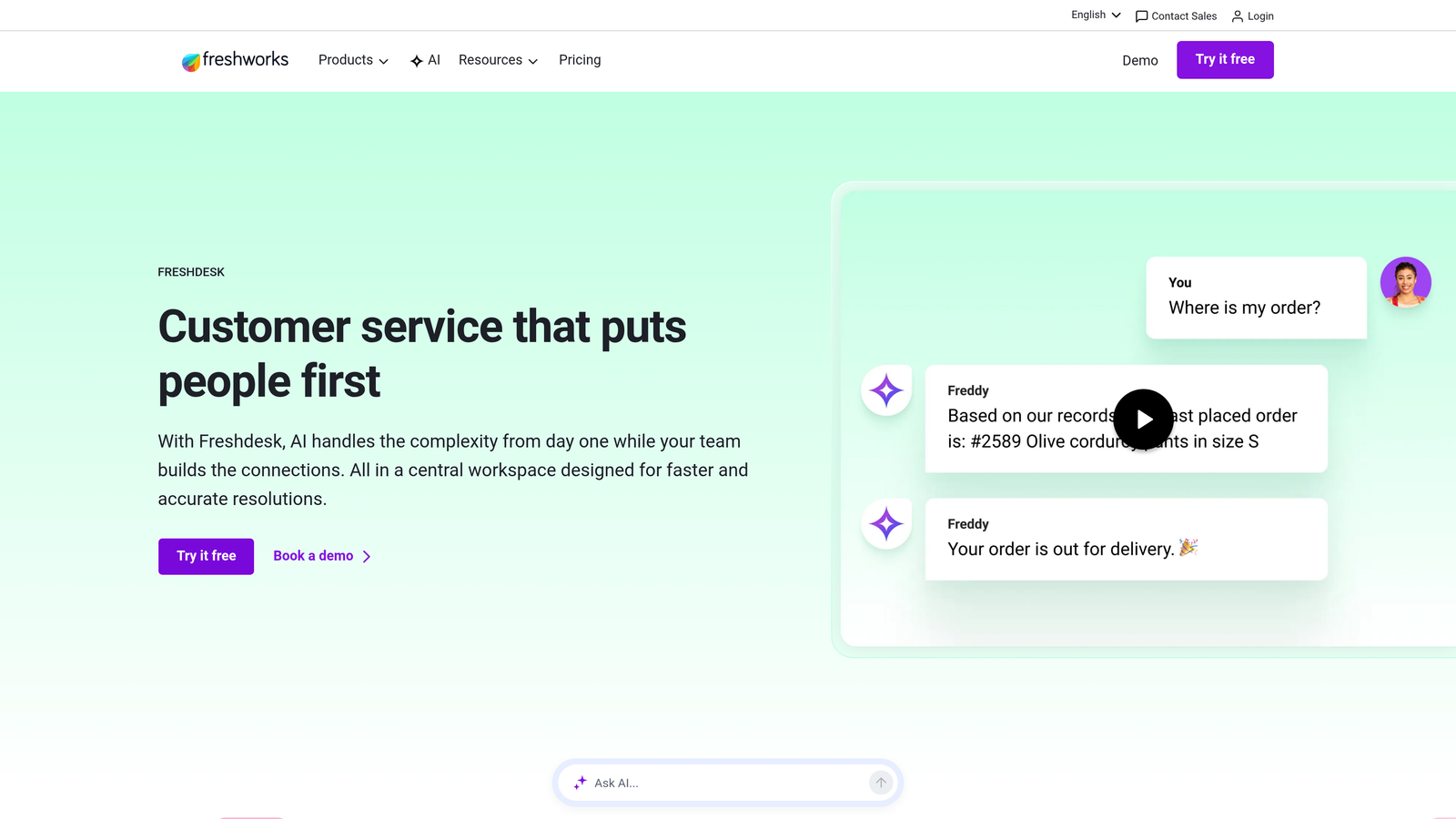
Freshdesk Freddy AI brings automated self-service, agent-assist, and AI-driven analytics to one of the most accessible helpdesk platforms on the market.
Where This Tool Shines
Freshdesk's pricing model is genuinely accessible, which matters for growing teams that can't justify enterprise contracts. Freddy AI is woven throughout the platform rather than sold as a separate product, meaning teams get AI-powered triage, response suggestions, and analytics without navigating a complex add-on structure.
The Freshworks ecosystem is another practical advantage. If your team already uses Freshworks CRM or ITSM tools, Freddy AI shares data across those products, giving support agents more customer context without additional integration work.
Key Features
Freddy AI Agent: Handles automated self-service resolution across channels with minimal configuration.
Freddy Copilot: Provides agents with suggested responses, next-action recommendations, and canned response matching.
Auto-Triage and Field Suggestions: Automatically categorizes, prioritizes, and routes incoming tickets.
Freshworks Ecosystem Integration: Connects with Freshworks CRM, ITSM, and marketing suite out of the box.
Free Tier with Basic AI: Entry-level access to AI features without a paid commitment.
Best For
Small to mid-sized teams, startups, and companies already in the Freshworks ecosystem looking for solid AI features at a competitive price point.
Pricing
Free plan available; paid plans from $15 per agent per month; Freddy AI add-ons are priced separately depending on usage.
5. Ada
Best for: Enterprise teams handling high-volume, multilingual support at global scale.
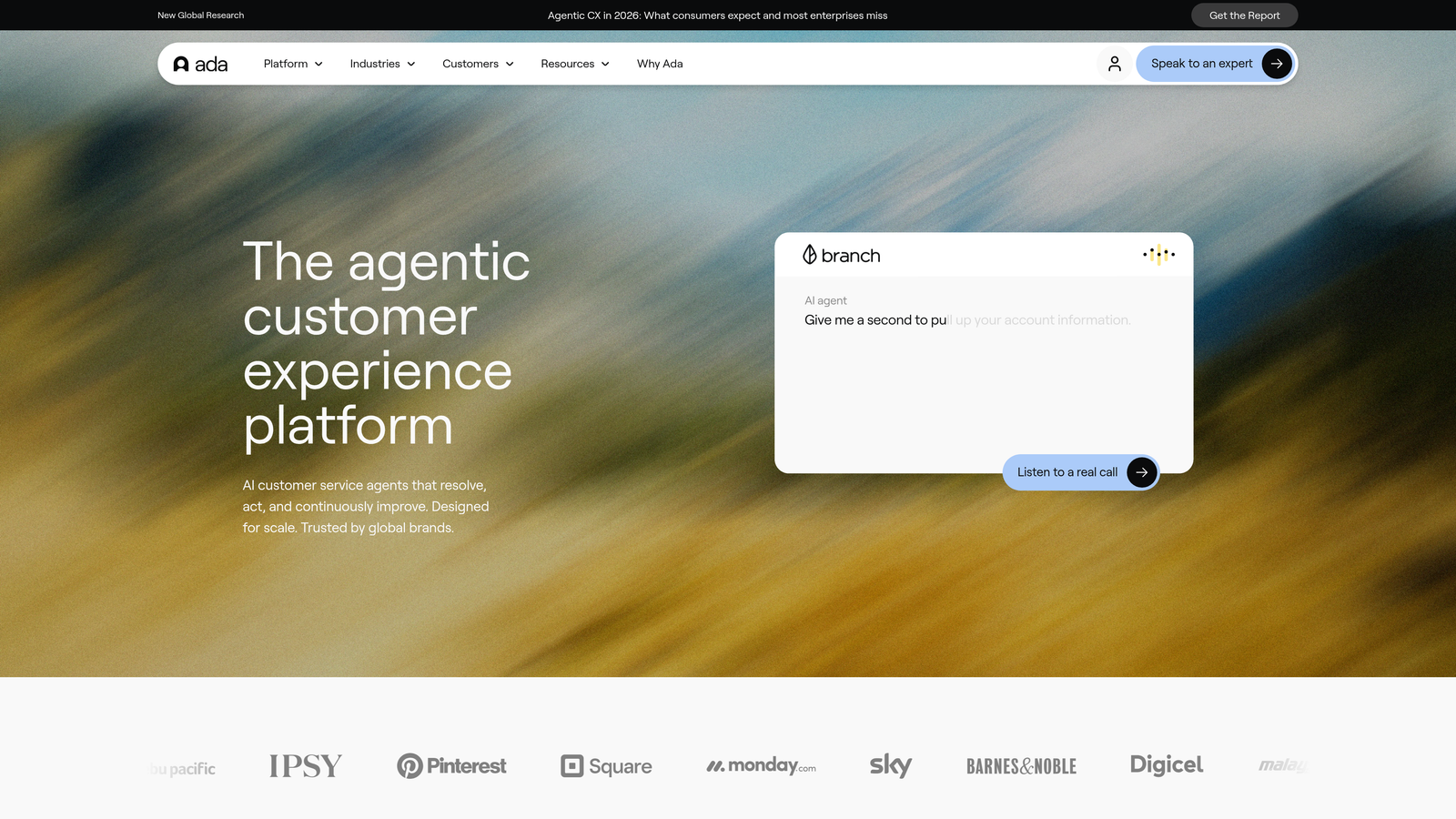
Ada is an enterprise-grade AI agent platform with a reasoning engine built for complex, multi-step issue resolution across 50-plus languages.
Where This Tool Shines
Ada's reasoning engine is what earns it a place on enterprise shortlists. Rather than pattern-matching against FAQs, Ada's AI can work through multi-step problems autonomously, making it capable of handling the kinds of nuanced issues that typically require human judgment. For high-volume operations where even a small percentage of complex tickets adds up to significant cost, this matters.
The multilingual capability is also genuinely strong, not just translated templates but natural-sounding responses across a wide range of languages. For global support operations, this removes a significant deployment barrier.
Key Features
AI Reasoning Engine: Handles multi-step, complex resolutions autonomously without human intervention.
50-Plus Language Support: Natural-sounding multilingual responses across global markets.
Omnichannel Deployment: Operates across web, mobile, social, SMS, and phone from one platform.
No-Code Workflow Builder: Build and manage AI agent workflows without engineering resources.
Enterprise Compliance: SOC 2, GDPR, and HIPAA certifications for regulated industries.
Best For
Enterprise organizations with global customer bases, high ticket volumes, and compliance requirements in regulated industries.
Pricing
Custom enterprise pricing; contact Ada directly for a tailored quote.
6. Tidio
Best for: Small businesses and e-commerce brands that need AI support up and running quickly.
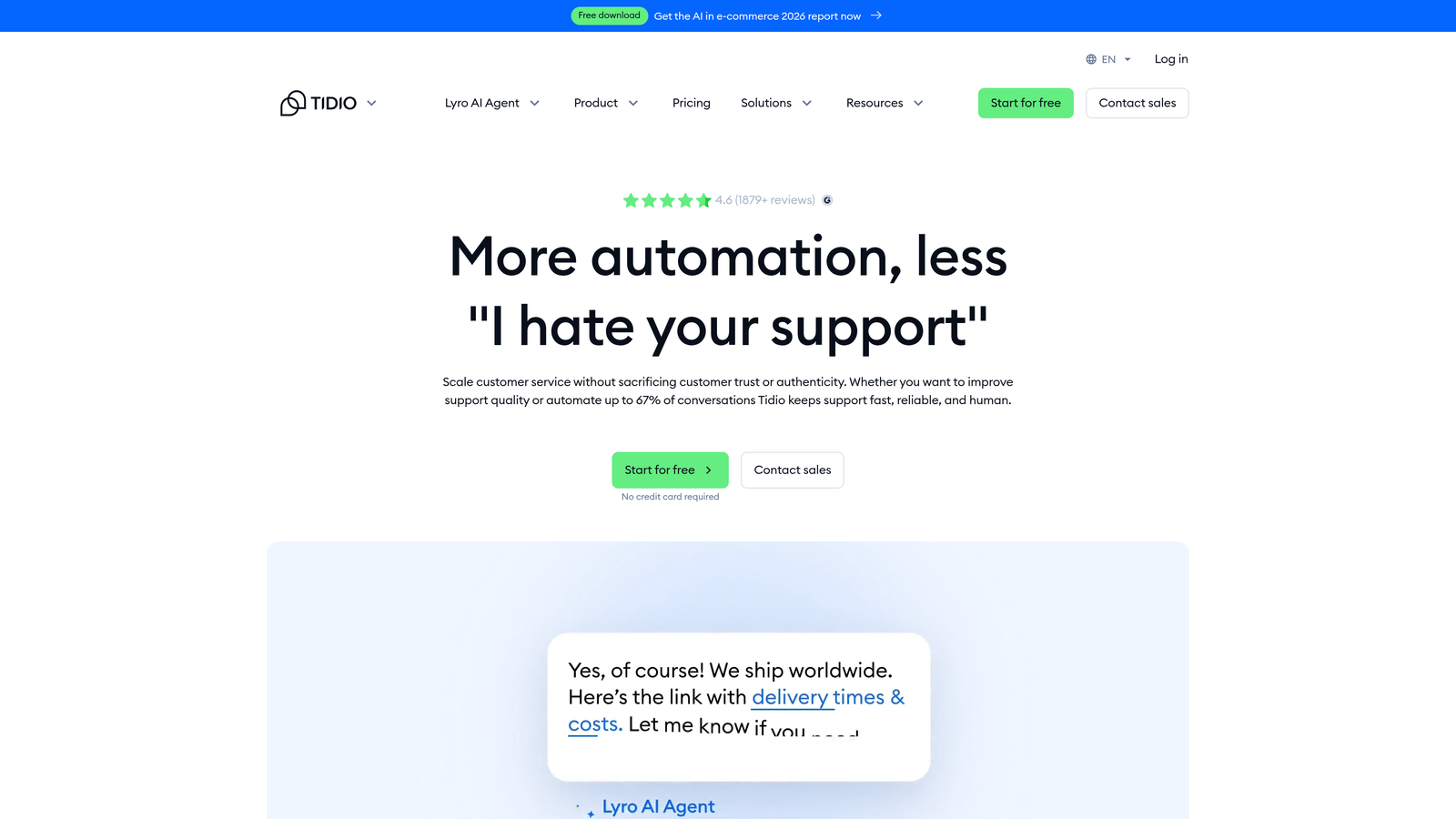
Tidio is an accessible AI customer service platform featuring Lyro, an AI chatbot that learns from your support content in minutes and is built specifically for smaller teams.
Where This Tool Shines
Tidio's biggest advantage is speed to value. Lyro can ingest your FAQ and knowledge base content and start handling conversations in a remarkably short setup window. For small teams that don't have dedicated operations staff to configure complex AI workflows, this simplicity is genuinely valuable.
The e-commerce integrations are tight and practical. Shopify and WordPress users get a particularly smooth experience, with visitor tracking and real-time analytics that surface actionable data without requiring a dedicated analytics team to interpret it.
Key Features
Lyro AI Chatbot: Learns from FAQ and knowledge base content with minimal setup time.
AI-to-Human Handoff: Seamless escalation from Lyro to live agents when conversations require human judgment.
Visual Chatbot Flow Builder: Build custom automation workflows without writing code.
E-Commerce Platform Integrations: Native integrations with Shopify, WordPress, and major e-commerce platforms.
Visitor Tracking and Analytics: Real-time dashboard showing visitor behavior and conversation performance.
Best For
Small businesses, e-commerce brands, and solo operators who need AI support capabilities without the complexity or cost of enterprise platforms.
Pricing
Free plan available; Lyro AI starts at $39 per month for 50 conversations.
7. Forethought
Best for: Teams that want AI to augment human agents across the full ticket lifecycle.
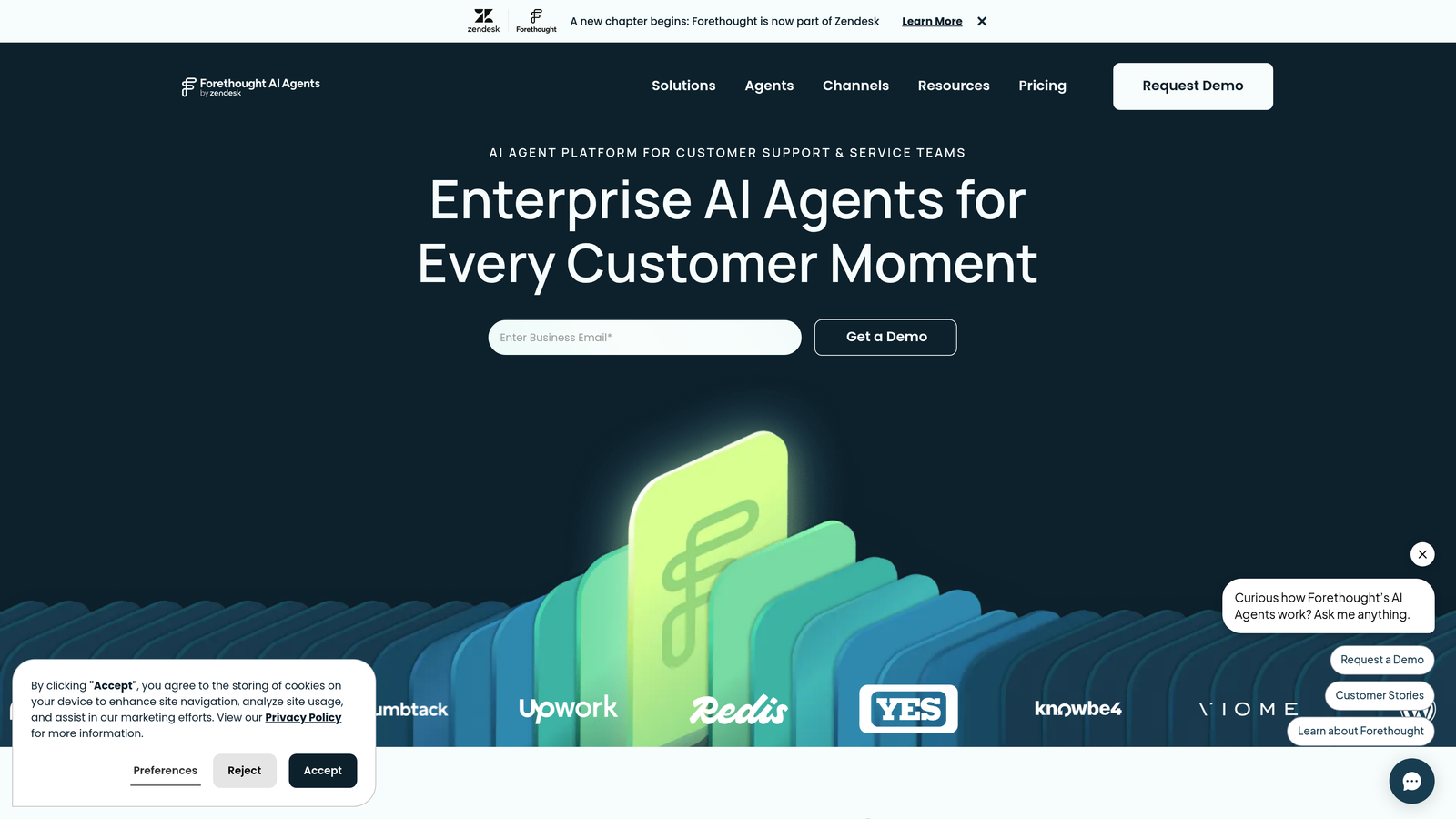
Forethought is an AI platform focused on the complete ticket lifecycle, from intelligent triage and routing to agent-assist and automated resolution, designed to work alongside human support teams rather than replace them.
Where This Tool Shines
Forethought takes a measured approach to AI automation that resonates with support leaders who are cautious about fully autonomous resolution. The platform's Solve and Assist modules work in tandem: Solve handles self-service deflection while Assist gives agents real-time recommendations, creating a layered AI strategy rather than an all-or-nothing deployment.
The Discover module is a genuinely useful addition. It surfaces trending issues and knowledge gaps, helping support managers identify where documentation is missing or where product problems are generating ticket spikes, before those issues become customer experience crises.
Key Features
SupportGPT-Powered Triage: Intelligent ticket classification, routing, and prioritization at scale.
Solve and Assist Modules: Self-service AI and agent copilot working in tandem for layered automation.
Discover Module: Surfaces trending issues and knowledge gaps to improve both AI and human performance.
Major Helpdesk Integrations: Connects with Zendesk, Salesforce, ServiceNow, and other enterprise helpdesks.
Deflection and Handle-Time Metrics: Built-in focus on measurable efficiency improvements.
Best For
Mid-market and enterprise support teams that want to improve efficiency incrementally and augment existing human teams rather than automate them away entirely.
Pricing
Custom pricing based on ticket volume; contact Forethought directly for a quote.
8. Kustomer
Best for: D2C brands and retailers that need AI with full customer history context.
Kustomer is a CRM-powered customer service platform where AI operates with access to the complete customer timeline, every purchase, conversation, and interaction, enabling deeply personalized support.
Where This Tool Shines
Most AI support tools work with the current conversation. Kustomer's AI works with the entire customer relationship. Because the platform is built on a CRM foundation, the AI has access to purchase history, previous support interactions, subscription status, and behavioral signals when generating responses. This produces a level of personalization that's difficult to replicate by bolting AI onto a separate helpdesk.
The proactive support capabilities are worth highlighting. Kustomer can trigger outreach based on customer behavior signals, allowing support teams to get ahead of issues before customers submit tickets, which changes the support dynamic from reactive to genuinely proactive.
Key Features
Unified Customer Timeline: AI has complete access to interaction history, purchase data, and account context.
CRM-Contextual AI Chatbots: Personalized responses informed by real customer data, not just conversation content.
Omnichannel Support: Covers email, chat, social, SMS, and voice from a single platform.
Proactive Support Triggers: Initiates outreach based on customer behavior and data signals.
D2C and Retail Feature Set: Purpose-built capabilities for high-volume consumer brands.
Best For
Direct-to-consumer brands, retailers, and subscription businesses where customer lifetime value is high and personalized support has a measurable impact on retention.
Pricing
Enterprise plan starts at $89 per user per month; AI features are included at higher tiers.
9. Cognigy
Best for: Regulated industries and enterprises that need voice AI with on-premise deployment options.
Cognigy is an enterprise conversational AI platform with particular strength in voice AI, offering low-code agent design, on-premise deployment, and compliance-ready architecture.
Where This Tool Shines
Cognigy's voice AI capability stands out in a market where most platforms are still primarily chat-focused. The natural language understanding for phone-based support is sophisticated enough to handle complex conversations without the robotic quality that plagues many IVR replacements. For enterprises where a significant portion of support volume comes through voice channels, this is a critical differentiator.
The deployment flexibility is equally important for regulated industries. On-premise and private cloud options give organizations in healthcare, finance, and government the data control they need to meet compliance requirements, something most cloud-only vendors simply can't offer.
Key Features
Advanced Voice AI: Natural language understanding for phone-based support with conversational quality.
Low-Code Conversation Designer: Build complex agent workflows without heavy engineering involvement.
On-Premise and Private Cloud Deployment: Full data control for regulated industries and security-sensitive organizations.
Enterprise Compliance: GDPR, HIPAA, and SOC 2 certified architecture.
Contact Center Integrations: Native connections to Genesys, Avaya, NICE, and other major contact center platforms.
Best For
Large enterprises in regulated industries, particularly those with high voice channel volume, that need deployment flexibility and rigorous compliance certifications.
Pricing
Custom enterprise pricing; contact Cognigy directly for a tailored quote.
Which Platform Is Right for Your Team
With nine strong options on the table, the right choice comes down to your current infrastructure, your team's tolerance for complexity, and what "good AI support" actually means for your customers.
Here's a quick breakdown by use case to help you narrow it down:
Best for B2B SaaS: Halo AI, for its AI-native architecture, continuous learning, page-aware guidance, and deep integrations across your entire business stack.
Best for existing Zendesk users: Zendesk AI, which activates AI without requiring any platform migration.
Best for product-led companies: Intercom Fin, which resolves issues with real actions rather than just answers.
Best on a budget: Freshdesk Freddy AI or Tidio, depending on whether you're a helpdesk-first team or an e-commerce brand.
Best for enterprise scale: Ada for global, multilingual volume; Cognigy for voice-heavy or compliance-sensitive operations.
Best for agent augmentation: Forethought, which layers AI across the ticket lifecycle without displacing human judgment.
Best for CRM-driven support: Kustomer, where AI operates with full customer history context for genuinely personalized responses.
If you're evaluating platforms and want to see what AI-native actually looks like in practice, there's a meaningful difference between tools that have added AI and tools that were built around it. Your support team shouldn't have to scale linearly with your customer base. AI agents can handle routine tickets, guide users through your product, and surface business intelligence, while your team focuses on the complex issues that genuinely need a human touch.
See Halo in action and discover how continuous learning transforms every interaction into smarter, faster support that improves without additional headcount.