9 Best AI Customer Support Software to Buy in 2026
Before you buy AI customer support software, knowing the difference between truly AI-native platforms and legacy helpdesks with bolted-on chatbots is critical. This guide evaluates nine leading solutions across key criteria—autonomous ticket resolution, continuous learning, integration depth, and agent handoff quality—to help startups, mid-market teams, and enterprises find the right fit for their support needs and budget.
 Matt PattoliFounder13 min read
When you're ready to buy AI customer support software, the hardest part isn't finding options. It's figuring out which platforms are genuinely AI-native and which are legacy helpdesks with a chatbot layer painted on top. That distinction matters more than any feature checklist.
The most useful evaluation criteria to keep in mind: autonomous resolution capability (can it actually close tickets without a human?), continuous learning (does it get smarter over time?), integration depth (does it connect to your CRM, billing, and dev tools?), pricing transparency, and how gracefully it hands off to live agents when needed.
This list covers a range of solutions across price points and team sizes. Whether you're a startup looking for fast deployment, a mid-market team scaling support without adding headcount, or an enterprise with contact center requirements, there's a fit here. For broader context on how these platforms fit into your stack, it's worth exploring resources on automated customer support and AI helpdesk software before diving in.
Here are the top AI customer support platforms worth evaluating in 2026.
1. Halo AI
Best for: B2B SaaS teams wanting an AI-native platform that resolves tickets, guides users, and surfaces business intelligence.
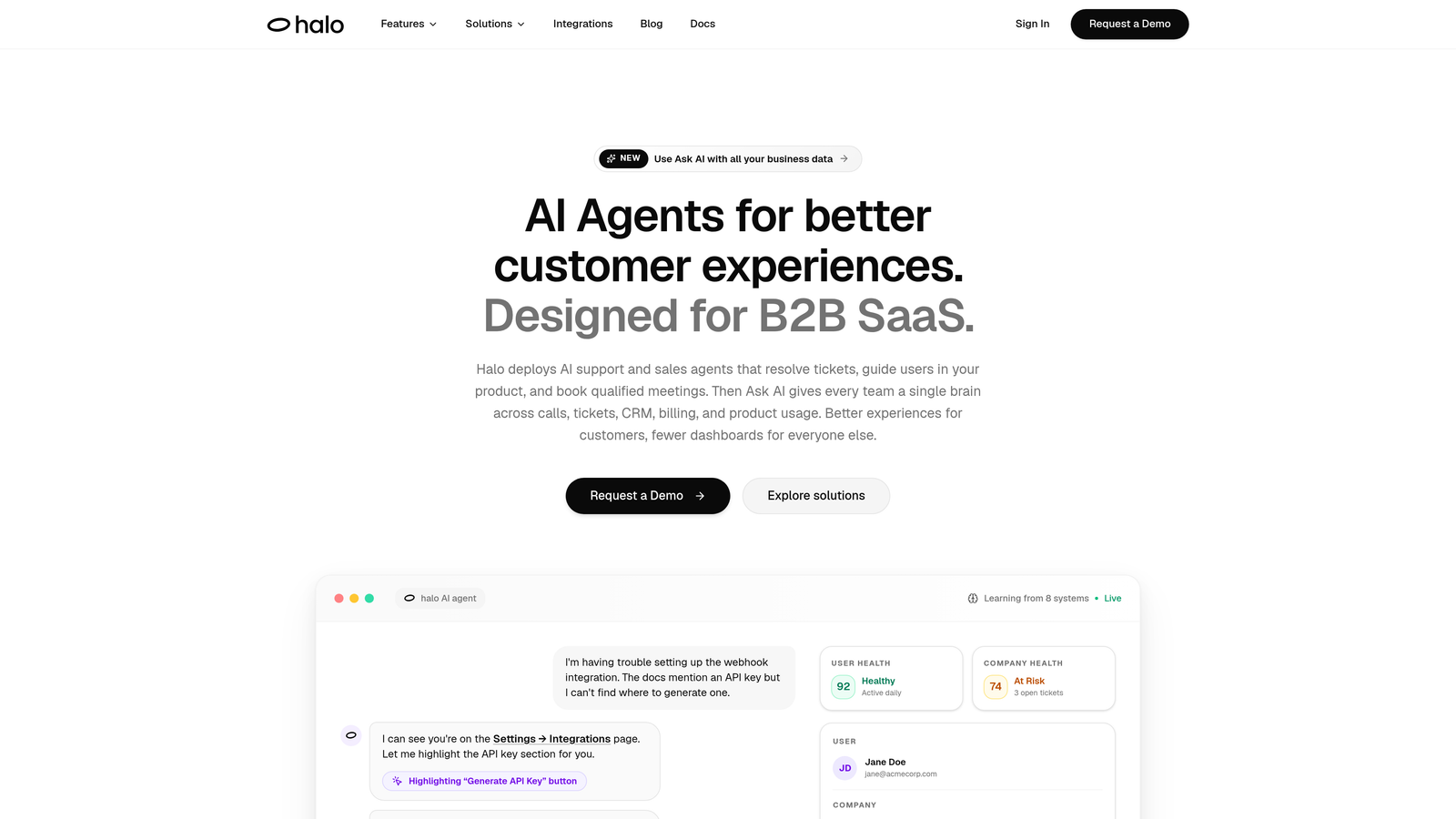
Halo AI is an AI-first customer support platform built from the ground up around autonomous resolution, not retrofitted onto a legacy helpdesk.
Where This Tool Shines
What sets Halo apart is the page-aware context layer. The chat widget doesn't just respond to text. It sees what the user is looking at, understands where they are in your product, and can deliver visual UI guidance that walks them through the exact steps they need. This is a meaningfully different experience from a standard chatbot that responds to keywords.
Beyond resolution, Halo functions as a business intelligence layer. The smart inbox surfaces customer health signals, detects anomalies, and connects support activity to revenue context. Your support data stops being a cost center and starts informing decisions across the business.
Key Features
Page-Aware Chat Widget: Understands the user's current product context and provides visual UI guidance tailored to exactly where they are.
Autonomous Ticket Resolution: AI agents resolve tickets independently, with smart escalation to live agents when complexity requires a human.
Auto Bug Ticket Creation: Automatically generates bug tickets integrated with Linear and other dev tools, closing the loop between support and engineering.
Smart Inbox with Business Intelligence: Surfaces customer health signals, revenue intelligence, and anomaly detection beyond standard support metrics.
Deep Integration Stack: Connects natively with Slack, HubSpot, Intercom, Stripe, Zoom, PandaDoc, and Fathom, so AI operates across your entire business stack rather than in a silo.
Best For
B2B SaaS companies scaling support without scaling headcount. Particularly well-suited to product-led growth teams where in-product guidance, bug reporting, and customer health visibility are as important as ticket resolution speed.
Pricing
Contact for pricing. Designed for B2B SaaS teams with a focus on long-term resolution quality and continuous learning rather than per-seat licensing.
2. Intercom Fin
Best for: Teams already on Intercom who want AI resolution without switching platforms.
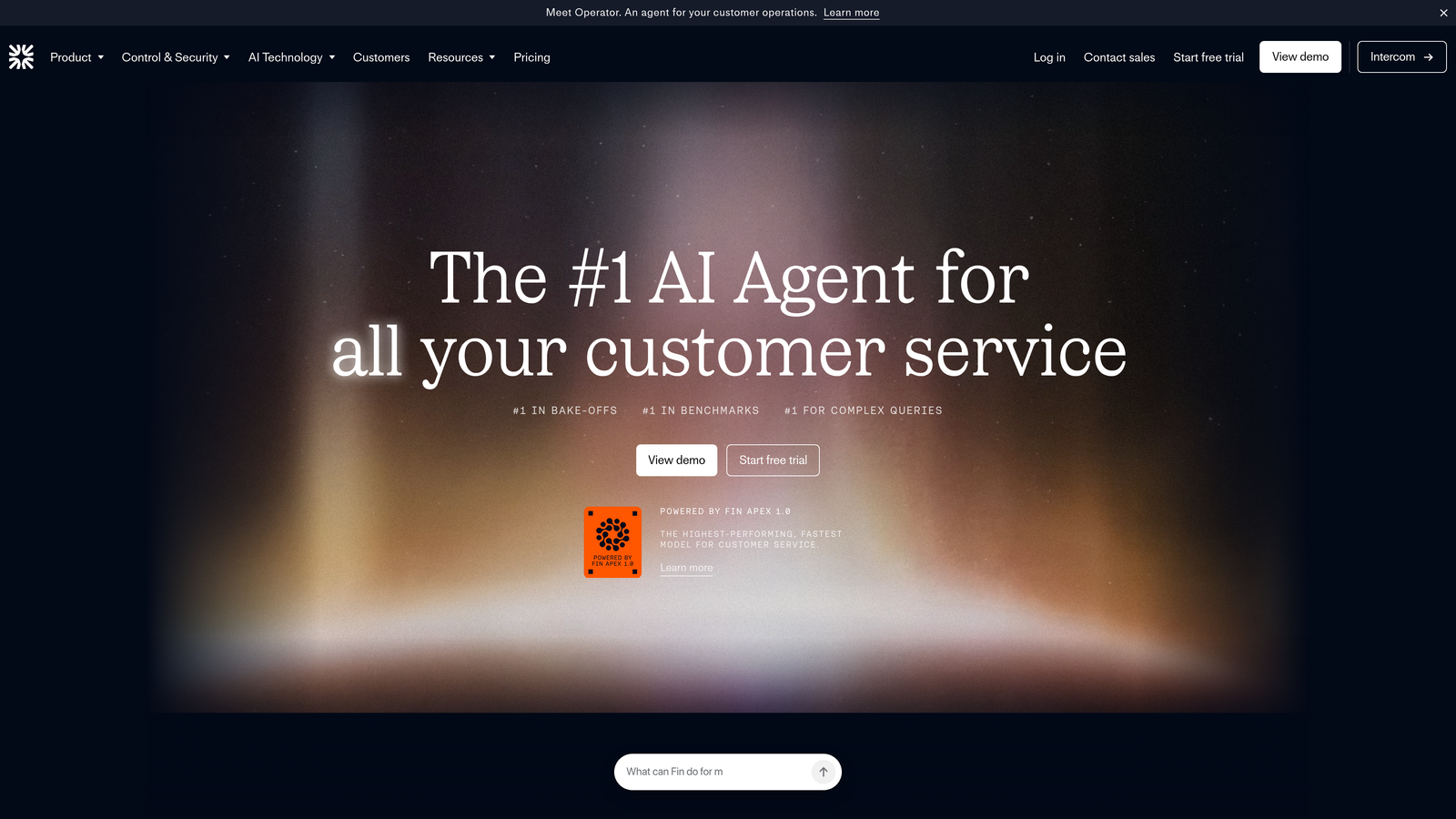
Intercom Fin is Intercom's native AI agent, trained on your help center content and conversation history to resolve queries autonomously.
Where This Tool Shines
Fin's biggest advantage is how naturally it fits into an existing Intercom setup. If your team is already using Intercom for customer messaging, deploying Fin requires minimal configuration. It draws on your help center articles and past conversations to generate answers, which means the quality of your existing content directly determines how well it performs.
The per-resolution pricing model is worth noting. For teams with predictable, high-volume queries, it can be cost-effective. For teams with irregular or complex query patterns, costs can be harder to forecast.
Key Features
Trained on Existing Content: Uses your Intercom help center articles and historical conversations as its knowledge base.
Native Messenger Integration: Works across Intercom's web, mobile, and email channels without additional setup.
Answer Guardrails: Customizable tone settings and guardrails to keep responses on-brand and within defined boundaries.
Per-Resolution Pricing: Charges based on successful resolutions rather than flat seat fees.
Human Handoff: Escalates to live agents within the same Intercom interface when Fin cannot resolve a query.
Best For
Teams with an established Intercom presence and a well-maintained help center. Less suited to teams starting from scratch with limited existing documentation, since Fin's quality depends heavily on the knowledge base it trains on.
Pricing
Starts at $0.99 per resolution, on top of your existing Intercom subscription. Costs scale with resolution volume.
3. Zendesk AI
Best for: Enterprise teams that need omnichannel AI across a mature, established helpdesk ecosystem.
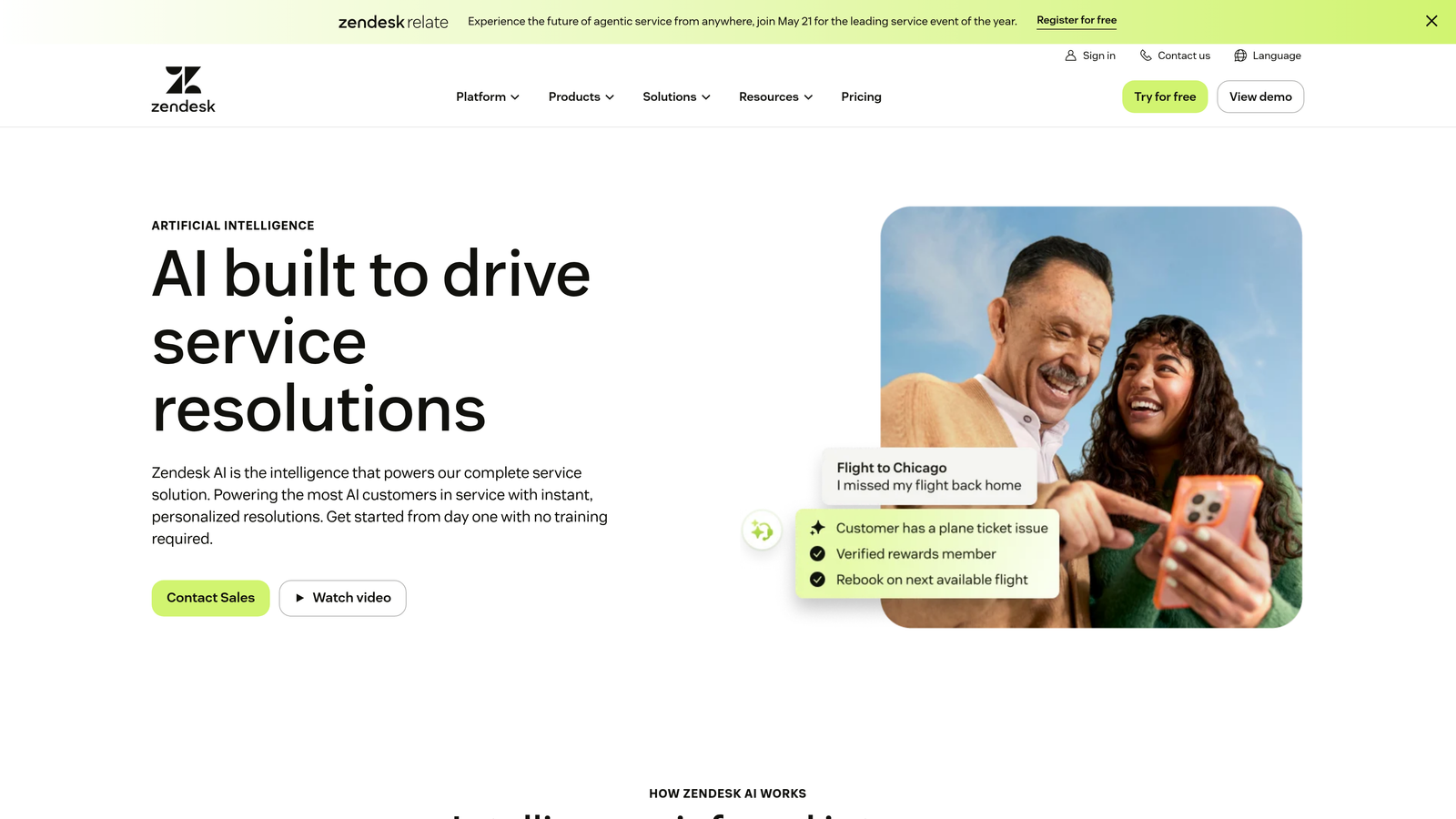
Zendesk AI is an enterprise-grade AI layer built into Zendesk's comprehensive support suite, covering autonomous agents, triage, and agent assist.
Where This Tool Shines
Zendesk's strength is breadth. It covers more channels, more languages, and more enterprise compliance requirements than most alternatives. For organizations already invested in the Zendesk ecosystem, the AI features extend that investment rather than requiring a platform migration.
The agent assist tools are particularly mature. AI-suggested replies, knowledge surfacing, and intelligent triage work well in high-volume environments where agents handle hundreds of tickets daily. The tradeoff is that the AI feels like an enhancement to a human-agent workflow rather than a fully autonomous resolution engine.
Key Features
AI Agents: Autonomous resolution across email, chat, and messaging channels.
Intelligent Triage: Automatic ticket classification, intent detection, and routing to the right team or agent.
Agent Assist: AI-suggested replies and relevant knowledge surfacing for human agents handling complex tickets.
Omnichannel Coverage: Unified support across voice, email, chat, social media, and messaging apps.
Reporting and Analytics: Detailed AI performance reporting integrated with Zendesk's broader analytics suite.
Best For
Enterprise support teams with established Zendesk workflows who want to layer AI onto existing processes. Less ideal for teams seeking a clean-slate AI-native deployment or those without the budget for enterprise Suite plans.
Pricing
Advanced AI is an add-on available on Suite Professional plans and above. Contact Zendesk sales for current pricing, as it varies by volume and configuration.
4. Ada
Best for: Mid-market and enterprise teams needing multilingual AI automation with no-code management.
Ada is an AI-first customer service automation platform purpose-built for autonomous resolution at scale, with strong multilingual support and a no-code builder.
Where This Tool Shines
Ada is one of the cleaner examples of an AI-native platform in this list. It was built around automation from the start, not adapted from a traditional helpdesk. The no-code conversation builder makes it accessible to support operations teams who want control without depending on engineering resources for every change.
The multilingual capability is genuinely strong. Supporting 50+ languages out of the box makes Ada a practical choice for global customer bases where other platforms require custom configuration to handle non-English queries at the same quality level.
Key Features
AI Agent Training: Trained on your knowledge base, business policies, and operational data for context-aware responses.
50+ Language Support: Native multilingual capability without requiring separate configurations per language.
No-Code Builder: Visual platform for building, managing, and iterating on AI conversations without engineering involvement.
CRM and Helpdesk Integrations: Connects with Salesforce, Zendesk, and other major platforms to pull in customer context.
Resolution Analytics: Tracks containment rates and resolution metrics to measure AI performance over time.
Best For
Global brands and mid-to-large enterprises with multilingual support needs. Also a strong fit for teams that want operational ownership of their AI without heavy reliance on technical resources.
Pricing
Custom pricing based on resolution volume. Contact Ada sales for a quote tailored to your team size and query volume.
5. Freshdesk Freddy AI
Best for: Budget-conscious teams wanting capable AI features within an affordable, all-in-one helpdesk.
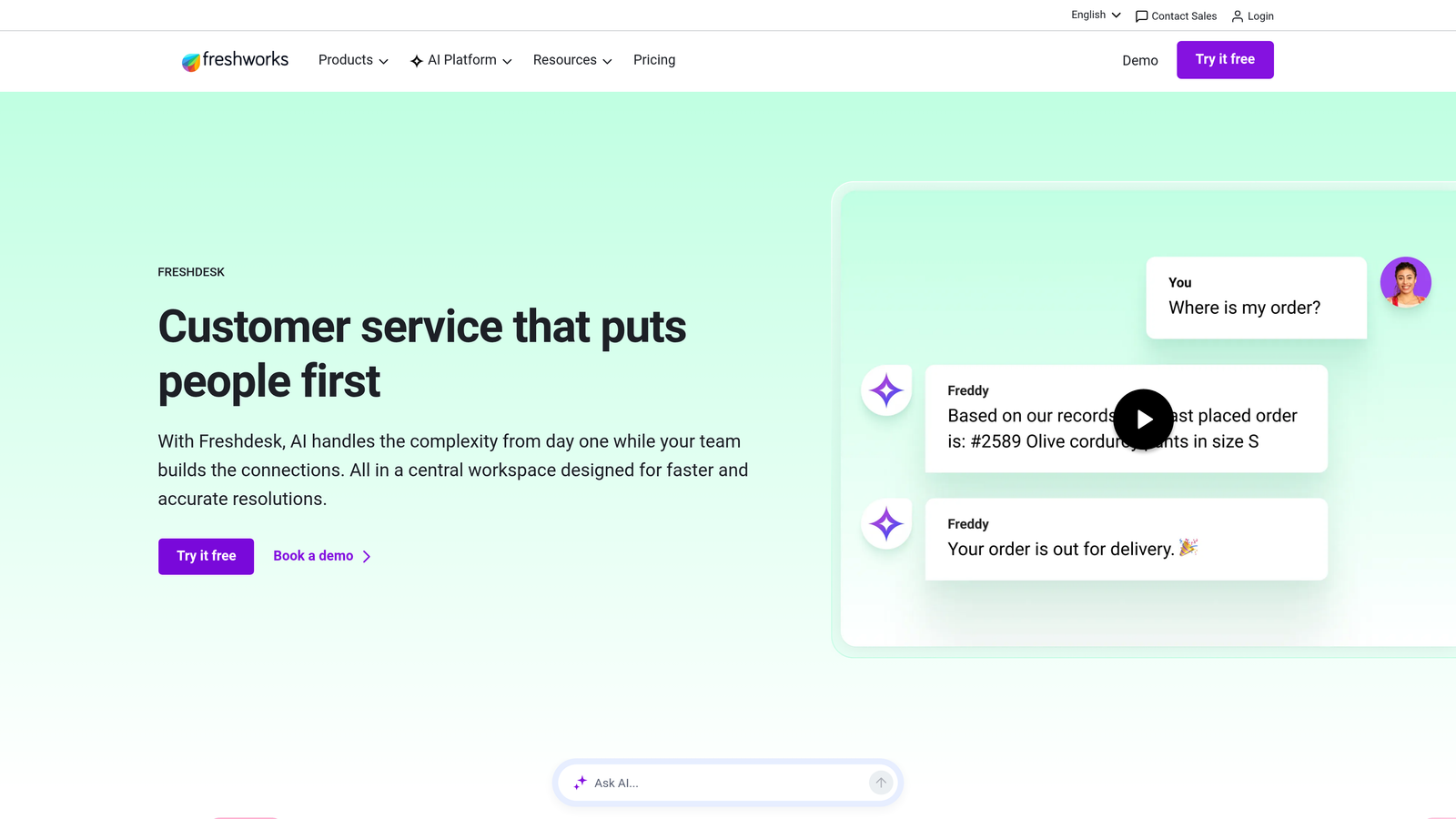
Freshdesk Freddy AI is Freshworks' AI layer for the Freshdesk helpdesk, offering ticket resolution, agent assist, and analytics at a more accessible price point than enterprise alternatives.
Where This Tool Shines
Freshdesk hits a practical sweet spot for growing teams. The pricing is significantly more accessible than Zendesk or enterprise AI platforms, and Freddy AI covers both sides of the AI equation: autonomous self-service resolution and agent-assist tools for tickets that require human handling.
For teams that are earlier in their AI journey, Freshdesk's familiar helpdesk interface reduces the learning curve. You get AI capability without having to rethink your entire support workflow from scratch.
Key Features
Freddy AI Agent: Self-service resolution across channels, handling common queries without human involvement.
Freddy Copilot: Agent-assist mode that drafts responses and surfaces relevant knowledge for human agents.
AI Performance Analytics: Built-in reporting on resolution rates, deflection, and AI effectiveness.
Omnichannel Support: Covers email, chat, phone, and social within the Freshdesk ecosystem.
Competitive Pricing: Meaningfully lower cost per agent compared to Zendesk Advanced AI and enterprise platforms.
Best For
SMBs and mid-market teams looking for a capable AI-enhanced helpdesk without enterprise pricing. A strong choice for teams already using Freshworks products or those migrating from basic helpdesks.
Pricing
Free tier available for basic helpdesk use. AI features are included in the Pro plan, starting around $49 per agent per month. Pricing may vary by region and plan configuration.
6. Tidio
Best for: Small businesses and e-commerce shops wanting fast, affordable AI chat deployment.
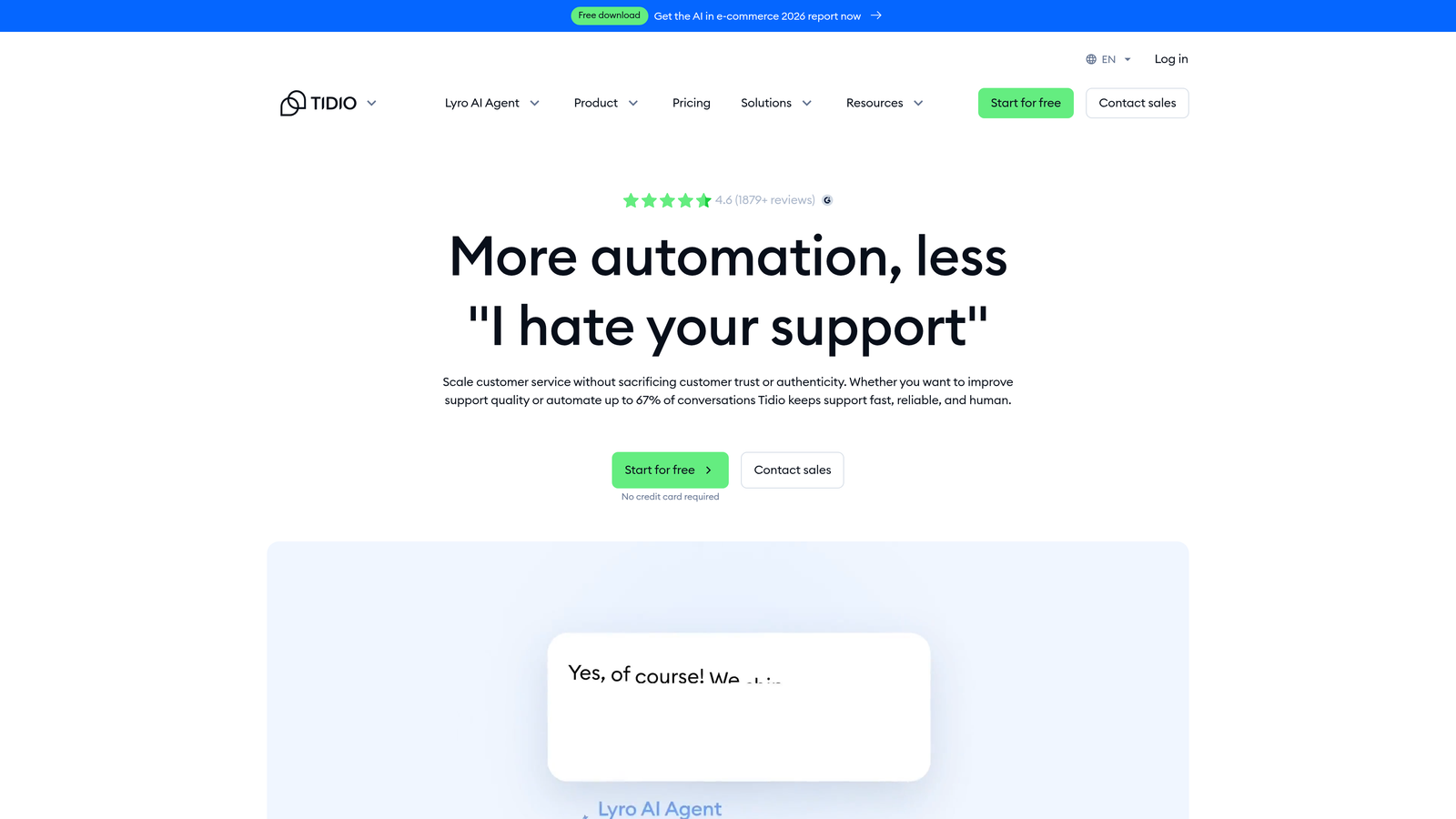
Tidio is a lightweight AI chatbot platform featuring Lyro AI, designed for quick setup and simple management without technical expertise.
Where This Tool Shines
Tidio's strength is accessibility. For small business owners or e-commerce operators who need a working AI chat solution without a lengthy implementation process, Tidio gets you live quickly. Lyro AI learns from your FAQ content and support documentation, which means setup is mostly about feeding it the right information rather than complex configuration.
The native integrations with Shopify, WooCommerce, and WordPress make it particularly practical for online retailers. The visual flow builder also lets non-technical users create custom conversation paths for specific scenarios like order tracking, returns, or product questions.
Key Features
Lyro AI Chatbot: Learns from your FAQ and support content to answer common customer questions autonomously.
Visual Flow Builder: No-code tool for creating custom conversation automations without developer involvement.
E-Commerce Integrations: Native connections to Shopify, WooCommerce, and WordPress.
Live Chat Hybrid: Seamless handoff from AI to human agents within the same interface.
Affordable Entry Point: Free plan available with paid tiers designed for small business budgets.
Best For
Small businesses, e-commerce brands, and solopreneurs who want functional AI chat support without enterprise complexity or pricing. Not designed for B2B SaaS teams with complex ticket workflows or deep integration requirements.
Pricing
Free plan available. Lyro AI starts at $39 per month for 50 conversations. Higher tiers unlock more conversations and advanced features.
7. Forethought
Best for: Mid-market and enterprise teams wanting AI triage and generative answers layered on top of an existing helpdesk.
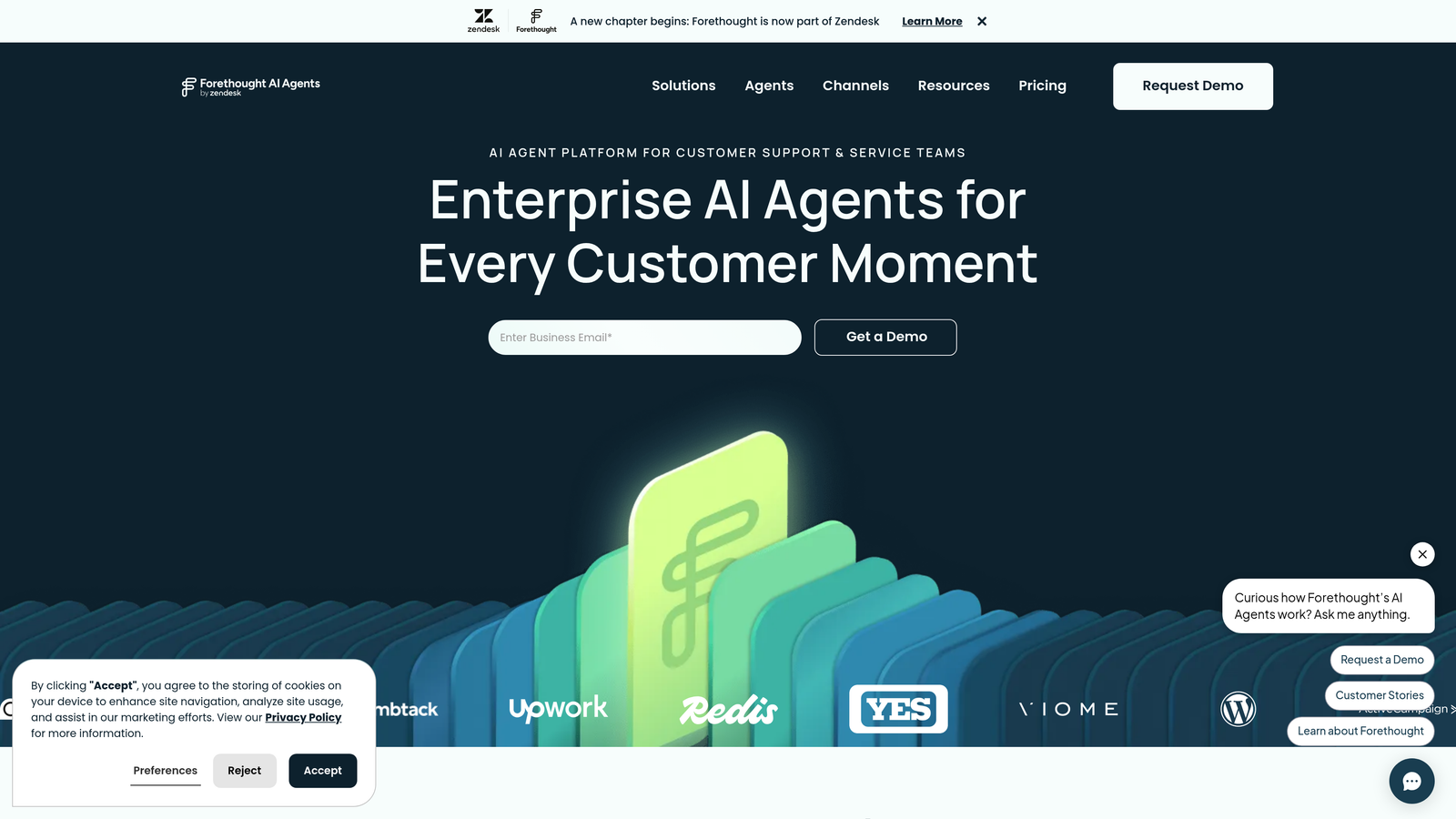
Forethought is an AI platform focused on intelligent ticket triage, routing, and generative AI responses, designed to work as an enhancement layer over existing support systems.
Where This Tool Shines
Forethought's approach is deliberately additive. Rather than replacing your helpdesk, it sits on top of platforms like Zendesk or Salesforce Service Cloud and makes them smarter. For teams with significant investment in an existing helpdesk that aren't ready to migrate, this is a practical path to AI-powered triage and resolution without a rip-and-replace project.
SupportGPT, Forethought's generative AI component, generates context-aware responses that draw from your existing knowledge base and historical ticket data. The triage and routing intelligence is particularly useful for high-volume teams where getting tickets to the right person quickly has a direct impact on resolution time.
Key Features
SupportGPT: Generative AI that produces accurate, context-aware responses based on your knowledge base and ticket history.
Intelligent Triage: Automatic ticket classification and routing to the appropriate team or queue.
Helpdesk Integration Layer: Works on top of Zendesk, Salesforce, and other major platforms without replacing them.
AI Impact Analytics: Dashboard tracking resolution rates, deflection, and measurable AI contribution to support metrics.
Workflow Automation: Automates repetitive ticket-handling tasks to reduce manual work for agents.
Best For
Mid-market and enterprise teams with established helpdesk infrastructure who want AI capability without platform migration. Less suited to teams looking for a standalone AI-native solution from scratch.
Pricing
Custom enterprise pricing. Contact Forethought sales for a quote based on your volume and existing helpdesk setup.
8. Kustomer
Best for: Customer-centric brands that need deep customer context alongside AI-powered support.
Kustomer is a CRM-centric support platform that combines a unified customer timeline with AI-powered chatbots and omnichannel inbox management.
Where This Tool Shines
Kustomer's differentiator is the unified customer timeline. Every interaction, order, conversation, and activity event for a customer is visible in a single view. When AI agents or human agents engage with a customer, they have full context, which meaningfully improves the quality of responses and reduces back-and-forth.
This makes Kustomer particularly strong for subscription businesses and direct-to-consumer brands where order history, billing status, and past interactions are directly relevant to support conversations. The AI capabilities are solid, but the real value proposition is the combination of AI with deep customer data.
Key Features
Unified Customer Timeline: Combines orders, conversations, activity data, and custom attributes in a single customer view.
AI Chatbots and Intent Detection: Automated resolution with intent classification to route or handle queries appropriately.
Omnichannel Inbox: Manages email, chat, social media, and SMS in a unified agent workspace.
CRM Integration: Native CRM functionality built in, reducing the need for separate customer data platforms.
Proactive Support: Triggers and automation based on customer behavior and lifecycle events.
Best For
DTC brands, subscription businesses, and companies where customer history and order context are central to support quality. Less suited to pure B2B SaaS teams with complex technical support workflows.
Pricing
Starts at $89 per user per month for the Enterprise plan. Pricing is on the higher end, reflecting the combined CRM and support platform value.
9. Cognigy
Best for: Large enterprises with contact center operations, voice AI requirements, and strict compliance needs.
Cognigy is an enterprise conversational AI platform built for organizations that need voice and digital AI agents at scale, with deployment flexibility and enterprise-grade security.
Where This Tool Shines
Cognigy operates at a different tier than most tools on this list. It's built for organizations running large contact centers where phone-based customer support is a primary channel alongside digital. The voice AI capability is genuinely sophisticated, handling natural conversation flows over phone rather than just simple IVR-style menus.
The deployment flexibility is also notable. Cognigy supports both cloud and on-premises deployment, which matters for regulated industries like financial services, healthcare, and government where data residency and compliance requirements constrain where AI can run. If your organization has those requirements, this level of flexibility is often non-negotiable.
Key Features
Voice AI Agents: Handles phone-based customer support with natural conversation capability, not just menu navigation.
Omnichannel Orchestration: Unified AI management across voice, chat, email, and messaging channels.
Cloud and On-Premises Deployment: Flexible deployment options to meet data residency and compliance requirements.
Low-Code Conversation Design: Visual tools for building complex conversation flows with advanced NLU without full engineering resources.
Enterprise Security and Compliance: Built to meet the security, audit, and compliance standards required by large regulated organizations.
Best For
Large enterprises and contact centers with voice AI requirements, strict compliance constraints, or on-premises deployment needs. The investment level and implementation complexity make it less appropriate for SMBs or early-stage teams.
Pricing
Enterprise pricing, typically starting at $50,000 or more per year depending on volume, channels, and deployment configuration. Contact Cognigy for a tailored quote.
Which Tool Is the Right Fit for Your Team?
The right choice depends less on which platform has the longest feature list and more on where you are today and where you're headed. Here's a quick way to frame the decision.
Startups and small businesses: Tidio is the fastest and most affordable entry point, particularly for e-commerce. Freshdesk Freddy AI is the better choice if you need a full helpdesk alongside AI features without enterprise pricing.
Mid-market B2B SaaS teams: Halo AI and Ada are the strongest AI-native options. Halo is particularly well-suited to product-led teams that need in-product guidance, bug reporting automation, and business intelligence alongside ticket resolution. Forethought works well if you're not ready to leave your existing helpdesk.
Enterprise teams: Zendesk AI covers omnichannel at scale within a mature ecosystem. Cognigy is the choice when voice AI and on-premises deployment are requirements. Kustomer fits customer-centric brands where deep CRM context drives support quality.
One final reminder: evaluate based on integration fit and learning capability, not just feature counts. A platform that connects to your CRM, billing system, and engineering tools will deliver more value than one with more features that operates in isolation. And a platform that improves with every interaction will outperform a static one over time, regardless of where it starts.
Your support team shouldn't have to scale linearly with your customer base. AI agents can handle routine tickets, guide users through your product, and surface business intelligence while your team focuses on the complex issues that genuinely need a human. See Halo in action and discover how continuous learning transforms every interaction into smarter, faster support.