9 Best Customer Support AI Platforms to Buy in 2026
Choosing the right platform when you buy customer support AI platform solutions can be overwhelming, but this comprehensive guide evaluates nine leading options across autonomous resolution, integrations, and pricing to help B2B teams find the best fit. From AI-native architectures to legacy helpdesk upgrades, the breakdown covers key differentiators to match your specific support stack needs.
 Grant CooperFounder13 min read
The days of hiring your way out of a support backlog are over. B2B teams are increasingly turning to AI-native platforms that can resolve tickets, guide users through products, and surface business intelligence without adding headcount. But not every "AI support platform" is built the same. Some bolt AI onto legacy helpdesk infrastructure. Others are built AI-first from the ground up.
This list cuts through the noise. We've evaluated nine platforms across key criteria: autonomous resolution capability, integration depth, learning over time, escalation handling, and pricing transparency. Whether you're replacing a clunky ticketing system, augmenting an existing helpdesk, or building a support stack from scratch, this guide will help you find the right fit.
1. Halo AI
Best for: B2B SaaS teams wanting AI-native architecture with built-in business intelligence
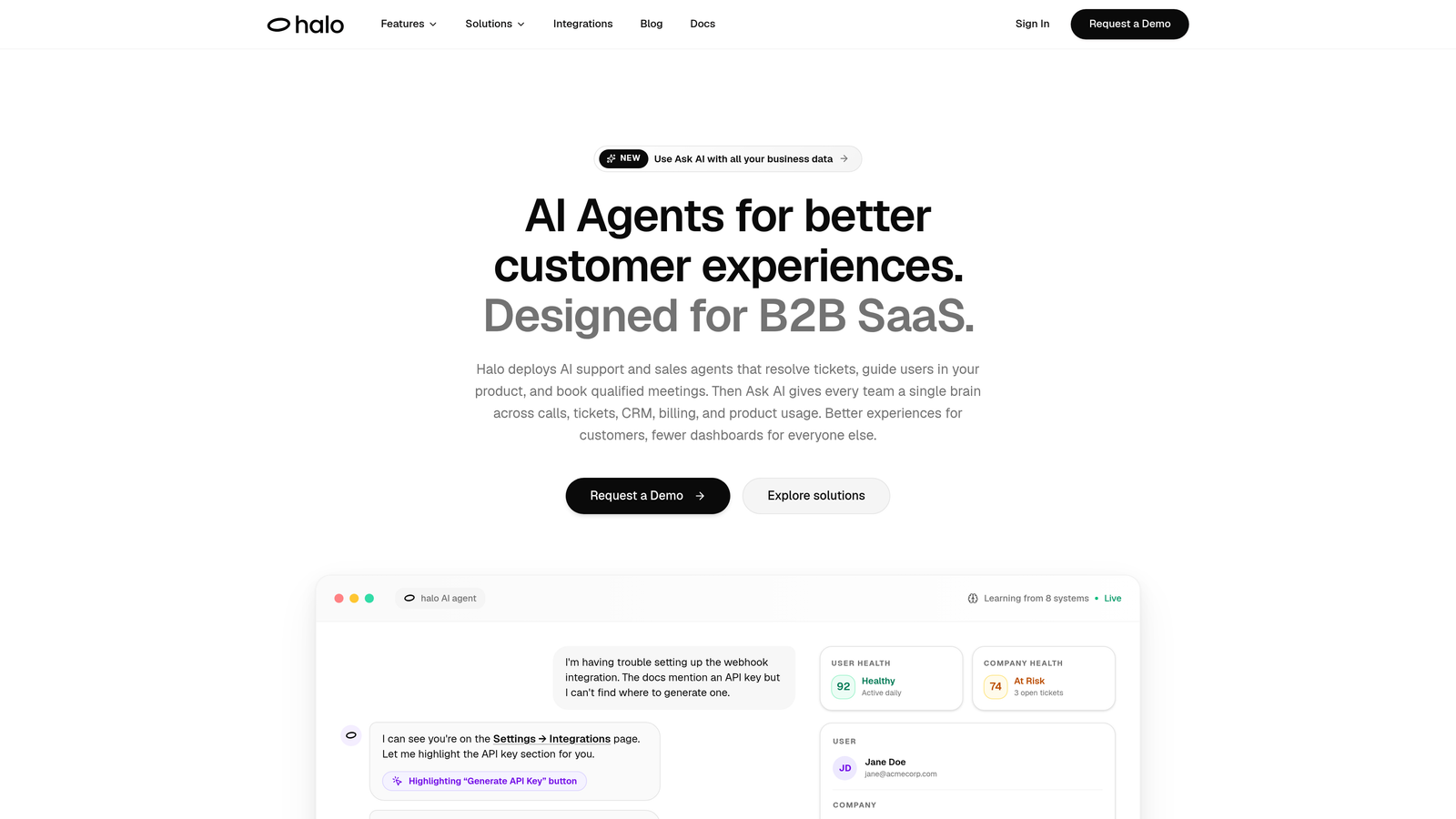
Halo AI is an AI-first customer support platform built specifically for B2B SaaS teams, deploying intelligent agents that resolve tickets autonomously, guide users through your product with page-aware visual context, and surface business intelligence — all while continuously learning from every interaction.
Where This Tool Shines
What separates Halo from augmented helpdesks is its architecture. It wasn't built as a layer on top of something else. The AI is the core, which means the entire platform is optimized around autonomous resolution rather than routing tickets to humans slightly faster.
The page-aware chat widget is particularly distinctive. It understands what a user is looking at in real time and can deliver visual UI guidance in context, not generic documentation links. That's a meaningful difference for SaaS products with complex interfaces where users need situational help, not a knowledge base search.
Key Features
Page-Aware Chat Widget: Sees what users see in real time and delivers visual UI guidance specific to their current screen and context.
Smart Inbox with Business Intelligence: Goes beyond ticket counts to surface customer health signals, revenue anomaly detection, and early churn indicators directly in the support inbox.
Autonomous Ticket Resolution: AI agents close tickets without human intervention, with graceful handoff to live agents when complexity warrants it.
Auto Bug Ticket Creation: Automatically generates bug reports connected to Linear, eliminating manual triage between support and engineering.
Deep Integration Stack: Connects natively with Slack, HubSpot, Intercom, Stripe, Zoom, PandaDoc, and Fathom — covering the full B2B SaaS toolchain.
Best For
B2B SaaS product teams that want AI-native support architecture rather than an AI add-on. Particularly valuable for teams where support insights need to feed into product, engineering, and revenue workflows — not just stay in the helpdesk.
Pricing
Custom pricing based on team size and use case. Contact Halo AI directly for a demo and tailored plan. Pricing is not publicly listed, which is typical for enterprise-adjacent SaaS platforms.
2. Intercom (Fin AI)
Best for: Teams already on Intercom who want to add AI without switching platforms
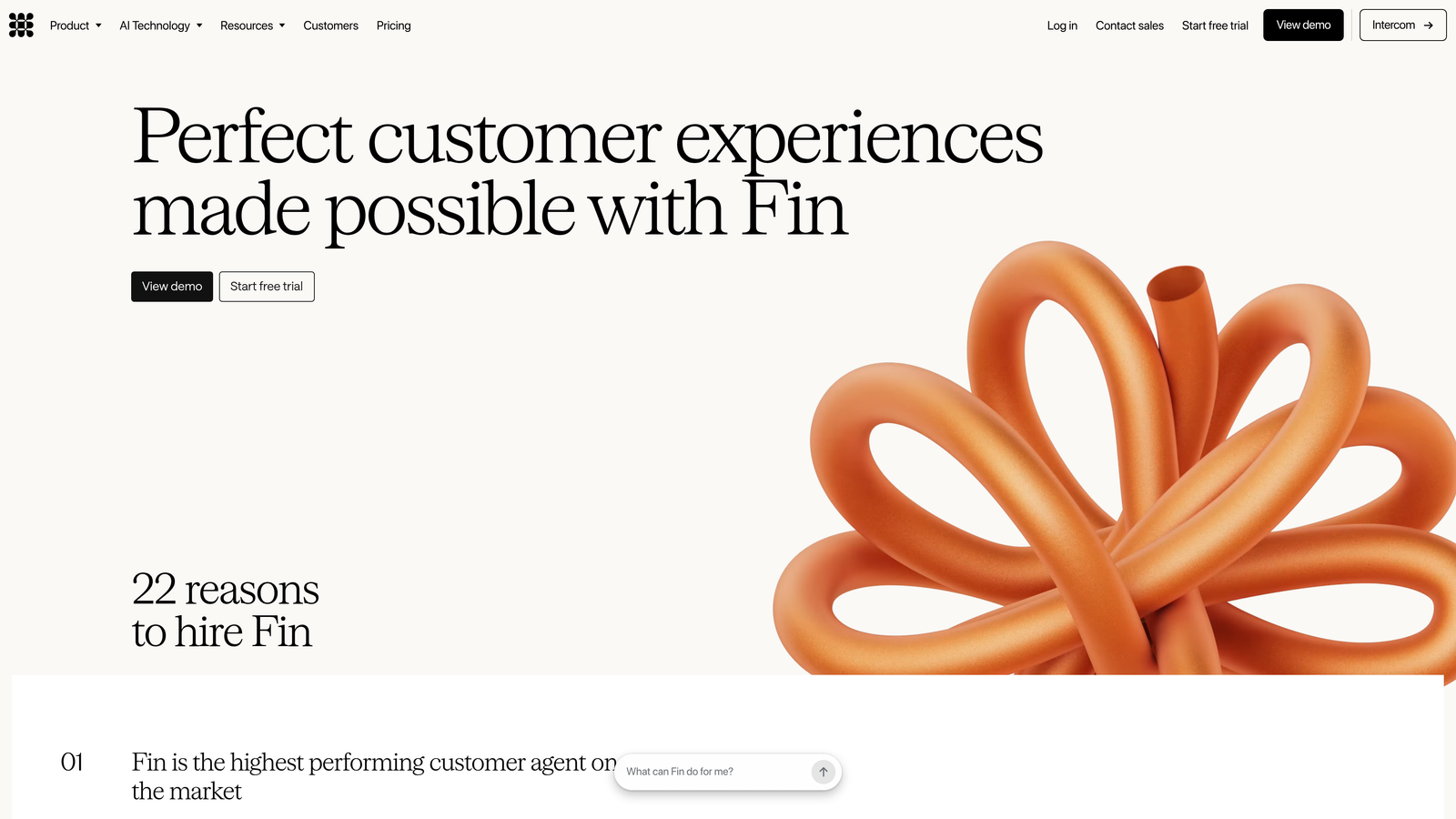
Intercom Fin is an AI agent built natively into the Intercom platform, capable of resolving support queries using help center content, custom answers, and connected data sources.
Where This Tool Shines
Fin's biggest advantage is how deeply it's woven into Intercom's existing infrastructure. If your team already lives in Intercom's messenger and inbox, Fin feels like a natural extension rather than a new tool to manage. The current iteration includes multi-step reasoning, which means it can handle queries that require pulling from multiple sources before responding.
The resolution-based pricing model is worth understanding before you commit. You pay per resolved conversation on top of your base Intercom plan, which can be cost-effective if resolution rates are high but unpredictable if your query mix is complex.
Key Features
Multi-Step Reasoning: Handles complex queries by reasoning across multiple data sources before generating a response.
Native Intercom Integration: Fully embedded in Intercom's messenger, inbox, and help center with no additional setup overhead.
Resolution-Based Pricing: Pay per resolved conversation rather than per seat, aligning cost with outcomes.
Graceful Human Handoff: Routes to a human agent when Fin cannot resolve, with full conversation context preserved.
External Data Source Connections: Pulls from connected data sources to personalize responses beyond static help content.
Best For
Support teams already invested in the Intercom ecosystem who want meaningful AI resolution capability without migrating platforms. Less compelling as a standalone choice if you're not already an Intercom customer.
Pricing
Resolution-based fee on top of Intercom base plans. Base plans start at approximately $39/month. Verify current pricing at intercom.com before purchasing, as Intercom's pricing structure has evolved frequently.
3. Zendesk AI
Best for: Large enterprise support organizations with complex multi-channel needs
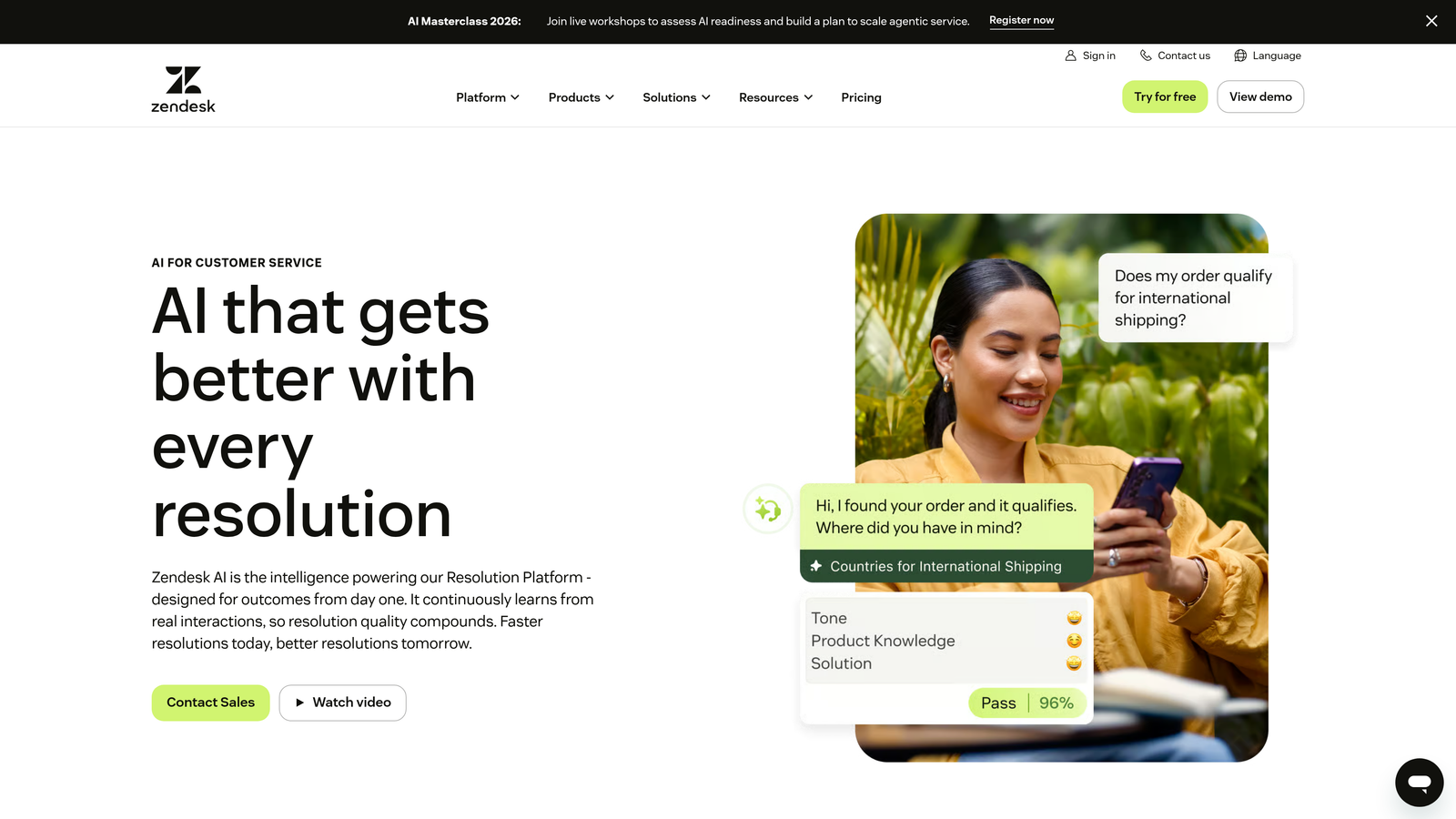
Zendesk AI layers intelligent automation across its enterprise helpdesk suite, covering triage, routing, agent copilot, and automated quality assurance at scale.
Where This Tool Shines
Zendesk's AI capabilities are broad by design. The platform serves enterprise support teams handling high volumes across email, chat, voice, and social simultaneously. The agent copilot feature, which suggests replies and next-best-action guidance, is particularly useful for teams managing large agent pools where consistency matters as much as speed.
Zendesk QA (formerly Klaus) adds automated quality scoring to the mix, giving support managers visibility into conversation quality without manual review. That's a meaningful capability for teams that care about CSAT at scale, not just resolution volume.
Key Features
AI-Powered Triage and Routing: Automatically classifies and routes incoming tickets based on intent, priority, and agent skill set.
Agent Copilot: Suggests replies and next-best-action guidance to help agents respond faster and more consistently.
Automated QA Scoring: Zendesk QA scores conversations automatically, flagging quality issues without manual review.
AI Self-Service Agents: Handles deflection across email, chat, and voice channels before tickets reach human agents.
Enterprise Security and Compliance: Built for organizations with strict data governance and compliance requirements.
Best For
Enterprise support teams with high ticket volumes, multi-channel complexity, and existing Zendesk infrastructure. Teams starting fresh may find the cost and configuration overhead significant relative to AI-native alternatives.
Pricing
AI features are add-ons to Zendesk Suite plans. Suite plans start at approximately $55 per agent per month. Costs can scale significantly at enterprise tier. Verify current pricing at zendesk.com.
4. Freshdesk (Freddy AI)
Best for: SMBs wanting accessible AI-assisted support without enterprise price tags
Freshdesk's Freddy AI is an embedded intelligence layer across the Freshdesk helpdesk suite, covering self-service bots, agent assist, and analytics at a price point accessible to growing teams.
Where This Tool Shines
Freshdesk's strength here is accessibility. The tiered pricing model means smaller teams can get meaningful AI functionality without committing to enterprise budgets. Freddy AI spans three distinct capability areas: self-service deflection, agent assistance, and analytics insights, which gives teams flexibility in how they deploy AI across the support workflow.
Freddy Insights stands out as a useful addition for teams that want AI to do more than just answer tickets. It flags anomalies in support data and surfaces patterns that might otherwise require a dedicated analyst to find.
Key Features
Freddy Self Service: Customer-facing AI bot that deflects common queries before they become tickets.
Freddy Copilot: Agent assist tool for reply drafting, thread summarization, and suggested responses.
Freddy Insights: AI-powered analytics layer that flags anomalies and surfaces trends in support data.
Multi-Channel Support: Covers email, chat, social, and phone within a unified inbox.
Tiered AI Access: AI capabilities scale with plan level, making entry-level adoption low-risk.
Best For
SMBs and growing teams that want a capable helpdesk with progressive AI features at a manageable cost. Less suited for teams that need deep AI customization or complex integration with revenue and product tooling.
Pricing
Freshdesk offers a free tier. Freddy AI features unlock on Growth and above, with plans ranging from approximately $15 to $49 per agent per month. Verify current pricing at freshworks.com.
5. Tidio
Best for: Small e-commerce businesses needing fast, low-code AI chat deployment
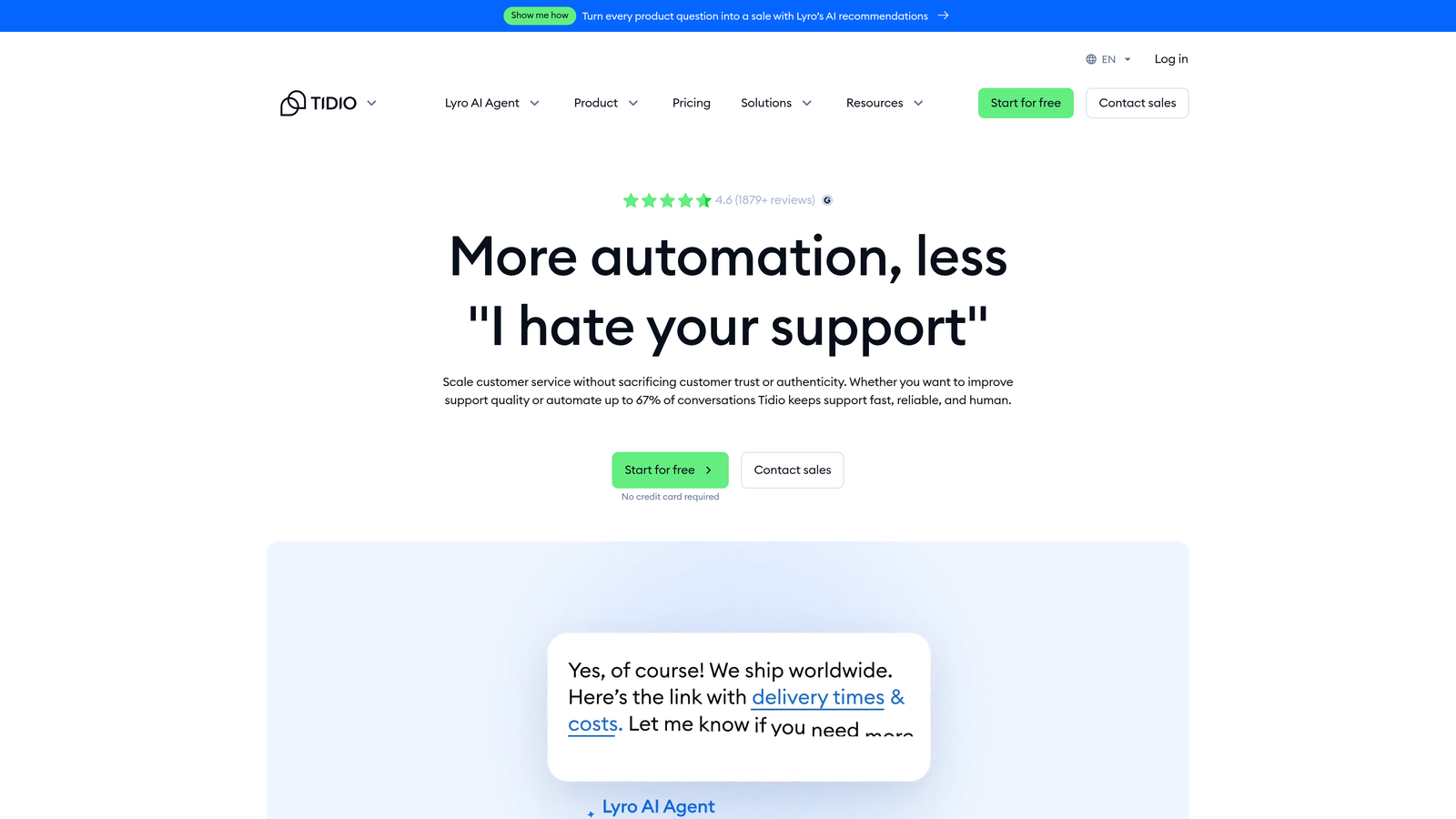
Tidio is a live chat and AI chatbot platform built for small businesses and e-commerce teams, with its Lyro AI agent handling repetitive customer queries at speed.
Where This Tool Shines
Tidio's appeal is simplicity and speed. For a Shopify or WooCommerce store that needs AI chat handling order questions, shipping status, and returns without engineering resources, Lyro gets you live faster than almost anything else on this list. The freemium entry point also means you can test before committing.
It's worth being clear about the fit: Tidio is optimized for transactional, e-commerce-style queries. If your support volume involves complex product questions, multi-step troubleshooting, or B2B account management, you'll likely hit its ceiling relatively quickly.
Key Features
Lyro AI Chatbot: Handles repetitive customer queries automatically, learning from your existing help content.
E-Commerce Integrations: Native connections with Shopify, WooCommerce, and Wix for order and product data context.
Freemium Entry Point: Free plan available with low-code deployment, reducing time-to-value significantly.
Live Chat Fallback: Routes to a human agent when Lyro cannot resolve, with conversation history intact.
Conversation Analytics: Tracks visitor behavior and conversation patterns to identify common query types.
Best For
Small e-commerce businesses and DTC brands with high volumes of transactional queries. Not well-suited for B2B SaaS teams with complex product support needs or enterprise integration requirements.
Pricing
Free plan available. Lyro AI conversations are metered on paid plans starting at approximately $29/month. Verify current pricing at tidio.com as plan structures evolve regularly.
6. Kustomer
Best for: Subscription and D2C businesses with complex customer histories needing a unified view
Kustomer is a CRM-native customer service platform that unifies support history, order data, and customer interactions into a single timeline, with AI layered across routing and response.
Where This Tool Shines
Kustomer's unified timeline is genuinely differentiated. Rather than treating support as isolated tickets, it surfaces the full customer relationship: past orders, previous conversations, subscription status, and behavioral history in a single view. For agents handling complex customer situations, that context dramatically changes the quality of the interaction.
The AI capabilities sit on top of this data foundation, which means intent detection and suggested replies are informed by actual customer history rather than just the current message. That's a meaningful advantage for teams where customer context matters as much as resolution speed.
Key Features
Unified Customer Timeline: Combines support tickets, CRM data, and order history in a single agent view.
AI Intent Detection: Identifies customer intent from incoming messages to route and prioritize accurately.
Workflow Automation: Automates routing, escalation, and follow-up workflows based on customer attributes and intent.
Omnichannel Support: Handles email, chat, social, SMS, and voice within a unified platform.
Suggested Replies: AI-generated response suggestions informed by customer history and past interactions.
Best For
Subscription businesses, D2C brands, and teams where customer history is central to support quality. The platform's depth makes it better suited for mid-market and above rather than early-stage teams.
Pricing
Per-agent per-month pricing at enterprise-tier positioning. Not designed for budget-constrained SMBs. Verify current pricing at kustomer.com before evaluating.
7. Drift (Salesloft)
Best for: B2B teams where support and sales conversations overlap significantly
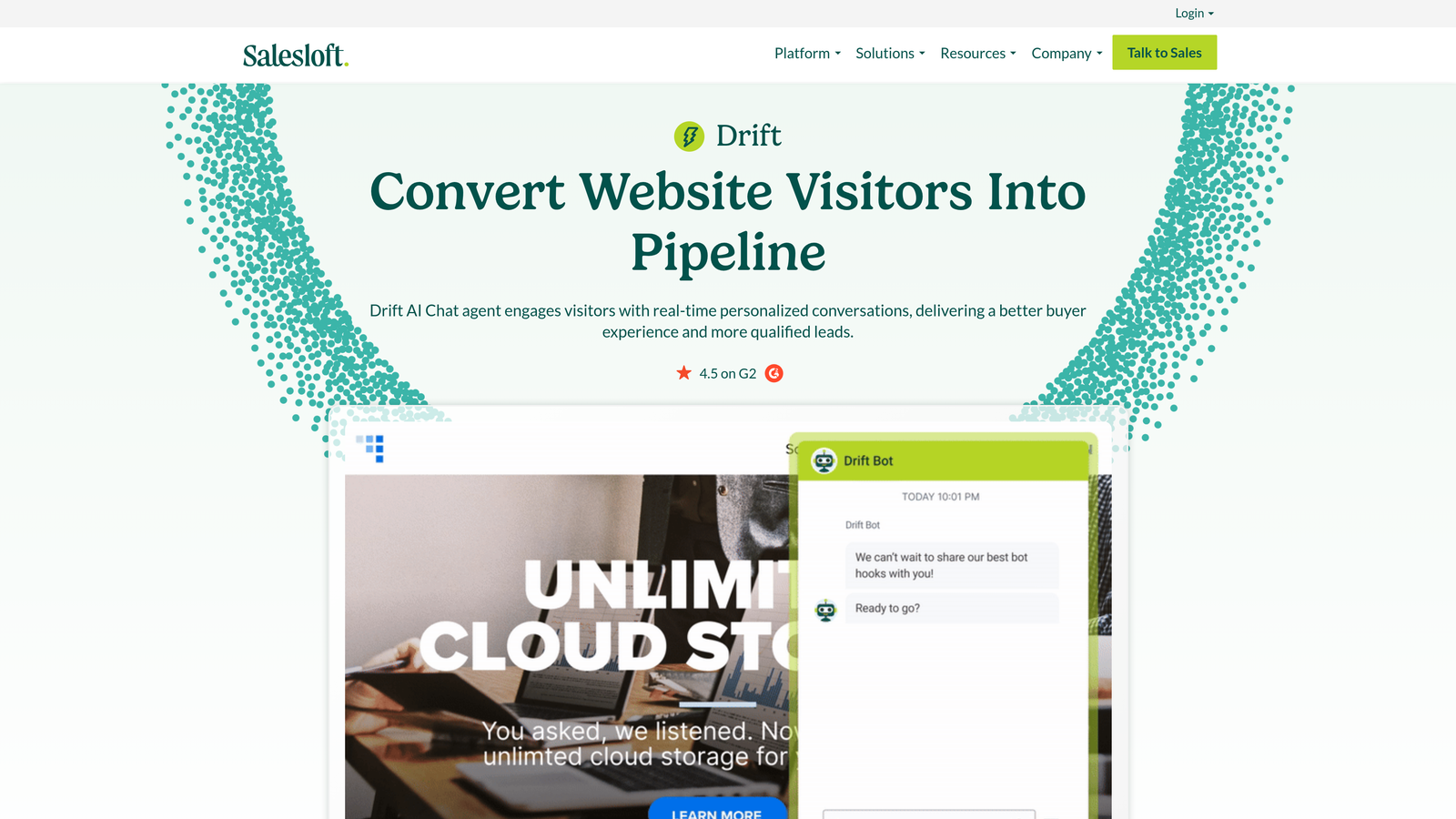
Drift, now part of Salesloft, is a conversational AI platform that blends support and sales, routing conversations to the right team and using AI to qualify and engage buyers alongside resolving support queries.
Where This Tool Shines
Drift's integration into Salesloft's revenue intelligence platform makes it a strong choice for organizations where the line between support and sales is intentionally blurry. Account-based targeting means high-value visitors get personalized experiences, and the AI can route to an SDR or a support agent depending on the nature of the conversation.
Be clear-eyed about the use case, though. Drift was built for conversational marketing first. If your goal is pure support automation with autonomous ticket resolution, you're not buying the platform for its strongest capability. Teams with a genuine sales-plus-support motion will get more value here.
Key Features
Conversational AI for Support and Sales: Handles both support deflection and pipeline qualification within the same platform.
Intent-Based Routing: Routes conversations to support or sales based on detected intent and visitor attributes.
Salesloft Integration: Connects directly with Salesloft's revenue intelligence capabilities for unified GTM visibility.
Account-Based Targeting: Personalizes chat experiences for named accounts or high-value visitor segments.
Meeting Scheduling and SDR Handoff: Automates meeting booking and routes qualified conversations to sales reps.
Best For
B2B companies where support conversations frequently convert into sales opportunities, and where unifying revenue and support intelligence in one platform has strategic value. Not the right fit for teams with a pure support mandate.
Pricing
Custom enterprise pricing. Not positioned for SMBs or teams with straightforward support-only use cases. Verify current pricing at drift.com or salesloft.com.
8. Forethought AI
Best for: Teams wanting to add AI intelligence to an existing helpdesk without replacing it
Forethought is an AI layer that sits on top of existing helpdesks like Zendesk, Salesforce, and ServiceNow to add intelligent deflection, triage, agent assist, and discovery without replacing your current system.
Where This Tool Shines
Forethought's positioning is deliberately non-disruptive. If you've invested years configuring Zendesk or Salesforce Service Cloud and aren't ready to migrate, Forethought adds meaningful AI capability on top of what you already have. That's a pragmatic choice for large organizations where platform migration carries significant risk and cost.
The Discover module is particularly interesting for teams that want AI to do more than just answer tickets. It surfaces insights about what's driving ticket volume, where knowledge gaps exist, and which deflection opportunities are being missed. That's strategic intelligence, not just operational efficiency.
Key Features
Solve: AI deflection bot that handles self-service resolution before tickets reach agents.
Triage: Intelligent ticket routing based on detected intent, urgency, and priority signals.
Assist: Agent copilot that surfaces suggested replies and relevant knowledge in real time.
Discover: Insights layer that identifies top issues, knowledge gaps, and deflection opportunities across ticket data.
Helpdesk Integrations: Connects with Zendesk, Salesforce, ServiceNow, and other enterprise platforms without replacing them.
Best For
Enterprise teams with established helpdesk infrastructure who want AI augmentation rather than platform replacement. Less relevant for teams building a support stack from scratch or those willing to migrate to an AI-native platform.
Pricing
Custom enterprise pricing. Not publicly listed. Verify current pricing and packaging at forethought.ai.
9. Help Scout
Best for: Small teams that want AI to make agents faster without automating the support function entirely
Help Scout is a human-first support platform with AI assist features, designed for small teams that want AI to improve agent quality and speed rather than replace the human in the loop.
Where This Tool Shines
Help Scout's philosophy is refreshingly honest: it's not trying to automate support away. The AI features are designed to make individual agents more effective, particularly around the cognitive load of managing long email threads and drafting consistent replies. For small teams where every agent interaction matters, that's a meaningful value proposition.
The transparent per-user pricing with no per-resolution fees is also worth noting. In a market where usage-based pricing can create unpredictable costs, Help Scout's straightforward model makes budgeting simple. The tradeoff is that you won't get autonomous ticket resolution at scale.
Key Features
AI Summarize: Condenses long email threads into concise context so agents can respond without reading every message.
AI Assist: Drafts replies, adjusts tone, and expands bullet points to help agents write faster and more consistently.
Beacon Widget: Embeddable widget that surfaces docs and chat for self-service before contacting support.
Transparent Per-User Pricing: Flat per-user model with no per-resolution or usage-based fees.
Minimal Inbox Design: Clean interface built to reduce agent cognitive load and keep focus on conversations.
Best For
Small support teams, early-stage SaaS companies, and organizations where human-led support is a deliberate brand choice. Not the right fit for teams needing autonomous resolution at volume or deep integration with revenue and product tooling.
Pricing
Plans start at approximately $20 per user per month. AI features are included on Standard and above. Verify current pricing at helpscout.com.
Which Platform Is Right for Your Team?
The right choice depends less on feature lists and more on where your support function sits today and where you need it to go.
If you're a B2B SaaS team that wants AI-native architecture with business intelligence baked in, Halo AI is built for that specific use case. The page-aware context, smart inbox, and deep integration stack are designed for product-led teams where support insights should feed into engineering, product, and revenue workflows.
If you're already deep in Intercom or Zendesk and want to add AI without switching platforms, Fin AI and Zendesk AI are logical extensions of what you already have. The configuration overhead is lower, and the workflow disruption is minimal.
SMBs on a budget will find Freshdesk Freddy or Tidio the most accessible entry points. Both offer freemium or low-cost tiers that let you test AI capability before committing. Teams blending sales and support should evaluate Drift, particularly if they're already in the Salesloft ecosystem.
Before you buy any platform, ask three questions. Does it learn from every interaction or rely on static rules? Can it escalate gracefully to a human agent without losing conversation context? Does it integrate with your existing stack without requiring heavy engineering lift to maintain?
The best AI support platform isn't the one with the longest feature list. It's the one that resolves tickets autonomously, improves over time, and gives your team better visibility into customer health.
Your support team shouldn't scale linearly with your customer base. See Halo in action and discover how continuous learning transforms every interaction into smarter, faster support — while your team stays focused on the complex issues that genuinely need a human touch.