9 Best Customer Support Software Platforms to Buy in 2026
When you buy customer support software in 2026, your choice directly affects customer retention and team productivity. This comprehensive guide evaluates nine leading platforms across AI-powered, traditional helpdesk, omnichannel, and specialized categories, helping startups and enterprises find solutions that match their support strategy, technical requirements, and budget constraints.
 Matt PattoliFounder10 min read
Choosing the right customer support software directly impacts customer retention, team efficiency, and your bottom line. With options ranging from AI-native platforms to traditional helpdesk systems, finding the best fit for your business requires understanding what each solution does well—and where it falls short.
This guide breaks down nine leading customer support platforms across different categories: AI-powered automation, traditional helpdesks, omnichannel solutions, and specialized tools. Whether you're a growing startup needing intelligent automation or an enterprise requiring robust customization, you'll find a platform that matches your support strategy and budget.
1. Halo AI
Best for: B2B companies wanting AI agents that autonomously resolve tickets and learn continuously
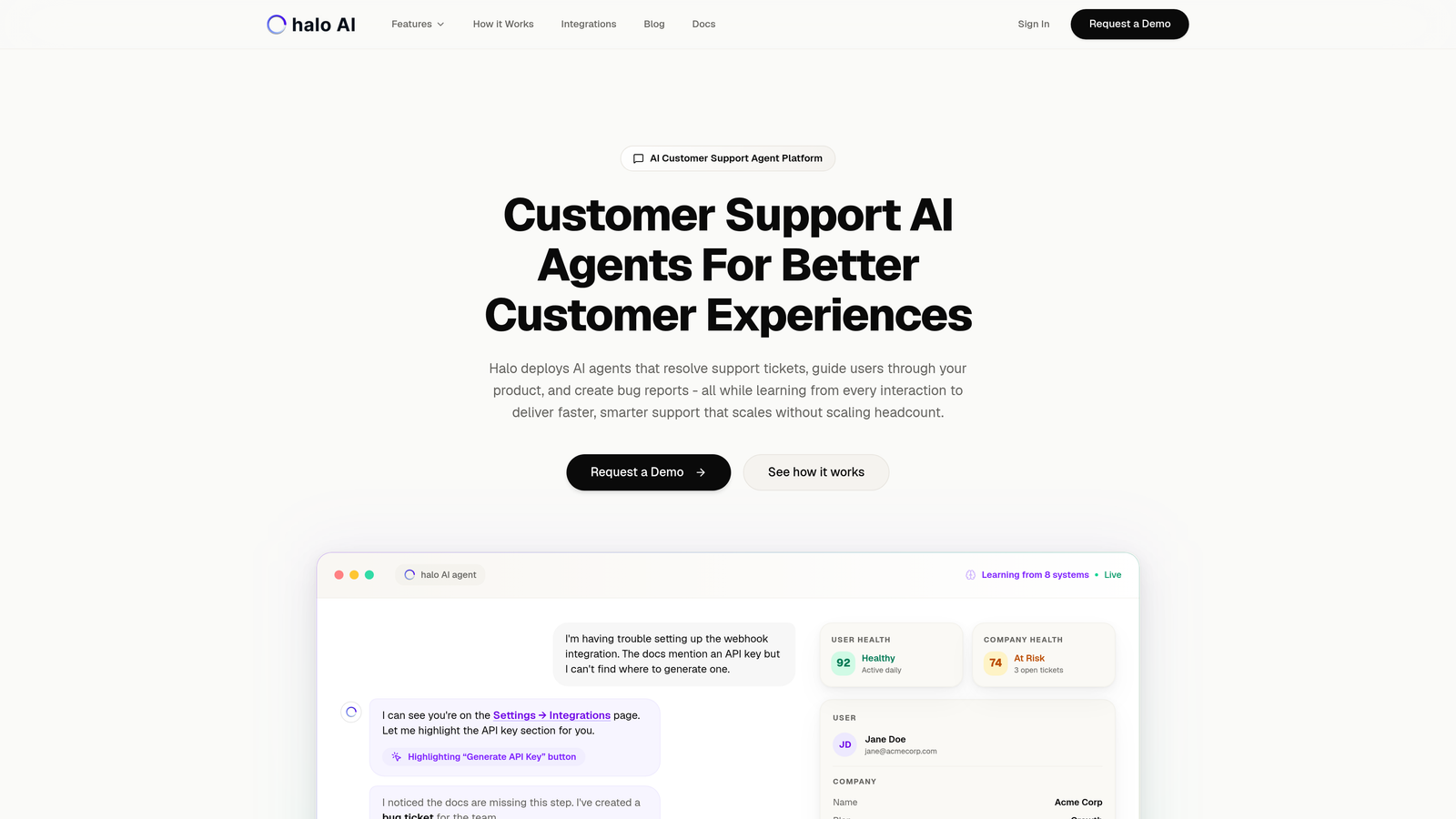
Halo AI is an AI-native customer support platform built from the ground up for autonomous ticket resolution.
Where This Tool Shines
Unlike traditional helpdesks with AI features bolted on, Halo's architecture centers on AI agents that handle support tickets independently. The platform's page-aware chat widget sees exactly what users see, enabling visual guidance through complex product interfaces rather than generic text responses.
What sets Halo apart is continuous learning—every interaction trains the system to become smarter. The platform doesn't just resolve tickets; it surfaces business intelligence like customer health signals and revenue patterns that traditional helpdesks miss entirely.
Key Features
Autonomous AI Agents: Resolve support tickets without human intervention, handling routine inquiries end-to-end.
Page-Aware Context: Chat widget understands the exact page and UI elements users see for precise guidance.
Smart Inbox Analytics: Business intelligence layer detects customer health issues and revenue opportunities beyond basic support metrics.
Auto Bug Reporting: Creates detailed bug tickets in Linear automatically when technical issues are detected.
Seamless Escalation: Routes complex issues to human agents with full context when AI reaches its limits.
Best For
B2B SaaS companies and product teams that need support to scale without adding headcount. Particularly valuable for businesses with complex products requiring visual guidance and teams already using tools like Linear, Slack, and modern CRMs.
Pricing
Contact for custom pricing based on ticket volume and feature requirements.
2. Zendesk
Best for: Enterprise organizations needing extensive customization and a massive integration ecosystem
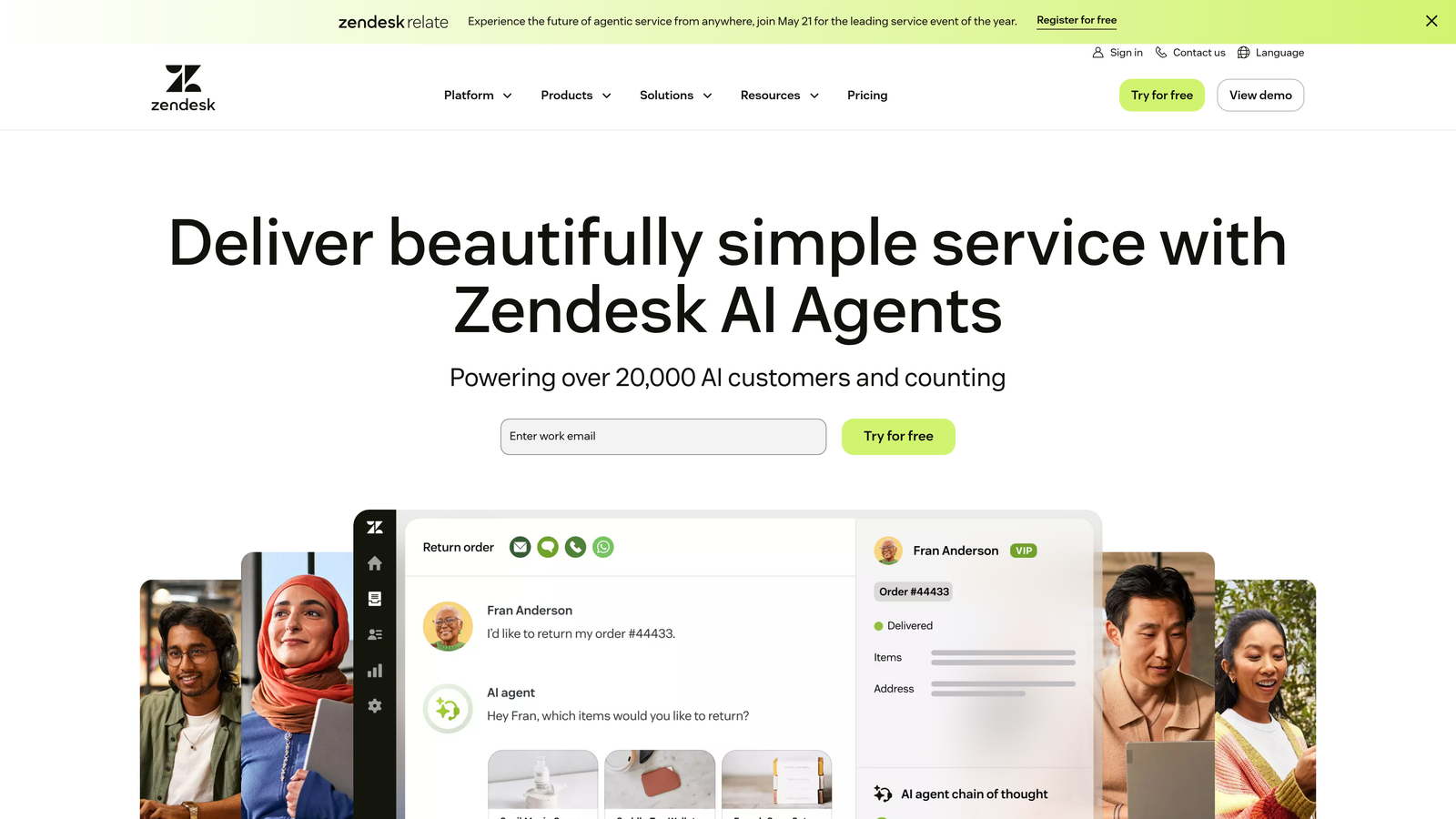
Zendesk is the established enterprise-grade platform offering comprehensive omnichannel support capabilities.
Where This Tool Shines
Zendesk's marketplace contains over 1,500 integrations, making it the Swiss Army knife of customer support platforms. If your tech stack is complex and you need every tool connected, Zendesk likely has a pre-built integration waiting.
The platform excels at handling high ticket volumes across multiple channels—email, chat, phone, social media—with sophisticated routing rules. Large support teams benefit from granular permission controls and detailed analytics dashboards that track every metric imaginable.
Key Features
Omnichannel Ticketing: Unified inbox consolidates customer conversations from email, chat, phone, and social platforms.
Extensive App Marketplace: Over 1,500 integrations connect Zendesk to virtually any business tool.
Advanced Analytics: Customizable dashboards track team performance, customer satisfaction, and operational efficiency.
Workflow Automation: Trigger-based rules automate ticket routing, tagging, and responses based on conditions.
AI Answer Bot: Suggests knowledge base articles and handles simple inquiries before escalating to agents.
Best For
Enterprise companies with large support teams, complex workflows, and substantial budgets. Organizations that prioritize customization and need extensive reporting capabilities across multiple departments.
Pricing
Starts at $55 per agent per month for Suite Team. Enterprise plans with advanced features require custom quotes.
3. Intercom
Best for: Product-led companies wanting to combine support, marketing, and product messaging
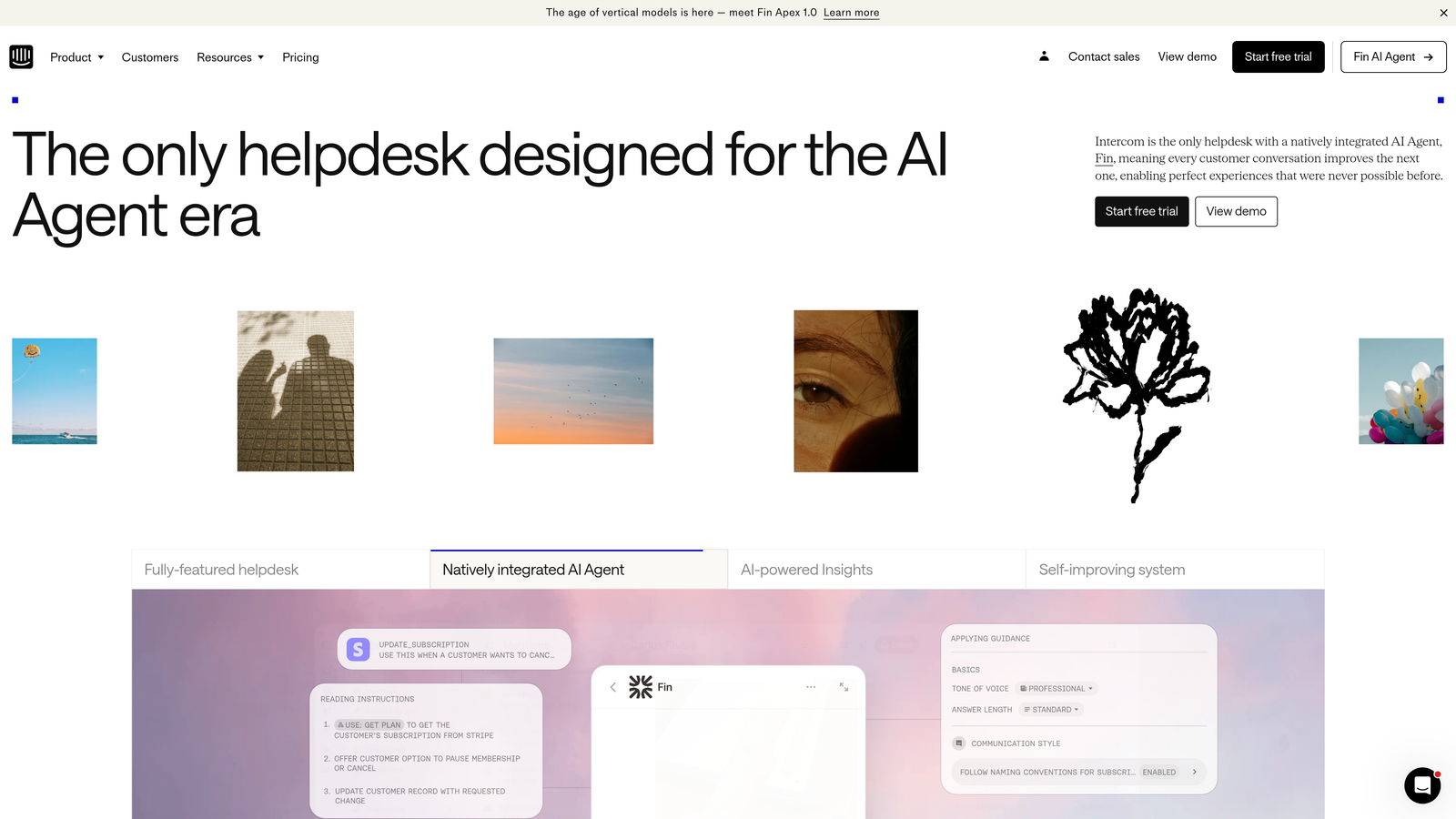
Intercom is a conversational engagement platform that blurs the line between customer support and product communication.
Where This Tool Shines
Intercom's messenger-first approach treats every customer interaction as a conversation rather than a ticket. The platform excels at proactive engagement—you can trigger messages based on user behavior, send product tours to new users, or reach out to customers showing signs of churn.
The unified interface means your support team sees the same conversation history as your product and marketing teams. This context-rich environment helps agents understand not just what customers are asking, but where they are in their journey.
Key Features
Messenger-First Interface: In-app chat that feels native to your product rather than a separate support widget.
Product Tours: Build onboarding flows and feature announcements directly within your application.
Outbound Campaigns: Trigger automated messages based on user behavior and lifecycle stage.
Resolution Bot: Suggests help articles and handles common questions before involving human agents.
Customer Data Platform: Tracks user behavior and attributes for targeted messaging and support.
Best For
SaaS companies with product-led growth strategies where support, onboarding, and engagement overlap. Teams that want one platform for customer communication across the entire lifecycle.
Pricing
Starts at $74 per month for Essential plan with basic features. Advanced plans scale with seat count and feature needs.
4. Freshdesk
Best for: Growing businesses wanting powerful features without enterprise-level pricing
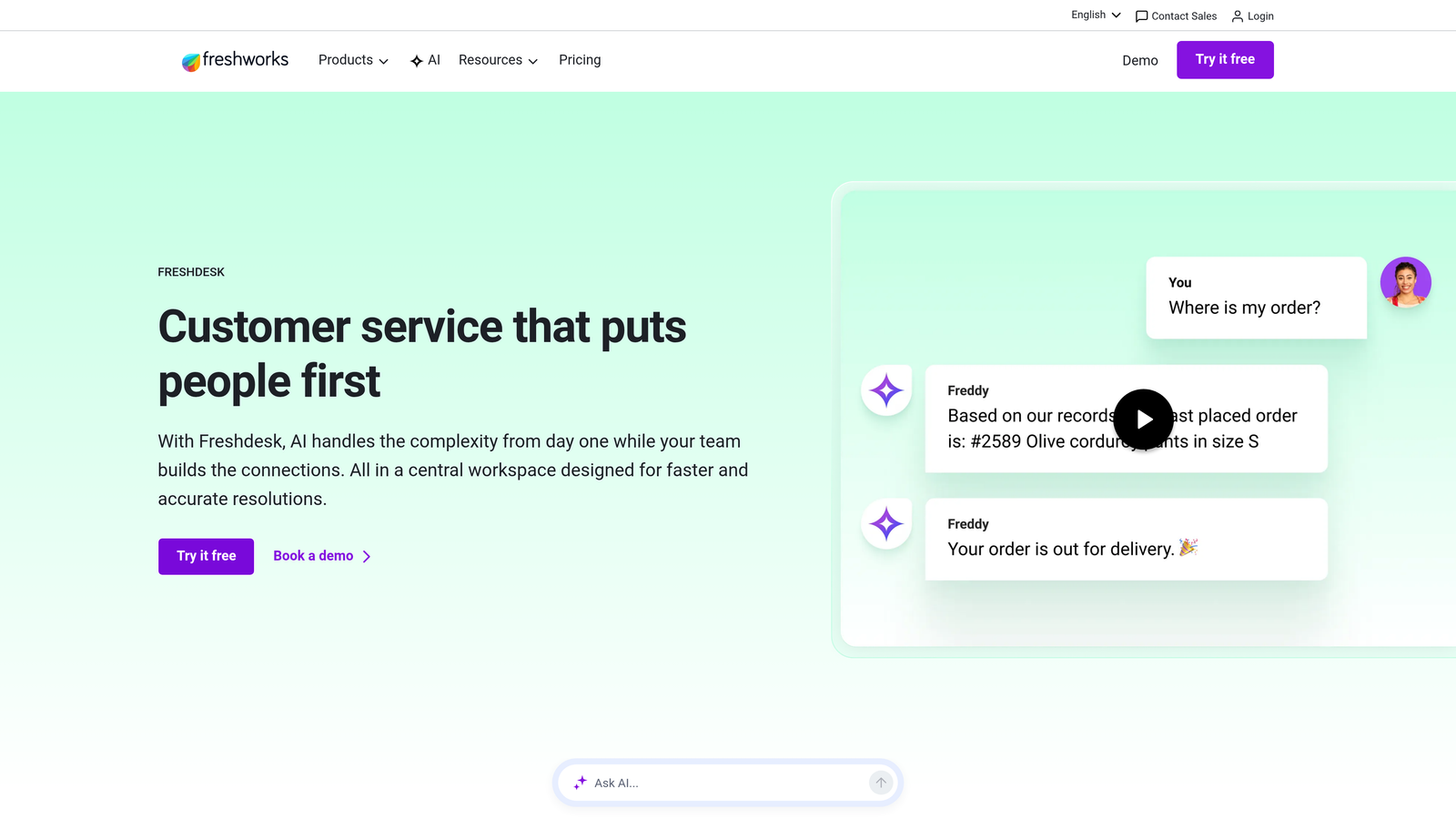
Freshdesk is a cloud-based helpdesk solution that balances functionality with affordability.
Where This Tool Shines
Freshdesk delivers surprisingly robust capabilities at price points that won't strain startup budgets. The free tier genuinely works for small teams, while paid plans add automation and multichannel support without jumping to enterprise pricing.
Freddy AI, Freshdesk's intelligent assistant, handles ticket routing and suggests responses based on historical data. The interface stays intuitive even as you add complexity, making it easier to onboard new team members compared to more enterprise-focused platforms.
Key Features
Intuitive Ticketing: Clean interface with SLA tracking, priority levels, and automated escalations.
Freddy AI Assistant: Routes tickets intelligently and suggests responses based on similar past conversations.
Built-In Channels: Native phone and chat support without requiring separate tools or integrations.
Team Collaboration: Shared ticket ownership, internal notes, and collision detection prevent duplicate work.
Self-Service Portal: Branded knowledge base where customers find answers before contacting support.
Best For
Small to mid-sized businesses that need professional helpdesk capabilities without committing to expensive enterprise contracts. Companies prioritizing ease of use and quick implementation.
Pricing
Free tier available for unlimited agents with basic features. Paid plans start at $15 per agent per month.
5. Help Scout
Best for: Teams prioritizing personal, human-centered customer interactions
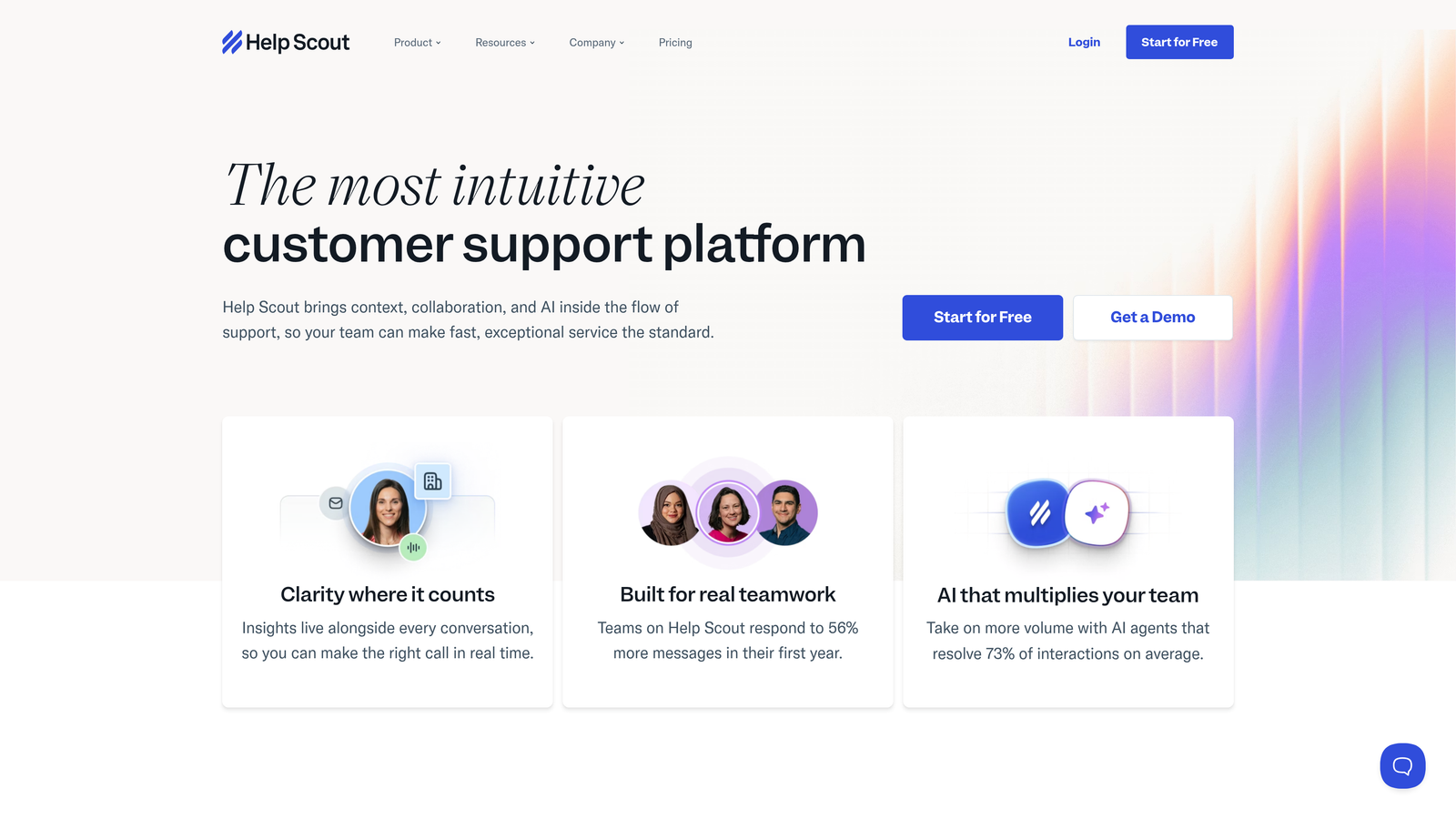
Help Scout is a customer communication platform designed to keep support feeling personal even as you scale.
Where This Tool Shines
Help Scout intentionally avoids feeling like a traditional ticketing system. The shared inbox looks like email, making it familiar for teams transitioning from group email addresses. Collision detection shows when teammates are viewing the same conversation, preventing duplicate responses.
The Beacon widget embeds help directly into your product, letting customers search your knowledge base without leaving their workflow. When they need human help, the conversation continues seamlessly in the same interface.
Key Features
Shared Inbox: Email-like interface with conversation threading and collision detection.
Beacon Widget: Embeddable help widget combines knowledge base search with live messaging.
Docs Knowledge Base: Clean, searchable documentation builder with customizable branding.
Customer Profiles: Complete conversation history and customer data in one view.
Saved Replies: Template library with variables for personalized but efficient responses.
Best For
Small to medium businesses that want support to feel conversational rather than transactional. Teams that value simplicity and don't need complex automation or enterprise features.
Pricing
Starts at $20 per user per month for Standard plan with core features.
6. HubSpot Service Hub
Best for: Companies already using HubSpot CRM wanting unified customer data
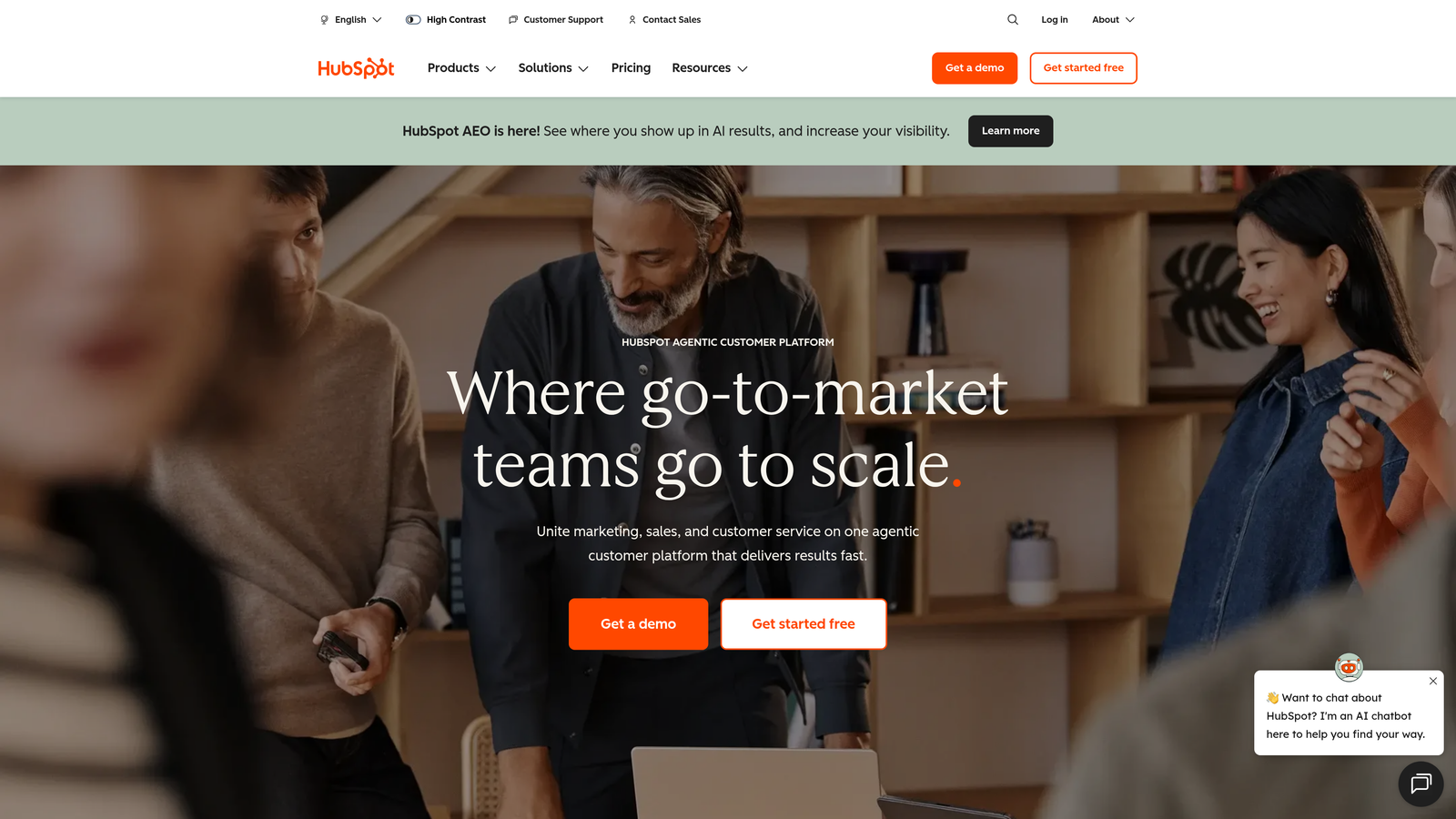
HubSpot Service Hub is customer service software that connects directly with HubSpot's CRM, marketing, and sales tools.
Where This Tool Shines
If your marketing and sales teams already live in HubSpot, Service Hub eliminates data silos completely. Support agents see every marketing email, sales call, and previous support interaction in one timeline. This context transforms how quickly agents can help customers.
The platform treats customer service as part of the growth flywheel rather than a cost center. Built-in feedback surveys measure satisfaction, while the knowledge base includes SEO tools to attract customers through self-service content.
Key Features
Unified CRM: Complete customer timeline showing marketing, sales, and support interactions in one place.
Smart Ticketing: Automatic routing based on agent availability, expertise, and workload.
Feedback Surveys: Built-in NPS and CSAT surveys with automated follow-ups based on scores.
SEO-Optimized Knowledge Base: Help articles that rank in search engines and reduce ticket volume.
Conversational Bots: Chatbots that qualify issues and route to appropriate agents or articles.
Best For
Businesses already invested in the HubSpot ecosystem wanting seamless data flow between marketing, sales, and support. Companies treating customer service as a growth channel.
Pricing
Free tools available with basic features. Starter plan begins at $45 per month for two users.
7. Gorgias
Best for: E-commerce businesses needing deep shopping platform integrations
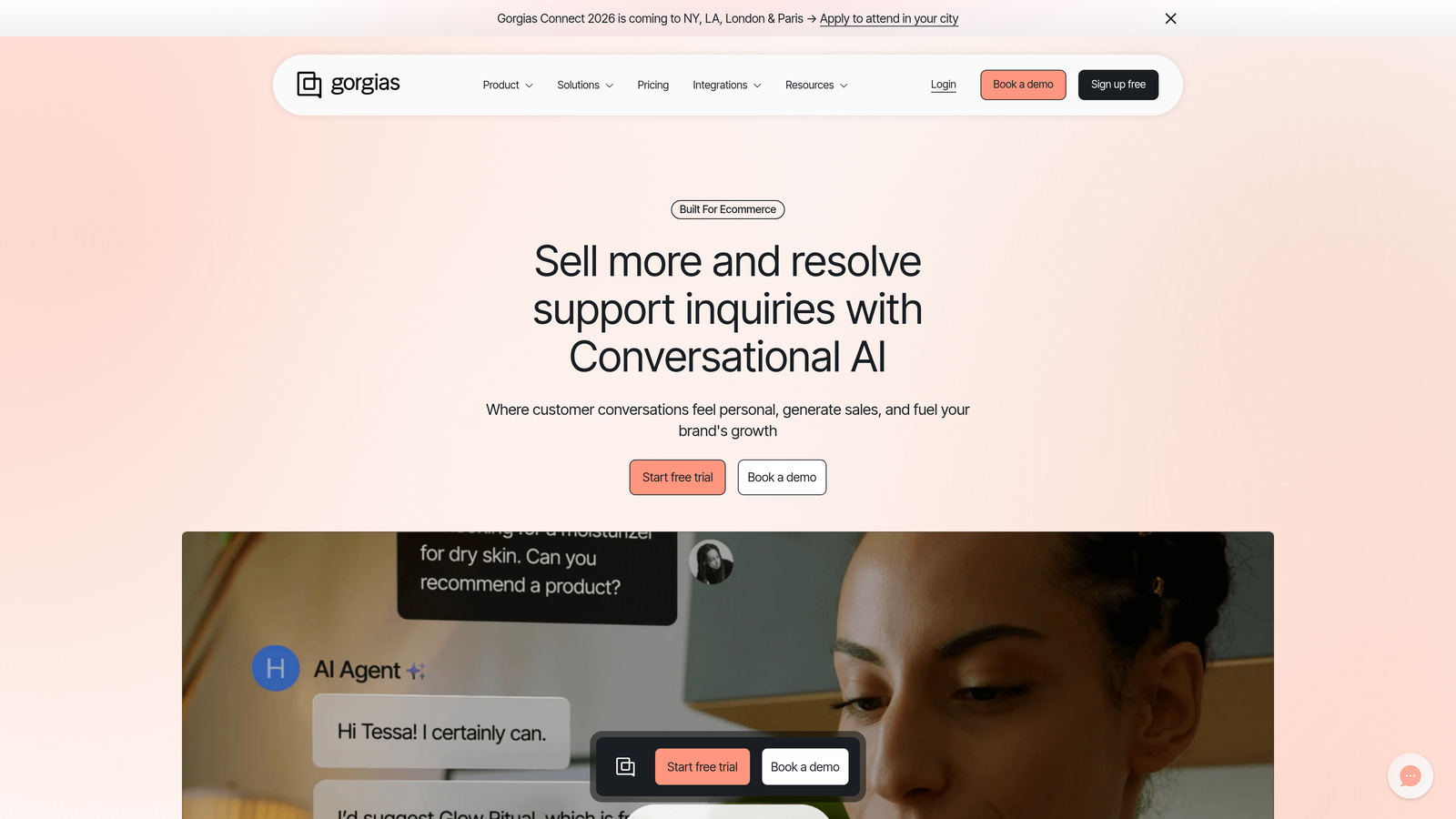
Gorgias is a helpdesk built specifically for online retailers with native integrations into Shopify, BigCommerce, and Magento.
Where This Tool Shines
Gorgias understands that e-commerce support revolves around orders. Agents can view order details, process refunds, and modify shipments directly within support tickets—no tab-switching required. This context speeds up resolution times dramatically.
The platform's automation rules can generate revenue, not just reduce costs. Macros with dynamic variables automatically include discount codes or product recommendations based on order history, turning support conversations into sales opportunities.
Key Features
One-Click Order Management: View, edit, refund, and track orders without leaving the ticket interface.
Revenue-Generating Automation: Rules that include personalized discount codes and product suggestions in responses.
Multichannel Support: Unified inbox for email, live chat, SMS, Facebook, and Instagram messages.
Dynamic Macros: Template responses that automatically populate customer and order data.
Intent Detection: AI identifies ticket intent to trigger appropriate automated responses or routing.
Best For
E-commerce businesses of any size, particularly those on Shopify. Retailers handling high volumes of order-related inquiries who need efficiency without sacrificing customer experience.
Pricing
Starts at $10 per month for Starter plan covering 50 tickets. Scales with ticket volume.
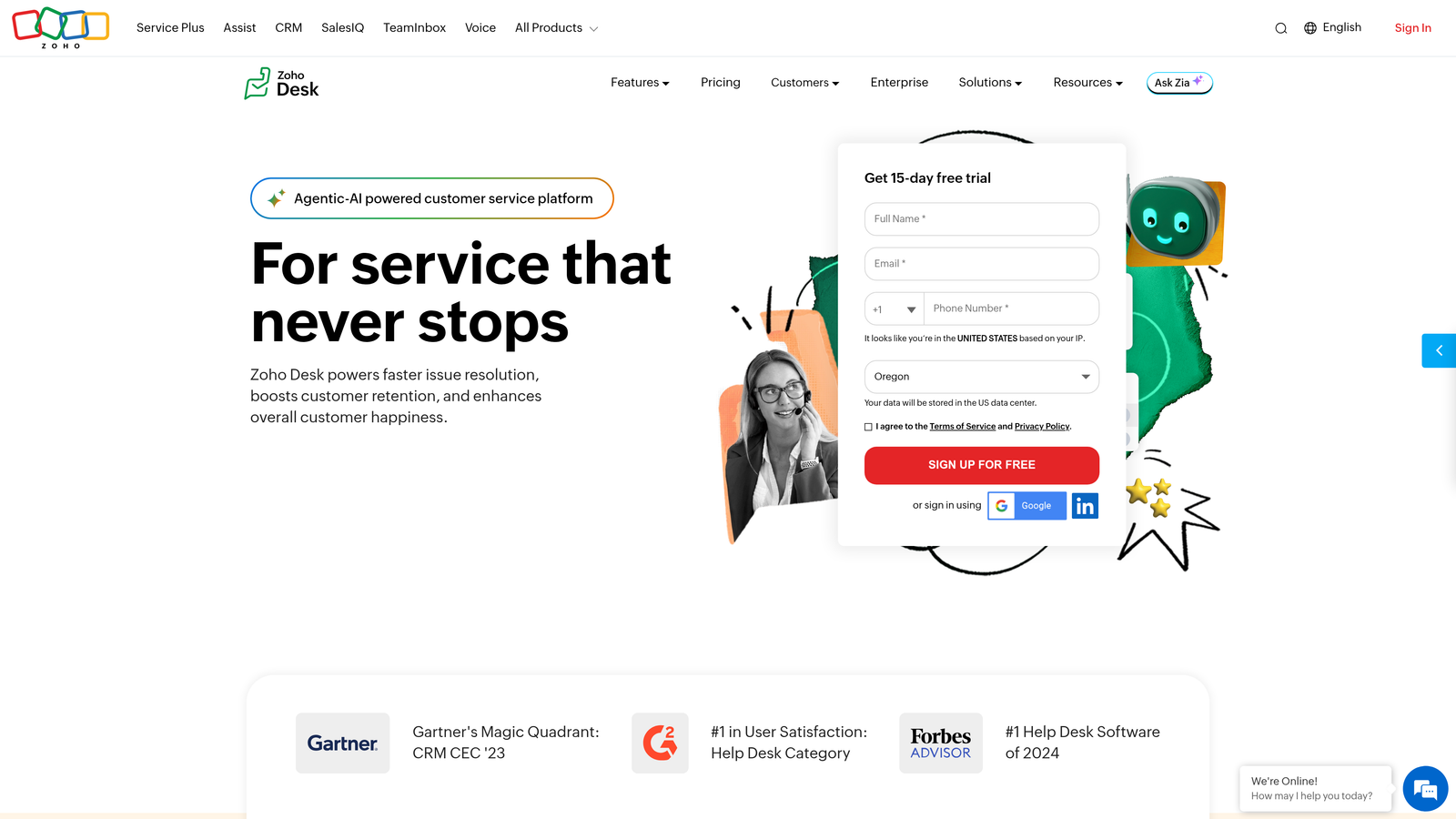
8. Zoho Desk
Best for: Businesses using Zoho's suite wanting context-aware support with AI assistance
Zoho Desk is a helpdesk platform offering AI-powered assistance and tight integration across Zoho's business applications.
Where This Tool Shines
Zia, Zoho's AI assistant, analyzes ticket sentiment to flag frustrated customers who need immediate attention. This emotional intelligence layer helps teams prioritize beyond simple SLA rules, focusing on customers at risk of churning.
Blueprint process automation lets you design complex workflows visually, ensuring every ticket follows consistent steps regardless of which agent handles it. For businesses already using Zoho CRM, the native integration eliminates duplicate data entry entirely.
Key Features
Zia AI Assistant: Sentiment analysis, ticket tagging suggestions, and anomaly detection for unusual patterns.
Multi-Department Management: Separate queues, SLAs, and workflows for different support teams.
Blueprint Automation: Visual process builder for complex, multi-step ticket workflows.
Embeddable Widget: Self-service portal and ticket submission form that matches your brand.
Native Zoho Integration: Seamless data sync with Zoho CRM, Projects, Analytics, and other suite tools.
Best For
Small to mid-sized businesses already using Zoho applications. Companies wanting AI-assisted support without enterprise pricing or complexity.
Pricing
Free plan available for up to 3 agents. Standard plan starts at $14 per agent per month.
9. Front
Best for: Teams wanting collaborative email management with shared accountability
Front is a collaborative inbox platform that transforms team email into a shared workspace.
Where This Tool Shines
Front bridges the gap between individual email and helpdesk software. Each team member maintains their own email address, but conversations live in shared inboxes where teammates can collaborate. Internal comments and @mentions let teams discuss complex issues without cluttering the customer-facing thread.
The platform excels at transparency. Analytics show response times, workload distribution, and team performance without making support feel like a call center. Rules-based automation handles routing while preserving the personal touch of email communication.
Key Features
Shared Inboxes: Team collaboration on emails while maintaining individual sender addresses.
Internal Comments: Discuss tickets privately with @mentions before responding to customers.
Rules-Based Automation: Automatic routing, tagging, and assignment based on content and sender.
Performance Analytics: Track response times, resolution rates, and workload balance across the team.
Multi-Channel Support: Handle email, SMS, social media, and live chat from one interface.
Best For
Teams transitioning from shared email addresses to more structured support. Companies that want collaboration features without abandoning the familiarity of email.
Pricing
Starts at $19 per seat per month for Starter plan with core collaboration features.
Finding Your Perfect Support Platform
The right customer support software depends less on feature lists and more on how you want to scale support as your business grows.
If you're prioritizing automation that genuinely reduces workload rather than just organizing it, AI-native platforms like Halo AI deliver continuous learning that improves with every interaction. Traditional helpdesks like Zendesk and Freshdesk excel when you need extensive customization and proven enterprise reliability.
E-commerce businesses benefit most from specialized tools like Gorgias that understand order management is central to support. Meanwhile, companies already invested in broader ecosystems—HubSpot for growth teams, Zoho for business operations—gain efficiency from native integrations that eliminate data silos.
Consider your ticket complexity, not just volume. High-touch B2B support with technical products needs different capabilities than high-volume e-commerce inquiries. Budget matters, but so does the cost of agents spending time on routine questions that automation could handle.
Your support team shouldn't scale linearly with your customer base. Let AI agents handle routine tickets, guide users through your product, and surface business intelligence while your team focuses on complex issues that need a human touch. See Halo in action and discover how continuous learning transforms every interaction into smarter, faster support.