9 Best AI Support Automation Platforms for B2B Teams in 2026
Choosing an AI support automation platform is a high-stakes decision for B2B product teams, and this guide makes it easier by comparing nine leading platforms across AI capability, integration depth, scalability, and total value. Whether you run a lean startup or a high-volume SaaS operation, you'll find a clear, merit-based breakdown to help you move beyond basic chatbots toward genuine autonomous resolution.
 Grant CooperFounder14 min read
Choosing an AI support automation platform is one of the most consequential decisions a B2B product team will make this year. The difference between a bolt-on chatbot and a genuinely intelligent support system shows up fast: in resolution rates, agent burnout, and customer churn.
This guide compares nine platforms built for B2B companies that need more than canned responses. We're talking about teams using Zendesk, Freshdesk, or Intercom who are ready to move toward autonomous resolution, contextual guidance, and support intelligence that feeds back into the business. Each platform is evaluated on AI capability, integration depth, scalability, and total value.
Whether you're a lean startup or a scaling SaaS with thousands of tickets per month, there's a right fit here. We've included Halo AI as our top pick because it's what we build, but every tool on this list earns its place on merit.
1. Halo AI
Best for: B2B SaaS teams that want autonomous ticket resolution with deep business stack integration.
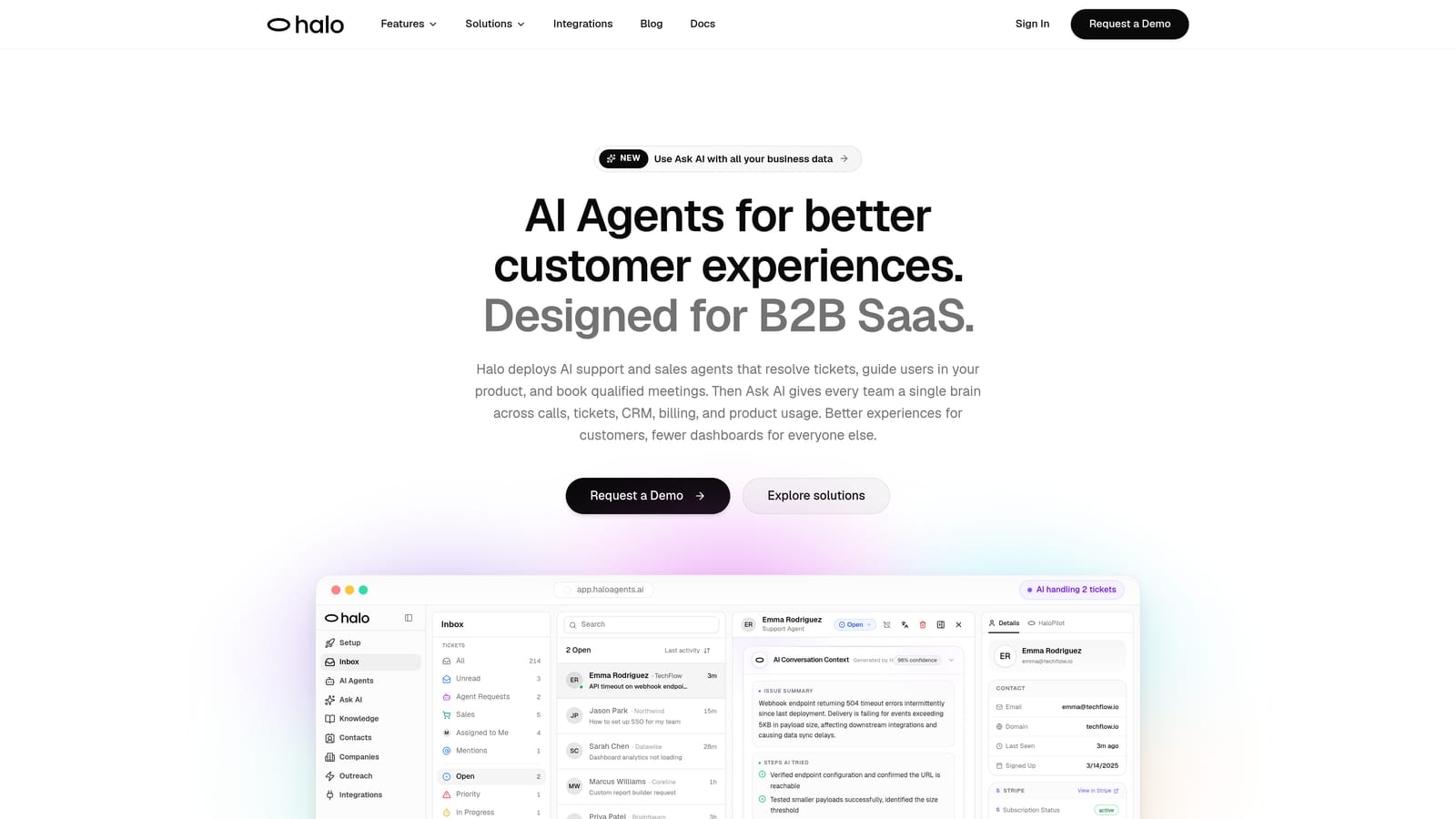
Halo AI is an AI-first customer support platform built around autonomous resolution, contextual guidance, and business intelligence that extends well beyond the support queue.
Where This Tool Shines
Most support tools bolt AI onto an existing helpdesk. Halo is built differently: AI-first from the ground up, which means autonomous resolution isn't an add-on feature, it's the core design principle. The page-aware chat widget is a standout capability. It knows what page your user is on, what they're seeing, and can provide visual UI guidance rather than just text answers.
The smart inbox goes further than ticket management. It surfaces customer health signals, detects anomalies, and delivers revenue intelligence, turning your support queue into a source of business insight. When an issue is too complex or sensitive for the AI, live agent handoff is seamless, and the AI continues learning from every interaction without requiring manual retraining.
Key Features
Intelligent AI Agents: Resolve tickets autonomously and continuously improve from every interaction, no manual retraining required.
Page-Aware Chat Widget: Sees what users see in real time and delivers contextual UI guidance tied to the specific page they're on.
Smart Inbox with Business Intelligence: Surfaces customer health signals, anomaly detection, and revenue intelligence beyond standard ticket metrics.
Auto Bug Ticket Creation: Automatically generates and routes bug reports directly to Linear without agent intervention.
Live Agent Handoff: Escalates complex or sensitive issues to human agents with full context preserved.
Deep Integration Stack: Connects bidirectionally with Linear, Slack, HubSpot, Intercom, Stripe, Zoom, PandaDoc, and Fathom.
Best For
B2B SaaS product teams and lean support organizations that want AI to genuinely resolve tickets rather than just deflect them. Particularly well-suited for teams that need support intelligence to feed back into product, CS, and revenue functions, not just close tickets.
Pricing
Demo-gated pricing. Contact Halo directly for a quote. Given the enterprise integration depth and autonomous resolution capabilities, this is positioned as a premium tier product.
2. Intercom (Fin AI)
Best for: Teams already invested in the Intercom ecosystem who want native generative AI without migration.
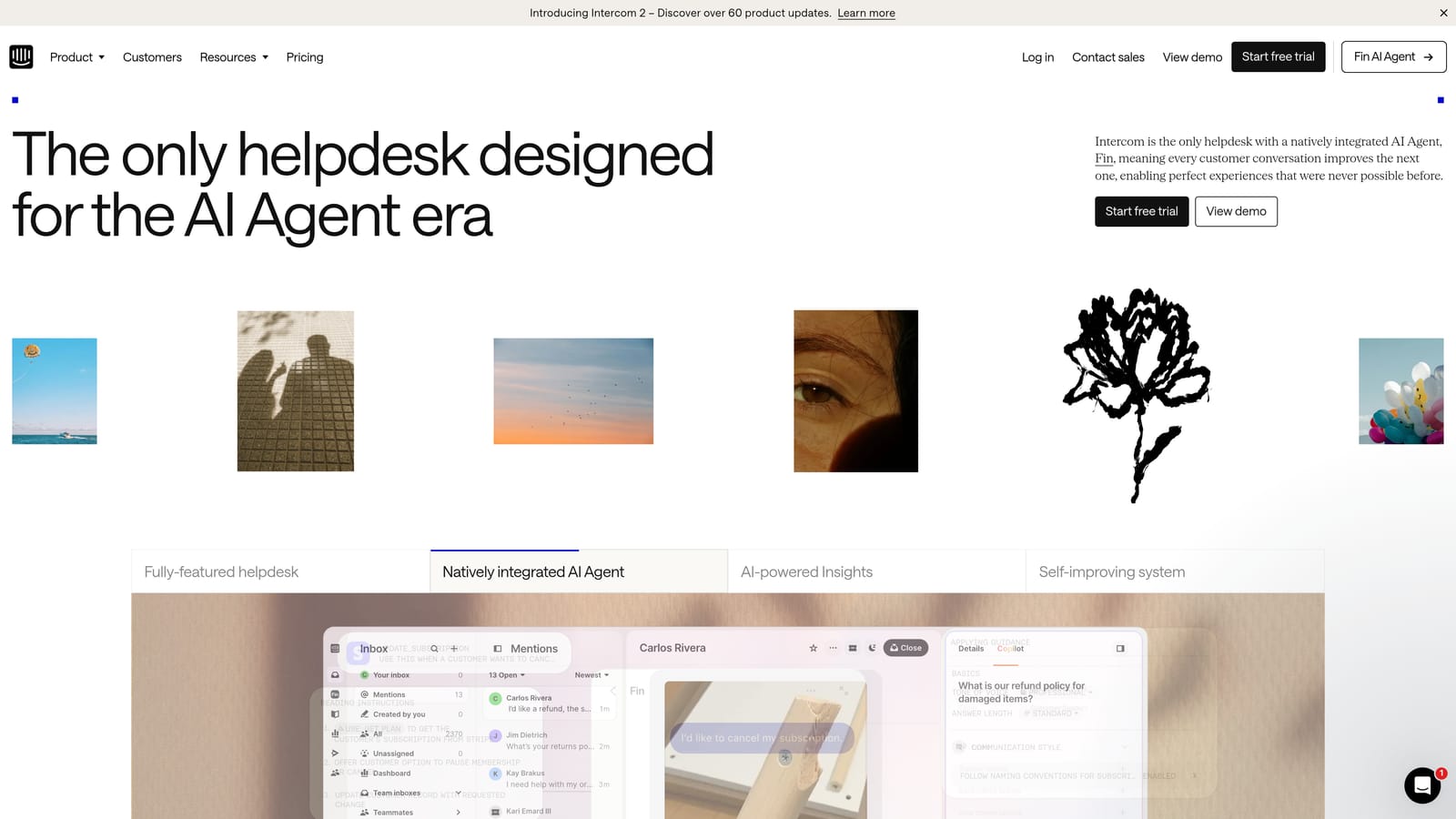
Intercom is a leading customer messaging platform whose Fin AI agent brings generative AI directly into the Intercom messenger experience.
Where This Tool Shines
Fin runs natively inside Intercom's messenger with no separate setup or integration required. If your team is already on Intercom, the path to AI-powered deflection is genuinely short. Fin answers questions by pulling from your connected knowledge base and help center content, and it handles handoff to human agents smoothly when it can't resolve an issue.
The per-resolution pricing model is worth understanding carefully. It can be cost-effective at moderate volumes, but teams with very high ticket volumes should model the math before committing. Fin is well-documented, widely adopted, and backed by Intercom's continued investment in generative AI improvements.
Key Features
Native Messenger Integration: Runs directly inside Intercom's existing chat interface with no additional setup required.
Knowledge Base-Powered Answers: Draws from connected help content and knowledge base articles to generate contextual responses.
Smooth Human Handoff: Escalates to live agents when AI cannot resolve, with full conversation context carried over.
Per-Resolution Pricing: AI component priced per successful resolution rather than per seat, aligning cost with value delivered.
Best For
Teams already running Intercom as their primary support and messaging platform. The value drops significantly if you're not already in the Intercom ecosystem, as Fin is deeply tied to it rather than functioning as a standalone AI layer.
Pricing
Fin is priced per resolution. Intercom base plans start from approximately $74 per month, with AI costs scaling based on volume of resolved conversations.
3. Zendesk AI
Best for: Large enterprise support teams on Zendesk that want AI to augment agents at scale.
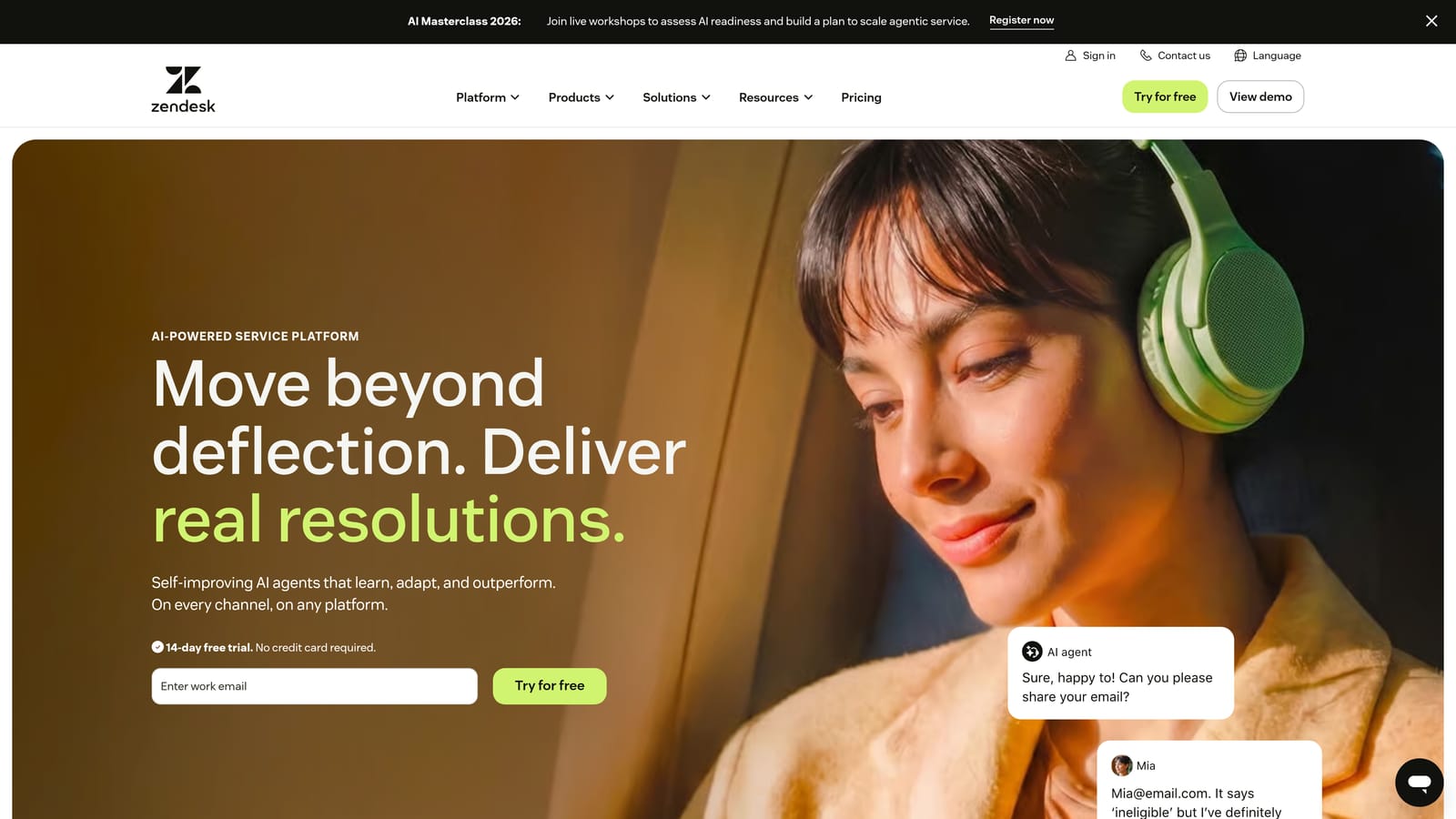
Zendesk has layered AI capabilities across its enterprise support suite, covering triage, routing, agent assist, and intent detection throughout the ticket lifecycle.
Where This Tool Shines
Zendesk AI is strongest in environments where you have large agent teams and complex routing requirements. Intelligent triage with intent and sentiment detection helps tickets land in the right queue faster, and AI-suggested replies give agents a meaningful productivity boost. The enterprise governance, compliance, and security posture is among the strongest in the category.
The honest limitation is that Zendesk AI feels additive rather than transformative. It augments agents rather than replacing ticket volume autonomously. For lean teams trying to reduce headcount dependency, this architecture may not deliver the ROI that a purpose-built AI-first platform would. It's an excellent choice if you're already deeply invested in Zendesk's infrastructure and need AI to enhance, not replace, your agent workflow.
Key Features
AI-Powered Triage: Detects intent and sentiment to classify and prioritize incoming tickets automatically.
Intelligent Routing: Directs tickets to the right agent or queue based on AI-predicted category and urgency.
AI-Suggested Replies: Surfaces next-best-action recommendations and draft responses for agents in real time.
Enterprise Governance: Robust compliance, security controls, and audit capabilities suited for regulated industries.
Best For
Large enterprise support organizations with established Zendesk deployments, significant agent headcount, and compliance requirements. Less suited for lean teams seeking autonomous resolution over agent augmentation.
Pricing
AI features are available on Suite Professional and above, with plans starting from approximately $115 per agent per month. Enterprise tiers available with custom pricing.
4. Freshdesk Freddy AI
Best for: SMBs and growing teams that want accessible AI-assisted support without enterprise pricing.
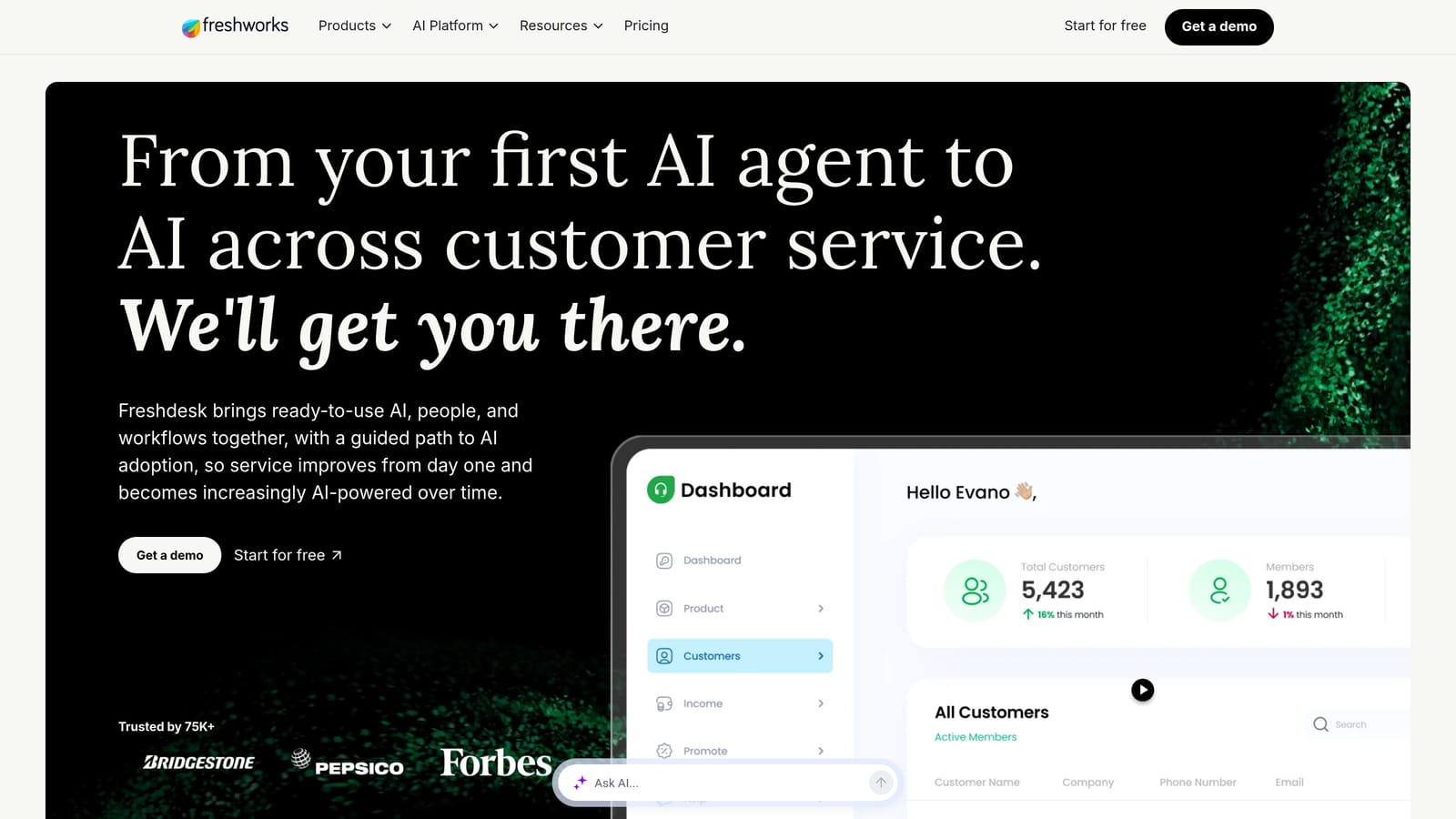
Freshdesk offers Freddy AI as its integrated intelligence layer, covering self-service deflection, agent assistance, and analytics across the Freshdesk platform.
Where This Tool Shines
Freshdesk's biggest advantage is accessibility. The pricing structure makes AI-assisted support viable for smaller teams that would be priced out of Zendesk's enterprise tiers. Freddy Self Service handles deflection through bot automation, Freddy Copilot assists agents with suggested responses and ticket summaries, and Freddy Insights surfaces ticket trend analytics that help managers spot patterns.
That said, Freddy's AI capabilities are less sophisticated than purpose-built AI platforms. If you're looking for autonomous resolution at scale or deep business intelligence from your support data, Freshdesk Freddy is better understood as a solid stepping stone than an endgame. It's a reasonable first move into AI-assisted support for teams that aren't yet ready for a full AI-first platform.
Key Features
Freddy Self Service: Bot-driven deflection for FAQs and common queries, reducing inbound ticket volume.
Freddy Copilot: AI-suggested responses and ticket summaries to speed up agent resolution time.
Freddy Insights: Analytics layer surfacing ticket trends, volume patterns, and performance reporting.
Tiered AI Availability: AI features scale across plan tiers, making entry-level access affordable for smaller teams.
Best For
SMBs, early-stage SaaS teams, and organizations already on Freshdesk that want to add AI capabilities incrementally without switching platforms or committing to enterprise contracts.
Pricing
Freshdesk plans start from approximately $15 per agent per month. Freddy AI add-ons are available on higher tiers, with specific feature availability varying by plan level.
5. Tidio
Best for: SMBs and e-commerce teams that need fast deployment and simple AI chat automation.
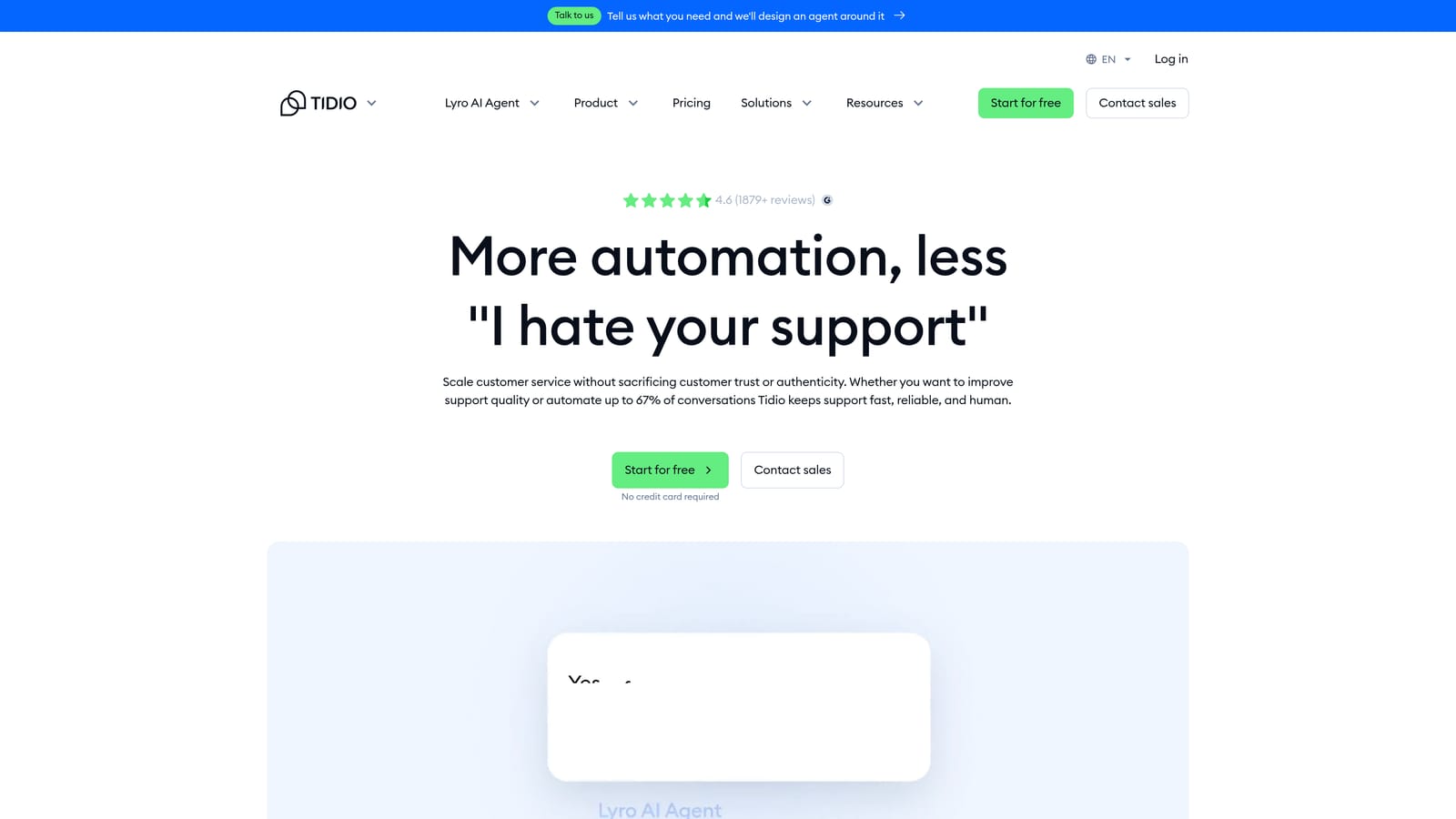
Tidio is a fast-to-deploy AI chat platform featuring Lyro AI for automated conversations and a visual flow builder for custom bot paths without coding.
Where This Tool Shines
Tidio's standout quality is speed to value. You can have an AI chatbot trained on your help content and handling live conversations in a matter of hours, not weeks. The visual flow builder makes it accessible to non-technical teams, and the live chat fallback to human agents works smoothly. For teams that need something running quickly without engineering resources, Tidio is genuinely hard to beat.
Where Tidio falls short is in complex B2B SaaS scenarios. Lyro handles transactional and FAQ-style queries well, but nuanced product support, multi-step troubleshooting, or integration with a broader business stack isn't where this platform is designed to excel. If your support tickets are primarily straightforward and high-volume, Tidio delivers strong ROI. If they're complex and context-dependent, you'll likely outgrow it.
Key Features
Lyro AI Chatbot: Trained on your help content to handle automated conversations without manual rule-building.
Visual Flow Builder: Drag-and-drop interface for creating custom bot conversation paths with no coding required.
AI-to-Human Fallback: Seamlessly transitions conversations to live agents when the bot reaches its limits.
Fast Setup: Minimal technical requirements mean deployment can happen in hours rather than days.
Best For
E-commerce businesses, SMBs, and early-stage teams with high volumes of straightforward queries. Less suited for B2B SaaS teams dealing with complex, context-dependent product support issues.
Pricing
Free tier available. Lyro AI is priced per conversation. Paid plans start from approximately $29 per month, making it one of the most accessible entry points in this category.
6. Drift (Salesloft)
Best for: B2B revenue teams where support, qualification, and sales pipeline overlap in a single customer journey.
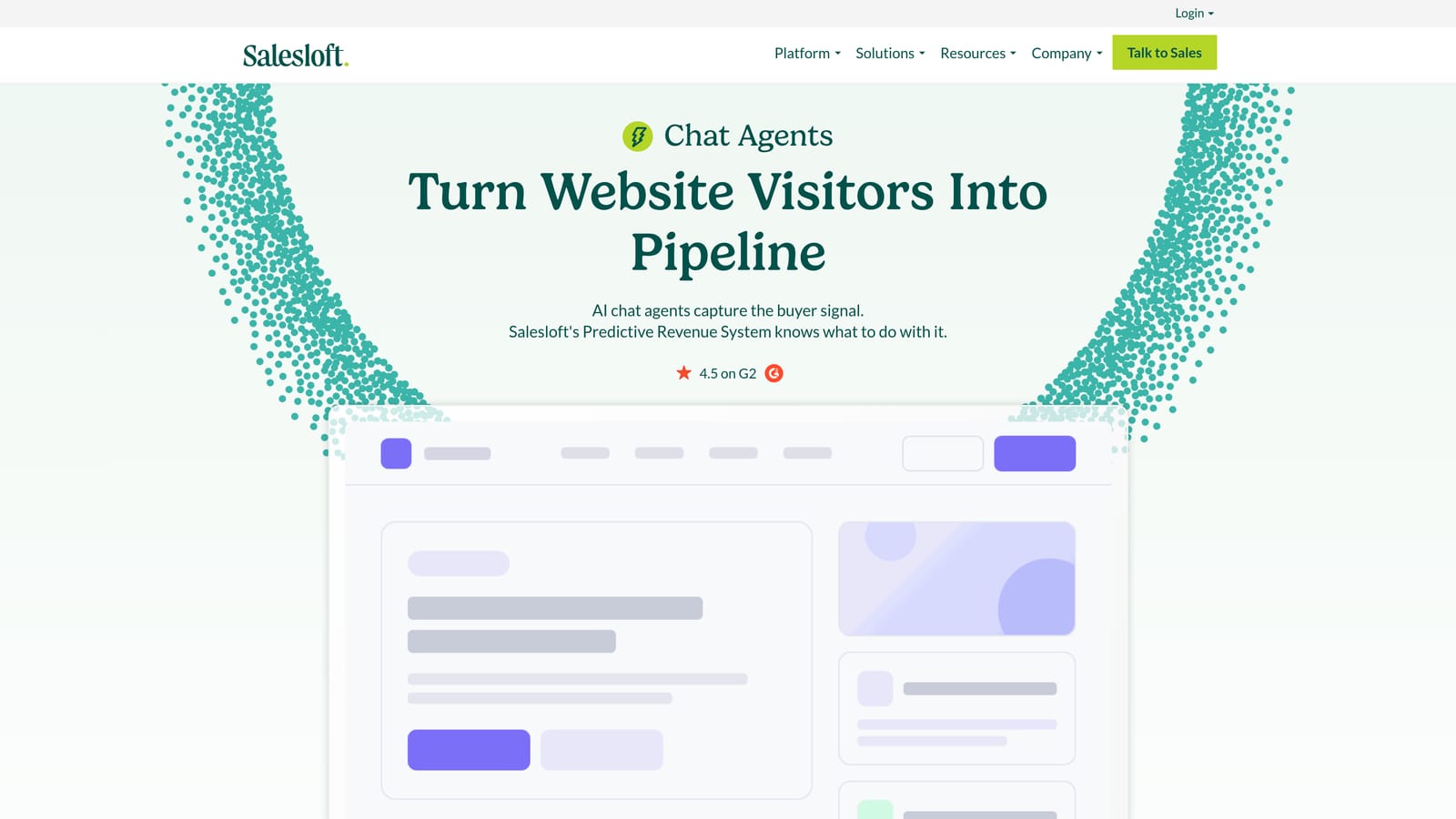
Drift, now part of Salesloft, is a conversational AI platform that blends support automation with revenue pipeline qualification for teams where the line between support and sales is intentionally blurred.
Where This Tool Shines
Drift pioneered conversational marketing and support, and its integration into Salesloft's revenue intelligence platform makes it uniquely positioned for teams that think about support and sales as a continuous customer motion. AI handles qualification, routing, and support in a single interface, and the playbook builder gives teams control over how conversations flow across different scenarios.
The important context here is that Drift is not a pure support automation play. If your primary goal is ticket deflection or autonomous resolution, there are better-suited tools on this list. Drift earns its place when your support team is also expected to identify expansion opportunities, route high-value prospects to sales, or operate as part of a broader revenue motion. Post-acquisition, the platform is increasingly focused on enterprise revenue teams.
Key Features
Unified AI Interface: Handles qualification, routing, and support conversations in a single chat interface.
Revenue-Focused Workflows: Bridges support and sales handoff to capture pipeline opportunities from support interactions.
Salesloft Integration: Deep connection to Salesloft's broader revenue intelligence and engagement platform.
Playbook Builder: Custom conversation flow configuration for different scenarios, segments, and intent signals.
Best For
Enterprise B2B teams where support and sales share a customer journey, particularly organizations already using Salesloft for revenue operations. Not the right fit for teams focused purely on support ticket deflection or resolution.
Pricing
Enterprise-focused with custom pricing. Contact Drift or Salesloft directly for a quote. Expect pricing to reflect the enterprise revenue team positioning.
7. Forethought
Best for: Mid-market and enterprise teams on existing helpdesks that want AI-powered triage and deflection without platform migration.
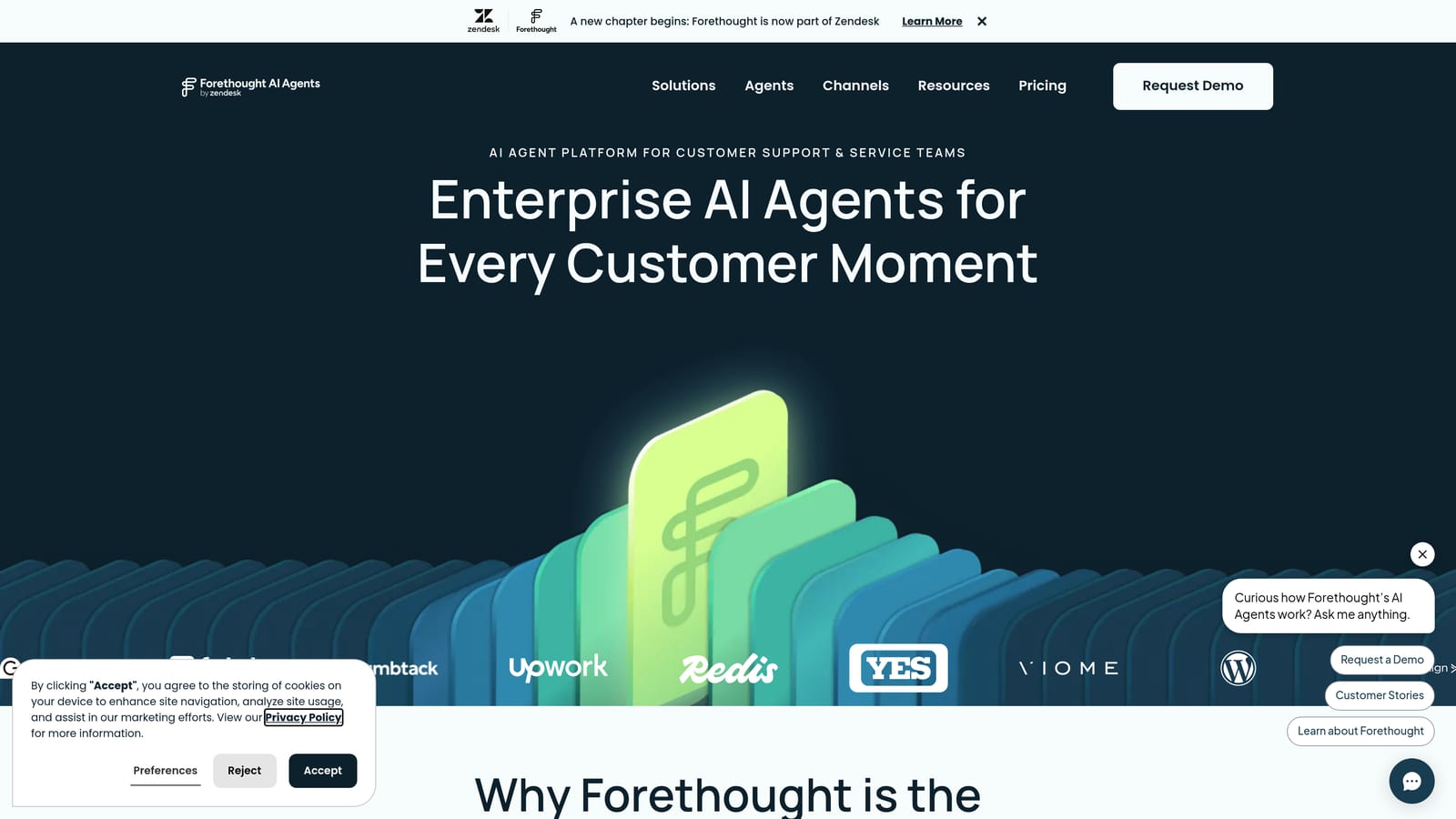
Forethought is a generative AI platform that layers on top of existing helpdesks, using your historical ticket archive to power smart triage, deflection, and agent assist.
Where This Tool Shines
Forethought's core insight is that your historical ticket data is an underused training asset. By training generative AI on your actual ticket archive, it develops contextual understanding of how your team resolves issues, not just what your knowledge base says. This produces deflection and routing that feels more relevant than generic AI responses, and agent assist that surfaces genuinely useful suggestions based on how similar tickets were handled before.
The important caveat: Forethought needs a healthy ticket history to train effectively. Newer companies or teams with thin ticket archives won't see the same quality of AI output as organizations with years of accumulated data. It also works on top of existing helpdesks rather than replacing them, which is a strength for teams with established Zendesk, Salesforce, or Freshdesk investments, but less compelling for teams open to switching platforms entirely.
Key Features
Historical Ticket Training: Generative AI trained on your actual ticket archive for contextually relevant deflection and suggestions.
Smart Routing: Predicts intent and urgency to route tickets to the right team or queue automatically.
Agent Assist: Surfaces AI-suggested responses and knowledge retrieval within the agent's existing helpdesk workflow.
Helpdesk-Agnostic Layer: Works on top of Zendesk, Salesforce Service Cloud, Freshdesk, and other platforms without replacement.
Best For
Mid-market and enterprise teams with established helpdesk investments and substantial ticket history. Particularly strong for organizations that want AI enhancement without the disruption of platform migration.
Pricing
Custom enterprise pricing. Contact Forethought directly for a quote. Positioned at the mid-market to enterprise tier.
8. Ada
Best for: Large global enterprises that need multilingual AI support with strict brand governance and compliance controls.
Ada is a no-code AI agent builder designed for enterprise organizations that require multilingual support, brand-controlled AI personas, and robust governance workflows.
Where This Tool Shines
Ada's governance and brand control capabilities are genuinely enterprise-grade. The no-code builder lets teams configure AI agent behavior, tone, and escalation logic without engineering resources, while approval workflows ensure the AI stays on-brand and within compliance boundaries. Multilingual support across dozens of languages makes Ada a strong choice for global organizations where consistent support quality across regions is a non-negotiable requirement.
The tradeoff is implementation complexity. Ada is not a platform you deploy in an afternoon. Large enterprises with dedicated implementation resources will get significant value from Ada's configurability. Smaller teams or those without implementation bandwidth may find the setup process more demanding than alternatives. The platform integrates with major CRMs and helpdesks, which helps fit Ada into existing enterprise infrastructure rather than replacing it.
Key Features
No-Code AI Agent Builder: Visual configuration interface for building and adjusting AI agent behavior without engineering dependencies.
Multilingual Support: Handles customer interactions across dozens of languages with consistent AI behavior.
Brand-Controlled Persona: Enterprise governance and approval workflows to keep AI responses on-brand and compliant.
Enterprise Integrations: Connects with major CRMs, helpdesks, and enterprise systems across the business stack.
Best For
Large global enterprises with multilingual customer bases, strict brand governance requirements, and dedicated implementation resources. Less suited for lean teams or organizations that need rapid deployment.
Pricing
Enterprise contracts with custom pricing. Contact Ada directly. Expect pricing to reflect the enterprise governance and multilingual capabilities.
9. Helpshift
Best for: Gaming studios, fintech apps, and consumer mobile companies that need in-app support without leaving the app experience.
Helpshift is a mobile-first AI support platform with a native mobile SDK, in-app messaging, and AI classification built specifically for gaming and consumer mobile verticals.
Where This Tool Shines
Helpshift solves a specific problem that general-purpose support platforms handle poorly: keeping mobile users inside the app during a support interaction. The native mobile SDK means users get support without being redirected to a web browser or email thread, which matters enormously for retention in gaming and consumer apps where any friction in the support experience accelerates churn.
AI-powered ticket classification and bot flows are designed around mobile UX patterns, and the platform supports both async and real-time messaging modes. If your product is a web-based B2B SaaS application, Helpshift is probably not on your shortlist. But for gaming studios, fintech apps, and consumer mobile products, it occupies a specialized position that general-purpose platforms don't replicate well.
Key Features
Native Mobile SDK: Embeds support directly into the mobile app experience without redirecting users to external channels.
AI Ticket Classification: Automatically categorizes and routes tickets based on content and context within mobile interactions.
In-App Messaging: Supports both asynchronous and real-time messaging modes within the native app environment.
Mobile-First Bot Flows: Bot conversation design optimized for mobile UX patterns and interaction behaviors.
Best For
Gaming companies, consumer fintech apps, and mobile-first product teams where in-app support continuity is a core retention requirement. Not designed for web-based B2B SaaS support scenarios.
Pricing
Custom, usage-based pricing. Contact Helpshift directly for a quote based on your volume and product requirements.
Which Platform Fits Your Team?
The right AI support automation platform depends less on feature checklists and more on your team's architecture and growth trajectory. Here's how to think through it.
If you're a lean B2B SaaS team (under 10 support staff): You need autonomous resolution, not agent augmentation. Tools that assist agents are less valuable when you're trying to reduce ticket volume without adding headcount. Halo AI is built for this scenario, with continuous learning and page-aware context that resolves tickets without a human in the loop. Forethought is worth evaluating if you have substantial ticket history and want to stay on your existing helpdesk.
If you're already on Zendesk, Freshdesk, or Intercom: Start by evaluating whether the native AI add-ons (Zendesk AI, Freddy AI, Fin) are sufficient for your resolution goals. If you're hitting the ceiling of what those tools can do autonomously, an AI-first platform like Halo AI or Forethought layered on top of your existing stack may deliver meaningfully better outcomes.
If you're an enterprise with global scale: Ada's governance and multilingual capabilities are purpose-built for your requirements. Zendesk AI remains strong for large agent teams with complex routing needs and compliance obligations.
If your support and sales motions overlap: Drift's integration with Salesloft makes it the natural choice for revenue teams that want a unified AI layer across qualification and support.
If you're in gaming or consumer mobile: Helpshift is the specialist. Nothing else on this list replicates the native SDK and mobile-first UX approach it provides.
Your support team shouldn't scale linearly with your customer base. Let AI agents handle routine tickets, guide users through your product, and surface business intelligence while your team focuses on complex issues that need a human touch. See Halo in action and discover how continuous learning transforms every interaction into smarter, faster support.