9 Best Contextual Customer Service Tools in 2026
Most support failures stem from missing context, not missing knowledge — and the right contextual customer service tools fix that by giving agents instant situational awareness from the first message. This guide ranks the 9 best platforms in 2026 for B2B SaaS teams, evaluated on contextual data depth, AI-assisted resolution quality, and integration breadth.
 Grant CooperFounder14 min read
Most support interactions fail not because agents lack knowledge, but because they lack context. When a customer reaches out frustrated, the last thing they need is to repeat their account details, describe what page they're on, or explain what they've already tried. Contextual customer service tools solve this by giving support agents — human or AI — the situational awareness to respond intelligently from the very first message.
This list covers the best tools for delivering context-aware support in 2026, from AI agents that understand exactly where a user is in your product to helpdesks that surface customer history automatically. Whether you're scaling a SaaS support team or replacing a legacy ticketing system, these platforms represent the strongest options available today.
Selection criteria: depth of contextual data surfaced, quality of AI-assisted resolution, integration breadth, and suitability for B2B SaaS teams.
1. Halo AI
Best for: AI-first SaaS teams that need page-aware context and autonomous ticket resolution
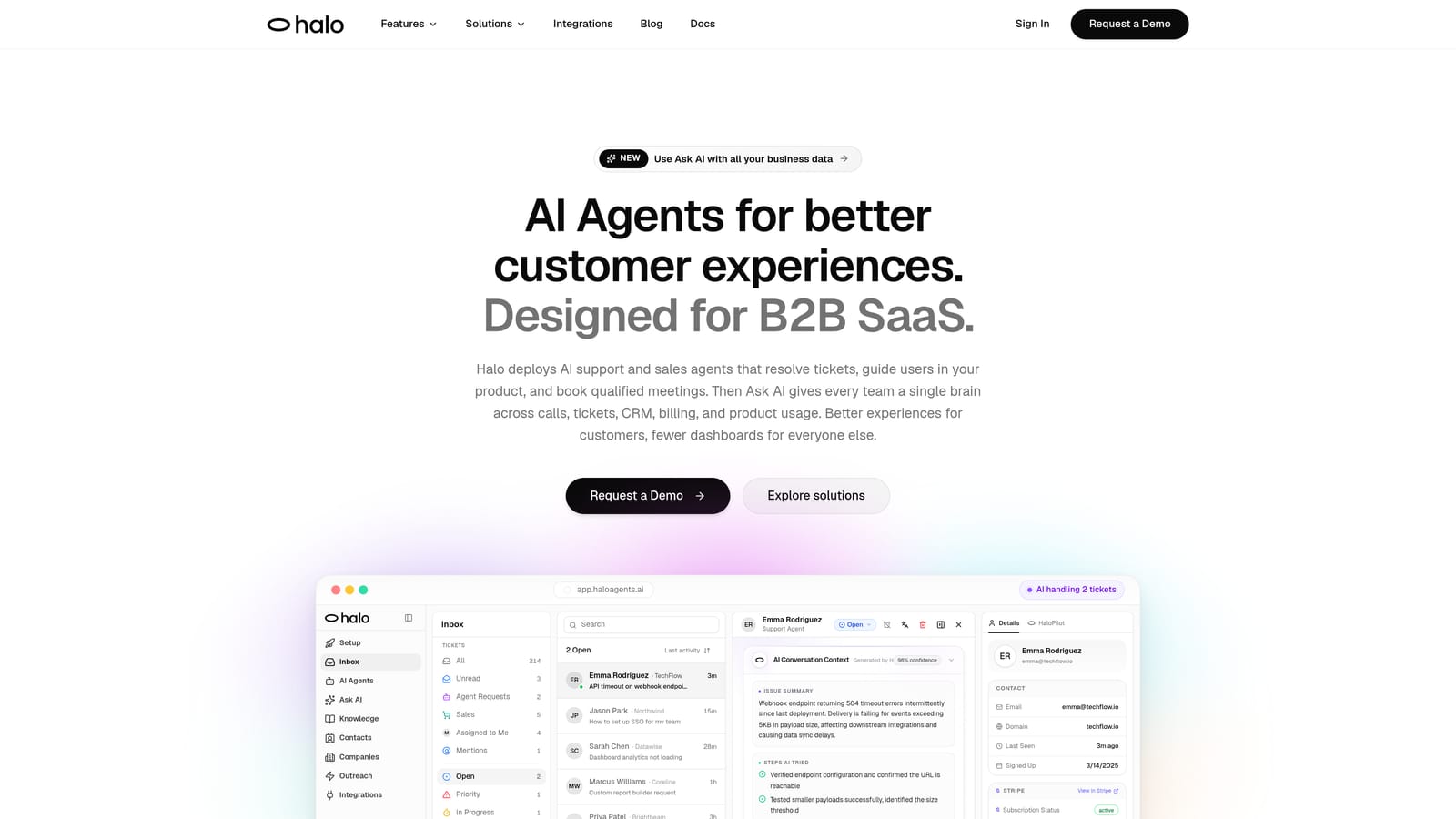
Halo AI is an AI-native customer support platform built around contextual resolution from the ground up, not retrofitted onto a legacy helpdesk.
Where This Tool Shines
What separates Halo from most tools on this list is page-awareness. The AI agent doesn't just know who the customer is — it knows exactly which screen they're looking at, which means it can provide guidance that's specific to their current context rather than generic knowledge base answers. That's a meaningful difference when a user is stuck mid-workflow.
The other standout is integration depth. Halo connects to HubSpot, Stripe, Linear, Slack, Intercom, Zoom, PandaDoc, and Fathom, which means the context it surfaces isn't limited to support history. It can pull in billing status, CRM notes, and product usage signals simultaneously. The result is an AI agent that responds with genuine situational intelligence rather than just pattern-matching on past tickets.
Key Features
Page-Aware Chat Widget: The AI sees which page or screen the user is on and delivers guidance specific to that context, reducing back-and-forth significantly.
Autonomous Ticket Resolution: Halo resolves tickets end-to-end and continuously learns from every interaction, improving resolution quality over time without manual retraining.
Smart Inbox with Business Intelligence: Beyond basic support metrics, the inbox surfaces customer health signals, revenue intelligence, and anomaly detection — giving support teams visibility into account risk and expansion signals.
Auto Bug Ticket Creation: When a user reports an issue, Halo automatically generates a structured bug report and routes it to Linear, closing the loop between support and engineering without manual handoff.
Live Agent Handoff: Complex or sensitive issues escalate cleanly to human agents with full context intact, so nothing is lost in the transition.
Best For
Halo is the strongest fit for B2B SaaS teams that want AI agents doing real resolution work, not just suggesting articles. Teams that are already using tools like HubSpot, Stripe, or Linear will get the most value from Halo's integration-driven context model. It's particularly well-suited for product-led growth companies where in-product support quality directly affects retention.
Pricing
Contact for pricing. A demo is available at haloagents.ai/demo for teams that want to see the page-aware context and autonomous resolution in action before committing.
2. Intercom
Best for: SaaS teams already using Intercom for onboarding and in-product engagement
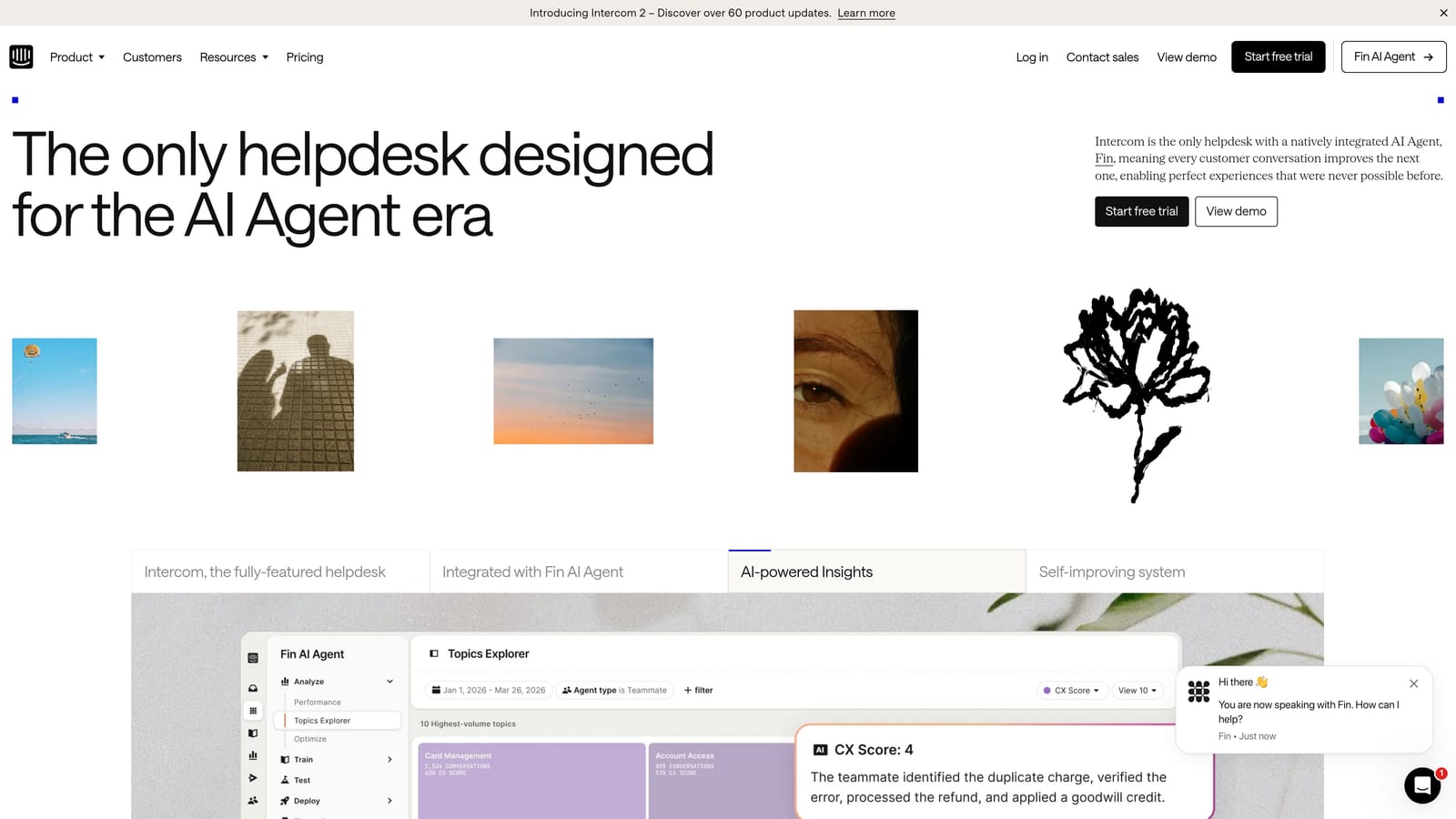
Intercom is one of the most established conversational support platforms, combining in-product messaging with Fin, its AI agent built on customer event and attribute data.
Where This Tool Shines
Intercom's contextual strength comes from its SDK integration. When you pass user attributes and behavioral events through the Intercom SDK, Fin can use that data to inform responses. A customer who has completed onboarding gets a different answer than one who signed up yesterday — and that kind of event-driven context makes AI resolution meaningfully more accurate.
Intercom also excels at proactive support. You can trigger in-product messages based on user behavior, which means you're often solving problems before customers even reach out. For SaaS teams managing onboarding and retention alongside support, that's a genuine operational advantage.
Key Features
Fin AI Agent: Resolves tickets using the customer's event history, attributes, and prior conversation data for contextually appropriate responses.
In-Product Messaging: Proactive support triggers based on user behavior reduce inbound volume before it starts.
Omnichannel Inbox: Unifies chat, email, and phone conversations in a single workspace.
Customer Attributes and Event Tracking: Rich user data informs both routing decisions and AI response quality.
App Store Integrations: Extensive marketplace of third-party integrations for extending context beyond the Intercom platform.
Best For
SaaS companies that are already using Intercom for user onboarding, product announcements, and engagement will find the support layer integrates naturally. Less ideal for teams that want a standalone support platform without the broader Intercom ecosystem investment.
Pricing
Starts at approximately $39/month; scales significantly with seat count and usage volume, making it one of the pricier options at scale.
3. Zendesk
Best for: Enterprise support teams needing a proven, highly configurable helpdesk with deep contextual data in the agent workspace
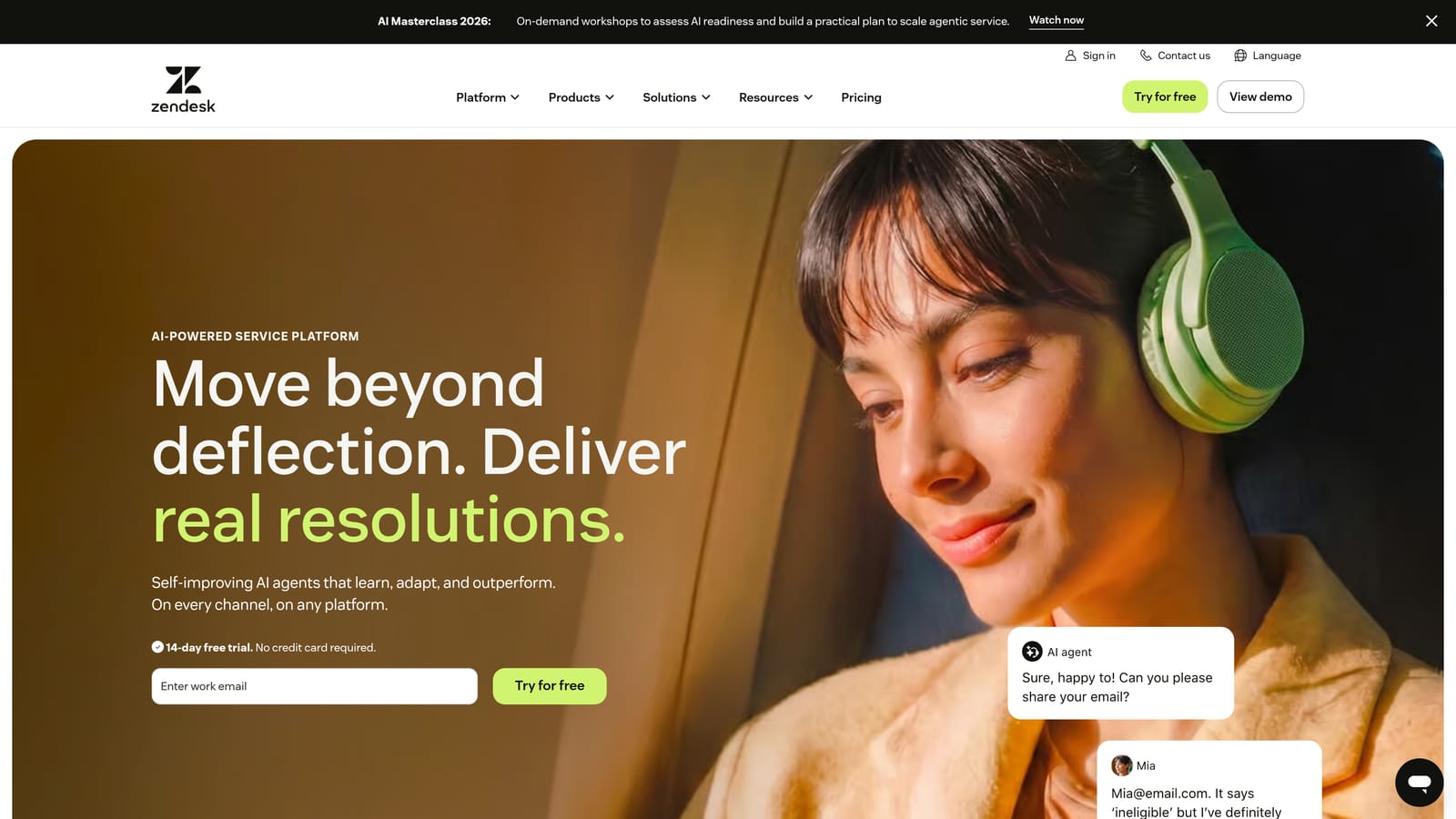
Zendesk is the market-leading helpdesk platform, offering an Agent Workspace that consolidates CRM data, ticket history, sentiment analysis, and customer attributes alongside every conversation.
Where This Tool Shines
Zendesk's contextual depth in the Agent Workspace is genuinely impressive. Agents can see previous tickets, CRM data, sentiment signals, and customer attributes in a unified sidebar without switching tools. For high-volume support operations where agents handle dozens of tickets daily, that consolidated view meaningfully reduces the time spent hunting for context.
The AI Copilot adds another layer by suggesting responses based on ticket context, helping agents respond faster and more consistently. Zendesk is better positioned as an agent-assist platform than a fully autonomous AI resolver, but for teams that want human agents augmented by context and AI suggestions, it's hard to beat the ecosystem maturity.
Key Features
Agent Workspace: Unified view of customer context, previous tickets, and CRM data surfaced automatically alongside every conversation.
AI Copilot: Suggests responses and next actions to agents based on ticket content and customer history.
Advanced Routing and SLA Management: Sophisticated rules engine for directing tickets to the right teams with appropriate priority.
Reporting and Analytics: Robust built-in reporting with custom dashboards for tracking support performance and trends.
Integration Marketplace: Hundreds of pre-built integrations for extending context from external systems.
Best For
Enterprise and mid-market teams with dedicated support operations and the resources to configure and maintain a complex platform. Smaller teams may find the setup overhead disproportionate to their needs.
Pricing
Suite plans start at approximately $55/agent/month; enterprise pricing available for larger deployments with advanced customization requirements.
4. Freshdesk
Best for: Growing teams that want contextual AI assistance without enterprise complexity or cost
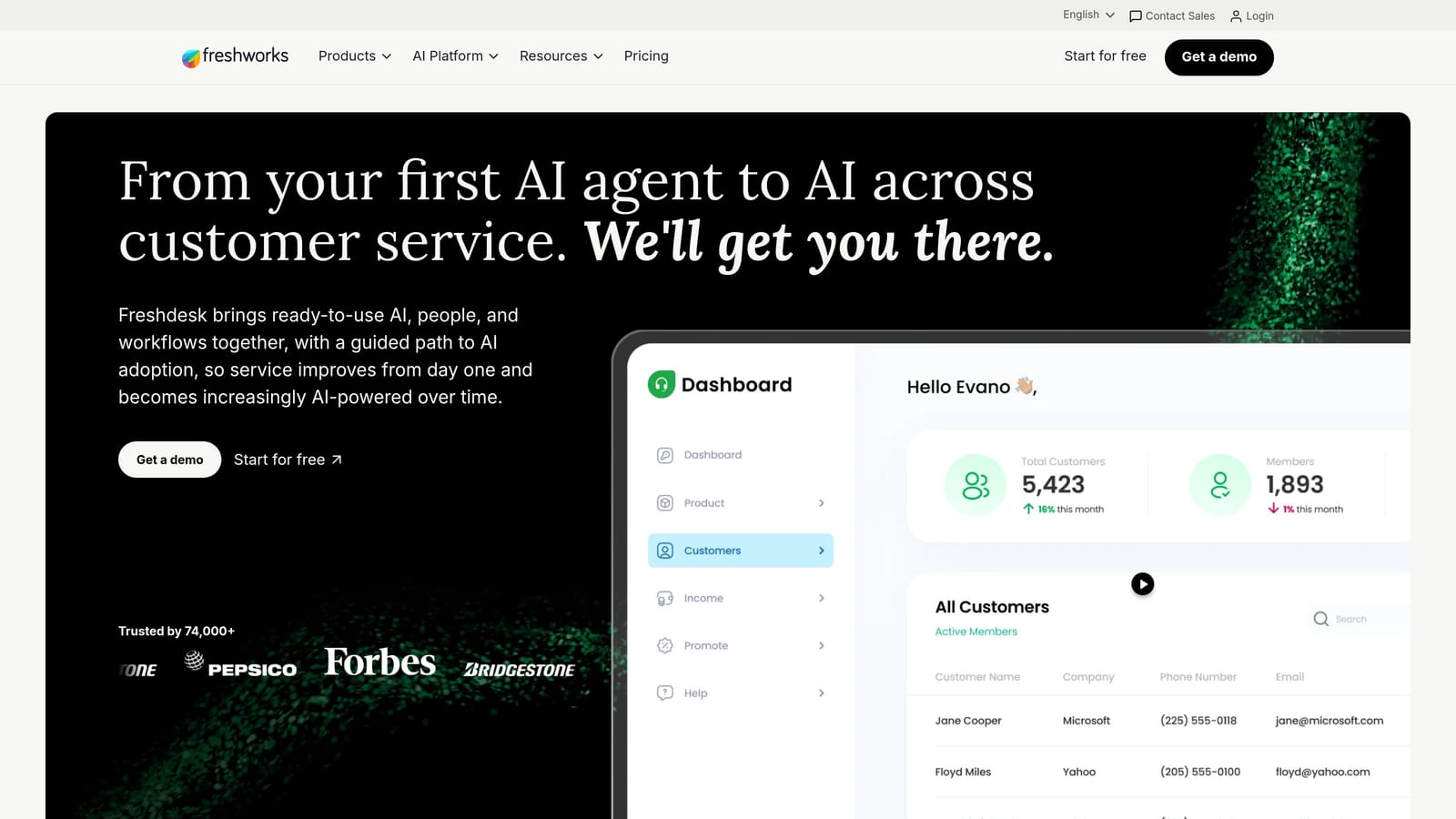
Freshdesk is a highly accessible helpdesk platform that uses Freddy AI to surface relevant context, suggest articles, and assist agents throughout the ticket lifecycle.
Where This Tool Shines
Freshdesk's customer timeline is one of its most practical contextual features. Every open ticket shows the customer's previous interactions, CSAT history, and prior resolutions in a single view, so agents aren't starting from scratch with returning customers. Freddy AI Copilot layers on top of that by suggesting knowledge base articles and response drafts that are informed by the current ticket context.
The pricing model makes Freshdesk genuinely accessible for teams that are outgrowing a shared inbox but aren't ready to commit to Zendesk's cost structure. Freddy Self Service also handles autonomous deflection for common queries, which helps teams scale support capacity without adding headcount.
Key Features
Freddy AI Copilot: Provides agent-assist with contextual article suggestions and response drafts based on ticket content and customer history.
Customer Timeline: Previous interactions, CSAT scores, and resolution history visible per ticket without additional lookup.
Freddy Self Service: Autonomous deflection for common queries, reducing inbound volume to human agents.
Multi-Channel Support: Handles email, chat, phone, and social from a unified inbox.
Competitive Pricing: Significantly more affordable than Zendesk at comparable feature tiers, with a free plan for very small teams.
Best For
SMB and mid-market teams that want solid contextual support capabilities without the configuration overhead or cost of enterprise platforms. A strong Zendesk alternative for teams prioritizing simplicity and value.
Pricing
Free plan available for small teams; paid plans start at approximately $15/agent/month, making it one of the most cost-effective options on this list.
5. Gorgias
Best for: E-commerce brands on Shopify or BigCommerce that need live order context inside every support conversation
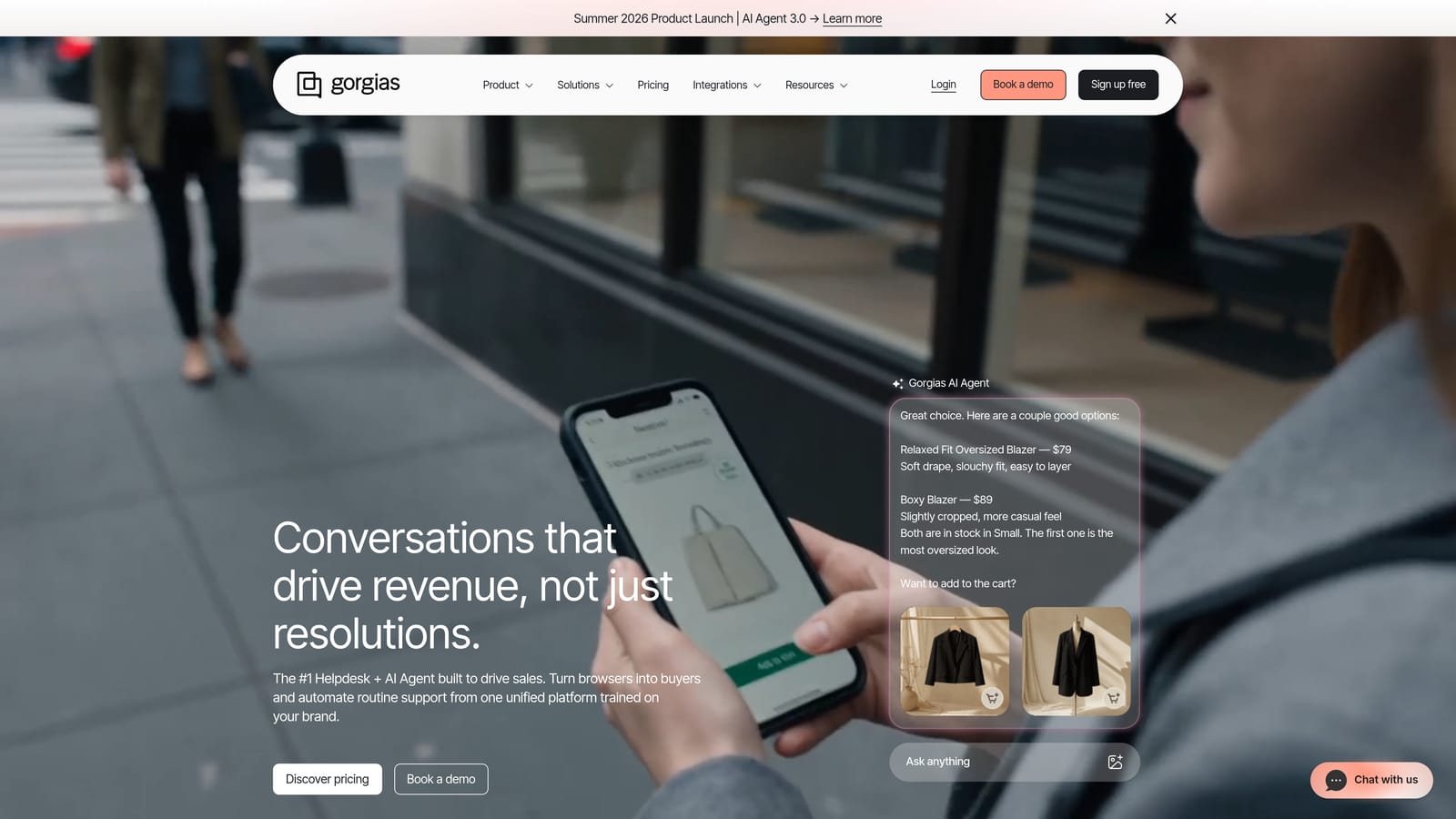
Gorgias is a purpose-built e-commerce support platform that pulls live order data, shipping status, and return history directly into the support view.
Where This Tool Shines
For e-commerce support, Gorgias offers a level of contextual richness that general-purpose helpdesks struggle to match. When a customer asks "where's my order?", the agent — or the AI — already has the order status, shipping carrier, and estimated delivery date visible without any lookup. That kind of live commerce context dramatically reduces resolution time for the most common e-commerce support queries.
Gorgias also enables automation rules triggered by order context. For example, you can auto-close tickets where the order has already been delivered, or trigger a proactive message when a shipment is delayed. This context-driven automation is what makes Gorgias particularly powerful for high-volume e-commerce operations.
Key Features
Live Order Context: Shopify and BigCommerce order data, shipping status, and return history surfaced inside every ticket automatically.
Context-Triggered Automation: Rules fire based on order status, customer attributes, and purchase history.
AI Agent: Handles autonomous resolution of common e-commerce queries using live order context.
Unified Inbox: Email, chat, social, and SMS handled from a single workspace.
Revenue Statistics per Ticket: Shows the revenue associated with each customer conversation, helping teams prioritize high-value interactions.
Best For
E-commerce brands, particularly Shopify merchants with significant support volume. Less relevant for pure B2B SaaS teams, but best-in-class for its intended market.
Pricing
Starts at approximately $10/month for starter plans; scales by ticket volume rather than seat count, which suits high-volume operations.
6. Kustomer
Best for: High-volume consumer support teams that need a CRM-native platform with a unified customer timeline
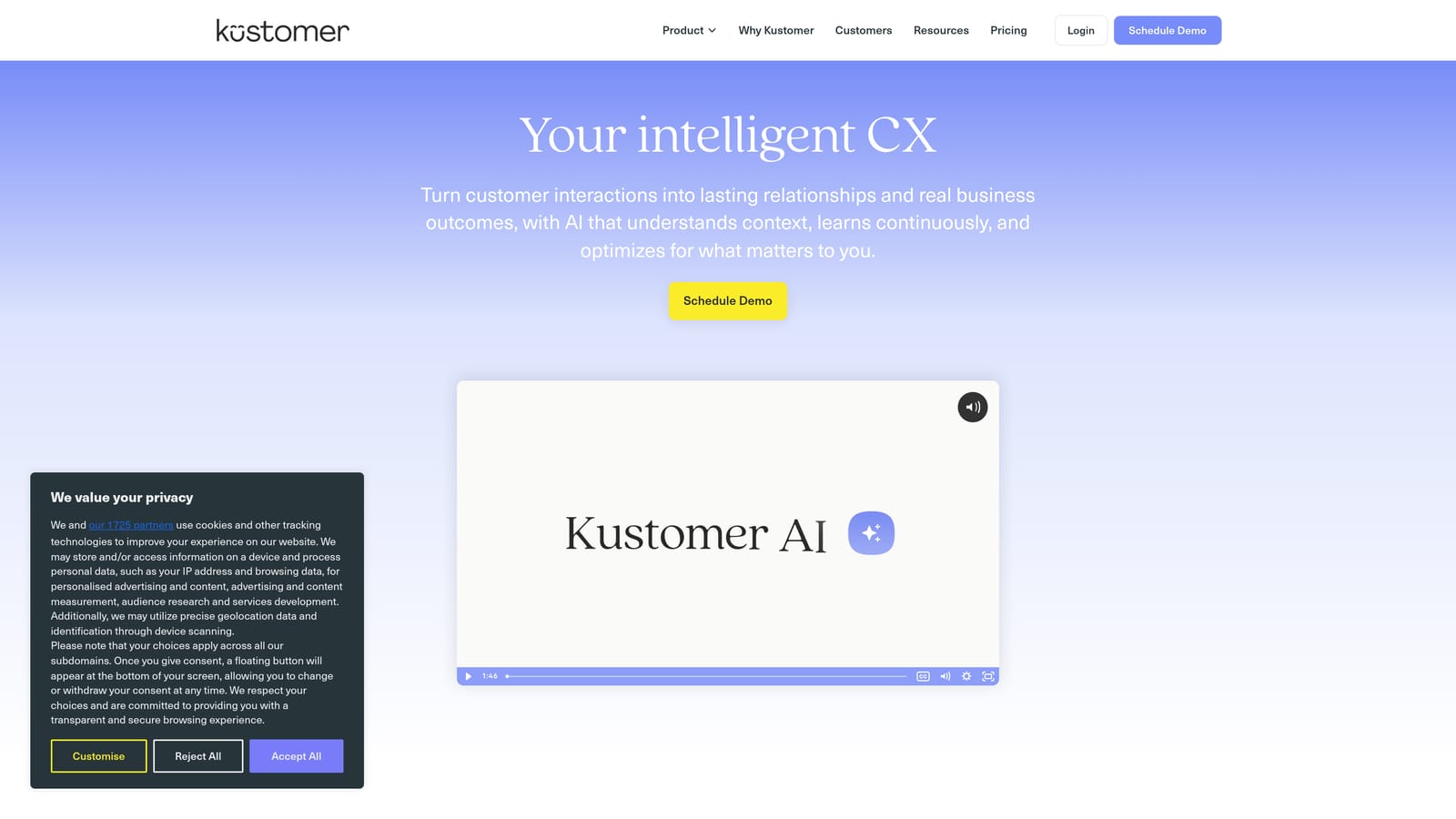
Kustomer is a CRM-native customer service platform that unifies every customer interaction across all channels into a single, chronological conversation view.
Where This Tool Shines
Kustomer's timeline view is its defining contextual feature. Rather than presenting tickets as isolated incidents, Kustomer shows every interaction a customer has ever had — across email, chat, voice, SMS, and social — in one continuous chronological thread. Agents see the full picture immediately, without having to piece together context from multiple sources or ask the customer to repeat themselves.
The CRM-native architecture means customer data isn't just a sidebar — it's the foundation of every interaction. KIQ AI builds on that foundation by using the full customer record to inform autonomous resolution and agent-assist suggestions, making the AI meaningfully more contextual than tools where CRM data is an add-on integration.
Key Features
Customer Timeline: All channels unified into one chronological conversation view, giving agents immediate full-context awareness.
KIQ AI: Autonomous resolution and agent-assist powered by the full CRM data model, not just ticket history.
Deep CRM Data Integration: Customer attributes, purchase history, and lifecycle data surface alongside every support interaction.
Omnichannel Coverage: Email, chat, voice, SMS, and social all handled from a unified workspace.
Workflow Automation: Sophisticated automation for routing, prioritization, and repetitive task handling at scale.
Best For
High-volume, consumer-facing support operations where agents handle a wide variety of interaction types and need immediate full context. Less commonly used by lean B2B SaaS teams, where the CRM-native complexity may exceed what's needed.
Pricing
Enterprise pricing model; contact Kustomer directly for current rates and packaging options.
7. Drift (Salesloft)
Best for: B2B teams where support and sales conversations overlap and account-level context matters
Drift, now part of Salesloft, is a revenue-focused conversational platform that uses account-level intent signals and CRM context to inform B2B chat interactions.
Where This Tool Shines
Drift's contextual model is built around account intelligence rather than individual ticket history. When a visitor starts a chat, Drift surfaces firmographic data, CRM attributes, and intent signals that tell the agent or AI whether this is a prospect, an existing customer approaching renewal, or a high-value account that needs immediate attention. That account-level context is what makes Drift distinctly useful for B2B teams where support and commercial conversations blur.
Playbooks allow teams to configure different experiences based on visitor attributes — enterprise accounts get routed to senior agents, customers showing churn signals get escalated automatically. It's a more commercially-oriented form of contextual routing than most pure support platforms offer.
Key Features
Account-Level Intent Data: Surfaces firmographic and behavioral signals to inform routing and response strategy.
CRM Context in Every Conversation: Salesforce and HubSpot data visible alongside every chat interaction.
AI-Powered Chat: Handles both support and sales conversations with contextual awareness of account status.
Behavior-Triggered Playbooks: Configurable conversation flows that activate based on visitor attributes and on-site behavior.
Salesforce and HubSpot Integration: Deep bidirectional sync for keeping CRM records current from chat interactions.
Best For
B2B SaaS and enterprise teams where support conversations frequently intersect with renewal, upsell, or sales activity. Teams looking for a pure support platform may find Drift's commercial orientation a mismatch.
Pricing
Contact Salesloft for current pricing; Drift's packaging has evolved following the acquisition, so direct inquiry is recommended.
8. Help Scout
Best for: SaaS teams that want clean, human-first support with contextual data enhancing agents rather than replacing them
Help Scout is a shared inbox platform with a strong contextual sidebar and a deliberately human-first philosophy toward customer support.
Where This Tool Shines
Help Scout's customer sidebar is one of the most practically useful implementations of contextual data in a support tool. Without any complex configuration, agents see previous conversations, internal notes, and data pulled from connected apps — Stripe, Shopify, HubSpot — right alongside the current thread. There's no hunting for context; it's just there.
The Beacon widget extends that contextual approach into the product itself, surfacing relevant knowledge base articles based on what the user is doing. Help Scout's AI Summarize and AI Assist features improve agent efficiency without pushing toward full automation, which aligns with the platform's philosophy that context should empower agents rather than replace them.
Key Features
Customer Sidebar: Previous conversations, internal notes, and connected app data (Stripe, Shopify, HubSpot) visible per thread without any manual lookup.
Beacon Widget: In-product help widget that surfaces contextually relevant knowledge base articles based on user behavior.
AI Summarize and AI Assist: Helps agents draft responses and understand long conversation threads quickly without full automation.
Clean Shared Inbox: Intuitive interface that teams adopt quickly without extensive training or configuration.
Docs Knowledge Base: Integrated knowledge base with contextual search that connects directly to Beacon for in-product delivery.
Best For
SaaS teams that value simplicity, transparency, and a human-centered support experience. Particularly well-suited for teams where agents are skilled and context should augment their judgment rather than automate around it.
Pricing
Starts at approximately $20/user/month, positioning it as a mid-range option with a strong feature-to-cost ratio for smaller teams.
9. Gladly
Best for: Consumer subscription brands and omnichannel teams that want one continuous conversation thread per customer across every channel
Gladly is a people-centric support platform that eliminates ticket numbers entirely, treating every channel as part of one ongoing conversation per customer.
Where This Tool Shines
Gladly's core contextual innovation is architectural. Most support platforms organize data around tickets; Gladly organizes it around people. That means a customer who emailed last week, called yesterday, and is now chatting today has one continuous thread that any agent can pick up with full context — not three separate tickets that need to be cross-referenced.
People Match adds intelligent routing on top of that unified history, directing customers to the agent who is best suited based on their history and skills. For high-volume consumer operations where customers interact across many channels, this approach dramatically reduces the "let me pull up your account" friction that erodes customer experience.
Key Features
Single Customer Conversation Thread: Voice, email, chat, SMS, and social unified into one continuous timeline per customer, regardless of channel.
Sidekick AI: Self-service AI that provides contextual, task-oriented responses using the customer's full history and current situation.
People Match: Routes customers to the most suitable agent based on interaction history, skills, and relationship context.
Full History Visibility: Every agent sees the complete customer history regardless of which channel or agent handled previous interactions.
Omnichannel Coverage: Voice, email, chat, SMS, and social all handled natively within the platform.
Best For
Consumer subscription brands, retail operations, and any business where customers interact frequently across multiple channels. Less commonly adopted in pure B2B SaaS contexts, where ticket volumes and channel diversity are typically lower.
Pricing
Enterprise-focused pricing model; contact Gladly directly for current rates and to assess fit for your team size and channel mix.
Which Tool Is Right for Your Team
The right contextual support tool depends less on feature count and more on where your context actually lives. The best platforms in 2026 don't just display customer data — they surface it proactively, at the moment it's needed, without agents having to hunt for it.
Here's a quick orientation by team type:
AI-first SaaS teams: Halo AI is the strongest option if you want genuine autonomous resolution with page-aware context and business intelligence baked in — not just an AI layer on top of a legacy helpdesk.
Enterprise ticketing operations: Zendesk remains the most mature platform for large teams that need sophisticated routing, SLA management, and a rich integration ecosystem.
Conversational SaaS teams: Intercom is a natural fit if you're already using it for onboarding and engagement and want support to share the same user event and attribute data.
E-commerce brands: Gorgias is purpose-built for this use case and offers live order context that general-purpose platforms can't replicate out of the box.
CRM-native support: Kustomer's timeline model is the most contextually complete option for high-volume consumer operations where the full interaction history needs to be immediately visible.
One principle worth holding onto as you evaluate: prioritize context depth and integration breadth over feature count. A tool that surfaces the right information automatically will always outperform a feature-rich platform where agents still have to go looking for context.
Your support team shouldn't scale linearly with your customer base. Let AI agents handle routine tickets, guide users through your product, and surface business intelligence while your team focuses on complex issues that need a human touch. See Halo in action and discover how continuous learning transforms every interaction into smarter, faster support.