9 Best Contextual Customer Support Software Solutions in 2026
Modern contextual customer support software eliminates inconsistent responses by automatically surfacing customer behavior, product usage, and complete interaction history when they contact your team. We evaluated the top platforms based on their ability to capture real-time context, integrate with existing tools, and use AI to deliver genuinely personalized support that goes beyond basic ticket history—helping your agents provide the right answer to every customer, every time.
 Grant CooperFounder12 min read
Your support team answers the same question differently depending on who asks—and that's a problem. One customer gets a generic response while another with the exact same issue receives personalized guidance because their agent happened to check their account history. Modern contextual customer support software eliminates this inconsistency by automatically surfacing what customers are doing, where they are in your product, and their complete interaction history the moment they reach out.
The best platforms go beyond basic ticket history. They understand page-level context, recognize behavioral patterns, and connect data across your entire business stack to deliver support that feels genuinely personalized. We evaluated solutions based on their ability to capture real-time context, retain information across channels, integrate deeply with existing tools, and leverage AI to interpret that context intelligently.
Here are the top contextual customer support platforms transforming how teams deliver relevant, timely help.
1. Halo AI
Best for: Teams needing page-aware AI agents that see exactly what users see for visual guidance
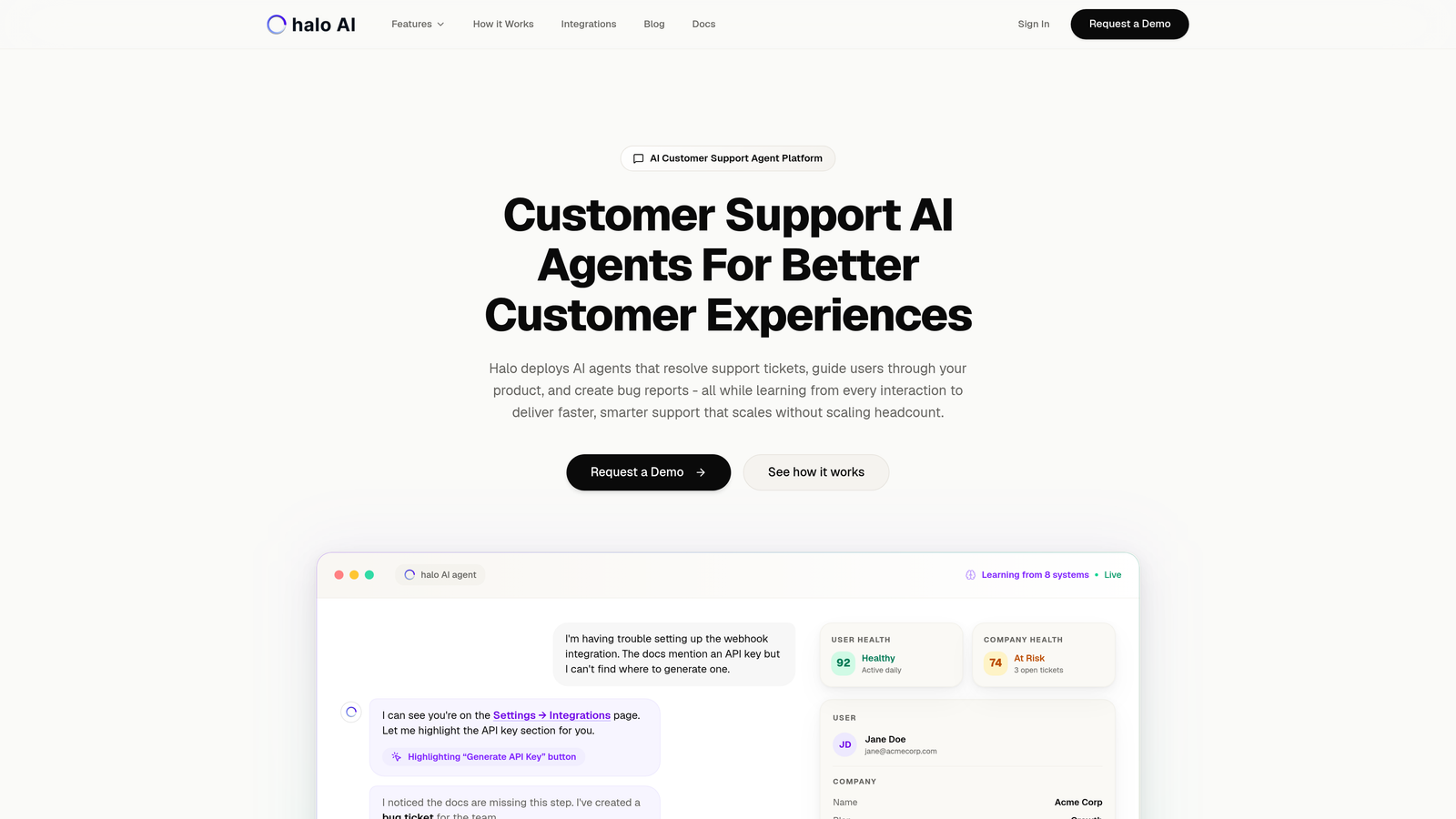
Halo AI brings a fundamentally different approach to contextual support by making AI agents page-aware—they understand not just what customers are asking, but what screen they're looking at when they ask it.
Where This Tool Shines
The platform's page-aware chat widget captures visual context that traditional support tools miss entirely. When a customer asks "How do I export this report?" the AI agent knows which report they're viewing, what filters they've applied, and can provide step-by-step guidance overlaid on their actual UI.
What sets Halo apart is continuous learning architecture. Every resolved ticket, every interaction, every piece of feedback trains the AI to handle similar issues better next time. This means your support gets smarter automatically without manual knowledge base updates or constant agent training.
Key Features
Page-Aware Context: AI agents see the user's current screen and UI state to provide visually-guided support that references actual elements they're interacting with.
Continuous Learning: Every interaction trains the AI, creating a feedback loop that improves resolution accuracy and speed over time without manual intervention.
Auto Bug Ticket Creation: When issues require engineering attention, the system automatically creates detailed bug reports with full context, screenshots, and reproduction steps.
Smart Inbox with Business Intelligence: Goes beyond support metrics to surface customer health signals, revenue intelligence, and anomaly detection across your business.
Multi-System Integrations: Connects to your entire stack including Linear, Slack, HubSpot, Intercom, Stripe, Zoom, and PandaDoc for comprehensive context.
Best For
B2B SaaS companies and product teams who need AI-first support that understands their product interface, not just ticket history. Particularly valuable for teams currently overwhelmed by repetitive how-to questions that require visual explanation.
Pricing
Contact for pricing based on your support volume and integration requirements.
2. Intercom
Best for: Product-led growth teams using behavioral triggers for proactive contextual engagement
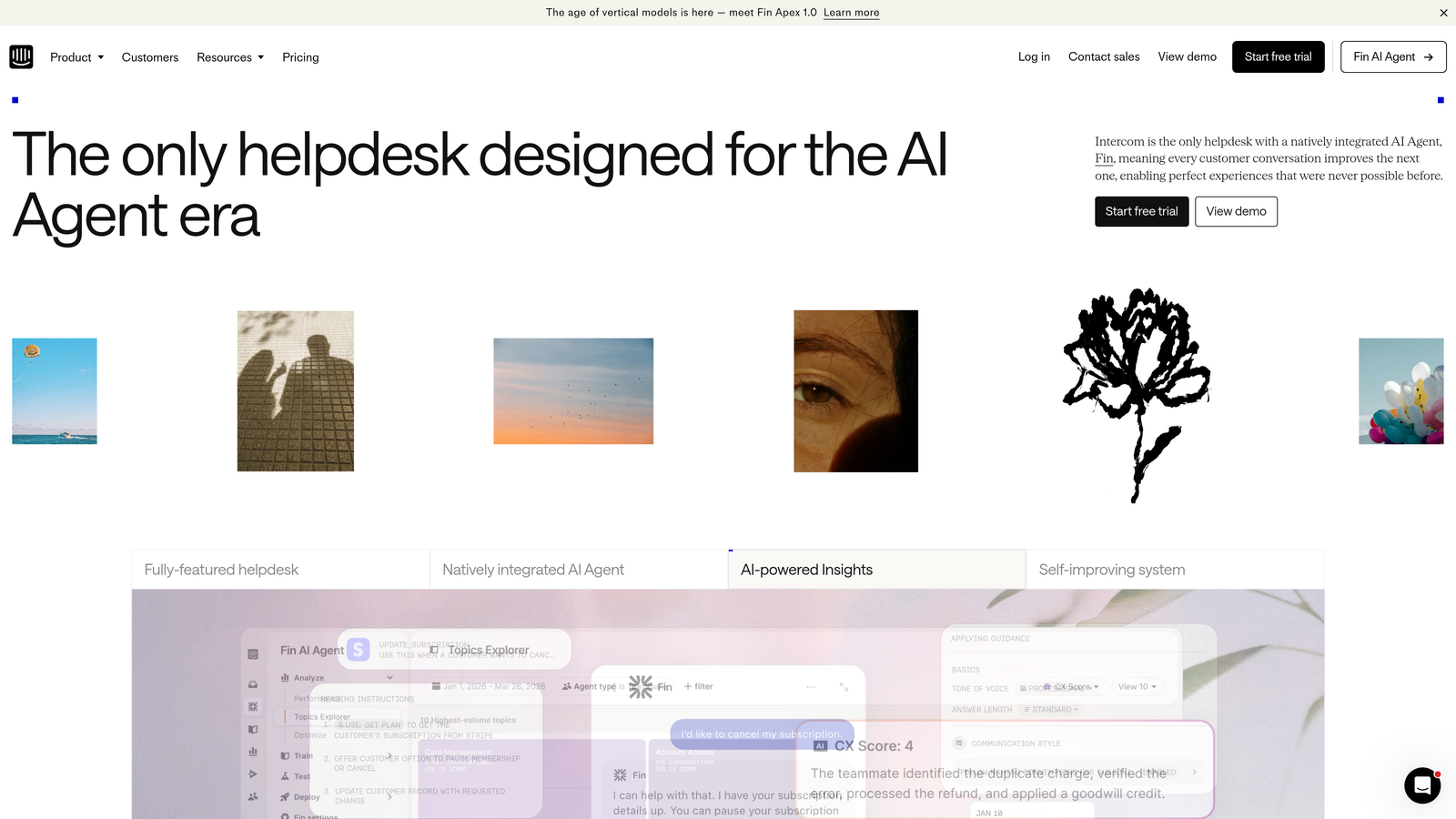
Intercom pioneered the shift from reactive helpdesk to proactive messaging by leveraging product usage data to deliver contextual conversations at the right moment.
Where This Tool Shines
Intercom's behavioral targeting engine watches how customers use your product and triggers contextual messages based on specific actions or inaction. If someone views your pricing page three times without upgrading, or starts a feature but doesn't complete it, targeted messages appear with relevant guidance.
The platform excels at blending automated and human support seamlessly. Resolution Bot handles common questions using contextual AI, but the handoff to human agents maintains full conversation context so customers never repeat themselves.
Key Features
Behavioral Triggers: Launch targeted messages based on product usage patterns, page visits, feature adoption, or custom events you define.
Product Tours: Create contextual onboarding flows that adapt based on user role, plan type, or previous interactions with your product.
Resolution Bot: AI-powered automation that answers questions using your knowledge base while understanding conversation context and customer attributes.
Custom Attributes: Tag customers with unlimited data points for deep personalization—plan type, MRR, feature usage, or any business metric that matters.
Inbox Context Panel: Agents see complete customer profiles including conversation history, product usage, and custom data without switching tools.
Best For
SaaS companies focused on product-led growth who want to engage users contextually throughout their journey, from onboarding through expansion. Works best when you have clear product usage events to trigger on.
Pricing
Starts at $39 per seat monthly on the Starter plan, with Advanced and Expert tiers offering deeper automation and customization.
3. Zendesk
Best for: Enterprise teams needing unified customer context across complex omnichannel operations
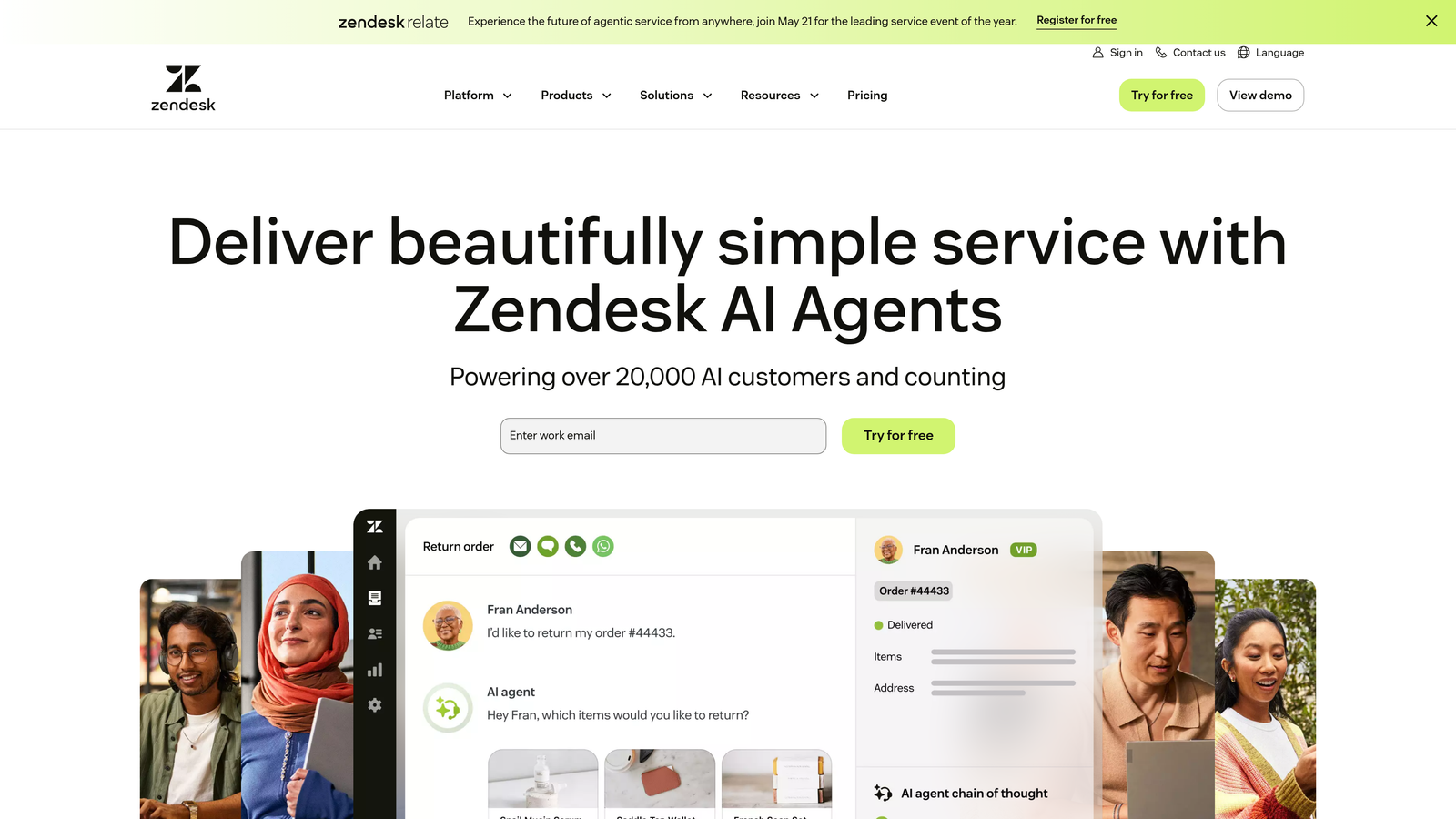
Zendesk built its reputation on ticketing but evolved into a comprehensive platform that maintains customer context across every channel and touchpoint at enterprise scale.
Where This Tool Shines
The Agent Workspace unifies context from email, chat, phone, social media, and messaging apps into a single interface. When a customer tweets about an issue, then calls about the same problem, agents see the complete story without asking customers to repeat themselves.
Zendesk's Sunshine platform lets you create custom data objects that pull context from any source. Connect your billing system, product analytics, or internal tools to surface exactly the context your agents need for your specific business.
Key Features
Omnichannel Agent Workspace: Unified interface showing tickets, chats, calls, and social messages with full context regardless of where conversations started.
Customer Context Panel: Sidebar displaying complete interaction history, account details, and custom data without agents needing to switch screens.
Sunshine Platform: Flexible data layer for creating custom objects and relationships that match your business structure, not just standard ticket fields.
Advanced AI: Contextual response suggestions based on ticket content, customer history, and similar resolved issues across your knowledge base.
Apps Marketplace: Thousands of integrations that surface context from CRM, e-commerce, analytics, and business tools directly in tickets.
Best For
Large enterprises with complex support operations spanning multiple channels, regions, and product lines who need customizable context management at scale.
Pricing
Starts at $55 per agent monthly for the Suite Team plan, with Professional and Enterprise tiers adding advanced AI and customization.
4. Freshdesk
Best for: Growing teams wanting AI-powered context without enterprise complexity or cost
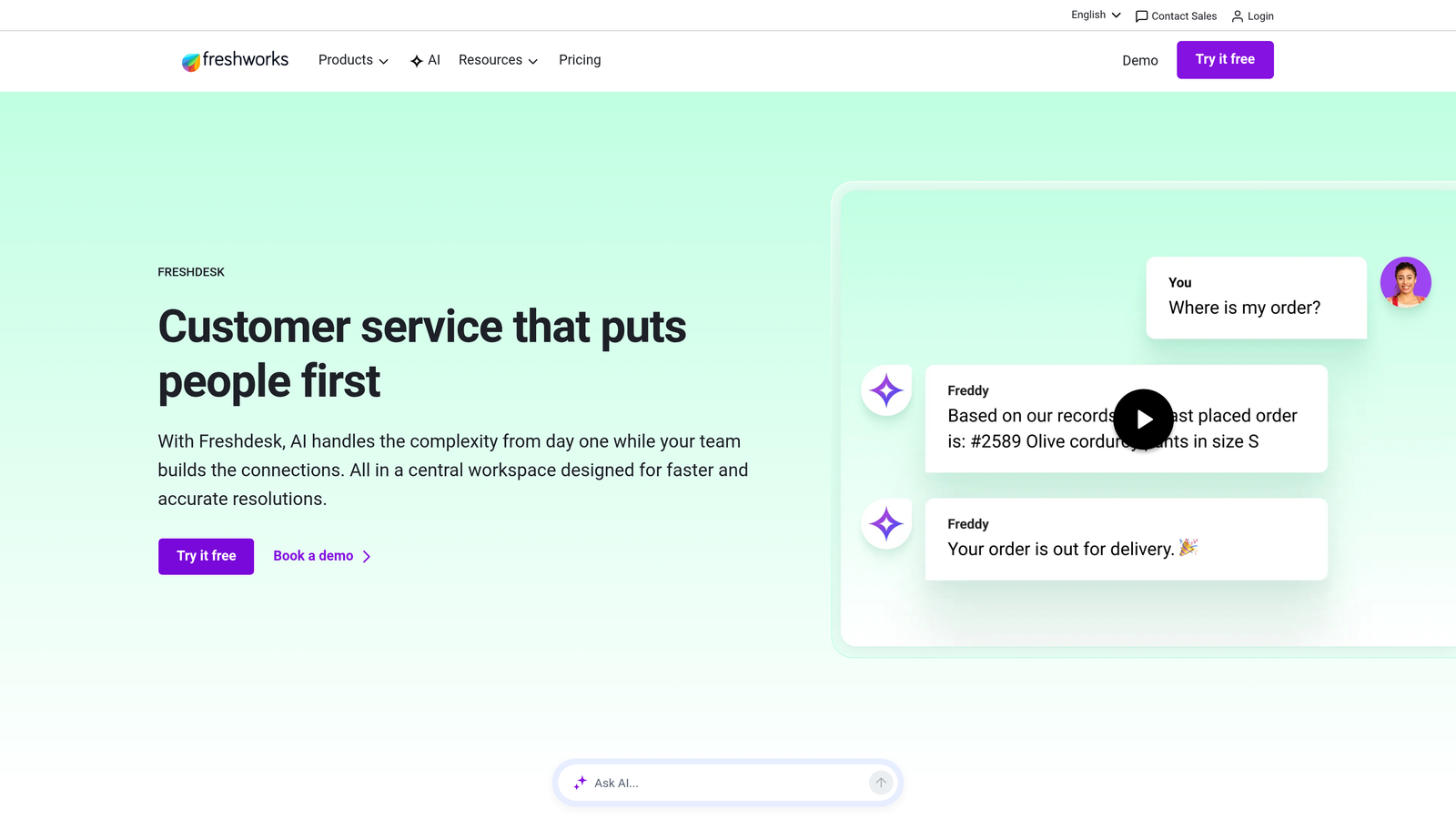
Freshdesk delivers sophisticated contextual support capabilities through an intuitive interface that doesn't require weeks of training or implementation.
Where This Tool Shines
Freddy AI analyzes ticket content and customer history to suggest contextual responses that agents can send with one click. The AI learns which suggestions agents accept or modify, continuously improving its contextual understanding of your specific support scenarios.
The unified customer timeline shows every interaction—tickets, calls, chats, social mentions—in chronological order with full context. Agents quickly spot patterns like recurring issues or escalating frustration without digging through multiple systems.
Key Features
Unified Interaction Timeline: Chronological view of every customer touchpoint across all channels with complete conversation context and resolution history.
Freddy AI Suggestions: Context-aware response recommendations based on ticket content, customer attributes, and similar previously resolved issues.
Custom Apps: Build integrations that pull context from internal systems or third-party tools directly into your ticket interface.
Proactive Outreach: Trigger contextual messages based on customer behavior, ticket patterns, or custom conditions you define.
Scenario Automations: Create workflows that route tickets, assign agents, or trigger actions based on contextual conditions like customer tier or issue type.
Best For
Mid-market companies and growing startups who need enterprise-grade contextual capabilities without the implementation overhead or pricing of platforms like Zendesk.
Pricing
Free tier available for basic needs. Paid plans start at $15 per agent monthly with Growth, Pro, and Enterprise tiers adding AI and advanced automation.
5. Help Scout
Best for: Customer-focused teams wanting contextual support that feels personal, not transactional
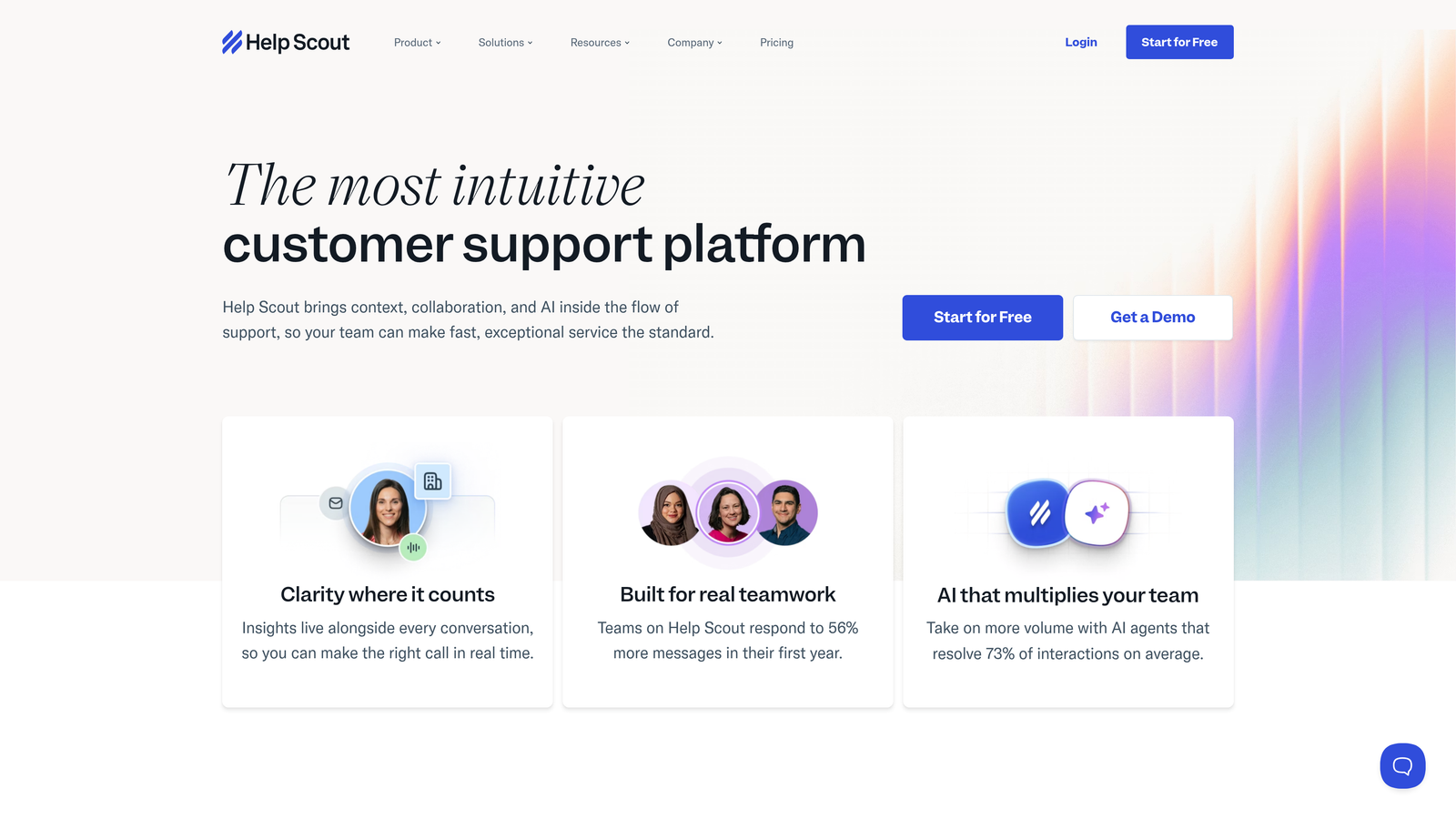
Help Scout designed its platform around making every interaction feel like a personal email conversation while giving agents the context they need to deliver exceptional service.
Where This Tool Shines
The Beacon widget doesn't just provide chat—it displays relevant help articles based on the page customers are viewing, their account type, and previous interactions. If someone on your Pro plan visits your API documentation, they see Pro-specific articles and can chat with context already established.
Customer profiles maintain complete interaction history in an easily scannable format. Agents see previous conversations, satisfaction ratings, and notes from colleagues without scrolling through endless ticket lists.
Key Features
Beacon Widget: Contextual self-service and chat that adapts content based on user's current page, account attributes, and interaction history.
Saved Replies with Variables: Create template responses that dynamically insert customer-specific context like name, plan type, or account details.
Customer Profiles: Consolidated view of every interaction, custom fields, tags, and internal notes that provide instant context for agents.
Docs Integration: Knowledge base articles surface contextually based on what customers are doing, reducing tickets before they're created.
Collision Detection: Prevents multiple agents from responding to the same customer by showing who's currently viewing each conversation.
Best For
Teams who prioritize relationship-building over ticket metrics and want contextual tools that enhance personal service rather than automate it away.
Pricing
Starts at $20 per user monthly for the Standard plan, with Plus and Pro tiers adding advanced features and higher volume limits.
6. Kustomer
Best for: Teams wanting CRM-powered context with conversations organized by customer, not ticket number
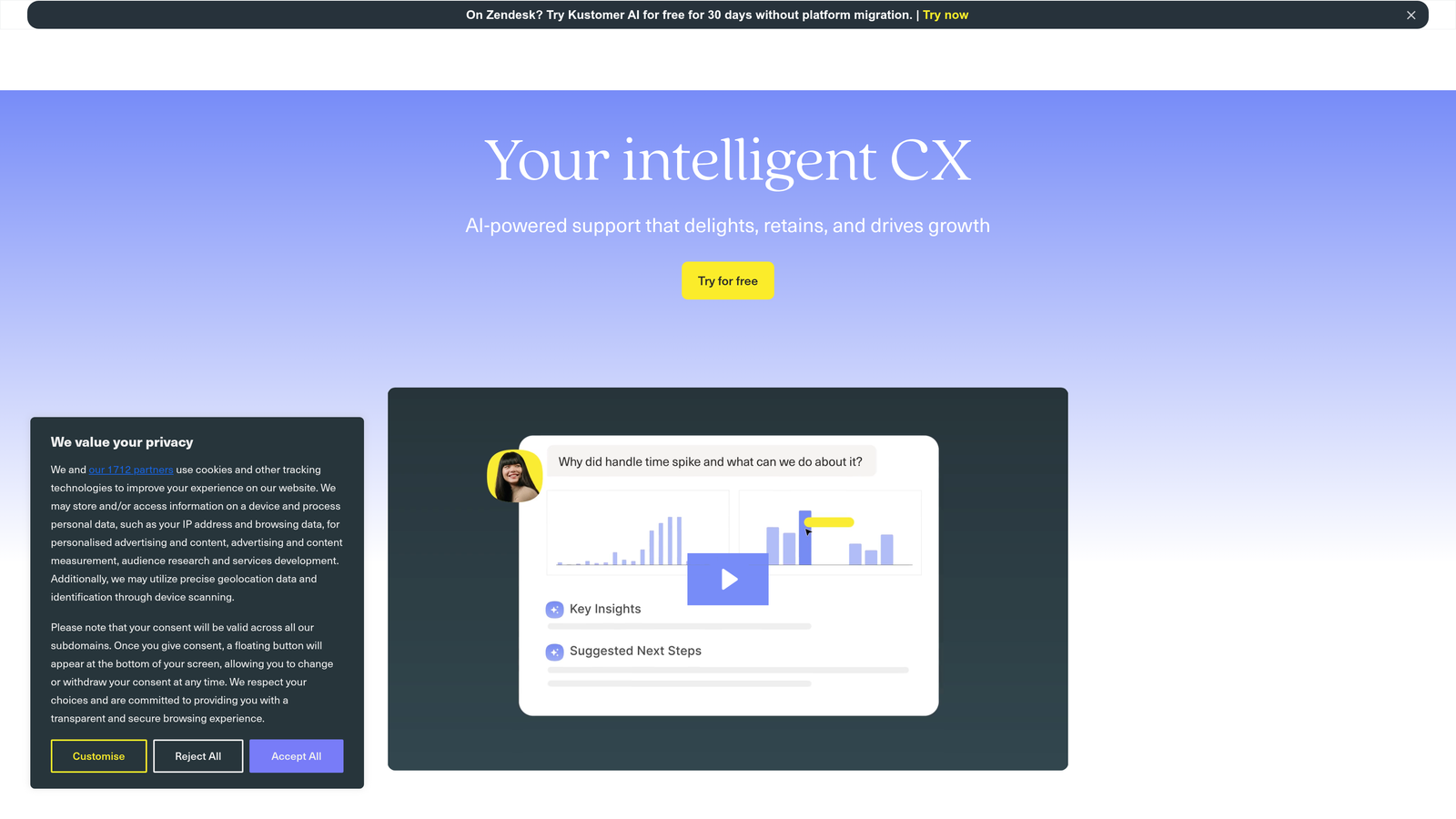
Kustomer reimagined support software as a CRM-first platform where customer context drives every interaction instead of being an afterthought bolted onto ticketing.
Where This Tool Shines
The single-thread conversation model eliminates the fragmentation of traditional ticketing. When a customer reaches out via email, then chat, then phone, everything appears in one continuous timeline. Agents never ask "what's your ticket number" because there is no ticket number—just the customer's ongoing story.
Custom objects let you structure context around your business model. E-commerce companies track orders and shipments. SaaS platforms monitor subscriptions and usage. The platform adapts to your data structure rather than forcing you into predefined fields.
Key Features
Single-Thread Conversations: All interactions with a customer appear in one continuous timeline regardless of channel, eliminating context loss between tickets.
Real-Time Customer Timeline: Live-updating view of customer activity including purchases, support interactions, and custom events from integrated systems.
Kustomer IQ: AI engine that analyzes conversation context to suggest responses, predict customer intent, and route to specialized agents.
Custom Objects: Define data structures that match your business—subscriptions, orders, accounts, devices—and surface them contextually in conversations.
Omnichannel Routing: Intelligent assignment based on customer context, agent skills, and conversation history rather than simple round-robin distribution.
Best For
Companies with complex customer relationships spanning multiple products, subscriptions, or accounts who need deep context beyond basic ticket history.
Pricing
Starts at $89 per user monthly for the Enterprise plan. Contact for custom pricing on higher tiers with advanced AI and customization.
7. Front
Best for: Teams using shared inboxes who need CRM and app context without leaving email
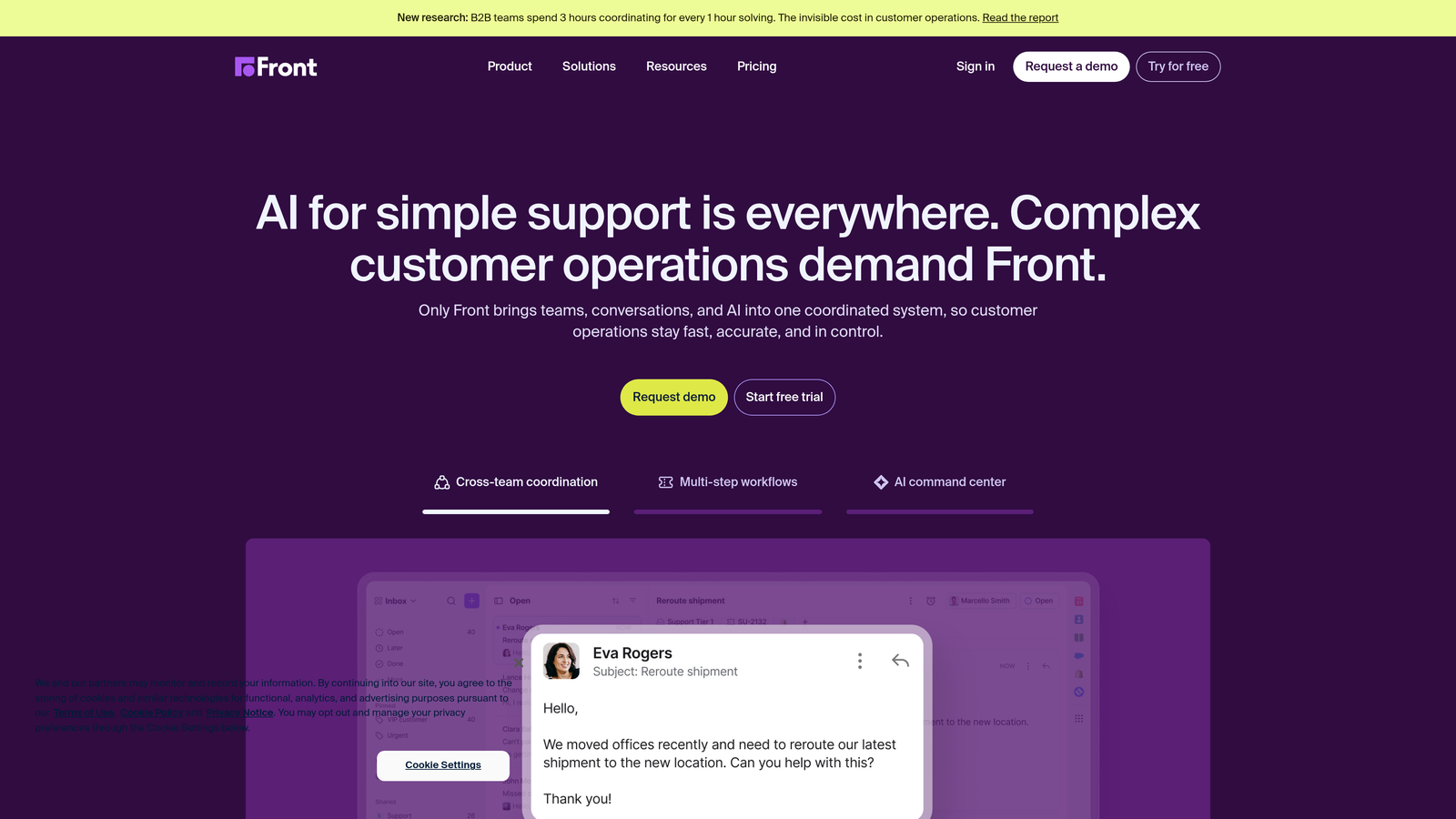
Front transforms shared email into a contextual collaboration hub by surfacing customer data from your entire tech stack directly alongside conversations.
Where This Tool Shines
The sidebar integration system pulls context from Salesforce, HubSpot, Stripe, and dozens of other tools without agents switching tabs. Viewing a customer email automatically displays their CRM record, recent purchases, open deals, and support history in a single glance.
Shared drafts maintain context when conversations require input from multiple team members. Sales can draft a response, support can add technical details, and account management can review—all while preserving the full context of customer history and internal discussion.
Key Features
Sidebar Integrations: Automatic display of CRM data, previous conversations, app context, and custom integrations directly alongside every email.
Shared Drafts: Collaborative composition with full conversation context visible to everyone contributing, preventing duplicate or conflicting responses.
Contextual Routing Rules: Automatically assign conversations based on customer attributes, conversation content, or data from integrated systems.
Analytics on Context: Track how customer attributes, conversation topics, and context factors correlate with resolution time and satisfaction.
Message Templates: Create responses with dynamic fields that pull customer-specific context from integrations automatically.
Best For
Teams who live in email but need contextual customer data from multiple systems surfaced automatically without constant tab switching.
Pricing
Starts at $19 per seat monthly for the Starter plan, with Growth and Scale tiers adding advanced automation and analytics.
8. Gorgias
Best for: E-commerce businesses needing order context and purchase history instantly in every ticket
Gorgias built its platform specifically for e-commerce, with deep Shopify and BigCommerce integrations that make order data and purchase history first-class context.
Where This Tool Shines
When a customer asks "Where's my order?" agents see order status, tracking information, and shipping details directly in the ticket with one-click actions to refund, resend, or modify orders without opening Shopify. This e-commerce-specific context eliminates the back-and-forth that plagues generic helpdesks.
Revenue statistics per customer transform support from a cost center into a strategic function. Agents instantly see customer lifetime value, average order value, and total purchases, enabling them to make contextual decisions about refunds, upgrades, or special treatment.
Key Features
One-Click Order Management: View order details, tracking, and history with instant actions for refunds, cancellations, or modifications without leaving the ticket.
Macros with Dynamic Variables: Create response templates that automatically insert customer name, order number, tracking links, and product details.
Revenue Statistics: Every ticket displays customer lifetime value, total orders, and average order value for contextual decision-making.
Automated Responses by Order Status: Trigger different responses based on whether orders are processing, shipped, delivered, or experiencing delays.
SMS and Social Integration: Handle Instagram comments, Facebook messages, and SMS with the same order context as email tickets.
Best For
E-commerce brands on Shopify, BigCommerce, or Magento who need order management and purchase context as the foundation of their support operations.
Pricing
Starts at $10 monthly for 50 tickets on the Starter plan, with Basic, Pro, and Advanced tiers scaling with ticket volume and features.
9. Gladly
Best for: Brands prioritizing customer relationships with single lifelong conversation threads across all channels
Gladly challenges the entire concept of ticket-based support by organizing everything around people instead, creating a single conversation thread that spans a customer's entire relationship with your brand.
Where This Tool Shines
Traditional helpdesks create a new ticket for every interaction. Gladly maintains one continuous conversation per customer that never closes. When someone who contacted you six months ago reaches out again, agents see the complete story without searching through ticket archives or asking customers to explain their history.
Channel switching maintains perfect context. If a conversation starts on chat, continues via email, and ends with a phone call, it's all one thread. Customers experience seamless continuity regardless of how they choose to communicate.
Key Features
Single Customer Thread: One continuous conversation per customer spanning their entire relationship, never fragmented into separate tickets.
Unified Channel View: Email, chat, phone, SMS, and social messages all appear in the same conversation thread with complete context.
Customer Recognition: Automatic identification across channels and devices so customers never need to re-authenticate or explain who they are.
Contextual Task Management: Create follow-up tasks tied to specific customers with full conversation context rather than isolated ticket reminders.
People-Based Reporting: Analytics focused on customer relationships and lifetime value rather than ticket volume and resolution time.
Best For
Consumer brands and retail companies where customer relationships matter more than transaction efficiency, particularly those with high repeat purchase rates.
Pricing
Contact for pricing based on your team size and channel requirements. Gladly typically serves mid-market to enterprise brands.
Making the Right Choice
The right contextual support platform depends on what type of context matters most to your business. For teams needing page-level visual context and AI that learns continuously, Halo AI delivers intelligence that traditional helpdesks can't match. Product-led growth companies should look at Intercom's behavioral targeting for proactive engagement based on product usage patterns.
Enterprise operations spanning multiple channels and regions will appreciate Zendesk's comprehensive omnichannel capabilities and customization depth. E-commerce businesses should seriously consider Gorgias for its order management context that turns support into a revenue-positive operation. Teams prioritizing long-term customer relationships over transactional efficiency will find Gladly's people-first approach transformative.
The common thread across all these platforms is moving beyond generic responses toward support that understands who customers are, what they're trying to accomplish, and how your team has helped them before. Context isn't just about faster resolution—it's about making every interaction feel personalized and relevant.
Your support team shouldn't scale linearly with your customer base. Let AI agents handle routine tickets, guide users through your product, and surface business intelligence while your team focuses on complex issues that need a human touch. See Halo in action and discover how continuous learning transforms every interaction into smarter, faster support.