9 Best Contextual Support Chat Solutions in 2026
Contextual support chat solutions eliminate the frustration of generic chatbots by understanding exactly where users are in your product and what they're trying to accomplish, delivering relevant help without requiring customers to re-explain their situation. This guide evaluates the nine best contextual chat tools in 2026 based on context awareness, integration capabilities, AI sophistication, and scalability to help you choose the right solution for transforming your customer support experience.
 Matt PattoliFounder11 min read
Generic chatbots frustrate customers because they lack awareness of what users are actually doing. When someone clicks "Help" while staring at a confusing interface, the last thing they want is a bot asking them to describe their issue from scratch.
Contextual support chat solutions change this completely. These tools understand where users are in your product, what they've already tried, and what they're attempting to accomplish—delivering relevant help without repetitive questions.
We evaluated the leading contextual chat tools based on context awareness depth, integration capabilities, AI sophistication, and scalability for growing teams. Here are the top solutions transforming how companies deliver support.
1. Halo AI
Best for: Teams needing deep page-aware visual guidance with continuous learning capabilities
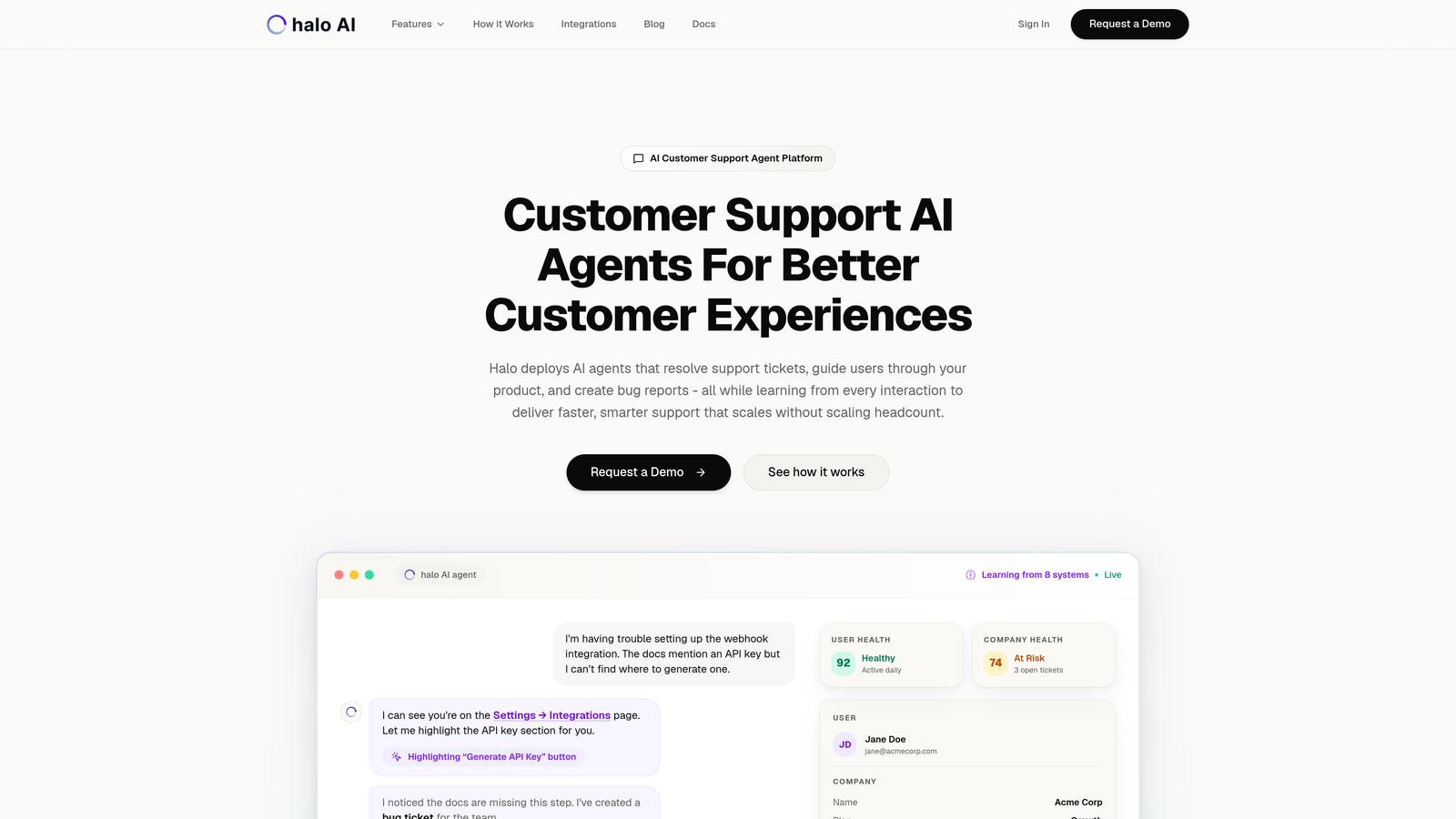
Halo AI is an AI-powered contextual support platform that sees what users see, providing visual UI guidance and autonomous ticket resolution.
Where This Tool Shines
Halo's page-aware context represents the cutting edge of contextual support. The system literally sees your user's current screen, understanding which buttons they're hovering over, which forms they're filling out, and where they're stuck.
The continuous learning architecture means every interaction makes the AI smarter. Unlike static chatbots that require constant manual updates, Halo learns from resolutions, agent corrections, and user feedback to improve autonomously over time.
Key Features
Page-Aware Context: The chat widget sees exactly what users see on their screen, enabling precise visual guidance without users describing their location.
Visual UI Guidance: Instead of text-based instructions, Halo can highlight specific interface elements and guide users through workflows step-by-step.
Auto Bug Ticket Creation: When conversations reveal product issues, Halo automatically creates detailed bug reports with context and sends them to Linear or your dev tools.
Live Agent Handoff: Complex issues escalate to human agents with full conversation context preserved, so customers never repeat themselves.
Business Intelligence Analytics: Beyond support metrics, Halo surfaces customer health signals, revenue intelligence, and anomaly detection across your business stack.
Best For
B2B SaaS companies with complex products where visual context matters. Particularly valuable for product teams that want support interactions to feed directly into product improvement workflows.
Pricing
Contact for pricing. Enterprise-focused with custom implementation based on team size and integration requirements.
2. Intercom
Best for: Product-led growth companies needing behavioral targeting and proactive engagement
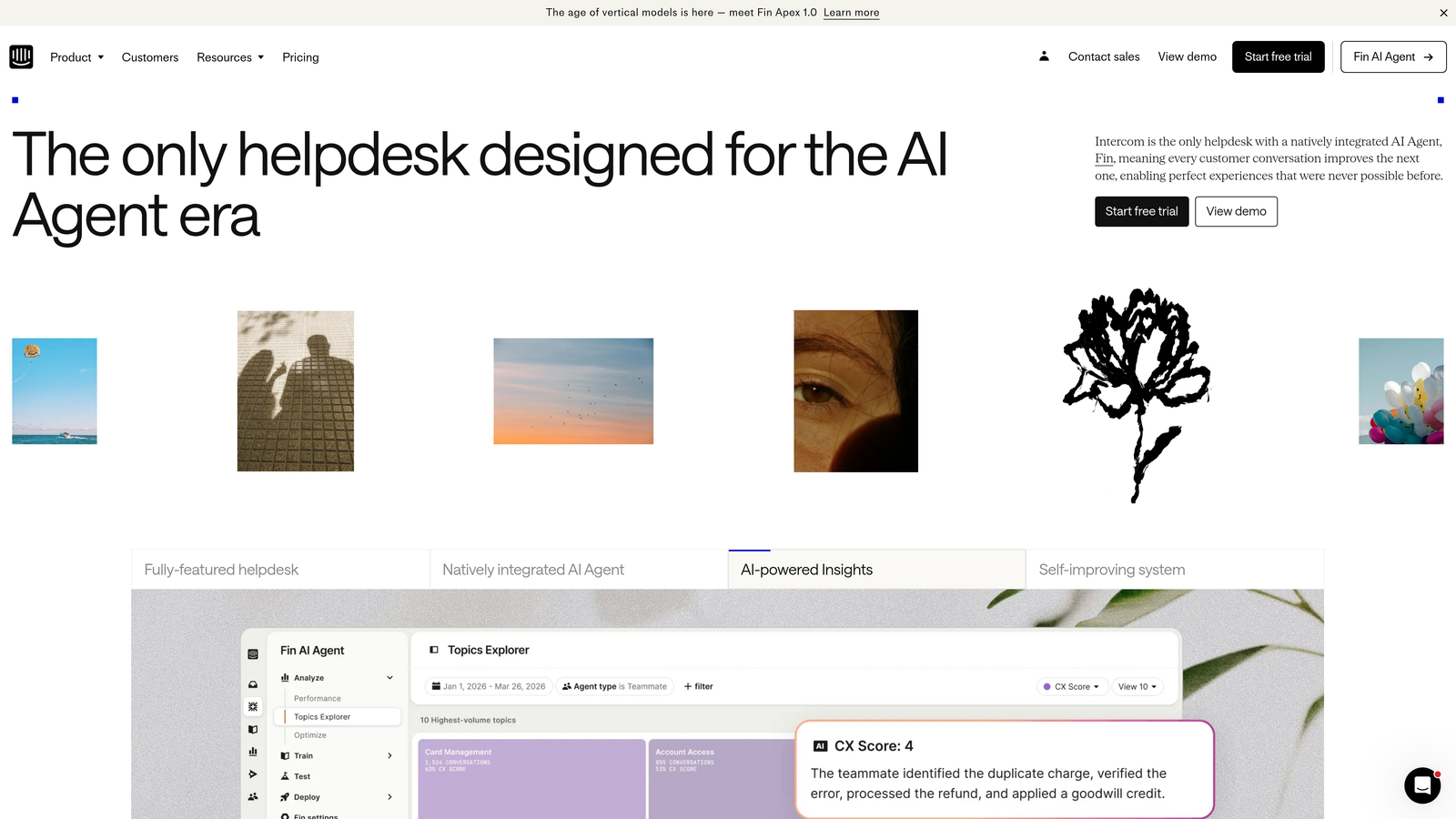
Intercom is a customer messaging platform with Fin AI agent that provides contextual resolution using product data and conversation history.
Where This Tool Shines
Intercom excels at behavioral targeting. The platform tracks user actions across your product and triggers contextual messages at exactly the right moment. When someone abandons a checkout flow three times, Intercom knows to offer proactive help.
Fin AI brings strong natural language understanding to these interactions. It pulls from your knowledge base, previous conversations, and customer attributes to provide personalized responses that feel genuinely helpful rather than robotic.
Key Features
Fin AI Agent: Autonomous AI that resolves common queries using your knowledge base and customer context without human intervention.
Product Tours: In-app messaging that guides users through features based on their role, plan tier, and usage patterns.
Behavioral Targeting: Trigger messages based on specific user actions, page visits, or inactivity patterns for proactive support.
Custom Bot Workflows: Build conversation flows that adapt based on context variables like subscription status or previous interactions.
Resolution Reports: Analytics showing how often Fin resolves issues without human help, broken down by topic and context type.
Best For
SaaS companies with freemium or trial models where proactive engagement drives conversions. Teams that want to blend marketing, sales, and support in one platform.
Pricing
Starts at $39 per seat per month for the Essential plan. Fin AI is priced separately per resolution, typically adding significant cost at scale.
3. Zendesk
Best for: Enterprise teams needing omnichannel context across email, chat, phone, and social
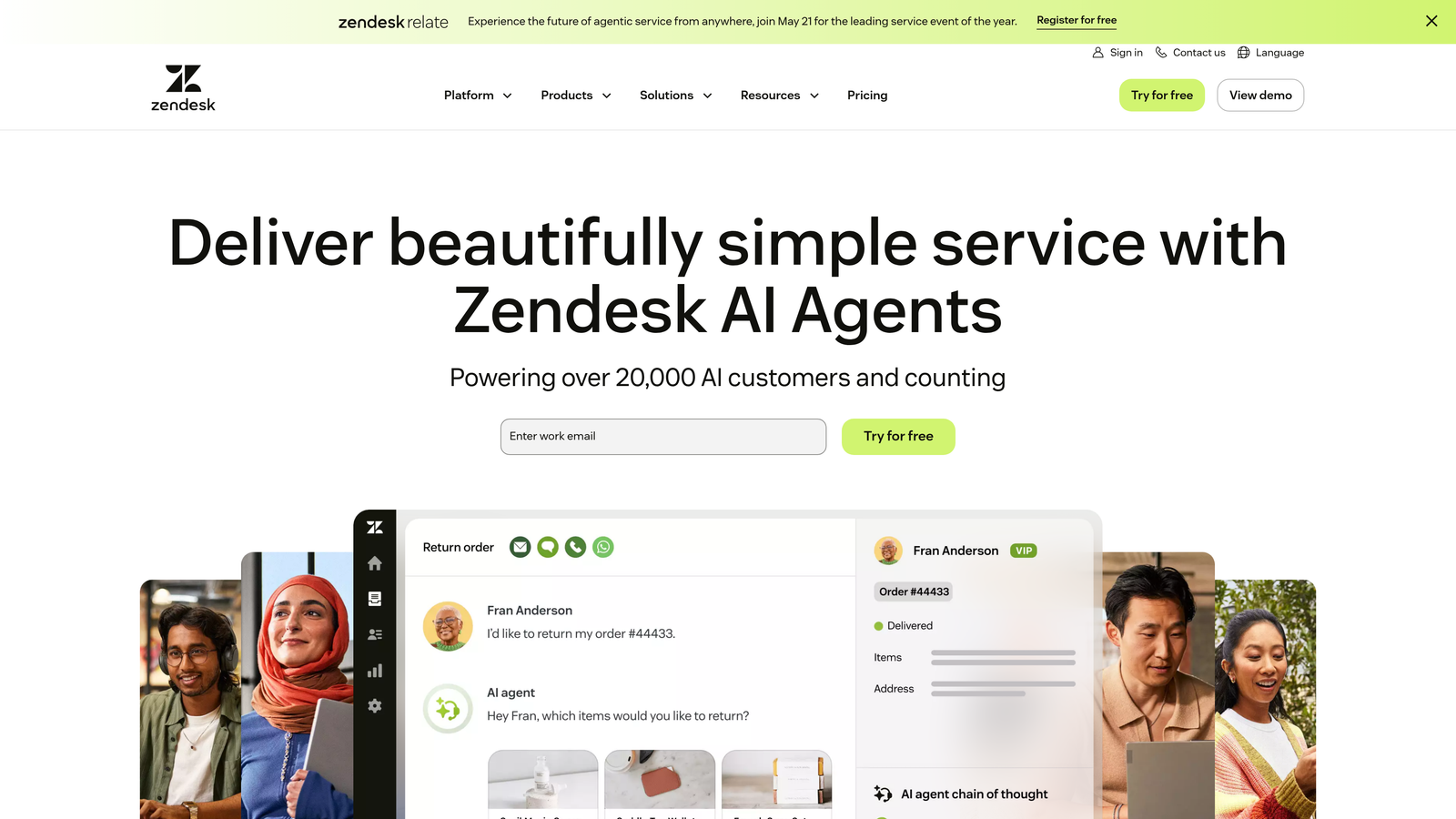
Zendesk is an enterprise support suite with Answer Bot and contextual routing that leverages customer data across all channels.
Where This Tool Shines
Zendesk's unified customer view is unmatched for complexity. Whether someone contacts you via chat, email, phone, or Twitter, agents see the complete interaction history in one place. This omnichannel context prevents the frustrating "let me pull up your account" delays.
The Sunshine platform enables deep custom integrations. Companies can pull context from proprietary systems, third-party tools, or legacy databases to create truly comprehensive customer profiles that inform every interaction.
Key Features
Answer Bot: Suggests relevant knowledge base articles based on conversation context and customer history before escalating to humans.
Unified Customer View: Complete interaction history across all channels visible in a single agent workspace.
Contextual Workspaces: Agent interfaces that adapt based on ticket type, customer segment, and available context data.
Skills-Based Routing: Automatically routes conversations to agents with relevant expertise based on customer attributes and issue context.
Sunshine Platform: Open API framework for building custom context integrations with any business system.
Best For
Large enterprises with complex support operations across multiple channels. Companies with strict compliance requirements or extensive custom integration needs.
Pricing
Suite Team starts at $55 per agent per month. Enterprise plans with advanced context features require custom pricing and typically run significantly higher.
4. Freshdesk (Freddy AI)
Best for: Mid-market teams wanting AI-powered context without enterprise complexity or cost
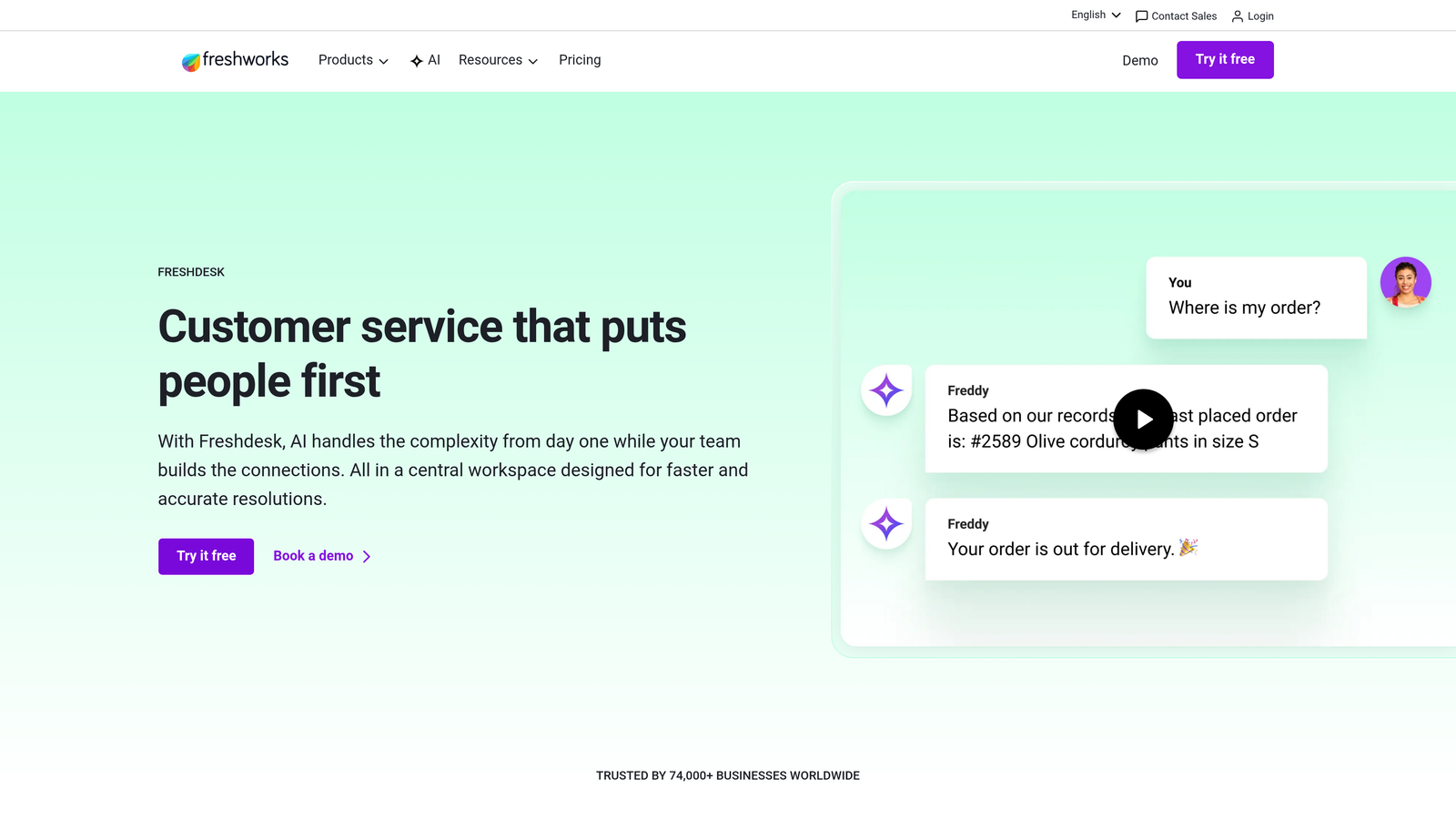
Freshdesk is a helpdesk platform with Freddy AI that detects intent and provides contextual responses based on ticket history.
Where This Tool Shines
Freshdesk hits the sweet spot between capability and simplicity. Freddy AI provides genuine intent detection and contextual routing without requiring a data science team to configure. The system learns from your ticket history to automatically categorize and suggest responses.
The Customer 360 view pulls context from integrated tools like CRM, billing systems, and project management platforms. This gives agents the background they need without forcing customers to explain their entire relationship with your company.
Key Features
Freddy AI Intent Detection: Analyzes incoming messages to understand what customers actually need, even when they phrase requests unclearly.
Customer 360 View: Aggregates data from connected systems to show agents complete customer context in one sidebar.
Auto-Triage: Routes tickets to appropriate teams based on content analysis and historical patterns without manual rules.
Contextual Canned Responses: Suggests pre-written responses that automatically populate with customer-specific variables and context.
Thank You Detector: Recognizes when customers send thank-you messages to prevent unnecessary ticket reopening.
Best For
Growing companies that need AI-powered context but aren't ready for enterprise pricing. Teams that value quick implementation over extensive customization.
Pricing
Free tier available for basic needs. Pro plan starts at $49 per agent per month with Freddy AI included.
5. Drift
Best for: B2B companies prioritizing account-based context for sales and marketing alignment
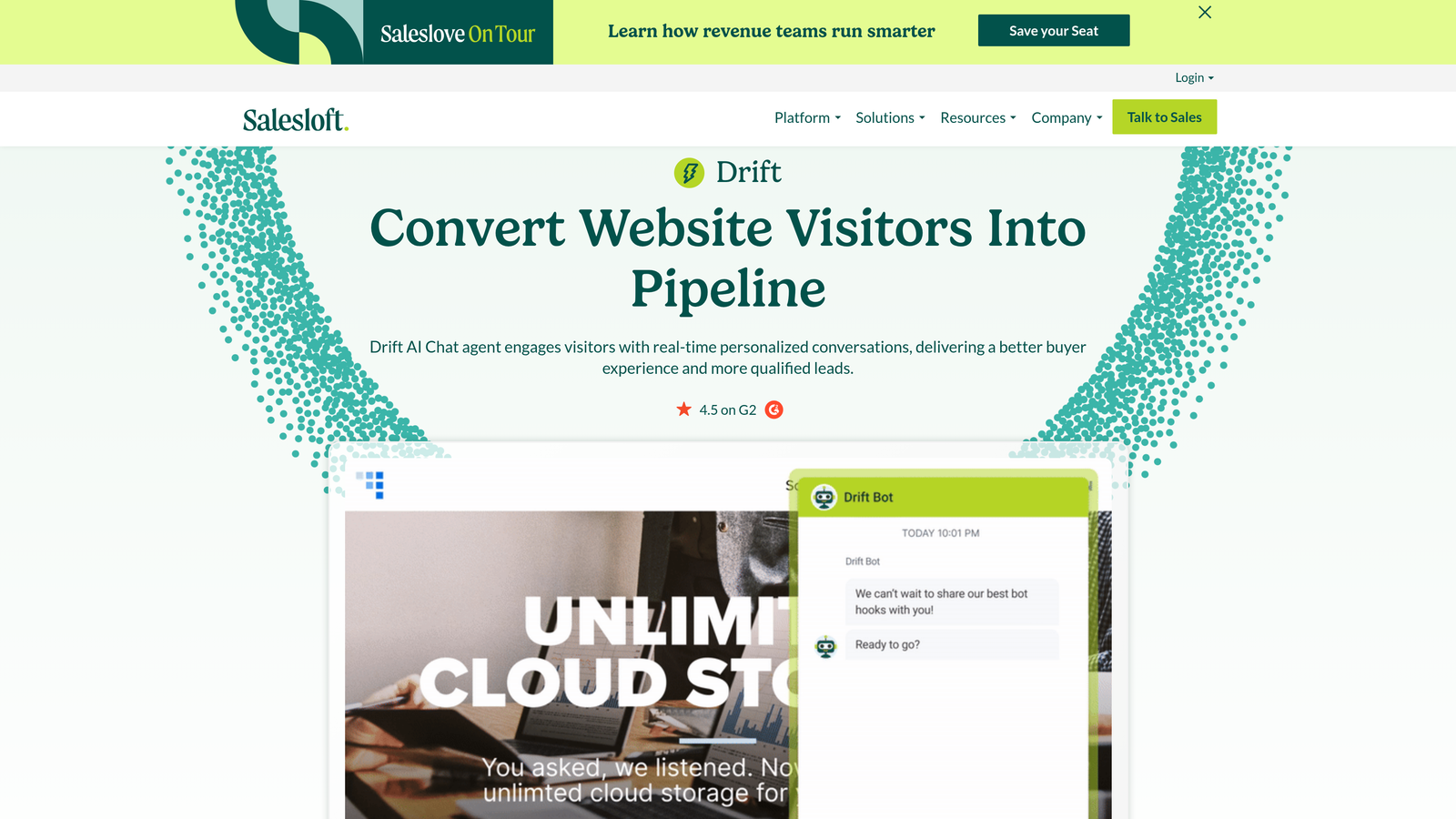
Drift is a conversational marketing platform that uses account context and visitor behavior to deliver personalized chat experiences.
Where This Tool Shines
Drift approaches context from a revenue perspective. When someone from a target account visits your site, Drift knows their company size, industry, tech stack, and previous interactions. This firmographic context enables conversations that skip generic qualification and get straight to relevant value.
The platform excels at passing behavioral context to sales teams. When a chat conversation converts to a meeting, the rep sees exactly which pages the prospect visited, how long they stayed, and what questions they asked.
Key Features
Account-Based Targeting: Automatically identifies visitors from target accounts and routes them to appropriate sales reps with full company context.
Visitor Intelligence: Tracks browsing behavior, content consumption, and engagement patterns to inform conversation strategy.
Conversation Context Handoff: Passes complete chat history and behavioral data to sales reps when conversations convert to meetings.
Playbooks: Automated conversation flows triggered by specific user actions or account attributes.
Revenue Acceleration Analytics: Connects chat interactions to pipeline and revenue outcomes to measure context effectiveness.
Best For
B2B companies with account-based marketing strategies and high-value enterprise deals. Teams where sales and marketing need shared context on prospect behavior.
Pricing
Premium plan starts at $2,500 per month. Enterprise pricing varies based on conversation volume and integration requirements.
6. Ada
Best for: Non-technical teams building sophisticated contextual automation without code
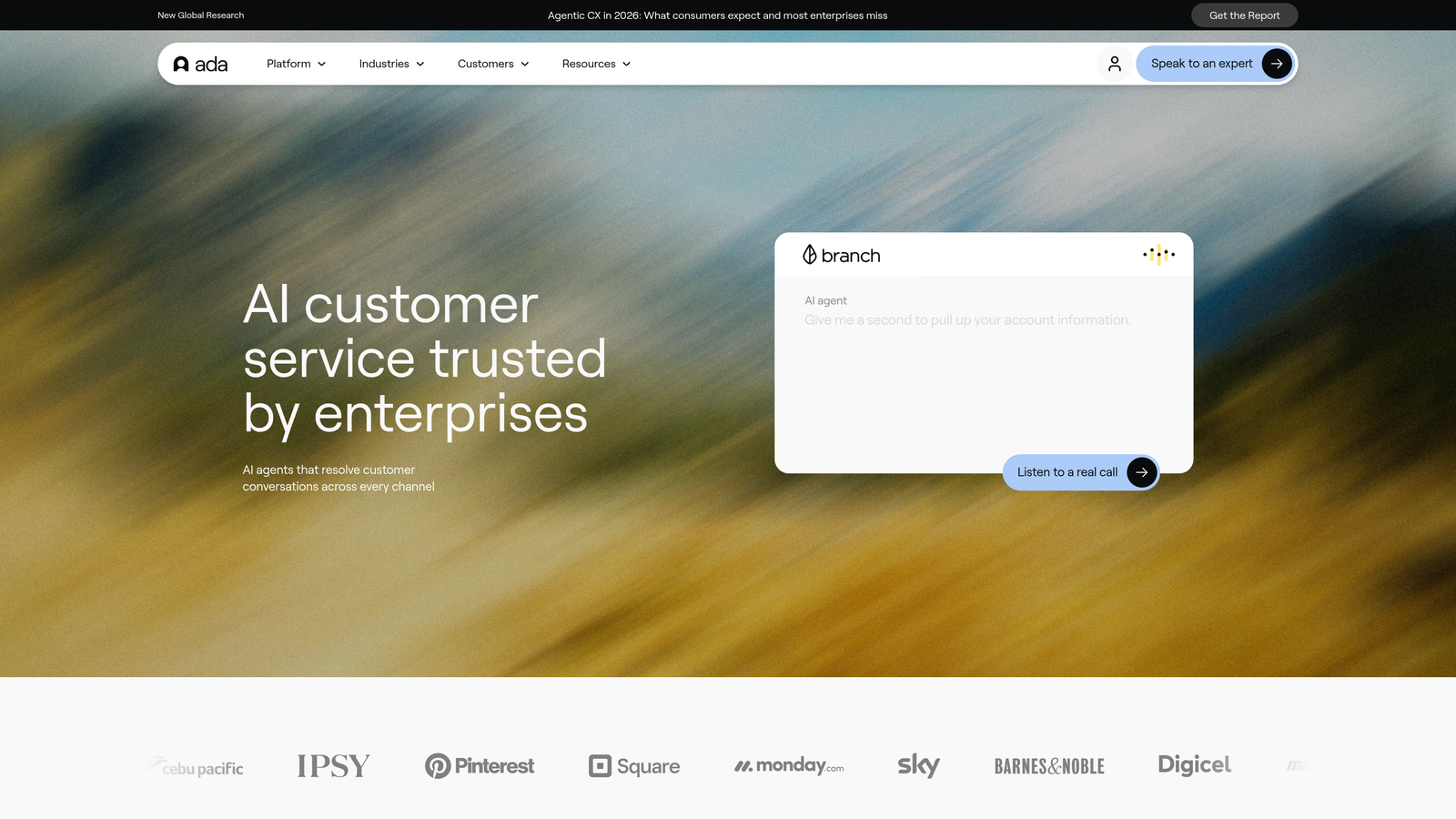
Ada is an AI-powered automation platform that creates personalized resolution paths using customer data and conversation context.
Where This Tool Shines
Ada's no-code builder democratizes contextual automation. Support teams can create complex conversation flows that adapt based on customer attributes, purchase history, or account status without writing a single line of code.
The multilingual context preservation stands out. When conversations switch languages, Ada maintains full context across the transition. A customer can start in English, switch to Spanish, and the bot remembers everything discussed without losing thread.
Key Features
No-Code Automation Builder: Visual interface for creating contextual conversation flows using drag-and-drop logic and customer data variables.
CRM Data Personalization: Pulls customer information from connected systems to personalize responses without asking repetitive questions.
Multilingual Context Preservation: Maintains conversation context across language switches for seamless global support.
Proactive Campaigns: Triggers outbound messages based on behavioral signals like cart abandonment or feature adoption milestones.
Contextual Handoff: Escalates to human agents with complete conversation history and customer data pre-loaded.
Best For
Enterprise companies supporting global customers in multiple languages. Teams without developer resources who need sophisticated automation capabilities.
Pricing
Contact for pricing. Enterprise-focused with implementation support and custom integrations included in packages.
7. Kustomer
Best for: Teams needing complete customer timeline visibility across every touchpoint and channel
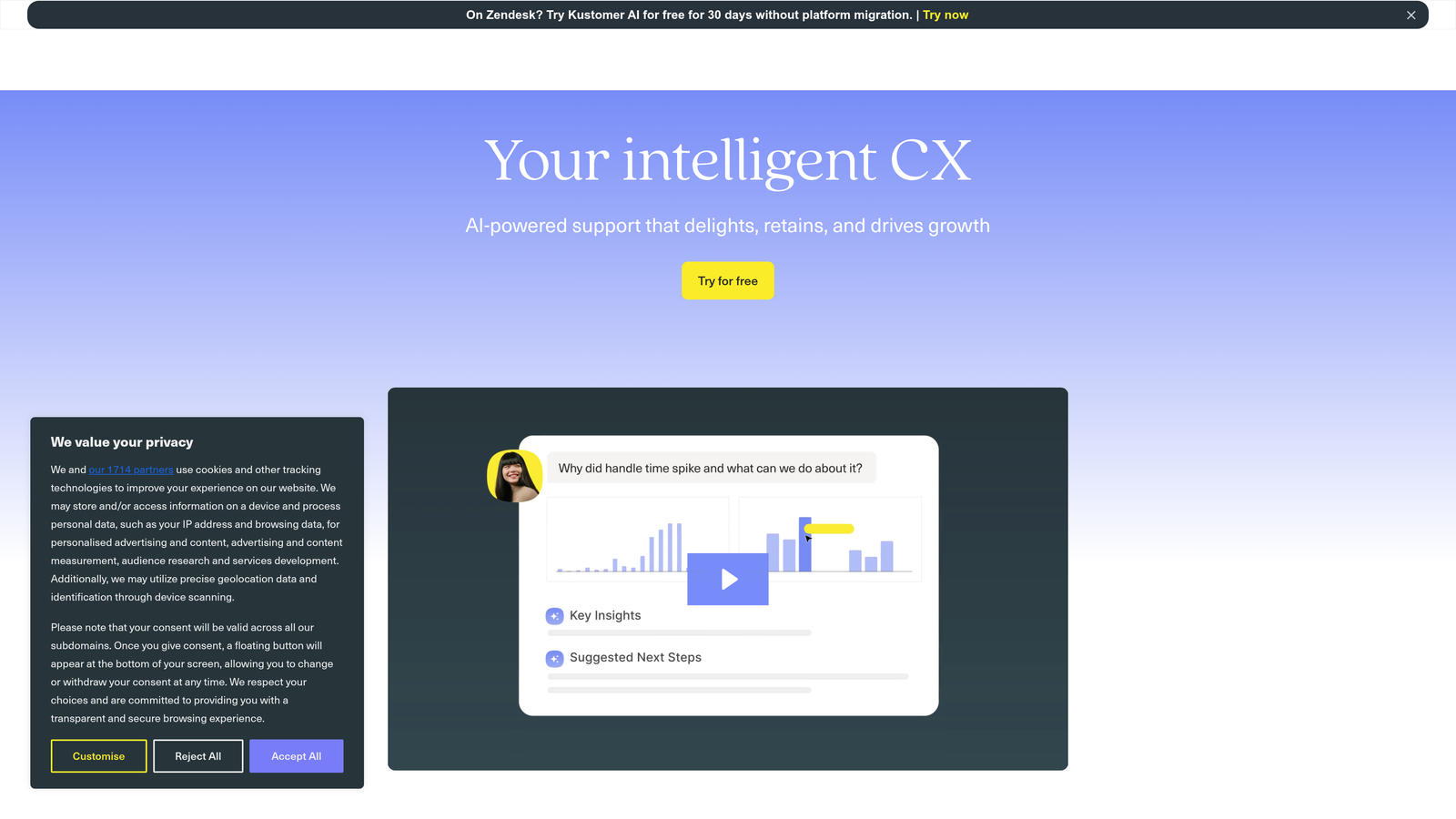
Kustomer is a CRM-powered support platform that provides complete customer timeline visibility for contextual conversations.
Where This Tool Shines
Kustomer treats every customer interaction as part of a continuous timeline rather than isolated tickets. When an agent opens a conversation, they see every email, chat, phone call, and transaction in chronological order. This timeline view eliminates the context-switching that plagues traditional ticketing systems.
The custom objects feature lets companies define their own context types. A subscription business might create objects for billing cycles, usage metrics, and feature adoption. These custom contexts appear automatically in agent workspaces alongside standard customer data.
Key Features
Customer Timeline: Chronological view of all interactions, transactions, and account changes in a single unified interface.
Omnichannel Context: Conversation history across email, chat, phone, SMS, and social media channels without fragmentation.
Proactive Outreach: Triggers messages based on customer lifecycle events, usage patterns, or account changes.
AI Suggestions: Recommends responses and actions based on full customer context and similar historical cases.
Custom Objects: Define business-specific context types that matter to your industry or product model.
Best For
Companies with complex customer journeys spanning multiple touchpoints. Subscription businesses where billing, usage, and support context need to coexist.
Pricing
Enterprise plan starts at $89 per user per month. Custom pricing for larger teams with advanced integration requirements.
8. Gorgias
Best for: E-commerce businesses needing order and shipping context directly in support conversations
Gorgias is an e-commerce focused helpdesk that pulls order, shipping, and browsing context into support conversations.
Where This Tool Shines
Gorgias understands e-commerce context at a granular level. When a customer messages about an order, agents see the complete purchase in a sidebar: items ordered, shipping status, previous returns, and even browsing history before purchase. This eliminates the "what's your order number" dance.
The revenue attribution feature connects support interactions to sales outcomes. You can see which support conversations led to additional purchases, helping justify support team investment with hard revenue numbers.
Key Features
Order Context Sidebar: Shopify and BigCommerce order details visible directly in conversation view without switching tabs.
Dynamic Macros: Pre-written responses that automatically populate with order-specific variables like tracking numbers and delivery dates.
Intent Detection: Recognizes common e-commerce issues like "where is my order" or "I want to return this" to suggest relevant macros.
Revenue Attribution: Tracks which support interactions lead to purchases, upsells, or retention to measure support ROI.
Self-Service Tracking Widget: Embeddable order tracking that reduces "where is my order" tickets by providing context proactively.
Best For
E-commerce brands on Shopify, BigCommerce, or Magento. Companies where order status inquiries dominate support volume.
Pricing
Starter plan at $10 per month for 50 tickets. Scales based on ticket volume with Pro at $300/month for 2,000 tickets.
9. Help Scout
Best for: Teams prioritizing simplicity and ease of use over extensive customization
Help Scout is a straightforward helpdesk with Beacon widget that provides page-aware help and customer context.
Where This Tool Shines
Help Scout proves that contextual support doesn't require overwhelming complexity. The Beacon widget detects which page users are on and suggests relevant help articles before they even ask a question. This page-specific context reduces support volume without sacrificing user experience.
The customer sidebar provides just enough context without information overload. Agents see previous conversations, account details, and custom properties at a glance. The interface stays clean and focused rather than drowning agents in data.
Key Features
Beacon Widget: Embeddable help widget that shows page-specific article suggestions based on current user location.
Customer Sidebar: Clean view of account data, custom properties, and conversation history without cluttering the interface.
Docs Integration: Knowledge base articles surface contextually in conversations and self-service widgets.
Previous Conversations: Quick access to past interactions without digging through separate systems or databases.
Custom App Integrations: Connect CRM, billing, and product tools to pull relevant context into the sidebar.
Best For
Small to mid-sized teams that value simplicity and quick implementation. Companies without dedicated support operations managers who need intuitive tools.
Pricing
Standard plan at $20 per user per month includes Beacon and core context features. Plus plan at $40/user adds advanced automation.
Making the Right Choice
The right contextual support chat solution depends on what type of context matters most to your business. Halo AI leads for teams needing deep page-aware visual guidance with continuous learning that gets smarter over time. Intercom excels for product-led growth companies where behavioral targeting drives engagement and conversions.
Zendesk remains the enterprise standard when omnichannel consistency across email, phone, chat, and social is non-negotiable. Gorgias dominates e-commerce with order-specific context that eliminates repetitive questions about shipping and returns. Help Scout serves teams that prioritize simplicity and fast implementation over extensive customization.
Here's how to choose based on your specific needs:
For complex SaaS products: Halo AI's page-aware context and visual UI guidance provide the depth needed to support intricate workflows without endless back-and-forth clarification.
For behavioral engagement: Intercom and Drift both excel at triggering contextual messages based on user actions, though Drift skews toward sales while Intercom balances support and growth.
For global operations: Ada's multilingual context preservation and Zendesk's omnichannel capabilities handle the complexity of supporting customers worldwide across channels and languages.
For e-commerce: Gorgias provides the order, shipping, and browsing context that matters most for retail support without forcing you to adopt a general-purpose platform.
The trend toward page-aware and visual context represents the cutting edge of this space. Solutions that can literally see what users see provide faster, more accurate resolutions than those relying solely on conversation history or account data.
Your support team shouldn't scale linearly with your customer base. Let AI agents handle routine tickets, guide users through your product, and surface business intelligence while your team focuses on complex issues that need a human touch. See Halo in action and discover how continuous learning transforms every interaction into smarter, faster support.