10 Best Conversational AI Platforms to Transform Customer Engagement in 2026
Discover the top 10 conversational AI platforms that deliver instant, personalized customer experiences across every channel in 2026. This comprehensive evaluation compares leading solutions based on natural language understanding, integration capabilities, and deployment ease—helping you select the right conversational AI platform to automate support, accelerate sales, and transform customer engagement with sophisticated, context-aware interactions that feel genuinely human.
 Matt PattoliFounder15 min read
Customer expectations have fundamentally shifted. People want instant, personalized responses across every channel—and they don't care whether a human or AI provides them, as long as the experience feels natural. Conversational AI platforms have evolved from clunky chatbots into sophisticated systems that understand context, remember preferences, and resolve complex issues autonomously.
But with dozens of platforms claiming to revolutionize customer interactions, choosing the right one can feel overwhelming. We've evaluated the leading conversational AI platforms based on natural language understanding, integration capabilities, ease of deployment, and real-world performance. Whether you're looking to automate customer support, accelerate sales cycles, or build custom voice assistants, here are the top conversational AI platforms transforming how businesses engage with customers.
1. Halo AI
Best for: Businesses wanting autonomous agents that handle complete customer journeys without constant human oversight.
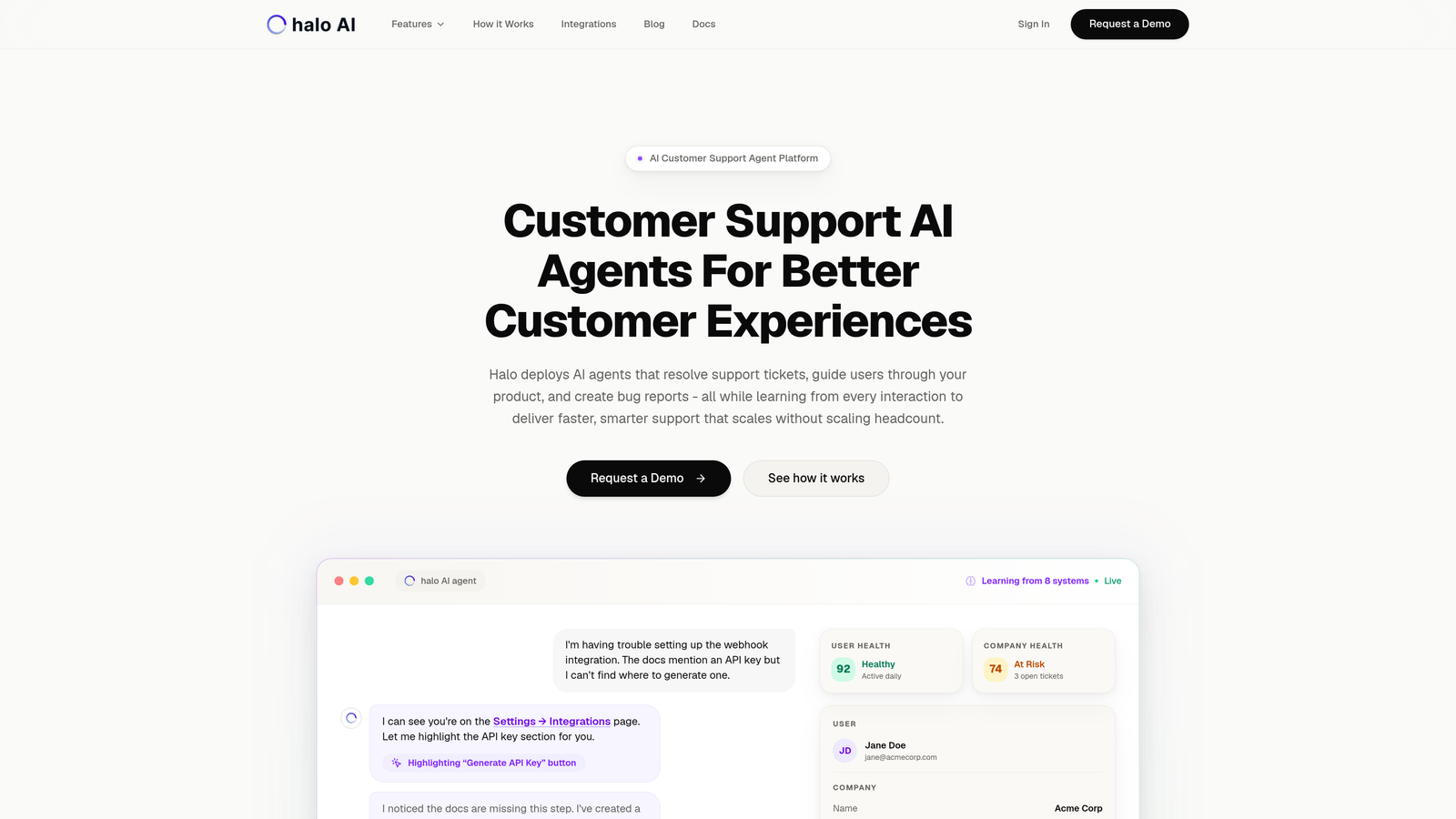
Halo AI is an AI-first platform that deploys autonomous agents for both customer support and sales, managing interactions from first contact through resolution.
Where This Tool Shines
Halo AI takes a fundamentally different approach than traditional conversational platforms. Instead of building conversation flows or training intents, you deploy autonomous agents that learn from your existing help center, past conversations, and business context. The platform handles complete customer journeys without requiring human intervention for routine issues.
What sets Halo AI apart is its unified approach to customer engagement. Rather than separate tools for support and sales, you get specialized agents that work together within a single inbox. This means your support agent can identify upsell opportunities and seamlessly hand off to the sales agent, which then qualifies leads and books meetings autonomously.
Key Features
Autonomous Customer Support Agent: Resolves customer issues independently by understanding context, accessing your knowledge base, and taking actions across integrated systems.
AI Sales Agent: Qualifies inbound leads through natural conversation, asks relevant questions based on your sales process, and schedules meetings with appropriate team members.
Unified Inbox: Consolidates all customer conversations across channels into a single interface where AI and human agents collaborate seamlessly.
Deep System Integrations: Connects with HubSpot, Slack, Intercom, and other business tools so agents can pull customer data and execute actions without manual intervention.
Self-Learning Help Center: AI agents automatically learn from your existing documentation, improving responses as your knowledge base evolves.
Best For
Halo AI works exceptionally well for growing businesses that want to scale customer interactions without proportionally scaling headcount. It's particularly valuable if you're handling repetitive support queries that follow predictable patterns or if your sales team spends significant time on lead qualification before meaningful conversations happen.
Pricing
Contact Halo AI for pricing. The platform offers scalable plans based on conversation volume, making it accessible for businesses at different growth stages.
2. IBM watsonx Assistant
Best for: Enterprise organizations requiring robust governance, compliance certifications, and industry-leading natural language understanding.
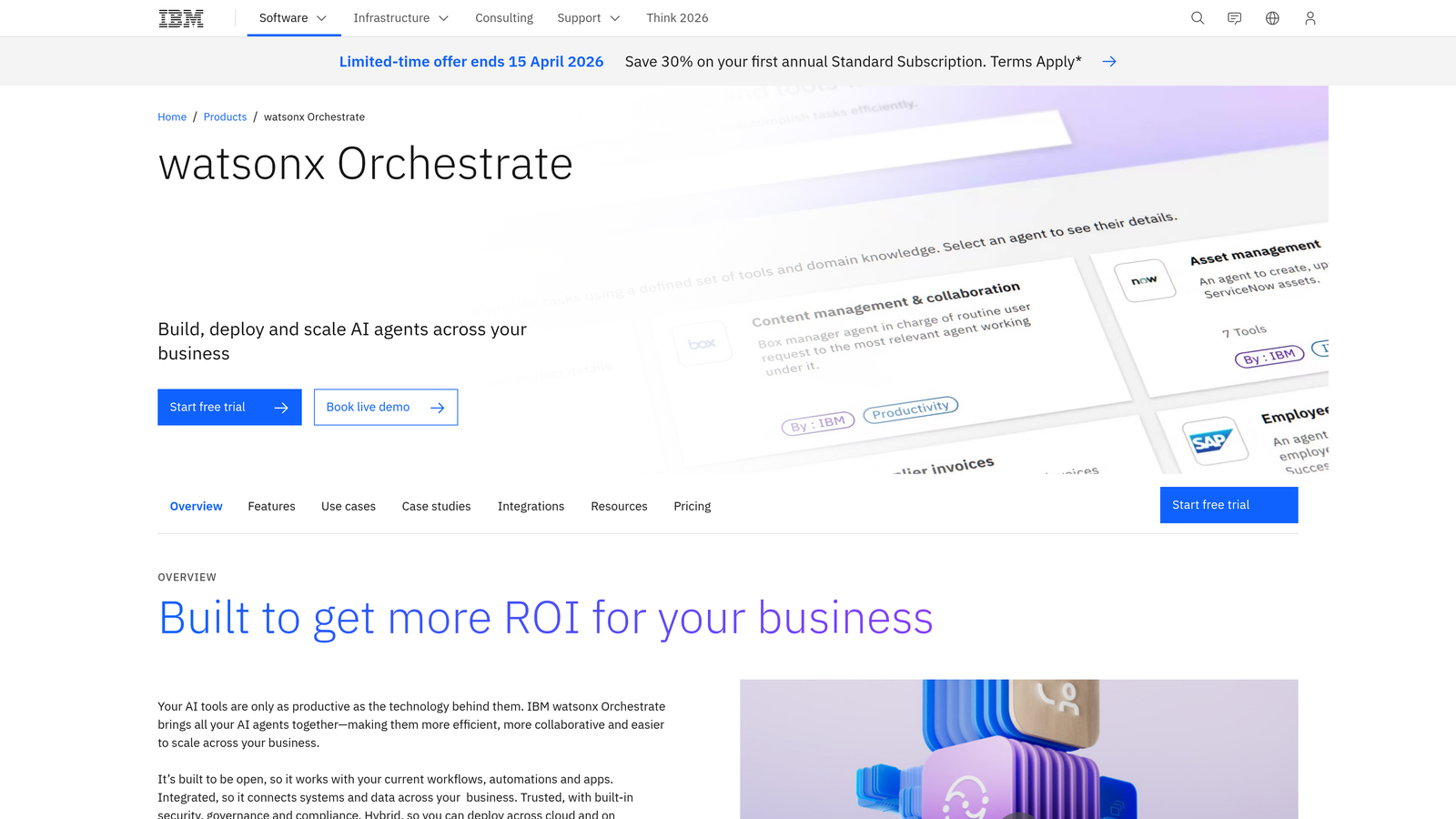
IBM watsonx Assistant is an enterprise-grade conversational AI platform with sophisticated NLU capabilities and comprehensive security features designed for regulated industries.
Where This Tool Shines
IBM brings decades of enterprise AI experience to watsonx Assistant, and it shows in the platform's maturity. The natural language understanding consistently ranks among the most accurate in the industry, handling complex queries with nuanced intent classification. This matters when you're dealing with high-stakes customer interactions where misunderstanding can have serious consequences.
For organizations in healthcare, financial services, or government sectors, watsonx Assistant's compliance certifications and governance capabilities are essential. The platform offers detailed audit trails, role-based access controls, and data residency options that meet stringent regulatory requirements.
Key Features
Advanced Intent Classification: Highly accurate intent recognition that understands user goals even when phrased in unexpected ways.
Retrieval-Augmented Generation: Combines large language models with your specific knowledge base to provide accurate, grounded responses that avoid hallucinations.
Enterprise Security: Comprehensive compliance certifications including HIPAA, SOC 2, GDPR, and industry-specific standards with detailed audit capabilities.
Visual Conversation Builder: Intuitive design interface with built-in analytics that show exactly where conversations succeed or fail.
Multi-Channel Deployment: Deploy across web, mobile, voice channels, and integrate with contact center platforms for unified customer experiences.
Best For
watsonx Assistant is ideal for large enterprises with complex compliance requirements, particularly in regulated industries. If your organization needs detailed governance controls, extensive security certifications, or handles sensitive customer data, this platform delivers the enterprise-grade capabilities you need.
Pricing
The Lite plan is free with basic features. The Plus plan starts at $140 per month and scales based on monthly active users and conversation volume.
3. Google Dialogflow CX
Best for: Building complex, stateful conversation flows with sophisticated branching logic and native Google Cloud integration.
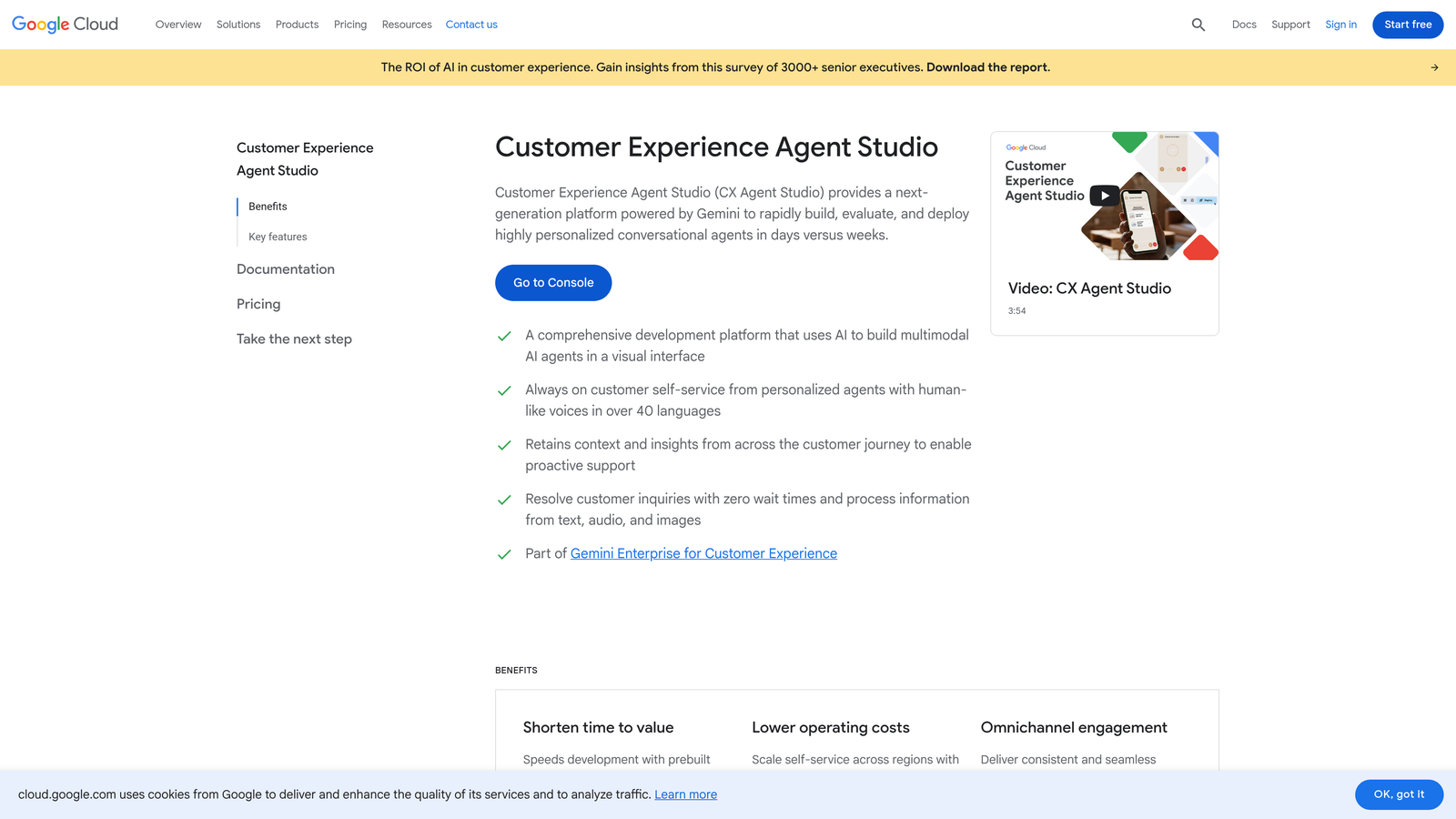
Google Dialogflow CX is a conversational AI platform designed for creating intricate conversation experiences using visual flow design tools and Google's advanced language models.
Where This Tool Shines
Dialogflow CX excels when you need to build conversations that maintain state across multiple turns and handle complex branching scenarios. The visual flow builder uses a state machine architecture that makes it intuitive to design conversations with multiple paths, conditions, and context-dependent responses.
The platform leverages Google's natural language processing technology, giving you access to some of the most sophisticated language understanding capabilities available. If you're already using Google Cloud services, Dialogflow CX integrates seamlessly with your existing infrastructure, reducing deployment friction.
Key Features
Visual Flow Builder: Design complex conversation paths using an intuitive drag-and-drop interface with state machine logic that handles sophisticated branching.
Advanced NLU: Powered by Google's language models, delivering high-accuracy intent detection and entity extraction across multiple languages.
Testing and Version Control: Built-in testing tools with conversation simulation and version management for safe iteration and deployment.
Omnichannel Deployment: One-click integrations with popular messaging platforms, voice channels, and custom applications via API.
Sentiment Analysis: Real-time sentiment detection that allows your bot to adjust responses based on customer emotion and frustration levels.
Best For
Dialogflow CX works best for organizations with complex conversation requirements that go beyond simple question-and-answer interactions. It's particularly valuable if you're building within the Google Cloud ecosystem or need sophisticated state management across long, multi-turn conversations.
Pricing
Dialogflow CX uses pay-per-request pricing, approximately $20 per 1,000 text requests. Voice requests are priced separately based on usage duration.
4. Amazon Lex
Best for: AWS-native applications requiring deep integration with AWS services for voice and text-based conversational experiences.
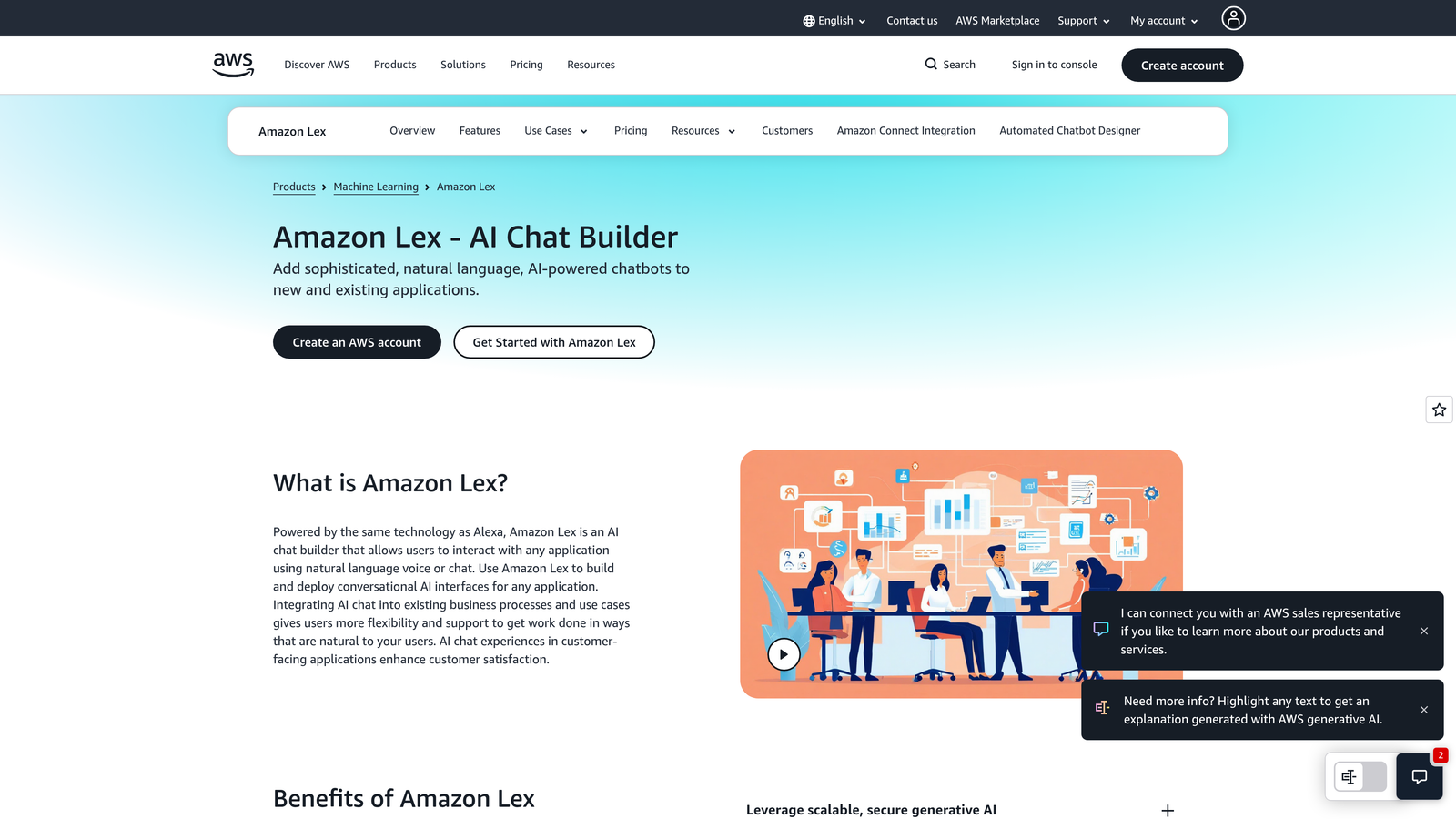
Amazon Lex is AWS's conversational AI service using the same technology that powers Alexa, offering tight integration with the broader AWS ecosystem.
Where This Tool Shines
Amazon Lex delivers exceptional value if you're already building on AWS infrastructure. The seamless integration with AWS Lambda means you can execute complex business logic and access other AWS services without leaving the platform. This architectural advantage reduces latency and simplifies deployment for AWS-centric organizations.
The platform's automatic speech recognition capabilities are particularly strong, benefiting from Amazon's extensive investment in Alexa. If you're building voice-first experiences or integrating conversational AI into contact center operations via Amazon Connect, Lex provides a natural foundation.
Key Features
Automatic Speech Recognition: High-quality speech-to-text conversion with natural language understanding that handles conversational voice interactions effectively.
AWS Lambda Integration: Execute fulfillment logic directly through Lambda functions, accessing your entire AWS infrastructure for complex workflows.
Multi-Turn Conversations: Maintains context across conversation turns, managing slots and session attributes to handle complex dialogues.
Built-In Slot Types: Pre-configured data types for common formats like dates, times, numbers, and custom entities reduce setup time.
Contact Center Integration: Native integration with Amazon Connect for building sophisticated IVR systems and agent assist capabilities.
Best For
Amazon Lex is ideal for development teams already working within the AWS ecosystem who want to minimize integration complexity. It's particularly valuable for building voice-enabled applications or modernizing contact center operations with conversational AI.
Pricing
Pay-per-use pricing with no upfront costs. Speech requests cost $0.004 each, while text requests cost $0.00075 each, making it cost-effective for variable workloads.
5. Microsoft Copilot Studio
Best for: Organizations deeply embedded in the Microsoft ecosystem wanting low-code bot building with GPT capabilities.
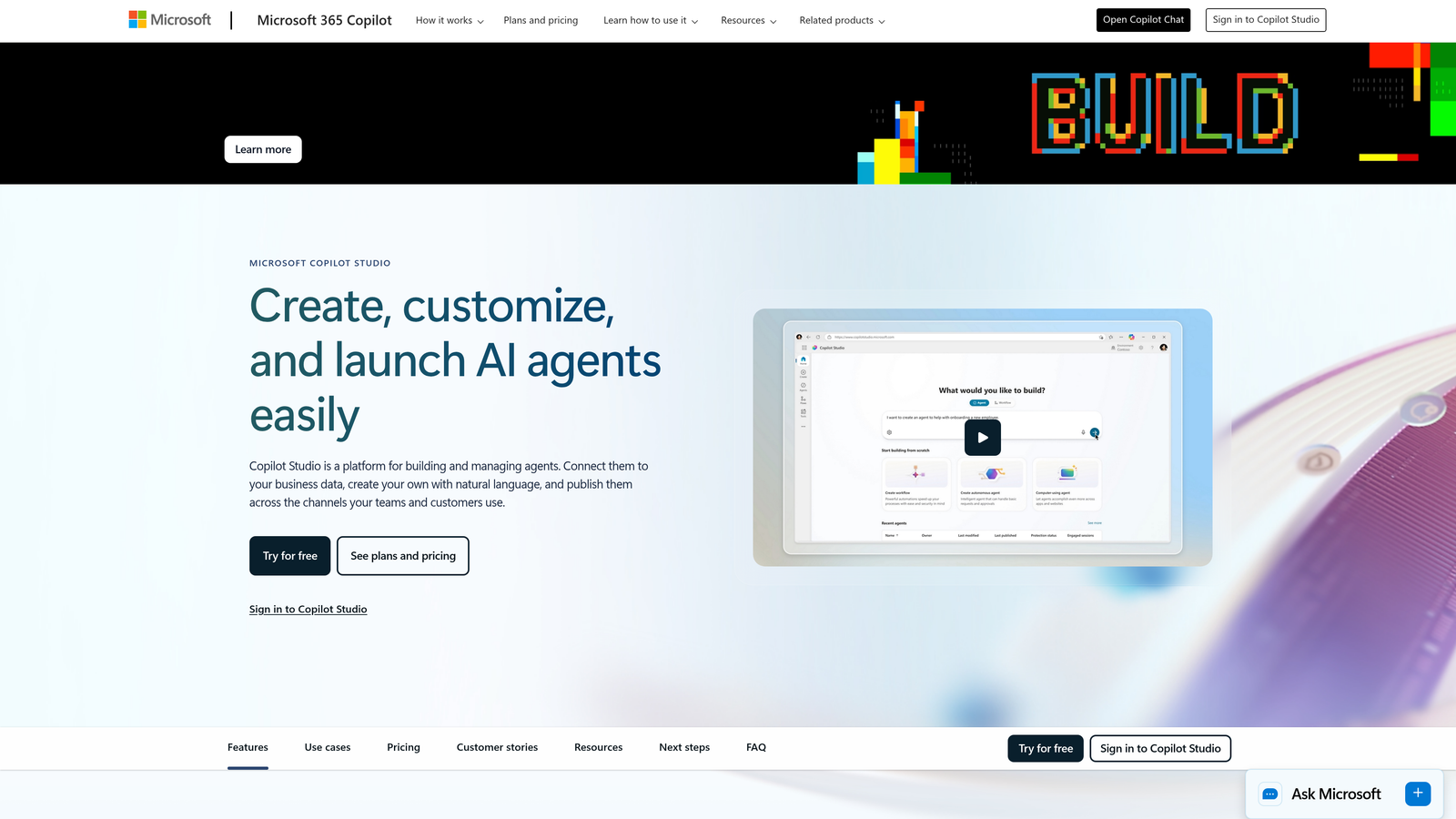
Microsoft Copilot Studio is a low-code platform for building AI-powered conversational agents with native Microsoft 365 and Dynamics 365 integration.
Where This Tool Shines
Copilot Studio removes technical barriers to building conversational AI by offering a truly no-code interface that business users can navigate without developer support. The platform leverages generative AI to create responses dynamically, reducing the manual effort required to anticipate every possible conversation path.
For organizations using Microsoft Teams, Dynamics 365, or Power Platform, Copilot Studio integrates so seamlessly it feels like a native feature rather than a third-party addition. Your bots can access data from SharePoint, pull customer information from Dynamics, and trigger Power Automate flows without complex API configurations.
Key Features
No-Code Bot Builder: Visual design interface that allows non-technical users to build sophisticated conversational experiences without writing code.
Generative AI Responses: Leverages GPT capabilities to generate contextually appropriate responses based on your knowledge sources and conversation history.
Native Microsoft Integration: Deep connections with Teams, Dynamics 365, SharePoint, and Power Platform create unified experiences across your Microsoft environment.
Topic-Based Design: Organize conversations around topics that users want to accomplish, making bot logic intuitive to design and maintain.
Plugin Extensibility: Extend bot capabilities with custom plugins that connect to external systems or execute specialized actions.
Best For
Copilot Studio works exceptionally well for Microsoft-centric organizations that want to empower business users to build conversational experiences without heavy IT involvement. It's particularly valuable for internal employee-facing bots that need to access Microsoft 365 data and services.
Pricing
Starts at $200 per month per tenant for standalone use. Some capabilities are included in Microsoft 365 subscriptions, with additional capacity available through add-on licensing.
6. Kore.ai
Best for: Enterprises needing industry-specific pre-built virtual assistants with advanced analytics and optimization capabilities.
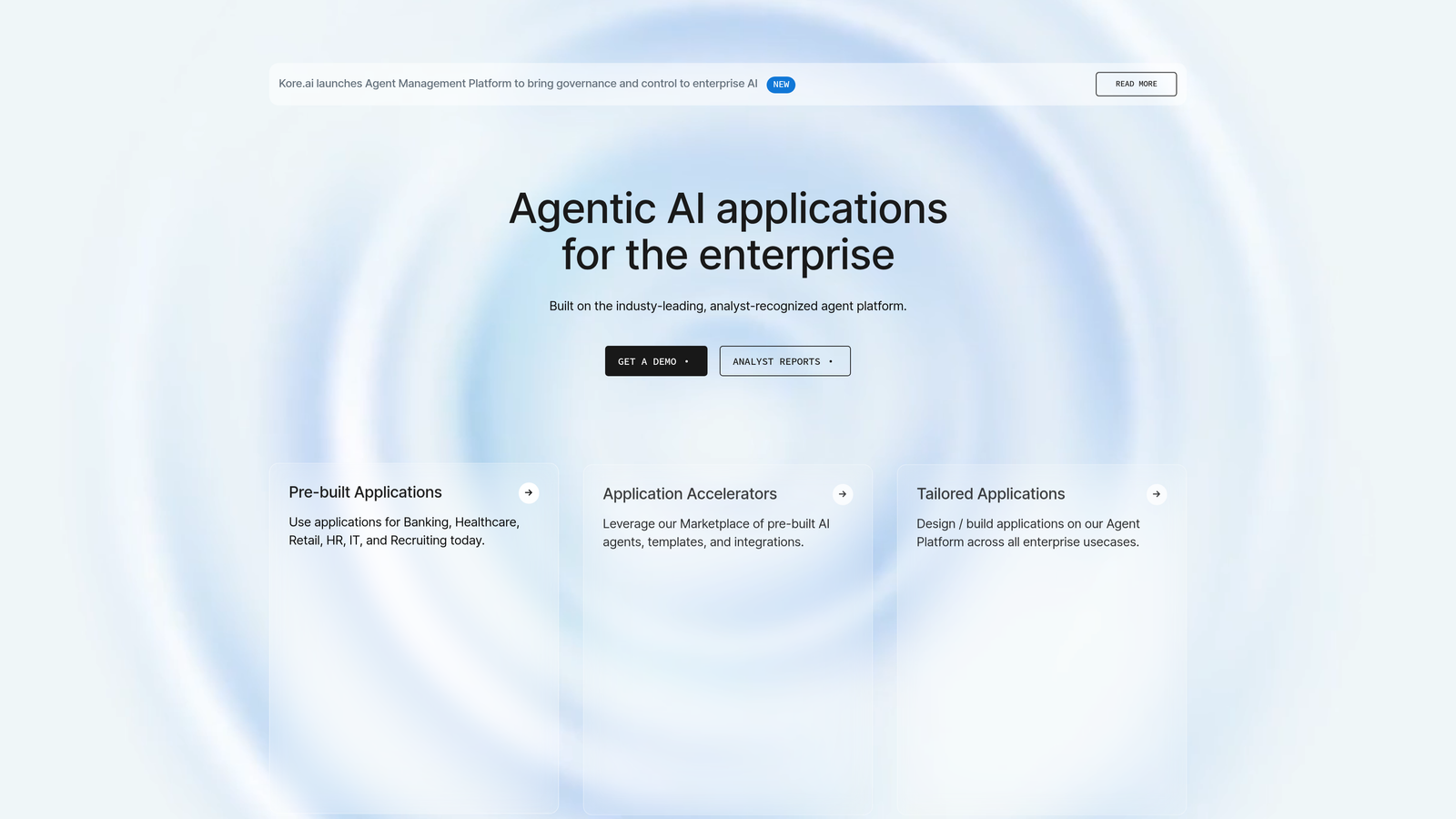
Kore.ai is an enterprise conversational AI platform offering over 100 pre-built virtual assistants across industries with sophisticated analytics and multi-engine NLU.
Where This Tool Shines
Kore.ai differentiates itself through industry specialization. Rather than starting from scratch, you can deploy pre-built assistants designed specifically for banking, healthcare, retail, or other verticals. These assistants come with industry-specific intents, entities, and conversation flows that reflect real-world use cases, dramatically reducing time-to-value.
The platform's multi-engine NLU approach combines multiple natural language processing models to achieve higher accuracy than single-engine alternatives. This ensemble method reduces the risk of misunderstanding customer intent, particularly important for complex enterprise use cases where errors are costly.
Key Features
Industry-Specific Pre-Built Bots: Over 100 ready-to-deploy virtual assistants tailored for specific industries with relevant intents and workflows already configured.
Multi-Engine NLU: Combines multiple natural language understanding engines to achieve higher accuracy through ensemble methods.
Visual Conversation Designer: Intuitive design tools that allow both technical and business users to build and modify conversation flows collaboratively.
Conversation Intelligence: Advanced analytics that provide insights into conversation patterns, failure points, and optimization opportunities.
Enterprise Deployment Options: Flexible deployment including cloud, on-premise, and hybrid configurations with comprehensive security and governance controls.
Best For
Kore.ai is ideal for large enterprises in specialized industries who want to accelerate deployment by starting with pre-built assistants rather than building from scratch. The platform works particularly well when you need sophisticated analytics to continuously optimize conversational experiences.
Pricing
Custom enterprise pricing based on deployment requirements, user volume, and selected features. Contact Kore.ai for a tailored quote.
7. Yellow.ai
Best for: Global organizations requiring multilingual conversational AI with sophisticated omnichannel orchestration across 135+ languages.
Yellow.ai is a conversational AI platform specializing in multilingual support with cultural context awareness and dynamic AI agent capabilities.
Where This Tool Shines
Yellow.ai's language capabilities are unmatched in breadth and depth. Supporting over 135 languages isn't just about translation—the platform understands cultural nuances, regional dialects, and context-specific meanings that vary across geographies. This matters enormously when you're serving global customers who expect natural interactions in their native language.
The platform's omnichannel orchestration goes beyond simply deploying bots across multiple channels. Yellow.ai coordinates campaigns across channels, maintains context when customers switch from WhatsApp to web chat, and optimizes engagement timing based on customer behavior patterns.
Key Features
135+ Language Support: Extensive language coverage with cultural context awareness that handles regional variations and dialects naturally.
Dynamic AI Agents: Generative AI capabilities that create contextually appropriate responses while maintaining brand voice and accuracy guardrails.
Voice AI: Natural-sounding voice synthesis and recognition across multiple languages for phone-based customer interactions.
Omnichannel Campaign Orchestration: Coordinate customer engagement across channels with unified context and optimized timing.
Real-Time Agent Assist: Provides human agents with suggested responses and relevant information during live conversations for seamless AI-human collaboration.
Best For
Yellow.ai excels for multinational organizations serving diverse customer bases across different languages and regions. If you're expanding globally and need conversational AI that truly understands local contexts rather than just translating English responses, this platform delivers.
Pricing
Custom pricing based on usage volume, number of channels, and language requirements. Contact Yellow.ai for a quote tailored to your deployment needs.
8. Cognigy
Best for: Contact center transformation with advanced voice AI and both full automation and agent assist capabilities.
Cognigy is an enterprise conversational AI platform focused on contact center modernization with low-latency voice AI and comprehensive agent assistance tools.
Where This Tool Shines
Cognigy specializes in contact center use cases where voice interactions dominate. The platform's low-latency voice AI delivers natural phone conversations without the awkward pauses that plague many voice bots. This technical advantage makes automated phone interactions feel genuinely conversational rather than robotic.
The platform recognizes that complete automation isn't always the goal. Cognigy's Agent Copilot provides real-time assistance to human agents, suggesting responses, surfacing relevant knowledge, and automating post-call work. This hybrid approach often delivers better outcomes than pure automation, especially for complex or sensitive customer issues.
Key Features
Low-Latency Voice AI: Optimized voice processing that minimizes response delays for natural-feeling phone conversations.
Agent Copilot: Real-time assistance for human agents with suggested responses, knowledge retrieval, and automated documentation.
Visual Flow Editor: Intuitive design interface with reusable components that accelerate bot building and simplify maintenance.
Knowledge AI: Retrieval-augmented generation that grounds responses in your knowledge base to prevent hallucinations and maintain accuracy.
Contact Center Integrations: Native connections with major contact center platforms for unified deployment across customer service operations.
Best For
Cognigy is ideal for organizations modernizing contact center operations who need both automation and agent assistance capabilities. It's particularly valuable if voice interactions represent a significant portion of your customer service volume.
Pricing
Enterprise pricing model with custom quotes based on conversation volume, channels, and deployment requirements. Contact Cognigy for detailed pricing.
9. Rasa
Best for: Organizations requiring maximum flexibility, customization, and control with on-premise deployment or highly tailored ML pipelines.
Rasa is an open-source conversational AI framework offering complete control over machine learning models and training data with enterprise support options.
Where This Tool Shines
Rasa takes a fundamentally different approach than SaaS conversational AI platforms. As an open-source framework, you have complete access to the underlying code, ML models, and training pipelines. This matters enormously when you need to customize behavior that proprietary platforms simply don't expose.
For organizations with data sovereignty requirements or those operating in highly regulated environments, Rasa's on-premise deployment option is essential. You control where data lives, how models are trained, and exactly what happens during every conversation. This level of control comes with complexity, but for the right use cases, it's invaluable.
Key Features
Open-Source Core: Full access to source code with enterprise support options, allowing customization at every level of the conversational AI stack.
ML Model Control: Complete control over machine learning models, training data, and NLU pipelines for highly specialized use cases.
On-Premise Deployment: Deploy entirely within your infrastructure for data sovereignty, regulatory compliance, or security requirements.
Customizable NLU Pipeline: Build custom natural language understanding pipelines by combining and configuring individual components.
Active Developer Community: Extensive documentation, community support, and contributed components accelerate development despite the platform's complexity.
Best For
Rasa is ideal for organizations with strong technical teams who need maximum customization and control. It works particularly well when you have unique requirements that SaaS platforms can't accommodate or when data residency mandates on-premise deployment.
Pricing
The open-source version is free to use. Rasa Pro offers enterprise features, support, and tooling with custom pricing based on deployment scale and support requirements.
10. Intercom Fin
Best for: Intercom users wanting AI-first customer service that learns from existing help content with seamless human escalation.
Intercom Fin is an AI customer service agent built natively into Intercom, trained on your help center to resolve customer issues autonomously.
Where This Tool Shines
Fin's native integration with Intercom creates a seamless experience that feels like a natural extension of the platform rather than a bolted-on feature. The AI agent learns directly from your existing help center articles and past customer conversations, requiring minimal setup to start resolving issues.
What makes Fin particularly effective is how it handles uncertainty. Rather than providing potentially incorrect answers, the AI asks clarifying questions to understand customer needs better. When it reaches the limits of what it can resolve autonomously, handoff to human agents includes complete conversation context, eliminating the frustration of customers repeating themselves.
Key Features
Help Center Learning: Automatically trains on your existing help center content and learns from past conversations to improve accuracy over time.
Natural Conversation Flow: Asks clarifying questions when needed rather than guessing at customer intent, improving resolution accuracy.
Seamless Human Handoff: Transfers conversations to human agents with complete context when issues require human judgment or empathy.
Custom Answers: Configure brand-specific responses and guardrails to ensure AI interactions align with your company voice and policies.
Resolution Analytics: Detailed insights into what Fin resolves autonomously, where it struggles, and opportunities to improve knowledge base content.
Best For
Fin is ideal for existing Intercom customers who want to add AI-powered resolution capabilities without migrating to a new platform. It works particularly well when you have a comprehensive help center that the AI can learn from.
Pricing
Pricing is $0.99 per resolution, creating a direct connection between cost and value delivered. Some Intercom plans include Fin capabilities as part of the subscription.
Making the Right Choice
Selecting the right conversational AI platform depends on your specific priorities and existing infrastructure. For businesses wanting an all-in-one solution that handles both customer support and sales automation with minimal setup, Halo AI delivers exceptional value with its unified approach and autonomous agent capabilities.
Enterprise organizations with complex compliance requirements will find IBM watsonx Assistant's governance features and security certifications essential for regulated industries. If you're deeply embedded in a specific cloud ecosystem, staying native reduces friction significantly. Dialogflow CX makes sense for Google Cloud users, Amazon Lex for AWS environments, and Copilot Studio for Microsoft-centric organizations.
Companies prioritizing multilingual global support should explore Yellow.ai's extensive language capabilities that go beyond simple translation to understand cultural context. Organizations modernizing contact centers will appreciate Cognigy's focus on voice AI and agent assistance. Those needing maximum customization and data control will find Rasa's open-source flexibility invaluable, despite the additional complexity.
Start by identifying your primary use case. Are you deflecting support tickets, qualifying leads, or building custom voice experiences? Then evaluate based on your existing tech stack, deployment preferences, and scale requirements. Consider whether you need full automation or hybrid approaches with human escalation paths.
Most platforms offer free trials or pilot programs. Take advantage of them to test real conversations with actual customers before committing. Pay attention to how naturally the AI handles unexpected inputs, how easily you can modify conversation flows, and how well the platform integrates with your existing systems.
The conversational AI landscape continues evolving rapidly, with generative AI capabilities transforming what's possible. The platforms that succeed will be those that balance automation with appropriate human escalation, maintain accuracy while feeling natural, and integrate seamlessly with the tools your team already uses. Learn more about our services and how conversational AI can transform your customer engagement strategy.