9 Best Conversational AI Support Tools in 2026
This guide evaluates the 9 best conversational AI support tools in 2026, comparing platforms on automation depth, integrations, and scalability to help B2B teams reduce ticket volume and deliver faster, smarter customer support without expanding headcount.
 Matt PattoliFounder14 min read
Conversational AI support tools have moved well beyond simple rule-based chatbots. Today's platforms resolve tickets autonomously, guide users through complex workflows, detect sentiment in real time, and hand off seamlessly to human agents when needed — all without growing your headcount.
For B2B teams managing high support volumes across Zendesk, Freshdesk, Intercom, or custom helpdesks, choosing the right tool is a make-or-break infrastructure decision. The wrong choice means expensive implementation, shallow automation, and frustrated customers. The right one compounds value over time as the AI learns from every interaction.
This list covers nine of the strongest conversational AI support tools available in 2026, evaluated on depth of automation, integration ecosystem, contextual awareness, analytics quality, and scalability. Whether you're a lean startup looking to deflect tickets or an enterprise team standardizing support at scale, there's a fit here for you.
1. Halo AI
Best for: B2B SaaS teams wanting AI-first support with business intelligence built in
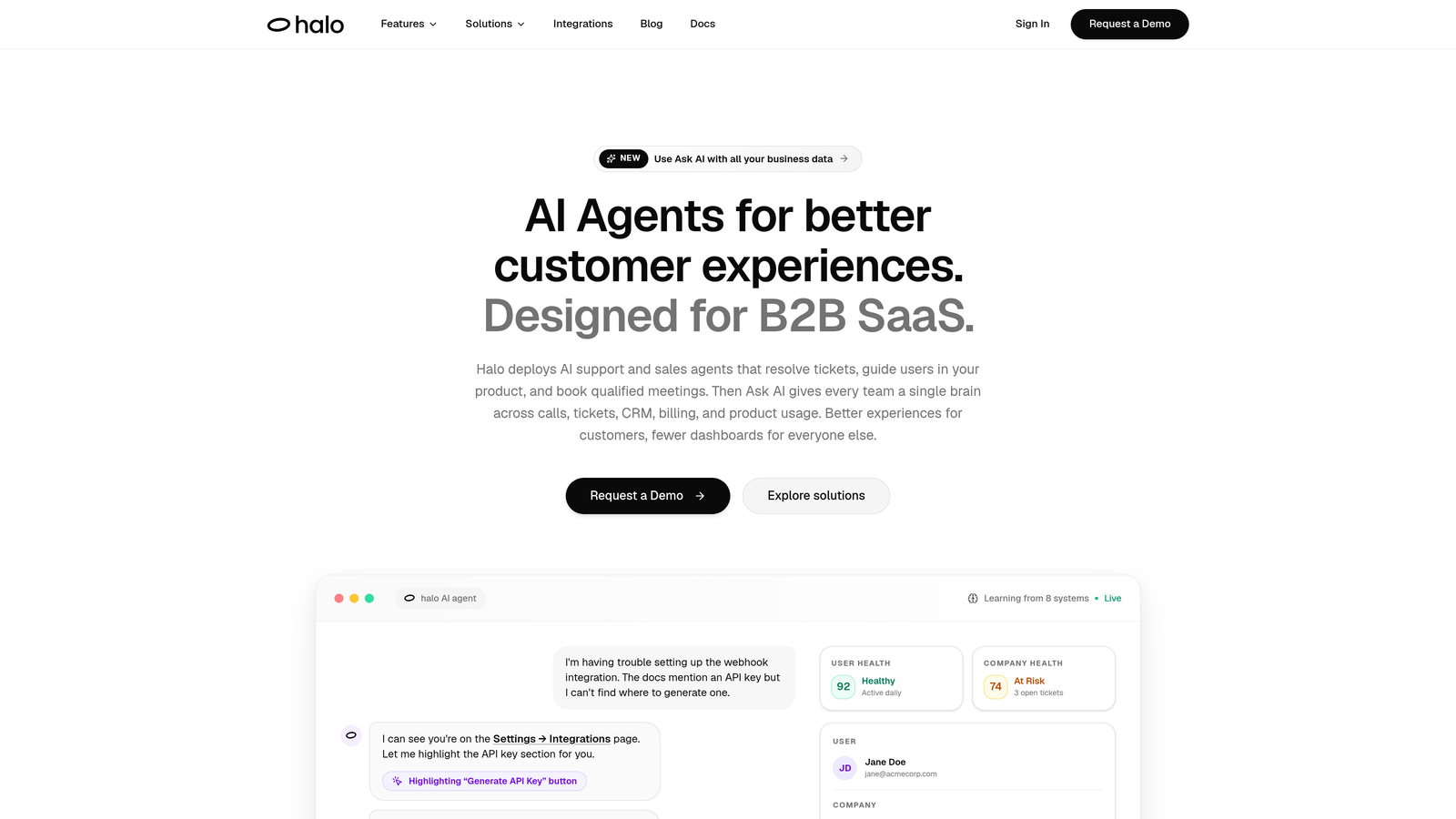
Halo AI is an AI-first customer support platform that deploys autonomous agents for ticket resolution, page-aware visual guidance, and business intelligence — purpose-built for B2B SaaS teams.
Where This Tool Shines
Most support tools bolt AI onto an existing helpdesk. Halo was designed the other way around: AI is the foundation, not a feature. That architectural difference shows up in how the platform handles context. The page-aware chat widget doesn't just know what a user typed — it knows what page they're on, what they're looking at, and what they're trying to do. That kind of contextual awareness enables guidance that feels genuinely helpful rather than scripted.
The other standout is what Halo does with support data beyond deflection metrics. The smart inbox surfaces customer health signals, revenue intelligence, and anomaly detection, turning your support queue into a source of business insight. For product teams, the auto bug ticket creation feature routes issues directly into engineering workflows — closing a loop that usually requires manual triage.
Key Features
Page-Aware Chat Widget: Sees what the user sees and delivers contextual visual guidance based on their exact location in your product.
Autonomous AI Agents: Resolve tickets end-to-end and continuously learn from every interaction, improving accuracy over time without manual retraining.
Smart Inbox with Business Intelligence: Surfaces customer health signals, revenue intelligence, and anomaly detection beyond standard ticket metrics.
Auto Bug Ticket Creation: Automatically generates and routes bug reports to engineering workflows like Linear, reducing the gap between support and product.
Live Agent Handoff: Escalates to human agents with full conversation context preserved, so customers never have to repeat themselves.
Broad Integration Stack: Connects with Linear, Slack, HubSpot, Intercom, Stripe, Zoom, PandaDoc, and Fathom — not just your helpdesk.
Best For
B2B SaaS companies that want support infrastructure that learns, adapts, and feeds intelligence back into the business. Particularly strong for product-led growth teams where support, product, and revenue signals need to flow together. Less suited for teams looking for a simple bolt-on to an existing helpdesk.
Pricing
Contact for pricing — designed for B2B SaaS teams. Visit haloagents.ai for details and to request a demo.
2. Intercom Fin
Best for: Teams already in the Intercom ecosystem wanting native AI resolution
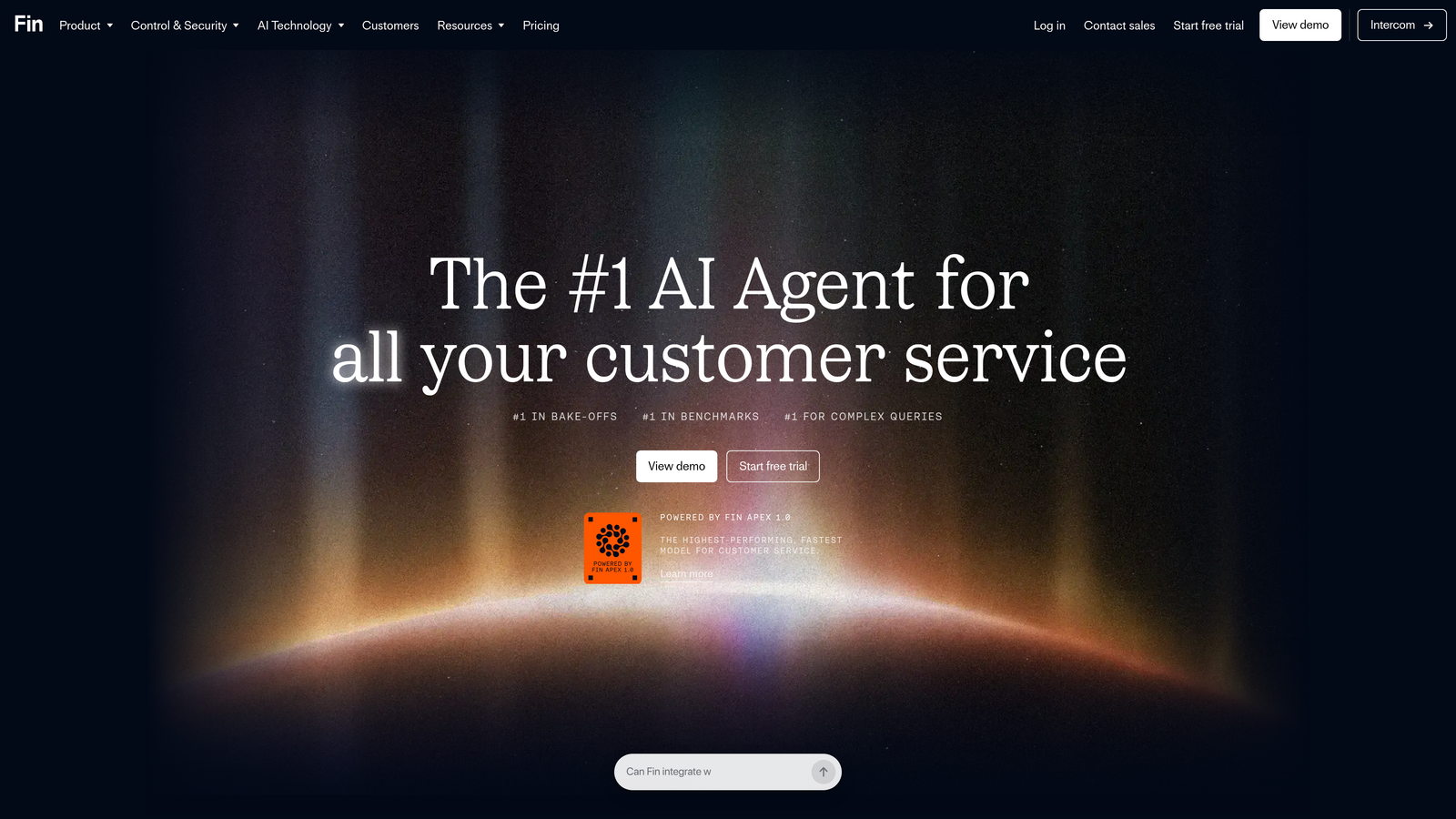
Intercom Fin is Intercom's native LLM-powered AI resolution agent that answers customer questions directly within the Intercom messenger using your existing knowledge base.
Where This Tool Shines
Fin's biggest advantage is how deeply it lives inside the Intercom platform. If your team already runs support through Intercom, there's no migration, no parallel setup, and no context-switching. Fin reads your existing help center content and resolves questions with source citations, which adds a layer of transparency that builds customer trust.
The per-resolution pricing model is worth understanding before you commit. For lower-volume teams, it's an attractive way to pay only for what gets resolved. For high-volume operations, the math shifts — so it pays to model your expected resolution volume against the per-resolution rate before scaling up.
Key Features
LLM-Powered Resolution: Answers questions using your knowledge base with source citations for transparency and accuracy.
Native Intercom Integration: Fully embedded in Intercom workflows, inbox, and reporting with no separate setup required.
Customizable Tone and Persona: Adjustable to match your brand voice and communication style.
Seamless Human Escalation: Hands off to human agents within the same messenger thread, preserving conversation continuity.
Per-Resolution Pricing: You pay for resolutions delivered, not seats or flat monthly fees.
Best For
Teams already invested in the Intercom ecosystem who want to add AI resolution without changing platforms. Less compelling for teams not already using Intercom, where the platform cost adds up before Fin's value becomes apparent.
Pricing
Approximately $0.99 per resolution; requires an active Intercom subscription. Pricing can scale significantly at high resolution volumes.
3. Zendesk AI
Best for: Large enterprise teams with complex routing logic built in Zendesk
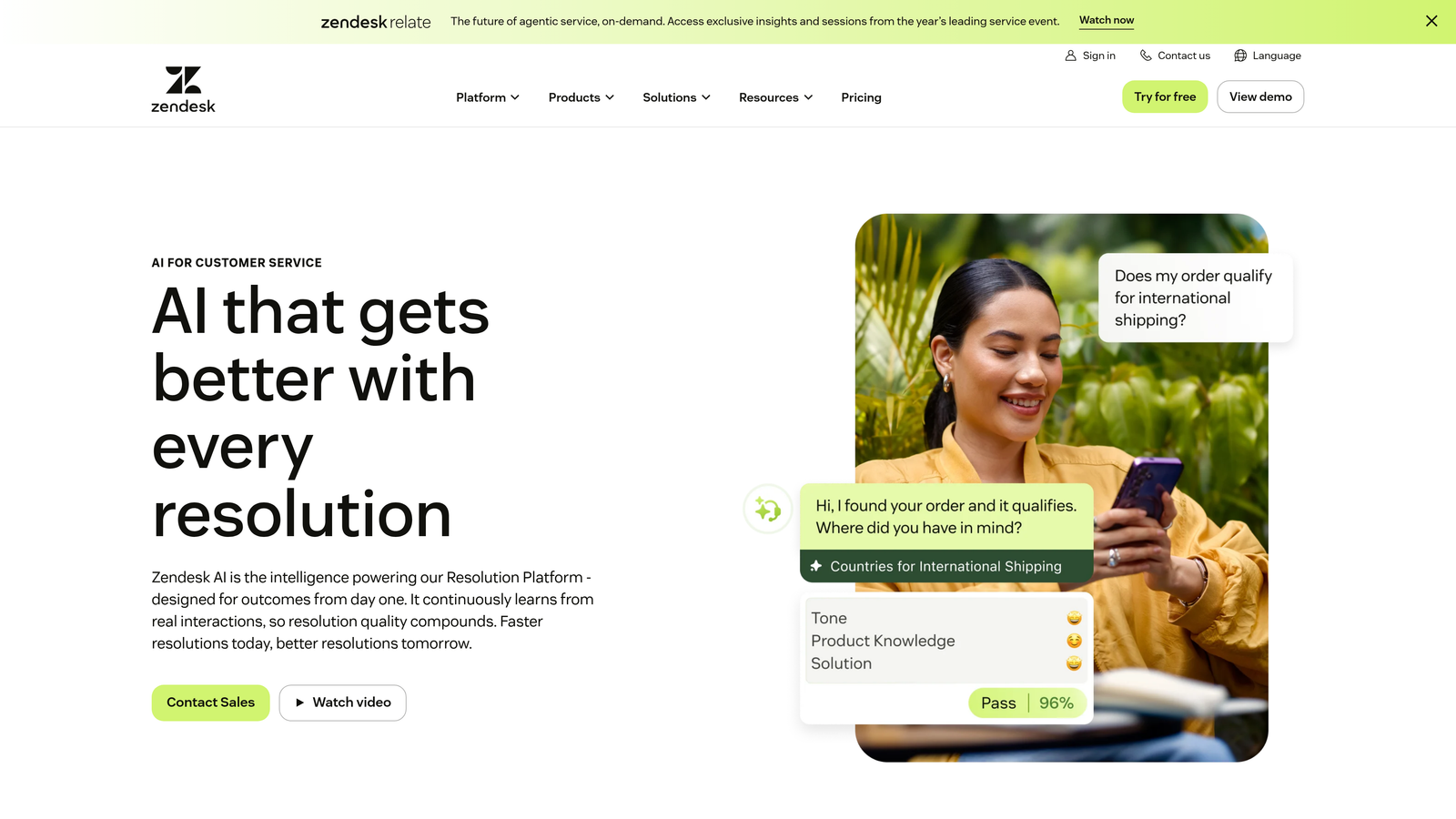
Zendesk AI is Zendesk's built-in AI layer that adds autonomous resolution, intelligent triage, agent copilot assistance, and omnichannel conversation management across the Zendesk Suite.
Where This Tool Shines
Zendesk AI is built for scale. Intent detection and intelligent triage work across large ticket volumes, automatically categorizing and routing conversations before a human ever touches them. For enterprise teams with years of Zendesk configuration already in place, this is the lowest-friction path to AI augmentation.
The agent copilot feature is particularly useful for teams with a mix of experienced and newer agents. It surfaces suggested replies and next-step guidance in real time, which helps maintain quality consistency across the team without requiring constant manual QA.
Key Features
Intent Detection and Triage: Automatically classifies and routes tickets at enterprise scale based on intent and context.
AI Copilot for Agents: Provides suggested replies, next steps, and knowledge retrieval to assist human agents in real time.
Omnichannel AI: Covers email, chat, voice, and social channels within a unified AI layer.
Full Zendesk Suite Integration: Works natively with Guide, Explore, Talk, and Sunshine Conversations.
CSAT Prediction and Advanced Analytics: Forecasts customer satisfaction scores and surfaces performance trends proactively.
Best For
Enterprise support teams with existing Zendesk infrastructure who want to layer AI onto their current setup without migrating platforms. The value compounds for teams with complex routing workflows already configured in Zendesk.
Pricing
AI features are available as add-ons to Zendesk Suite plans. Suite starts at approximately $55 per agent per month; AI add-on pricing varies by tier.
4. Freshdesk Freddy AI
Best for: Freshworks customers wanting AI across self-service, agent assist, and analytics
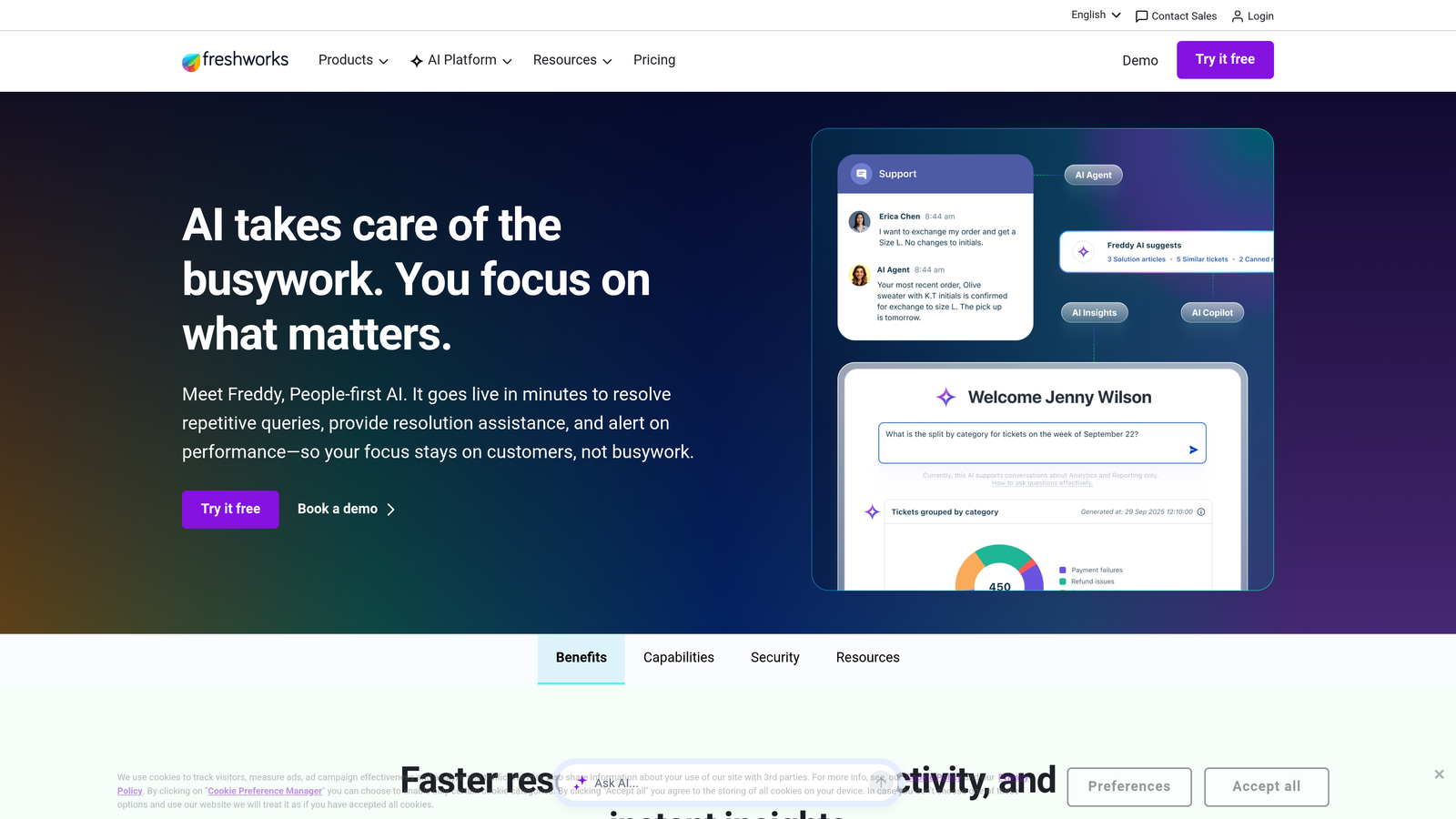
Freshdesk Freddy AI is Freshworks' three-layer AI offering covering customer-facing automation, agent assistance, and analytics intelligence — all within the Freshdesk ecosystem.
Where This Tool Shines
Freddy AI's strength is its layered approach. Rather than a single AI feature, it addresses three distinct parts of the support workflow: customer-facing deflection (Freddy Self Service), real-time agent assistance (Freddy Copilot), and performance intelligence (Freddy Insights). Teams that want AI embedded at every stage of the support process — not just the customer-facing layer — will find this architecture appealing.
The no-code bot builder lowers the barrier for non-technical teams to build and iterate on automation flows. For smaller support teams without dedicated ops resources, this is a meaningful advantage over platforms that require developer involvement for every workflow change.
Key Features
Freddy Self Service: Customer-facing AI bot for deflection and autonomous resolution of common queries.
Freddy Copilot: Real-time suggestions, conversation summarization, and reply drafting for human agents.
Freddy Insights: AI-generated analytics with performance recommendations and trend identification.
No-Code Bot Builder: Visual flow builder accessible to non-technical team members.
Native Freshworks Integration: Works across Freshdesk, Freshchat, and Freshsales without additional configuration.
Best For
Teams already using Freshdesk or other Freshworks products who want to extend AI capabilities without adding a separate platform. The bundled pricing makes it cost-effective for existing Freshworks customers in particular.
Pricing
Freddy AI features are included in select Freshdesk plans. Growth plan starts at approximately $15 per agent per month; higher tiers unlock more advanced AI capabilities.
5. Drift (Salesloft)
Best for: Account-based B2B companies blending sales and support conversations
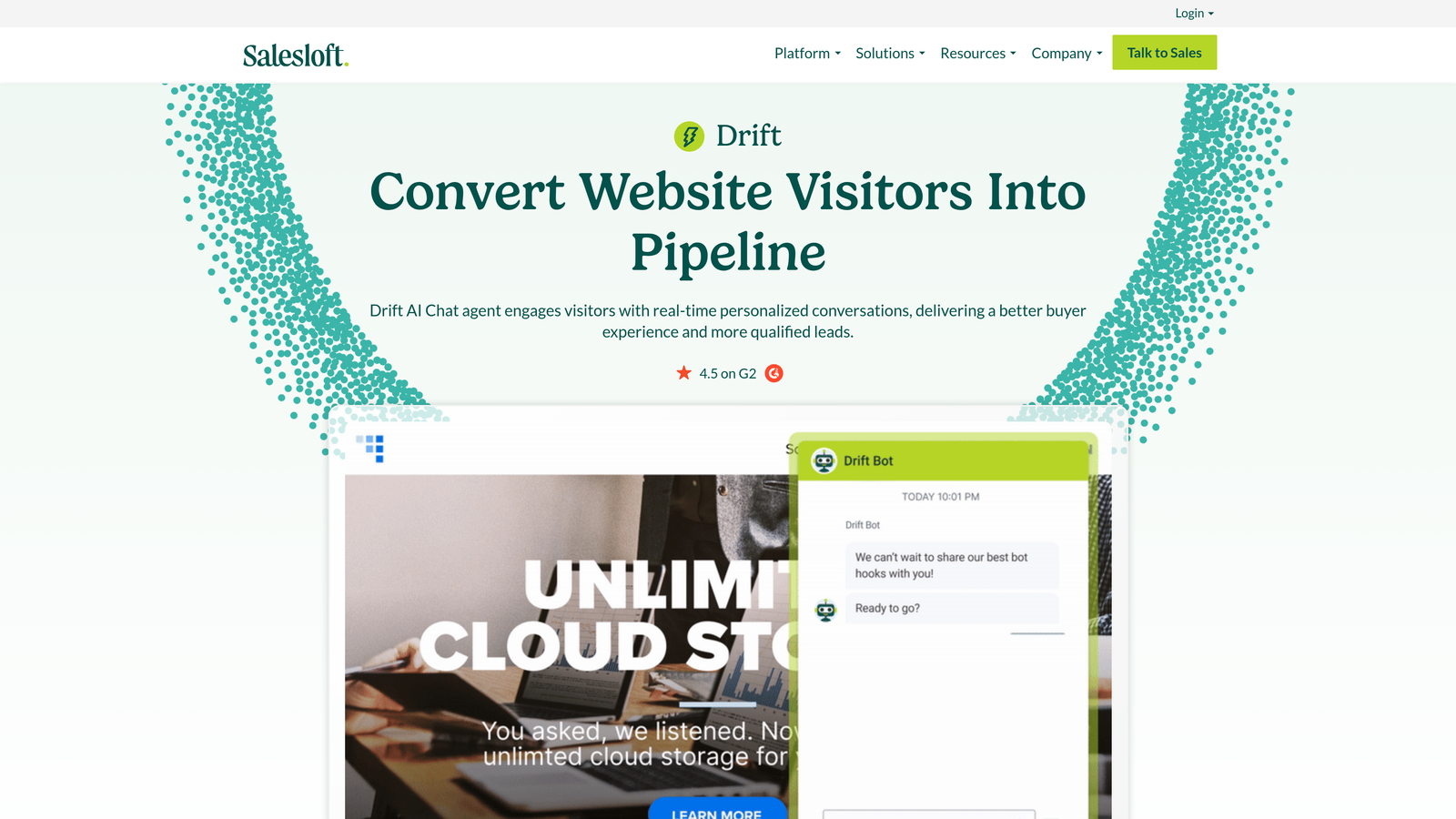
Drift, now part of Salesloft, is a conversational AI platform that routes interactions based on visitor intent — distinguishing between support needs and sales opportunities and directing each to the right flow.
Where This Tool Shines
Drift occupies a unique position in this list: it's the only tool here that explicitly bridges the support and revenue worlds. When a high-value account visits your pricing page or engages with a support article, Drift can recognize the signal and route the conversation accordingly — either to an AI support flow or to a sales rep with real-time notification. For account-based B2B teams, that intent routing is genuinely differentiated.
The Salesloft acquisition adds sequence and pipeline context to conversations, which means sales reps engaging through Drift can see where a prospect sits in the sales cycle. That integration depth is most valuable for teams where support and sales overlap frequently.
Key Features
AI-Powered Intent Routing: Distinguishes between support and sales intent, directing conversations to the appropriate team or AI flow.
Conversational Playbooks: Pre-built and custom AI flows for account-based engagement and common support scenarios.
Real-Time Sales Notifications: Alerts sales reps when high-value accounts engage, enabling timely human intervention.
CRM and Marketing Integrations: Connects with Salesforce, HubSpot, Marketo, and Salesloft sequences.
In-Chat Meeting Scheduling: Allows prospects and customers to book meetings directly within the conversation.
Best For
B2B companies where support and sales conversations overlap, particularly account-based teams using Salesforce or HubSpot. Less suited for teams that need deep helpdesk integration or complex multi-step technical support resolution.
Pricing
Custom pricing; contact Drift or Salesloft directly for enterprise quotes. Not publicly listed.
6. Tidio
Best for: SMBs and e-commerce teams needing affordable AI with fast setup
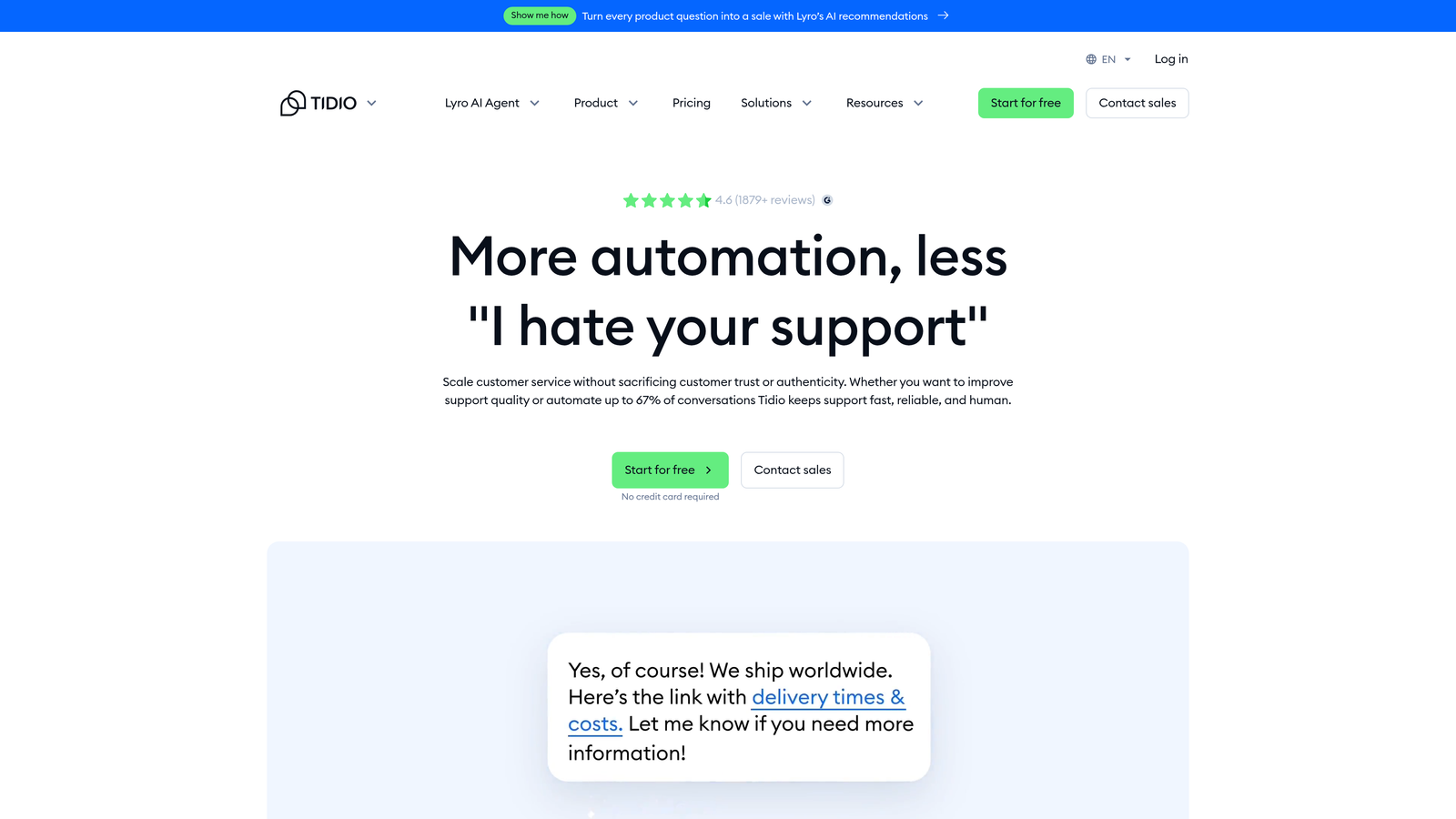
Tidio is an affordable conversational AI platform built for smaller teams, featuring Lyro — an AI agent that handles common customer questions with minimal configuration required.
Where This Tool Shines
Tidio's primary appeal is accessibility. The setup process is fast, the pricing is SMB-friendly, and the Shopify and WooCommerce integrations are deep enough to handle the most common e-commerce support queries — order status, returns, shipping questions — without custom development. For a small team that needs AI deflection running quickly, Tidio removes most of the friction.
Lyro handles the conversational AI layer, resolving common queries autonomously and falling back to live chat when needed. The mobile app for agent responses is a practical feature for small teams where the same person might be handling support alongside other responsibilities.
Key Features
Lyro AI Agent: Autonomous resolution of common queries using your existing content and FAQs.
E-Commerce Integrations: Native Shopify and WooCommerce connections for order status, returns, and product FAQs.
Visual Chatbot Builder: No-code flow builder for creating custom conversation paths without developer help.
Live Chat Fallback: Mobile app support so agents can respond on the go when AI escalates.
Multi-Channel Support: Covers website chat, email, and Messenger within a single platform.
Best For
SMBs and e-commerce businesses that need reliable AI deflection at an accessible price point. Not designed for complex B2B multi-step support flows or enterprise teams with advanced routing and analytics requirements.
Pricing
Free plan available. Lyro AI starts at approximately $29 per month. Paid plans scale with conversation volume.
7. Kustomer
Best for: High-volume consumer brands needing CRM-native conversational AI
Kustomer is a CRM-native customer service platform that embeds conversational AI within a full customer timeline, giving AI and human agents complete context on every interaction.
Where This Tool Shines
The defining feature of Kustomer is the customer timeline. Every conversation — whether handled by AI or a human agent — is informed by the full history of that customer's orders, past tickets, account status, and behavioral signals. That context depth changes what's possible in an AI conversation. Instead of asking a customer to explain their situation, the AI already knows it.
Proactive outreach triggers add another dimension: Kustomer can initiate conversations based on customer behavior signals, not just wait for inbound contacts. For consumer brands with large customer bases and predictable behavior patterns, that proactive capability can reduce inbound volume before it builds.
Key Features
Full Customer Timeline: Orders, tickets, and interactions baked into every AI conversation for deep contextual awareness.
AI Intent Detection: Automated resolution flows triggered by detected customer intent across channels.
Omnichannel Coverage: Supports chat, email, SMS, social, and voice within a unified platform.
E-Commerce Integrations: Deep connections with Shopify, Magento, and custom APIs for order-related support.
Proactive Outreach Triggers: Initiates conversations based on customer behavior signals to reduce inbound volume.
Best For
High-volume consumer brands and e-commerce companies where customer history and order context are central to support quality. The CRM-native architecture is most valuable for teams handling complex, multi-touch customer relationships.
Pricing
Starts at approximately $89 per agent per month on the Enterprise plan. Custom pricing available for larger teams.
8. Ada
Best for: Global enterprise brands needing no-code AI with multilingual support
Ada is an enterprise-grade no-code AI agent platform with a reasoning engine built for multi-step resolution, strong multilingual capabilities, and compliance-ready architecture for global deployments.
Where This Tool Shines
Ada positions itself as a replacement for scripted flow builders, and the reasoning engine is the mechanism behind that claim. Rather than following pre-defined decision trees, Ada's AI can handle dynamic, multi-step conversations that adapt based on context — without requiring a developer to map every possible path. For complex support scenarios with many variables, that flexibility matters.
The multilingual support across 50+ languages makes Ada a practical choice for global brands that need consistent AI quality across markets. Paired with enterprise-grade security and compliance controls, it's built for organizations where data residency, access controls, and audit trails are non-negotiable requirements.
Key Features
Reasoning Engine: Handles multi-step, dynamic resolution without scripted flows or rigid decision trees.
No-Code Agent Builder: Non-technical teams can build and iterate on AI agents without developer involvement.
Multilingual Support: Covers 50+ languages for consistent AI quality across global markets.
Enterprise Security and Compliance: Data residency controls, access management, and audit capabilities for regulated industries.
Helpdesk and CRM Integrations: Connects with Zendesk, Salesforce, ServiceNow, and custom APIs.
Best For
Large global enterprises that need no-code flexibility, multilingual coverage, and compliance-ready architecture. Ada is particularly well-suited for organizations replacing legacy scripted chatbots with a more capable AI layer.
Pricing
Custom enterprise pricing. Contact Ada directly for a quote based on your scale and requirements.
9. Forethought (Agentive)
Best for: Enterprises wanting AI augmentation without migrating their helpdesk
Forethought is an AI intelligence layer that sits on top of existing helpdesks — Zendesk, Salesforce Service Cloud, ServiceNow — adding triage, routing, and autonomous resolution without requiring platform migration.
Where This Tool Shines
Forethought's core value proposition is additive rather than replacement. If your organization has years of configuration, workflow logic, and institutional knowledge built into Zendesk or Salesforce Service Cloud, ripping and replacing that platform is a significant undertaking with real risk. Forethought layers AI capabilities on top of what you already have, which dramatically reduces implementation friction and preserves existing investments.
The Agentive product handles autonomous ticket resolution end-to-end, while the assisted mode gives human agents suggested replies and knowledge retrieval in real time. The combination means you can deploy AI for full resolution on appropriate ticket types while keeping humans in the loop for complex escalations — all within your existing helpdesk environment.
Key Features
AI Triage and Intent Classification: Automatically categorizes and routes tickets within your existing helpdesk workflows.
Agentive Autonomous Resolution: Handles tickets end-to-end without human intervention for appropriate ticket types.
Assisted Mode (Agent Copilot): Surfaces suggested replies and relevant knowledge articles for human agents in real time.
Native Helpdesk Integration: Works directly within Zendesk, Salesforce Service Cloud, and ServiceNow without replacing them.
Workflow Automation: Handles routing, tagging, and prioritization automatically based on AI classification.
Best For
Enterprise teams with deep investment in existing helpdesk platforms who want to add AI capabilities without a full migration. Particularly strong for organizations on Zendesk, Salesforce Service Cloud, or ServiceNow where platform replacement is not a viable option.
Pricing
Custom pricing based on ticket volume and platform. Contact Forethought directly for details.
Which Tool Is Right for Your Team?
The right conversational AI support tool depends less on feature lists and more on where you're starting from and where you need to go. Here's a quick way to think through the decision.
SMB and e-commerce teams: Tidio offers the fastest path to AI deflection at an accessible price point, with native Shopify and WooCommerce integrations that handle the most common queries out of the box.
Existing Freshdesk users: Freddy AI is the obvious choice — it's already bundled into your plan and covers self-service, agent assist, and analytics without adding another vendor.
Intercom-native teams: Fin extends what you already have without disruption. The per-resolution pricing works well at moderate volumes.
Zendesk enterprise teams: Zendesk AI adds intelligent triage and agent copilot capabilities directly to your existing infrastructure.
Revenue and support hybrid teams: Drift's intent routing and Salesloft integration make it the strongest choice for account-based B2B teams where sales and support conversations overlap.
High-volume consumer brands: Kustomer's CRM-native timeline gives AI and human agents the full customer context that drives better resolution quality at scale.
Global enterprise teams: Ada's reasoning engine, multilingual coverage, and compliance architecture are purpose-built for complex global deployments.
Teams with deep helpdesk investment: Forethought augments Zendesk, Salesforce, or ServiceNow without requiring migration — the lowest-risk path to AI for enterprises that can't afford disruption.
B2B SaaS teams wanting AI-first with business intelligence: Halo AI is built for teams that want more than ticket deflection. The page-aware context, continuous learning model, and business intelligence layer turn support into a strategic function — not just a cost center.
Before committing to any platform, ask three questions: Does this tool learn from interactions over time, or does it rely on static flows? Does it integrate with your full business stack, or just your helpdesk? Can it surface insights beyond deflection metrics?
Your support team shouldn't scale linearly with your customer base. Let AI agents handle routine tickets, guide users through your product, and surface business intelligence while your team focuses on complex issues that need a human touch. See Halo in action and discover how continuous learning transforms every interaction into smarter, faster support.