9 Best Conversational AI Vendors Compared for B2B Support Teams in 2026
This conversational AI vendors comparison evaluates nine leading platforms for B2B SaaS support teams in 2026, assessing each on autonomous resolution capability, integration depth, and context awareness—not just basic chat features. Whether you're replacing a legacy helpdesk or building an AI-first support stack, this guide helps teams identify which vendor can move the needle from 20% ticket deflection to 80% autonomous resolution.
 Grant CooperFounder13 min read
Choosing a conversational AI vendor is no longer a simple software decision. The difference between a bolt-on chatbot and a purpose-built AI support agent can mean the difference between deflecting 20% of tickets and resolving 80% autonomously. That gap matters enormously when your support queue is growing faster than your headcount.
This comparison covers nine conversational AI vendors worth evaluating in 2026, with a focus on B2B SaaS teams managing support at scale. We assessed each platform on resolution capability, integration depth, context awareness, escalation handling, and business intelligence — not just chat features.
Whether you're replacing a legacy helpdesk, augmenting Zendesk or Intercom, or building an AI-first support stack from scratch, here are the top conversational AI vendors and what each one actually does well.
1. Halo AI
Best for: B2B SaaS teams that want autonomous ticket resolution, product guidance, and business intelligence in one platform.
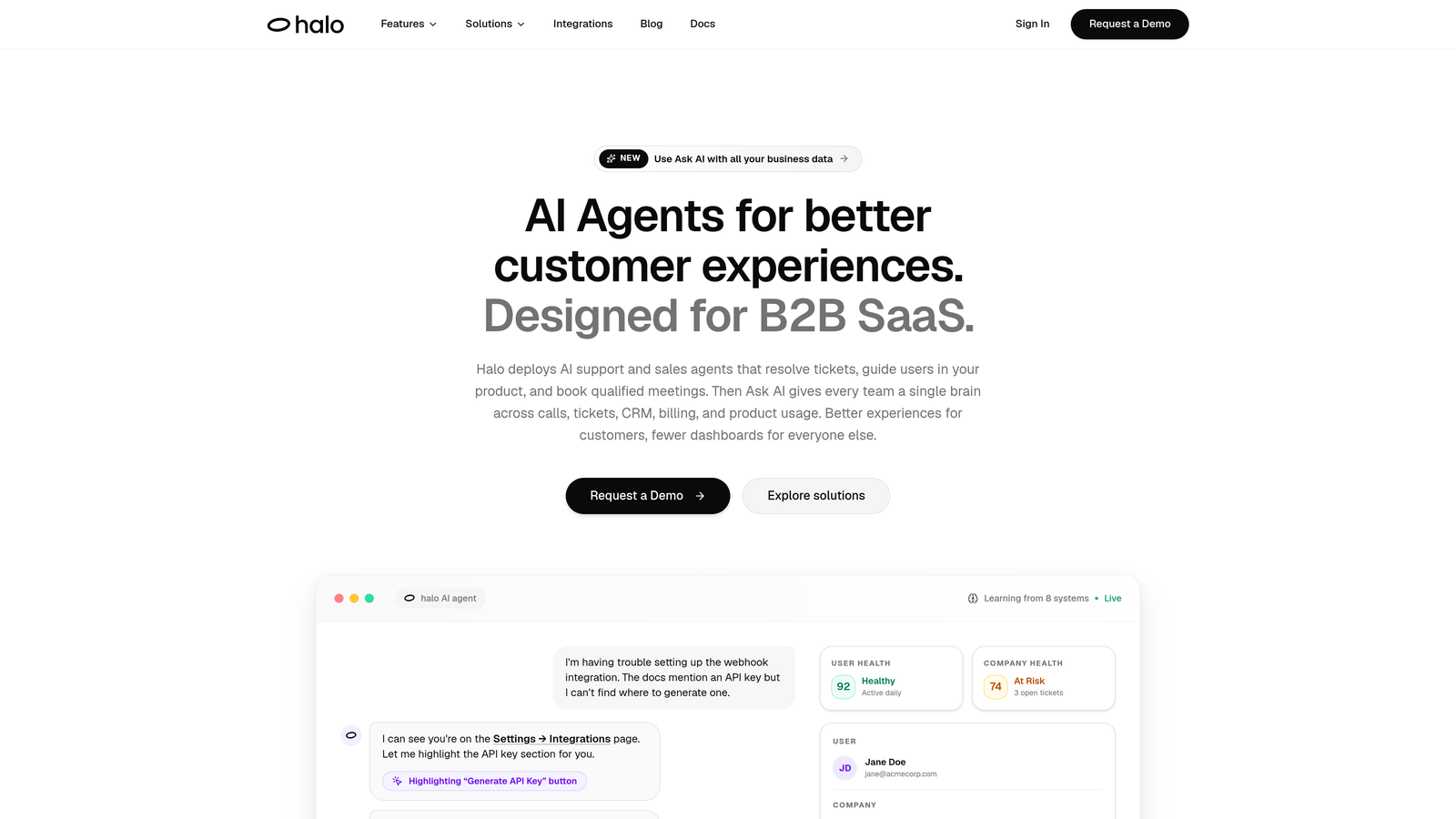
Halo AI is an AI-first customer support platform built specifically for B2B SaaS teams who need more than a deflection bot.
Where This Tool Shines
What separates Halo from most vendors on this list is its page-aware context engine. The AI agent literally sees what the user sees on screen, which means it can deliver step-by-step visual guidance rather than pointing users to a generic help article. That's a meaningful difference when your product is complex and your users are mid-workflow.
Halo also goes beyond support metrics. Its smart inbox surfaces customer health signals, revenue anomalies, and trend detection, turning your support data into business intelligence. It's not just resolving tickets; it's telling you what those tickets mean for your business.
Key Features
Page-Aware Chat Widget: The agent sees the user's current screen context, enabling precise, visual guidance rather than generic answers.
Smart Inbox with Business Intelligence: Surfaces customer health signals, revenue anomalies, and support trend patterns across your ticket data.
Auto Bug Ticket Creation: Automatically generates and routes bug reports to engineering tools like Linear, eliminating manual handoffs between support and engineering.
Live Agent Handoff: Escalates to human agents with full conversation context preserved, so nothing gets repeated or lost.
Deep Integration Stack: Connects to Linear, Slack, HubSpot, Intercom, Stripe, Zoom, PandaDoc, and Fathom for a genuinely connected support workflow.
Continuous Learning Loop: Improves resolution quality from every interaction, getting smarter over time without manual retraining.
Best For
Halo is purpose-built for growth-stage and enterprise B2B SaaS teams that want autonomous resolution, not just assisted deflection. It's especially well-suited for product-led companies where users need in-app guidance and support teams need to surface signals beyond ticket volume.
Pricing
Contact for pricing. Halo is designed for B2B SaaS teams at growth and enterprise scale; pricing is tailored to team size and usage requirements.
2. Intercom Fin
Best for: Teams already running Intercom who want native AI resolution without switching platforms.
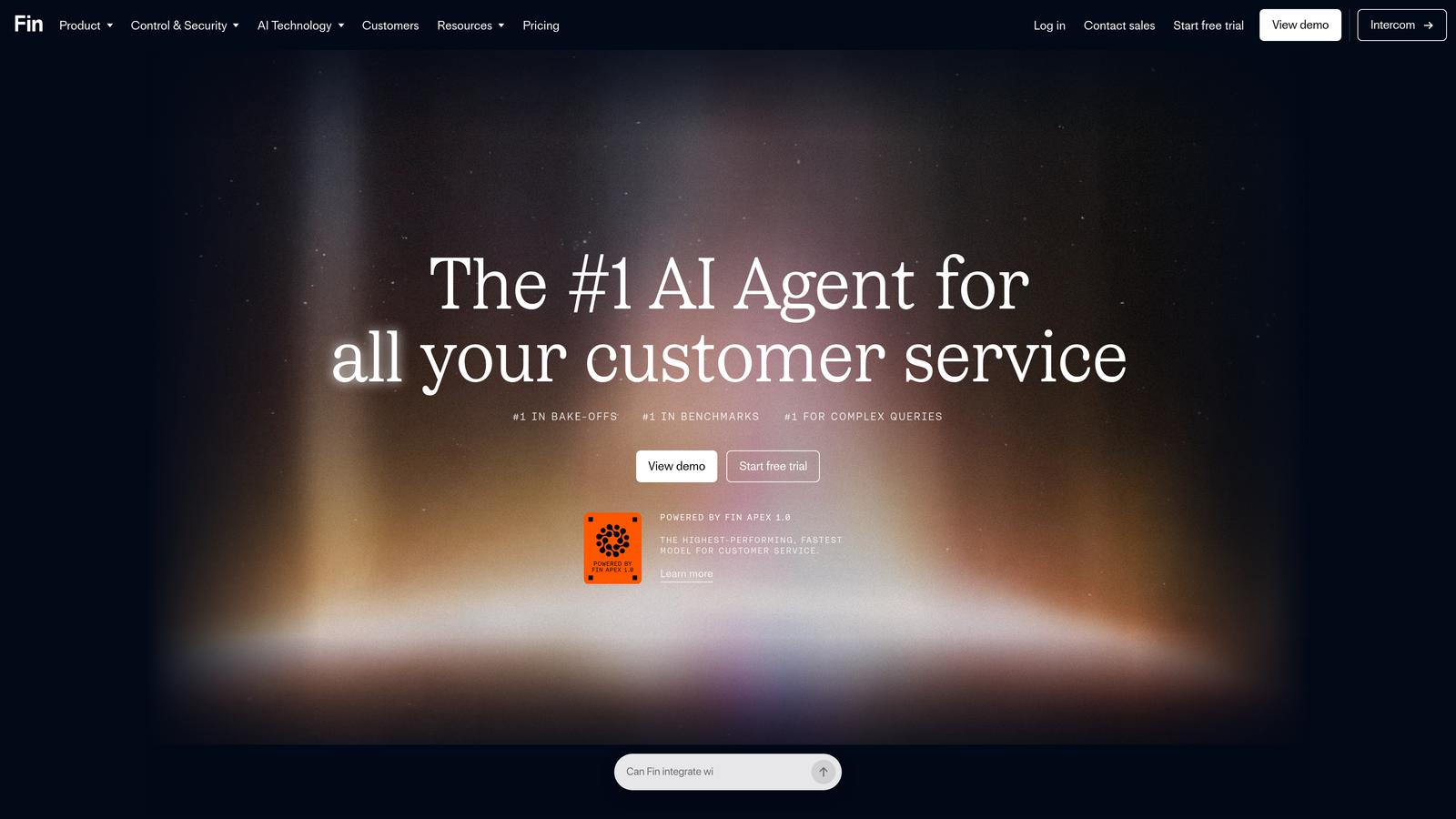
Intercom Fin is Intercom's native AI resolution agent, built on large language models and trained on your existing knowledge base and conversation history.
Where This Tool Shines
Fin's biggest strength is how seamlessly it fits into the Intercom ecosystem. If your team lives in Intercom's messenger and inbox, Fin requires minimal setup to start resolving conversations using your existing help center content. There's no migration, no new interface to learn, and no workflow disruption.
The usage-based pricing model is also worth noting. You pay per resolution rather than per seat, which can be cost-effective for teams with high conversation volume but relatively straightforward support queries.
Key Features
Native Intercom Integration: Works directly within your existing Intercom messenger, inbox, and routing workflows.
Knowledge Base Resolution: Resolves conversations by drawing on your help center content and conversation history.
Human Handoff: Passes unresolved conversations to human agents within the same Intercom workflow.
Multilingual Support: Handles conversations in multiple languages without additional configuration.
Per-Resolution Pricing: Charges based on successful resolutions rather than seats or volume tiers.
Best For
Teams already invested in Intercom who want to add AI resolution without changing their support stack. Less compelling for teams not already on Intercom, since the value is largely tied to the existing ecosystem.
Pricing
Charged per resolution; requires an active Intercom plan. Pricing scales with resolution volume, so high-traffic teams should model costs carefully before committing.
3. Zendesk AI
Best for: Large enterprise support orgs with complex escalation workflows already built on Zendesk.
Zendesk AI is the AI layer built into Zendesk Suite, offering intelligent triage, automated responses, and agent copilot capabilities across tickets, chat, and email.
Where This Tool Shines
Zendesk AI's strength is depth of integration with Zendesk's existing infrastructure. Intent detection feeds directly into routing rules, macros, and SLA workflows that enterprise teams have spent years building. For large orgs with complex escalation trees, that continuity is genuinely valuable.
The agent copilot features, including suggested replies and conversation summarization, help agents work faster without requiring a full workflow overhaul. It's an incremental upgrade path rather than a rip-and-replace approach.
Key Features
AI-Powered Triage: Detects intent and sentiment to route tickets to the right team or automation flow automatically.
Automated Responses: Handles common queries via messaging and email without agent involvement.
Agent Copilot: Provides suggested replies, summarization, and next-best-action guidance within the agent workspace.
Workflow Integration: Connects directly to Zendesk routing, macros, triggers, and SLA management.
CSAT Prediction: Uses AI to flag conversations at risk of low satisfaction scores before they close.
Best For
Enterprise support organizations with significant existing investment in Zendesk's ticketing and workflow infrastructure. Teams looking for a clean-slate AI-first solution may find Zendesk AI's triage-centric approach limiting compared to purpose-built resolution platforms.
Pricing
Included in Zendesk Suite plans starting at approximately $55 per agent per month; advanced AI features are available on higher tiers.
4. Freshdesk Freddy AI
Best for: SMB and mid-market teams on Freshdesk who want AI capabilities without significant additional spend.
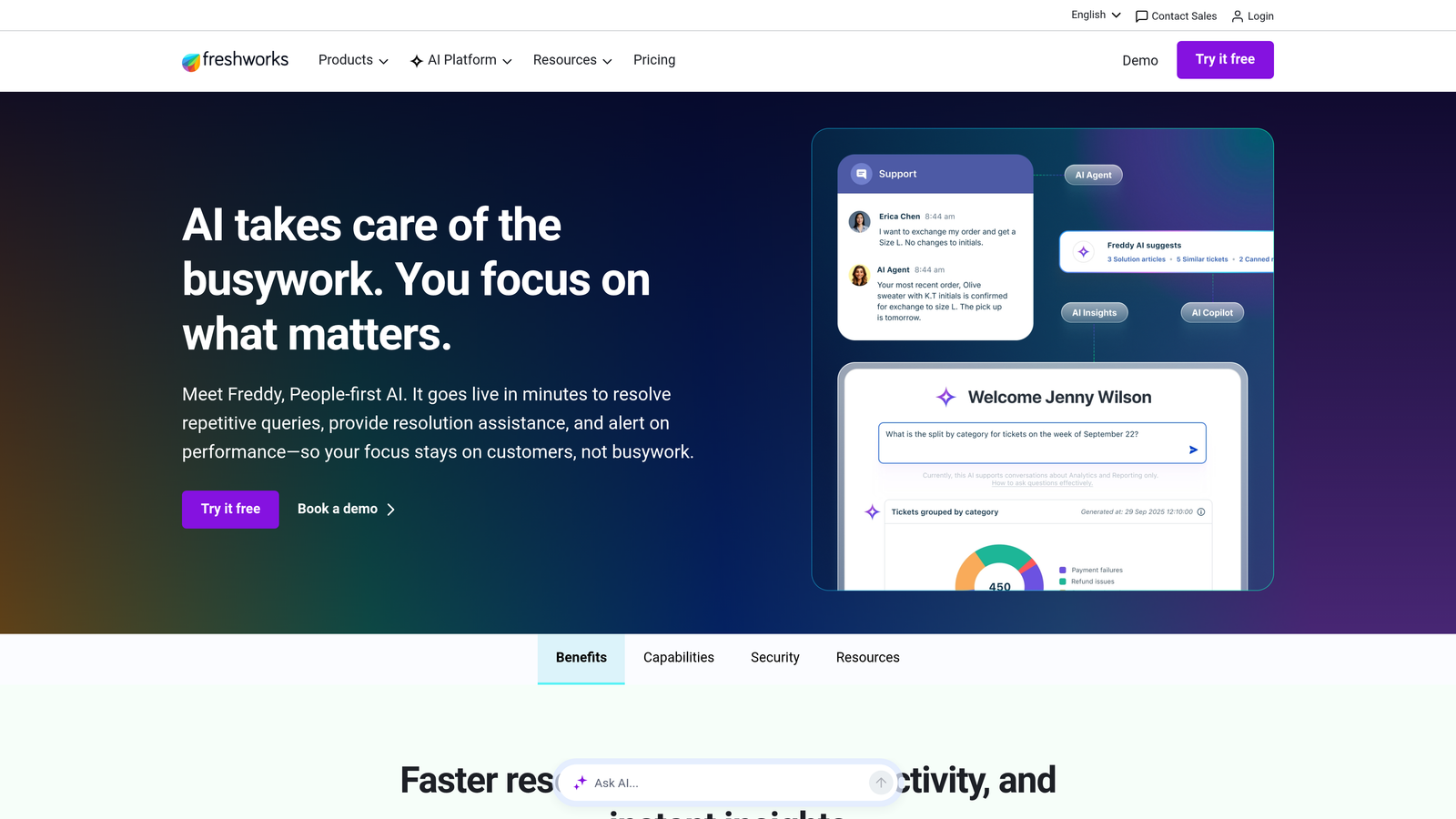
Freshdesk Freddy AI is Freshworks' AI suite spanning self-service bots, agent assist, and analytics, bundled across Freshdesk plans.
Where This Tool Shines
Freddy AI's strongest selling point is bundled value. Unlike vendors that charge separately for each AI module, Freshworks includes Freddy capabilities within existing Freshdesk plans, making it accessible for smaller teams with tighter budgets. You get a self-service bot, agent assist, and analytics without a separate procurement process.
Freddy Insights, the analytics layer, is a standout for teams that want AI-generated summaries and anomaly detection without building custom dashboards. It surfaces patterns in support data that would otherwise require a dedicated analyst to find.
Key Features
Freddy Self Service: Customer-facing bot for deflection and resolution, built on your knowledge base content.
Freddy Copilot: Agent assist with suggested replies, summarization, and response drafting.
Freddy Insights: AI-generated analytics with anomaly detection and trend identification.
No-Code Bot Builder: Visual flow editor for building self-service workflows without engineering resources.
Bundled Pricing: Core Freddy features included in existing Freshdesk plans without add-on costs.
Best For
SMB and mid-market support teams already on Freshdesk who want AI capabilities without additional vendor relationships or significant budget increases. Teams needing deep customization or enterprise-grade resolution accuracy may need to look elsewhere.
Pricing
Bundled with Freshdesk plans starting at approximately $15 per agent per month; advanced Freddy features are available on higher tiers.
5. Drift (Salesloft)
Best for: Revenue teams where sales engagement and support conversations overlap on the same platform.
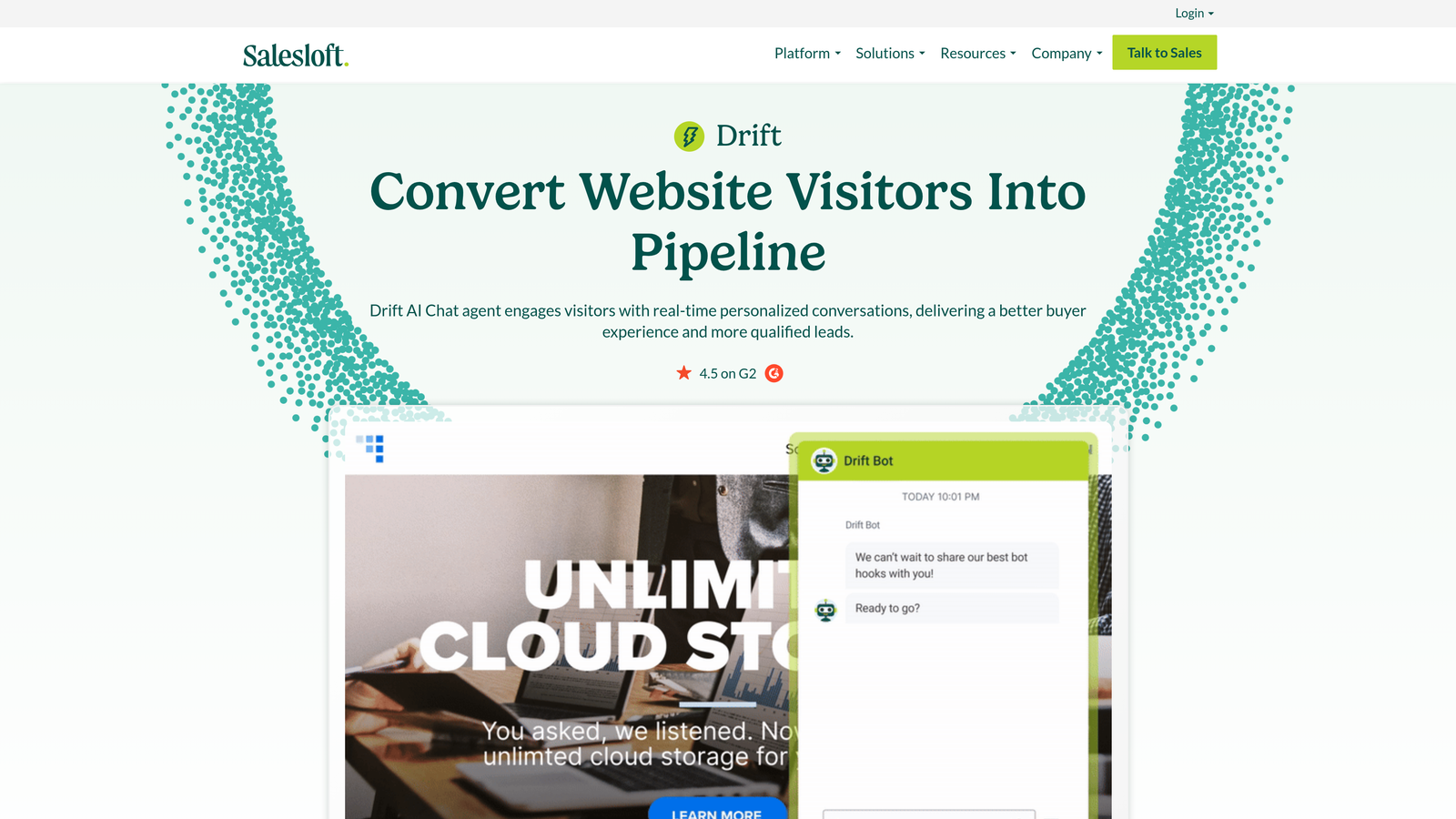
Drift is a conversational AI platform now part of Salesloft, designed for teams where pipeline generation and customer conversations intersect.
Where This Tool Shines
Drift's core strength has always been revenue-focused conversation routing. Its ABM-oriented approach means it can identify known accounts visiting your site and route them to the right sales rep or support contact instantly. For teams where the line between sales and support is intentionally blurry, that's a compelling capability.
Since the Salesloft acquisition, Drift has been increasingly positioned as part of a broader revenue engagement platform rather than a standalone conversational AI tool. Teams looking for pure support automation may find the product's focus has shifted, but for sales-led organizations, the integration with Salesloft's pipeline tooling adds real value.
Key Features
ABM-Focused Routing: Identifies known accounts and routes conversations to the appropriate sales or support contact.
Meeting Scheduling: Books meetings directly from chat conversations, integrated with calendar and CRM data.
Conversation Intelligence: Ties chat data to CRM records for pipeline context and account history.
Salesloft Integration: Connects to Salesloft's broader revenue engagement and sequencing platform.
AI-Powered Website Chat: Handles inbound visitors with automated qualification and routing flows.
Best For
Sales-led B2B organizations where marketing, sales, and support conversations happen in the same channel. Less suited for pure support teams focused on ticket resolution rather than pipeline engagement.
Pricing
Custom pricing; contact Salesloft for current packages. Pricing has changed since the acquisition, so direct outreach is recommended for accurate figures.
6. Ada
Best for: High-volume enterprise brands needing multilingual, no-code AI automation at scale.
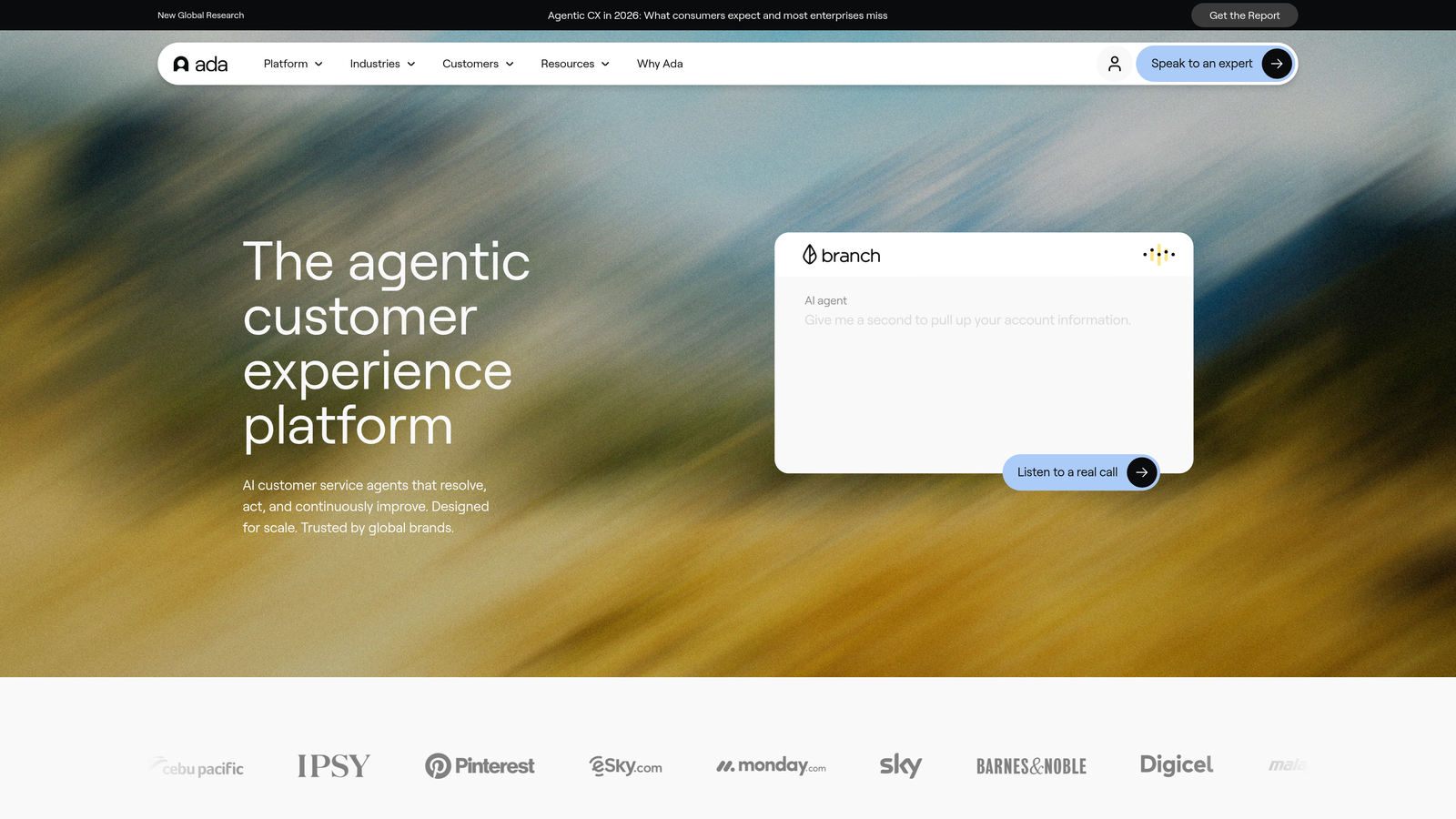
Ada is an enterprise-grade AI customer service automation platform known for no-code bot building, multilingual support, and large-scale deflection capabilities.
Where This Tool Shines
Ada has built a strong reputation in industries like fintech, telecom, and retail where support volumes are enormous and consistency matters. Its no-code visual flow editor allows non-technical teams to build and maintain complex automation workflows without engineering involvement, which is a genuine operational advantage at scale.
The multilingual capabilities are among the strongest in this category. For global brands managing support across many languages and regions, Ada handles that complexity without requiring separate bot configurations per language.
Key Features
No-Code Bot Builder: Visual flow editor for building and managing automation without technical resources.
Multilingual Support: Handles conversations across many languages with consistent automation quality.
Backend System Connections: Integrates with CRM, order management, and other systems for personalized, data-driven responses.
Containment Analytics: Detailed reporting on deflection rates, containment, and automation performance.
Enterprise Security: Compliance and security features designed for regulated industries and large enterprises.
Best For
Enterprise brands with high consumer support volumes, global audiences, and a need for robust no-code automation management. Ada is less optimized for complex B2B SaaS workflows where deep product context and business intelligence matter more than deflection volume.
Pricing
Custom enterprise pricing; contact Ada directly for a quote. Pricing is tailored to conversation volume and deployment complexity.
7. Forethought
Best for: Support operations teams that want to optimize agent workflows without replacing their existing helpdesk.
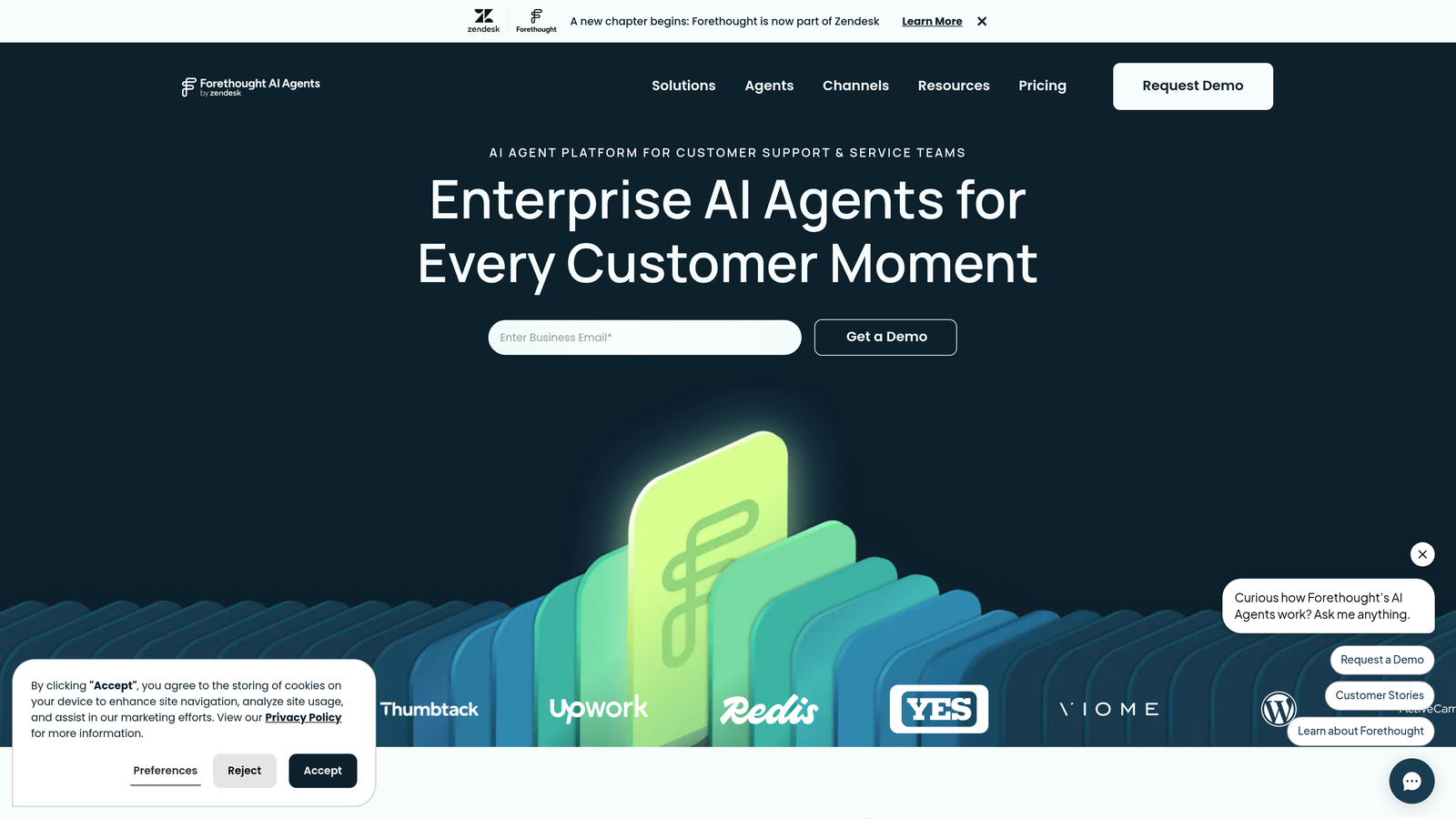
Forethought is an AI platform focused on augmenting human support agents through intelligent triage, routing, and in-context assistance, designed to layer onto existing helpdesk infrastructure.
Where This Tool Shines
Forethought takes a deliberately additive approach. Rather than replacing your helpdesk, it sits on top of Zendesk, Salesforce Service Cloud, or other platforms and makes your existing agents more effective. That positioning resonates with support ops leaders who have invested heavily in their current stack and aren't ready for a full migration.
The Triage module's intent and sentiment detection is particularly strong, helping teams prioritize and route incoming tickets more intelligently without manual intervention. For high-volume queues where misrouting is a real cost, that accuracy has operational value.
Key Features
Solve: AI-generated auto-responses for common inbound ticket types, reducing agent handling time.
Triage: Intelligent routing based on detected intent, sentiment, and urgency signals.
Assist: In-ticket agent copilot with suggested responses and relevant knowledge retrieval.
Helpdesk Compatibility: Designed to work alongside Zendesk, Salesforce, and other major helpdesks.
Sentiment and Urgency Detection: Flags high-risk or time-sensitive tickets for prioritized handling.
Best For
Support operations leaders who want to improve agent efficiency and ticket routing without replacing their current helpdesk. Teams looking for autonomous AI resolution rather than agent augmentation will find Forethought's scope more limited.
Pricing
Custom pricing based on volume and modules selected; contact Forethought for a quote. Pricing varies depending on which Solve, Triage, and Assist modules are included.
8. Tidio
Best for: Small teams and e-commerce brands that need quick AI chat deployment at an accessible price point.
Tidio is a live chat and AI platform popular with SMBs and e-commerce brands, featuring Lyro AI for automated conversational support.
Where This Tool Shines
Tidio's standout quality is accessibility. Setup requires no technical resources, and teams can have Lyro AI trained on their support content and live within hours. For small teams that need something working fast without a lengthy implementation project, that speed-to-value is hard to beat.
The e-commerce integrations with Shopify and WooCommerce make Tidio a natural fit for online retailers. Lyro can handle order status queries, return policy questions, and product FAQs autonomously, covering the bulk of common e-commerce support volume.
Key Features
Lyro AI: Conversational AI trained on your support content for automated customer responses.
Live Chat Fallback: Seamless handoff to human agents when Lyro reaches its limits.
Quick Setup: No technical resources required; deployable in hours rather than weeks.
E-Commerce Integrations: Native connections to Shopify and WooCommerce for order and product context.
Affordable Pricing: Accessible tiered pricing designed for small teams and growing businesses.
Best For
SMBs, e-commerce brands, and early-stage teams that need fast, affordable AI chat without complex implementation. Tidio is not designed for complex B2B enterprise workflows, deep product context, or the kind of business intelligence that larger SaaS support teams require.
Pricing
Free plan available; Lyro AI starts at approximately $29 per month. Paid plans scale with conversation volume, making it easy to start small and grow.
9. Kore.ai
Best for: Enterprises in regulated industries that need highly customizable voice and text AI with complex process automation.
Kore.ai is an enterprise conversational AI platform supporting complex voice and text workflows, deep process automation, and customizable dialog management for regulated industries.
Where This Tool Shines
Kore.ai operates at a level of customization and complexity that most platforms on this list don't attempt. Its XO Platform allows enterprises to build intricate, multi-turn conversational workflows that connect to backend processes, making it suitable for industries like banking, healthcare, and insurance where conversations need to trigger real system actions.
Voice capability is a genuine differentiator. While most conversational AI vendors focus exclusively on text-based chat, Kore.ai handles both voice and text omnichannel deployments with consistent NLP quality across both modalities. For enterprises with phone-based support channels, that matters.
Key Features
Advanced NLP: Supports over 100 languages with sophisticated natural language understanding across voice and text.
Voice and Text Omnichannel: Unified deployment across phone, chat, and digital channels from a single platform.
XO Platform: Low-code/no-code environment for building complex, custom AI workflows and dialog management.
Pre-Built Industry Solutions: Ready-made AI frameworks for banking, healthcare, retail, and other regulated verticals.
Enterprise Compliance: Security, compliance, and on-premise deployment options for regulated industries.
Best For
Large enterprises in regulated industries that need deeply customized conversational AI with voice support and complex process automation. Implementation requires more technical resources than most vendors on this list, making it less appropriate for teams without dedicated AI or platform engineering capacity.
Pricing
Custom enterprise pricing; contact Kore.ai for a quote. Pricing reflects the platform's implementation complexity and enterprise deployment requirements.
Which Conversational AI Vendor Is Right for Your Team?
The right vendor depends almost entirely on where you are in your support stack and what problem you're actually trying to solve. Here's a quick way to cut through the noise.
If you're a B2B SaaS team that wants genuine autonomous resolution, page-aware product guidance, and business intelligence signals from your support data, Halo AI is built specifically for that use case. Its continuous learning loop and deep integration stack make it the strongest fit for product-led growth companies managing support at scale.
If you're already on Intercom and want AI resolution without changing your stack, Fin is the natural choice. If your organization runs on Zendesk at enterprise scale, Zendesk AI's triage and workflow integration will feel like a natural extension. For SMBs on a budget, Freshdesk Freddy's bundled pricing or Tidio's accessible entry point both offer real value without significant investment.
For enterprises in regulated industries with complex voice and process automation needs, Kore.ai has the depth and compliance infrastructure to match. Revenue-focused teams where sales and support overlap will find Drift's ABM routing more relevant than a pure support tool. And for teams that want to optimize agents without replacing their helpdesk, Forethought and Ada each offer strong augmentation paths.
The most important question to ask isn't "which AI vendor has the most features?" It's "does this platform actually resolve issues, or does it just redirect users to documentation?" That distinction separates tools that reduce ticket volume from tools that transform your support operation.
Your support team shouldn't scale linearly with your customer base. Let AI agents handle routine tickets, guide users through your product, and surface business intelligence while your team focuses on complex issues that need a human touch. See Halo in action and discover how continuous learning transforms every interaction into smarter, faster support.