9 Best Customer Churn Prediction Tools in 2026
Customer churn prediction tools help SaaS businesses identify at-risk accounts before cancellations occur by surfacing early warning signals like declining engagement and repeated support issues. This guide evaluates nine leading solutions for B2B teams, comparing predictive accuracy, integrations, and usability to help customer success teams intervene early and retain more revenue.
 Grant CooperFounder14 min read
Customer churn is one of the most expensive problems a SaaS business faces, and most teams only notice it after it's already happened. By the time an account cancels, the warning signs were there weeks or months earlier: repeated support tickets on the same issue, declining product engagement, a frustrated tone in conversations. The challenge is surfacing those signals in time to do something about them.
The right churn prediction tool shifts that dynamic entirely. Instead of reacting to cancellations, your team can identify at-risk accounts early, understand why customers are disengaging, and intervene while there's still a relationship to save.
This list covers tools that help B2B teams predict churn, understand its root causes, and take action before it's too late. We've evaluated each on predictive accuracy, integration depth, ease of use, and fit for different team sizes and workflows. Some are purpose-built customer success platforms; others approach the problem from a support intelligence or product analytics angle. Both categories are worth knowing about, because churn prediction is only as good as the signals feeding it.
1. Halo AI
Best for: B2B SaaS teams that want churn intelligence surfaced directly from support interactions
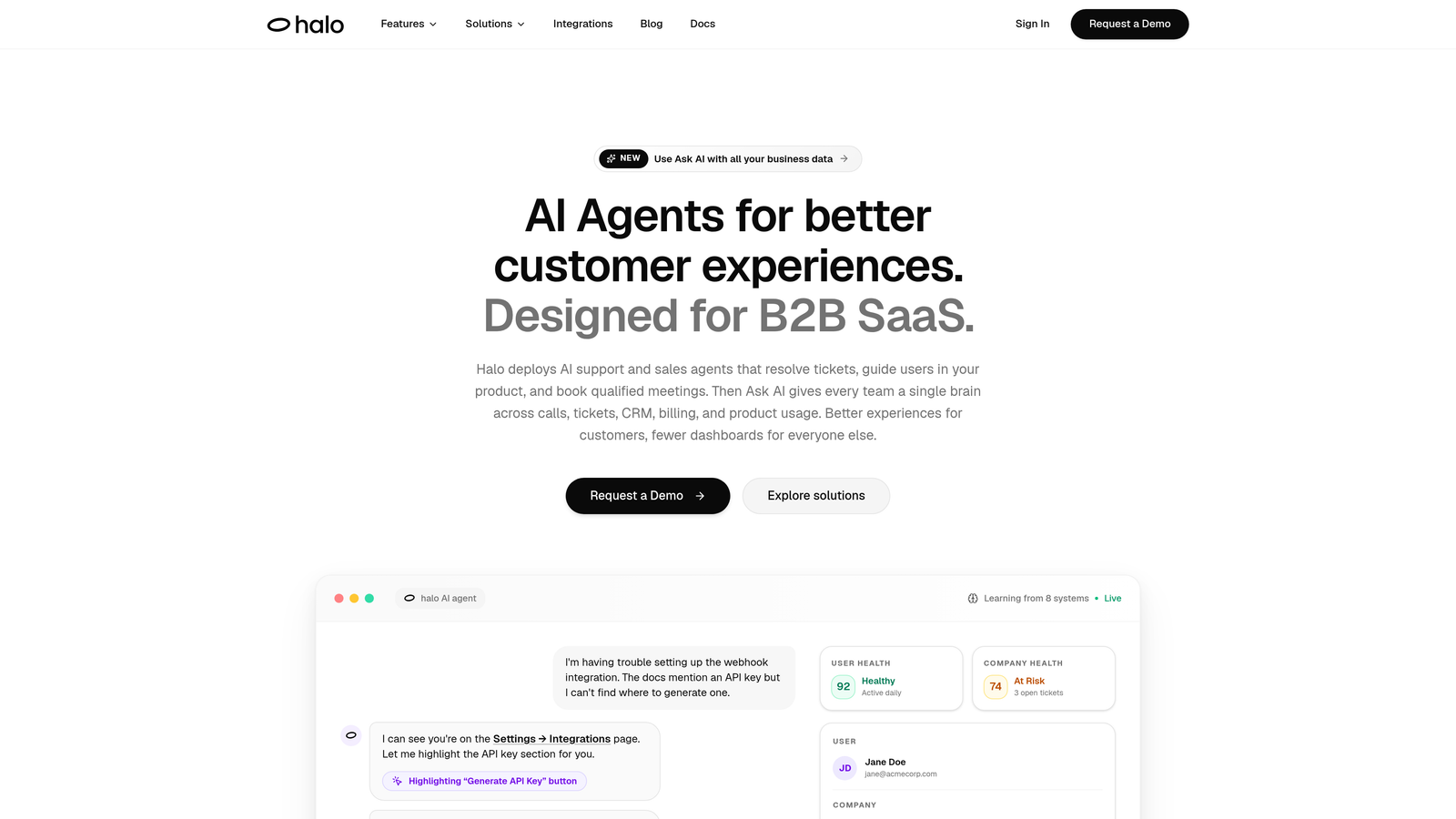
Halo AI is an AI-powered support platform that surfaces customer health signals, churn indicators, and revenue intelligence from every support interaction, without requiring a separate CS platform.
Where This Tool Shines
Most churn prediction tools require you to pull in data from multiple sources and build health scores manually. Halo AI takes a different approach: it treats your support channel as a real-time source of churn intelligence. Frustrated users, repeated tickets, and escalating friction patterns are leading indicators of churn, and Halo's smart inbox surfaces these signals automatically as part of the support workflow.
The page-aware chat widget adds another layer that most tools miss. Because Halo sees what users see in the moment they reach out, it captures in-context friction points that never make it into a traditional CS health score. That real-time, contextual signal quality is genuinely difficult to replicate with a standalone analytics platform.
Key Features
Smart Inbox with Business Intelligence: Surfaces customer health signals, anomaly detection, and revenue intelligence from support data, turning every ticket into a data point for churn risk assessment.
Page-Aware AI Agents: Captures in-context friction in real time by seeing exactly what users see, identifying a leading churn indicator before it escalates.
Integration Ecosystem: Connects to HubSpot, Stripe, Intercom, Slack, Linear, Zoom, PandaDoc, and Fathom, linking support signals to the broader customer record across your stack.
Auto Bug Ticket Creation and Live Agent Handoff: Resolves issues before they compound into churn drivers, with seamless escalation when human judgment is needed.
Continuous Learning: Improves signal quality over time by learning from every interaction, so churn indicators become more accurate as the system matures.
Best For
Teams that want churn intelligence without standing up a full CS platform. Particularly strong for product-led SaaS companies where support volume is high and friction-to-resolution time directly impacts retention. Also well-suited for teams already using Intercom, HubSpot, or Stripe who want to connect support signals to their existing customer data.
Pricing
Check haloagents.ai for current pricing plans. Pricing details are available directly on the site.
2. Gainsight
Best for: Enterprise CS teams managing large, complex customer portfolios with dedicated CSMs
Gainsight is the enterprise standard for customer success platforms, with comprehensive health scoring, CSM workflow automation, and full lifecycle management.

Where This Tool Shines
Gainsight has been in market for over a decade and has accumulated a depth of functionality that few platforms match. Its Customer Health Score is highly configurable, pulling in usage data, support activity, NPS results, and contract signals into a unified view. For enterprise CS teams managing hundreds or thousands of accounts, that configurability matters.
The acquisition of Staircase AI has added AI-powered relationship intelligence to the platform, helping CSMs understand the strength and sentiment of customer relationships at scale. If your team runs formal CS motions with dedicated account managers, Gainsight's Cockpit and Journey Orchestrator give you the structure to execute them consistently.
Key Features
Configurable Customer Health Score: Aggregates usage, support, NPS, and contract data into a single, customizable risk indicator per account.
Cockpit: Task management system for CSMs to systematically action churn risks and renewal priorities.
Journey Orchestrator: Automated lifecycle playbooks that trigger interventions based on health score changes or milestone events.
Revenue Optimization: Forecasting module for renewal and expansion revenue, connecting churn risk to financial outcomes.
AI-Powered Relationship Intelligence: Via the Staircase AI acquisition, adds sentiment and relationship health signals to the CS workflow.
Best For
Large enterprise CS organizations with dedicated operations resources to configure and maintain the platform. Teams managing complex, high-value accounts where structured CSM workflows and formal playbooks are essential to retention outcomes.
Pricing
Enterprise pricing; contact Gainsight's sales team for a quote. Not publicly listed, and typically requires a formal sales conversation.
3. ChurnZero
Best for: Mid-market SaaS CS teams that need real-time churn alerting without enterprise complexity
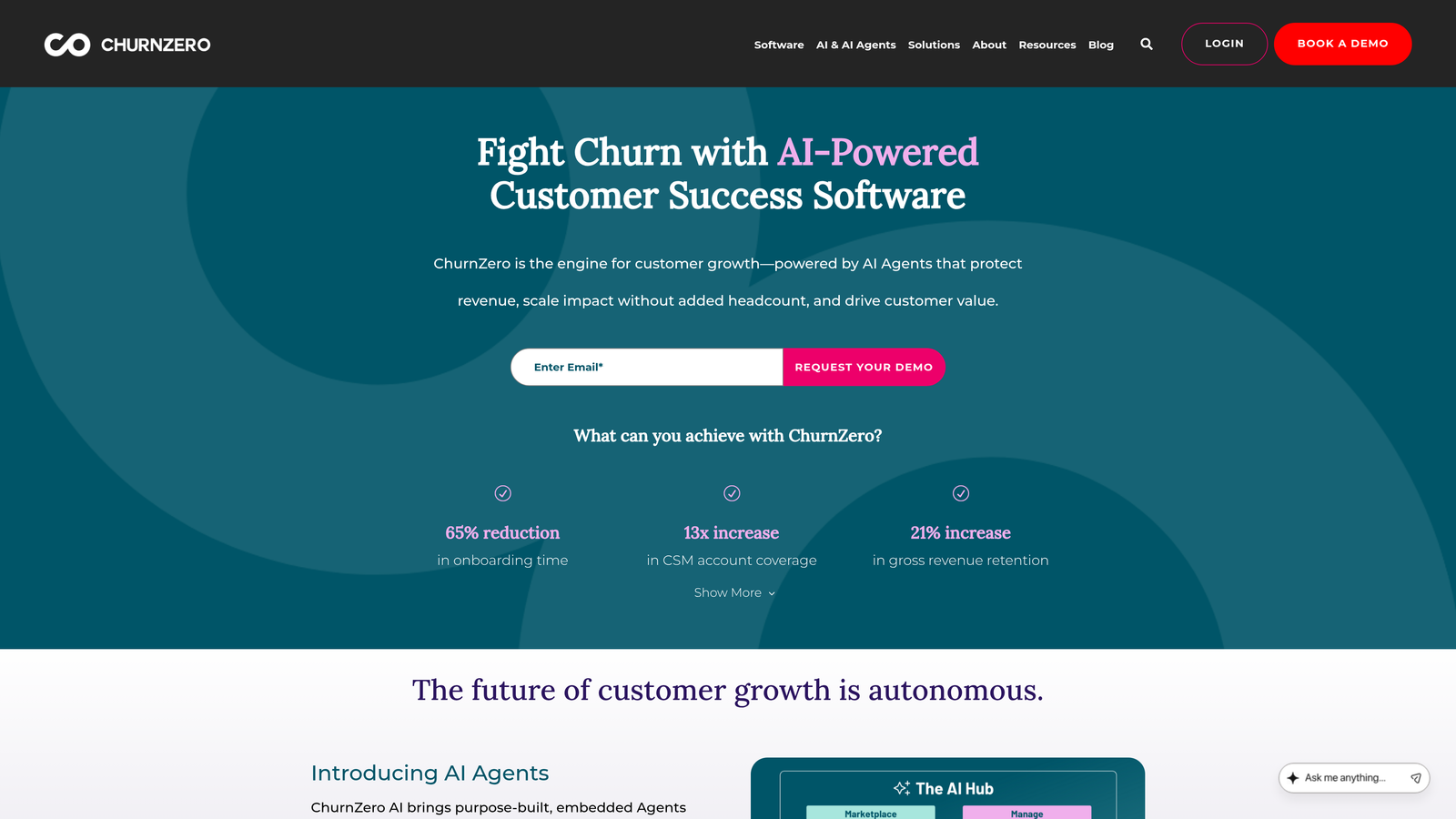
ChurnZero is a mid-market CS platform built for real-time churn alerting and automated playbook execution, without the configuration overhead of enterprise alternatives.
Where This Tool Shines
ChurnZero's core strength is speed to signal. Its ChurnScore updates in real time based on product usage and engagement data, meaning your CS team sees risk emerge as it happens rather than in a weekly health score review. For teams where timing matters, that responsiveness is a meaningful operational advantage.
The in-app messaging capability is a useful addition that many standalone CS platforms lack. Rather than waiting for a CSM to reach out, ChurnZero can trigger direct in-app messages to at-risk users, meeting them where they are in the product.
Key Features
ChurnScore: Real-time churn risk scoring based on product usage and engagement, updated continuously rather than on a batch schedule.
Automated CS Playbooks: Triggered by health score changes, ensuring consistent intervention across your CS team without manual monitoring.
In-App Messaging: Engage at-risk users directly within your product, without requiring a separate messaging platform.
NPS and Survey Integration: Incorporates qualitative churn signals alongside behavioral data for a more complete risk picture.
Segments: Slice at-risk cohorts by plan, region, or behavioral pattern to prioritize CS effort where it matters most.
Best For
Mid-market SaaS companies with an established CS function that needs real-time visibility and automated workflows, but doesn't have the ops resources to configure an enterprise platform like Gainsight.
Pricing
Not publicly listed; contact ChurnZero's sales team. Mid-market positioning suggests more accessible pricing than enterprise CSP alternatives.
4. Totango
Best for: Teams that want to deploy churn prevention programs quickly using pre-built workflows
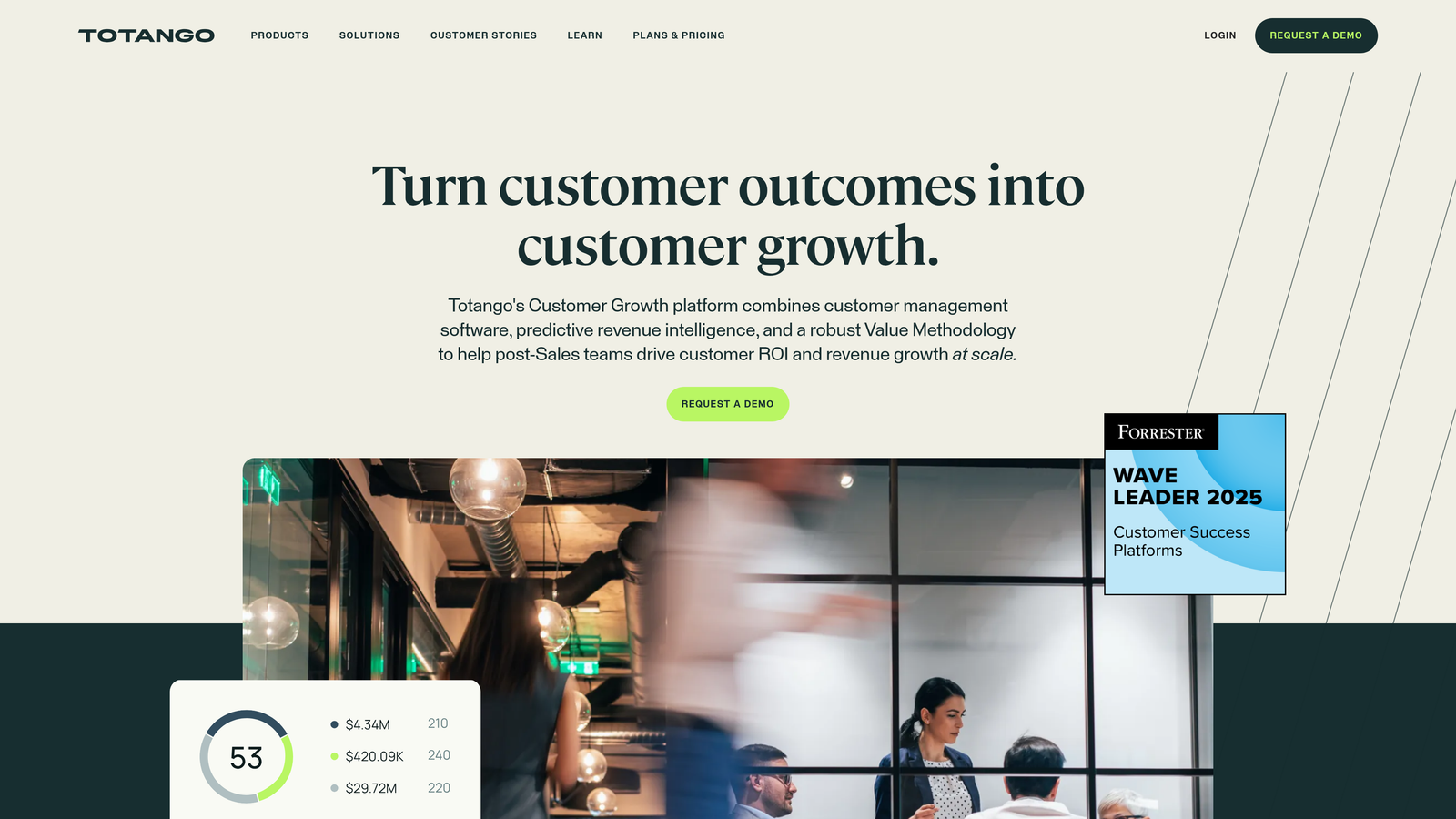
Totango is a modular CS platform built around SuccessBLOCs: pre-built, deployable workflows for onboarding, retention, expansion, and other common CS motions.
Where This Tool Shines
The SuccessBLOC model is Totango's most distinctive feature. Rather than building CS workflows from scratch, teams can deploy pre-configured programs for common use cases and customize from there. For CS teams that need to move quickly without a dedicated ops function, that head start is genuinely valuable.
Totango merged with Catalyst in 2024, which broadened its mid-market reach and added complementary capabilities. The combined platform now covers a wider range of team sizes and CS maturity levels, making it a more versatile option than it was in previous years.
Key Features
SuccessBLOCs: Pre-built, deployable workflows for onboarding, retention, and expansion that teams can activate and customize without starting from scratch.
Flexible Health Scoring: Configurable metrics that adapt to your product's specific usage patterns and customer lifecycle.
Campaign Management: Proactive customer outreach tools for engaging at-risk segments before they escalate.
Integration Hub: Connects to CRM, billing, and product tools to aggregate signals across your stack.
Free Tier: Available for small teams, making it one of the few CS platforms accessible without a sales conversation.
Best For
CS teams at growing SaaS companies that want structured churn prevention programs without the configuration complexity of enterprise platforms. The free tier also makes it a reasonable starting point for early-stage teams.
Pricing
Free tier available for small teams; paid plans scale with customer count. More accessible entry point than most CS platforms in this category.
5. Mixpanel
Best for: Product-led SaaS teams that want to understand which behaviors predict churn
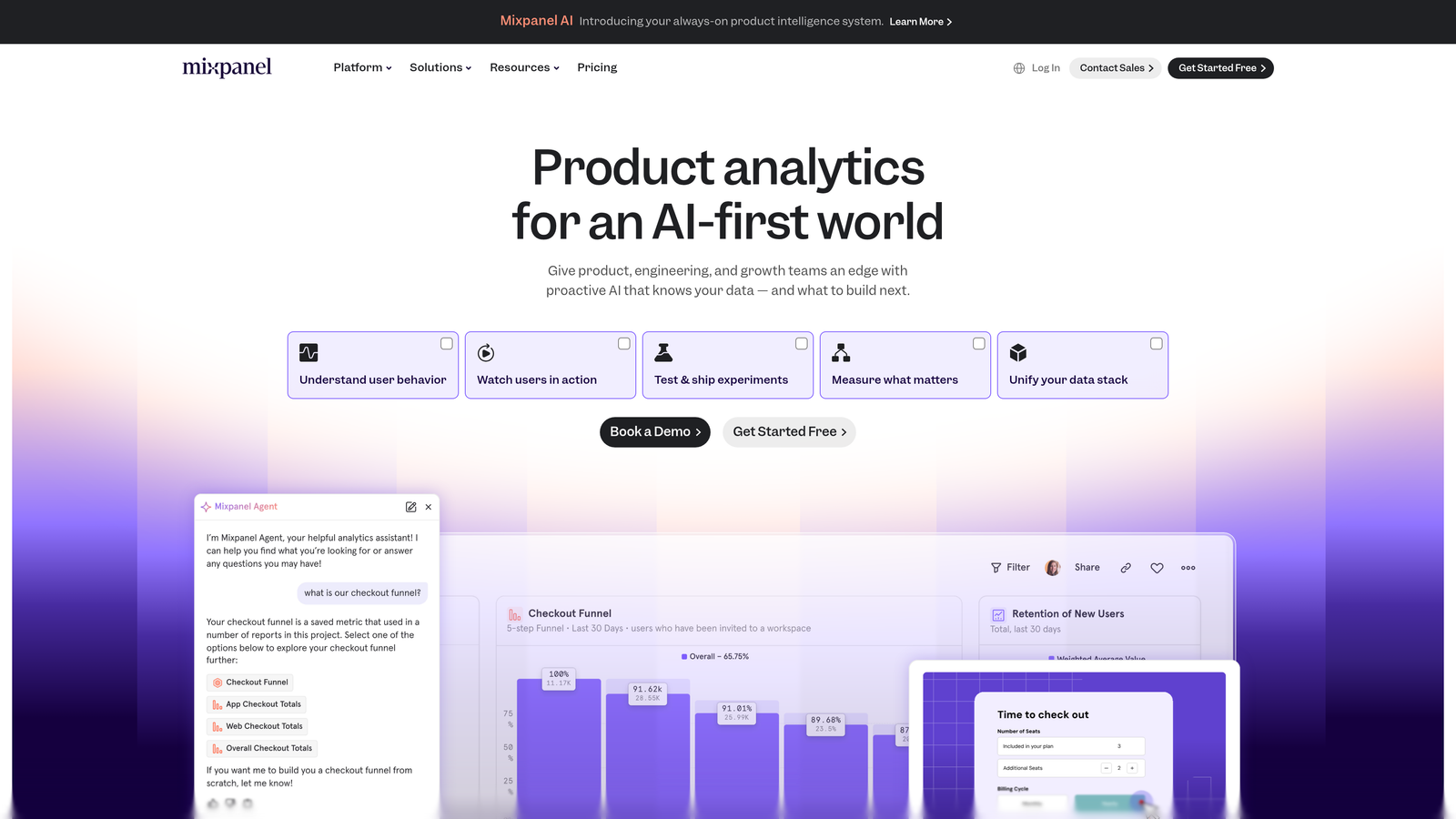
Mixpanel is an event-based product analytics platform that reveals which user behaviors and product journeys correlate with churn, giving product and growth teams the data to intervene.
Where This Tool Shines
Mixpanel approaches churn from a fundamentally different angle than CS platforms. Rather than tracking account-level health scores, it maps the behavioral patterns that precede cancellation. Which features do retained users engage with that churned users don't? Where in the onboarding funnel do users drop off? These are the questions Mixpanel is built to answer.
For product-led growth companies where self-serve usage data is the primary churn signal, Mixpanel's retention cohort analysis and funnel tools are among the most capable available. The depth of behavioral segmentation lets teams isolate at-risk user groups with a precision that most CS platforms can't match.
Key Features
Retention Cohort Analysis: Identifies which user segments churn fastest and what distinguishes them from retained cohorts.
Funnel Analysis: Surfaces exactly where users drop off before churning, pinpointing friction in the product journey.
Behavioral Segmentation: Isolates at-risk user groups based on in-app actions, inactions, or feature adoption patterns.
Flow Analysis: Visualizes user paths leading to disengagement, helping product teams understand the sequence of events before churn.
Free Tier: Available for teams getting started; paid plans scale with monthly tracked users.
Best For
Product and growth teams at PLG SaaS companies who want to understand behavioral churn drivers. Particularly strong when paired with a CS platform that can action the insights Mixpanel surfaces.
Pricing
Free tier available; paid plans based on monthly tracked users (MTUs). Pricing scales with data volume rather than seat count.
6. Amplitude
Best for: Product teams that need cohort analysis, retention modeling, and experimentation in one platform
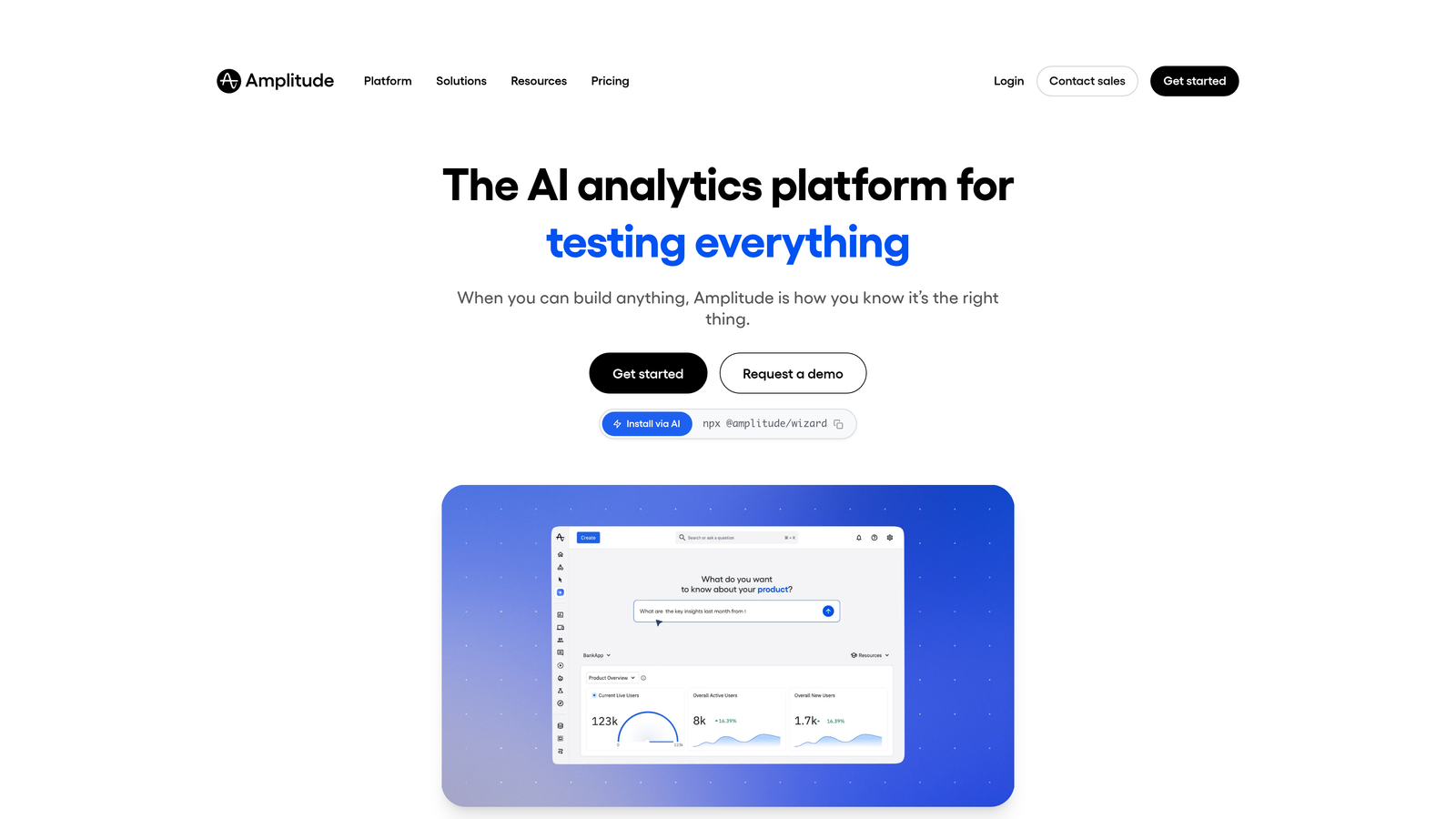
Amplitude is a product analytics platform with powerful cohort analysis and experimentation tools for understanding retention and churn at the behavioral level.
Where This Tool Shines
Amplitude and Mixpanel occupy similar territory, but Amplitude's experimentation capabilities set it apart for teams that want to test retention interventions rather than just observe patterns. The Experiment feature lets product teams run controlled tests on onboarding flows, feature releases, or engagement nudges, and measure the direct impact on retention.
The Pathfinder tool is particularly useful for churn analysis. It visualizes the user journeys that lead to disengagement, making it easier to identify which product paths are associated with eventual cancellation versus long-term retention.
Key Features
Behavioral Cohorts: Identify at-risk user segments based on in-app behavior and compare their journeys to retained users.
Retention Analysis: Customizable time windows and event definitions for measuring retention across different user segments and lifecycle stages.
Pathfinder: Visualizes user journeys that lead to churn, helping teams understand the sequence of product interactions preceding cancellation.
Impact Analysis: Measures which product features drive retention, giving product teams data to prioritize development decisions.
Experiment: Tests retention interventions with statistical rigor, connecting product changes to measurable retention outcomes.
Best For
Product teams at data-mature SaaS companies that want to go beyond observation and actively test which product changes improve retention. Strong fit for teams with dedicated product analytics resources.
Pricing
Free Starter plan available; Growth and Enterprise plans with custom pricing. Contact Amplitude's team for volume-based quotes.
7. Intercom
Best for: Teams already using Intercom for support that want to layer in proactive churn prevention
Intercom is a customer messaging platform that can be configured for proactive churn prevention through behavioral triggers and targeted in-app campaigns.
Where This Tool Shines
Intercom isn't a churn prediction tool in the traditional sense, but its behavioral trigger system makes it a practical option for teams that want to act on disengagement signals without adding another platform. If a user hasn't logged in for two weeks, or hasn't adopted a key feature after onboarding, Intercom can automatically send a targeted message, trigger a product tour, or route them to a support agent.
For teams already using Intercom as their primary support channel, this is often the fastest path to proactive churn prevention. The infrastructure is already in place; it's a matter of configuring the right triggers and sequences.
Key Features
Series Automation Builder: Multi-step re-engagement workflows that trigger based on behavioral conditions, not just time-based schedules.
Behavioral Targeting: Messages users based on product activity or inactivity, reaching disengaged users at the right moment.
Product Tours: Re-engages users who haven't adopted key features, addressing a common driver of early churn.
In-App and Email Messaging: Reaches at-risk users through multiple channels from a single workflow.
AI-Assisted Support: Resolves issues quickly to prevent support friction from becoming a churn driver.
Best For
Teams already on the Intercom platform that want to add proactive churn prevention without a separate CS tool. Also useful for early-stage companies that aren't ready for a full CS platform but want basic behavioral trigger capabilities.
Pricing
Publicly listed plans available on Intercom's website; pricing scales with seat count and usage volume.
8. Custify
Best for: SMB SaaS teams that need straightforward CS health scoring without enterprise overhead
Custify is an SMB-friendly CS platform with health scoring, churn alerts, and lifecycle management designed for teams without large ops or data science resources.
Where This Tool Shines
Custify occupies a useful niche: it delivers the core CS platform functionality that smaller teams need, without the configuration complexity and pricing of Gainsight or ChurnZero. Health score dashboards, churn risk alerts, and automated CSM tasks are available out of the box, and the platform is known for faster onboarding than enterprise alternatives.
The responsiveness of Custify's own customer support is frequently cited as a differentiator. For teams that don't have a dedicated CS ops function to troubleshoot configuration issues, having a vendor that's genuinely helpful matters more than it might seem.
Key Features
Health Score Dashboards: Configurable churn risk alerts that give CSMs a clear view of account health without complex setup.
Lifecycle Management: Tracks customers from onboarding through renewal, surfacing risk at each stage of the customer journey.
Automated Tasks and Notifications: Alerts CSMs when accounts show risk signals, ensuring no at-risk account falls through the cracks.
SaaS Tool Integrations: Connects to common CRM, billing, and support tools to aggregate signals across the customer record.
Fast Onboarding: Known for a shorter time-to-value than enterprise CS platforms, which matters for teams with limited implementation resources.
Best For
SMB and early mid-market SaaS teams with small CS functions that need core health scoring and churn alerting without the cost or complexity of enterprise platforms. A strong first CS platform for growing companies.
Pricing
Publicly listed pricing; more accessible than enterprise CSP alternatives. Check Custify's website for current plan details.
9. Baremetrics
Best for: Founders and finance teams tracking MRR-level churn and involuntary cancellations
Baremetrics is a subscription analytics platform that tracks churn at the revenue level, including voluntary cancellations, involuntary (failed payment) churn, and cohort-level MRR analysis.
Where This Tool Shines
Baremetrics approaches churn from a completely different angle than the other tools on this list. Where CS platforms focus on account health and product analytics tools focus on user behavior, Baremetrics focuses on the financial reality of churn: which revenue is at risk, where it's coming from, and how much of it is recoverable.
The Recover feature is particularly valuable for subscription businesses. Involuntary churn from failed payments is often underestimated as a revenue leak, and Recover's dunning management automates the recovery process. For companies processing payments through Stripe or Braintree, this alone can justify the platform.
Key Features
MRR-Level Churn Dashboards: Distinguishes voluntary cancellations from involuntary churn (failed payments), giving a more accurate picture of actual revenue loss.
Cohort Analysis: Tracks retention by signup month, plan, or segment, revealing which customer cohorts have the highest long-term value.
Recover (Dunning Management): Automates the recovery of failed payment revenue, reducing involuntary churn without manual intervention.
Cancellation Insights: Captures exit reasons at the moment of churn, providing qualitative signal that behavioral data alone can't surface.
Payment Processor Integration: Direct connection to Stripe, Braintree, and other processors for accurate, real-time subscription data.
Best For
Founders, finance teams, and growth leaders who need revenue-level churn visibility. Best used alongside a CS or product analytics tool rather than as a standalone churn prediction solution, since it doesn't surface account-level risk signals proactively.
Pricing
Publicly listed pricing that scales with MRR. Check Baremetrics' website for current plan tiers.
Which Tool Is Right for Your Team?
The honest answer is that the best churn prediction tool depends on where your churn signals live and who on your team will act on them.
If you're running an enterprise CS motion with dedicated CSMs managing complex accounts, Gainsight remains the most comprehensive option. Its depth of health scoring, lifecycle automation, and relationship intelligence is unmatched at that scale, though it comes with corresponding complexity and cost.
For mid-market teams that need real-time alerting without enterprise overhead, ChurnZero hits a strong balance. Totango is worth considering if you want pre-built CS workflows that let you move quickly without extensive configuration.
Product-led SaaS companies will often get more signal from Mixpanel or Amplitude than from a traditional CS platform, because behavioral data is the primary churn indicator in PLG motions. These tools are best used alongside a CS or messaging platform that can act on the patterns they surface.
Intercom is the practical choice for teams already using it for support who want to add proactive outreach without a new platform. Custify fills the gap for SMBs that need core CS functionality at an accessible price point. And Baremetrics belongs in the stack of any subscription business that wants revenue-level churn visibility, particularly for managing involuntary churn from failed payments.
Halo AI is worth serious consideration if your support channel is generating churn signals that aren't making it into your CS platform. Most churn prediction tools require you to bring the data to them; Halo surfaces it automatically from the support interactions already happening in your product. For teams that want churn intelligence without standing up a separate CS platform, that distinction matters.
Your support team shouldn't scale linearly with your customer base. Let AI agents handle routine tickets, guide users through your product, and surface business intelligence while your team focuses on complex issues that need a human touch. See Halo in action and discover how continuous learning transforms every interaction into smarter, faster support.