9 Best Customer Experience Automation Platforms in 2026
Discover the 9 best customer experience automation platforms in 2026 that solve the scaling challenge of delivering personalized support without constantly expanding your team. These platforms use autonomous AI, deep integrations, and rapid implementation to resolve customer issues while providing actionable business intelligence—helping you maintain quality experiences as you grow without unsustainable hiring or longer wait times.
 Matt PattoliFounder12 min read
Scaling customer support while maintaining personalized experiences feels impossible when every new customer means another support ticket in the queue. Traditional helpdesks force you to choose between hiring more agents or accepting longer response times—neither sustainable as you grow. The platforms that actually solve this problem share four traits: AI that genuinely resolves issues autonomously (not just routes tickets), deep integrations that provide complete customer context, implementation that delivers value in weeks not months, and transparent pricing that scales with your business. Here are the top customer experience automation platforms delivering on that promise in 2026.
1. Halo AI
Best for: Teams wanting AI-first support that learns continuously and provides business intelligence beyond ticket resolution
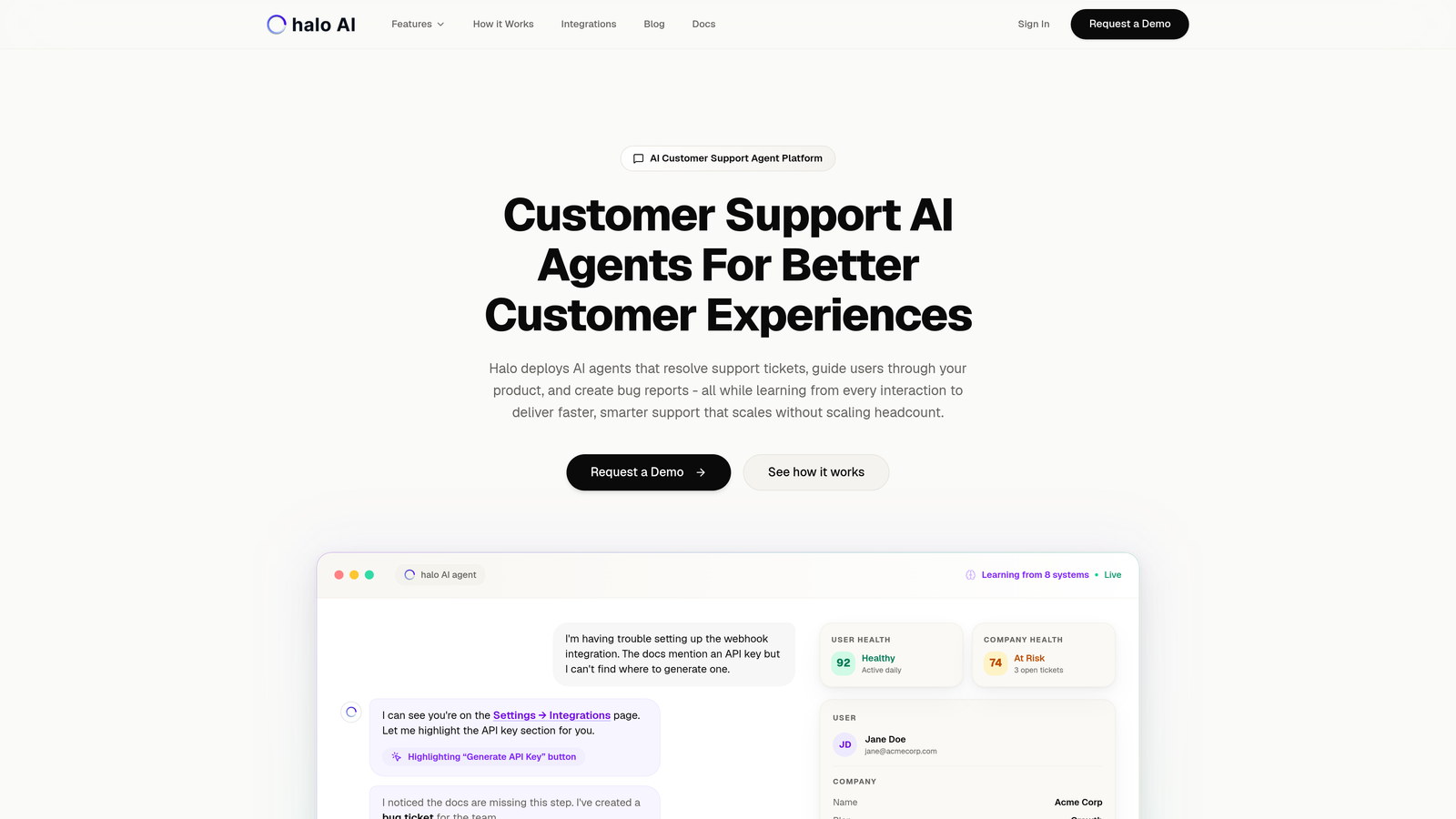
Halo AI takes a fundamentally different approach to customer support automation by building AI into the platform's core architecture rather than bolting it onto legacy helpdesk systems.
Where This Tool Shines
The platform's page-aware capabilities set it apart—the AI sees exactly what your users see in your product, enabling contextual guidance that goes beyond generic chatbot responses. When a user struggles with a specific feature, Halo's AI agent can provide visual UI guidance directly on the page they're viewing.
What makes Halo particularly powerful is its continuous learning model. Every interaction trains the system to handle similar issues better next time, meaning your support actually gets smarter as you scale. The platform also surfaces business intelligence that traditional helpdesks miss—customer health signals, revenue intelligence, and anomaly detection that help you spot issues before they become problems.
Key Features
Autonomous AI Agents: Resolve tickets without human intervention while knowing when to escalate complex issues to your team.
Page-Aware Chat Widget: Provides contextual help based on what users are actually viewing in your product.
Smart Inbox with BI Analytics: Goes beyond support metrics to surface customer health trends and revenue signals.
Auto Bug Ticket Creation: Automatically identifies technical issues and creates tickets in your development workflow.
Deep Stack Integrations: Connects across your entire business stack including Linear, Slack, HubSpot, Intercom, Stripe, Zoom, and PandaDoc.
Best For
B2B SaaS companies and product teams who need support automation that scales without scaling headcount. Particularly strong for teams using modern helpdesks like Zendesk, Freshdesk, or Intercom who want AI that actually resolves issues rather than just categorizing them.
Pricing
Contact for pricing. The platform is designed for teams serious about AI-first support automation.
2. Zendesk Suite
Best for: Established companies needing comprehensive omnichannel support with extensive third-party integrations
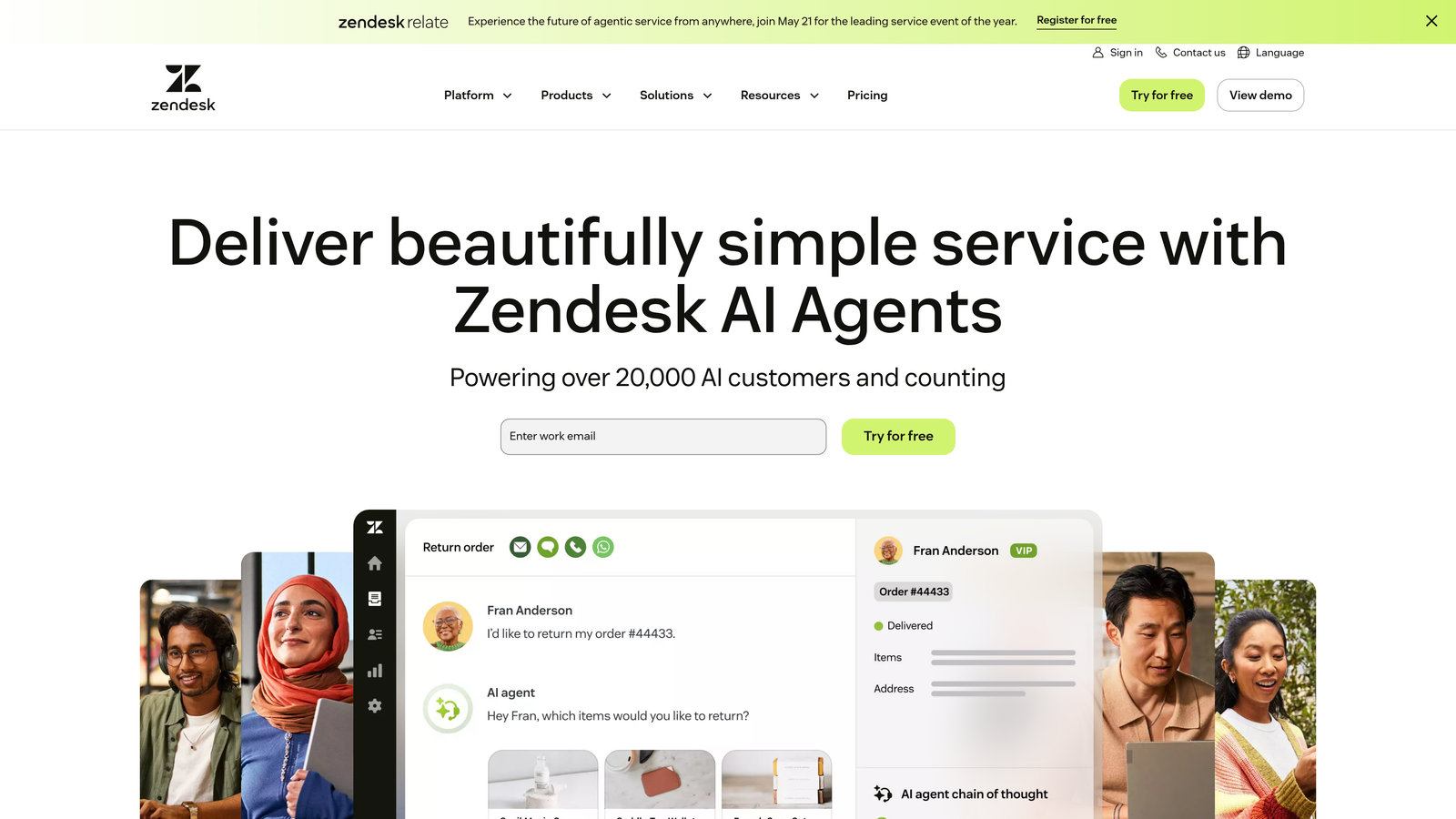
Zendesk Suite remains the most recognized name in customer service software, offering a mature platform with deep omnichannel capabilities and a massive app marketplace.
Where This Tool Shines
Zendesk's strength lies in its comprehensiveness and ecosystem. The platform handles email, chat, phone, social media, and messaging apps through a unified interface that gives agents complete context. When customers reach out across multiple channels, agents see the entire conversation history regardless of where it happened.
The app marketplace offers over 1,000 integrations, making Zendesk adaptable to virtually any tech stack. For companies with complex workflows or unique requirements, this extensibility proves invaluable.
Key Features
Omnichannel Ticketing: Unified inbox for email, chat, phone, social media, and messaging apps with complete conversation history.
Answer Bot and AI Assistance: Automated responses to common questions and AI-powered suggestions for agents.
Extensive App Marketplace: Over 1,000 integrations covering CRM, analytics, productivity, and specialized tools.
Robust Reporting: Customizable dashboards tracking team performance, customer satisfaction, and operational metrics.
Workflow Automation: Customizable macros, triggers, and automations to handle repetitive tasks.
Best For
Mid-market to enterprise companies with established support operations who need proven reliability and extensive customization options. Works well for teams supporting customers across many channels simultaneously.
Pricing
Suite Team starts at $55 per agent per month. Suite Growth at $89 per agent per month adds advanced AI and analytics.
3. Intercom
Best for: Product-led companies wanting to combine support with proactive customer engagement and in-app messaging
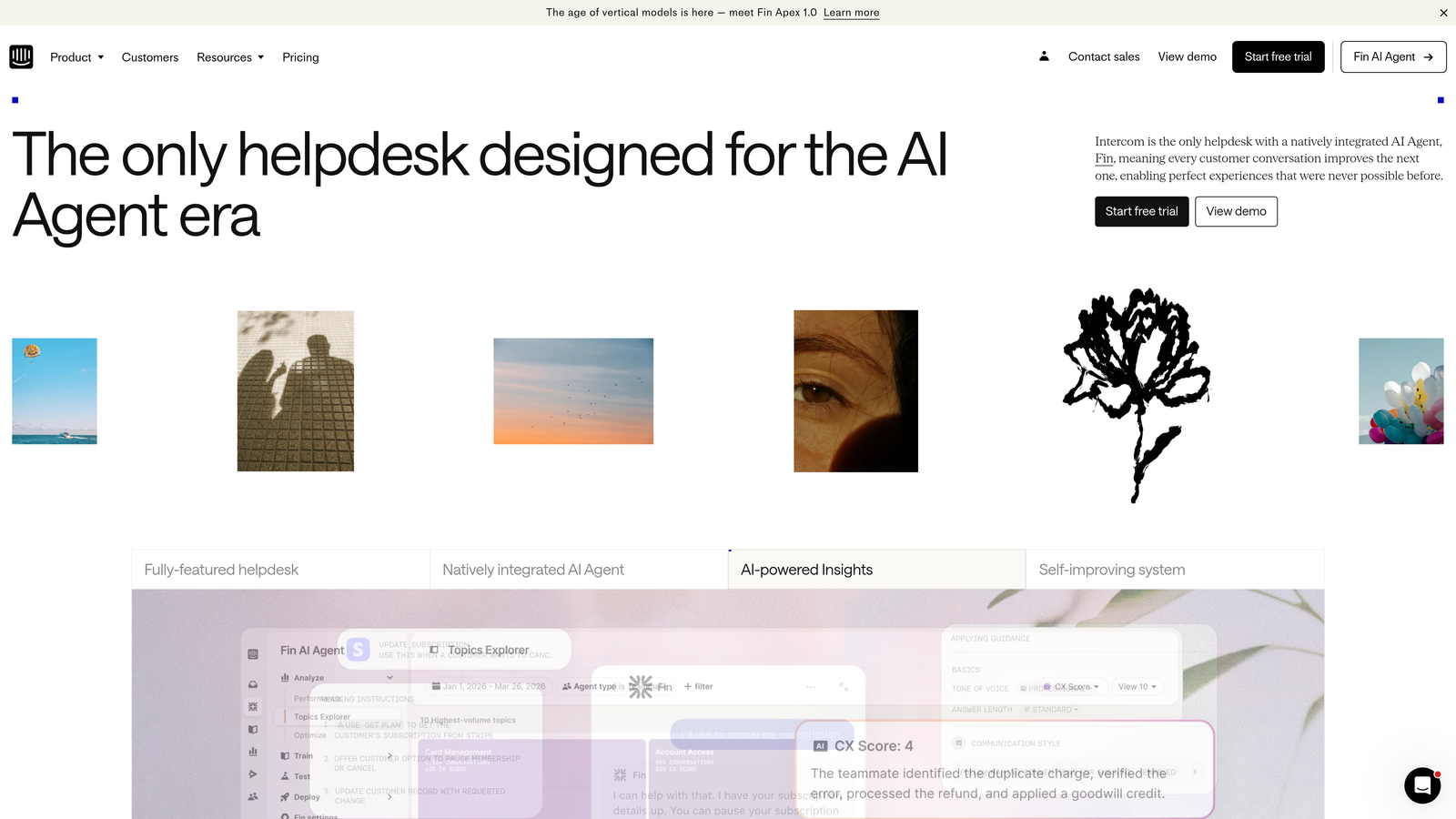
Intercom blurs the line between customer support and customer engagement, offering strong in-app messaging capabilities alongside traditional support features.
Where This Tool Shines
Intercom excels at proactive engagement. Rather than waiting for customers to contact support, you can reach out based on user behavior—like offering help when someone gets stuck on a specific page or celebrating when they complete a key action. This proactive approach often prevents support tickets before they happen.
The Fin AI agent handles common questions with impressive accuracy, while the platform's unified inbox brings together conversations from multiple channels. Product tours and targeted messages help with onboarding and feature adoption, reducing support volume at the source.
Key Features
Fin AI Agent: Automated resolution for common questions with natural language understanding and learning capabilities.
In-App Messaging: Contextual chat that appears based on user behavior and page location within your product.
Proactive Outbound Messaging: Targeted campaigns based on user segments, behavior, or lifecycle stage.
Custom Bots and Workflows: Build automated conversation flows without coding for qualification and routing.
Unified Inbox: Manage conversations across chat, email, and social in one interface with complete customer context.
Best For
SaaS companies and digital products where in-app communication drives both support and engagement. Particularly effective for teams who want to reduce support volume through proactive user education.
Pricing
Essential starts at $39 per seat per month. Advanced plans with Fin AI and additional automation start at $99 per seat per month.
4. Freshdesk
Best for: Growing teams seeking robust helpdesk functionality with AI automation at competitive pricing
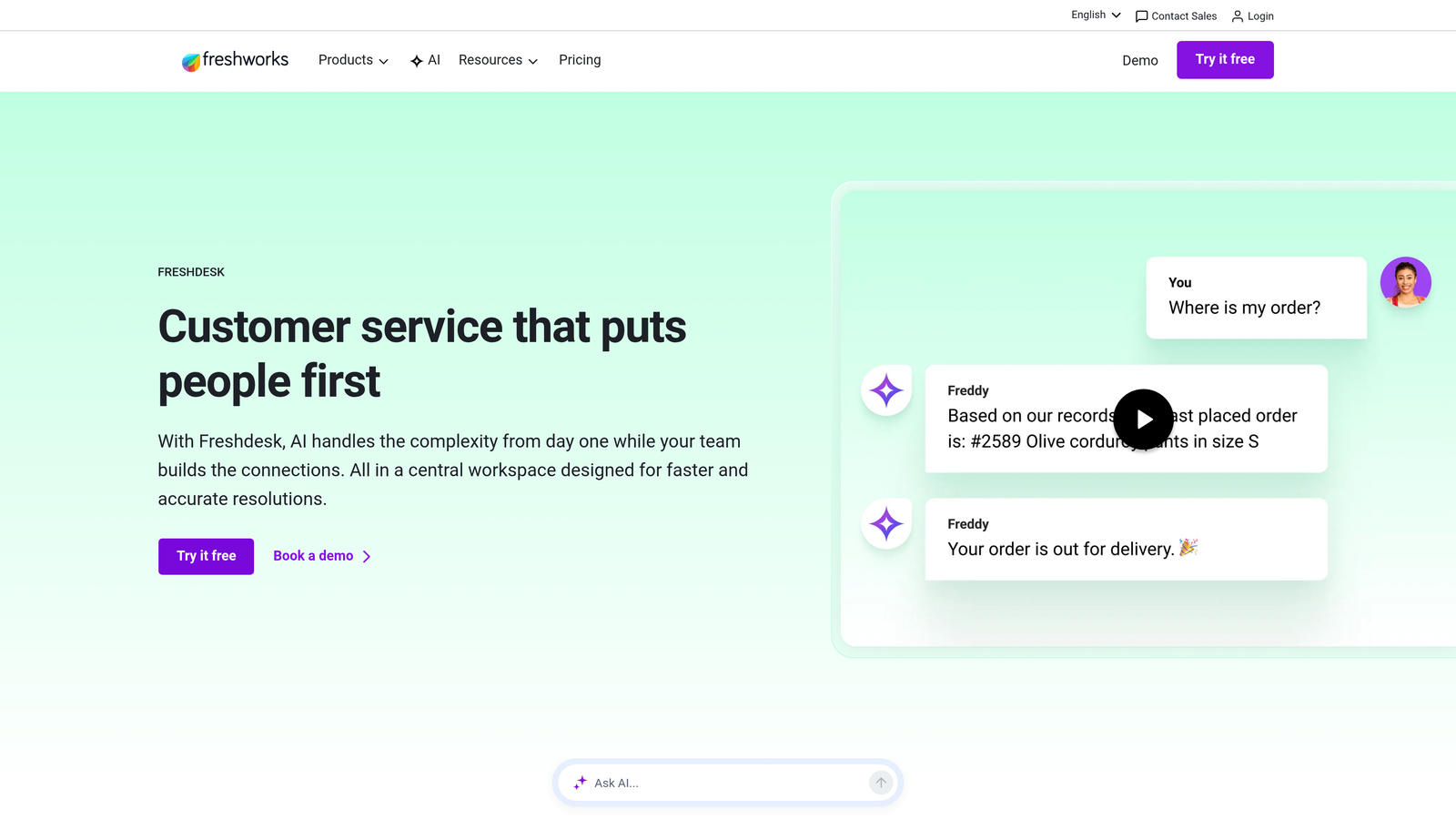
Freshdesk from Freshworks delivers enterprise-grade features at mid-market pricing, with Freddy AI providing intelligent automation across the platform.
Where This Tool Shines
Freshdesk's value proposition centers on delivering sophisticated capabilities without enterprise pricing. Freddy AI intelligently routes tickets to the right agents, suggests responses based on historical data, and identifies trending issues before they escalate. The platform handles omnichannel support smoothly while remaining intuitive for new team members.
The collaboration features stand out—agents can loop in colleagues, create child tickets for complex issues, and maintain internal notes that build institutional knowledge. For teams managing SLAs across different customer tiers, the automation ensures nothing slips through the cracks.
Key Features
Freddy AI: Intelligent ticket routing, agent suggestions, and predictive support based on historical patterns.
Omnichannel Support: Email, phone, chat, social media, and messaging apps managed through unified interface.
Team Collaboration: Shared ownership, parent-child tickets, and internal notes for complex issue resolution.
SLA Management: Automated escalations and notifications ensure commitments are met across customer segments.
Self-Service Portal: Branded knowledge base with AI-powered search and community forums.
Best For
Mid-sized companies and growing startups who need full-featured helpdesk capabilities with AI assistance but aren't ready for enterprise-level investment. Strong fit for teams supporting multiple customer tiers with different SLA requirements.
Pricing
Free tier available for up to 10 agents with basic features. Pro starts at $49 per agent per month with Freddy AI and automation.
5. HubSpot Service Hub
Best for: Companies already using HubSpot CRM who want seamless integration between sales, marketing, and support
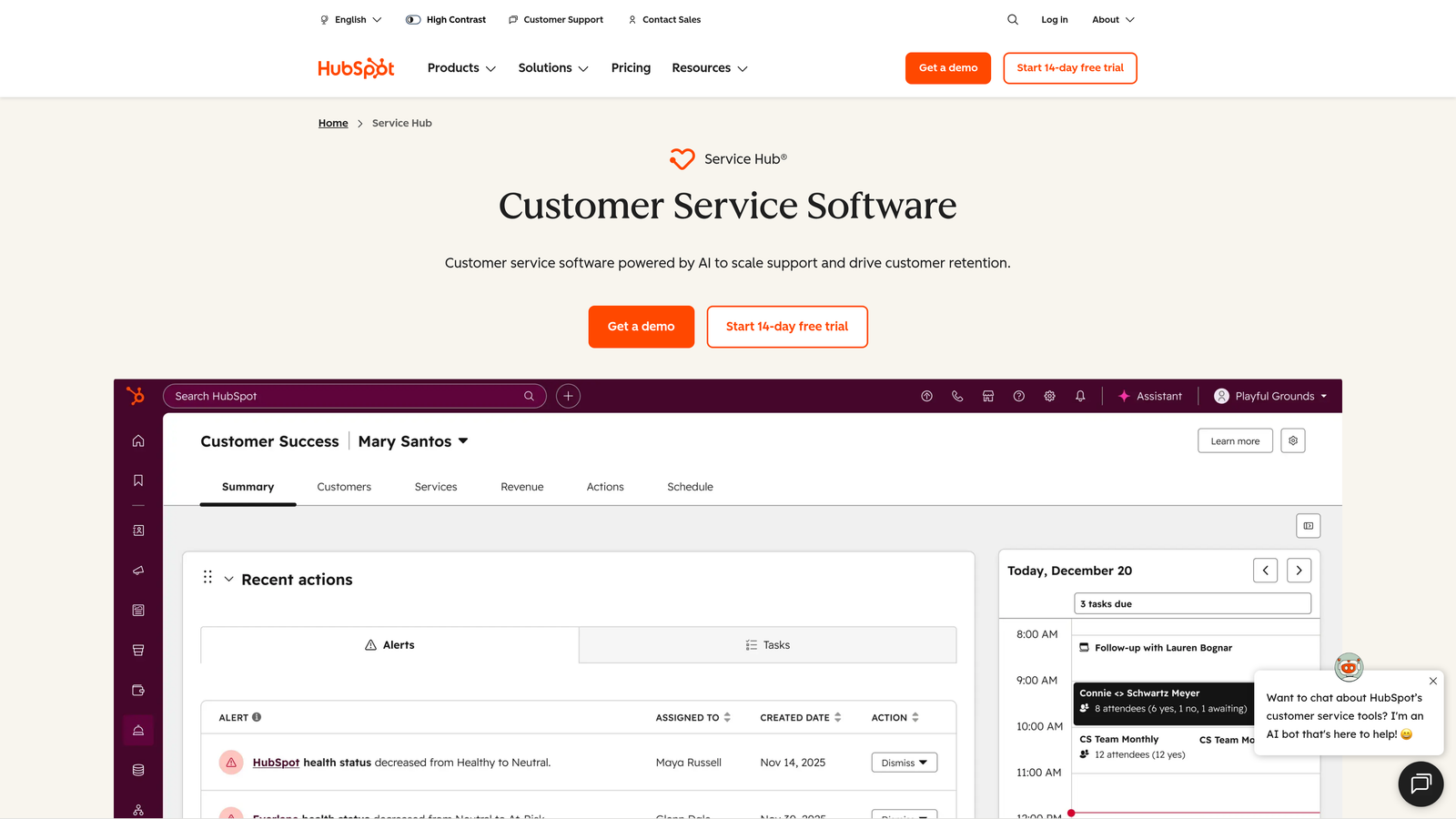
HubSpot Service Hub provides customer service tools natively integrated with HubSpot's CRM, giving support teams complete visibility into every customer interaction across your business.
Where This Tool Shines
The native CRM integration eliminates the context-switching that plagues most support teams. When a customer contacts support, agents instantly see their entire history—every marketing email they opened, sales conversation they had, support ticket they submitted, and deal they're associated with. This complete picture enables personalized support that acknowledges the full customer relationship.
The platform's customer feedback tools close the loop between support interactions and product improvement. Post-ticket surveys, NPS tracking, and customer effort scores flow directly into your CRM, enabling data-driven decisions about where to focus improvement efforts.
Key Features
Native CRM Integration: Complete customer context including sales history, marketing interactions, and support tickets in one view.
Conversational Bots: Automated chat routing and qualification with seamless handoff to human agents.
Customer Feedback Surveys: NPS, CSAT, and custom surveys that integrate directly into customer records.
Knowledge Base: SEO-optimized help center with analytics showing which articles reduce ticket volume.
Shared Inbox and Ticketing: Team email management with assignment, tagging, and automation workflows.
Best For
Companies already invested in the HubSpot ecosystem who want support data flowing into the same system as their sales and marketing data. Particularly valuable for businesses where support interactions influence expansion and retention.
Pricing
Free tier available with basic ticketing and live chat. Professional starts at $90 per month for 2 users, scaling with additional seats.
6. Salesforce Service Cloud
Best for: Enterprise organizations requiring deep customization, complex workflows, and integration with Salesforce CRM
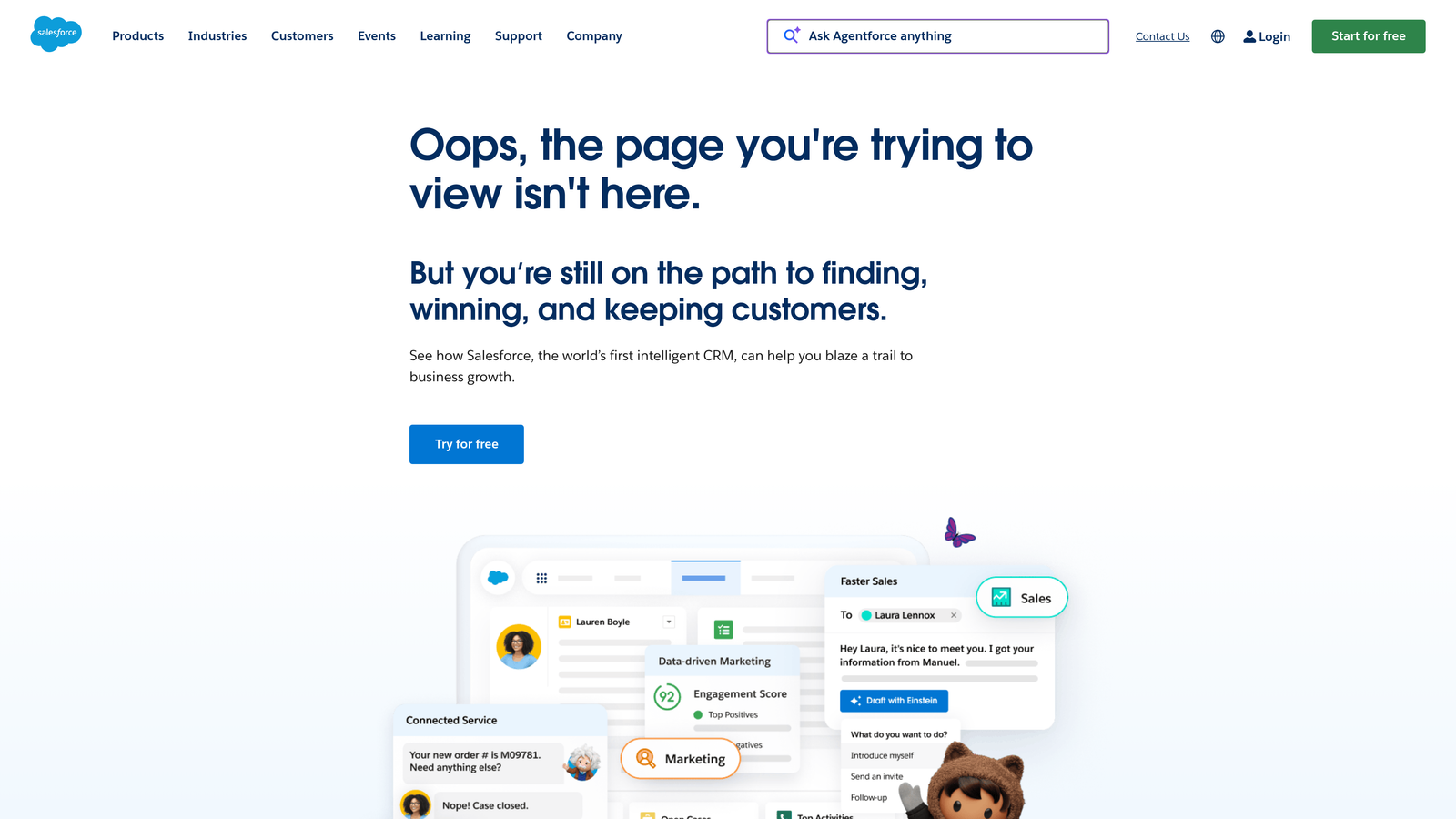
Salesforce Service Cloud delivers enterprise-grade service capabilities with Einstein AI and the full customization power of the Salesforce Lightning Platform.
Where This Tool Shines
Service Cloud's customization capabilities are unmatched. Using the Lightning Platform, companies can build custom applications, workflows, and integrations tailored precisely to their business processes. For organizations with unique requirements that off-the-shelf software can't address, this flexibility proves essential.
Einstein AI brings machine learning to case classification, routing, and agent recommendations. The platform learns from historical data to predict case resolution times, suggest knowledge articles, and identify cases likely to escalate. For large enterprises managing thousands of cases daily, these efficiencies compound significantly.
Key Features
Einstein AI: Automated case classification, intelligent routing, and predictive analytics for case resolution.
Salesforce CRM Integration: Complete customer view including opportunities, accounts, contacts, and interaction history.
Omni-Channel Routing: Intelligent work distribution across channels based on agent skills and availability.
Field Service Management: Dispatch and mobile capabilities for companies with on-site service requirements.
Lightning Platform: Extensive customization through point-and-click configuration and custom code.
Best For
Large enterprises with complex service requirements, existing Salesforce investments, and development resources to leverage the platform's customization capabilities. Particularly strong for companies with field service operations.
Pricing
Essentials starts at $25 per user per month for small teams. Professional at $80 per user per month and Enterprise at $165 per user per month add advanced features and customization.
7. Kustomer
Best for: High-volume support operations needing complete customer journey visibility across all touchpoints
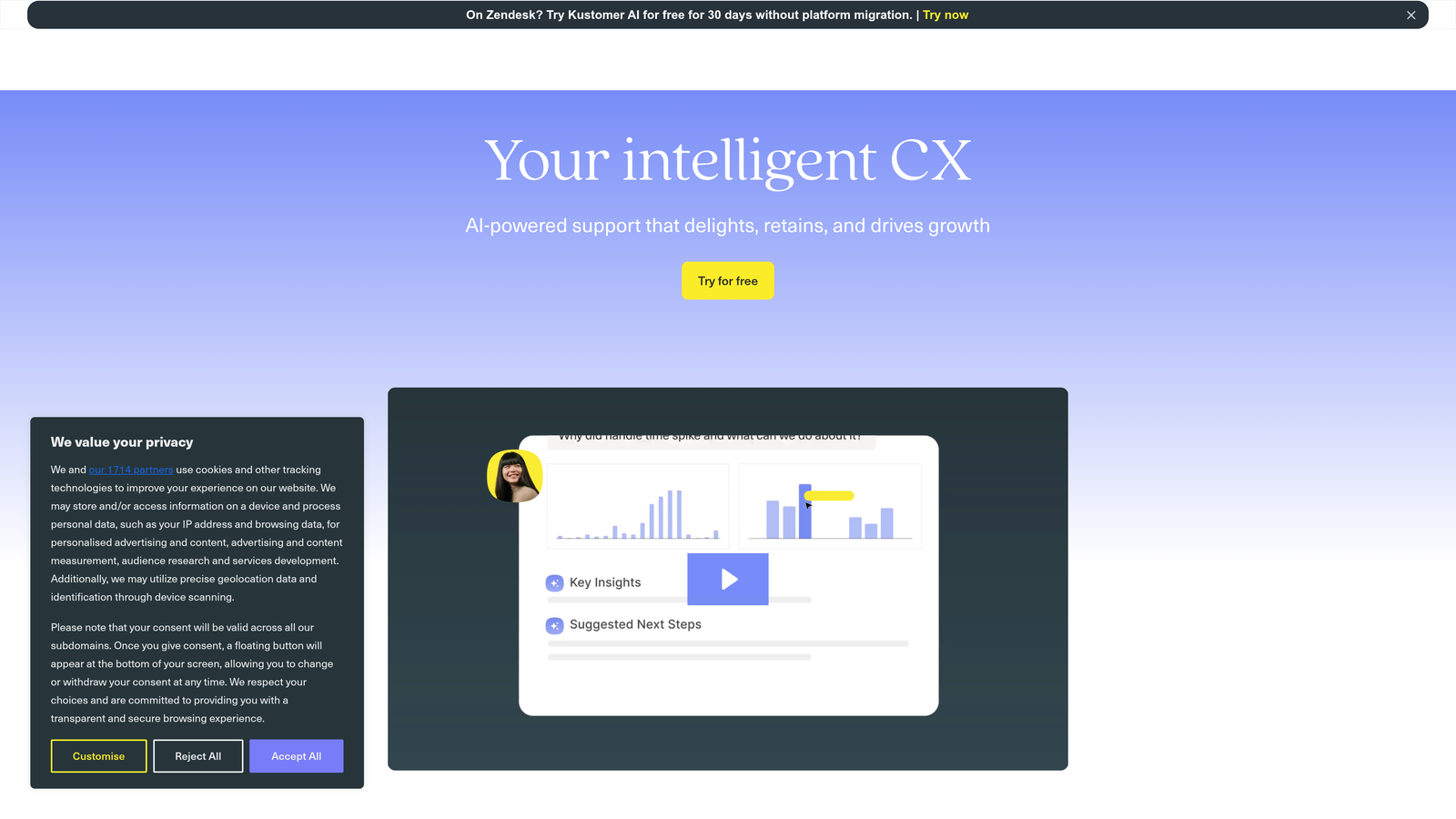
Kustomer reimagines the support interface around a timeline view that shows every customer interaction chronologically, regardless of channel or team.
Where This Tool Shines
The timeline view fundamentally changes how agents understand customer issues. Instead of seeing disconnected tickets, agents see a chronological story—the customer's website visits, purchases, previous support conversations, email interactions, and chat sessions all in sequence. This context dramatically reduces resolution time because agents immediately understand the full situation.
For companies handling high conversation volumes, Kustomer's business process automation removes repetitive work. The platform can automatically update CRM records, trigger workflows in other systems, and route conversations based on complex business logic without requiring technical implementation.
Key Features
Timeline View: Chronological display of all customer interactions across channels, teams, and systems.
AI-Powered Chatbots: Automated conversation handling with intelligent escalation to human agents when needed.
Omnichannel Management: Unified conversations across email, chat, SMS, social media, and voice.
Business Process Automation: Workflow automation that updates external systems and triggers actions based on conversation data.
Real-Time Sentiment Analysis: AI detection of customer frustration enabling proactive intervention.
Best For
E-commerce companies and brands managing high conversation volumes who need agents to quickly understand complex customer histories. Particularly effective for businesses where customer lifetime value depends on relationship quality.
Pricing
Contact for pricing. The platform targets mid-market to enterprise companies with significant support volumes.
8. Ada
Best for: Global brands prioritizing automated resolution through conversational AI with multilingual support
Ada focuses specifically on automated resolution, offering a no-code platform for building sophisticated conversational AI experiences across 50+ languages.
Where This Tool Shines
Ada's no-code builder enables non-technical team members to create and modify conversational flows without developer involvement. This accessibility means support and operations teams can iterate quickly based on customer feedback and changing business needs. The platform's multilingual capabilities go beyond simple translation—it understands context and intent across languages.
The automated resolution measurement provides clear visibility into what percentage of conversations the AI handles end-to-end versus requiring human escalation. This metric helps teams optimize their automation strategy and identify opportunities to expand AI capabilities.
Key Features
No-Code AI Builder: Visual interface for creating conversational flows without programming knowledge.
50+ Language Support: Native multilingual capabilities with contextual understanding across languages.
Automated Resolution Tracking: Clear metrics showing percentage of conversations resolved without human intervention.
CRM Personalization: Dynamic responses based on customer data pulled from integrated systems.
Seamless Agent Handoff: Smooth transition to human agents with complete conversation context when escalation is needed.
Best For
Global companies and brands serving customers in multiple languages who want to maximize automated resolution rates. Strong fit for organizations with non-technical teams who need to own and iterate on conversational experiences.
Pricing
Contact for pricing. Ada typically works with mid-market and enterprise companies focused on automation-first strategies.
9. Gladly
Best for: Relationship-focused brands organizing support around people rather than tickets
Gladly takes a radically different approach by building the entire platform around customers as people rather than organizing around ticket numbers.
Where This Tool Shines
Gladly's customer-centric design means every interaction with a customer appears in one continuous conversation thread, regardless of channel or time between contacts. When a customer who emailed last month calls today, the agent sees that email conversation in the same thread as the current call. This creates continuity that feels personal rather than transactional.
The platform includes native voice, email, chat, SMS, and social capabilities—no integrations required. This native approach eliminates the disconnected feeling customers experience when companies use separate tools for different channels. Built-in quality management features help teams maintain consistency across all these channels.
Key Features
Customer-Centric Design: All interactions organized by person rather than ticket number or channel.
Single Conversation View: Lifelong conversation thread showing every interaction regardless of channel or timeframe.
Native Omnichannel: Voice, email, chat, SMS, and social built into the platform without requiring integrations.
AI-Powered Answers: Automated responses and agent assistance while maintaining personal conversation flow.
Quality Management: Built-in tools for monitoring, coaching, and maintaining consistency across channels.
Best For
Premium brands and relationship-focused businesses where customer experience directly impacts brand perception and lifetime value. Particularly effective for companies transitioning from transactional support to relationship-building service.
Pricing
Contact for pricing. Gladly positions as a premium platform for brands prioritizing customer experience quality.
Making the Right Choice
The right platform depends on where you are and where you're heading. If you want AI that genuinely resolves issues rather than just routing them, platforms built AI-first like Halo AI and Ada deliver fundamentally different capabilities than tools adding AI to legacy architectures. The difference shows in resolution rates and how quickly the system learns from new interactions.
For teams already invested in a specific ecosystem, native integrations matter enormously. HubSpot Service Hub makes perfect sense if your sales and marketing already live in HubSpot. Salesforce Service Cloud delivers maximum value when you're deep in the Salesforce ecosystem. Fighting against your existing infrastructure creates friction that compounds over time.
Budget considerations extend beyond per-seat pricing. Platforms like Freshdesk and Zendesk offer predictable costs that scale linearly with team size. Enterprise platforms like Salesforce and Kustomer require larger initial investments but provide customization that off-the-shelf solutions can't match. Consider implementation costs and time-to-value—a platform that takes six months to implement delays your ROI regardless of its capabilities.
The fundamental question is whether you want support that scales with headcount or support that scales with intelligence. Traditional helpdesks improve through better processes and more agents. AI-first platforms improve through continuous learning from every interaction. Your support team shouldn't scale linearly with your customer base. Let AI agents handle routine tickets, guide users through your product, and surface business intelligence while your team focuses on complex issues that need a human touch. See Halo in action and discover how continuous learning transforms every interaction into smarter, faster support.