9 Best Customer Experience Automation Tools in 2026
This guide evaluates the 9 best customer experience automation tools for 2026, helping B2B SaaS and product teams identify platforms that go beyond basic helpdesk automation to deliver AI-driven support, personalized interactions at scale, and actionable insights — without expanding headcount. Each tool is assessed on automation depth, integration ecosystem, and scalability to match real enterprise needs.
 Matt PattoliFounder12 min read
Customer experience automation has shifted from a competitive advantage to a baseline expectation. B2B teams are under pressure to resolve issues faster, personalize interactions at scale, and surface insights that actually inform product decisions — all without proportionally growing headcount.
The market is crowded, and not every platform delivers on its promises. Some bolt automation onto legacy helpdesk infrastructure; others are built AI-first from the ground up. This list covers the top customer experience automation tools worth evaluating in 2026, selected based on automation depth, integration ecosystem, scalability, and how well they serve B2B SaaS and product teams.
1. Halo AI
Best for: B2B SaaS teams that want autonomous, AI-first support with deep product and business context.
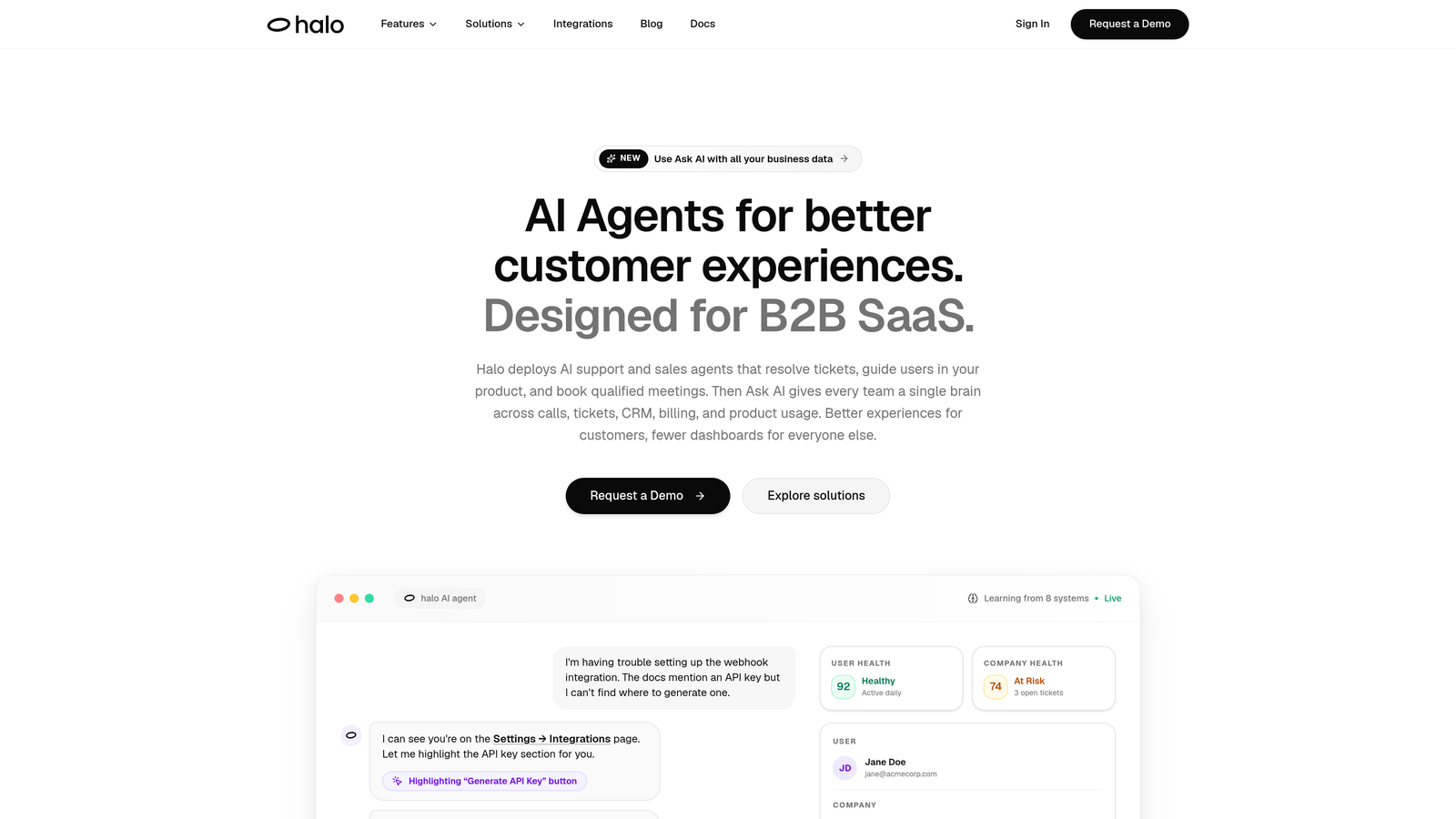
Halo AI is an AI-first customer support platform that deploys autonomous agents to resolve tickets, guide users through your product, and surface business intelligence from every customer interaction.
Where This Tool Shines
What separates Halo from most tools on this list is its architecture. Rather than layering AI onto an existing helpdesk, Halo is built AI-first, meaning the agents are designed to resolve tickets end-to-end without human input as the default, not as an edge case. The platform learns from every interaction, getting smarter over time rather than staying static.
The page-aware chat widget is a particularly strong differentiator. The AI agent sees what the user sees, understanding which page they're on and what they're likely trying to accomplish. This context enables precise, relevant guidance rather than generic responses pulled from a knowledge base. For SaaS products with complex workflows, this kind of contextual awareness can meaningfully reduce back-and-forth.
Key Features
Intelligent AI Agents: Resolve tickets end-to-end autonomously, with live agent handoff for complex issues that require human judgment.
Page-Aware Chat Widget: The agent sees the user's current page and UI state, enabling contextually accurate guidance without users needing to explain their situation.
Smart Inbox with Business Intelligence: Surfaces customer health signals, revenue anomalies, and product insights from support conversations, going beyond standard support metrics.
Autonomous Bug Ticket Creation: Automatically identifies and routes bug reports directly to Linear, reducing engineering team overhead.
Native Integrations: Connects to Slack, HubSpot, Intercom, Stripe, Zoom, PandaDoc, and Fathom, linking support to your entire business stack.
Best For
Halo is best suited for B2B SaaS companies and product teams that want to move beyond basic automation. If you're managing a high-volume support inbox, trying to reduce repetitive ticket load, or looking to extract actionable business intelligence from customer conversations, Halo is built specifically for that context.
Pricing
Contact for pricing. Halo is designed for B2B SaaS teams and positions as a platform-level investment rather than a per-seat add-on.
2. Intercom
Best for: Teams already invested in Intercom's messaging infrastructure who want AI layered on top.
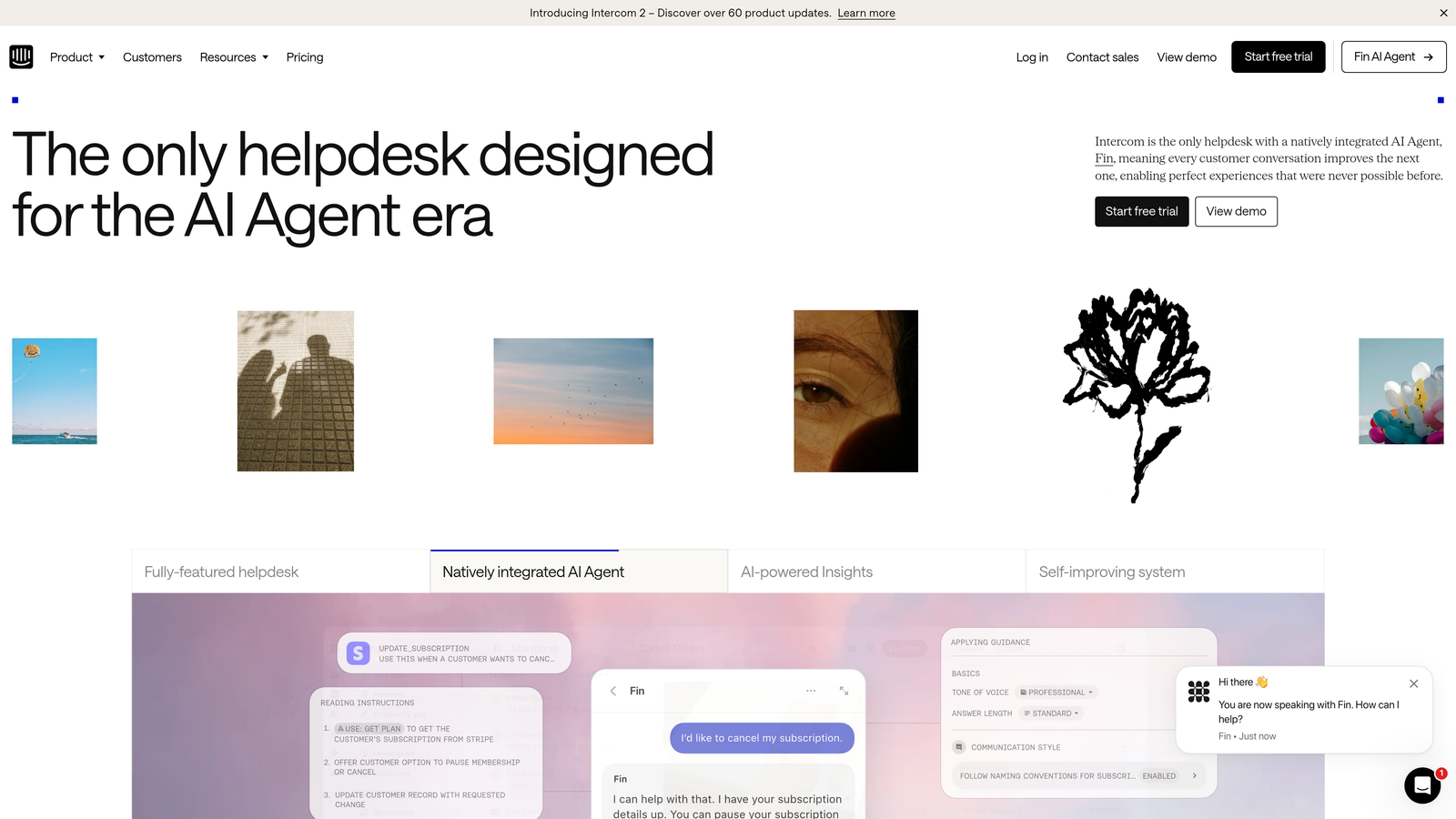
Intercom is a mature customer messaging platform with Fin AI agent capabilities built on top of its live chat and inbox infrastructure.
Where This Tool Shines
Intercom's strength is its ecosystem maturity. It's been a go-to for in-app messaging and live chat for years, and Fin, its AI agent, extends that foundation with automated ticket resolution using help center content. For teams already running Intercom workflows, adding Fin is a natural evolution rather than a platform switch.
The unified inbox is well-executed, combining chat, email, and in-app messaging in a single interface. Intercom's app marketplace is also one of the largest in the category, giving teams significant flexibility to connect adjacent tools.
Key Features
Fin AI Agent: Automates ticket resolution by drawing on help center content, reducing repetitive support volume.
Unified Inbox: Combines chat, email, and in-app messaging into a single agent workspace.
Workflow Automation: Conditional logic-based automation for routing, tagging, and escalation.
App Marketplace: Extensive third-party integrations across CRM, analytics, and product tools.
Product Tours: In-app onboarding and feature adoption flows built natively into the platform.
Best For
Intercom works well for SaaS companies that want a single platform covering live chat, in-app messaging, and AI-assisted support. It's particularly strong for teams already using Intercom who want to expand into automation without migrating to a new system.
Pricing
Starts at approximately $39 per seat per month. Fin AI agent is priced per resolution, so costs scale with usage volume.
3. Zendesk
Best for: Enterprise teams with complex workflows, large agent teams, and mature support operations.
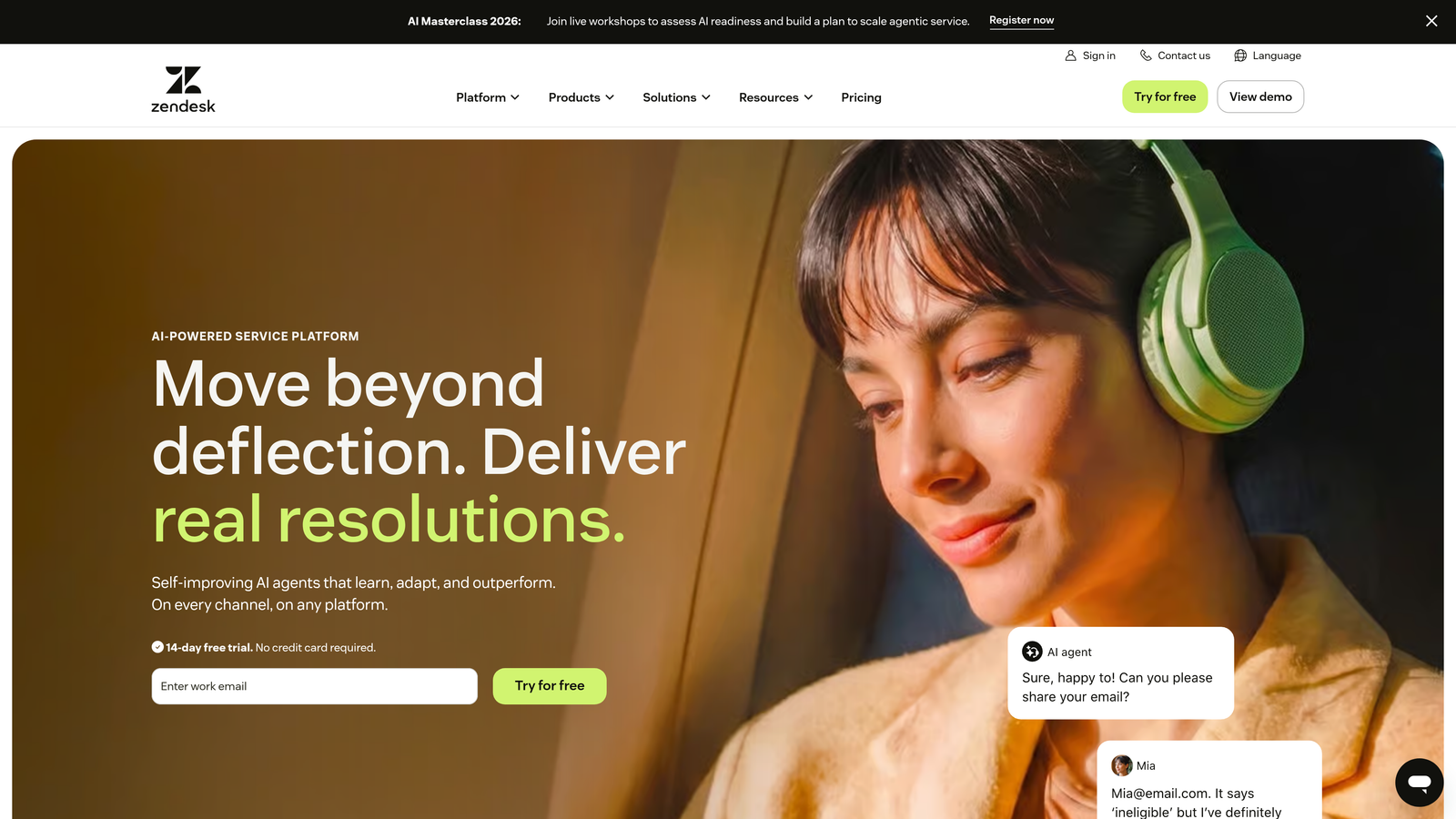
Zendesk is an enterprise-grade ticketing and support platform with AI features for triage, routing, and response suggestions.
Where This Tool Shines
Zendesk is the industry standard for a reason. Its ticketing infrastructure is battle-tested, its SLA management is highly configurable, and its marketplace of over 1,000 integrations means it connects to almost anything. For enterprises with established support processes, Zendesk provides the reliability and customization depth those environments require.
The AI features, including intelligent triage and suggested responses, are genuinely useful for reducing agent decision fatigue. That said, Zendesk's AI capabilities are additive to a ticketing-first foundation rather than built around autonomous resolution as a core design principle.
Key Features
AI-Powered Triage: Automatically classifies and routes incoming tickets based on intent and priority signals.
Suggested Responses: Macro recommendations help agents respond faster with consistent, approved language.
SLA Management: Highly configurable service level agreements with automated escalation rules.
App Marketplace: Over 1,000 integrations spanning CRM, analytics, e-commerce, and developer tools.
Advanced Reporting: Detailed dashboards for team performance, ticket trends, and customer satisfaction metrics.
Best For
Zendesk suits enterprises and larger SaaS companies with complex, multi-team support operations. Lean teams or early-stage companies may find the configuration overhead and pricing harder to justify.
Pricing
Suite plans start at approximately $55 per agent per month, with enterprise tiers priced significantly higher.
4. Freshdesk
Best for: Growing teams making their first move into omnichannel support automation at an accessible price point.
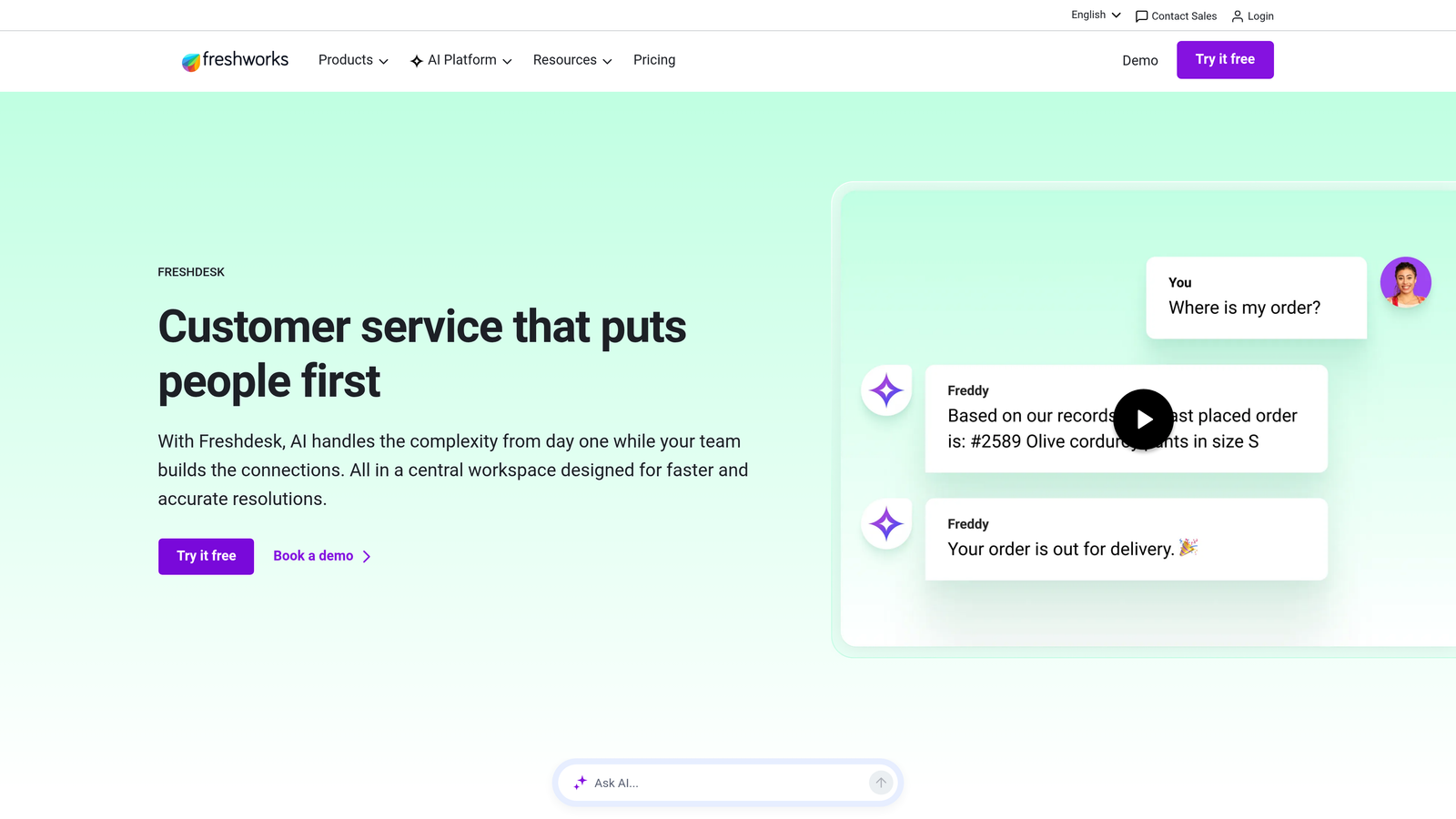
Freshdesk is an omnichannel support platform with Freddy AI providing automation for ticket routing, suggested responses, and self-service.
Where This Tool Shines
Freshdesk punches above its weight at the SMB and mid-market tier. Freddy AI handles ticket categorization, response suggestions, and self-service bot interactions across email, chat, phone, and social channels. The breadth of channel coverage at these price points is genuinely competitive.
Collision detection, which prevents two agents from responding to the same ticket simultaneously, is a small but practically valuable feature that saves teams from embarrassing duplicate responses. Freshdesk is a solid choice for teams that need omnichannel coverage without enterprise-level spend.
Key Features
Freddy AI: Automates ticket categorization, routing, and response suggestions across support channels.
Freddy Self Service: A bot that deflects common queries before they reach a human agent.
Omnichannel Inbox: Manages email, chat, phone, and social support from a single workspace.
Collision Detection: Prevents duplicate agent responses on the same ticket.
Tiered Pricing: Accessible plans that scale with team size, including a free tier for small teams.
Best For
Freshdesk is well-suited for SMBs, growing SaaS teams, and companies transitioning from basic email support to a structured omnichannel operation. Teams looking for deep AI autonomy may eventually outgrow it.
Pricing
Free plan available. Paid plans start at approximately $15 per agent per month, making it one of the more accessible options on this list.
5. Salesforce Service Cloud
Best for: Enterprise organizations where support, sales, and CRM data need to be deeply unified.
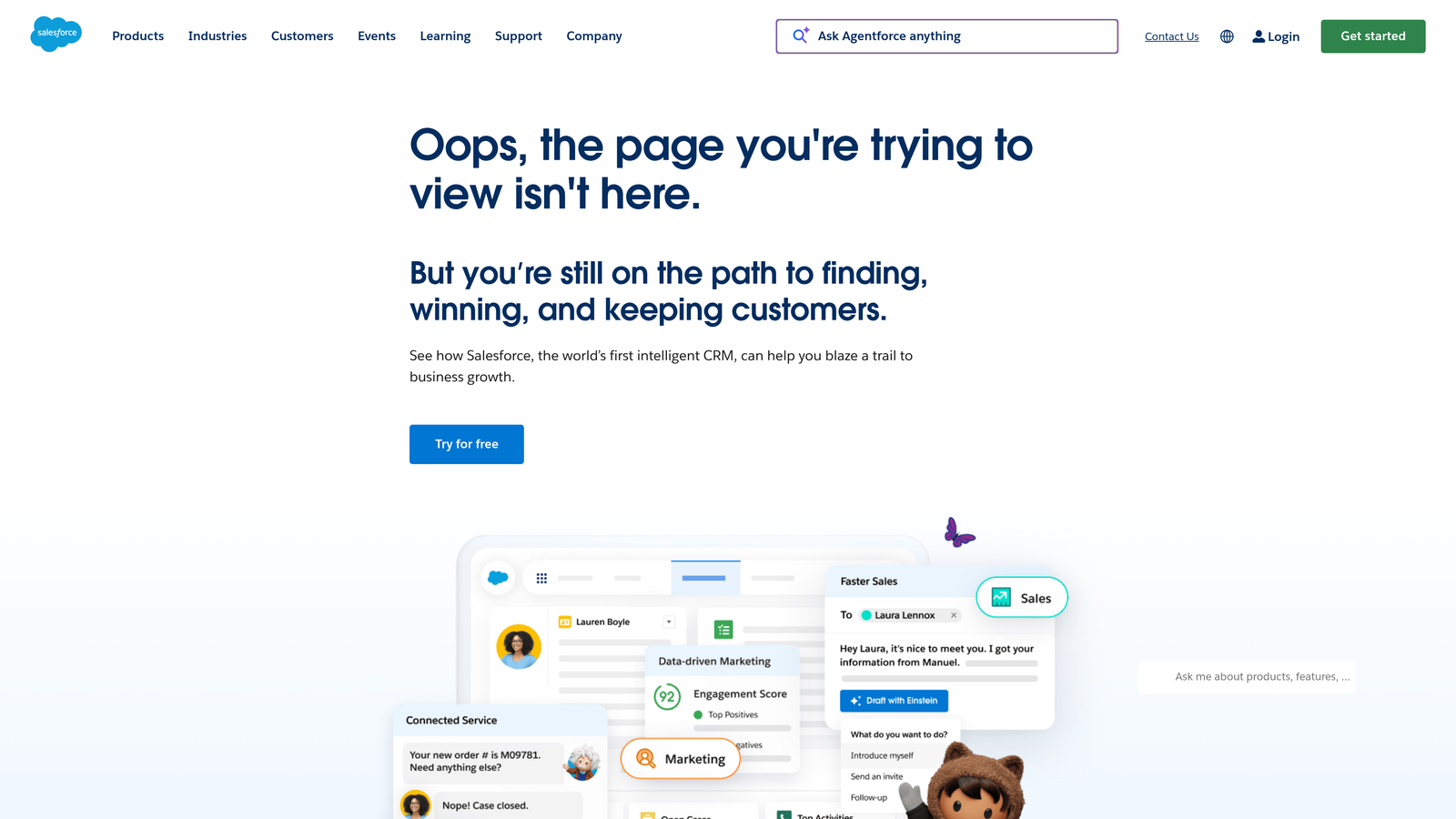
Salesforce Service Cloud is an enterprise support automation platform deeply integrated with Salesforce CRM and powered by Einstein AI.
Where This Tool Shines
The core value proposition of Service Cloud is CRM-native context. Einstein AI has direct access to the full Salesforce data model, meaning automated responses and routing decisions can draw on account history, deal stage, contract value, and any other CRM data your organization captures. For enterprises where support interactions are tightly linked to revenue relationships, this depth of context is genuinely powerful.
Omnichannel routing across voice, chat, email, and social is robust, and the case management capabilities are among the most configurable in the market. The trade-off is implementation complexity and cost, which can be substantial.
Key Features
Einstein AI: Accesses full CRM data to power personalized automation, routing, and response suggestions.
Omnichannel Routing: Distributes cases across voice, chat, email, and social based on configurable rules.
Case Management: Automated escalation rules and case lifecycle management for complex support processes.
AI-Suggested Knowledge Articles: Surfaces relevant knowledge base content for agents in real time.
Salesforce Ecosystem Integration: Native connectivity across Sales Cloud, Marketing Cloud, and the broader Salesforce platform.
Best For
Service Cloud is the right choice for large enterprises already running Salesforce across sales and marketing. For companies not already in the Salesforce ecosystem, the implementation investment is difficult to justify.
Pricing
Starts at approximately $25 per user per month; enterprise tiers are significantly higher, and implementation costs add to the total investment.
6. HubSpot Service Hub
Best for: Teams already on HubSpot who want support automation connected directly to CRM and deal data.
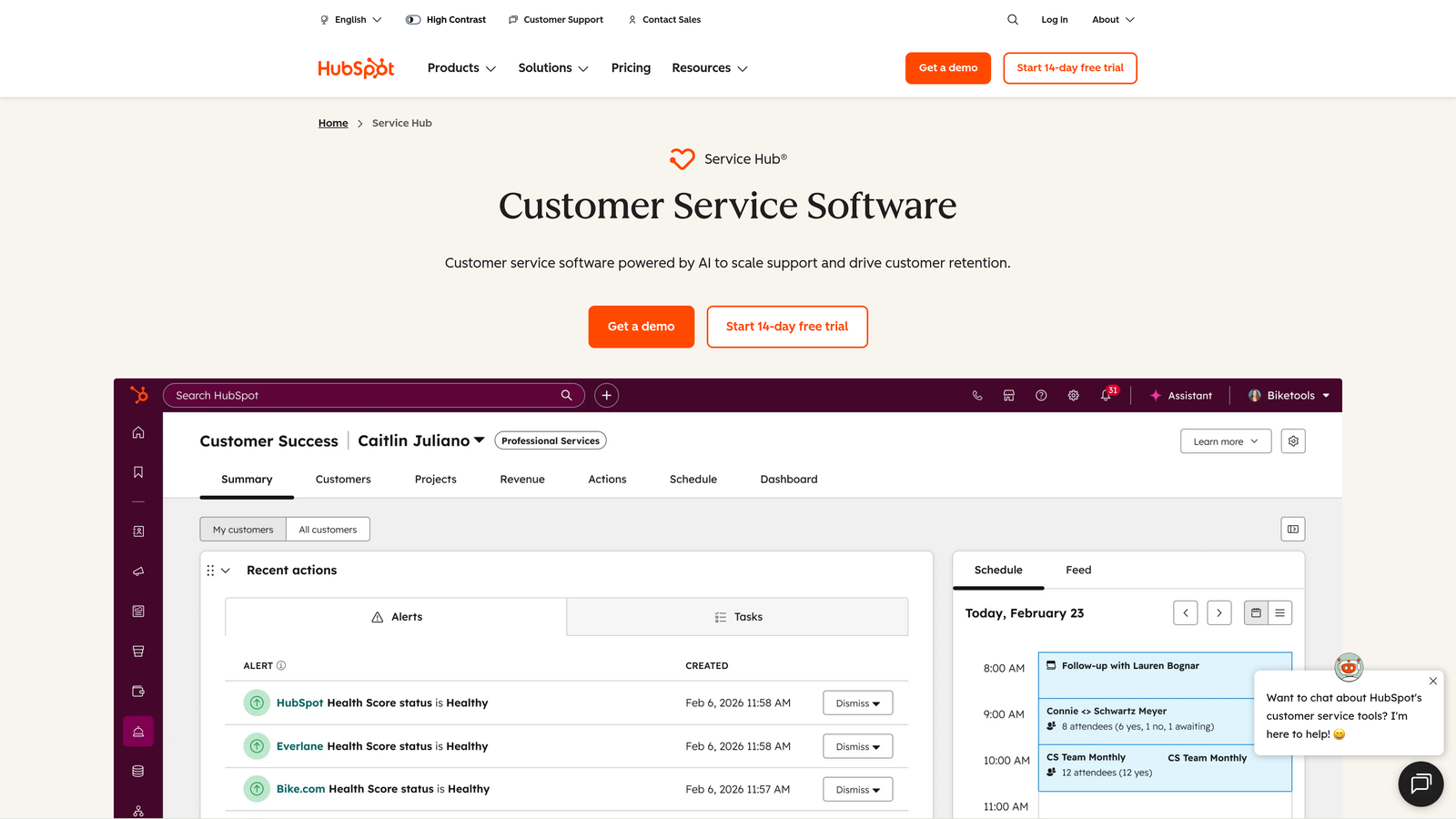
HubSpot Service Hub is a support automation tool built natively within the HubSpot ecosystem, connecting ticket data directly to CRM contacts and deal records.
Where This Tool Shines
Service Hub's primary advantage is its native position within HubSpot. Tickets connect directly to contact records, deal history, and marketing activity, giving support agents context that standalone helpdesks can only approximate through integrations. For teams already using HubSpot for sales and marketing, this eliminates a significant amount of data silos.
The built-in customer feedback tools, covering NPS, CSAT, and CES surveys, are well-integrated with reporting, and the knowledge base includes SEO optimization features that standalone support tools often overlook.
Key Features
Ticket Pipeline Automation: Automation rules that move tickets through stages based on status, activity, and contact properties.
AI Chatbot Builder: Connected to CRM contact data for personalized automated conversations.
Knowledge Base: Built-in article creation with SEO optimization for self-service deflection.
Customer Feedback Surveys: NPS, CSAT, and CES surveys with native reporting tied to contact records.
Unified Reporting: Support data reported alongside sales and marketing metrics in a single dashboard.
Best For
HubSpot Service Hub is the obvious choice for HubSpot-native teams. For companies not already on HubSpot, the value proposition is less compelling compared to dedicated support platforms with deeper AI capabilities.
Pricing
Free tools available. Paid tiers start at approximately $15 per month, scaling with contact volume and feature access.
7. Tidio
Best for: Small teams and early-stage companies that need fast AI chat deployment with minimal technical overhead.
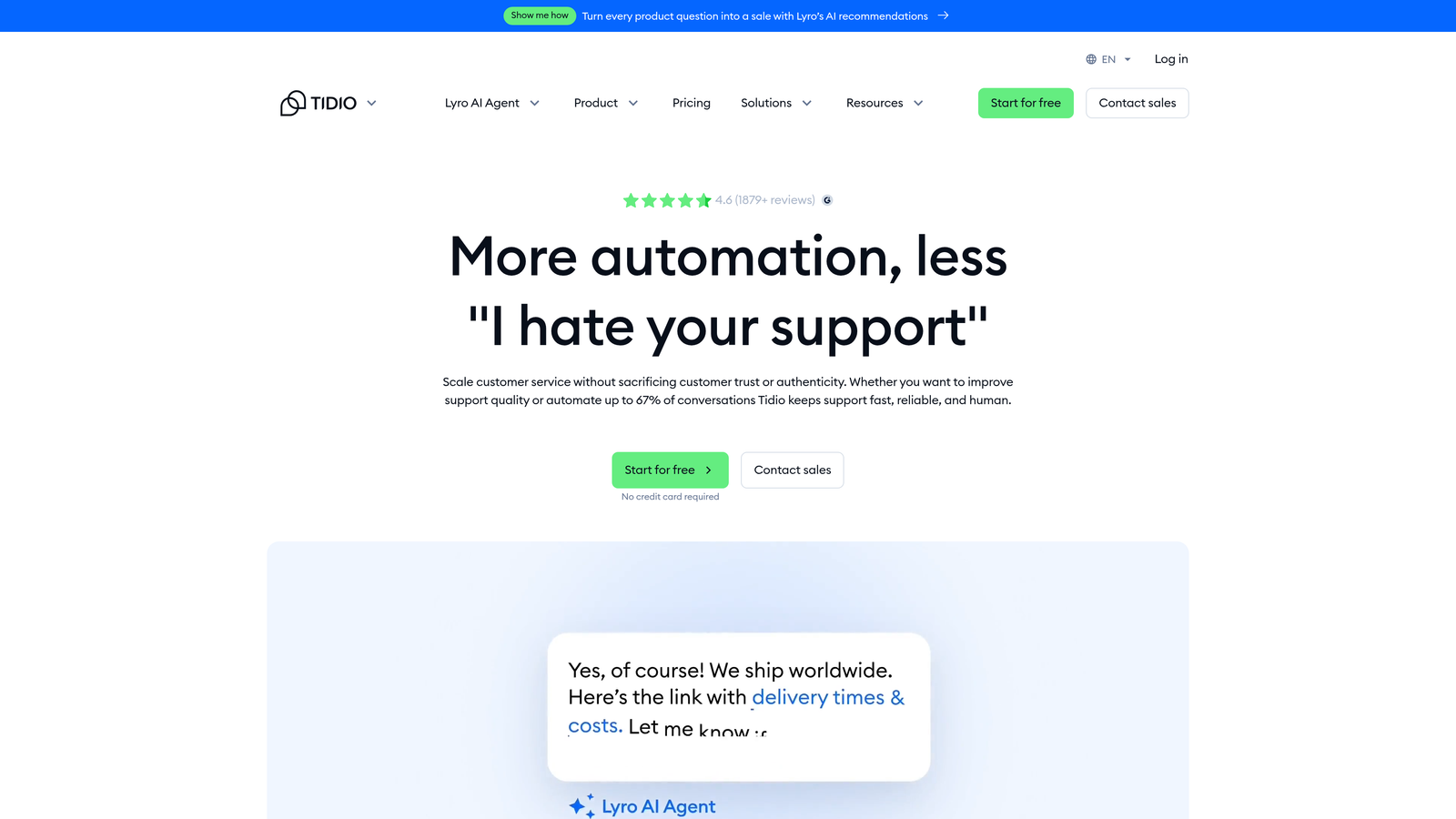
Tidio is an accessible AI chat and automation tool with a visual bot builder and Lyro AI agent designed for fast deployment with minimal configuration.
Where This Tool Shines
Tidio's standout quality is its speed to value. The visual no-code bot builder and pre-built templates mean teams can have automated chat running in hours rather than weeks. Lyro, its AI agent, handles conversational support without requiring deep training or configuration, making it accessible to teams without dedicated operations resources.
Real-time visitor tracking adds a proactive support dimension, allowing the chat widget to trigger based on user behavior rather than waiting for customers to initiate contact. For smaller teams, this kind of proactive engagement is often only available in more expensive platforms.
Key Features
Lyro AI Agent: Handles automated conversational support with minimal setup required.
Visual Bot Builder: No-code interface with pre-built templates for common support flows.
Real-Time Visitor Tracking: Triggers chat based on user behavior for proactive support engagement.
Email and Messenger Integration: Extends chat automation to email and social messaging channels.
Fast Setup: Minimal configuration required to go live, reducing time to first automated resolution.
Best For
Tidio is well-suited for small businesses, early-stage SaaS companies, and e-commerce teams that need accessible AI chat without the complexity or cost of enterprise platforms. Teams with high-volume or complex B2B support needs may find it limiting as they scale.
Pricing
Free plan available. Lyro AI starts at approximately $29 per month, with pricing scaling based on conversation volume.
8. Gorgias
Best for: E-commerce and DTC brands running on Shopify, WooCommerce, or Magento.
Gorgias is a support automation platform purpose-built for e-commerce, with deep integrations into Shopify, WooCommerce, and Magento for automated order-related responses.
Where This Tool Shines
Gorgias occupies a very specific and well-executed niche: e-commerce support automation. Its integrations with Shopify, WooCommerce, and Magento go beyond surface-level data pulls. Agents can view order history, trigger refunds, and update order details directly from the support inbox without switching platforms. For DTC brands where the majority of support volume is order status, returns, and shipping inquiries, this depth of integration dramatically reduces handle time.
The revenue statistics feature, which tracks how support interactions influence sales, is a useful tool for demonstrating support's business impact to leadership teams focused on revenue metrics.
Key Features
E-Commerce Integrations: Deep Shopify, WooCommerce, and Magento data access directly within the support inbox.
Automated Order Responses: Handles order status, return, and shipping queries automatically without agent involvement.
Omnichannel Inbox: Consolidates email, chat, social, and SMS support in one workspace.
Revenue Statistics: Tracks the revenue impact of support conversations and agent interactions.
Macro Templates: Pre-built response templates for consistent, fast agent replies to common queries.
Best For
Gorgias is the clear choice for e-commerce and DTC brands. It's less relevant for pure B2B SaaS companies, where order management is not a primary support driver.
Pricing
Starts at approximately $10 per month for low ticket volumes, with pricing scaling based on ticket count rather than agent seats.
9. Kustomer
Best for: Teams that need a full customer timeline across all channels to power personalized, context-rich automation.
Kustomer is a CRM-native support platform that consolidates the full customer timeline across all channels to enable richer, more personalized automation.
Where This Tool Shines
Kustomer's unified customer timeline is its defining feature. Rather than treating each support interaction as an isolated ticket, Kustomer builds a longitudinal view of every touchpoint across email, chat, voice, social, and SMS. This full-context view powers automation rules that can factor in a customer's entire history, not just their current message.
The conditional branching in workflow automation is sophisticated, allowing teams to build nuanced routing and response logic based on customer attributes, past behavior, and real-time conversation signals. For support operations that need to differentiate treatment by customer segment or account tier, Kustomer handles this well.
Key Features
Unified Customer Timeline: Consolidates all touchpoints and channels into a single chronological customer view.
AI-Powered Routing: Conversation routing and suggested responses informed by full customer context.
Workflow Automation: Conditional branching logic for sophisticated routing, escalation, and response rules.
Omnichannel Support: Covers email, chat, voice, social, and SMS from a unified workspace.
Business Intelligence Reporting: Analytics on customer trends, agent performance, and support operation health.
Best For
Kustomer suits mid-market and enterprise teams handling high interaction volumes across multiple channels where customer history is critical context for personalized support. The pricing reflects its positioning at that tier.
Pricing
Starts at approximately $89 per user per month, positioning it firmly in the mid-market to enterprise segment.
Which Tool Is Right for Your Team?
The right customer experience automation tool depends less on feature checklists and more on where your team is starting from and where you need to go.
If you're a B2B SaaS team that wants autonomous AI support with genuine business intelligence, not just faster ticket routing, Halo AI is built for that context. The page-aware context, continuous learning, and smart inbox signals go well beyond what most platforms offer out of the box.
For teams already embedded in specific ecosystems, the calculus shifts. HubSpot Service Hub makes obvious sense if your sales team lives in HubSpot. Salesforce Service Cloud is the natural choice for enterprise Salesforce shops. Gorgias is purpose-built for e-commerce and hard to beat in that context.
For teams evaluating standalone support platforms, Intercom offers the most mature AI-plus-messaging combination, while Zendesk provides the deepest enterprise customization. Freshdesk and Tidio serve teams that need accessible automation without the overhead of enterprise configuration. Kustomer suits operations where full customer history is the foundation of every interaction.
The architectural question worth asking before you commit: are you looking for AI bolted onto an existing helpdesk, or a platform built from the ground up to resolve tickets autonomously? That distinction will narrow your shortlist faster than any feature comparison.
Your support team shouldn't scale linearly with your customer base. Let AI agents handle routine tickets, guide users through your product, and surface business intelligence while your team focuses on complex issues that need a human touch. See Halo in action and discover how continuous learning transforms every interaction into smarter, faster support.