9 Best Customer Feedback Automation Tools in 2026
Discover the 9 best customer feedback automation tools in 2026 that go beyond simple collection to intelligently classify, route, and act on customer signals at scale. From AI-native support agents to NPS platforms and analytics engines, this guide helps teams close the gap between gathering feedback and turning it into measurable improvements in retention and revenue.
 Matt PattoliFounder14 min read
Customer feedback is only valuable if you can actually act on it. And doing that manually at scale is where most teams hit a wall. Whether you're triaging support tickets, spotting product friction, or routing complaints to the right team, the gap between collecting feedback and doing something useful with it is where revenue and retention quietly leak away.
The right customer feedback automation tools close that gap. They capture signals across channels, classify and route them intelligently, surface trends before they become crises, and increasingly, resolve issues without human intervention at all.
This list covers nine tools worth evaluating in 2026, from AI-native support agents that turn feedback into action automatically, to dedicated survey platforms, NPS tools, and analytics engines. We've focused on tools that go beyond collection to offer genuine automation, not just dashboards you have to manually interpret.
1. Halo AI
Best for: B2B SaaS teams that want feedback captured, classified, and resolved autonomously
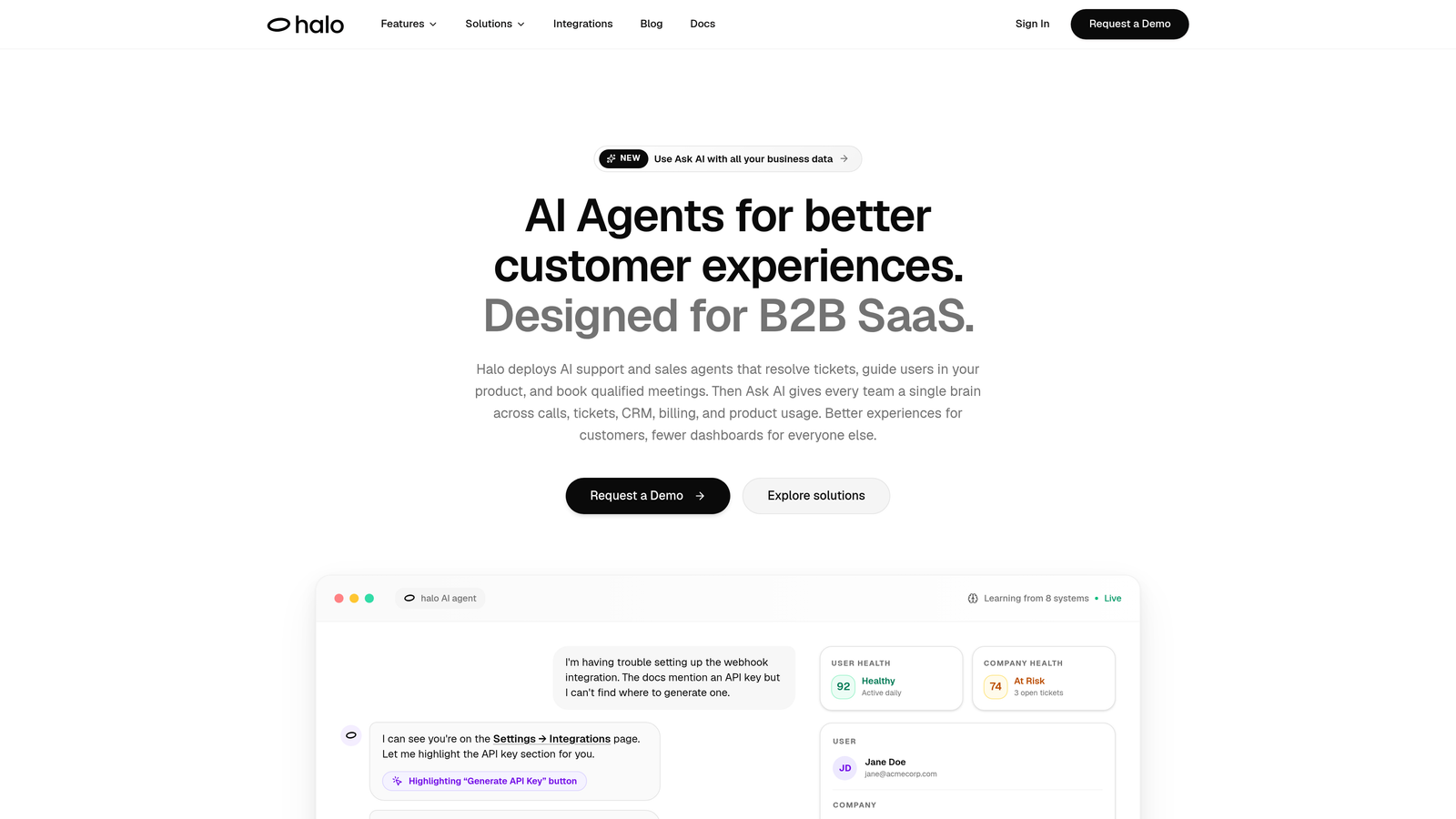
Halo AI is an AI-native customer support platform that doesn't just collect feedback, it acts on it automatically, learning from every interaction to get smarter over time.
Where This Tool Shines
Most feedback tools stop at collection or classification. Halo goes further: its AI agents autonomously resolve support tickets, create bug reports, and surface business intelligence signals from within the same support workflow. This makes it genuinely different from survey platforms or traditional helpdesks that require a human to interpret and act on what comes in.
The page-aware context is a standout capability. The AI sees what the user sees when they submit feedback or open a chat, which means responses are grounded in actual product context rather than generic answers. For product teams and support orgs that want feedback to directly improve the product, this tight loop between interaction and insight is hard to replicate elsewhere.
Key Features
Autonomous AI Agents: Resolve support tickets end-to-end without human involvement, learning from each resolved interaction to improve future responses.
Page-Aware Chat Widget: Captures feedback with full context of where the user is in the product, enabling more precise responses and richer signal data.
Smart Inbox with Business Intelligence: Surfaces customer health signals, anomaly detection, and revenue intelligence from support patterns, going well beyond a standard ticket queue.
Auto Bug Ticket Creation: Automatically identifies bug reports in support interactions and routes them to Linear or other dev tools without manual triage.
Live Agent Handoff: Escalates complex issues to human agents with full conversation context preserved, so nothing gets lost in the handoff.
Deep Integration Stack: Connects with Zendesk, Freshdesk, Intercom, HubSpot, Slack, Stripe, Linear, Zoom, PandaDoc, and Fathom.
Best For
B2B SaaS teams and product-led growth companies that want support interactions to function as a continuous feedback loop. Particularly strong for teams already using Zendesk, Intercom, or Freshdesk who want AI-native capabilities layered in without replacing their entire stack.
Pricing
Subscription-based AI agent model; contact Halo AI directly for pricing. Enterprise and growth tiers available depending on volume and integration needs.
2. Intercom
Best for: Teams that want feedback collection embedded natively in their support chat workflow
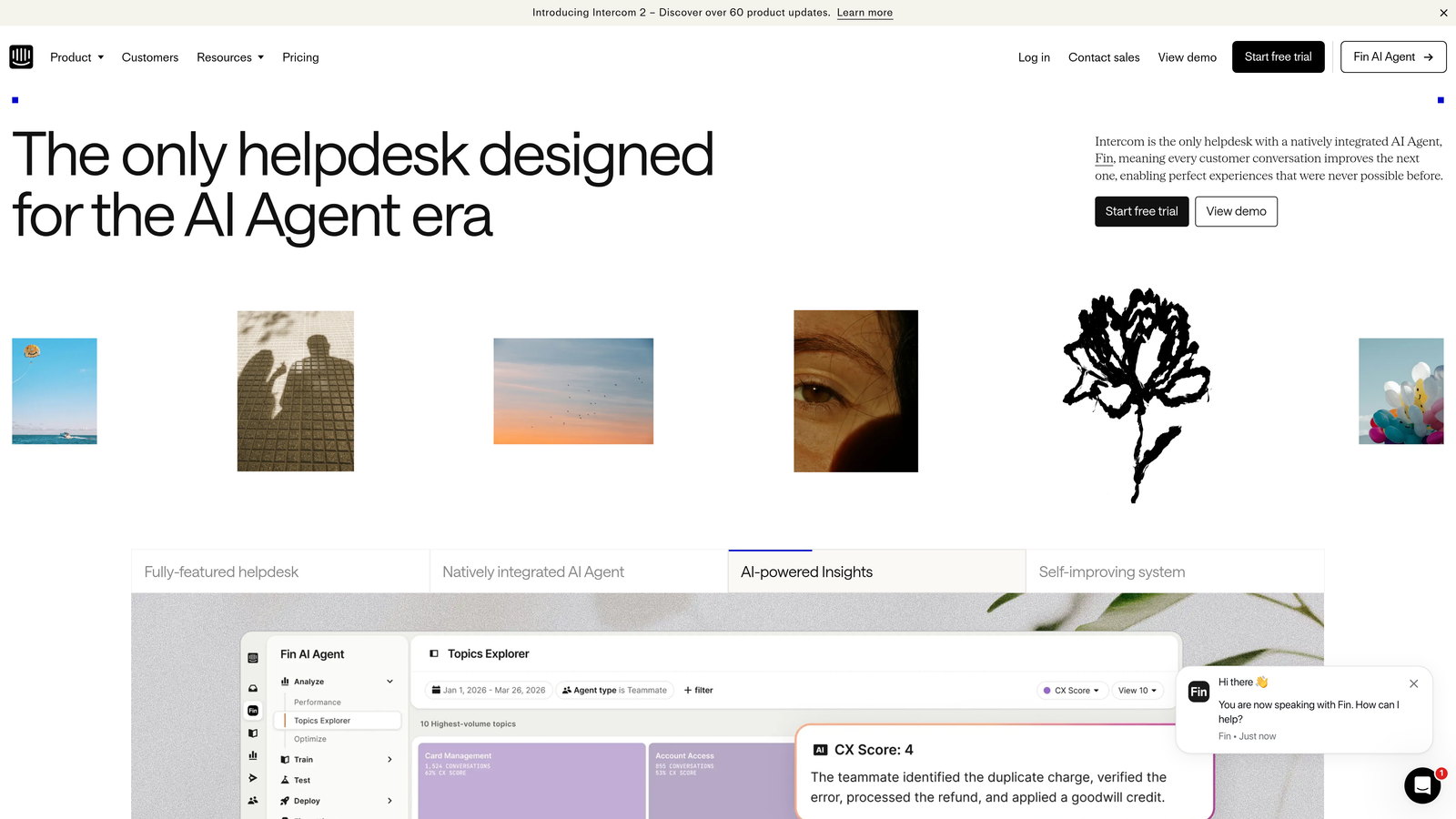
Intercom is a conversational support platform with a built-in AI agent, native survey triggers, and strong integrations that make it a natural home for feedback collection within support conversations.
Where This Tool Shines
Intercom's strength is consolidation. Rather than adding a separate survey tool, teams can trigger CSAT and NPS surveys automatically after conversations close, tag and analyze those conversations for trends, and let the Fin AI agent handle routine resolution. Everything lives in one platform.
For teams that are already using Intercom as their primary support channel, the feedback automation capabilities feel seamless rather than bolted on. The conversation tagging and reporting features make it reasonably straightforward to spot recurring themes without needing a separate analytics layer.
Key Features
Fin AI Agent: Handles automated support resolution using your help content, reducing ticket volume before feedback even needs to be collected.
Native CSAT and NPS Triggers: Automatically sends surveys post-conversation based on configurable rules and timing.
Conversation Tagging and Reporting: Categorizes support interactions for trend analysis and feedback volume tracking.
CRM and Tool Integrations: Connects with HubSpot, Slack, Salesforce, and other core platforms to push feedback data where it needs to go.
Best For
Mid-size SaaS and B2B teams already using Intercom as their primary support channel who want to add structured feedback collection without introducing another vendor. Less ideal if you need deep VoC analytics or standalone survey customization.
Pricing
Starts at approximately $39/month for core features; AI capabilities like Fin are available on higher-tier plans. Pricing scales with seat count and usage.
3. Typeform
Best for: Marketing and CX teams that need high-completion surveys with flexible logic and integrations
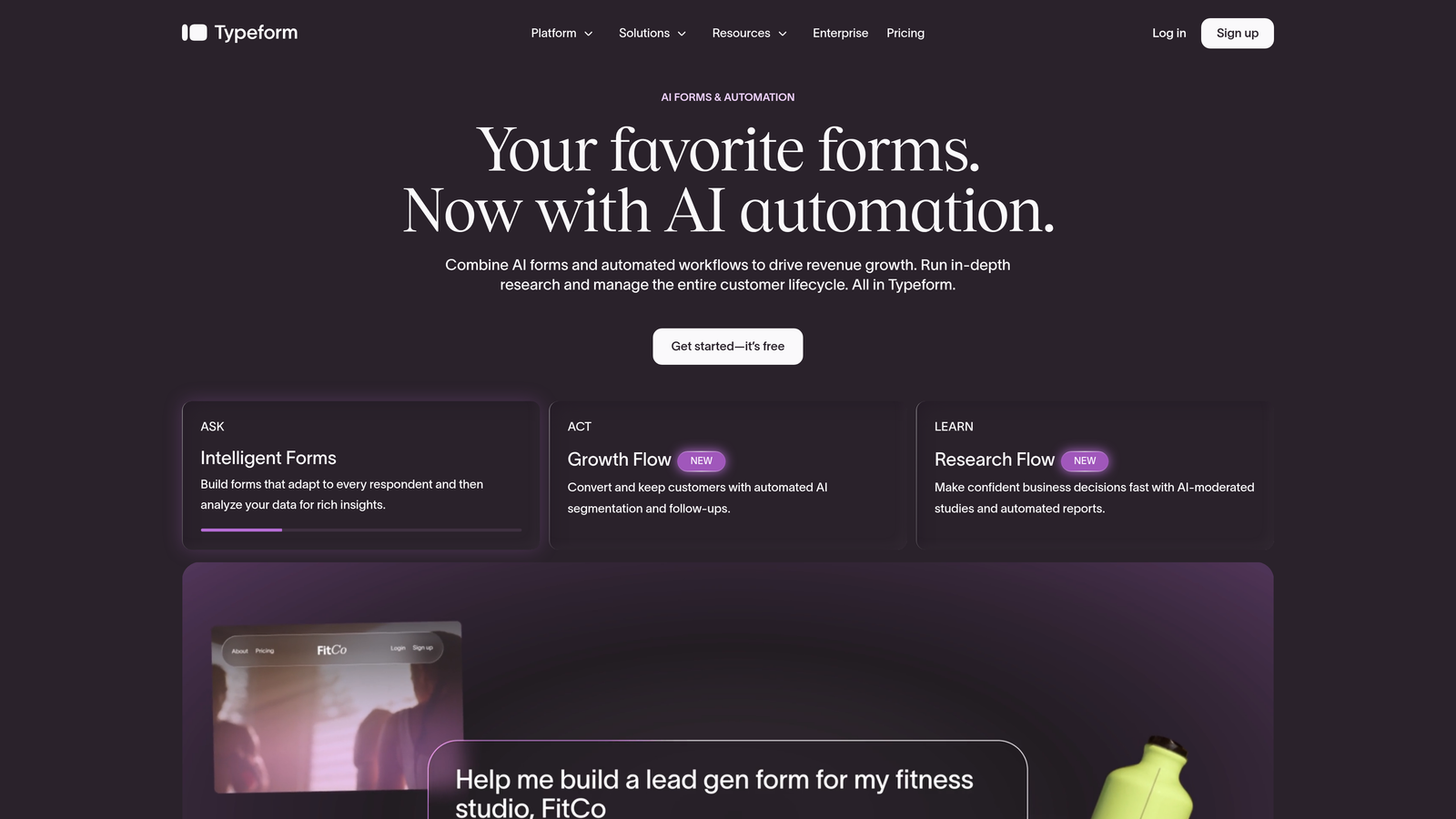
Typeform is a conversational survey builder known for its clean, one-question-at-a-time UX that consistently outperforms traditional form formats in completion rates.
Where This Tool Shines
The core differentiator is the survey experience itself. Typeform's format reduces the cognitive load of filling out a feedback form, which typically translates to more responses and more thoughtful answers. For teams where response rate is a meaningful problem, this alone can justify the switch.
Logic branching adds real depth: you can route respondents down different paths based on their answers, which makes it possible to build nuanced feedback flows without overwhelming users with irrelevant questions. Combined with solid Zapier, HubSpot, and Slack integrations, collected responses can flow automatically into whatever system your team actually uses.
Key Features
Conversational Survey UX: One-question-at-a-time format that reduces abandonment and improves response quality.
Logic Branching: Conditional paths based on responses allow for personalized survey flows without complexity for the respondent.
Native Integrations: Connects directly with HubSpot, Slack, Zapier, and Google Sheets for automated data routing.
Flexible Embedding: Surveys can be embedded in product, email, or web pages with minimal friction.
Best For
Marketing teams, CX managers, and product teams that prioritize survey completion rates and need flexible logic without heavy technical setup. Less suited to teams needing deep support-side automation or real-time ticket workflows.
Pricing
Free plan available with limited responses; paid plans start at approximately $25/month. Business and enterprise tiers unlock higher response limits and advanced integrations.
4. Delighted
Best for: Teams that want a fast, focused NPS and CSAT automation program without complexity
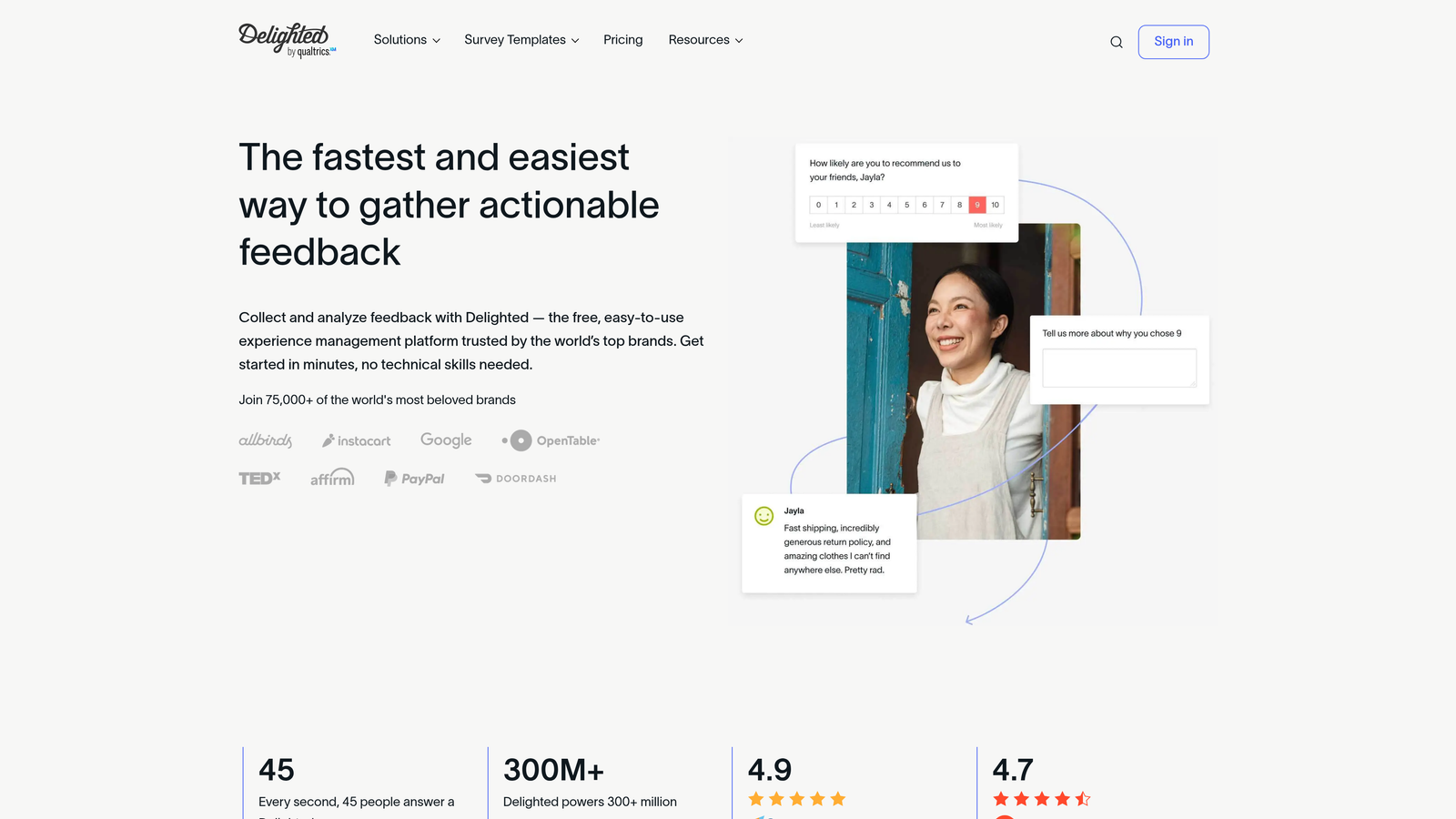
Delighted is a turnkey survey automation platform built specifically around NPS, CSAT, CES, and 5-star programs, with smart scheduling and automated follow-up logic built in from day one.
Where This Tool Shines
Delighted earns its reputation for being genuinely fast to set up. Most teams can launch a functioning NPS or CSAT program within hours, not weeks. The platform handles survey scheduling intelligently to avoid survey fatigue, and automated follow-up messages based on score mean you're not manually chasing detractors or thanking promoters.
As a Qualtrics-owned product, Delighted occupies an interesting middle ground: it has the polish and integrations of an enterprise tool, but the simplicity of a point solution. For teams that don't need the full Qualtrics platform but want something more structured than a DIY survey, it's a strong fit.
Key Features
Automated Survey Programs: Run NPS, CSAT, CES, and 5-star programs with configurable triggers and scheduling.
Smart Scheduling: Prevents over-surveying by managing send frequency based on customer activity and prior responses.
Automated Follow-Up: Sends personalized follow-up messages based on score, enabling closed-loop feedback without manual effort.
Integration Suite: Connects with Salesforce, Slack, HubSpot, and Zendesk to push survey data into existing workflows.
Best For
SaaS teams, customer success managers, and CX leads that need a dedicated, low-maintenance NPS or CSAT program. Excellent for teams that have been doing this manually in spreadsheets and want structured automation quickly.
Pricing
Free plan available; paid plans start at approximately $17/month. Higher tiers unlock additional survey types, integrations, and response volume.
5. Medallia
Best for: Large enterprises running omnichannel VoC programs across digital, contact center, and social channels
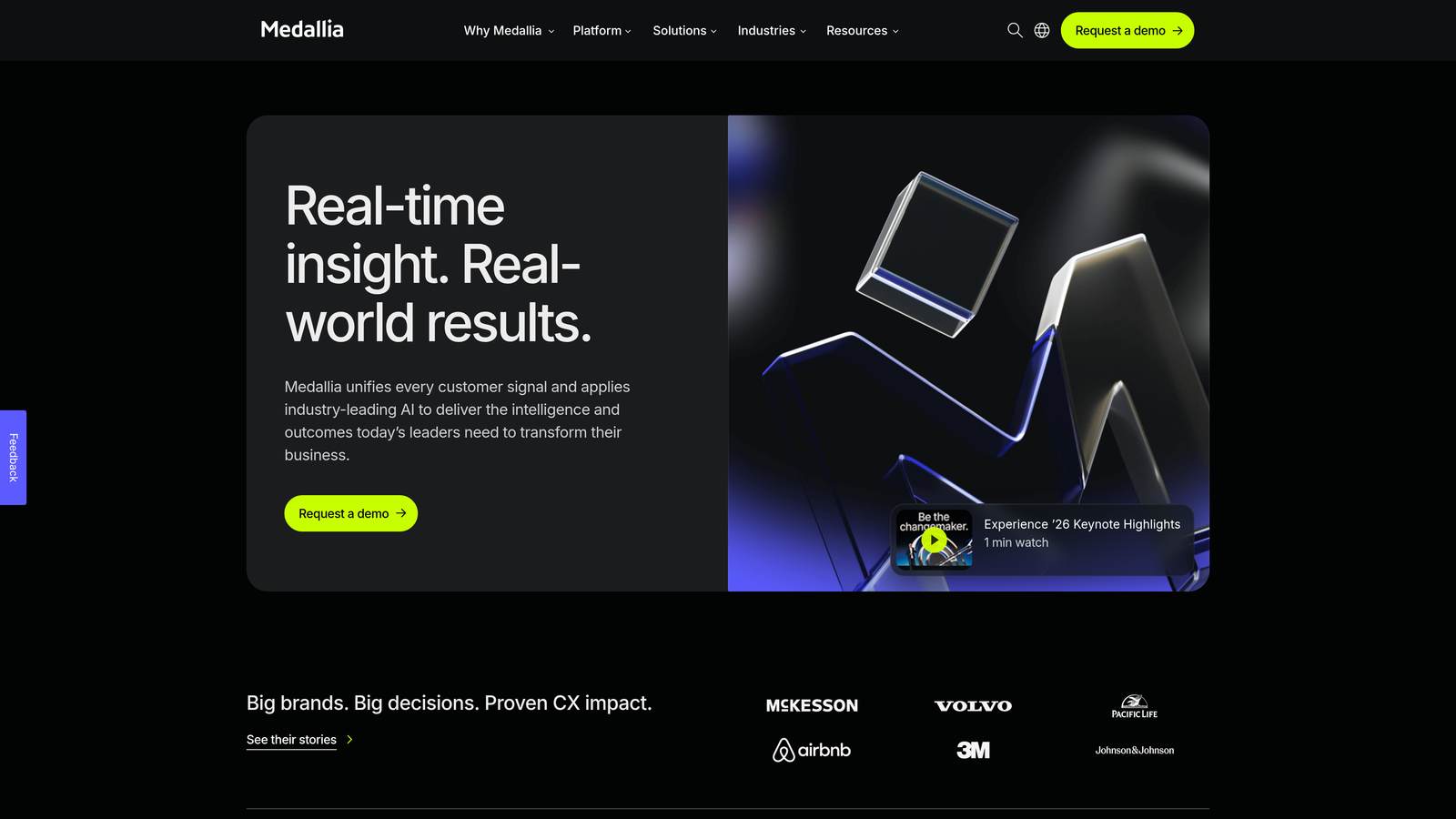
Medallia is an enterprise Voice of Customer platform that captures and analyzes signals from text, speech, digital interactions, and social channels using AI-powered theme and sentiment detection.
Where This Tool Shines
The scale of signal capture is what sets Medallia apart. While most tools focus on one or two feedback channels, Medallia ingests from web, mobile, contact center recordings, social media, and more, then applies AI to surface themes and sentiment patterns across all of them simultaneously. For large organizations where feedback is fragmented across dozens of touchpoints, this unified view is genuinely valuable.
Real-time alerts and action workflows mean that at-risk customers can trigger escalation processes automatically, rather than surfacing in a weekly report that someone then has to act on. This is where Medallia moves from analytics tool to operational system.
Key Features
Omnichannel Signal Capture: Ingests feedback from web, mobile, contact center, and social channels in a unified platform.
AI Text and Speech Analytics: Automatically detects themes and sentiment across structured and unstructured feedback at scale.
Real-Time Alerts and Workflows: Triggers action workflows for at-risk customers or critical feedback patterns as they occur.
Executive and Role-Based Dashboards: Delivers reporting tailored to different stakeholders across the organization.
Best For
Large enterprises with dedicated CX programs, significant contact center volume, and the implementation resources to configure and maintain a platform of this complexity. Not well-suited for lean teams or early-stage companies.
Pricing
Enterprise pricing; contact Medallia sales directly for a quote. Typically involves implementation investment alongside licensing costs.
6. Qualtrics XM
Best for: Mid-to-large enterprises that need structured VoC programs with automated feedback routing and action management
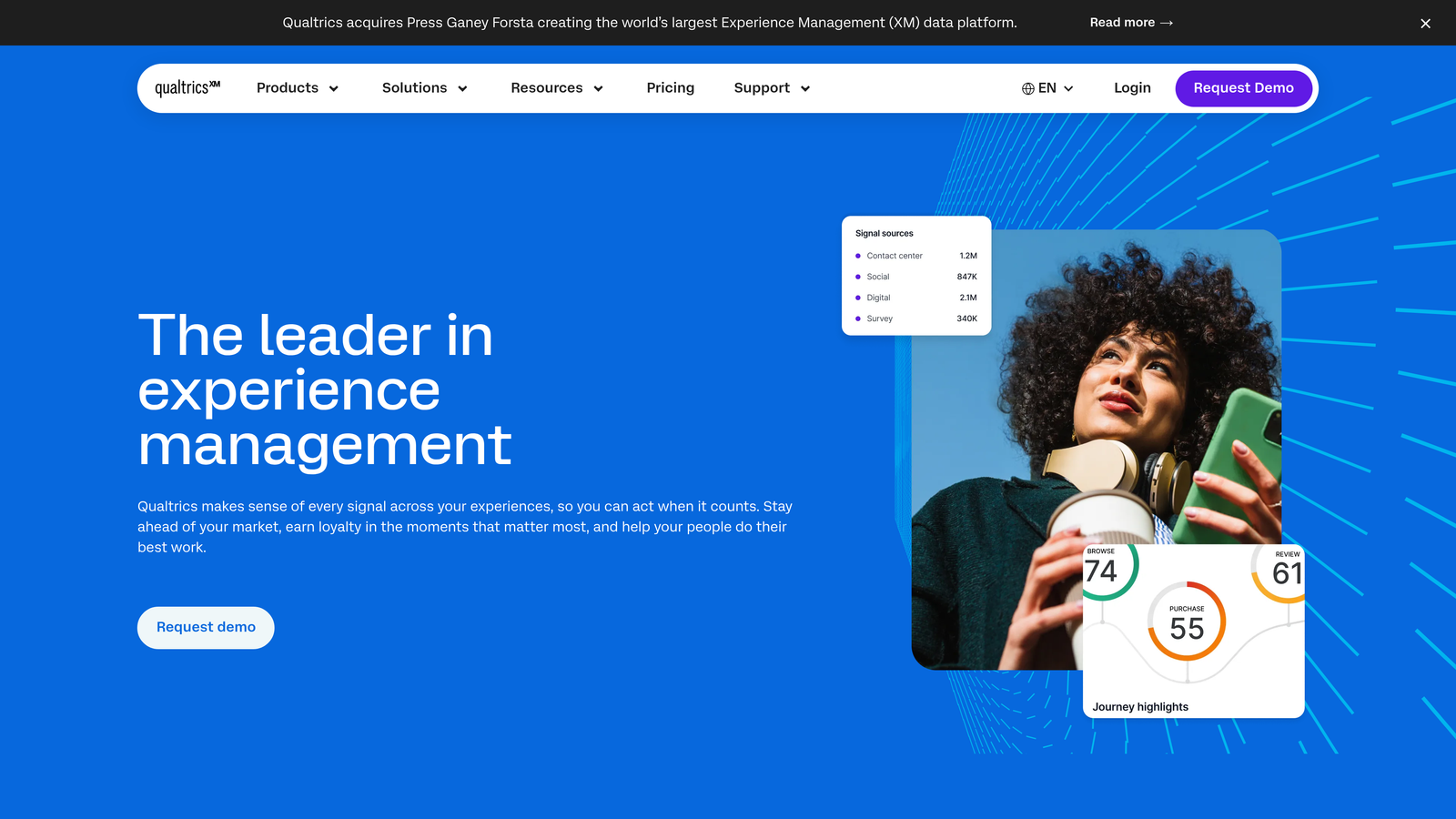
Qualtrics XM is a comprehensive experience management platform with powerful survey capabilities, AI-driven text analytics, and a sophisticated action management engine that routes feedback to the right owner automatically.
Where This Tool Shines
The action management engine is the feature that separates Qualtrics from simpler survey tools. Rather than collecting feedback and leaving it to someone to decide what to do, Qualtrics can automatically route specific feedback types to designated owners based on configurable rules. A low NPS score from an enterprise account can trigger a customer success workflow; a recurring product complaint can route to the product team, all without manual intervention.
The AI-powered text analytics and driver analysis capabilities add another layer, helping teams understand not just what customers are saying, but which factors are most strongly correlated with satisfaction or churn. For organizations that need to connect feedback data to business outcomes, this depth is hard to match.
Key Features
Action Management Engine: Automatically routes feedback to the right team or individual based on configurable business rules.
Advanced Survey Logic: Supports complex branching, panel management, and multi-language programs at scale.
AI Text Analytics and Driver Analysis: Identifies key themes and correlates feedback signals with satisfaction drivers and business outcomes.
Enterprise Integrations: Connects with Salesforce, ServiceNow, and major enterprise platforms for closed-loop workflows.
Best For
Mid-to-large enterprises with dedicated CX or research teams that need a full VoC program with structured action management. The platform rewards investment in configuration; teams looking for quick setup should look at Delighted instead.
Pricing
Custom enterprise pricing; contact Qualtrics sales for a quote. Typically priced per user with additional costs for advanced modules.
7. Zendesk
Best for: Support-centric teams that want feedback automation built directly into their helpdesk workflow
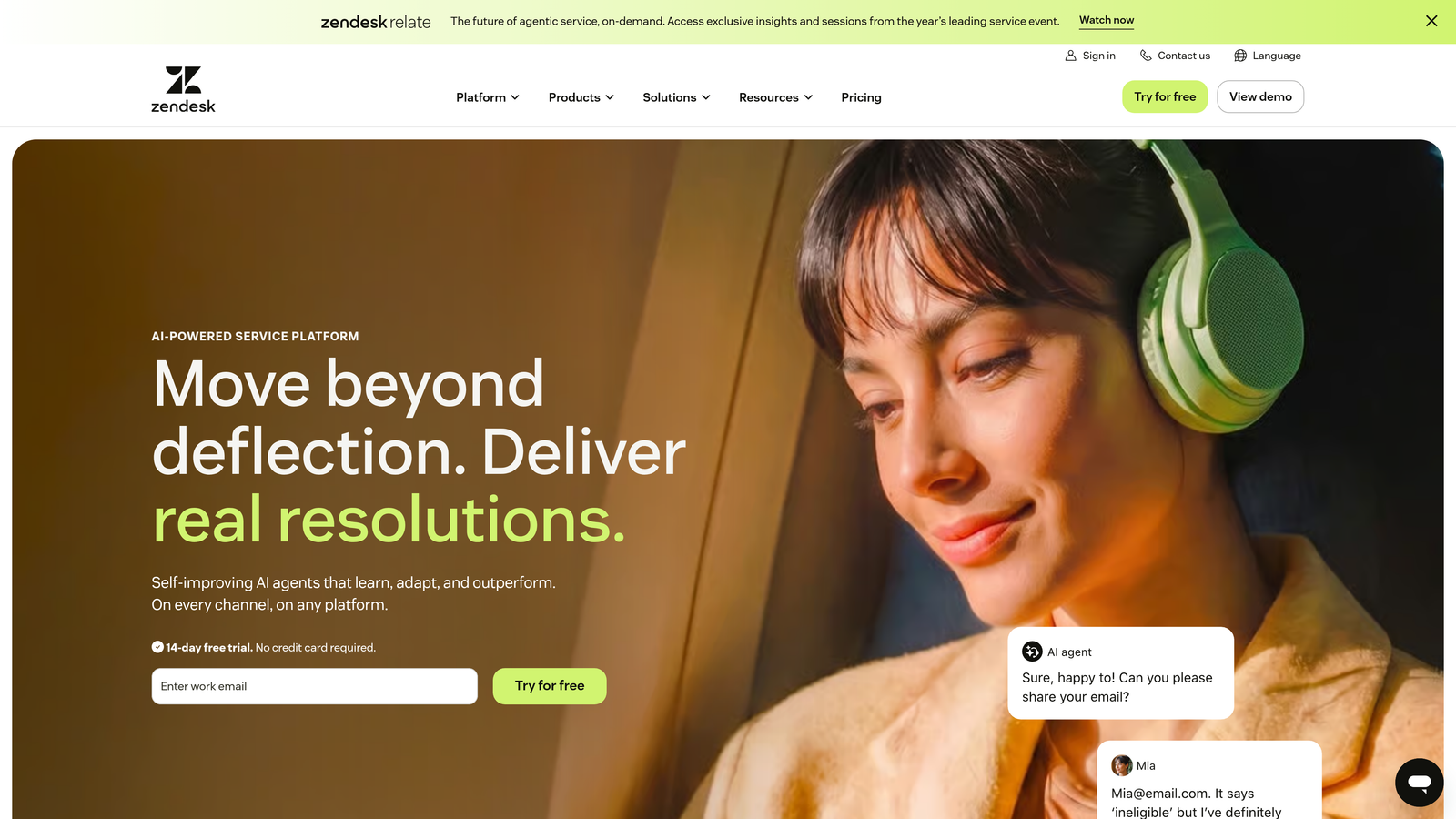
Zendesk is the market-leading helpdesk platform with native CSAT surveys, AI-powered ticket classification, and built-in analytics that make it a natural fit for support-centric feedback automation.
Where This Tool Shines
For teams already running support through Zendesk, the feedback automation capabilities are already there, they just need to be activated and configured. CSAT surveys trigger automatically after ticket resolution, AI-powered tagging classifies tickets at volume, and the analytics layer surfaces trends across feedback and agent performance without needing a separate tool.
The extensive app marketplace extends this further. Teams can layer in additional feedback workflows, integrate with NPS tools, or connect to product analytics platforms without leaving the Zendesk ecosystem. It's not a standalone VoC platform, but for support-first organizations, it covers a lot of ground.
Key Features
Automated CSAT Surveys: Triggers satisfaction surveys automatically after ticket resolution with configurable timing and messaging.
AI-Powered Ticket Classification: Tags and categorizes incoming tickets automatically to surface feedback patterns at scale.
Analytics and Reporting: Built-in dashboards track feedback trends, CSAT scores, and agent performance over time.
App Marketplace: Extensive ecosystem of integrations for extending feedback workflows into other tools and platforms.
Best For
Support teams already using or evaluating Zendesk as their primary helpdesk who want feedback automation without adding another platform. Teams needing deep survey customization or omnichannel VoC should supplement with a dedicated tool.
Pricing
Suite plans start at approximately $55/agent/month. AI-powered features are included in higher Suite tiers. Annual billing typically offers a discount over monthly pricing.
8. Hotjar
Best for: Product and UX teams that need behavioral context attached to in-product feedback
Hotjar is a product experience platform that combines heatmaps, session recordings, and in-product surveys to give feedback the behavioral context that standalone survey tools can't provide.
Where This Tool Shines
The core insight Hotjar offers is that feedback without behavior is incomplete. When a user submits an NPS score or a frustration survey, Hotjar can show you exactly what they were doing in the product before they responded. That session recording context transforms a data point into a diagnostic tool, helping product teams understand not just what users feel, but why they feel it.
Behavior-triggered surveys add another dimension: rather than sending surveys on a time-based schedule, Hotjar can trigger micro-surveys when a user hits a specific page, exits a funnel step, or spends an unusual amount of time on a feature. This means feedback is collected at the moment of friction, not days later when the context is gone.
Key Features
Behavior-Triggered Surveys: In-product NPS and micro-survey widgets that fire based on user actions, not just time intervals.
Session Recordings Linked to Feedback: Connect individual survey responses to the session recording that preceded them for full behavioral context.
Heatmaps and Funnel Analysis: Identify friction points in the product experience that correlate with negative feedback signals.
Integrations: Connects with HubSpot, Slack, and product analytics tools to push feedback data into existing workflows.
Best For
Product managers, UX researchers, and growth teams that need to understand the behavioral context behind feedback signals. Pairs particularly well with Productboard for teams that want to move from diagnosis to roadmap prioritization.
Pricing
Free plan available with limited data; paid plans start at approximately $32/month. Higher tiers unlock more session recordings, survey responses, and advanced features.
9. Productboard
Best for: Product teams that need to aggregate feedback from multiple sources and connect it directly to roadmap decisions
Productboard is a product management platform with a strong feedback aggregation layer that pulls signals from Zendesk, Intercom, Slack, email, and other sources, then maps them to features for data-driven prioritization.
Where This Tool Shines
The problem Productboard solves is fragmentation. Feedback arrives through support tickets, sales calls, Slack messages, NPS comments, and user interviews, and most teams have no systematic way to connect those signals to product decisions. Productboard creates that connective tissue: feedback is automatically tagged and categorized, then linked to specific features so product teams can see which items have the most customer demand behind them.
The roadmap views that show customer impact by feature are particularly useful for prioritization conversations. Instead of arguing about gut feel, product teams can point to the volume and nature of feedback behind each initiative. This closes a loop that most feedback tools leave open.
Key Features
Multi-Source Feedback Aggregation: Pulls in feedback from Zendesk, Intercom, Slack, email, and other channels into a single, organized view.
Feedback-to-Feature Linking: Maps individual pieces of feedback to specific product features to measure customer impact and demand.
Automated Tagging and Categorization: Classifies incoming feedback automatically to reduce manual triage for product teams.
Impact-Driven Roadmap Views: Visualizes which roadmap items have the strongest customer signal behind them to support prioritization decisions.
Best For
Product managers and product operations teams at SaaS companies that receive feedback across multiple channels and need a systematic way to connect customer signals to roadmap decisions. Works especially well alongside Hotjar, Intercom, or Zendesk as a downstream aggregation layer.
Pricing
Starts at approximately $19/maker/month; higher tiers unlock advanced integrations, automation, and enterprise features. Viewer seats are typically available at no cost.
Which Tool Is Right for Your Team
The honest answer is that the best fit depends on where your biggest gap actually is: collection, classification, routing, or resolution.
If your team is losing time to manual ticket triage and wants support interactions to generate business intelligence automatically, Halo AI is the strongest starting point. It's the only tool on this list that moves from feedback capture to autonomous resolution, with page-aware context and continuous learning built into the architecture rather than added on.
For dedicated NPS and CSAT programs, Delighted is the fastest path to a functioning survey workflow. If your organization needs the full enterprise VoC treatment with action management and driver analysis, Qualtrics XM or Medallia are the right conversations to have.
Product teams diagnosing friction will get the most from combining Hotjar and Productboard: Hotjar surfaces the behavioral context behind feedback, and Productboard connects those signals to roadmap decisions. It's a pairing that covers the full journey from "users are struggling here" to "here's what we're building to fix it."
Support-first organizations already on Zendesk can activate meaningful feedback automation without adding new vendors. And teams that want everything in one conversational support platform should take a close look at Intercom.
One combination worth calling out specifically: Halo AI and Productboard work well together. Halo captures and resolves feedback at the support layer while surfacing business intelligence signals; Productboard aggregates those signals alongside inputs from other channels and maps them to product priorities. Together, they create a feedback loop that runs from customer interaction to roadmap without requiring manual handoffs at any stage.
Your support team shouldn't scale linearly with your customer base. Let AI agents handle routine tickets, guide users through your product, and surface business intelligence while your team focuses on complex issues that need a human touch. See Halo in action and discover how continuous learning transforms every interaction into smarter, faster support.