9 Best Customer Health Monitoring Tools in 2026
Customer health monitoring tools help you identify at-risk accounts before they churn by connecting product usage, support interactions, and engagement data into actionable health scores. This guide reviews nine leading platforms for 2026—from AI-powered support analytics to enterprise customer success systems—so you can choose the right solution to track customer health, intervene proactively, and reduce churn across your customer base.
 Matt PattoliFounder12 min read
Customer churn rarely happens overnight. It builds quietly through declining engagement, mounting support tickets, and subtle shifts in usage patterns that most teams catch too late. By the time a cancellation email arrives, the warning signs have been flashing for weeks—sometimes months.
Customer health monitoring tools transform these scattered signals into actionable intelligence, giving you the visibility to intervene before accounts slip away. They connect the dots between product usage, support interactions, engagement metrics, and revenue data to show you which customers are thriving and which need immediate attention.
This guide covers top platforms that track customer health from different angles—from AI-powered support insights to dedicated customer success platforms. Whether you need deep product analytics, support-driven health signals, or enterprise-grade scoring systems, you'll find a tool that fits your workflow and budget.
1. Halo AI
Best for: Teams that want customer health intelligence derived from support interactions and AI-powered pattern detection
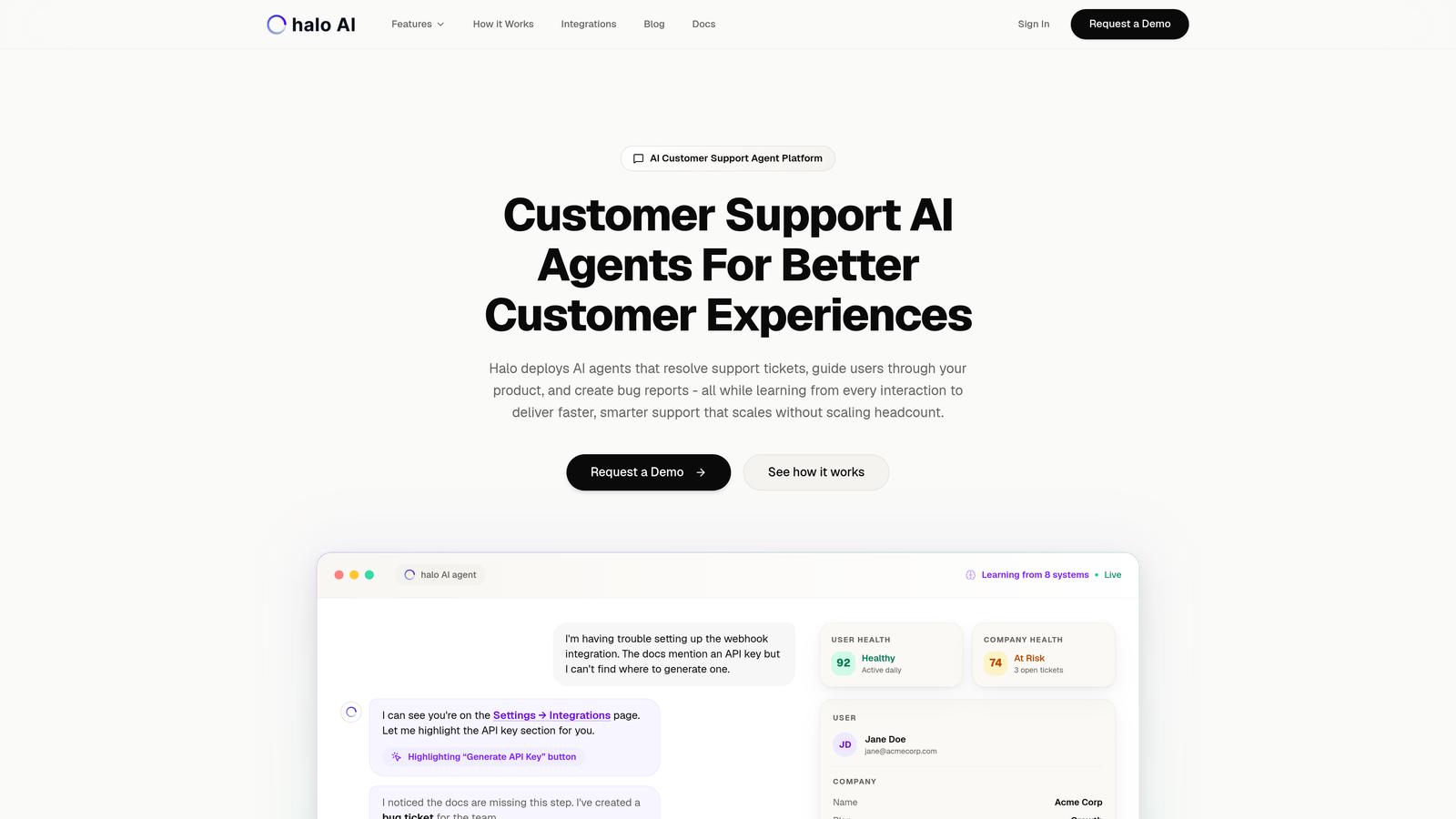
Halo AI is an AI-powered customer support platform that surfaces customer health signals from every support interaction, connecting ticket patterns and sentiment to churn risk.
Where This Tool Shines
Most health monitoring tools rely on product usage data or manually logged touchpoints. Halo takes a different approach by extracting health signals from the conversations already happening in your support queue. Its AI agents learn from every interaction, detecting patterns that indicate declining satisfaction or mounting frustration before they show up in traditional metrics.
The platform's business intelligence layer connects support patterns to revenue outcomes, showing you which accounts are experiencing issues that historically correlate with churn. This gives customer success teams early warning based on actual customer sentiment, not just behavioral proxies.
Key Features
AI Agents with Continuous Learning: Agents that resolve tickets while learning from every interaction to detect emerging health trends across your customer base.
Smart Inbox with Business Intelligence: Dashboard that surfaces anomalies, health signals, and revenue intelligence from support data without manual tagging.
Page-Aware Context: Chat widget that sees what users see, providing support agents with visual context to resolve issues faster and detect usability problems.
Cross-System Integration: Connects to HubSpot, Intercom, Stripe, Linear, Slack, and other tools to correlate support patterns with customer lifecycle data.
Automated Bug Ticket Creation: Identifies product issues from support conversations and automatically creates tickets in Linear or similar tools.
Best For
B2B SaaS companies where support interactions provide early churn indicators, and teams that want AI to surface health insights without building complex scoring models. Particularly valuable for product-led companies where users contact support before churning.
Pricing
Contact for pricing based on support volume and feature requirements.
2. Gainsight
Best for: Enterprise organizations needing comprehensive customer success operations with advanced health scoring and journey orchestration
Gainsight is an enterprise customer success platform with comprehensive health scoring, journey orchestration, and CS operations tools.

Where This Tool Shines
Gainsight pioneered the customer success platform category and remains the most feature-rich option for large CS teams. Its multi-dimensional health score framework lets you combine product usage, support tickets, NPS, relationship strength, and custom metrics into weighted scores that reflect your unique definition of customer health.
The Journey Orchestrator automates complex playbooks based on health changes, lifecycle stages, and account attributes. When a high-value customer's health score drops, Gainsight can automatically assign tasks, trigger email sequences, and notify the account team—all without manual intervention.
Key Features
Multi-Dimensional Health Scoring: Combine quantitative and qualitative signals with custom weighting to create sophisticated health models by segment.
Journey Orchestrator: Visual workflow builder for automated playbooks triggered by health changes, milestones, or time-based events.
Customer Timeline: Complete interaction history pulling data from CRM, support, product analytics, and manual touchpoints into one view.
Success Planning: Collaborative planning tools for defining objectives, tracking progress, and connecting activities to outcomes.
Renewal Forecasting: Predictive models that combine health data with historical patterns to forecast renewal likelihood and expansion opportunities.
Best For
Enterprise SaaS companies with dedicated customer success teams managing complex, high-touch accounts. Organizations that need deep customization, extensive integrations, and sophisticated automation capabilities.
Pricing
Custom enterprise pricing; typically starts around $2,500/month for mid-market implementations. Pricing scales with customer count and feature requirements.
3. ChurnZero
Best for: SaaS companies prioritizing real-time engagement tracking and proactive churn prevention through in-app communication
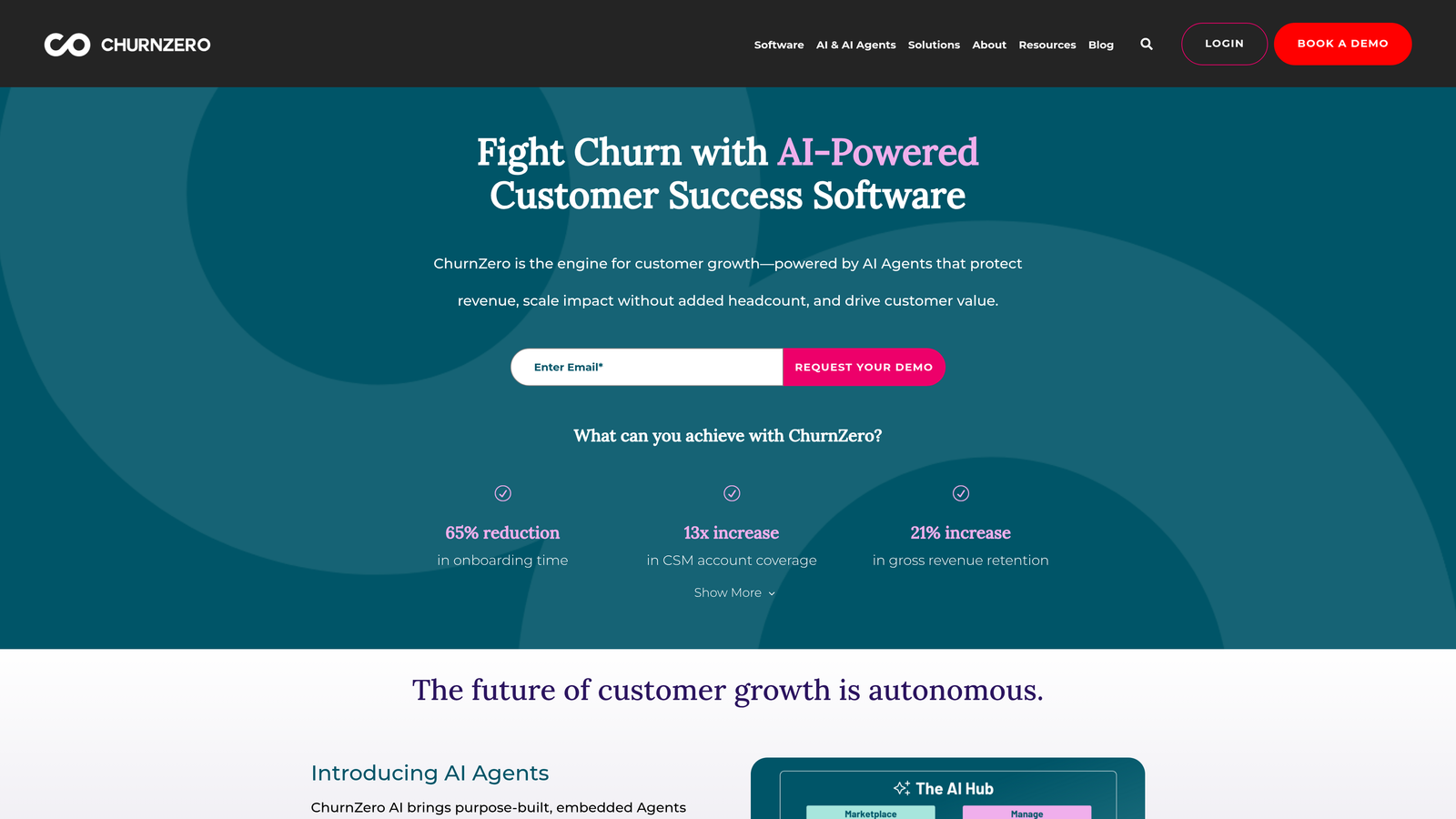
ChurnZero is a real-time customer success platform focused on engagement tracking, in-app communication, and churn prevention automation.
Where This Tool Shines
ChurnZero excels at real-time health monitoring with immediate visibility into customer behavior changes. When a power user stops logging in or a feature adoption metric drops, the platform alerts your team instantly rather than waiting for weekly reports.
The in-app messaging capabilities let you reach customers at critical moments without leaving your product. You can trigger walkthroughs for struggling users, celebrate milestones with engaged accounts, or send targeted messages based on health score changes—all contextual to what users are doing right now.
Key Features
Real-Time Health Scoring: Customizable health scores that update immediately as customer behavior changes, with configurable factors and segment-specific models.
In-App Messaging: Targeted announcements, walkthroughs, and surveys delivered inside your product based on user behavior and health status.
Automated Plays: Pre-built and custom automation workflows triggered by health changes, lifecycle events, or usage patterns.
Customer Journey Mapping: Visual journey builder showing typical paths to success and identifying where customers get stuck.
Segmentation and Analytics: Cohort analysis, trend tracking, and custom reporting to understand what drives health across different customer types.
Best For
Mid-market SaaS companies with product-led growth models where in-app engagement drives retention. Teams that want to act on health signals immediately rather than in scheduled review cycles.
Pricing
Starts around $1,500/month for growing teams. Pricing scales with customer volume and feature requirements.
4. Totango
Best for: Teams wanting pre-built health monitoring programs they can customize, with a free tier for small teams
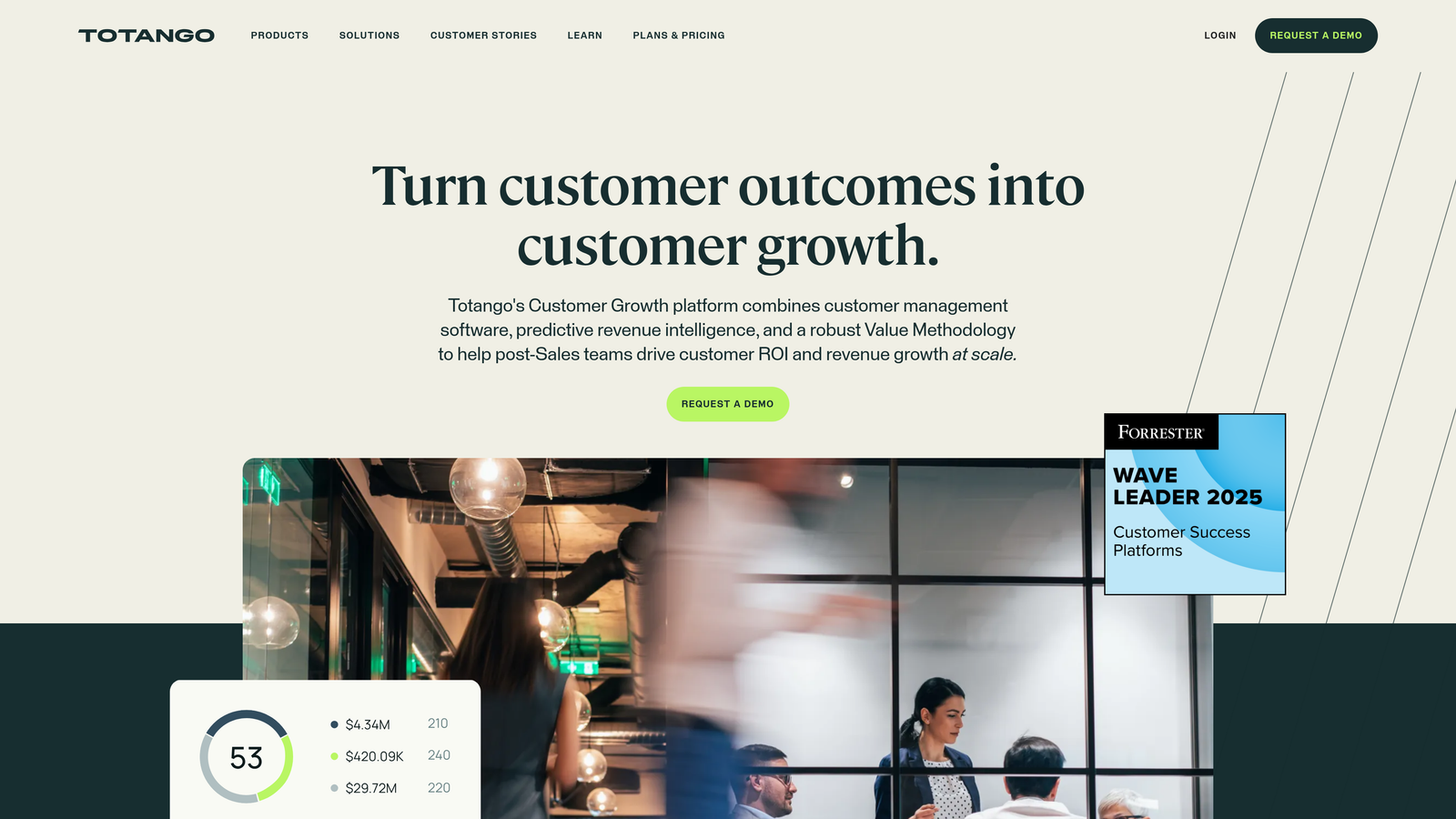
Totango is a modular customer success platform with SuccessBloc templates for building health monitoring programs by journey stage.
Where This Tool Shines
Totango's SuccessBloc approach gives you pre-built templates for common customer success programs—onboarding health, adoption tracking, renewal readiness—that you can deploy quickly and customize to your needs. This dramatically reduces implementation time compared to building health models from scratch.
The platform's flexibility lets you create different health profiles for different customer segments. Enterprise customers might be scored on executive engagement and support escalations, while self-service accounts focus purely on product usage and feature adoption.
Key Features
SuccessBlocs: Pre-configured templates for onboarding, adoption, renewal, and expansion programs that you can customize and deploy quickly.
Configurable Health Profiles: Build different health scoring models by customer segment, lifecycle stage, or product tier.
Automated Campaigns: Trigger email sequences, task assignments, and alerts based on health changes or program milestones.
Customer 360 View: Unified dashboard combining product usage, touchpoints, health scores, and account details in one interface.
Free Tier: Generous free plan for small teams getting started with customer success operations.
Best For
Growing SaaS companies that want to implement proven customer success frameworks without extensive customization. Teams with limited CS resources that need quick wins from templated programs.
Pricing
Free tier available for up to 1,000 customers. Paid plans start at $249/month with pricing scaling based on customer count and features.
5. Vitally
Best for: Modern CS teams that want product analytics and health monitoring in one clean, intuitive platform
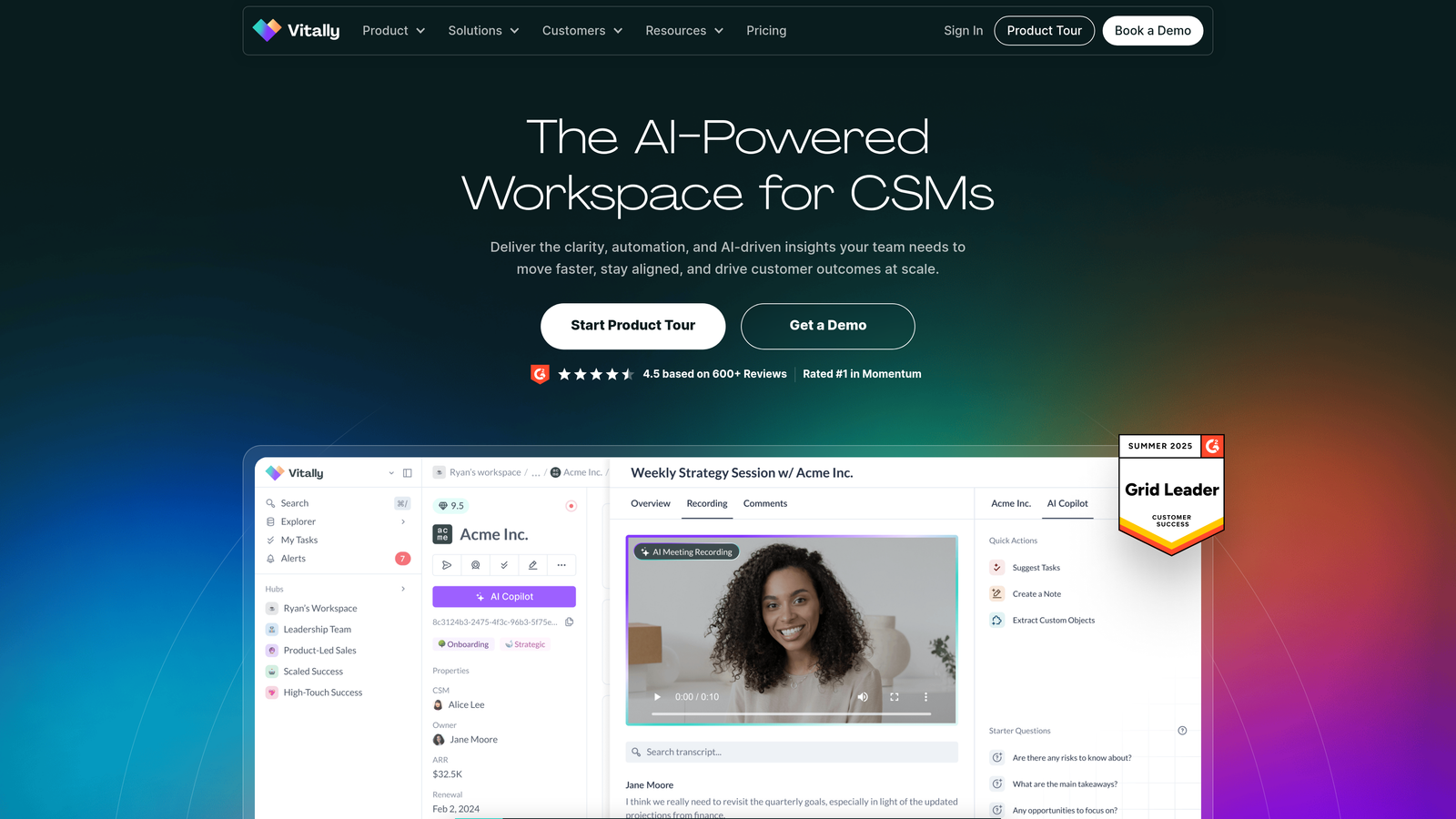
Vitally is a B2B SaaS customer success platform combining product analytics with health scoring for modern CS teams.
Where This Tool Shines
Vitally brings product analytics directly into the customer success workflow instead of requiring separate tools. You can track feature adoption, usage trends, and engagement patterns in the same platform where you monitor health scores and manage customer relationships.
The interface feels notably more modern than legacy CS platforms, with thoughtful UX that reduces the learning curve for new team members. The flexible health score builder lets you experiment with different factors and weightings until you find the model that best predicts churn in your specific business.
Key Features
Built-In Product Analytics: Track feature usage, session frequency, and engagement metrics without integrating separate analytics tools.
Flexible Health Score Builder: Visual builder for creating custom health scores with drag-and-drop factors, weighting, and segment-specific models.
Docs and Projects: Collaborative workspace for customer success planning, meeting notes, and project tracking tied to specific accounts.
Automated Playbooks: Workflow automation triggered by health changes, milestones, or custom conditions with task assignment and notifications.
Modern Interface: Clean, intuitive design that reduces training time and makes data exploration more accessible.
Best For
Small to mid-market SaaS companies where product usage is the primary health indicator. Teams that value user experience and want a platform that CSMs will actually enjoy using daily.
Pricing
Starts around $300/month for small teams. Pricing scales with customer volume and feature requirements.
6. Planhat
Best for: Revenue-focused teams that need health monitoring connected to expansion opportunities and cross-functional collaboration
Planhat is a revenue-focused customer platform connecting health monitoring to expansion opportunities and team collaboration.
Where This Tool Shines
Planhat treats customer health as a revenue metric, not just a retention indicator. The platform connects health scores directly to renewal forecasts, expansion opportunities, and revenue intelligence—making it easier to justify CS investments and tie activities to business outcomes.
The collaboration workspace brings together CS, sales, and support teams around shared customer data. When account health changes, everyone who touches that customer sees the same information and can coordinate their response rather than working in silos.
Key Features
Revenue-Tied Health Scores: Health models that incorporate contract value, expansion potential, and revenue risk to prioritize accounts by business impact.
Collaboration Workspace: Shared customer views, task management, and communication threads that keep CS, sales, and support aligned.
Portfolio Management: Executive dashboards showing health distribution, revenue at risk, and team performance across your entire customer base.
Renewal and Expansion Tracking: Pipeline views for upcoming renewals with health-informed forecasting and expansion opportunity identification.
API-First Architecture: Robust API and webhook system for building custom integrations and pulling data from any source.
Best For
B2B SaaS companies with expansion-focused business models where customer success directly drives revenue growth. Organizations that need tight alignment between CS, sales, and executive leadership.
Pricing
Custom pricing based on customer count and features. Contact for quote based on your specific requirements.
7. CustomerSuccessBox
Best for: High-volume SaaS companies wanting AI-driven churn prediction and automated health monitoring at scale
CustomerSuccessBox is an AI-driven customer success platform with automated health predictions and early warning systems for high-volume SaaS.
Where This Tool Shines
CustomerSuccessBox uses machine learning to predict churn risk before traditional health scores detect problems. The AI analyzes historical patterns across your customer base to identify leading indicators specific to your business, then automatically flags accounts showing those patterns.
For teams managing hundreds or thousands of customers, the automated health calculation removes the manual work of configuring and maintaining complex scoring models. The system learns what predicts churn in your data and adjusts its predictions as your business evolves.
Key Features
AI-Powered Churn Prediction: Machine learning models that identify churn risk based on patterns in your historical customer data.
Automated Health Scores: System-calculated health scores that update automatically as new data arrives without manual configuration.
Task Management: Workflow tools for CSMs to track activities, set reminders, and collaborate on at-risk accounts.
Product Adoption Tracking: Monitor feature usage, engagement depth, and adoption milestones across your customer base.
Outcome-Based Measurement: Connect CS activities to business outcomes like renewal rates, expansion revenue, and customer lifetime value.
Best For
SaaS companies with large customer bases where manual health monitoring doesn't scale. Teams that want predictive intelligence without building data science capabilities in-house.
Pricing
Contact for pricing. Pricing model scales with customer volume and features required.
8. Mixpanel
Best for: Product-led companies where behavioral analytics and feature adoption drive customer health insights
Mixpanel is a product analytics platform that provides deep behavioral insights for product-led health monitoring.
Where This Tool Shines
Mixpanel isn't a dedicated customer success platform, but it excels at the behavioral analytics that often matter most for product-led businesses. You can track exactly which features healthy customers use, how often they engage, and what usage patterns precede churn.
The event-based tracking model gives you granular visibility into user behavior. Instead of broad metrics like "daily active users," you can monitor specific actions that correlate with retention—like completing a workflow, inviting team members, or using advanced features that indicate product stickiness.
Key Features
Event-Based Behavioral Analytics: Track specific user actions and workflows to understand what drives engagement and retention.
Cohort Analysis: Compare retention, engagement, and feature adoption across customer segments to identify what differentiates healthy accounts.
Custom Dashboards: Build monitoring views for key health indicators with automated alerts when metrics cross critical thresholds.
User Journey Visualization: See the paths users take through your product to identify friction points and optimization opportunities.
A/B Testing Integration: Connect product experiments to retention outcomes to understand what product changes improve customer health.
Best For
Product-led SaaS companies where in-app behavior is the primary health signal. Teams with strong product analytics capabilities that want to build custom health models based on usage data.
Pricing
Free tier available for up to 20 million events per month. Growth plans start at $25/month with pricing scaling based on event volume.
9. Pendo
Best for: Teams that need product analytics combined with in-app guidance to improve adoption and drive health improvements
Pendo is a product experience platform combining analytics with in-app guidance for teams where product usage drives customer health.
Where This Tool Shines
Pendo uniquely combines health monitoring with the ability to improve health through in-app interventions. When you identify struggling users through analytics, you can immediately deploy guides, tooltips, or walkthroughs to help them find value—all without engineering resources.
The platform's NPS and feedback collection tools let you combine sentiment data with behavioral metrics for a more complete health picture. You can see not just what users are doing, but how they feel about your product and which features they want next.
Key Features
Feature Adoption Analytics: Track which features customers use, how often, and how adoption correlates with retention and expansion.
In-App Guides: Create walkthroughs, tooltips, and announcements that help struggling users without leaving your product.
NPS and Feedback Collection: Survey tools that combine sentiment data with behavioral analytics for richer health insights.
Product Engagement Scoring: Automated scores based on feature usage depth, frequency, and breadth of adoption.
Roadmap Prioritization: Connect feature requests and feedback to customer segments to prioritize development that improves health.
Best For
Product-led SaaS companies where improving product adoption directly impacts customer health. Teams that want to act on health insights by improving the product experience, not just managing relationships.
Pricing
Free tier available for up to 500 monthly active users. Paid plans are custom priced based on MAU volume and features.
Making the Right Choice
The right customer health monitoring tool depends on where your health signals live and how your team operates. If your customers contact support before they churn, platforms like Halo AI that extract intelligence from those interactions give you earlier warning than usage metrics alone. For product-led businesses where engagement drives retention, analytics-first tools like Mixpanel or Pendo provide the behavioral depth you need.
Enterprise teams managing complex, high-touch accounts typically need the comprehensive capabilities of Gainsight or Planhat, which connect health monitoring to renewal forecasting, success planning, and cross-functional collaboration. Mid-market companies often find better value in focused platforms like ChurnZero or Vitally that balance depth with usability and faster implementation.
Budget matters, but so does time to value. Totango's free tier and pre-built SuccessBlocs let small teams get started immediately, while CustomerSuccessBox's AI-driven approach removes the manual work of building health models for high-volume businesses. The best tool isn't always the most feature-rich—it's the one your team will actually use to take action on health signals.
Remember that collecting health data only matters if you act on it. The most sophisticated scoring model in the world won't prevent churn if it just generates reports that no one responds to. Choose a platform that fits your team's workflow, integrates with your existing tools, and makes it easy to intervene when customers need help.
Your support team shouldn't scale linearly with your customer base. Let AI agents handle routine tickets, guide users through your product, and surface business intelligence while your team focuses on complex issues that need a human touch. See Halo in action and discover how continuous learning transforms every interaction into smarter, faster support.