9 Best Customer Health Scoring Tools to Predict Churn in 2026
Customer health scoring tools help B2B teams predict and prevent churn by analyzing product usage, support tickets, billing patterns, and engagement data in real time. This guide reviews nine platforms—from AI-powered predictive systems to straightforward health dashboards—comparing their scoring accuracy, integration capabilities, and implementation ease to help you choose the right solution for proactive customer retention.
 Matt PattoliFounder12 min read
Customer health scoring transforms reactive support into proactive retention. Instead of waiting for customers to complain—or worse, churn silently—these tools aggregate signals from product usage, support interactions, billing patterns, and engagement data to give you a real-time pulse on account health. The best customer health scoring tools don't just flag at-risk accounts; they surface actionable insights that help you intervene before problems escalate.
We've evaluated nine platforms based on their scoring accuracy, integration depth, ease of implementation, and value for B2B teams. Whether you need AI-powered predictions or straightforward health dashboards, this guide will help you find the right fit.
1. Halo AI
Best for: Companies where support interactions reveal early churn signals
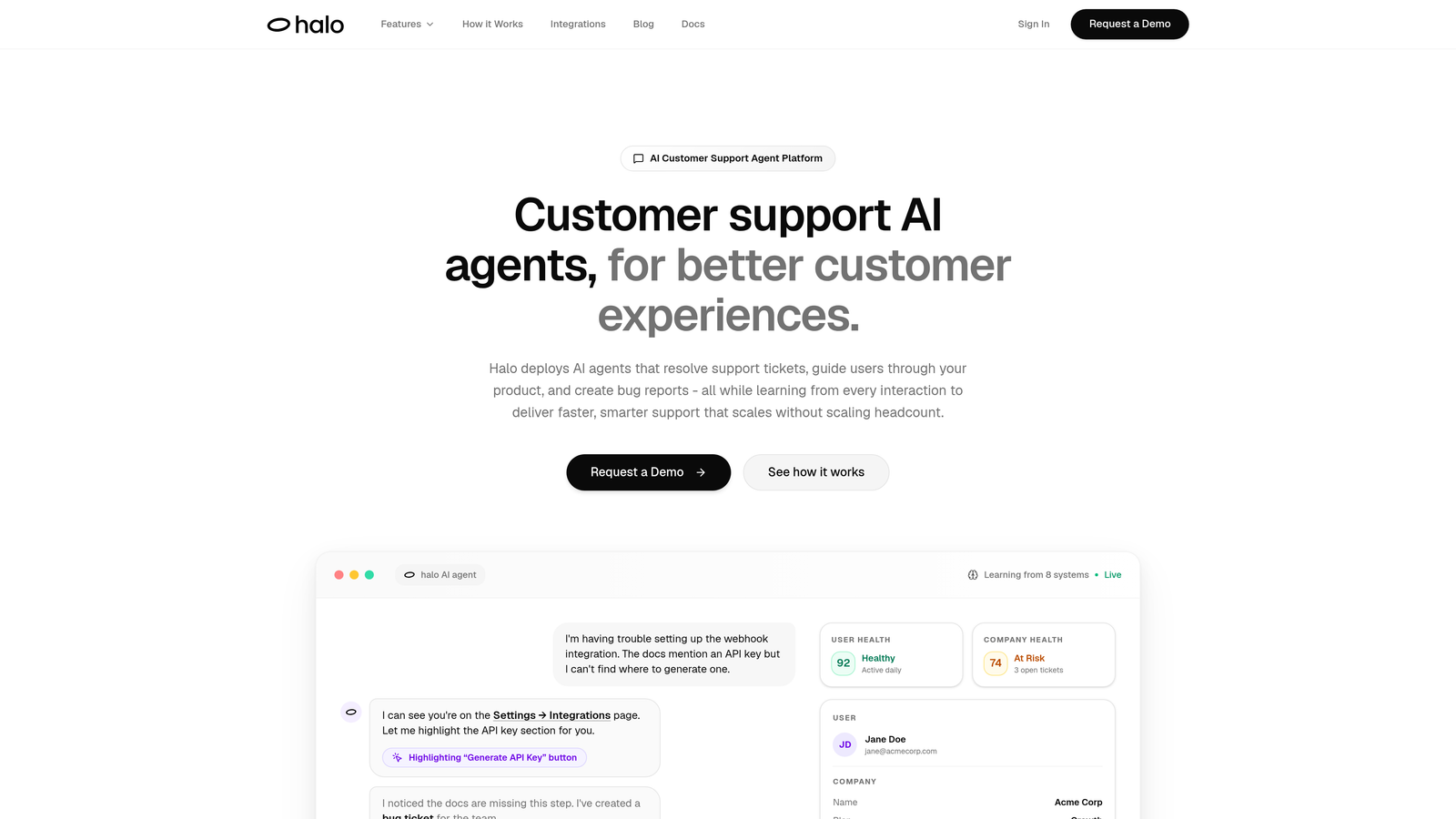
Halo AI is an AI-powered customer support platform that surfaces customer health signals from support interactions, learning from every ticket to identify at-risk accounts before they churn.
Where This Tool Shines
Most health scoring tools pull data from product analytics and billing systems, but they miss a critical signal source: support interactions. Halo AI takes a different approach by analyzing the patterns, sentiment, and frequency of support conversations to detect deteriorating customer relationships.
The platform's continuous learning architecture means it gets smarter with every resolved ticket. Instead of relying on static rules, the AI identifies patterns that precede churn in your specific customer base—whether that's escalating frustration in ticket language, unusual support volume spikes, or recurring issues that signal product-market fit problems.
Key Features
Customer Health Signals: Derives health indicators from support interaction patterns, including sentiment trends, resolution times, and issue recurrence.
Continuous Learning AI Agents: AI agents that improve with every conversation, building institutional knowledge about what drives customer satisfaction or frustration.
Anomaly Detection: Automatically flags unusual support behavior—like a normally quiet account suddenly submitting multiple tickets—as early warning signals.
Revenue Intelligence: Connects support data to revenue metrics through integrations with Stripe and HubSpot, correlating support health with account value.
Business Stack Integration: Connects to Linear for bug tracking, Slack for team alerts, Intercom for customer communication, and more to create a complete intelligence picture.
Best For
B2B SaaS companies where customer support interactions are a leading indicator of satisfaction. Particularly valuable if you have high-touch products where support quality directly impacts retention, or if you've noticed that support ticket patterns predict churn better than usage metrics alone.
Pricing
Contact for pricing. Implementation typically includes integration setup and AI training on your historical support data.
2. Gainsight
Best for: Enterprise customer success teams with complex, multi-dimensional scoring needs
Gainsight is an enterprise-grade customer success platform with highly customizable health scoring, playbook automation, and deep analytics for large CS organizations.

Where This Tool Shines
Gainsight built its reputation by giving enterprise CS teams complete control over health score configuration. You can create multi-dimensional scores that weight product usage, support sentiment, executive engagement, and renewal risk differently for each customer segment.
The Journey Orchestrator is where Gainsight truly differentiates itself. It enables sophisticated playbook automation that triggers different CSM actions based on health score changes, renewal proximity, and customer lifecycle stage. For teams managing hundreds of accounts, this automation prevents valuable customers from slipping through the cracks.
Key Features
Multi-Dimensional Health Score Builder: Configure separate scores for product adoption, relationship health, support sentiment, and business outcomes, then weight them by segment.
Journey Orchestrator: Automate CSM workflows with conditional logic, triggering specific plays when health scores cross thresholds or lifecycle milestones occur.
Complete Customer Timeline: Unified view of every customer interaction across email, calls, support tickets, product usage, and business reviews.
Revenue Optimization Tools: Built-in renewal forecasting, expansion opportunity identification, and revenue waterfall reporting.
Extensive Integration Marketplace: Connects to virtually every CRM, support platform, billing system, and product analytics tool in the B2B stack.
Best For
Enterprise B2B companies with dedicated customer success teams managing complex, high-value accounts. Most valuable when you need sophisticated segmentation, detailed playbook automation, and executive-level reporting on customer health trends.
Pricing
Custom enterprise pricing, typically starting around $30,000 annually. Implementation often requires additional services investment for configuration and training.
3. ChurnZero
Best for: Real-time engagement tracking with strong in-app communication capabilities
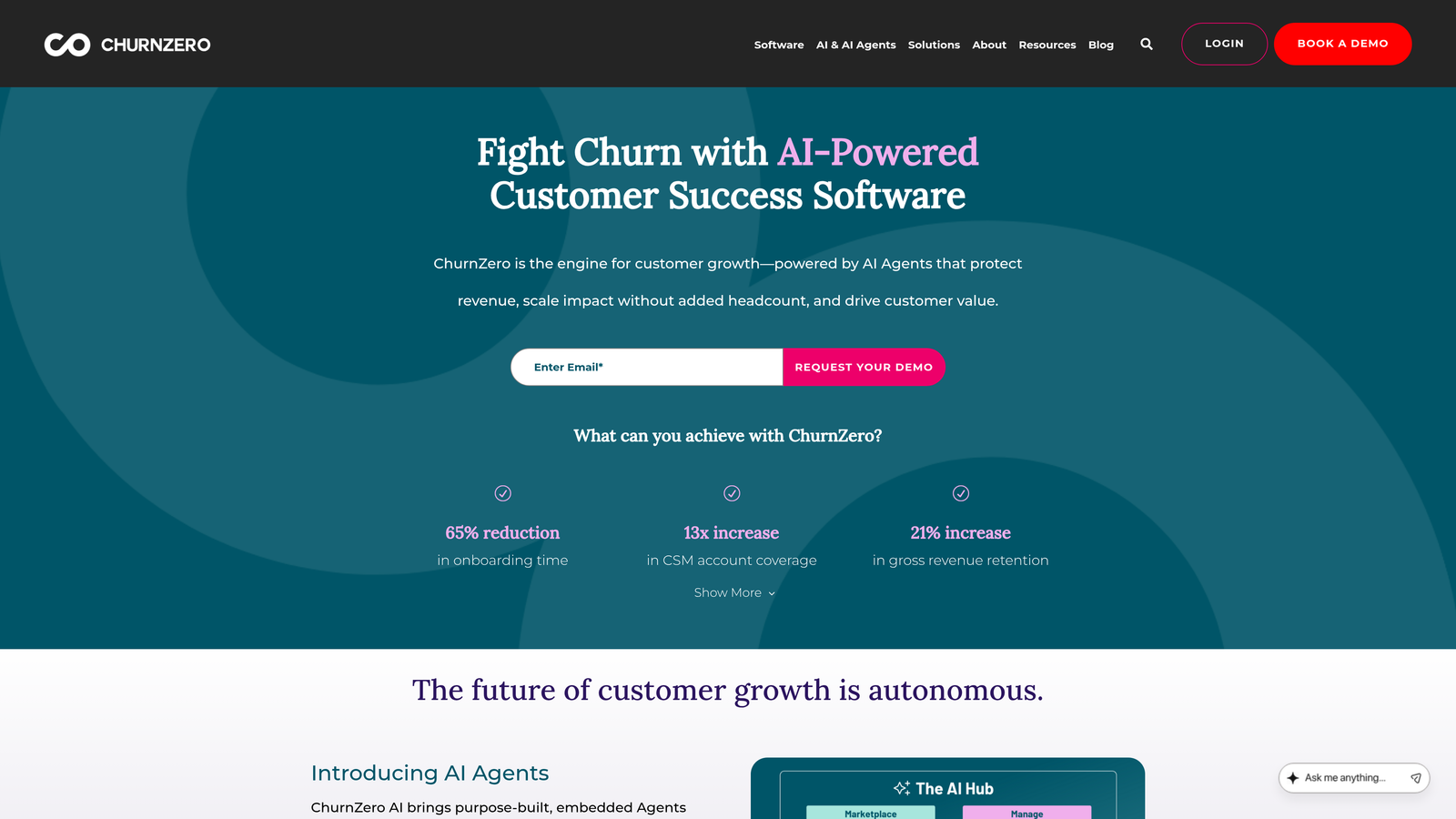
ChurnZero is a real-time customer success platform focused on engagement tracking and churn prevention with strong in-app communication capabilities.
Where This Tool Shines
ChurnZero updates health scores in real time as customer behavior changes, giving CSMs immediate visibility when accounts need attention. Unlike platforms that refresh scores daily or weekly, ChurnZero's real-time engine means you can intervene within hours of a concerning pattern emerging.
The in-app communication tools set ChurnZero apart from competitors. You can deliver targeted walkthroughs, announcements, and surveys directly inside your product based on health score changes, usage patterns, or lifecycle stage—turning health insights into immediate customer engagement.
Key Features
Real-Time Health Score Updates: Scores refresh continuously as new product usage, support, and engagement data flows in, not on batch schedules.
In-App Walkthroughs and Announcements: Deliver contextual guidance and communications inside your product without engineering work.
Automated Plays and Alerts: Trigger CSM tasks, email sequences, or Slack notifications when health scores change or specific customer behaviors occur.
Customer Journey Mapping: Visualize the path customers take through onboarding, adoption, and renewal stages with health overlay.
NPS and Survey Integration: Incorporate customer feedback scores directly into health calculations and trigger follow-up based on responses.
Best For
Mid-market to enterprise SaaS companies that want to combine health scoring with proactive in-app engagement. Especially valuable if you need to guide customers toward better product adoption without relying solely on CSM outreach.
Pricing
Starts around $15,000 annually for small teams, scaling with customer count and feature requirements. Real-time capabilities and in-app tools included in standard packages.
4. Totango
Best for: Quick implementation with pre-built templates and segment-specific scoring
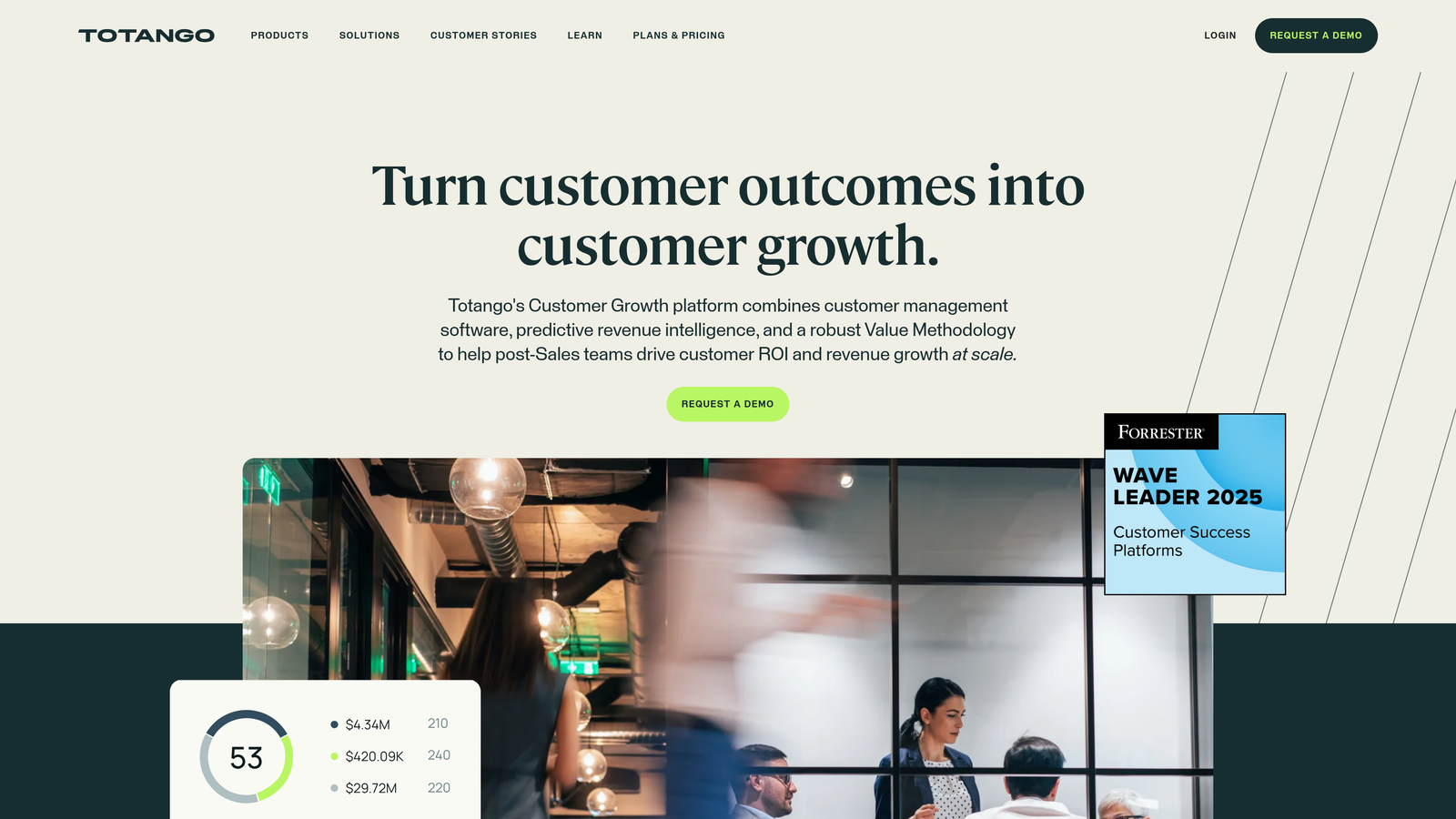
Totango is a modular customer success platform with SuccessBLOCs for rapid implementation and flexible health scoring across different customer segments.
Where This Tool Shines
Totango's SuccessBLOCs are pre-built customer success programs that include health score configurations, playbooks, and dashboards tailored to specific use cases like onboarding, renewal management, or expansion. This dramatically reduces time-to-value compared to platforms requiring extensive custom configuration.
The segment-specific health scoring capability is particularly valuable. You can configure completely different health score formulas for enterprise customers versus SMB accounts, or for different product lines within your portfolio, recognizing that what indicates health varies dramatically across customer types.
Key Features
SuccessBLOCs Pre-Built Templates: Deploy proven customer success programs in days rather than months, with health scores configured for specific outcomes.
Segment-Specific Health Scoring: Create different health score formulas for different customer segments, products, or lifecycle stages.
Spark Automation Engine: Build conditional workflows that trigger based on health score changes, usage patterns, or customer attributes.
Customer Portfolio Management: Organize and prioritize accounts based on health, value, and CSM capacity.
Free Tier Available: Starter plan for small teams to test the platform before committing to paid features.
Best For
Growing SaaS companies that need customer success capabilities quickly without the resources for extensive platform customization. The free tier makes it accessible for startups building their first CS function.
Pricing
Free tier available for small teams. Paid plans start at $2,988 annually, scaling based on customer count and advanced features like SuccessBLOCs and automation.
5. Vitally
Best for: Product-led growth companies with native product analytics integration
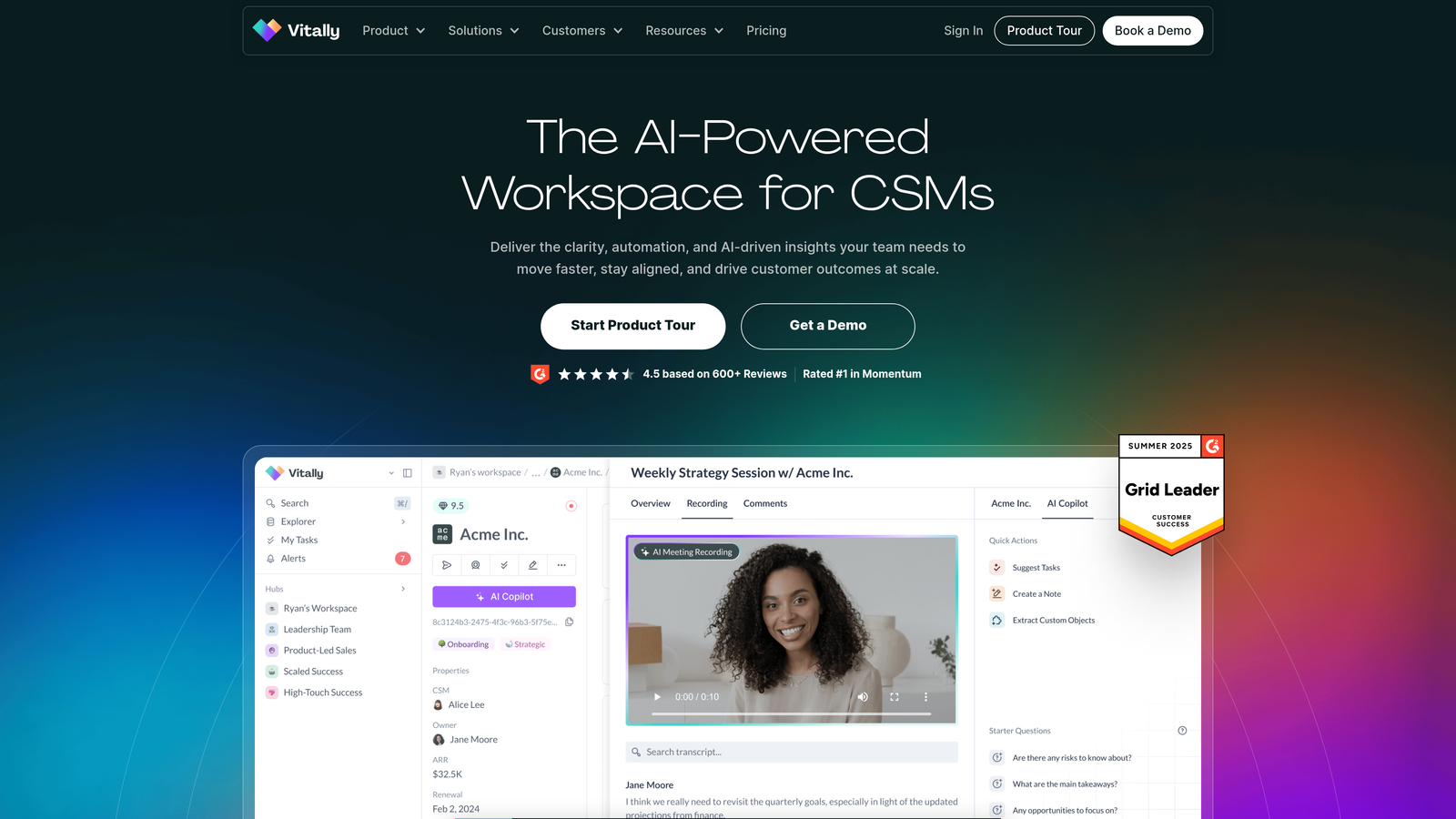
Vitally is a modern customer success platform built for product-led growth companies with native product analytics integration and collaborative workspace features.
Where This Tool Shines
Vitally was built specifically for product-led companies where usage data is the primary health signal. The native integrations with Segment and Amplitude mean product analytics flow directly into health scores without complex ETL processes or data warehouse intermediaries.
The collaborative Docs feature transforms customer success from a solo CSM activity into a team sport. Product, engineering, and support teams can contribute notes, insights, and action items directly in customer records, creating shared context that improves health score interpretation and intervention effectiveness.
Key Features
Native Segment and Amplitude Integration: Product usage data flows directly into health scores with pre-built connectors that require minimal configuration.
Docs for Collaborative Customer Notes: Shared workspace where cross-functional teams contribute insights and coordinate on at-risk accounts.
Health Scoring with Product Usage Signals: Build scores that prioritize feature adoption, usage frequency, and product engagement patterns.
Hubs for Customer-Facing Portals: Create branded customer portals for sharing resources, tracking onboarding progress, and collecting feedback.
Modern, Fast Interface: Designed for speed and usability, with keyboard shortcuts and workflows that feel like modern productivity tools.
Best For
Product-led SaaS companies where self-serve adoption drives growth and product usage is the strongest predictor of retention. Most valuable when you already use Segment or Amplitude for product analytics.
Pricing
Starts at $15,000 annually. Pricing scales with customer count and feature requirements, with product analytics integrations included in standard packages.
6. Planhat
Best for: Revenue-focused teams needing strong financial metrics integration
Planhat is a revenue-focused customer platform with strong financial metrics integration and health scoring, headquartered in Europe with GDPR compliance focus.
Where This Tool Shines
Planhat treats revenue metrics as first-class citizens in health scoring, not afterthoughts. ARR, expansion revenue, payment health, and contract terms integrate directly into the platform's core data model, making it natural to weight financial health alongside product usage and engagement.
The European headquarters means Planhat was built with GDPR compliance as a foundation rather than a retrofit. For companies with European customers or strict data residency requirements, this architectural advantage simplifies compliance without sacrificing functionality.
Key Features
Revenue and ARR Tracking Built-In: Native financial metrics that integrate with billing systems to track MRR, ARR, expansion, and contraction in real time.
Flexible Health Score Configuration: Create custom scoring formulas that combine product usage, support sentiment, financial health, and engagement metrics.
Workflow Automation: Trigger CSM tasks, email sequences, and alerts based on health score changes or revenue milestones.
Customer Portal Capabilities: Build branded portals where customers track their own success metrics and access resources.
Strong European Data Compliance: GDPR-compliant architecture with European data residency options and privacy-first design.
Best For
B2B SaaS companies where financial health is as important as usage metrics in predicting churn. Particularly valuable for businesses with European customers or those requiring strict data governance.
Pricing
Starts around $1,150 monthly. Pricing scales with customer count and feature requirements, with revenue tracking included in standard packages.
7. CustomerSuccessBox
Best for: B2B SaaS with usage-based models and onboarding health monitoring
CustomerSuccessBox is an AI-powered customer success platform designed for B2B SaaS with usage-based models, featuring strong onboarding milestone tracking.
Where This Tool Shines
CustomerSuccessBox applies AI to identify which customer behaviors actually predict churn in your specific business, rather than relying on generic health score templates. The system learns from your historical churn patterns to weight signals appropriately—recognizing that support ticket volume might predict churn in one business but indicate healthy engagement in another.
The onboarding milestone tracking is particularly sophisticated. The platform doesn't just track whether customers completed setup steps; it correlates onboarding patterns with long-term retention to identify which early behaviors predict successful customers versus at-risk accounts.
Key Features
AI-Driven Health Scores: Machine learning models that learn from your actual churn patterns to weight health signals appropriately.
Onboarding Milestone Tracking: Monitor early adoption patterns and correlate them with long-term retention outcomes.
Product Adoption Analytics: Track feature usage, engagement frequency, and adoption depth across customer segments.
Outcome-Based Success Measurement: Define customer success outcomes and track progress toward those goals rather than just usage metrics.
Early Warning System for Churn: Predictive alerts when customer behavior patterns match historical churn indicators.
Best For
B2B SaaS companies with usage-based or consumption pricing models where product adoption patterns are complex. Most valuable when you have enough historical data for AI models to learn meaningful churn patterns.
Pricing
Custom pricing based on customer count and feature requirements. Implementation includes AI model training on your historical customer data.
8. Custify
Best for: Mid-market teams wanting quick implementation without enterprise complexity
Custify is a mid-market customer success platform offering quick implementation and balanced feature set without enterprise complexity.
Where This Tool Shines
Custify delivers the core health scoring and customer success capabilities without the complexity and price tag of enterprise platforms. The quick setup process means you can be tracking health scores within days rather than months, making it ideal for teams that need results fast.
The platform strikes a sweet spot for mid-market companies: sophisticated enough to handle segmented health scoring and playbook automation, but simple enough that you don't need a dedicated CS ops person to maintain it. The interface prioritizes usability over feature density.
Key Features
Quick Setup and Implementation: Pre-configured health score templates and streamlined onboarding that gets teams operational in days.
Health Score Automation: Automated score calculations based on product usage, support interactions, and engagement metrics.
Task and Playbook Management: Assign and track CSM activities triggered by health score changes or lifecycle events.
Customer Lifecycle Tracking: Monitor customer journey stages from onboarding through renewal with health overlay.
Affordable Mid-Market Pricing: Cost structure designed for growing companies without enterprise budgets.
Best For
Mid-market B2B SaaS companies building or scaling their customer success function. Most valuable when you need solid health scoring capabilities quickly without the overhead of enterprise platform complexity.
Pricing
Starts at $999 monthly. Pricing scales with customer count, with core health scoring and automation included in base packages.
9. Mixpanel
Best for: Building custom health scores from behavioral data with cohort analysis
Mixpanel is a product analytics platform that enables teams to build custom health scores from behavioral data with strong cohort analysis capabilities.
Where This Tool Shines
Mixpanel isn't a dedicated customer success platform, but its product analytics capabilities make it powerful for companies that want to build health scores from granular behavioral data. You can create custom metrics based on specific feature usage patterns, engagement sequences, and user flows that predict retention.
The cohort analysis tools are where Mixpanel excels for health scoring. You can identify which early behaviors correlate with long-term retention, then build health scores that weight those signals appropriately. This data-driven approach often reveals non-obvious predictors of customer success.
Key Features
Build Custom Health Scores from Product Events: Create health metrics based on any combination of product usage patterns, feature adoption, and engagement sequences.
Cohort Analysis for Retention Patterns: Identify which customer behaviors predict long-term retention and build scores around those signals.
Funnel and Flow Analysis: Understand where customers get stuck in adoption journeys and incorporate those insights into health calculations.
Signal Reports for Correlation Discovery: Automatically identify which product behaviors correlate with retention or churn.
Data Warehouse Integration: Combine product analytics with data from other systems for comprehensive health scoring.
Best For
Product-led companies with strong analytics capabilities that want to build custom health scores from behavioral data. Most valuable when you have data analysts who can translate product usage patterns into actionable health metrics.
Pricing
Free tier available for up to 20 million events monthly. Growth plan starts at $28 monthly, scaling with event volume and feature requirements.
Making the Right Choice
Choosing the right customer health scoring tool depends on where your most valuable signals live. If support interactions reveal the earliest warning signs, Halo AI's approach of learning from every ticket gives you intelligence others miss. The platform's continuous learning architecture means it gets smarter with every resolved conversation, identifying patterns that precede churn in your specific customer base.
For enterprise customer success operations with dedicated CSM teams, Gainsight and ChurnZero offer the deepest playbook automation and sophisticated multi-dimensional scoring. Product-led companies should look closely at Vitally or Mixpanel for native product analytics integration—these platforms make it natural to build health scores from behavioral data rather than forcing you to export and transform usage metrics.
If you need quick time-to-value without enterprise complexity, Custify delivers solid health scoring without the overhead. And for revenue-focused teams where financial metrics matter as much as usage data, Planhat's native ARR tracking and European compliance make it worth serious consideration.
The best choice is the one that connects to your actual customer touchpoints—not the one with the longest feature list. Think about where churn signals appear first in your business. Is it declining product usage? Escalating support frustration? Missed onboarding milestones? Payment issues? The right platform surfaces those specific signals before they become cancellation conversations.
Your support team shouldn't scale linearly with your customer base. Let AI agents handle routine tickets, guide users through your product, and surface business intelligence while your team focuses on complex issues that need a human touch. See Halo in action and discover how continuous learning transforms every interaction into smarter, faster support.