9 Best Customer Self-Service Automation Tools in 2026
This guide reviews nine leading customer self-service automation platforms for 2026, evaluating each on automation depth, integrations, and B2B suitability to help support teams reduce ticket volume and deliver instant, around-the-clock resolutions without scaling headcount.
 Grant CooperFounder13 min read
Customer self-service automation has shifted from a nice-to-have to a core part of modern support strategy. Today's B2B customers expect instant answers at any hour, and support teams can't scale headcount indefinitely to keep up. The right platform lets users resolve issues on their own, reduces ticket volume, and frees your team to focus on complex, high-value interactions.
This list covers nine tools purpose-built for customer self-service automation: from AI-first agents that resolve tickets autonomously to knowledge base platforms and interactive product guidance tools. Whether you're running a lean support team at a growing SaaS company or managing a high-volume helpdesk at scale, there's a solution here that fits. We've evaluated each tool on automation depth, ease of implementation, integration ecosystem, and real-world suitability for B2B teams.
1. Halo AI
Best for: B2B SaaS teams wanting AI-first autonomous ticket resolution with page-aware context
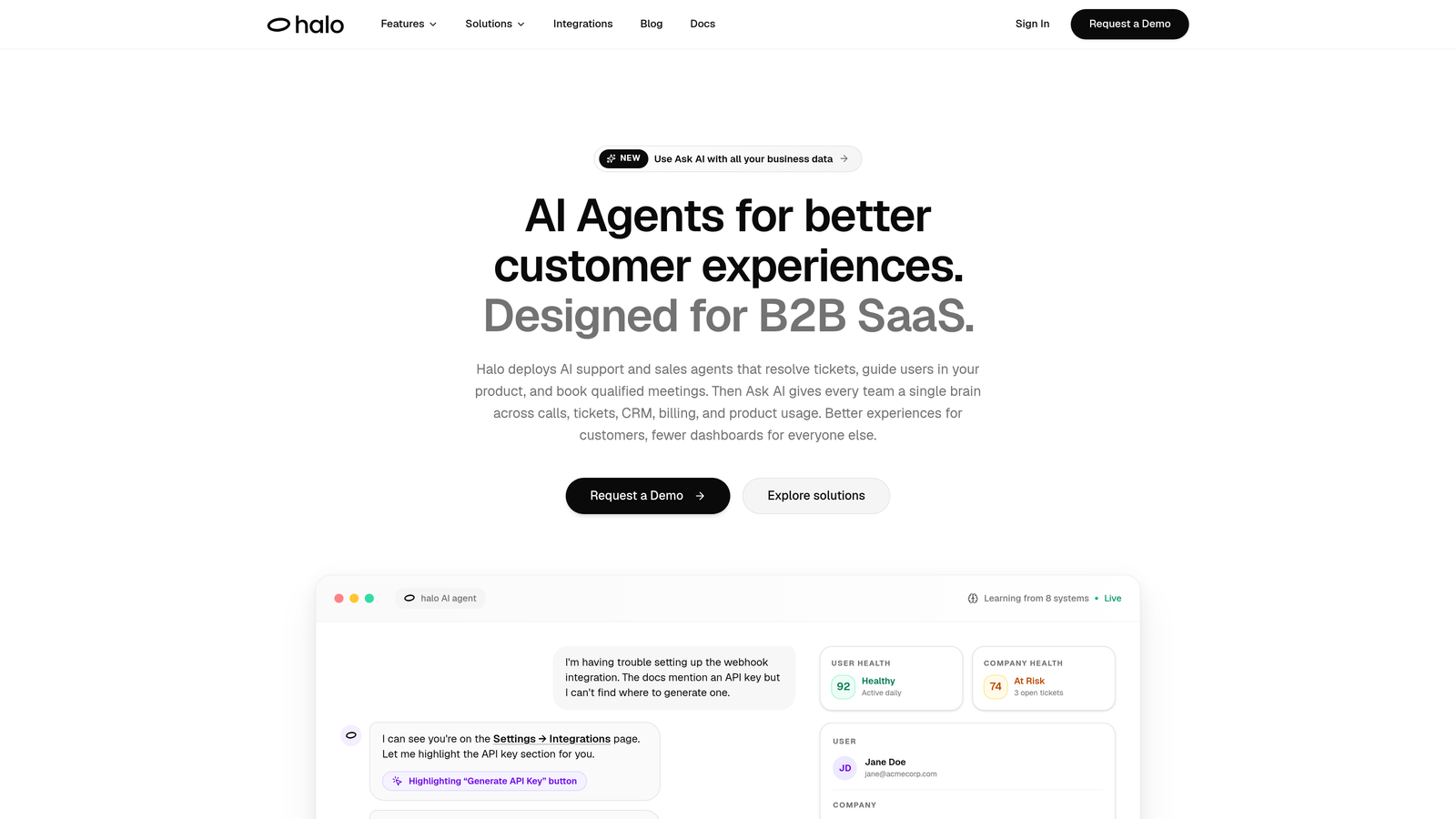
Halo AI is an AI-first customer support platform that deploys intelligent agents to resolve tickets, guide users through your product, and surface business intelligence — all while learning from every interaction.
Where This Tool Shines
What sets Halo apart from most support tools is its architecture. Rather than bolting AI onto an existing helpdesk, Halo is built AI-first from the ground up. The platform's page-aware chat widget is a standout feature: it sees exactly what the user sees on screen and can provide visual UI guidance in context, rather than sending users off to a generic help article.
Beyond resolution, Halo's smart inbox goes further than most by surfacing business intelligence alongside support data. You get customer health signals, revenue anomalies, and churn indicators derived from support interactions, turning your support channel into a genuine intelligence layer for the business.
Key Features
Page-Aware Chat Widget: Understands the user's current screen context and delivers visual UI guidance specific to where they are in your product.
Autonomous Ticket Resolution: AI agents handle routine tickets end-to-end, with smart live agent handoff for complex issues that genuinely need a human.
Auto Bug Ticket Creation: Automatically identifies and routes bug reports directly to engineering tools like Linear, reducing manual triage work.
Smart Inbox with Business Intelligence: Surfaces customer health signals, revenue anomalies, and churn indicators from support data in real time.
Deep Integration Ecosystem: Connects with Slack, HubSpot, Intercom, Stripe, Zoom, PandaDoc, Fathom, and Linear out of the box.
Best For
B2B SaaS companies that want more than ticket deflection. Halo is particularly well-suited to product-led growth teams, lean support organizations that need autonomous resolution without adding headcount, and any team where support data could inform product or revenue decisions.
Pricing
Custom pricing based on your needs. Contact the team directly at haloagents.ai to get a quote tailored to your support volume and use case.
2. Intercom
Best for: Mid-market SaaS teams wanting omnichannel messaging with built-in AI resolution
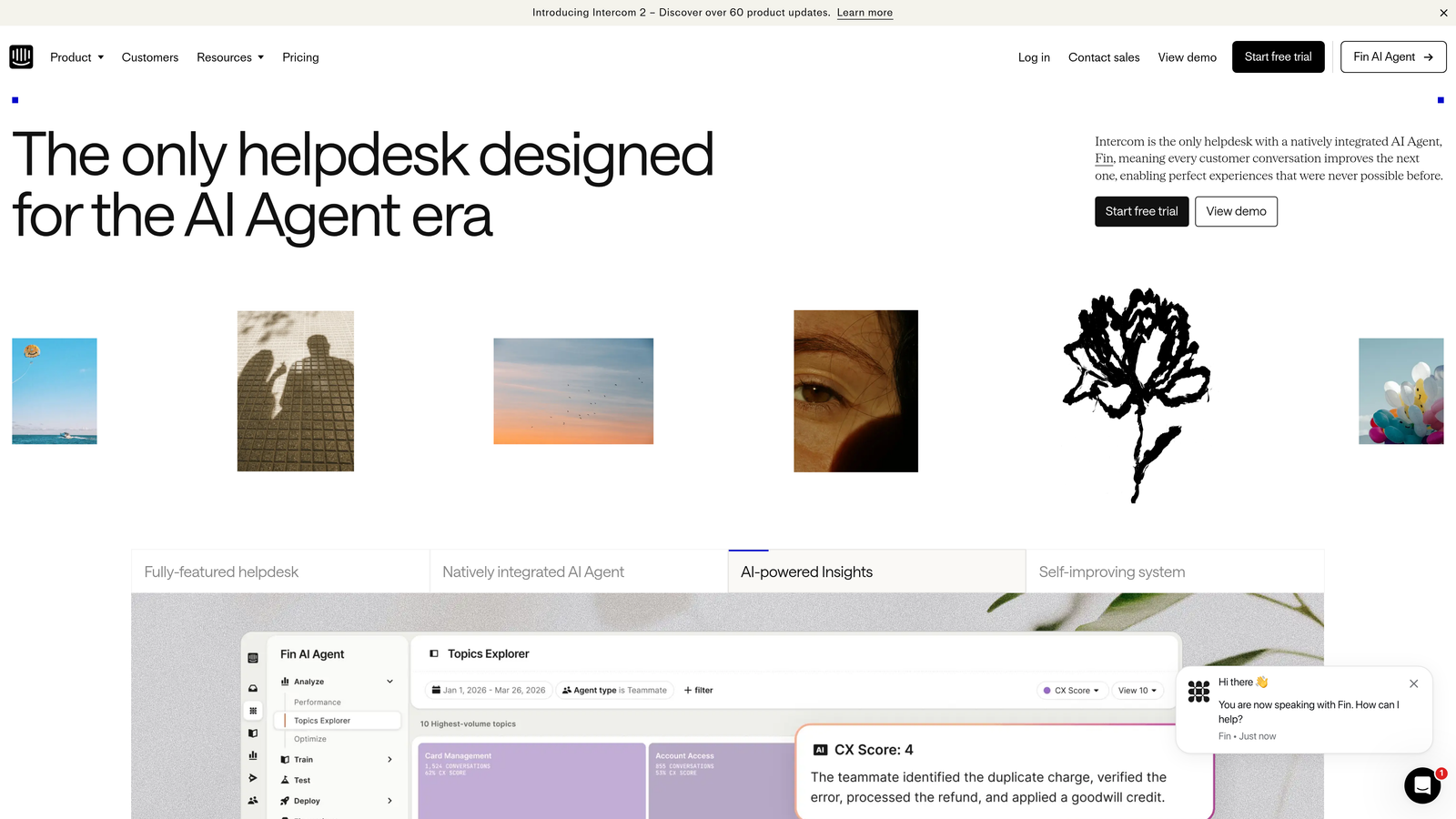
Intercom is a mature customer messaging platform with a Fin AI agent that handles self-service resolution across chat, email, and help center channels.
Where This Tool Shines
Intercom has been a staple in the SaaS support stack for years, and its Fin AI agent brings genuine resolution capability to the platform. Fin is powered by large language models and can handle a wide range of customer queries without agent involvement, drawing from your help center content and connected knowledge sources.
The platform's strength is breadth. You get a unified inbox, product tours, proactive in-app messaging, and workflow automation all under one roof. For teams that want to consolidate their support and customer communication tools, Intercom covers a lot of ground.
Key Features
Fin AI Agent: Autonomously resolves customer queries across chat and email using your existing help content.
Omnichannel Inbox: Combines chat, email, and social into a single unified workspace for agents.
Product Tours and In-App Messaging: Enables proactive self-service by guiding users through features before they need to ask.
Workflow Automation Builder: Visual builder for creating multi-step automations without engineering involvement.
App Marketplace: Extensive integrations with CRMs, analytics tools, and third-party platforms.
Best For
Mid-market SaaS companies that want a single platform for customer messaging, support, and proactive engagement. Teams already using Intercom's inbox will find the Fin AI upgrade a natural extension rather than a new tool to learn.
Pricing
Starts at $39/seat/month for the Essential plan. Fin AI is priced separately on a usage basis, so costs can grow significantly at higher resolution volumes.
3. Zendesk
Best for: Enterprise support teams needing robust AI agents within a mature helpdesk ecosystem
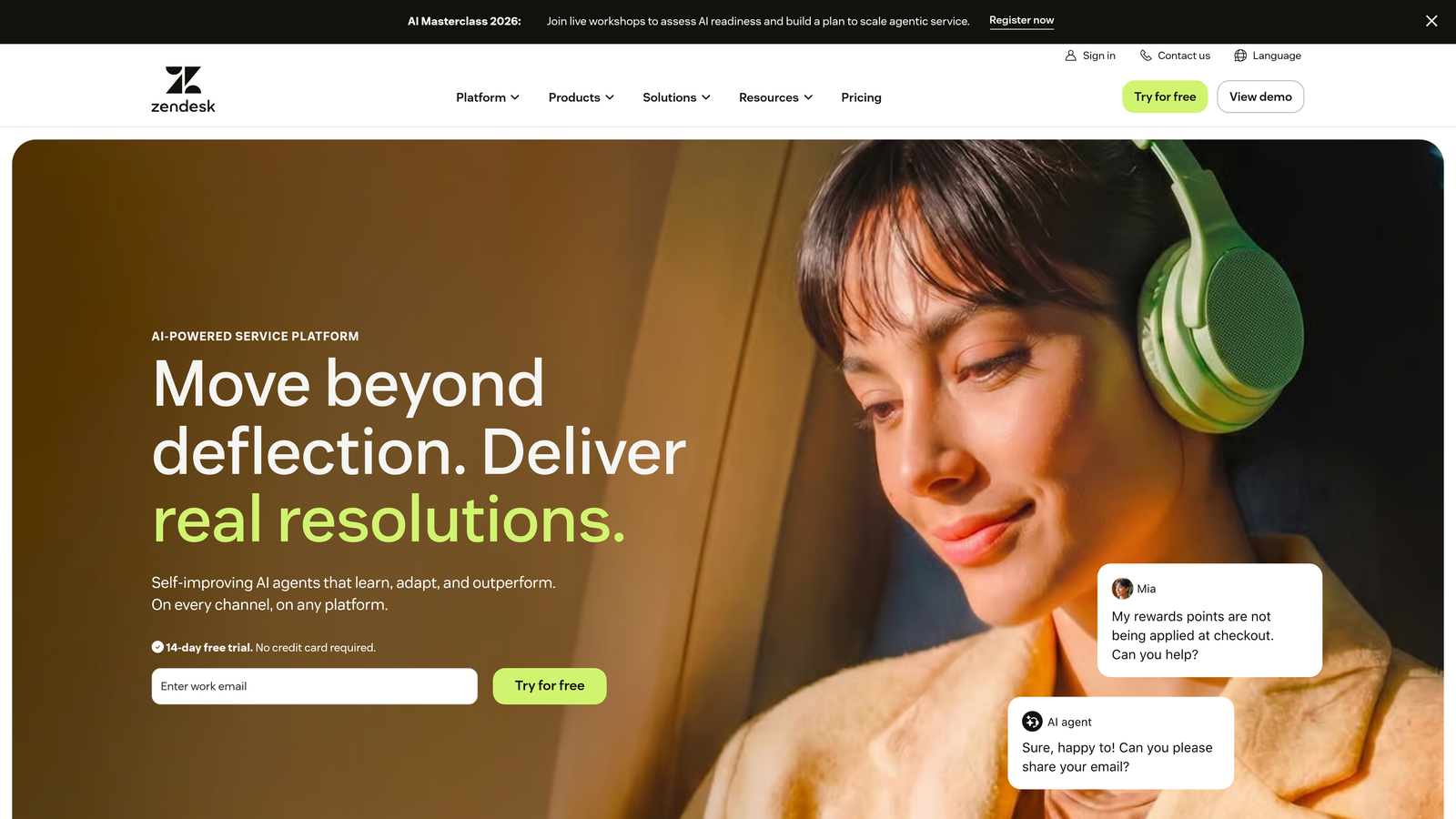
Zendesk is an enterprise-grade helpdesk platform with AI Agents and intelligent triage for automated ticket deflection and resolution at scale.
Where This Tool Shines
Zendesk is the default choice for large support organizations, and for good reason. Its AI Agents handle front-line ticket resolution by drawing from your knowledge base, and the platform's workflow engine is among the most configurable in the market. If your team already lives in Zendesk, the AI layer slots in without requiring a platform migration.
The depth of reporting and SLA management makes Zendesk particularly strong for teams with compliance requirements or complex escalation structures. It's not the lightest tool, but for high-volume enterprise support, it offers a level of control that smaller platforms can't match.
Key Features
AI Agents: Automated front-line resolution drawing from your Zendesk Guide knowledge base to handle common tickets without agent involvement.
Intelligent Triage and Routing: Classifies incoming tickets by intent and sentiment to route them to the right team or workflow automatically.
Zendesk Guide: Integrated knowledge base that powers both customer-facing self-service and AI resolution content.
Advanced Workflow Automation: Triggers, automations, and macros that can handle complex multi-step support processes.
Enterprise Reporting and SLA Management: Granular analytics with SLA tracking, CSAT measurement, and compliance-friendly audit trails.
Best For
Large support organizations with established Zendesk deployments, teams with strict SLA requirements, and enterprises that need deep configurability and compliance-ready reporting alongside AI automation.
Pricing
Suite plans start at $55/agent/month. AI add-ons are priced separately, so total cost scales with both seat count and AI usage volume.
4. Freshdesk
Best for: Growing teams wanting accessible AI-powered helpdesk automation without enterprise pricing
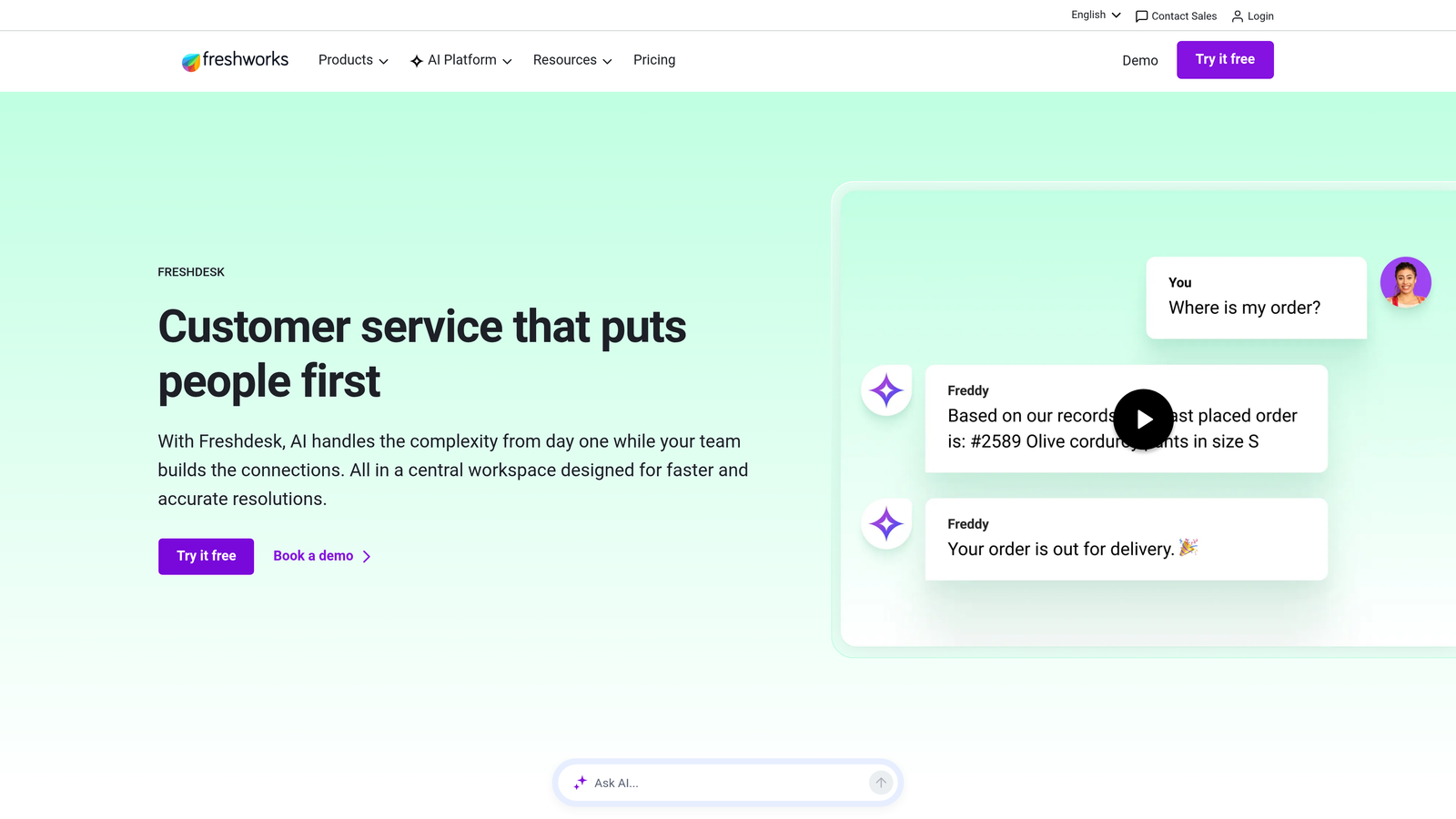
Freshdesk is Freshworks' helpdesk platform with Freddy AI embedded across ticketing, self-service bots, and agent assist workflows at approachable price points.
Where This Tool Shines
Freshdesk's main advantage over heavier enterprise platforms is accessibility. Freddy AI is woven throughout the product rather than bolted on as a premium add-on, which means even teams on mid-tier plans get meaningful automation. The Freddy Self Service bot builder lets non-technical teams create AI-powered bots without writing a line of code.
For teams migrating from basic email-based support to a proper helpdesk with automation, Freshdesk offers a gentler learning curve than Zendesk while still covering omnichannel support, collision detection, and a large integration marketplace.
Key Features
Freddy AI: Handles auto-triage, suggested replies, ticket summarization, and agent assist across the support workflow.
Freddy Self Service Bot Builder: No-code interface for building AI-powered customer-facing bots without engineering resources.
Omnichannel Support: Manages email, chat, phone, and social channels from a unified inbox.
Collision Detection: Prevents multiple agents from working the same ticket simultaneously, reducing duplicate effort.
Marketplace Integrations: Over 1,000 integrations covering CRMs, ecommerce platforms, and communication tools.
Best For
Mid-market and growing SaaS teams that need a full-featured helpdesk with AI automation at a price point that doesn't require enterprise budgets. Particularly good for teams transitioning from email-only support to a structured helpdesk environment.
Pricing
Free plan available for small teams. Paid plans start at $15/agent/month, making it one of the more accessible options on this list for budget-conscious teams.
5. Tidio
Best for: Smaller teams and startups wanting fast self-service deployment with minimal setup
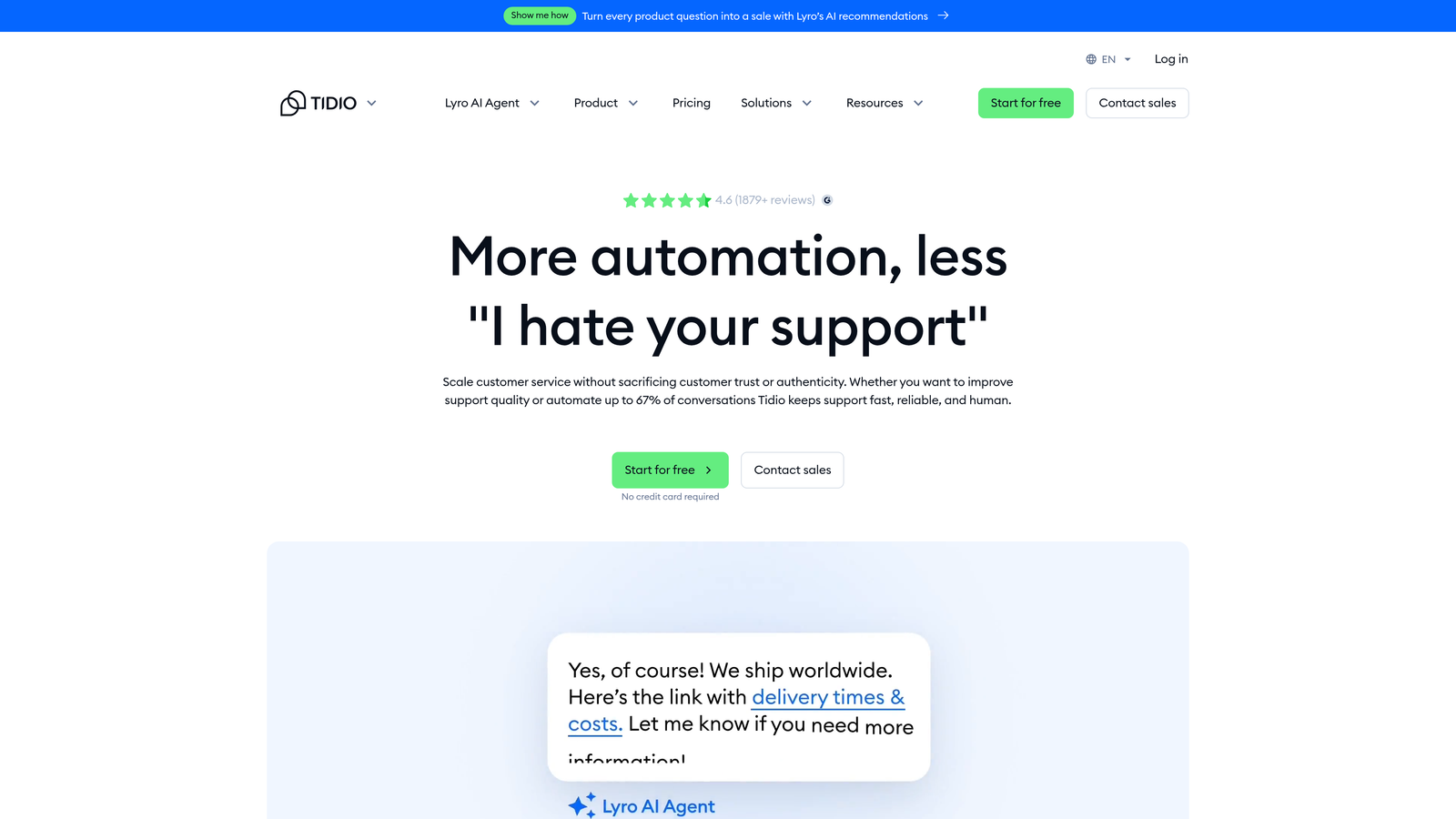
Tidio is a lightweight customer service platform featuring the Lyro AI chatbot for rapid self-service deployment, particularly well-suited to smaller teams and ecommerce businesses.
Where This Tool Shines
Speed of deployment is Tidio's calling card. You can have Lyro AI handling customer queries within hours of setup, with no complex configuration required. The visual chatbot flow builder makes it easy to customize automation without technical expertise, and the AI-to-human handoff is smooth enough that customers rarely notice the transition.
Tidio is honest about its positioning: it's built for teams that need something working quickly, not for complex enterprise workflows. That focus on simplicity is a genuine advantage for startups and smaller B2B teams that don't have the bandwidth to configure a heavyweight platform.
Key Features
Lyro AI Chatbot: Automated query resolution that learns from your FAQ and support content to handle common customer questions.
Visual Chatbot Flow Builder: Drag-and-drop interface for building custom automation flows without coding.
AI-to-Human Handoff: Seamless escalation from Lyro to a live agent when the conversation requires human judgment.
Ecommerce Integrations: Native connections with Shopify, WordPress, and major ecommerce platforms.
Real-Time Visitor Tracking: Proactive messaging triggered by visitor behavior, allowing teams to engage before a support request is submitted.
Best For
Startups, small SaaS teams, and ecommerce businesses that want self-service automation up and running quickly without a lengthy implementation process. Less suited to high-volume enterprise workflows or teams needing deep CRM integration.
Pricing
Free plan available with limited features. Lyro AI starts at $29/month, making it one of the most affordable entry points for AI-powered self-service on this list.
6. Guru
Best for: Teams where knowledge accuracy and freshness are critical to self-service quality
Guru is an AI-powered knowledge management platform that surfaces verified answers from your company's collective knowledge to both agents and customers in real time.

Where This Tool Shines
Most knowledge base tools struggle with one core problem: content goes stale. Guru addresses this directly with built-in verification workflows that flag outdated articles and route them to subject matter experts for review. For support teams where wrong answers are costly, that accuracy layer is genuinely valuable.
The AI search capability works across internal wikis, support docs, and connected tools simultaneously, meaning agents get the right answer regardless of where it lives. The browser extension is particularly useful, surfacing relevant knowledge in context without agents having to switch tabs or search manually.
Key Features
AI Search: Unified search across internal wikis, support documentation, and connected tools like Slack and Salesforce.
Knowledge Verification Workflows: Built-in review cycles that flag outdated content and route it to the right team member for updating.
Browser Extension: Surfaces relevant knowledge in context while agents work in other tools, without requiring a tab switch.
Integration Ecosystem: Connects with Slack, Zendesk, Salesforce, and other common support and CRM platforms.
Analytics on Knowledge Gaps: Identifies what agents and customers search for but don't find, helping teams prioritize content creation.
Best For
Support teams with large, complex knowledge bases where accuracy matters as much as coverage. Also strong for organizations where internal agent knowledge and customer-facing self-service need to stay in sync.
Pricing
Free for up to 3 users. Paid plans start at $10/user/month, scaling with team size.
7. Helpjuice
Best for: Teams building SEO-optimized, analytics-driven customer-facing help centers
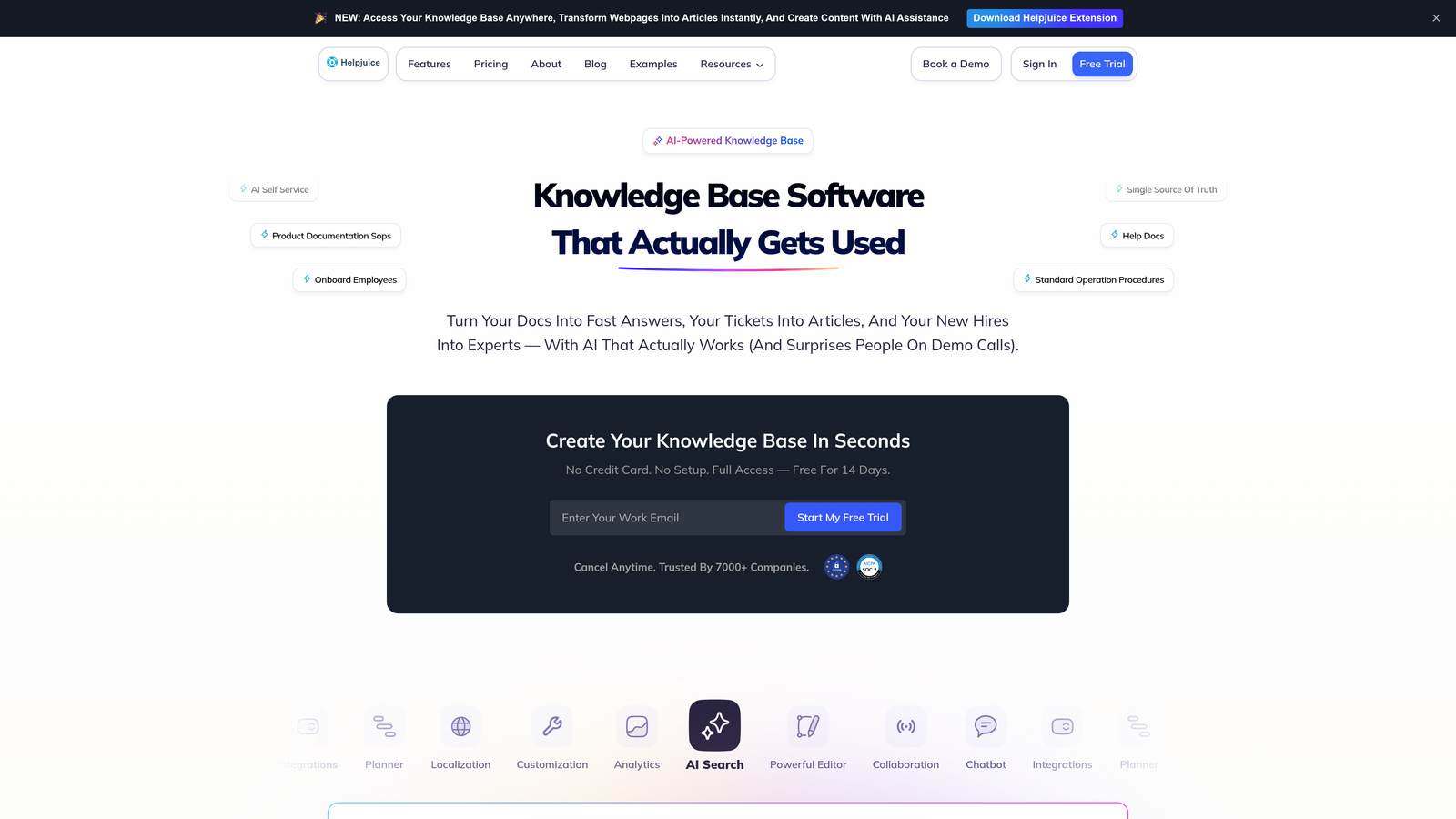
Helpjuice is a dedicated knowledge base platform focused on helping support teams build branded, analytics-rich self-service help centers that drive ticket deflection.
Where This Tool Shines
Where Guru is built around internal knowledge management, Helpjuice is purpose-built for the customer-facing help center. Its search analytics are notably strong: you can see exactly what customers search for and, crucially, what they search for but don't find. That gap analysis is one of the most actionable features in any knowledge base tool.
The no-code editor and customizable branding mean your help center looks like a natural extension of your product rather than a generic support portal. For teams investing in SEO-driven deflection, Helpjuice's structure and article optimization tools make it easier to rank for the queries your customers are already searching.
Key Features
Advanced Search Analytics: Shows what customers search for and highlights gaps where no useful content exists, informing your content roadmap.
Customizable Branded Knowledge Base: No-code editor with full branding control so the help center matches your product's look and feel.
AI-Powered Article Suggestions: Suggests related content while authors are writing, reducing duplication and improving coverage.
Multi-Language Support: Serves global customer bases with localized content across multiple languages.
Helpdesk Integrations: Connects with Zendesk, Slack, Salesforce, and Intercom for a connected support workflow.
Best For
Support teams that want a dedicated, high-quality customer-facing help center with strong analytics. Particularly well-suited to teams focused on SEO-driven self-service deflection and content gap analysis.
Pricing
Starts at $120/month for up to 4 users. Pricing is per-account rather than per-user at the base tier, which can be cost-effective for small teams.
8. Chameleon
Best for: SaaS product teams preventing support tickets through proactive in-app guidance
Chameleon is a product adoption platform that enables SaaS teams to build in-app tours, tooltips, and self-service launchers that proactively prevent support tickets before they're submitted.
Where This Tool Shines
Chameleon operates at a different layer than most tools on this list. Rather than resolving tickets after they arrive, it works to prevent them from being submitted in the first place. By embedding contextual guidance directly into your product, users get help exactly where and when they need it, without ever leaving the application to search a help center.
The no-code builder means product and support teams can create and update tours and tooltips without engineering involvement. Combined with user segmentation, you can deliver targeted onboarding flows to specific user cohorts, reducing the "how do I do X?" tickets that tend to cluster around new features or complex workflows.
Key Features
No-Code Tour and Tooltip Builder: Create product tours, modals, and contextual tooltips without writing code or filing engineering tickets.
In-App Help Launcher: Embeds a self-service resource hub directly in your product so users never need to leave to find answers.
User Segmentation: Targets onboarding flows and guidance to specific user segments based on role, plan, or behavior.
A/B Testing: Tests different guidance content and flows to optimize for activation and feature adoption outcomes.
Analytics Integrations: Connects with Segment, HubSpot, Mixpanel, and Salesforce for a complete view of adoption and engagement.
Best For
SaaS product and support teams that want to reduce "how do I" ticket volume proactively. Chameleon works best when paired with a resolution-focused support tool rather than as a standalone support solution.
Pricing
Startup plan starts at $279/month. Pricing scales with monthly active users and feature tier.
9. Forethought
Best for: Enterprise teams layering AI resolution onto existing Zendesk, Salesforce, or Freshdesk deployments
Forethought is an enterprise AI platform that sits on top of existing helpdesks to triage, route, and auto-resolve tickets at high volume without requiring a platform migration.
Where This Tool Shines
Forethought's key differentiator is its positioning as an AI layer rather than a replacement platform. For large enterprises that have years of configuration, workflows, and agent training invested in Zendesk or Salesforce Service Cloud, ripping out the helpdesk isn't realistic. Forethought slots in on top, adding autonomous resolution, intelligent triage, and agent assist without disrupting existing infrastructure.
The platform's four AI modules (Solve, Triage, Assist, and Discover) cover the full support workflow from initial resolution attempt through to analytics and optimization. Discover in particular stands out for teams that want data-driven insight into where their workflows can be improved.
Key Features
Solve AI: Attempts autonomous ticket resolution before any agent engages, handling high-frequency query types at scale.
Triage AI: Classifies and routes incoming tickets by intent, priority, and sentiment with high accuracy.
Assist AI: Surfaces suggested responses and relevant knowledge to agents while they're working a ticket.
Discover AI: Analyzes support patterns and workflow performance to surface optimization opportunities.
Native Helpdesk Integrations: Deep integrations with Zendesk, Salesforce Service Cloud, and Freshdesk as primary deployment targets.
Best For
High-volume enterprise support organizations that are committed to an existing helpdesk platform and want to add AI resolution and intelligence on top without a full migration. Less suitable for smaller teams or those open to a platform change.
Pricing
Custom enterprise pricing. Contact Forethought directly for a quote based on your support volume and helpdesk environment.
Which Tool Is Right for Your Team?
The right customer self-service automation tool depends less on feature lists and more on where you are in your support maturity, what your existing stack looks like, and how much you want AI to own versus assist.
Here's a quick guide by use case:
AI-first autonomous resolution: Halo AI is purpose-built for this. Its page-aware context, continuous learning, and business intelligence layer make it the strongest choice for B2B SaaS teams that want resolution, not just deflection.
Enterprise helpdesk with AI added on: Zendesk or Forethought. If you're deeply invested in an existing helpdesk ecosystem, these are the cleanest paths to AI resolution without a migration.
Mid-market all-in-one platform: Intercom or Freshdesk cover messaging, ticketing, and AI resolution in a single product at accessible price points.
Knowledge base and deflection focus: Guru for internal knowledge accuracy and agent assist; Helpjuice for customer-facing help centers with strong SEO and analytics.
In-product guidance and ticket prevention: Chameleon is the clear choice for SaaS teams that want to stop tickets before they start.
Fast startup deployment: Tidio gets you live quickly with minimal setup, making it ideal for early-stage teams that need something working today.
Your support team shouldn't scale linearly with your customer base. AI agents can handle routine tickets, guide users through your product, and surface business intelligence while your team focuses on complex issues that genuinely need a human touch. See Halo in action and discover how continuous learning transforms every interaction into smarter, faster support.