9 Best Customer Sentiment Analysis Tools in 2026
Discover the 9 best customer sentiment analysis tools in 2026, evaluated on accuracy, integrations, and actionable insights to help support, product, and marketing teams decode customer emotions across every touchpoint—whether you're reducing churn, managing support tickets, or tracking feature feedback.
 Matt PattoliFounder13 min read
Customer sentiment analysis has moved from a nice-to-have to an operational necessity. When support tickets pile up, product feedback scatters across channels, and churn happens quietly, teams that can read the emotional signal behind customer interactions have a real edge.
But not all sentiment tools are built the same. Some are purpose-built for support teams. Others serve marketing, product, or executive stakeholders. A few do it all, analyzing tone, intent, and emotion across every touchpoint to surface what customers actually feel, not just what they say.
This list covers the best customer sentiment analysis tools available in 2026, evaluated on accuracy, integration depth, ease of use, and how actionable their insights actually are. Whether you're a B2B SaaS team trying to reduce churn, a support lead drowning in tickets, or a product manager tracking feature reception, there's a tool here for your workflow.
For teams using AI-powered support, also check out our guide to customer support intelligence analytics and intelligent customer health scoring to see how sentiment fits into a broader support intelligence strategy.
1. Halo AI
Best for: B2B SaaS teams that need sentiment tied to business outcomes, not just scores
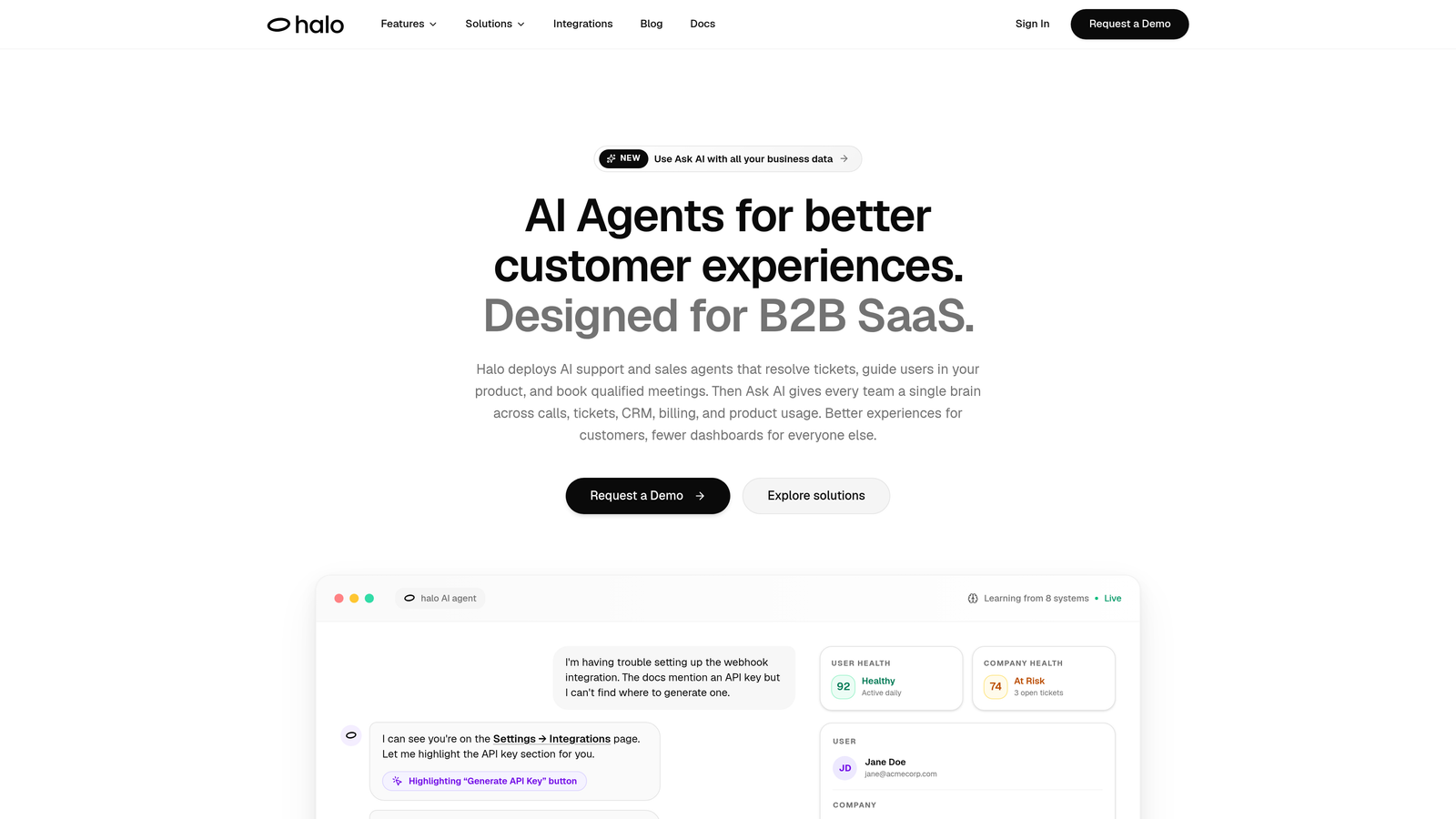
Halo AI is an AI-powered customer support platform with embedded sentiment intelligence that connects emotional signals to churn risk, revenue anomalies, and product friction in real time.
Where This Tool Shines
Most sentiment tools give you a score. Halo gives you context. When a customer expresses frustration, the platform doesn't just flag it as negative; it tells you where in your product they were, what account they're on, and whether that signal connects to a pattern worth escalating. That's the difference between a metric and an insight.
The page-aware context is particularly valuable for SaaS teams. Because Halo knows what screen a user is on when they reach out, sentiment isn't abstract. A frustrated message on your billing page means something very different from the same tone on your onboarding flow, and Halo treats them differently.
Key Features
Smart Inbox with Business Intelligence: Surfaces sentiment signals alongside customer health indicators, churn risk flags, and revenue anomalies so support teams see the full picture.
Page-Aware Sentiment Context: Understands where in your product a user is when expressing frustration, giving sentiment operational meaning rather than just a label.
Sentiment-Triggered Workflows: Integrates with Linear, Slack, HubSpot, Stripe, Intercom, and more, so negative sentiment signals can automatically trigger downstream actions across your stack.
Auto Bug Ticket Creation: When negative sentiment points to a product issue, Halo creates bug tickets automatically, routing friction signals directly into engineering workflows.
Live Agent Handoff: High-urgency or high-negative-sentiment conversations are escalated to human agents without requiring manual triage.
Continuous Learning: The system improves its sentiment accuracy over time by learning from every interaction, which is particularly useful for industry-specific language.
Best For
B2B SaaS companies that want sentiment embedded in their support workflow rather than bolted on as a reporting layer. Especially well-suited for teams already using Zendesk, Freshdesk, or Intercom who want a layer of intelligence that connects support signals to business outcomes.
Pricing
Contact for pricing at haloagents.ai. Given the platform's depth of integration and business intelligence capabilities, pricing is tailored to team size and use case.
2. MonkeyLearn
Best for: Teams that want custom sentiment models without needing a data scientist
MonkeyLearn is a no-code text analytics platform that lets teams build and train custom sentiment models on their own data without machine learning expertise.
Where This Tool Shines
The real strength here is customization without complexity. Out-of-the-box sentiment models often struggle with industry-specific language. MonkeyLearn lets you train models on your actual support tickets, NPS responses, or review data so the output reflects your customers' vocabulary, not a generic baseline.
It's worth noting that Medallia acquired MonkeyLearn in 2022. The product continues to operate independently, but teams evaluating it for the long term should factor that relationship into their decision.
Key Features
Custom Trainable Models: Build sentiment classifiers that learn your specific industry terms and product language for higher accuracy.
Pre-Built Templates: Ready-to-use models for support tickets, NPS responses, and review analysis get you started quickly.
Flexible Integration Options: Connects with Zapier, Google Sheets, and Zendesk for teams that want to embed analysis into existing workflows.
Batch and Real-Time Analysis: Process large datasets in bulk or analyze text via API as it arrives.
Visual Training Interface: No code required to label training data, test models, and iterate on accuracy.
Best For
Product and CX teams that have specific text data they want to analyze but don't have a data science team to build custom models from scratch. Also a good fit for teams that need flexibility across multiple text sources.
Pricing
A free tier is available. Paid plans are offered for higher volume and advanced features. Check monkeylearn.com for current pricing tiers.
3. Qualtrics XM
Best for: Enterprise teams running structured VoC programs who want sentiment layered into survey data
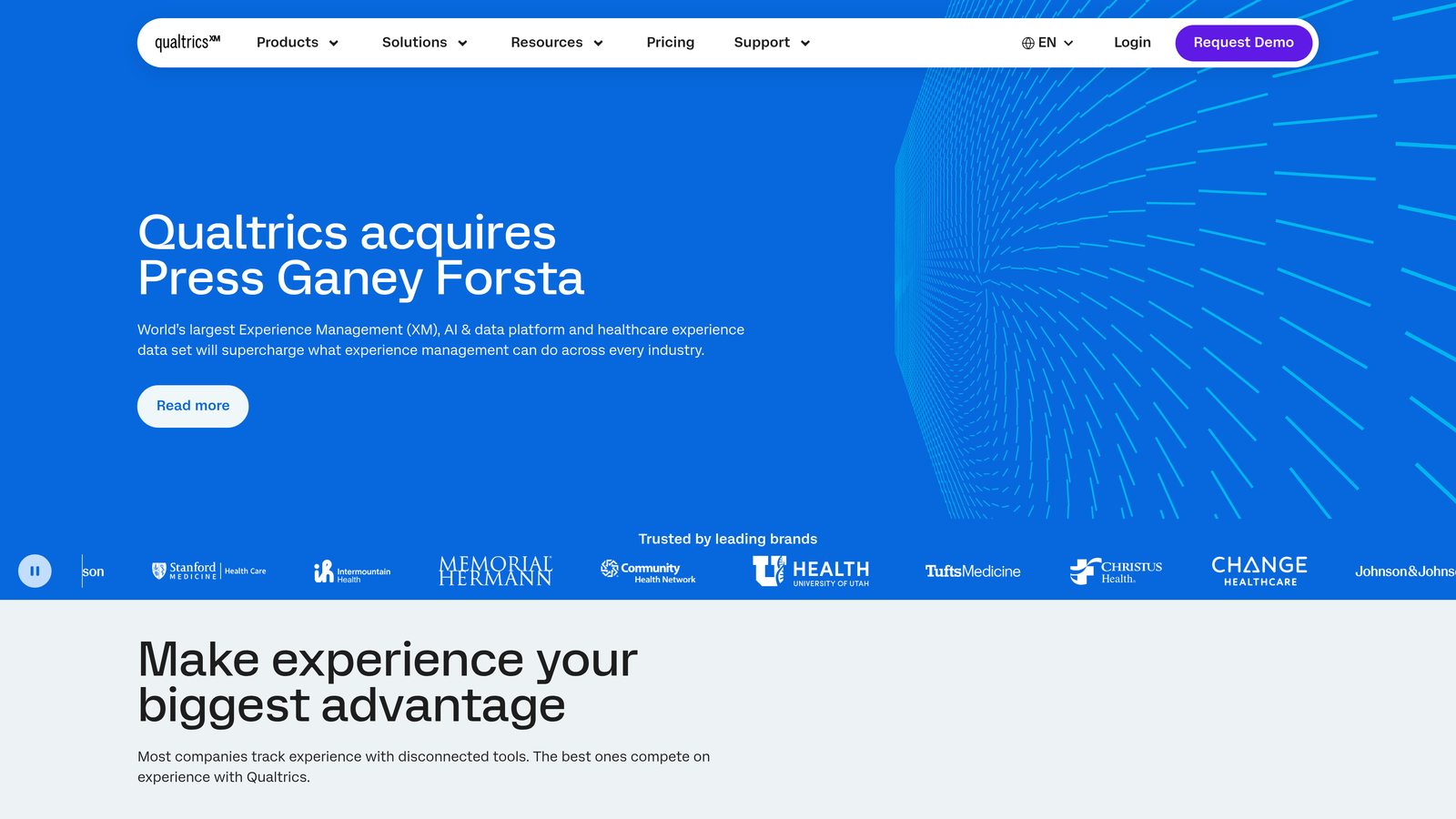
Qualtrics XM is an enterprise experience management platform that combines structured survey data with NLP-powered sentiment analysis across the full customer journey.
Where This Tool Shines
Qualtrics excels when sentiment is one piece of a larger experience measurement program. If you're running NPS, CSAT, and CES surveys and want to understand the "why" behind the scores, Text iQ adds a layer of NLP analysis that surfaces themes and sentiment from open-ended responses at scale.
The platform is particularly strong for organizations that need role-based views: CX leaders, HR teams, and product managers each get dashboards tailored to their context rather than a single shared report.
Key Features
Text iQ: NLP-powered sentiment and topic analysis applied to open-ended survey responses, surfacing themes automatically.
Cross-Channel VoC Programs: Combines NPS, CSAT, and CES data with sentiment layering for a complete picture of experience quality.
Predictive Intelligence: Identifies at-risk customers based on sentiment patterns and behavioral signals.
Role-Based Dashboards: Configurable views for CX, HR, and product stakeholders so each team sees what's relevant to them.
SAP and Enterprise Integrations: Deep connectivity with SAP systems and major enterprise data platforms.
Best For
Large organizations with established VoC programs that need sentiment analysis embedded into a broader experience measurement framework. Less suited for teams looking for a lightweight, support-focused solution.
Pricing
Enterprise contracts with pricing not publicly listed. Contact Qualtrics directly for a quote based on your program scope.
4. Medallia
Best for: Large enterprises running multi-channel CX programs across physical and digital touchpoints
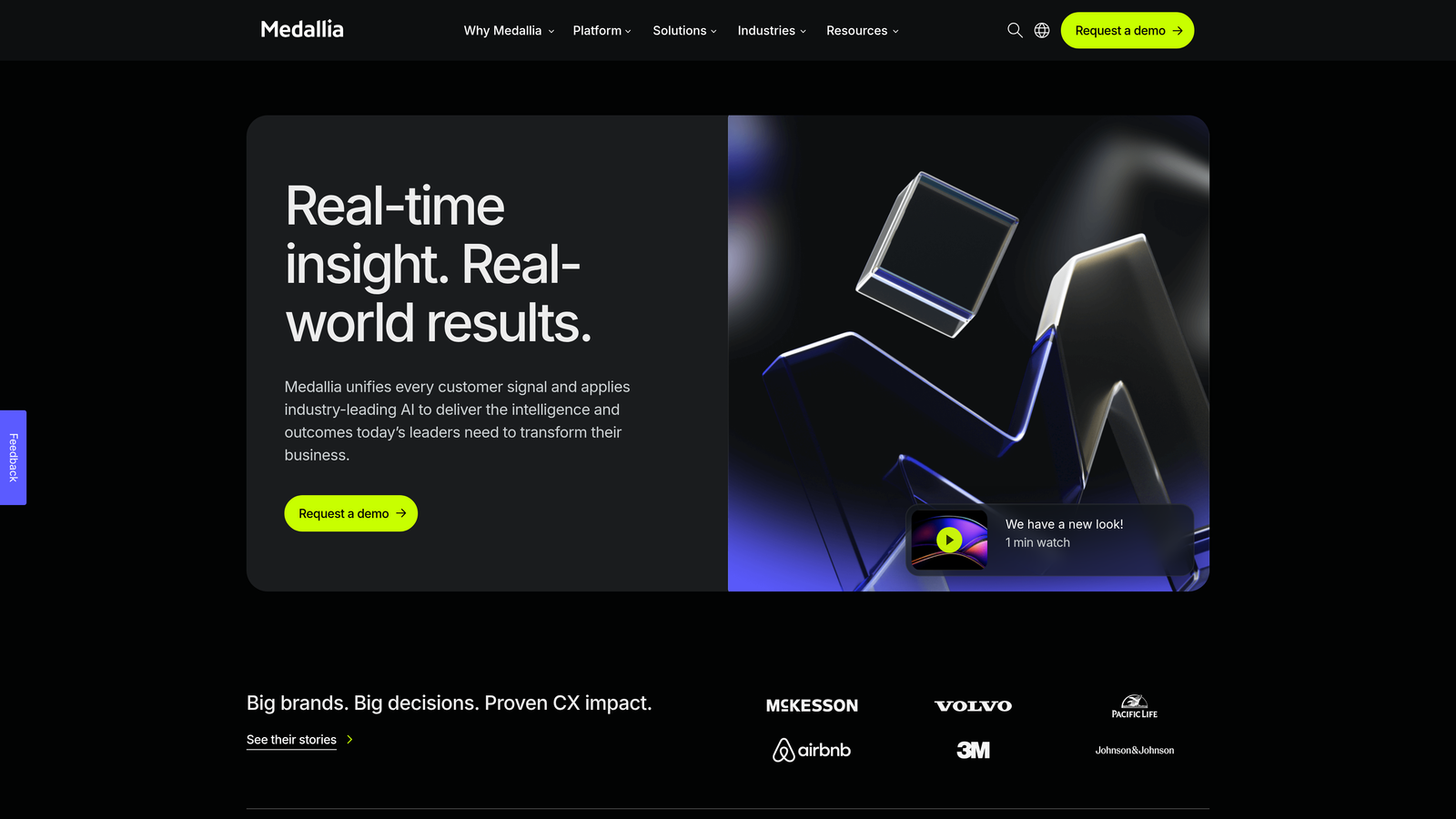
Medallia is an enterprise CX platform that combines operational data with sentiment signals across touchpoints to enable root-cause analysis at scale.
Where This Tool Shines
Medallia's differentiator is the combination of transactional context and emotional signals. Rather than analyzing sentiment in isolation, the platform connects it to purchase history, support interactions, and operational data, so you can understand not just that a customer is frustrated, but what specific experience drove that frustration.
The acquisition of MonkeyLearn significantly strengthened Medallia's NLP capabilities, giving it more flexible text analysis on top of its existing experience data infrastructure.
Key Features
Medallia Athena AI Layer: Powers sentiment analysis, predictive modeling, and anomaly detection across all experience data.
Operational Data Integration: Combines transactional signals with emotional data for root-cause analysis rather than surface-level reporting.
Multi-Channel Coverage: Handles in-store, digital, and contact center touchpoints within a single platform.
Enhanced NLP via MonkeyLearn: Custom model training capabilities inherited from the 2022 acquisition.
Role-Based Action Management: Assigns follow-up actions based on negative sentiment signals to close the loop with affected customers.
Best For
Large enterprises in retail, hospitality, financial services, and other industries with complex, multi-channel customer journeys. Overkill for smaller teams or those focused purely on digital support.
Pricing
Enterprise contracts with pricing not publicly listed. Contact Medallia for a quote tailored to your organization's scope.
5. Sprout Social
Best for: Marketing and social teams tracking brand sentiment across public channels
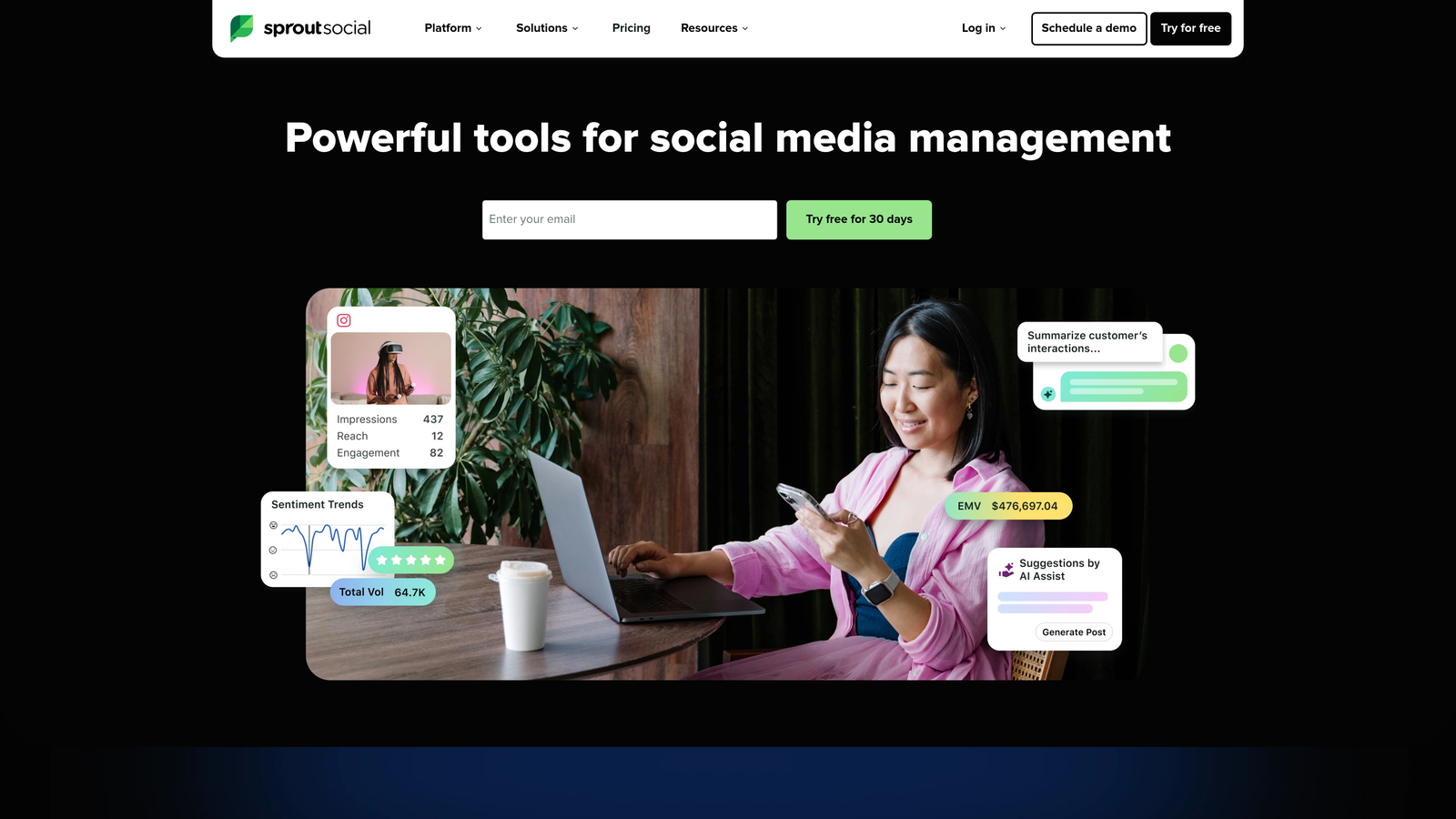
Sprout Social is a social media management platform with real-time sentiment analysis across major social networks, review sites, and brand mentions.
Where This Tool Shines
If your customers talk about you publicly, Sprout Social captures it. The Listening feature tracks brand and competitor sentiment over time, which is particularly useful for understanding how product launches, support incidents, or marketing campaigns affect public perception. You can see sentiment shift in real time rather than waiting for a quarterly survey.
The Smart Inbox aggregates messages from across platforms with sentiment tagging already applied, which reduces the manual work of sorting and prioritizing incoming social interactions.
Key Features
Social Listening: Tracks brand and competitor sentiment trends across Twitter/X, Facebook, Instagram, LinkedIn, TikTok, and Reddit over time.
Smart Inbox with Sentiment Tagging: Aggregates all incoming messages with sentiment labels applied automatically.
Campaign Sentiment Tracking: Monitors how sentiment shifts around specific launches, incidents, or marketing moments.
Competitive Benchmarking: Compares your sentiment and share-of-voice against competitors.
Stakeholder Reporting: Presentation-ready reports for sharing sentiment trends with leadership.
Best For
Marketing, communications, and social teams focused on public brand perception. Less relevant for teams whose primary concern is support ticket sentiment or private customer interactions.
Pricing
Published pricing tiers available at sproutsocial.com. Multiple plan levels to suit different team sizes and feature needs.
6. Zendesk (with AI)
Best for: Support teams already on Zendesk who want sentiment without adding another tool
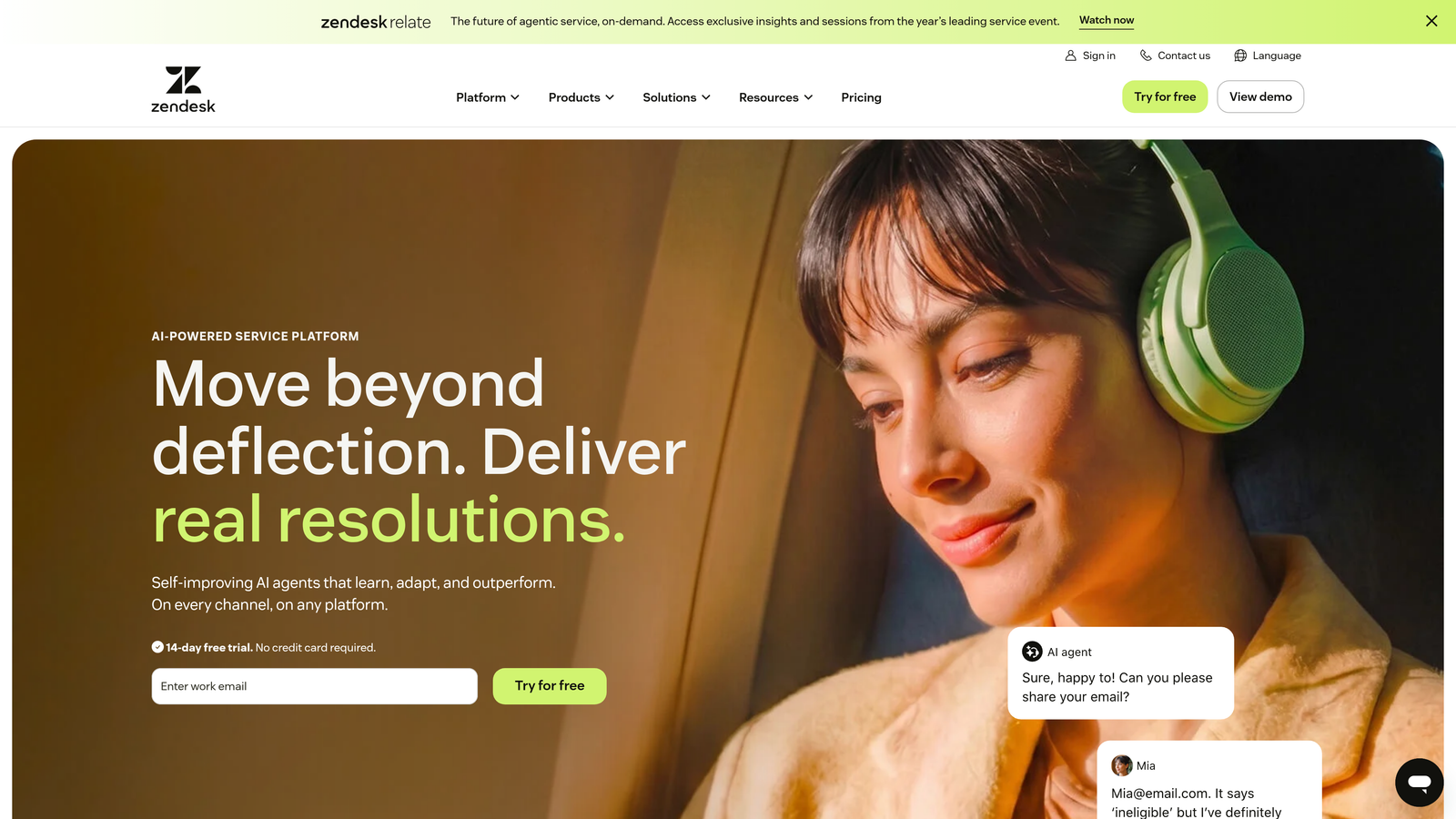
Zendesk is the industry-leading helpdesk platform with native AI-powered sentiment analysis built into ticket triage and routing workflows.
Where This Tool Shines
The strongest argument for Zendesk's sentiment capabilities is simplicity: if you're already on the platform, there's nothing new to integrate or learn. Sentiment detection works within existing ticket workflows, helping agents prioritize without changing how they work.
That said, Zendesk's sentiment analysis is primarily a triage feature rather than a deep analytics tool. It helps you route the right tickets to the right agents faster, but it won't surface churn signals, connect to your CRM, or give you account-level intelligence. Teams that need that deeper layer often look at platforms like Halo AI to complement or extend what Zendesk provides.
Key Features
Automatic Sentiment Detection: Analyzes incoming tickets and applies sentiment labels without manual tagging.
Sentiment-Based Routing: Prioritizes and routes tickets based on detected emotional tone, getting urgent issues to the right agents faster.
Agent Context Panel: Surfaces customer sentiment information to agents before they respond, improving the quality of interactions.
Native Integration: Part of the Zendesk Suite with the Advanced AI add-on, requiring no additional platform setup.
Workflow Triggers: Sentiment can be used as a condition in Zendesk automation rules for more sophisticated routing logic.
Best For
Support teams already using Zendesk Suite who want basic sentiment-aware triage without introducing a new vendor. Not the right choice for teams that need sentiment connected to business outcomes beyond the helpdesk.
Pricing
Zendesk Suite plans are published at zendesk.com. Sentiment features are part of the Advanced AI add-on, which is priced separately from base Suite plans.
7. Lexalytics (Semantria)
Best for: Technical teams building custom NLP pipelines that need granular, entity-level sentiment
Lexalytics is a developer-focused text analytics platform offering entity-level and aspect-based sentiment analysis for teams building custom NLP applications.
Where This Tool Shines
Lexalytics operates at a level of granularity that most tools don't offer. Rather than telling you a document is "negative," it can tell you that the same message is positive about your onboarding experience but negative about a specific feature. That kind of aspect-based analysis is genuinely useful for product teams trying to understand nuanced feedback.
Since Lexalytics was acquired by InMoment in 2021, it now sits within a broader experience intelligence platform, though the Semantria API continues to operate for teams that want the standalone developer tool.
Key Features
Entity-Level Sentiment: Identifies sentiment toward specific features, people, or topics within a single document, not just overall tone.
Aspect-Based Analysis: Breaks down sentiment by specific aspects of a product or experience for nuanced understanding.
Multi-Language Support: Handles more than 30 languages, making it viable for global products and markets.
REST API and Cloud Deployment: Flexible deployment options for teams integrating sentiment into custom applications.
InMoment Platform Access: Optionally connects to the broader InMoment experience intelligence ecosystem.
Best For
Data and engineering teams with specific NLP requirements who need fine-grained sentiment analysis embedded in a custom pipeline. Not the right fit for non-technical teams looking for a plug-and-play solution.
Pricing
API-based pricing model. Contact Lexalytics directly for enterprise rates based on volume and use case requirements.
8. Brandwatch
Best for: Enterprise marketing and communications teams monitoring brand health at scale across the public web
Brandwatch is an enterprise social intelligence platform offering large-scale sentiment analysis across news, social media, forums, blogs, and review sites.
Where This Tool Shines
Scale is Brandwatch's defining advantage. The platform maintains one of the largest social listening datasets available, covering not just major social networks but also forums, news sites, blogs, and review platforms. For enterprise teams managing brand reputation across a noisy public landscape, that breadth of coverage matters.
The addition of Buzzsumo content intelligence capabilities gives Brandwatch users an extra dimension: not just what people are saying about you, but what content is driving those conversations.
Key Features
Extensive Public Web Coverage: One of the broadest listening datasets available, spanning social media, news, forums, and review sites.
Real-Time Sentiment Tracking: Monitors brand health and detects sentiment shifts that could indicate emerging crises.
Competitive Sentiment Benchmarking: Compares your brand sentiment against competitors across shared topics and keywords.
Audience Segmentation: Breaks down sentiment by demographic and audience segment for more targeted analysis.
Buzzsumo Integration: Adds content intelligence to understand what's driving public sentiment shifts.
Best For
Enterprise marketing, PR, and research teams that need to monitor and analyze public sentiment at scale. Less relevant for teams focused on private customer interactions like support tickets or in-app conversations.
Pricing
Enterprise pricing not publicly listed. Contact Brandwatch for a quote based on data volume and team requirements.
9. Kustomer
Best for: High-volume B2C support teams that want sentiment layered into a unified customer timeline
Kustomer is a CRM and customer service platform with unified customer timelines and AI-powered sentiment signals layered across all interaction history.
Where This Tool Shines
Kustomer's approach to sentiment is contextual in a different way from most tools. Rather than analyzing individual tickets in isolation, it layers sentiment signals across the full history of a customer relationship. An agent can see not just how a customer feels right now, but how their sentiment has trended over time, which changes how you respond to a long-term loyal customer versus someone already on their way out.
It's worth noting that Kustomer has changed ownership twice in recent years, acquired by Meta in 2022 and later sold to private equity. Teams evaluating it should consider platform stability as part of their decision.
Key Features
Unified Customer Timeline: All interactions across every channel are consolidated in one view with sentiment signals applied throughout.
AI Intent and Sentiment Detection: Helps agents understand customer mood and likely intent before crafting a response.
Proactive Sentiment Alerts: Flags at-risk customers based on negative sentiment patterns before they escalate.
E-Commerce and Communication Integrations: Connects with major platforms commonly used in high-volume B2C environments.
Conversation-Level Context: Agents see full sentiment history, not just the current ticket, for more informed interactions.
Best For
High-volume B2C support teams in e-commerce, subscription services, and consumer apps. Less suited for B2B SaaS environments where account-level intelligence and business outcome signals matter more than volume-based triage.
Pricing
Published pricing available at kustomer.com. Multiple plan tiers available based on team size and feature requirements.
Which Tool Is Right for Your Team
The best sentiment tool depends on where your customers express themselves and what you plan to do with the insight once you have it.
For B2B SaaS support teams that need sentiment connected to churn risk, product friction, and business outcomes, Halo AI is the most operationally focused option on this list. It goes beyond scoring to tell you what a signal means for the account.
For teams already on Zendesk who want basic sentiment-aware triage without introducing a new vendor, Zendesk's Advanced AI add-on is the path of least resistance, though it won't give you deep analytics.
For enterprise VoC programs built around structured surveys, Qualtrics XM and Medallia are the natural fits, with Medallia offering stronger multi-channel operational data integration.
For marketing and social teams monitoring public brand health, Sprout Social is the most accessible option, while Brandwatch suits enterprise teams that need scale and competitive intelligence.
For technical teams building custom NLP pipelines, Lexalytics offers the granularity that generic tools can't match. And for teams that want flexibility without a data scientist, MonkeyLearn fills that gap cleanly.
Your support team shouldn't scale linearly with your customer base. Let AI agents handle routine tickets, guide users through your product, and surface business intelligence while your team focuses on complex issues that need a human touch. See Halo in action and discover how continuous learning transforms every interaction into smarter, faster support.