9 Best Customer Service AI Platforms Compared for 2026
This customer service AI comparison evaluates nine leading platforms for 2026, examining autonomous resolution capabilities, learning mechanisms, integration depth, and pricing transparency. Whether you're scaling startup support or modernizing enterprise operations, you'll discover which AI customer service solution best handles your specific needs, from page-aware context to continuous learning from customer interactions.
 Matt PattoliFounder10 min read
Finding the right AI customer service platform can feel overwhelming with dozens of options claiming to revolutionize your support operations. The difference between a good choice and a great one often comes down to how well the AI learns, integrates with your existing tools, and handles the nuances of your specific customer base. This comparison breaks down leading platforms across key factors: autonomous resolution capabilities, learning mechanisms, integration depth, and pricing transparency. Whether you're scaling a startup support team or modernizing enterprise operations, you'll find a solution that fits your needs.
1. Halo AI
Best for: B2B SaaS companies needing page-aware context and continuous learning from every customer interaction
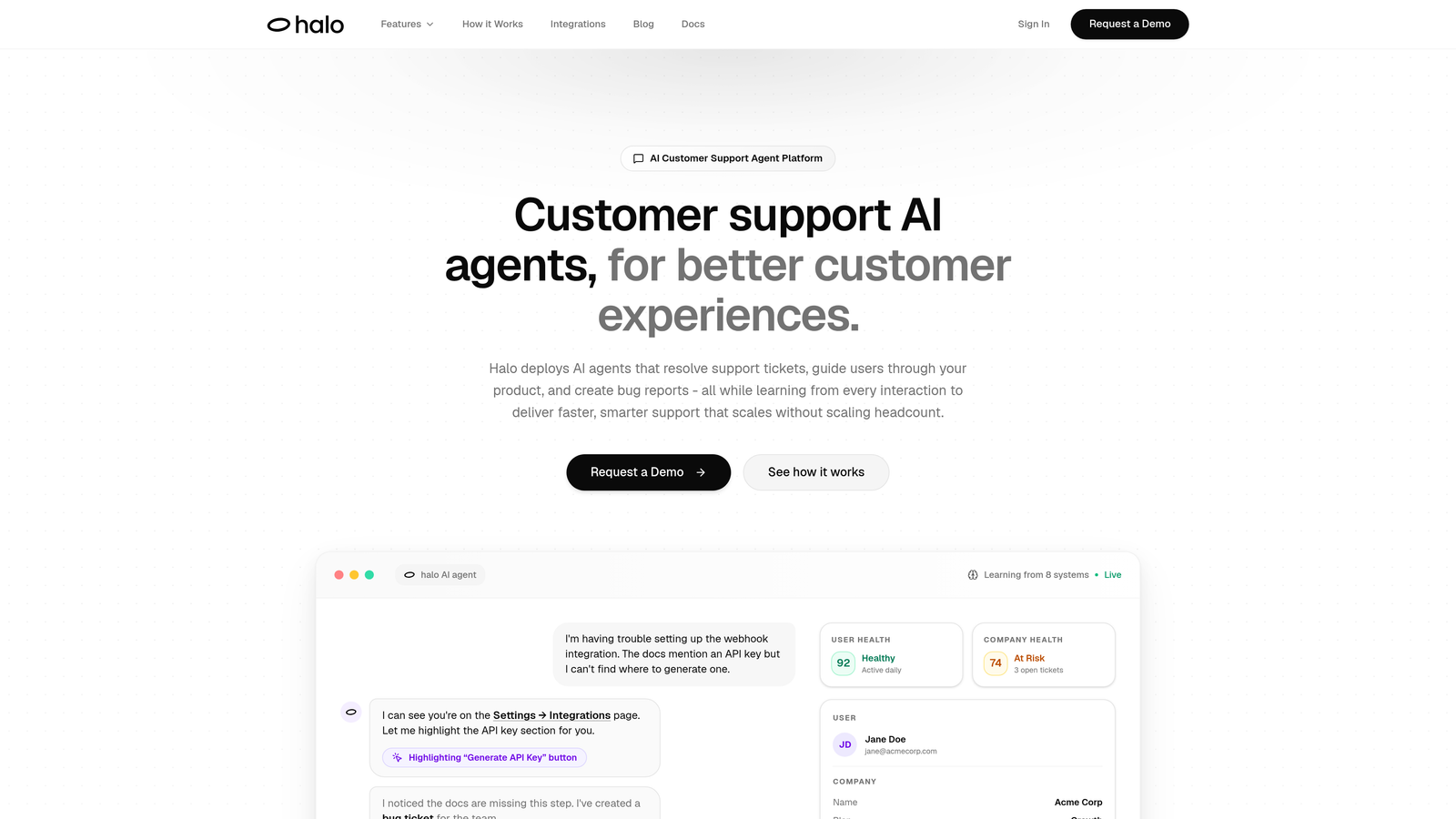
Halo AI is an AI-first customer support platform built specifically for B2B product teams who need AI that understands what users are actually seeing and doing in their application.
Where This Tool Shines
Unlike traditional helpdesk systems with AI bolted on, Halo operates as an intelligent layer that sees your product the same way your customers do. The platform's page-aware context means the AI knows exactly which screen a user is on, what buttons they're clicking, and where they might be stuck.
What makes this particularly powerful is the continuous learning mechanism. Every resolved ticket, every interaction, every escalation teaches the system something new. This means your AI agents get smarter over time without requiring manual retraining or constant knowledge base updates.
Key Features
Page-Aware Chat Widget: Provides visual UI guidance based on exactly what the user is viewing in your application.
Continuous Learning AI: Improves resolution quality with every ticket, building institutional knowledge automatically.
Auto Bug Ticket Creation: Identifies product issues and creates tickets in Linear or your project management tool without manual intervention.
Smart Inbox with Business Intelligence: Surfaces customer health signals, revenue intelligence, and anomaly detection beyond basic support metrics.
Multi-System Integrations: Connects to your entire business stack including Linear, Slack, HubSpot, Intercom, Stripe, Zoom, and PandaDoc.
Best For
This platform excels for B2B SaaS companies where product complexity requires more than canned responses. If your support team spends significant time explaining UI elements or walking users through multi-step workflows, the page-aware context delivers immediate value. Product teams also benefit from automatic bug detection and reporting.
Pricing
Contact for custom pricing based on your support volume and integration requirements.
2. Intercom Fin
Best for: Companies already using Intercom who want native GPT-4 powered conversational support
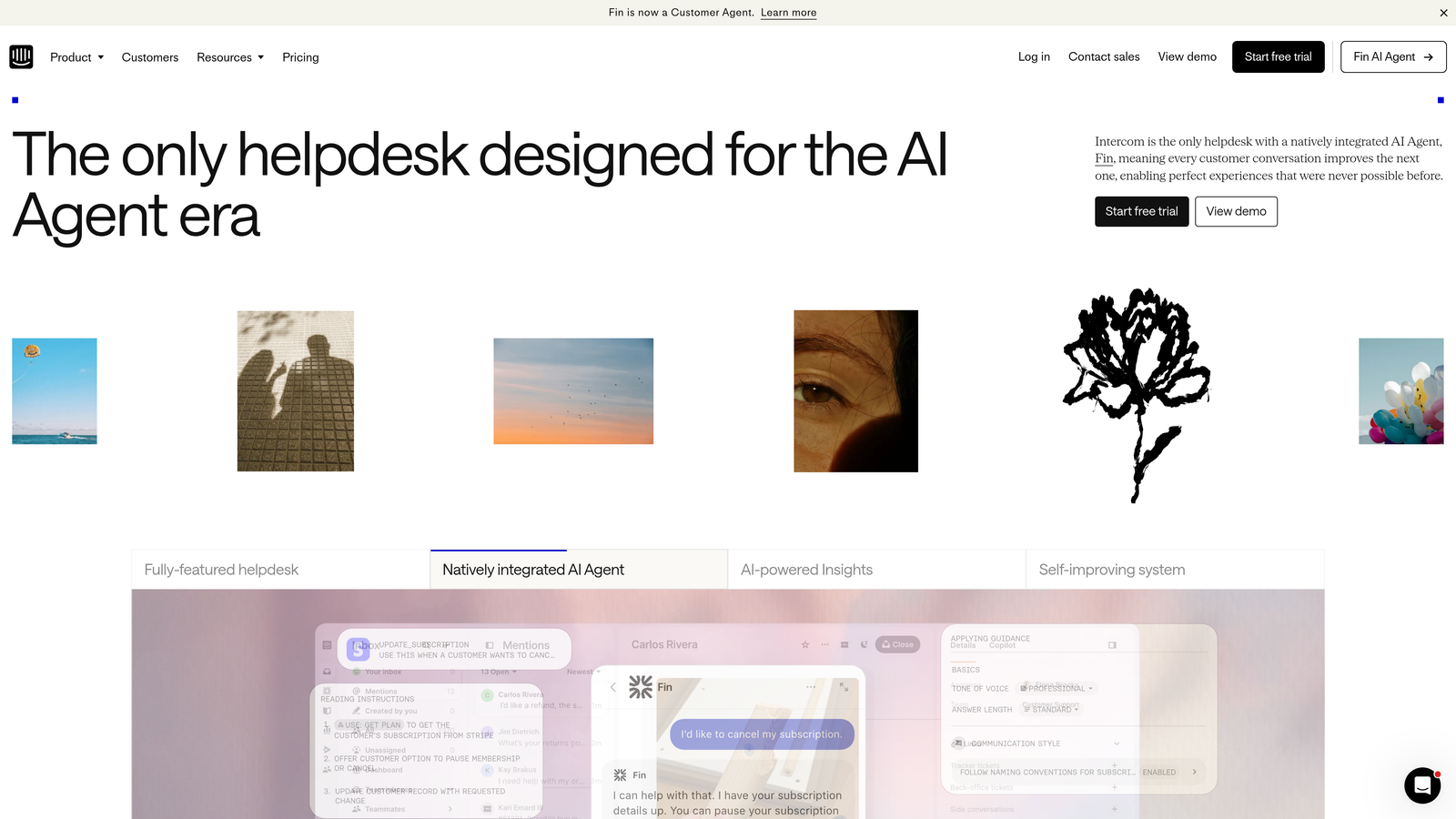
Intercom Fin is a GPT-4 powered AI agent built directly into the Intercom platform for conversational customer support.
Where This Tool Shines
If you're already invested in the Intercom ecosystem, Fin offers the smoothest integration path to AI-powered support. The native implementation means no awkward handoffs between systems or duplicate customer data.
The conversational quality stands out because of the GPT-4 foundation. Responses feel natural and contextual rather than robotic, which matters when you're trying to maintain brand voice across automated interactions.
Key Features
Native GPT-4 Integration: Leverages advanced language models for human-like conversation quality.
Conversation History Context: Pulls from previous interactions to provide continuity across multiple touchpoints.
Seamless Human Handoff: Transfers complex issues to live agents without losing context or forcing customers to repeat themselves.
Knowledge Base Learning: Automatically trains on your help center content and documentation.
Customizable AI Personality: Adjust tone and response style to match your brand guidelines.
Best For
Existing Intercom customers looking to add AI capabilities without switching platforms. Works particularly well for companies with well-maintained knowledge bases and clear documentation.
Pricing
Starts at $0.99 per resolution, making it easy to predict costs based on support volume.
3. Zendesk AI
Best for: Enterprise organizations with established Zendesk infrastructure needing AI augmentation
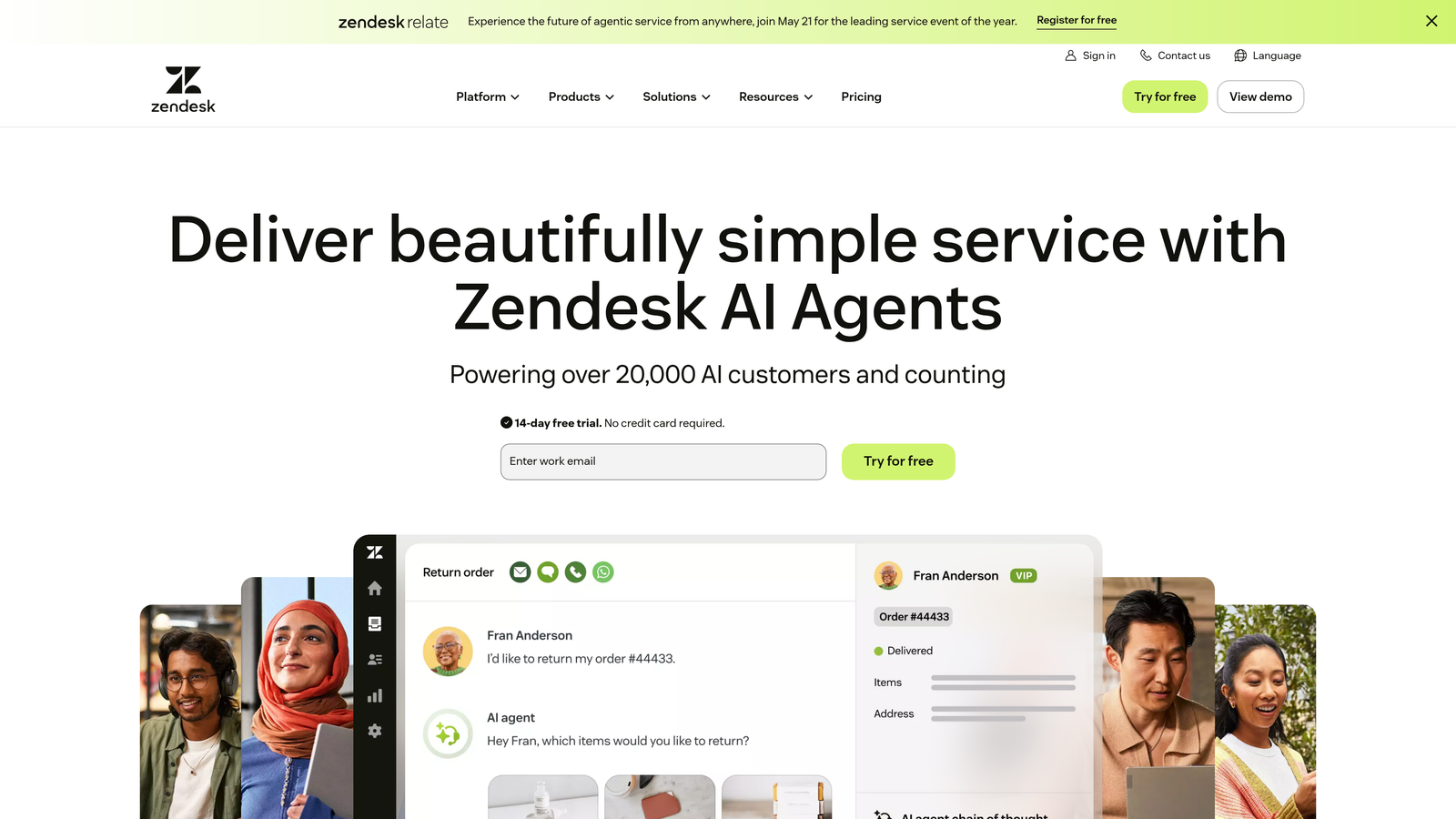
Zendesk AI brings enterprise-grade AI capabilities to the widely-adopted Zendesk support platform.
Where This Tool Shines
The strength here is depth of integration with Zendesk's mature support infrastructure. If you've built complex workflows, macros, and routing rules over years of using Zendesk, the AI layer enhances rather than replaces that investment.
Intent and sentiment detection work across multiple channels, giving you consistent AI capabilities whether customers reach out via email, chat, social media, or phone. This omnichannel consistency matters for enterprise teams managing high volumes across diverse touchpoints.
Key Features
Intent and Sentiment Detection: Automatically identifies what customers need and how they feel about the interaction.
Intelligent Ticket Routing: Directs inquiries to the right team or agent based on content analysis and historical patterns.
Agent Assist with Macro Suggestions: Recommends relevant macros and responses to help agents work faster.
Advanced Analytics: Provides AI-powered insights into support trends, bottlenecks, and team performance.
Omnichannel Support: Applies AI capabilities consistently across all customer communication channels.
Best For
Large enterprises already standardized on Zendesk who need to add AI capabilities without disrupting existing workflows. Best suited for teams with high ticket volumes and complex routing requirements.
Pricing
Available as an add-on to existing Zendesk plans with pricing that varies by tier and feature set.
4. Freshdesk Freddy AI
Best for: Mid-market companies using Freshdesk who want AI features included in their existing plans
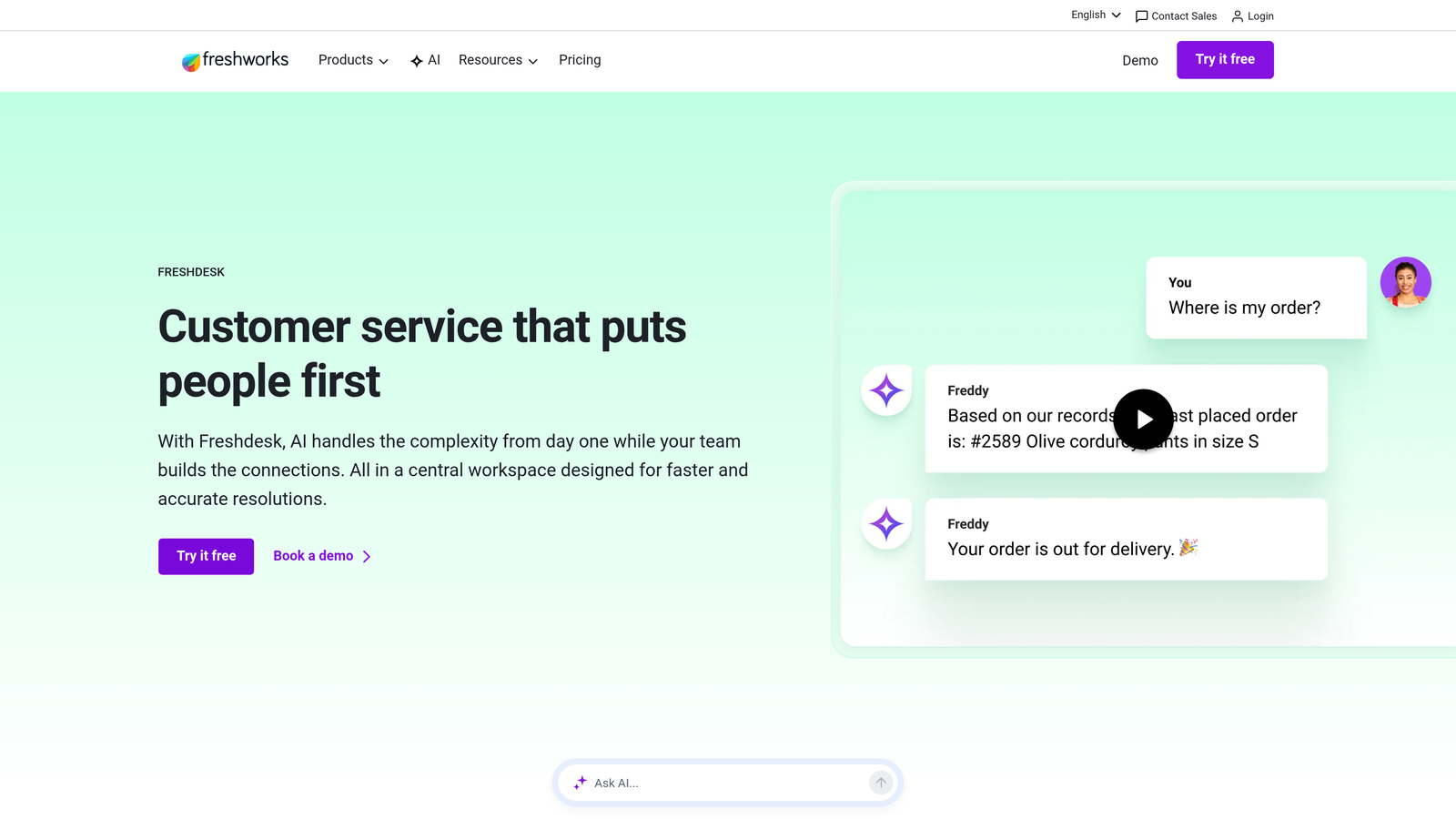
Freshdesk Freddy AI is the AI assistant built into Freshdesk, focusing on auto-triage and agent productivity enhancements.
Where This Tool Shines
The value proposition centers on getting AI capabilities without paying separately for them. If you're already on Freshdesk Pro or above, Freddy AI comes included, making it a cost-effective way to add automation.
The auto-triage functionality handles a lot of the tedious categorization work that slows down support teams. Thank you detection alone can save hours by automatically closing tickets that don't require follow-up.
Key Features
Auto-Triage and Categorization: Automatically sorts incoming tickets by topic, priority, and appropriate team.
Thank You Detection: Identifies and closes tickets where customers are simply acknowledging resolution.
Canned Response Suggestions: Recommends pre-written responses based on ticket content to speed up agent replies.
Article Suggestions for Agents: Surfaces relevant knowledge base articles to help agents find answers faster.
Bot Builder with AI: Create custom chatbots with AI-powered conversation flows.
Best For
Freshdesk users looking to maximize the value of their existing subscription. Works well for teams that need basic AI automation without complex customization requirements.
Pricing
Included in Freshdesk Pro plans and above, making it accessible without additional AI-specific costs.
5. Ada
Best for: High-volume consumer brands needing multilingual support across 50+ languages
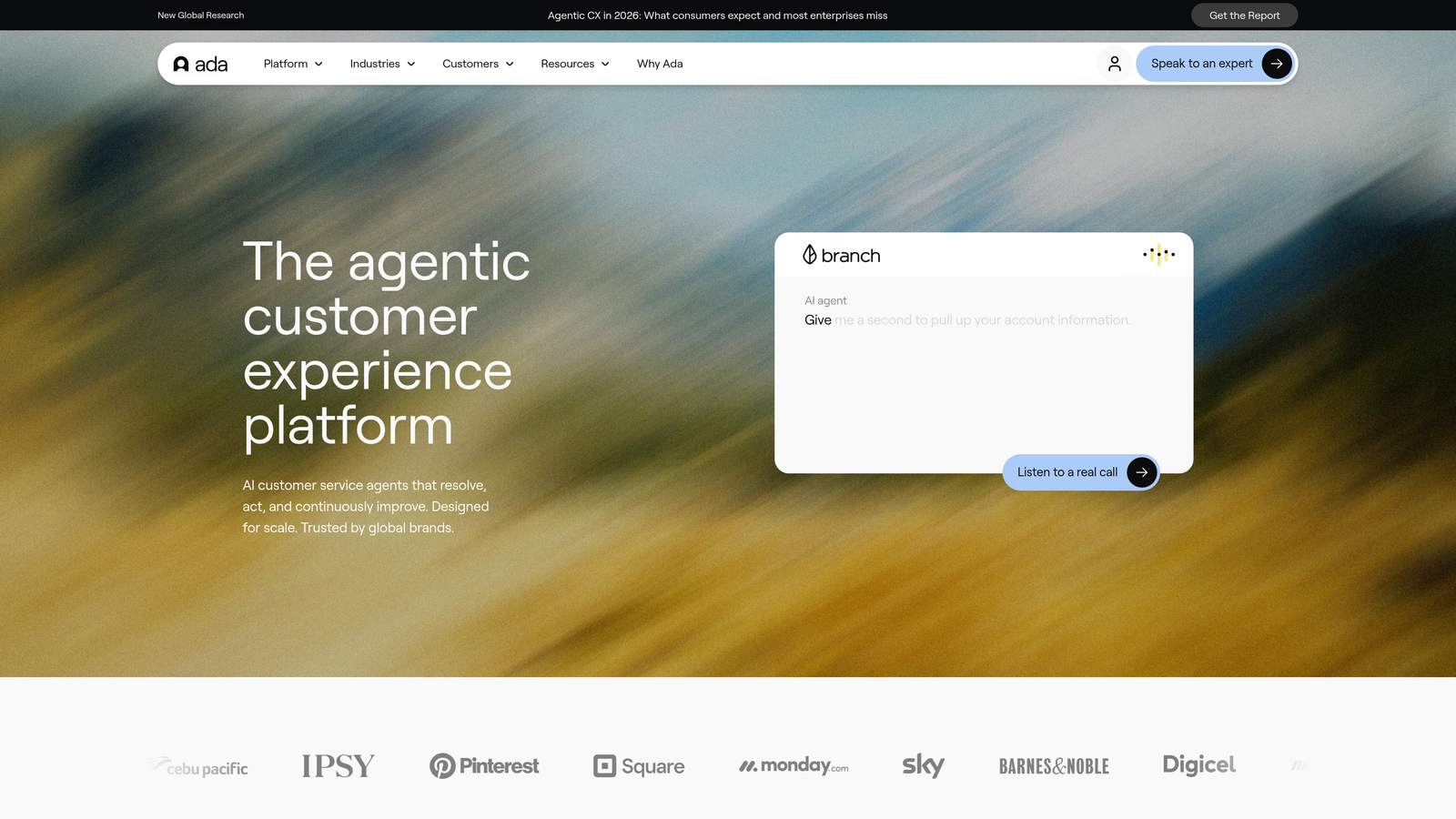
Ada is a no-code AI platform specializing in handling massive volumes of customer interactions across multiple languages.
Where This Tool Shines
The multilingual capabilities set Ada apart for global consumer brands. Supporting 50+ languages natively means you can provide consistent AI-powered support across diverse markets without building separate bots for each region.
The no-code builder makes it accessible for non-technical teams to create and modify conversation flows. Marketing and support teams can iterate on bot behavior without waiting for engineering resources.
Key Features
No-Code Bot Builder: Create and modify AI conversations without programming knowledge.
50+ Language Support: Handle customer inquiries across dozens of languages with consistent quality.
E-commerce Integrations: Deep connections with Shopify, Magento, and other commerce platforms for order tracking and product questions.
AI Reasoning Engine: Understands context and intent to provide relevant responses rather than keyword matching.
Proactive Messaging: Initiate conversations based on customer behavior and engagement patterns.
Best For
Consumer-facing brands with international customer bases and high support volumes. E-commerce companies particularly benefit from the shopping-specific integrations and proactive engagement capabilities.
Pricing
Custom pricing based on conversation volume and feature requirements. Contact Ada for a quote tailored to your scale.
6. Kustomer IQ
Best for: Companies wanting unified customer timelines with AI-powered proactive engagement
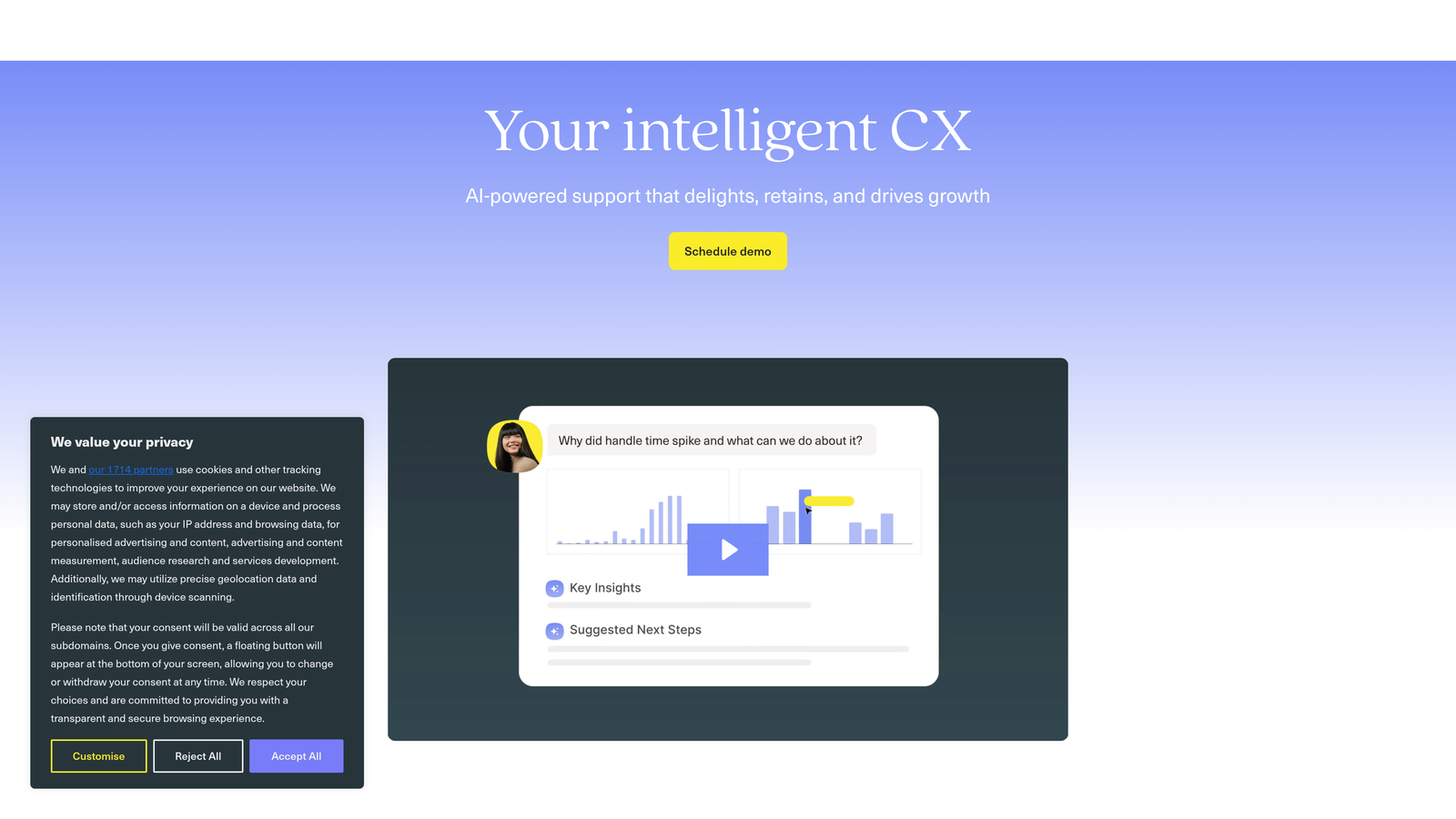
Kustomer IQ combines CRM capabilities with AI-powered support, emphasizing a complete view of customer history and proactive outreach.
Where This Tool Shines
The unified customer timeline gives agents complete context across every touchpoint. Instead of jumping between systems to understand customer history, everything lives in one view.
Proactive outreach automation stands out as a differentiator. The AI can identify customers who might need help based on behavior patterns and reach out before they submit a ticket, reducing support volume while improving satisfaction.
Key Features
Unified Customer Timeline: Single view of all customer interactions across channels and touchpoints.
Proactive Outreach Automation: Automatically engage customers based on behavioral triggers and potential issues.
Sentiment Analysis: Track customer emotion across conversations to identify at-risk accounts.
Omnichannel Conversations: Manage email, chat, social, and phone interactions in one interface.
Custom Object Support: Build custom data structures to track industry-specific customer information.
Best For
Companies that view support as part of the broader customer relationship rather than a cost center. Works well for subscription businesses where proactive engagement can reduce churn.
Pricing
Starts at $89 per user per month, positioning it in the mid-market to enterprise range.
7. Tidio
Best for: Small businesses and e-commerce stores needing affordable AI chat on a tight budget
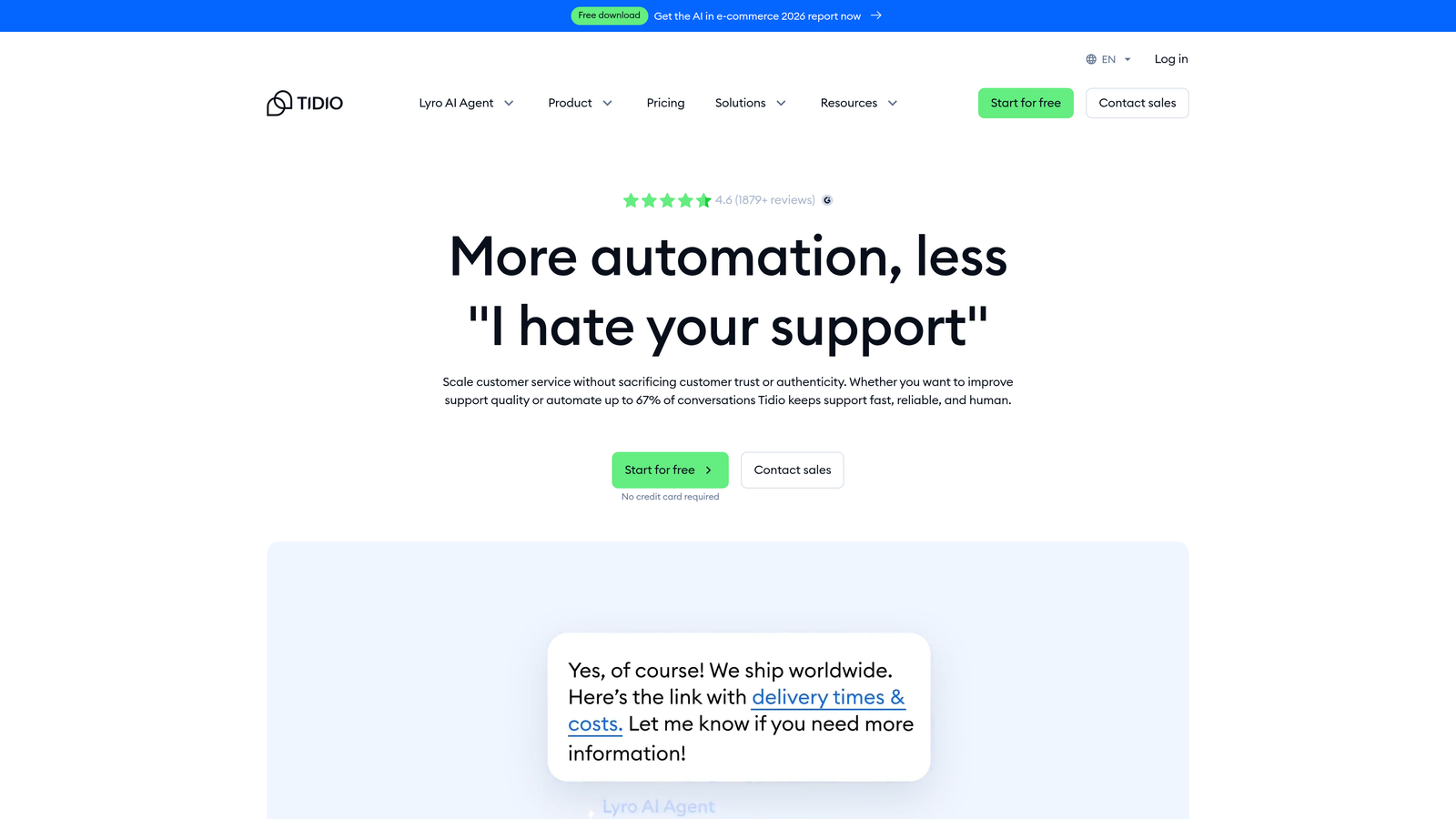
Tidio offers an accessible AI chatbot platform designed specifically for small businesses and online stores.
Where This Tool Shines
The pricing accessibility makes AI support realistic for businesses that can't justify enterprise-level investments. The free tier lets you test the platform, while the Lyro AI bot starts at just $29 monthly.
E-commerce integrations with Shopify and WooCommerce mean you can get up and running quickly if you're selling online. Pre-built templates for common scenarios like order tracking and product questions reduce setup time significantly.
Key Features
Lyro AI Conversational Bot: AI-powered chatbot that handles common customer questions automatically.
Pre-Built Chatbot Templates: Ready-made conversation flows for typical e-commerce and support scenarios.
Live Chat Integration: Seamlessly switch between AI and human agents within the same conversation.
Shopify and WooCommerce Plugins: Native integrations for popular e-commerce platforms.
Visitor Tracking: See who's on your site and proactively engage high-value visitors.
Best For
Small online businesses, solopreneurs, and growing e-commerce stores that need basic AI support without complex enterprise features or pricing.
Pricing
Free tier available for basic chat. Lyro AI starts at $29 per month, making it one of the most affordable AI support options.
8. Drift
Best for: B2B companies blending sales engagement with customer support in conversational workflows
Drift approaches AI conversations from a revenue perspective, unifying sales and support in one conversational platform.
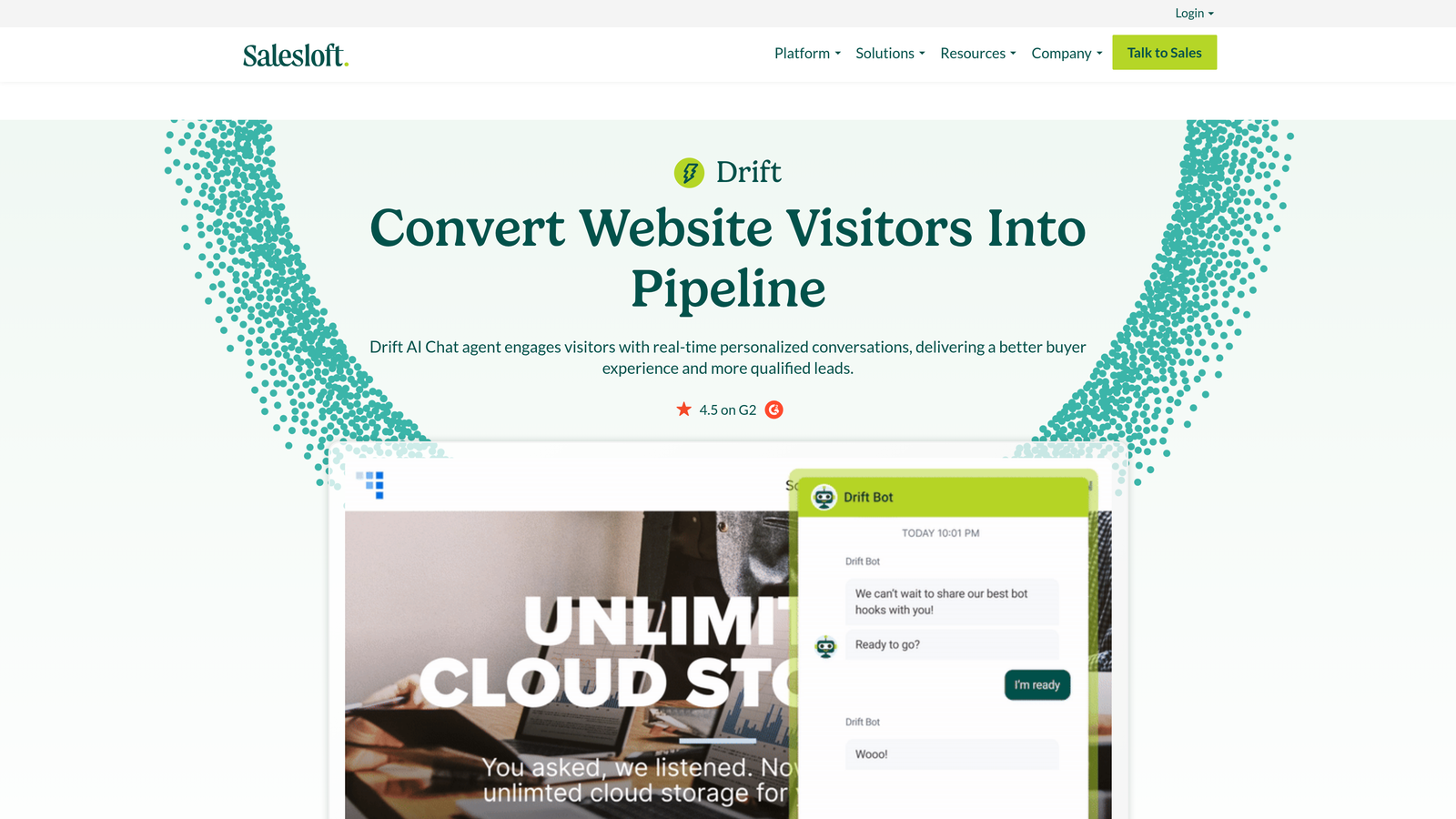
Where This Tool Shines
The revenue focus differentiates Drift from pure support platforms. If your support team also qualifies leads or identifies expansion opportunities, Drift's AI can route conversations appropriately based on intent.
Account-based marketing capabilities let you customize AI behavior for target accounts. High-value prospects can get different conversation flows and routing than general support inquiries, aligning AI behavior with business priorities.
Key Features
Revenue-Focused AI Conversations: Optimize conversations for business outcomes beyond just resolution.
ABM Account Targeting: Customize AI behavior and routing based on account value and status.
Meeting Scheduling Automation: Let AI book meetings directly with sales or success teams.
Conversational Landing Pages: Replace traditional forms with AI-powered conversations that qualify leads.
Sales and Support Unification: Manage both pre-sale and post-sale conversations in one platform.
Best For
B2B companies where the line between sales and support blurs, particularly in product-led growth models where support interactions can lead to expansion opportunities.
Pricing
Custom pricing with typical focus on enterprise customers. Contact Drift for a quote based on your requirements.
9. Forethought
Best for: Enterprise teams needing predictive ticket intelligence and workflow automation at scale
Forethought brings enterprise-grade AI with SupportGPT generative capabilities and predictive routing intelligence.
Where This Tool Shines
The predictive ticket routing goes beyond simple keyword matching to forecast which team or agent should handle each inquiry based on historical patterns and outcomes. This reduces reassignments and speeds up resolution.
Knowledge gap detection provides valuable product insights by identifying common questions that aren't adequately covered in your documentation. This feedback loop helps product and content teams prioritize improvements based on real support data.
Key Features
SupportGPT Generative AI: Leverages large language models for natural, contextual responses.
Predictive Ticket Routing: Uses historical data to route inquiries to the best-suited agent or team.
Workflow Automation: Automate complex multi-step processes based on ticket content and customer data.
Knowledge Gap Detection: Identify documentation gaps and content opportunities based on support patterns.
Performance Analytics: Deep insights into AI effectiveness, agent productivity, and resolution quality.
Best For
Large enterprises with complex support operations and the scale to benefit from predictive intelligence. Works particularly well for companies with specialized support teams handling different product areas or customer segments.
Pricing
Custom enterprise pricing based on ticket volume, integrations, and feature requirements.
Making the Right Choice
The best customer service AI platform depends heavily on your specific context. Halo AI delivers exceptional value for B2B SaaS companies that need deep product awareness and continuous learning from every interaction. The page-aware context and automatic bug detection make it particularly powerful for product-driven teams.
If you're already committed to Intercom or Zendesk, their native AI offerings provide the smoothest integration path. Intercom Fin excels at conversational quality, while Zendesk AI brings enterprise-grade capabilities to established workflows.
Consider Ada if you're handling high volumes across multiple languages, particularly in consumer-facing scenarios. Tidio makes sense for budget-conscious small businesses just starting with AI support. Forethought's predictive capabilities shine in complex enterprise environments where routing intelligence significantly impacts efficiency.
The key evaluation criteria should include: how well the AI learns from your specific customer interactions, depth of integration with your existing tech stack, autonomous resolution capabilities versus agent augmentation, and total cost of ownership including implementation time.
Your support team shouldn't scale linearly with your customer base. Let AI agents handle routine tickets, guide users through your product, and surface business intelligence while your team focuses on complex issues that need a human touch. See Halo in action and discover how continuous learning transforms every interaction into smarter, faster support.