9 Best Customer Service AI Tools for Marketplaces in 2026
Discover the 9 best customer service AI for marketplaces in 2026, covering tools purpose-built to handle the unique complexity of multi-party platforms—managing buyers, sellers, and transactions simultaneously. This guide evaluates each solution on AI capability, automation quality, and integration depth, helping marketplace teams reduce ticket volume, accelerate response times, and protect revenue without sacrificing the human touch when it matters most.
 Grant CooperFounder13 min read
Marketplace support is a different beast. You're managing buyers, sellers, and the platform itself, often simultaneously, while ticket volumes spike without warning and every delayed response risks a negative review or a lost transaction. Generic helpdesk tools weren't built for this kind of complexity.
AI-powered customer service tools are changing that. The best ones don't just deflect tickets. They understand marketplace context, route issues intelligently, surface revenue signals, and hand off to human agents when it matters most.
Here are the top AI customer service tools for marketplace teams in 2026, evaluated on AI capability, integration depth, automation quality, and how well they handle the multi-party dynamics marketplaces demand.
1. Halo AI
Best for: B2B and SaaS marketplace teams that need AI-first support with business intelligence built in.
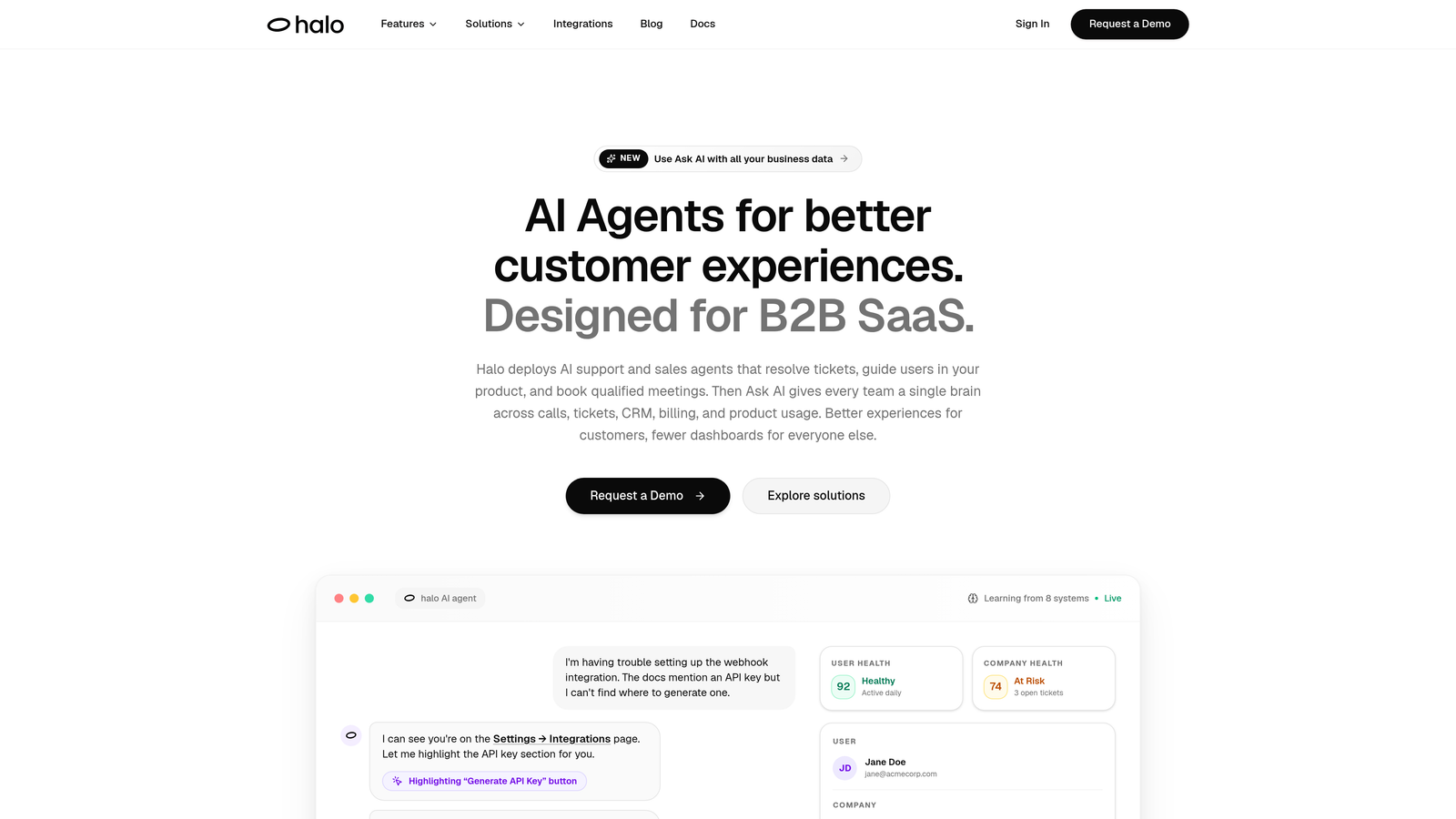
Halo AI is an AI-first customer support platform with intelligent agents, page-aware chat, business intelligence analytics, and deep integrations built for teams that want support to do more than close tickets.
Where This Tool Shines
What separates Halo from most tools on this list is architecture. It wasn't built as an AI layer bolted onto a legacy helpdesk. The entire platform is designed around intelligent agents that learn from every resolved interaction, which matters enormously in marketplace environments where ticket patterns are dense and repetitive.
The page-aware chat widget is particularly valuable for complex marketplace dashboards. Halo's agents understand what a user is actually looking at in your product, so responses are contextually relevant rather than generic. Pair that with a smart inbox that surfaces customer health signals, anomaly detection, and revenue intelligence, and you have a support tool that also functions as a business intelligence layer.
Key Features
Page-Aware AI Agents: Understands the specific page or UI element a user is viewing, enabling contextually precise support responses across complex marketplace interfaces.
Smart Inbox with Business Intelligence: Surfaces customer health signals, revenue intelligence, and anomaly detection alongside ticket data, giving support teams visibility beyond resolution rates.
Auto Bug Ticket Creation: Automatically generates and routes bug reports to engineering tools like Linear, reducing the manual overhead of translating support issues into technical tasks.
Live Agent Handoff: Transfers complex conversations to human agents with full context preserved, so nothing gets lost in the handoff.
Deep Integration Stack: Connects to Stripe, HubSpot, Slack, Intercom, Zoom, PandaDoc, and Fathom, covering the full operational stack most marketplace teams rely on.
Best For
Halo is best suited for B2B marketplace platforms and SaaS teams where the support interaction is also a business intelligence touchpoint. If you need AI that continuously improves, understands your product UI, and connects your support data to the rest of your stack, this is worth a close look.
Pricing
Contact for pricing. Halo is designed for B2B and SaaS marketplace teams, so pricing is scoped to team size and use case rather than offered as a flat self-serve plan.
2. Intercom
Best for: Consumer-facing marketplace teams already embedded in the Intercom product ecosystem.
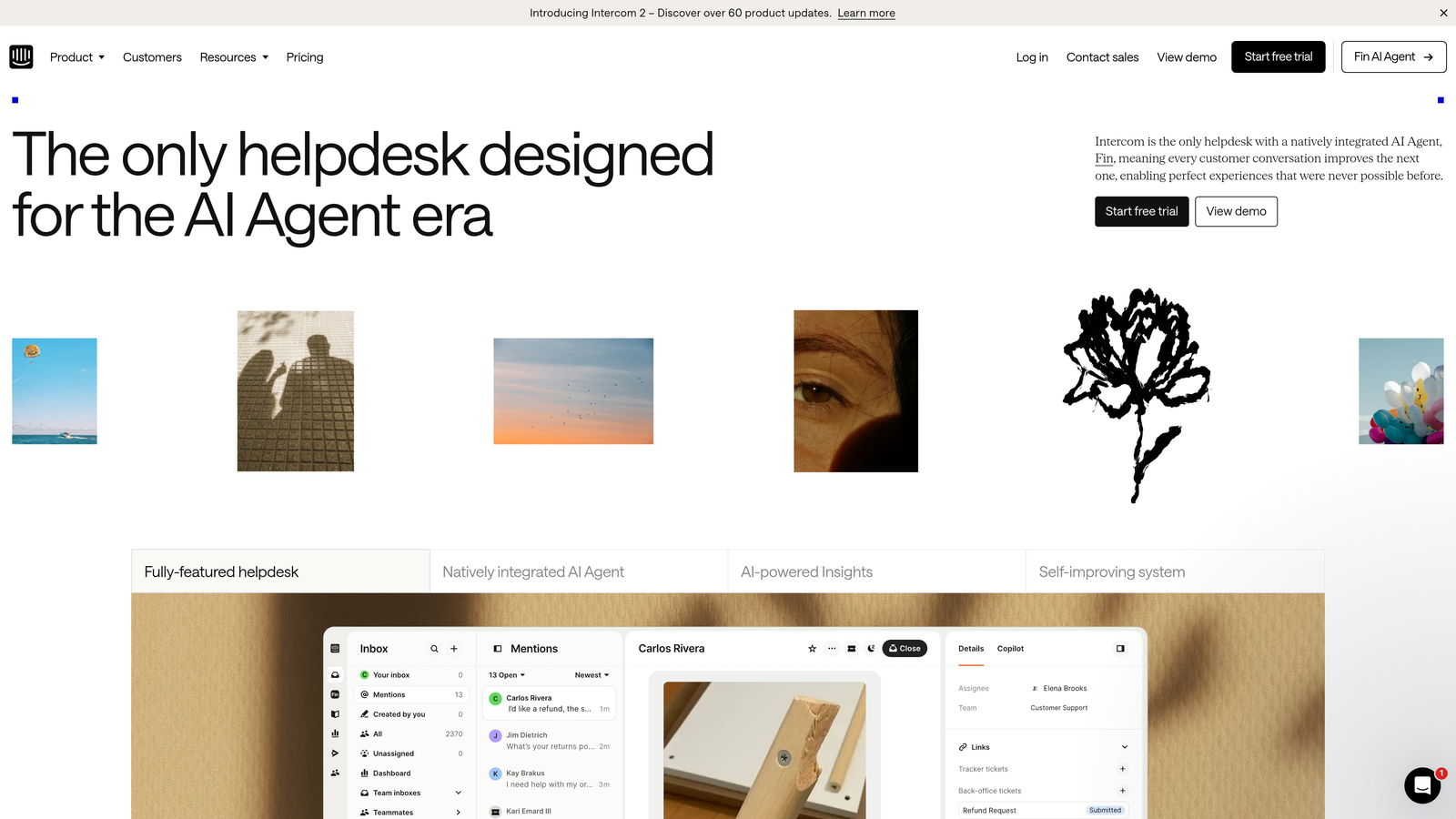
Intercom is a conversational support platform with a Fin AI agent built for high-volume customer-facing teams.
Where This Tool Shines
Intercom's Fin AI agent handles a strong share of conversations autonomously in live chat contexts, which makes it effective for marketplaces with high inbound chat volume. Beyond ticket resolution, the broader Intercom ecosystem adds real value: product tours, banners, and outbound messaging tools make it useful for proactive marketplace communication like onboarding sellers or notifying buyers about order updates.
If your team is already using Intercom for in-product messaging, the AI layer integrates naturally rather than requiring a platform switch. The omnichannel inbox consolidates chat, email, and social into one view.
Key Features
Fin AI Agent: Handles automated conversation resolution across chat channels with strong performance on common support queries.
Proactive Messaging Tools: Product tours, banners, and outbound campaigns support marketplace onboarding and proactive customer communication.
Omnichannel Inbox: Consolidates chat, email, and social conversations for unified agent management.
Workflow Automation and Routing: Configurable rules for routing tickets based on intent, channel, or customer attributes.
CSAT Tracking and Reporting: Built-in satisfaction tracking and reporting dashboards for support performance visibility.
Best For
Consumer marketplace teams that want strong AI-assisted chat resolution and are already invested in the Intercom product suite. Less suited for teams that need deep CRM integration or complex B2B routing logic out of the box.
Pricing
Plans start at approximately $39 per month. Fin AI resolution is priced on a usage basis on top of the base plan, so costs scale with conversation volume.
3. Zendesk AI
Best for: Enterprise marketplace operations with dedicated support teams and compliance requirements.
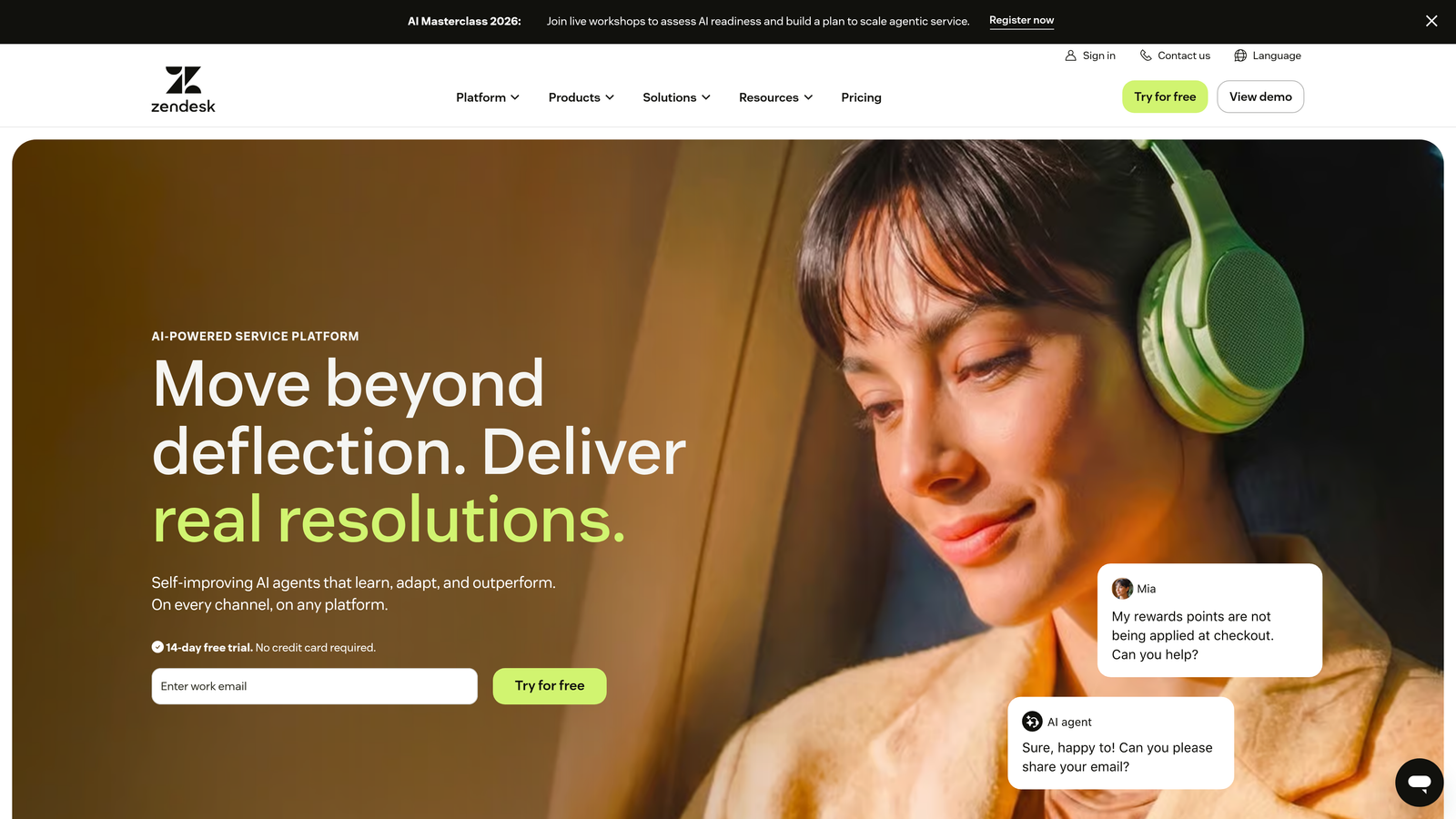
Zendesk is a mature enterprise helpdesk platform with an AI layer for intelligent triage, agent assist, and automated ticket resolution.
Where This Tool Shines
Zendesk's AI capabilities have matured significantly. Intelligent triage and intent detection help route tickets to the right team or automated workflow before a human agent ever sees them. The Agent Copilot feature provides suggested replies and next-best-action guidance, which reduces handle time in high-volume marketplace environments.
For regulated or enterprise-grade marketplaces, Zendesk's compliance posture and security credentials are hard to match. The integration ecosystem is also extensive, meaning most marketplace tech stacks can connect without custom development.
Key Features
AI-Powered Triage and Intent Detection: Automatically categorizes and routes tickets based on detected intent, reducing manual sorting for large support teams.
AI Agents for Automated Resolution: Handles common ticket types end-to-end without human involvement, scaling deflection across high-volume periods.
Agent Copilot: Provides real-time suggested replies and recommended next actions to speed up human agent responses.
Advanced Routing Workflows: Supports complex conditional routing logic suited to multi-party marketplace ticket structures.
Extensive App Marketplace: Hundreds of integrations covering CRM, e-commerce, analytics, and communication tools.
Best For
Enterprise marketplace teams with dedicated support operations, compliance needs, and the internal resources to configure and maintain a sophisticated platform. The learning curve is real, but the ceiling is high.
Pricing
Suite plans start at approximately $55 per agent per month. AI features are available on higher tiers, so total cost scales with team size and feature requirements.
4. Freshdesk Freddy AI
Best for: Mid-market marketplace teams that want AI across the full support lifecycle without enterprise pricing.
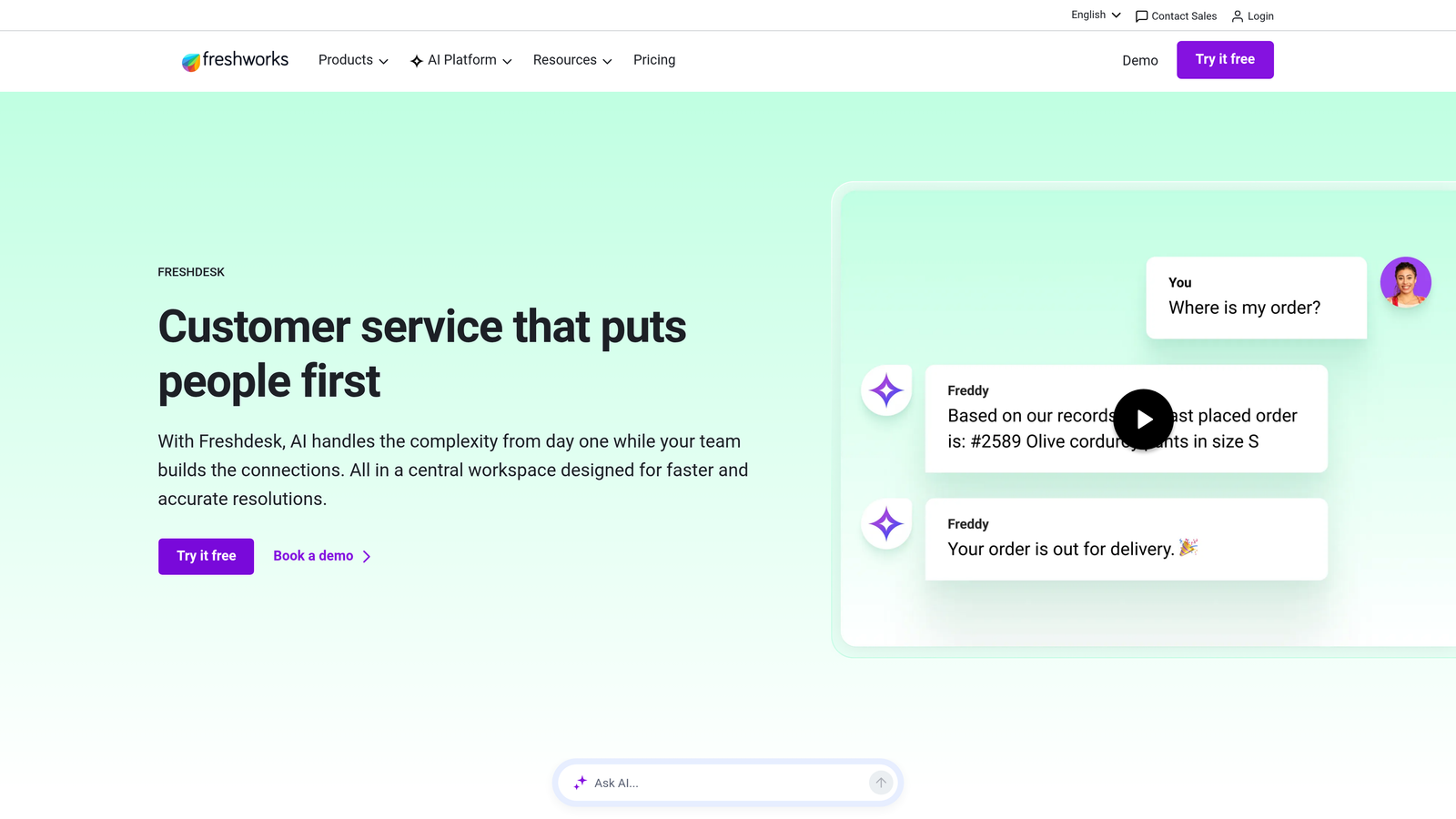
Freshdesk is a mid-market helpdesk platform with Freddy AI spanning self-service, agent assist, and analytics in a single product.
Where This Tool Shines
Freddy AI is structured across three distinct layers, which is useful for teams at different stages of AI adoption. You can start with self-service deflection, layer in agent assist as your team grows, and eventually use Freddy Insights to analyze support trends and knowledge gaps. That progression makes Freshdesk a practical choice for marketplaces scaling their support operations incrementally.
Omnichannel coverage across email, chat, phone, and social means marketplace teams aren't managing separate tools for each channel. The pricing is accessible relative to enterprise alternatives, which matters for mid-market platforms watching unit economics.
Key Features
Freddy Self Service: AI chatbot that deflects common tickets before they reach a human agent, reducing volume on repetitive marketplace queries.
Freddy Copilot: Provides in-context suggestions and recommended responses to human agents during live conversations.
Freddy Insights: AI-driven analytics that surface support trends, knowledge gaps, and performance patterns.
Omnichannel Support: Unified inbox across email, chat, phone, and social channels for consistent agent experience.
Accessible Pricing Structure: Free plan and low-cost entry tiers make it viable for growing marketplace teams before they need enterprise-scale tooling.
Best For
Mid-market marketplace teams that want a full-featured helpdesk with AI embedded at every layer, without committing to enterprise-level contracts or configuration complexity.
Pricing
Free plan available. Paid plans start at approximately $15 per agent per month. Freddy AI add-ons are priced separately and vary by feature tier.
5. Gorgias
Best for: E-commerce and product marketplace operators with Shopify, WooCommerce, or BigCommerce as their commerce layer.
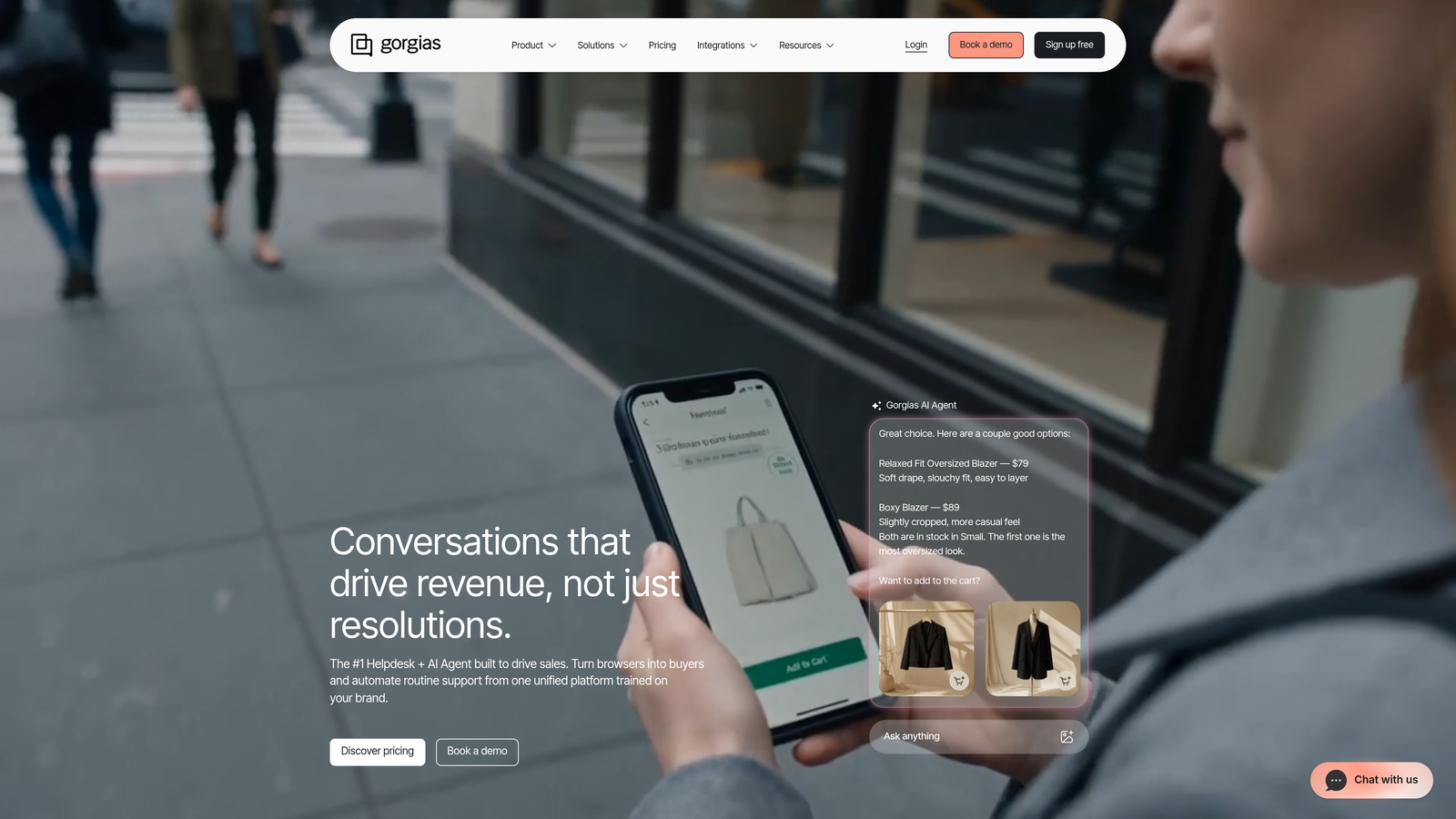
Gorgias is an e-commerce-native support platform with deep order data integrations and AI automation designed specifically for transactional support.
Where This Tool Shines
Gorgias was built for the exact ticket types that dominate product marketplace support: order status, refund requests, shipping issues, and account access. Order data, shipping status, and refund history surface directly inside tickets, so agents don't need to switch between systems to resolve transactional queries. That context is also available to the AI automation layer, which handles common questions without human involvement.
The revenue statistics tied to support interactions are a useful differentiator. Marketplace operators can see which support conversations correlate with purchases or churn, connecting support activity to commercial outcomes.
Key Features
Native Commerce Integrations: Deep connections to Shopify, WooCommerce, and BigCommerce surface order and transaction data directly in the support interface.
AI Automation for Transactional Queries: Handles common order, refund, and shipping questions automatically without agent involvement.
Revenue Statistics: Links support interactions to revenue data, giving marketplace teams visibility into the commercial impact of support.
Macros and Rules: Configurable automation for high-volume repetitive requests, reducing manual work on predictable ticket types.
Order and Refund Data in Tickets: Full transaction context available to both AI and human agents within the ticket view.
Best For
Product marketplace operators running on major e-commerce platforms where order data is central to support resolution. Less suited for B2B marketplaces or platforms without a transactional commerce layer.
Pricing
Starts at approximately $10 per month for small volumes. Pricing scales with ticket count rather than seat count, which suits marketplaces with variable support volumes.
6. Tidio
Best for: Smaller marketplace teams or early-stage platforms that need AI running quickly with minimal setup.
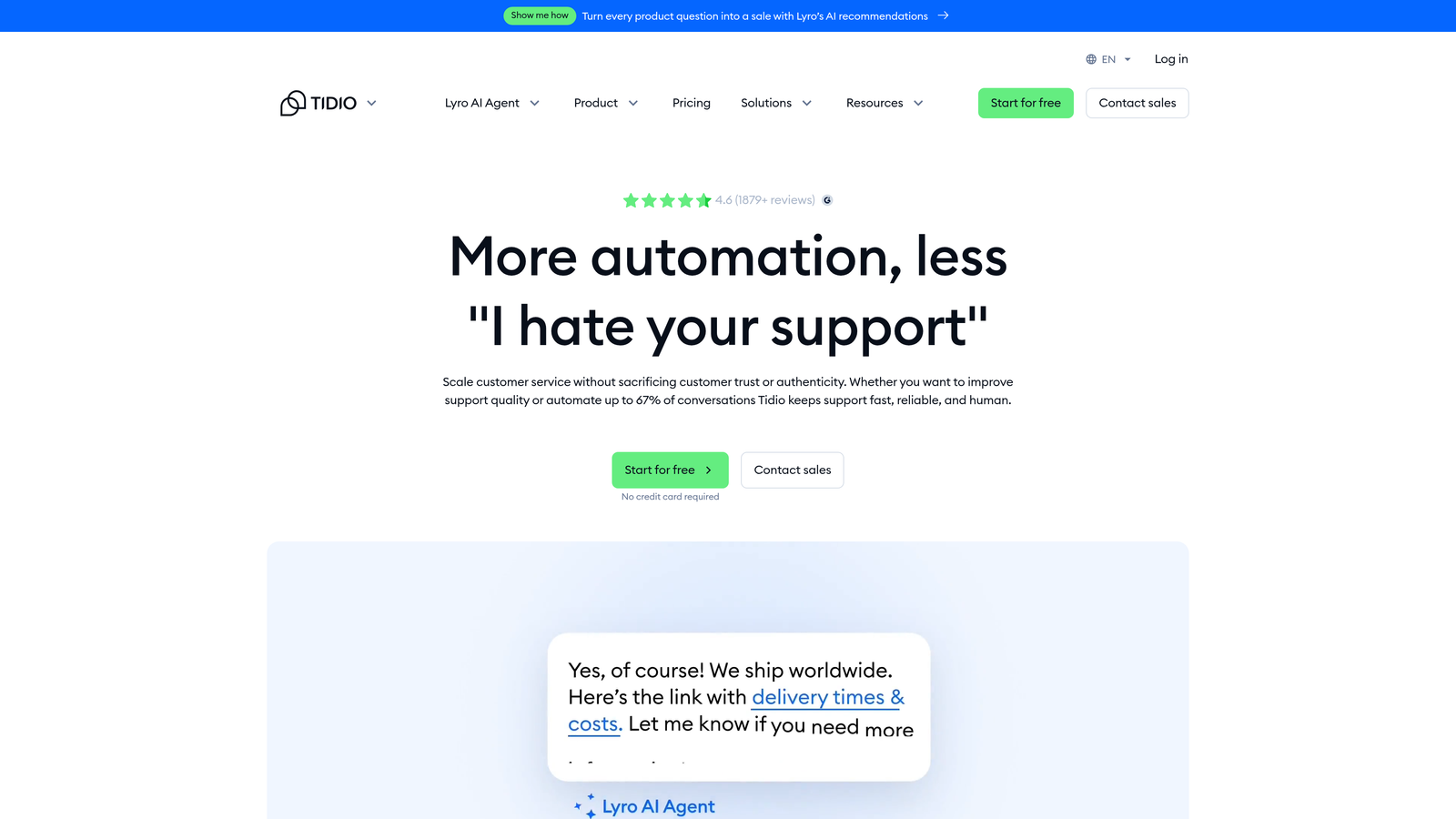
Tidio is a live chat and AI chatbot platform with Lyro AI, designed for accessible deployment and fast time-to-value.
Where This Tool Shines
Tidio's primary strength is speed of deployment. The Lyro AI chatbot can be configured and live without heavy technical overhead, which makes it a practical option for marketplace teams that need AI support coverage quickly. The visual chatbot flow builder allows non-technical team members to build conversation paths without writing code.
The live chat foundation is solid, and the agent fallback is reliable for conversations that escalate beyond what Lyro can handle. For early-stage marketplaces testing AI-assisted support before committing to an enterprise platform, Tidio offers a low-risk entry point.
Key Features
Lyro AI Chatbot: Handles automated conversation resolution across chat channels with straightforward configuration.
Live Chat with Agent Fallback: Seamlessly transfers conversations to human agents when AI reaches its limits.
Visual Flow Builder: Drag-and-drop interface for building chatbot conversation paths without technical expertise.
Email and Messenger Integration: Extends coverage beyond live chat to email and social messaging channels.
Quick Setup: Minimal technical overhead means teams can deploy and iterate without dedicated engineering resources.
Best For
Smaller marketplace teams, early-stage platforms, or operators testing AI-assisted support for the first time. Teams that need complex enterprise routing logic or deep CRM integration will likely outgrow it.
Pricing
Free plan available. Lyro AI starts at approximately $29 per month, making it one of the more accessible entry points on this list.
7. Kustomer
Best for: Marketplaces where buyer and seller interaction history is critical context for every support conversation.
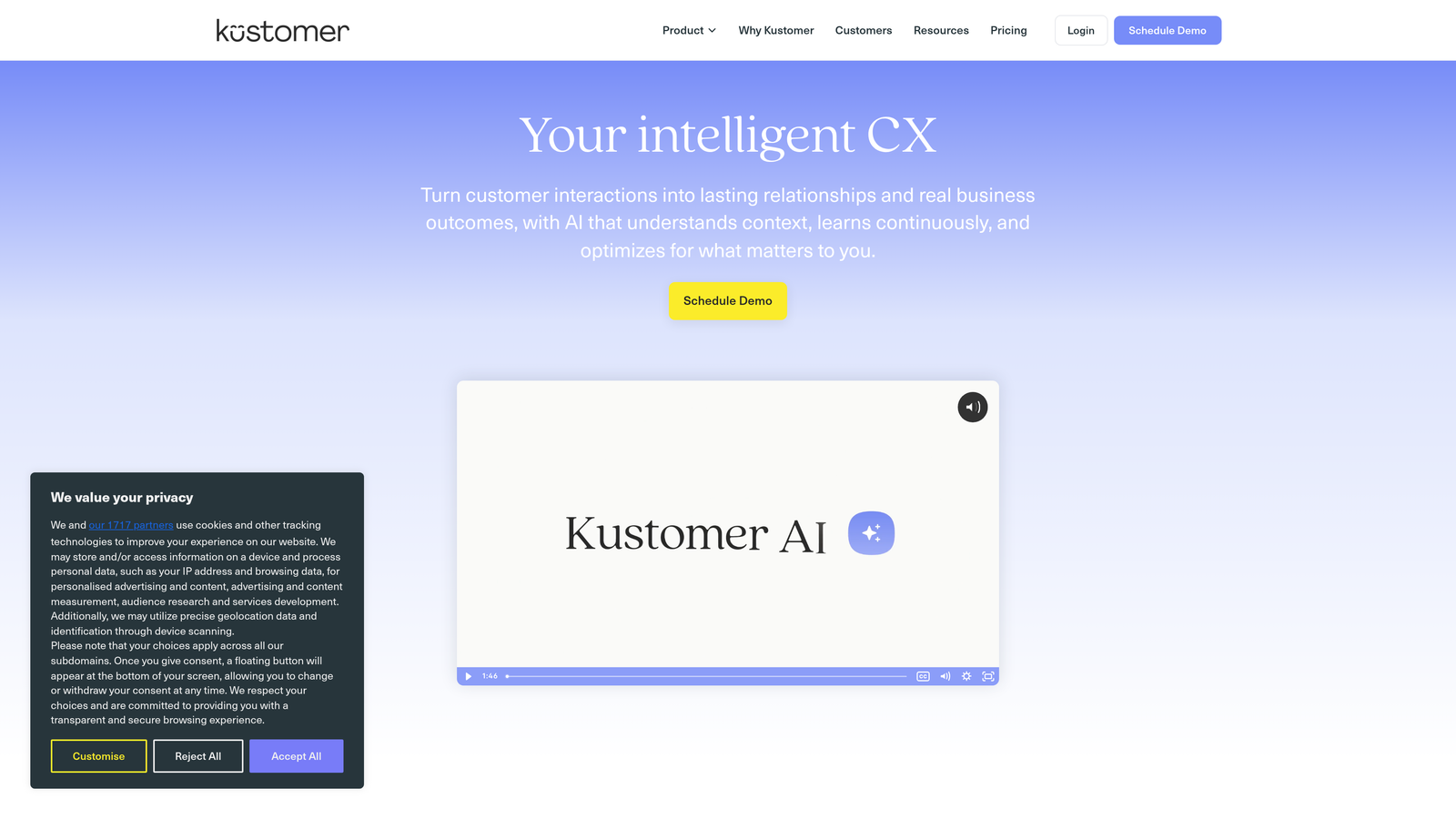
Kustomer is a CRM-native customer service platform with a unified customer timeline and AI across all support channels.
Where This Tool Shines
Kustomer's defining feature is the unified customer timeline. Every interaction a buyer or seller has had across every channel is visible in a single view, which is genuinely valuable in marketplace environments where support context spans multiple transactions and touchpoints. Agents don't need to reconstruct history from fragmented records.
The CRM-native architecture means customer data isn't siloed from support data. AI intent detection and suggested replies operate on top of that full context, making automation more accurate and agent responses more informed.
Key Features
Unified Customer Timeline: Every interaction across all channels and touchpoints consolidated in a single customer view.
AI Intent Detection and Routing: Automatically identifies the nature of incoming requests and routes them to the appropriate team or workflow.
CRM Data in Every Conversation: Customer history, transaction data, and relationship context embedded directly in the support interface.
Suggested Replies and Automated Workflows: AI-generated response suggestions and configurable automation for common support scenarios.
Multi-Channel Support: Covers email, chat, voice, SMS, and social in a unified agent workspace.
Best For
Mid-to-large marketplace teams where the full history of buyer and seller interactions needs to be visible in every support conversation. The CRM-native model adds the most value when customer relationships are complex and long-running.
Pricing
Enterprise pricing. Contact Kustomer directly for a quote. Typically positioned for mid-to-large support teams with budget for a full CRM-support platform.
8. Gladly
Best for: Consumer marketplace brands where relationship continuity and channel consistency define the support experience.
Gladly is a people-centric support platform that unifies all channels into a single conversation thread per customer, with AI assistance layered throughout.
Where This Tool Shines
Gladly's architecture is fundamentally different from ticket-based systems. Rather than generating a ticket number for every interaction, Gladly treats support as an ongoing conversation with a person. All channels, including email, chat, voice, SMS, and social, are unified into one thread per customer, so agents always have full relationship context regardless of how a customer reaches out.
For consumer marketplaces where buyers interact across multiple channels and expect consistent experiences, this model reduces the friction of channel-switching and eliminates the "explain your issue again" problem that frustrates customers and slows resolution.
Key Features
People-Centric Conversation Model: No ticket numbers. Support is organized around people and ongoing conversations rather than discrete tickets.
Unified Omnichannel Thread: Email, chat, voice, SMS, and social all appear in a single conversation timeline per customer.
AI-Powered Routing and Suggested Replies: Intelligent routing and response suggestions to reduce handle time without losing the human touch.
Full Customer Profile in Every Interaction: Complete history and context available to agents at all times, regardless of channel.
Self-Service and Proactive Messaging: Tools for deflecting common questions and reaching customers proactively before issues escalate.
Best For
Consumer marketplace brands where relationship continuity and cross-channel consistency are core to the customer experience. Less suited for B2B platforms or teams that need heavy workflow automation and technical integrations.
Pricing
Contact for pricing. Gladly is designed for mid-market to enterprise consumer brands, so pricing reflects that positioning.
9. Capacity
Best for: Marketplace teams with large, complex help centers that need AI-powered deflection without replacing their existing helpdesk.
Capacity is an AI-powered knowledge management and helpdesk automation platform focused on self-service deflection and continuous knowledge base improvement.
Where This Tool Shines
Capacity occupies a distinct position on this list: it's designed to complement your existing helpdesk rather than replace it. The platform learns from support interactions to improve knowledge base accuracy over time, which makes it particularly useful for marketplaces with large help centers that accumulate outdated or incomplete content.
The self-service portal and AI chatbot handle high-volume repetitive questions before they reach a human agent or even your primary helpdesk. For marketplace teams already invested in Zendesk or Freshdesk, Capacity adds an intelligent deflection layer on top without requiring a platform migration.
Key Features
Continuous Knowledge Base Learning: AI learns from resolved support interactions to identify gaps and improve knowledge base accuracy over time.
Self-Service Portal and Chatbot: Deflects high-volume repetitive questions through an AI-powered self-service experience before tickets are created.
Helpdesk Integrations: Works alongside existing tools like Zendesk and Freshdesk rather than requiring a platform replacement.
Workflow Automation and Escalation Routing: Configurable workflows for routing unresolved questions to the right team or helpdesk queue.
Deflection and Knowledge Gap Analytics: Tracks which questions are being deflected and where knowledge base content is falling short.
Best For
Marketplace teams with mature help centers and high repeat question volume who want to improve deflection rates without switching their primary helpdesk platform. Works best as a layer on top of an existing support stack.
Pricing
Contact for pricing. Capacity offers modular plans based on features and usage, so pricing varies depending on how the platform is deployed within your existing stack.
Which Tool Is Right for Your Marketplace?
The right choice here depends on two fundamental questions: do you need AI-first architecture, or are you adding AI to an existing helpdesk? And does business intelligence beyond support matter to your team?
If you're running a B2B or SaaS marketplace and want support that also surfaces revenue signals, customer health data, and product intelligence, Halo AI is the strongest fit. Its page-aware agents and smart inbox go beyond ticket resolution in ways that matter for complex marketplace operations.
For consumer marketplace teams, the decision often comes down to scale and channel mix. Intercom is a natural fit if you're already embedded in their ecosystem and need strong chat automation. Gorgias is the clear choice for product marketplaces running on Shopify or WooCommerce. Gladly suits consumer brands where relationship continuity across channels is the priority. Kustomer makes sense when full customer history needs to be present in every support interaction.
Mid-market teams watching budget will find Freshdesk Freddy AI the most capable option at accessible price points. Tidio works well for smaller teams or early-stage platforms that need AI support running quickly without heavy configuration. Capacity is best treated as an add-on layer for teams with mature help centers rather than a standalone platform.
Enterprise operations with compliance requirements and dedicated support ops teams are well served by Zendesk AI, which has the depth and ecosystem to handle sophisticated marketplace workflows.
Your support team shouldn't scale linearly with your customer base. Let AI agents handle routine tickets, guide users through your product, and surface business intelligence while your team focuses on complex issues that need a human touch. See Halo in action and discover how continuous learning transforms every interaction into smarter, faster support.