9 Best Customer Service AI Platforms Ranked for 2026
This guide ranks the 9 best customer service AI platforms ranked for 2026, evaluating each on automation depth, integration breadth, and deployment ease to help B2B SaaS teams choose between AI-first architectures and helpdesk add-ons. Whether you need autonomous ticket resolution or smarter agent assistance, this breakdown identifies the right fit based on your stack and scale.
 Matt PattoliFounder12 min read
Customer service teams are under more pressure than ever to resolve tickets faster, handle higher volumes, and deliver consistent experiences without proportionally growing headcount. AI platforms have moved well beyond basic chatbots: the best ones today resolve tickets autonomously, detect patterns across conversations, and hand off to human agents with full context intact.
But not every platform is built the same. Some are bolt-ons to existing helpdesks. Others are AI-first architectures designed to learn and improve with every interaction. The right choice depends on your stack, your team size, and how much you want the AI to actually own the resolution rather than just suggest it.
This list ranks nine customer service AI platforms based on automation depth, integration breadth, ease of deployment, and how well they serve B2B SaaS teams specifically. Whether you're replacing a legacy helpdesk or layering AI on top of one, there's an option here for your situation.
1. Halo AI
Best for: B2B SaaS teams that want AI-first autonomous resolution with built-in business intelligence
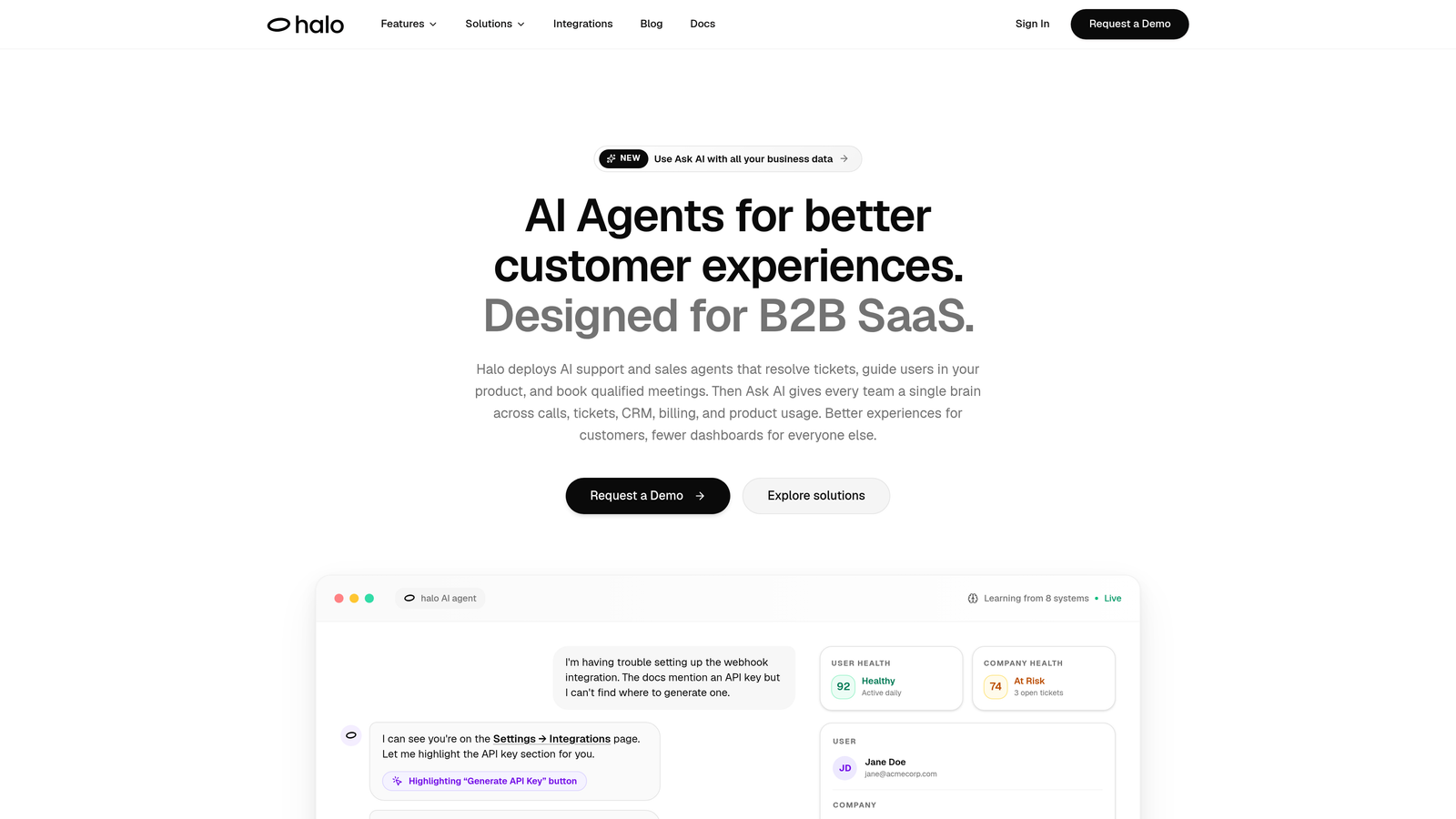
Halo AI is an AI-first customer support platform that resolves tickets autonomously, guides users with page-aware visual context, and surfaces business intelligence from every support interaction.
Where This Tool Shines
Halo is built from the ground up as a support layer, not retrofitted onto an existing helpdesk. That distinction matters: because the AI is the primary resolution engine rather than an add-on, it can learn continuously from each interaction and apply that learning immediately. The result is a system that gets measurably smarter over time rather than staying static.
The page-aware chat widget is a genuine differentiator. Instead of serving generic answers, Halo understands which screen a user is on and provides visual UI guidance tailored to that exact context. For SaaS products with complex interfaces, this closes the gap between "I have a question" and "I know exactly what to do next."
Key Features
Page-Aware Chat Widget: Understands the user's current screen and delivers visual UI guidance specific to that context, not just generic knowledge base answers.
Autonomous Ticket Resolution: Resolves support tickets without agent involvement, with continuous learning from every interaction to improve future accuracy.
Auto Bug Ticket Creation: Automatically identifies and routes bug reports directly to Linear, removing manual triage steps from your engineering workflow.
Smart Inbox with Business Intelligence: Surfaces customer health signals, revenue intelligence, and anomaly detection from support conversations, turning your inbox into a strategic data source.
Live Agent Handoff: Escalates complex issues to human agents with full conversation context preserved, so agents never start cold.
Broad Integration Stack: Connects natively with Linear, Slack, HubSpot, Intercom, Stripe, Zoom, PandaDoc, and Fathom.
Best For
B2B SaaS companies evaluating their support stack fresh, or those frustrated by the limitations of bolted-on AI. Particularly well-suited to product teams that want support to generate business intelligence, not just close tickets. Also a strong fit for engineering-forward teams that want bug detection automated end-to-end.
Pricing
Contact for pricing at haloagents.ai. Given the platform's depth of integrations and autonomous capabilities, pricing is tailored to team needs.
2. Intercom Fin
Best for: Existing Intercom customers who want autonomous AI resolution without migrating their stack
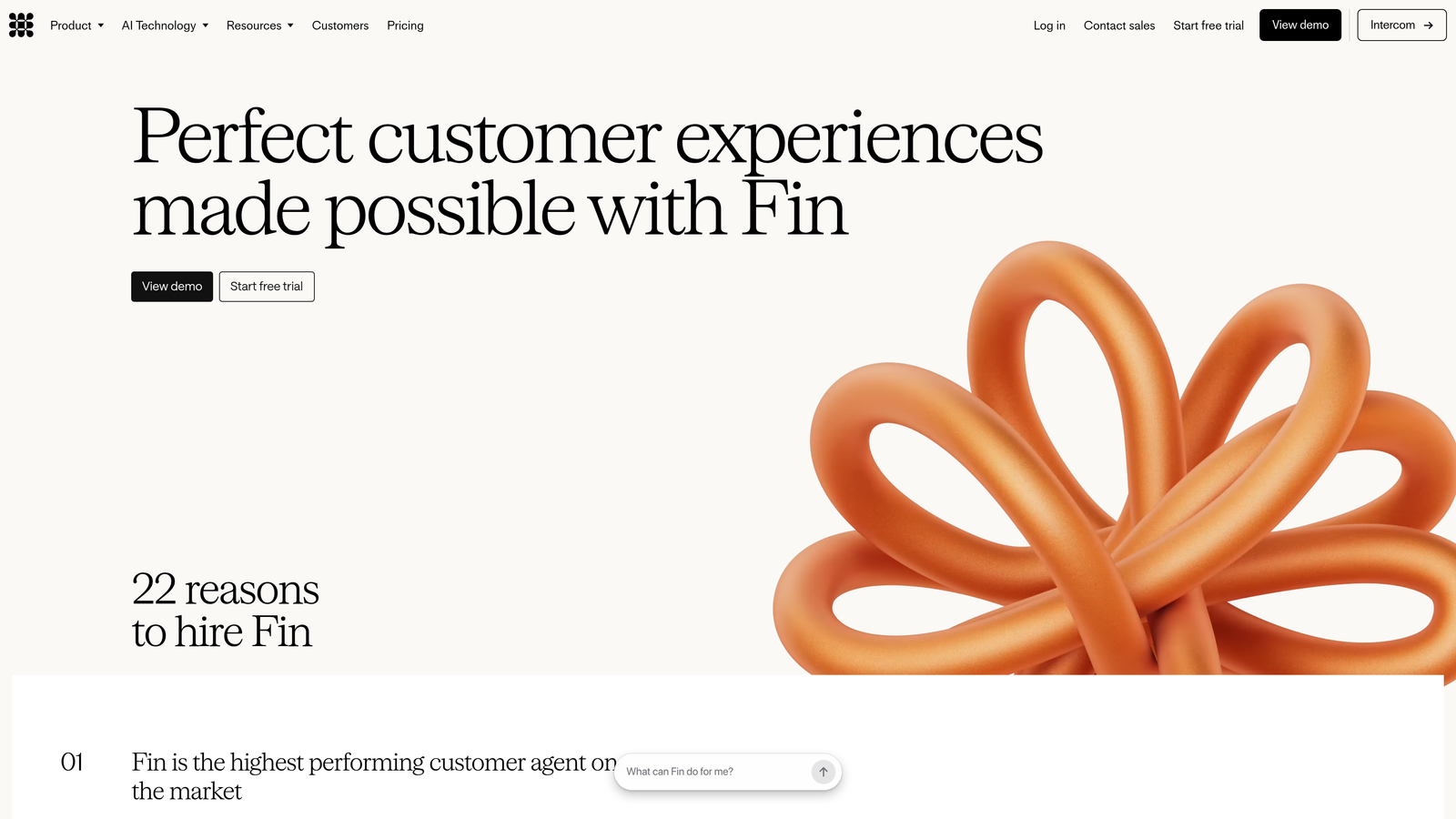
Intercom Fin is Intercom's native AI agent that resolves customer conversations autonomously within the Intercom messenger ecosystem.
Where This Tool Shines
Fin's biggest advantage is frictionless adoption for teams already on Intercom. There's no migration, no new interface to learn, and no re-training your team on a different workflow. The LLM-powered resolution layer sits directly inside the messenger and inbox your team already uses every day.
The consumption-based pricing model (per resolution rather than per seat) can be economically attractive for teams with variable support volumes. You pay for outcomes, not capacity, which aligns incentives well.
Key Features
LLM-Powered Resolution: Handles customer conversations autonomously within Intercom's existing messenger and inbox infrastructure.
Per-Resolution Pricing: Consumption-based model charges per resolved conversation, not per agent seat.
Seamless Escalation: Hands off to human agents within existing Intercom workflows when AI confidence is low or issues are complex.
Flexible Knowledge Sources: Answers from help center content and custom knowledge sources you define.
Zero Migration Required: Works entirely within your existing Intercom configuration and setup.
Best For
Teams already invested in Intercom who want to add autonomous resolution without evaluating a new platform. Less suitable for teams considering a broader infrastructure change or those who need deep integrations outside the Intercom ecosystem.
Pricing
Per-resolution pricing layered on top of your existing Intercom subscription. Verify current rates at intercom.com.
3. Zendesk AI
Best for: Enterprise teams with Zendesk as their primary support infrastructure
Zendesk AI is Zendesk's native AI suite offering intelligent triage, agent assist, automated workflows, and AI-powered bots built directly into the Zendesk platform.
Where This Tool Shines
Zendesk AI benefits from deep integration across Zendesk Support, Chat, and Guide. Intelligent triage routes tickets based on intent, sentiment, and language detection before a human ever sees them, which meaningfully reduces time-to-first-response for high-volume teams.
The Agent Copilot feature handles the agent-assist side, surfacing suggested replies and next-best-action recommendations inline. For large support organizations where consistency matters as much as speed, this combination of automation and assist creates a strong floor on quality.
Key Features
Intelligent Triage: Routes incoming tickets automatically based on detected intent, sentiment, and language.
Agent Copilot: Provides suggested replies and next-best-action recommendations directly within the agent interface.
AI-Powered Bots: Self-service deflection bots that handle common queries before tickets are created.
Automated Workflows: Triggers workflow actions based on AI classification results.
Native Platform Integration: Operates across Zendesk Support, Chat, and Guide without additional connectors.
Best For
Enterprises with significant Zendesk investment who want to layer AI capabilities without changing platforms. Teams starting fresh may find the overall Zendesk cost structure heavy relative to more focused AI-first alternatives.
Pricing
Bundled into higher Zendesk tiers with enterprise pricing. Verify current plan inclusions at zendesk.com.
4. Freshdesk Freddy AI
Best for: Teams in the Freshworks ecosystem looking for accessible AI across self-service, agent assist, and analytics
Freshdesk Freddy AI is Freshworks' AI layer for Freshdesk, covering self-service bots, agent assistance, and support analytics across the broader Freshworks suite.
Where This Tool Shines
Freddy AI covers three distinct layers of the support workflow: customer-facing deflection (Freddy Self Service), in-agent assistance (Freddy Copilot), and performance analytics (Freddy Insights). That breadth within a single ecosystem reduces integration overhead considerably.
For teams on Freshdesk already, the activation barrier is low. Core Freddy capabilities are bundled into existing plans rather than priced as a premium add-on, making it easier to justify expanding AI usage incrementally.
Key Features
Freddy Self Service: Customer-facing AI bot handles deflection for common queries before they reach agents.
Freddy Copilot: In-agent AI assistance surfaces suggested replies and relevant knowledge to speed up resolution.
Freddy Insights: AI-driven analytics layer provides performance recommendations and identifies support trends.
Plan-Bundled Access: Core features included in select Freshdesk plans, reducing the barrier to initial adoption.
Cross-Suite Compatibility: Works across Freshdesk, Freshchat, and Freshservice for teams using multiple Freshworks products.
Best For
Mid-market teams already using Freshdesk or Freshworks products who want to expand AI capabilities without adopting a separate platform. Less compelling for teams outside the Freshworks ecosystem.
Pricing
Included in select Freshdesk plans; Copilot available as an add-on. Verify current tier inclusions at freshworks.com.
5. Salesforce Agentforce
Best for: Enterprise organizations with Salesforce as their primary system of record
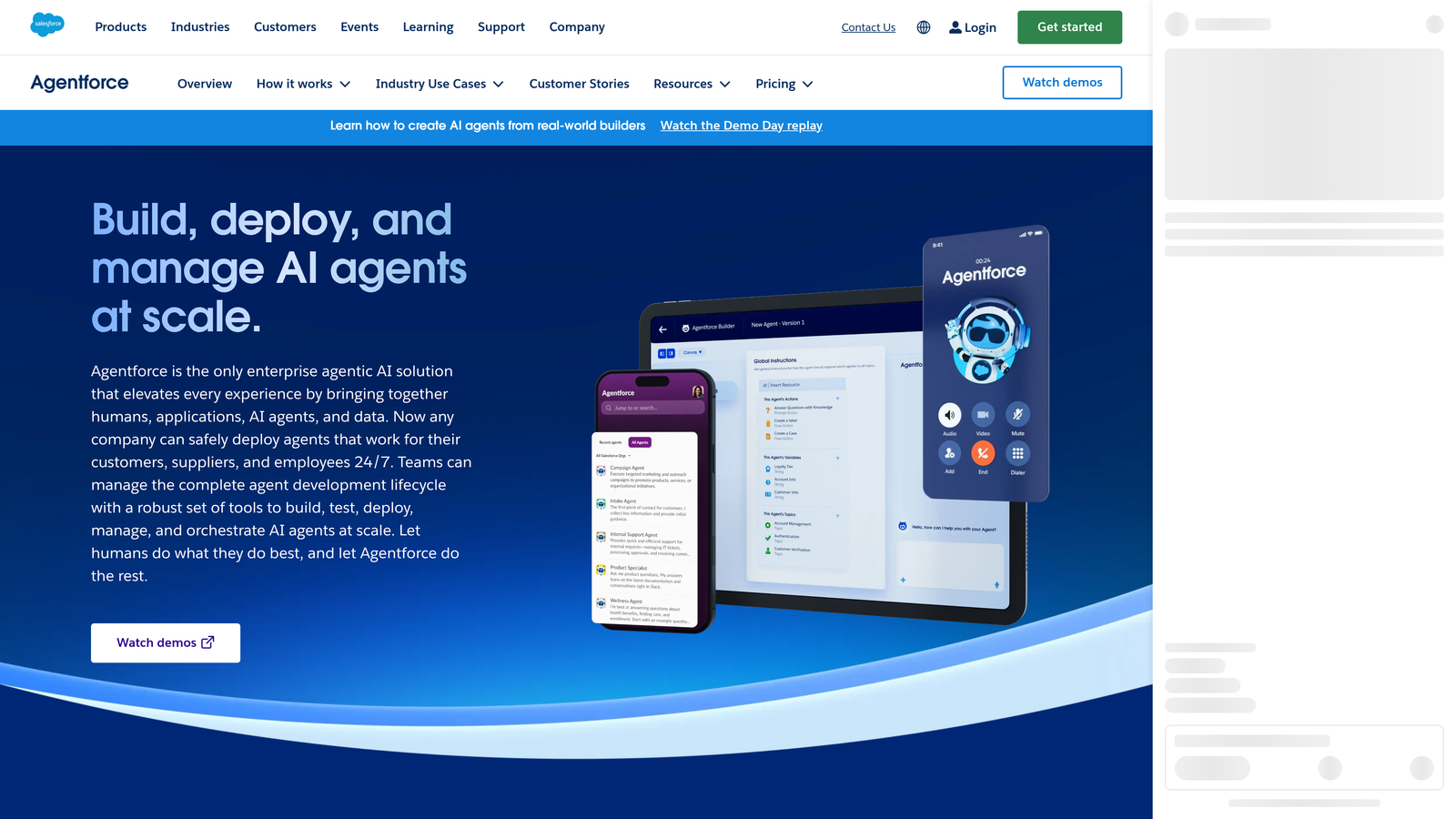
Salesforce Agentforce is Salesforce's autonomous AI agent platform that leverages Salesforce Data Cloud to deliver deeply contextualized customer service across enterprise environments.
Where This Tool Shines
Agentforce's core strength is the depth of CRM context it can act on. Because it's built directly into the Salesforce ecosystem and draws on Data Cloud, AI agents can reference the full customer record: purchase history, open cases, account health, and more. That context produces more relevant, personalized resolutions than knowledge-base-only approaches can achieve.
The low-code configuration via Salesforce Flow makes it possible for operations teams to customize agent behaviors without engineering involvement, which matters at enterprise scale where IT bottlenecks are a real constraint.
Key Features
Data Cloud Integration: AI agents act on full Salesforce CRM and Data Cloud context for deeply personalized responses.
Low-Code Configuration: Customizable agent behaviors built through Salesforce Flow without requiring engineering resources.
Omnichannel Deployment: Operates across email, chat, voice, and messaging from a single configuration.
Einstein Analytics Integration: Native connection to Einstein analytics and Salesforce Service Cloud reporting.
Enterprise Governance: Role-based access, audit logging, and compliance controls built in.
Best For
Large enterprises where Salesforce is the central system of record. Teams without significant Salesforce investment will find the cost and complexity difficult to justify relative to lighter alternatives.
Pricing
Enterprise pricing. Contact Salesforce directly or verify current rates at salesforce.com/agentforce.
6. Tidio Lyro
Best for: Small businesses and e-commerce teams that need fast, affordable AI support deployment
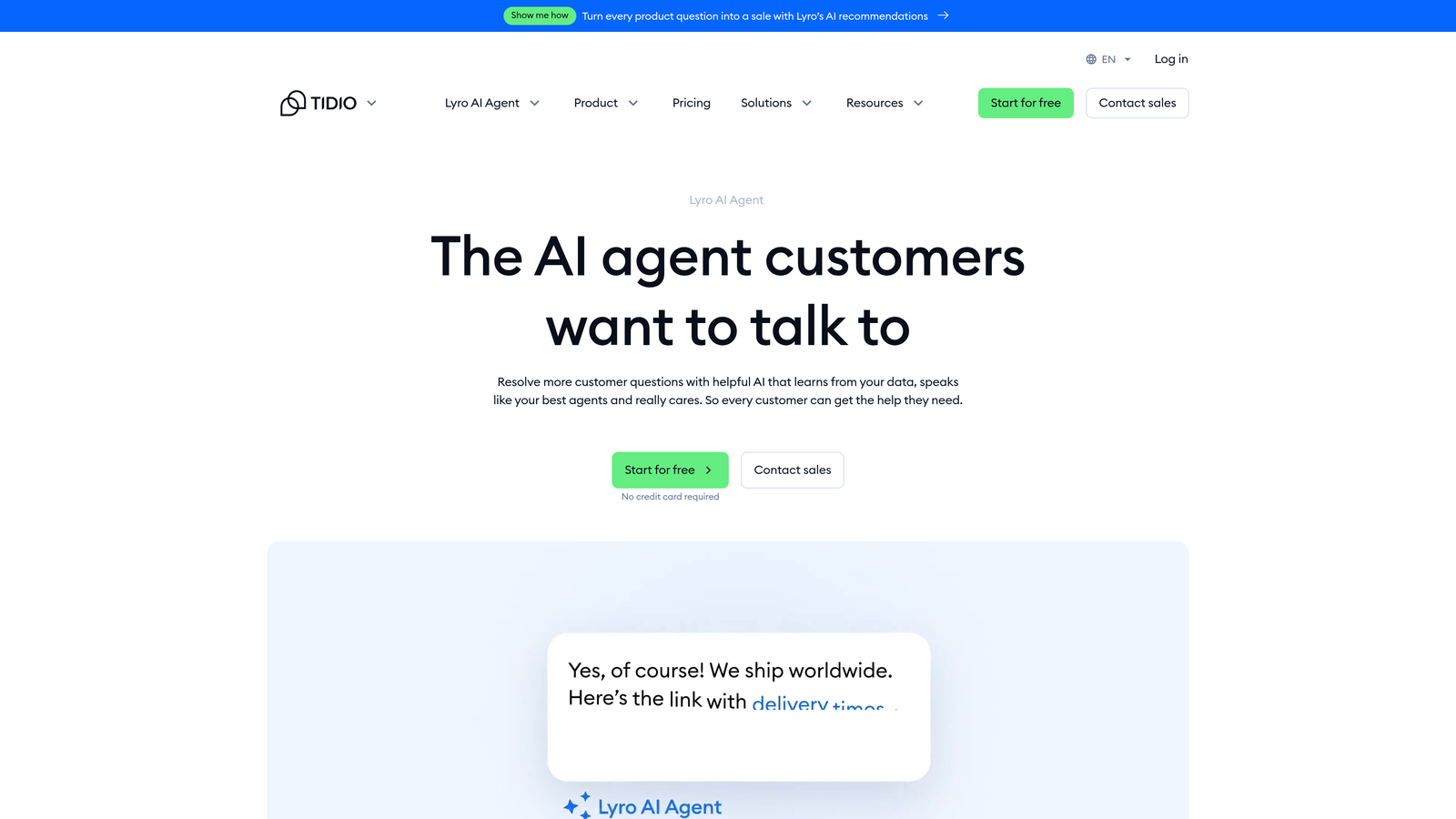
Tidio Lyro is Tidio's conversational AI product designed for small businesses and e-commerce teams that need fast, accessible AI support without technical complexity.
Where This Tool Shines
Lyro is built for speed of deployment. Small teams without dedicated technical resources can get conversational AI running quickly by training it on existing support content. The setup process is deliberately low-friction, which is a real differentiator when your team doesn't have weeks to spend on implementation.
The e-commerce integrations with Shopify and WooCommerce make it particularly practical for online retailers handling high volumes of order-status and returns queries, the exact use case that benefits most from autonomous deflection.
Key Features
Content-Trained AI: Conversational AI trained on your existing support content with minimal configuration required.
E-Commerce Integrations: Native integrations with Shopify, WooCommerce, and common helpdesk tools.
FAQ and Order Query Handling: Autonomously resolves common questions about orders, returns, and product information.
Confidence-Based Escalation: Escalates to live agents when confidence is low, reducing incorrect or unhelpful automated responses.
Accessible Pricing: Free tier available with paid plans at price points suited to small business budgets.
Best For
Small businesses and e-commerce operators who need AI support quickly and affordably. Not the right fit for complex B2B SaaS environments that require deep integrations, autonomous resolution of technical queries, or business intelligence outputs.
Pricing
Free tier available; paid plans start at accessible price points. Verify current pricing at tidio.com.
7. Kustomer
Best for: High-volume B2C teams that need omnichannel support with CRM context built in
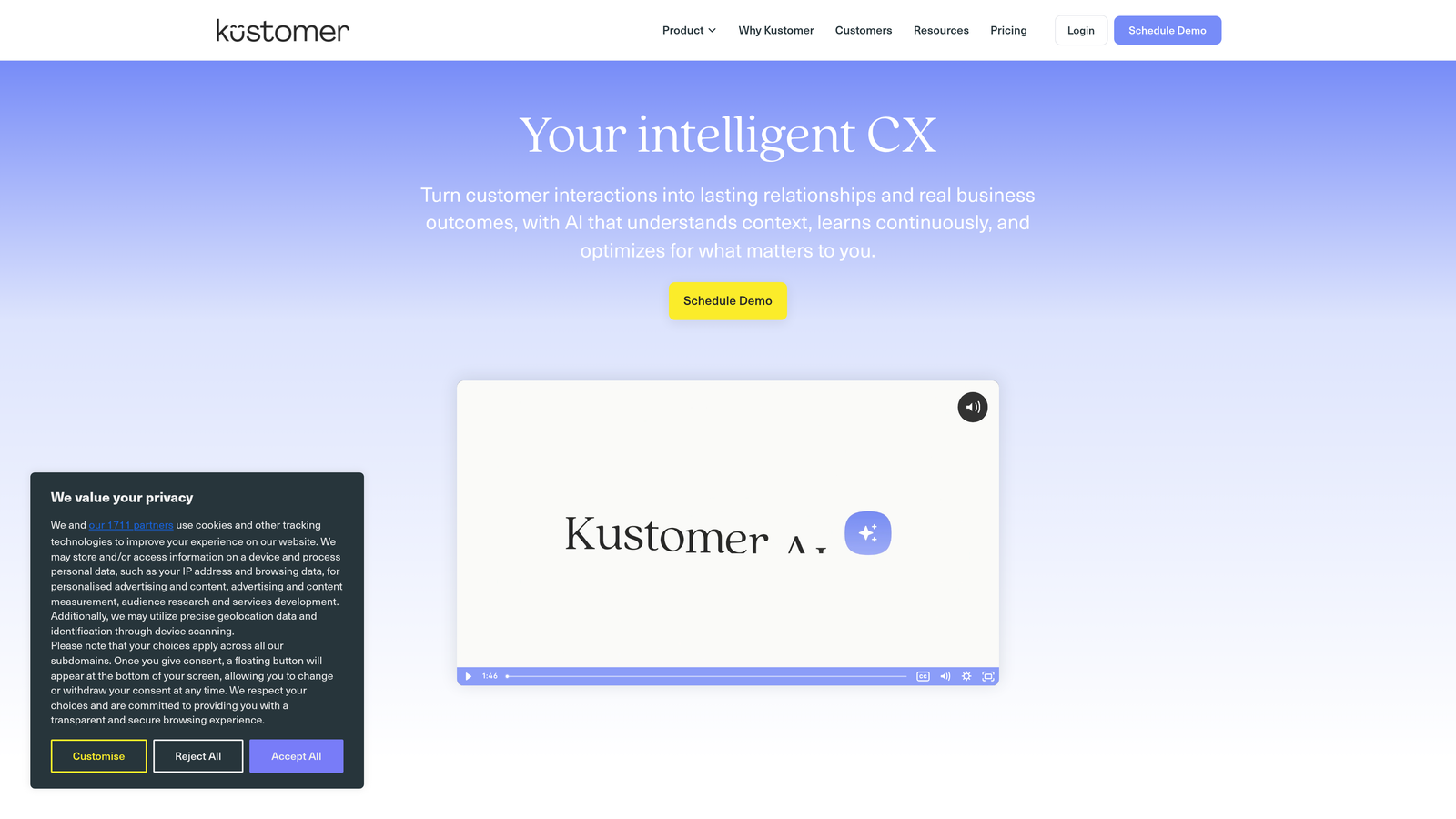
Kustomer is a CRM-native customer service platform with built-in AI automation, omnichannel support, and a unified customer timeline view designed for high-volume B2C environments.
Where This Tool Shines
Kustomer's unified timeline is the feature that earns it a place on this list. Every customer interaction across email, chat, SMS, and social channels appears in a single chronological view. Agents never have to piece together context from multiple tools, and AI automation has access to that same full history when making routing and response decisions.
The CRM-native architecture means customer data isn't a separate integration: it's embedded directly into the agent experience. For teams handling thousands of interactions per day across multiple channels, that context depth translates to faster, more accurate resolutions.
Key Features
Unified Omnichannel Timeline: Full customer history across email, chat, SMS, and social channels in a single view.
AI Intent Detection: Automated workflow routing based on detected intent from incoming messages.
KustomerIQ: Suggested replies and conversation summarization to accelerate agent response times.
Proactive Messaging: Outbound automation and proactive messaging capabilities for customer engagement.
Embedded CRM Data: Customer data surfaced directly in agent views for context-rich responses without tab-switching.
Best For
High-volume B2C teams, particularly in retail, consumer apps, and subscription businesses, where omnichannel coverage and full customer history are more important than deep SaaS-specific integrations.
Pricing
Per-agent monthly pricing. Verify current rates at kustomer.com.
8. Forethought
Best for: Teams that want to add AI to an existing helpdesk without migrating or rebuilding their stack
Forethought is a helpdesk-agnostic AI platform that layers autonomous resolution, intelligent triage, and agent assist on top of existing helpdesks without requiring migration.
Where This Tool Shines
Forethought's positioning is deliberately neutral: it works on top of Zendesk, Salesforce Service Cloud, ServiceNow, and others. For teams that have significant investment in an existing helpdesk and can't justify a migration, this is the clearest path to adding autonomous AI without disrupting what's already working.
The product suite covers the full support workflow in distinct modules. Solve handles autonomous resolution. Triage handles intelligent routing. Assist handles agent copilot. Discover handles analytics. Teams can adopt one module at a time, which lowers the implementation risk compared to platform replacements.
Key Features
Solve: Autonomous AI resolution for incoming tickets without agent involvement.
Triage: Intelligent routing based on detected intent, urgency, and topic classification.
Assist: In-agent AI copilot for suggested responses and knowledge retrieval during live conversations.
Discover: Analytics layer that identifies resolution gaps and surfaces automation opportunities.
Helpdesk-Agnostic Architecture: Operates on top of Zendesk, Salesforce Service Cloud, ServiceNow, and other major platforms.
Best For
Organizations with established helpdesk infrastructure that want AI capabilities without a platform migration. Particularly useful for multi-helpdesk environments or teams that have standardized on an enterprise helpdesk and need AI layered on top.
Pricing
Contact for pricing. Verify current rates at forethought.ai.
9. Ada
Best for: Global enterprise teams that need multilingual AI agents with measurable autonomous resolution rates
Ada is an enterprise AI agent platform with a no-code builder, strong multilingual capabilities, and transparent automated resolution rate reporting for global support teams.
Where This Tool Shines
Ada's multilingual capabilities are a genuine differentiator for global brands. Supporting customers across many languages with consistent quality is a hard problem, and Ada's architecture is built specifically to handle it at scale. For enterprises with large international customer bases, this removes a significant operational complexity.
The no-code agent builder gives non-technical teams meaningful control over agent behavior through visual flow configuration. Combined with enterprise-grade controls like role-based access and audit logging, Ada balances accessibility with the governance requirements that large organizations typically need.
Key Features
No-Code Agent Builder: Visual flow configuration lets non-technical teams build and modify AI agent behavior without engineering support.
Multilingual Support: Broad language coverage for global customer bases with consistent resolution quality across languages.
Broad Integration Support: Connects with major helpdesks, CRMs, and data sources across enterprise stacks.
Enterprise Governance: Role-based access controls and audit logging for compliance and oversight requirements.
Resolution Rate Reporting: Transparent reporting on automated resolution rates so teams can measure AI performance clearly.
Best For
Global enterprise brands with multilingual support needs and non-technical teams who need to own agent configuration. Less suited to small teams or those who don't require the governance overhead that enterprise controls introduce.
Pricing
Enterprise pricing. Contact Ada directly or verify at ada.cx.
Which Platform Is Right for Your Team?
The honest answer is that the best platform depends heavily on where you're starting from and what you actually need AI to own.
If you're a B2B SaaS team evaluating your support infrastructure fresh, or if you're frustrated by the limitations of bolt-on AI, Halo AI is the strongest option. The page-aware context, continuous learning architecture, auto bug routing, and business intelligence layer go well beyond what helpdesk-native AI tools offer. It's built to be your primary support layer, not an afterthought.
For teams with existing platform investment, the picture shifts:
Existing Intercom users: Intercom Fin is the path of least resistance for adding autonomous resolution without any migration.
Enterprise Zendesk shops: Zendesk AI is the natural fit, particularly for large teams where the triage and agent assist combination has the most impact.
Freshworks ecosystem: Freddy AI is already bundled into your plans and covers self-service, agent assist, and analytics in one place.
Salesforce-centric organizations: Agentforce is the clear choice when Salesforce Data Cloud context is what makes the difference.
Small business and e-commerce: Tidio Lyro gets you to autonomous deflection quickly and affordably without technical complexity.
High-volume B2C teams: Kustomer's omnichannel timeline and CRM-native architecture handle the complexity of multi-channel, high-volume environments well.
Multi-helpdesk environments: Forethought's helpdesk-agnostic approach means you can add AI without rebuilding what's already working.
Global enterprise teams: Ada's multilingual capabilities and no-code builder make it the strongest option for brands operating at international scale.
Your support team shouldn't scale linearly with your customer base. Let AI agents handle routine tickets, guide users through your product, and surface business intelligence while your team focuses on complex issues that need a human touch. See Halo in action and discover how continuous learning transforms every interaction into smarter, faster support.