9 Best Customer Service AI Tools: Pricing Comparison for 2026
This guide delivers a thorough customer service AI pricing comparison across nine leading platforms, breaking down per-seat, per-resolution, and per-conversation billing models so B2B teams can make a confident, informed purchase decision without wading through endless sales demos. All pricing reflects publicly available data as of mid-2026.
 Grant CooperFounder14 min read
Buying an AI customer service platform is harder than it looks. Vendors bury pricing behind "contact sales" forms, bundle features differently, and use per-seat vs. per-resolution vs. per-conversation models that make apples-to-apples comparisons nearly impossible.
This guide cuts through the noise. We've mapped out pricing structures, key features, and ideal use cases for nine leading customer service AI platforms so B2B teams can make an informed decision without sitting through five demo calls first. Whether you're a lean startup looking to automate tier-1 support or a scaling SaaS company ready to replace a traditional helpdesk, you'll find a clear comparison here.
We've also flagged which tools are best suited for teams already using Zendesk, Freshdesk, or Intercom, and which ones are built to replace them entirely. One quick note on pricing: this market moves fast. All figures below reflect publicly available information as of mid-2026. Always verify current pricing directly on each vendor's site before making a decision.
Understanding the Three Pricing Models
Before diving into the tools, it helps to understand the three pricing structures you'll encounter. This context will save you from comparing apples to oranges.
Per-seat: The traditional helpdesk model used by Zendesk and Freshdesk. Predictable monthly costs, but AI features are often sold as add-ons at additional per-seat cost. Can get expensive as your team grows.
Per-resolution or per-conversation: The newer AI-native model used by platforms like Intercom's Fin. Cost aligns with value delivered, but bills can become unpredictable if deflection rates underperform expectations.
Platform or usage-based tiers: A hybrid approach that's more predictable than pure per-resolution pricing, though overage charges can still apply at scale.
With that framing in place, here are the top customer service AI tools worth evaluating in 2026.
1. Halo AI
Best for: B2B SaaS teams wanting a fully AI-native support platform with business intelligence built in.
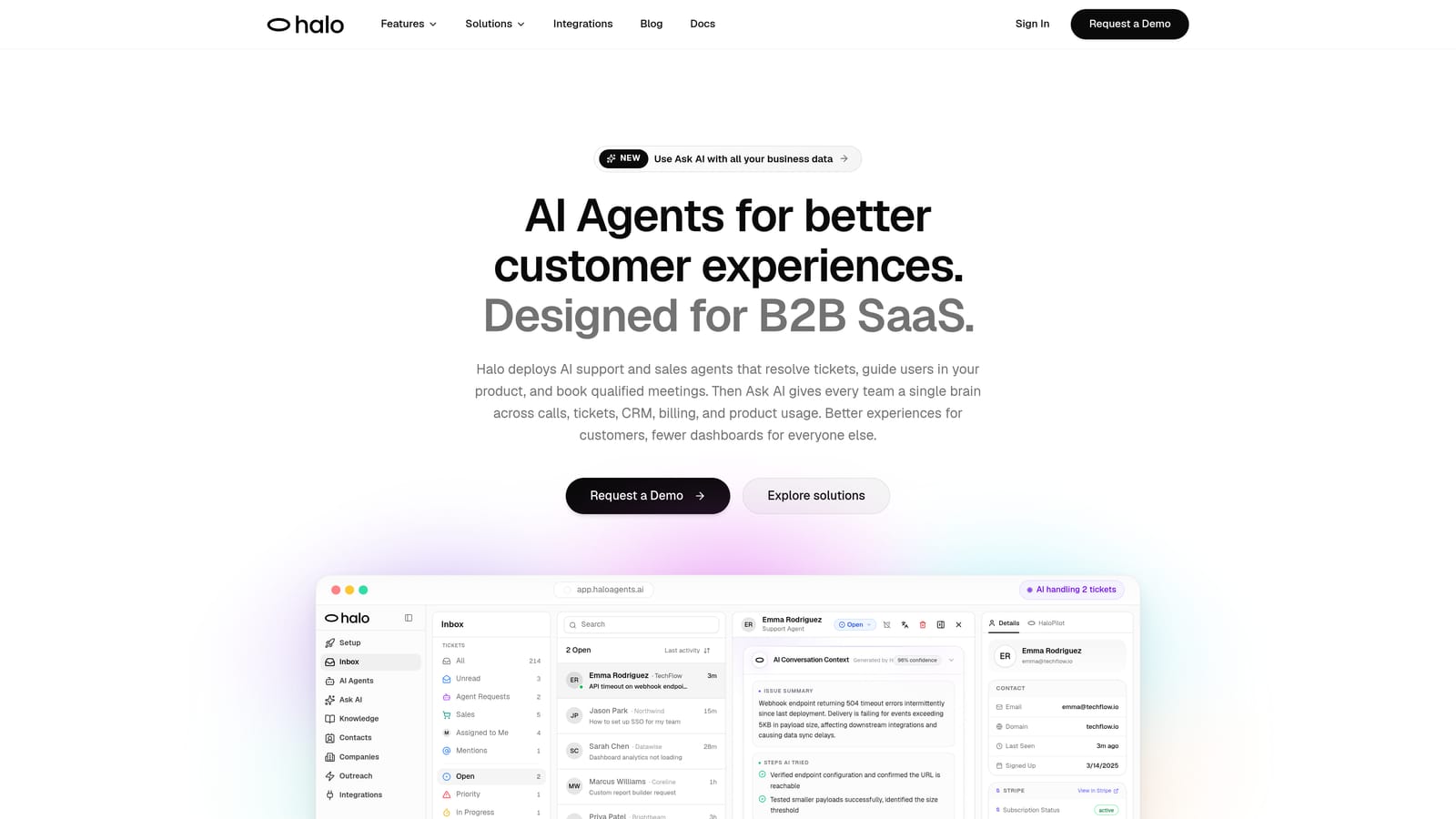
Halo AI is an AI-native customer support platform that deploys intelligent agents to resolve tickets, guide users through your product with page-aware context, create bug reports automatically, and surface business intelligence — all while continuously learning from every interaction.
Where This Tool Shines
Most platforms on this list started as live chat tools or traditional helpdesks and added AI later. Halo is built AI-first, which means the architecture is fundamentally different. The continuous learning loop means every resolved ticket makes the system smarter, rather than requiring manual knowledge base updates to improve performance.
The page-aware chat widget is a genuine differentiator. Halo can see what the user is looking at in your product and provide visual UI guidance in context, rather than sending users to a generic help article. For SaaS products with complex onboarding flows, this capability alone can meaningfully reduce support volume.
Key Features
AI Agents with Live Handoff: Autonomous ticket resolution with intelligent escalation to human agents when complexity warrants it.
Page-Aware Chat Widget: Sees what the user sees in your product and delivers visual guidance in real time, not just text responses.
Smart Inbox with Business Intelligence: Surfaces customer health signals, revenue anomaly detection, and patterns that go beyond standard support metrics.
Auto Bug Ticket Creation: Automatically routes bug reports directly to Linear or your engineering workflow, closing the loop between support and product.
Deep Integration Stack: Connects to Linear, Slack, HubSpot, Intercom, Stripe, Zoom, PandaDoc, and Fathom, making it a natural fit for product-led SaaS companies.
Best For
Product-led SaaS companies that want support, product, and engineering workflows connected under one intelligent layer. Particularly strong for teams frustrated by the gap between their helpdesk and their engineering tools, and for companies that want support data to inform revenue and product decisions, not just ticket metrics.
Pricing
Contact for pricing via demo. Halo AI is positioned on value delivered rather than per-seat cost, which means pricing conversations focus on ROI and resolution volume rather than headcount. Visit haloagents.ai to request a demo.
2. Intercom
Best for: Teams wanting a mature conversational platform with a pay-per-resolution AI agent model.
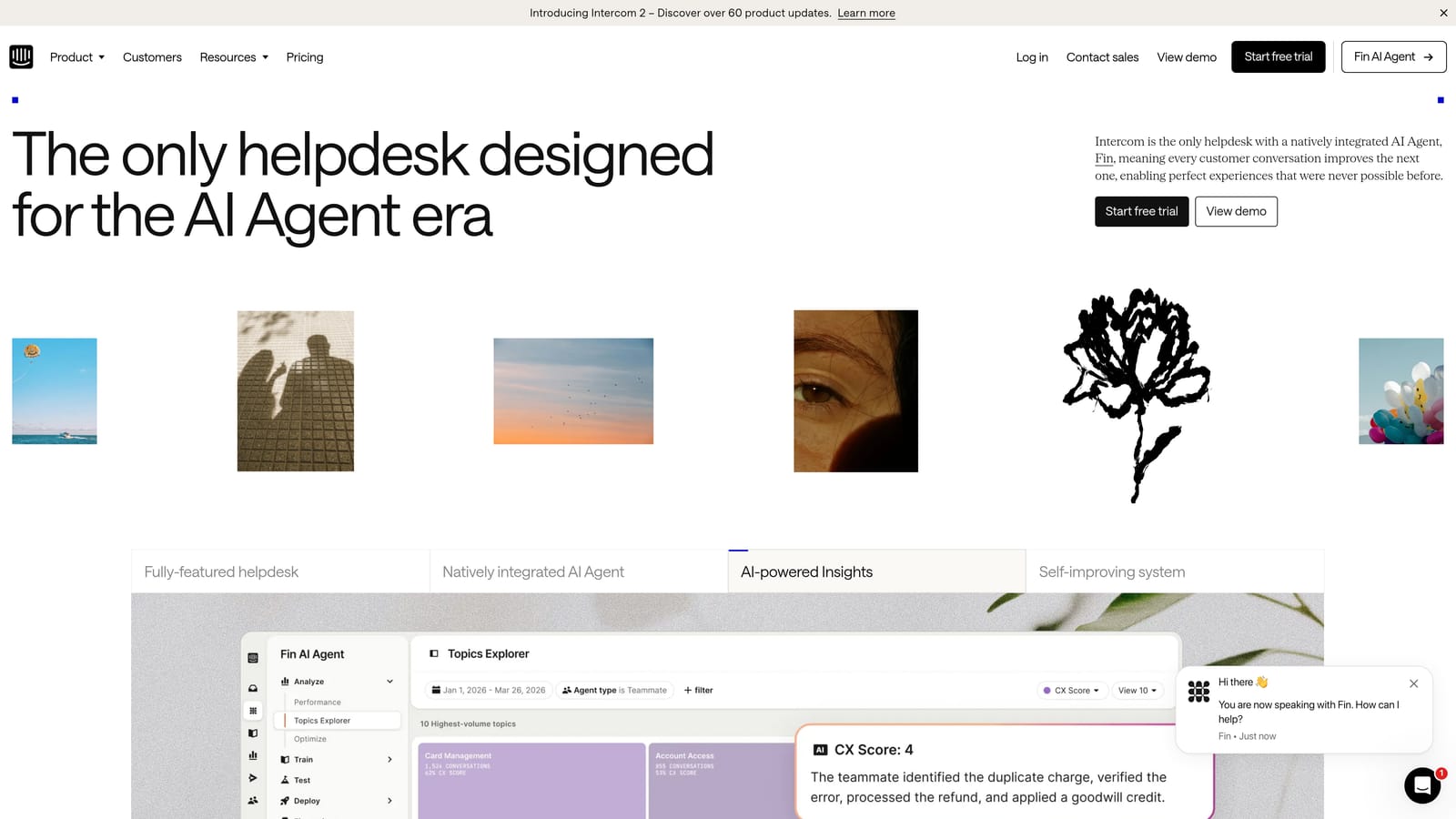
Intercom is one of the most established names in conversational support, and its Fin AI agent has become a significant product in its own right, handling front-line ticket resolution at a per-resolution pricing model.
Where This Tool Shines
Intercom's strength is its maturity. The platform has been refined over many years, and the combination of Fin AI with Intercom's omnichannel inbox, help center, and workflow builder gives teams a comprehensive stack in one product. For teams that want a single vendor relationship covering AI, live chat, and knowledge base, Intercom is a strong contender.
The per-resolution pricing model for Fin is appealing in theory because you only pay when the AI successfully resolves a ticket. The practical consideration is that your actual cost depends heavily on your deflection rate, which can vary significantly based on your product complexity and how well your knowledge base is maintained.
Key Features
Fin AI Agent: Autonomous ticket resolution using your existing help content, with handoff to human agents when needed.
Omnichannel Inbox: Combines chat, email, and social into a unified agent workspace.
Help Center Builder: Native knowledge base creation and management within the platform.
Workflows: Visual automation builder for routing, escalation, and response logic.
Integration Ecosystem: Strong third-party integration library covering CRM, billing, and engineering tools.
Best For
Teams that want a proven, all-in-one conversational support platform and are comfortable with usage-based pricing. Works well for SaaS companies with a well-maintained knowledge base that can power Fin's deflection capability effectively.
Pricing
Fin AI is priced at approximately $0.99 per resolution (verify current rate at intercom.com/pricing). Base platform plans start at several hundred dollars per month, with full suite pricing scaling with usage and seat count.
3. Zendesk
Best for: Enterprise teams needing robust ticketing infrastructure with AI layered on top.
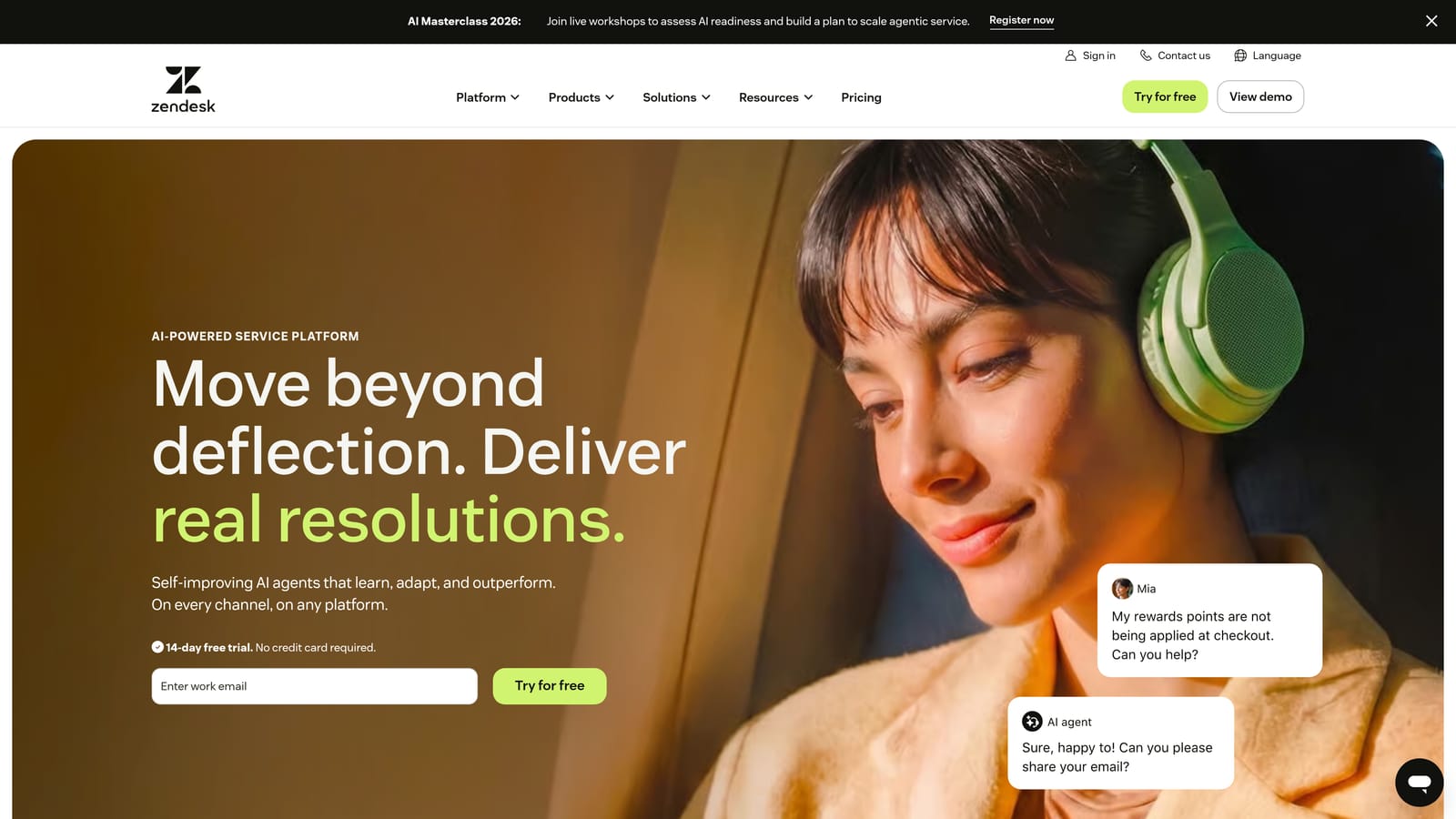
Zendesk is the established enterprise helpdesk standard, with AI capabilities added across its Suite plans. It's best known for its ticketing depth, reporting infrastructure, and the sheer breadth of its integration marketplace.
Where This Tool Shines
If your support operation runs on process, SLAs, and compliance requirements, Zendesk's infrastructure is hard to beat. The routing logic, SLA management, and reporting capabilities have been built out over many years for enterprise-scale operations. For large teams with complex support workflows, these fundamentals matter more than AI novelty.
The honest trade-off is that Zendesk's AI feels like what it is: a layer added to an existing system. The AI Advanced add-on provides triage, suggestions, and summarization, but it's not the same as an AI-native architecture where intelligence is built into the core product loop.
Key Features
Comprehensive Ticketing System: Advanced routing, SLA management, and queue logic built for high-volume operations.
AI-Powered Triage and Summarization: Available via the AI Advanced add-on, covering auto-triage, suggested responses, and ticket summarization.
1,000+ Integration Marketplace: One of the largest third-party integration libraries in the helpdesk space.
Robust Analytics Suite: Detailed reporting on team performance, SLA compliance, and ticket trends.
Enterprise Security and Compliance: SOC 2, HIPAA, and other compliance frameworks supported at enterprise tiers.
Best For
Large enterprise support teams with established workflows, compliance requirements, and a need for deep reporting. Also a good fit for teams already invested in the Zendesk ecosystem who want to add AI capabilities without migrating platforms.
Pricing
Suite plans run approximately $55 to $115 per agent per month (Suite Team to Suite Growth). AI Advanced is an additional add-on cost on top of base plan pricing. Enterprise plans are custom. Verify current pricing at zendesk.com/pricing.
4. Freshdesk
Best for: Budget-conscious teams wanting a full-featured helpdesk with AI included at accessible price points.
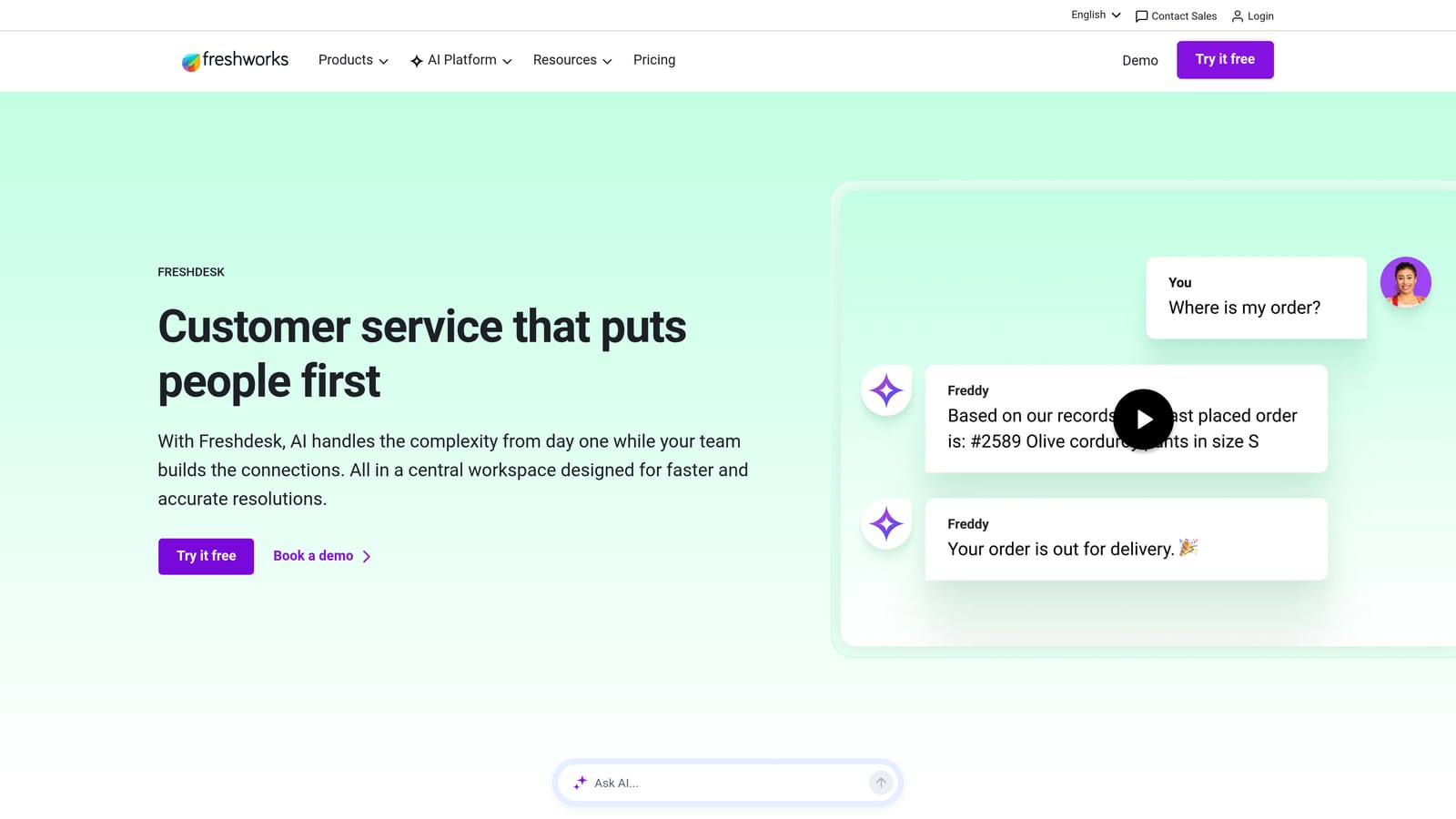
Freshdesk offers one of the most generous free plans in the market and has built Freddy AI into its platform across tiers, making it a practical choice for smaller support teams that need solid fundamentals without enterprise pricing.
Where This Tool Shines
Freshdesk's value proposition is clear: you get a capable omnichannel helpdesk at a price point that doesn't require a budget approval process. The free plan is genuinely usable for small teams, and the paid tiers scale reasonably. Freddy AI handles the basics well, covering ticket summarization, suggested responses, and auto-triage without requiring a separate AI vendor relationship.
The limitation is that Freddy AI, like Zendesk's AI layer, is an addition to a traditional helpdesk rather than an AI-native system. For teams whose primary need is organized ticketing with some AI assistance, that's perfectly fine. For teams wanting AI to drive autonomous resolution at scale, the architecture has inherent constraints.
Key Features
Freddy AI: Covers ticket summarization, suggested responses, and auto-triage across paid plans.
Free Plan: Available for limited agents, making it accessible for very early-stage teams.
Omnichannel Support: Email, chat, phone, and social channels unified in one inbox.
Automation Rules and SLA Policies: Standard workflow automation for routing and escalation.
Freshdesk Marketplace: Integration library covering common CRM, billing, and productivity tools.
Best For
Small to mid-size teams that need a reliable helpdesk with AI assistance at a predictable per-seat cost. Particularly useful for teams that are price-sensitive and want to avoid the complexity of evaluating multiple vendors for helpdesk and AI separately.
Pricing
Free plan available. Growth plan approximately $15 per agent per month. Pro approximately $49 per agent per month. Enterprise approximately $79 per agent per month. Freddy AI Copilot is an add-on at approximately $29 per agent per month. Verify current pricing at freshdesk.com/pricing.
5. Drift (Salesloft)
Best for: Revenue teams where support and sales qualification overlap significantly.
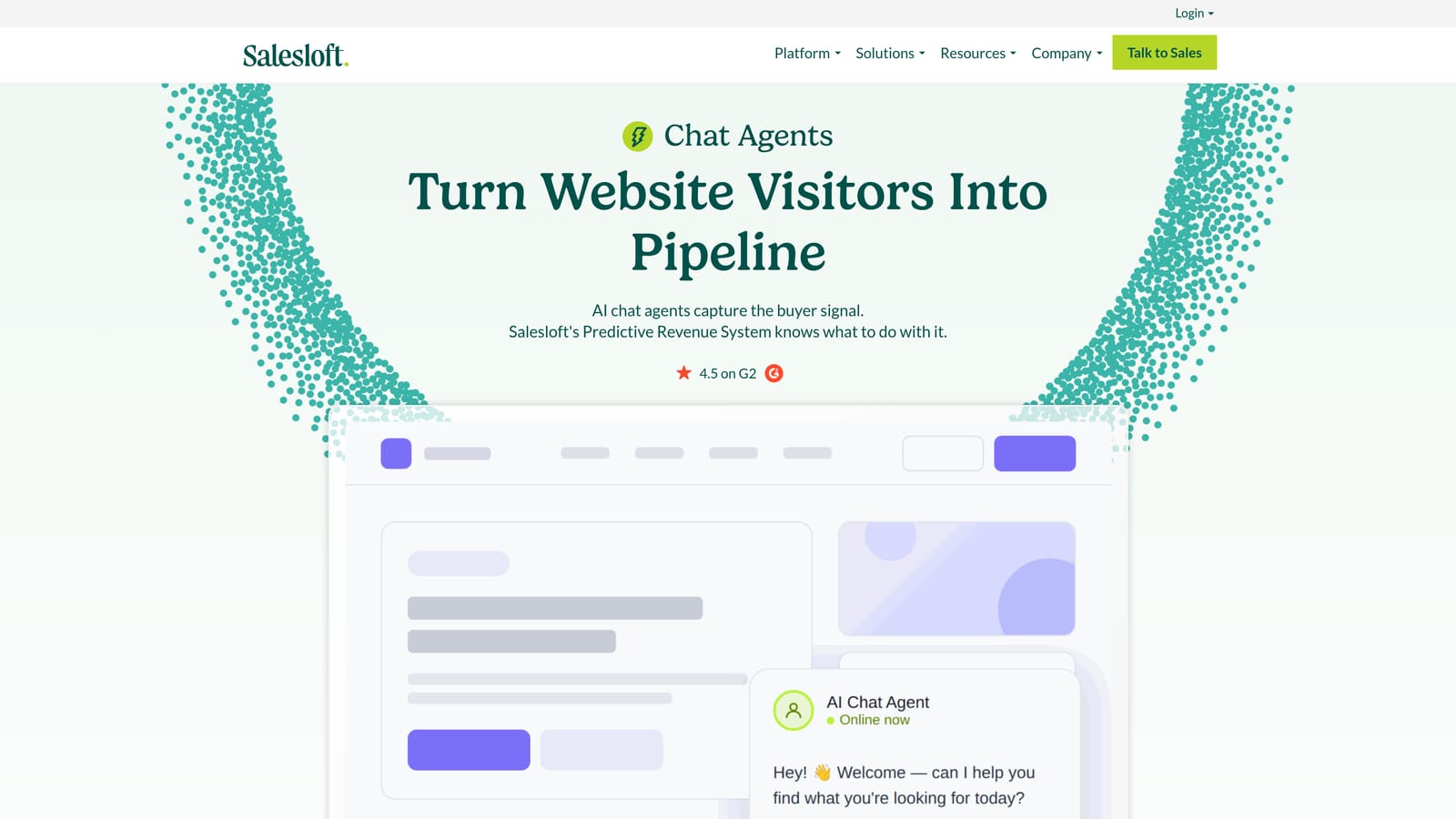
Drift, now part of Salesloft, is a conversational AI platform that blends sales qualification with support automation. It's a different category from most tools on this list, and that distinction matters for how you evaluate it.
Where This Tool Shines
Drift is strongest when the line between marketing, sales, and support is intentionally blurred. If your website chat needs to qualify inbound leads, route prospects to the right account executive, and handle support queries within the same conversation flow, Drift's architecture is designed for exactly that use case. The Salesloft acquisition adds deeper sales engagement workflow integration for teams already in that ecosystem.
For pure support automation, Drift is likely more than you need and priced accordingly. But for revenue teams that want AI to work across the full buyer journey from first visit to post-sale support, the platform's cross-functional positioning is a genuine strength.
Key Features
AI-Powered Chatbot: Handles lead qualification and support deflection within a single conversation interface.
Intent-Based Routing: Routes visitors to the right human or bot based on behavioral signals and account data.
ABM Integrations: Account-based marketing targeting for identifying and prioritizing high-value accounts.
Meeting Scheduling Automation: Books meetings directly within chat conversations without human involvement.
Salesloft Workflow Integration: Native connection to Salesloft's sales engagement sequences and reporting.
Best For
B2B companies with a strong inbound motion where support and sales qualification happen in the same channel. Less suited for teams whose primary need is post-sale support automation without a sales qualification component.
Pricing
No public pricing. Requires contact with sales. Historically positioned as a premium product. Verify current pricing and plan structure at drift.com.
6. Tidio
Best for: SMBs and e-commerce teams wanting accessible AI chat with minimal setup.
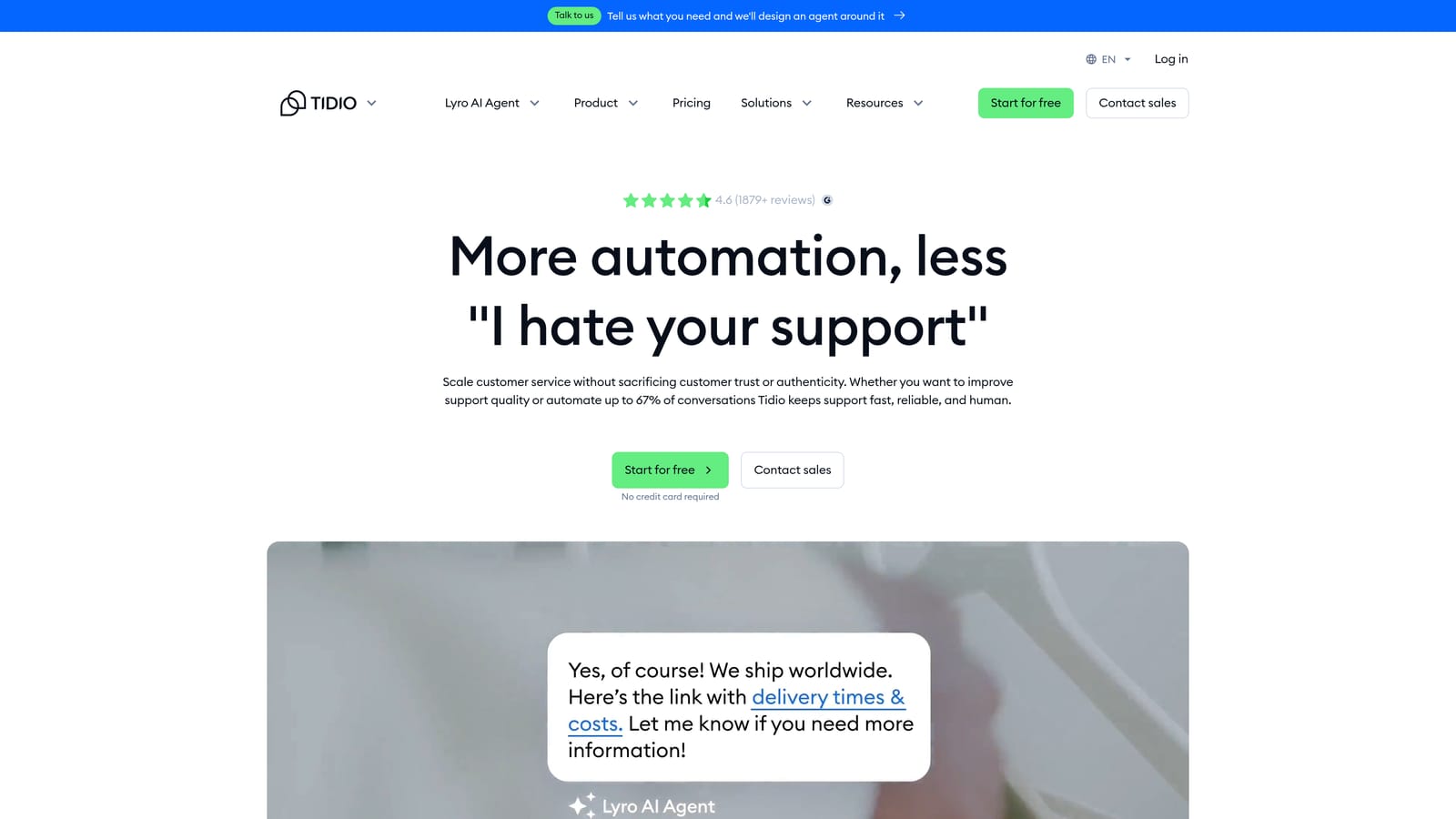
Tidio is built for smaller teams that need a working AI chat solution quickly, without the implementation complexity or pricing of enterprise platforms. Its Lyro AI agent handles common customer queries with straightforward setup.
Where This Tool Shines
Tidio's accessibility is its defining characteristic. The platform is designed to be embedded and operational quickly, with Lyro AI learning from your existing content to handle repetitive queries. For e-commerce businesses and small SaaS teams that need basic AI deflection without a lengthy implementation project, Tidio delivers practical value fast.
The trade-off is depth. Tidio isn't built for complex B2B support workflows, multi-tier escalation logic, or business intelligence beyond support metrics. It solves a specific problem well: reducing the volume of simple, repetitive queries hitting your team.
Key Features
Lyro AI Chatbot: Autonomous query resolution trained on your existing help content with minimal configuration.
Live Chat Widget: Easy website embed with a clean interface for both customers and agents.
Email and Messenger Support: Extends beyond website chat to cover additional channels.
Canned Responses and Automation Flows: Standard automation for routing and response templates.
E-Commerce Integrations: Native connections to Shopify and other e-commerce platforms.
Best For
SMBs, e-commerce businesses, and early-stage SaaS teams that need affordable AI chat with quick time-to-value. Not the right fit for B2B teams with complex support workflows or enterprise compliance requirements.
Pricing
Free plan available. Lyro AI starts at approximately $29 per month for a limited conversation volume, scaling up with usage. Verify current pricing and conversation limits at tidio.com/pricing.
7. Forethought
Best for: Teams that want AI capabilities layered on top of an existing helpdesk without migrating platforms.
Forethought takes a different approach from most tools on this list: rather than replacing your helpdesk, it sits on top of it, adding AI deflection, triage, and agent assist to platforms like Zendesk and Salesforce Service Cloud.
Where This Tool Shines
If your team has invested significantly in Zendesk or Salesforce and isn't ready to migrate, Forethought offers a practical path to adding meaningful AI capabilities without platform disruption. The Solve product handles deflection for common ticket types, Triage classifies and routes incoming tickets intelligently, and Assist surfaces relevant knowledge to agents in real time during conversations.
The architecture makes Forethought's value proposition clear: it's an AI layer, not a full platform. That's a strength for teams with established helpdesk investments and a limitation for teams looking for a unified AI-native system.
Key Features
Solve: AI deflection for common ticket types before they reach a human agent.
Triage: Intelligent ticket classification and routing based on content and intent.
Assist: Real-time knowledge surfacing and response suggestions for human agents during live interactions.
Helpdesk Compatibility: Designed to work alongside Zendesk, Salesforce Service Cloud, and other major platforms.
Deflection Analytics: Reporting on AI performance, deflection rates, and resolution quality.
Best For
Enterprise teams with existing Zendesk or Salesforce investments that want to add AI capabilities incrementally. Also relevant for teams that have been told by leadership to "add AI" without the budget or appetite for a full platform migration.
Pricing
Enterprise pricing with no public tiers. Requires a demo and sales conversation. Verify current pricing structure at forethought.ai.
8. Kustomer
Best for: High-volume support teams that want CRM and helpdesk capabilities unified in a single platform.
Kustomer is a CRM-first customer service platform that unifies the full customer timeline across all touchpoints, with AI workflows designed for teams handling significant interaction volume across multiple channels.
Where This Tool Shines
Kustomer's differentiator is the unified customer timeline. Rather than treating each ticket as an isolated interaction, Kustomer builds a complete view of every customer conversation across channels, giving agents the context they need without switching between systems. For high-volume support operations where customer history matters to resolution quality, this architecture is genuinely valuable.
The AI capabilities cover routing, auto-response, and workflow automation, though Kustomer's strength is more in the CRM and data unification layer than in autonomous AI resolution. Teams that need both a helpdesk and a customer data platform in one product will find the combination compelling.
Key Features
Unified Customer Timeline: Complete interaction history across all channels in a single customer view.
AI-Powered Routing and Auto-Response: Intelligent ticket assignment and automated response for common query types.
Omnichannel Support: Chat, email, SMS, social, and voice channels unified in one workspace.
Built-In CRM: Reduces the need for a separate customer data platform for support teams.
Workflow Automation: Business rules engine for complex routing and escalation logic.
Best For
High-volume support teams in retail, e-commerce, or consumer SaaS where customer history and omnichannel context are critical to resolution quality. Note: Kustomer has changed ownership multiple times in recent years, so verifying current ownership structure and roadmap before committing is advisable.
Pricing
Historically priced at approximately $89 to $139 per user per month depending on tier. Verify current pricing and ownership status at kustomer.com, as both may have changed.
9. Ada
Best for: Enterprise teams needing high-volume AI deflection at scale with strong multilingual capabilities.
Ada is an enterprise-grade AI agent platform built specifically for high-volume deflection, with a no-code agent builder that allows CX teams to configure and manage AI agents without engineering involvement.
Where This Tool Shines
Ada's core strength is scale. The platform is designed for organizations handling very large ticket volumes across multiple languages and channels, where the primary goal is maximizing deflection before tickets reach human agents. The no-code builder is a practical advantage for CX teams that need to iterate on AI behavior without filing engineering tickets for every change.
Multilingual support across 50+ languages is a meaningful differentiator for global support operations. Ada's enterprise analytics also provide detailed performance reporting on deflection rates and AI effectiveness, which is important for justifying the investment at the executive level.
Key Features
No-Code AI Agent Builder: CX teams can configure, test, and deploy AI agents without engineering dependencies.
Multilingual Support: Handles customer interactions across 50+ languages natively.
Omnichannel Deployment: Web, mobile, messaging, and voice channels supported from a single configuration.
Helpdesk and CRM Integrations: Connects to major helpdesk and CRM platforms for data context and escalation.
Enterprise Analytics: Detailed reporting on deflection rates, resolution quality, and AI performance trends.
Best For
Large enterprise organizations with high ticket volumes, global customer bases requiring multilingual support, and CX teams that need to manage AI agent behavior independently without engineering bottlenecks.
Pricing
Custom enterprise pricing. No public tiers available. Requires contact with sales for a quote. Verify at ada.cx.
Which Tool Is Right for Your Team?
The right choice depends less on feature lists and more on two things: your current infrastructure and your pricing model tolerance.
If you're already deep in Zendesk or Salesforce and not ready to migrate, Forethought is the lowest-friction path to meaningful AI capabilities. If you want a mature all-in-one conversational platform with a pay-per-resolution AI agent, Intercom is the established choice. If budget is the primary constraint and you need a functional helpdesk fast, Freshdesk's free plan is a legitimate starting point.
For enterprise scale with multilingual requirements and high deflection volume, Ada is purpose-built for that use case. For revenue teams where support and sales qualification overlap, Drift within the Salesloft ecosystem makes more sense than a pure support tool.
But if you're a B2B SaaS company that wants support, product, and engineering workflows connected under one intelligent layer, and you want AI that gets smarter with every interaction rather than requiring constant manual knowledge base maintenance, the case for an AI-native platform is strong.
Your support team shouldn't scale linearly with your customer base. AI agents should handle routine tickets, guide users through your product in context, and surface business intelligence while your team focuses on complex issues that need a human touch. See Halo in action and discover how continuous learning transforms every interaction into smarter, faster support.