9 Best Customer Service Automation Tools to Follow Best Practices in 2026
Discover the 9 best tools for implementing customer service automation best practices in 2026, evaluated across automation depth, AI capabilities, integration breadth, and seamless human handoff. Whether you're a lean startup or enterprise team, this guide helps you identify the right platform to resolve tickets faster and scale support without increasing headcount.
 Matt PattoliFounder12 min read
Customer service automation has moved well beyond simple chatbots and canned responses. Today's best-in-class support teams are using AI agents, intelligent routing, and business intelligence layers to resolve tickets faster, surface product insights, and scale without ballooning headcount. But with dozens of platforms claiming to "automate everything," choosing the right stack is genuinely hard.
This list cuts through the noise. We evaluated nine tools based on automation depth, integration breadth, ease of deployment, and how well they support proven customer service automation best practices: context-aware responses, seamless human handoff, continuous learning, and business intelligence extraction. Whether you're running a lean startup support team or managing enterprise-scale ticket volume, there's a tool here that fits your situation.
A quick note on methodology: Halo AI (our product) is listed first because it's directly built for this use case. Every other tool earned its place on merit.
1. Halo AI
Best for: SaaS and product teams that want AI-first support with deep context awareness
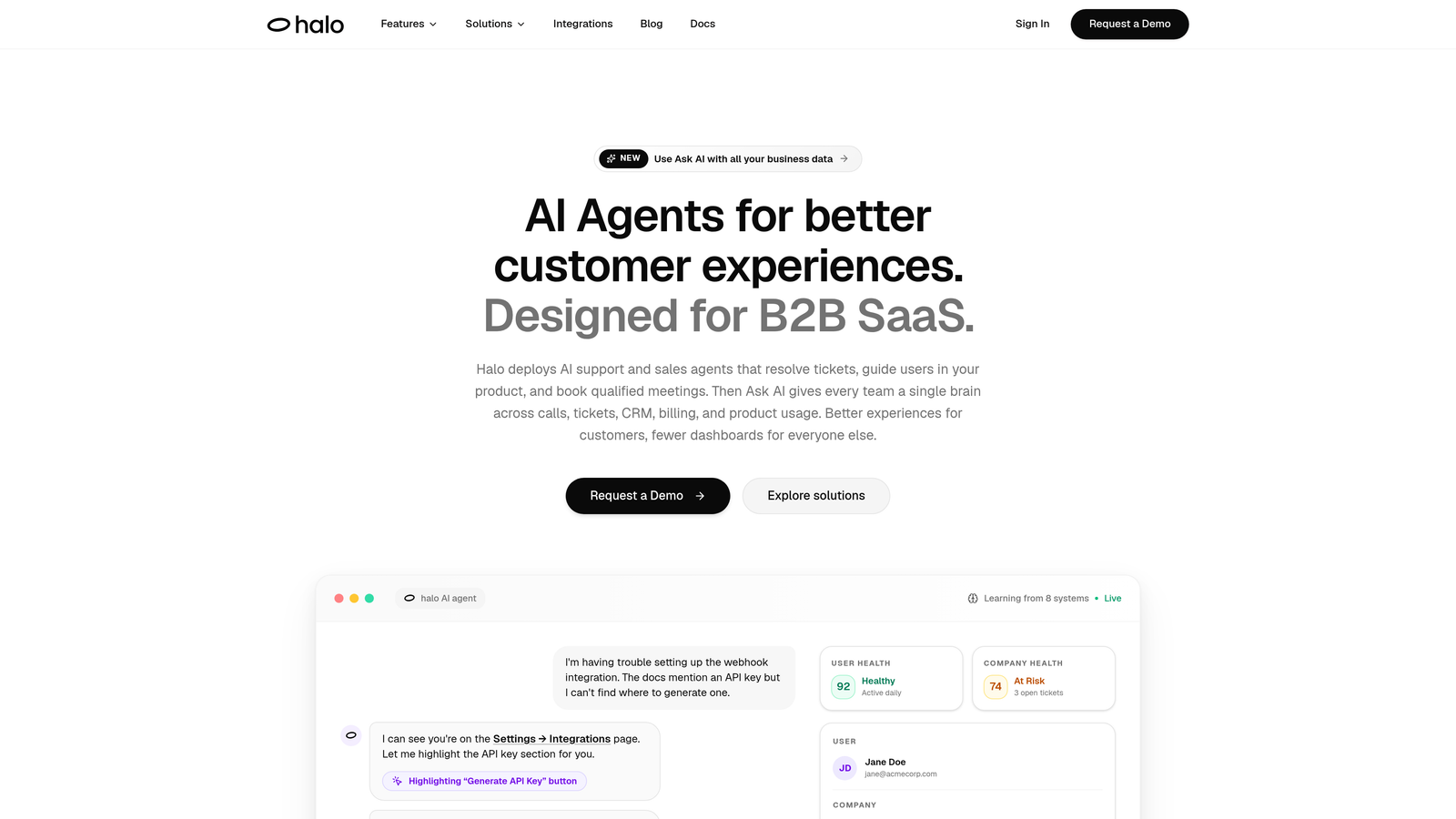
Halo AI is an AI-first customer support platform built specifically for SaaS and product teams who need more than ticket deflection.
Where This Tool Shines
Most automation tools know what a user typed. Halo knows what they're looking at. The page-aware chat widget sees the same screen your user sees, which means AI responses are grounded in actual product context rather than generic help content. That's a meaningful difference when your users are stuck mid-workflow.
The other standout is what Halo does with resolved tickets. Rather than treating support as a cost center, Halo's smart inbox extracts business intelligence: customer health signals, anomaly detection, churn indicators, and revenue intelligence. Your support queue becomes a source of product insight, not just a backlog to clear.
Key Features
Page-Aware Chat Widget: Sees what the user sees and provides visual UI guidance in context, not just text responses.
Intelligent AI Agents: Resolve tickets autonomously and continuously learn from every interaction to improve over time.
Smart Inbox with Business Intelligence: Surfaces customer health signals, anomaly detection, and revenue intelligence from support data.
Auto Bug Ticket Creation: Automatically creates and routes bug reports to engineering via Linear integration.
Live Agent Handoff: Escalates complex issues to humans with full conversation context preserved, so agents never start cold.
Integration Stack: Connects with Slack, HubSpot, Intercom, Stripe, Zoom, PandaDoc, and Fathom for a support layer that's wired into your entire business.
Best For
SaaS companies and product teams that want AI-first architecture rather than a bolt-on layer over a legacy helpdesk. Particularly strong for teams where support, product, and engineering need to be tightly connected. Less suited to pure e-commerce or high-volume B2C contexts where order management integrations are the priority.
Pricing
Contact for pricing. Visit haloagents.ai for current plans and to see a demo.
2. Intercom
Best for: SaaS teams already using the Intercom ecosystem for customer communications
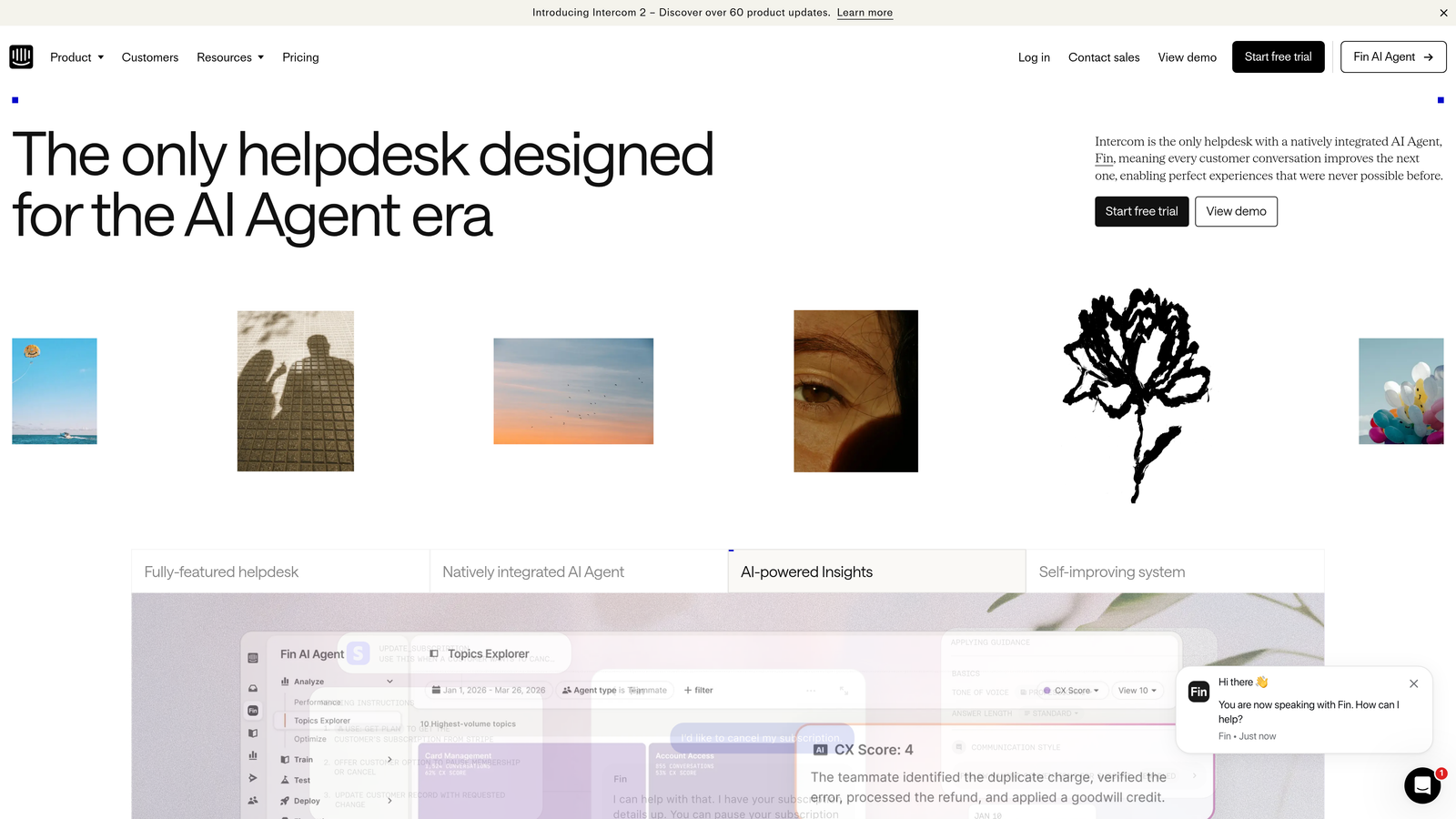
Intercom is one of the most widely adopted customer communications platforms in SaaS, with Fin, its GPT-4-powered AI agent, handling front-line resolution.
Where This Tool Shines
Intercom's Fin AI agent is genuinely capable at resolving support queries using your existing help content. If you've invested in building a solid knowledge base, Fin can put it to work immediately without complex configuration. The messenger UI is polished, and the in-app experience is familiar to most SaaS users.
Where Intercom earns its place is the combination of support and proactive messaging in one platform. Teams can run product tours, onboarding flows, and support automation from the same tool, which reduces context-switching for small teams managing multiple customer touchpoints.
Key Features
Fin AI Agent: Autonomously resolves support queries by drawing on your help center content and conversation history.
Omnichannel Inbox: Combines chat, email, and social channels in a unified agent workspace.
Workflow Automation Builder: Visual builder for routing, escalation, and assignment rules without code.
In-App Messaging and Product Tours: Supports customer success and onboarding alongside reactive support.
Best For
Teams already on Intercom who want to extend their existing investment with AI resolution. Also well-suited to SaaS companies that want support and proactive customer engagement in one platform. Pricing can be a friction point for smaller teams with high conversation volume.
Pricing
Starts at approximately $39 per seat per month. Fin AI resolution is priced separately based on usage. Check Intercom's pricing page for current plans, as this category changes frequently.
3. Zendesk
Best for: Enterprise teams with dedicated support ops resources and complex workflow requirements
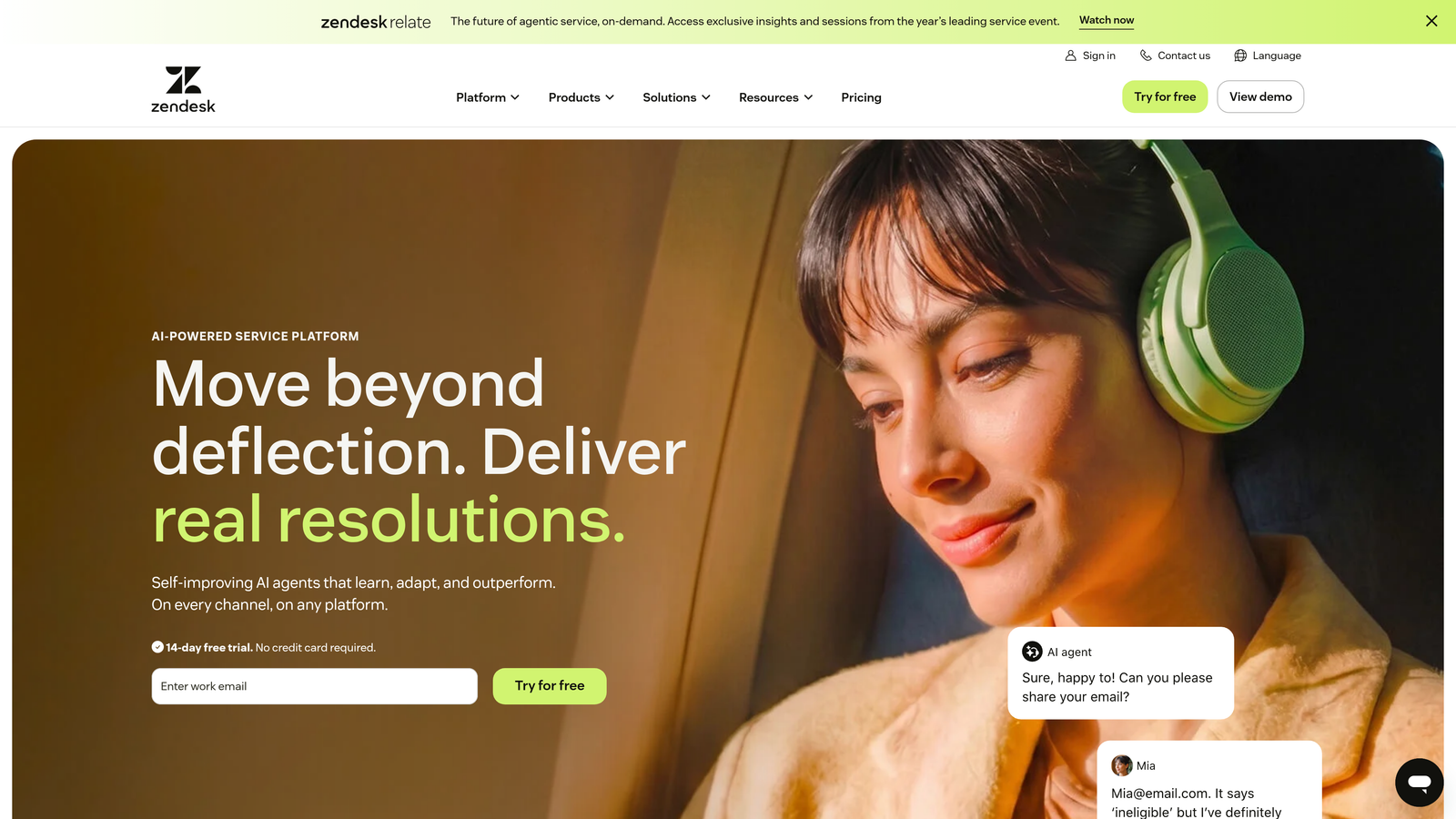
Zendesk is one of the most established enterprise helpdesk platforms, with AI-powered triage, intelligent routing, and agent assistance built across its full suite.
Where This Tool Shines
Zendesk's strength is configurability at scale. The platform can handle almost any support workflow you can design, and the AI triage layer does a solid job of categorizing and routing tickets based on intent. For teams managing high ticket volumes across multiple channels and geographies, that structure pays dividends.
The marketplace of over 1,000 integrations means Zendesk can connect to nearly any tool in your stack. The tradeoff is that this power comes with complexity. Zendesk often requires dedicated ops or admin resources to set up, maintain, and iterate on automations, which makes it less ideal for lean teams without that capacity.
Key Features
AI-Powered Triage: Automatic intent detection and ticket categorization to reduce manual sorting at scale.
Intelligent Routing: Matches tickets to the right agent or team based on skills, capacity, and ticket type.
Macros and Triggers: Workflow automation for high-volume, repeatable support actions.
Extensive Integration Marketplace: 1,000+ integrations covering virtually every business tool category.
Best For
Enterprise support organizations with dedicated ops teams, complex multi-channel workflows, and the administrative resources to configure and maintain a sophisticated platform. Typically overkill for early-stage SaaS teams or those without a support operations function.
Pricing
Suite plans start at approximately $55 per agent per month. AI add-ons are priced separately. Enterprise plans scale significantly higher.
4. Freshdesk
Best for: SMB and mid-market teams making their first serious investment in support automation
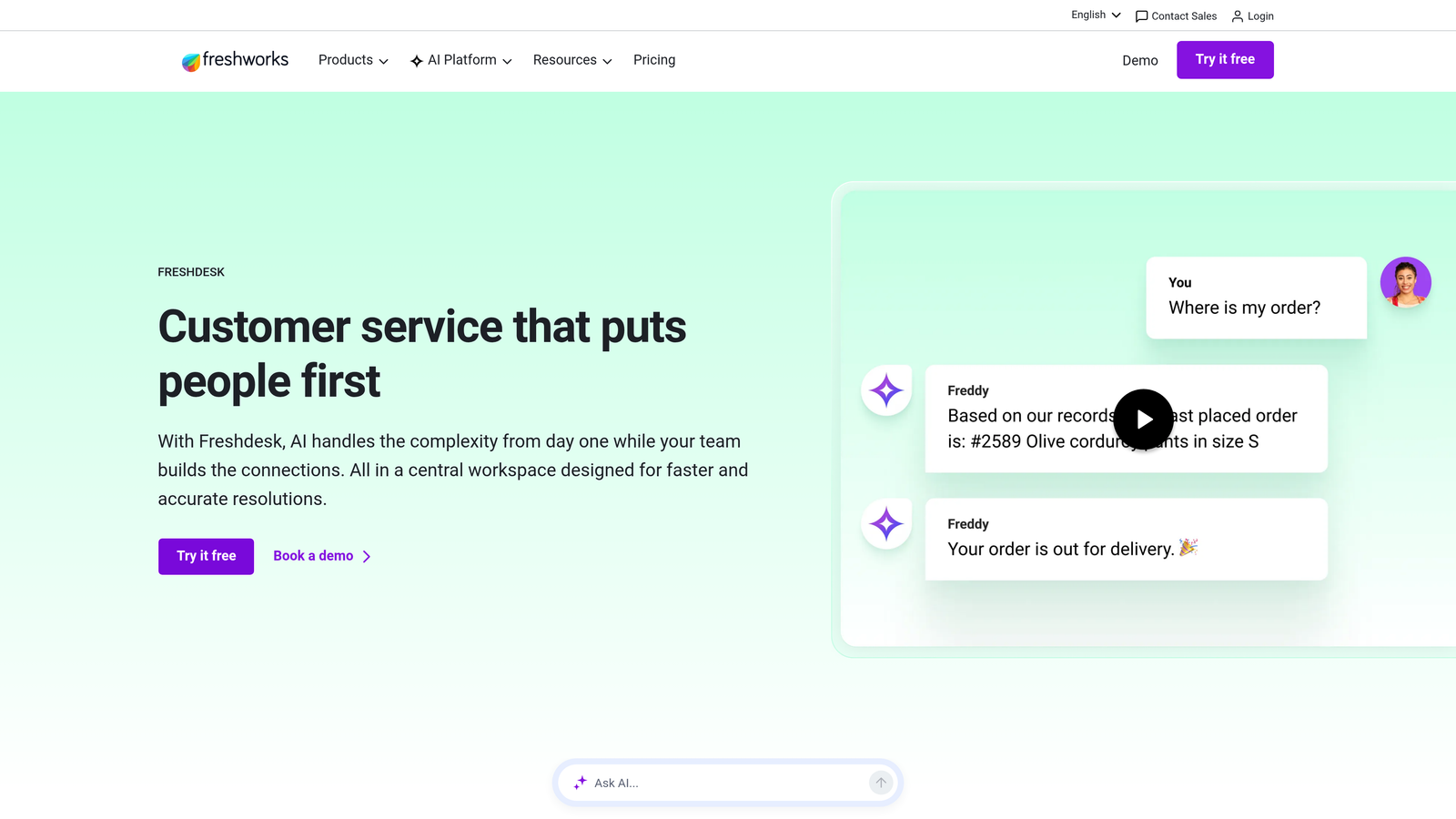
Freshdesk is Freshworks' customer support platform, featuring Freddy AI for ticket categorization, response suggestions, and agent assistance at a price point accessible to growing teams.
Where This Tool Shines
Freshdesk hits a practical sweet spot: enough AI capability to meaningfully reduce manual work, without the implementation complexity or cost of enterprise platforms. Freddy AI handles the foundational automation tasks well: categorizing tickets, suggesting responses, and recommending relevant knowledge base articles to agents mid-conversation.
The automation rules engine is solid for routing, escalation, and SLA management, and the free plan makes it genuinely accessible for small teams testing automation for the first time. Teams that outgrow the free tier will find the paid plans competitively priced compared to Zendesk or Salesforce.
Key Features
Freddy AI Categorization: Automatically categorizes and prioritizes incoming tickets to reduce manual triage.
AI-Suggested Responses: Recommends replies and relevant knowledge articles to agents in real time.
Automation Rules: Configurable routing, escalation, and SLA management without engineering involvement.
Freddy Self Service: Chatbot-based deflection for common queries before they reach the agent queue.
Best For
SMB and mid-market teams that want practical AI automation without enterprise-level complexity or cost. A strong first serious helpdesk for growing SaaS companies, though teams with complex product-support integration needs may find it limiting at scale.
Pricing
Free plan available. Paid plans start at approximately $15 per agent per month. Freddy AI features are gated to higher tiers.
5. Tidio
Best for: Small businesses and e-commerce teams that need fast deployment with minimal setup
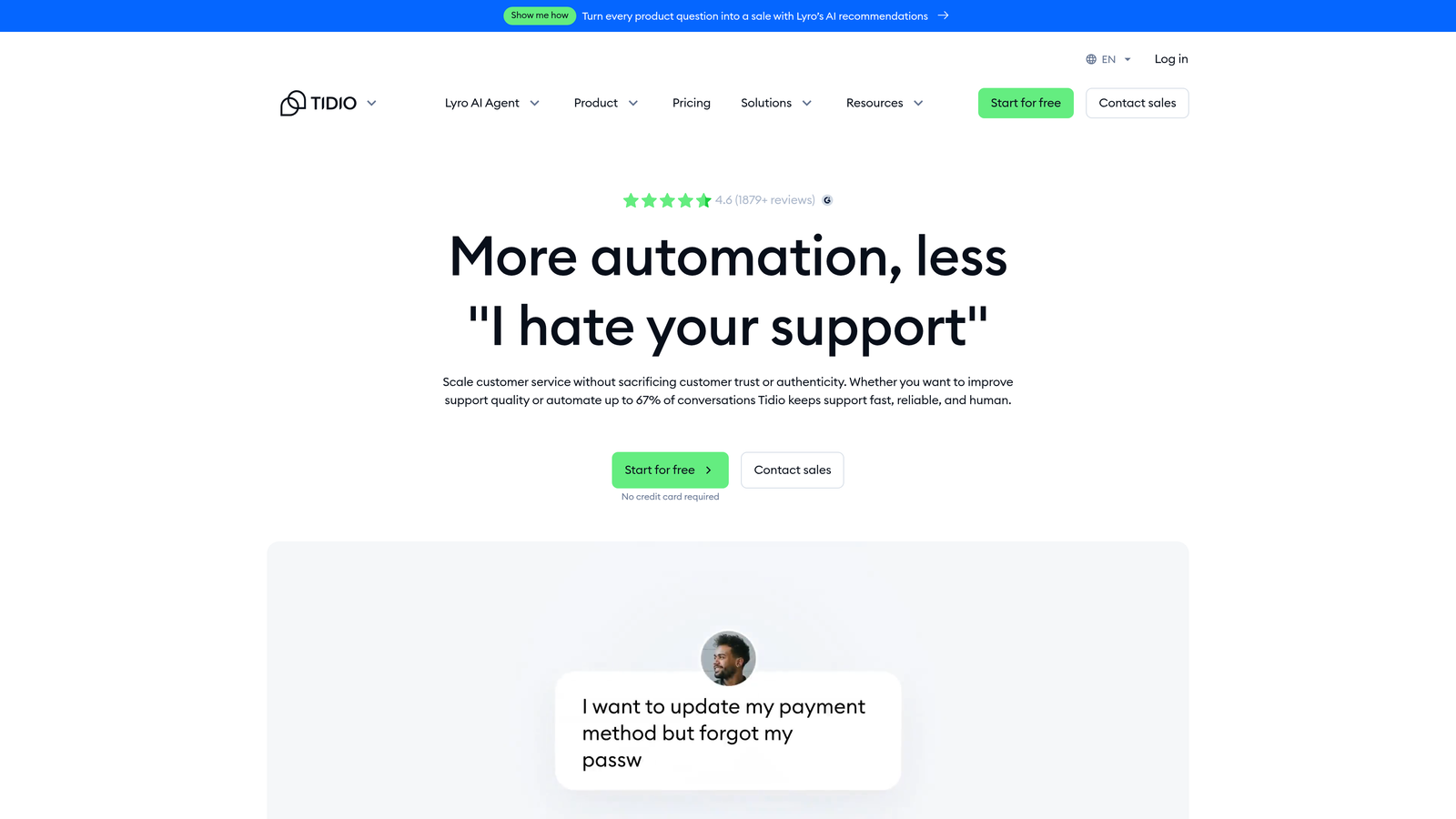
Tidio is a fast-to-deploy live chat and chatbot platform with Lyro AI for automated FAQ resolution, popular with e-commerce and small business support teams.
Where This Tool Shines
Tidio's headline advantage is speed to value. The visual no-code chatbot builder and pre-built templates mean most teams can have automated responses running in hours, not weeks. Lyro AI handles conversational FAQ resolution without requiring manual flow building, which removes a significant barrier for teams without technical resources.
The live chat to agent handoff is clean, and the e-commerce integrations with Shopify and WooCommerce make it genuinely useful for order-related query automation. For teams with straightforward, high-frequency queries, Tidio delivers without demanding much in return.
Key Features
Lyro AI: Conversational FAQ resolution that handles common queries without manual chatbot flow configuration.
No-Code Chatbot Builder: Visual drag-and-drop builder with pre-built templates for fast deployment.
Live Chat with Agent Takeover: Smooth handoff from automated conversations to human agents when needed.
E-Commerce Integrations: Native connections to Shopify and WooCommerce for order-related automation.
Best For
Small businesses, e-commerce brands, and teams that prioritize fast deployment over deep customization. Less suited to complex B2B SaaS support workflows where context-aware resolution and product integration depth matter.
Pricing
Free plan available. Lyro AI starts at approximately $29 per month. Paid plans scale by conversation volume.
6. Gorgias
Best for: E-commerce brands on Shopify or Magento with high volumes of order-related support queries
Gorgias is a support automation platform purpose-built for e-commerce, with deep Shopify and Magento integrations that allow AI to resolve order-related queries autonomously.

Where This Tool Shines
Gorgias is a specialist tool, and within its domain it's genuinely excellent. The native Shopify integration means AI can pull order status, process returns, and handle refund queries without agent involvement. For e-commerce brands where a large percentage of tickets are "where's my order" variations, that automation depth is transformative.
The revenue statistics feature is a differentiator: Gorgias links support interactions directly to sales data, so teams can see which conversations convert to purchases. That kind of visibility makes support a revenue function, not just a cost center.
Key Features
Native Shopify Integration: Pulls order data directly to automate status, return, and refund queries without agent involvement.
AI Auto-Responders: Handles common e-commerce queries automatically based on order and customer data.
Revenue Statistics: Links support interactions to sales data to measure the commercial impact of support.
Macros and Rules: High-volume ticket management with templated responses and automated routing.
Best For
E-commerce brands, particularly those on Shopify, with high volumes of order-related queries. Not well-suited for SaaS, B2B, or teams where support queries are primarily product or technical in nature rather than transactional.
Pricing
Starts at approximately $10 per month for 50 tickets. Pricing scales by ticket volume rather than per seat.
7. Salesforce Service Cloud
Best for: Enterprise organizations running support as part of a broader Salesforce CRM strategy
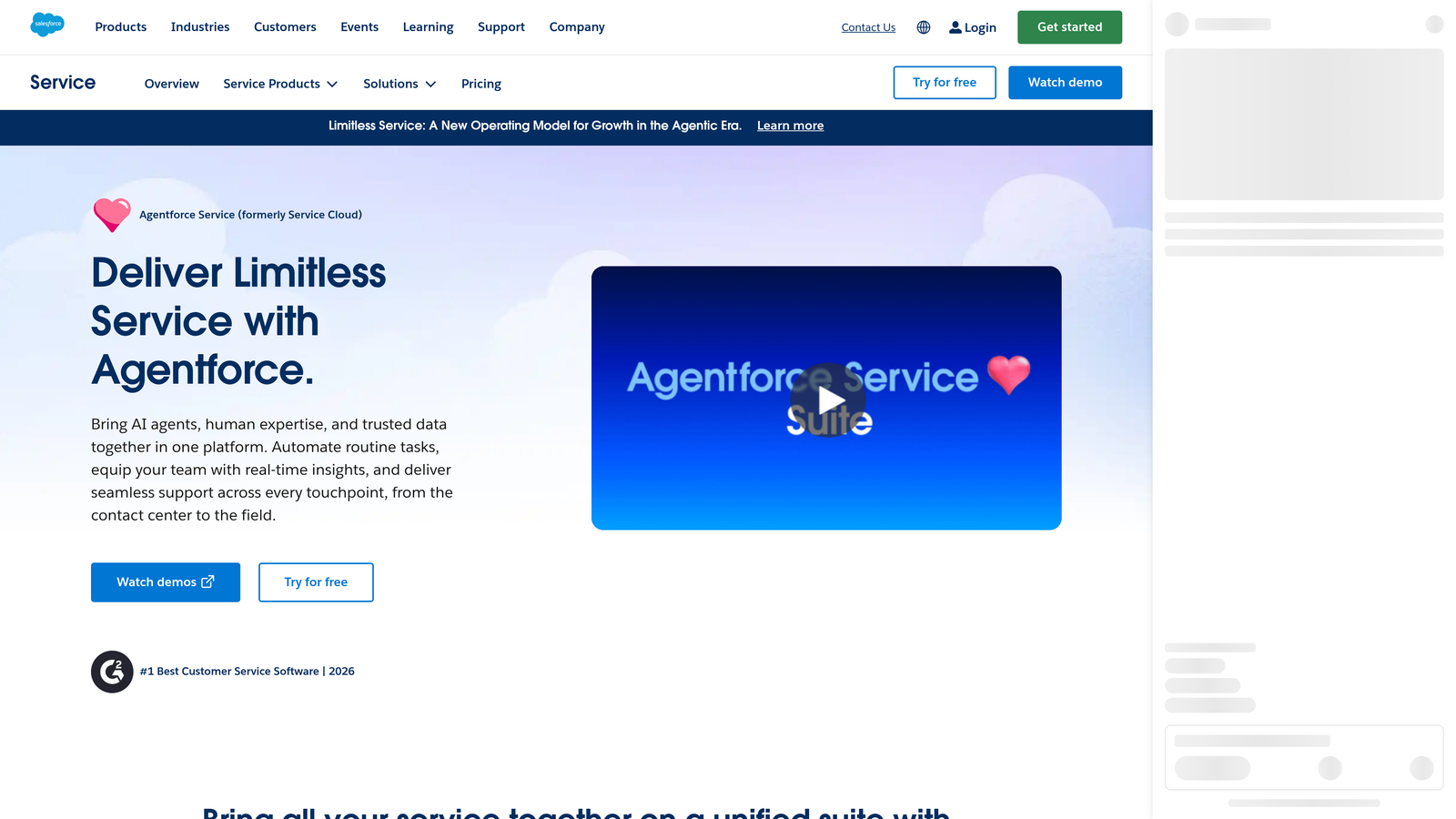
Salesforce Service Cloud is an enterprise-grade customer service platform with Einstein AI connecting support data to the full Salesforce ecosystem.
Where This Tool Shines
Service Cloud's core advantage is the unified customer record. When support, sales, and marketing data all live in Salesforce, the AI has significantly more context to work with. Einstein AI can recommend next best actions based on a customer's full history, not just the current ticket, which is genuinely valuable for complex enterprise customer relationships.
The Flow automation builder handles multi-step, conditional support workflows that would be difficult to configure elsewhere. For organizations already deeply invested in the Salesforce ecosystem, Service Cloud is a natural extension rather than a separate investment.
Key Features
Einstein AI: Case classification, next best action recommendations, and agent assistance powered by the full Salesforce data model.
Unified Customer Record: Connects support history to sales, marketing, and service data in a single view.
Omni-Channel Routing: Intelligent case assignment based on agent skills, availability, and case attributes.
Flow Automation: Complex, multi-step support workflow automation without custom code.
Best For
Large enterprises where support is one function within a broader Salesforce strategy. High implementation cost and complexity make it overkill for most SaaS startups or teams without dedicated Salesforce administrators.
Pricing
Starts at approximately $25 per user per month for the Starter tier. Enterprise plans are significantly higher. Implementation costs add substantially to the total investment.
8. Kustomer
Best for: High-volume B2C support teams where full customer history drives better AI automation
Kustomer is a CRM-style support platform with a customer timeline model that gives AI more context for personalized automation.
Where This Tool Shines
Most helpdesks are ticket-centric: each conversation is an isolated event. Kustomer's customer timeline model is genuinely different. The AI sees the full history of every interaction a customer has had, which means routing, tagging, and response suggestions are informed by context that ticket-centric tools simply don't have access to.
For high-volume B2C teams handling thousands of conversations per day, that richer context translates into more accurate automation and fewer escalations. KustomerIQ handles the foundational automation tasks well, and the proactive messaging capabilities allow teams to get ahead of issues before customers reach out.
Key Features
Customer Timeline Model: Full interaction history in a single view, giving AI and agents richer context than ticket-centric platforms.
KustomerIQ: Automated routing, tagging, and response suggestions informed by complete customer history.
Proactive Messaging: Automated outreach workflows to address issues before they become inbound tickets.
Omnichannel Support: Unified handling of email, chat, social, and voice in one platform.
Best For
High-volume B2C support teams where personalization and full customer context drive automation quality. The per-user pricing is on the higher end, which makes it less accessible for smaller teams or those with occasional support needs.
Pricing
Starts at approximately $89 per user per month. Enterprise pricing available for larger deployments.
9. Help Scout
Best for: Teams where brand voice and relationship quality are as important as resolution speed
Help Scout is a relationship-first support platform where AI assists agents rather than replacing them, built for teams where the personal touch is non-negotiable.
Where This Tool Shines
Help Scout's philosophy is deliberately different from the autonomous AI resolution approach. Rather than trying to remove humans from the loop, it makes human agents faster and better. AI Drafts suggests replies for agents to review and personalize before sending. AI Summarize condenses long conversation threads instantly, so agents picking up a ticket on handoff have full context in seconds.
This approach is the right call for teams where customers expect a genuine human response, not a polished AI approximation. The Docs knowledge base with AI-powered search supports self-service without the chatbot experience that some customer segments find frustrating.
Key Features
AI Drafts: Suggests complete reply drafts that agents review, edit, and send, maintaining human quality control.
AI Summarize: Instantly condenses conversation history for agents handling handoffs or complex threads.
Workflows: Automated routing, tagging, and assignment rules for inbox management at scale.
Docs Knowledge Base: Self-service knowledge base with AI-powered search to surface the right articles.
Best For
Teams in professional services, agencies, or relationship-driven SaaS businesses where brand voice and personal touch are genuine differentiators. Not the right fit for teams prioritizing autonomous ticket resolution or needing deep product-level integration.
Pricing
Starts at approximately $22 per user per month. AI features are available on higher tiers.
Which Tool Is Right for Your Team
The right choice depends less on feature checklists and more on where your support operation actually sits today and where you need it to go.
If you're a SaaS or product team that wants AI-first support with genuine context awareness, continuous learning, and business intelligence built in, Halo AI is the strongest fit. It's the only tool on this list built from the ground up for product-led teams who need support, engineering, and customer success to work from the same signal.
For teams already embedded in the Intercom ecosystem, Fin AI extends what you have without a platform migration. Zendesk and Salesforce Service Cloud suit enterprise organizations with dedicated ops resources and complex multi-channel requirements. Freshdesk is the sensible starting point for SMB and mid-market teams making their first real automation investment.
E-commerce brands on Shopify should look hard at Gorgias before anything else. Tidio is the fastest path to basic automation for small teams. Kustomer earns its place for high-volume B2C teams where full customer history drives better AI decisions. And Help Scout is the right call whenever relationship quality and brand voice matter as much as resolution speed.
The underlying principle across all of these: support automation works best when it's contextual, connected, and capable of learning. Tools that resolve tickets in isolation, without feeding insights back into your product and business, are leaving significant value on the table.
Your support team shouldn't scale linearly with your customer base. Let AI agents handle routine tickets, guide users through your product, and surface business intelligence while your team focuses on complex issues that need a human touch. See Halo in action and discover how continuous learning transforms every interaction into smarter, faster support.