9 Best Customer Service Automation Packages in 2026
This guide ranks the 9 best customer service automation packages of 2026, evaluating each platform on AI capability, integration depth, ease of deployment, and B2B value. It goes beyond ticket deflection to highlight tools that help teams understand customers, resolve issues faster, and scale support without growing headcount.
 Matt PattoliFounder13 min read
Customer service automation has moved well beyond simple chatbots and canned responses. Today's packages combine AI agents, smart routing, business intelligence, and deep integrations into unified platforms that can handle a significant share of support volume without adding headcount. Whether you're a B2B SaaS team drowning in repetitive tickets or a product team looking to close the loop between support and engineering, the right automation package can transform how you scale.
This guide covers nine of the best customer service automation packages available in 2026, evaluated on AI capability, integration depth, ease of deployment, and value for B2B teams. We've prioritized platforms that go beyond ticket deflection and actually help your team understand customers better, ship fixes faster, and deliver experiences that build loyalty.
1. Halo AI
Best for: B2B SaaS teams wanting AI-native autonomous support with business intelligence built in.
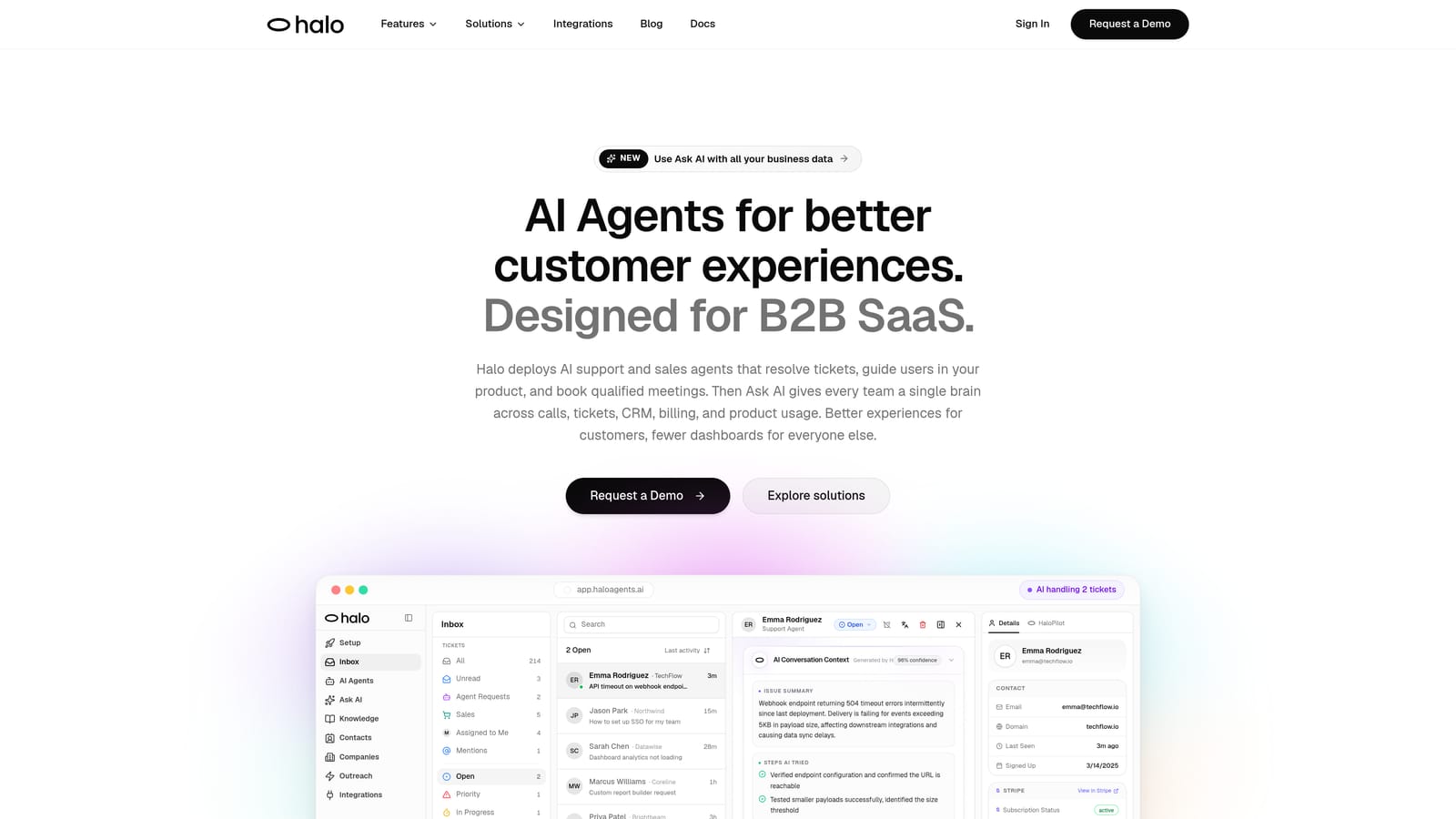
Halo AI is an AI-first customer support platform purpose-built for B2B SaaS teams, deploying intelligent agents that resolve tickets autonomously while surfacing business intelligence signals across every interaction.
Where This Tool Shines
What separates Halo from most platforms on this list is its architecture. It wasn't built by layering AI onto a legacy helpdesk. It was designed from the ground up for autonomous resolution, which means the AI isn't a bolt-on feature competing with existing workflows. It's the core product.
The page-aware chat widget is particularly compelling for product-led SaaS teams. The AI can see what page or UI context the user is in and provide visual guidance accordingly, rather than serving generic help center links. When patterns across tickets suggest a product bug, Halo automatically creates a ticket in Linear, closing the loop between support and engineering without manual triage. That's the kind of cross-functional intelligence most helpdesks simply don't offer.
Key Features
Autonomous AI Agents: Resolve tickets end-to-end with continuous learning from every interaction, improving resolution accuracy over time.
Page-Aware Chat Widget: Understands the user's current context within your product and delivers visual UI guidance relevant to where they are.
Auto Bug Ticket Creation: Detects recurring issue patterns and automatically creates bug reports in Linear, connecting support signals directly to your engineering queue.
Smart Inbox with Business Intelligence: Surfaces customer health signals, revenue intelligence, and anomaly detection beyond standard support metrics.
Live Agent Handoff: Escalates complex issues to human agents with full conversation context preserved, so nothing gets repeated.
Integration Stack: Connects with Linear, Slack, HubSpot, Intercom, Stripe, Zoom, PandaDoc, and Fathom for full business stack coverage.
Best For
B2B SaaS companies that want more from their support data than deflection rates. Particularly strong for product teams that need support signals to feed directly into engineering workflows, and for growth-stage companies scaling support volume without scaling headcount proportionally.
Pricing
Pricing is not publicly listed. A demo is required to get a quote, which is typical for AI-native B2B platforms with custom deployment. Contact the team directly at haloagents.ai.
2. Intercom
Best for: SaaS teams wanting a polished messenger-first support experience with mature AI resolution.
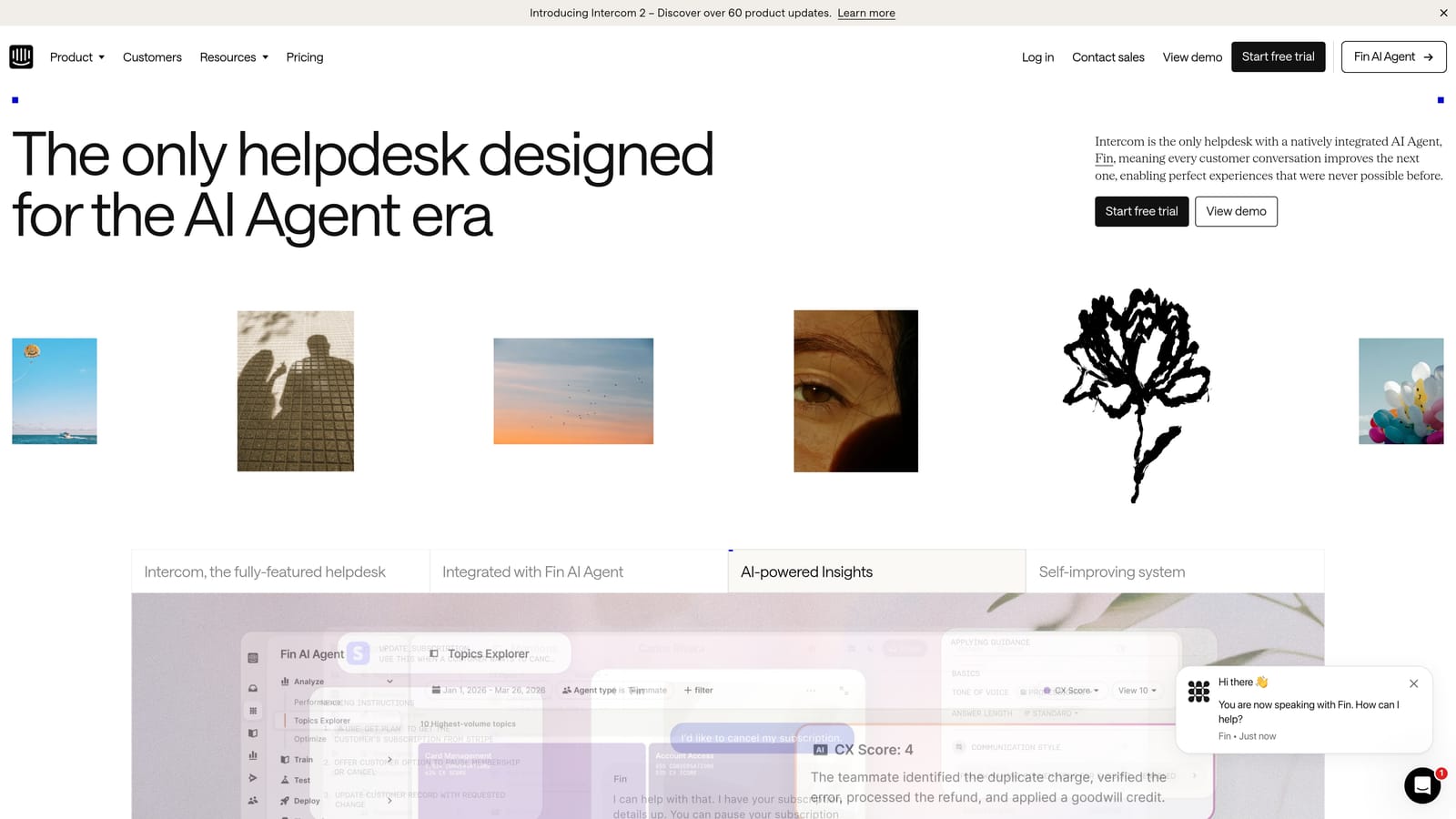
Intercom is a conversational support platform with a mature ecosystem and a well-regarded AI agent, built around a messenger-first experience that many SaaS users already recognize.
Where This Tool Shines
Intercom's Fin AI Agent is one of the more capable AI resolution products in the market, trained on your help center content and able to handle a meaningful share of incoming tickets without human involvement. The platform's strength is its polish: the user-facing messenger experience is clean, the onboarding flows are well-designed, and the proactive messaging capabilities let teams reach users before they even submit a ticket.
The app marketplace is broad, and for teams already embedded in the Intercom ecosystem, it's a comfortable platform to build on. The per-resolution pricing for Fin AI Agent is worth modeling carefully at scale, as costs can compound quickly for high-volume teams.
Key Features
Fin AI Agent: Trained on help center content to autonomously resolve incoming support queries without human intervention.
Proactive Messaging: Trigger in-app messages and support flows based on user behavior before issues escalate to tickets.
App Marketplace: Hundreds of integrations across CRM, analytics, and productivity tools.
Omnichannel Inbox: Manages email, chat, and social conversations in a unified workspace.
Best For
SaaS teams with an established help center who want AI resolution layered onto a proven messenger platform. Also strong for teams prioritizing proactive support and in-app engagement flows.
Pricing
Tiered platform plans with Fin AI Agent priced separately on a per-resolution basis. Costs scale with resolution volume, so high-volume teams should model this carefully before committing.
3. Zendesk
Best for: Enterprise teams needing robust omnichannel ticketing with established reporting infrastructure.
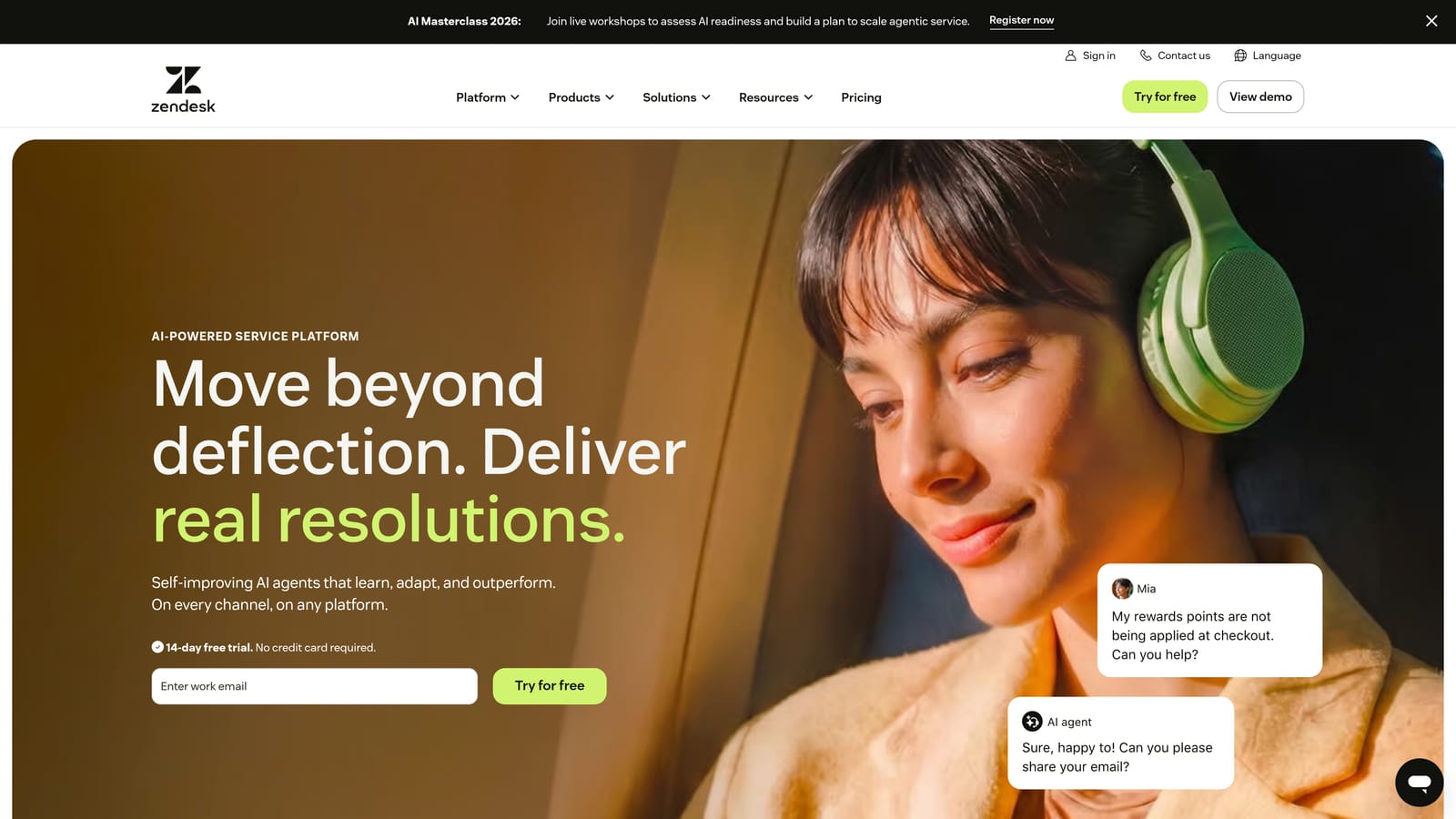
Zendesk is the market-leading enterprise helpdesk platform, offering comprehensive omnichannel support with AI capabilities delivered through its Zendesk AI add-on layer.
Where This Tool Shines
Zendesk's core strength is breadth. It handles email, chat, voice, and social in a single platform, with a reporting and analytics suite that gives enterprise teams detailed visibility into support performance. For organizations with complex workflows, multiple support tiers, or large agent teams, the configuration depth is genuinely impressive.
The honest caveat: Zendesk AI is an add-on to a legacy ticketing system, not an AI-native platform. For teams whose primary goal is autonomous resolution and business intelligence, that architecture matters. But for enterprises where stability, compliance, and an established integration marketplace are top priorities, Zendesk remains a safe and capable choice.
Key Features
Omnichannel Support: Unified handling of email, chat, voice, and social media conversations in one platform.
Zendesk AI: Covers ticket triage, agent assist suggestions, and self-service deflection as an add-on to core plans.
Advanced Reporting: Detailed analytics suite for tracking resolution rates, agent performance, and customer satisfaction.
Integration Marketplace: Extensive library of third-party app connections across the business stack.
Best For
Enterprise teams with large agent workforces, complex multi-tier support structures, and existing investments in the Zendesk ecosystem. Less suited for teams prioritizing AI-native autonomous resolution as their primary objective.
Pricing
Suite plans available at multiple published tiers. AI features are available as a separate add-on, which adds to the total cost of ownership for teams wanting full AI capability.
4. Freshdesk
Best for: Growing teams wanting accessible automation at competitive price points without enterprise complexity.
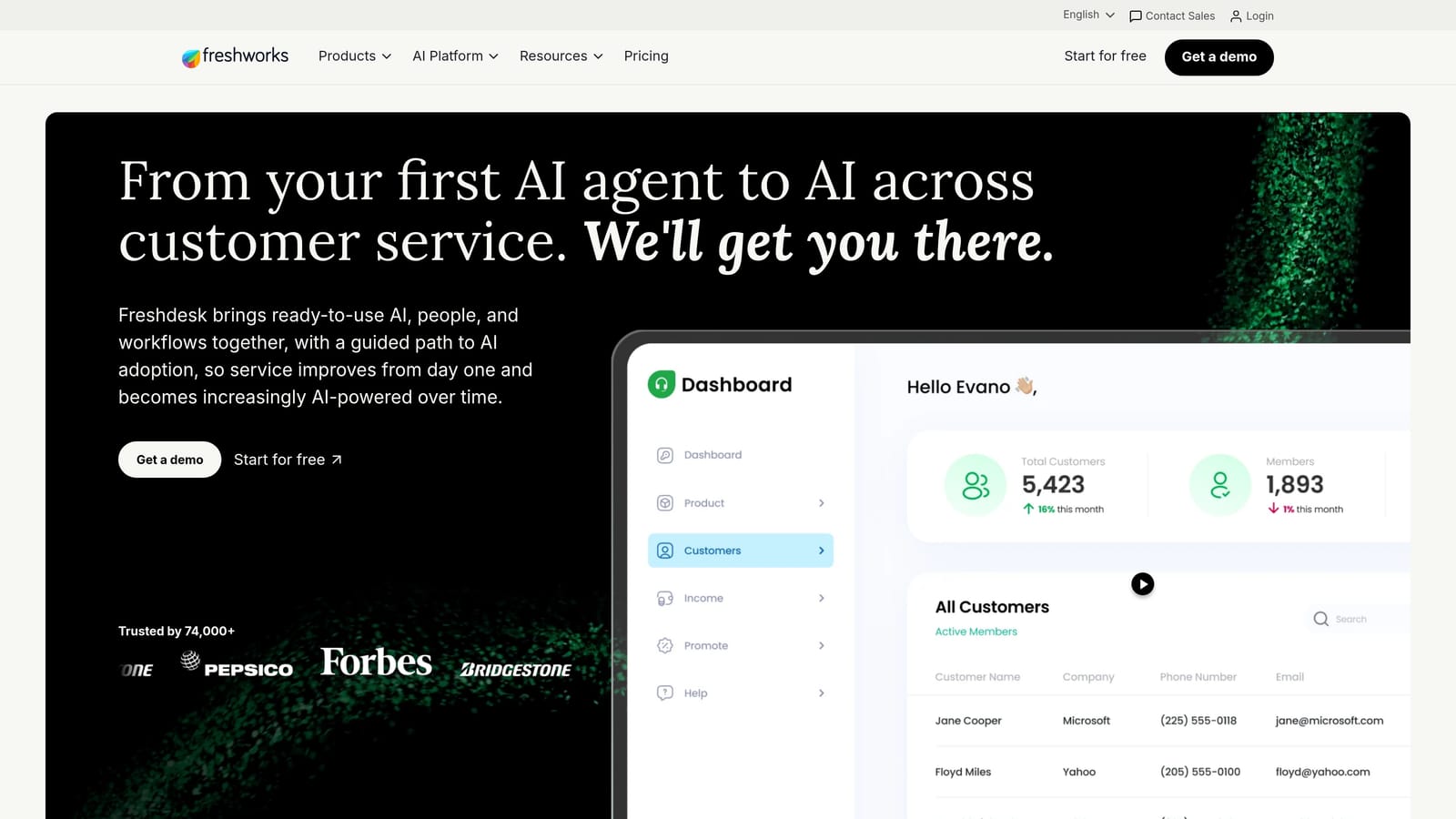
Freshdesk is a customer support platform with Freddy AI capabilities, offering practical automation tools for teams that need solid functionality without the overhead of enterprise-tier platforms.
Where This Tool Shines
Freshdesk hits a sweet spot for mid-market teams. Freddy AI handles the fundamentals well: ticket categorization, routing, suggested replies, and agent assist. The automation workflow builder is genuinely useful for building multi-step ticket handling without needing developer resources, and the free tier makes it accessible for teams still figuring out what they need.
The unified ecosystem with Freshchat and Freshsales is a meaningful advantage for teams that want CRM and support under one vendor umbrella without the complexity of Salesforce or HubSpot. That said, teams looking for deep AI autonomy or business intelligence output beyond support metrics will find Freddy AI's capabilities more limited compared to purpose-built AI platforms.
Key Features
Freddy AI: Handles ticket categorization, routing, suggested replies, and agent assist across the support workflow.
Automation Workflow Builder: Visual, no-code builder for creating multi-step ticket handling rules and escalation paths.
Freshworks Ecosystem: Native integration with Freshchat for messaging and Freshsales for CRM context.
Free Tier: Available for small teams testing automation before committing to paid plans.
Best For
Growing B2B teams that need reliable automation at a reasonable price, particularly those already using or considering other Freshworks products. Good entry point for teams new to support automation.
Pricing
Free tier available with core features. Paid plans scale by agent count and feature access, remaining competitive against enterprise alternatives at most tiers.
5. HubSpot Service Hub
Best for: Teams already using HubSpot CRM who want support natively connected to contact and deal records.
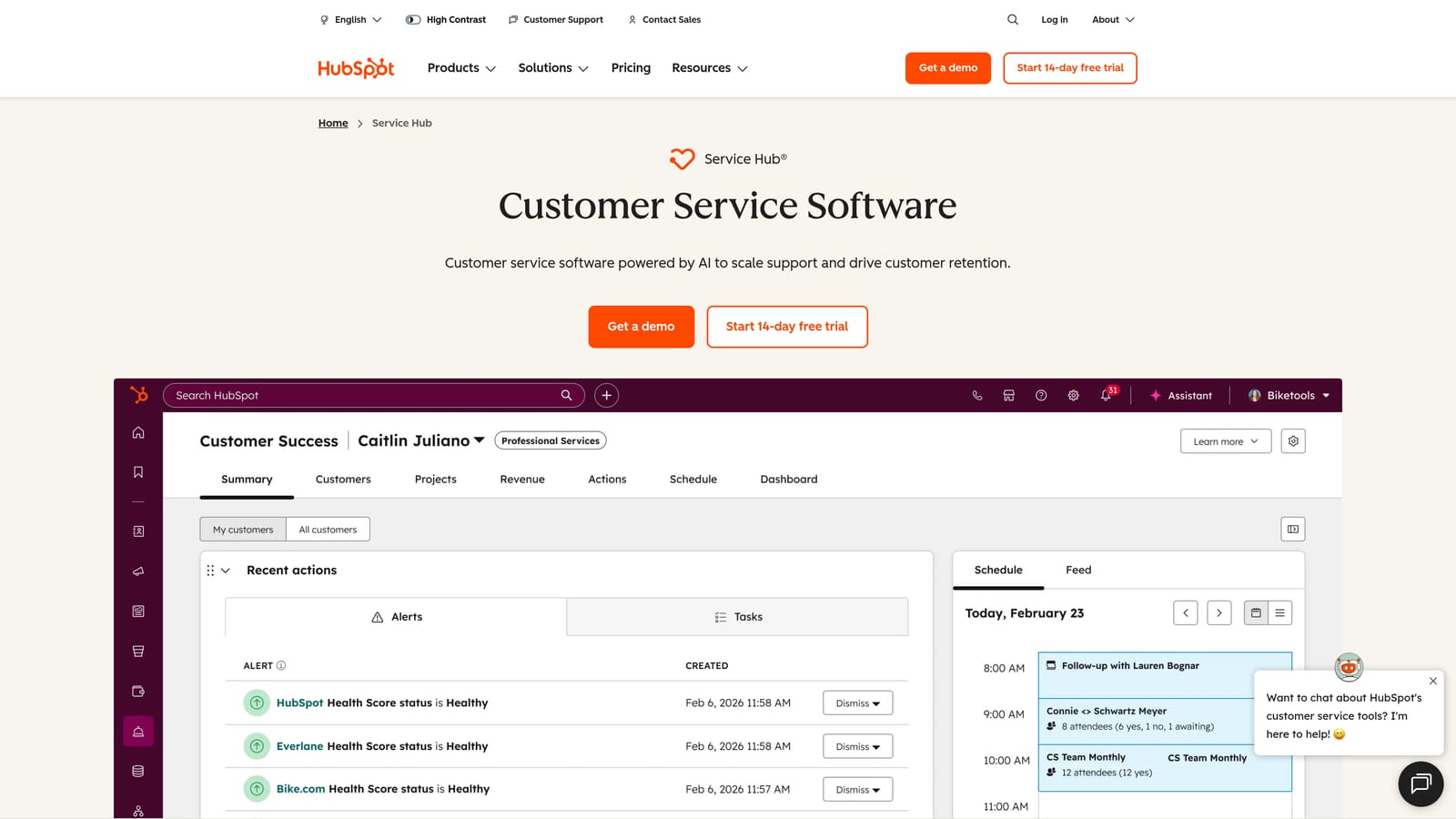
HubSpot Service Hub is customer service software natively wired into HubSpot CRM, giving support teams full contact history and deal context for every conversation without any integration work.
Where This Tool Shines
The native CRM connection is the defining advantage here. When a customer submits a ticket, your support agent immediately sees their deal stage, recent activity, contact history, and revenue context. That's genuinely valuable for B2B teams where the support experience directly influences renewal and expansion conversations.
The AI features, including ticket summarization, suggested content, and conversation intelligence, are solid rather than groundbreaking. Service Hub is strongest when it's part of a broader HubSpot stack. As a standalone support platform, it's less competitive against dedicated helpdesks. But for HubSpot-first organizations, it eliminates the friction of connecting support data to CRM data entirely.
Key Features
Native CRM Integration: Every support interaction automatically tied to contact and deal records, no sync required.
AI Ticket Summarization: Automatically summarizes long ticket threads so agents can get up to speed quickly.
Knowledge Base and Customer Portal: Self-service tools that reduce inbound volume for common questions.
Conversation Intelligence: Reporting on support interactions with insights tied to customer health and satisfaction.
Best For
B2B teams already running on HubSpot CRM who want support, sales, and marketing data in one place. Less compelling as a standalone purchase if you're not already in the HubSpot ecosystem.
Pricing
Free tools available for basic ticketing and live chat. Professional and Enterprise tiers unlock full automation, advanced reporting, and AI features. Pricing scales by contact tier and feature access.
6. Tidio
Best for: Smaller B2B teams testing AI chat automation with minimal setup time and budget.
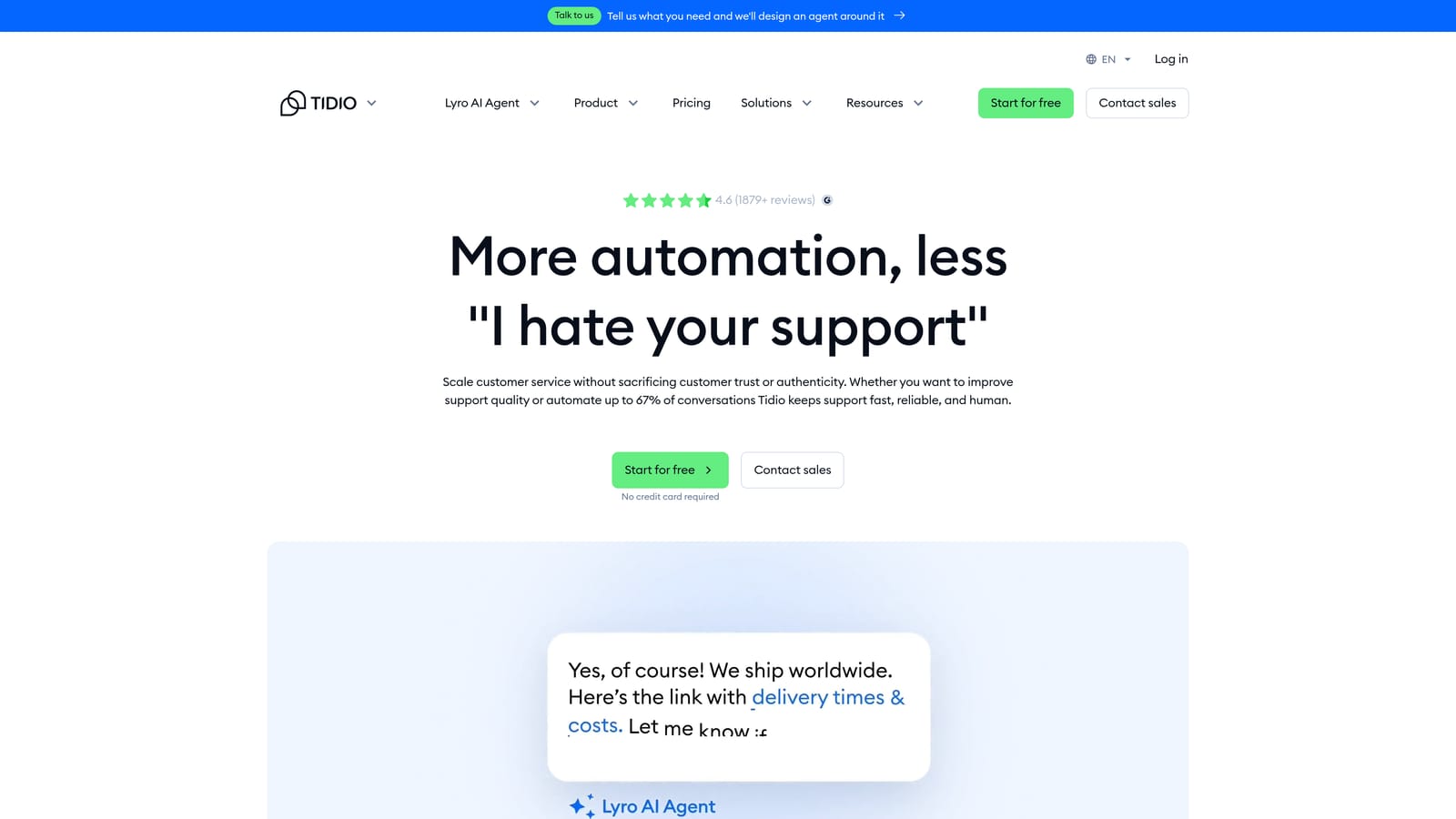
Tidio is a lightweight AI chat automation platform featuring Lyro AI, designed for quick deployment with minimal configuration and a generous free tier for teams getting started.
Where This Tool Shines
Tidio's primary advantage is speed to value. Lyro AI can be trained on your FAQ content and deployed in a matter of hours, not weeks. For smaller teams that need basic conversational automation without the overhead of an enterprise implementation, that's a real differentiator. The no-code setup means non-technical teams can get something running quickly.
The honest scope check: Tidio is well-suited for straightforward FAQ resolution and basic customer conversations. It's less suited for complex B2B support scenarios involving technical depth, multi-step troubleshooting, or deep integration with engineering and product workflows. Think of it as a strong starting point rather than a long-term enterprise solution.
Key Features
Lyro AI: Conversational AI trained on FAQ content to handle common support questions without human involvement.
No-Code Deployment: Quick setup with no developer resources required, making it accessible for small teams.
Unified Inbox: Live chat, email, and Facebook Messenger managed in one workspace.
Generous Free Tier: Meaningful functionality available before any paid commitment, ideal for early-stage testing.
Best For
Early-stage or smaller B2B teams exploring chat automation for the first time. Also useful for teams that need a lightweight front-end automation layer without committing to a full platform overhaul.
Pricing
Free tier available with core live chat and basic automation. Lyro AI is priced per conversation resolved, making costs predictable and tied directly to usage volume.
7. Salesforce Service Cloud
Best for: Large enterprises running on Salesforce CRM that need customer service deeply integrated across the full customer lifecycle.
Salesforce Service Cloud is enterprise-scale customer service automation built on the Salesforce platform, featuring Einstein AI for case management, routing, and next-best-action intelligence.
Where This Tool Shines
If your organization is already running on Salesforce, Service Cloud is the natural extension. Einstein AI brings case classification, knowledge recommendations, and next-best-action guidance into a platform your teams already know. The omnichannel coverage is comprehensive, extending even to field service capabilities that few other platforms on this list can match.
The implementation reality is worth naming directly. Service Cloud is powerful and complex. Deployment typically requires significant configuration resources, and the total cost of ownership at enterprise scale is substantial. For organizations not already on Salesforce, the switching cost and implementation burden make it a difficult choice to justify against more agile alternatives.
Key Features
Einstein AI: Handles case classification, knowledge article recommendations, and next-best-action suggestions for agents.
Full Omnichannel Coverage: Supports email, chat, voice, social, and field service within a single platform.
Salesforce CRM Integration: Deep connection to the full Salesforce ecosystem across sales, service, and marketing clouds.
Self-Service Communities: Customer portal and community features that reduce inbound volume for common issues.
Best For
Large enterprises already invested in the Salesforce ecosystem, particularly those with complex support structures spanning multiple channels including field service. High implementation overhead makes it less suitable for teams without dedicated Salesforce admin resources.
Pricing
Enterprise-level per-seat pricing across multiple editions. Total cost of ownership is significant and should include implementation, customization, and ongoing admin resources in any evaluation.
8. Zoho Desk
Best for: Teams in the Zoho ecosystem wanting strong AI-assisted support at competitive pricing.
Zoho Desk is a context-aware helpdesk platform featuring Zia AI, offering meaningful automation value within the broader Zoho ecosystem at pricing that undercuts most enterprise alternatives.
Where This Tool Shines
Zia AI brings some genuinely useful capabilities that go beyond basic ticket routing. Sentiment analysis on incoming tickets lets teams prioritize escalating conversations before they become churn risks. Anomaly detection flags unusual patterns in ticket volume or response times. These are the kinds of signals that more expensive platforms charge a premium for, and Zoho Desk delivers them at a more accessible price point.
The integration with Zoho CRM and Zoho Analytics creates a coherent data picture across the customer lifecycle for teams already using those products. The UI is functional if not the most polished in this category, and teams coming from Zendesk or Intercom may notice the difference. But for organizations prioritizing value and already running on Zoho, it's a strong choice.
Key Features
Zia AI: Covers sentiment analysis, ticket tagging, anomaly detection, and agent response suggestions.
Multi-Channel Support: Handles email, chat, phone, and social media in a unified agent workspace.
Zoho Ecosystem Integration: Deep connections to Zoho CRM, Zoho Analytics, and SalesIQ for full customer context.
Agent Productivity Tools: Response suggestions, ticket templates, and workflow automation to reduce manual handling time.
Best For
Teams already using Zoho products who want support automation without the cost of enterprise-tier alternatives. Also a strong option for cost-conscious teams that need AI-assisted support features beyond basic routing.
Pricing
Free tier available for small teams. Paid plans are competitively priced against enterprise alternatives, making it one of the better value propositions in this category for mid-market teams.
9. Kustomer
Best for: High-volume B2B teams wanting a CRM-first support view with conversation-based pricing.
Kustomer is a CRM-first support platform that displays every customer interaction on a unified timeline, combining AI-powered workflows with a pricing model built around conversations rather than seats.
Where This Tool Shines
Kustomer's unified timeline is its defining feature. Every email, chat, call, and interaction a customer has ever had with your team appears in a single chronological view. For support agents handling complex, multi-touch B2B relationships, that context is genuinely valuable. There's no hunting across tabs or systems to understand a customer's history.
The conversation-based pricing model is worth attention for high-volume teams. Per-seat pricing can become punishing as support teams grow, and Kustomer's model aligns cost with actual usage rather than headcount. Backed by Meta with active investment in its AI roadmap, the platform's long-term development trajectory looks solid, though complex implementation remains a consideration for smaller teams evaluating it.
Key Features
Unified Customer Timeline: Every customer interaction across all channels displayed in a single chronological view.
AI Workflows: Automated routing, classification, and suggested responses to reduce manual agent effort.
Conversation-Based Pricing: Cost tied to conversation volume rather than agent seats, advantageous for high-volume operations.
Meta-Backed AI Investment: Active development of AI capabilities with institutional backing for long-term roadmap.
Best For
High-volume B2B support teams that manage complex, multi-touch customer relationships and want full interaction history in one view. Conversation-based pricing makes it particularly worth evaluating for teams with large agent-to-volume ratios.
Pricing
Conversation-based enterprise pricing. Contact Kustomer directly for a quote, as pricing varies based on volume and feature requirements.
Which Platform Is Right for Your Team
The nine platforms above cover a wide range of use cases, architectures, and price points. Choosing the right one comes down to understanding what you actually need from your automation investment, not just which platform has the longest feature list.
Here's a quick-reference guide by use case:
AI-first autonomous resolution: Halo AI is the strongest choice for B2B SaaS teams that want AI at the core of their support operation, not bolted onto a legacy helpdesk. The page-aware context, auto bug ticket creation, and business intelligence output go well beyond what most platforms deliver.
Enterprise scale with established infrastructure: Zendesk and Salesforce Service Cloud are the proven options for large organizations with complex multi-channel support needs and existing investments in their respective ecosystems.
CRM-connected support: HubSpot Service Hub wins for teams already on HubSpot CRM. Kustomer is the better fit for teams prioritizing a unified customer timeline across high interaction volumes.
Budget-conscious teams: Freshdesk and Zoho Desk both offer meaningful AI-assisted automation at accessible price points. Tidio is the lightest-weight entry point for teams testing the waters before committing to a full platform.
One broader pattern worth noting: the platforms that deliver the most value in 2026 aren't just resolving tickets. They're surfacing customer health signals, connecting support data to engineering workflows, and helping teams understand what's actually happening across their customer base. That shift from reactive ticket handling to proactive business intelligence is where the real competitive advantage lies.
Your support team shouldn't scale linearly with your customer base. Let AI agents handle routine tickets, guide users through your product, and surface business intelligence while your team focuses on complex issues that need a human touch. See Halo in action and discover how continuous learning transforms every interaction into smarter, faster support.