9 Best Customer Service Automation Software Solutions in 2026
Support teams struggling with repetitive tickets and 24/7 customer expectations need customer service automation software to handle routine inquiries while routing complex issues to human agents. This comprehensive guide evaluates nine leading platforms in 2026—from AI-native solutions offering autonomous ticket resolution to established helpdesks with intelligent automation features—based on implementation ease, AI capabilities, integrations, and value for B2B teams.
 Matt PattoliFounder12 min read
Support teams are drowning in repetitive tickets while customers expect instant, accurate responses around the clock. Customer service automation software bridges this gap by handling routine inquiries, routing complex issues to the right agents, and maintaining consistent quality at scale.
This guide examines nine platforms that represent different approaches to automation: from AI-native solutions built for autonomous resolution to established helpdesks adding intelligent features. We evaluated each tool based on ease of implementation, AI capabilities, integration depth, and value for growing B2B teams.
Here are the top customer service automation software solutions transforming how companies handle support in 2026.
1. Halo AI
Best for: B2B SaaS teams seeking autonomous AI agents that resolve tickets without human intervention
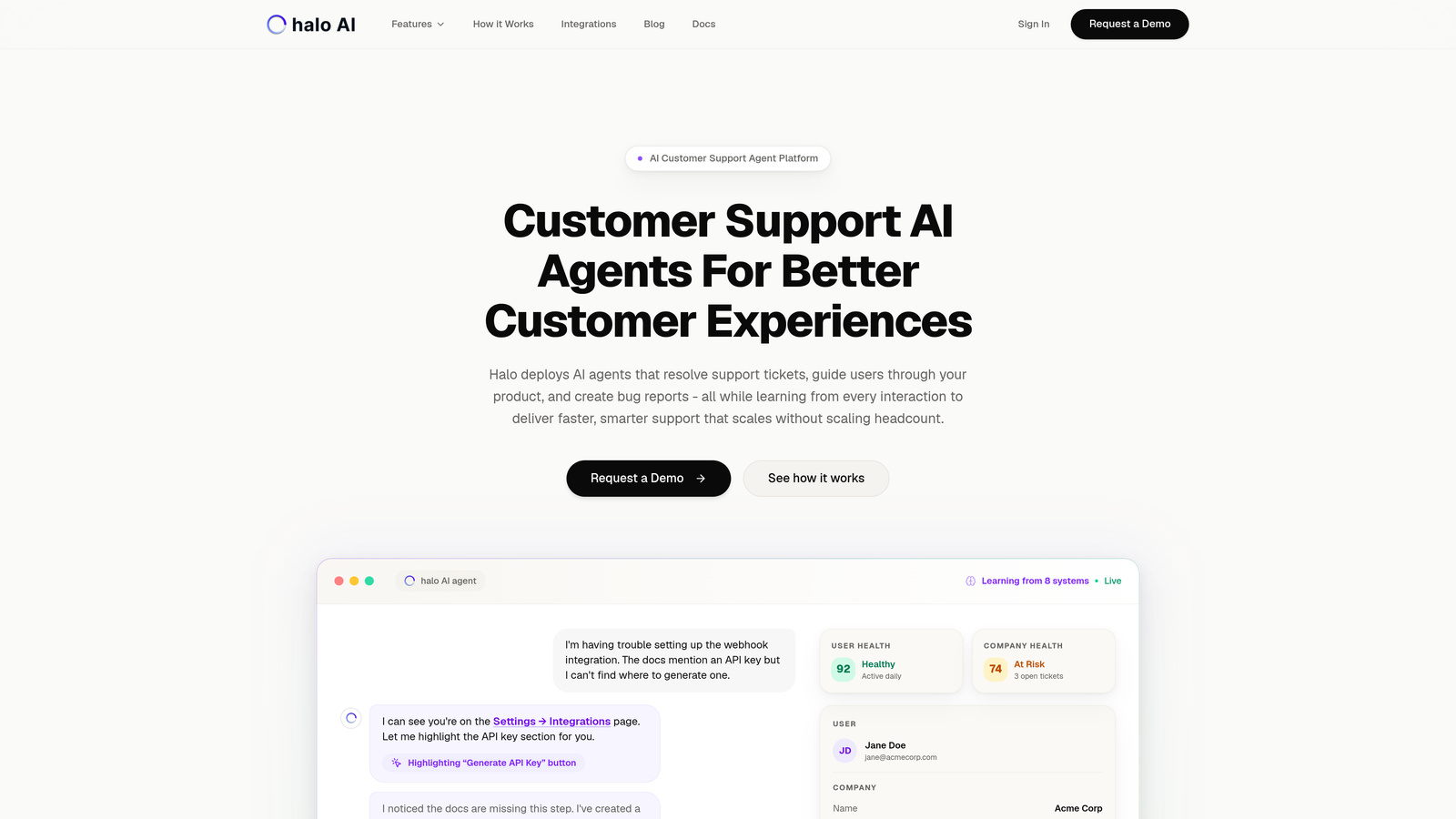
Halo AI represents a fundamentally different approach to customer support automation: AI-first architecture rather than AI bolted onto traditional helpdesk workflows.
Where This Tool Shines
Halo deploys autonomous agents that don't just suggest responses but actually resolve tickets independently. The platform's page-aware context means it sees exactly what users see in your product, enabling precise guidance that references specific UI elements and workflows.
What sets Halo apart is its continuous learning capability. Every interaction trains the system, making it progressively smarter at handling nuanced situations. The platform also surfaces business intelligence beyond support metrics, providing customer health signals and revenue insights that help you understand not just what customers are asking, but what those questions reveal about your business.
Key Features
Autonomous AI Agents: Resolve tickets end-to-end without human intervention, handling everything from password resets to technical troubleshooting.
Page-Aware Chat Widget: Provides contextual guidance by understanding exactly where users are in your product and what they're trying to accomplish.
Smart Inbox with Business Intelligence: Goes beyond support metrics to surface customer health signals, revenue intelligence, and anomaly detection.
Auto Bug Ticket Creation: Automatically generates detailed bug reports in Linear when issues are detected, complete with context and reproduction steps.
Live Agent Handoff: Seamlessly escalates complex issues to human agents with full conversation history and context preserved.
Best For
B2B SaaS companies and product teams that want true automation rather than agent assistance. Particularly valuable for teams using helpdesk systems like Zendesk, Freshdesk, or Intercom who are ready to move beyond traditional ticket workflows. Ideal for companies that value continuous improvement and want their support system to get smarter over time.
Pricing
Contact for custom pricing based on ticket volume and feature requirements.
2. Zendesk AI
Best for: Enterprise teams with existing Zendesk infrastructure looking to add AI capabilities
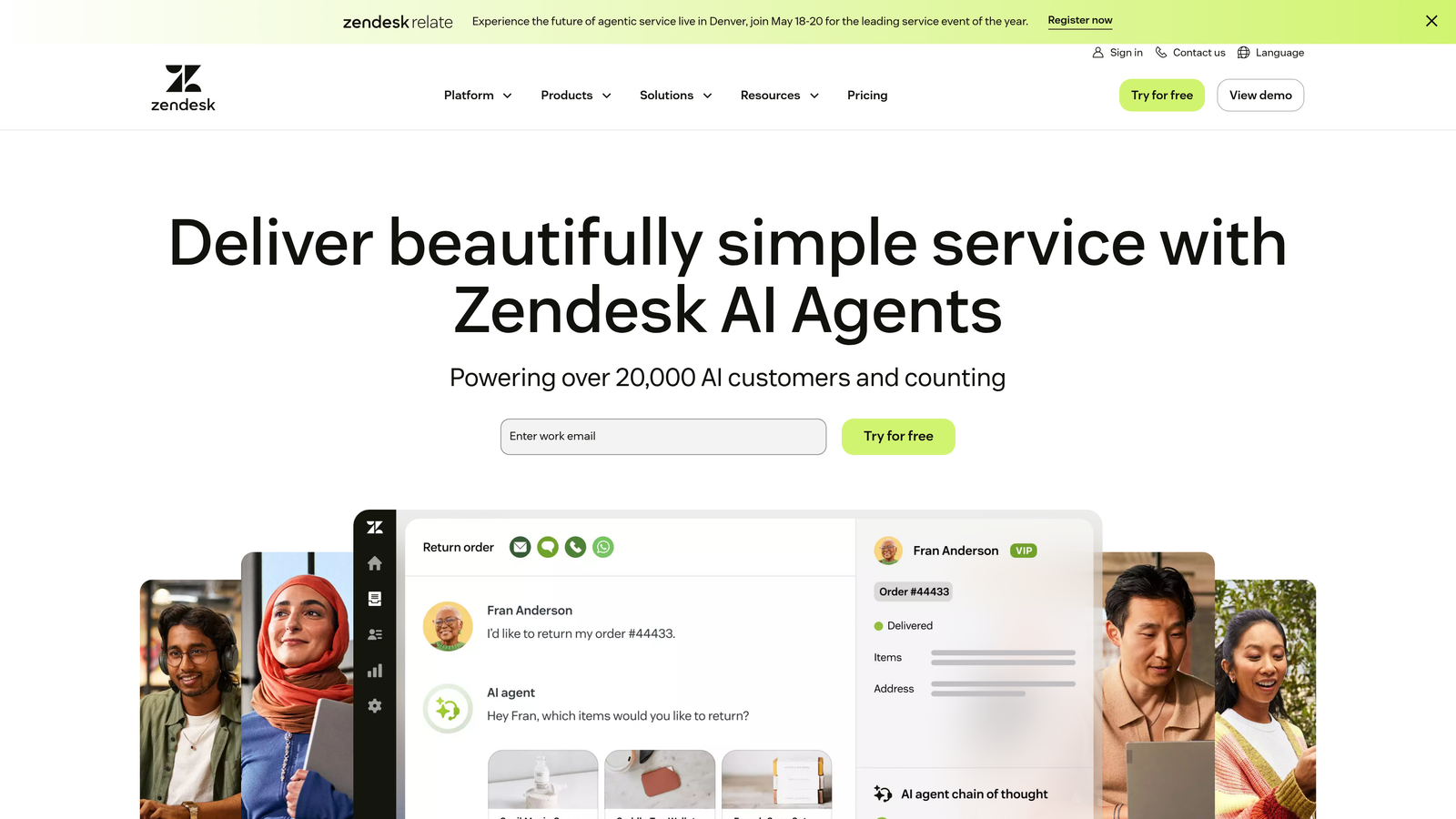
Zendesk AI brings artificial intelligence to the world's most widely deployed helpdesk platform, adding automation layers to established support workflows.
Where This Tool Shines
If you're already invested in the Zendesk ecosystem, their AI capabilities integrate seamlessly with your existing setup. The platform excels at handling enterprise-scale operations with sophisticated routing rules, extensive customization options, and robust reporting.
Zendesk's strength lies in its maturity and comprehensive feature set. You get AI-powered ticket routing that learns from historical data, agent assist features that suggest responses based on similar past tickets, and workflow automation that handles repetitive tasks across departments.
Key Features
AI-Powered Ticket Routing: Automatically categorizes and routes tickets to the most appropriate agent or team based on content analysis.
Agent Assist: Suggests relevant knowledge base articles and draft responses to help agents resolve tickets faster.
Automated Workflows: Creates complex automation rules using macros and triggers for common support scenarios.
Knowledge Base Integration: Connects AI responses directly to your help center content for consistent, documented answers.
Comprehensive Analytics: Provides detailed reporting on ticket volume, resolution times, agent performance, and customer satisfaction.
Best For
Large enterprises with complex support operations and existing Zendesk deployments. Teams that need extensive customization, multi-brand support, and advanced reporting capabilities. Organizations with dedicated support operations teams who can configure and maintain sophisticated automation rules.
Pricing
Suite plans start at $55 per agent per month. AI capabilities are priced as separate add-ons, with costs varying based on usage volume and specific features required.
3. Intercom Fin
Best for: Product-led growth companies prioritizing conversational experiences and proactive messaging
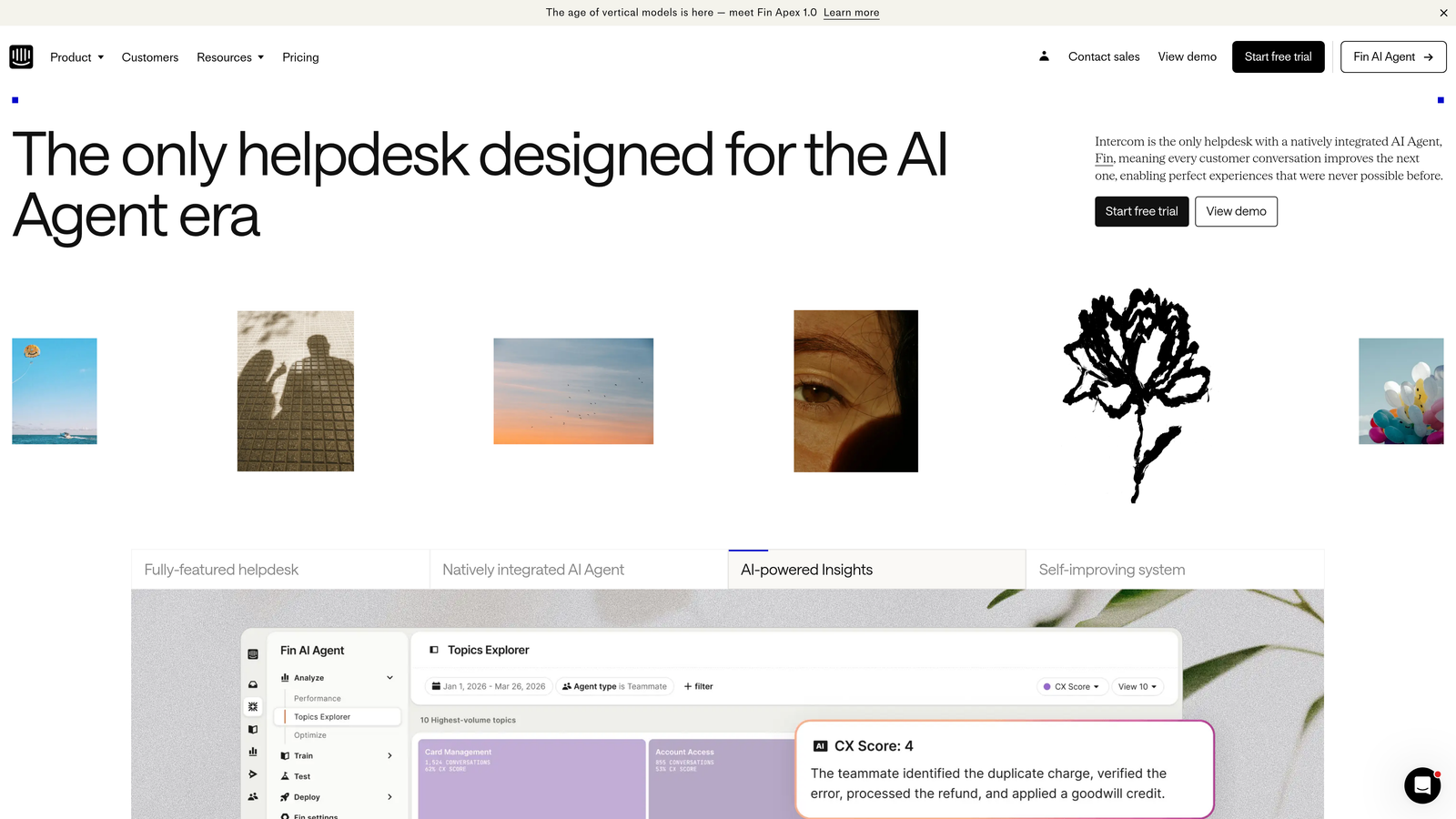
Intercom Fin combines conversational AI with Intercom's messenger-first platform, focusing on in-product engagement and proactive support.
Where This Tool Shines
Intercom built its reputation on beautiful, conversational interfaces that feel natural to users. Fin extends this philosophy with an AI agent trained on your help center content, capable of answering questions in a friendly, human-like manner.
The platform's real strength is its unified approach to customer communication. You can use the same messenger for support conversations, product tours, targeted messaging campaigns, and AI-powered self-service. This makes it particularly valuable for product-led companies where support and user engagement overlap.
Key Features
AI Chatbot: Fin learns from your help center documentation to answer customer questions automatically with natural language responses.
Proactive Messaging: Triggers targeted messages based on user behavior, helping prevent issues before they become support tickets.
Custom Bot Workflows: Builds conversation flows for common scenarios like onboarding, feature announcements, or qualification.
Unified Inbox: Manages conversations across chat, email, and social channels in a single interface with full customer context.
Customer Data Platform: Integrates deeply with your product data to personalize support based on user attributes and behavior.
Best For
SaaS companies with product-led growth strategies that want to blend support with user engagement. Teams that value design and user experience as much as functionality. Organizations where support, product, and marketing teams collaborate closely on customer communication.
Pricing
Starts at $39 per seat per month for the core platform. Fin AI is priced separately based on the number of resolutions, with costs scaling according to usage volume.
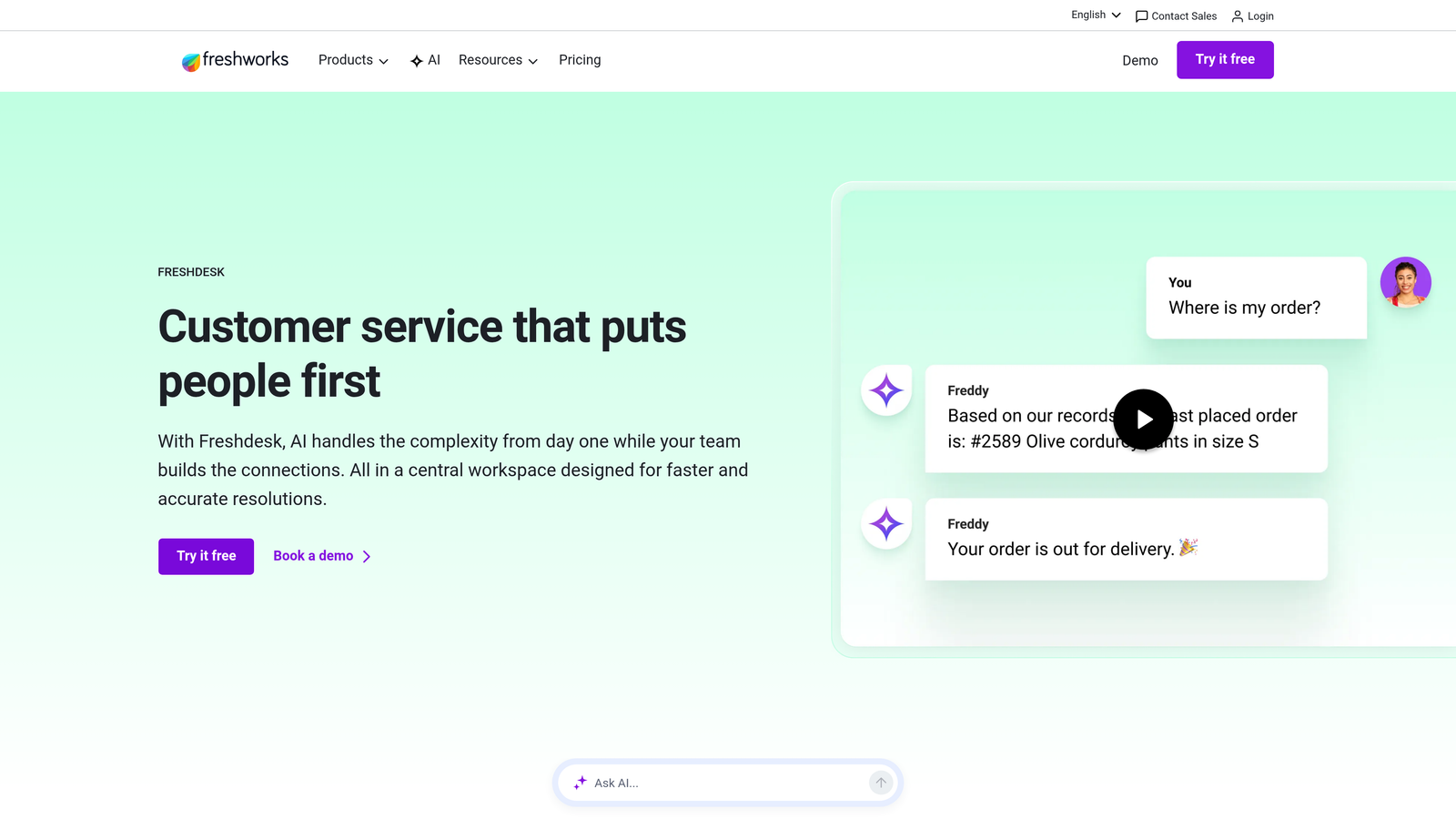
4. Freshdesk Freddy AI
Best for: Mid-market teams seeking affordable AI features with straightforward implementation
Freshdesk Freddy AI integrates artificial intelligence into Freshworks' helpdesk platform, offering automation capabilities at accessible price points for growing teams.
Where This Tool Shines
Freshdesk hits a sweet spot for mid-market companies that need more than basic helpdesk functionality but aren't ready for enterprise complexity. Freddy AI adds intelligent automation without requiring extensive configuration or technical expertise.
The platform's strength is its balance of capability and simplicity. You get AI-powered ticket field prediction that automatically categorizes and tags incoming requests, canned response suggestions that speed up agent replies, and scenario automation that handles common workflows without manual intervention.
Key Features
Freddy AI Assistant: Suggests responses to agents based on ticket content and provides automated replies for common questions.
Ticket Field Prediction: Automatically categorizes tickets, predicts priority levels, and assigns appropriate tags based on content analysis.
Canned Responses: Creates reusable response templates that agents can deploy with a single click for frequent inquiries.
Multi-Channel Support: Manages conversations from email, chat, phone, social media, and messaging apps in one unified interface.
SLA Management: Tracks service level agreements automatically and escalates tickets approaching deadline violations.
Best For
Growing companies with 10-100 support agents who need AI capabilities without enterprise pricing. Teams that want quick implementation and intuitive interfaces rather than extensive customization. Organizations that value predictable costs with a free tier for testing before committing.
Pricing
Free tier available for basic features. Pro plan at $49 per agent per month includes Freddy AI capabilities, automation features, and multi-channel support.
5. Ada
Best for: Global enterprises needing multilingual automation with no-code bot building
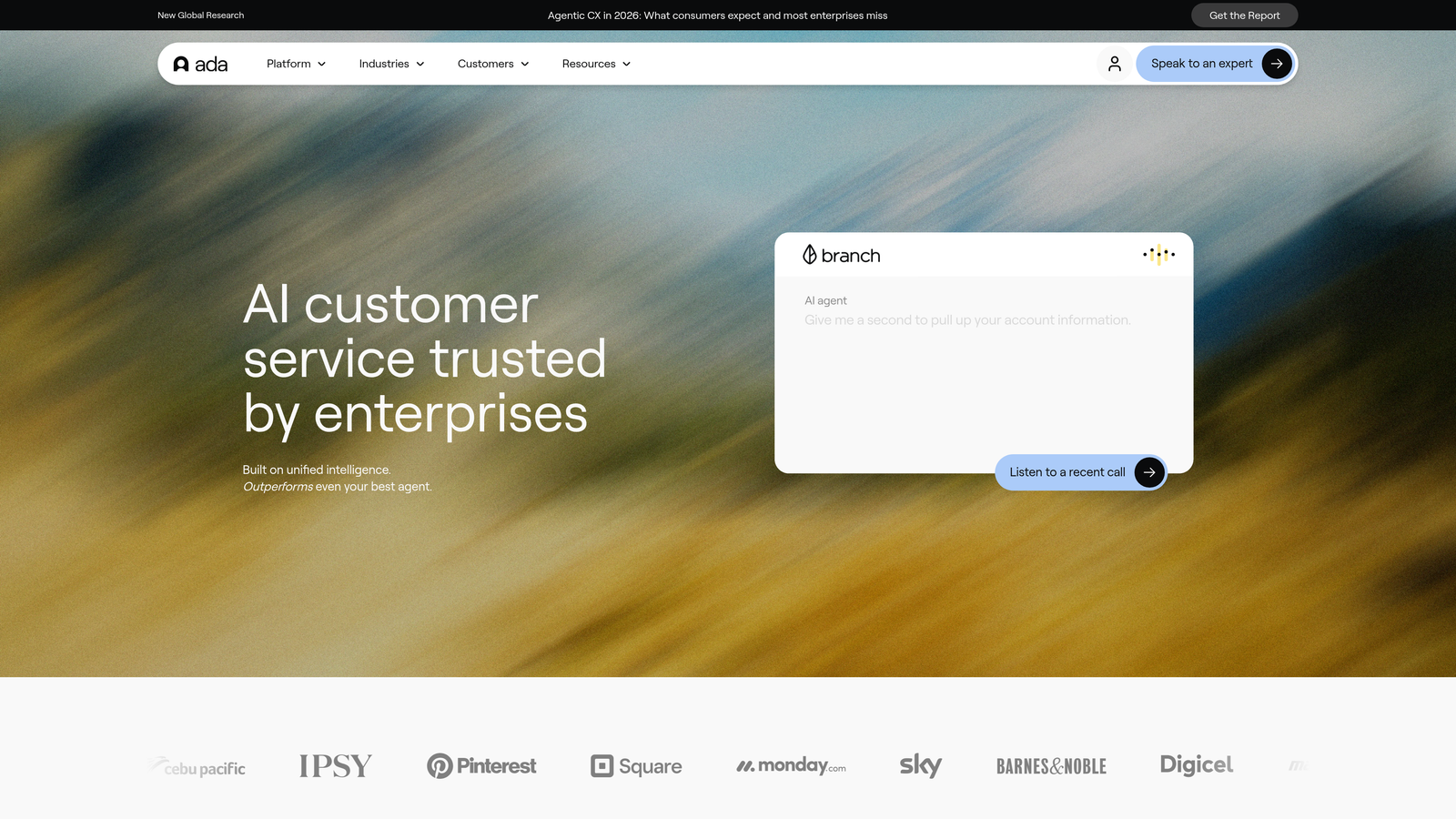
Ada specializes in conversational AI at enterprise scale, with particular strength in multilingual support and complex bot workflows that non-technical teams can build.
Where This Tool Shines
Ada's no-code bot builder lets support teams create sophisticated automation without developer resources. This democratization of bot building means the people who understand customer problems best can directly build solutions, dramatically reducing time from idea to deployment.
The platform's 50-plus language support makes it particularly valuable for global companies. Ada doesn't just translate, it understands intent across languages, maintaining conversation quality whether users engage in English, Spanish, Japanese, or dozens of other languages.
Key Features
No-Code Bot Builder: Visual interface for creating complex conversation flows without programming knowledge or technical dependencies.
Multilingual Support: Handles customer interactions in over 50 languages with natural language understanding tailored to each.
Contextual Handoff: Transfers conversations to live agents with complete history and context when human intervention is needed.
Analytics Dashboard: Tracks bot performance, identifies conversation drop-off points, and measures resolution rates across channels.
Enterprise Security: Meets compliance requirements for regulated industries with SOC 2, GDPR, and HIPAA certifications.
Best For
Large enterprises with global customer bases requiring multilingual support. Companies in regulated industries that need enterprise-grade security and compliance. Organizations that want to empower support teams to build automation without relying on engineering resources.
Pricing
Custom enterprise pricing based on conversation volume, language requirements, and feature needs. Contact Ada for specific quotes.
6. Kustomer
Best for: Teams wanting CRM-powered support with unified customer timeline views
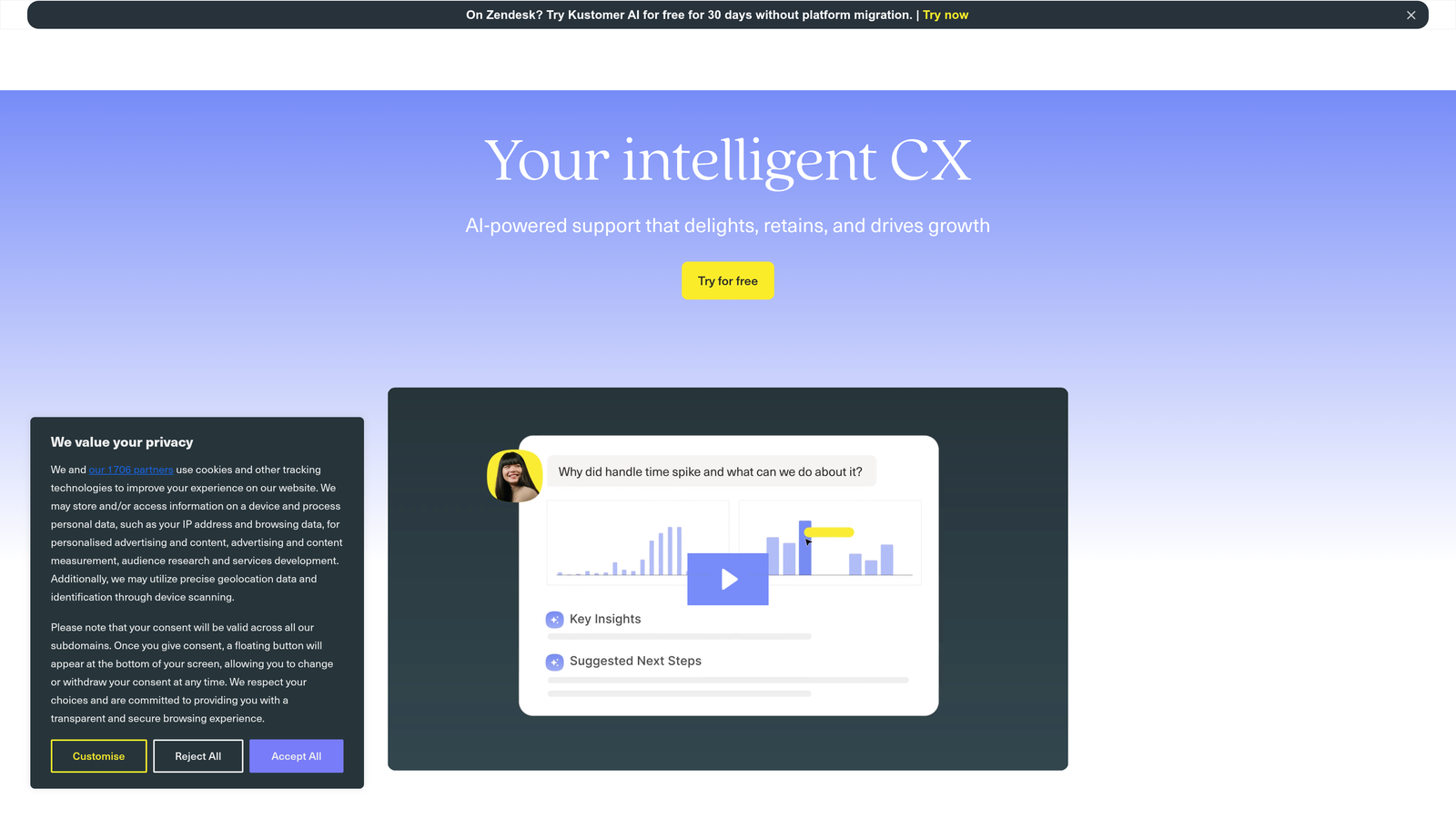
Kustomer approaches customer service as a CRM problem, unifying support interactions with complete customer data for context-rich conversations.
Where This Tool Shines
Kustomer's timeline view shows agents everything about a customer in one interface: past purchases, previous support conversations, account details, and interaction history across all channels. This eliminates the context-switching that plagues traditional helpdesks where agents juggle multiple systems.
The platform's AI-powered classification automatically tags and routes conversations based on content, intent, and customer attributes. Combined with sentiment analysis, this means urgent issues from high-value customers get immediate attention while routine questions flow to appropriate automated responses.
Key Features
Unified Customer Timeline: Displays complete customer history, interactions, and data in a single chronological view for full context.
AI Classification and Routing: Automatically categorizes conversations and routes them to the right team or automation based on content and customer attributes.
Omnichannel Management: Handles conversations from email, chat, SMS, social media, and voice in unified threads per customer.
Business Process Automation: Creates workflows that trigger actions across systems based on customer events or support interactions.
Sentiment Analysis: Detects customer emotion in conversations to prioritize urgent issues and flag at-risk accounts.
Best For
Mid-market to enterprise companies that view support as part of broader customer relationship management. Teams that need deep integration between support and sales, marketing, or success functions. Organizations where customer context significantly impacts resolution quality.
Pricing
Enterprise plan starts at $89 per user per month, with pricing varying based on feature requirements and conversation volume.
7. Help Scout
Best for: Small teams prioritizing simplicity and human-feeling customer interactions
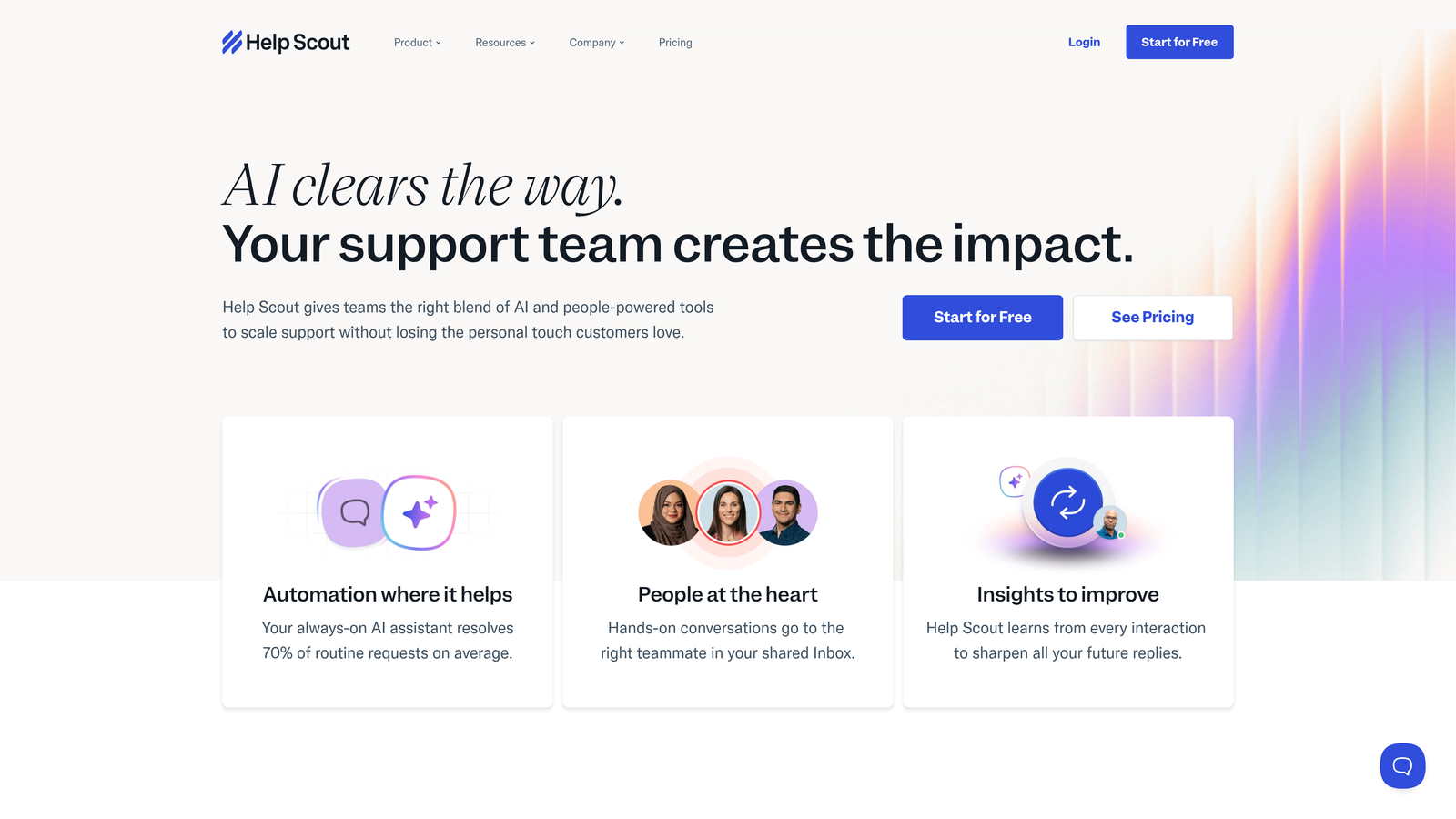
Help Scout focuses on making customer service feel personal and human, with automation features designed to enhance rather than replace that personal touch.
Where This Tool Shines
Help Scout intentionally avoids the complexity that makes enterprise helpdesks overwhelming for small teams. The interface feels like email because that's what most teams already understand, reducing training time and adoption friction.
Recent AI additions like draft generation and summarization help agents work faster without making conversations feel robotic. The Beacon chat widget embeds help center search and contact forms directly in your product, letting customers find answers without leaving your application.
Key Features
AI Drafts and Summarization: Generates response drafts based on conversation context and summarizes long threads for quick agent review.
Automated Workflows: Creates simple automation rules for common scenarios like auto-replies, tagging, and assignment without complex configuration.
Beacon Widget: Embeds searchable help center and contact forms directly in your product for seamless self-service.
Knowledge Base: Publishes help documentation with AI-powered search that understands customer intent beyond keyword matching.
Collision Detection: Alerts agents when multiple people view the same conversation to prevent duplicate responses.
Best For
Small to mid-sized teams with 5-25 support agents who value simplicity and ease of use. Companies that want their support to feel personal and human rather than automated. Organizations where quick implementation and minimal training are priorities.
Pricing
Starts at $20 per user per month with all core features included. Straightforward pricing without hidden fees or usage-based charges.
8. Tidio
Best for: Small businesses and e-commerce sites needing affordable live chat with basic automation
Tidio combines live chat, chatbots, and email marketing in an affordable package designed for small businesses and online stores.
Where This Tool Shines
Tidio's visual chatbot builder makes automation accessible to non-technical users through a drag-and-drop interface. You can create conversation flows for common scenarios like qualifying leads, answering FAQs, or collecting customer information without writing code.
The platform's visitor tracking shows you who's on your website in real-time, what pages they're viewing, and how they arrived. This context helps agents provide more relevant assistance and enables proactive outreach when visitors show signs of needing help.
Key Features
Visual Chatbot Builder: Creates automated conversation flows using drag-and-drop interface without technical skills required.
Live Chat with Visitor Tracking: Monitors website visitors in real-time and enables proactive chat based on behavior and page views.
Pre-Built Templates: Deploys ready-made chatbot scenarios for common use cases like lead generation, FAQ handling, and appointment booking.
E-commerce Integrations: Connects with Shopify, WordPress, and other platforms to access order data during support conversations.
Email Marketing: Sends automated email campaigns and newsletters directly from the platform to nurture leads and customers.
Best For
Small online businesses with limited budgets who need basic automation and live chat. E-commerce stores on Shopify or WordPress wanting simple customer communication tools. Solo entrepreneurs or small teams without dedicated support staff.
Pricing
Free tier available for up to three agents with basic features. Paid plans start at $29 per month for additional automation and advanced capabilities.
9. Gorgias
Best for: Shopify e-commerce brands wanting order management integrated with customer support
Gorgias specializes in e-commerce customer service, with deep Shopify integration that treats support as a revenue-generating function rather than a cost center.
Where This Tool Shines
Gorgias brings order data directly into the support interface, letting agents view purchases, modify orders, process refunds, and update shipping information without switching to Shopify admin. This integration dramatically reduces resolution time for common e-commerce inquiries.
The platform's automation shines for repetitive e-commerce questions. Macros with dynamic variables automatically populate responses with specific order details, tracking numbers, or product information. This means customers get personalized answers instantly rather than generic "we'll look into that" holding patterns.
Key Features
One-Click Order Management: Views and modifies Shopify orders directly from support tickets without leaving the helpdesk interface.
Automated Order Responses: Handles common questions about order status, tracking, and delivery automatically with specific customer details.
Revenue Tracking: Attributes revenue to support conversations, showing which interactions drive sales and which prevent refunds.
Dynamic Macros: Creates response templates that automatically insert customer-specific order details, product information, and tracking data.
Multi-Channel Support: Manages conversations from email, chat, SMS, Facebook, and Instagram in a unified e-commerce focused interface.
Best For
Shopify e-commerce brands with significant support volume around orders and shipping. Direct-to-consumer brands where support interactions influence purchase decisions. Online retailers that want to measure support's impact on revenue rather than just cost metrics.
Pricing
Starts at $10 per month for up to 50 tickets, with pricing scaling based on monthly ticket volume. Higher tiers unlock advanced automation and integration features.
Finding Your Automation Match
The right customer service automation software depends on your team's specific needs and existing infrastructure. Here's how to narrow your options:
Choose Halo AI if you're a B2B SaaS company ready to move beyond traditional helpdesk workflows. Its autonomous agents and continuous learning make it ideal for teams that want true automation rather than agent assistance. The page-aware context and business intelligence capabilities provide value beyond ticket resolution.
Zendesk AI makes sense for enterprises already invested in the Zendesk ecosystem who need to add AI capabilities to existing workflows. The platform's maturity and extensive customization suit large operations with complex requirements.
Intercom Fin fits product-led growth companies where support blends with user engagement. If proactive messaging and in-product communication matter as much as reactive support, Intercom's unified approach delivers value.
For Shopify e-commerce brands, Gorgias transforms support from cost center to revenue driver with deep order integration and commerce-specific automation. Help Scout serves small teams prioritizing simplicity and human connection over feature complexity.
The common thread across successful implementations is matching the tool's architecture to your support philosophy. AI-native platforms like Halo work best when you're ready to embrace autonomous resolution. Traditional helpdesks with AI layers suit teams wanting to enhance existing processes incrementally.
Your support team shouldn't scale linearly with your customer base. Let AI agents handle routine tickets, guide users through your product, and surface business intelligence while your team focuses on complex issues that need a human touch. See Halo in action and discover how continuous learning transforms every interaction into smarter, faster support.