9 Best Customer Service Automation Solutions in 2026
Discover the 9 best customer service automation solutions in 2026, evaluated on autonomous resolution capabilities, integration ecosystems, and scalability for teams of all sizes. From lean startup support operations to enterprise-level ticket queues, this guide helps B2B SaaS teams identify the right platform to reduce ticket volume, meet rising customer expectations, and resolve issues intelligently without expanding headcount.
 Matt PattoliFounder14 min read
Customer service teams are under more pressure than ever. Ticket volumes keep climbing, customer expectations have never been higher, and headcount budgets rarely move in the right direction. The good news is that customer service automation solutions have matured significantly in recent years, moving well beyond simple chatbots into intelligent systems that resolve tickets, guide users through products, detect bugs, and surface business intelligence without adding to your team roster.
This list covers the best platforms available in 2026, evaluated on depth of automation, integration ecosystem, ease of deployment, and how well each scales with growing support operations. Whether you're running a lean startup support team or managing enterprise-level ticket queues, there's a solution here built for your situation.
A quick note on methodology: tools are ranked by overall capability and fit for B2B SaaS teams, with particular attention to autonomous resolution (not just deflection), integrations with modern tech stacks, and the intelligence layer behind the automation.
1. Halo AI
Best for: B2B SaaS teams that need autonomous ticket resolution, not just deflection
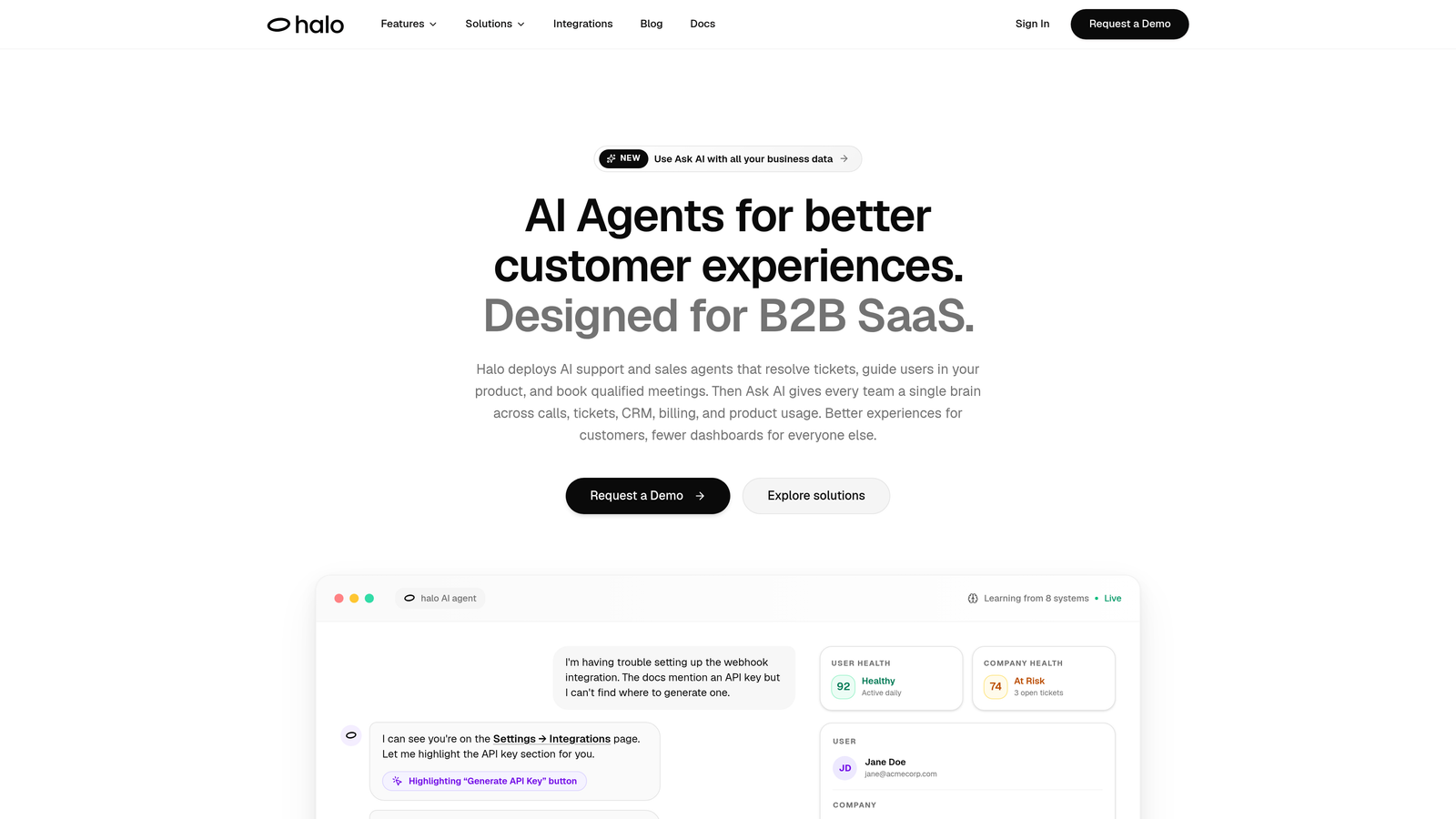
Halo AI is an AI-first customer support platform built specifically for B2B SaaS teams that have outgrown bolt-on AI features in their existing helpdesks.
Where This Tool Shines
The core distinction with Halo is architecture. Most platforms add AI on top of an existing ticketing system. Halo was built AI-first, which means the intelligence layer isn't a feature you toggle on — it's the foundation everything else runs on. That matters because it changes how the system learns, routes, and resolves.
The page-aware chat widget is genuinely differentiated. The AI can see what a user is looking at in your product and provide visual UI guidance in context, not just generic help article links. Combined with continuous learning from every resolved ticket, the system gets meaningfully smarter over time rather than staying static.
Key Features
Autonomous AI Agents: Resolves tickets end-to-end rather than routing users to documentation and calling it deflection.
Page-Aware Chat Widget: Sees what the user sees in your product interface and provides contextual visual guidance rather than generic responses.
Auto Bug Ticket Creation: Surfaces product issues from support patterns automatically, eliminating the manual triage step between support and engineering.
Smart Inbox with Business Intelligence: Goes beyond support metrics to surface customer health signals, anomaly detection, and revenue intelligence from support interaction patterns.
Deep Integration Ecosystem: Connects to Linear, Slack, HubSpot, Intercom, Stripe, Zoom, PandaDoc, and Fathom — the tools B2B SaaS teams actually use.
Live Agent Handoff: Escalates complex issues to human agents with full conversation context preserved, so nothing gets lost in the handoff.
Best For
B2B SaaS product and support teams that want AI to handle routine resolution autonomously while surfacing product and customer intelligence from support patterns. Particularly strong for teams already using tools like HubSpot, Linear, or Slack who want support automation that connects into their existing stack rather than replacing it.
Pricing
Contact for pricing. Halo is positioned for B2B SaaS teams and priced accordingly — reach out through the website for details tailored to your team size and use case.
2. Intercom
Best for: SaaS companies wanting chat-first automation with a mature messaging platform underneath
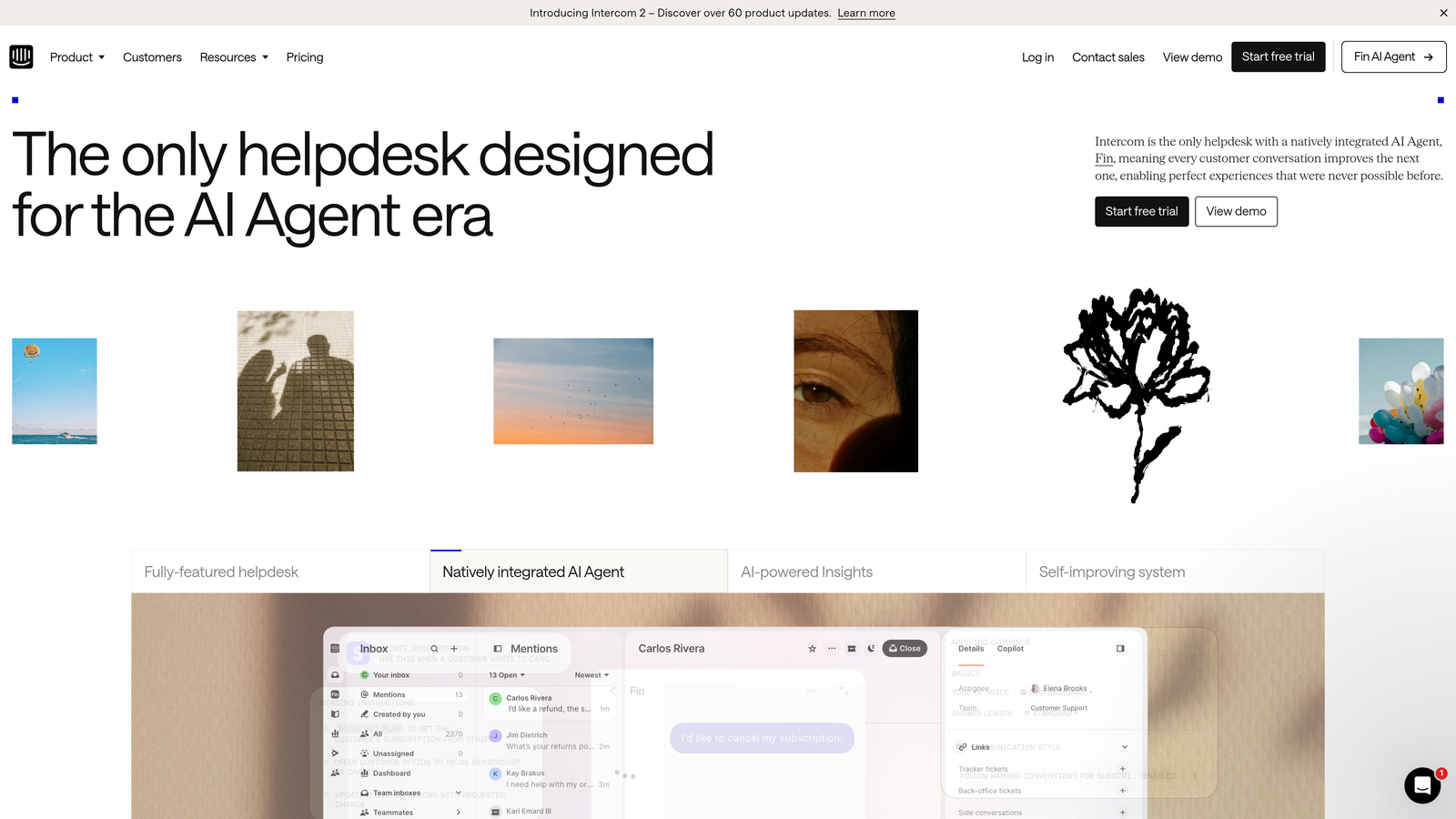
Intercom is a mature customer messaging platform with Fin, its AI agent, built on top of a well-established helpdesk and automation layer.
Where This Tool Shines
Intercom's strength is the combination of Fin's AI resolution capabilities with a platform that's been battle-tested across thousands of SaaS companies. If your team is already on Intercom for messaging, adding Fin is a relatively low-friction upgrade rather than a platform migration.
Fin handles autonomous chat resolution well in straightforward scenarios. The underlying Intercom platform adds value with in-app product tours, proactive messaging, and a unified inbox that brings together chat, email, and in-app conversations. It's a strong all-in-one for teams that live in chat-first support environments.
Key Features
Fin AI Agent: Handles autonomous resolution in chat, drawing on your knowledge base and conversation history.
Unified Inbox: Combines chat, email, and in-app messaging into a single agent view.
Workflow Automation: Handles ticket routing, escalation, and assignment with conditional logic.
In-App Product Tours: Proactive onboarding and feature guidance built into the same platform as support.
CSAT and Reporting: Tracks resolution rates, satisfaction scores, and team performance metrics.
Best For
SaaS companies already using Intercom for customer messaging who want to add AI resolution without switching platforms. Less suited to teams with complex email-heavy workflows or those who find Intercom's pricing difficult to justify at scale, as costs can climb quickly with Fin's per-resolution billing model.
Pricing
Starts at approximately $39 per seat per month. Fin AI usage is billed separately on a per-resolution basis, which can add up quickly for high-volume teams. Verify current pricing on the Intercom website.
3. Zendesk
Best for: Large enterprise support organizations with complex SLA, routing, and compliance requirements
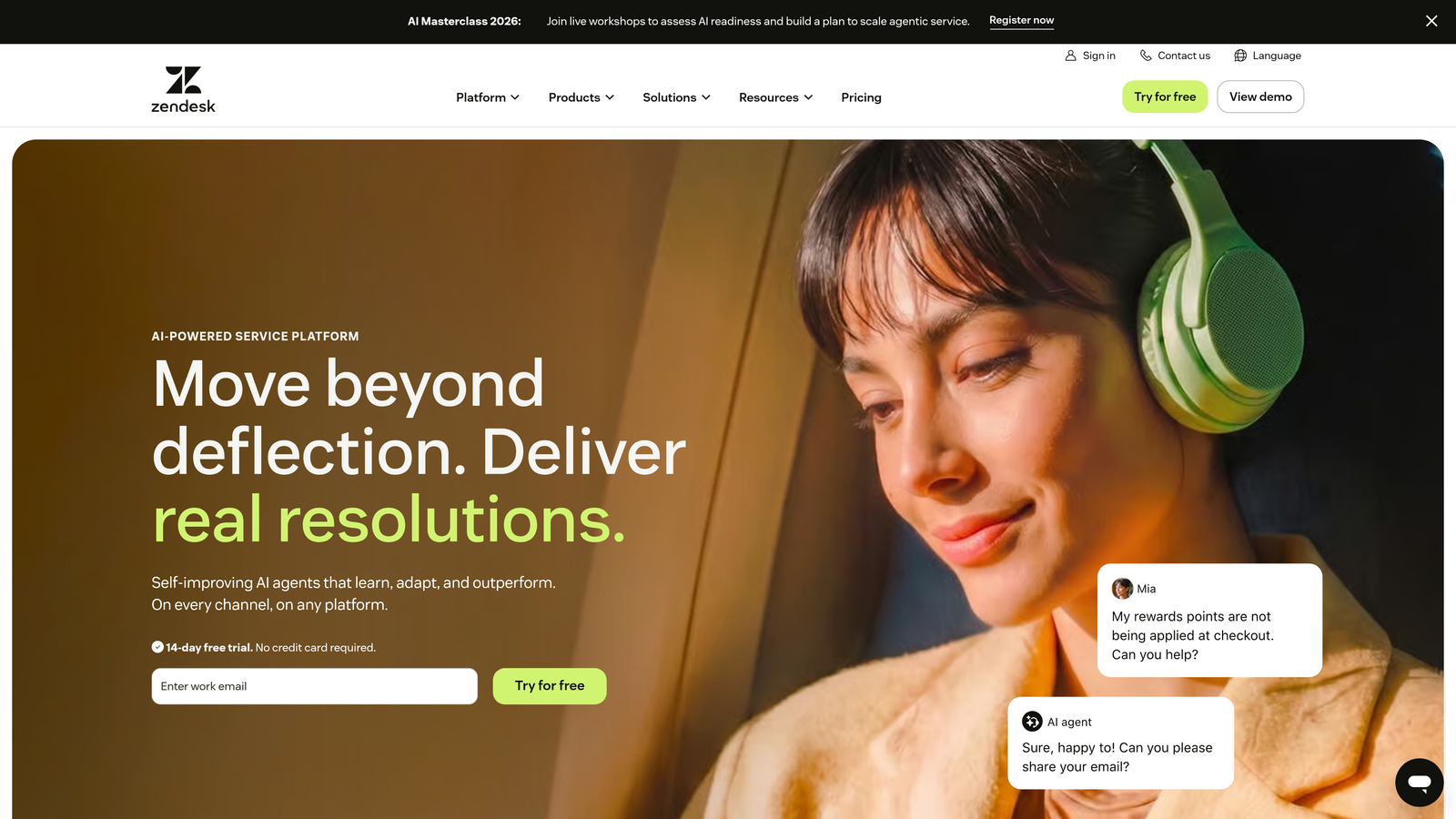
Zendesk is the enterprise helpdesk standard, with AI automation features layered into a proven ticketing and workflow system used by large support organizations globally.
Where This Tool Shines
Zendesk's depth is in workflow management. If your support operation has complex escalation paths, strict SLA requirements, compliance considerations, and a need for detailed reporting across a large agent team, Zendesk has been solving those problems for years. The platform's maturity means it handles edge cases that newer tools haven't encountered yet.
The integration marketplace is genuinely extensive. With over 1,000 available integrations, you can connect Zendesk to almost any tool in your stack. The AI features (Zendesk AI for triage, intent detection, and suggested responses) are capable, though they function more as add-ons to the core ticketing system than as a native AI-first architecture.
Key Features
Zendesk AI: Handles intelligent triage, intent detection, and suggested responses for agents — available on higher-tier plans.
Advanced Workflow Automation: Conditional logic, SLA management, and sophisticated routing rules built for complex support operations.
Extensive Marketplace: 1,000+ integrations covering virtually every tool category.
Omnichannel Support: Email, chat, voice, social, and messaging channels managed from a single platform.
Robust Reporting Suite: Detailed analytics across tickets, agents, channels, and customer satisfaction.
Best For
Large enterprise support teams with high agent counts, complex routing requirements, and a need for deep reporting. Teams looking for AI-first autonomous resolution may find Zendesk's AI capabilities feel bolted on rather than foundational, but for pure workflow management at scale, it remains a top choice.
Pricing
Suite plans start at approximately $55 per agent per month. AI features are available on higher tiers. Verify current pricing directly on the Zendesk website, as plan structures change regularly.
4. Freshdesk
Best for: SMBs and growing teams moving from manual support to their first layer of automation
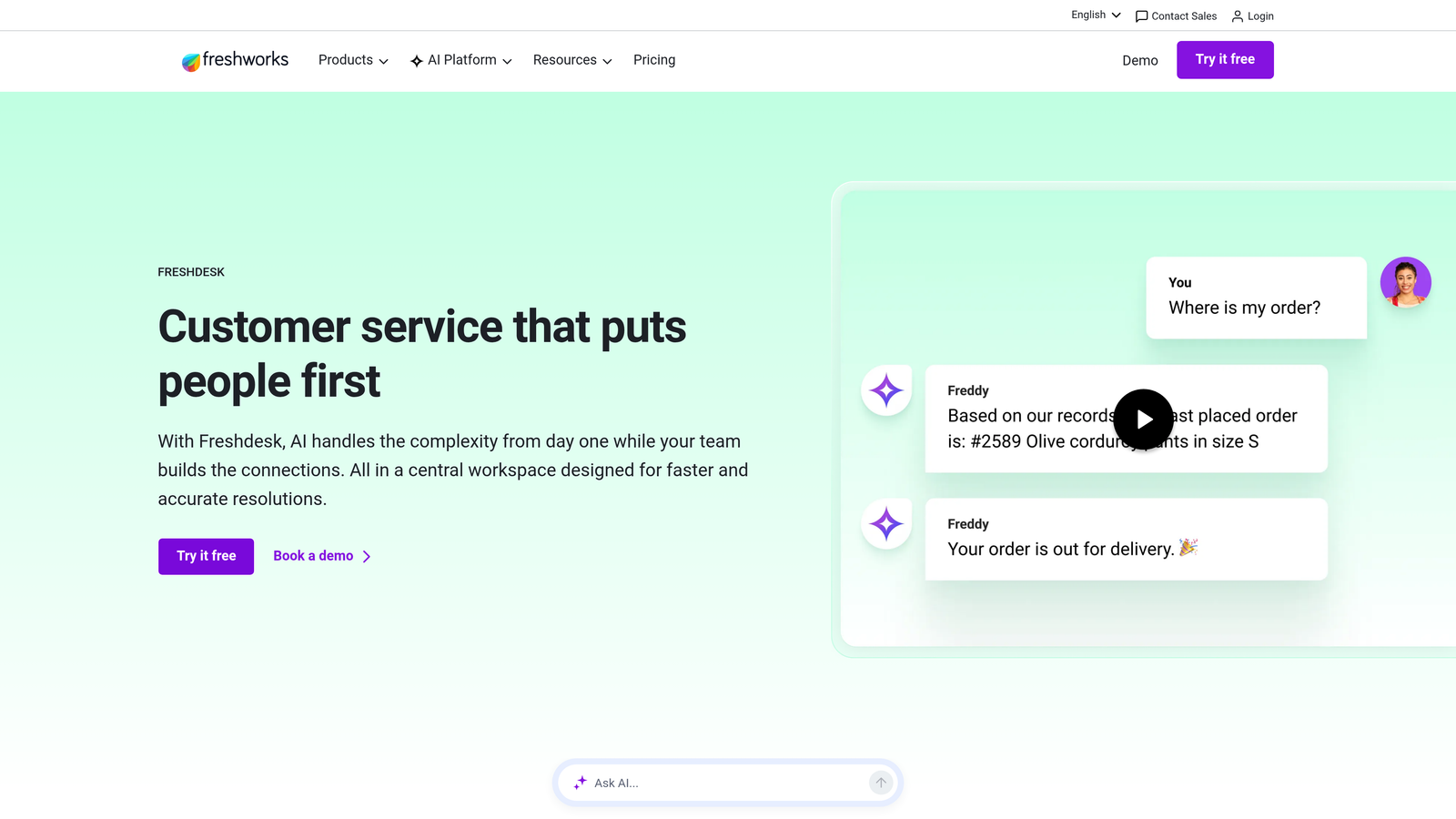
Freshdesk is a helpdesk platform with Freddy AI built in, designed to make automation accessible for smaller and mid-market teams without enterprise-level complexity or cost.
Where This Tool Shines
Freshdesk's value proposition is accessibility. The platform makes it genuinely easy for a team with limited technical resources to get automation running — Freddy AI handles suggested replies, auto-triage, and basic agent assist without requiring extensive configuration. The free tier means teams can start without a budget commitment.
For teams graduating from purely manual support processes, Freshdesk provides a well-structured path: start with the free plan, add automation as volume grows, and layer in Freddy AI features when the team is ready. It's a solid on-ramp, even if the automation depth doesn't match AI-first platforms.
Key Features
Freddy AI: Provides suggested replies, auto-triage, and agent assist features to speed up resolution times.
Ticket Automation Rules: Routing, prioritization, and escalation based on configurable conditions.
Freddy Self Service: AI-powered chatbot for deflecting common questions before they reach agents.
Multi-Channel Support: Email, chat, phone, and social channels in one platform.
Free Tier: Available for small teams to get started without upfront cost.
Best For
SMBs and growing mid-market teams that want a cost-effective entry point into helpdesk automation. Teams with complex B2B support workflows or a need for deep autonomous resolution may find Freddy AI's capabilities limiting compared to AI-first alternatives.
Pricing
Free plan available. Paid plans start at approximately $15 per agent per month. AI features are available on the Growth tier and above. Verify current pricing on the Freshdesk website.
5. Tidio
Best for: E-commerce businesses on Shopify or WooCommerce needing fast, affordable chat automation
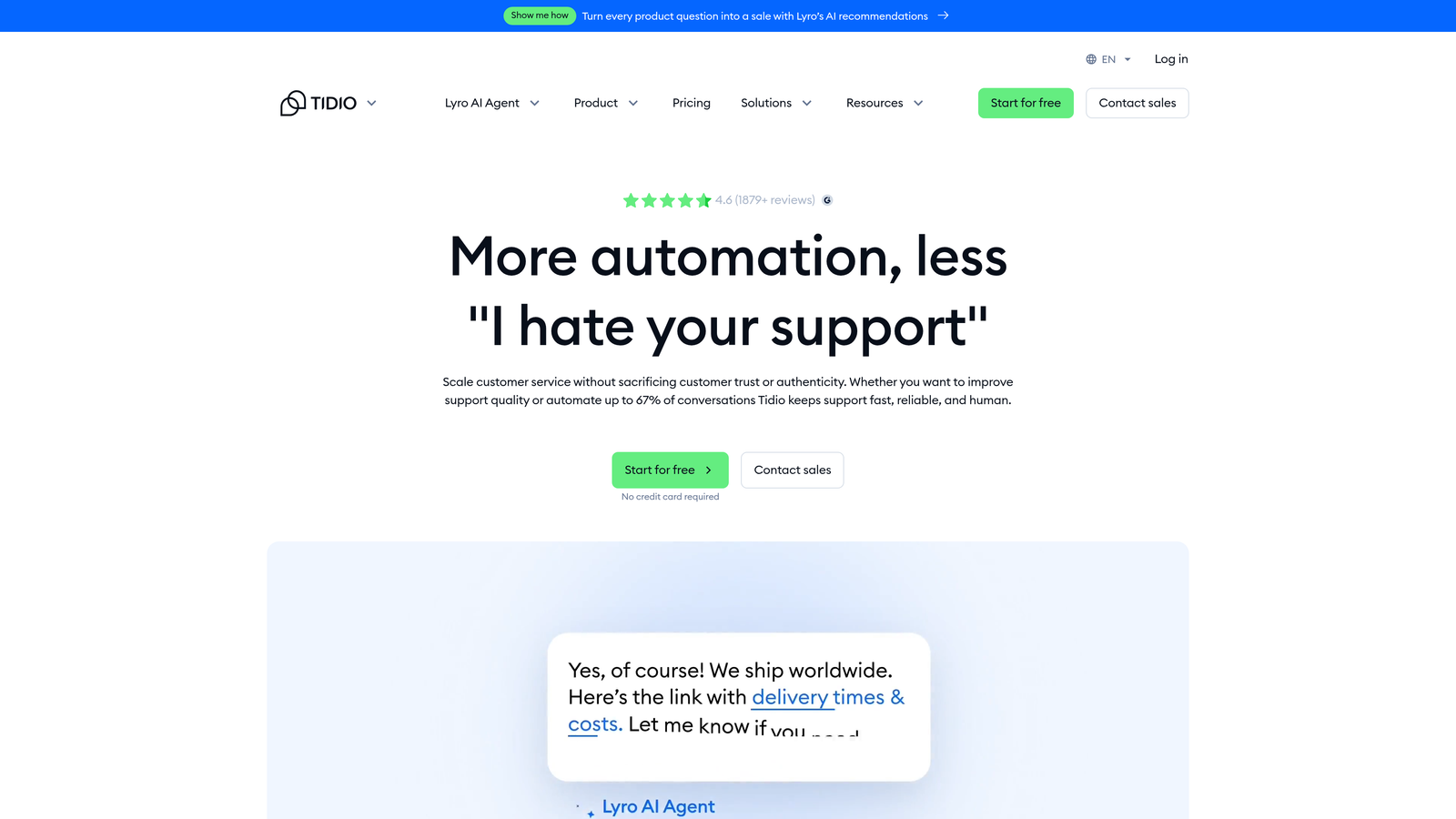
Tidio is a chat and automation platform built around Lyro, its AI chatbot, with fast deployment and strong e-commerce integrations.
Where This Tool Shines
Tidio's strength is speed to value. If you're running a Shopify or WooCommerce store and need a chat automation solution that works without a lengthy implementation process, Tidio is one of the fastest paths to a live AI chatbot. The native e-commerce integrations mean Lyro can pull order information and product details into conversations without custom development.
The visual chatbot flow builder is genuinely accessible for non-technical users. You can build custom automation paths without writing code, which matters for small teams that don't have a dedicated developer to configure support tooling.
Key Features
Lyro AI Chatbot: Handles autonomous conversation resolution for common customer questions.
E-Commerce Integrations: Native Shopify and WooCommerce connections for order and product context in conversations.
Visual Flow Builder: Drag-and-drop interface for building custom chatbot automation without code.
Live Chat with Agent Takeover: Smooth transition from AI to human agent when conversations need it.
Email and Messenger Support: Extends beyond chat to additional channels.
Best For
Small to mid-sized e-commerce businesses, particularly those on Shopify or WooCommerce, that want accessible chat automation at a reasonable price point. Less suited to complex B2B SaaS support workflows where deeper integrations and autonomous resolution depth are priorities.
Pricing
Free plan available. Lyro AI starts at approximately $29 per month. Verify current pricing on the Tidio website.
6. Drift (Salesloft)
Best for: B2B teams where support conversations overlap with sales pipeline activity
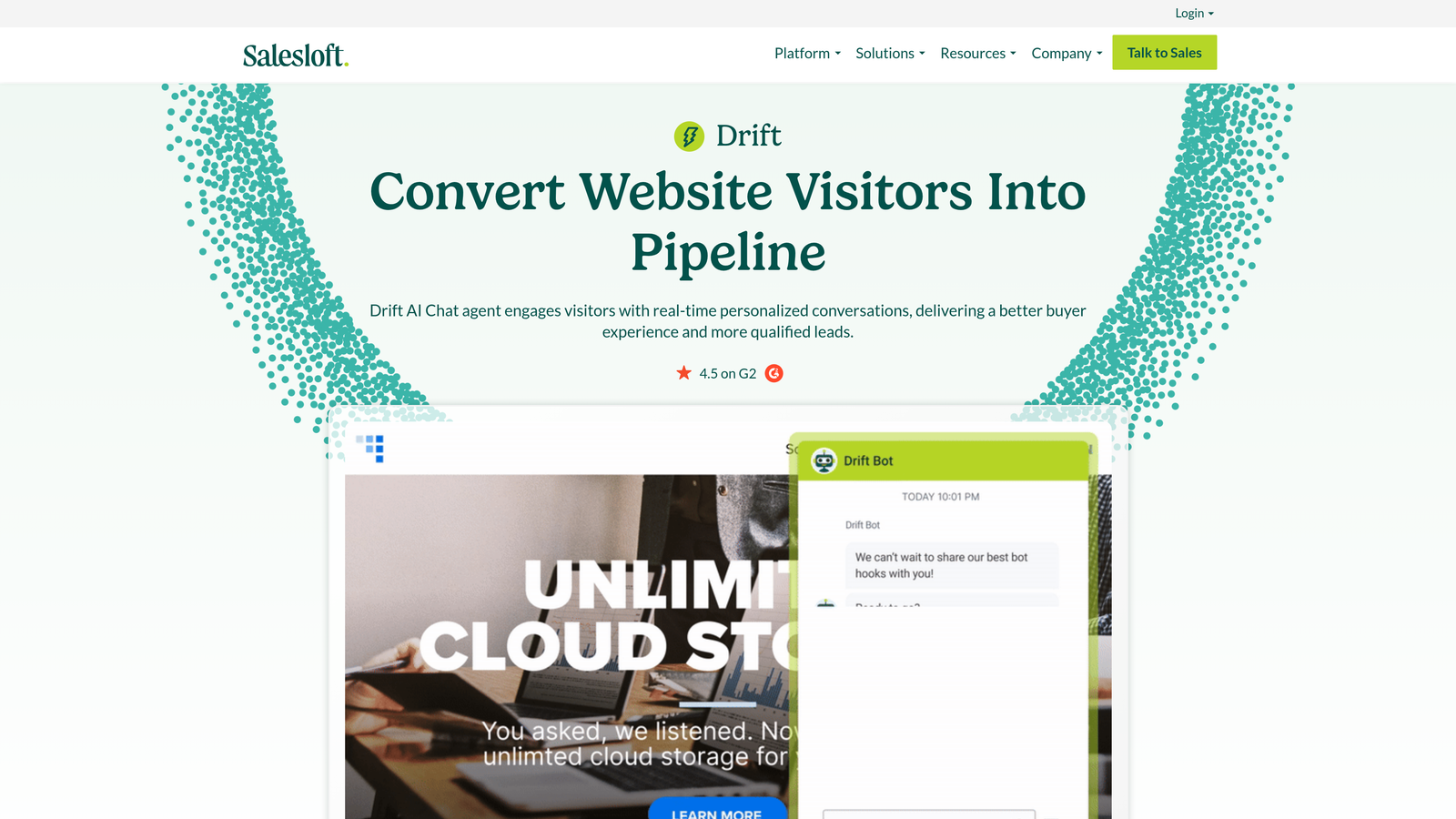
Drift is a conversational AI platform now part of Salesloft, designed for teams where support and sales conversations intersect on the website and in-app.
Where This Tool Shines
Drift's differentiation is the sales-support overlap. If your website conversations include a meaningful mix of prospects asking pre-sales questions and customers needing support, Drift handles both within a single platform. The Salesloft integration means those conversations can connect directly to pipeline activity and CRM records.
Meeting booking automation within chat flows is a genuinely useful feature for B2B teams. Rather than routing a prospect through a support queue, Drift can book a demo or sales call directly from the conversation. Account-based targeting lets you personalize conversations based on who the visitor is, which is more relevant to sales use cases than pure support ones.
Key Features
Conversational AI: Handles website visitor engagement for both support and sales scenarios.
Salesloft and CRM Integration: Connects conversations to sales pipeline and revenue data.
Meeting Booking Automation: Books demos and calls directly within chat flows.
Account-Based Targeting: Personalizes conversations based on visitor identity and account data.
Real-Time Agent Notifications: Alerts live agents when high-priority conversations need immediate engagement.
Best For
B2B companies where the line between support and sales engagement is blurry, particularly those using Salesloft for revenue operations. Teams looking for a pure support automation solution may find Drift's focus on revenue conversations a poor fit for their primary use case.
Pricing
Contact for pricing. Drift is positioned as an enterprise revenue platform following the Salesloft acquisition. Verify current pricing directly with the Drift sales team.
7. Zoho Desk
Best for: Teams already in the Zoho ecosystem who want unified support and CRM data
Zoho Desk is a helpdesk solution with Zia AI built in, offering strong value for teams already operating within the broader Zoho product suite.
Where This Tool Shines
The Zoho ecosystem integration is the headline advantage here. If your team is already using Zoho CRM, Zoho Analytics, or other Zoho products, Desk connects that data natively. Agents can see full customer context from the CRM directly within tickets, which reduces the tab-switching that slows down support teams using disconnected tools.
Zia AI adds sentiment analysis, tag suggestions, and response recommendations that help agents work faster without fully replacing them. It's more assistive than autonomous, but for teams that want to augment their agents rather than automate around them, that's a reasonable design choice.
Key Features
Zia AI: Sentiment analysis, tag suggestions, and response recommendations to assist agents in real time.
Native Zoho CRM Integration: Full customer history and account data visible within the support ticket interface.
Workflow Automation: Ticket assignment, escalation, and routing based on configurable rules.
Self-Service Portal: Knowledge base and customer portal for deflecting common questions before they reach agents.
Best For
SMBs and mid-market teams already using Zoho CRM or other Zoho products who want their support tool to share a data layer with the rest of their stack. Less compelling as a standalone platform for teams not already invested in the Zoho ecosystem.
Pricing
Starts at approximately $14 per agent per month. Zia AI features are available on higher tiers. Verify current pricing on the Zoho Desk website.
8. Help Scout
Best for: Teams that want to scale support volume while preserving a personal, human tone
Help Scout is an email-first support platform with AI Drafts and Summarize features that assist agents rather than replace them.
Where This Tool Shines
Help Scout's philosophy is assistive AI rather than autonomous AI, and for some teams that's exactly the right call. If your brand depends on responses that feel genuinely human, AI Drafts gives agents a starting point they can edit and personalize rather than a canned response that ships automatically. The result is faster responses without the robotic feel that fully automated replies can produce.
The Beacon in-app widget handles proactive help and live chat within your product, and the Docs knowledge base gives customers a self-service path before they reach an agent. It's a coherent system for teams that want to reduce ticket volume through good documentation and speed up resolution through AI assist, without fully automating either.
Key Features
AI Drafts: Generates suggested replies from conversation context for agents to review, edit, and send.
AI Summarize: Produces quick summaries of long conversation threads so agents can get up to speed fast.
Beacon Widget: In-app help widget for proactive guidance and live chat within your product.
Docs Knowledge Base: Self-service documentation that integrates with the Beacon widget for in-context help.
Shared Inbox with Collision Detection: Prevents two agents from replying to the same conversation simultaneously.
Best For
Teams that prioritize a personal, human support experience and want AI to make agents faster rather than replace them. Particularly well-suited to companies where brand voice and relationship quality are core to the customer experience. Not the right fit for teams that need high-volume autonomous resolution.
Pricing
Starts at approximately $22 per user per month. Verify current pricing on the Help Scout website.
9. Kustomer
Best for: High-volume B2C brands with complex, multi-touch customer histories
Kustomer is a CRM-native support platform that builds automation around the full customer timeline rather than individual tickets.
Where This Tool Shines
The customer timeline view is Kustomer's core differentiator. Rather than treating each ticket as an isolated event, Kustomer aggregates every interaction, purchase, and touchpoint into a single customer profile. For high-volume B2C brands where a customer might have dozens of previous interactions, that context changes how agents approach each conversation and how automation decides what to do next.
AI-powered automation across the full customer history means routing and resolution decisions can factor in things like order history, previous complaint patterns, and lifetime value — not just the content of the current ticket. That's a meaningful capability for brands where customer context drives service decisions. Note for buyers doing due diligence: Kustomer was acquired by Meta and subsequently sold back to independence, so it's worth verifying the current ownership and roadmap before committing.
Key Features
Customer Timeline View: Aggregates all interactions, purchases, and touchpoints into a single unified customer profile.
AI-Powered Automation: Applies automation logic across the full customer history, not just the current ticket.
Intelligent Routing: Routes tickets based on customer attributes, history, and lifetime value rather than just ticket content.
Omnichannel Support: Email, chat, SMS, voice, and social channels in one platform.
Workflow Automation: Conditional branching logic for complex escalation and resolution paths.
Best For
High-volume B2C brands — retail, subscription, consumer apps — where customer history is central to every support interaction. The pricing reflects an enterprise positioning, so teams should evaluate whether the timeline-centric model justifies the cost relative to simpler helpdesk alternatives.
Pricing
Starts at approximately $89 per agent per month. Verify current pricing on the Kustomer website.
Which Tool Is Right for Your Team
The right customer service automation solution depends less on feature checklists and more on one fundamental question: do you need a tool that deflects tickets or one that resolves them? Deflection routes customers to documentation and hopes they find their answer. Resolution closes the ticket autonomously, with the AI taking action rather than redirecting.
Here's a quick breakdown by team type:
B2B SaaS teams that need autonomous resolution: Halo AI is the strongest fit, particularly if you want your support platform to connect to your full stack (Linear, HubSpot, Slack, Stripe) and surface business intelligence beyond just support metrics.
SaaS companies already on Intercom: Fin AI is a natural upgrade path if you're already invested in the Intercom platform and your support is primarily chat-first.
Enterprise teams with complex SLA and routing requirements: Zendesk remains the most mature option for large organizations with compliance needs and high agent counts.
SMBs looking for an affordable entry point: Freshdesk offers the most accessible on-ramp, with a free tier and gradual automation layers as your team grows.
E-commerce businesses on Shopify or WooCommerce: Tidio's Lyro AI and native e-commerce integrations make it the fastest path to live chat automation for online stores.
Teams where support and sales overlap: Drift (Salesloft) handles that hybrid use case better than any pure support platform.
Zoho ecosystem users: Zoho Desk's native CRM integration makes it the obvious choice if you're already in that stack.
Teams prioritizing human tone at scale: Help Scout's assistive AI model is the right fit when brand voice matters more than full automation.
High-volume B2C brands with complex customer histories: Kustomer's timeline-centric model is purpose-built for that use case.
One last piece of advice: prioritize tools that integrate with your existing stack over tools that require a full migration. The best automation solution is the one your team will actually use, and that usually means the one that fits into how you already work rather than demanding you rebuild around it.
Your support team shouldn't scale linearly with your customer base. Let AI agents handle routine tickets, guide users through your product, and surface business intelligence while your team focuses on complex issues that need a human touch. See Halo in action and discover how continuous learning transforms every interaction into smarter, faster support.