9 Best Customer Service Automation Tools in 2026
This guide evaluates the 9 best customer service automation tools available in 2026, comparing AI capability, integration depth, and real-world utility to help B2B SaaS and product-led teams resolve tickets autonomously, reduce support volume, and scale customer service without proportionally growing headcount.
 Grant CooperFounder13 min read
Customer service teams are under more pressure than ever. Ticket volumes keep climbing, customer expectations have risen sharply, and headcount budgets rarely keep pace. The good news is that automation has matured well beyond basic chatbots and canned responses.
Today's tools can resolve tickets autonomously, guide users through your product in real time, detect bugs before your engineering team hears about them, and hand off seamlessly to human agents when the situation calls for it. The category has genuinely evolved.
This list covers the top customer service automation tools available in 2026, evaluated on AI capability, integration depth, ease of deployment, and real-world utility for B2B SaaS and product-led teams. Tools are ordered starting with the most capable AI-native platform and moving through specialized solutions for different team sizes and use cases.
1. Halo AI
Best for: B2B SaaS and product-led teams wanting AI-first autonomous support with business intelligence
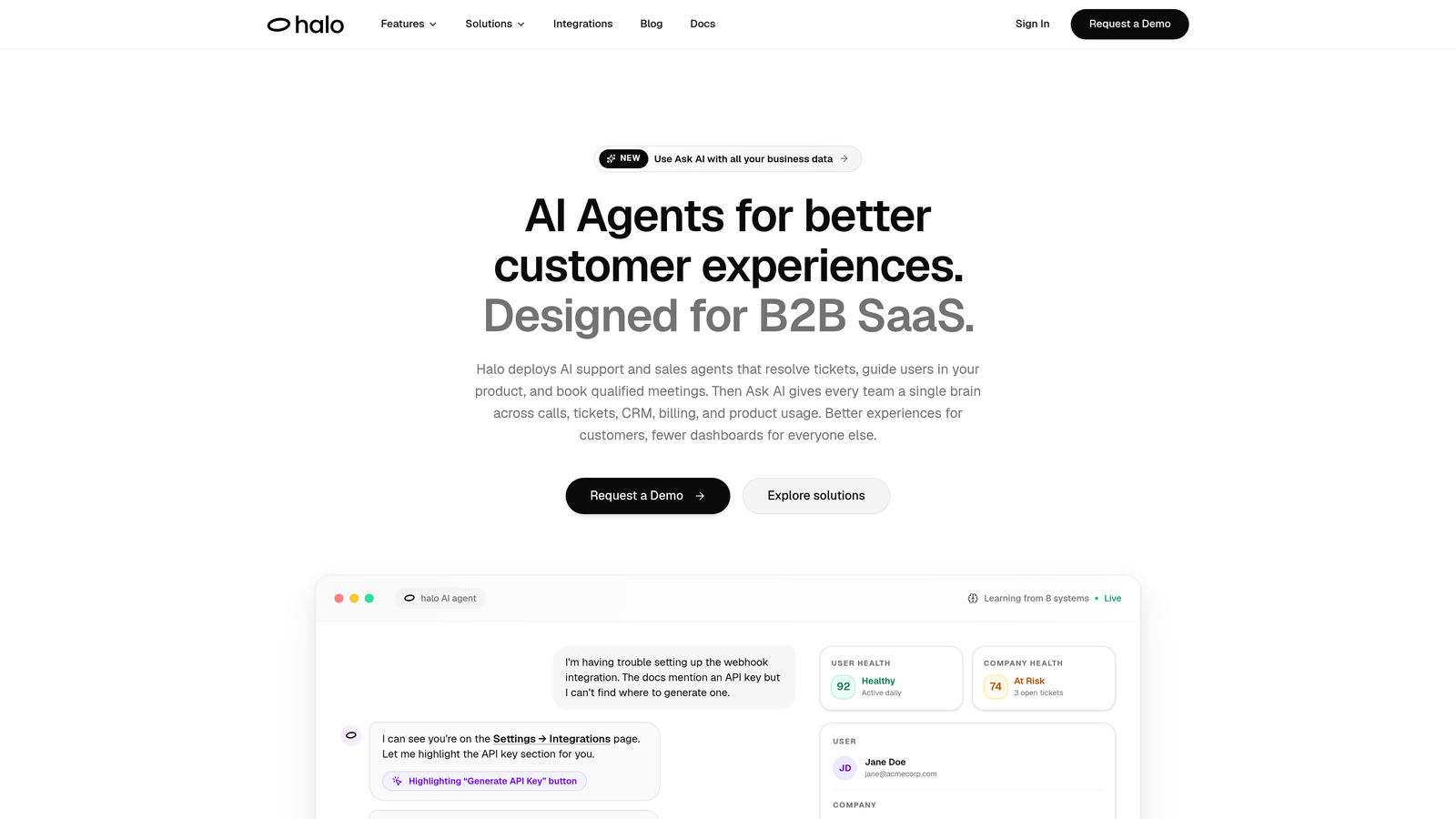
Halo AI is an AI-native customer support platform that deploys autonomous agents to resolve tickets, guide users through your product, and surface intelligence across your entire business stack.
Where This Tool Shines
What separates Halo from the "helpdesk with AI bolted on" category is its architecture. The platform was built around AI from the ground up, which means the intelligence isn't a feature layer sitting on top of ticket routing. It's the foundation. Every resolved interaction feeds a continuous learning loop, so the system gets meaningfully smarter over time rather than staying static.
The page-aware chat widget is a particularly compelling differentiator. It sees what your user sees, providing contextual UI guidance without requiring the user to describe where they are or what they're looking at. For SaaS products with complex interfaces, this changes the support experience significantly.
Key Features
Autonomous Ticket Resolution: AI agents handle tickets end-to-end without human intervention, escalating only when genuine complexity requires it.
Page-Aware Chat Widget: The widget understands the user's current location in your product and delivers visual UI guidance based on that context.
Auto Bug Ticket Creation: Detected issues are automatically routed as bug tickets to Linear, Jira, or your engineering tool of choice, closing the loop between support and engineering.
Smart Inbox with Business Intelligence: Goes beyond deflection metrics to surface customer health signals, anomaly detection, and revenue intelligence from support interactions.
Live Agent Handoff: Complex or sensitive issues escalate smoothly to human agents with full context preserved.
Deep Integration Ecosystem: Connects with Slack, HubSpot, Intercom, Stripe, Zoom, PandaDoc, and Fathom, giving support data a path into your broader business systems.
Best For
B2B SaaS companies and product teams that want support automation to do more than deflect tickets. If you need customer health signals, revenue intelligence, and engineering workflow integration alongside autonomous resolution, Halo is built for exactly that context. Particularly strong for teams running lean support operations that need to scale without scaling headcount.
Pricing
Contact for pricing. Halo positions for growth-stage and enterprise SaaS teams. Reach out via haloagents.ai for details.
2. Intercom
Best for: Teams already using Intercom for sales and marketing who want unified support automation
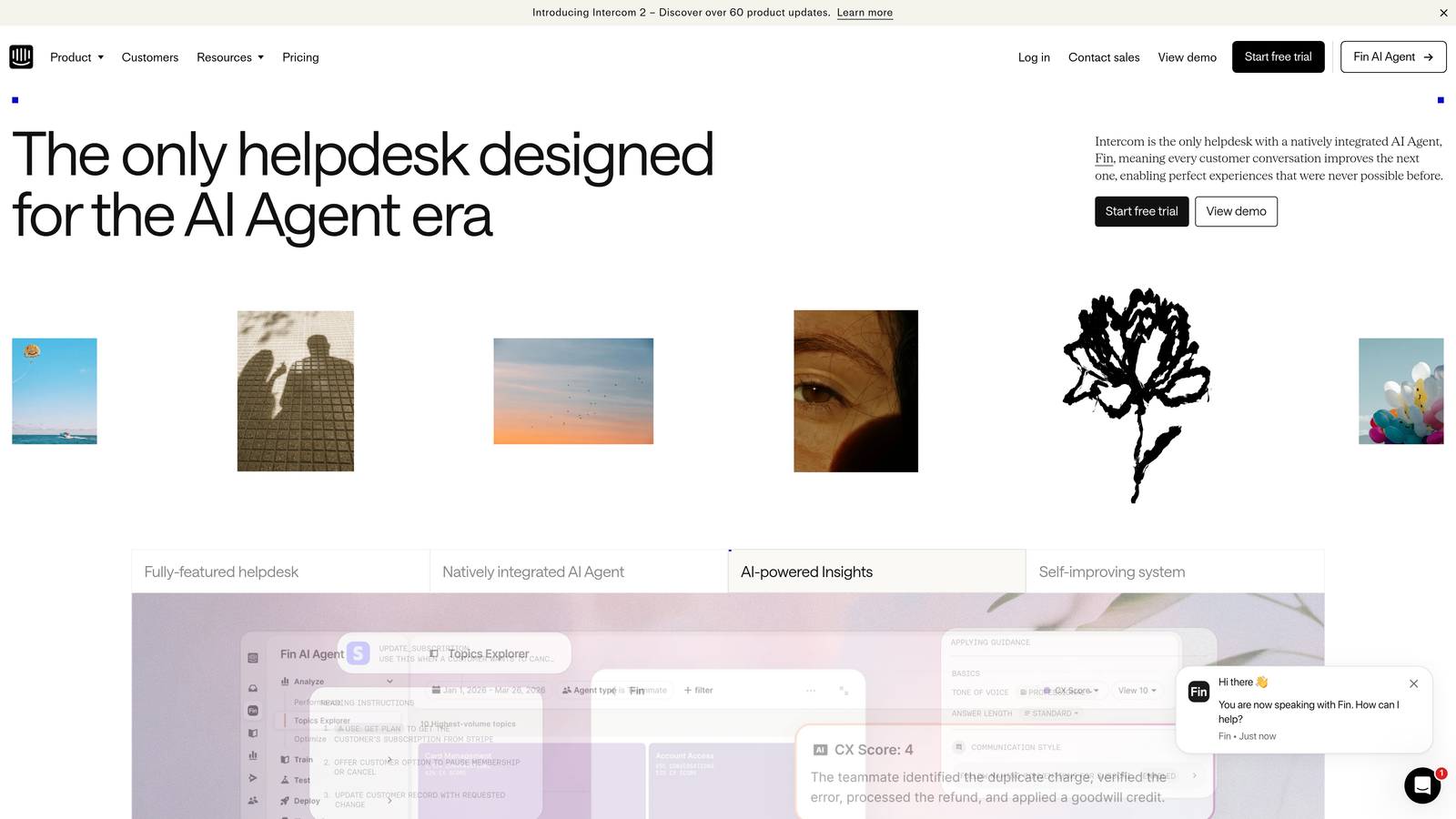
Intercom is a mature conversational support platform with a capable AI agent, built into a broader messaging ecosystem used across sales, marketing, and support.
Where This Tool Shines
Intercom's Fin AI agent has been iterated significantly since its launch and handles autonomous query resolution across a wide range of common support scenarios. The real advantage for many teams is ecosystem consolidation: if you're already using Intercom for product messaging or sales outreach, adding support automation doesn't require introducing another vendor.
The platform's breadth is both its strength and its complexity. Product tours, outbound messaging, shared inbox, ticketing, and live chat all live in one place, which suits teams that want a single platform but can feel like overhead for teams that only need support automation.
Key Features
Fin AI Agent: Handles autonomous customer query resolution with context from your knowledge base and conversation history.
Unified Platform: Shared inbox, ticketing, live chat, and product tours in a single environment.
Proactive Support: Outbound messaging and product tours help deflect tickets before they're created.
Robust Reporting: CSAT tracking, resolution rates, and team performance dashboards.
App Marketplace: Large integration library with API access for custom connections.
Best For
Teams already invested in the Intercom ecosystem, or companies that want sales, marketing, and support messaging unified under one platform. Less compelling for teams that only need support automation and don't need the broader messaging suite.
Pricing
Starts around $39/seat/month; Fin AI resolution pricing is additional and usage-based. Verify current pricing at intercom.com.
3. Zendesk
Best for: Enterprise teams needing a proven, compliance-ready helpdesk with AI-enhanced triage
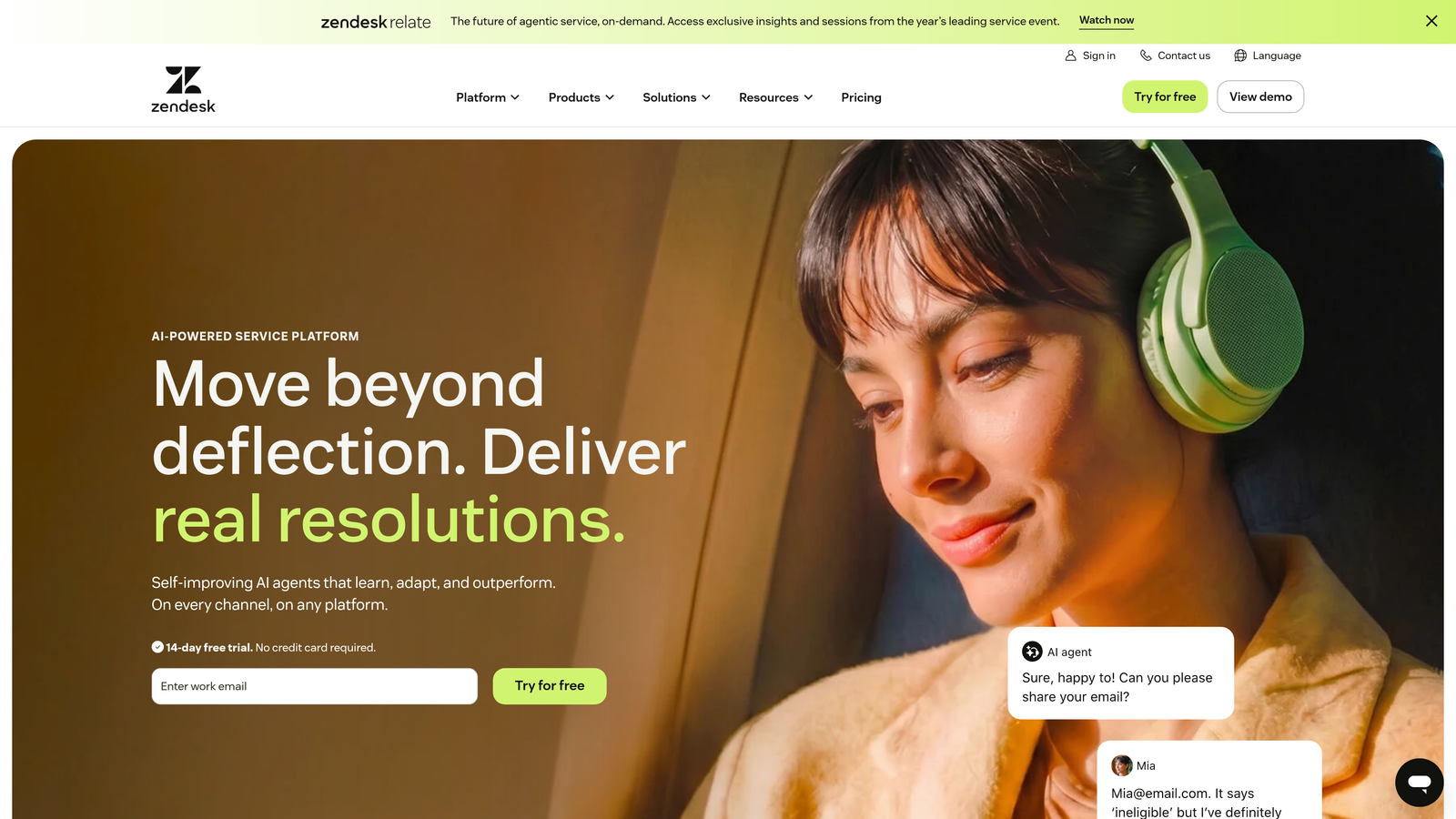
Zendesk is the industry-standard enterprise helpdesk, now with AI-powered triage, automated responses, and intelligent routing layered onto its established ticketing infrastructure.
Where This Tool Shines
Zendesk's strength is its depth and reliability at scale. The platform has been refined over many years and handles complex SLA management, multi-channel routing, and enterprise compliance requirements with a level of maturity that newer platforms haven't yet matched. If your organization has strict security requirements or operates across many channels simultaneously, Zendesk's infrastructure handles it.
The AI features, including intelligent triage and ticket categorization, are additive rather than foundational. That's worth understanding: Zendesk is a very good helpdesk that has added AI, not an AI system that does helpdesk work. For teams whose primary need is ticket management at scale, that distinction is often fine.
Key Features
Zendesk AI: Intelligent triage, ticket categorization, and automated routing based on content and intent.
SLA Management: Advanced escalation rules and SLA tracking across teams and ticket types.
Omnichannel Support: Email, chat, phone, and social in a unified agent workspace.
App Marketplace: Over 1,500 integrations available through the marketplace.
Enterprise Compliance: SOC 2, GDPR, HIPAA-ready configurations for regulated industries.
Best For
Mid-market and enterprise organizations with complex ticketing needs, multiple support channels, and compliance requirements. Teams that need deep customization and a large integration ecosystem. Less ideal for lean teams that find its configuration overhead disproportionate to their needs.
Pricing
Suite plans start around $55/agent/month; AI features are available on higher tiers. Verify current pricing at zendesk.com.
4. Freshdesk
Best for: Growing teams transitioning from email to a structured helpdesk with AI assistance
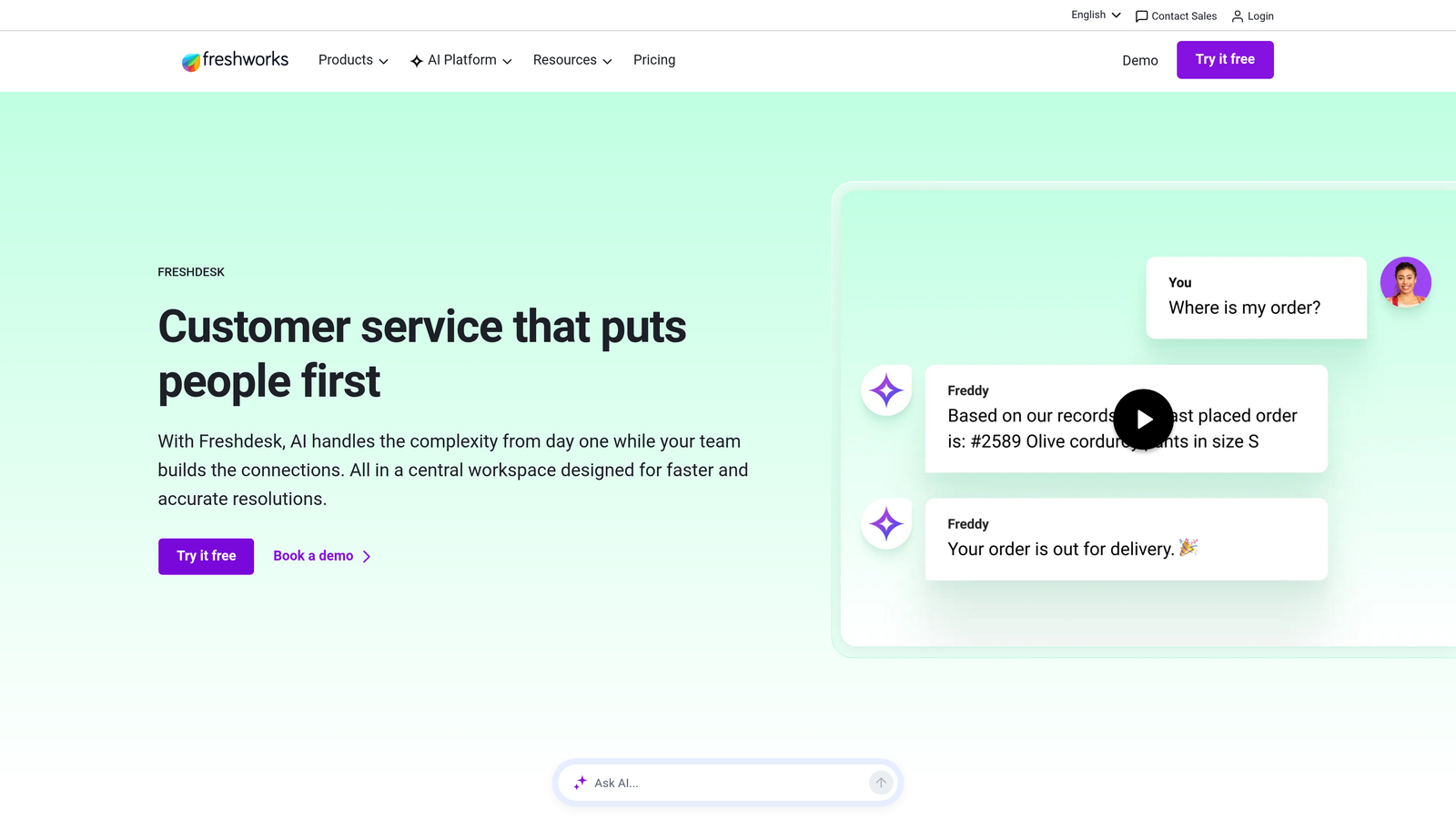
Freshdesk is a helpdesk platform from Freshworks with Freddy AI for ticket categorization, suggested responses, and some autonomous resolution, at a more accessible price point than enterprise alternatives.
Where This Tool Shines
Freshdesk occupies a useful middle ground: more capable than basic shared inbox tools, more affordable than Zendesk, and increasingly AI-enhanced through Freddy. For teams that are scaling from managing support via a shared Gmail inbox to needing a real helpdesk, the onboarding experience is smooth and the pricing doesn't punish small teams.
Being part of the broader Freshworks suite is a genuine advantage for companies that also need CRM or ITSM tooling. The data flows between products, which reduces the integration work required to get a complete picture of your customers.
Key Features
Freddy AI: Auto-categorizes tickets, suggests responses to agents, and handles some autonomous resolution on higher tiers.
Omnichannel Inbox: Email, chat, phone, and social managed from a single interface.
Collision Detection: Prevents multiple agents from simultaneously responding to the same ticket.
Knowledge Base: Built-in self-service portal with Freddy-powered article suggestions.
Freshworks Suite Integration: Connects natively with Freshsales CRM, Freshservice ITSM, and Freshteam HR.
Best For
SMBs and growing teams that need a proper helpdesk without enterprise pricing. Strong fit for companies already using other Freshworks products or those scaling up from email-only support workflows.
Pricing
Free tier available; paid plans from around $15/agent/month; Freddy AI on higher tiers. Verify at freshworks.com/freshdesk.
5. Tidio
Best for: E-commerce SMBs wanting fast deployment and an AI chatbot without technical complexity
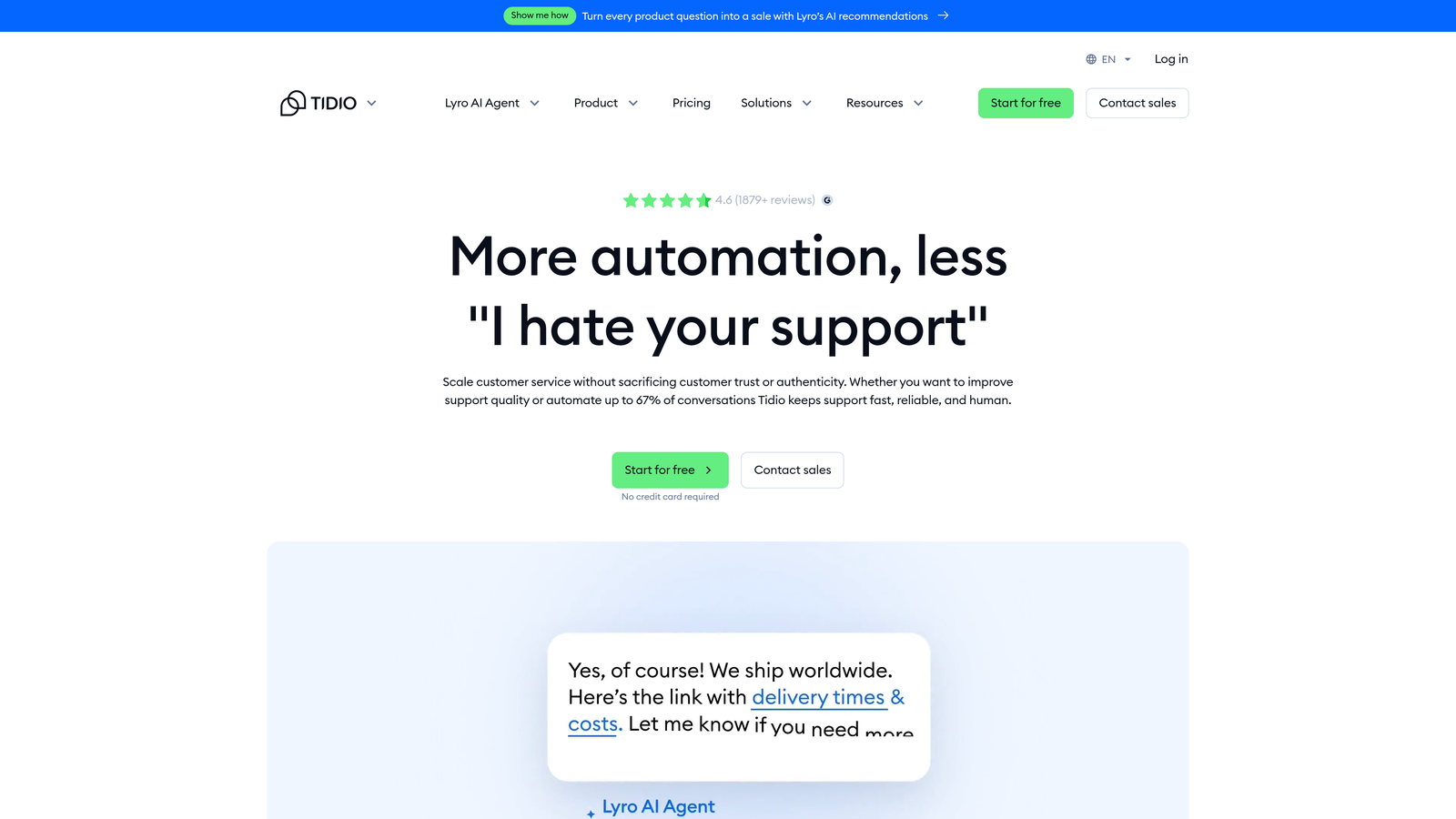
Tidio is a fast-deploy customer service platform with the Lyro AI chatbot, designed for quick setup and strong e-commerce integrations, particularly Shopify and WooCommerce.
Where This Tool Shines
Tidio's defining characteristic is speed to value. Teams can have a functioning AI chatbot live within hours, not days, which matters for small businesses that don't have a dedicated technical team managing their support stack. The visual flow builder makes it accessible to non-developers, and the Shopify integration is tight enough to handle common e-commerce queries without custom configuration.
Lyro AI handles a solid range of common queries autonomously, drawing from your knowledge base and conversation history. For businesses with predictable, high-volume query patterns (order status, returns, FAQs), the deflection rates can be meaningful.
Key Features
Lyro AI Chatbot: Automated query resolution drawing from your knowledge base and past conversations.
Unified Inbox: Live chat, email, and Messenger managed from one interface.
E-Commerce Integrations: Native Shopify and WooCommerce connections for order and product context.
No-Code Flow Builder: Visual chatbot builder for creating custom conversation flows without code.
Quick Deployment: Designed to be live within hours of signup.
Best For
E-commerce SMBs, particularly Shopify and WooCommerce stores, that want AI-assisted support without technical setup overhead. Less suited to complex B2B support workflows or teams that need deep CRM and engineering integrations.
Pricing
Free tier available; paid plans from around $29/month; Lyro AI conversations priced separately. Verify at tidio.com.
6. Gorgias
Best for: E-commerce brands running high-volume support with deep Shopify workflows
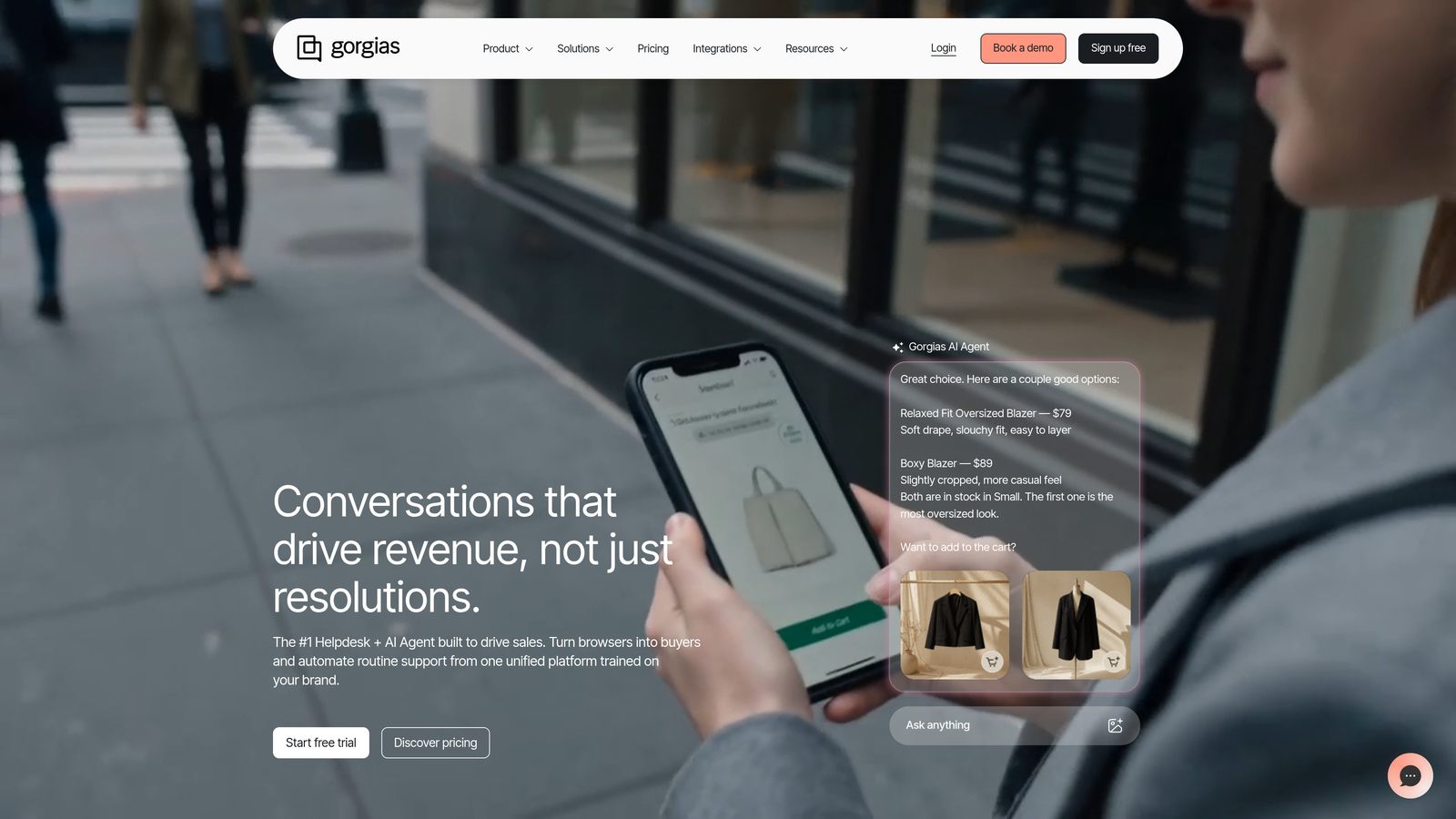
Gorgias is a helpdesk built specifically for e-commerce brands, with deep Shopify integration that lets agents and automations take order actions directly from the support interface.
Where This Tool Shines
Gorgias solves a specific problem extremely well: high-volume e-commerce support where most tickets are about orders, returns, and shipping. The Shopify integration goes beyond data display. Agents can cancel orders, issue refunds, and update shipping details without leaving the helpdesk, which meaningfully reduces handle time for the queries that dominate e-commerce support queues.
The revenue tracking feature ties support interactions to actual sales outcomes, which is genuinely useful for e-commerce teams trying to demonstrate the business impact of great support. That said, Gorgias is purpose-built for e-commerce and doesn't translate well to SaaS or B2B contexts.
Key Features
Deep Shopify Integration: Direct order management, refunds, and shipping updates from within the helpdesk.
Automated Responses: Pre-built automations for order status, return requests, and shipping queries.
Revenue Tracking: Connects support interactions to sales conversions and revenue impact.
Macros and Rules: High-volume ticket automation with conditional routing logic.
Omnichannel Coverage: Email, chat, SMS, and social DMs in one inbox.
Best For
E-commerce brands with high ticket volumes driven by order-related queries, particularly those on Shopify. Not designed for SaaS, B2B, or teams whose support needs extend beyond transactional customer interactions.
Pricing
Starts around $10/month for low ticket volumes; pricing scales by ticket count. Verify at gorgias.com.
7. Drift (Salesloft)
Best for: B2B teams where support, sales qualification, and revenue conversations overlap
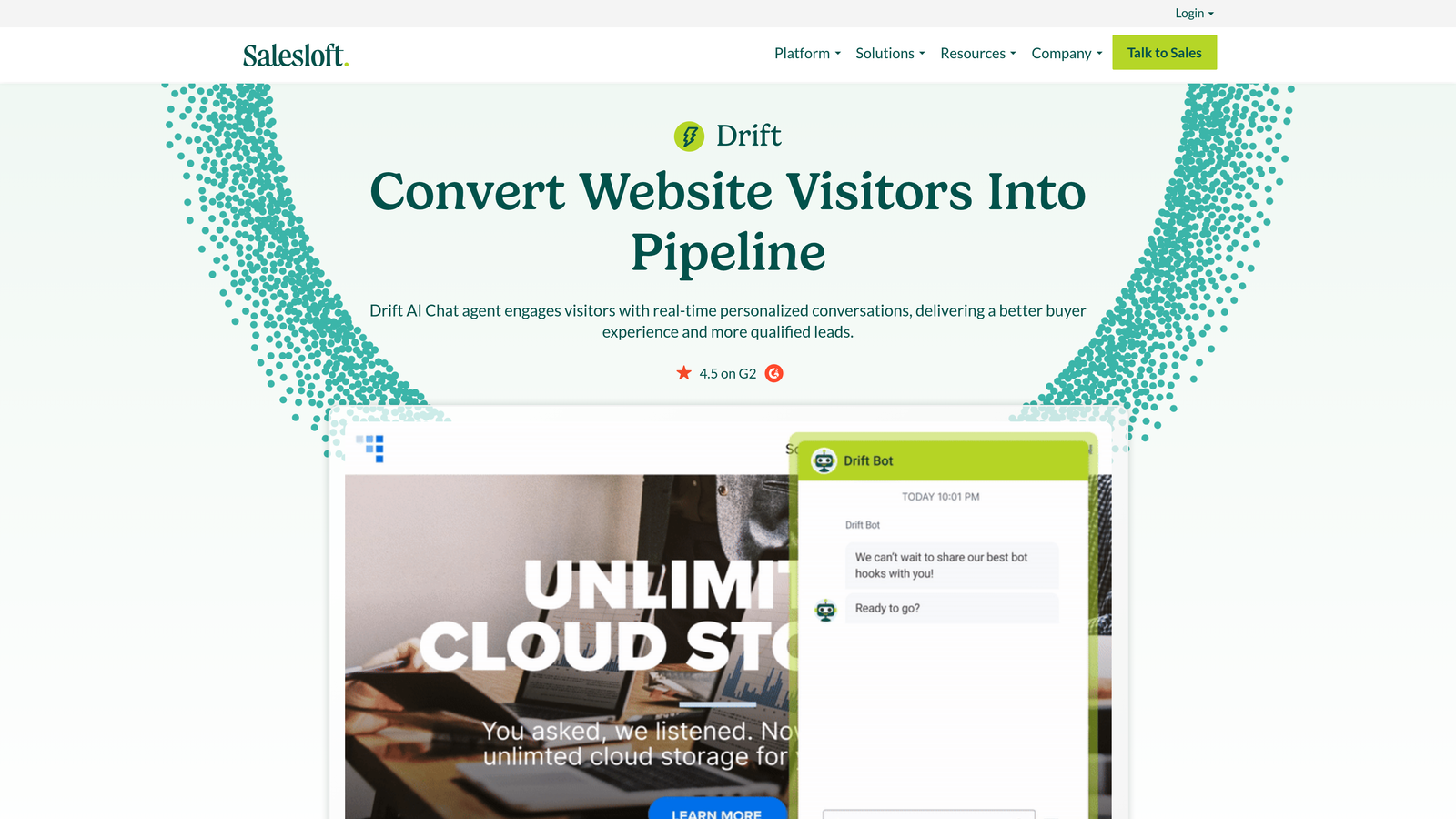
Drift, now part of Salesloft, is a conversational AI platform that blends support automation with sales qualification, routing prospects and customers based on intent signals.
Where This Tool Shines
Drift occupies a unique position in this list because it was never purely a support tool. Its strength is the intersection of support and revenue: identifying whether a website visitor is a prospect, an existing customer, or a churning account, and routing them accordingly. The integration with Salesloft adds revenue context that pure support platforms don't have.
For B2B companies where the line between support and sales is genuinely blurry, this matters. Account-based targeting means high-value accounts get different treatment than anonymous visitors, which is a capability most helpdesks don't offer natively.
Key Features
Intent-Based Routing: AI-powered routing that directs conversations based on visitor behavior and account signals.
Playbooks: Automated qualification and support deflection flows without manual agent intervention.
Salesloft Integration: Revenue and pipeline context available within support and chat workflows.
Meeting Scheduling: Built-in calendar booking embedded directly in chat flows.
Account-Based Targeting: Different experiences for target accounts, customers, and anonymous visitors.
Best For
Enterprise B2B companies where support, sales, and customer success overlap significantly. Strong for teams that want revenue context in their support conversations and are already using or considering Salesloft for sales engagement.
Pricing
Custom pricing. Contact Drift or Salesloft directly at drift.com for current packages.
8. Kustomer
Best for: High-volume consumer brands needing a full customer timeline alongside AI routing
Kustomer is a CRM-native support platform owned by Meta that gives agents a complete customer history in every conversation, with AI handling routing and response suggestions.
Where This Tool Shines
Kustomer's CRM-native architecture is its core differentiator. Rather than pulling customer data from an external CRM into a helpdesk, Kustomer treats the customer timeline as the primary object. Every conversation, purchase, interaction, and data point is visible in one view before the agent types a single character. For high-volume consumer operations where context matters, this reduces the back-and-forth that frustrates customers.
The AI features handle routing and response suggestions competently, though Kustomer's AI layer is more augmentation than autonomous resolution. The platform is most powerful when agents need rich context to handle complex, multi-touchpoint customer relationships.
Key Features
CRM-Native Architecture: Full customer history, purchases, and interactions visible in every conversation window.
AI Routing and Suggestions: Automated ticket routing and agent response recommendations based on conversation content.
Omnichannel Coverage: Email, chat, SMS, voice, and social in a unified timeline view.
Workflow Automation: Complex multi-step process automation for high-volume operations.
Reporting Dashboards: Business intelligence and performance reporting across teams and channels.
Best For
High-volume consumer brands where customer history and relationship context are critical to support quality. Common in DTC, retail, and subscription consumer businesses. Less common in pure B2B SaaS environments.
Pricing
Starts around $89/agent/month. Verify current pricing at kustomer.com.
9. Help Scout
Best for: Teams that prioritize support quality and tone alongside selective, thoughtful automation
Help Scout is a clean, human-first support platform with AI drafts, thread summaries, and a built-in knowledge base, designed for teams that want automation to assist rather than replace their support voice.
Where This Tool Shines
Help Scout is the right tool when your brand voice and support quality are non-negotiable, and you want AI to assist your team rather than run autonomously. The AI Drafts feature generates suggested replies that agents review and edit, which keeps a human in the loop while reducing the blank-page problem for high-volume inboxes. AI Summarize condenses long threads into quick context for agents picking up mid-conversation.
The platform's minimal UI is a genuine asset for teams that find Zendesk or Intercom overwhelming. There's very little configuration overhead, and the learning curve is short enough that new agents are productive quickly.
Key Features
AI Drafts: Suggested replies generated from conversation context, reviewed and sent by agents.
AI Summarize: Condenses long conversation threads into quick-read summaries for agent context.
Shared Inbox with Collision Detection: Collaborative inbox that prevents duplicate responses.
Docs Knowledge Base: Built-in self-service documentation with Beacon chat widget for in-app help.
Customer Profiles: Conversation history and customer data visible alongside every thread.
Best For
Teams that prioritize support tone and quality, where fully autonomous resolution isn't the goal. Strong fit for content-driven businesses, agencies, and SaaS companies with a high-touch support philosophy. Less suitable for teams that need deep automation depth or complex engineering integrations.
Pricing
Starts around $22/user/month. Verify current pricing at helpscout.com.
Choosing the Right Tool for Your Team
The right customer service automation tool depends almost entirely on your context: your team size, your customer base, your existing stack, and how much autonomous resolution you actually want.
Here's a quick-reference breakdown by use case:
AI-first architecture for B2B SaaS: Halo AI is built for this. Autonomous resolution, page-aware guidance, bug ticket routing, and business intelligence in one platform designed specifically for product-led teams.
Enterprise helpdesk at scale: Zendesk remains the benchmark for complex, multi-channel, compliance-heavy environments where configuration depth and a large integration marketplace matter most.
SMB budget with room to grow: Freshdesk offers the best combination of accessible pricing and a credible AI roadmap for teams scaling from email to a structured helpdesk.
E-commerce support: Gorgias wins for Shopify-heavy operations with high order-related ticket volumes. Tidio is the better choice for smaller stores that need fast deployment over deep workflow customization.
Revenue-aligned support: Drift (Salesloft) is the natural fit for B2B teams where support, sales qualification, and account management overlap and revenue context belongs in every conversation.
Human-first with selective AI: Help Scout is the clear choice for teams where brand voice and support quality come first, and automation is a tool for assistance rather than replacement.
Your support team shouldn't scale linearly with your customer base. Let AI agents handle routine tickets, guide users through your product, and surface business intelligence while your team focuses on complex issues that need a human touch. See Halo in action and discover how continuous learning transforms every interaction into smarter, faster support.