9 Best Customer Service Automation Tools for SaaS in 2026
This guide reviews the 9 best customer service automation tools for SaaS teams in 2026, evaluating each on automation depth, integration ecosystem, and scalability. Whether you run a lean startup or a growing product org, you'll find a clear, practical recommendation to resolve tickets faster, reduce agent burnout, and surface actionable product insights.
 Grant CooperFounder13 min read
For SaaS teams, customer support isn't just a cost center. It's a growth signal. When tickets pile up faster than your team can respond, you lose retention, burn out agents, and miss the product insights hiding inside every conversation.
The right customer service automation tools change that equation entirely. They resolve common issues instantly, surface patterns across thousands of tickets, and free your human agents to focus on conversations that actually need them. But not all tools are built the same way, and the difference between a bolt-on AI layer and a purpose-built autonomous platform matters more than ever in 2026.
This list covers the top tools built for SaaS support workflows. We've evaluated each on automation depth, integration ecosystem, scalability, and how well they fit the realities of a SaaS support team. Whether you're a lean startup or a scaling product org, you'll find a clear recommendation here.
1. Halo AI
Best for: SaaS teams that want autonomous ticket resolution with continuous learning and business intelligence built in.
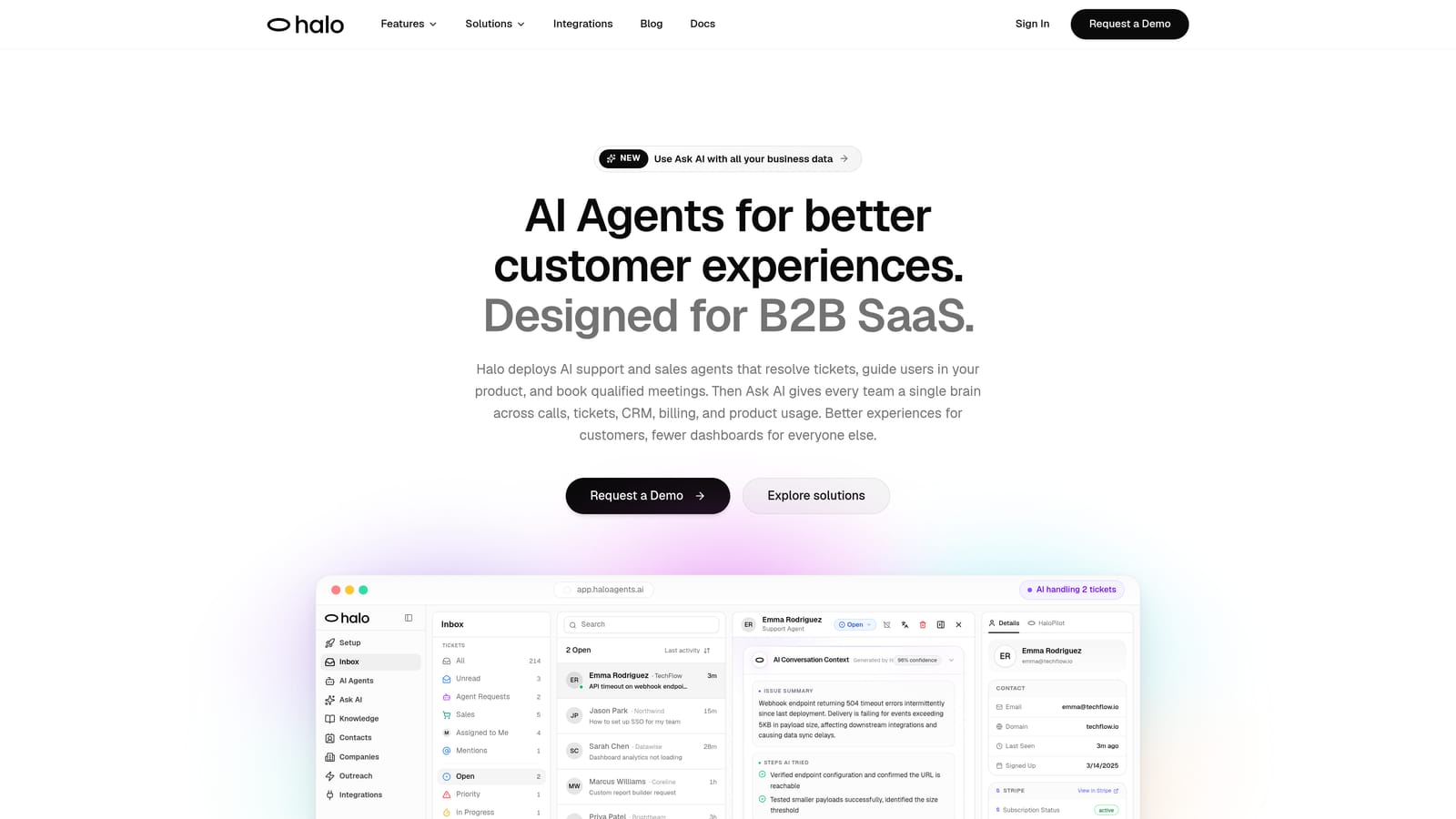
Halo AI is an AI-first customer support platform purpose-built for SaaS teams, deploying autonomous agents that resolve tickets, guide users through your product, and surface actionable intelligence from every interaction.
Where This Tool Shines
Halo is built from the ground up as an AI-first platform, not a helpdesk with AI bolted on afterward. That architectural difference shows up in practice: the agents don't just suggest responses, they resolve tickets end-to-end, learning from every interaction so performance improves continuously without manual retraining cycles.
The page-aware chat widget is a genuinely differentiated capability. When a user opens a support conversation, Halo already knows exactly where they are in your product and what they're looking at. That context changes the quality of support dramatically, especially for complex SaaS products where the same question means something different depending on which screen the user is on.
Key Features
Autonomous Ticket Resolution: AI agents handle inbound tickets end-to-end, with continuous learning from every interaction baked into the architecture.
Page-Aware Chat Widget: Understands exactly where a user is in your product when they ask for help, delivering contextually precise guidance rather than generic answers.
Smart Inbox with Business Intelligence: Surfaces customer health signals, revenue anomalies, churn indicators, and feature request patterns directly from support conversations.
Auto Bug Ticket Creation: Automatically creates structured bug reports in Linear when support conversations reveal product issues, closing the loop between support and engineering.
Live Agent Handoff: Escalates to human agents with full conversation context preserved, so nothing gets repeated and no context is lost.
Deep SaaS Stack Integrations: Connects natively with Slack, HubSpot, Intercom, Stripe, Zoom, PandaDoc, and Fathom, fitting into your existing workflow rather than replacing it.
Best For
SaaS teams that have outgrown basic helpdesk automation and want a platform that operates autonomously, learns continuously, and delivers intelligence beyond just ticket deflection. Particularly strong for product-led growth companies and teams managing complex, multi-step support workflows.
Pricing
Contact for pricing. A demo is available at haloagents.ai to see the platform in action before committing.
2. Intercom
Best for: SaaS teams wanting a mature conversational support platform with a polished messenger experience.
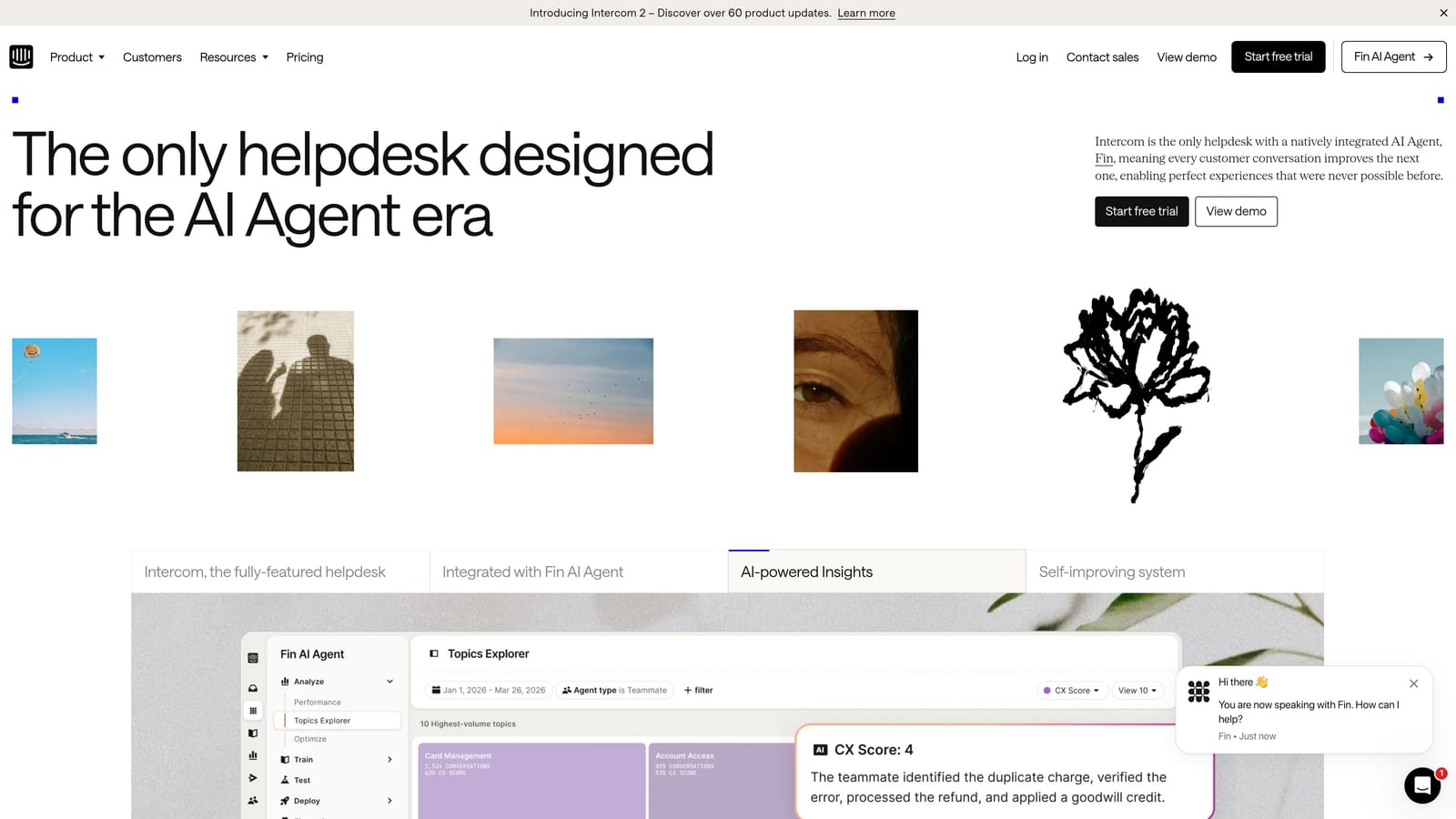
Intercom is one of the most established conversational support platforms in the SaaS ecosystem, combining a polished messenger experience with Fin AI agent for autonomous query resolution.
Where This Tool Shines
Intercom's strength is its depth of product maturity. The messenger experience is polished, the segmentation capabilities are sophisticated, and the integration marketplace is extensive. Many SaaS teams have built their entire customer communication layer on top of it, using it for onboarding, support, and proactive messaging from a single platform.
Fin, Intercom's AI agent, handles a meaningful portion of inbound queries autonomously. It's built on large language models and can resolve common questions without human intervention. The limitation is that AI feels like a layer on top of the existing platform rather than the foundational architecture, which can show up in more complex resolution scenarios.
Key Features
Fin AI Agent: Handles inbound queries autonomously using large language model capabilities, resolving common questions without routing to a human agent.
Conversational Messenger: Polished in-product chat with proactive messaging capabilities for onboarding and engagement, not just reactive support.
Unified Platform: Inbox, tickets, and help center all in one place, reducing the need to context-switch between tools.
Customer Data Platform: Robust segmentation based on user behavior and attributes, enabling targeted support and messaging.
App Marketplace: Large ecosystem of integrations purpose-built for SaaS workflows and tech stacks.
Best For
SaaS teams that want a single platform for support, onboarding, and proactive messaging, and are willing to invest in a mature product with significant feature depth. Particularly strong for teams that already use Intercom for customer communication beyond support.
Pricing
Starts at approximately $39/month, scaling with seat count and resolution volume. Check intercom.com for current pricing as it varies by plan and usage.
3. Zendesk
Best for: Enterprise SaaS teams needing highly configurable ticketing, SLA management, and compliance-grade infrastructure.
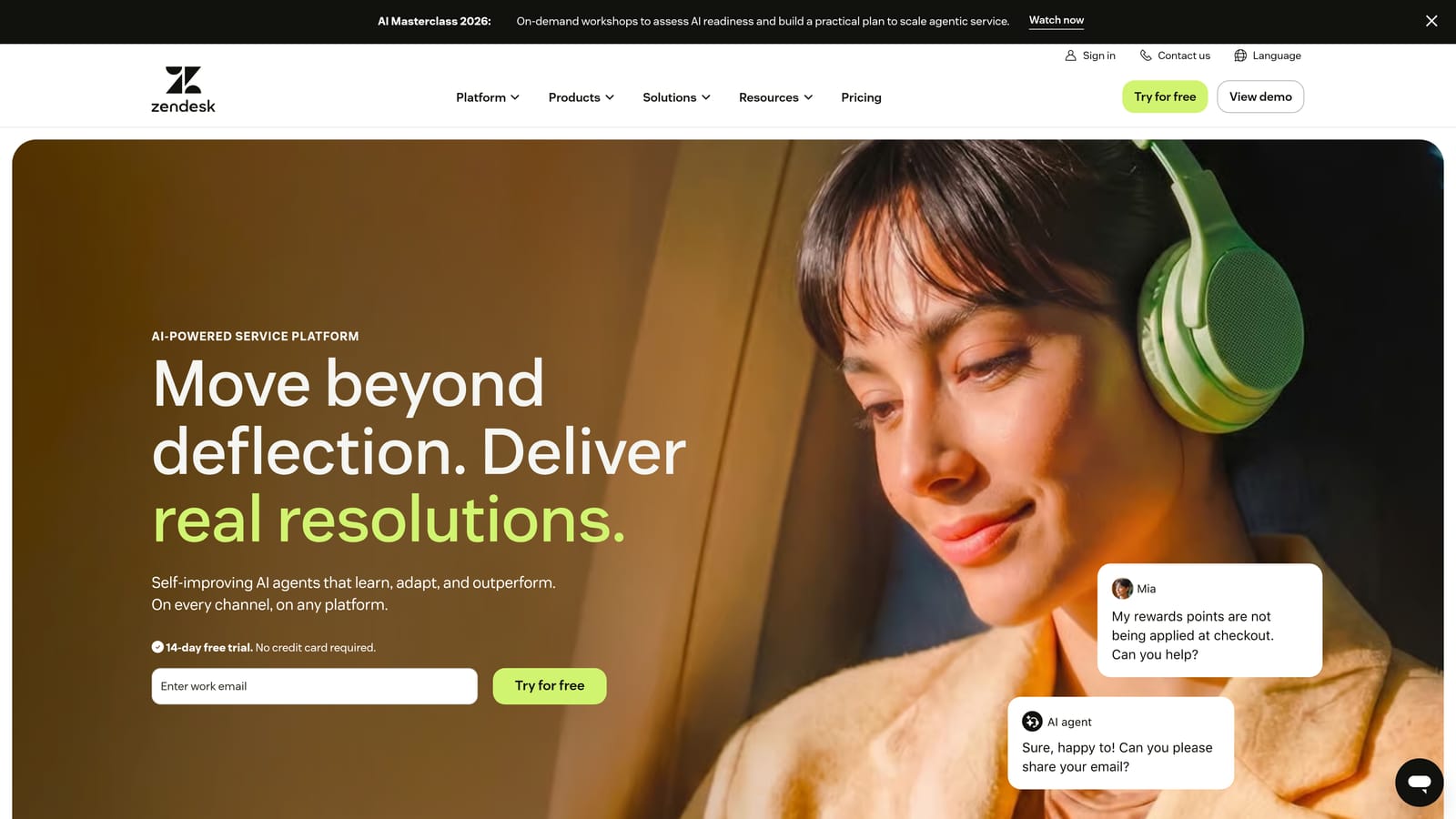
Zendesk is the market-leading helpdesk for enterprise and scaling SaaS, offering deep configurability, omnichannel support, and an AI layer for intent detection and agent assist.
Where This Tool Shines
Zendesk's configurability is genuinely impressive. SLA rules, escalation workflows, routing logic, and reporting can be tuned to match almost any support operation's requirements. For teams operating at scale with complex compliance requirements, that flexibility is hard to match.
Zendesk AI adds intent detection, auto-triage, and agent suggestions to the core platform. It's useful, but it's worth noting that the AI capabilities feel additive rather than foundational. The platform's primary identity is still a ticketing system, and the AI enhances it rather than reimagining it.
Key Features
Advanced Ticketing: SLA rules, escalation workflows, and routing logic that can be configured to match complex support operations.
Zendesk AI: Intent detection, auto-triage, and agent suggestions that reduce manual work without fully automating resolution.
Omnichannel Support: Email, chat, voice, and social channels unified in a single agent workspace.
Integration Marketplace: Over 1,000 integrations covering virtually every tool in a SaaS tech stack.
Enterprise Compliance: Security posture and compliance certifications suited to enterprise procurement requirements.
Best For
Enterprise SaaS teams with complex support operations, strict compliance requirements, and the resources to configure and maintain a sophisticated helpdesk environment. Less ideal for teams that want AI-first automation out of the box.
Pricing
Suite plans start around $55/agent/month. Check zendesk.com for current pricing across plan tiers.
4. Freshdesk
Best for: Cost-conscious SaaS teams and early-stage startups looking for accessible automation with a usable free tier.
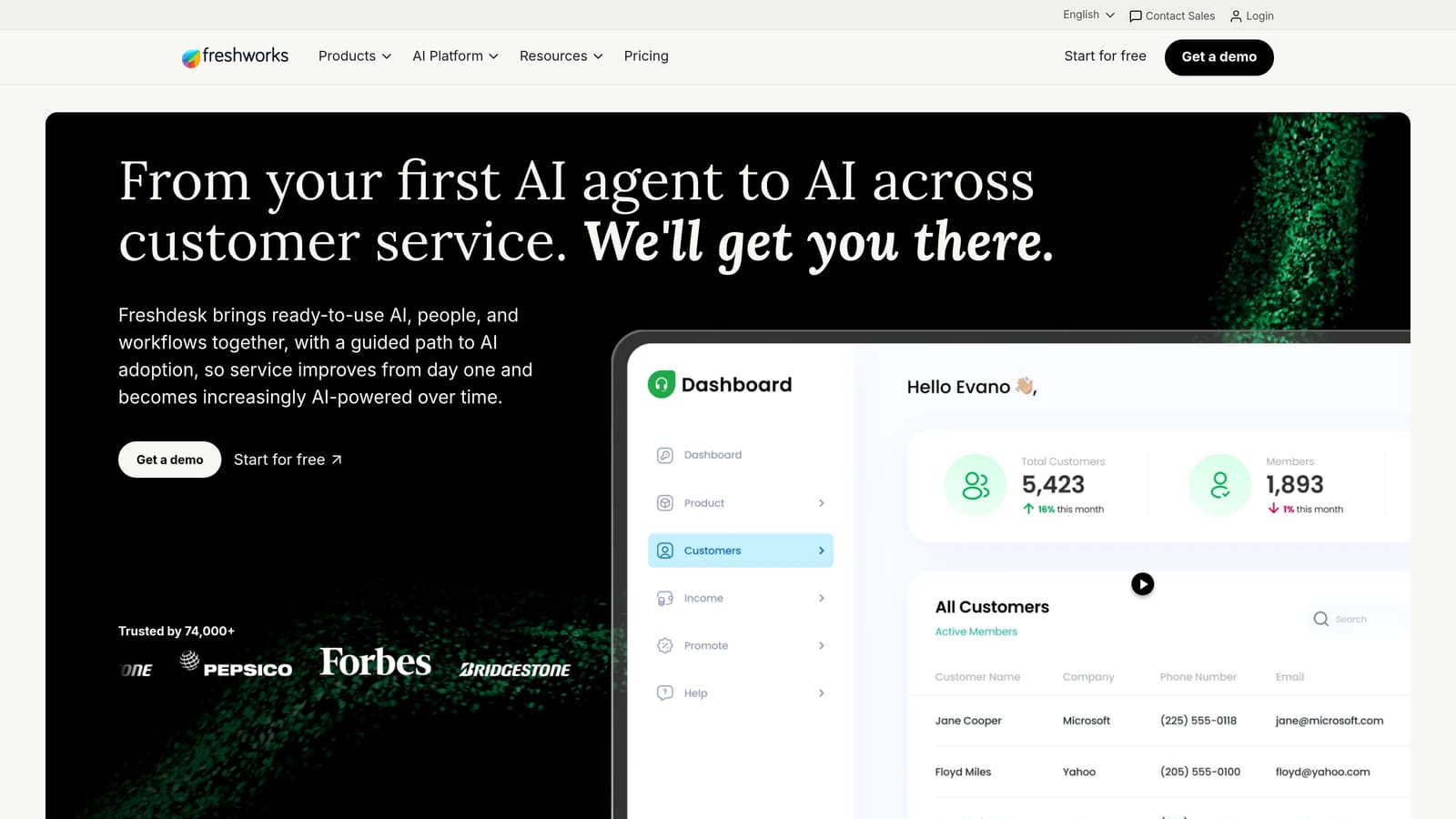
Freshdesk is Freshworks' helpdesk product, offering solid automation capabilities and Freddy AI at a more accessible price point than enterprise alternatives.
Where This Tool Shines
Freshdesk's free tier is genuinely functional, not just a stripped-down teaser. Early-stage SaaS teams can get real value from it before ever touching a paid plan. The onboarding experience is smoother than Zendesk's, and the time-to-value is shorter for teams that don't need deep customization.
Freddy AI handles auto-categorization, suggested responses, and basic chatbot flows. It's not as capable as more AI-native platforms, but for teams primarily looking to reduce manual triage and speed up response times, it does the job reliably.
Key Features
Freddy AI: Auto-categorization, suggested responses, and chatbot flows that reduce manual work for common query types.
Free Tier: Core helpdesk functionality at no cost, genuinely useful for teams in early stages.
Omnichannel Coverage: Email, chat, phone, and social channels supported across paid tiers.
Automation Rules: Ticket routing, SLA management, and workflow automation configurable without engineering involvement.
Freshworks Ecosystem: Native integration with Freshworks CRM and access to third-party integrations through the marketplace.
Best For
Early-stage SaaS teams that need a functional helpdesk quickly and want room to grow into paid tiers without a steep learning curve. Also strong for teams already using other Freshworks products who want ecosystem cohesion.
Pricing
Free tier available with core helpdesk features. Paid plans start around $15/agent/month. Check freshworks.com for current plan details.
5. Tidio
Best for: Small SaaS teams and PLG companies needing fast-to-deploy chat automation without a heavy implementation lift.
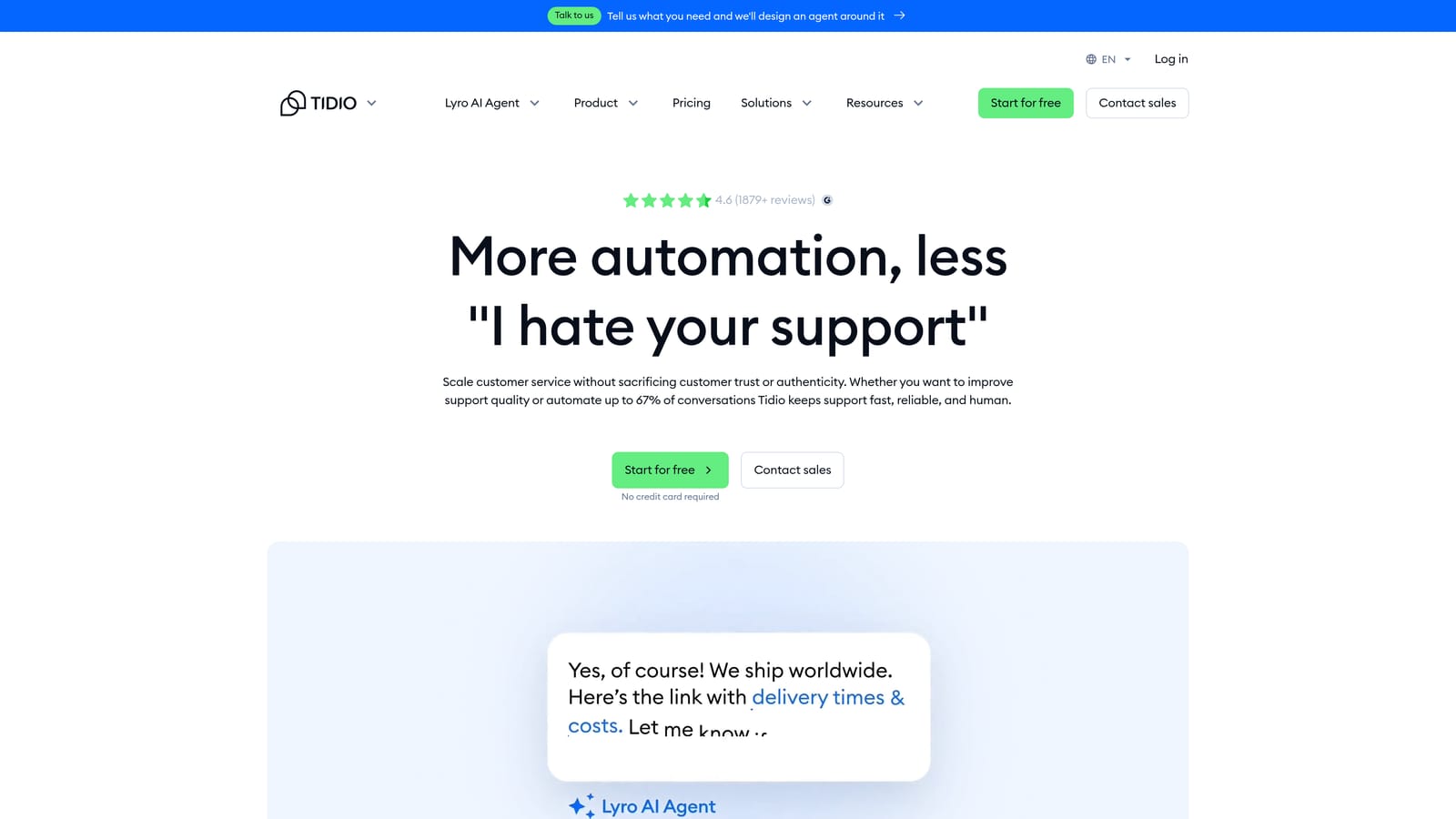
Tidio is a live chat and AI chatbot platform featuring Lyro AI agent, designed for quick deployment and accessible automation without requiring technical expertise.
Where This Tool Shines
Tidio's biggest advantage is speed. You can have a working chatbot live on your product in hours, not weeks. The visual flow builder requires no coding, and the pre-built templates cover the most common SaaS support scenarios well enough to get meaningful automation running immediately.
Lyro, Tidio's AI conversational agent, handles autonomous chat resolution for common queries. It's well-suited to the volume and complexity typical of smaller SaaS teams. Where Tidio shows its limits is in ticketing depth and the kind of business intelligence that larger operations need from their support stack.
Key Features
Lyro AI Agent: Autonomous conversational AI that resolves common chat queries without human intervention.
Visual Flow Builder: No-code chatbot builder with pre-built templates, making it accessible to non-technical team members.
Live Chat with Visitor Monitoring: Real-time visibility into active visitors with the ability to proactively engage.
Multi-Channel Support: Email and Messenger channels supported alongside the core live chat functionality.
Quick Setup: Pre-built templates and straightforward onboarding designed to minimize time-to-value.
Best For
Small SaaS teams and product-led growth companies that prioritize chat automation and fast deployment over deep ticketing functionality. A strong fit when the primary goal is reducing first-response time on common queries.
Pricing
Free plan available. Paid plans start around $29/month. Check tidio.com for current pricing and feature breakdowns.
6. Help Scout
Best for: Customer-success-led SaaS teams that prioritize relationship quality alongside resolution speed.
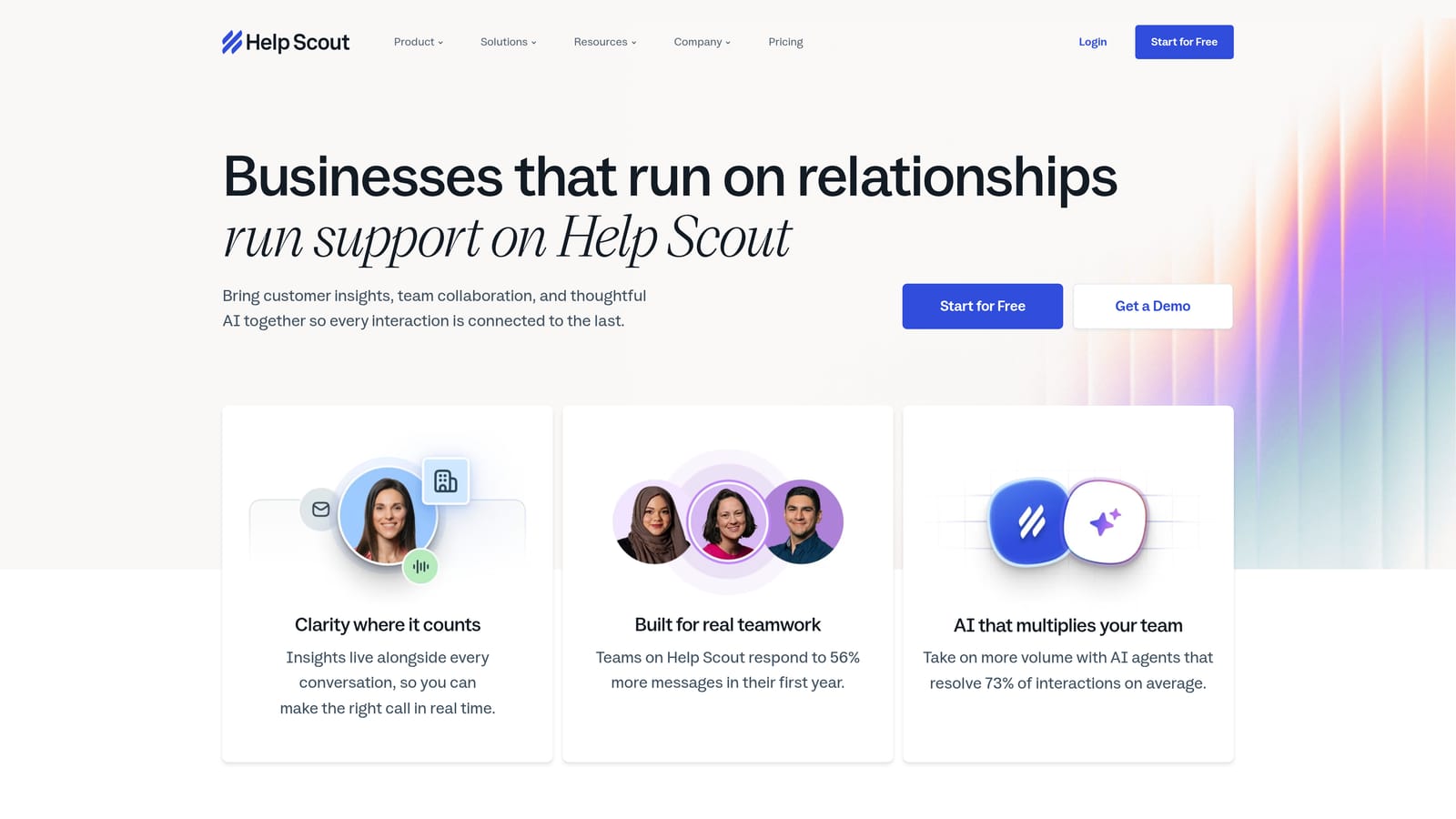
Help Scout is a human-centric support platform built around a shared inbox model, with AI drafting and summarization features designed to enhance agent quality rather than replace the human touch.
Where This Tool Shines
Help Scout has a loyal following among SaaS teams where the support experience is a product differentiator in itself. The shared inbox feels like email rather than a ticket queue, which changes how agents approach conversations. The result is typically higher-quality, more personal responses, and agents who actually enjoy using the tool.
The AI features, including reply drafting and thread summarization, are positioned as agent accelerators rather than autonomous resolvers. For teams where a human touch is part of the value proposition, that's a feature, not a limitation.
Key Features
Shared Inbox: Collaborative email-like interface that feels approachable to agents and customers alike, without the impersonal feel of a traditional ticket queue.
AI Drafts and Summarize: AI-suggested replies and automatic thread summarization that reduce the cognitive load on agents without removing them from the conversation.
Docs Knowledge Base: Integrated knowledge base that surfaces relevant articles to agents and customers during support interactions.
Customer Profiles: Full conversation history and customer context visible in every thread, reducing the need to ask for information twice.
Collision Detection: Prevents two agents from drafting responses to the same conversation simultaneously.
Best For
SaaS teams where customer relationships are a core part of the product experience, particularly those in customer success, high-touch sales cycles, or premium tiers where personalized support is expected.
Pricing
Plans start around $22/user/month. Check helpscout.com for current pricing and plan comparisons.
7. Gorgias
Best for: SaaS teams with billing-heavy or subscription-management support queues needing commerce-layer integrations.
Gorgias is a support automation platform with strong transactional integrations, increasingly adopted by SaaS companies where billing, subscription management, and revenue context matter in support conversations.
Where This Tool Shines
Gorgias was originally built for e-commerce, and that heritage shows up as a genuine strength for SaaS companies with a commerce layer. The ability to pull in Stripe data, subscription status, and billing history directly into a support conversation changes how agents handle billing-related tickets. Instead of asking customers to repeat their account details, the agent already has the context.
The revenue-linked ticket reporting is a differentiator worth noting. Being able to see the direct relationship between support interactions and retention outcomes is the kind of intelligence that makes support a strategic function rather than a cost center.
Key Features
Intent-Based Automation: Automation rules that trigger based on detected customer intent, routing and responding to common query types without manual intervention.
Revenue-Linked Reporting: Connects support ticket data to retention and revenue outcomes, making the business impact of support visible.
Commerce Integrations: Deep integrations with Shopify, Stripe, and subscription billing tools for full billing context in every conversation.
Macros and Auto-Responses: High-volume repetitive query handling through templated responses and automation rules.
Omnichannel Coverage: Email, chat, social, and SMS channels in a unified workspace.
Best For
SaaS companies with significant billing, subscription, or commerce support volume. Less compelling for pure B2B SaaS without a transactional support component, where the commerce-layer integrations won't deliver their full value.
Pricing
Plans start around $10/month for low volume, scaling by ticket count. Check gorgias.com for current pricing tiers.
8. Drift (Salesloft)
Best for: SaaS teams where support conversations and sales pipeline overlap, particularly in PLG and account expansion motions.
Drift, now part of Salesloft, is a conversational AI platform that blurs the line between support and sales, with strong routing intelligence and deep CRM integration.
Where This Tool Shines
Drift's core strength is its ability to handle conversations that don't fit neatly into "support" or "sales." For PLG companies where a free user asking a support question might be one conversation away from converting to a paid plan, Drift's routing intelligence can identify that signal and respond accordingly.
The CRM integration is robust, particularly with Salesforce and HubSpot. Account-based targeting means the conversation experience can be personalized based on company size, plan tier, or deal stage, which is a genuine differentiator for SaaS teams managing complex account relationships.
Key Features
AI Conversation Routing: Intelligently routes conversations between support and sales based on user signals and intent.
Playbooks: Structured conversation flows for qualifying, routing, and responding to inbound conversations without manual intervention.
CRM Integration: Deep, bidirectional integration with Salesforce and HubSpot, keeping support and sales data aligned.
Account-Based Targeting: Personalized chat experiences based on company attributes and relationship stage.
In-Conversation Scheduling: Meeting booking built directly into the conversation flow, removing friction from the handoff to a human.
Best For
SaaS teams with an account expansion or PLG motion where support and pipeline regularly intersect. Less suited for teams primarily focused on deep ticket resolution or technical support workflows.
Pricing
Enterprise pricing applies. Contact Drift or Salesloft directly for current rates and packaging.
9. Zoho Desk
Best for: SaaS teams operating within the Zoho ecosystem who want cost-effective, unified support automation.
Zoho Desk is an omnichannel helpdesk with Zia AI for sentiment analysis, anomaly detection, and auto-tagging, best suited for teams already invested in the Zoho product suite.
Where This Tool Shines
Zoho Desk's value proposition is strongest in context. If your team is already using Zoho CRM, Zoho Analytics, and other Zoho products, the native integrations create a level of data cohesion that's hard to replicate with third-party connectors. Support data flows naturally into CRM records and analytics dashboards without custom integration work.
Zia AI provides some genuinely useful capabilities, particularly ticket volume anomaly detection, which can alert your team to emerging issues before they become support crises. Sentiment analysis across the queue gives managers an early warning system for customer experience degradation.
Key Features
Zia AI: Sentiment analysis, auto-tagging, and ticket volume anomaly detection that surface operational insights across the support queue.
Omnichannel Support: Email, chat, phone, social, and web form channels unified in a single agent workspace.
Blueprint Workflow Automation: Multi-step process automation for complex support workflows that require structured escalation paths.
Zoho Ecosystem Integration: Native, deep integration with Zoho CRM, Zoho Analytics, and the broader Zoho suite without third-party connectors.
Self-Service Portal: Knowledge base and community forums that deflect common queries before they reach the support queue.
Best For
SaaS teams already operating within the Zoho ecosystem who want cost-effective helpdesk automation with strong CRM data alignment. Less compelling as a standalone choice if you're not already using other Zoho products.
Pricing
Free plan available for up to 3 agents. Paid plans start around $14/agent/month. Check zoho.com/desk for current plan details.
Which Tool Is Right for Your SaaS Team?
The right choice here depends almost entirely on where your team is right now and where you're trying to go.
If you're an early-stage startup watching your ticket volume grow faster than your headcount, Freshdesk or Tidio give you a functional automation layer quickly without significant upfront investment. Both have free or low-cost entry points that let you prove value before committing.
If you're scaling and want a mature platform with deep configurability, Intercom and Zendesk are the established standards. Intercom is stronger for teams that want conversational support and proactive messaging in one place. Zendesk is the better fit when compliance requirements, SLA complexity, or enterprise procurement processes are in play.
For teams with specific use case needs: Help Scout for high-touch, relationship-led support. Gorgias for billing-heavy support queues. Drift for teams where support and pipeline overlap. Zoho Desk for teams already embedded in the Zoho ecosystem.
If you're looking for a platform that doesn't just automate support but makes it smarter over time, Halo AI is built for exactly that. The combination of autonomous ticket resolution, page-aware context, and business intelligence extracted from every interaction means you're not just deflecting tickets. You're learning from them. See Halo in action and discover how continuous learning transforms every interaction into smarter, faster support that scales without scaling headcount.