9 Best Customer Service Chatbot Platforms in 2026
This guide evaluates the 9 best customer service chatbot platforms for 2026, helping B2B SaaS and product teams find the right solution to deflect repetitive tickets, improve resolution rates, and scale support without adding headcount. Platforms are ranked across AI capability, integration depth, deployment ease, and pricing transparency to match tools to teams at every stage of growth.
 Matt PattoliFounder13 min read
The gap between a chatbot that frustrates customers and one that genuinely resolves their issues comes down to the platform powering it. For B2B teams managing growing support queues, the right customer service chatbot platform can deflect repetitive tickets, surface product insights, and hand off complex issues to human agents without adding headcount.
This list covers platforms evaluated on AI capability, integration depth, scalability, and value for B2B SaaS and product teams. Whether you're running a lean startup support operation or scaling an enterprise helpdesk, there's a clear fit here. We've included platforms across the spectrum, from AI-native agents to chatbot builders layered onto existing helpdesks, so you can match the tool to where your team actually is today.
Selection criteria: autonomous resolution capability, integration ecosystem, ease of deployment, pricing transparency, and suitability for B2B product teams.
1. Halo AI
Best for: B2B SaaS teams that want AI-native support with product-level context and business intelligence.
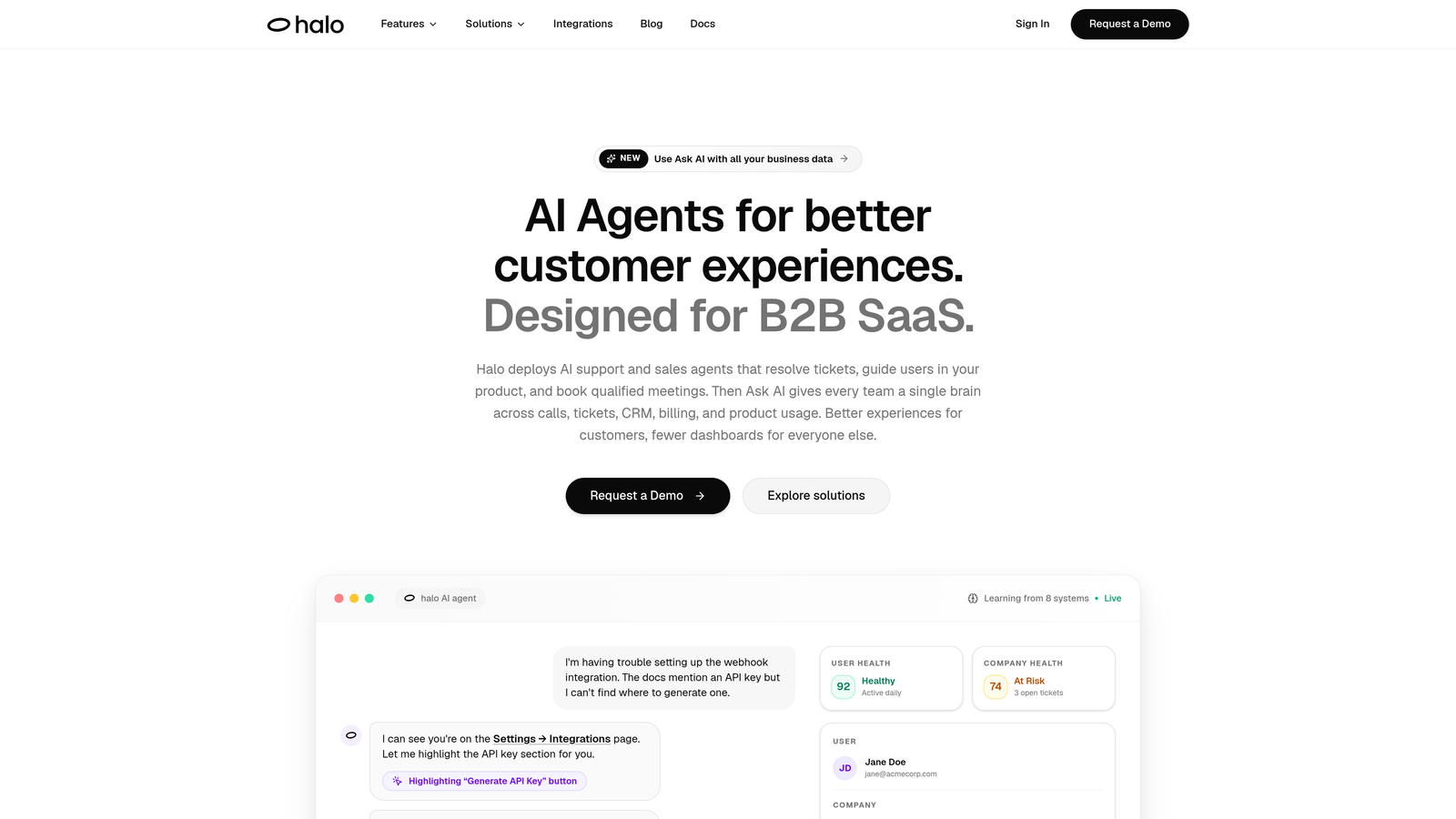
Halo AI is an AI-first customer support platform built specifically for B2B SaaS teams who need more than a basic chatbot.
Where This Tool Shines
Most chatbot platforms bolt AI onto an existing helpdesk. Halo is built differently: its architecture is AI-native from the ground up, which means the learning loops, context handling, and resolution capabilities aren't constrained by legacy ticketing infrastructure. Every interaction trains the system to get smarter over time.
What sets Halo apart for product teams is page-aware context. The chat widget can see what a user is looking at inside your product UI, which means it can offer guidance that's actually relevant to the screen they're on rather than generic FAQ responses. That kind of contextual awareness is rare and genuinely changes the quality of self-service resolution.
Key Features
Page-Aware Chat Widget: Sees what users see in your product UI, enabling contextually relevant guidance without users having to describe where they are.
Autonomous Ticket Resolution: AI agents resolve tickets independently and continuously learn from every interaction to improve future responses.
Auto Bug Ticket Creation: Automatically generates and routes bug reports to engineering tools like Linear, closing the loop between support and product.
Smart Inbox with Business Intelligence: Surfaces customer health signals, revenue anomalies, and product friction patterns directly from support data.
Live Agent Handoff: Escalates complex issues to human agents with full conversation context preserved, so customers never have to repeat themselves.
Integration Ecosystem: Connects with Slack, HubSpot, Intercom, Stripe, Zoom, PandaDoc, and Fathom.
Best For
B2B SaaS companies and product teams that want AI to do more than deflect tickets. If you need support data to feed back into product decisions, customer health monitoring, and bug tracking, Halo is built for that kind of operational depth. Particularly well-suited for teams scaling support without scaling headcount.
Pricing
Contact for pricing at haloagents.ai. Given the platform's enterprise-grade capabilities, pricing is tailored to team size and use case.
2. Intercom
Best for: Teams already invested in the Intercom ecosystem who want AI resolution layered onto their existing messaging setup.
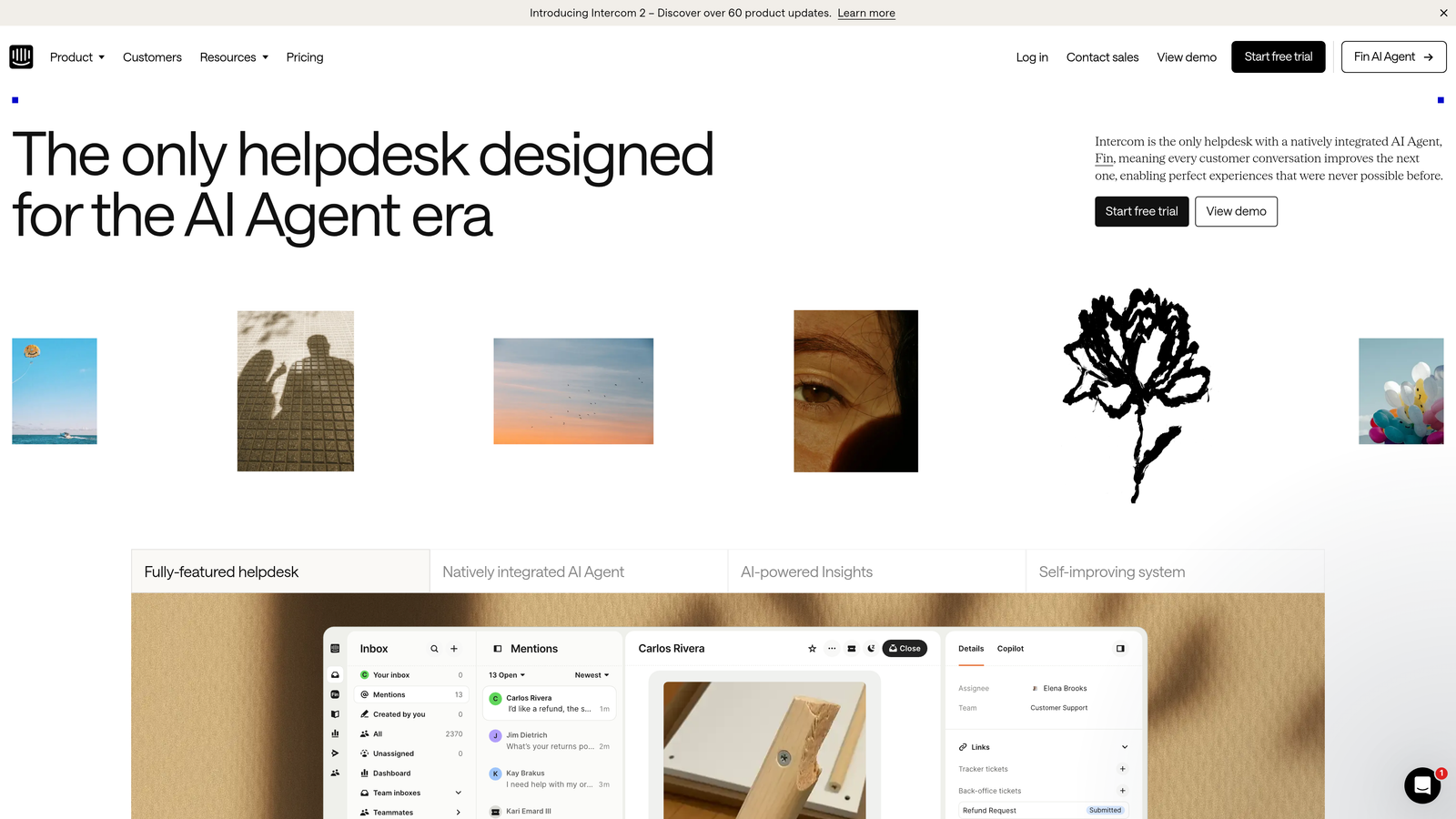
Intercom is a mature customer messaging platform featuring Fin, its GPT-4-powered AI agent built to resolve support queries autonomously using your existing help content.
Where This Tool Shines
Intercom's strength is its unified platform. Articles, Inbox, Reporting, and now Fin AI all live in one place, which reduces the integration overhead that plagues teams stitching together separate tools. If your team is already using Intercom for messaging, adding Fin is a natural next step rather than a platform change.
Fin's approach to AI resolution is content-driven: it trains on your existing help articles and support documentation. That makes onboarding relatively fast for teams with a mature knowledge base, though it also means the quality of Fin's answers is tied directly to the quality of your existing content.
Key Features
Fin AI Agent: GPT-4-powered resolution trained on your help articles and historical support content.
Omnichannel Messaging: Covers in-app chat, email, SMS, and social channels from a single platform.
Integrated Toolset: Articles, Inbox, and Reporting are all native to the platform, reducing tool fragmentation.
Per-Resolution Pricing: Fin AI charges based on resolved conversations rather than seats, which aligns cost with actual value delivered.
Third-Party Integrations: Strong ecosystem of app integrations for CRMs, billing tools, and product platforms.
Best For
Companies already on Intercom who want to add AI resolution without migrating platforms. Also a solid choice for teams that value a polished, all-in-one messaging experience with strong omnichannel coverage.
Pricing
Fin AI charges per resolution; base plans start around $39/seat/month. Verify current rates at intercom.com/pricing.
3. Zendesk AI
Best for: Enterprise teams running complex, multi-channel support workflows on the Zendesk Suite.
Zendesk AI embeds intelligent automation directly into the Zendesk Suite, including triage, automated responses, and a self-service bot for deflecting common queries.
Where This Tool Shines
Zendesk AI's biggest advantage is how deeply it integrates with the Zendesk ecosystem. Intelligent triage automatically tags, routes, and prioritizes tickets before they ever reach an agent. For high-volume enterprise support teams, that kind of automation at the top of the funnel can meaningfully reduce the burden on human agents.
The Advanced AI add-on extends these capabilities with an agent copilot that provides real-time suggestions during live conversations. For teams that handle complex, nuanced support cases that can't be fully automated, the copilot model is a practical middle ground between full automation and unassisted agents.
Key Features
Intelligent Triage: Automatically tags, routes, and prioritizes incoming tickets based on content and context.
AI-Suggested Replies: Surfaces response suggestions for agents to speed up resolution without full automation.
Zendesk Bot: Self-service deflection for common queries before tickets reach the queue.
Advanced AI Add-On: Deeper automation and agent copilot features for teams that need more than basic triage.
Enterprise Compliance: Robust security, audit controls, and compliance certifications suited for regulated industries.
Best For
Enterprises already on Zendesk Suite that want to layer AI onto their existing workflows without a platform migration. Also well-suited for teams in regulated industries where compliance and security credentials matter.
Pricing
AI features are available as an add-on; Suite plans start around $55/agent/month. Verify current rates at zendesk.com/pricing.
4. Freshdesk Freddy AI
Best for: Teams on the Freshworks ecosystem who want AI capabilities without changing platforms.
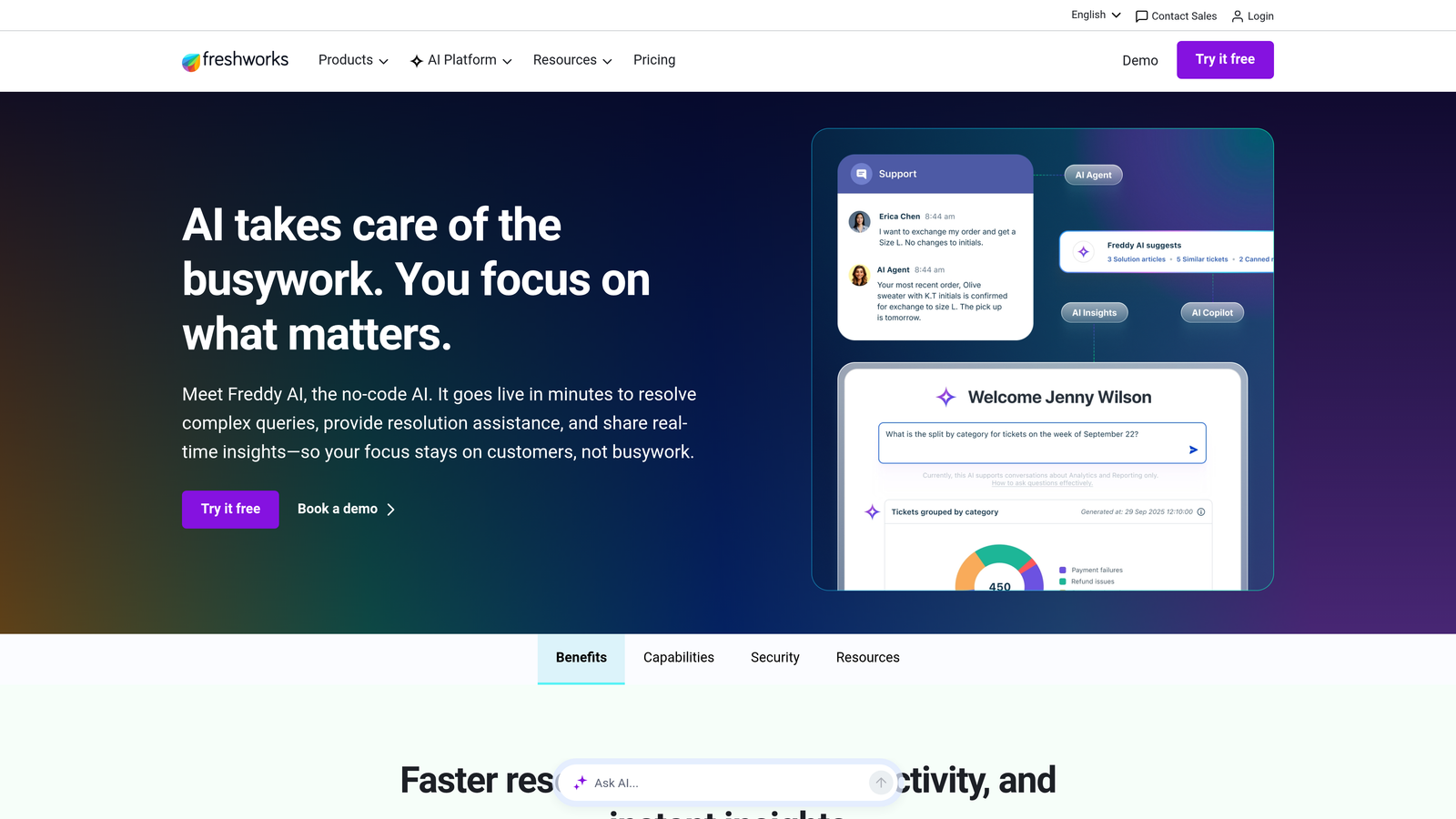
Freshdesk Freddy AI is Freshworks' AI layer embedded across Freshdesk, Freshchat, and Freshsales, covering self-service, agent assist, and analytics in one cohesive system.
Where This Tool Shines
Freddy AI is built for teams that want to add intelligence to their support operation without ripping out their existing stack. Because it's embedded natively across the Freshworks suite, there's no separate integration to maintain. Self-service, agent assist, and analytics all share the same data layer, which makes the insights more coherent than stitched-together point solutions.
Freddy Insights is particularly useful for support managers. It surfaces anomalies and trends in ticket data automatically, which means you're not waiting for a weekly report to notice that a specific feature is generating a spike in complaints.
Key Features
Freddy Self Service: Chatbot for ticket deflection and FAQ resolution without human involvement.
Freddy Copilot: Real-time suggestions and conversation summarization for live agents.
Freddy Insights: AI-powered analytics with anomaly detection and trend identification.
No-Code Bot Configuration: Non-technical teams can configure and update bots without developer involvement.
Suite-Wide Embedding: Freddy features are available across Freshdesk, Freshchat, and Freshsales without separate integrations.
Best For
Teams already using Freshdesk or the broader Freshworks suite who want to activate AI features incrementally. Also a strong option for mid-market teams that need no-code configurability without sacrificing analytical depth.
Pricing
Freddy features are tiered by Freshdesk plan; Growth plan starts around $15/agent/month. Verify current rates at freshworks.com/pricing.
5. Tidio
Best for: SMBs and e-commerce teams looking for accessible AI chatbot resolution with a low barrier to entry.
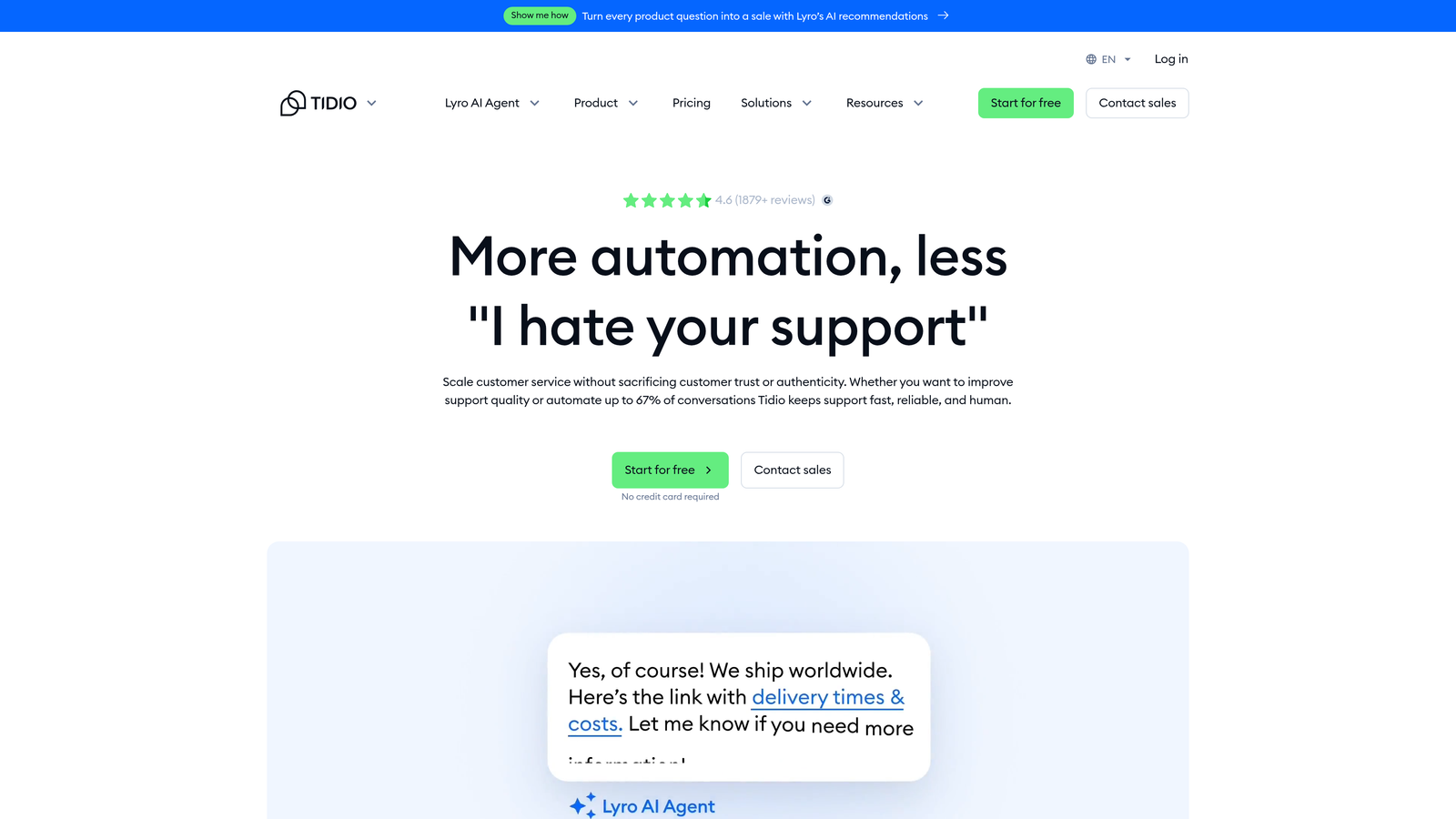
Tidio is a live chat and AI chatbot platform featuring Lyro AI, designed to resolve common customer questions conversationally without requiring human involvement.
Where This Tool Shines
Tidio's appeal is its accessibility. The visual chatbot flow builder means non-technical teams can create custom automation without writing a line of code. Lyro AI handles conversational resolution of FAQs, which covers the majority of repetitive queries that eat up support time at smaller companies.
For e-commerce teams specifically, Tidio's native integrations with Shopify and WooCommerce make it easy to connect order data to support conversations. That context helps bots resolve order status questions, returns, and shipping queries without escalation.
Key Features
Lyro AI: Conversational AI that resolves common questions without human involvement, trained on your support content.
Visual Flow Builder: Drag-and-drop chatbot builder for creating custom automation without code.
E-Commerce Integrations: Native connections with Shopify, WooCommerce, and major CRM platforms.
Hybrid Interface: Live chat and AI chatbot in a single interface, with smooth handoff between the two.
Free Plan: Available for early-stage teams testing the platform before committing to paid tiers.
Best For
SMBs, e-commerce brands, and early-stage startups that need functional AI chatbot capabilities at an accessible price point. Less suited for complex B2B SaaS workflows that require deep product integrations or business intelligence features.
Pricing
Free plan available; Lyro AI plans start around $29/month. Verify current rates at tidio.com/pricing.
6. Drift (Salesloft)
Best for: B2B teams where support, sales, and revenue conversations happen on the same platform.
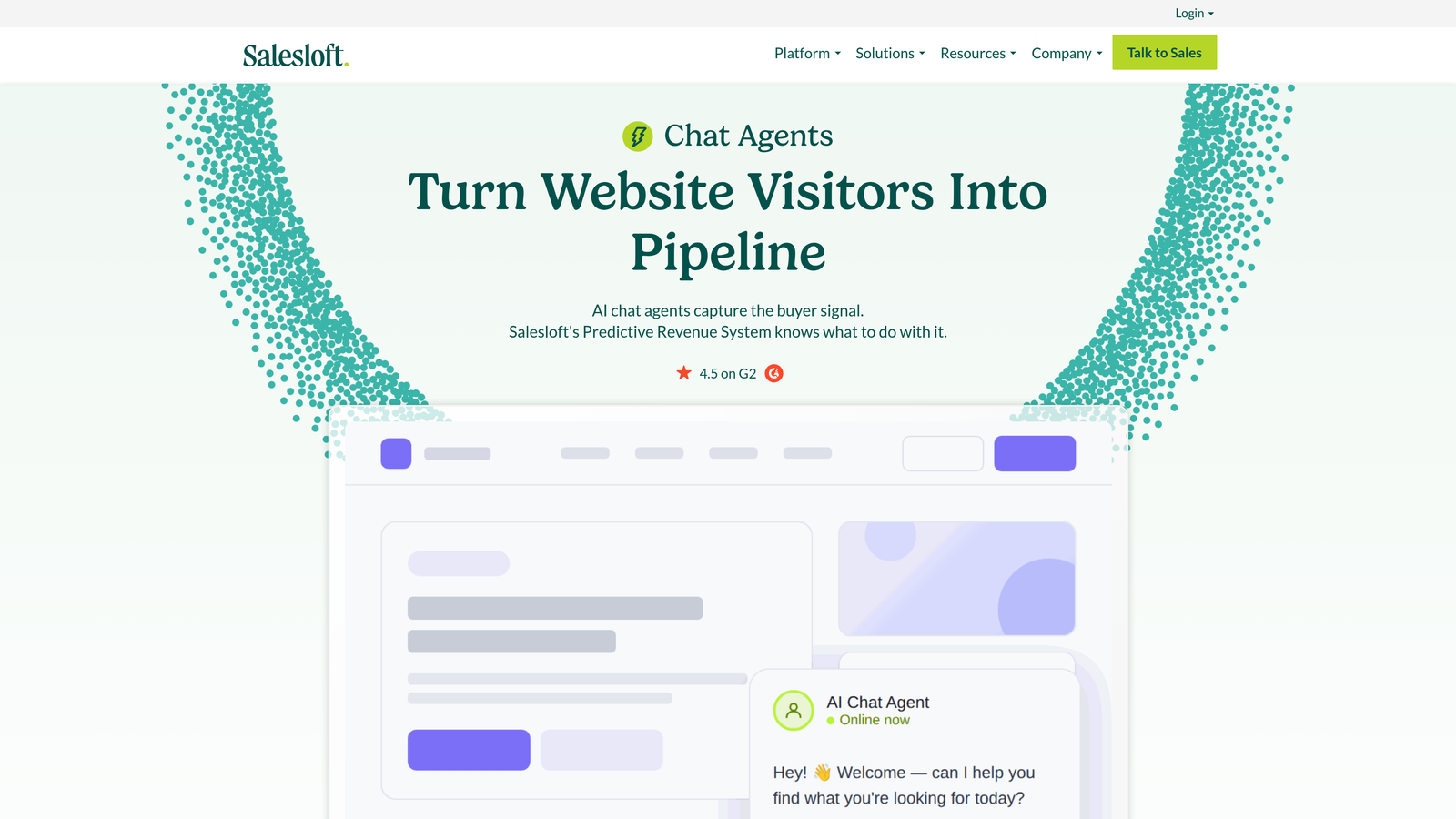
Drift, now part of Salesloft, is a conversational marketing and sales platform with AI chatbot capabilities designed for B2B teams where the line between support and revenue blurs.
Where This Tool Shines
Drift's differentiation isn't pure support automation: it's the blend of support and revenue intelligence. The platform connects chat conversations to pipeline attribution, which means you can see how support interactions influence deal progression. For B2B teams where customer success and sales operate in close proximity, that data is genuinely valuable.
Meeting scheduling built natively into chat flows is another practical strength. When a support conversation surfaces an upsell opportunity or a renewal risk, the AI can route that conversation directly to a calendar booking without breaking the flow.
Key Features
AI Chatbot for Revenue Conversations: Qualifies, routes, and engages website visitors with a focus on pipeline outcomes, not just deflection.
Conversation Intelligence: Links chat conversations to pipeline attribution and revenue outcomes.
CRM Integrations: Deep native connections with Salesforce and HubSpot for full context on every conversation.
Meeting Scheduling: Built-in calendar booking automation embedded directly in chat flows.
Revenue Analytics: Reporting that connects support and sales conversations to business outcomes.
Best For
B2B companies where customer support and revenue teams share workflows, particularly those with active Salesforce or HubSpot usage. Less ideal for teams that need pure support automation without the sales overlay.
Pricing
Enterprise pricing; contact Drift/Salesloft for current rates at drift.com.
7. Ada
Best for: Large global organizations that need enterprise-grade governance, multilingual support, and compliance.
Ada is an enterprise-focused no-code AI chatbot platform with a proprietary reasoning engine, built for organizations that operate at global scale with strict compliance requirements.
Where This Tool Shines
Ada's reasoning engine is designed for autonomous, context-aware resolution rather than simple FAQ matching. It can handle multi-step conversations and adapt responses based on customer context, which matters when you're handling diverse query types across a large customer base.
For global organizations, Ada's multilingual support across dozens of languages is a practical necessity rather than a nice-to-have. Combined with SOC 2 Type II and GDPR compliance, it's one of the few platforms that can satisfy both the legal and operational requirements of enterprise procurement teams.
Key Features
Ada Reasoning Engine: Autonomous, context-aware resolution that handles multi-step conversations without rigid scripting.
No-Code Bot Builder: Non-technical teams can build and update bots without developer involvement.
Multilingual Support: Covers dozens of languages for global customer bases.
Enterprise Compliance: SOC 2 Type II and GDPR certified, suitable for regulated industries and enterprise procurement.
Broad Integrations: Connects with major CRMs, helpdesks, and enterprise systems.
Best For
Large enterprises with global support operations, compliance requirements, and multilingual customer bases. The no-code builder makes it accessible to business teams, while the compliance credentials satisfy IT and legal. Less suited for small teams or those needing self-serve pricing.
Pricing
Enterprise contracts; contact Ada for pricing at ada.cx.
8. Kustomer
Best for: High-volume support teams that need a unified customer timeline with AI automation built on top of rich CRM context.
Kustomer, owned by Meta, is a CRM-native customer service platform that combines a unified customer timeline with AI-powered automation for teams handling large support volumes.
Where This Tool Shines
Kustomer's core differentiator is the unified timeline: every customer interaction across every channel appears in a single chronological view. When AI or human agents respond, they have the full history of that customer's relationship with your company, not just the current ticket. That context dramatically improves the quality of both automated and human responses.
KustomerIQ handles the automation layer, routing and tagging tickets and suggesting responses based on historical patterns. Because it's operating on top of rich CRM data rather than just ticket content, the automation tends to be more accurate for teams with established customer records.
Key Features
Unified Customer Timeline: Every interaction across all channels in a single, chronological view available to AI and human agents.
KustomerIQ: AI for routing, tagging, response automation, and chatbot workflows.
Omnichannel Coverage: Supports chat, email, social, and voice from one platform.
CRM-Native Context: Deep customer data available to both AI agents and human support staff.
Workflow Automation: Configurable automation for repetitive support processes beyond just chatbot responses.
Best For
High-volume B2C and B2B support teams that prioritize CRM context in every interaction. Particularly strong for companies with long customer relationships where historical data improves resolution quality. The per-agent pricing model suits teams with stable headcount.
Pricing
Plans start around $89/agent/month. Verify current rates at kustomer.com/pricing.
9. Zoho SalesIQ
Best for: Budget-conscious teams in the Zoho ecosystem looking for live chat and chatbot capabilities without enterprise pricing.
Zoho SalesIQ is a live chat and chatbot platform offering a codeless bot builder and deep Zoho CRM integration at a price point accessible to smaller teams.
Where This Tool Shines
SalesIQ's value proposition is straightforward: if you're already in the Zoho ecosystem, it integrates natively with Zoho CRM and Zoho Desk without the friction of third-party connectors. The Zobot codeless builder lets non-technical teams create branching chatbot flows without developer support.
Visitor tracking and engagement scoring add a layer of proactive intelligence. Rather than waiting for customers to initiate a conversation, SalesIQ can trigger chat based on visitor behavior, which is useful for both support deflection and sales engagement on the same interface.
Key Features
Zobot: Codeless chatbot builder with branching logic for non-technical teams.
Native Zoho Integration: Deep connections with Zoho CRM and Zoho Desk without third-party middleware.
Visitor Tracking: Engagement scoring and behavior-based chat triggers for proactive outreach.
Live Chat with Bot Handoff: Smooth transition from automated bot conversations to live agents.
Free Plan: Available for small teams evaluating the platform before scaling.
Best For
Small to mid-sized teams already using Zoho CRM or Zoho Desk who want chatbot and live chat capabilities without a separate platform investment. The free plan makes it accessible for teams testing the waters. Less AI-native than dedicated platforms, but delivers solid value for the price.
Pricing
Free plan available; paid plans start around $7/operator/month. Verify current rates at zoho.com/salesiq/pricing.
Which Platform Is Right for Your Team?
The right customer service chatbot platform depends on where your team is today and where you need to go. Here's a quick map to help you narrow it down.
If you're a B2B SaaS team that wants AI-native support with product context, business intelligence, and integrations that go beyond the helpdesk, Halo AI is built for exactly that use case. It's the only platform on this list that combines page-aware context, auto bug ticket creation, and customer health signals in a single AI-first architecture.
For teams already committed to specific platforms: Zendesk AI is the natural choice for Zendesk enterprises; Freshdesk Freddy AI is the obvious path for Freshworks users; and Intercom Fin delivers strong AI resolution for teams already on Intercom's messaging platform.
If budget is the primary constraint, Tidio and Zoho SalesIQ both offer free plans and accessible paid tiers without sacrificing core functionality for smaller teams.
For B2B teams where support and revenue conversations overlap, Drift brings pipeline attribution and meeting scheduling into the chat layer. Global enterprises with multilingual requirements and strict compliance needs will find Ada purpose-built for that environment. And high-volume teams that prioritize CRM context in every interaction should take a close look at Kustomer.
Your support team shouldn't scale linearly with your customer base. Let AI agents handle routine tickets, guide users through your product, and surface business intelligence while your team focuses on complex issues that need a human touch. See Halo in action and discover how continuous learning transforms every interaction into smarter, faster support.