9 Best Customer Service Efficiency Tools in 2026
This guide reviews the 9 best customer service efficiency tools in 2026, covering AI-native support agents, helpdesk platforms, live chat, knowledge management, and analytics solutions. Selected based on automation depth, integration flexibility, and real-world productivity impact, these tools help support teams of all sizes handle rising ticket volumes and meet growing customer expectations without proportional headcount increases.
 Grant CooperFounder13 min read
Customer service teams are under more pressure than ever. Ticket volumes keep climbing, customer expectations have never been higher, and headcount budgets rarely move fast enough to keep pace. The right tools can change that equation entirely, turning a reactive support operation into a proactive, intelligent one.
This list covers the best customer service efficiency tools available in 2026, selected based on automation depth, integration flexibility, analytics capabilities, and real-world impact on support team productivity. Whether you're running a lean startup support team or managing enterprise-scale operations, there's a solution here built for your situation.
We've included tools across key categories: AI-native support agents, helpdesk platforms, knowledge management, live chat, and analytics. If you're exploring how AI is reshaping this space, our guide on what AI customer service actually means is a good starting point.
1. Halo AI
Best for: B2B SaaS teams that want AI-native support automation without building on legacy helpdesk infrastructure.
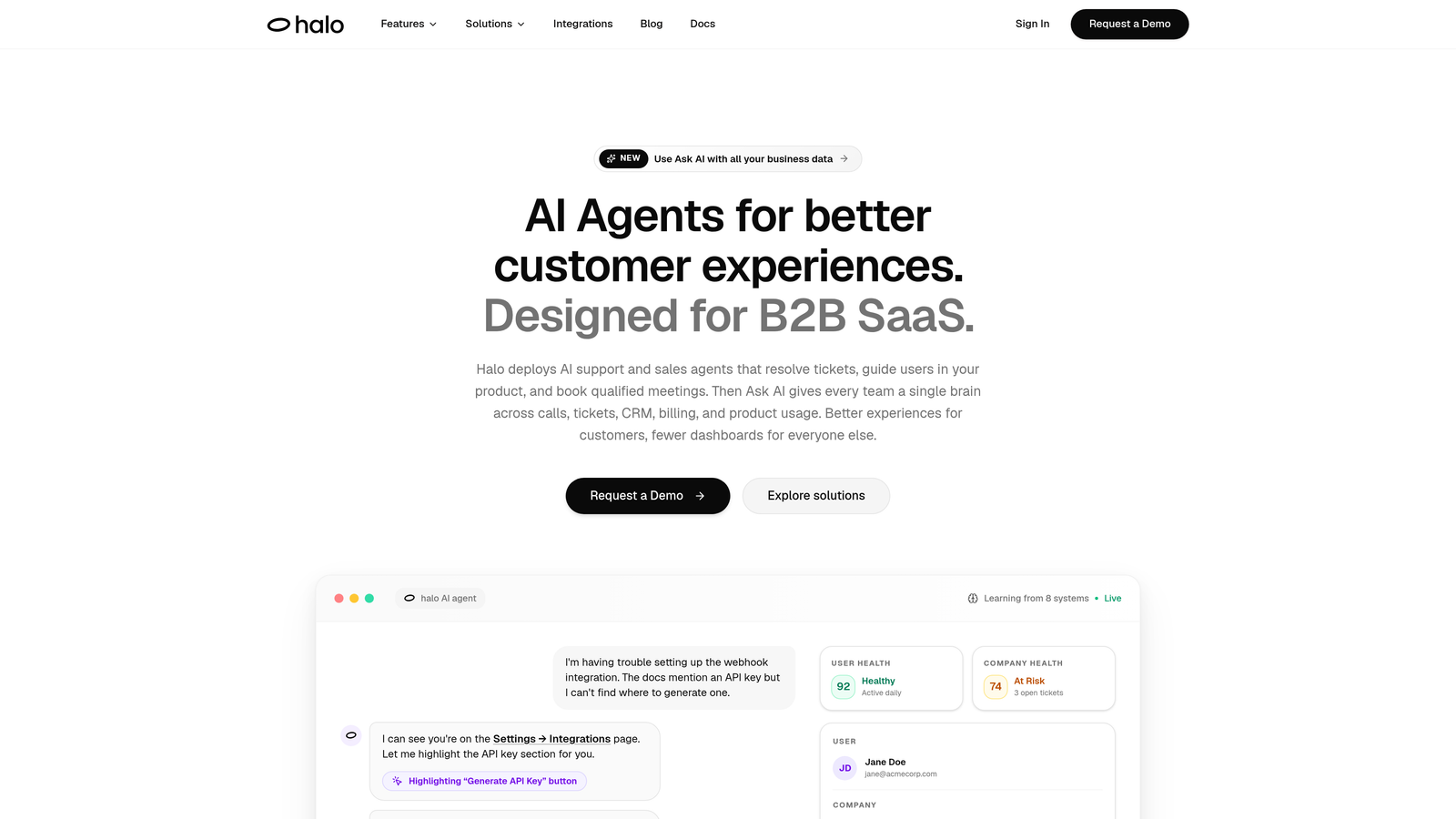
Halo AI is an AI-first customer support platform that deploys intelligent agents to resolve tickets end-to-end, guide users through your product with page-aware context, and surface business intelligence from every support interaction.
Where This Tool Shines
Most AI support tools are bolt-ons: AI features layered on top of a traditional helpdesk. Halo is built differently. The AI is the foundation, not an add-on, which means it can learn from every resolved interaction and continuously improve without manual retraining cycles.
The page-aware chat widget is a particularly distinctive capability. Rather than offering generic responses, Halo's AI sees what the user is currently viewing in your product and can provide contextual UI guidance based on that real-time context. For SaaS teams where onboarding confusion and feature discovery are common support drivers, this changes the nature of the interaction entirely.
Key Features
Intelligent AI Agents: Resolve tickets end-to-end autonomously, with continuous learning from every interaction to improve accuracy over time.
Page-Aware Chat Widget: The AI understands the user's current page context, enabling visual UI guidance rather than generic scripted responses.
Smart Inbox with Business Intelligence: Surfaces customer health signals, revenue anomalies, and product usage patterns from support data, going well beyond standard ticket metrics.
Auto Bug Ticket Creation: Detects and logs bugs from support conversations directly into Linear, removing manual handoff steps between support and engineering.
Live Agent Handoff: Escalates to human agents with full conversation context preserved, so customers never have to repeat themselves.
Broad Integration Stack: Connects with Linear, Slack, HubSpot, Intercom, Stripe, Zoom, PandaDoc, and Fathom.
Best For
Halo AI is particularly well-suited to B2B SaaS companies that want to scale support volume without proportional headcount growth. If your team is spending significant time on repetitive queries, bug triage, or manual escalations, and you want AI that actually resolves tickets rather than just suggesting responses, Halo is worth a close look.
Pricing
Contact Halo AI for current pricing details at haloagents.ai.
2. Zendesk
Best for: Mid-market and enterprise teams that need omnichannel support management with a mature integration ecosystem.
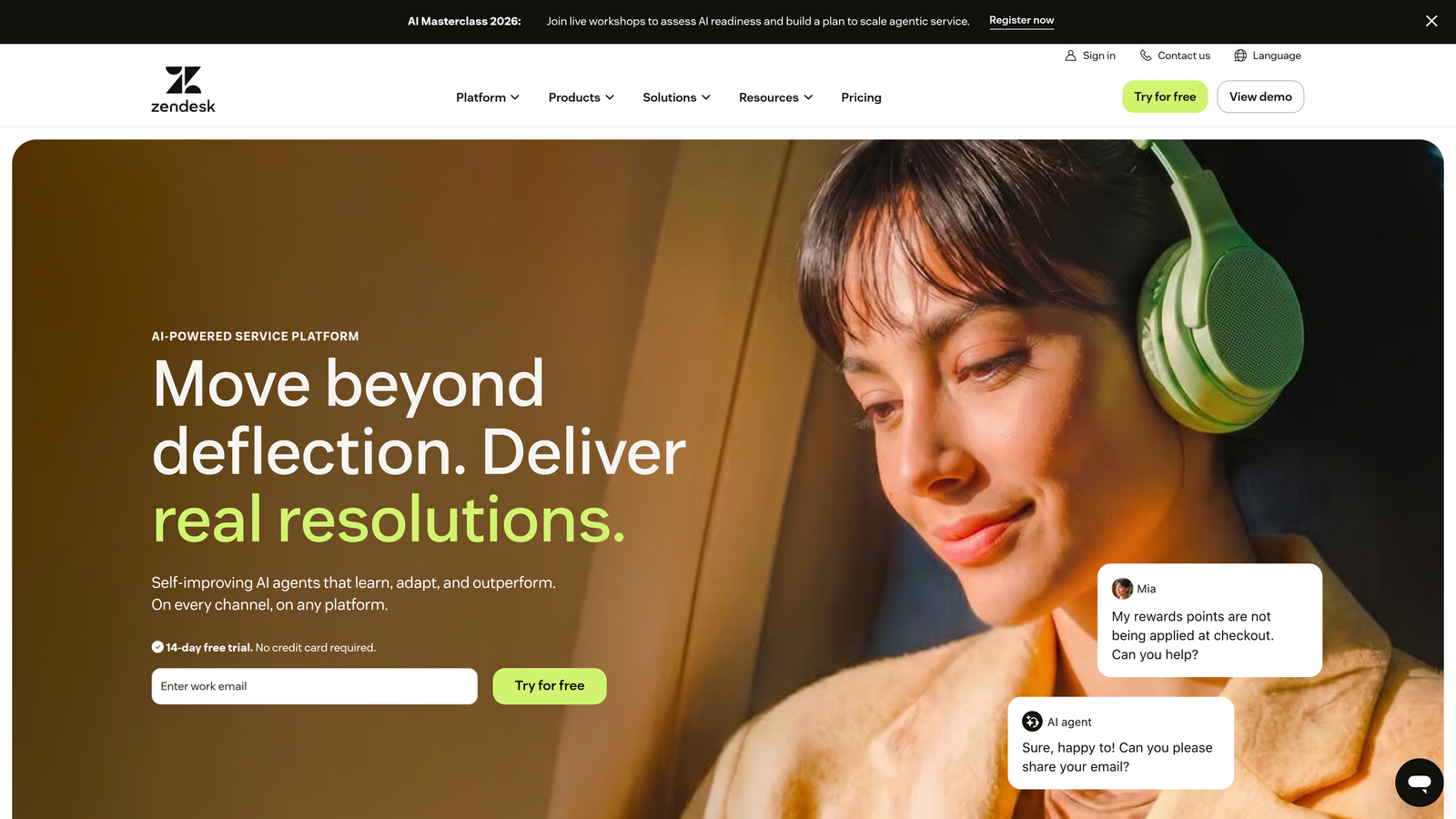
Zendesk is one of the most established helpdesk platforms available, offering omnichannel ticket management, a growing AI layer, and an integration marketplace that covers virtually any tool your team might already use.
Where This Tool Shines
Zendesk's depth comes from years of iteration across large, complex support organizations. Its SLA management, routing logic, and reporting capabilities are genuinely mature, and the 1,000+ app marketplace means you can connect it to almost any system in your stack without custom development.
The AI capabilities have expanded considerably, with intent detection, ticket summarization, and suggested responses now part of the core offering. That said, Zendesk's AI is an enhancement layer rather than the architectural foundation, which is an important distinction when evaluating how much autonomous resolution you actually need.
Key Features
Omnichannel Ticketing: Manages support across email, chat, voice, social, and messaging from a unified workspace.
Zendesk AI: Provides intent detection, ticket summarization, and suggested responses to accelerate agent workflows.
App Marketplace: Over 1,000 integrations covering CRM, billing, analytics, and communication tools.
Advanced Reporting: Robust analytics and dashboards available at higher-tier plans for tracking team and channel performance.
SLA Management: Sophisticated routing rules and service level agreement tracking for teams with compliance requirements.
Best For
Zendesk is a strong fit for mid-market and enterprise teams with complex support workflows, multiple channels, and the administrative resources to configure and maintain the platform. Teams at earlier stages may find it heavier than necessary.
Pricing
Suite plans start at approximately $55 per agent per month. Verify current pricing at zendesk.com.
3. Intercom
Best for: SaaS companies that want to combine reactive customer support with in-app product engagement and outbound messaging.
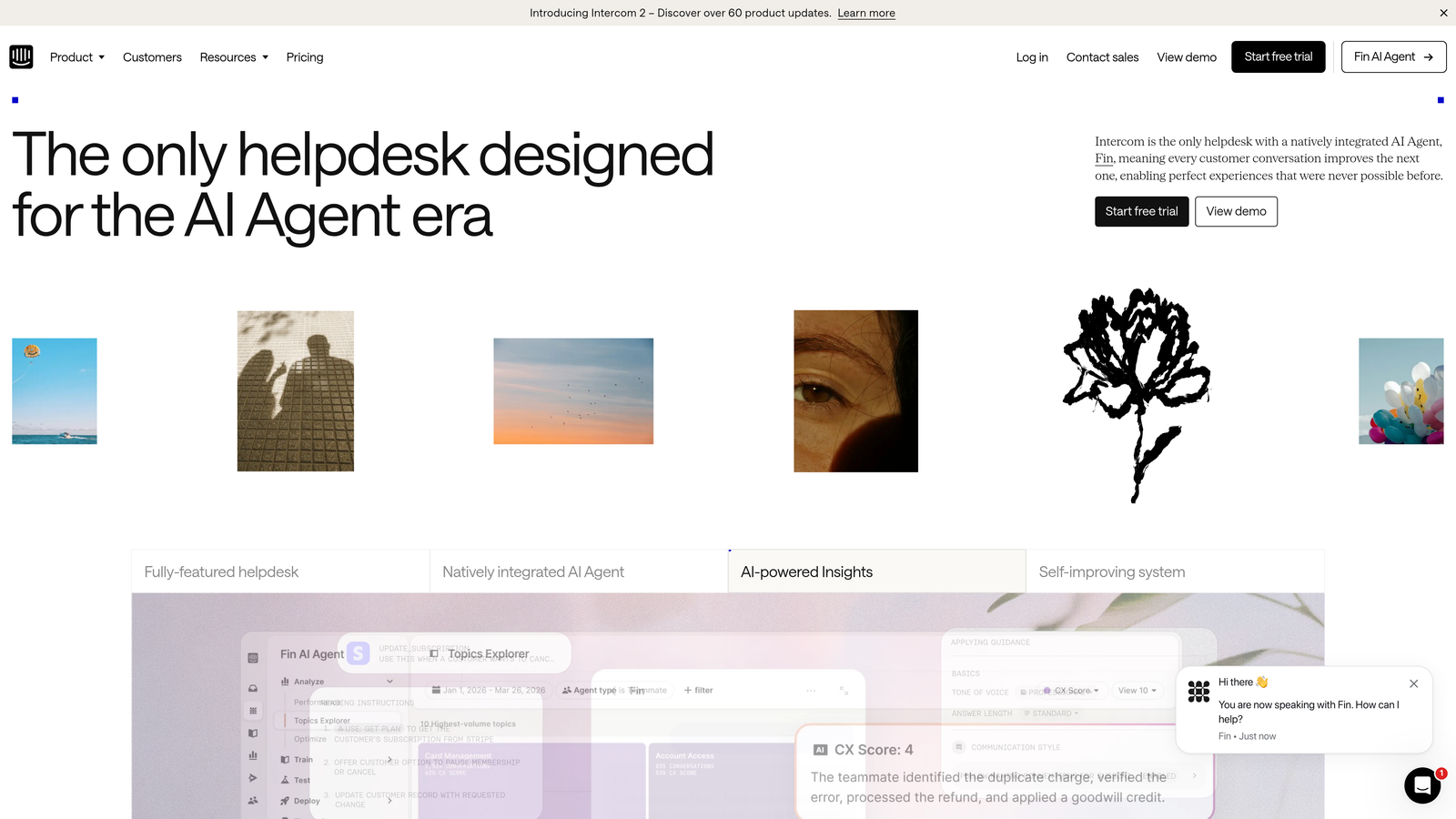
Intercom is a messenger-first platform that blends customer support, product tours, and outbound messaging into a single workspace, with the Fin AI Agent handling autonomous resolution of common queries.
Where This Tool Shines
Intercom's strength is the combination of reactive support and proactive product engagement in one platform. For SaaS companies that want to send targeted in-app messages, run product tours, and handle support conversations without switching tools, that unified approach has real operational value.
Fin AI Agent has matured into a capable autonomous support layer for common query types. Worth noting: Halo AI integrates with Intercom, so teams already running Intercom can layer Halo's AI agents on top of their existing setup rather than replacing it.
Key Features
Fin AI Agent: Conversational AI that resolves common support queries autonomously without agent involvement.
In-App Messenger: Strong web and mobile chat experience with product engagement features built in.
Outbound Messaging and Product Tours: Proactive user communication alongside reactive support in a single platform.
CRM and Tool Integrations: Connects with Salesforce, HubSpot, Slack, and a broad range of other platforms.
Usage-Based Pricing: Scales with resolution volume rather than a flat per-agent fee.
Best For
Intercom is particularly well-suited to SaaS companies where in-product communication, onboarding, and support are closely intertwined. Teams that primarily need a helpdesk without the product engagement layer may find better value elsewhere.
Pricing
Usage-based pricing that scales with seat count and resolution volume. Check intercom.com for current rates.
4. Freshdesk
Best for: Small and mid-sized teams graduating from shared inbox support who need a structured helpdesk without steep complexity.
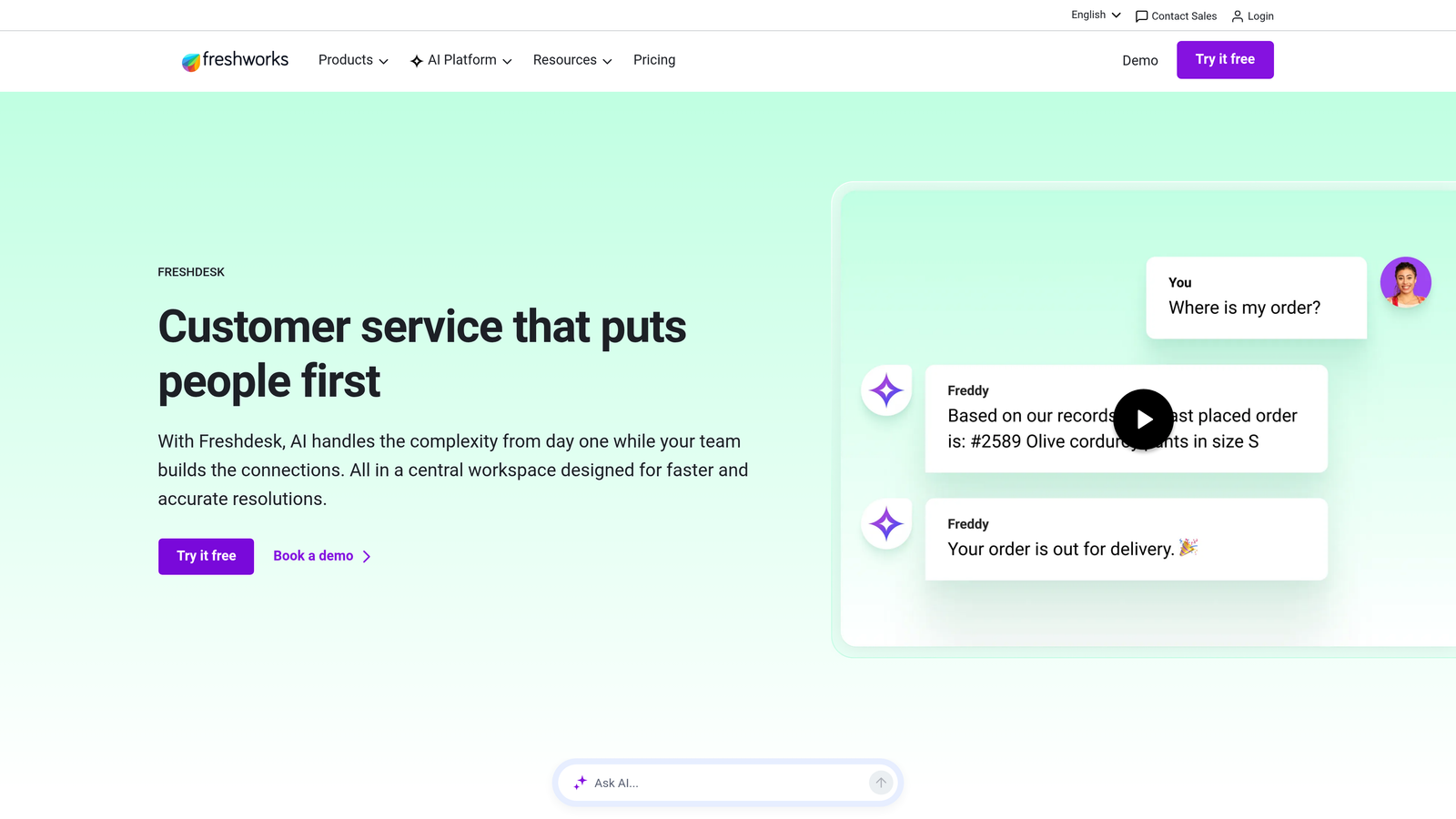
Freshdesk is a user-friendly helpdesk platform from Freshworks, offering a free entry tier, Freddy AI automation, and solid multi-channel ticketing without the administrative overhead of larger enterprise platforms.
Where This Tool Shines
Freshdesk hits a practical sweet spot: enough structure and automation to meaningfully improve support operations, without requiring a dedicated admin to configure and maintain it. The onboarding experience is genuinely approachable, which matters for teams moving from a shared Gmail inbox to a proper ticketing system for the first time.
Freddy AI handles intent detection and automated response suggestions, and the SLA management and automation rules cover most common workflow needs without custom development. It's not the most AI-forward platform on this list, but it delivers solid value for what it costs.
Key Features
Free Plan: Available for small teams with limited features, providing a low-risk entry point.
Freddy AI: Automates intent detection, response suggestions, and ticket categorization.
Ticketing and SLA Management: Clean workflow automation with service level tracking and escalation rules.
Multi-Channel Support: Covers email, chat, phone, and social from a unified inbox.
Lower Administrative Overhead: Simpler to configure and maintain than enterprise-tier alternatives.
Best For
Freshdesk is a natural fit for growing teams that need to move beyond shared inboxes and want a structured helpdesk with AI assistance, without committing to the complexity or cost of Zendesk at the enterprise tier.
Pricing
Free tier available. Paid plans start at competitive rates. Check freshdesk.com for current plan details.
5. Guru
Best for: Support teams managing complex, frequently changing product knowledge who need information surfaced in real time during live conversations.
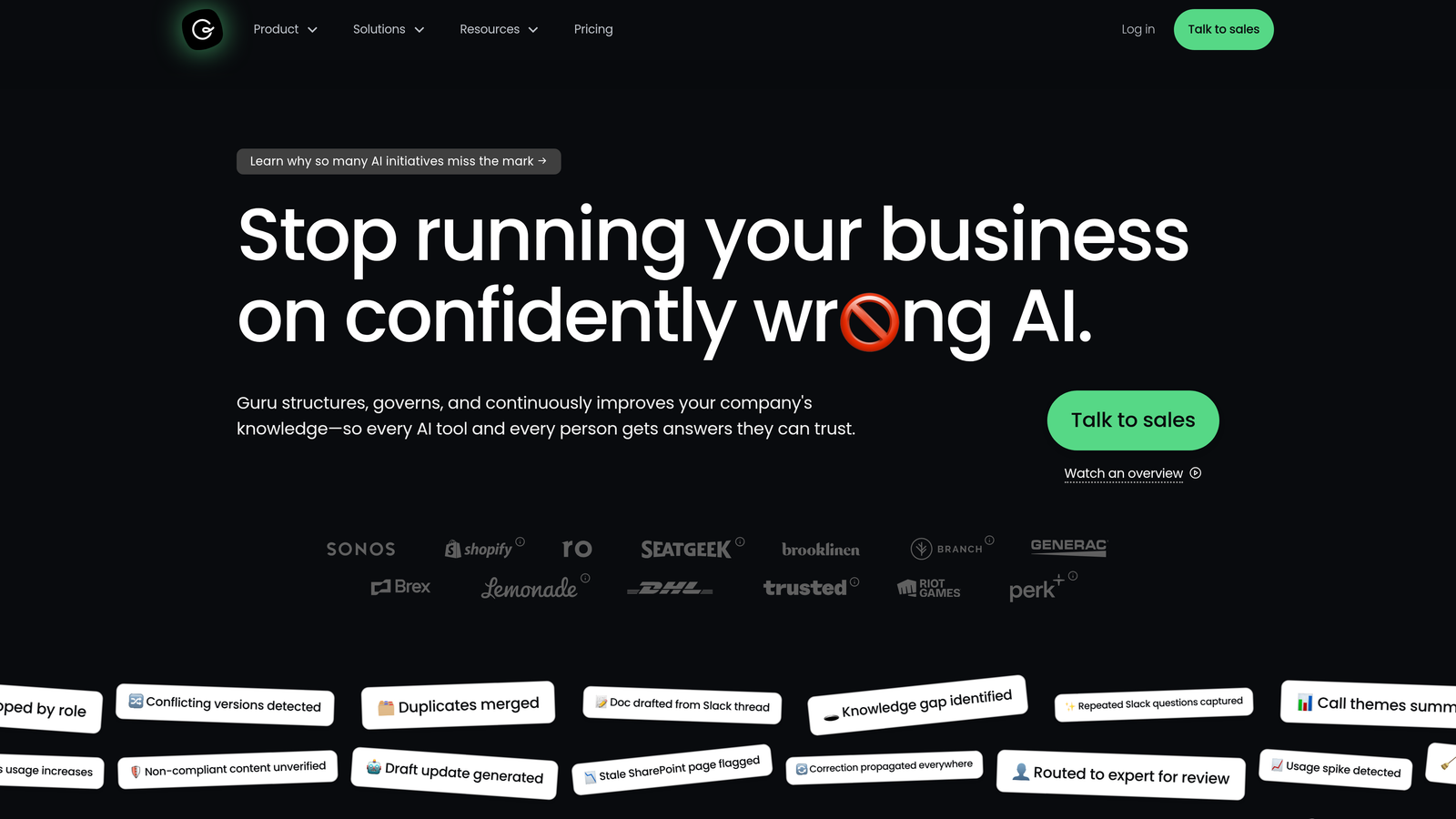
Guru is an AI-powered knowledge management platform that delivers the right information to support agents at the moment they need it, directly within the tools they're already using.
Where This Tool Shines
The core insight behind Guru is that support agents often know the right answer exists somewhere, but finding it quickly during a live conversation is the actual problem. Guru's browser extension surfaces relevant knowledge cards inline as agents work, reducing the tab-switching and manual searching that quietly drain productivity.
The AI search capability extends across connected sources including internal wikis, Confluence, Google Drive, and other knowledge repositories. Verification workflows add an important layer of accuracy control, flagging outdated content for review rather than letting stale information circulate.
Key Features
Inline Knowledge Cards: Browser extension delivers relevant information directly within support tools during live conversations.
AI Search: Searches across connected sources including wikis, Confluence, Google Drive, and other repositories simultaneously.
Verification Workflows: Flags content for review on a defined schedule to keep knowledge accurate and current.
Helpdesk Integrations: Connects with Zendesk, Intercom, Slack, and other common support tools.
Knowledge Analytics: Tracks which content is used most and where gaps exist, informing documentation priorities.
Best For
Guru is most valuable for support teams dealing with complex, rapidly evolving product knowledge where outdated or inconsistent information is a real problem. It complements rather than replaces your helpdesk.
Pricing
Check getguru.com for current plan pricing.
6. Gorgias
Best for: E-commerce brands running on Shopify, Magento, BigCommerce, or WooCommerce that need deep order management within their support workflow.
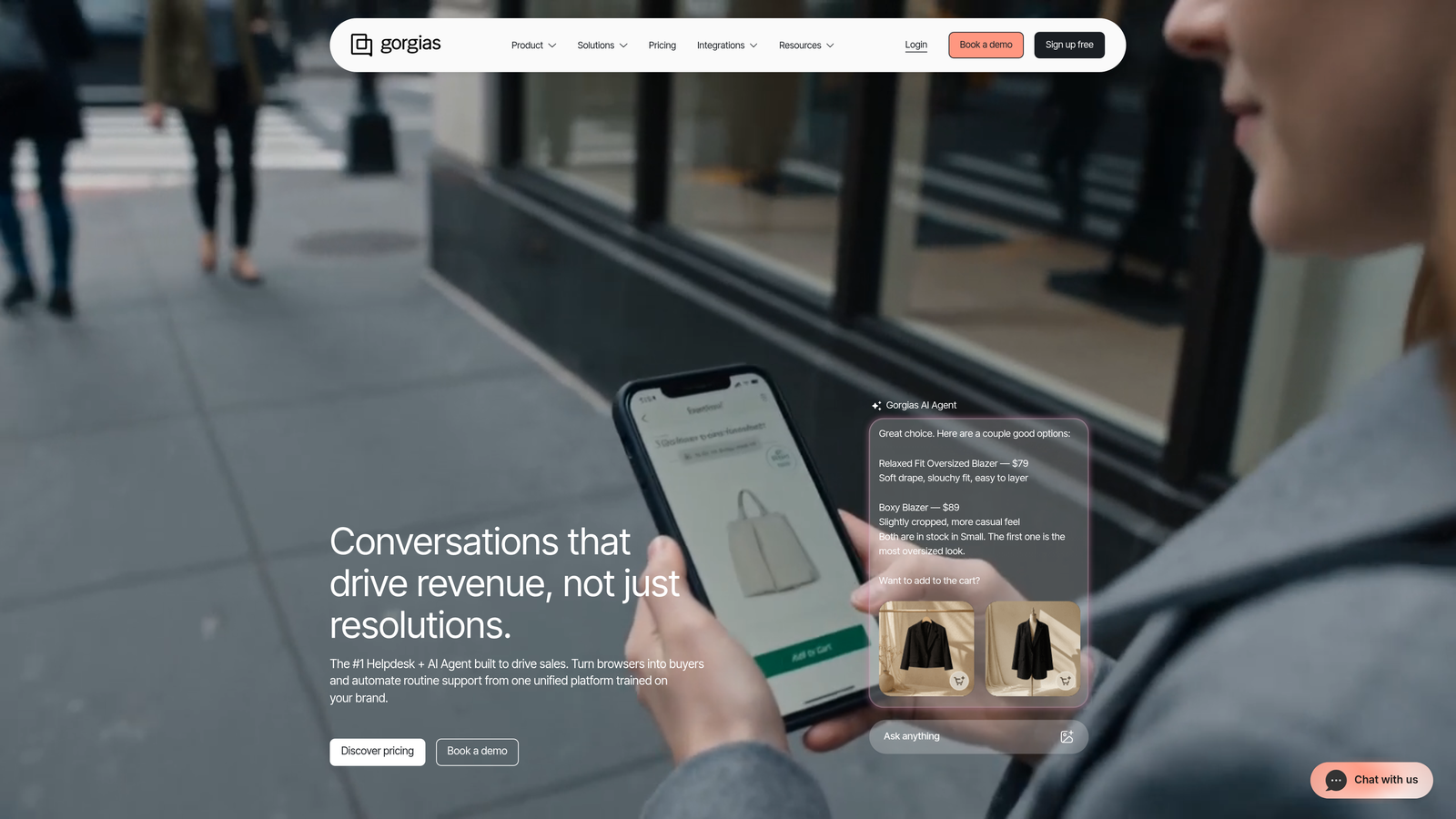
Gorgias is a helpdesk built specifically for e-commerce support teams, with native integrations that let agents view and act on order data without ever leaving the ticket.
Where This Tool Shines
The defining capability of Gorgias is the depth of its e-commerce integrations. Rather than just displaying order information in a sidebar, agents can process refunds, cancel orders, and update shipping details directly from the ticket view. For high-volume e-commerce support teams, eliminating those platform-switching steps adds up quickly.
The revenue attribution reporting is also notable: Gorgias tracks revenue influenced by support interactions, which helps justify support investment to stakeholders and identifies which agents and conversation types drive the most commercial value.
Key Features
Native E-Commerce Integrations: Deep connections with Shopify, Magento, BigCommerce, and WooCommerce built into the core product.
In-Ticket Order Actions: Agents can process refunds, cancellations, and order updates without leaving the support interface.
AI Automation: Handles common order-status inquiries and returns queries autonomously.
Revenue Attribution Reporting: Tracks commercial impact of support interactions to demonstrate team value.
Volume-Based Pricing: Scales with ticket volume rather than agent count, which can be advantageous for teams with variable staffing.
Best For
Gorgias is purpose-built for e-commerce and genuinely excels there. If your support operation doesn't center on order management and e-commerce workflows, a more general helpdesk will serve you better.
Pricing
Volume-based pricing. Check gorgias.com for current rates.
7. LiveAgent
Best for: SMBs that need broad multi-channel coverage, including a built-in call center, at an accessible price point.
LiveAgent is an all-in-one support platform covering live chat, ticketing, a built-in call center, social media, and a native knowledge base, with pricing designed for teams that can't justify enterprise-tier costs.
Where This Tool Shines
The built-in call center with IVR is LiveAgent's most distinctive feature at this price tier. Most platforms at comparable price points require third-party integrations for voice support; LiveAgent includes it natively. For SMBs where phone remains an important channel, that reduces both cost and integration complexity.
The gamification features for agent performance and motivation are a nice touch for smaller teams where engagement and recognition matter. LiveAgent won't win on AI sophistication compared to newer entrants, but it delivers genuine breadth of channel coverage at a price that makes sense for growing teams.
Key Features
Unified Inbox: Consolidates email, live chat, voice, and social channels into a single agent workspace.
Built-In Call Center with IVR: Native voice support with interactive voice response, uncommon at this price tier.
Native Knowledge Base: Customer self-service portal included without additional cost or integration.
Gamification: Agent performance features including badges, leaderboards, and rewards to support team motivation.
SMB-Friendly Pricing: Accessible cost structure that scales without the enterprise-tier overhead.
Best For
LiveAgent is a strong choice for SMBs that need multi-channel support coverage including voice, and want to avoid stitching together multiple point solutions to get there.
Pricing
Known for accessible SMB pricing. Check liveagent.com for current plans.
8. Plivo CX
Best for: Contact center teams where voice and SMS remain primary support channels and call quality is a non-negotiable requirement.
Plivo CX is a contact center platform built on Plivo's cloud communications infrastructure, offering AI-assisted routing, voice analytics, and strong multi-channel communication capabilities for support teams that lead with phone.
Where This Tool Shines
Plivo CX is built on top of a communications infrastructure company, which means the voice quality and reliability are core to the product rather than an afterthought. For support teams where call quality issues directly impact customer experience, that foundation matters.
The AI-assisted routing and IVR capabilities help reduce misrouted calls and handle common queries before they reach a live agent. Digital channels are available, but voice is clearly the center of gravity here. Teams that have already solved their voice channel and primarily need chat and ticketing automation will likely find better fits elsewhere on this list.
Key Features
AI-Assisted Call Routing and IVR: Intelligently routes inbound calls and handles common queries before live agent involvement.
Voice Analytics: Call quality monitoring and conversation analytics to identify patterns and coaching opportunities.
SMS and Digital Channel Support: Extends beyond voice to include text and digital communication channels.
Reliable Cloud Communications Infrastructure: Built on Plivo's established communications platform for consistent call quality.
Modern Contact Center Design: Architected for cloud-first operations rather than legacy on-premise contact center models.
Best For
Plivo CX is best suited for contact center operations where phone and SMS are the dominant support channels and voice quality is a hard requirement. Digital-first support teams will find more suitable options in this list.
Pricing
Check plivo.com for current contact center pricing.
9. Nicereply
Best for: Support teams that want to add automated CSAT, NPS, and CES measurement to their existing helpdesk without replacing any part of their current stack.
Nicereply is a focused customer satisfaction measurement tool that plugs into the helpdesks and support platforms you're already using, automating survey delivery and tracking satisfaction trends over time.
Where This Tool Shines
Nicereply's value proposition is deliberate simplicity. It doesn't try to be a helpdesk or a CRM. It does one thing: measures how customers feel about their support experience, and makes that data actionable at the agent, team, and trend level.
The automatic survey triggering after ticket resolution removes the manual follow-up step that most teams skip under volume pressure. The analytics dashboard then lets team leads identify which agents consistently score well, which interaction types drive satisfaction down, and where improvement efforts should focus.
Key Features
Automated Survey Triggering: CSAT, NPS, and CES surveys sent automatically after ticket resolution or conversation close.
Multi-Platform Integration: Connects with Zendesk, Freshdesk, Intercom, Help Scout, and other common helpdesks.
Agent-Level Score Tracking: Individual and team satisfaction scores tracked over time for performance visibility.
Analytics Dashboard: Identifies satisfaction trends, outliers, and patterns across channels and time periods.
Minimal Setup: Adds measurement capability without disrupting existing workflows or requiring platform migration.
Best For
Nicereply is ideal for any support team that lacks structured satisfaction measurement and wants to add it quickly without a major implementation project. It works alongside whatever helpdesk you're already running.
Pricing
Check nicereply.com for current plan pricing.
Which Tool Is Right for Your Team?
The right customer service efficiency stack depends on three things: your team size, your primary support channels, and how much AI autonomy you actually want. There's no universal answer, but there are clear patterns.
For quick-reference guidance by use case: if AI-native automation is the priority, Halo AI is the most architecturally coherent choice. For enterprise-scale omnichannel helpdesk management, Zendesk remains the mature standard. Intercom leads when in-product messaging and support need to live in the same platform. Freshdesk is the practical choice for SMBs making their first move away from shared inboxes.
If knowledge management is the gap, Guru solves it without replacing your helpdesk. E-commerce teams running on Shopify or similar platforms should look at Gorgias first. Multi-channel SMBs that need voice coverage without enterprise pricing will find LiveAgent compelling. Voice-first contact centers should evaluate Plivo CX. And any team that lacks structured satisfaction measurement can add Nicereply on top of whatever they're already using.
The most effective stacks aren't built around a single tool. They layer AI-native resolution with solid helpdesk infrastructure, real-time knowledge surfacing, and consistent satisfaction measurement. That combination is what separates support teams that scale gracefully from those that just hire more people every time volume grows.
Your support team shouldn't scale linearly with your customer base. Let AI agents handle routine tickets, guide users through your product, and surface business intelligence while your team focuses on complex issues that need a human touch. See Halo in action and discover how continuous learning transforms every interaction into smarter, faster support.