9 Best Customer Support AI Agent Platforms in 2026
This guide ranks the 9 best customer support AI agent platform options available in 2026, evaluating each on autonomous ticket resolution, integration depth, learning capability, and value for B2B and SaaS teams. Whether you're replacing a legacy helpdesk or scaling support without adding headcount, it covers the key distinctions that matter most when choosing a platform built for genuine AI-first resolution.
 Grant CooperFounder14 min read
Customer support teams are under more pressure than ever. Ticket volumes are climbing, headcounts are staying flat, and customers expect instant, accurate responses regardless of the hour. The good news is that AI agent platforms have matured well beyond the scripted chatbots of a few years ago. Today's solutions can resolve tickets autonomously, guide users through complex product workflows, detect bugs, escalate to humans with full context, and surface business intelligence from every conversation.
The challenge is that not all platforms are built the same way. Some bolt AI onto legacy helpdesk infrastructure as an afterthought. Others are architected from the ground up with autonomous AI agents as the primary resolution layer. The distinction matters enormously when you're evaluating autonomy depth, integration breadth, and long-term scalability.
This list covers the top customer support AI agent platforms available in 2026, evaluated on autonomy, integration depth, learning capability, and value for B2B and SaaS teams. Whether you're replacing a traditional helpdesk, augmenting your existing stack, or scaling support without scaling headcount, there's a platform here for your situation.
AI-First vs. AI-Augmented: What to Look For
Before diving into the tools, it's worth understanding the key distinction shaping the market right now. AI-first platforms are built around autonomous agents as the primary resolution layer, with human agents serving as escalation backstops. AI-augmented platforms layer AI capabilities onto traditional helpdesk infrastructure, which is useful for teams with existing investment but can be constrained by legacy architecture.
When evaluating any platform, consider these dimensions: How deeply can the AI resolve tickets autonomously, or does it only suggest responses? Does it understand where the user is in your product? Does it improve from each resolved interaction? Can it connect to your CRM, billing, project management, and communications tools? And critically, does it surface insights beyond ticket counts, such as customer health signals and revenue indicators?
With that framework in mind, here are the platforms worth your attention in 2026.
1. Halo AI
Best for: B2B SaaS teams wanting AI-first support with business intelligence built in
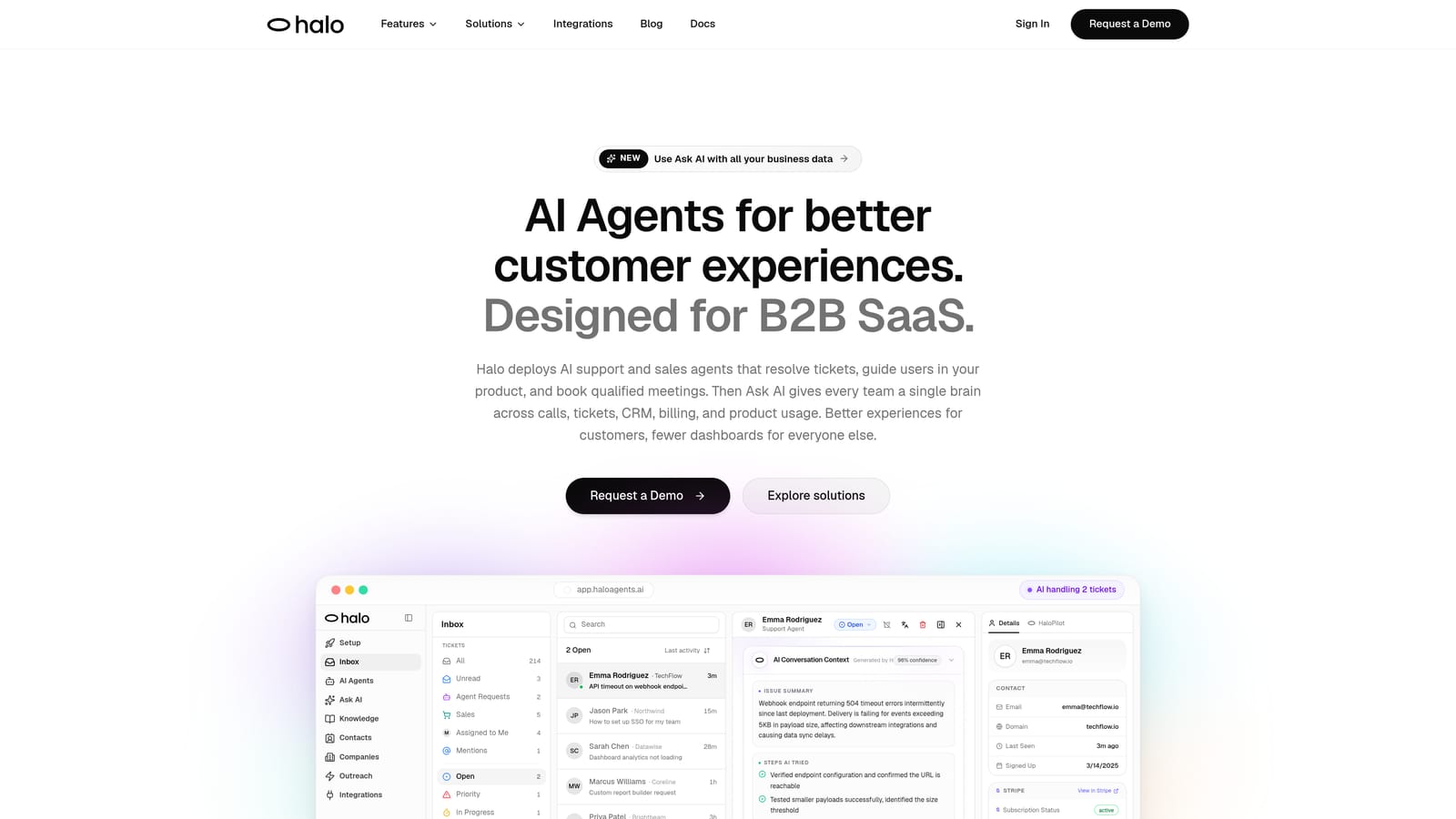
Halo AI is an AI-first customer support platform that deploys intelligent agents to resolve tickets, guide users through products with page-aware context, auto-create bug reports, and surface business intelligence from every interaction.
Where This Tool Shines
What separates Halo from most platforms on this list is its architecture. Rather than adding AI features to a helpdesk, Halo is built around autonomous agents as the core resolution mechanism. The page-aware chat widget is a standout capability: the AI can see what the user sees on screen and provide contextual, visual guidance rather than generic answers. This is particularly valuable for SaaS products where users get stuck in specific workflows and need in-context help.
The smart inbox goes beyond ticket management. It surfaces customer health signals, revenue anomalies, and churn indicators, turning your support data into a business intelligence layer. The continuous learning loop means the platform gets smarter with every resolved interaction, compounding value over time rather than staying static.
Key Features
Page-Aware Chat Widget: The AI understands the user's current page context and delivers visual, step-by-step guidance relevant to exactly where they are in your product.
Autonomous Ticket Resolution: Intelligent agents resolve support tickets end-to-end, with graceful live agent handoff when complexity warrants human involvement.
Smart Inbox with Business Intelligence: Surfaces customer health signals, revenue anomalies, and churn indicators directly from support conversation data.
Auto Bug Ticket Creation: Automatically detects and creates bug reports routed directly to Linear or your existing engineering workflow, closing the loop between support and product.
Deep Integration Stack: Native connections to Linear, Slack, HubSpot, Intercom, Stripe, Zoom, PandaDoc, and Fathom, enabling Halo to operate across your entire business stack.
Continuous Learning Loop: The platform improves from every resolved interaction, building institutional knowledge that makes future resolutions faster and more accurate.
Best For
Halo is best suited for B2B SaaS companies and product teams that want AI agents as their primary support layer, not a supplement to a traditional helpdesk. It's particularly valuable for teams that want support data to inform product and revenue decisions, not just track ticket volume.
Pricing
Contact Halo AI for pricing. The platform targets mid-market and enterprise SaaS teams, so pricing is tailored to team size and usage.
2. Intercom (Fin AI Agent)
Best for: Teams already using Intercom who want AI resolution built into their existing messenger
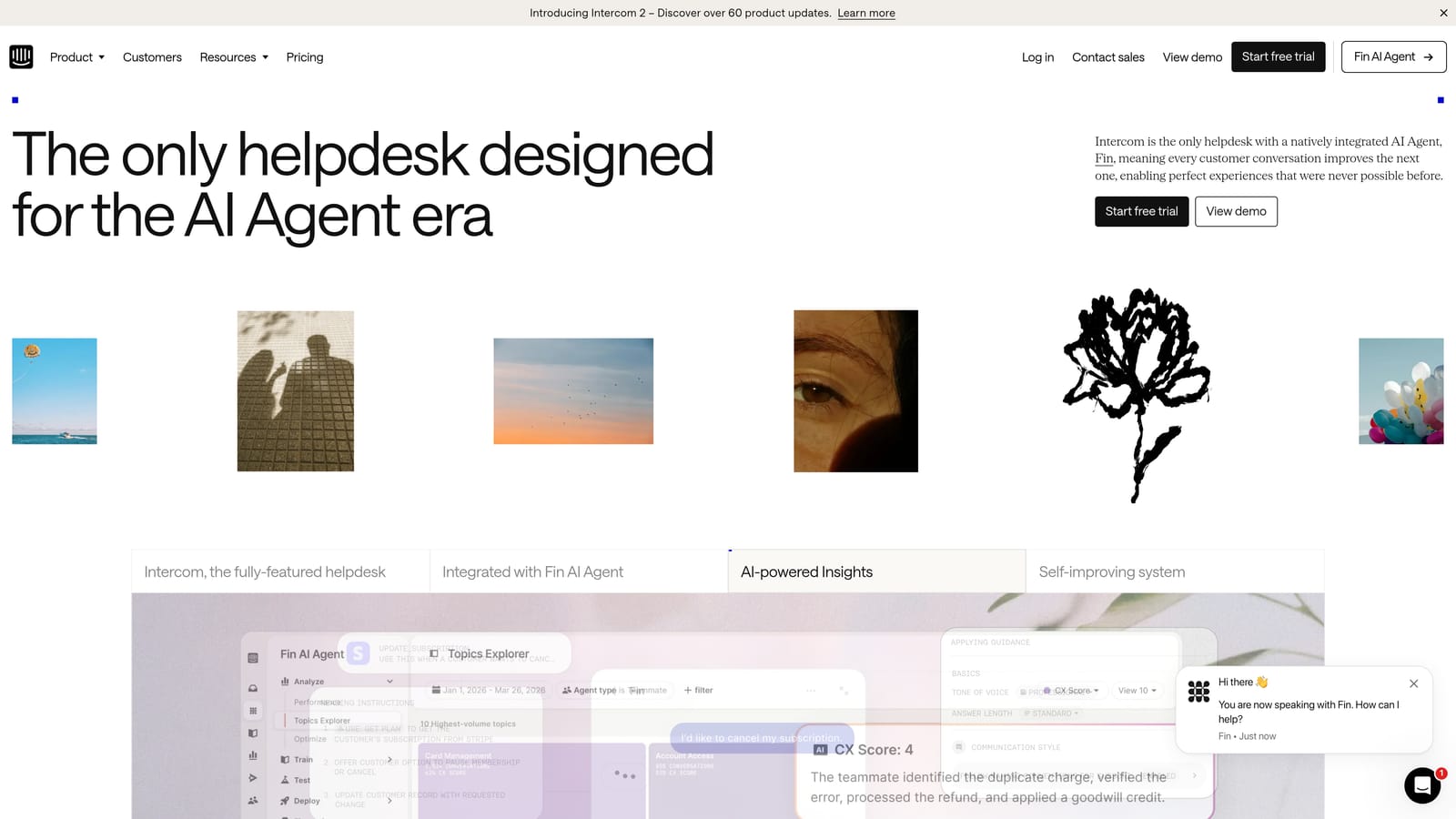
Intercom's Fin AI Agent is a purpose-built AI resolution layer that answers customer questions using your existing help content, operating natively within Intercom's messenger and inbox infrastructure.
Where This Tool Shines
Fin's biggest strength is how seamlessly it fits into Intercom's existing ecosystem. If your team already lives in Intercom for customer communications, Fin adds autonomous resolution without requiring a new platform or workflow change. It's trained on your help center content and can handle a significant portion of inbound questions before a human ever gets involved.
The handoff experience is notably smooth. When Fin can't resolve a question, it passes the conversation to a human agent with full context intact, so customers don't have to repeat themselves. This makes it a low-friction upgrade for Intercom-native teams.
Key Features
Fin AI Agent: Resolves customer questions autonomously using your help center and knowledge base content.
Native Messenger Integration: Operates within Intercom's existing messenger, inbox, and ticketing infrastructure with no separate setup.
Smooth Human Handoff: Escalates to human agents gracefully when AI cannot resolve, preserving full conversation context.
Omnichannel Coverage: Supports chat, email, and social channels from a single platform.
Resolution Analytics: Tracks AI resolution rates and conversation quality to help teams understand deflection performance.
Best For
Teams already invested in the Intercom platform who want to add AI resolution without migrating tools. Less compelling as a standalone choice if you're not already in the Intercom ecosystem.
Pricing
Fin AI Agent is priced per resolution, on top of Intercom's base plans. Costs scale with volume, so high-ticket teams should model this carefully before committing.
3. Zendesk AI
Best for: Enterprise teams with established Zendesk workflows looking to add AI capabilities
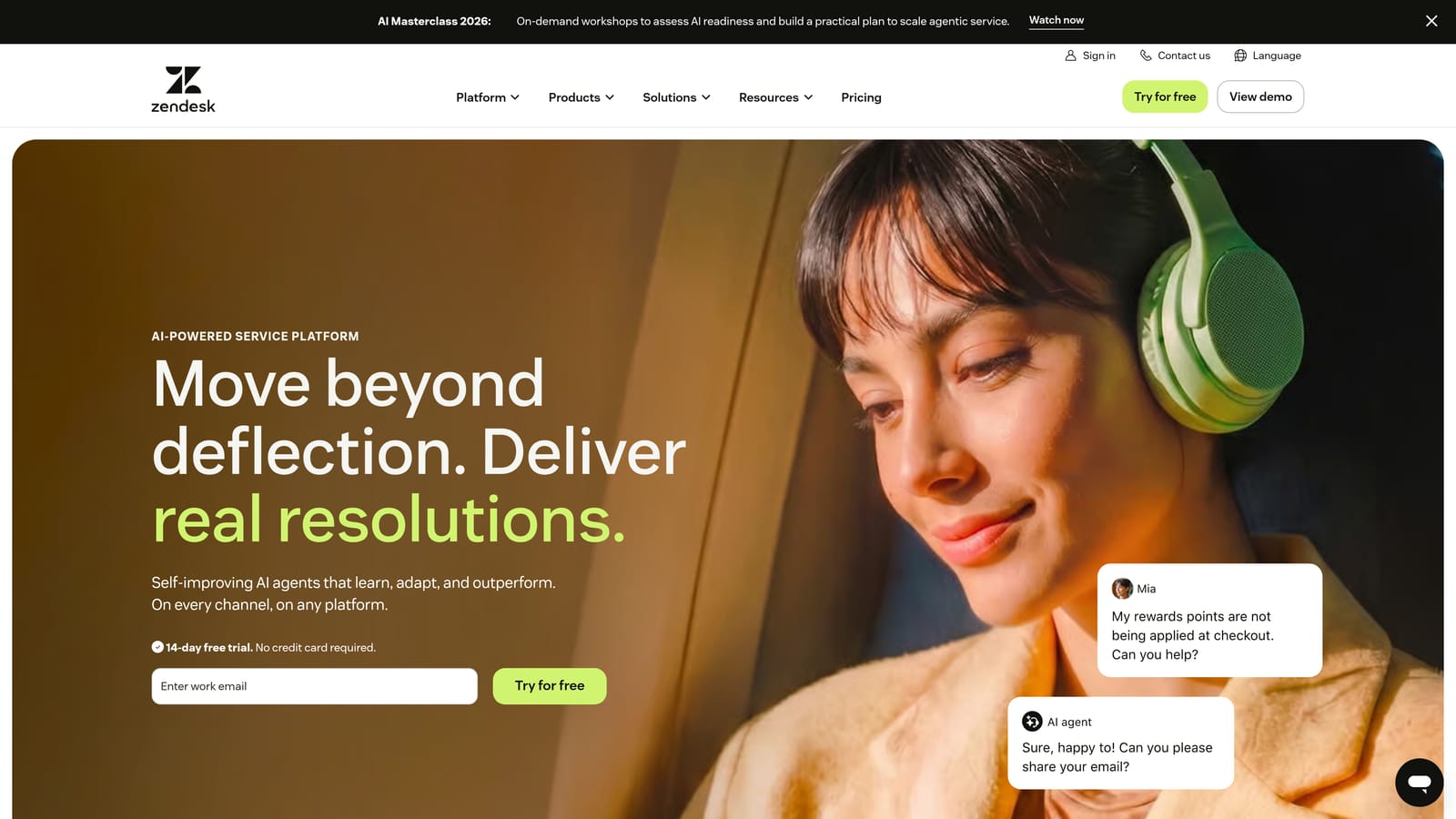
Zendesk's AI capabilities are embedded across its Suite, offering intelligent triage, agent copilot, intent detection, and automated macros for large-scale support operations.
Where This Tool Shines
Zendesk AI is most valuable for organizations that have already built their support operations around Zendesk's infrastructure. The AI layers in without requiring a platform migration, adding intent and sentiment detection, intelligent routing, and agent assist capabilities to workflows teams already know.
The enterprise governance and compliance features are genuinely strong here. For organizations in regulated industries or with strict data requirements, Zendesk's established compliance posture is a meaningful advantage over newer AI-first platforms.
Key Features
Intelligent Triage: Detects intent, sentiment, and language to automatically route and prioritize incoming tickets.
Agent Copilot: Provides suggested replies and next-best actions to help agents respond faster and more consistently.
Automated Routing: Routes and escalates tickets based on AI classification without manual intervention.
Advanced Analytics and QA: Built-in quality assurance automation and performance analytics across the support operation.
Enterprise Governance: Strong compliance, security, and data governance features suited to regulated enterprise environments.
Best For
Large enterprise support teams with significant existing investment in Zendesk who want AI augmentation rather than a platform replacement. Not the best choice for greenfield deployments where AI-first architecture is available.
Pricing
AI features are included in Zendesk Suite plans, with advanced AI add-ons available separately. Pricing scales with agent seats and plan tier.
4. Freshdesk (Freddy AI)
Best for: SMBs and growing teams wanting accessible AI capabilities within a full helpdesk suite
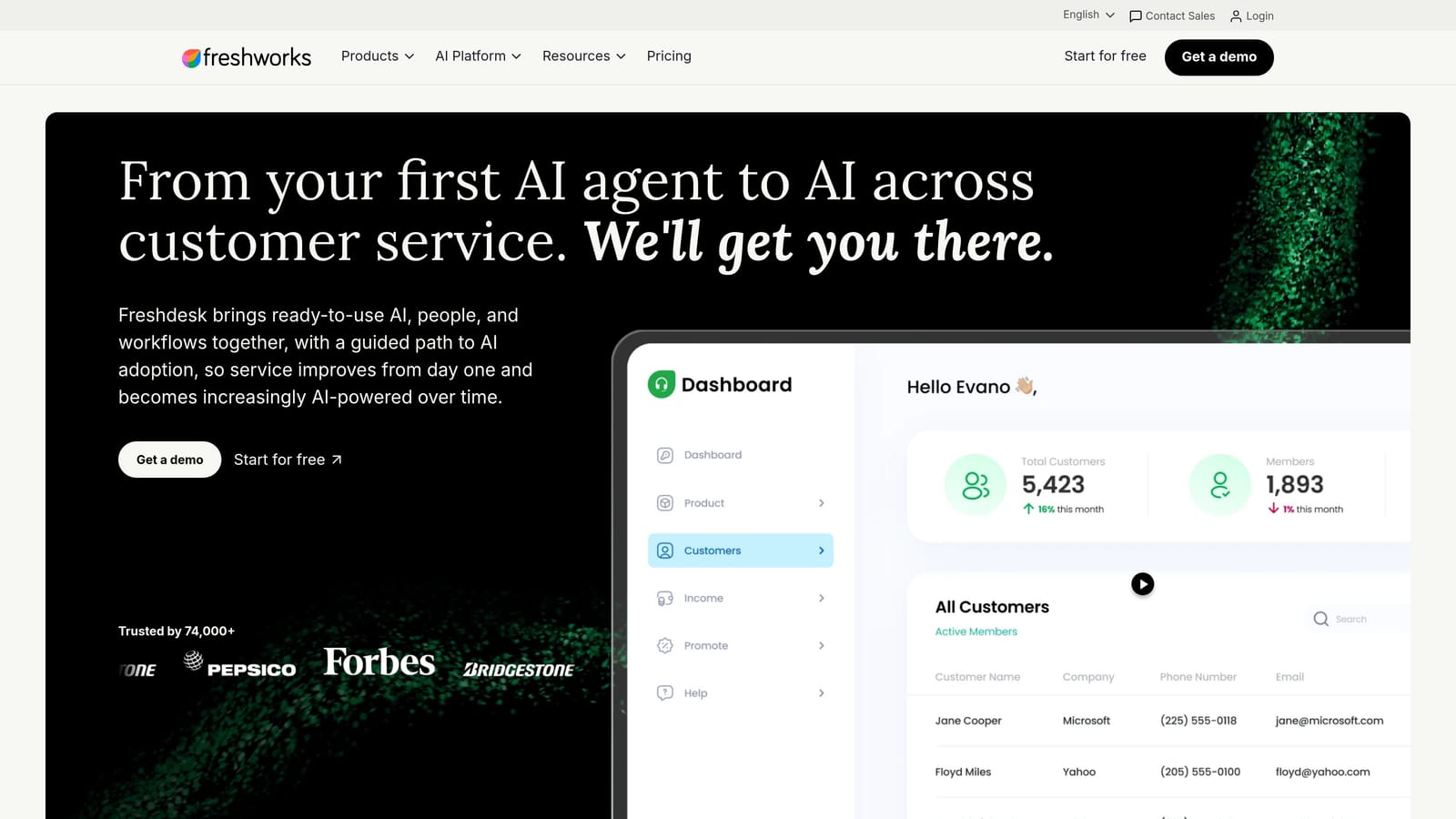
Freshdesk's Freddy AI spans self-service deflection, agent assist, and analytics, offering a practical AI layer for teams that need capability without enterprise-level complexity or cost.
Where This Tool Shines
Freddy AI is structured as three distinct layers: Freddy Self Service handles customer-facing deflection via chatbot, Freddy Copilot assists agents with response suggestions and summarization, and Freddy Insights surfaces trends and support analytics. This modular approach lets teams adopt what they need without overhauling their entire operation.
For SMBs and mid-market teams, the pricing accessibility is a real differentiator. Freshdesk's competitive plans make AI-assisted support achievable for teams that can't justify enterprise-tier spend, though integration depth is more limited than AI-first platforms.
Key Features
Freddy Self Service: AI-powered chatbot for customer-facing deflection, handling common questions before they reach the queue.
Freddy Copilot: Provides agents with response suggestions, summarization, and knowledge surfacing during active conversations.
Freddy Insights: Surfaces trend detection and support analytics to help managers identify patterns and bottlenecks.
Competitive Pricing: AI features available at price points accessible to SMB budgets, not just enterprise teams.
Freshworks Suite Integration: Native integration across Freshworks products including Freshsales and Freshservice.
Best For
SMBs and growing teams that want solid AI-assisted support without enterprise complexity. A strong choice for teams already using Freshdesk who want to layer in AI incrementally.
Pricing
Freddy AI features are available on Growth plans and above. Freddy Copilot is available as an add-on. Pricing is among the more accessible on this list.
5. Salesforce Agentforce
Best for: Enterprise teams where full CRM context is essential for support quality
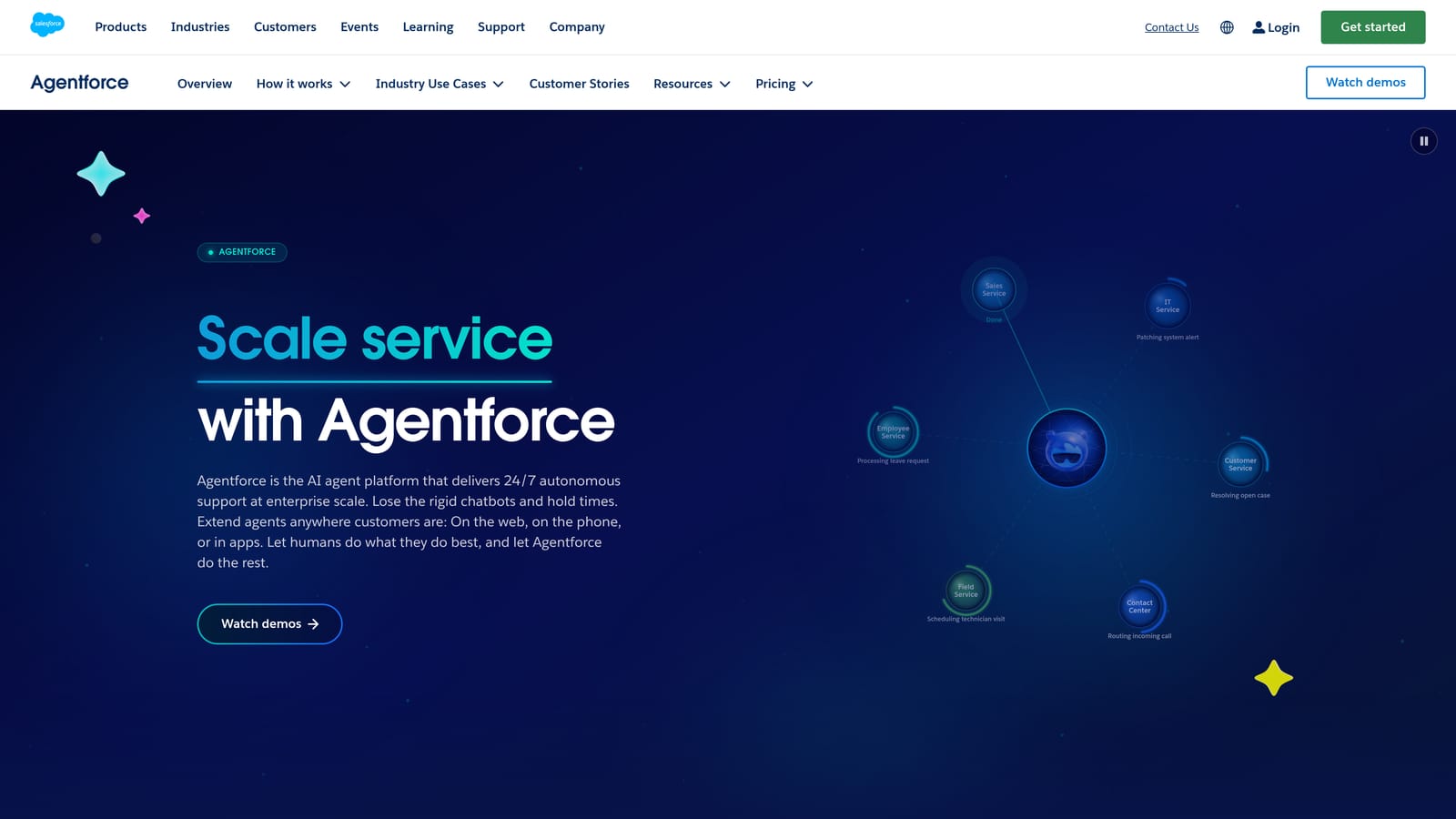
Salesforce Agentforce is Salesforce's autonomous AI agent product, deeply embedded in the Salesforce ecosystem and powered by full CRM and Data Cloud context for personalized support interactions.
Where This Tool Shines
Agentforce's core advantage is access to the full depth of Salesforce CRM data. When an AI agent can see account history, deal stage, contract details, and past service interactions simultaneously, the quality and personalization of support responses improves substantially. For enterprise B2B companies where every customer relationship is complex and high-value, this context depth is genuinely differentiated.
The Einstein Trust Layer provides enterprise-grade AI governance, which matters for organizations with strict requirements around AI behavior and data handling. That said, implementation complexity is real, and teams without established Salesforce expertise should factor that into their evaluation.
Key Features
CRM-Powered Agents: Autonomous AI agents with real-time access to full Salesforce CRM and Data Cloud context.
Personalized Support Responses: Interactions informed by account history, deal data, and customer lifecycle stage.
Omnichannel Deployment: Available across chat, email, voice, and messaging channels.
Sales and Service Cloud Integration: Deep workflow integration with both Sales Cloud and Service Cloud processes.
Einstein Trust Layer: Enterprise-grade AI safety and governance framework for controlled AI behavior.
Best For
Large enterprises where Salesforce is already the system of record and CRM context is critical to support quality. High implementation overhead makes it less suitable for smaller teams or those without dedicated Salesforce administrators.
Pricing
Consumption-based pricing per conversation. Contact Salesforce directly for enterprise quotes, as pricing varies significantly based on volume and existing contracts.
6. Ada
Best for: Large consumer-facing brands needing high-volume automated resolution at scale
Ada is an enterprise-grade AI agent platform focused on high-volume automated resolution, with a no-code builder and strong multilingual and omnichannel capabilities designed for global consumer brands.
Where This Tool Shines
Ada's no-code agent builder is genuinely accessible, allowing non-technical teams to build and iterate on AI agent flows without engineering involvement. This is a meaningful advantage for large organizations where support and operations teams need to move quickly without waiting on development resources.
Multilingual capability is another area where Ada stands out. For global brands supporting customers across multiple languages and regions, Ada's language support reduces the complexity of running parallel support operations.
Key Features
No-Code Agent Builder: Enables non-technical teams to build, configure, and iterate on AI agent workflows without engineering support.
Multilingual Support: Strong language coverage for global customer bases across multiple regions.
Omnichannel Reach: Deploys across chat, email, voice, and SMS channels from a single platform.
Resolution Rate Reporting: Measurable automated resolution rate tracking to demonstrate AI performance and ROI.
Enterprise Integrations: Native connections to Salesforce, Zendesk, and major CRM platforms.
Best For
Large consumer-facing brands with high ticket volumes, global customer bases, and a need for measurable deflection at scale. Less tailored to the complex, technical support needs of B2B SaaS products.
Pricing
Enterprise pricing. Contact Ada directly for a quote based on volume and deployment requirements.
7. Tidio (Lyro AI)
Best for: E-commerce SMBs wanting quick AI deployment with minimal setup
Tidio's Lyro AI is a conversational AI agent designed for fast deployment, answering customer questions from existing help content with minimal configuration, built specifically for SMBs and e-commerce teams.
Where This Tool Shines
Lyro's defining characteristic is low setup friction. The AI can be live and answering customer questions in minutes, trained on your existing FAQ and help content without complex configuration. For small teams that need AI coverage quickly without dedicated implementation time, this speed-to-value is hard to match.
The Shopify and WooCommerce integrations make Lyro a natural fit for e-commerce operators. Product questions, order status inquiries, and return policy questions are handled automatically, with live chat fallback when the AI reaches its limits.
Key Features
Lyro AI Agent: Answers customer questions automatically from your existing FAQ and help content with minimal training required.
Fast Setup: Deployable in minutes with very low configuration overhead, ideal for resource-constrained teams.
E-Commerce Integrations: Native Shopify and WooCommerce integrations for product and order-related queries.
Live Chat Fallback: Seamlessly routes to human agents when the AI encounters questions outside its scope.
Accessible Pricing: Free tier available, with paid plans starting at approximately $29/month.
Best For
E-commerce SMBs and small teams that need AI-powered customer support up and running quickly without significant setup investment. Not designed for complex B2B SaaS support scenarios or deep enterprise integrations.
Pricing
Free tier available. Paid plans start at approximately $29/month, making this one of the most accessible options on this list.
8. Kustomer
Best for: Brands that want customer support and CRM unified in a single platform
Kustomer is a CRM-native customer service platform with a unified customer timeline and AI-powered routing, suggested replies, and automation built for brands that want support and relationship management in one system.
Where This Tool Shines
Kustomer's unified customer timeline is its most distinctive feature. Every interaction a customer has had across every channel, including chat, email, social, SMS, and voice, appears in a single chronological view. Agents walk into every conversation with complete context, which reduces handle time and improves the quality of responses without requiring manual research.
The AI capabilities sit on top of this unified data layer, enabling smarter routing and more relevant suggested replies because the AI has access to the full customer history, not just the current ticket.
Key Features
Unified Customer Timeline: Aggregates all customer interactions across every channel into a single chronological view for agents.
AI-Powered Routing: Intelligent queue management that routes conversations based on customer attributes and history.
Suggested Reply AI: Provides agents with contextually relevant reply suggestions informed by the full customer timeline.
Omnichannel Inbox: Manages chat, email, social, SMS, and voice from a single unified interface.
Event-Triggered Automation: Workflow automation triggered by customer events and attributes for proactive support actions.
Best For
Consumer brands and mid-market companies that want to consolidate CRM and customer support into a single platform. Particularly strong for teams where customer history context significantly impacts support quality.
Pricing
Starts at approximately $89 per agent per month. Pricing scales with agent seats and feature requirements.
9. Forethought
Best for: Support ops teams with entrenched helpdesk tooling who want AI without migrating platforms
Forethought is an AI layer designed to sit on top of existing helpdesks, adding intelligent triage, routing, and resolution capabilities to Zendesk, Salesforce, ServiceNow, and others without requiring a platform migration.
Where This Tool Shines
Forethought's core value proposition is additive AI without disruption. For organizations where a full platform migration is politically or operationally impossible, Forethought lets support teams capture meaningful AI efficiency gains while keeping their existing helpdesk infrastructure intact. This is a pragmatic choice for large organizations with deeply embedded workflows.
The Discover AI component is particularly useful for support operations managers. It analyzes support workflows to identify bottlenecks and inefficiencies, giving teams a data-driven basis for process improvement beyond just ticket deflection.
Key Features
Predictive Triage: AI-powered triage and routing that works within your existing helpdesk rather than replacing it.
Solve AI: Autonomous ticket resolution that handles questions before they reach an agent queue.
Assist AI: Surfaces relevant knowledge and response suggestions to agents during active conversations.
Discover AI: Analyzes support workflows to identify bottlenecks, inefficiencies, and automation opportunities.
Native Helpdesk Compatibility: Works directly within Zendesk, Salesforce, ServiceNow, and other major platforms.
Best For
Enterprise support operations teams with significant existing investment in Zendesk, Salesforce, or ServiceNow who want to add AI capabilities without a disruptive migration. A strong fit when organizational constraints make platform replacement impractical.
Pricing
Enterprise pricing. Contact Forethought directly for a quote based on helpdesk platform, volume, and deployment scope.
Which Platform Is Right for Your Team?
The right platform depends heavily on where you're starting from and what you're optimizing for. Here's a practical breakdown by situation.
AI-first SaaS teams building from scratch: Halo AI is the strongest choice here. Its page-aware context, continuous learning loop, and business intelligence capabilities are purpose-built for SaaS support operations that want AI agents as the primary resolution layer, not an add-on.
Enterprise Salesforce shops: Salesforce Agentforce is the natural fit when CRM context depth is critical and your organization is already running on Salesforce infrastructure. Forethought is worth evaluating if you need AI augmentation across multiple existing platforms without migration.
Zendesk-invested enterprises: Zendesk AI is the low-disruption path for teams with established Zendesk workflows. Forethought is an alternative if you want more advanced triage and resolution capabilities layered on top.
SMBs and growing teams: Freshdesk's Freddy AI offers the best balance of capability and accessible pricing for teams that don't need enterprise-scale complexity. Kustomer is worth considering if unified CRM and support is a priority.
E-commerce teams: Tidio's Lyro AI is hard to beat on speed-to-value and pricing for Shopify and WooCommerce operators. Ada is the upgrade path when volume and global reach become priorities.
Your support team shouldn't scale linearly with your customer base. Let AI agents handle routine tickets, guide users through your product, and surface business intelligence while your team focuses on complex issues that need a human touch. See Halo in action and discover how continuous learning transforms every interaction into smarter, faster support.